Math 498: Applied Partial Differential Equations Independent Study
 Call Kai
 Learn
Learn Practice Test
 Spaced Repetition
 Match
Match Flashcards
 Knowt Play
1/29

Earn XP
Description and Tags
Used the Walter Strauss Textbook, 2nd Edition
Name | Mastery | Learn | Test | Matching | Spaced | Call with Kai | Chat |
|---|
No analytics yet
Send a link to your students to track their progress
30 Terms
If you have a Partial Differential Equation in the form a(x,y)ux+b(x,y)uy=0, how can you start this problem to find the general solution. What form should your answer be in
u(x,y) = f(c). (1.2 Strauss) (Exam 1 Material)
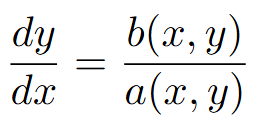

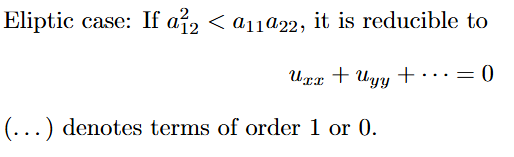
For a PDE in the form shown in the image, what condition must apply for the equation to be elliptic? What is it reducible too?
(1.6 Strauss) (Exam 1 Material)

For a PDE in the form shown in the image, what condition must apply for the equation to be hyperbolic? What is it reducible too?
(1.6 Strauss) (Exam 1 Material)


For a PDE in the form shown in the image, what condition must apply for the equation to be Parabolic? What is it reducible too?
(1.6 Strauss) (Exam 1 Material)

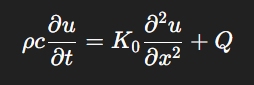
What is the 1-D heat equation with a source. What do all the variables mean
u(x,t) is temperature, c is specific heat, rho is mass density (Mass per unit volume), K0 is the coefficient of proportionality (measures the ability of a material to conduct heat, called thermal conductivity), x is position and Q is heat energy per unit volume. (1.2 Haberman) (Exam 1 Material)
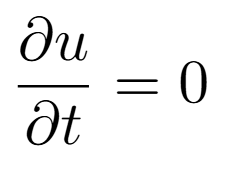
If a uniform one dimensional rod is at equilibrium temperature distribution, what must be true (in the heat equation)
(1.3 Haberman) (Exam 1 Material)
If Q=0, you can refer to what equation to find the equilibrium temperature distribution
Where T1 is the temperature of a one dimensional rod at x=0 and T2 is the temperature of the rod at x=L. (1.4 Haberman) (Exam 1 Material)
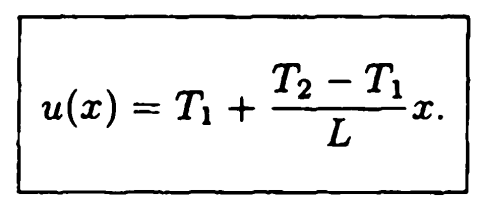
If Q (heat energy per volume) is NOT 0, what equation can you refer to, in order to find the equilibrium temperature distribution.
You have to refer to the heat equation and use the fact that the rate of change of the temperature with respect to time will be 0 (So that term goes away). (1.4 Haberman) (Exam 1 Material)
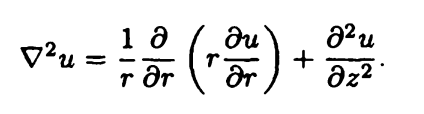
If it is known that the temperature does NOT depend on an angle theta, then what is the Laplacian equal too.
You can often set this equal too 0 (If there’s an equilibrium temperature distribution) and get rid of the second derivative with respect to z. (1.5 Haberman) (Exam 1 Material)
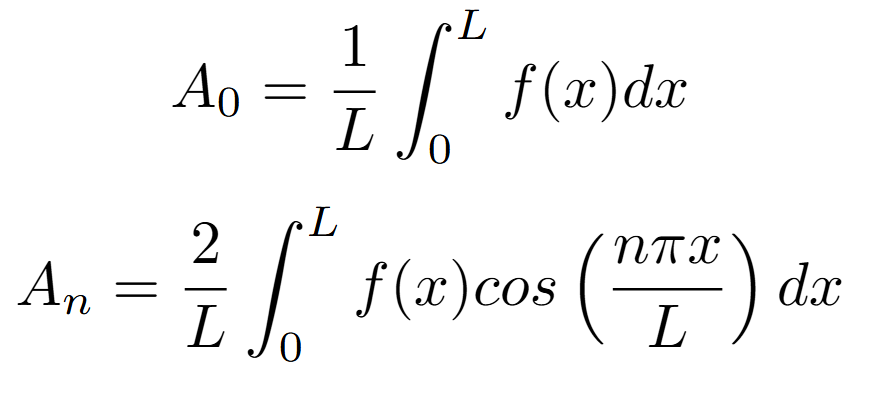
If a spatial differential equation, results in a cosine function, and u(x,0) = f(x), through what formula can you find it’s coefficient, A0 and An
(2.3 Haberman) (Exam 1 Material)
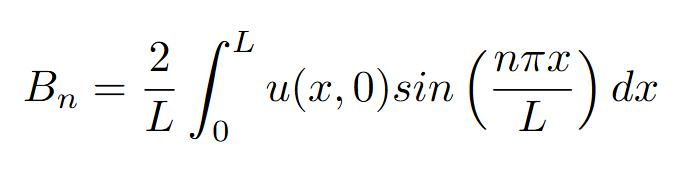
If a spatial differential equation, results in a sine function, and u(x,0) = f(x), through what formula can you find it’s coefficient, Bn
(2.3 Haberman) (Exam 1 Material)
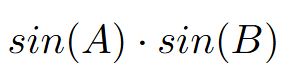
What is the image equal too (This could help with separation of variables)
(2.3 Haberman) (Exam 1 Material)

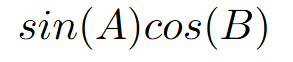
What is the image equal too (This could help with separation of variables)
(2.3 Haberman) (Exam 1 Material)

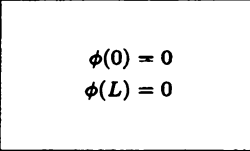
For a boundary value problem in the following form: \phi’’ + \lambda\phi = 0, subject to the boundary conditions in the image, what are the eigenvalues, eigenfunctions, series, and coefficients associated.
(2.4 Haberman) (Exam 2 Material)
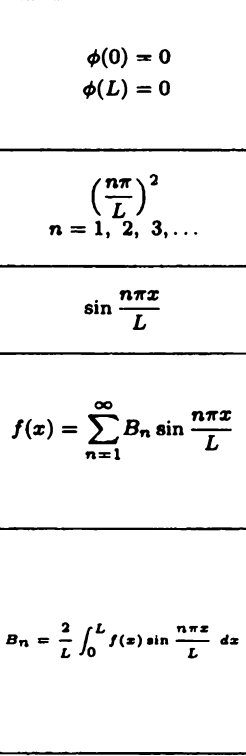
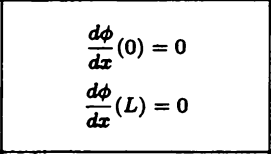
For a boundary value problem in the following form: \phi’’ + \lambda\phi = 0, subject to the boundary conditions in the image, what are the eigenvalues, eigenfunctions, series, and coefficients associated.
(2.4 Haberman) (Exam 2 Material)
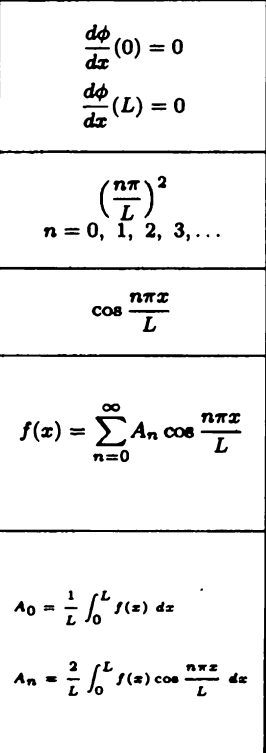
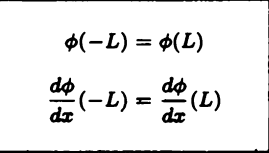
For a boundary value problem in the following form: \phi’’ + \lambda\phi = 0, subject to the boundary conditions in the image, what are the eigenvalues, eigenfunctions, series, and coefficients associated.
(2.4 Haberman) (Exam 2 Material)
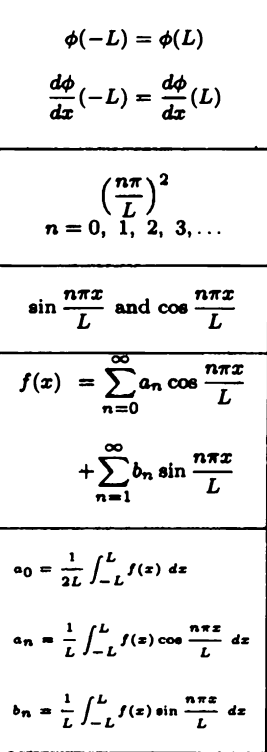

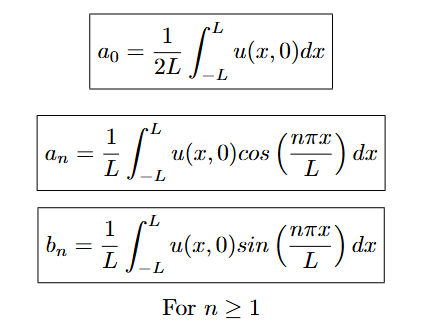
If you have a Fourier series, as shown in the image, what are all the unknown Fourier coefficients equal too
(2.4 Haberman) (Exam 2 Material)
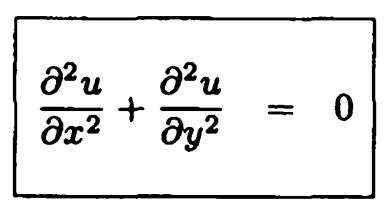
What is Laplace’s Equation for a rectangle
(2.5 Haberman) (Exam 2 Material)
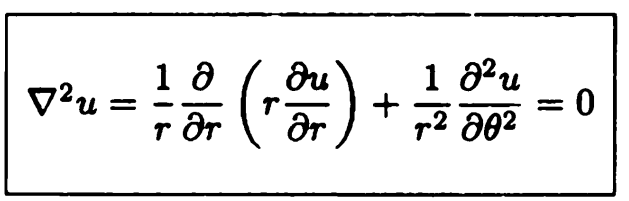
What is Laplace’s equation for a circle, circular annulus, or circular disk
(2.5 Haberman) (Exam 2 Material)
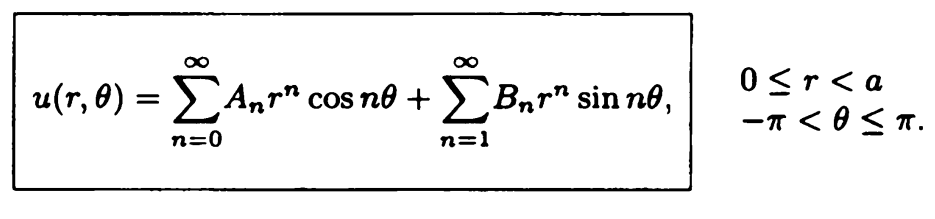
What is the general solution for Laplace’s equation equation for a circle, circular annulus, or circular disk
(2.5 Haberman) (Exam 2 Material)
If a function is piecewise smooth, what does this mean
The interval can be broken up into pieces such that in each piece the function f(x) and it’s derivative are continuous (3.1 Haberman) (Exam 2 Material)
The odd extension of f(x) has what Fourier Series. What is the coefficient equal too and is this coefficient the same as the regular Fourier series
Fourier sine series. Yes this is the same coefficient (It’s just written differently in the image) (3.3 Haberman) (Exam 2 Material)
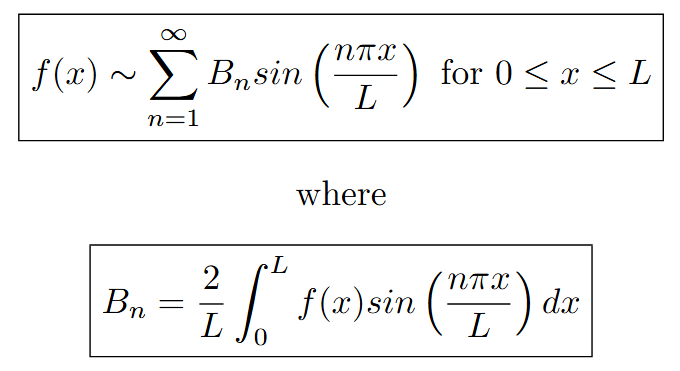
What is the Fourier cosine series. What are the coefficients equal too.
The formula for the coefficients are the same as the regular Fourier series. (3.3 Haberman) (Exam 2 Material)
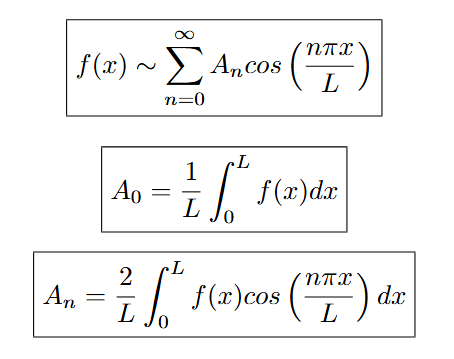
What is the complex Fourier Series of f(x)
(3.6 Haberman)
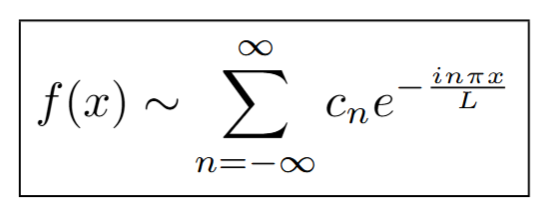
What is the complex coefficient equal too for the complex Fourier series of f(x)
(3.6 Haberman)

What is the form of a Sturm-Liouville differential equation
p, q and sigma might be constants or functions (5.3 Haberman)

What is the Rayleigh Quotient for a Sturm-Liouville eigenvalue problem
(5.6 Haberman)

What is the Fourier Transform of f(x) defined too be
(10.3 Haberman)

What is the Inverse Fourier Transform of F(omega)
(10.3 Haberman)


What is the inverse Fourier transform of a Gaussian given by the image
(10.3 Haberman)
