practical help
 Call Kai
 Learn
Learn Practice Test
 Spaced Repetition
 Match
Match Flashcards
 Knowt Play
1/55

Earn XP
Description and Tags
Comprehensive vocabulary practice flashcards covering Cyanobacteria, Protists (Green, Red, and Brown Algae, Diatoms, Dinoflagellates), Non-Tracheophytes (Liverworts, Hornworts, Mosses), and Seedless Tracheophytes (Lycophytes and Ferns) for BIOL 3000 Botany Lab Practical #1.
Name | Mastery | Learn | Test | Matching | Spaced | Call with Kai | Chat |
|---|
No analytics yet
Send a link to your students to track their progress
56 Terms
Anabaena
Domain Bacteria
Form filamentous
habitat freshwater
looks like honeycomb.

Akinetes
Specialized thick-walled cells in cyanobacteria that help the organism survive harsh environmental conditions.
Heterocysts
Specialized nitrogen-fixing cells found in cyanobacteria, which can be intercalary or terminal depending on the genus.
Trichome
A row or chain of vegetative cells present in filamentous cyanobacteria such as Oscillatoria and Spirulina.
Spirulina
domain bacteria
form filamentous
marine habitat
fragmentation

Eucapsis
domain bacteria
form colonial
habitat alans medium (freshwater)
dissociation
cubic

Lyngbya
domain bacteria
form unbranched filamentous
habitat freshwater
cylindfrical
asexual

Hormogonium
A reproductive cell chain formed with separation discs in filamentous cyanobacteria like Lyngbya that assists with movement and oscillation.
Synechocystis
Unicellular cyanobacteria found in moist soil and aquatic environments composed of photosynthetic vegetative cells

Gonium
kingdom protista
phylum chlorophyta
class chlorophyceae
zygotic life cycle

Oedogonium
kingdom protista
phylum chlorophyta
class chlorophyceae
zygotic life cycle
filamentous

Volvox
domain eukarya
phylum chlorophyta
class chlorophyceae
form colonial
spheroid
zygotic

Pediastrum
domain eukarya
kingdom protista
class chlorophyceae
zygotic
colonial
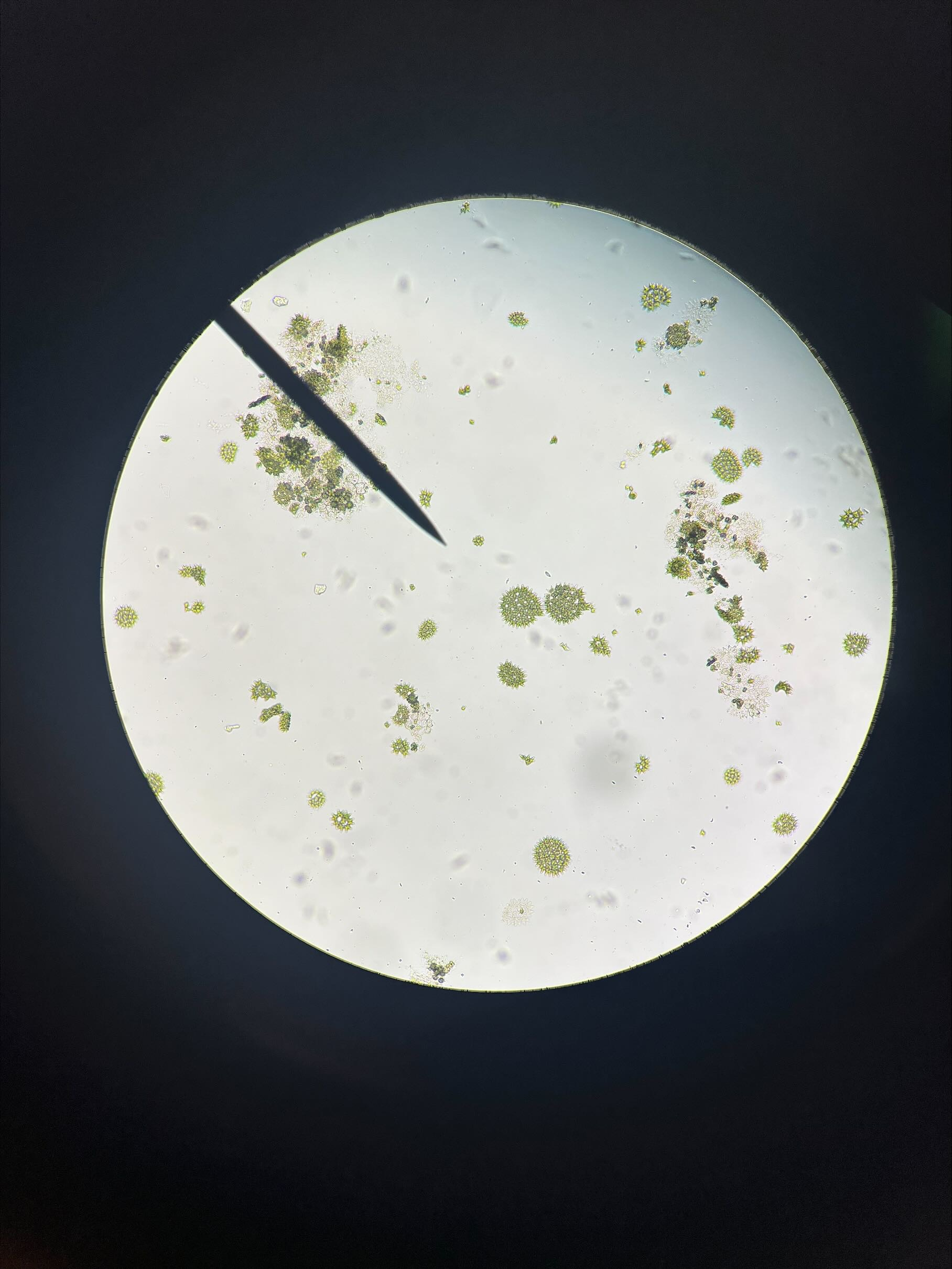
Ulva
domain eukarya
phylum chlorophyta
class ulvophceae

Acetabularia
Domain: Eukarya
Kingdom: Protista
Class: Ulvophyceae
gametic
nucleus in base

Chara
Domain: Eukarya
Kingdom: Protista
Class: Charophyceae

Zygnema
Domain
Eukarya
Kingdom:
Protista
Class:
Charophyceae
form
filamentous

Micrasterias
Domain: Eukarya
Kingdom: Protista
Phylum: Chlorophyta
Class: Charophyceae
unicellular
zygotic

Spirogyra
Domain: Eukarya
Kingdom: Protista
Class: Charophyceae
zygotic
form filamentous

Corallina
Domain: Eukarya
Phylum: Rhodophyta
Kingdom: Protista
sporic
calcified walls

Callithamnion
Domain: Eukarya
Kingdom: Protista
Phylum Rhodophyta
sporic
filamentous
carpogonia/tetrasporangia
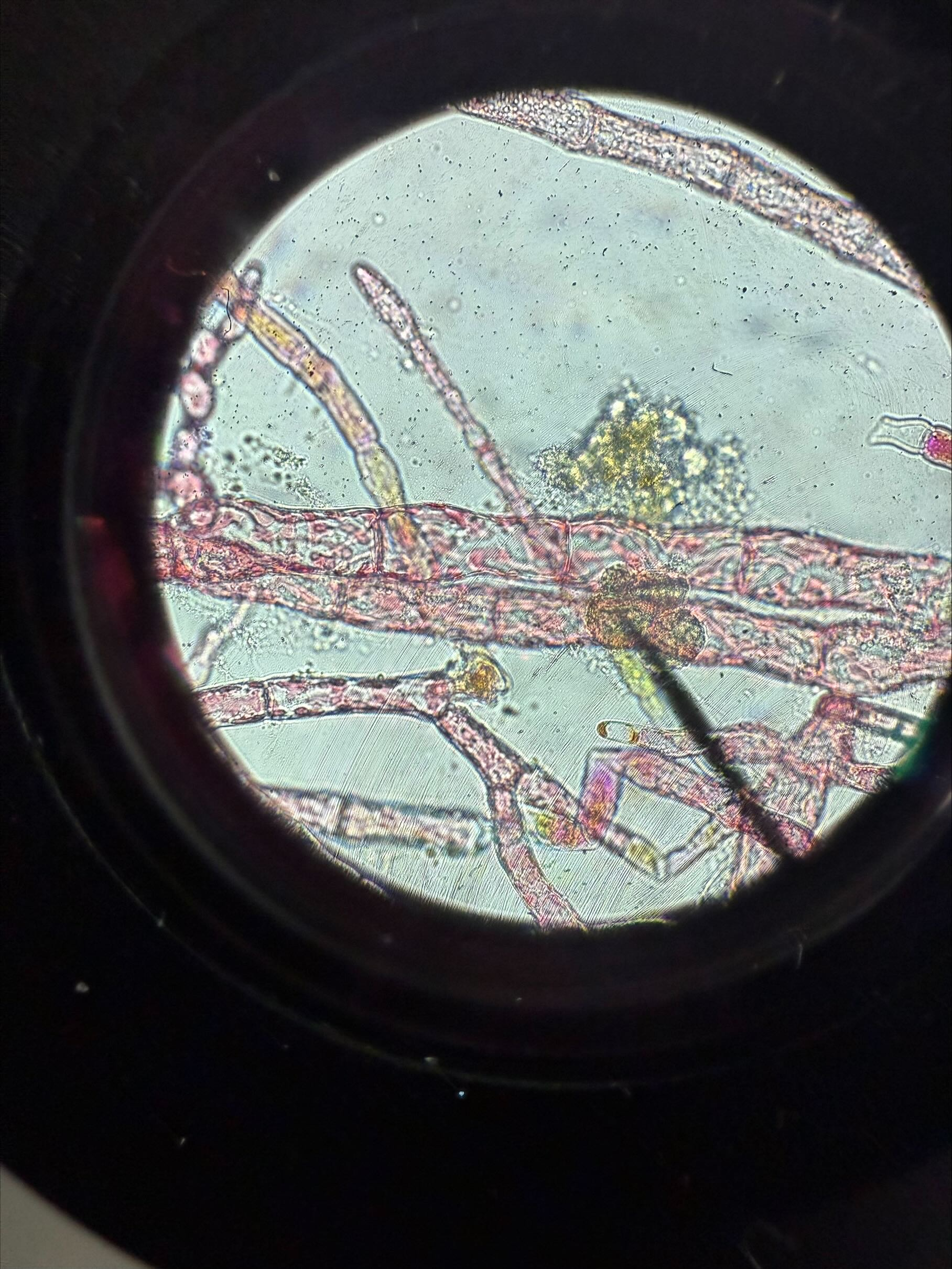
Rhodymenia
Domain: Eukarya
Kingdom: Protista
Phylum: Rhodophyta
unicell

Ectocarpus
Domain: Eukarya
Kingdom Protista
Phylum Phaeophyta
alt/gen
uni/plurilocular sporangia

Laminaria
Domain: Eukarya
Kingdom: Protista
Phylum Phaeophyta
zygotic

Sargassum
Domain: Eukarya
Kingdom: Protista
Phylum: Phaeophyta
air bladder
gametic

navicula pennate diatom
domain eukarya
Phylum Bacillariophyta
gametic life cycle

antheridiophore
is this an archegoniophore or an antheridiophore

Thallus
2d body structure that lacks true stems, roots, or leaves.
Gemmae Cup
structure located on liverwort gametophyte that disperse for asexual reproduction.
Archegoniophore
archegoniophore or antheridiophore
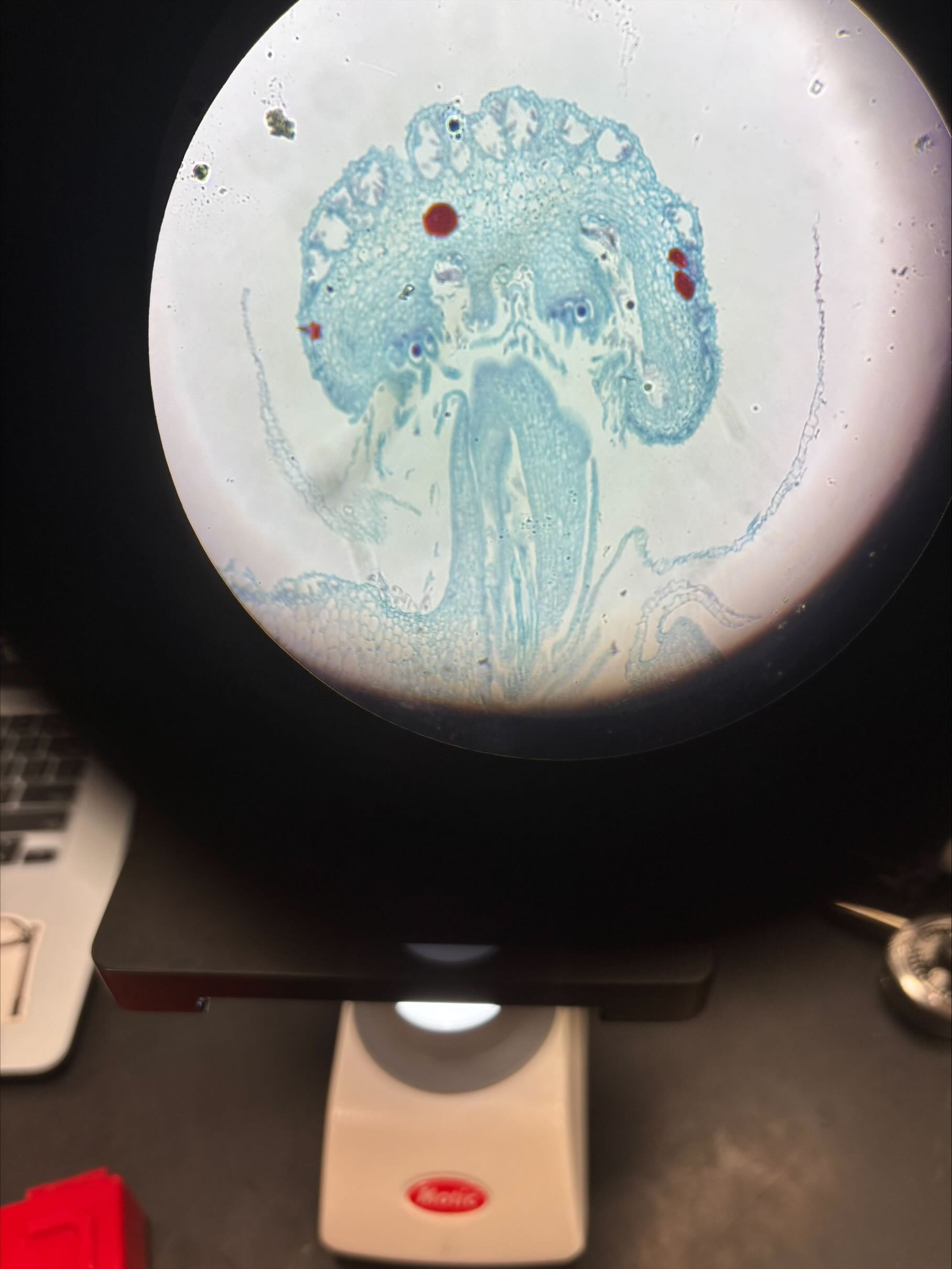
Antheridiophore
Stalked reproductive structure on male Marchantia gametophytes that produce sperm.
Elaters
Hygroscopic cellular structures found inside liverwort sporophytes that aid in spore release and dispersal.
Porella
kingdom plantae
phylum hepatophyta
leafy liverwort

sporophyte
is this the sporophyte or gametophyte

archegonia
is this an archegonia or an antheridia

Sphagnum
kingdom plantae
phylum bryophyta
subclass sphagnidae

Operculum
structure covering the opening of a moss capsule that falls off to release spores.
Peristome
A ring of tooth-like structures lining the capsule opening in most mosses (absent in Class Sphagnidae) that controls spore dispersal based on humidity.
Selaginella
Kingdom Plantae
phylum lycophyta
family selaginellaceae
heterosporous

Lycopodium
Kingdom Plantae
phylum lycophyta
specifically homosporous

Isoetes
Kingdom Plantae
phylum lycophyta
family isoetaceae
quillworts
heterosporus

Microphyll
A small leaf containing a single, unbranched vascular vein, characteristic of Lycophytes.
Strobilus
A cone-like reproductive cluster formed of specialized leaves (sporophylls) bearing sporangia.
Heterosporous
Producing two distinct types of spores: large megaspores that form female gametophytes and small microspores that form male gametophytes.
Homosporous
Producing a single type of spore that develops into a bisexual gametophyte.
ophioglossum
kingdom plantae
phylum pteridophyta
eusporangiate
sporophyte dominant
gametophyte independent
adders tongue

Adiantum
kingdom plantae
phylum pteridophyta
leptosporangiate
sporophyte dominant
gametophyte independent

Davallia
kingdom plantae
phylum pteridophyta
lepto sporangiate
sporophyte dominant
gametophyte independent
rabbits foot

Psilotum
kingdom plantae
phylum pteridophyta
eusporangiate
sporophyte dominant
gametophyte independent
whisk fern

Equisetum
kingdom plantae
phylum pteridophyta
eusporangiate
gametophyte independent
sporophyte dominant
horsetail

Sorus
microspore

Annulus
A crest of specialized thick-walled cells on a fern sporangium that functions in forcible spore dispersal.
Leptosporangiate
Developmental condition in ferns where each sporangium originates from a single initial cell.
Eusporangiate
Developmental condition in ferns where each sporangium originates from a group of initial cells.
mnium hornum
kingdom plantae
phylum bryophyta
subclass bryidae
anthoceros
Domain: Eukarya
Kingdom: Plantae
phylum anthocerophyta
hornworts
