Unit 3
 Call Kai
 Learn
Learn Practice Test
 Spaced Repetition
 Match
Match Flashcards
 Knowt Play
1/113

There's no tags or description
Looks like no tags are added yet.
Name | Mastery | Learn | Test | Matching | Spaced | Call with Kai |
|---|
No analytics yet
Send a link to your students to track their progress
114 Terms
Grain By-Products
residual nutrients after extraction of starch and oil from grain
Provide energy, fiber, and protein rations
protein quality is not better than initial grain
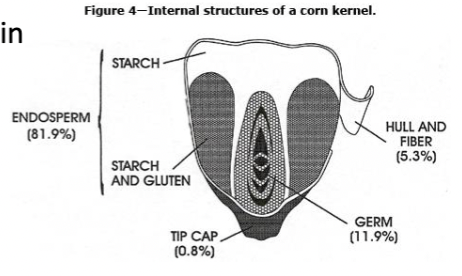
Corn Processing: WET Milling
Starch, sugar, syrup, corn oil for human food
Steep water, corn gluten meal, corn gluten feed for animal feed
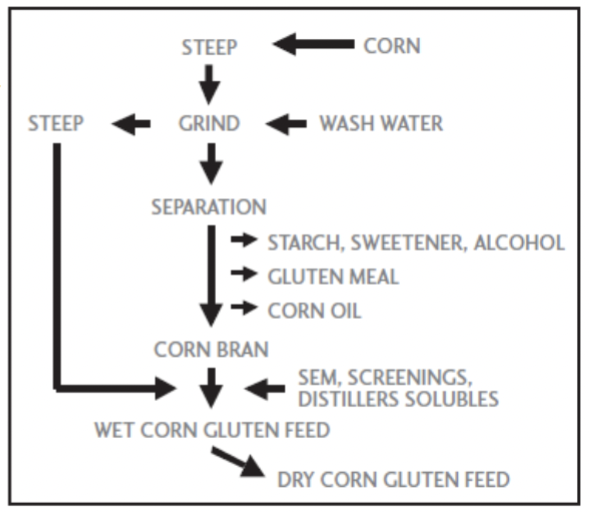
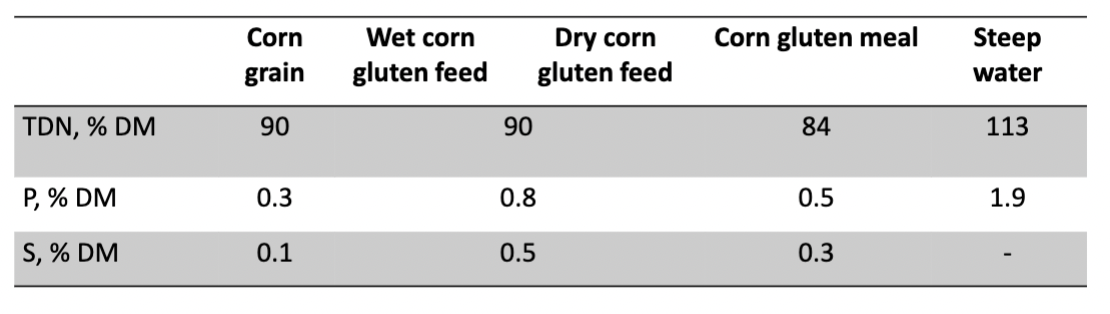
By-Products of WET Milling
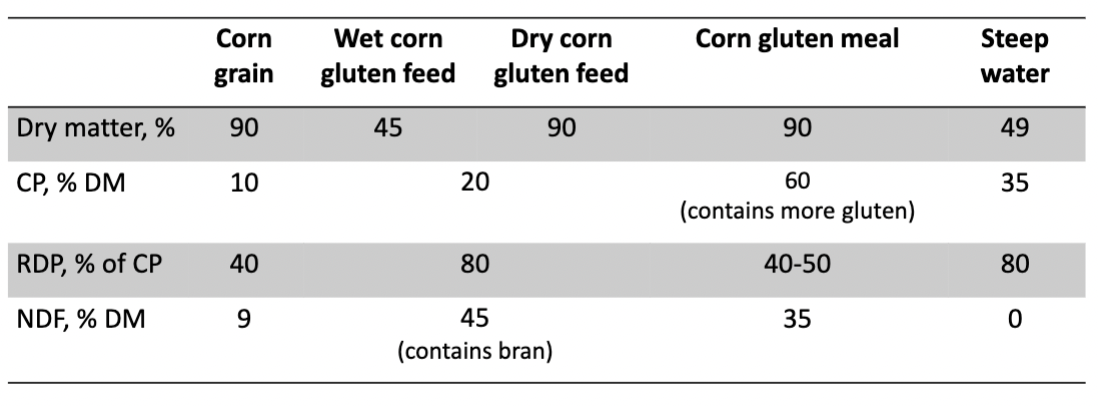
Corn Gluten Feed (CGF)
Beef Cattle: Dpends on forage in diet
30% or less of diet DM with high-forage diet
90% of diet DM with low forage diet
Dairy Cattle:
30% of diet DM
Swine:
up to 20% in grow-finish (must alance AA)
up to 90% in gestating sows
Poultry
up to 30% in layer diets
Companion animals: not used
Concerns with CGF
Storage: spoilage due to moisture if not dried
Sulfur concentration:
limits amount fed to ruminants
Too much causes polioencephalomalacia - interacts with thiamin
Fiber concentration: high fiber limits amount fed to growing swine, poultry, companion animals, and lactating dairy cows
Corn Gluten MEAL (CGM)
Beef Cattle:
Feedlot - 50% of protein supplement (considered bypass protein)
Cows - not cost-effecive (no need for RUP)
Dairy Cattle:
Lactating cows: 50% of protein supplement (bypass protein)
Swine: up to 15% of diet
Lysine limiting (must balance AA)
Poultry & companion animals: limit to <5%
impacts yellow pigment to skin and egg yolk
Impacts color of diet
Steep Water
Beef cattle:
feedlot - < 12% of diet DM
Growing cattle & cows: used in liquid suppliments and protein tubs, very high TDN
Dairy Cattle: up to 5% of diet
Swine:
Grow-finish - up to 15% of diet DM for liquid diets
Poultry: up to 5% of diet DM
Fish: up to 100% of the diet
Companion animals: Not used
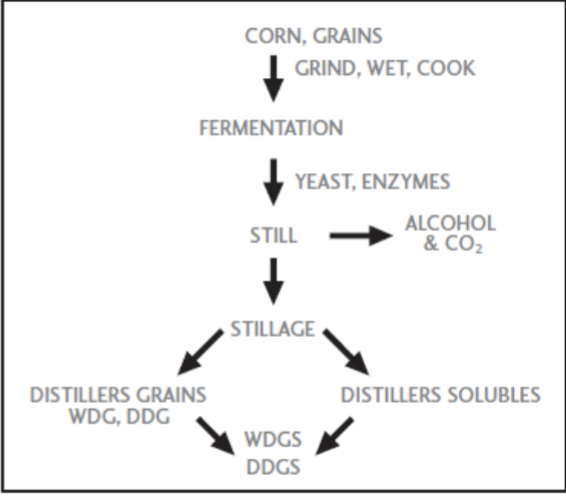
Corn Processing: DRY Milling
corn meal, hominy corn grits, ethanol for humans
WDG, DDG, WDGS, DDGS for animal feed
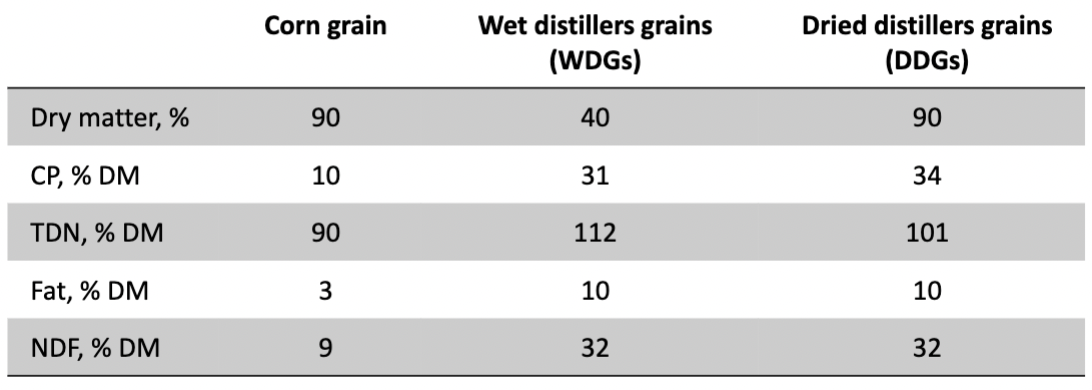
By-Products of DRY Milling
Dried Distillers Grains (DDGs)
Beef cattle:
limit to 40% of diet DM (feedlot)
Can be up to 100% for other cattle to supplement forage
Dairy, sheep, & goats: 15-25% of diet DM across stages
Swine:
Grow-finish - up to 30% of diet
Gestating sows - up to 50% of diet
Lactating sows - up to 30% of diet
Poultry: up to 15% f diet
Companion animals/horses: not used
Concerns with DDGs
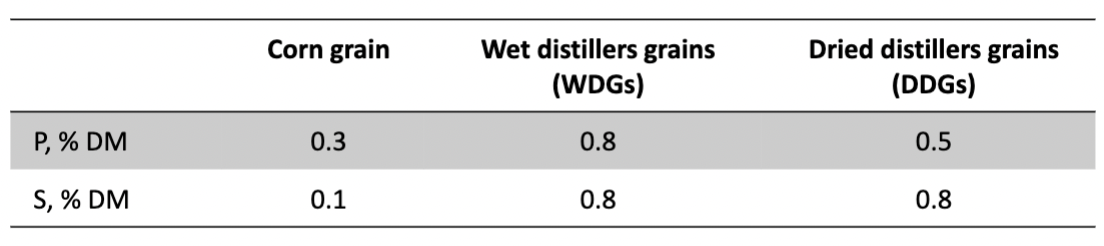
Sulfur content
Polioencephalomalacia (PEM) = necrosis of brain tissue
Dietary S is reduced to hydrogen sulfide → very toxic
Shifts rumen microbes to produce thiaminase (causes thiamin deficiency)
High fiber content (>30% NDF)
Fat content (10%)
May reduce feed intake and fiber digestion in ruminants
May cause milk fat depression in lactating dairy cows
High level of unsaturated fatty acids cause soft pork fat
Concerns with DDGs continued…
Phosphorus content:
May cause urinary calculi in steers or lambs if Ca:P balance is not corrected
Need to add calcium supplement (limestone)
Mycotoxins
concentrated 3X the level of corn
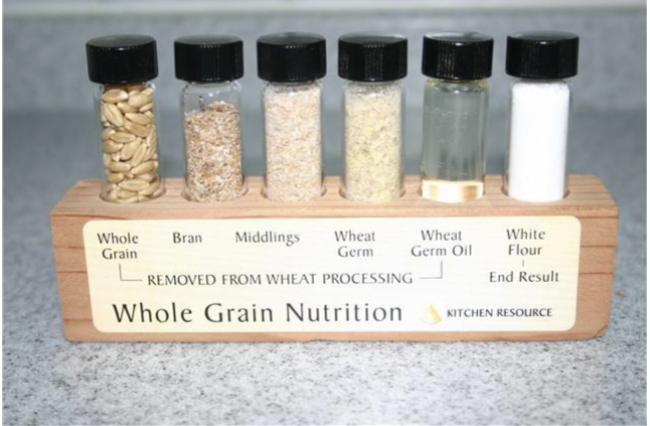
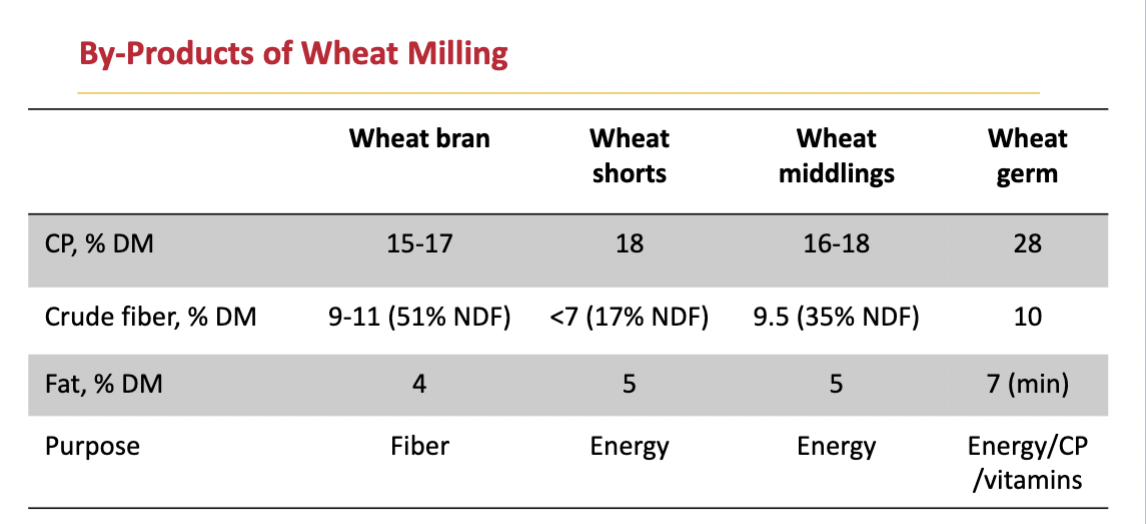
Wheat Milling
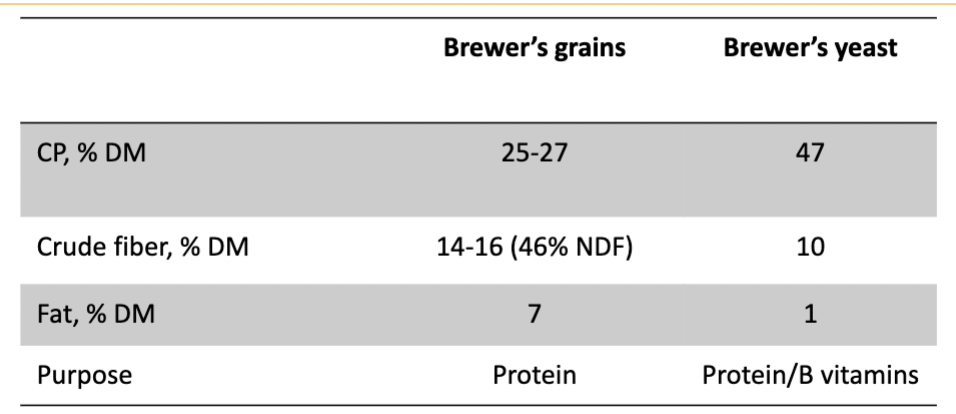
By-products of beer brewing
initial substrate usually barley
primarily used in dairy and horse diets, some companion animal diets (small concentrations)
Not used in swine or poultry diets due to fiber content
Brewers rice
not from beer brewing, but from rice processing
used in pet food and beer brewing
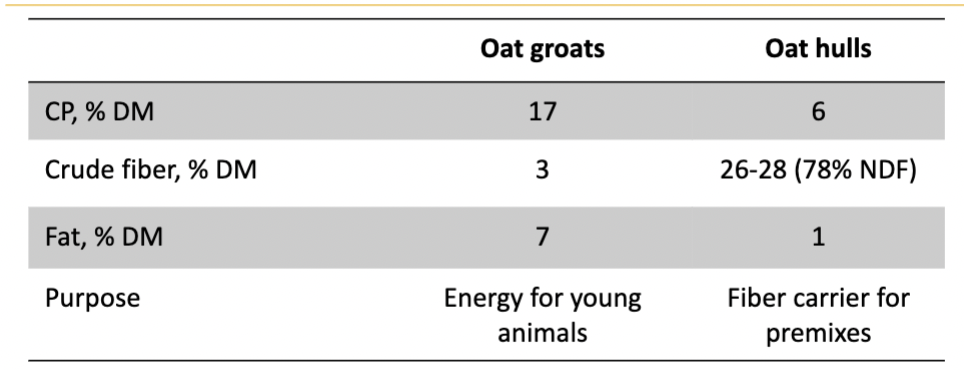
By products of oat processing
Typically too expensive for livestock, used in companion animal diets
T or F: By-products retain nutrients
TRUE
Wet milling produces ____, while dry milling produces ____.
Wet milling produces CGM, while dry milling produces DDGs.
General characteristics of FORAGES
low in energy (compared to energy or protein feedstuffs)
High fiber (over 40% NDF DMB)
Protein: <20% CP (except legumes), RDP
Calcium (big difference between species): higher than energy and plant protein supplements
Major feedstuff for herbavors
Limited use in poultry, swine, and compaion animals (too much fiber)
Factors determining Forage Quality
forage species
maturity
processing
soil
harvest method and quality of stoarge (nutrient preservation)
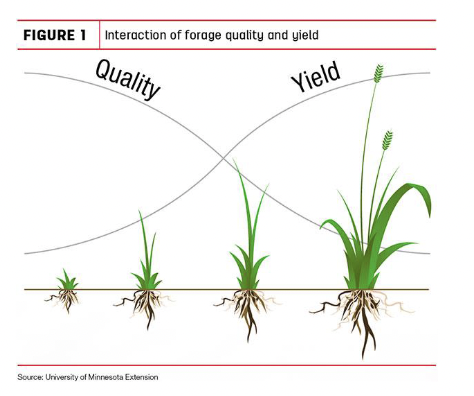
Impact of Maturity on forage quality
Increases NDF → reduces feed intake
Increases ADF & Lignin → reduces digestibility
Reduces CP and soluble carbohydrates → reduces digestibility
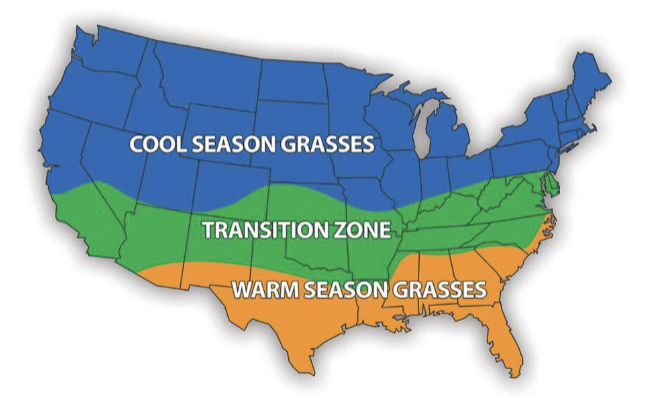
Major forage classes
Cool season grasses
Warm season grasses
Legumes
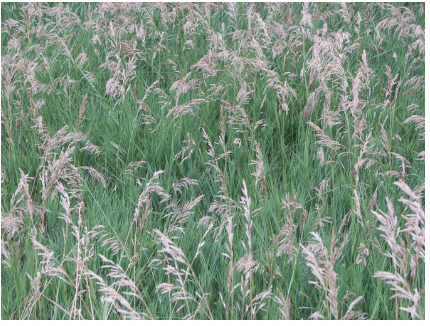
Grasses
Monocots
Narrow leaves
joined stems with flowers/seeds on top
EX. Fescue, corn
Legumes
Dicots
form seeds in pods
broad leaves
colorful and prominent flowers
EX. clover, alfalfa
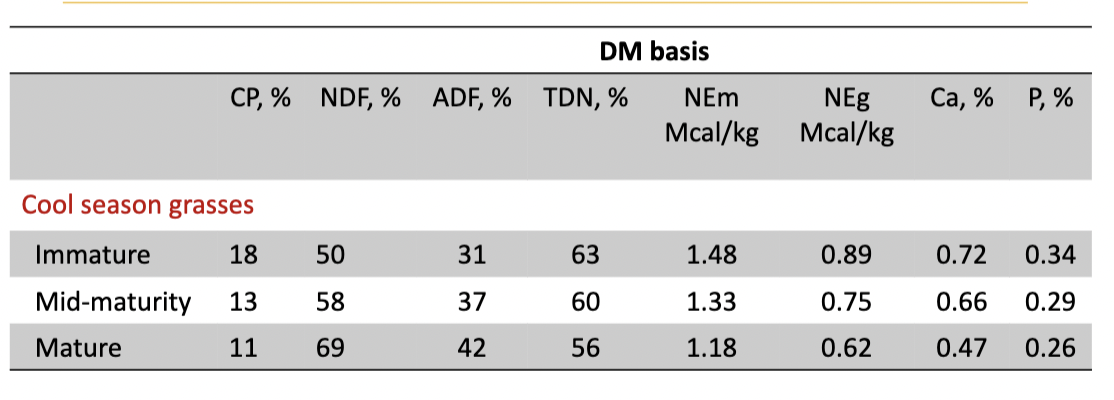
Nutritional value: Cool season grasses
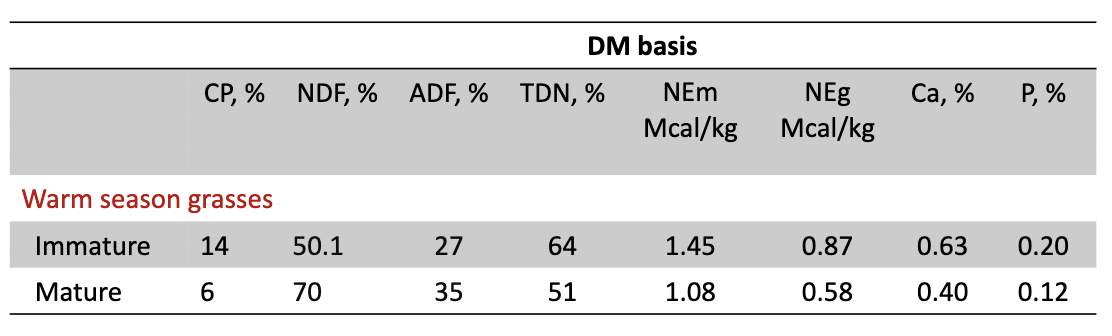
Nutritional Value: warm season grasses
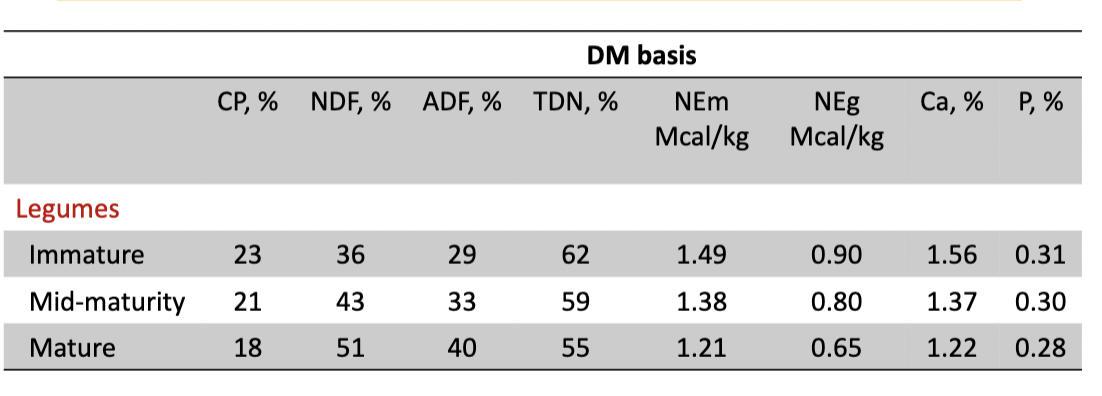
Nutritional value: Legumes
Cool season Grasses
most productive during spring to early summer and again in the fall
66% of growth before june
sensitive to heat and drought (mid-summer)
Most common grasses in the midwest
Use of cool season grasses
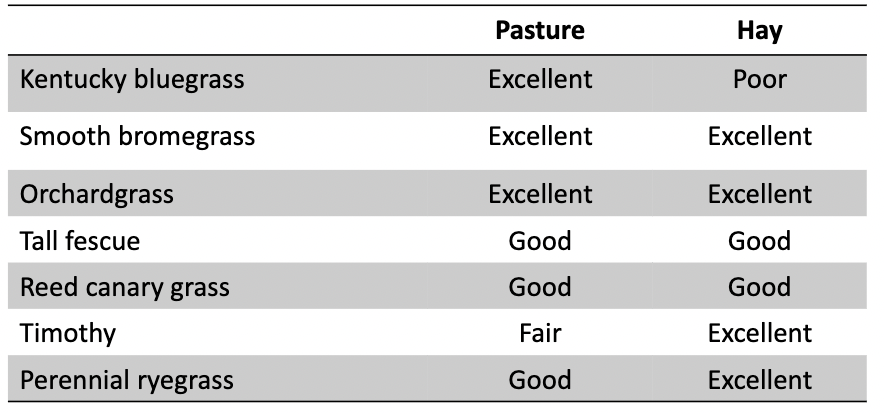
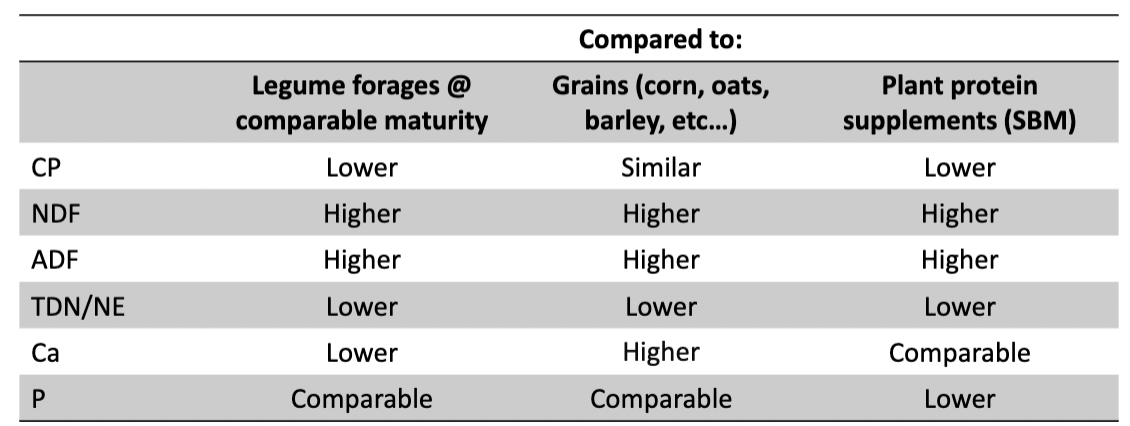
Nutritional qualities of cool season grasses
Anti-quality factors in cool season grasses
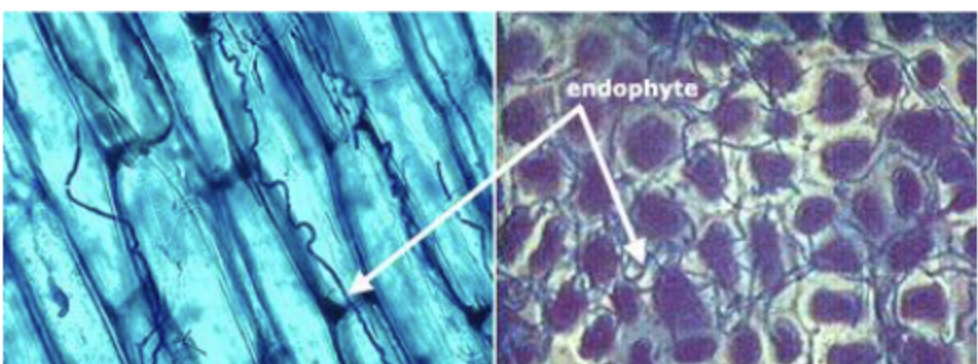
Endophyte fungus
Tryptamine alkaloids
Endophyte fungus
found in tall fescue and perennial ryegrass
produces toxic alkaloids
chemically similar to dopamine, noradrenaline, and serotonin
ergovaline, lysergic acid, etc.
primarily in the seed
transfer to pasture via the seed
Fescue Toxicosis
Physiological effects (inflammatory response)
vasoconstriction
high core body temperature (mimics heat stress)
Lower heart rate
suppression of immune system
toxins mimic dopamine and reduce prolactin
Fescue Toxicosis → results on the animal
decrease intake and weight gain
retention of winter hair coat
standing in water sources
low milk production
Hoof loss (vasoconstriction)
REPRODUCTIVE PROBLEMS:
low pregnancy rate, dystocia, retained placental, placenta before foal
Management to prevent fescue toxicosis
Prevent excessive maturity of forage - prevent consumption of seed
Dilute with legume forages in tail fescue pastures
Rotate animals to non-fescue pastures
Endophyte-free varieties → do not preform well in pasture
Tryptamine alkaloids
found in reed canary grass
physiologically of prussic acid → serotonin receptor agonist
Common effects of animal:
reduced feed intake and growth
staggers and sudden death (neurological)
Management of tryptamine alkaloids
plant low-alkaloid varieties
rotate animals to paddocks without reed canary grass
cobalt supplementation
involved in serotonin metabolism
component of vitamin B12
Frost increases prussic acid
Warm season grasses
70% of production occurs in June and July
Very productive yields
Use of warm season grasses
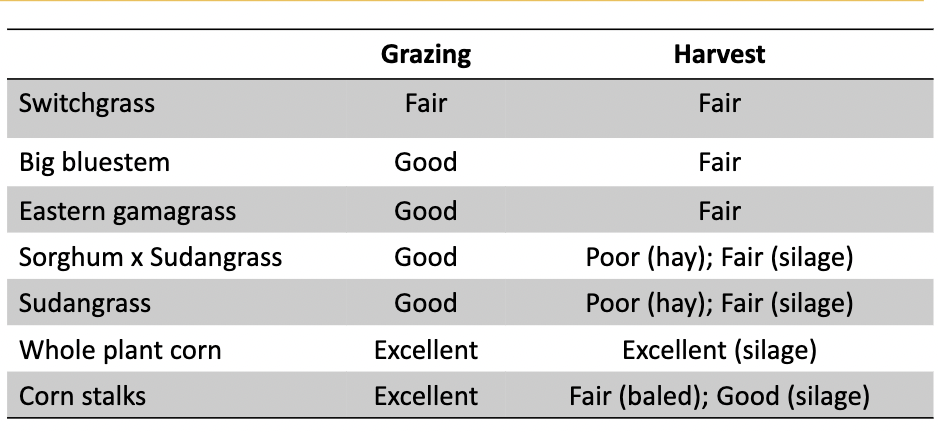
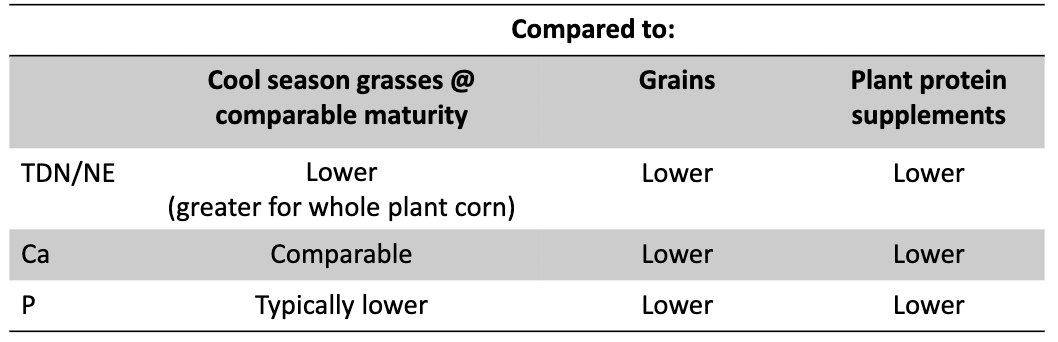
Nutritional qualities of warm season grasses
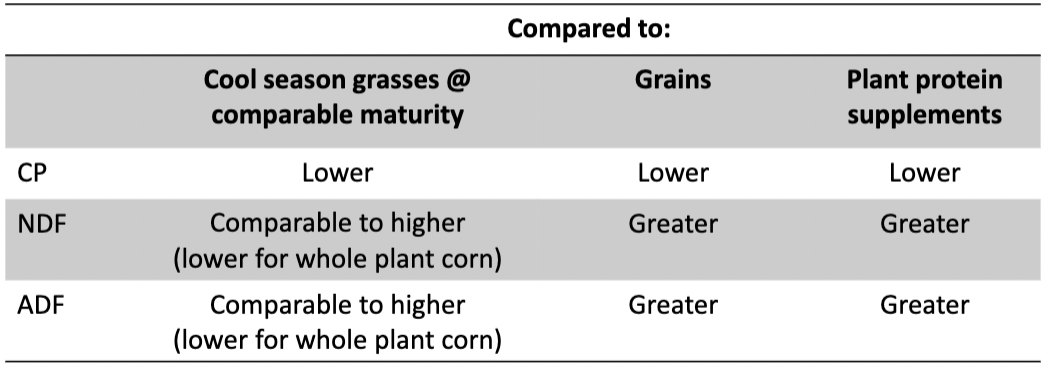
Anti-quality factors in warm season grasses
Nitrates
Cyanogenic glycosides
Nitrates
drought stricken forages
inhibit oxygen transported by hemoglobin
Management:
ensile crops
dilute high nitrate feeds with other feeds such as grains
Cyanogenic glycosides
Present in new growth of sorghum x sudangrass and sudangrass forages
converted to hydrocyanic acid
inhibits oxygen uptake by hemoglobin
Management of Cyanogenic Glycosides
Avoid grazing until forage is a minimum of 18 inches tall
Horses very susceptible
Pandas and lemurs not an issue
Legumes
High yield and very palatable
Higher digestibility than grasses
Can be mixed with grasses
Growth greatest in spring → more uniform growth over the season compared to grasses
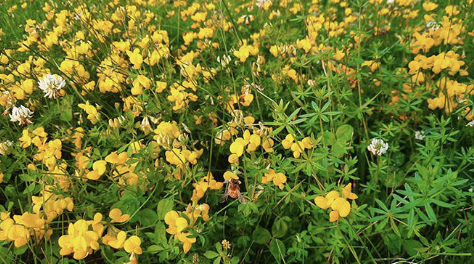
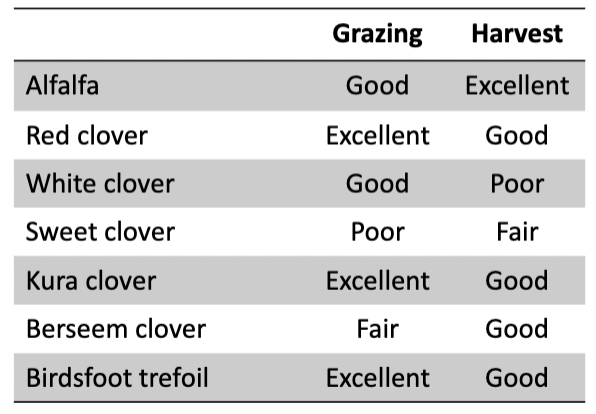
Use of legumes
Nutritional qualities of legumes
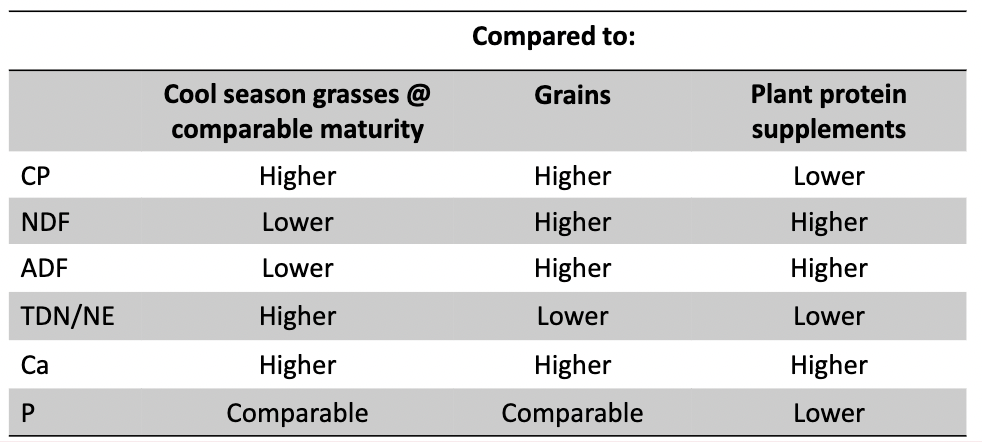
Anti-quality factors in legumes
Slafractonia leguminicola
Bloat
Phytoestrogens
Coumarin
Tannins
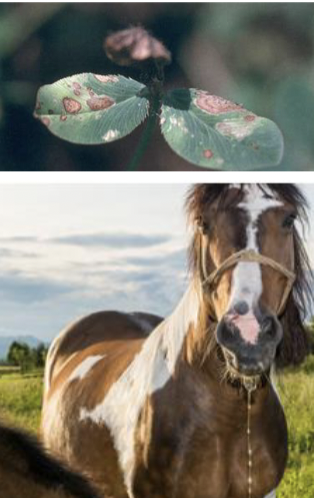
Slafractonia leguminicola
Fungus that grows on legumes (“black patch disease”)
Slobbering horses
Risk of dehydration due to excessive saliva production
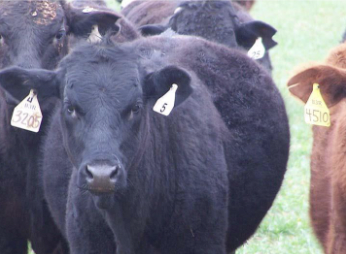
Bloat
Inability to release fermentation gases
Occurs in ruminants consuming fresh, immature legumes
Caused by high concentrations of soluble protein that results in the formation of foam in the rumen
inhibits eructation
can result on death
Bloat Prevention
Plant mixtures of grasses and legumes
Allow legumes to mature before grazing
Feed dry hay before placing on pastures
Avoid moving animals to pastures containing a high concentration of legumes early in the morning
Limit daily forage allowance
Have water available in each paddock of a rotationally grazed pasture
Another way to prevent bloat is to make __________ avaliable to animals grazing legumes
poloxalene
sold as “bloat gaurd”
avaliable in blocks or supplements
Phytoestrogens
present in alfalfa and clover
can affect reproduction and mammary development
Coumarin
present in sweet clover
converted to dicoumarol in moldy sweet-clover
results in hemorrhaging in animals consuming the hay
Tannins
present in birdsfoot trefoil
prevent bloat
reduce protein degradation in rumen
chelates minerals such as iron
Forages are ______ in fiber but _____ in energy and protein
Forages are HIGH in fiber but LOW in energy and protein
T or F: Anti-quality factors in forages can benifit animal health and preformance
FALSE
Anti-quality factors in forages can HARM animal health and preformance
Effective forage management ________ nutrition and ________ health risks
Effective forage management improves nutrition and reduces health risks
Haymaking
Dehydration of green forage to a moisture content of <15%
Nutritional quality affected by:
forage species
maturity
losses during harvest, storage, and feeding
Steps of Haymaking
Harvest
Curing
Raking
Storage
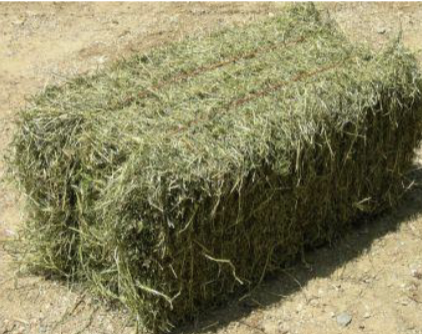
Harvest
Optimum stage of maturity to provide maximum yield
Typically “early bloom” stage of maturity is ideal (depends on market)
Very weather dependant
Time of day dependent (early AM has less sugar and more protein)
Curing & 3. Raking
Reduce moisture content to store without spoilage or nutrient loss
Goal is 18-22% moisture
Raking facilities drying
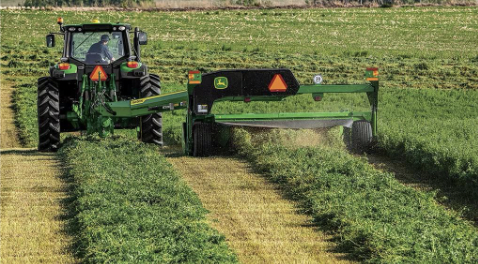
Curing & raking: Conditioning & chemical conditioners
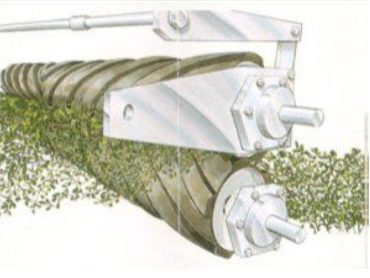
Conditioning:
crimpers crush plant stems between rollers
facilitates the drying process
Chemical conditioners:
reduces drying time by ½ day
Effective on legumes, but not on grass
Bailing and Storage
Done as soon as possible when hay is dry
square bales need covered storage to prevent rain exposure
Round bales shed water and can be left in field
_______ hay is LESS susceptible to damage
GRASS
Forage quality
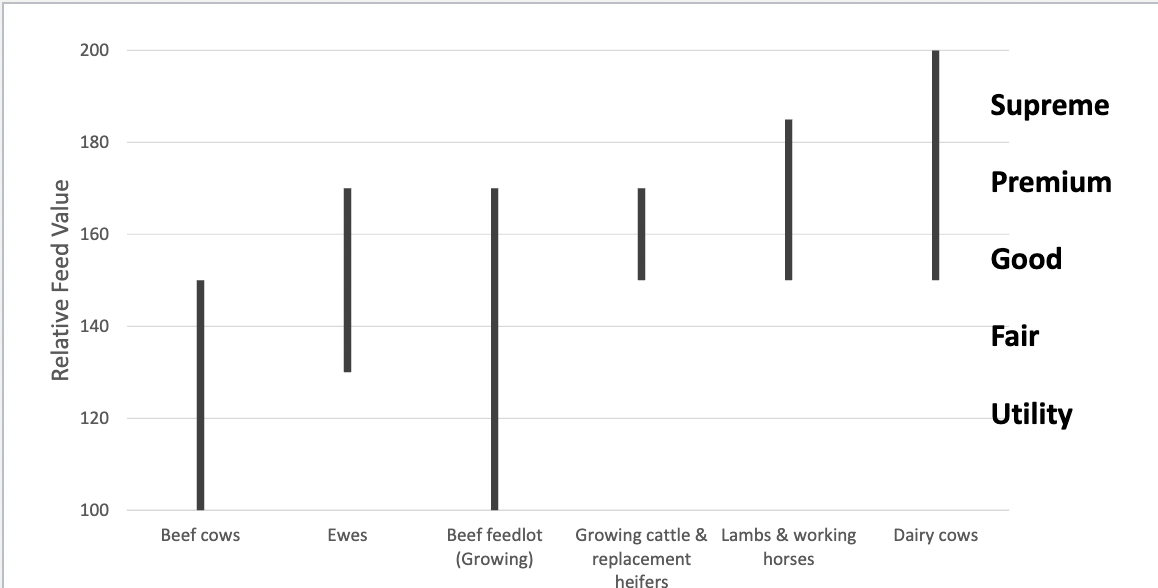
Relative feed value
calculated value used to determine quality of forage (hay)
Based on digestible DM, DMI, ADF, and NDF
Leaf Loss
Compared to stems, leaves contain:
More protein, sugars, carotenoids, and minerals
Less NDF and ADF
Loss increased by:
raking at higher DM concentrations
Bailing with a large round baler compared to square bales
Rain, particularly if the forage is relatively dry
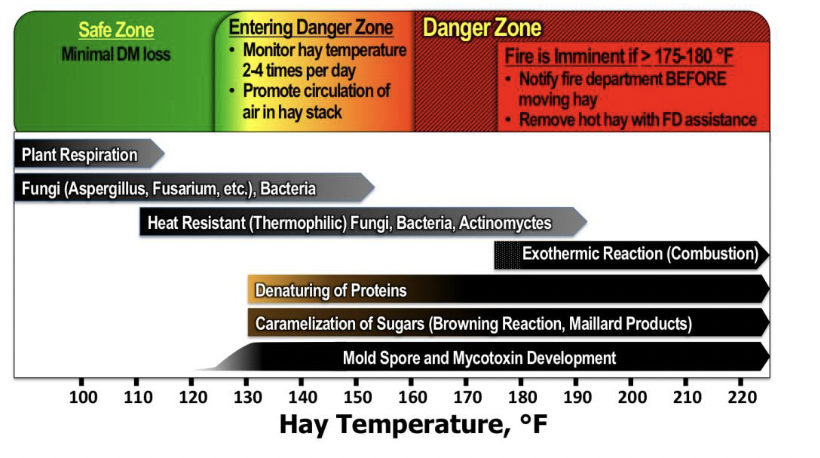
Heat Damage
Occurs when hay is stored at moisture >18%
Stimulates growth of aerobic bacteria and mold
metabolizes sugars and starch
causes additional heating
temp >120˚F = damage to proteins, temp >160˚F = spontaneous combustion
Results in decreased net energy and decreased protein digestion (ADIN)
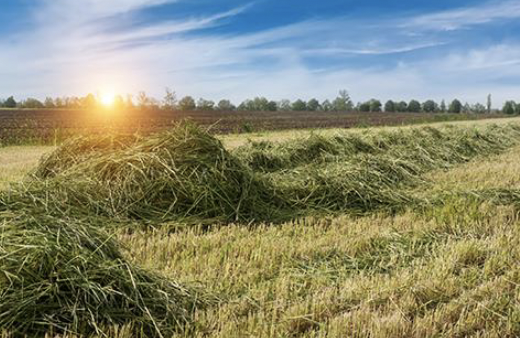
Bleachinng
exposure to sunlight
results in color loss (loss of chlorophyll)
loss of beta-carotene and vitamin A activity
Leaching
loss os soluble nutrients in rainfall or snow melt
Occurs during:
rainfall prior to bailing
outside storage of bales
Losses greater from legumes than grasses
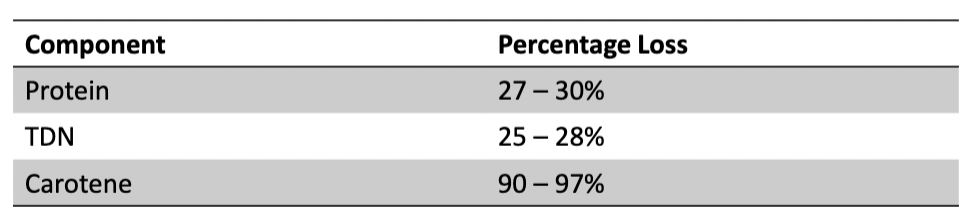
T or F: Hay does not have the same nutritive value as the fresh forage
True
Substantial loss of nutrients
Hay preservatives
Allow aerobic storage of hay at higher moisture content (25-30% DM)
inhibits microbial activity
Propionic acid, acetic acid, sodium propionate, or sodium diacetate
Anhydrous ammonia at 60lbs/ton
effective fungicide
do not use on high-quality hay
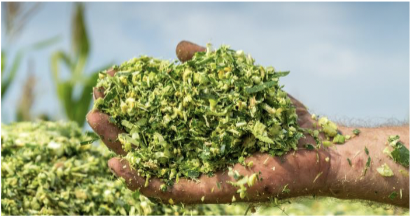
Ensilling
Storage of a forage or grain crop at a relatively high moisture content
Anaerobic conditions allow for fermentation
Preserved by lactic acid as long as not exposed to oxygen
Important factors for ensiling
dry matter, pH, and anaerobic conditions
Goals:
decrease pH of ensiled crop to <4
Increase lactic acid concentration of ensiled crop to >4% of DM
Ensiling: Molding and heating of crop
occurs if forage is exposed to oxygen
forage DM% > 60%
Butyrate acid production, protein degradation, and seepage from silage
forage DM% < 30%
Dependent on forage species
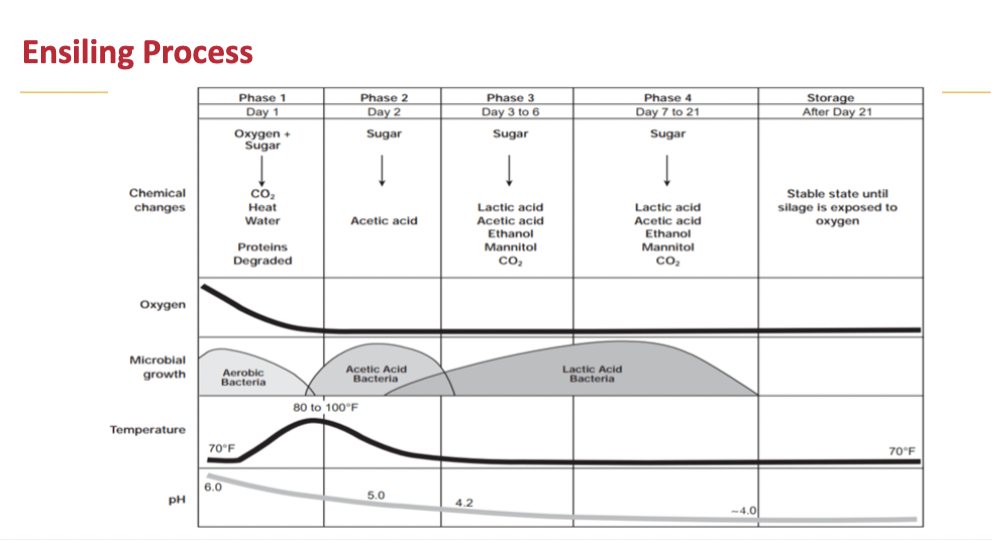
Aerobic phase
Plant respiration continues until anaerobic conditions set in
Acetic acid-producing bacteria oxidize sugars, consume O2
Temp increases to 80-100˚ F
Less than 24 hours
Heterofermentative phase
Bacteria ferment sugars to acetic acid, lactic acid, and CO2
pH decreased to 5.0
Less than 1 week
Homofermentative Phase
Lactic acid bacteria ferment sugars to lactic acid
increased concentration of lactic acid (6-8% of DM)
pH decreases to 3.8 - 4.2
Less than 2 weeks
Storage Phase
If not exposed to oxygen → forage well preserved with little change in composition
If exposed to oxygen → aerobic bacteria and mold growth, growth of listeria bacteria
Feedout phase
Exposes silage to oxygen
Growth of aerobic bacteria and molds
Results in heating, loss of lactic acid, nutrient loss, and decreased palatability
Losses minimized by adequate feedout rate
Match diameter of tower silos or width of bunker to herd size
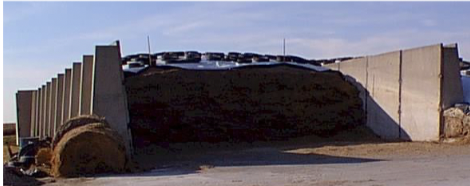
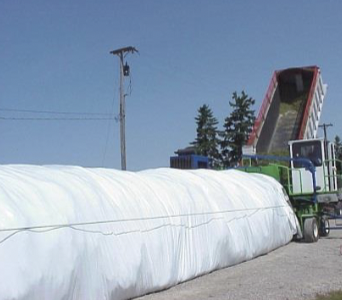
Storage types:
Tower → easy to pack, minimal exposed surface, expensive
Bunker or trench → difficult to pack, requires cover, considerable surface area at feeding, less expensive than towers
Silo bags → easy to pack, minimal exposed surface, versatile, bags subject to punctures and tears, relatively low capital investment
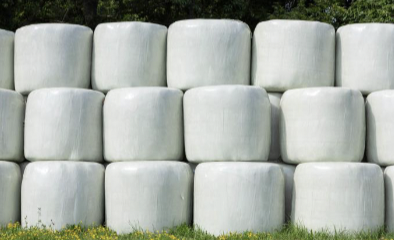
Baleage
45-55% moisture
full stem
baled
wrapped in plastic within 12-24 hours
equipment cheaper than ensiling
Haylage
60-70% moisture
chopped (silage chopper)
smaller particle size
packed as with ensiling
ensils faster
needs similar equipment as with silage
Nutrient composition of silage
• Lower NDF, but comparable ADF to fresh crop or hay
• Comparable net energy concentration to fresh crop
• Comparable crude protein concentration to fresh crop and greater than hay
• Greater proportion of crude protein degraded in the rumen than fresh crop or hay
• Higher carotene content than hay (greater vitamin A activity)
T or F: Hay quality depends on timing, technique, and minimizing handling losses
True
________ control is vital to prevent spolage and heat damage
Moisture
_________ & __________ impact forage nutritional value
Leaf retention
&
Storage type
Effective ensiling requires proper fermentation under ___________ conditions
anaerobic
T or F: Silage, haylage, and baleage vary in moisture, processing, and storage needs
True
Feed additive
an ingredient or combination of ingredients added to the basic feed
mix...to fulfill a specific need
usually used in micro quantities and requires careful handling and
mixing
Major classes of Feed Additives
Growth promotion and feed efficiency
Medical uses
Hormone-like products
Other uses
Use of feed additives is strictly regulated to ensure:
Human food safety
Animal Safety
additive efficiency
Minimal environmental impact
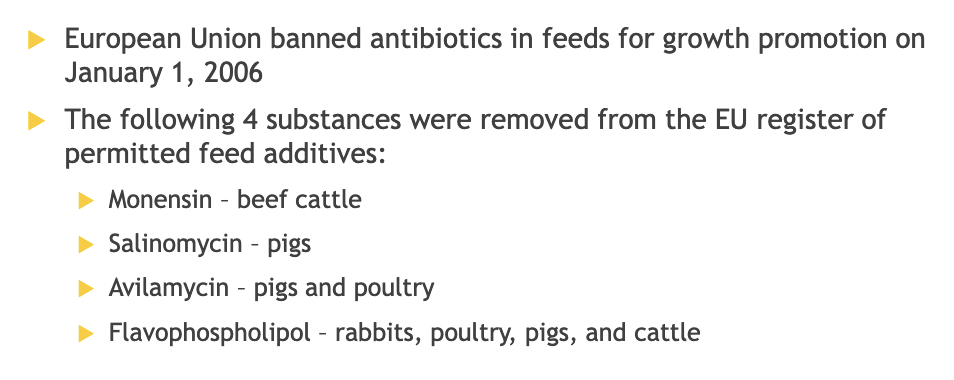
International marketing of animal products has led to more uniformity in regulations among countries
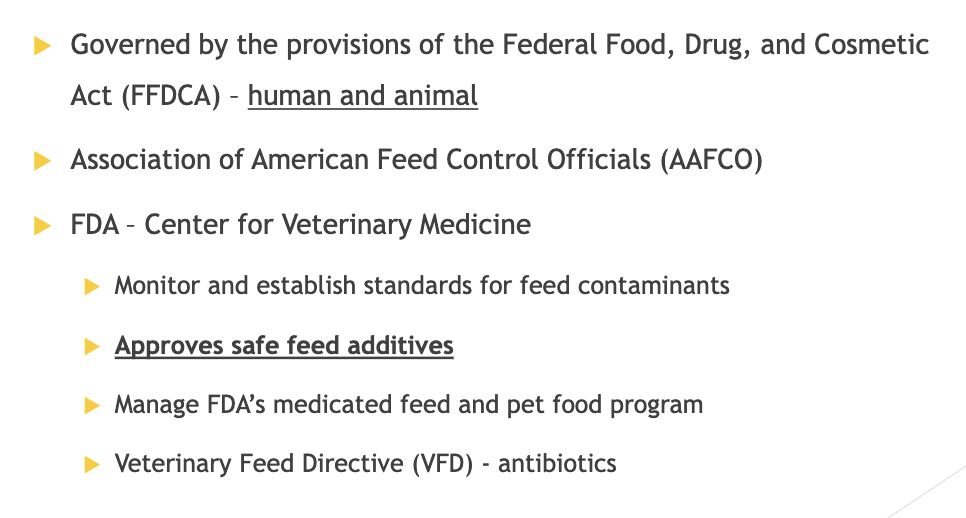
Controlled
Regulations
Additives classed as drugs
controlled by the FDA (CVM)
Federal law states that no animal drug can be used in feed until adequate research submitted to the FDA proves the drugs is both safe and effective
manufacturers go through extensive testing (expensive)
Additives classed as drugs: Antibiotics
compounds produced by microorganisms
Inhibit growth/metabolism of some (not all) other microorganism
Most antibiotic names end in –cin or –mycin
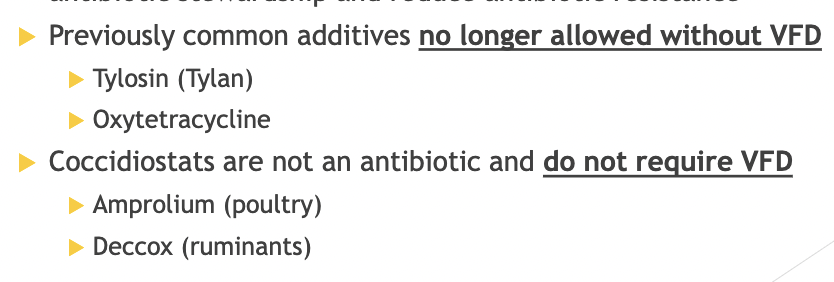
Require Veterinary Feed Directive (VFD) → goal to improve antibiotic stewardship and reduce antibiotic resistance
VFD requirements
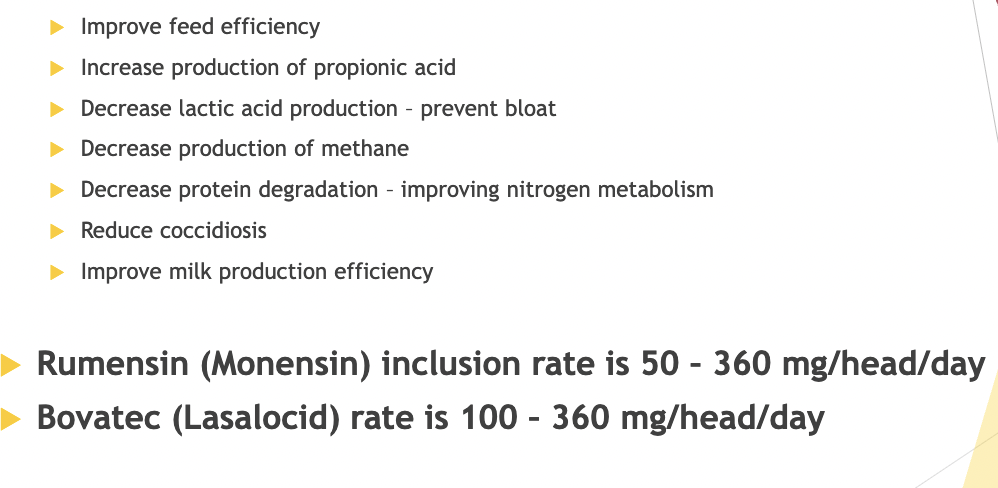
Growth promotion and feed efficiency
2 antibiotics used in ruminants:
monensin (Rumensin) (cattle only)
lasalocid (Bovatec)
used in both growing and mature animals
also Ionophores
Ionophores
do not require VFD
Mode of action is to disrupt ion movement across cell membranes of affected bacterial species in the rumen
Shifts bacteria to production of propionic acid and away from acetic acid
energy from propionic acid is more efficient - less carbon lost as CO2
Ionophore inclusion (Ruminants only)