anatomy final female reproductive system + diagrams
 Call Kai
 Learn
Learn Practice Test
 Spaced Repetition
 Match
Match Flashcards
 Knowt Play
1/153

There's no tags or description
Looks like no tags are added yet.
Name | Mastery | Learn | Test | Matching | Spaced | Call with Kai |
|---|
No analytics yet
Send a link to your students to track their progress
154 Terms
vulva
external genitalia region of the anatomic female
what is included in the vulva?
the mons pubis, the labia majora and minora, clitoris, vestibule, and vaginal/urethral orifices
function of mammary glands
produce breastmilk
where does the breast sit?
anterior to the pectoralis major and serratus anterior muscles
mammary glands are…
exocrine and modified sudoriferous glands
what must happen for milk ejection to occur?
oxytocin causing myoepithelial cells to contract, propelling milk through duct system and through the nipple
the mucosa of the vagina is comprised of
non-keratinized stratified squamous epithelium
three principle functions of the vagina
menstrual exit, birth canal, sexual intercourse
posterior fornix
false cervix created when the posterior part of the vagina extends postero-superiorly
the uterus
hollow but highly muscular organ with several parts including fundus, the body, and the cervix
the fundus
the part of the uterus opposite to the distal opening
the cervix
the distal opening into the vaginal canal
what happens when the uterus engages in the menstrual cycle?
the endometrium grows, sloughs off, and regrows again
the endometrium
innermost layer of the uterus; important in facilitating the implantation and growth of a fertilized ovum and to the formation/structure of the placenta
ovarian arteries
paired arteries coming directly off of the descending aorta immediately inferior to the renal arteries; runs through the suspensory ligament; forms an anastomosis w/a branch of the uterine artery
suspensory ligament
secures the ovary to the abdominal wall
uterine arteries
arises from the internal iliac artery as a common artery w/the vaginal artery; promptly splits and continues on its own to supply myometrium and endometrium of uterus
the uterine arteries gives off the _____ and _____ arteries which supplies the deep myometrium and the endometrium
straight, spiral
the uterine arteries also gives off the _____ which will form an anastomosis with the ovarian artery
ovarian branch
the vaginal artery
splits from internal iliac artery to supply the muscle and mucosal layers of the vagina; does NOT anastomose with either of the other arteries
uterine (fallopian) tubes
bilateral tubes which extend laterally off of the fundus of the uterus; help to loosely connect the uterus to the ovaries
what are the uterine tubes lined with?
ciliated epithelial cells and smooth muscle
what facilitates the transport of a secondary oocyte/zygote to the uterus for implantation/expulsion in the uterine tubes?
peristaltic contractions of smooth muscle
what are the parts of the uterine tube?
infundibulum, fimbriae, ambulla, isthmus
broad ligament
sheet of peritoneum covering the superior aspect of the uterus and ovary
mesovarium
fascia covering the ovary and anchoring it to the uterine tube
proper ovarian ligament
anchors the ovary to the uterus
suspensory ligament
anchors the ovary to the pelvic cavity and house the ovarian artery
what do the ovaries produce?
secondary oocytes
follicles in the ovary are charged with what secreting hormones?
progesterone, estrogen, inhibin, and relaxin
the ovary has a similar histological arrangement to the
testis
ovarian cortex
a connective tissue capsule layer granting the ovary its shape
ovarian medulla
deepest layer of the ovary; contains loose connective tissue, nerves, blood and lymphatic vessels
oogenesis is the corresponding process in the ovary that ____ is in the testis
spermatogenesis
oogonia
stem cells that complete mitosis during fetal development
the primary oocytes created during oogenesis are
diploid (2n)
atresia
the process in which many primary oocytes begin to degenerate
as puberty commences, primary oocytes will continue through meiosis I as the _____ develops into the _____
follicle, secondary oocyte
after meiosis I what is the resulting product?
one daugther cell and a smaller polar body
the single secondary oocyte will be released during ovulation and will only fully undergo meiosis II if it is
fertilized
if fertilized, the secondary oocyte will give off a _______, which will become a ______
second polar body, zygote
folliculogenesis
the development of the ovarian follicle in anticipation of ovulation
at puberty, what hormone from the hypothalamus stimulates the secretion of FSH and LH
gonadotropin-releasing hormone (GnRH)
follicle stimulating hormone (FSH)
initiate follicular growth and development; estrogen secretion
luteinizing hormone (LH)
stimulates further follicular development and estrogen secretion; triggers ovulation
ovulation results in
the corpus luteum secreting estrogen, progesterone, inhibin, and relaxin
inhibin
inhibits FSH and LH
relaxin
relaxes the uterus and pubic symphsis to get ready for a growing fetus
what hormones are downstream and will act on a negative feedback mechanism?
estrogen and progesterone
estrogen
stimulates the development and maintenance of female reproductive structures and secondary sex characteristics, protein anabolism, decreases blood cholesterol
progesterone
works w/estrogen to prepare the endometrium for implantation; prepares the mammary glands for milk secretion
prior to birth, where do primary oocytes develop?
primoridal follicles (one layer of follicular cells)
will primary oocytes change in the primordial follicles prior to puberty?
no
what happens to the primordial follicle once puberty begins and meiosis I starts?
it changes into a primary follicle
primoridal vs primary follicle
in primary - follicular cells have thickened into granulosa cells (more cubodial)
at the end of meiosis I, the new secondary oocyte is now house in a ______
secondary follicle
what layers surround the secondary oocyte in a secondary follicle?
clear zona pellucida (force field), 2 layers of granulosa cells, theca folliculi cells (outer layer)
corona radiata
inner ring of cells of a tertiary follicle
vesticular follicle
mature follicle, ready for ovulation
antrum
large lake of estrogen within granulosal layer of the follicle
what signifies the successful release of an egg?
outer layer of granulosa cells bleeding into antral lake
after the egg is released, what is the remnant follicle called that remains in the ovary?
corpus luteum
what does the corpus luteum do?
release progesterone to sustain oocyte, signals endometrium to begin building up endometrium
if egg is not fertilized, the corpus luteum becomes _____ which is a white, fibrous scar
corpus albicans
hymen
protects vaginal orifice during emryonic development
labia minora
histological to skin of penis la
labia majora
histological to scrotom
glans clitoris
analogous to glans penis
Explain the functional importance of the environment of the vagina (pH, microbiota)
important for its self-cleansing properties
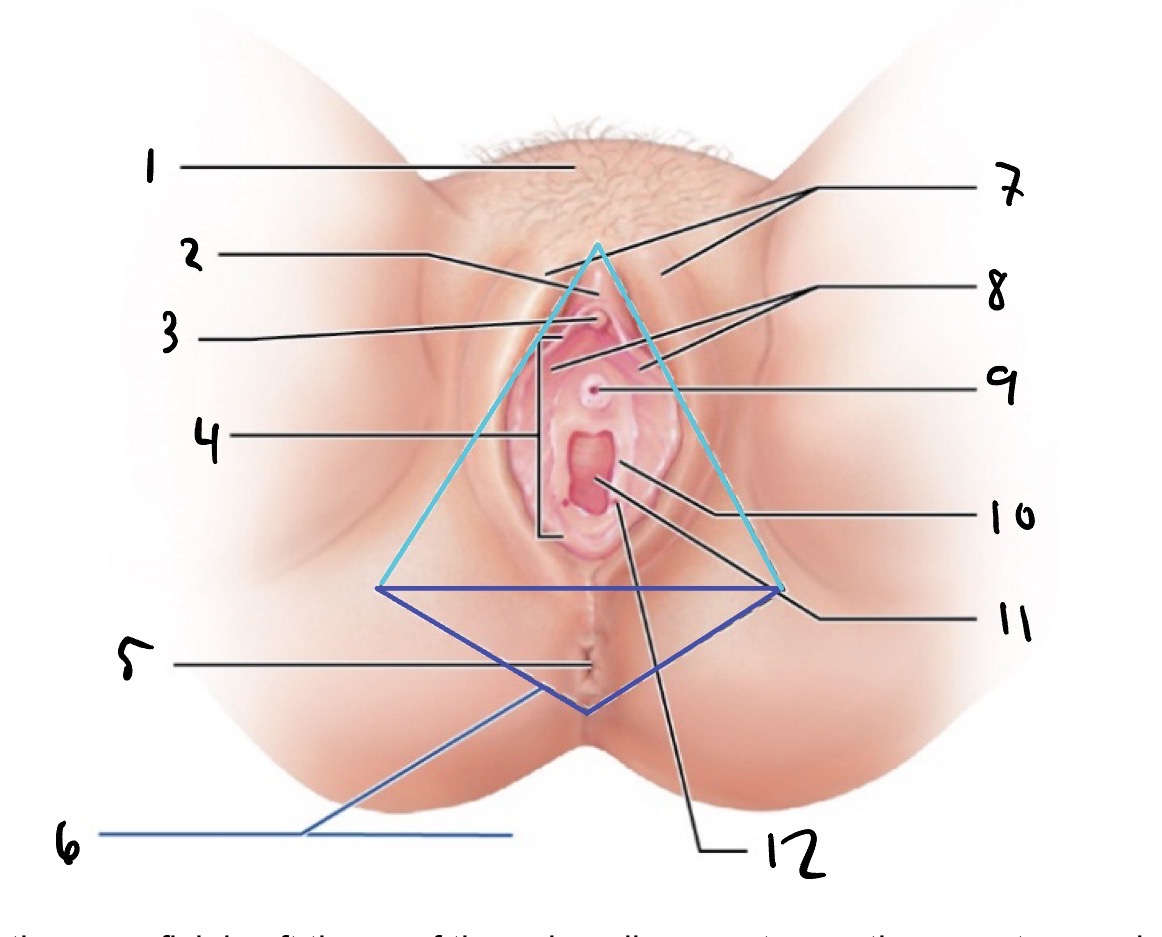
1
mon pubis
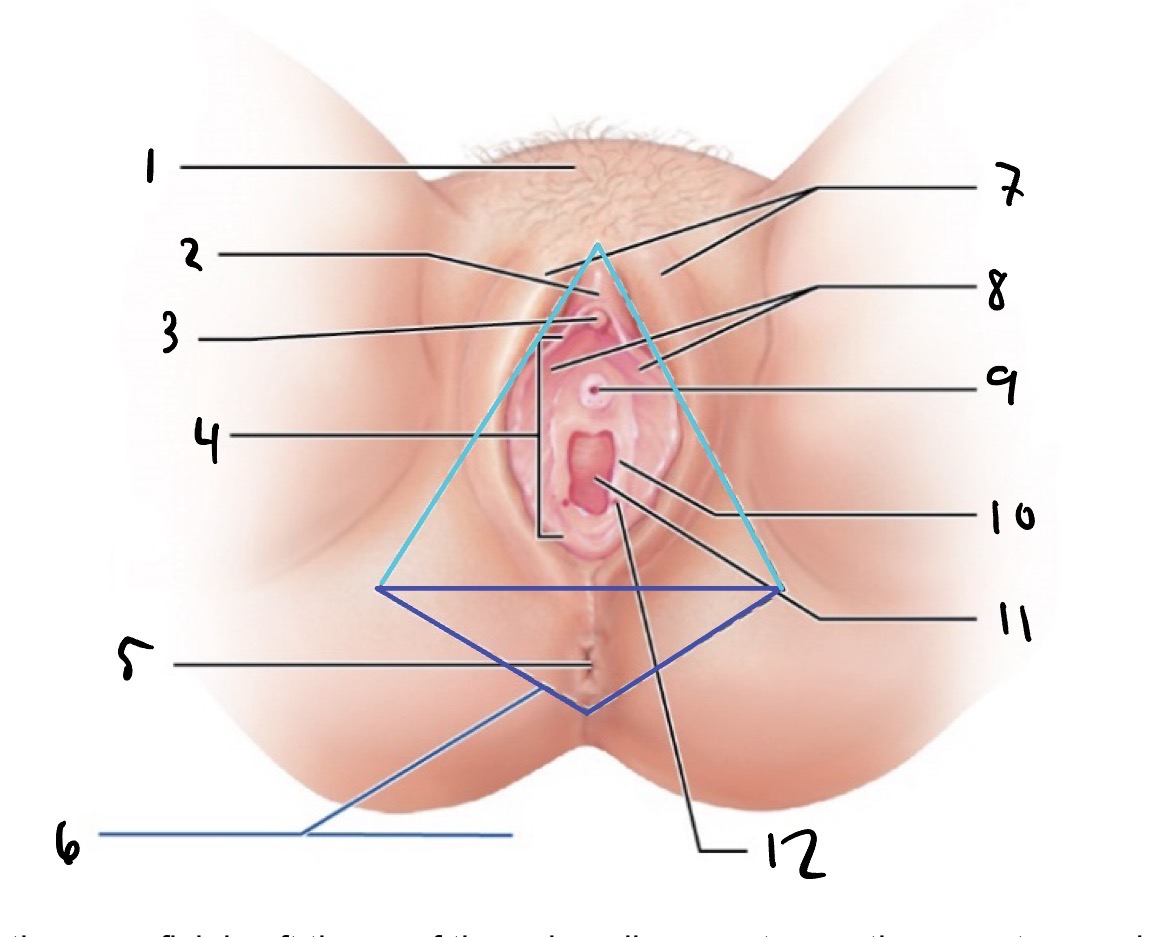
2
prepuce
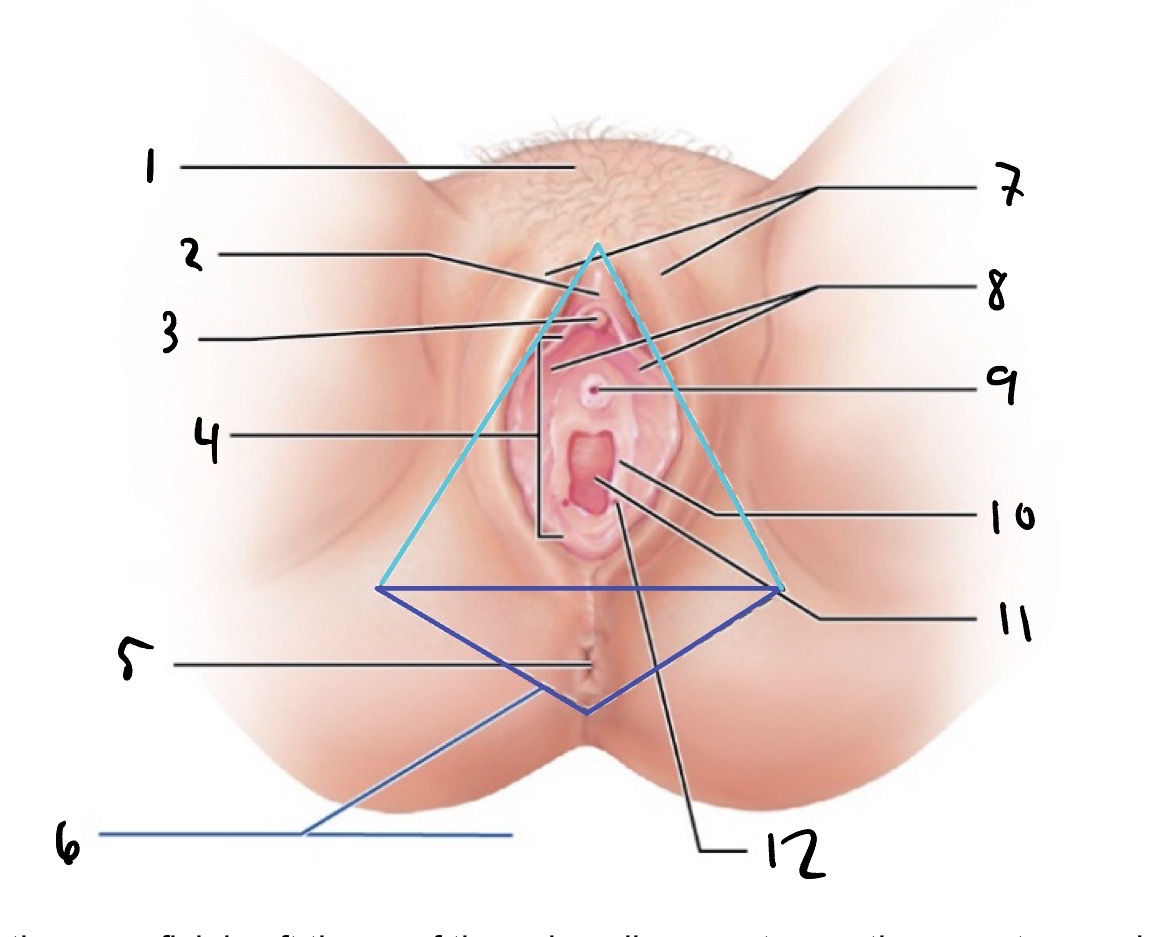
3
glans clitoris
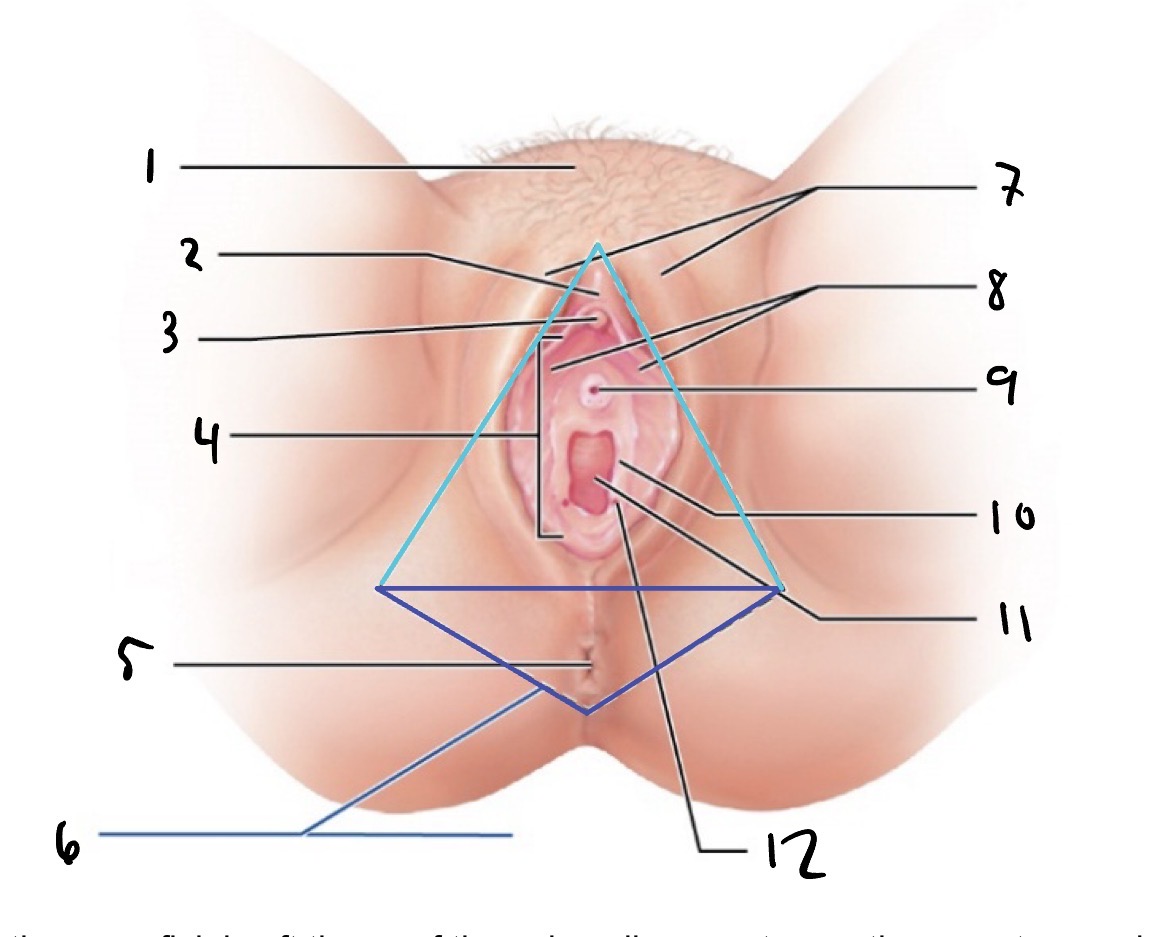
4
vestibule
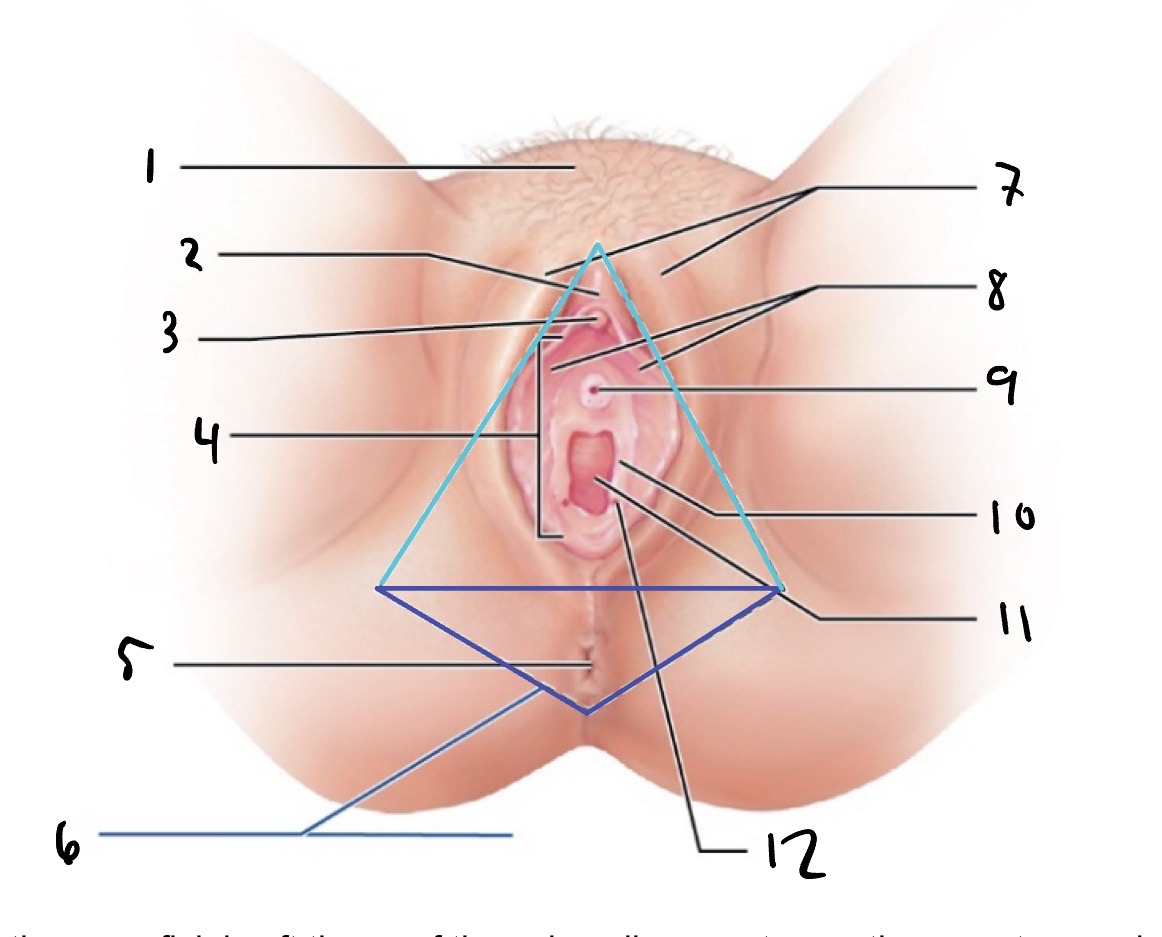
5
anus
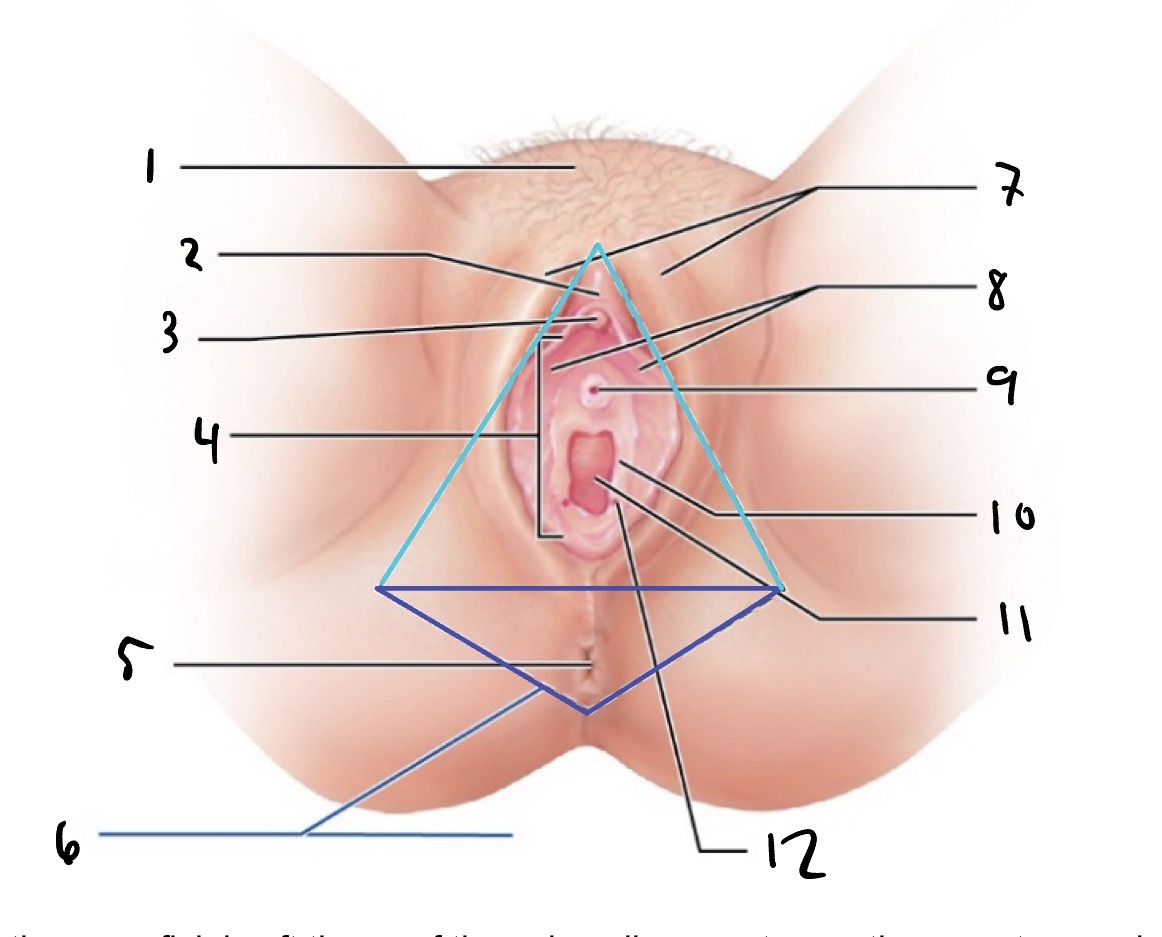
6
boundaries of the perineum
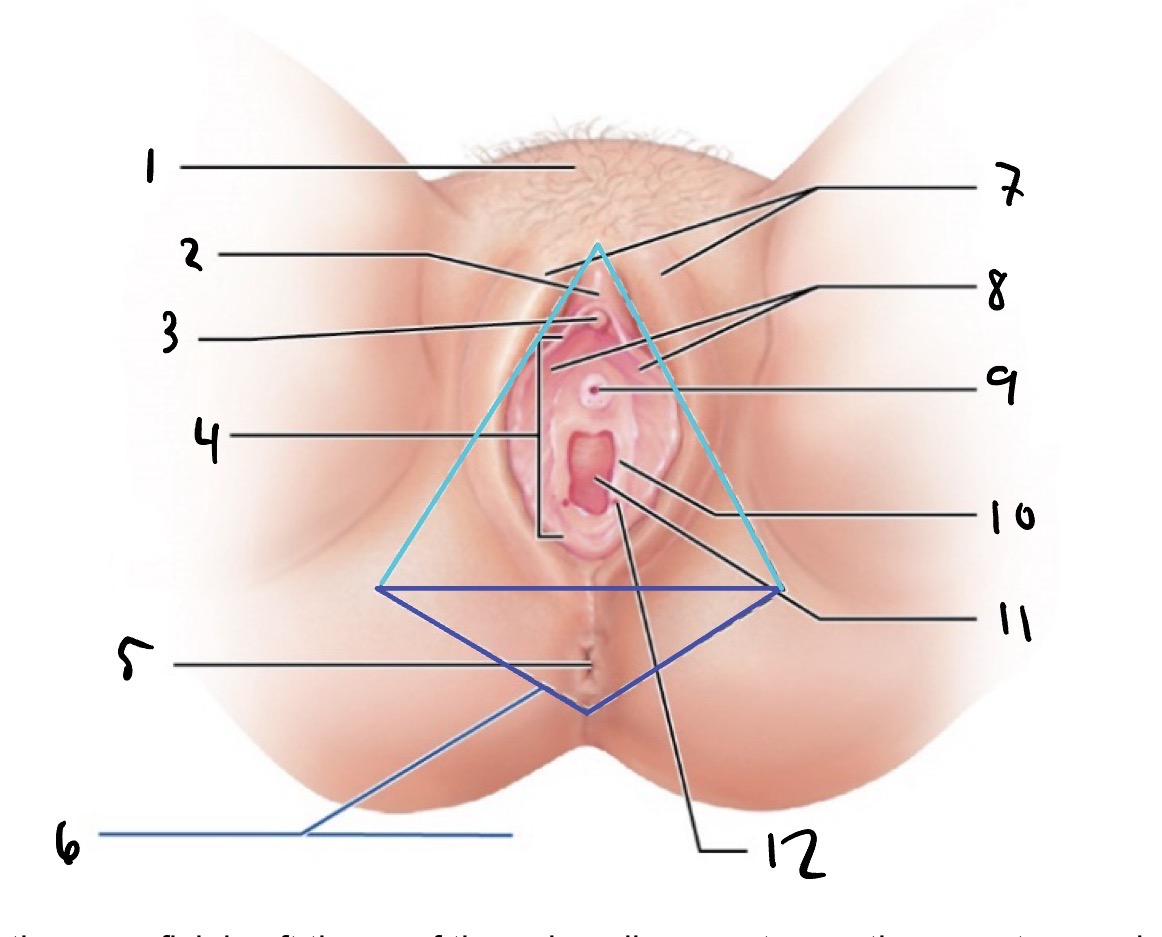
7
labia majora
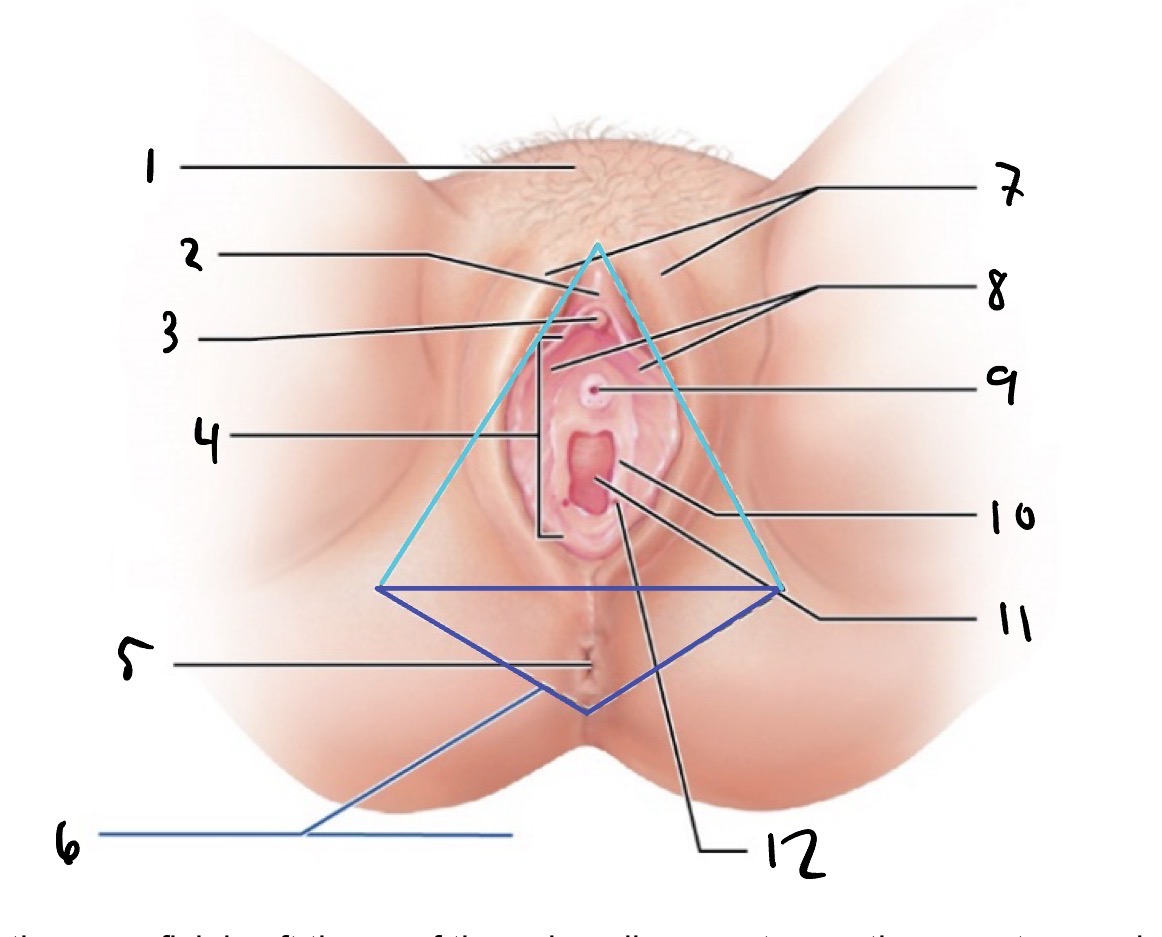
8
labia minora
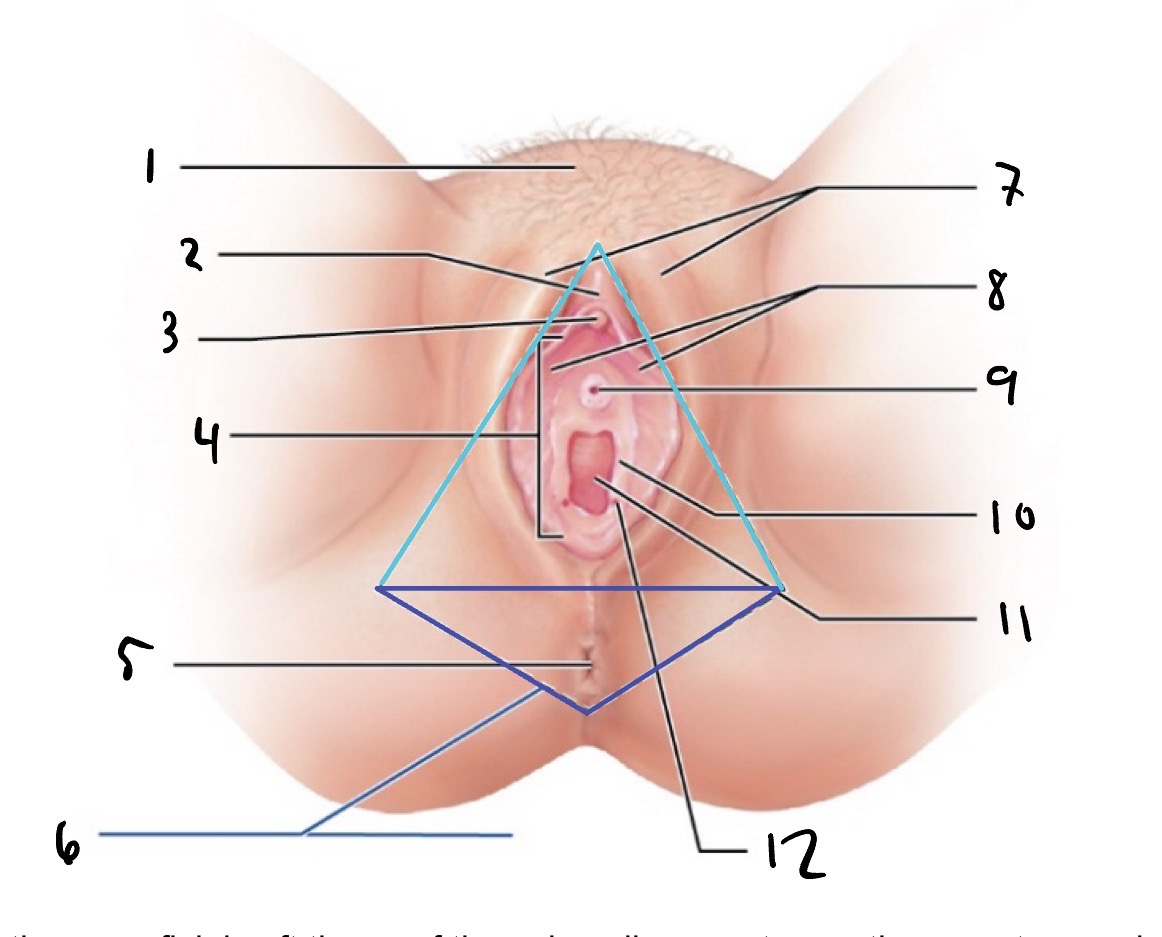
9
external urethral orifice
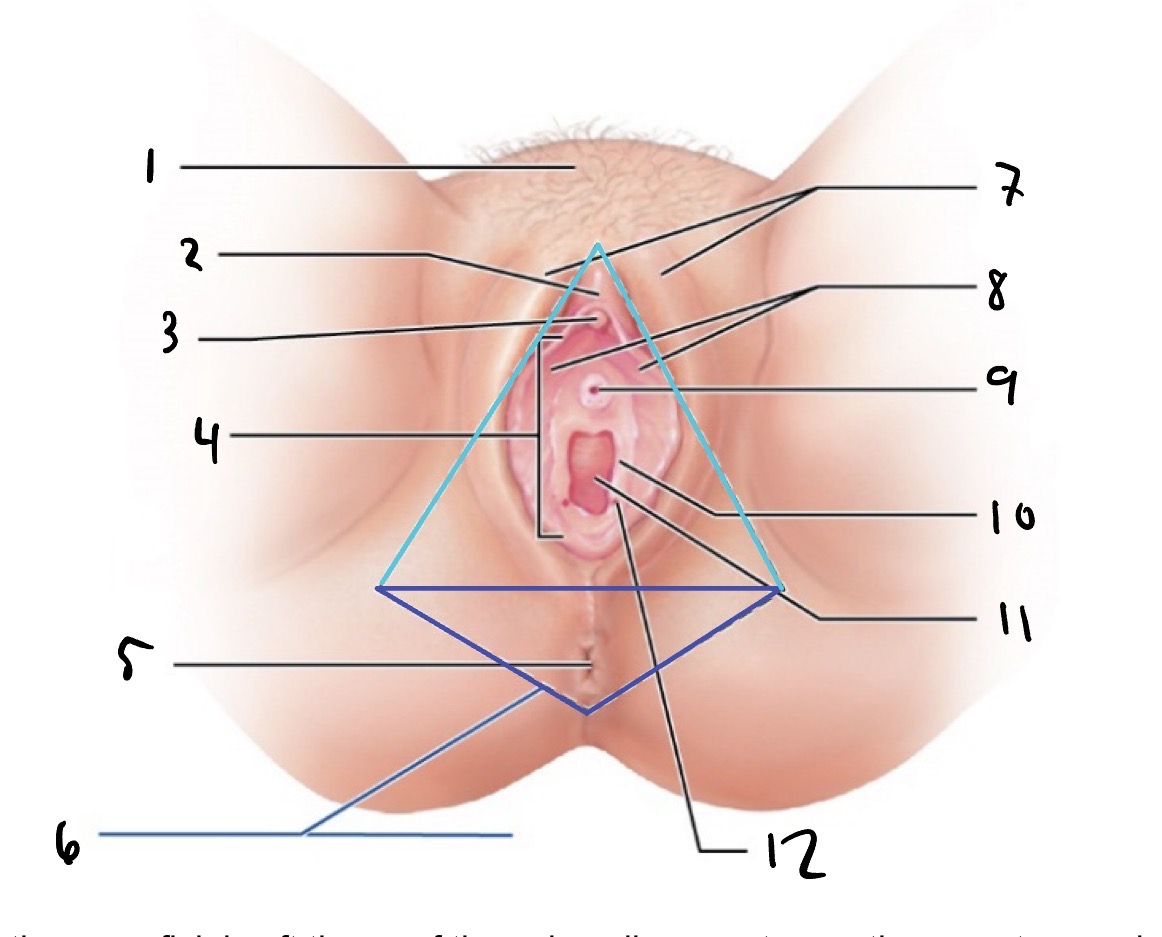
10
hymen
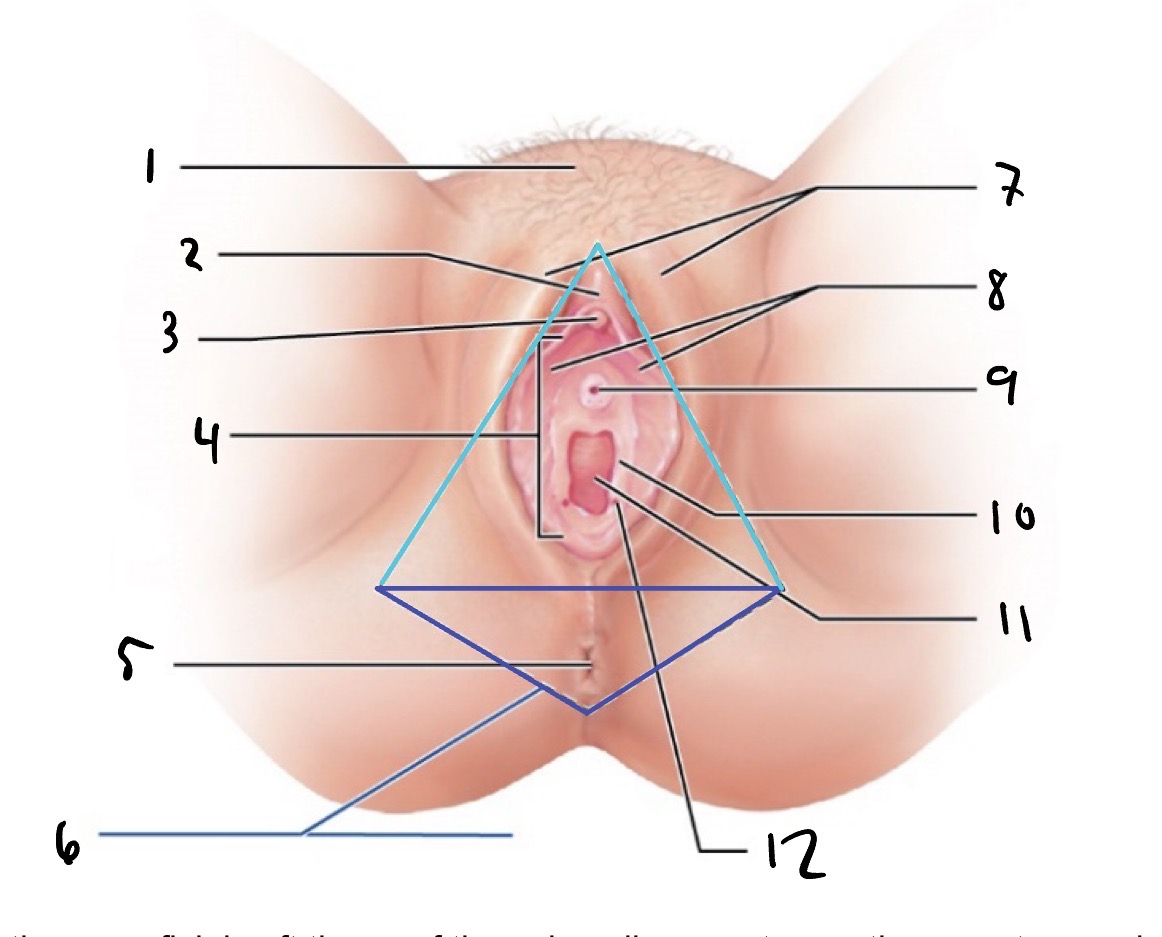
11
vaginal orifice
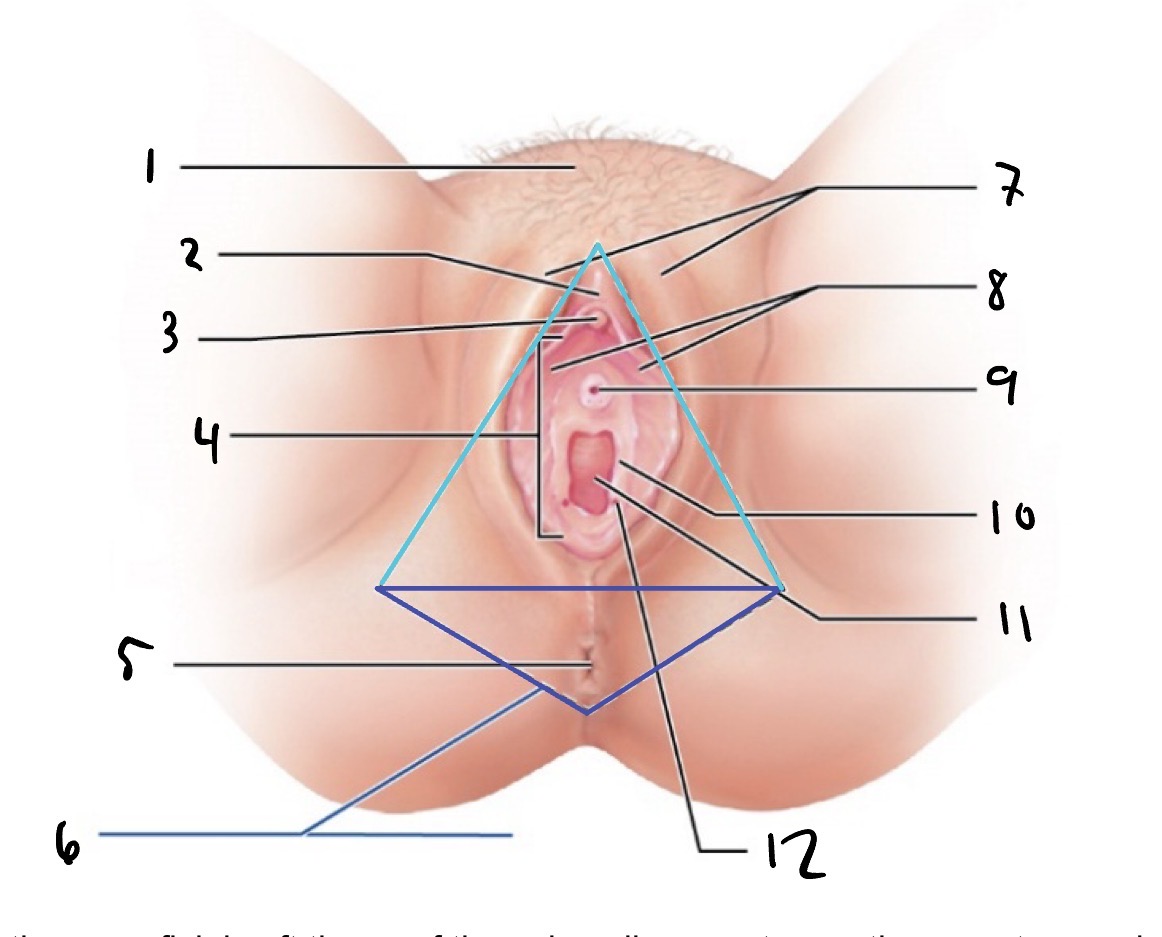
12
opening of vestibular gland
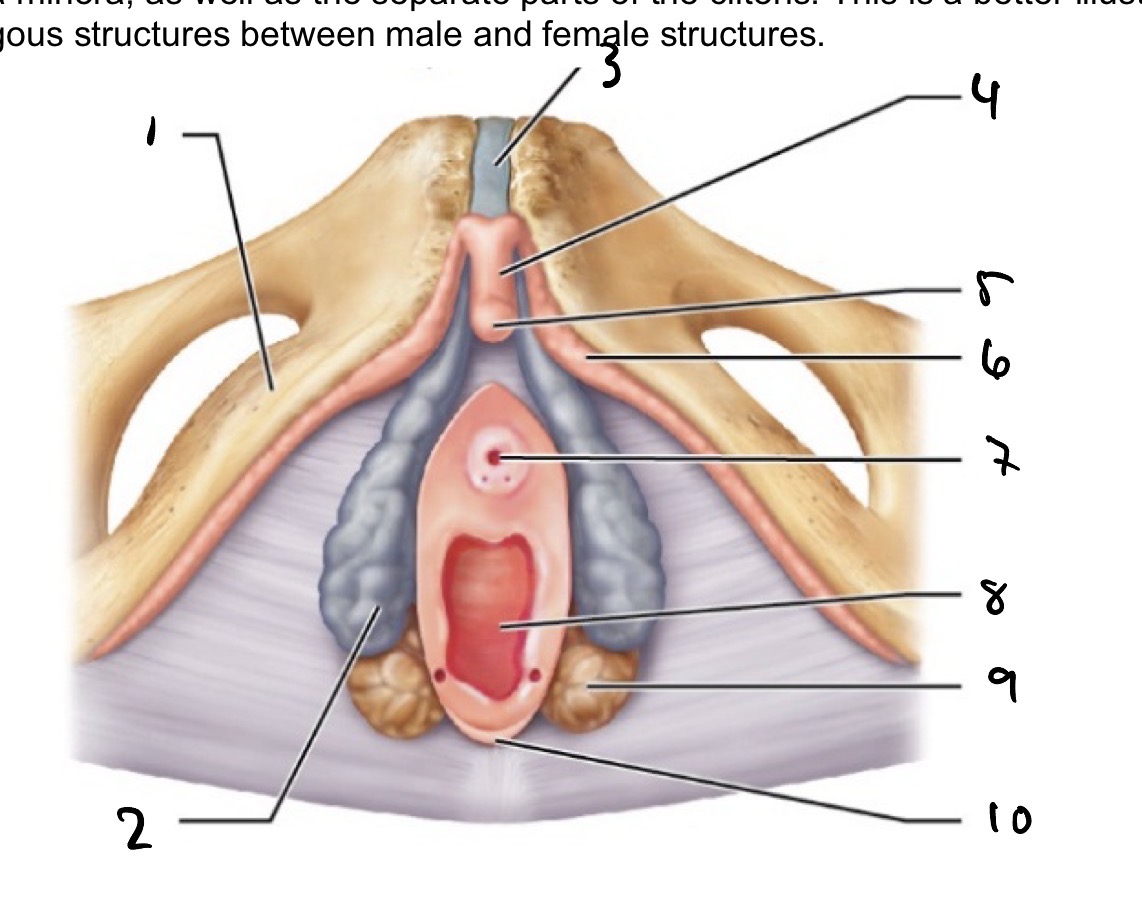
1
pubic ramus
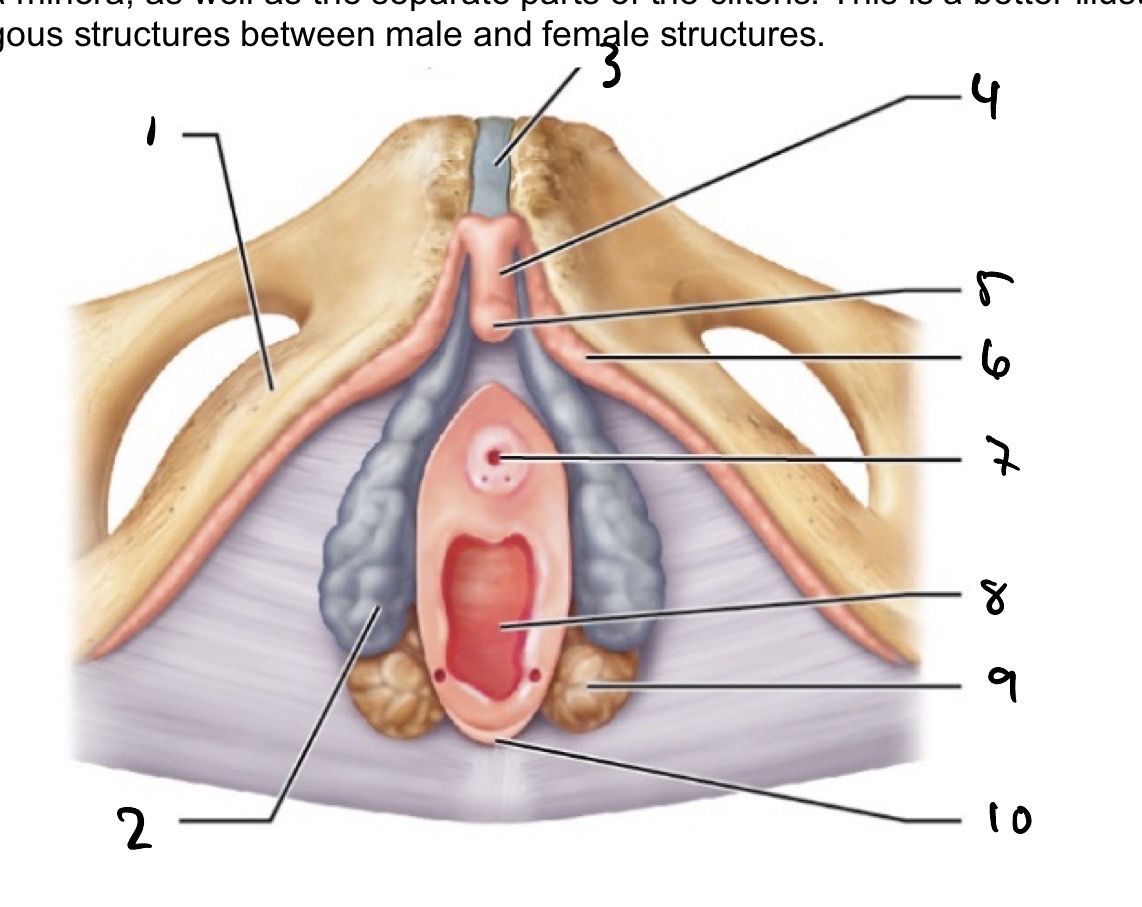
2
bulb of vestibule
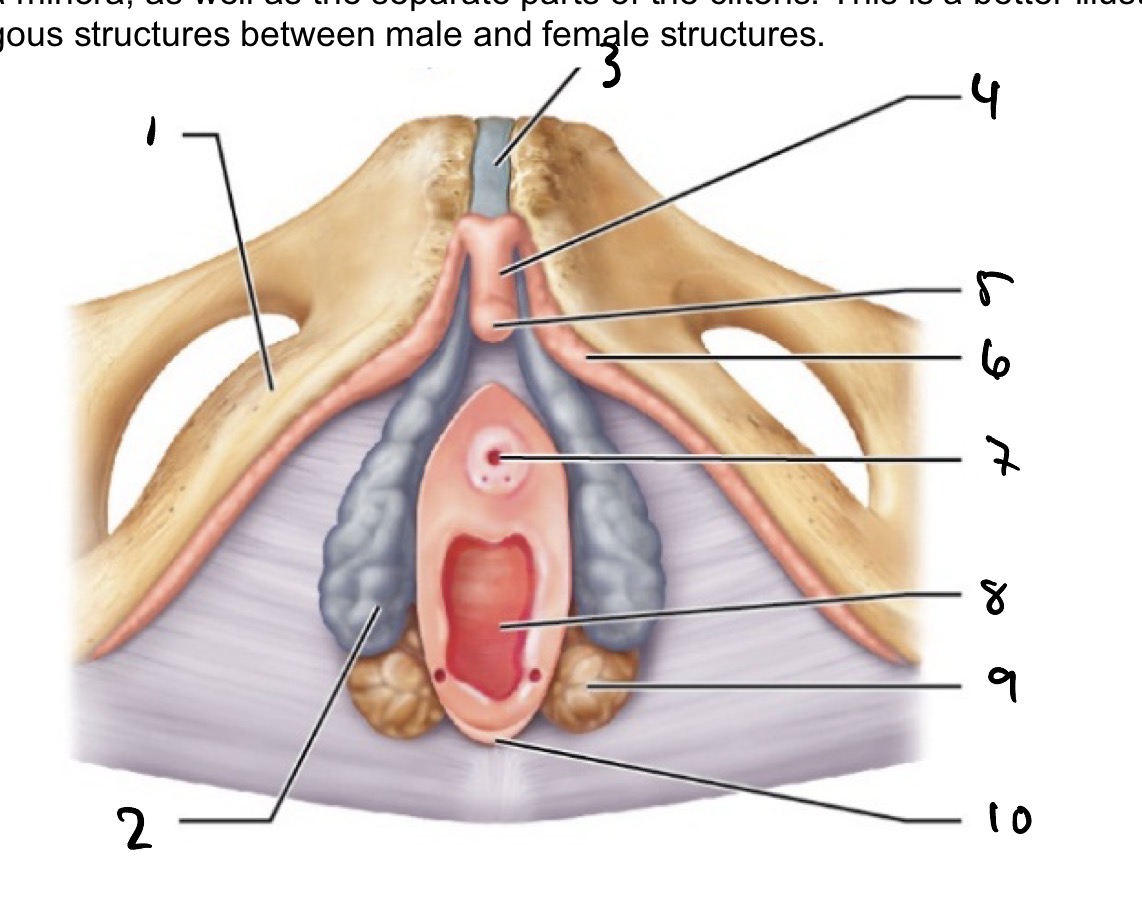
4
body of clitoris
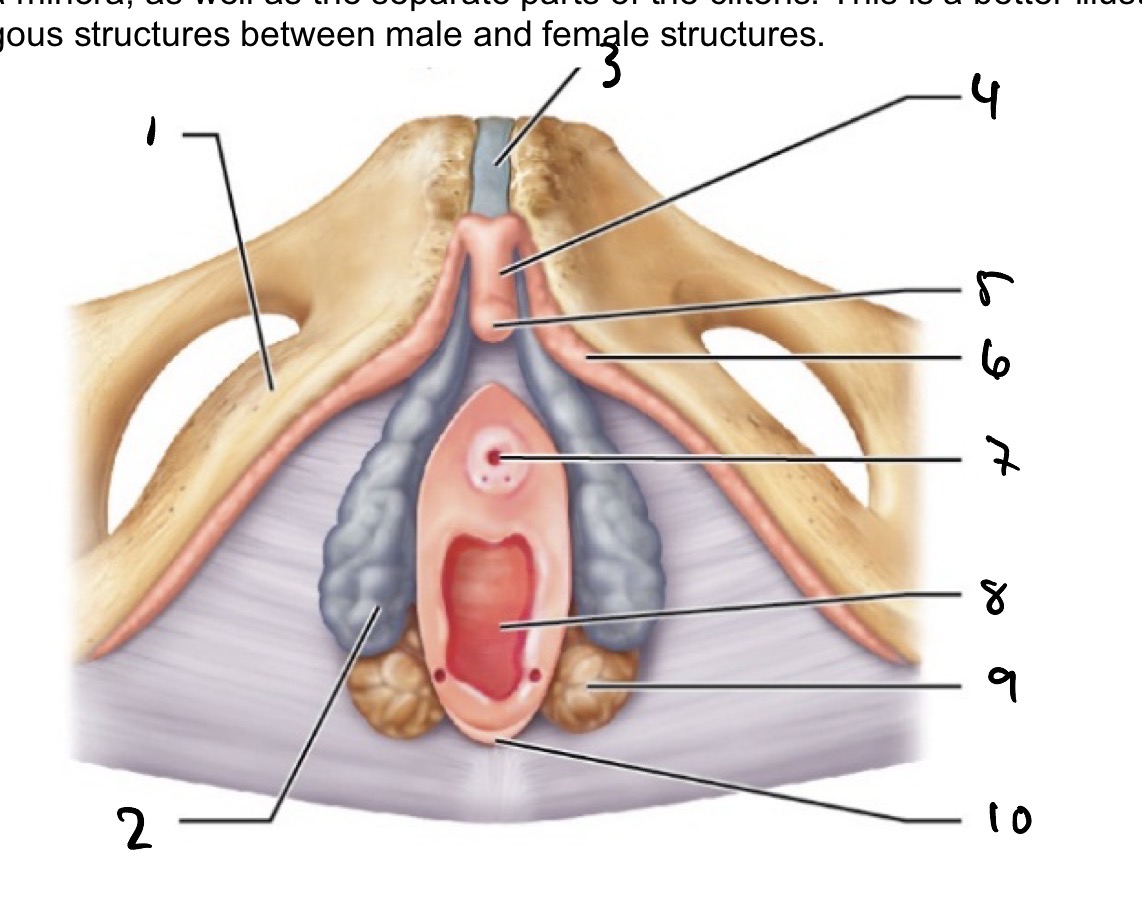
5
glans of clitoris
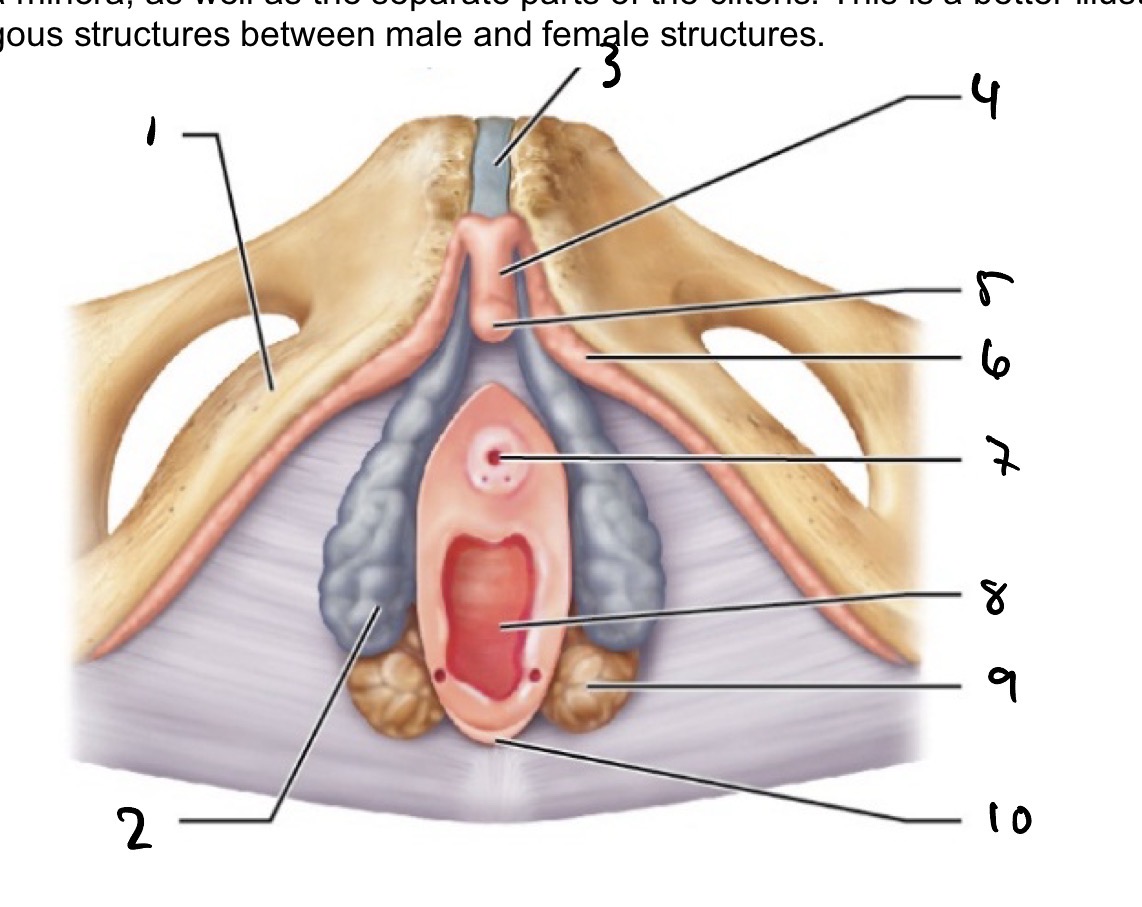
6
crus of clitoris
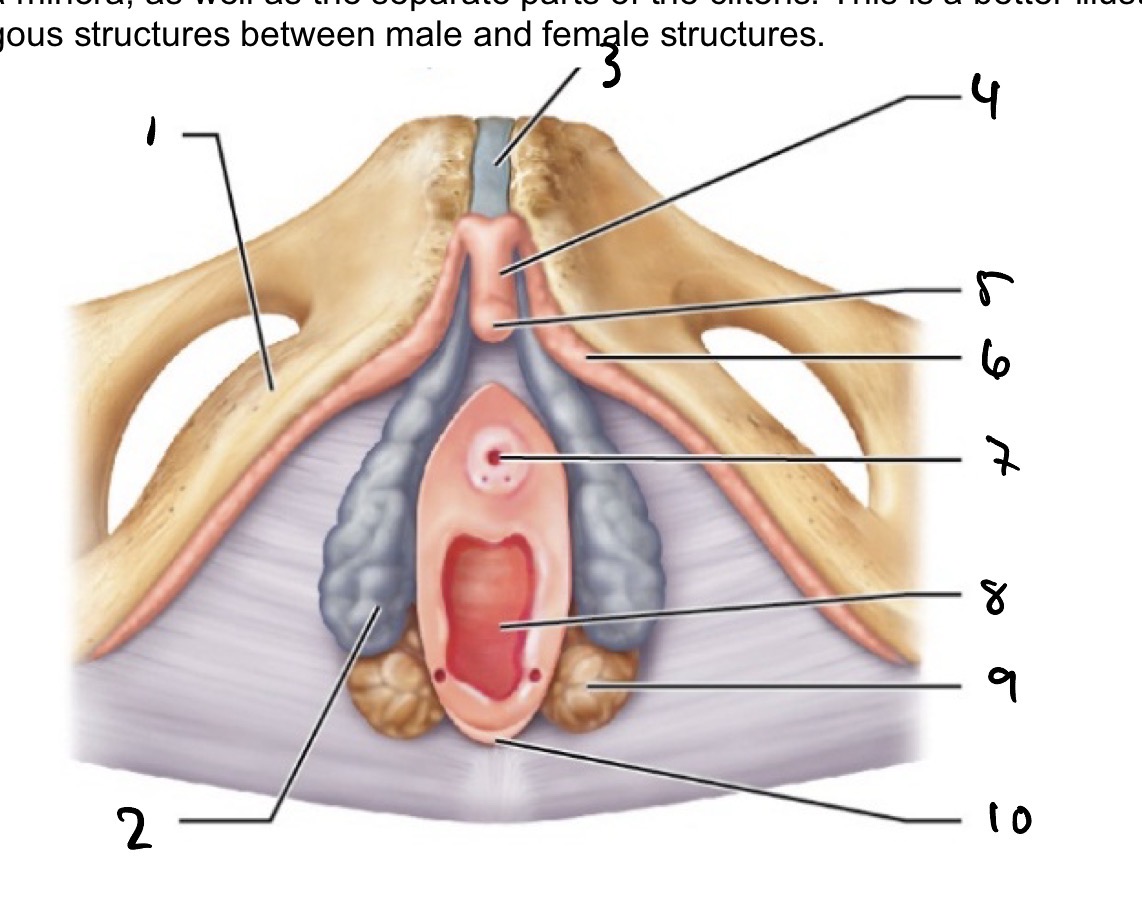
7
external urethral orifice
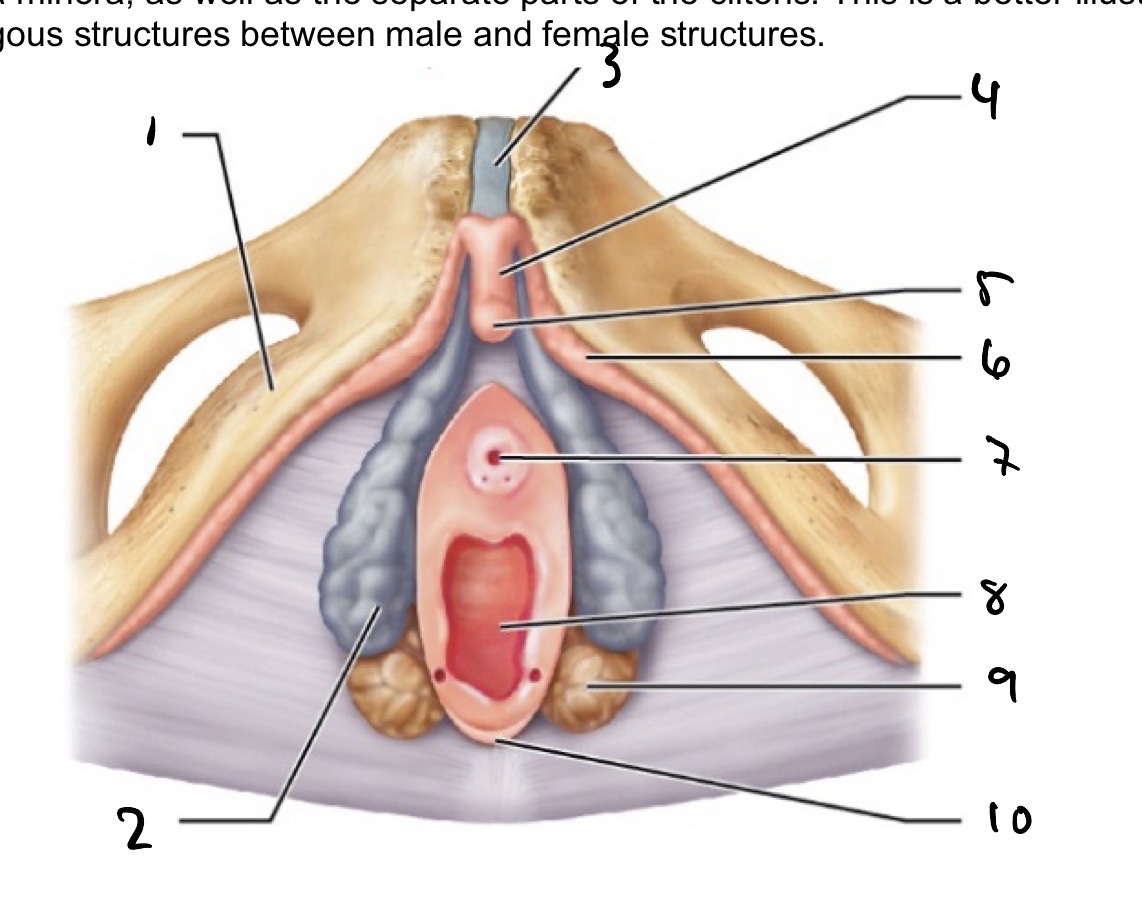
8
vaginal orifice
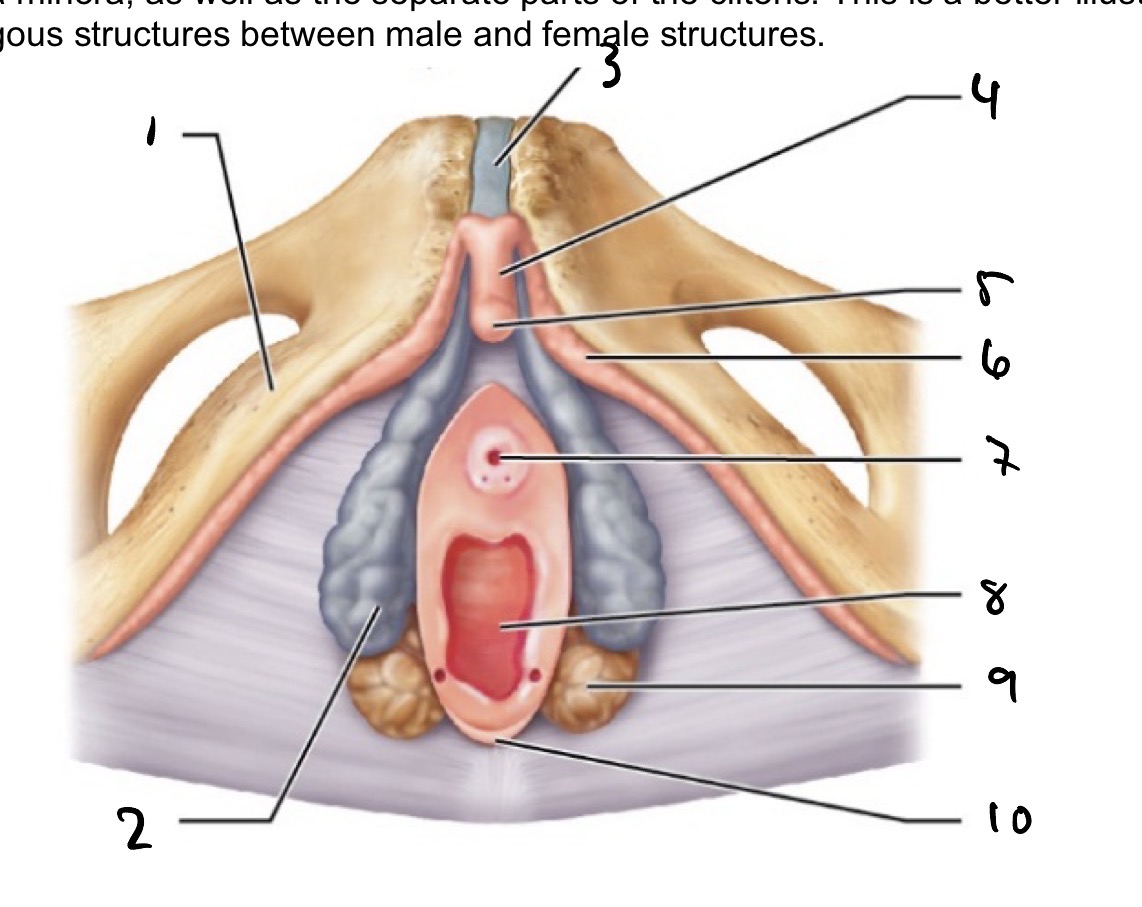
9
vestibular gland
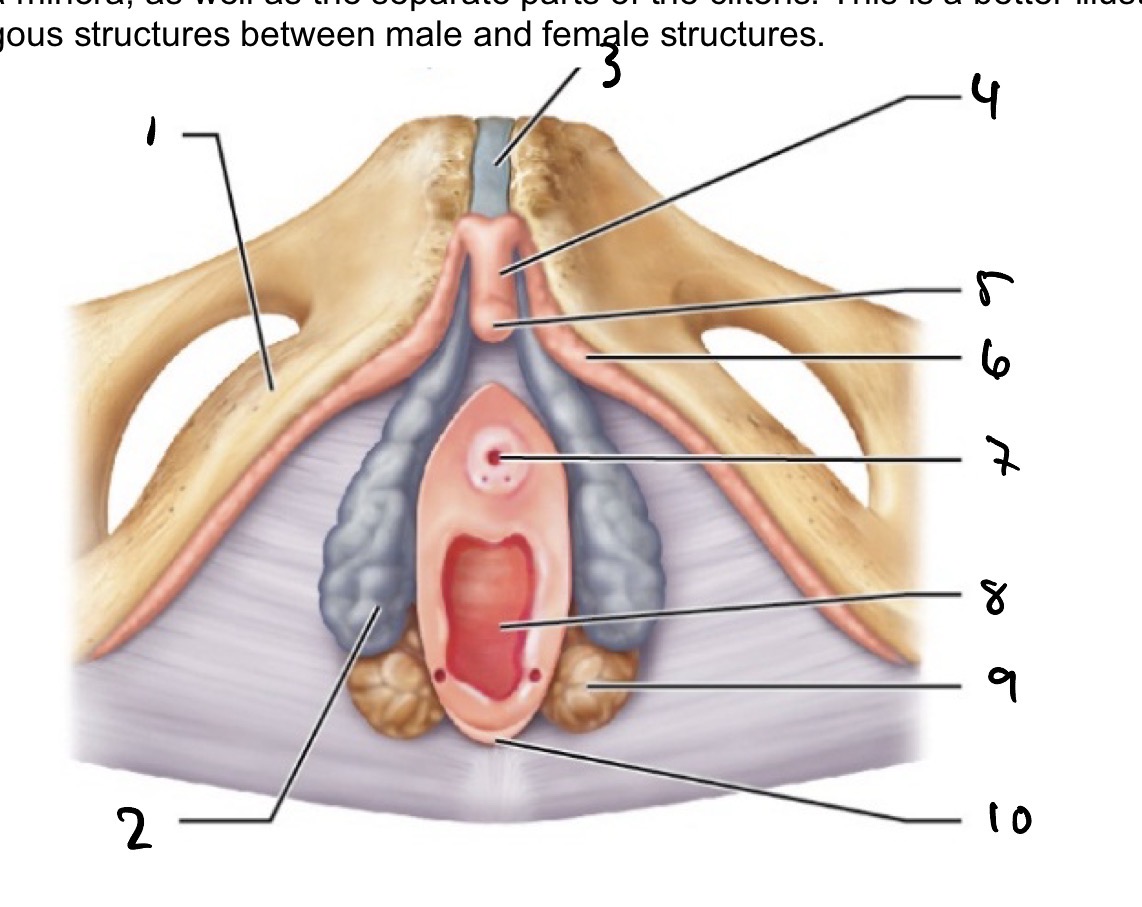
10
fourchette
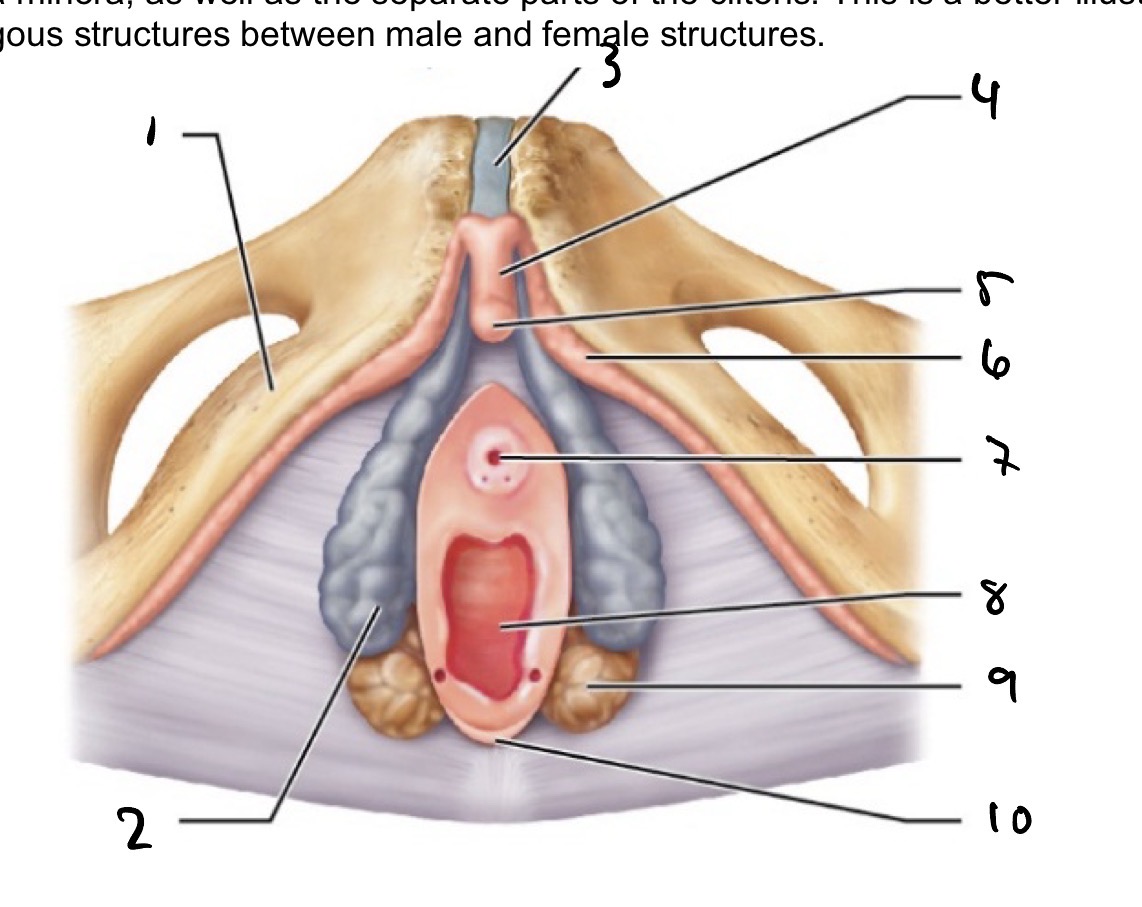
3
pubic symphysis
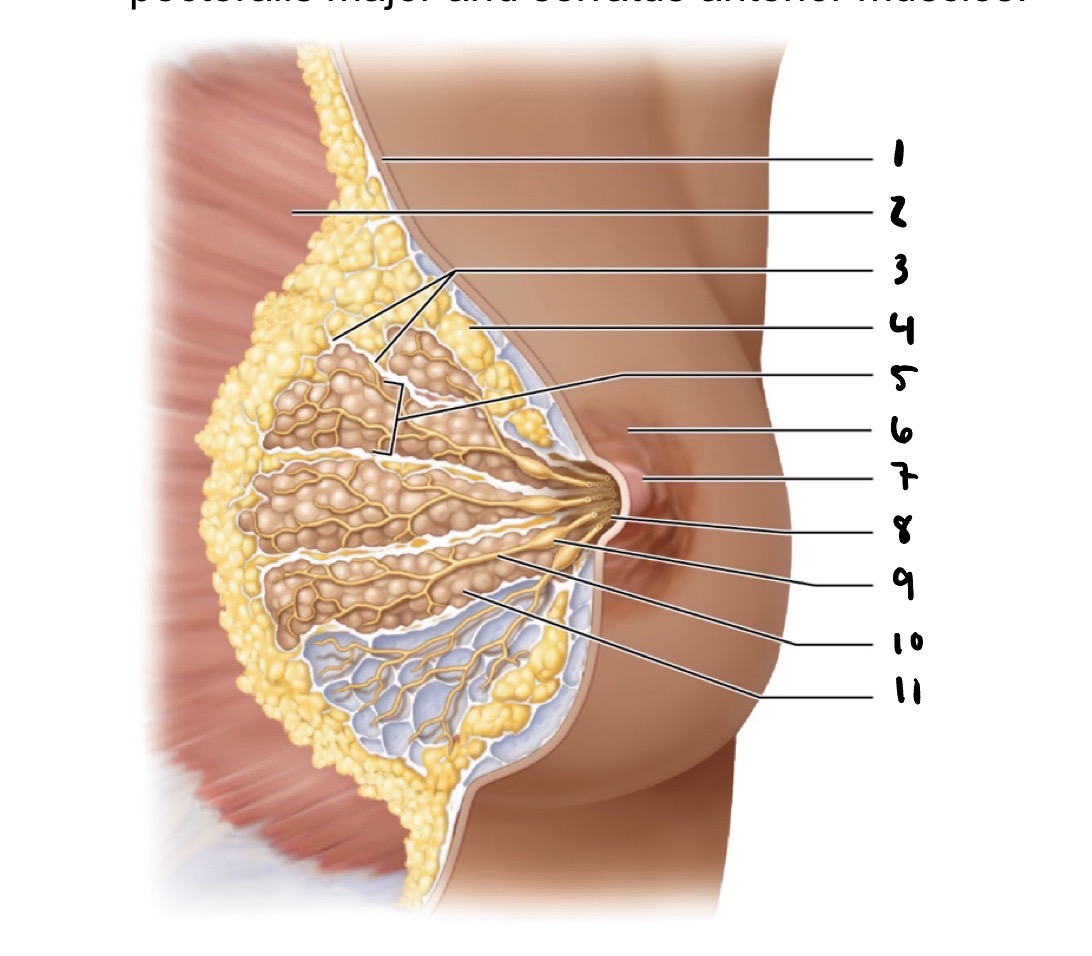
1
skin (cut)
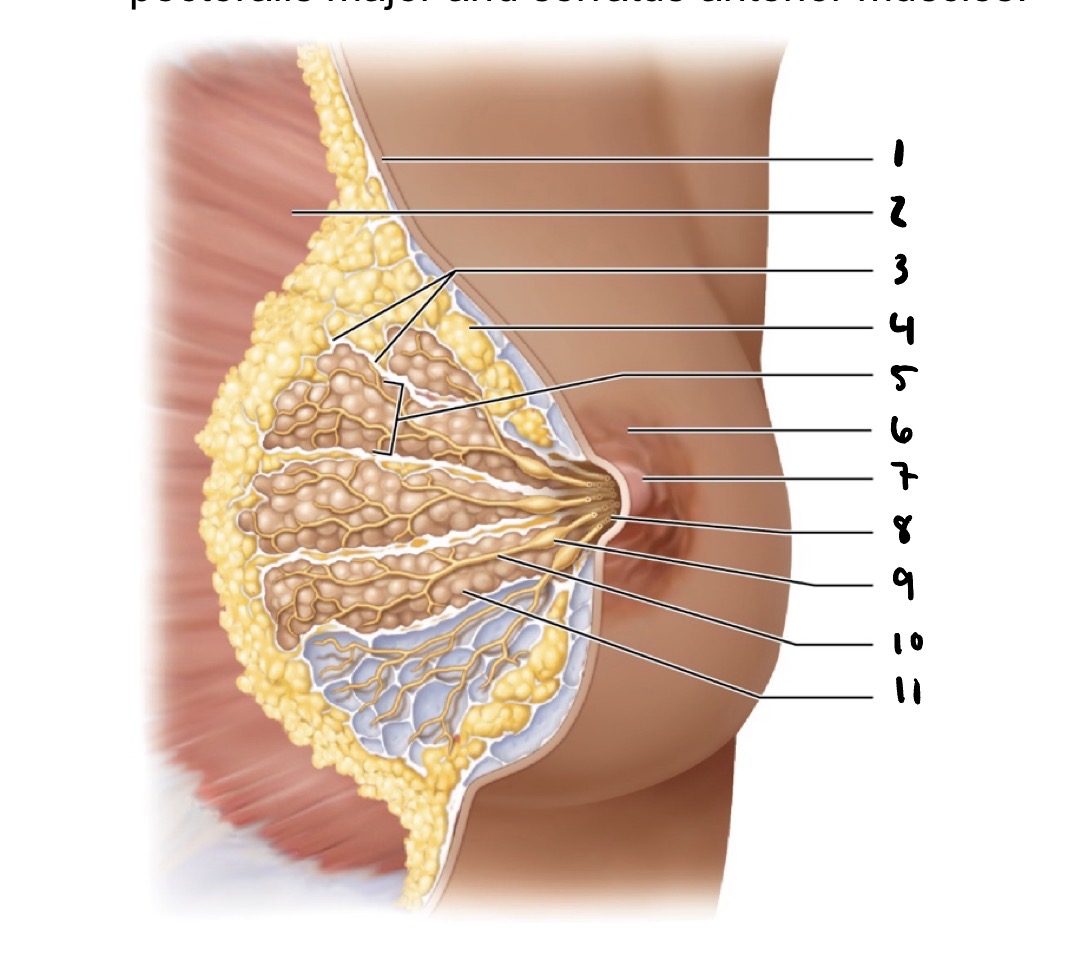
2
pertoralis major m.
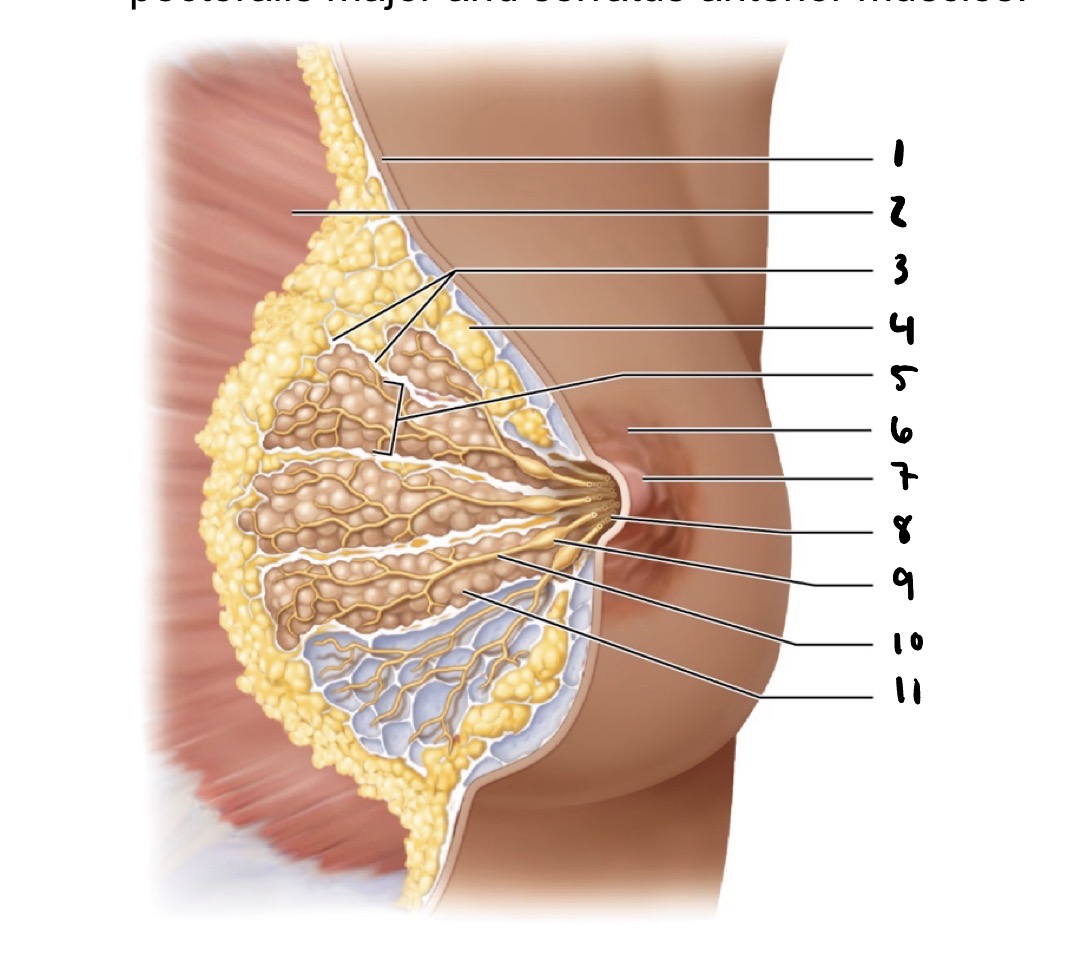
3
suspensory ligaments
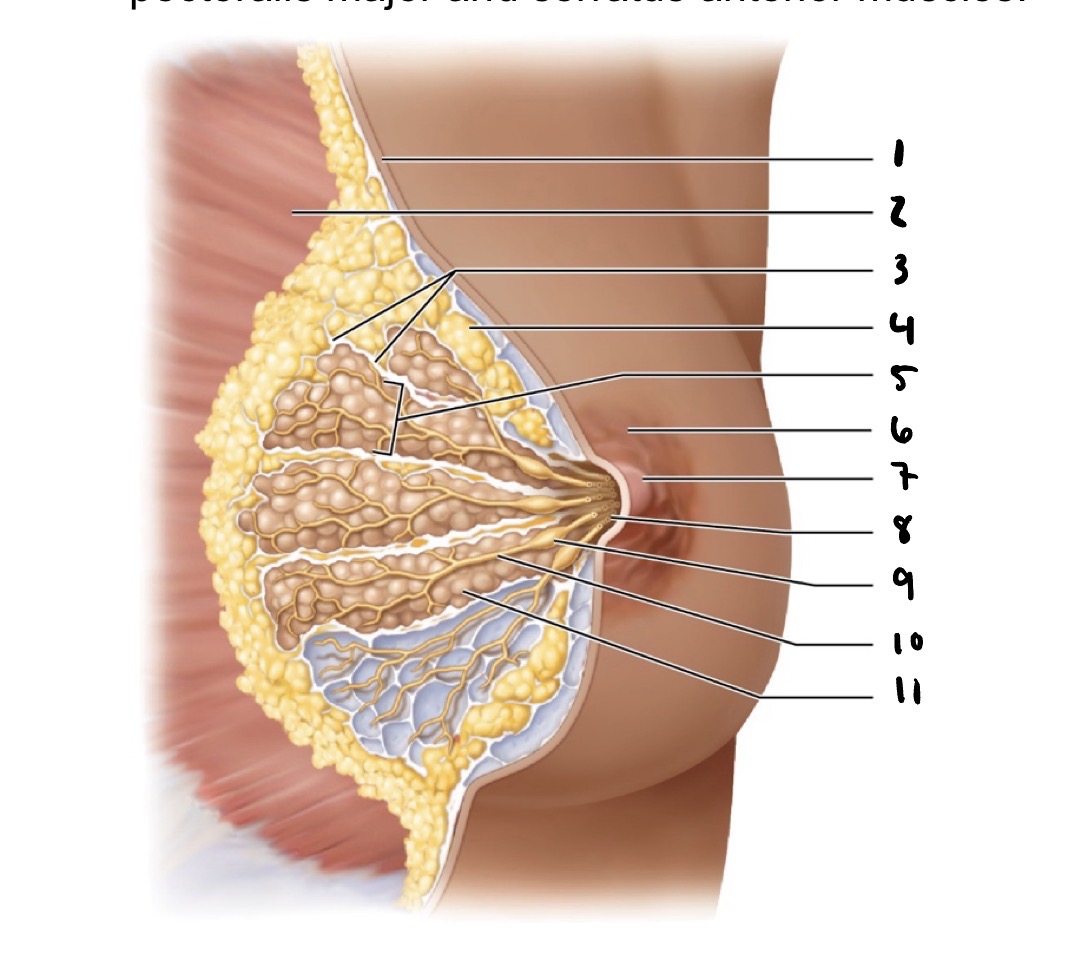
4
adipose tissue
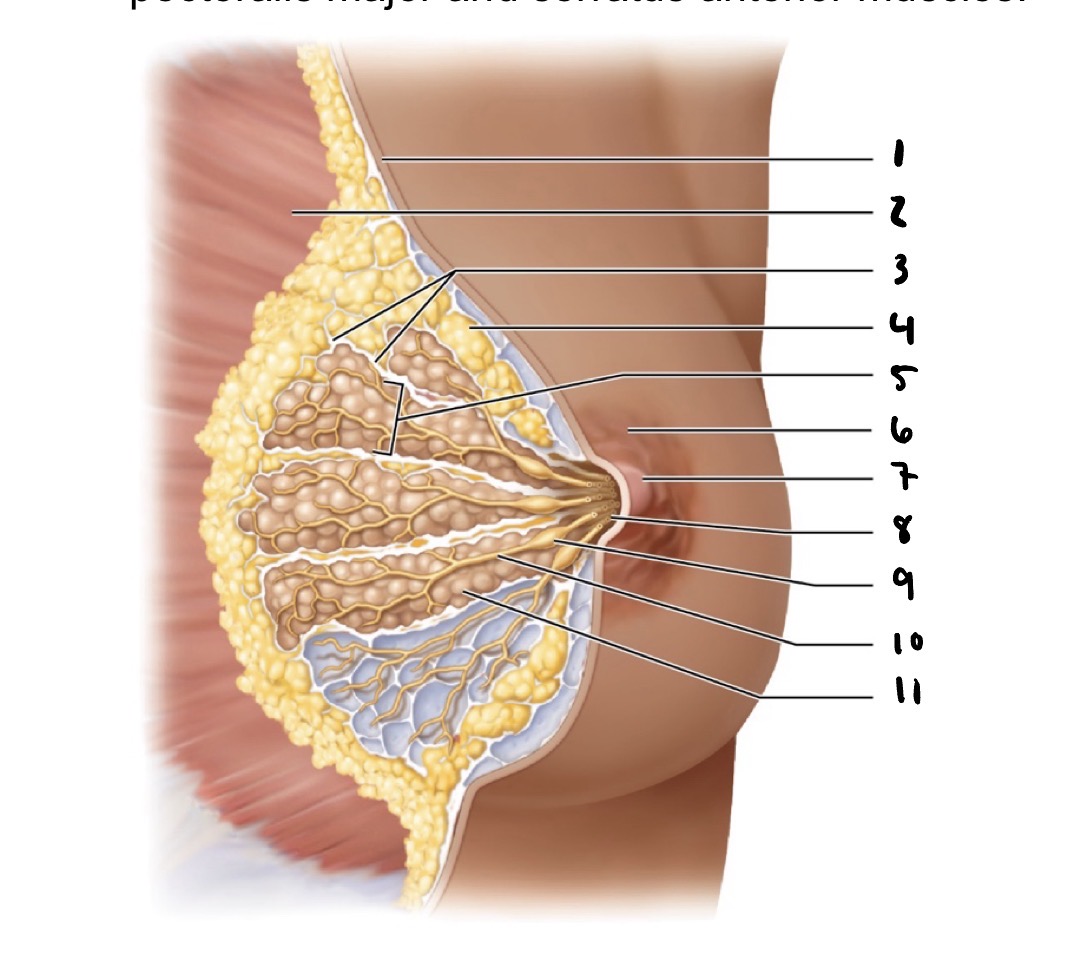
5
lobe
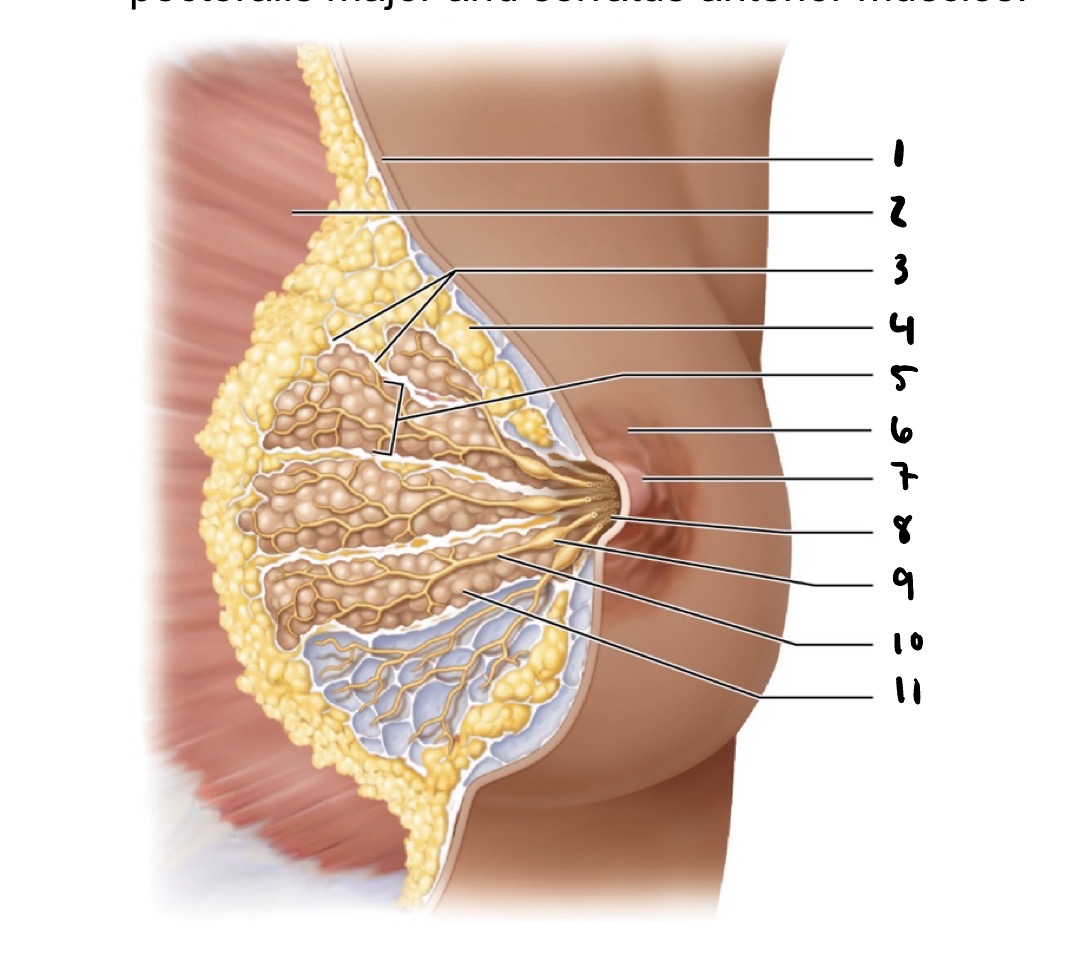
6
areola
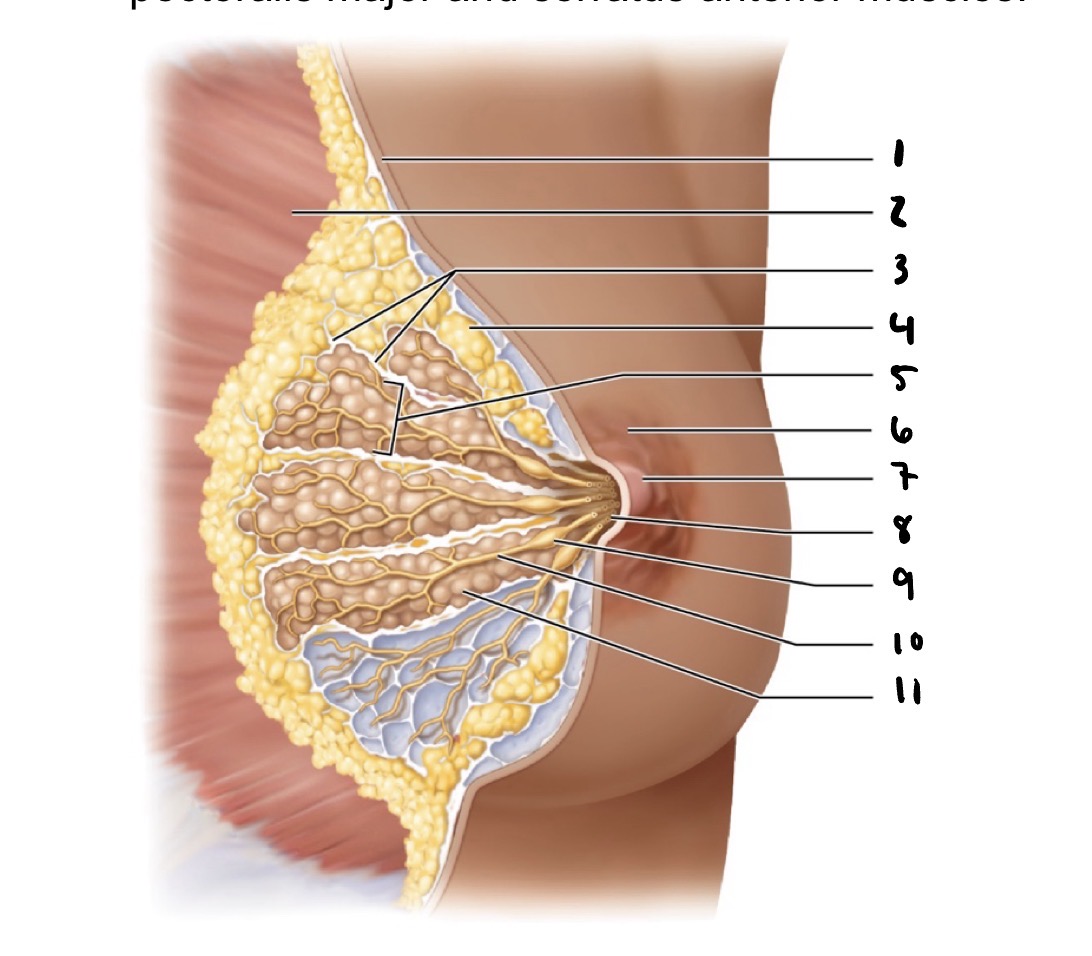
7
nipple
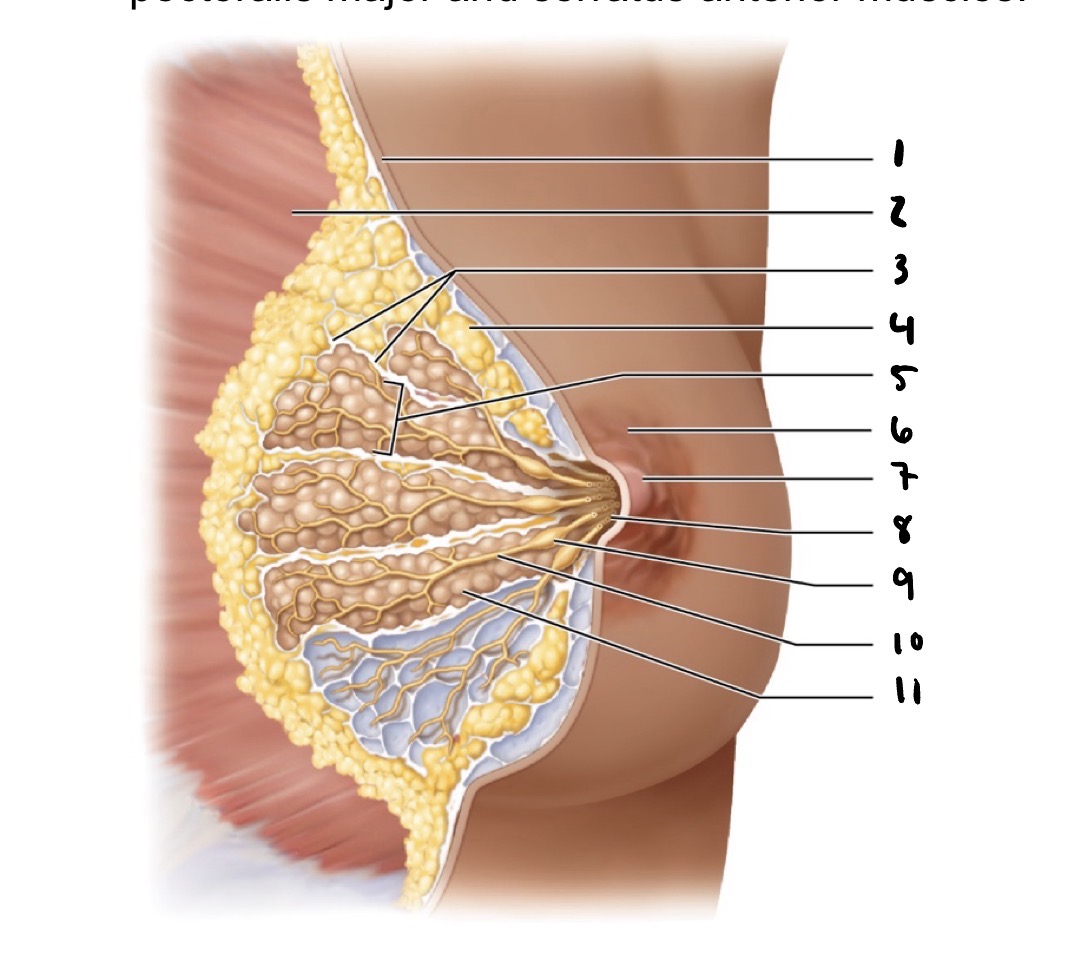
8
opening of lactiferous duct
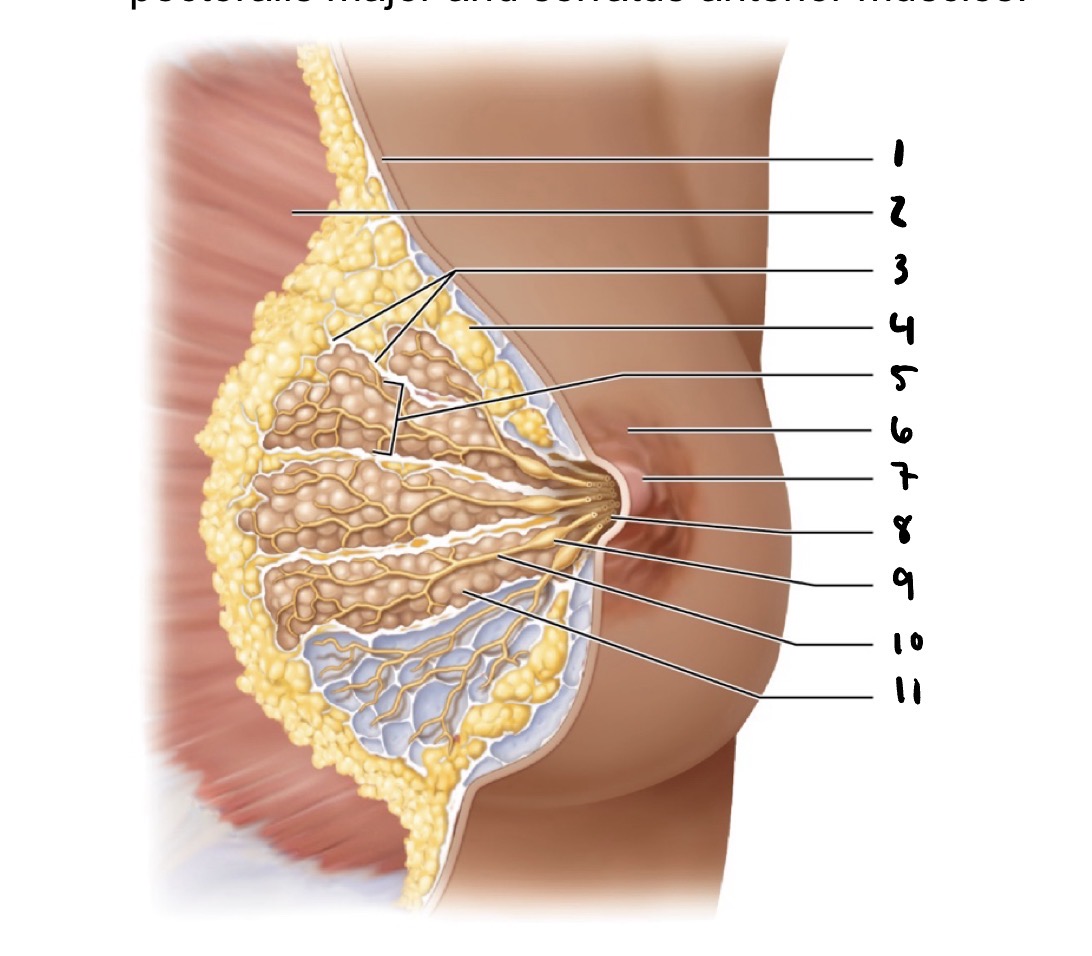
9
lacteriferous sinus