Contract Law
 Call Kai
 Learn
Learn Practice Test
 Spaced Repetition
 Match
Match Flashcards
 Knowt Play
1/210

There's no tags or description
Looks like no tags are added yet.
Name | Mastery | Learn | Test | Matching | Spaced | Call with Kai |
|---|
No analytics yet
Send a link to your students to track their progress
211 Terms
Storer v Manchester City Council (1974)
Chapter: Offer and Acceptance (Offer)
Facts: Storer sought to buy his council house and signed agreement with council before administrative change.
Principle: If there is nothing left for parties to agree on except small, trivial matters, there is a legally binding contract.

Gibson v Manchester City Council (1979)
Chapter: Offer and Acceptance (Offer)
Facts: Gibson wanted to buy his council house and the council sent a letter claiming they may be willing to sell it before administrative change.
Principle: Only an invitation to treat as material matters still had to be decided on, so no legally binding contract.

Pharmaceutical Society v Boots (1953)
Chapter: Offer and Acceptance (Invitation to Treat)
Principle: Contract is not completed until the shopkeeper accepts the offer and the customer pays. The display of goods is merely an ITT.

Partridge v Crittenden (1968)
Chapter: Offer and Acceptance (Invitation to Treat)
Principle: Most advertisements should be construed as ITTs, not as offers for sale.

Thornton v Shoe-Lane Parking (1970)
Chapter: Offer and Acceptance (Invitation to Treat)
Principle: In the case of self-service machines, the request of payment is the offer and can only be accepted or refused.

Harvey v Facey (1893)
Chapter: Offer and Acceptance (Supply of Information)
Facts: H asked F what the lowest cash price he would accept for his property would be. F answered and H saw this as a formal offer which he accepted.
Principle: A provision of facts or information by a party does not amount to an offer.

Harris v Nickerson (1873)
Chapter: Offer and Acceptance (Statement of Intention)
Facts: Auctioneer advertised their intention to sell a good at an auction but could not guarantee that the owner of the good would accept.
Principle: An expression of future intention is generally not capable of forming a binding contract.

Chwee Kin Keong v Digilandmall Pte Ltd (2004)
Chapter: Offer and Acceptance (Websites)
Facts: Digiland employee accidentally listed printers online for way cheaper price and six individuals bought at that price.
Principle: Contract void as there was no consensus ad idem between the parties.

Butler Machine Tool v Ex-Cell-O Corp (1979)
Chapter: Offer and Acceptance (Battle of the Forms)
Facts: Butler's offer to sell a machine tool to ECO included their standard terms with a price variation clause. ECO responded with its own standard terms not including a price variation clause and a tear-off acknowledgement slip. Butler signed and returned the slip writing under, "on the terms of our quotation". When the machine was delivered Butler invoked the price variation clause and ECO sued.
Principle: When there is a "battle of the forms," a contract is formed on the terms of the party who last sent their terms and conditions before performance took place — provided the other party accepted, expressly or by conduct.

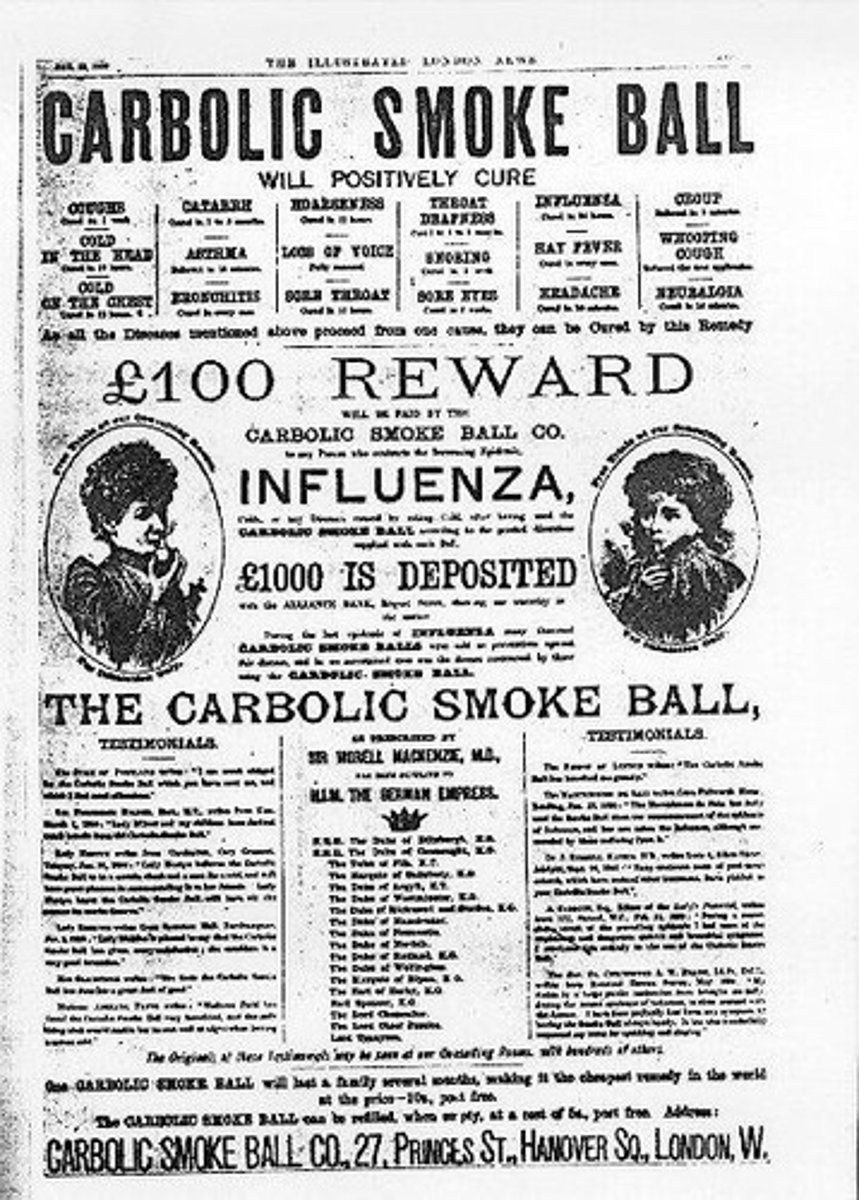
Carlil v Carbolic Smoke Ball Co (1893)
Chapter: Offer and Acceptance (Unilateral vs Bilateral Offers)
Facts: CSB advertised to pay 100 GBP to anyone who used its product and caught influenza and deposited 1000 GBP in a bank to show sincerity. Carlil bought it and caught influenza.
Principle: An advertisement can be an offer if it shows clear intent to be bound
AND
Chapter: Offer and Acceptance (Exceptions to the Need for Communication))
Principle: A unilateral contract is accepted by performance, not promise, and does not require notification of acceptance.
Payne v Cave (1783)
Chapter: Offer and Acceptance (Termination of the Offer by Revocation)
Facts: Bidder revoked offer before the fall of the auctioneer's hammer.
Principle: An offer can be revoked at any time before acceptance.

Offord v Davies (1882)
Chapter: Offer and Acceptance (Termination of the Offer by Revocation)
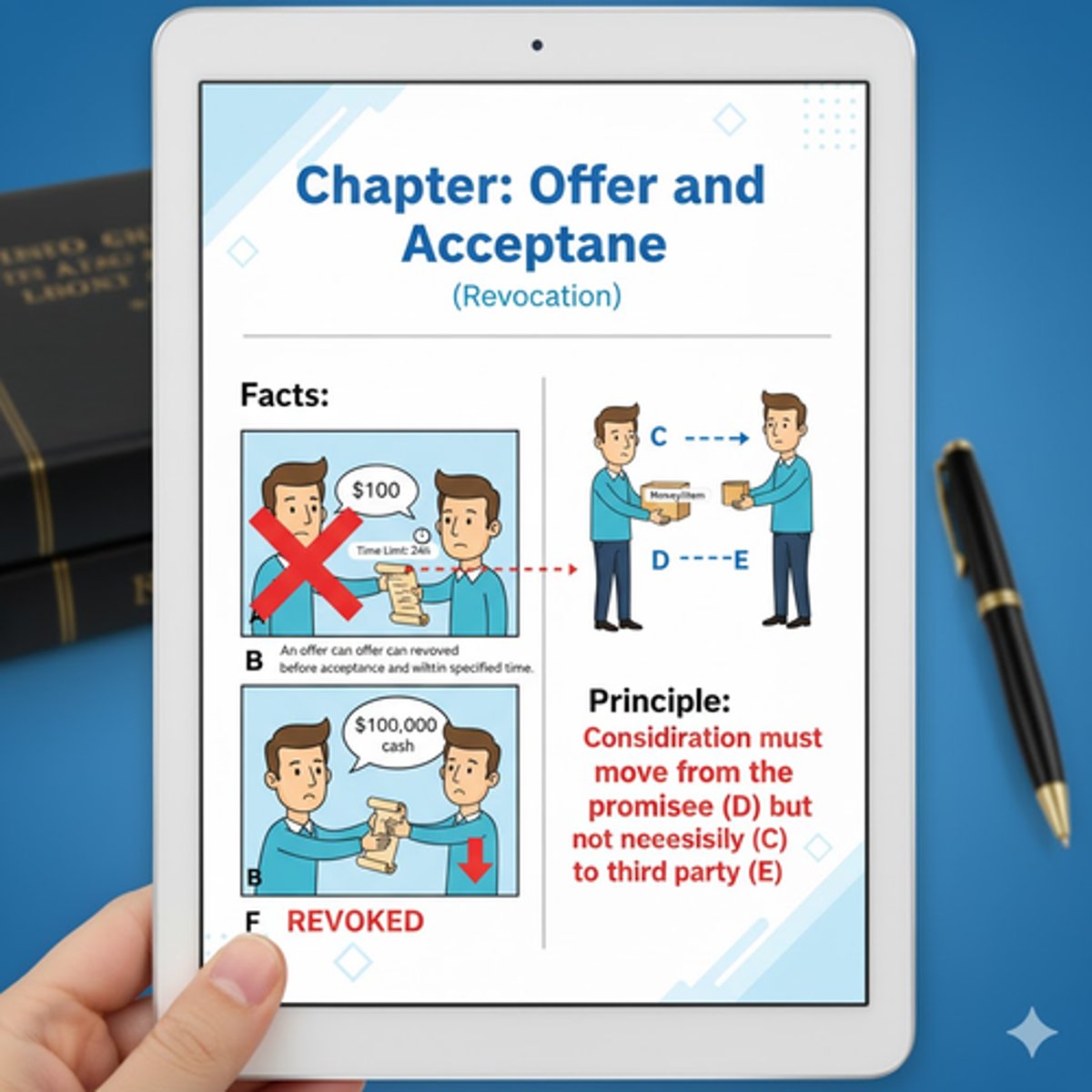
Principle: An offer can be revoked at any time within the specified time and before acceptance.
AND
Chapter: Consideration (Consideration Must Move from the Promisor to the Promisee)
Principle: Consideration must move from the promisee but not necessarily from the promisor
Dickinson v Dodds (1876)
Chapter: Offer and Acceptance (Termination of the Offer by Revocation)
Principle: An offer can be revoked by a trusted third-party, it need not come from the offeror directly.

Byrne v Van Tienhoven (1880)
Chapter: Offer and Acceptance (Termination of the Offer by Revocation)
Facts: The Ds, offered to sell 1,000 boxes of tin plates to the New York plaintiffs in a letter dated October 1, which the plaintiffs received on October 11 and accepted the same day by telegram. The defendants had sent a withdrawal on October 8, which arrived on October 20, after the plaintiffs' acceptance.
Principle: A revocation must be communicated to the offeree; if not, their acceptance creates a binding contract.

Errington v Errington (1952)
Chapter: Offer and Acceptance (Termination of the Offer by Revocation)
Facts: The father-in-law purchased a house in his own name for his son and daughter-in-law, promising to transfer it to them if they paid the mortgage. After his death, the mother (C) inherited the house, and C sought possession from the daughter-in-law, who continued paying the mortgage but refused to live with C.
Principle: Once the offeree has begun performance in a unilateral contract, the offeror cannot revoke the offer.

Daulia Ltd v Four Millbank Nominees (1978)
Chapter: Offer and Acceptance (Termination of the Offer by Revocation)
Facts: FMN agreed to execute a contract of house sale if Daulia came to their office with a banker's draft and other formal steps. Daulia prepared everything but FMN had already sold to another buyer.
Principle: In a unilateral offer, the offeror may revoke the offer before performance begins

Soulsbury v Soulsbury (2007)
Chapter: Offer and Acceptance (Termination of the Offer by Revocation)
Principle: A promise to pay upon death can be a binding contractual offer if supported by consideration and shows clear ITCLR.

Hyde v Wrench (1840)
Chapter: Offer and Acceptance (Termination of the Offer by Rejection)
Principle: A counteroffer counts as rejection and terminates the original offer (implied rejection)

Financings Ltd v Stimson (1962)
Chapter: Offer and Acceptance (Termination of the Offer if a Condition in the Offer is Not Fulfilled)
Facts: The hirer agreed to buy a car from a finance company through a dealer, paying a £70 deposit, but the contract wasn't signed by the company until after he had taken and returned the car. The car was stolen before the company signed, and the company sought to recover the price.
Principle: An offer lapses if its conditions are no longer met before acceptance.

Manchester Diocesan Council for Education v Commercial and General Investments Ltd (1969)
Chapter: Offer and Acceptance (Termination of the Offer if an Offer Lapses for Want of Acceptance)
Principle: If no time period is specified for acceptance, the offer will lapse after what the court rules as a 'reasonable period'.

R v Clarke (1927)
Chapter: Offer and Acceptance (Acceptance)
Principle: The acceptance must be in agreement to all the terms of an offer and anything else will not constitute an acceptance.

Felthouse v Bindley (1862)
Chapter: Offer and Acceptance (Acceptance)
Principle: Silence cannot amount to acceptance to an offer unless there is a clear prior agreement.

Brodgen v Metropolitan Railway (1877)
Chapter: Offer and Acceptance (Acceptance)
Facts: B supplied coal to MR without having signed a formal contract. When a dispute rose, B contended he was not bound by the agreement.
Principle: A contract can be formed by conduct, not just by a formal signature, if the actions of the parties clearly show the acceptance of the offer.

Adams v Lindsell (1817)
Chapter: Certainty of Terms (Exceptions to the Need for Communication: Postal Acceptance Rules)
Principle: If it is reasonable to use the post, or the offeror stipulates that the post can be used, the offer is accepted upon posting.

Household Fire Insurance & Co v Grant (1879)
Chapter: Certainty of Terms (Exceptions to the Need for Communication: Postal Acceptance Rules)
Principle: The offeror must bear the risk of the letter being lost (cements Adams v Lindsell (1817))

Korbetis v Transgrain Shipping BV (2005)
Chapter: Certainty of Terms (Exceptions to the Need for Communication: Postal Acceptance Rules)
Principle: Postal acceptance rules do not apply when the failure of communication is the offeree's fault.

Holwell Securities Ltd v Hughes (1974)
Chapter: Certainty of Terms (Exceptions to the Need for Communication: Postal Acceptance Rules)
Principle: The postal acceptance rule does not apply where the offeror expressly requires actual communication of acceptance.

Brinkibon Ltd b Stahag Stahl (1983)
Chapter: Certainty of Terms (Exceptions to the Need for Communication: Telexes, Telephones or Faxes)
Principle: Postal acceptance rules only apply to non-istantaneous communications; acceptance by instant communication is complete when and where it is received.

Thomas v BPE Solicitors (2010)
Chapter: Certainty of Terms (Exceptions to the Need for Communication: Electronic Contract Formation)
Principle: For acceptance by email or other instant communication to be effective, it must be received during regular business hours; if not, acceptance is treated as occurring at the start of the next business day.

Greenclose Ltd v NWB plc (2014)
Chapter: Certainty of Terms (Exceptions to the Need for Communication: Electronic Contract Formation)
Principle: For email, notice is only effective when it is actually brought to the recipients attention, and parties must comply strictly with any agreed method of giving notice.

Manchester Diocesan Council for Education v Commercial and General Investments (1970)
Chapter: Certainty of Terms (Where the Method of Acceptance is Prescribed)
Principle: When an offeror specifies a method of acceptance but does not make it mandatory, acceptance communicated by an equally effective method is accepted (provided it brings the acceptance to the offeror's attention)

Fitch v Snedaker (1869)
Chapter: Certainty of Terms (Offeree Must Have Knowledge of the Offer)
Facts: A unilateral offer was made by the defendant to anyone who could find a dog. the claimant found and returned it to the defendant without being aware of the offer made by the claimant.
Principle: Offeree cannot accept an offer without knowledge of it

Gibbons v Proctor (1891)
Chapter: Certainty of Terms (Offeree Must Have Knowledge of the Offer)
Facts: A £25 reward was offered for information leading to a criminal's arrest, provided the information was given to the Superintendent. A police officer, initially unaware of the reward, asked a colleague to pass on useful information; he only became aware of the offer before the information actually reached the Superintendent.
Principle: Offer can be accepted even if the offeree is unaware of it at the time of acting, provided the offeree later gains knowledge of the offer and acts in accordance with it.
Balfour v Balfour (1919)
Chapter: Intention to Create Legal Relations (Family Agreements)
Facts: Mr. promised to pay Mrs. 30 GBP per month as maintenance. When he went back to Ceylon and she stayed in London, marriage ended and Mr. stopped paying.
Principle: Agreements made between family are presumed not to have ITCLR
Same Principle: James v Padavatton (1969)

Merritt v Merritt (1970)
Chapter: Intention to Create Legal Relations (Family Agreements)
Facts: Mr. agreed to transfer house to Mrs. if she paid off the remaining mortgage. Mrs. paid it off but Mr. refused to transfer property.
Principle: When spouses are separated/about to separate, their agreements are presumed to have ITCLR, especially if there is consideration involved.
Same principle: Soulsbury v Soulsbury (2007)

Simpkins v Pays (1955)
Chapter: Intention to Create Legal Relations (Social Agreements)
Facts: Pays split the cost of newspaper competitions with daughter and lodger. When they won in Pays' name, she refused to split the winnings.
Principle: Expectation of a shared benefit showed ITCLR

Coward v Motor Insurers' Bureau (1963)
Chapter: Intention to Create Legal Relations (Social Agreements)
Facts: C rode to work with friend and paid some money to contribute to fuel. C died due to driver's negligence and wife sued MIB.
Principle: Friendly/social agreements in informal settings are presumed not to create legal relations.

Albert v Motor Insurers' Bureau (1972)
Chapter: Intention to Create Legal Relations (Social Agreements)
Facts: A regularly gave lifts to fellow seamen from homes to naval base in exchange for them helping pay for fuel. One was injured due to A's negligence and sued.
Principle: Habitual, monetary behavior indicates an ITCLR
Esso Petroleum v Commissioners of Customs and Excise (1976)
Chapter: Intention to Create Legal Relations (Commercial Agreements)
Facts: Marketing promotion for 1970 World Cup offering motorists a world cup coin when customers buy petrol. Esso was supposed to pay purchase tax on the coins but they argued they were free gifts with no ITCLR
Principle: In commercial dealings, there is a strong ITCLR

Kleinwort Benson Ltd v Malaysia Mining Co Berhad (1989)
Chapter: Intention to Create Legal Relations (Commercial Agreements)
Principle: Presumption of legal intent in commercial contexts can be rebutted if the language used shows a lack of binding commitment.
Rose & Frank Co v JR Crompton & Bros Ltd (1925)
Chapter: Intention to Create Legal Relations (Commercial Agreements)
Principle: "Honourable pledge clause" excluded legal enforceability

Baird Textile Holdings Ltd v Marks & Spencer plc (2001)
Chapter: Intention to Create Legal Relations (Commercial Agreements)
Facts: BTH supplied garments to M&S for 30 years without a written contract being signed. M&S gave notice that they would stop purchasing from BTH.
Principle: Past dealings alone do not indicate current ITCLR and are insufficient to establish a binding contract
ALSO
Chapter: Waiver and Promissory Estoppel (Limitations of Promissory Estoppel)
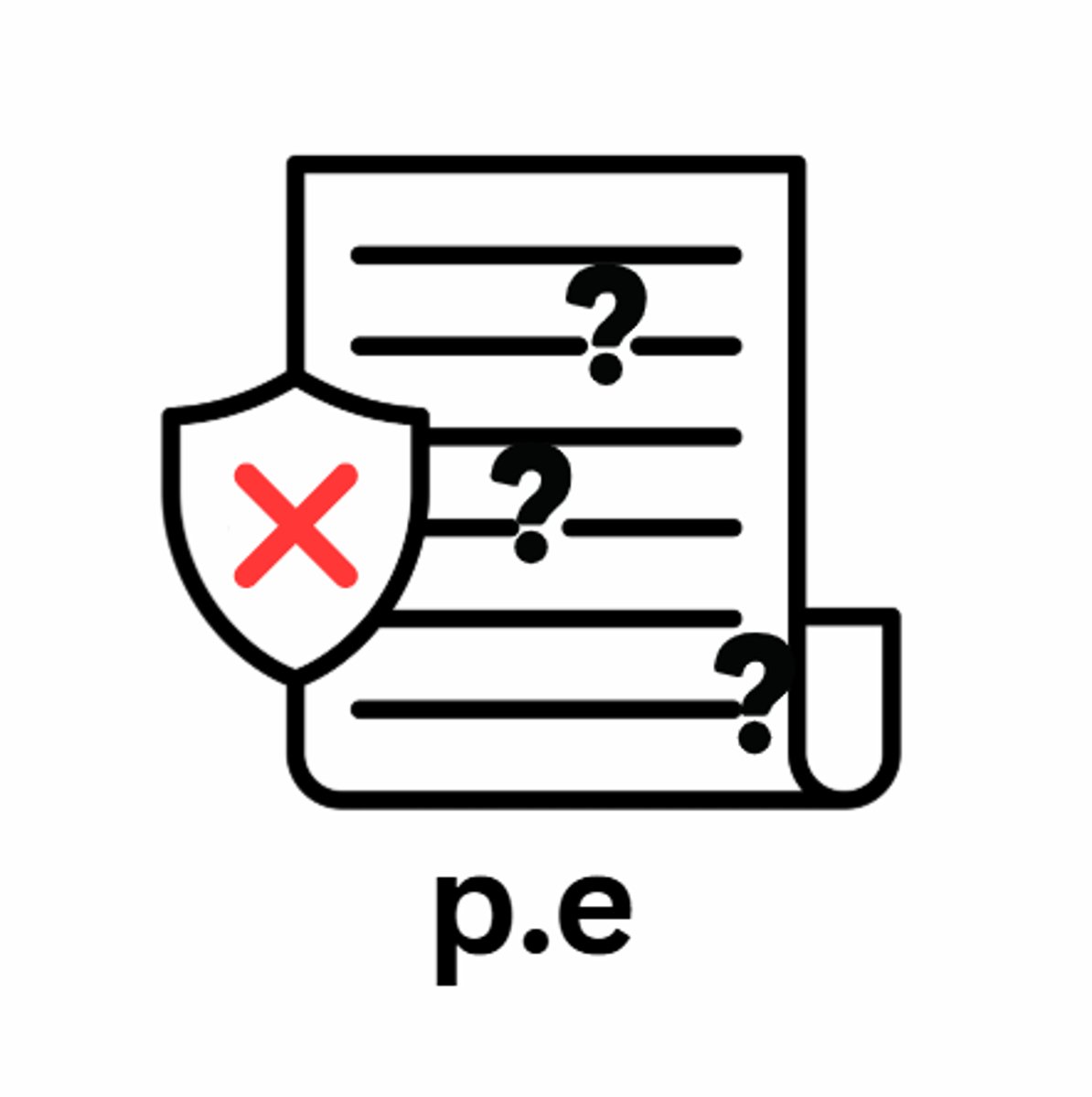
Principle: P.e. does not apply to a contract with no consideration

Investec Bank Ltd v Zulman (2010)
Chapter: Intention to Create Legal Relations (Commercial Agreements)
Principle: Parties should ensure their intentions are clearly expressed, especially when deviating from standard procedures/agreements.

Edmonds v Lawson (2000)
Chapter: Intention to Create Legal Relations (Commercial Agreements)
Principle: Pupillages are generally considered training arrangements, not contracts of employment (unless there is clear agreement that the parties intended legal obligations)

Blue v Ashley (2017)
Chapter: Intention to Create Legal Relations (Commercial Agreements)
Principle: Jocular and informal discussions by commercial parties in a social setting do not prove ITCLR
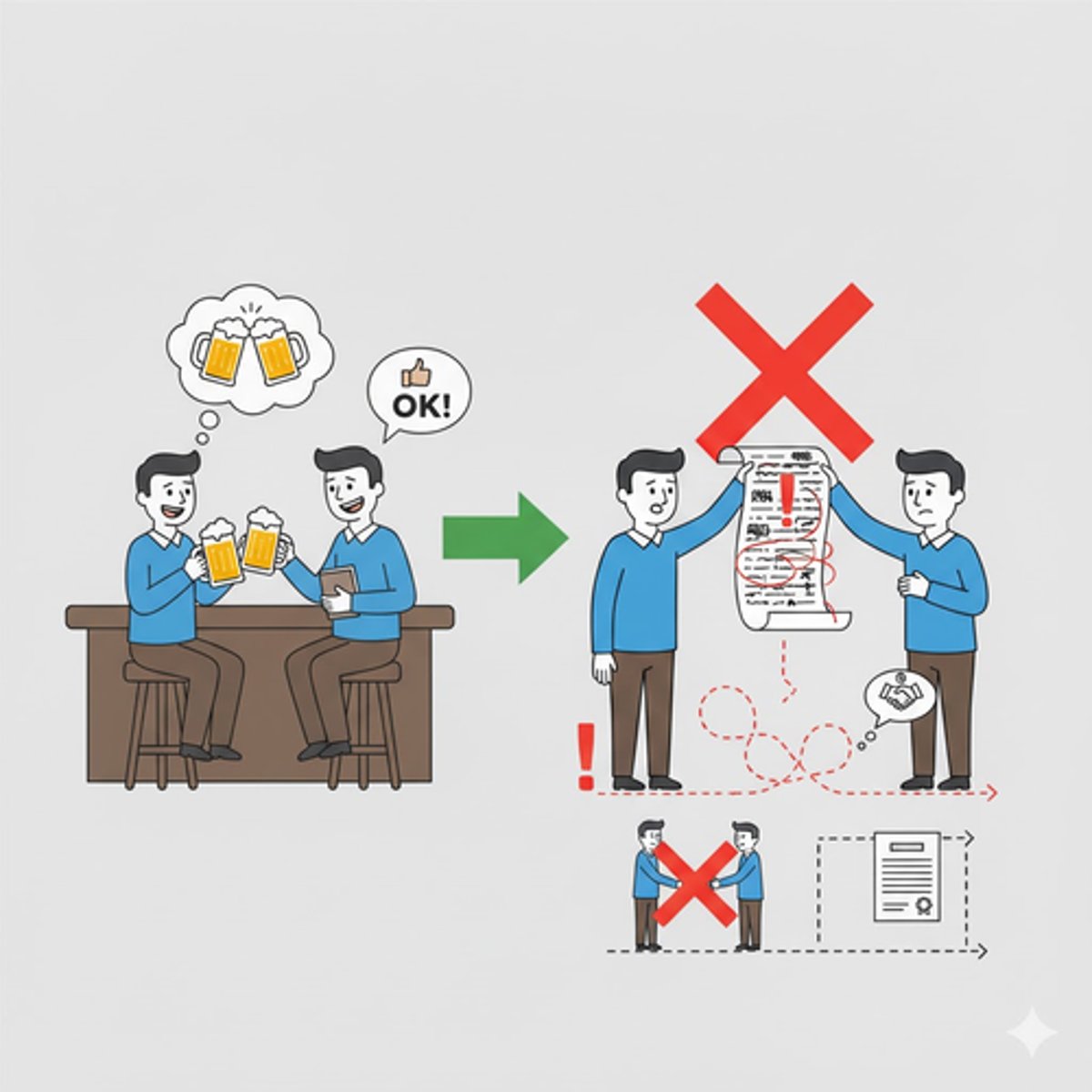
Scammel and Nephew Ltd v Ouston (1941)
Chapter: Certainty of Terms (Consensus ad Idem)
Facts: Parties agreed to purchase on "hire-purchase terms" but never explicitly stated the precise terms
Principle: Vague conditions cannot create a valid contract as there is no consensus ad idem.

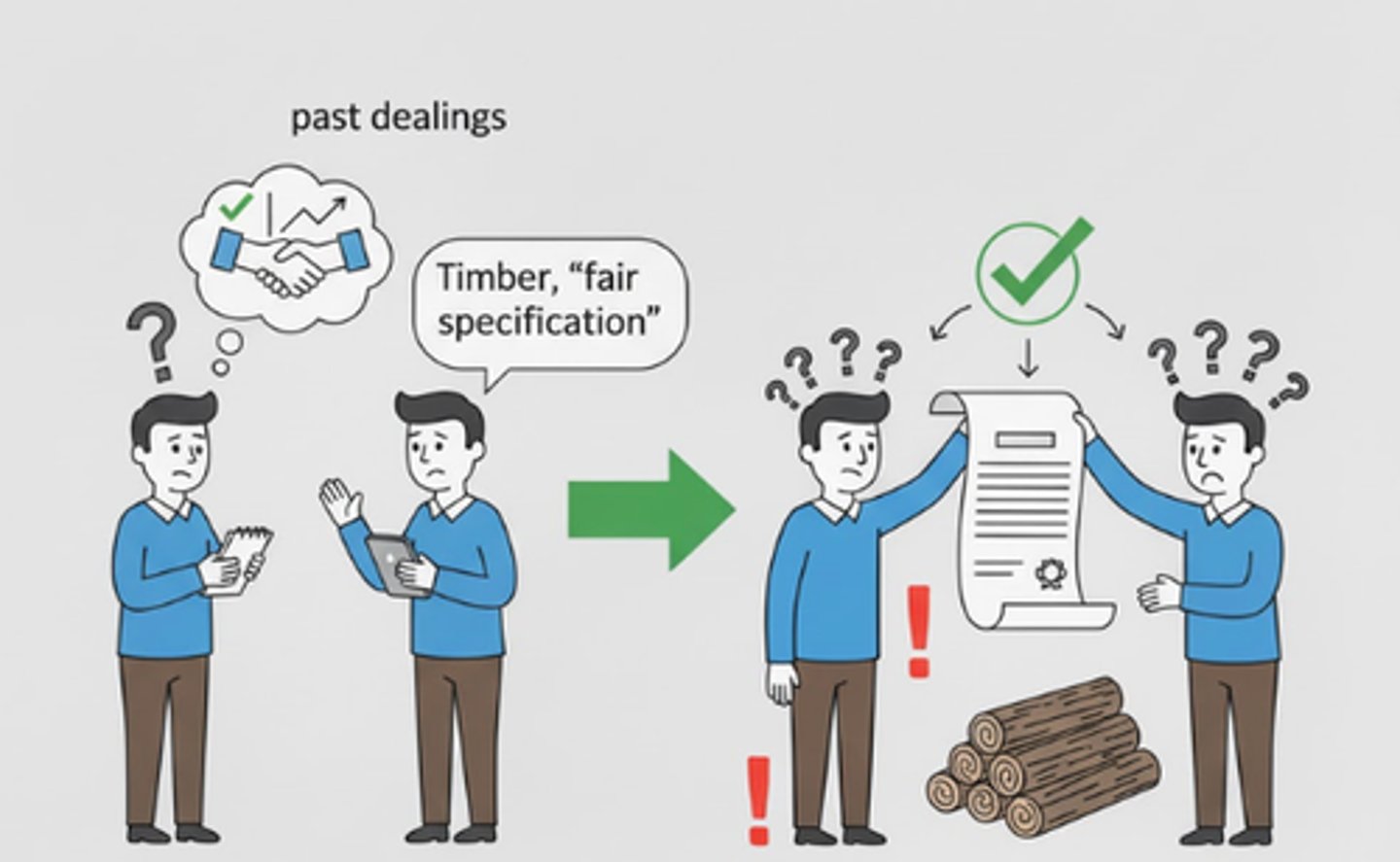
Hillas and Co v Arcos Ltd (1932)
Chapter: Certainty of Terms (Doubt Around the Application of the Certainty Requirement)
Facts: Parties with past dealings agreed to sale of timber "of fair specification"
Principle: A contract will be upheld as valid even if some terms, like price, are not fixed, provided the agreement is definite enough and the court can reasonably interpret the terms to preserve the parties' commercial bargain.
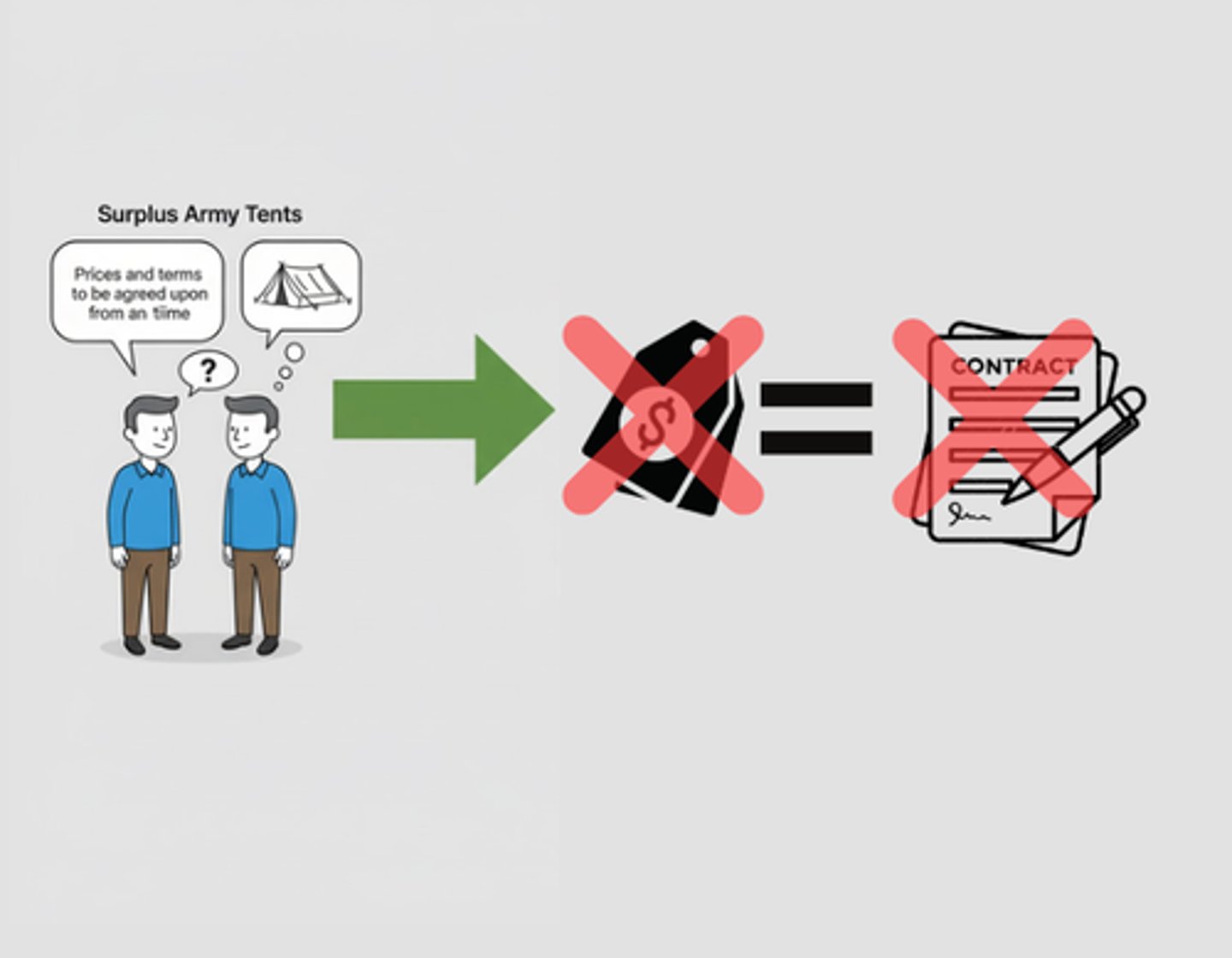
May & Butcher Ltd v The King (1934)
Chapter: Certainty of Terms (Doubt Around the Application of the Certainty Requirement)
Facts: Parties agreed to buy surplus army tents on prices and terms that "would be agreed upon from time to time"
Principle: An enforceable contract does not exist without an agreement on price. Merely an "agreement to agree"
RTS Flexible Systems Ltd v Molkerei Alois Muller GmBH KG (2010)
Chapter: Certainty of Terms (Doubt Around the Application of the Certainty Requirement)
Facts: Parties signed a letter of intent as RTS began work, and a draft contract stated it would not be binding "until executed", but the parties never formally signed it.
Principle: A binding contract exists where the parties' conduct showed they reached the final agreement on all essential terms

Courtney & Fairbairn Ltd v Tolaini Brothers (Hotels) Ltd (1975)
Chapter: Certainty of Terms (No Agreements to Agree)
Facts: Parties agreed to negotiate contract terms for contract work but D chose another contractor and was sued.
Principle: No binding contract where no key terms are negotiated, only a nonbinding 'agreement to agree'

Sudbrook Training Estate Ltd v Eggleton (1983)
Chapter: Certainty of Terms (Means to Finding that the Agreement is Valid and Binding)
Facts: Tenants contained option to purchase the freehold from the landlords "such as agreed upon by two valuers, one appointed by each party." Landlords refused to appoint a valuer when tenants exercised the option, labeling the contract void for uncertainty.
Principle: Contract is valid and enforceable if a mechanism to pay exists along with an ITCLR

Paragon Finance plc v Nash (2001)
Chapter: Certainty of Terms (Means to Finding that the Agreement is Valid and Binding)
Facts: Nashes obtained mortgage from PF for their home with a term allowing Paragon to vary i.r. "at their discretion". When the BoE lowered its base i.r., PF did not adjust their rate accordingly.
Principle: Exercise of discretion must not be arbitrary or unreasonable

Nicolene Ltd v Simmonds (1953)
Chapter: Certainty of Terms (Means to Finding that the Agreement is Valid and Binding)
Facts: Sale of chemicals was agreed to take place "as soon as possible" but was too slow
Principle: Contract is enforceable if a term is sufficiently certain and implied terms can be used to determine what is 'fair' and 'reasonable'

Winn v Bull (1877)
Chapter: Certainty of Terms (Means to Finding that the Agreement is Valid and Binding)
Principle: No formal contract if no final agreement is reached (agreement subject to contract)

Currie v Misa (1875)
Chapter: Consideration (What is Consideration?)
Principle: Consideration must consist of either a detriment to the primosee or a benefit to the promisor
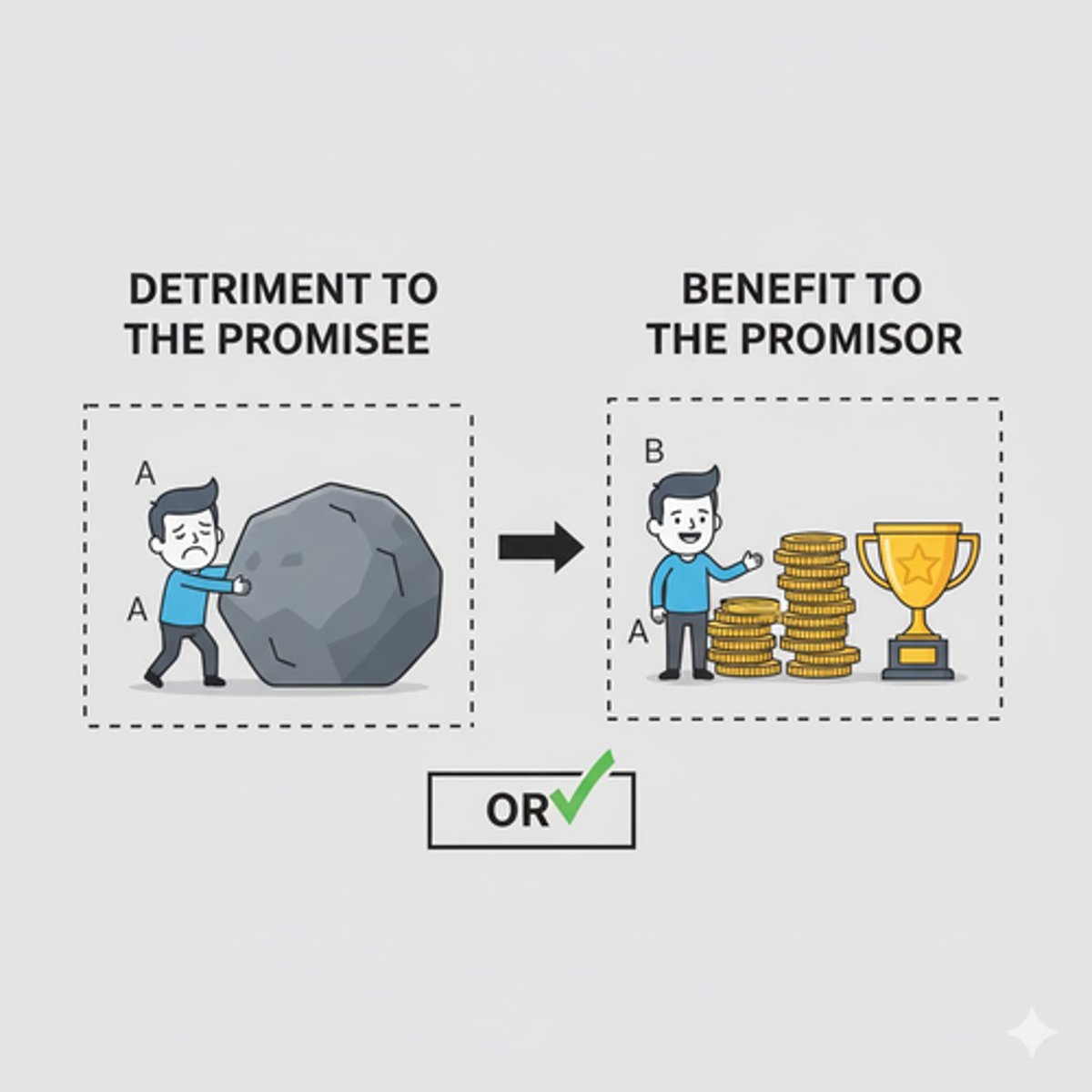
White v Bluett (1853)
Chapter: Consideration (Consideration must be of economic value)
Facts: Son offered to stop complaining in return for father forgiving his debt.
Principle: Consideration must involve a real benefit to the promisor or a legal detriment to the promisee, not mere moral obligations that are vague in nature.

Bainbridge v Firmstone (1838)
Chapter: Consideration (Consideration must be sufficient but need not be adequate)
Facts: F requested to weigh B's boilers, promising to return them in working order but failed to do so.
Principle: Consideration exists, not based on a benefit to the promisor, but a detriment to the promisee.

Thomas v Thomas (1842)
Chapter: Consideration (Consideration must be sufficient but need not be adequate)
Principle: Consideration must be sufficient but need not be adequate.

Chappel & Co v Nestle (1960)
Chapter: Consideration (Consideration must be sufficient but need not be adequate)
Facts: N entered into a contract with C and ran a promotional scheme; they would sell records at a discount price to anyone who sent in three of their chocolate bar wrappers.
Principle: Even trivial or nominal acts can be valid consideration if they are requested by the promisor and form part of the exchange.

Roscorla v Thomas (1842)
Chapter: Consideration (Past Consideration is no Consideration)
Facts: Claimant purchased a horse from D, who afterwards, in consideration of the previous sale, warranted that it was "sound and free from vice" when it was in fact a vicious horse.
Principle: Past consideration is no consideration in a new contract.

Pao On v Lau Yiu Long (1980)
Chapter: Consideration (Past Consideration is No Consideration)
Facts: PO entered negotiations with LYL to purchase public shares of FUI in exchange for private shares of SO so LYL could take control of the WO building. A later contract involved PO being indemnified for any drop in FUI value before the sell date as a necessary agreement in the share exchange. PO sued after FUI shares depreciated and LYL did not indemnify, arguing that PO performed no new consideration in the indemnity contract and were only re-stating their pre-existing obligations.
Principle: An act done before a promise is made is good consideration for that promise if it was done at the promisor's request, and the parties understood the act was to be paid for at a later date.
ALSO
Chapter: Consideration (Duty Imposed By a Contract Between the Promisee and a Third Party)
Principle: Performance or promise to perform a pre-existing contractual obligation to a third-party can be valid consideration
ALSO
Chapter: Duress, Undue Influence, and Unconscionable Bargains (Duress)
Principle: The pressures must be such that the V must have entered into the contract against his will, must have no alternative course open to him, and must have been confronted by coercive acts by the party exerting the pressure

Collins v Godefroy (1831)
Chapter: Consideration (Performance of an Existing Obligation)
Facts: C was subpoenaed and G promised to pay for travel expenses to get C to court but never paid.
Principle: Generally no consideration where the promise includes the performance of a duty that one of the parties was already obligated to do by law.
Same Principle: Ward v Byham (1956)

Glasbrook bros Ltd v Glamorgan CC (1925)
Chapter: Consideration (Performance of an Existing Obligation)
Facts: Manager of colliery asked for extra police due to strike. Police superintendent sent out some officers but would only send more if they were paid extra. Manager agreed but refused to pay, arguing it was their legal duty and there was thus no consideration.
Principle: Extending beyond one's legal duty counts as valid consideration
Same Principle: Ward v Byham (1956)

Stilk v Myrick (1809)
Chapter: Consideration (Duty in an Existing Contract Between the Promisor and Promisee)
Facts: Captain paid crew to get the ship back safely during a trade expedition. 2 sailors desert so the captain offers extra to the remaining sailors to ensure the ship returns safely but never paid.
Principle: No contract if the consideration re-states pre-existing duties of the promisee

Williams v Roffey Bros & Nicholls (1991)
Chapter: Consideration (Duty in an Existing Contract Between the Promisor and Promisee)
Facts: RBN contracted to refurbish flats but feared late completion penalty so subcontracted W, who fell behind on work, so was paid extra to complete on time.
Principle: Consideration exists if the promisor gains a practical benefit from the exchange.

Re Selectmove Ltd (1995)
Chapter: Consideration (Duty in an Existing Contract Between the Promisor and Promisee)
Facts: Tax office asked court to shut down Selectmove as it did not pay tax. Selectmove argued that it met with a tax officer to pay in instalments, and the tax office obtained a practical benefit from keeping them open.
Principle: Practical benefit where the obligation is the payment of money
ALSO
Chapter: Waiver and Promissory Estoppel (The Relationship Between Promissory Estoppel and the Part Payment of a Debt)
Principle: No binding agreement on part-payment of a debt without new consideration (tension with p.e.)
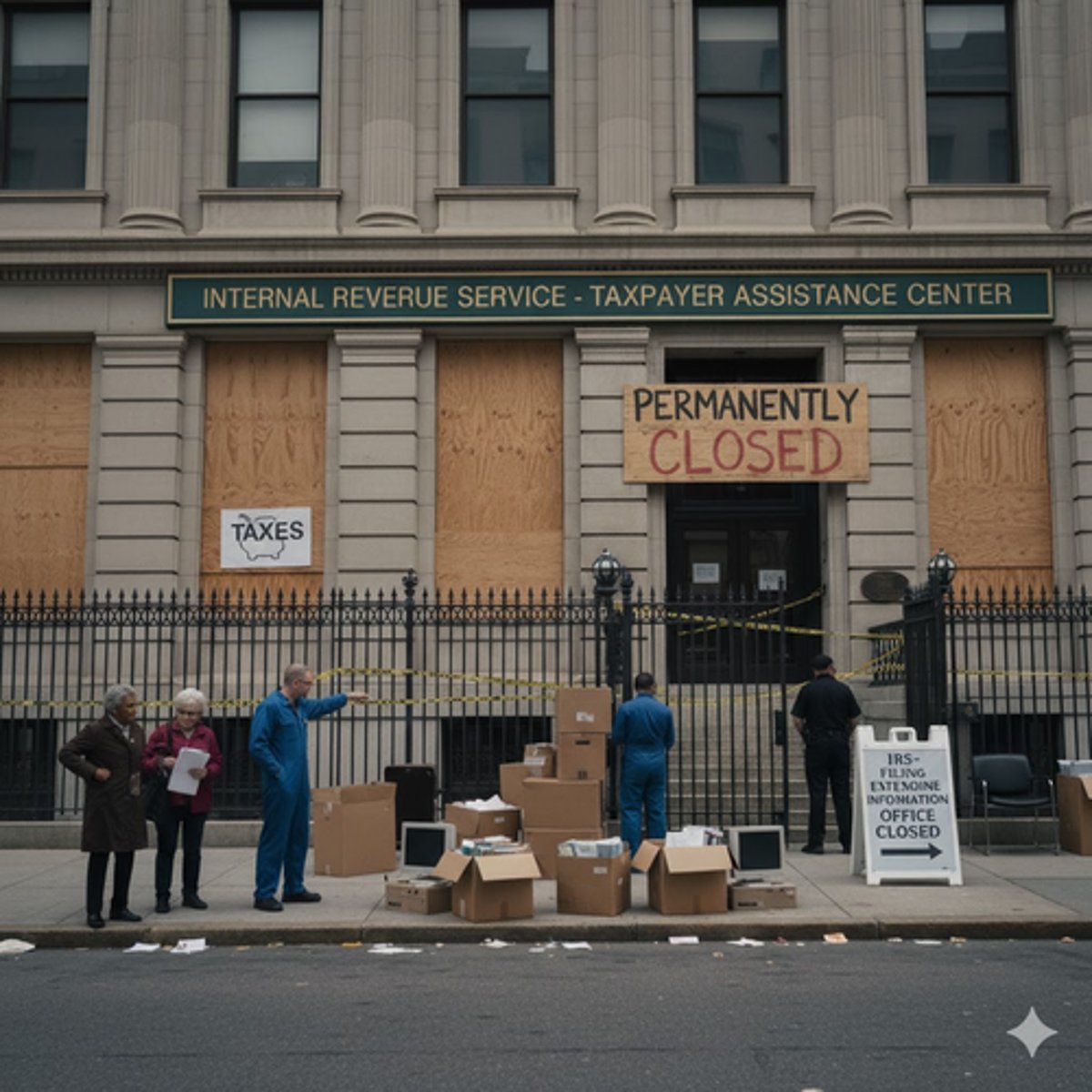
Rock Advertising Ltd v MWB Business Exchange Centers Ltd (2018)
Chapter: Consideration (Duty in an Existing Contract Between the Promisor and Promisee)
Facts: Parties signed licensing agreement with 'no oral variation clause'. RA stopped paying and MWB agreed over the phone to allow payment of arrears in instalments but later sued.
Principle: Any contradicting clauses in a contract eliminate the possibility of practical benefit if not followed. (SC did not decide whether practical benefit was good consideration in this case due to the clause that overrode it)

Wade v Simeon (1846)
Chapter: Consideration (Forbearance can Constitute Consideration)
Principle: Giving up a claim brought in bad faith was not good consideration
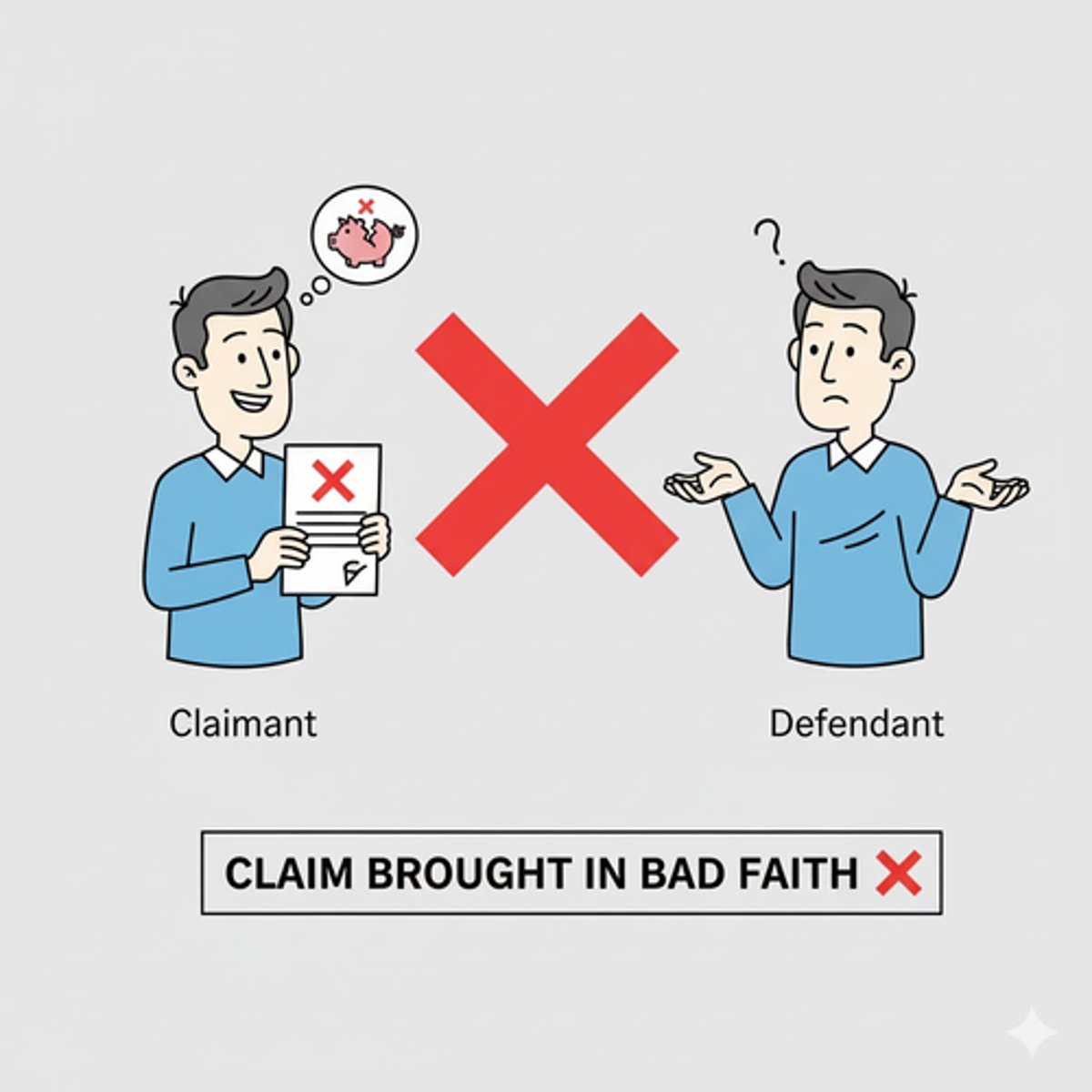
Simantob v Shavleyan (2019)
Chapter: Consideration (Forbearance can Constitute Consideration)
Principle: Agreeing to give up a legal defense constitutes good consideration.
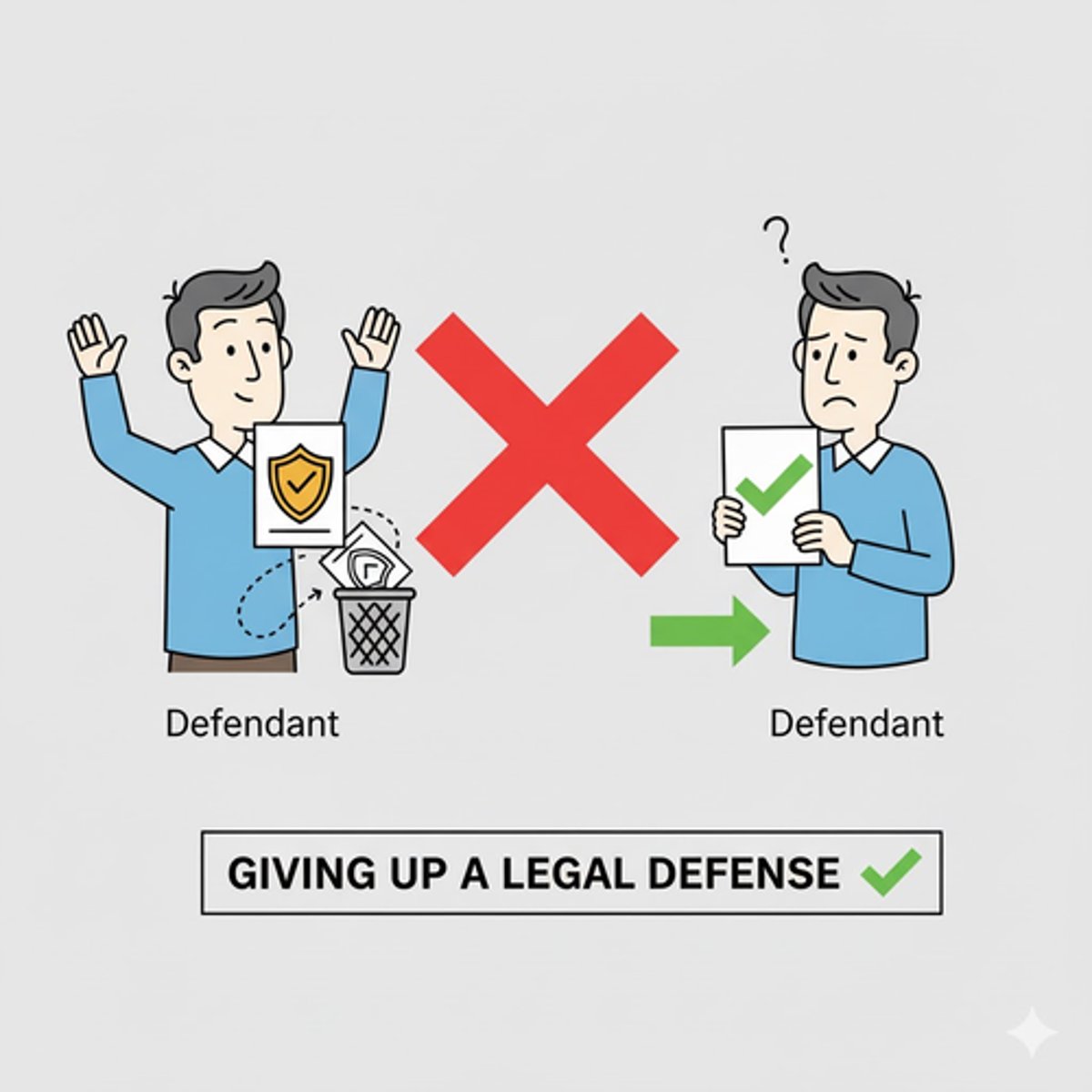
Atlas Express Ltd v Kafco Ltd (1989)
Chapter: Consideration (Contracts Signed Under Duress)
Principle: Contracts signed under economic duress did not have good consideration.

Charles Rickards v Oppenheim (1950)
Charles Rickards v Oppenheim (1950)
Chapter: Waiver and Promissory Estoppel (Waiver at Law)
Facts: Buyer requested bodywork on car which the supplier said would take 6-7 months. Supplier missed deadline but buyer waived his right to the original time condition and extended deadline by 4 weeks. Supplier delivered months later and buyer did not pay.
Principle: A waiver of a time condition can be revoked by giving reasonable notice. Once such notice is given, failure to perform within that new reasonable period will amount to a breach of contract.

Central London Property Trust v High Trees House (1947)
Chapter: Waiver and Promissory Estoppel (Waiver in Equity: Promissory Estoppel)
Facts: CLPT leased a block of flats to HTH in London in 1937. After war broke out, CLPT halved the rent, and after the war ended, CLPT claimed the full rent ongoing.
Principle: Established the doctrine of p.e. which is merely suspensory and does not permanently extinguish rights.
P.e Requirements:
i- Promise is intended to be binding
ii- Promise is intended to be acted upon
iii- Promise is in fact acted upon

Evenden v Guildford City Association FC (1975)
Chapter: Waiver and Promissory Estoppel (Limitations of Promissory Estoppel)
Facts: Man employed initially by supporters club as a groundsman is transferred to GCA FC
Principle: If both parties proceed on the shared understanding that employment will be continuous, and the employee relies on that understanding,
the employer cannot later deny continuity of employment to avoid statutory rights (such as redundancy pay).

WJ Alan & Co v El Nasr Export & Import (1972)
Chapter: Waiver and Promissory Estoppel (Limitations of Promissory Estoppel)
Facts: Kenyan coffee seller agreed to sell 500 tons of Tanzanian buyer priced in Kenyan shilling. Buyer paid in GBP which devalued while goods were in transit so seller demanded extra payment.
Principle: When a seller accepts a payment in the buyer's currency, they waived their right to be paid in the currency listed in the contract.

Combe v Combe (1951)
Chapter: Waiver and Promissory Estoppel (Limitations of Promissory Estoppel)
Principle: Promissory estoppel cannot be used to create a cause of action where none existed before — it can only be used as a defence ("a shield, not a sword").

Walton's Stores (Interstate) Ltd v Maher (1988)
Chapter: Waiver and Promissory Estoppel (Limitations of Promissory Estoppel)
Facts: After signing a lease, M demolished a building to construct a new one to WS's specifications. WS delayed finalising lease and eventually decided not to proceed but failed to inform M who was 40% done with construction.
Principle: P.e can operate as a cause of action ("sword"), not just a defence, if unconscionable conduct arises.

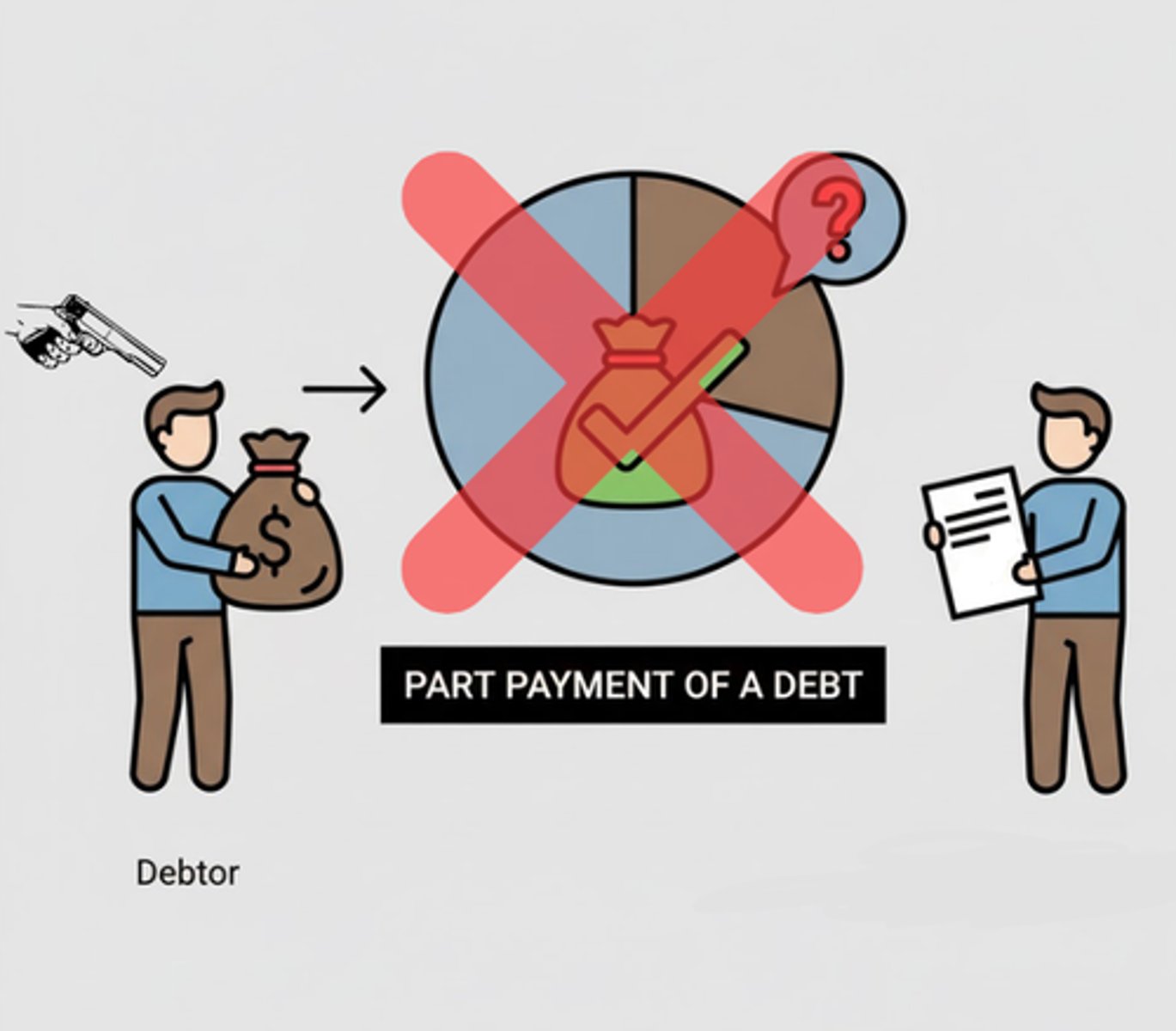
D & C Builders v Rees (1966)
Chapter: Waiver and Promissory Estoppel (Limitations of Promissory Estoppel)
Principle: Part-payment of a debt is not good consideration if obtained by intimidation or unfair pressure.
Collier v P & M J Wright (Holdings) Ltd (2007)
Chapter: Waiver and Promissory Estoppel (Limitations of Promissory Estoppel)
Obiter: Under some circumstances, p.e. can extinguish a party's rights altogether
ALSO
Chapter: Waiver and Promissory Estoppel (The Relationship Between Promissory Estoppel and the Part Payment of a Debt)
Principle: If a debtor offers to pay part of what they owe, the creditor agrees to accept the smaller amount, and the debtor actually pays it relying on the promise, it would be inequitable for the creditor to go back on their word and ask for the rest (p.e. extinguishes the creditor's right to the remaining balance)

Evans v Amicus Healthcare Ltd (2003)
Chapter: Waiver and Promissory Estoppel (Limitations of Promissory Estoppel)
Principle: If the initial promise is prohibited by statute, it cannot be the basis of p.e.

Kim v Chasewood Park Residents (2013)
Chapter: Waiver and Promissory Estoppel (Limitations of Promissory Estoppel)
Principle: Unclear wording means there are no grounds for p.e.
Pinnel's Case (1602)
Chapter: Waiver and Promissory Estoppel (The Relationship Between Promissory Estoppel and the Part Payment of a Debt)
Principle: Part payment of a debt can be good consideration if something extra is provided (e.g. early payment, payment in different form, additional consideration, etc)

Foakes v Beer (1884)
Chapter: Waiver and Promissory Estoppel (The Relationship Between Promissory Estoppel and the Part Payment of a Debt)
Principle: Part-payment of a debt does not normally extinguish the whole and is not valid consideration

Dunlop Pneumatic Tyre Co v Selfridge (1915)
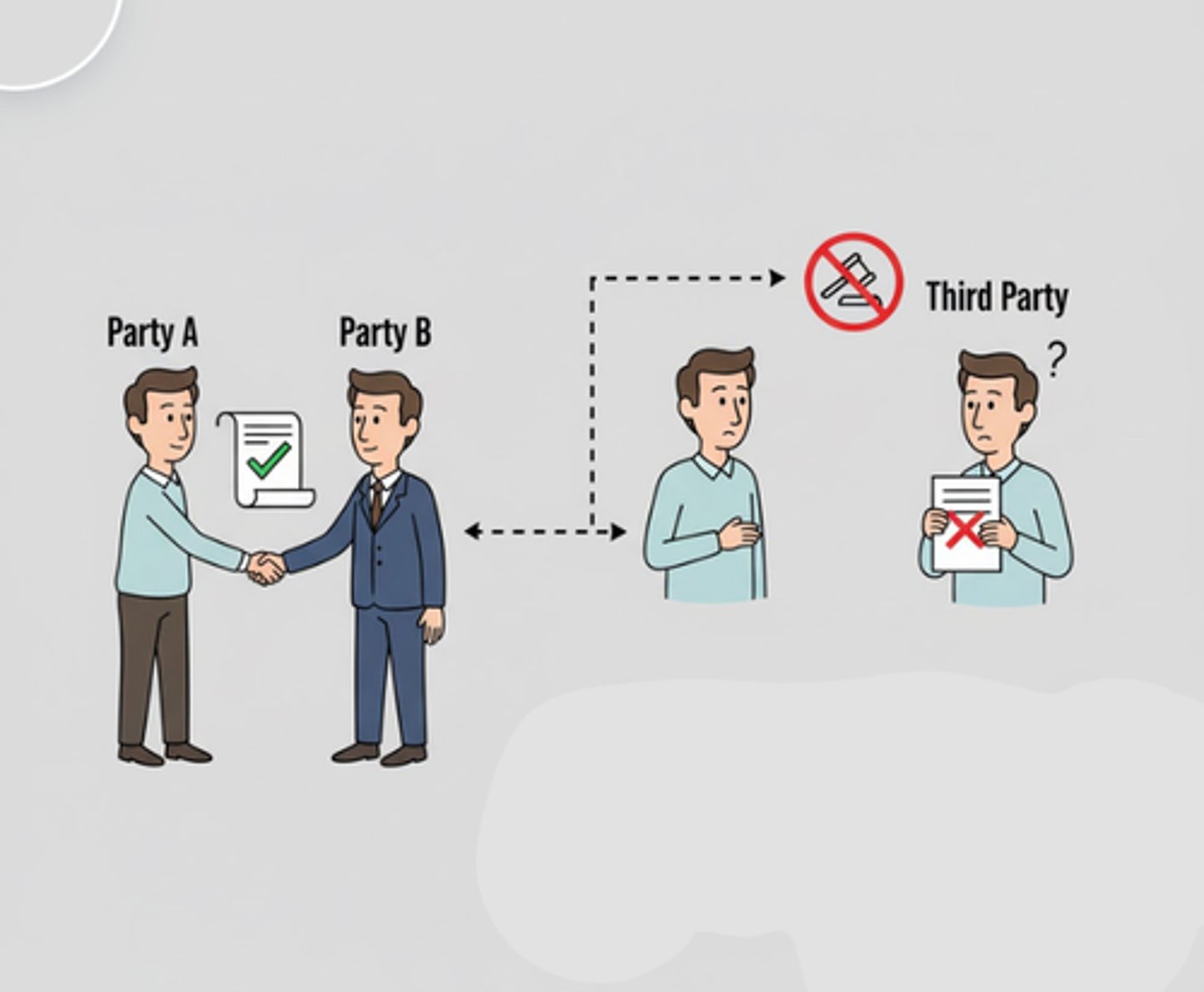
Chapter: Privity of Contract and the Rights of Third Parties (Privity of Contract)
Principle: Only a person who is a party to a contract can sue on it
Beswick v Beswick (1966)
Chapter: Privity of Contract and the Rights of Third Parties (Privity of Contract)
Facts: Mr in poor health so sells coal business to nephew in exchange for monthly payments that will continue to Mrs after his death. Mr dies and nephew does not pay.
Principle: In family matters, the spouse/next of kin can become the administrator of the deceased's affairs (including any outstanding contracts)

Public and Commercial Services Union v Secretary of State for Environment, Food, and Rural Affairs (2024)
Chapter: Privity of Contract and the Rights of Third Parties (Rights of Third Parties Act 1999)
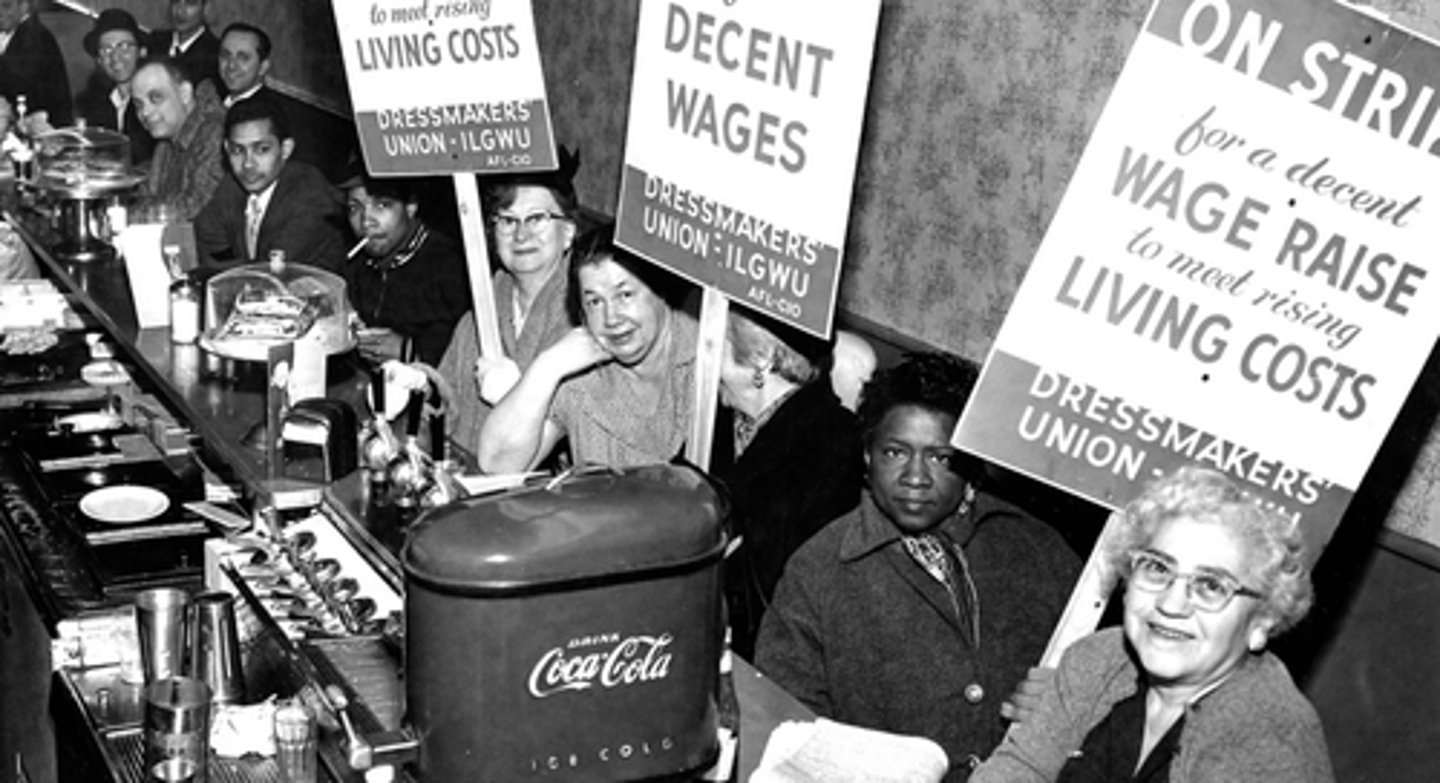
Facts: Trade union sued government departments that had removed the "check-off" facility from their employees' contracts. Check-off is a system where the employer deducts union subscriptions directly from an employee's wages and pays them to the union.
Principle: Third party cannot enforce a term that benefits them if the contract, read normally, shows that the parties meant to exclude the third-party's right.
Dolphin Maritime & Aviation Services Ltd v SAAF, The Swedish Club (2009)
Chapter: Privity of Contract and the Rights of Third Parties (Rights of Third Parties Act 1999)
Principle: A contract does not purport to confer a benefit on a third party simply because the position of that third party will be improved.

Avraamides v Colwill (2006)
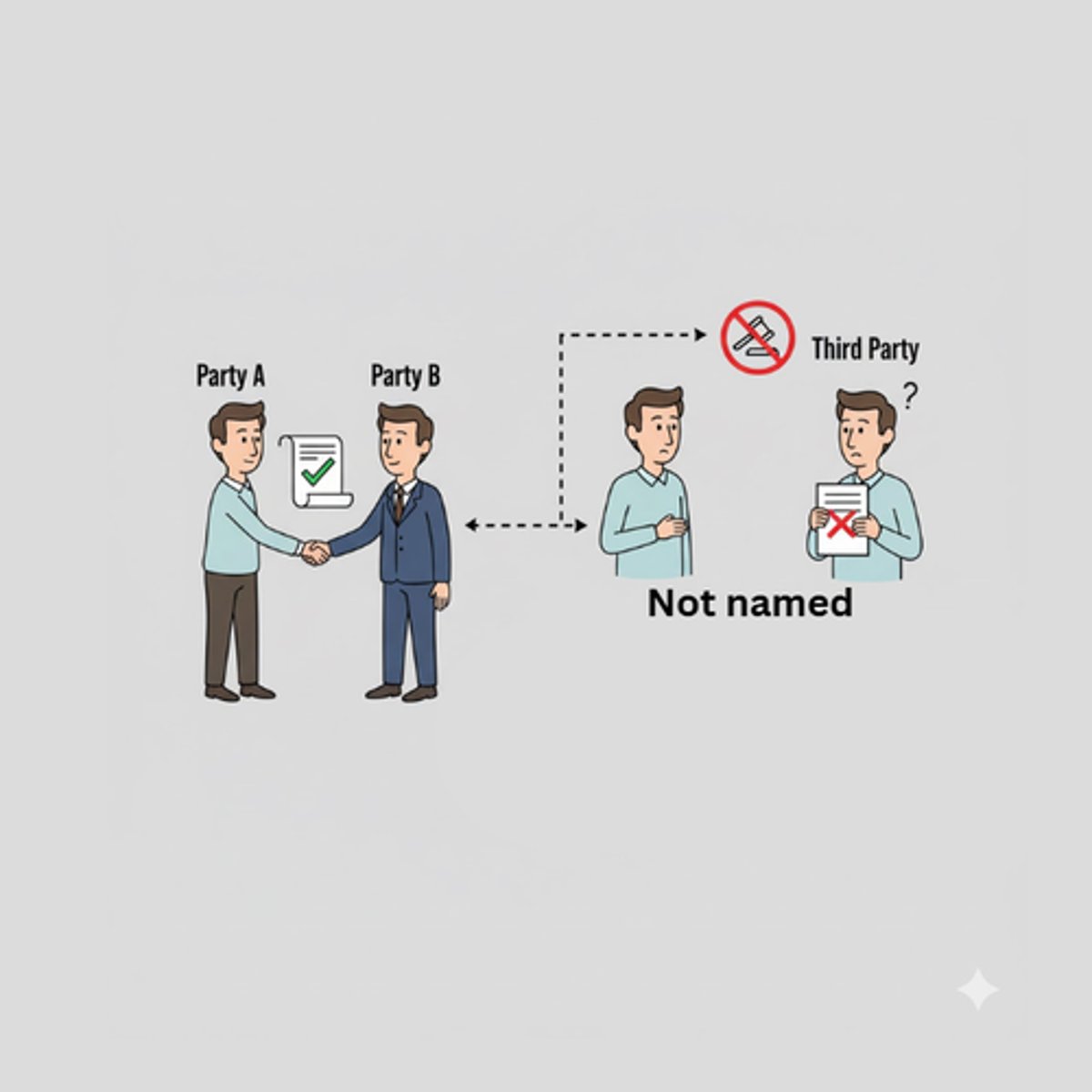
Chapter: Privity of Contract and the Rights of Third Parties (Rights of Third Parties Act 1999)
Principle: There must be a name referred to within the contract for a third party to enforce a term.
Helibut, Symons & Co v Buckleton (1913)
Chapter: Vitiating Elements: Misrepresentation (Misrepresentations vs Warranties)
Facts: HSC overvalued their rubber company to B who bought shares which devalued due to poor performance. B sued for breach of contract.
Principle: A representation will only be treated as a contractual term if there is clear evidence of an intention by both parties for it to form part of the contract. Mere expressions of opinion, even if relied upon, do not create a contractual warranty unless it is clear that a promise was intended.

Oscar Chess Ltd v Williams (1957)
Chapter: Vitiating Elements: Misrepresentation (Misrepresentations vs Warranties)
Facts: D sold car mistakenly registered in 1948 to W who later found out it was registered in 1938 and thus worth less.
Principle: A warranty must be distinguished from an innocent representation. Since the seller did not guarantee the accuracy of the document, it was a mere representation (information to induce purchase)

Dimmock v Hallett (1866)
Chapter: Vitiating Elements: Misrepresentation (The Representation Must be False)
Facts: H won a piece of land at auction said to be "very fertile and improbable", when it was not.
Principle: Statements of 'mere puff' (exaggeration) should not be taken as positive representation of fact and thus do not give rise to legal rights if proven to be inaccurate.
AND
Chapter: Vitiating Elements: Misrepresentation (The Representation Must be Induce the Contract)
Principle: Half-truths that create a misleading impression are actionable as misrepresentation.

With v O'Flanagan (1936)
Chapter: Vitiating Elements: Misrepresentation (The Representation Must be False)
Facts: The claimant bought the defendant's medical practice believing it earned £2,000 a year, but by completion of contract it had collapsed due to D's illness.
Principle: If a true statement is made pre-contract but, due to changing circumstances, becomes false by the time of signing, the D must tell the C of the change in circumstances and may not remain silent.

Colon v Simms (2006)
Chapter: Vitiating Elements: Misrepresentation (The Representation Must be False)
Principle: A person in a fiduciary position owes a duty of full disclosure to the person with whom they have that relationship (cannot remain silent).

Bisset v Wilkinson (1927)
Chapter: Vitiating Elements: Misrepresentation (The Representation Must be One of Fact, not Opinion)
Facts: During the purchase of land, C claimed it could sustain 2000 sheep when asked (not a shepherd). Land could not fit 2000 sheep.
Principle: A statement of opinion is not generally a misrepresentation.

Esso Petroleum Ltd v Mardon (1976)
Chapter: Vitiating Elements: Misrepresentation (The Representation Must be One of Fact, not Opinion)
Facts: Sale of petrol station to M gave info on expected business despite it just opening. EP inflated the numbers so M sued.
Principle: A party in the business of giving opinions on a topic can be guilty of misrepresentation after a statement of opinion.
AND
Chapter: Vitiating Elements: Misrepresentation (Negligent Misrepresentation)
Principle: Since EP's estimate was both a contractual claim and a tortious claim, Mardon could claim for concurrent liability
AND
Chapter: Vitiating Elements: Misrepresentation (Remedies for Misrepresentation: Damages)
Principle: Unforseeable consequences are unrecoverable for negligent misrepresentation (rule of remoteness applied)

Smith v Land & House Property Corp (1884)
Chapter: Vitiating Elements: Misrepresentation (The Representation Must be One of Fact, not Opinion)
Facts: A hotel was advertised as leased to a "most desirable" tenant, but the buyer's agent discovered the tenant was struggling and the town in decline. The buyer agreed to purchase for £4,700, but before completion the tenant went into liquidation, so the buyer pulled out.
Principle: A party with superior knowledge/expertise making a statement presented as an opinion will amount to a statement of fact and this be actionable as misrepresentation.

Wales v Wadham (1977)
Chapter: Vitiating Elements: Misrepresentation (The Representation Must be One of Fact, not Intention)
Facts: Wife promised never to remarry after divorce and was given alimony. Wife later remarried and husband sought to rescind the alimony.
Principle: A statement of future intention is not actionable as misrepresentation unless made dishonestly.

Edgington v Fitzmaurice (1885)
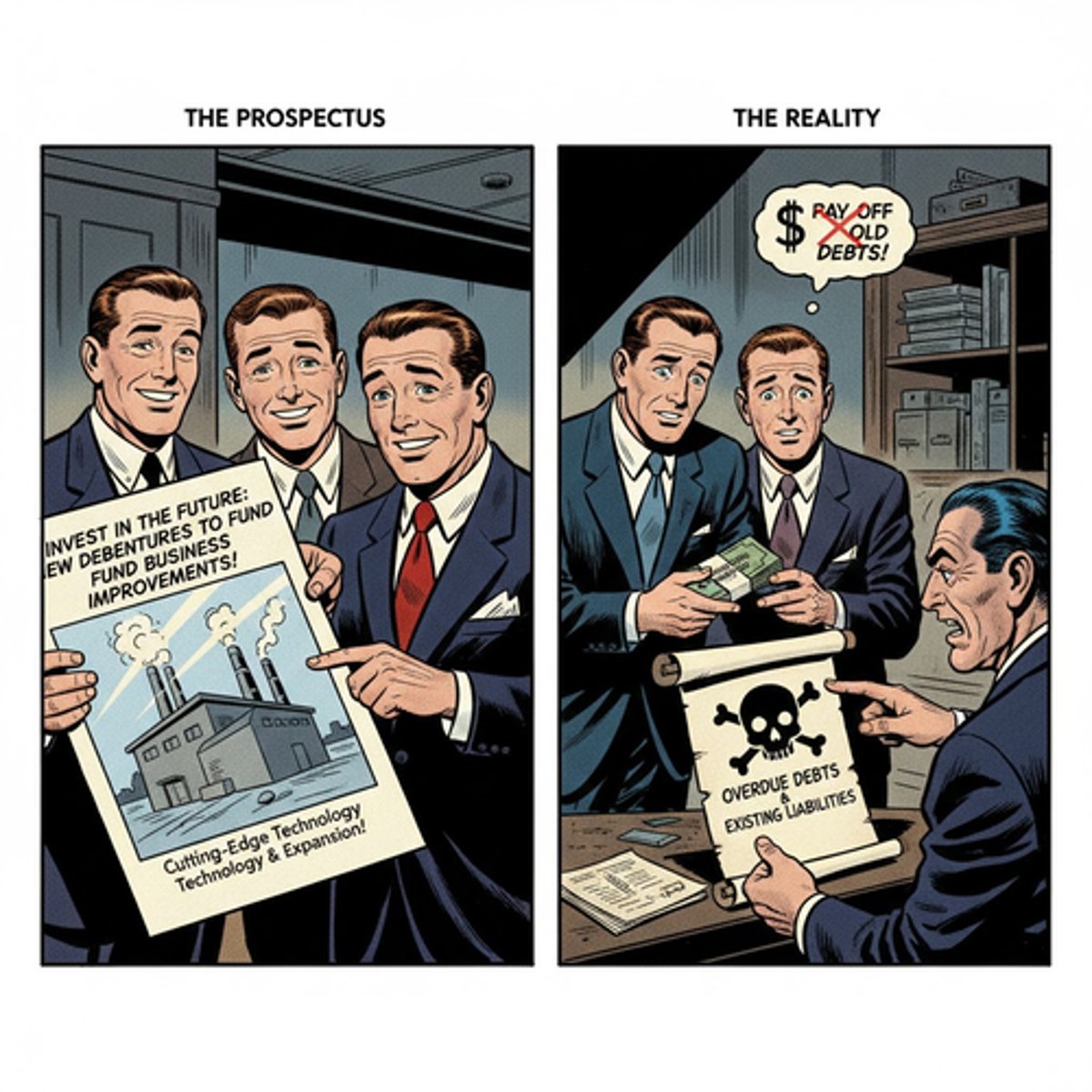
Chapter: Vitiating Elements: Misrepresentation (The Representation Must be One of Fact, not Intention)
Facts: The directors issued a prospectus falsely claiming the debentures were to fund business improvements, when in fact they were intended to pay off existing liabilities. The plaintiff subscribed based on this misrepresentation, and when the company became insolvent, he sought to recover his money.
Principle: A mis-statement of current intention is a mis-statement of fact and thus actionable as misrepresentation.
AND
Chapter: Vitiating Elements: Misrepresentation (The Representation Must be Induce the Contract)
Principle: A misrepresentation is actionable if the false statement played a real and substantial part of C's decision.
Pankhania v Hackney London Borough Council (2002)
Chapter: Vitiating Elements: Misrepresentation (The Representation Must be One of Fact, not Intention)
Facts: P bought commercial land sold as if the tenant only held a terminable licence with three months' notice. In reality, they had exclusive possession under a business tenancy protected by the Landlord and Tenant Act 1954.
Principle: Misrepresenting a tenancy arrangement as a terminable licence amounts to actionable misrepresentation.

Commercial Banking Co. of Sydney v. R.H. Brown & Co (1972)
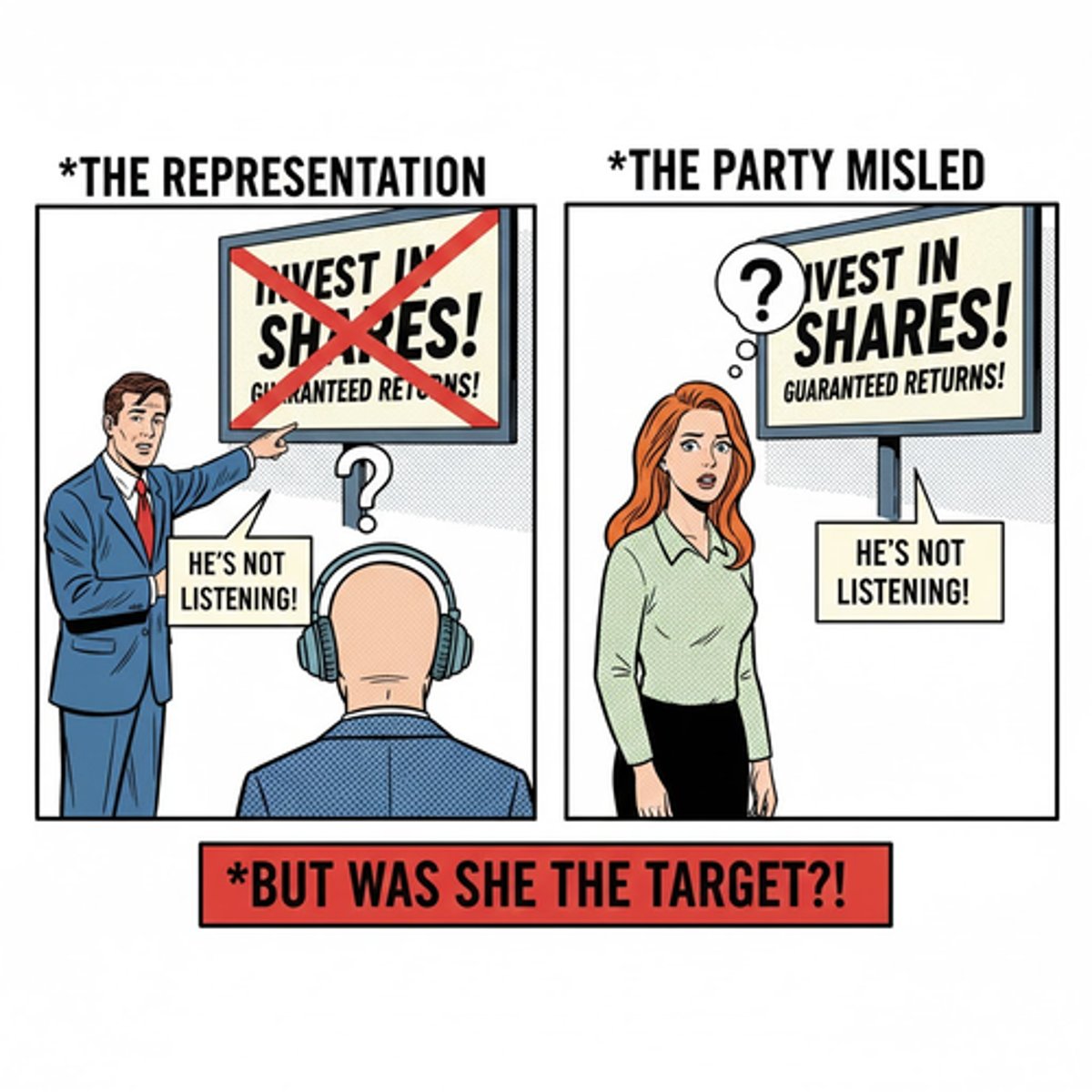
Chapter: Vitiating Elements: Misrepresentation (The Representation Must be Addressed to the Party Misled)
Principle: Representation must be addressed to the party misled.
Peek v Gurney (1873)
Chapter: Vitiating Elements: Misrepresentation (The Representation Must be Intended to be Acted Upon)
Facts: P bought shares on the open market and sued the directors after losing money despite the prospectus not being intended for secondary market purchasers, only initial investors.
Principle: A claim for misrepresentation can only succeed if the false statement was made to, or intended for the claimant. Someone who relies on it indirectly cannot sue for that misrepresentation.