SHRM-CP Functional Area 1: HR Strategy
 Call Kai
 Learn
Learn Practice Test
 Spaced Repetition
 Match
Match Flashcards
 Knowt Play
1/100

There's no tags or description
Looks like no tags are added yet.
Name | Mastery | Learn | Test | Matching | Spaced | Call with Kai |
|---|
No analytics yet
Send a link to your students to track their progress
101 Terms
What is the BASK Definition for HR Strategy?
“HR Strategy involves the activities necessary for developing, implementing, managing, and evaluating the strategic direction required to achieve organizational success and to create value for stakeholders.”
What is the role of strategy?
Aligns all functions in an organizatio nto “row together” towards defining the organization’s goals and direction
What is required to create strategic goals?
A vision of growth that is associated with the organization’s missio
A vision that includes the result of value for stakeholders
What is strategy?
The planning of long-range goals and actions to attain those goals
What does strategy look at?
The strengths, weaknesses, and vulnerabilities within the organization
The competition, opportunities, and external issues and influences outside the organization
What strategy theory does Henry Mintzberg believe in?
Strategy emerges in response to environmental threats and opportunities and cannot be planned rationally because no one person can foresee everything about the future
What strategy theory does Michael Porter believe in?
The gathering of data is strategy’s core source for setting and choosing direction.
What are the two theories or thoughts on strategy?
Strategy emerges in response to environmentla threats and opportunities and cannot be planned rationally because no one person can foresee everything about the future
The gathering of data is streategy’s core source for setting and choosing direction
What are the main concepts on creating strategy and managing it?
Aligning Effort
Controlling Drift
Focusing on Core Competencies
Systems Thinking
Using Structure as a Strategic Level
Using Culture as a Strategic Level
What is the idea behind “aligning effort” as a concept about creating strategy and maintaining it?
You need to ensure that all functions are aligned with the organization’s mission and goals
Ensure policies and practices are aligned with the strategy and intention
What is the idea behind “controlling drift” as a concept about creating strategy and maintaining it?
You need to be sure an organization is not coasting along and doing what it has always done
Make sure the organization does not get blindsided because of disruption in its marketplace or industry
What is the idea behind “focusing on core competencies” as a concept about creating strategy and maintaining it?
You need to know what the organization is good at for its customer base and be sure to focus efforts using those competencies
What is the idea behind “systems thinking” as a concept about creating strategy and maintaining it?
You need to keep in mind the inter-relations of both internal and external factors, such as stakeholders, industry forces, and the other influences on an organization
You need to look at both opportunities and the corresponding risks or conflicts and know what degree of risk is acceptable to the organization
What is the idea behind “using structure as a strategic level” as a concept about creating strategy and maintaining it?
Ask: “Does the structure of the organization support the strategy, or does it hamper it because of current policies and expectations within the organization?”
What is the idea behind “using culture as a strategic level” as a concept about creating strategy and maintaining it?
Ask: “Does the culture align itself with the intended strategy?”
What are the benefits of strategy?
Helping everyone in the organization focus on the future with a written plan that contains goals to further the organization’s existence
Provides a map that gives direction and intention on where the organization plans to spend its resources
Helps keep decision-making and activities aligned
Provides a spotlight to prioritize how to deploy resources
How can organizations fail to obtain the benefits of strategy through their process and/or the management of strategy?
Failing to remember not to take shortcuts with the process of strategy
Being too comfortable with the status quo and not challenging or assessing the potential risks
Lacking follow-through and alignment of the plan throughout the organization
Insufficient involvement or commitment from management
Lack of communication throughout the organization
What are the three levels of strategy?
Organizational Level
Business Unit Level
Operational Level
What is the “Organizational Level” as a level of strategy?
Involves a general vision of the future as an umbrella over the entire organization
What is the “Business Unit Level” as a level of strategy?
Focuses on how and where the organization will focus to create value for its shareholders
Focus is on the business units such as sectors, divisions, regions, and product units
What is the “Operational Level” as a level of strategy?
Focuses on the activities and actions the functions within the organizations will take to progress it toward its vision
What is the Role of HR in Strategy?
The operational level will be the main focus to support the entire organization
HR’s policies, programs, and processes need to correlate, collaborate, and align with the organization’s business units
Build bridges with both internal and external stakeholders
View issues from differing perspectives and seek resolutions to help bridge the differing functions in a collaborative effort
What is the basic premise of strategy and management?
Lead activities that yield a great value
What is value?
Not cultural values
Value that is brought to stakeholders
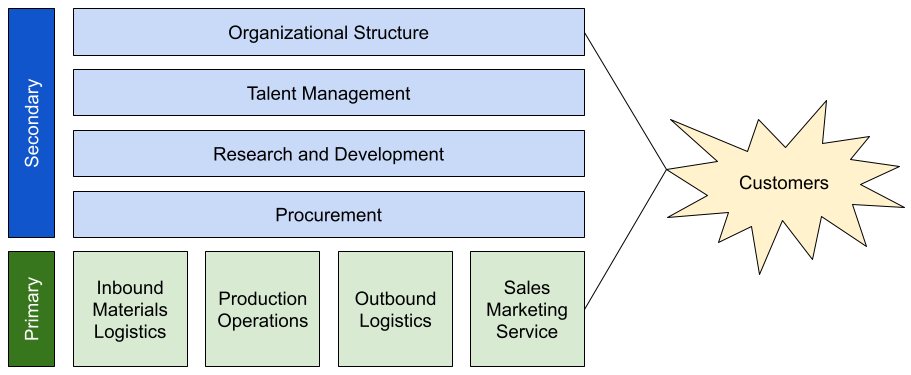
What is the Value Chain Model?
Describes the process by which a business receives materials and then adds value to the materials through processes that create their finished products or services, which are then sold to customers
Who created the Value Chain Model?
Michael Porter
How do organizations conduct value-chain analysis?
Look at the steps in their production process that are utilized to create their products or services and then identifying a way to increase the efficiency of the production chain
What is the end goal of value-chain analysis?
To create a maximum value for the least possible cost, creating the organization’s competitive advantage
What are primary activities in the Value Chain Model?
Varies according to the type of the organization’s activities
Contributes directly to the value that is created for the customer
How is value determined for primary activities in the Value Chain Model?
Depends on the secondary activities that provide services to the primary functions
What are secondary activities in the Value Chain Model?
Activities that provide services to primary functions
What is one disadvantage to the Value Chain Model?
Not all business find this model realistic because their business does not control the entire chain of production and distribution
Describe and/or draw the Porter Value Chain Concept
How created the stakeholder concept?
R. Edward Freeman
What is the Stakeholder Concept?
Recognizes the different types of value an organization creates
There are various perceptions from the view of each stakeholder, especially in a global organiation
Encompasses all the relationships that impact the organization, plus all the people, groups, and entities that the organization impacts
These are two-way relationships!
Describe and/or draw the Stakeholder Concept
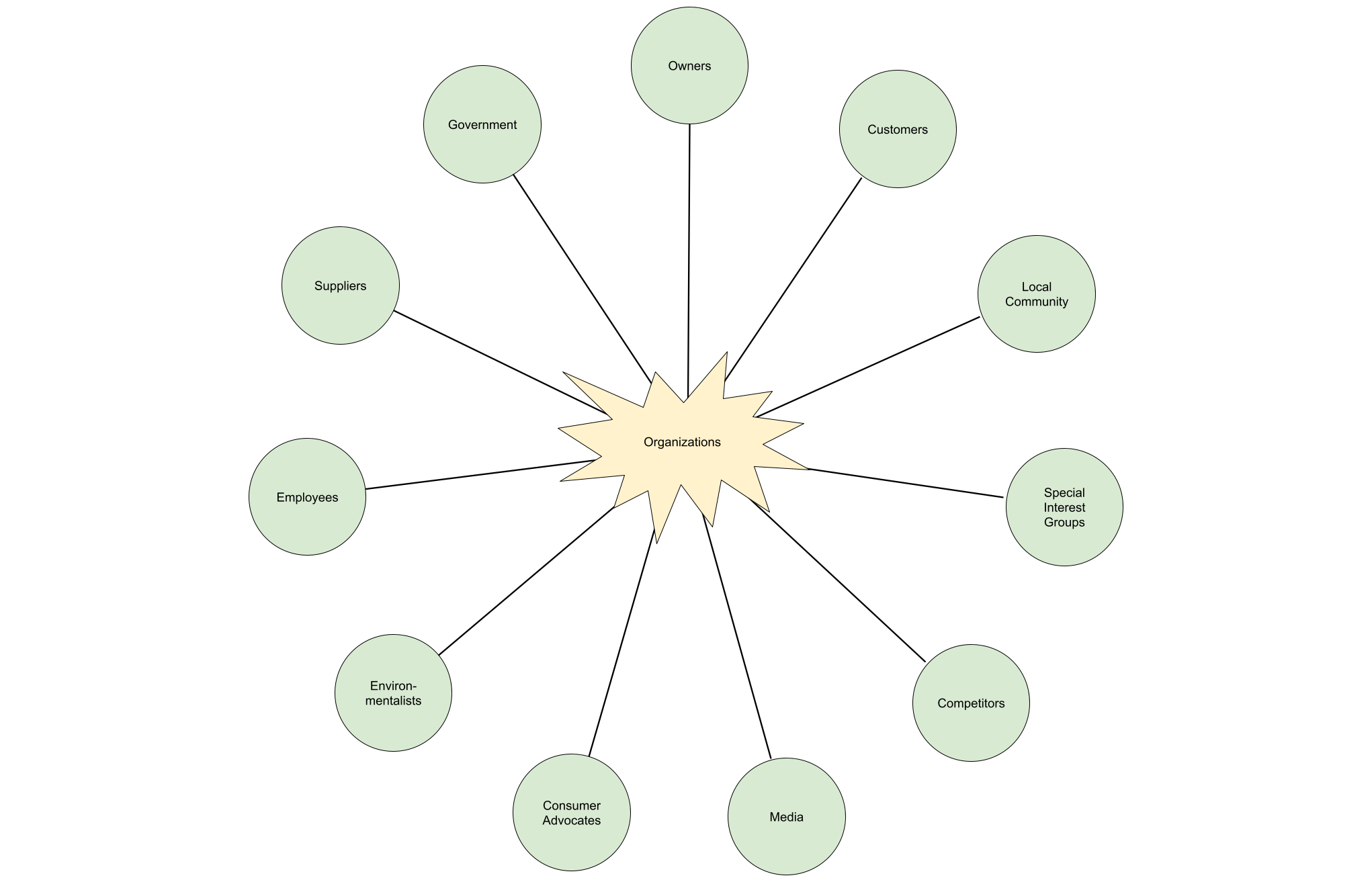
What are the categories in the stakeholder concept and what is in the middle?
Categories:
Owners
Customers
Local Community
Special Interest Groups
Competitors
Media
Consumer Advocates
Environmentalists
Employees
Suppliers
Government
In the middle:
Organizations
What is the biggest role HR has in defining and creating value for its organization?
Knowing the workforce
What does it mean to “know the workforce”?
Know core competencies of talent
Know where to find the talent that is needed
Know the legal environment in which the organization employes its workforce
What is the strategic planning process about?
Designing the organization for the future
What are the four basic stages of the strategy process?
Formulation of the Strategy
Development of the Strategy
Implementation Stage
Evaluation Stage
What is the stage “Formulation of the Strategy” in the strategy process?
Gathering the critical and necessary data to analyze and assess the current situation
What is the stage “Development of the Strategy” in the strategy process?
Creating your plan to gain a competitive advantage in the markets in which you compete
What is the stage “Implementation Stage” in the strategy process?
The enactment of specific objectives and initiatives that produce outcomes associated with the goals
What is the stage “Evaluation Stage” in the strategy process?
The final stage
Where metrics and achievements are accessed and reported upon to stakeholders
What is strategy formulation?
The process by which an organization chooses the most appropriate courses of action to achieve its defined goals
When should data be gathered in the strategy formulation process?
Prior to and during the creation of the strategic plan
Continue through implementation and the monitoring process of the strategic plan
What is the key to business success?
Information
What does it mean when something is “on the radar”?
It is being tracked
Someone believes the information is important to the organization’s success
How can conduct Environmental Scanning?
PESTLE Analysis
SWOT Analysis
Industry Analysis
What is PESTLE Analysis?
An environmental scanning technique that helps businesses assess particular factors that may have an impact on their operations
What are the six factors of PESTLE (or what does PESTLE stand for)?
Political
Economic
Social
Technological
Legal
Environmental
What are political factors in a PESTLE Analysis?
All about how and to what degree a government intervenes in the economy
Includes:
Government policy
Political stability or instability in overseas markets
Foreign trade policy
Tax policy
Labor law
Environmental law
Trade restrictions
etc.
What are economic factors in a PESTLE Analysis?
Includes:
Economic growth
Unemployment rates
Interest rates
Exchange rates
Inflation
Disposable income of consumers and businesses
Etc.
These factors can be broken into macroeconomic and microeconomic factors
What are macroeconomic factors?
Deals with the management of demand in any given economy
What are microeconomic factors?
All about the way people spend their incomes
What are social factors in a PESTLE Analysis?
Areas that involve the shared belief and attitudes of the population as well as demographic information
Includes:
Population growth
Age distribution
Health consciousness
Career attitudes
Etc.
These factors have a direct effect on how marketers understand customers and what drives them
What are the three ways technological factors in PESTLE Analysis affect marketing of products and HR services?
New ways of producing goods and services
New ways of distributing goods and services
New ways of communicating with target markets
What are environmental factors in a PESTLE Analysis?
Factors that have become increasingly important due to the increasing scarcity of raw materials, pollution reduction targets, doing business as an ethical and sustainable company, and carbon footprint targets set by governments
Consumers are demanding that the products they buy are sourced ethically and from a sustainable force
What are legal factors in a PESTLE Analysis?
Include, but are not limited to:
Patent law
Intellectual property protection
Health and safety
Equal opportunity
Advertising standards
Consumer rights and laws
Product labeling
Product safety
HR professionals need to know what is and what is not legal in order to avoid fines, embarassment, or serious reputational damage
What is SWOT Analysis?
An analysis that looks at both the internal and external environment and identifies pros and cons in each
What does SWOT stand for?
Strengths
Weaknesses
Opportunities
Threats
What are “strengths” in SWOT Analysis?
Areas in the organization you are strong in or performing well at
What are “weaknesses” in SWOT Analysis?
Areas in the organization you need improvement
What are “opportunities” in SWOT Analysis?
Positives in the environment
What are “threats” in SWOT Analysis?
Negative challenges the organization faces in the environment