The Labour Market
 Call Kai
 Learn
Learn Practice Test
 Spaced Repetition
 Match
Match Flashcards
 Knowt Play
1/33

There's no tags or description
Looks like no tags are added yet.
Name | Mastery | Learn | Test | Matching | Spaced | Call with Kai |
|---|
No analytics yet
Send a link to your students to track their progress
34 Terms
The labour market is a factor market
The supply of labour is determined by those who want to be employed, whilst the demand for labour is from employers
Labour is a derived demand
Demand for labour comes from the demand for what it produces
Demand is related to how productive labour is and how much the product is demanded
The elasticity of demand for labour is linked to how price elasticity the demand for the good is
The demand for labour is affected by
...
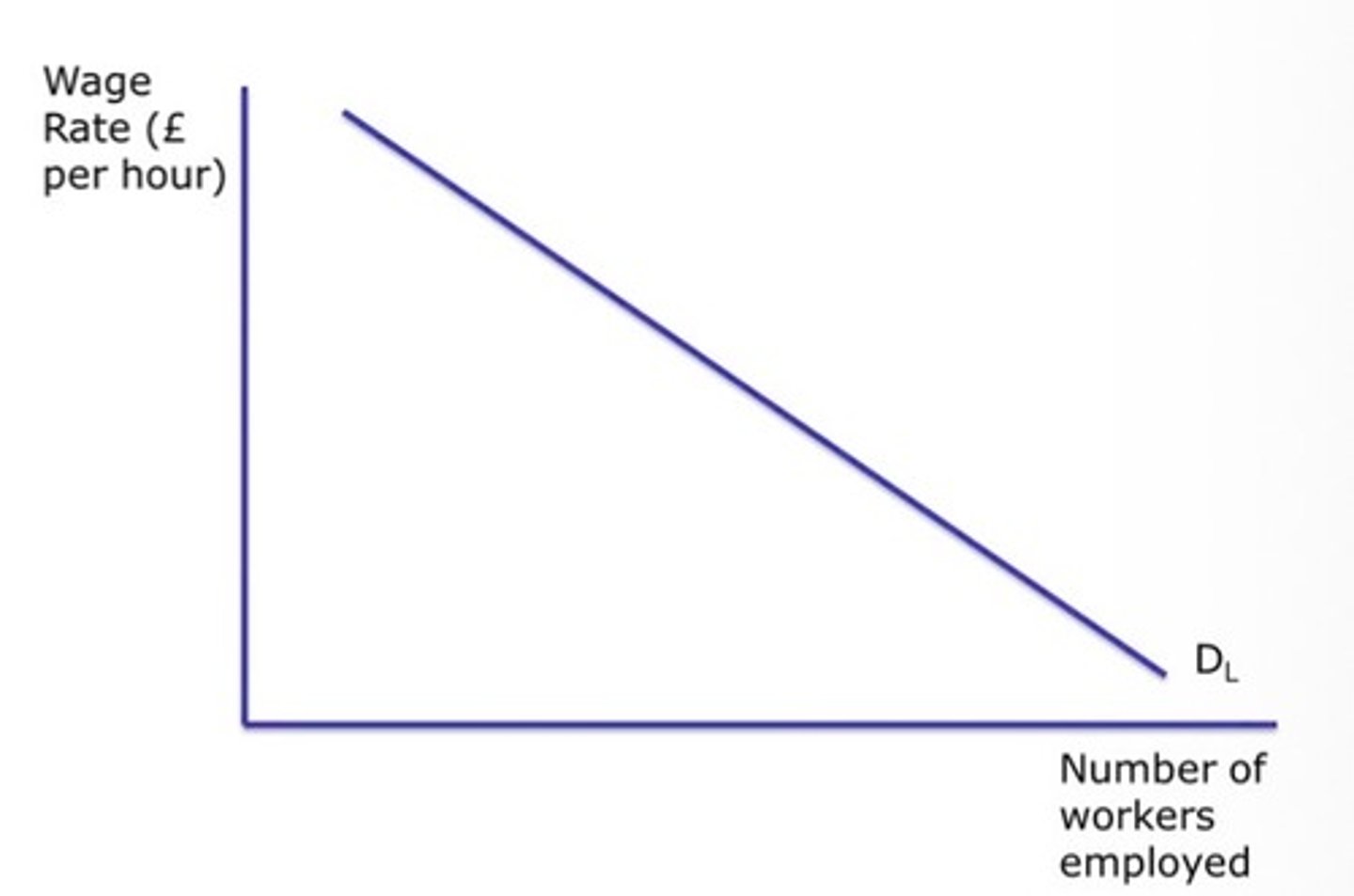
The wage rate
The downward sloping demand curve shows the inverse relationship between how much the worker paid and the number of workers employed
When wages get higher, firms might consider switching production to capital, which might be cheaper and more productive than labour
Demand for products
Since the demand for labour is derived from the demand for products, the higher the demand for the products, the higher the demand for labour.
Productivity of labour
-The more productive workers are, the higher the demand for them
-This can be increased with education and training, and by using technology
Substitutes for labour
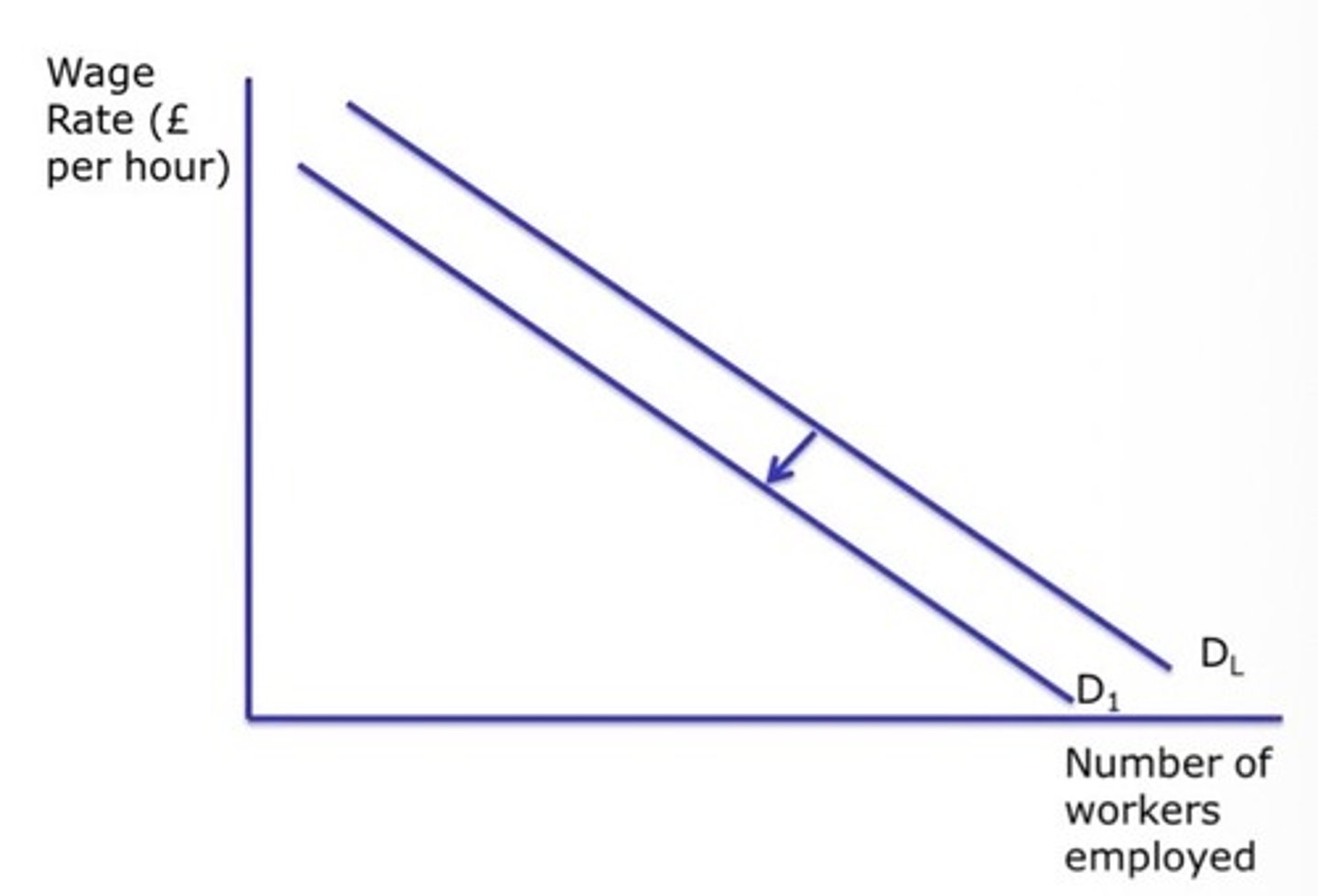
If wages get too high, firms might switch to capital, cheaper/ potentially more productive. Replacing labour with capital shifts DL to the left.
How profitable the firm is
The higher the profits of the firm, the more labour they can afford to employ
The number of firms in the market
-This determines how many buyers of labour there are
-The lower demand for labour can mean wages are lower, so trade unions try to encourage higher wages
The marginal productivity theory of the demand for labour
States that demand for labour is dependent on marginal revenue product (MRP)
MRP= MP x MR
Marginal product of labour- The additional revenue derived per extra unit of labour
Equilibrium occurs where the marginal cost of one extra unit of labour is equal to the net benefit of one extra unit of labour
The elasticity of demand for labour
Measures the responsiveness of demand for labour when the market wage rate changes
This is affected by
How much labour costs as a proportion of total costs
-The higher the cost of labour as a proportion of total costs , the more elastic the demand
The easier it is to substitute factors, the more elastic the demand for labour, because firms can easily switch to cheaper forms of production
eg. Capital
The PED of the product
-The more price elastic the product, the more price elastic the demand for labour
Factors that influence the supply of labour to a particular occupation
...
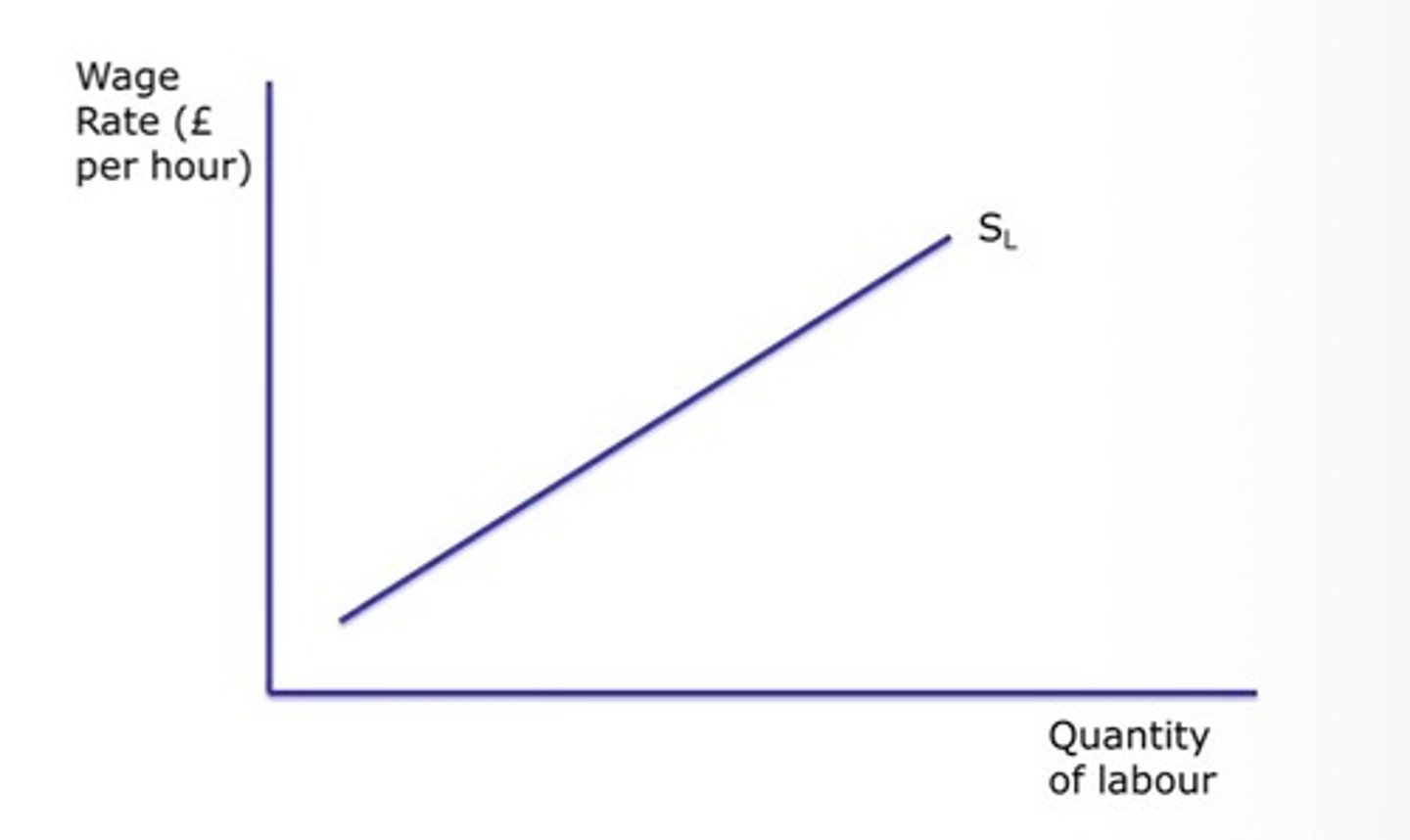
The wage rate
The upward sloping supply curve shows the proportional relationship between how much the worker is paid and the number of workers willing and able to work
Demographics of the population
The more people there who are able and willing to work, the higher the supply of labour
This changes with retirement and school leaving ages, the number of university students and immigration
Migration
Migrants are usually of working age, so the supply of labour at all wage rates tends to increase
Advantages of work
This can influence how much people prefer to work, and is linked to non-monetary advantages. If the cost of working is lower, so families can afford childcare, people are more likely to work. If the benefits of working are high, such as holiday entitlements and the potential to be promoted, the supply of labour is likely to increase.
Leisure time
Leisure is a substitute for work which is why part-time work and early retirements are attractive for some people
Trade unions
These could attract workers to the labour market, because they know their employment rights will be defended.
However, the limits on workers eg. Limiting their ability to strike, might cause some people to withdraw from the labour market
Taxes and benefits
If taxes are too high and benefits are too generous, people might be more inclined to withdraw from the labour market.
Training
If a lot of training or high qualifications are required for a job, then the supply of labour may fall
However if the government subsidise training, it is easier for workers to gain the necessary skills for a job, so the supply of labour could increase
Monopsony power
When there is only one buyer of labour in the market, there is said to be monopsony power. It means the firm has the ability to set wages.
Trade union power
If trade unions are pushing for higher wages above the market equilibrium, the labour market is likely to be more flexible. Trade unions can also increase job security. Higher wages can be demanded by limiting the supply of labour, by closing firms, or by threatening strike action. Higher wages could cause unemployment, however. Trade unions can counter-balance exploitative monopsony power.
Imperfect information
Some qualified workers might not be aware of higher paying jobs in other industries or with other firms
This can limit the productivity and potential progression of workers
-> makes the market inefficient
The national minimum wage
The national minimum wage wage is an example of a minimum wage
- It has to be set above the free market price
Costs/ benefits of the NMW
Cost:
-It could make it harder for young people to find a job, because their lack of experience might not be valuable to firms who are paying more for their labour
-A higher wage could make the country less competitive on a global scale, since they cannot compete with countries that have lower wages
Benefits:
-The NMW will yield the positive externalities of a decent wage, which will increase the standard of living of the poorest, and provide an incentive for people to work
-The government might make more tax revenue, due to more people earning higher wages
Discrimination in the labour market
Sometimes, even in the same job, workers can be paid different amounts.
Due to...
Formal education
On average, those with a degree earn more over their lifetime than those who just gain A-levels
Skills, qualifications and training
Jobs which require more training and education offer higher wages. Training workers is expensive for firms, so they compensate for this by offering workers, who have already undergone education and training, higher wages.
Pay gaps
The wage gap between skilled and unskilled workers has increased in the UK recently. This is due to technological change and globalisation, which has shifted production abroad.
Wages and skills
Skilled workers produce higher outputs than unskilled workers because they are more productive, so the demand for their labour is higher. This means they can demand higher wages.
Gender
Even with equal pay laws, women still earn less than men on average
-This could be due to career breaks and fewer hours worked on average than men, or because women are crowded into low-paid or part time jobs, which may only require low skill levels
-Women could also be discriminated against when it comes to promotions, which effectively locks out higher paying jobs
-There are inequalities with paternity and maternity leave
Discrimination
-Workers might be discriminated against due to age, disabilities, gender and ethnicity
-Workers from ethnic minorities have faced prejudice and discrimination