Verts Exam 3
 Call Kai
 Learn
Learn Practice Test
 Spaced Repetition
 Match
Match Flashcards
 Knowt Play
1/54

There's no tags or description
Looks like no tags are added yet.
Name | Mastery | Learn | Test | Matching | Spaced | Call with Kai |
|---|
No analytics yet
Send a link to your students to track their progress
55 Terms
BIRBS (Class Aves)
Defining features:
feathers, flight
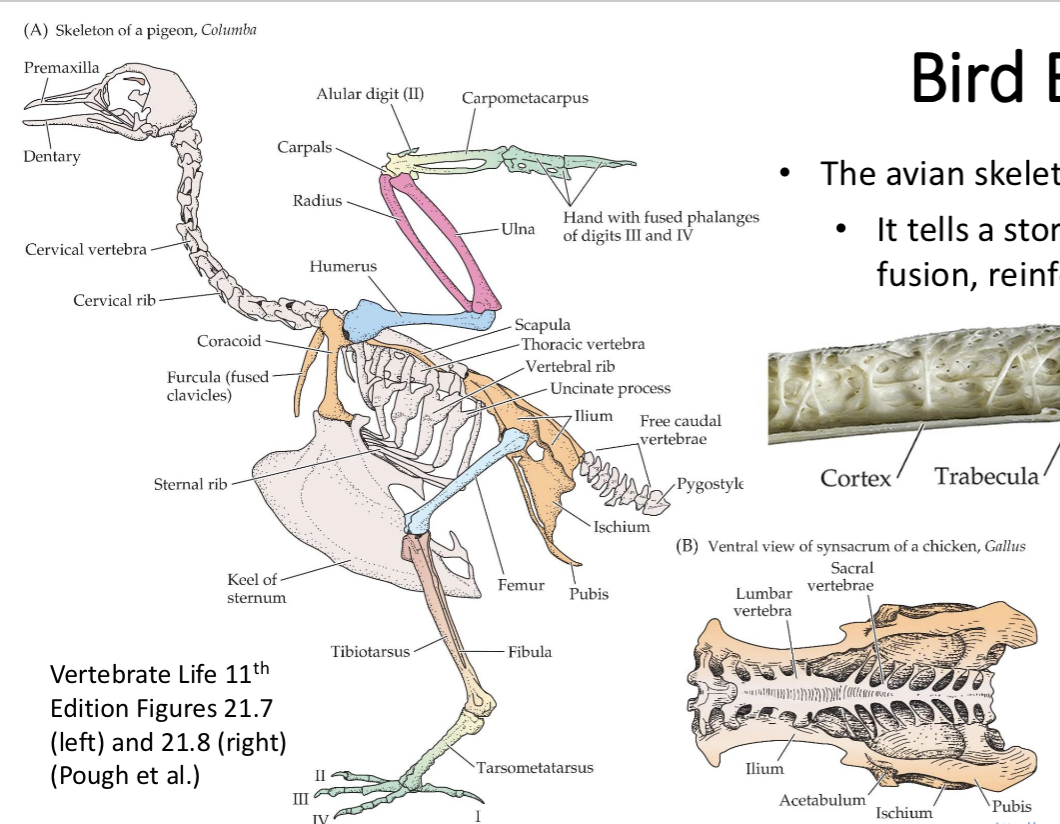
lightweight fused skeleton (furcula, wishbone)
toothless beaks
pygostyle (fused tail vertebrae)
air sacs/air filled bones
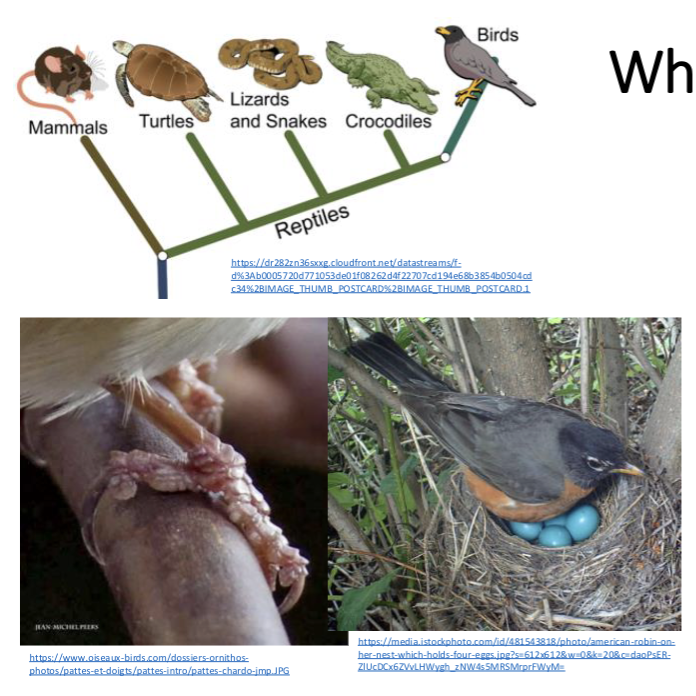
amniotic hard-shelled eggs
four-chambered hearts, and endothermic
Where do birds fit in?
modern birds have more traits common with reptiles than mammals
good evidence for birds arising within the reptile clade after the split between sauropsids/diapsids and synapsids
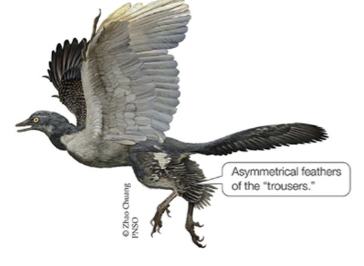
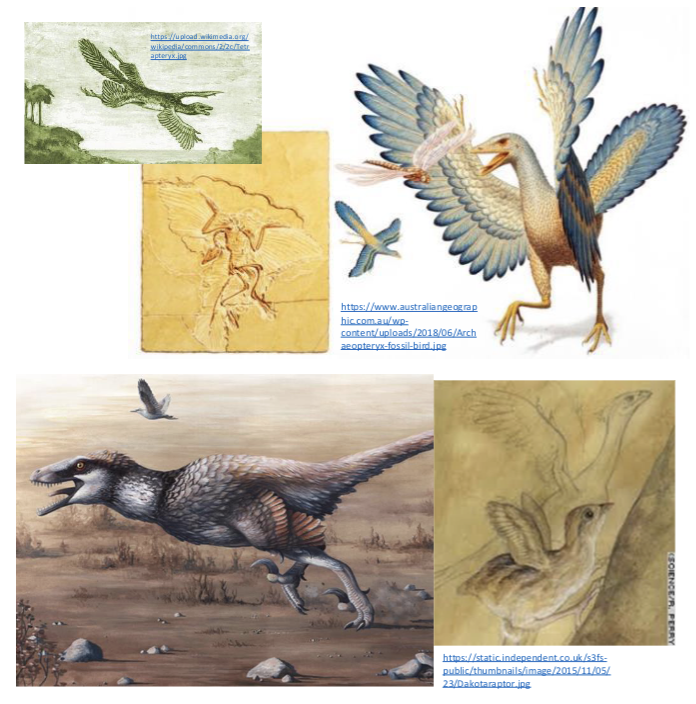
Archaeopteryx
first described from one fossilized feather in 1861 Germany
Archaeopteryx represents a mix of non-avian reptile traits and bird traits
Bird traits= feathers, skeletal structures for flight, backwards pointing first toe.
Reptile traits = many small teeth, unfused bones, claws on forelimbs, and long bony tail
Velociraptor
small (about turkey sized) but it, along with other dromaeosaurs all probably hunted solitarily, pinning prey with a large toe claw
Theropod Hypothesis
concern and debate about theropods lacking a furcula ceased to be a concern as new fossils were found
more evidence suggesting a gradual progression from ealry archosaurs to modern avian traits
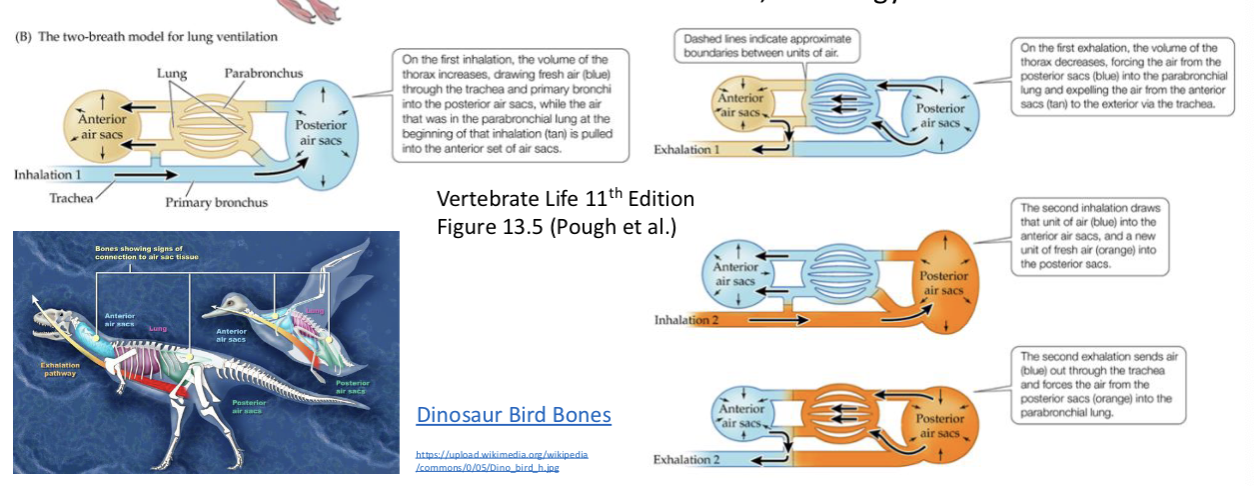
Avian respiration
Dinos took sauropsid respiratory systems one step further to evolved air sac, extending into hollow bones
Living birds need 2 breaths to completely move air in and out of their bodies for energy efficiency
Theropods
one of the 3 major clades of dinos characterized by hollow bones and three toes and claws on each limb
Bird eggs
like all archosaurs, birds lay shelled eggs, and theropods laid shelled eggs as well
preserved nests and eggs and parental skeletons nearby suggest parental care like brooding
Feathers
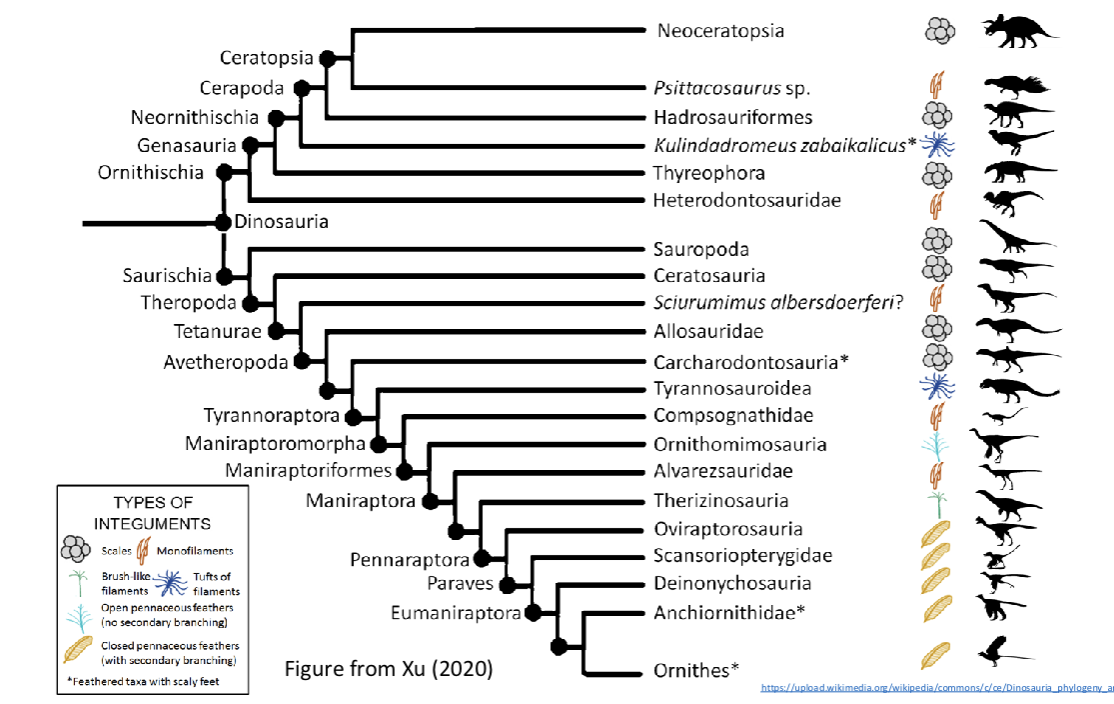
preserved fossils of feathered theropods were found in China
feathers’ original function might have been for thermoregulation (protecting from sun to cool off, retain heat to keep warm
another possible function was display for territory or courtship
flight feathers = exaptation, a change or addition to a traits function to become co-opted for another function
Flyin
2 distinct hypotheses to explain how flight arose:
Arboreal = feathers went from being used for temperature control to gliding from tree to tree (matches the thecodont origin of birds
Cursorial = feathers went from temp regulation to an insect net to flight (fits the theropod origin of birds)
in 2003, wing-assisted incline running was proposed to explain flight, where flapping rapidly would assist in moving up inclines. this merged the 2 hypotheses and is now the most widely accepted
some maniraptorian (but non0avian) theropods even took to the seas and skies as swimmers and gliders
4 winged dinos
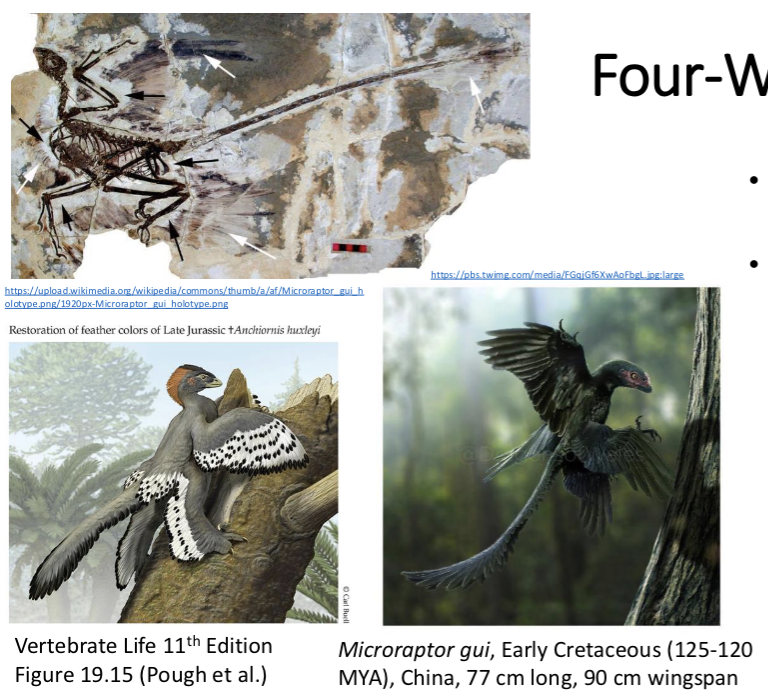
many species were found to have legs that acted as wings
the lift-to-drag ratio was critical for gliding flight
they jumped off trees with legs straight back forming a canopy over the tail, and brought legs down when approaching a tree to increase drag for landing
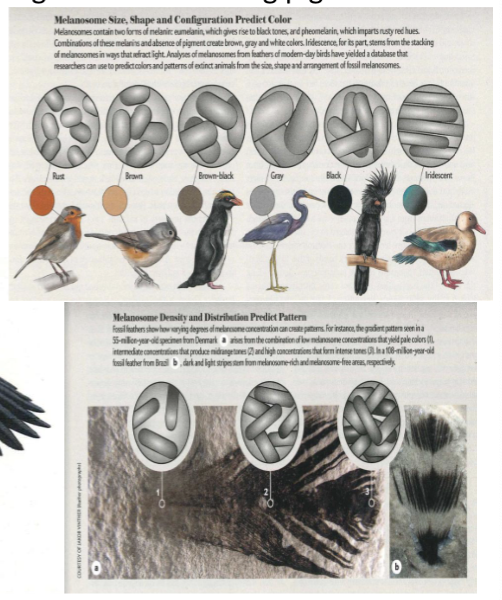
How do we know archaeopteryx and microraptors had black feathers?
many fossil feathers show evidence of melanosomes (organelles containing pigments)
shape of melanosomes correlated with pigment color
Becoming birds
by early cretaceous, true burds (avialans) appeared, and selective pressures were refining their powered flight adaptations
broad sternum with a keel to anchor flight muscles, a pygostyle (fused caudal vertebrae in the tail) and synsacrum (fused pelvis) gave strength to the spine and greater flight control
short trunk and tail (shifted center of mass)
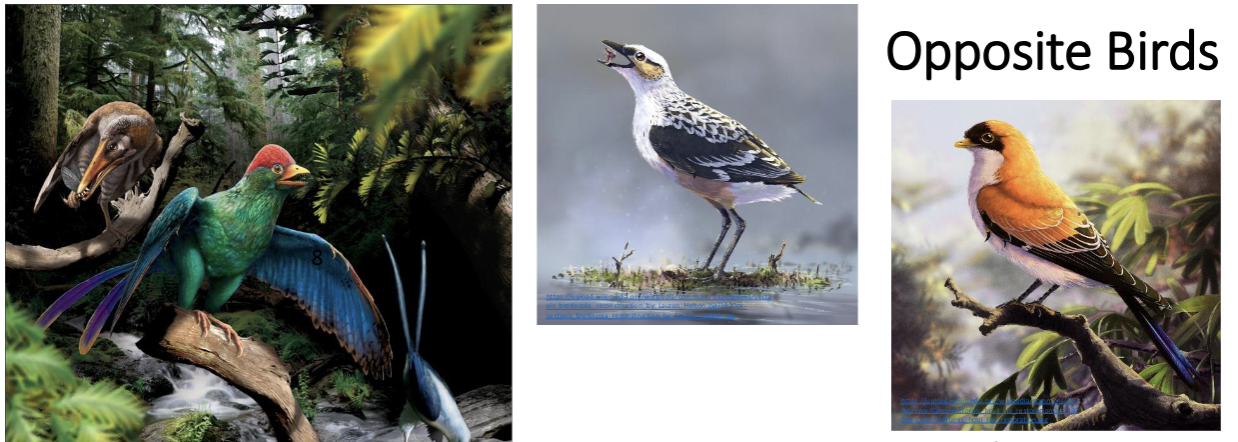
Opposite birds
enantiornithines, most divers of all cretaceous birds
dominant in their time, ranging from hawk to sparrow size, and being on all continents
Trends in Avian Evolution
during jurassic, theropods began a marked reduction in size, where bird became much smaller than basal theropods like tyrannosaurs
toothless beaks evolved repeatedly in birds (seed-eating and insect-eating beaks first evolved in the cretaceos and flourished in the new cenozoic era alongside flowering plants
caw CAW (bird vocalizations)
avian syrinx (vocal cords) is made of hardened cartilage and not easily fossilized
fossils of a basal anseriform bird include a well-preserved syrinx (may have made honks or quacks like modern geese and ducks, their closest living relatives)
Class Aves Phylogeny
~11,250 species worldwide
Birds live EVERYWHERE, because of flight they can reach most land masses in the world
some birds secondarily flightless
Feather structure
defining integumentary structure shared by all living birds
beta-keratins are a class of proteins unique to reptiles and birds (scales, claws, horny bill covering), feathers have a special type of beta-keratins
Types of feathers
contour feathers - gives shape to the body, with a rigid pennaceous portion providing aerodynamic sleekness and a soft, fluffy plumulacous portion
down feathers - beneath most feathers, to insulate
Flight feathers - asymmetrical feathers used to fly and for streamlined rows, coverts overlay the wings, both outer primaries and inner secondaries
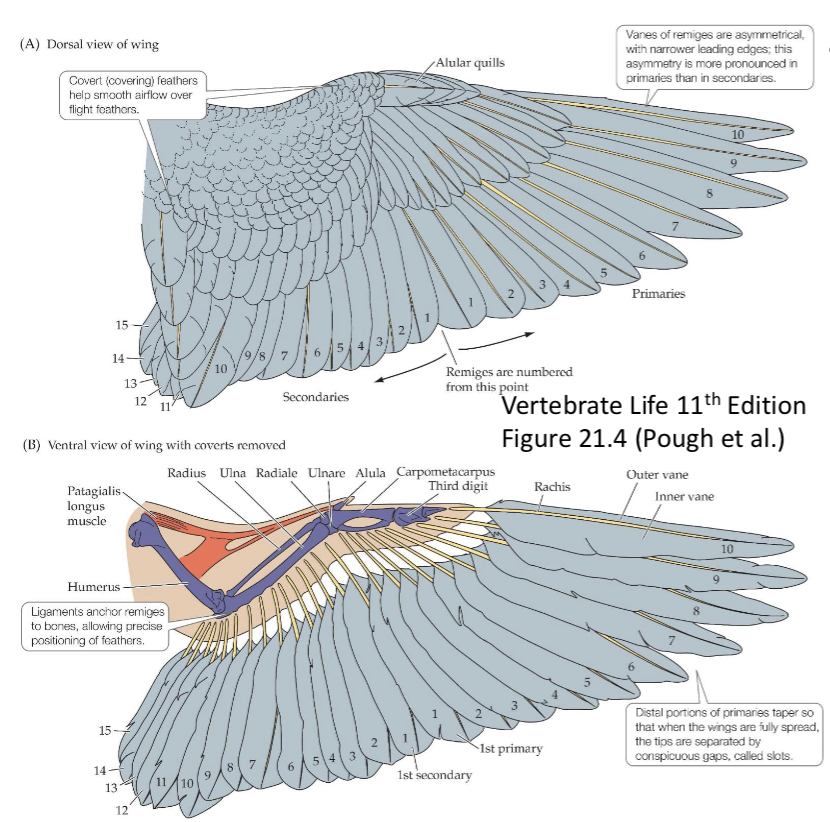
Bird Bones and muscles!
tells the story of bone reduction, fusion, reinforcement and power adapted to flight
strong fliers have more flight muscles, while birds of prey and land birds have more leg muscles to grab and run
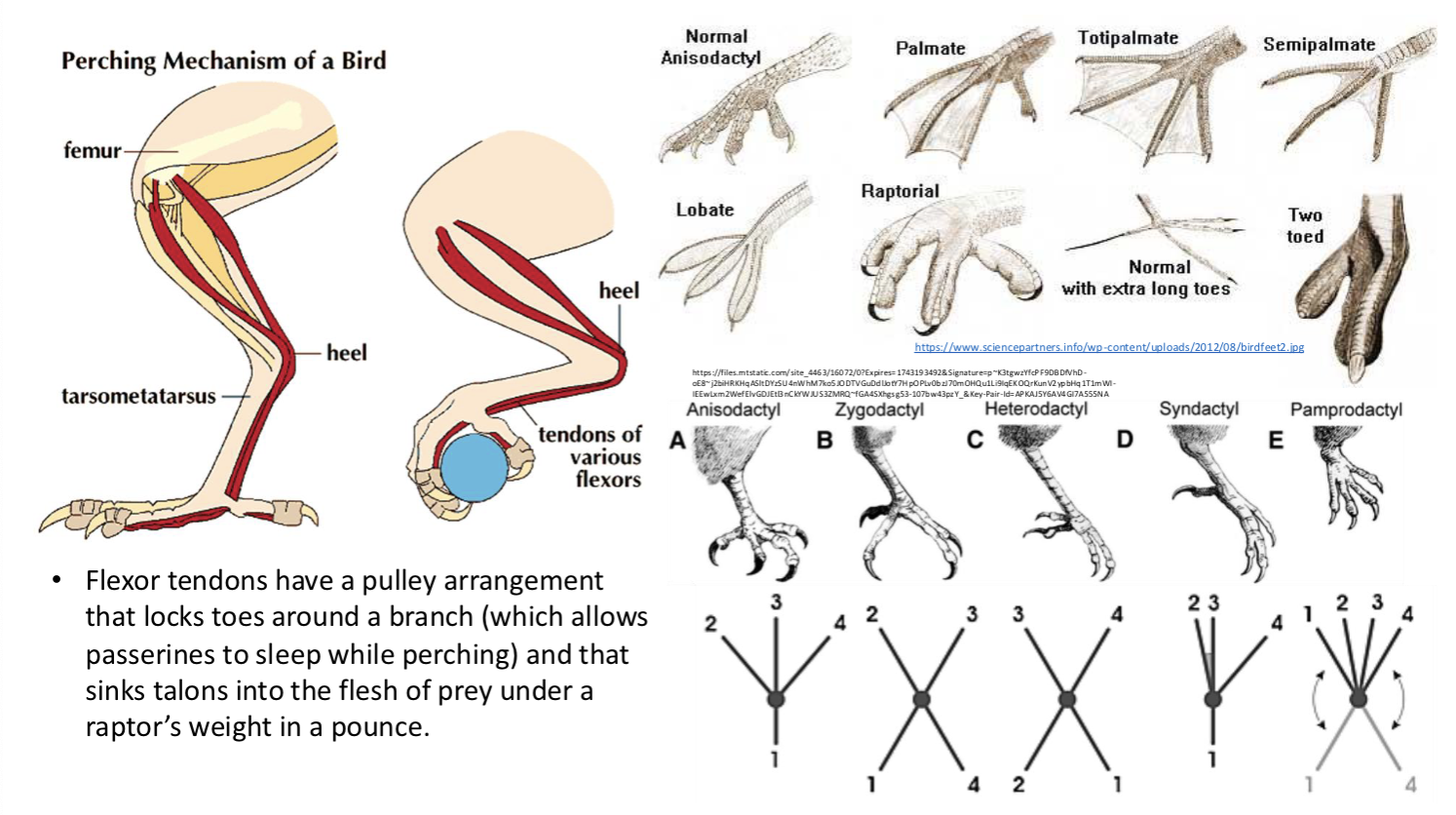
Bird toe arrangement
loons and grebes are plantigrade (flat-footed), but most birds are digitigrade, or walk on their toes
anisodactyl feet are most common, especially in perching birds
zygodactly feet (ospreys, owls, cuckoos, parrots, turacos, woodpeckers, PEEPINS)
seimming birds have webbed toes, either palmate, totipalmate, or lobate
Flight mechanics
must overcome gravity (weight) and drag (turbulence and friction)
lift counteracts gravity, while thrust counteracts drag
wings function as airfoils, their upper surfaces are curved more strongly than lower surfaces, increasing airflow on the upper surface to generate lift
stalling occurs when lift i reduced as the angle of attack in birds increases too much (typically 15 degrees); raise their alula on each wing to allow air through
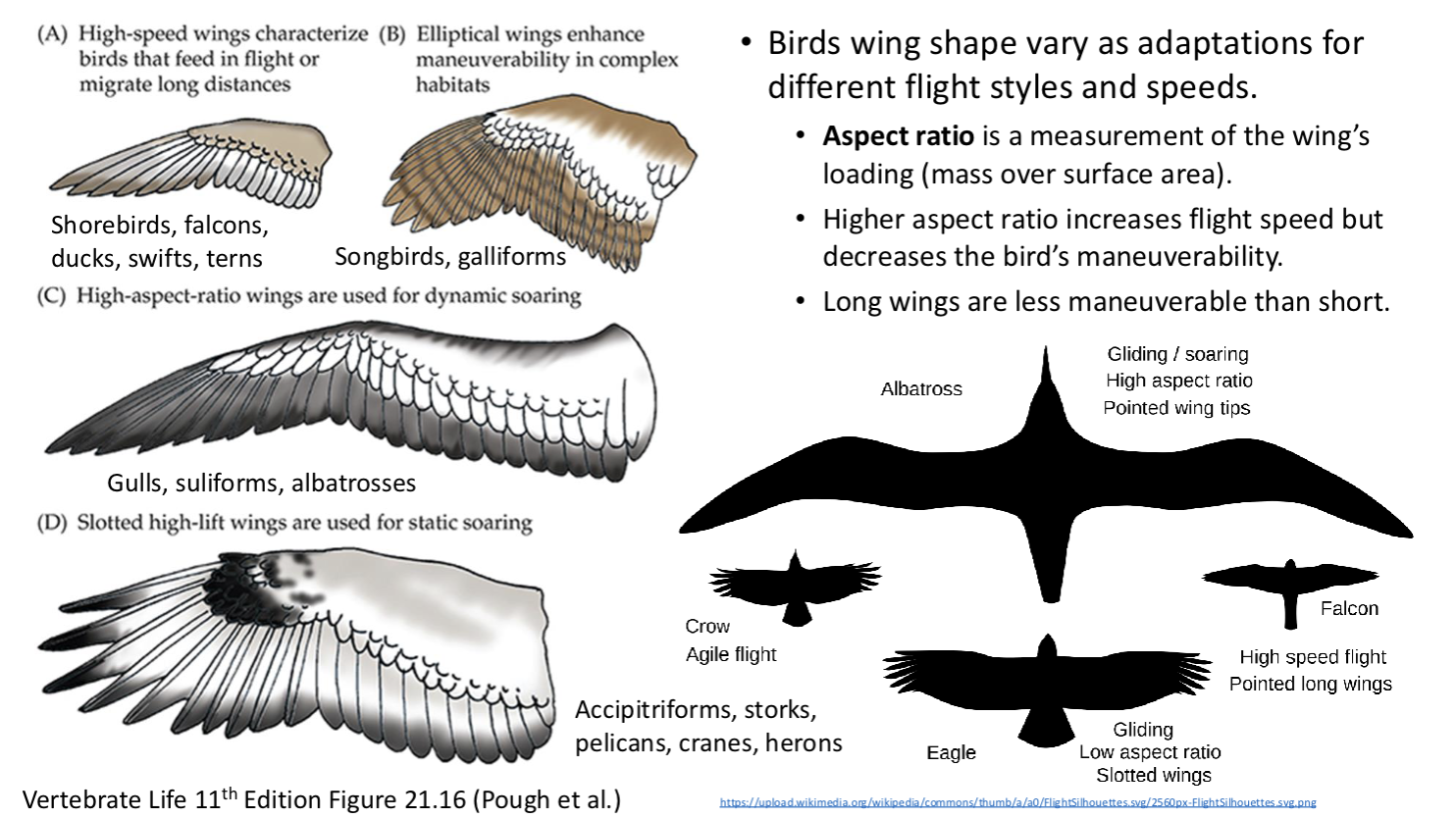
Bird wing shapes
reveal different flight capabilities
aspect ratio = measurement of the wings loading (mass over surface area)
higher aspect ratio increases flight speed but decreases maneuverability, long wings are less maneuverable than short
soaring uses air columns over slopes or water where no flapping is required to save energy
Bird beaks/bills!
reflects diets
some birds are very adaptable omnivores, but many species are specialized for certain diets
forest birds tend to be insectivorous, seed eaters, or pollinators
waterbirds eat fish, aquatic plants, and some steal prey from other birds (kleptoparasitism)
large raptors are apex predators
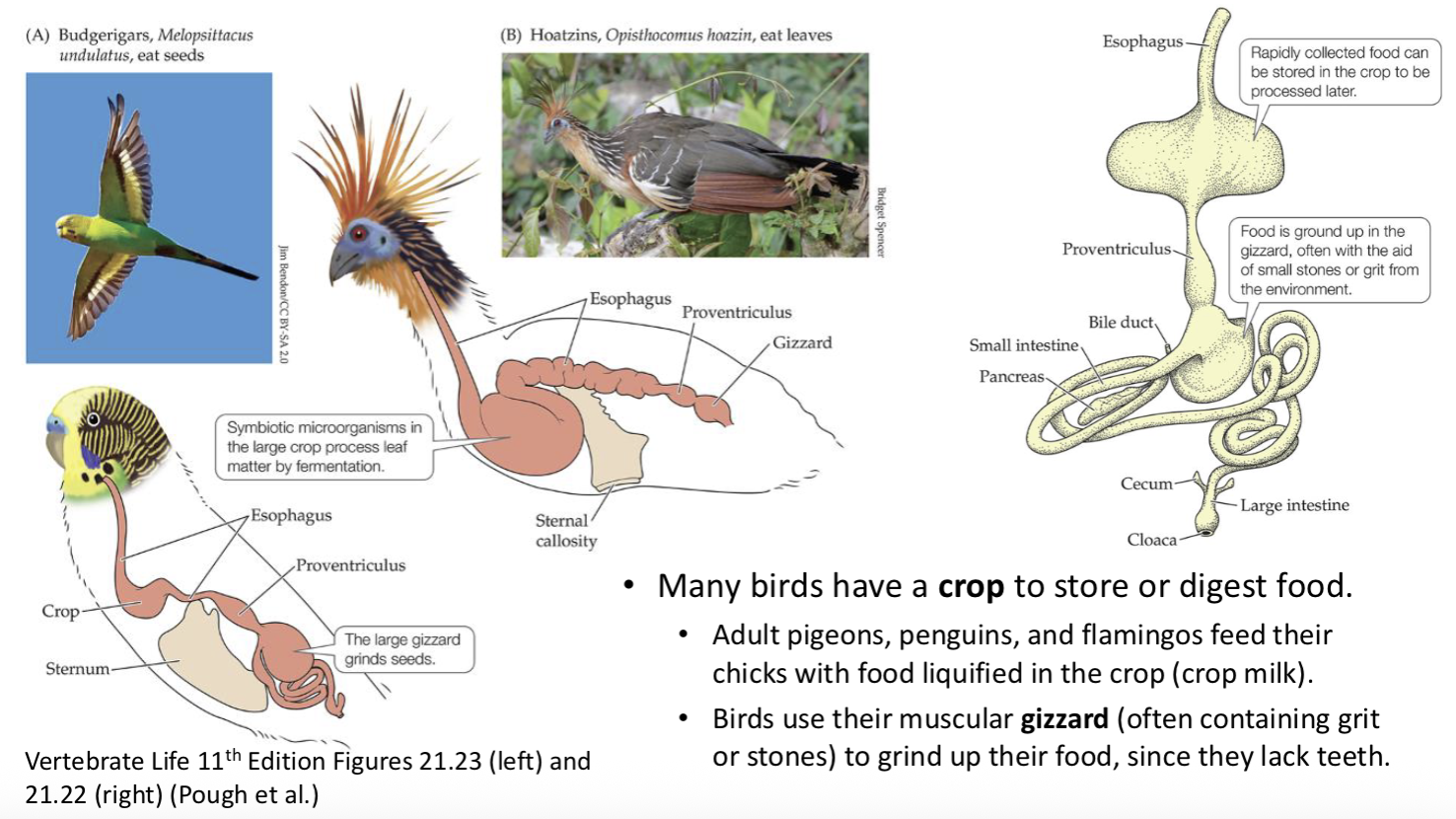
da crop
use the crop to store or digest food
adult pigeons, penguins, and flamingos feed their chicks with liquified food in their crop using crop milk
birds use their muscular gizzard (often containing sand or grit) to grind their food, as they lack teeth
birds also have variable tongues; long and sticky to grab onto prey, or short and maneuverable to handle it
in gizzards, the bird makes a pellet from undigested prey parts, that it then regurgitates to clear out the crop
old and new jaws (evolutionarily)
the two major clades of living birds can be distinguished by their bill anatomy
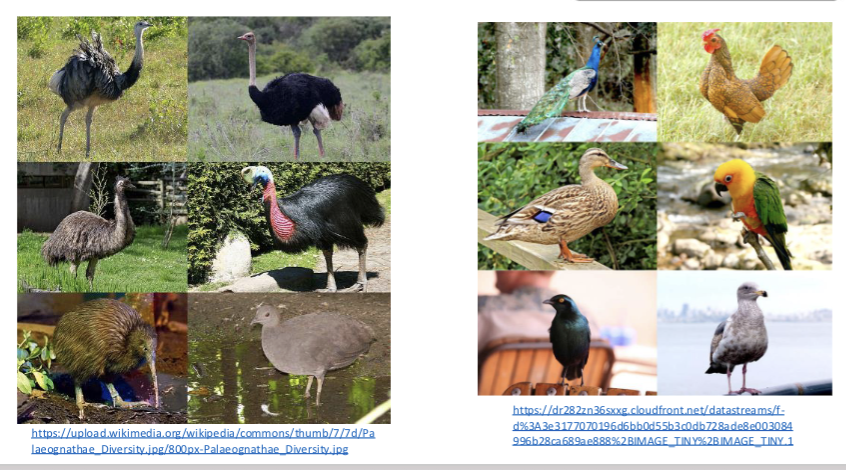
paleognaths (ratites and tinamous) have reduced mobility in their jaws
neognaths (all other modern birds) have more flexible jaws that can move upward for a wider gape
paleognaths
big birds don’t fly
constrained by how heavy they are, all ratites are flightless
they very in how they use their wings; most use for courtship, but can run to escape predators and deliver killer kicks
living paleognaths are restricted to the southern hemisphere, recent DNA studies from fossils suggest that giant flightless ratites evolved from flying ancestors across oceans
galloanserae
land and waterfowl
galliforms and anseriformes are sister taxa
regularly lay multiple eggs, chicks and ducklings are very precocious and can run,, swim and dive shortly after hatching
many species polygynous (1 male many females) or polyandrous (1 female many males)
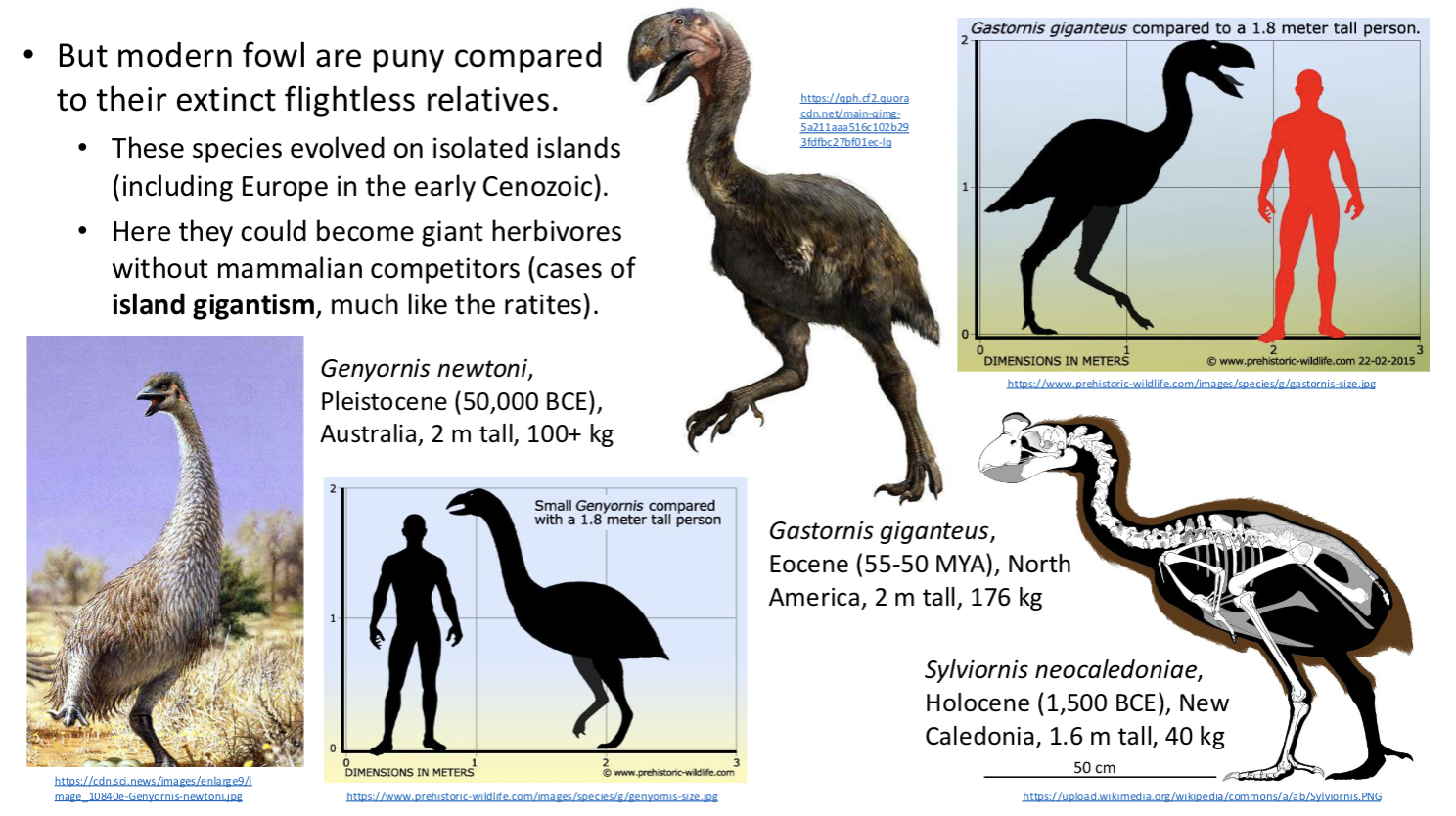
modern fowl puny compared to their extinct flightless relatives
Mirandornithes
odd waterbirds…
Bird eyes
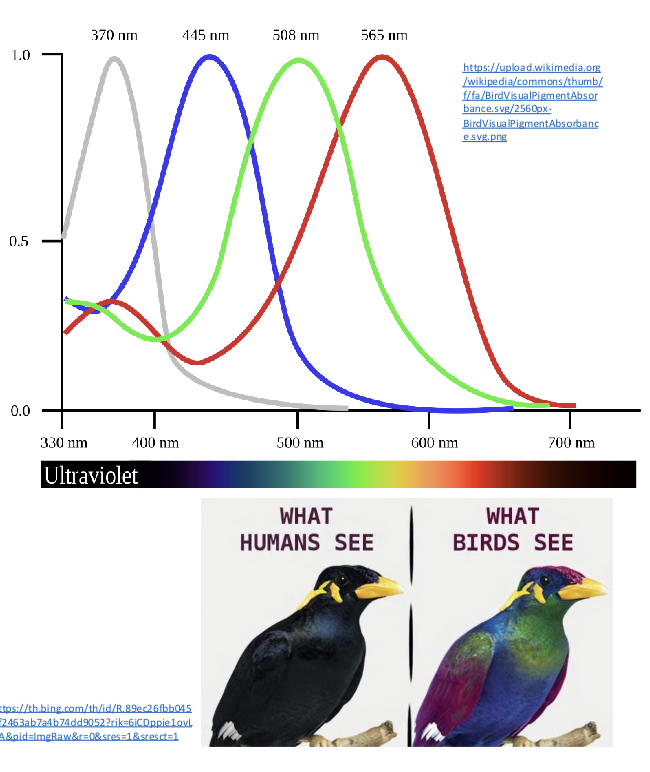
tetrachromatic (can see in the UV range) + oil droplets in eyes that interact with pigments
4 cone vsison
owls and nightjars have excellent low-light vision, and some birds glow to each other under UV light
predatory birds have forward-facing eyes, prey have sideways eyes.
eyes are not very moveable, they rotate their necks instead
Bird scent
keep sense of smell in many species
vultures can use stench of decay to locate prey
tube-noses can detect the dimethyl sulfide released by plankton in the ocean
some birds have sensitive bill tip organs that allow them to sense prey vibrations in soil, can help with manipulation of food items with the bill as well
Bird vocals
birds produce sound with a vocal organ called the syrinx at the base of the trachea
through lateralization of the trachea, a bird can use the muscles on each side to make 2 sounds at once
syrinx most complex in oscines (songbirds), and some birds have elongated tracheas for bugling calls
Bird calls and songs
differ in length, complexity and context
calls are simpler and shorter, for alarms or as contact calls
songs are longer and more complex, to defend territories and attracting mates
song learning (through listening and mimicking) occurs in parrots, hummingbirds, and oscine songbirds (dialects possible)
some birds are excellent mimics, used for flock recognition (captive birds try to sound like their human “flock mates”), or could be used to mimic predators to deter other birds
Mobbing and alarm calls
birds can attack, or mob predators that may pose a threat to their young (often attack in flocks, calling loudly and harassing predators to drive them away
alarm calls warn predators when a flock will attack, some alarms are used for certain predators
Other bird sounds
storks and vultures lack a syrinx and rattle their bills or hiss
woodpeckers drum on percussive objects in a distinct drumming pattern specific to their species
some birds can produce sounds by rapidly moving their feathers on their wings and tails
displays and courtship
birds use vocalizations and/or visual displays to attract mates
complex sensory systems generate amazing opportunities for sexual selection on bird traits
grebes, cranes, boobies and albatrosses dance together to form a pair bond that can last a lifetime
same-sex couples form occasionally as well
Bird eggs
all birds lay eggs to reproduce, and avian sex determination is always genetic
males = ZZ females = ZW
viviparity may be impossible to evolve due to the high body temps that birds maintain
baby birds have an egg tooth to help them hatch with a hatching muscle on their neck
fledglings are fed by parents until they can fly out of the nest (sometimes fed after that as well)
altricial young are born blind, helpless and dependent, while precocial young are feathered, sensing and more independent
Bird nests
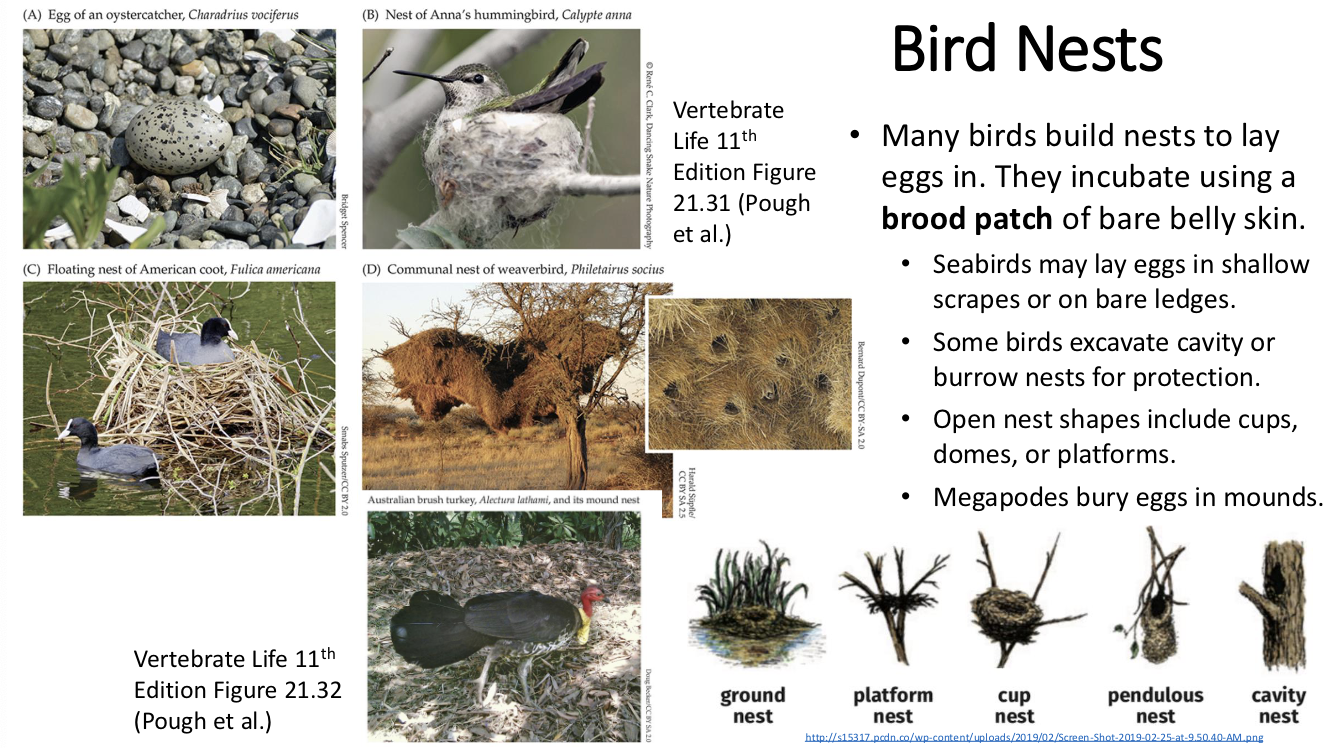
many birds build nests to lay eggs in, they incubate using a brood patch, a bare belly of skin
nest vary highly between species, families and environments
Parental Care
common for both parents to raise offspring to independence, but many birds are highly promiscuous
monogamous species share parental care duties, while polygamous species usually the female or one parent raise the young
some birds have cooperative breeding, aided by close relatives to raise chicks
brood parasites lay their eggs in other bird nests for them to raise
Da flock
flocks are gatherings of birds for food and travel, often in migration
may consist of one or many species (core species attract other birds and provide alarm calls and protection in numbers) + predator satiation
Migration
around 1,800 species regularly migrate long distances to breeding and feeding grounds each year using flyways
typically fly to warmer climates in the winter and back to breed in the spring
there are reverse migrants that go north instead of south
some migrants have been recorded to fly millions of miles, and the bar-tailed godwit has the longest nonstop flight of 11,000 km from alaska to new zealand
birds rely on cues to migrate, which is typically day length changes
they also use cues during migration by remembering landmarks, sun and stars, magnetic fields, and even odors
Threats to birds
human activities that most commonly kill migrants
illegal hunting and the pet trade
outdoor domestic cats
fishery bycatches
collisions of human structures and cars
bioaccumulation (chemical pollutants and consuming plastic)
oil spills
climate change changing migration timing, breeding timing, etc
Mammals are the sole surviving…
synapsids!
modern mammals arose in the Triassic, including the egg-laying monotremes, while marsupials and placental mammals diverged around 160 MYA
since 66 MYA, mammals have dominated the Earth
became more mammal like and smaller in the Mesozoic
Mammalian traits:
hair or fur on bodies
glands producing milk and sweat
mostly viviparous
external ears in most species
a mobile snout
single lower jawbone
3 middle ear bones
tooth replacement
endothermic
four-chambered heart
neocortex in the brain
two occipital condyles of skull
Synapsids to mammals
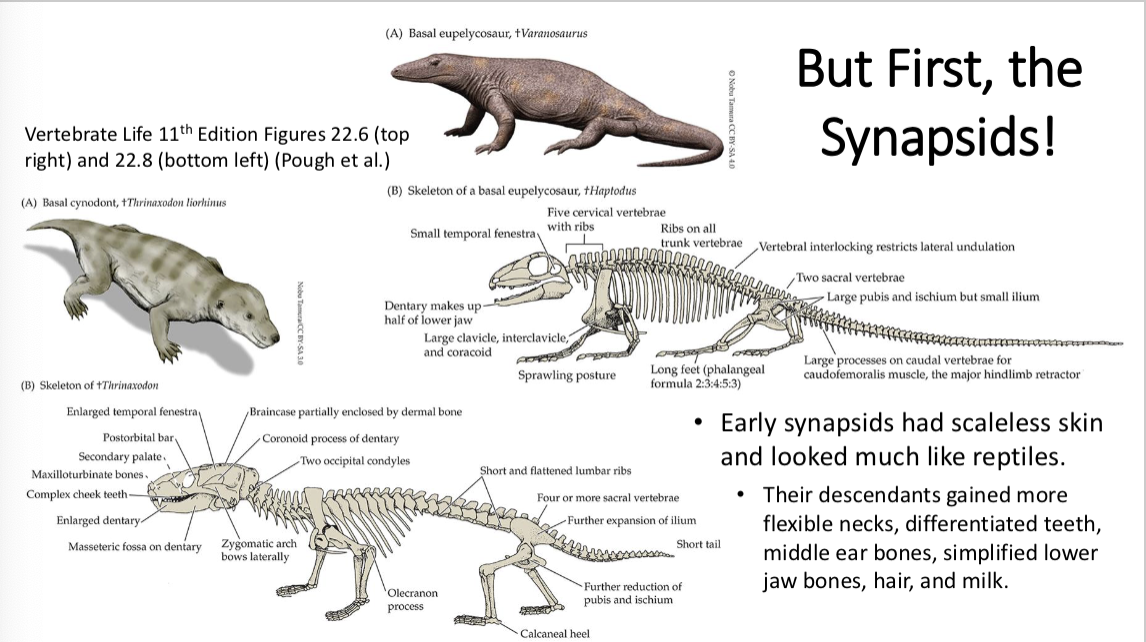
early synapsids had scaleless skin and looked like reptiles
descendants gained more flexible necks, differentiated teeth, middle ear bones, simplified jawbones, hair and milk
the lower jaw evolved into one bone, and the other bones migrated to the inner ear to create the ossicles for great hearing in mammals
synapsids evolved fewer ribs, longer legs, and more upright posture for faster locomotion
synapsids = one temporal fenestra on each side of their skull
sauropsids and synapsids both arose in Carboniferous, but synapsids quickly dominated the Permian on land
Therapsids
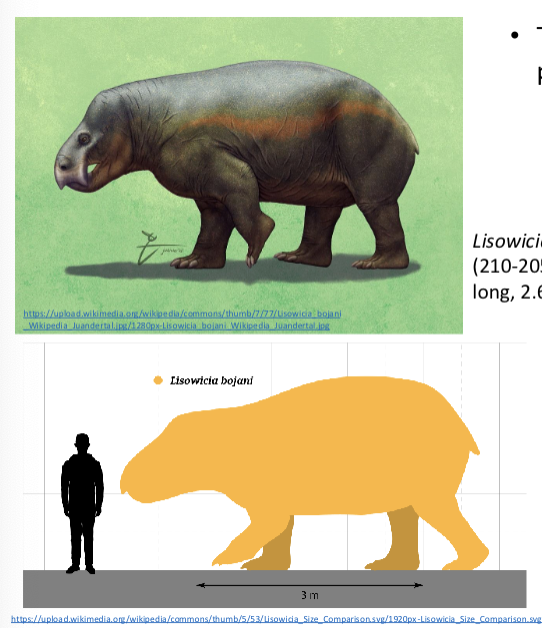
more upright postures and were likely endothermic
carnivorous and herbivorous, very large
later therapsids evolved integumentary hairs and eventually sensory vibrissae (whiskers) on their faces controlled by their muscular snouts
Conodonts had hair follicles and perhaps glandular skin that produced secretions to keep their eggs moist that may have been the precursor to mammalian milk
Mammal teeth
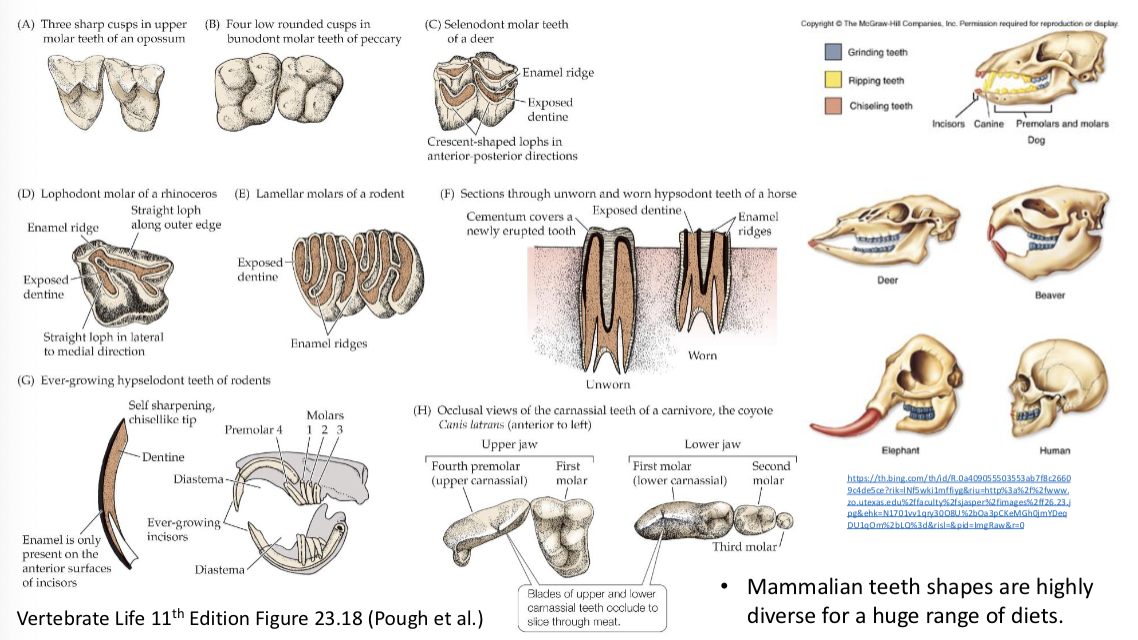
therian mammals (marsupials and placentals) have tribosphenic molars, with multiple shearing crests that fit into teeth sockets and fit together for efficient chewing (speeds up digestion and enzyme activity)
mammals have two sets of teeth (baby teeth and adult teeth)
some whales and rodents don’t replace teeth, and some keep growing their teeth continuously
Mammalian hair and fur
hair provides insulation and can dissipate heat and protect against UV
fur is tightly backed hair that forms a pelt
some aquatic or selected species are hairless
quills of hedgehogs and porcupines are defensive
all mammals but great apes have facial vibrissae, and eyelashes protect eyes from dirt
Mammalian skin
highly variable epidermis thickness
claws, nails and hooves are made of keratin and protect the ends of mammalian digits. horns have keratin sheaths over bone interiors
arrector pili muscles allow hairs and keratin to stand on end
glandular skin (like amphibians; a basal condition)
Lactation
female mammals (and a few male bats) nourish their young through production of milk
mammary glands are derived from modified apocrine glands and secrete milk through ducts in nipples and teats
milk teeth shed as juveniles ween off their mother’s milk
lactation allows females to raise young on their own, and small birth size of offspring relative to their mothers
the secondary palate of mammals enables offspring to suckle while breathing through their nose, suckling also gave way to powerful facial muscles to allow for suckling
Mammal olfaction
greatest olfactory of any amniotes
mammals often utilize their vomeronasal organ, which detects non-volatile signals like pheromones (flehmen response allows males to detect females reproductive status, and for females to time births in a herd)
mini to mighty mammals
mammals and descendants stayed small (<100mm avg) and were typically prey for dinosaurs
mammals show greatest size range of vertebrates (from whales to shrews and bats)
Why did endothermy evolve?
fossil evidence shows mammals first evolved endothermy sometime from late triassic to mid jurassic
endothermy = maintaining internal body temps using metabolic heat
one hypothesis is that endothermy was linked to being nocturnal to avoid diurnal dinos
warmer body temps in birds and mammals increase metabolic rates and hasten embryonic and neonatal development
nocturnal mammals
mammals rely more on hearing and smell than vision than other tetrapods, fitting a nocturnal bottleneck hypothesis explaining ancestral habits
other traits signaling being nocturnal include whiskers, brown fat, fur, endothermy, limited color vision, and burrowing
most mammals have dichromic vision and are essentially colorblind (exceptions include primates, whom became trichromatic for eating fruit and foliage)
nocturnal mammals are monochromatic to see in low light
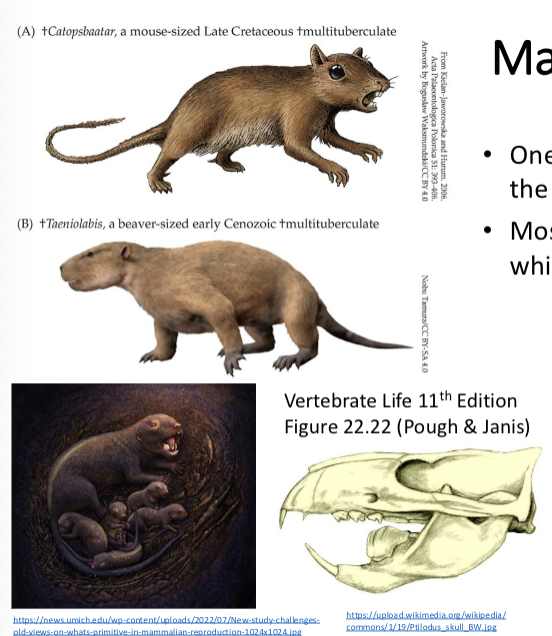
Multituberculates
a now extinct subclass of therian mammals
burrowers, hoppers, and tree climbers, they had haw and teeth anatomy very similar to later rodents
long gestation periods and complex brains
likely went extinct due to competition or predation