Test 2 Anatomy
 Call Kai
 Learn
Learn Practice Test
 Spaced Repetition
 Match
Match Flashcards
 Knowt Play
1/249

There's no tags or description
Looks like no tags are added yet.
Name | Mastery | Learn | Test | Matching | Spaced | Call with Kai |
|---|
No analytics yet
Send a link to your students to track their progress
250 Terms
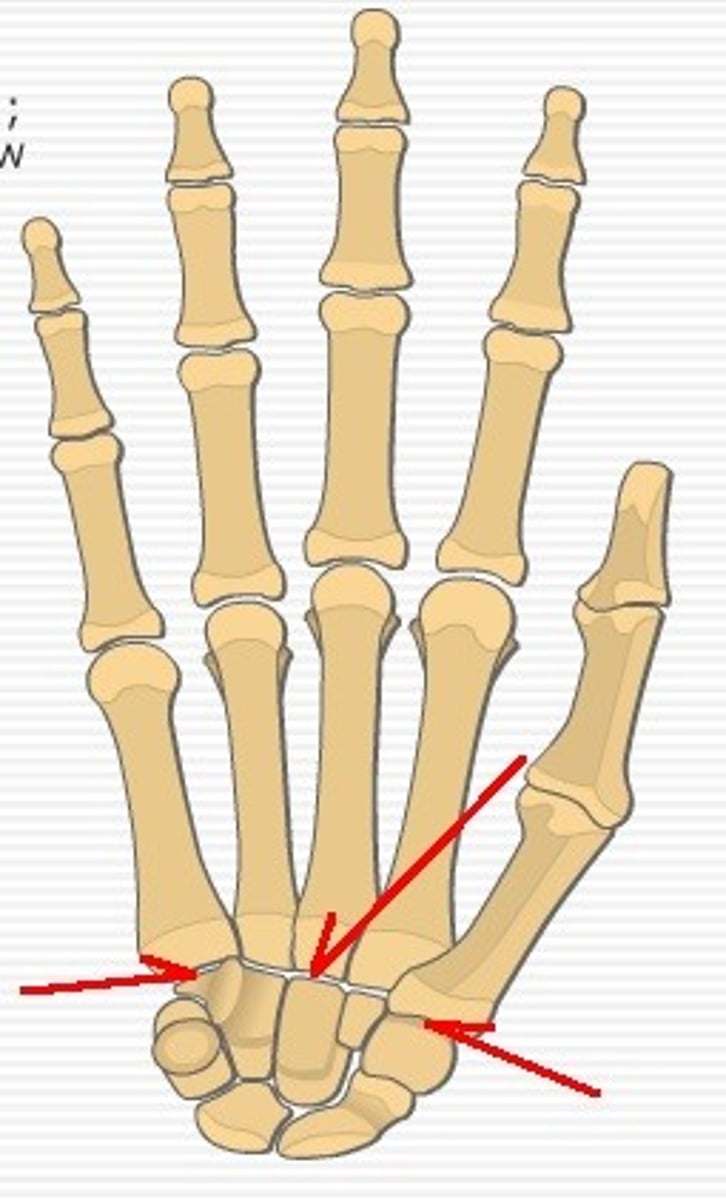
Carpometacarpal joints
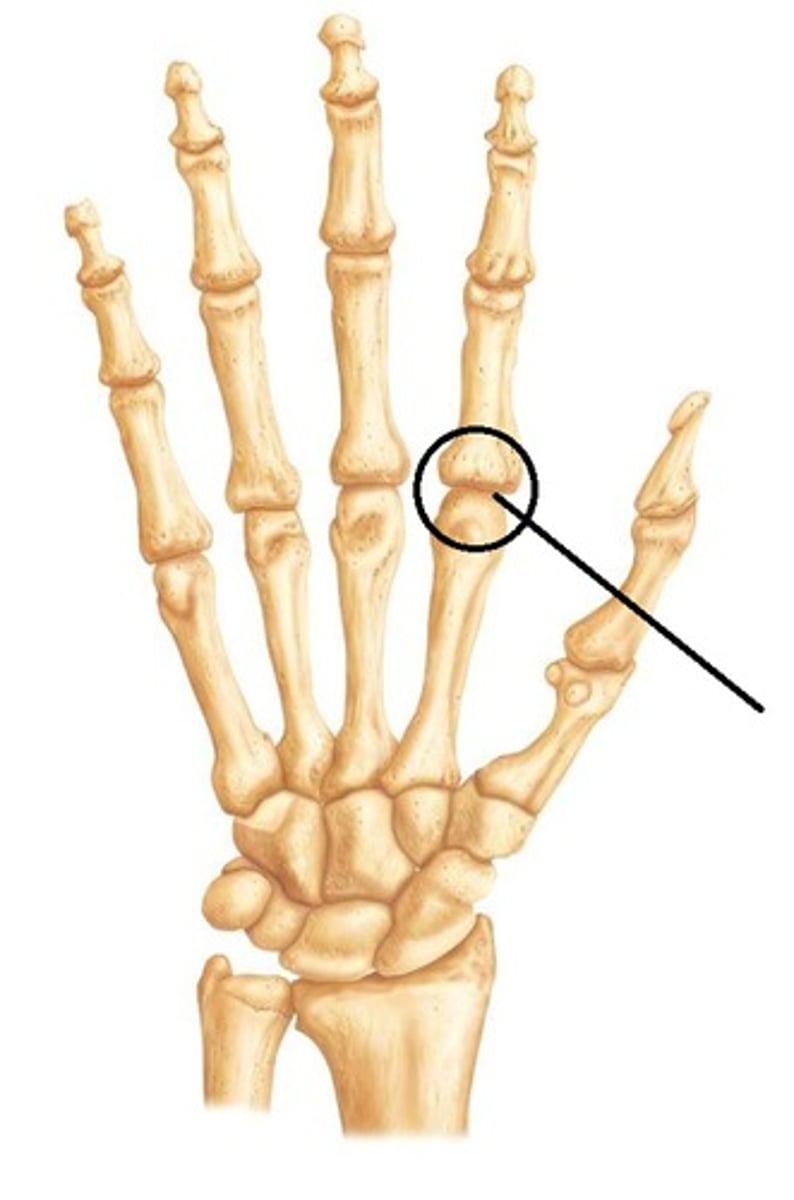
Metacarpalphalangeal joints
Pollux
Thumb
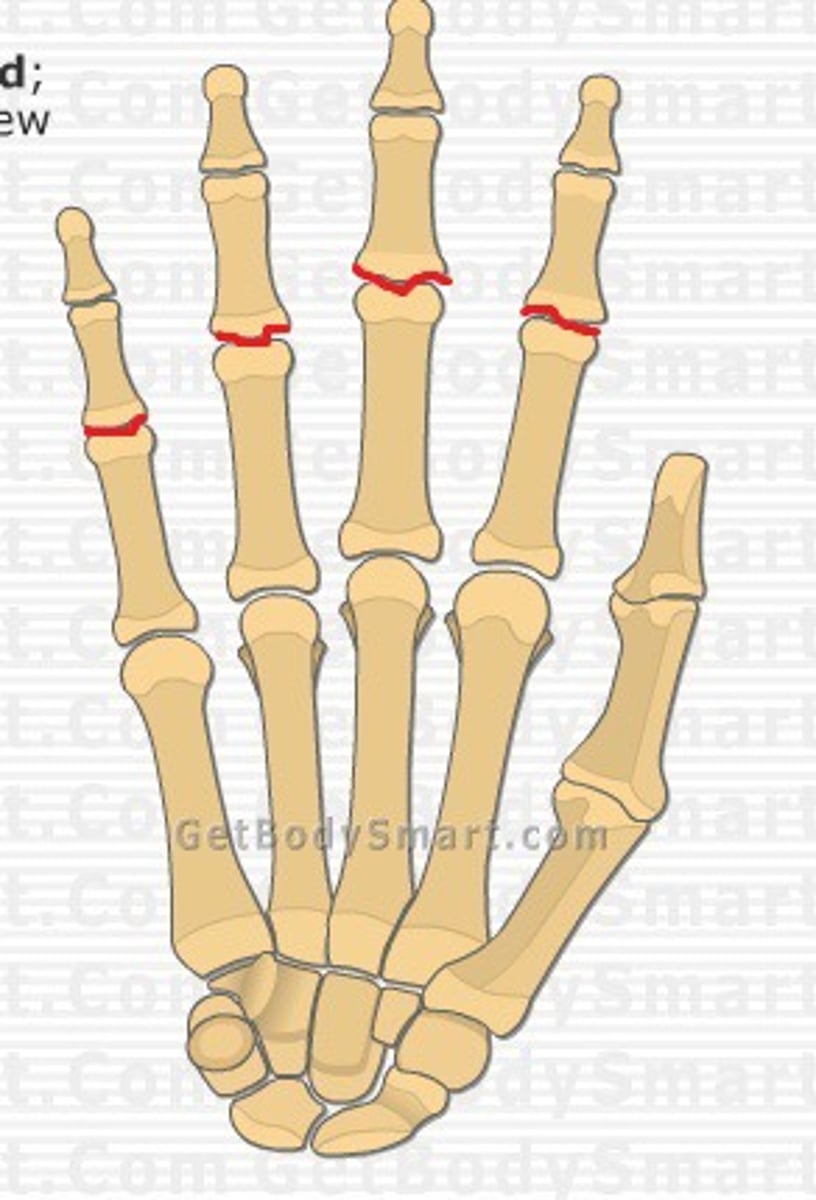
Proximal interphalangeal joints
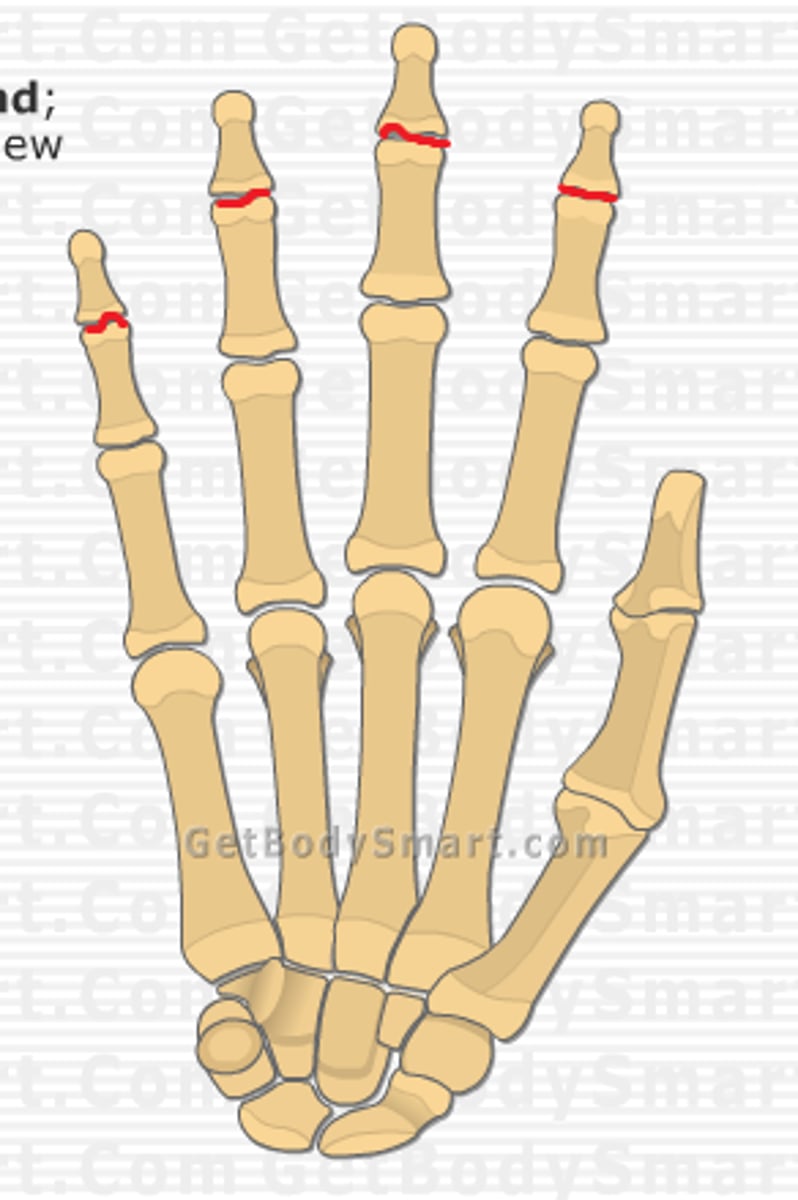
Distal interphalangeal joints
Metacarpophalangeal ligaments
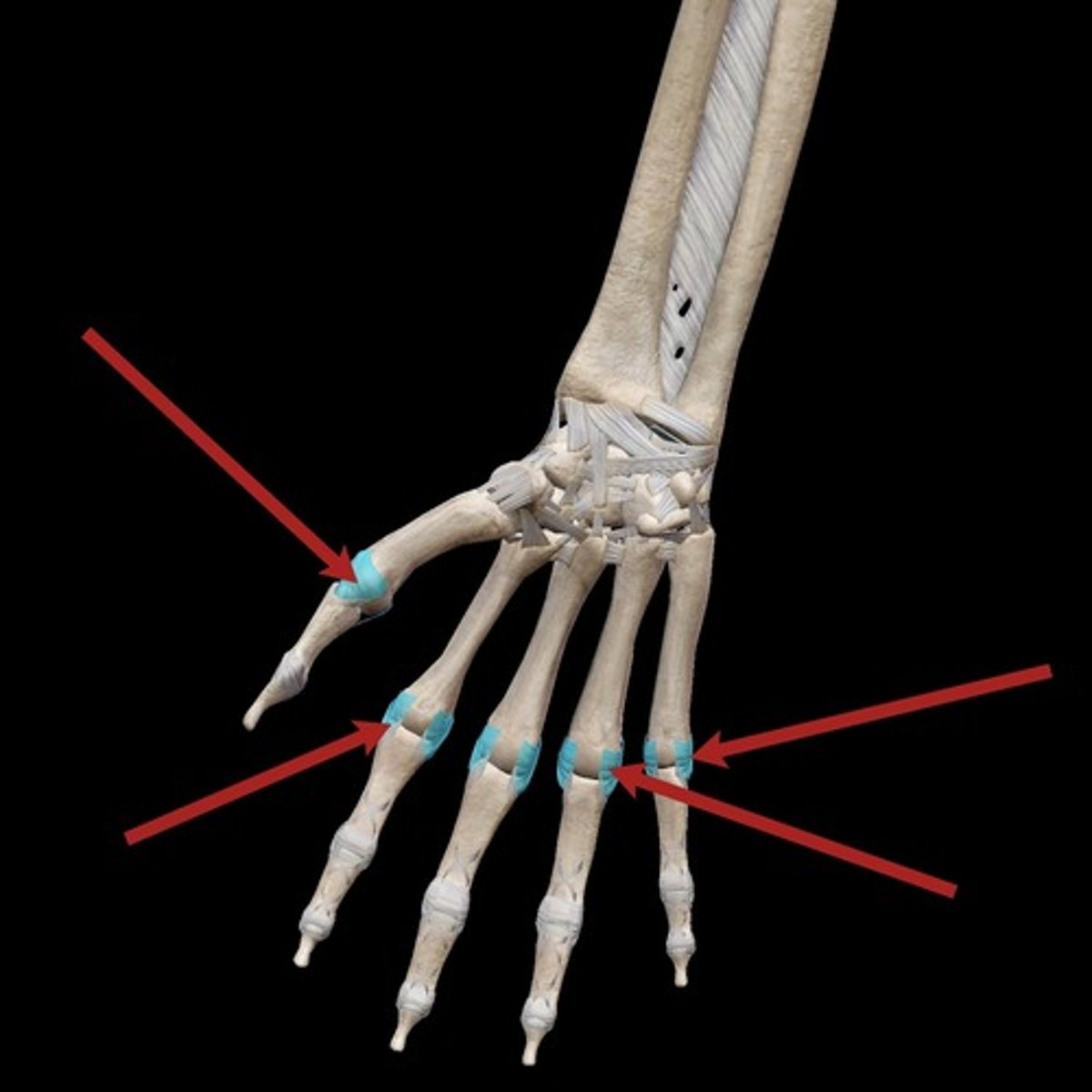
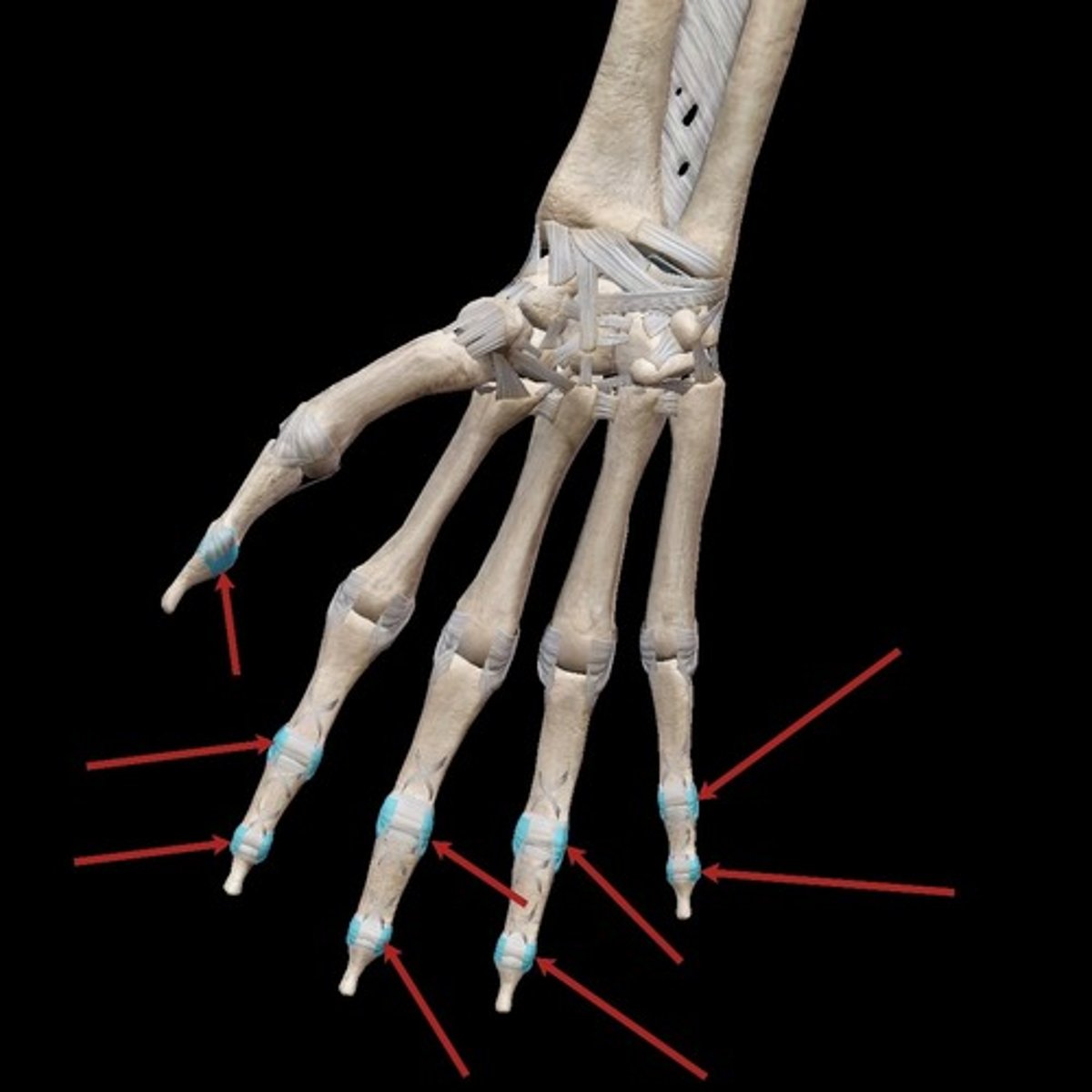
Interphalangeal ligaments
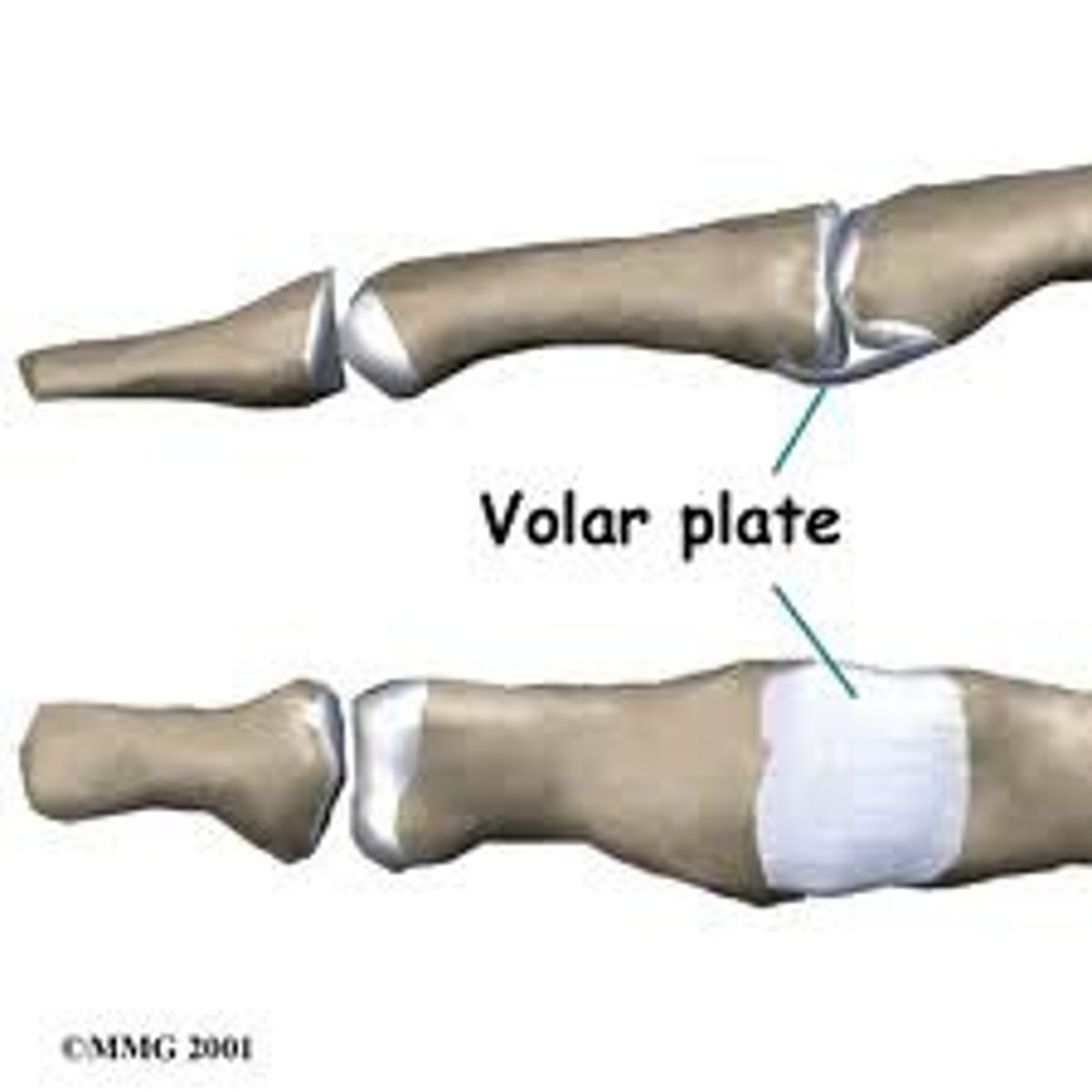
Volar plate
Prevents hyperextension
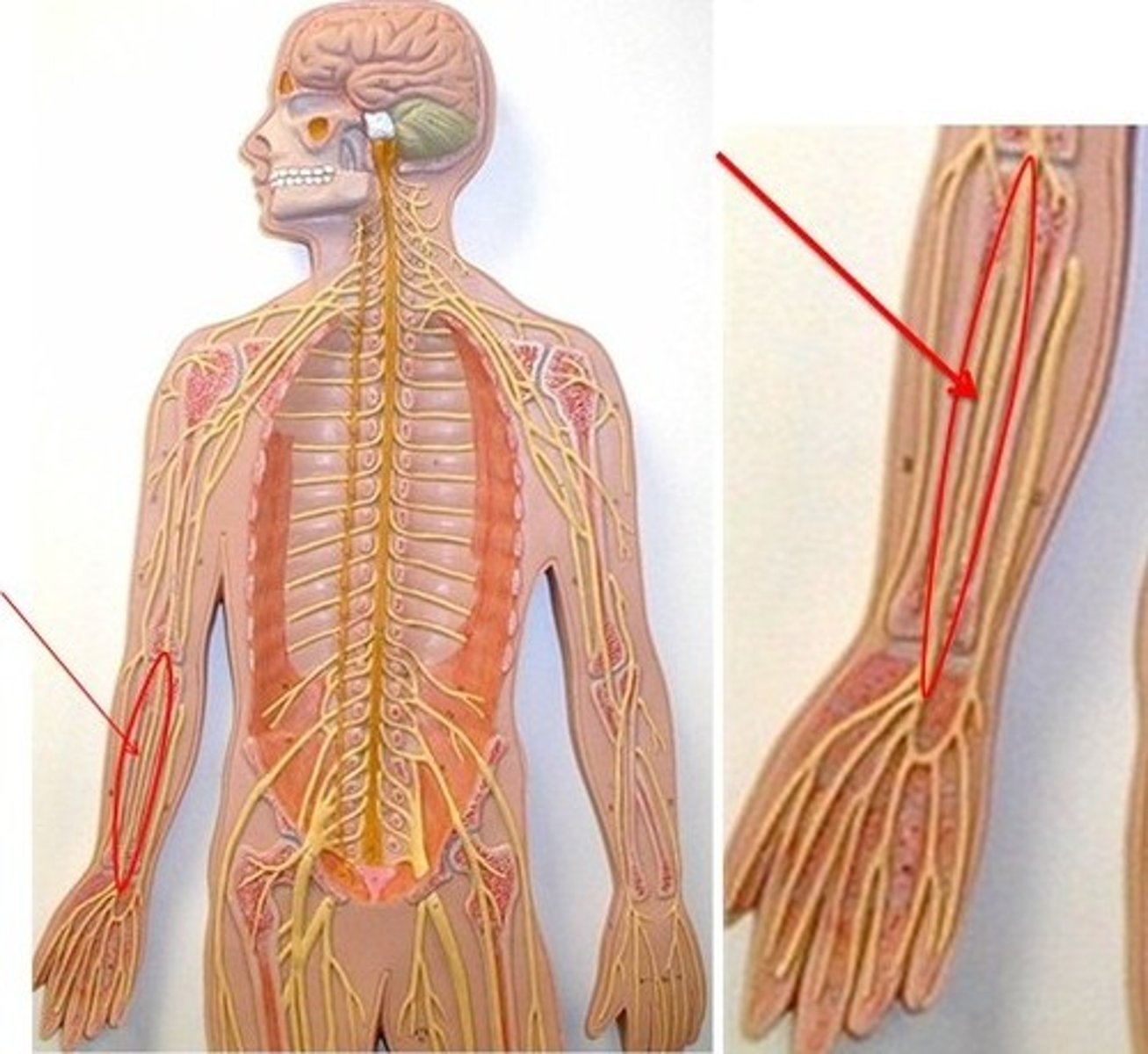
Median nerve
Innervates some flexors, pronators and intrinsics, provides sensation to the lateral 3 1/2 fingers
Ulnar nerve
Innervates some flexors, intrinsics, provides sensation to the medial 1 1/2 fingers
Synovial sheath
Covers the tendons in the fingers
Annular and cruciate ligaments
Hold flexor tendons onto the bones
Thenar muscles
Opponens pollicis, abductor pollicis brevis, flexor pollicis brevis
Opponens pollicis
Opposes the thumb
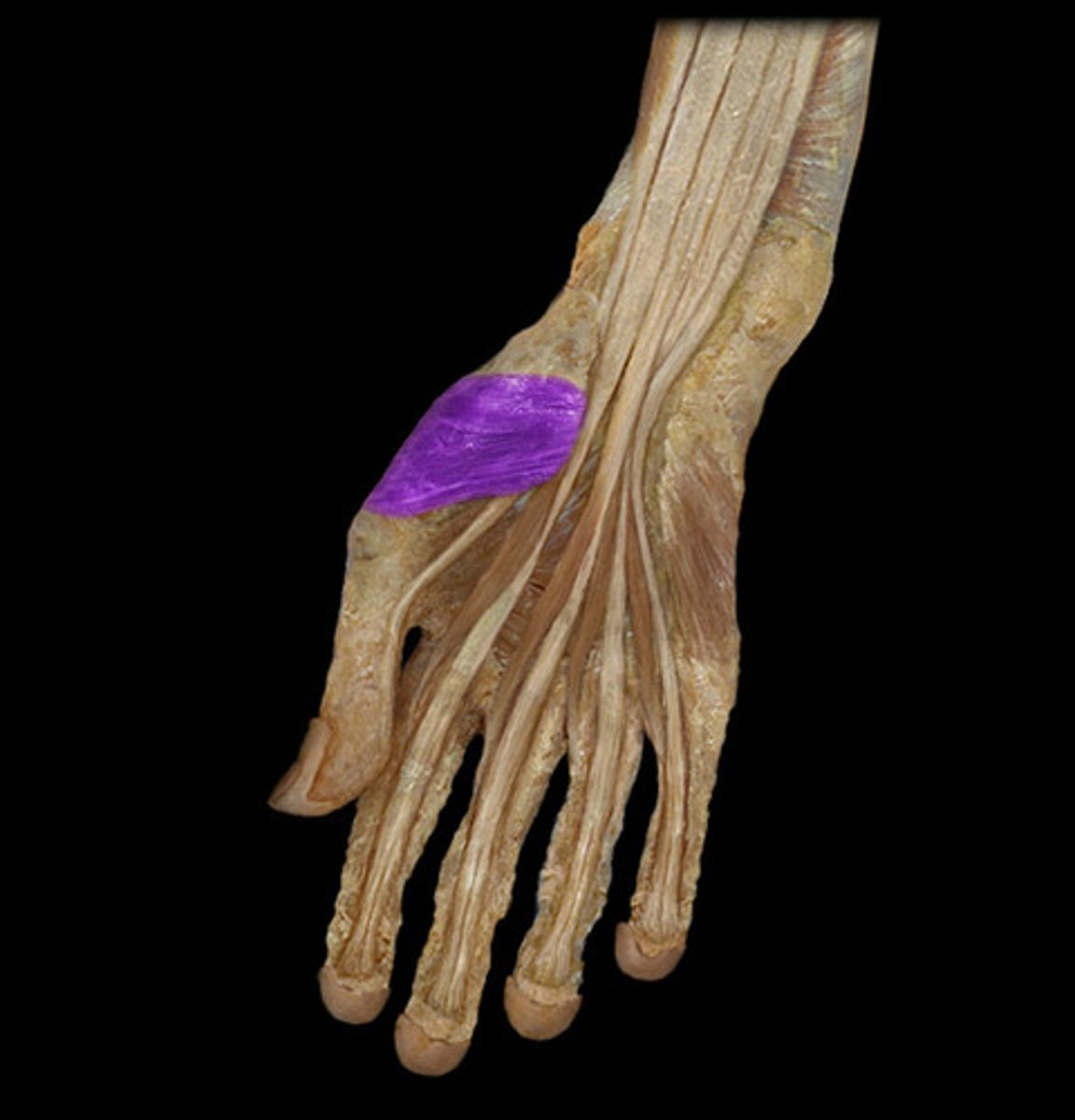
Abductor pollicis brevis
Abducts the thumb
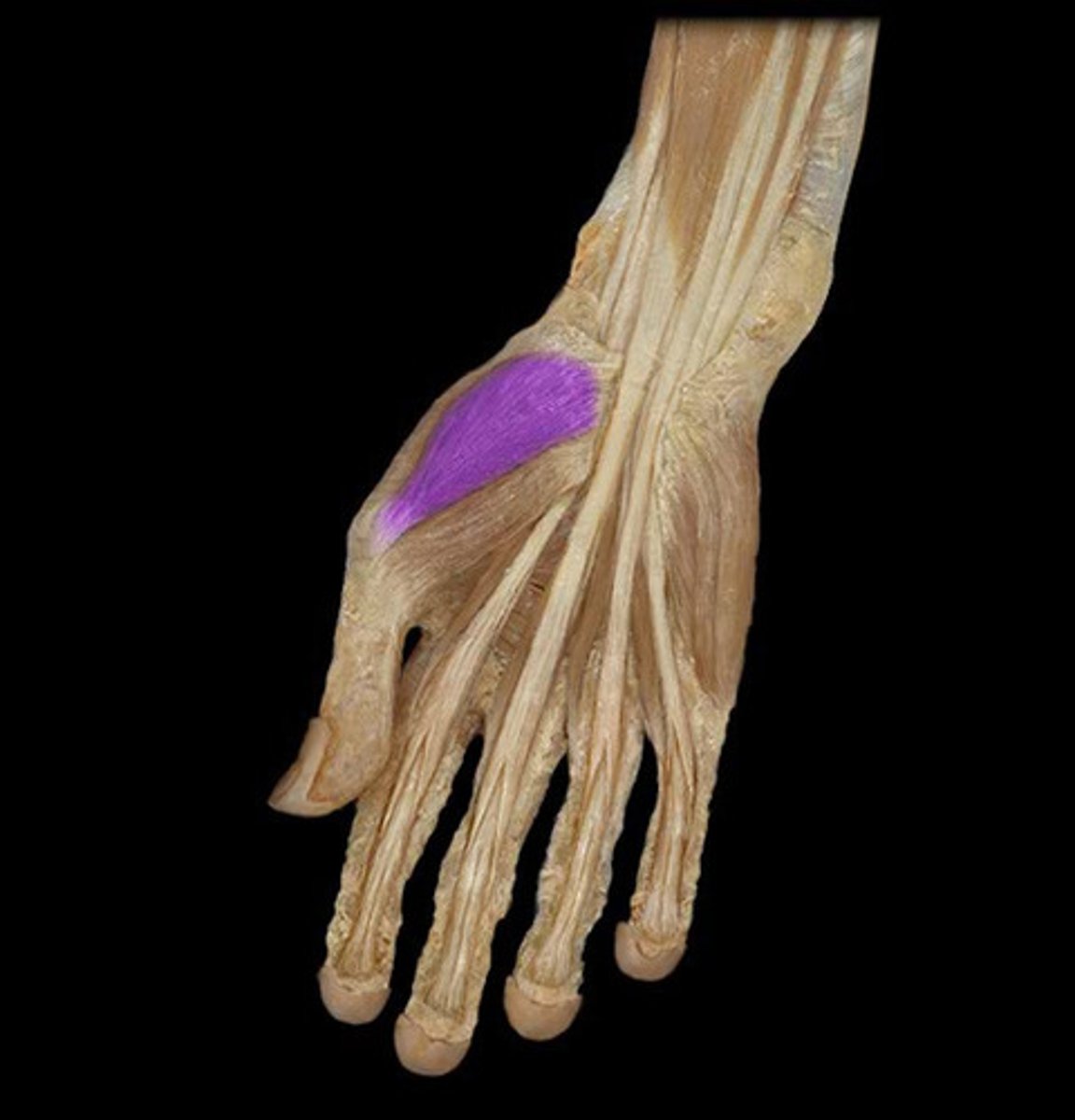
Flexor pollicis brevis
Flexes the thumb
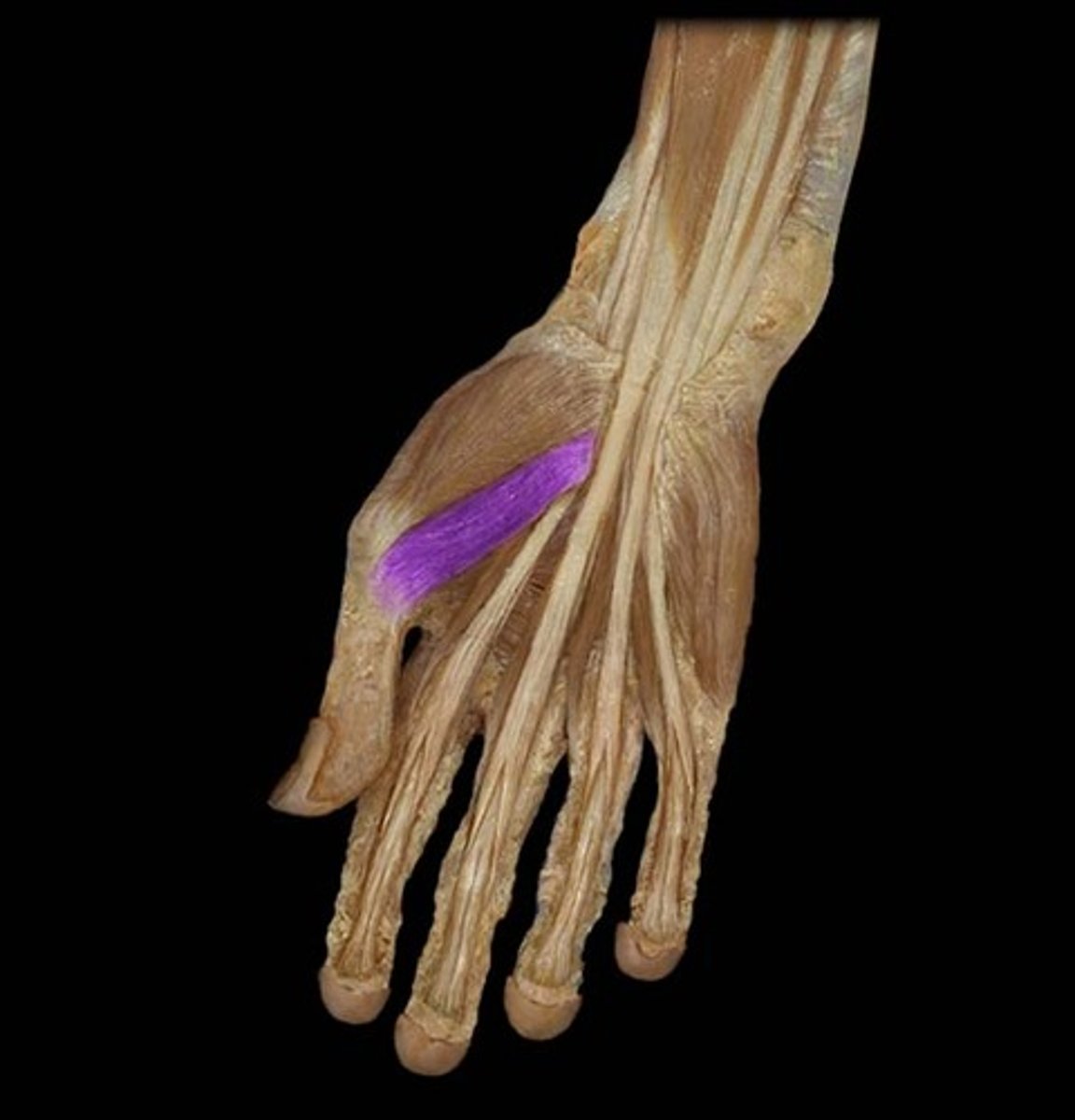
Hypothenar muscles
Opponens digiti minimi, abductor digiti minimi, flexor digiti minimi
Opponens digiti minimi
Opposes the little finger
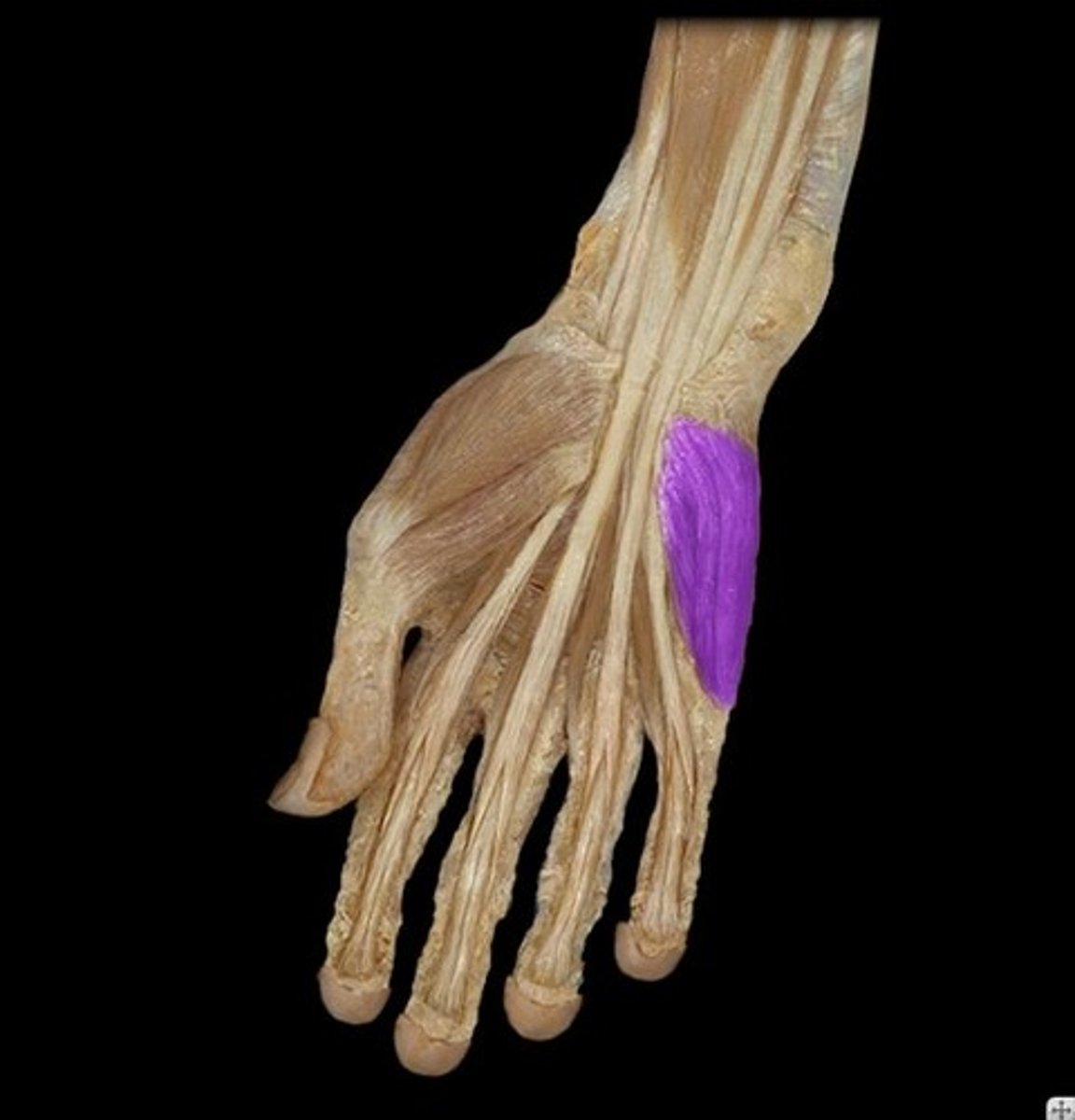
Abductor digiti minimi
Abducts the little finger
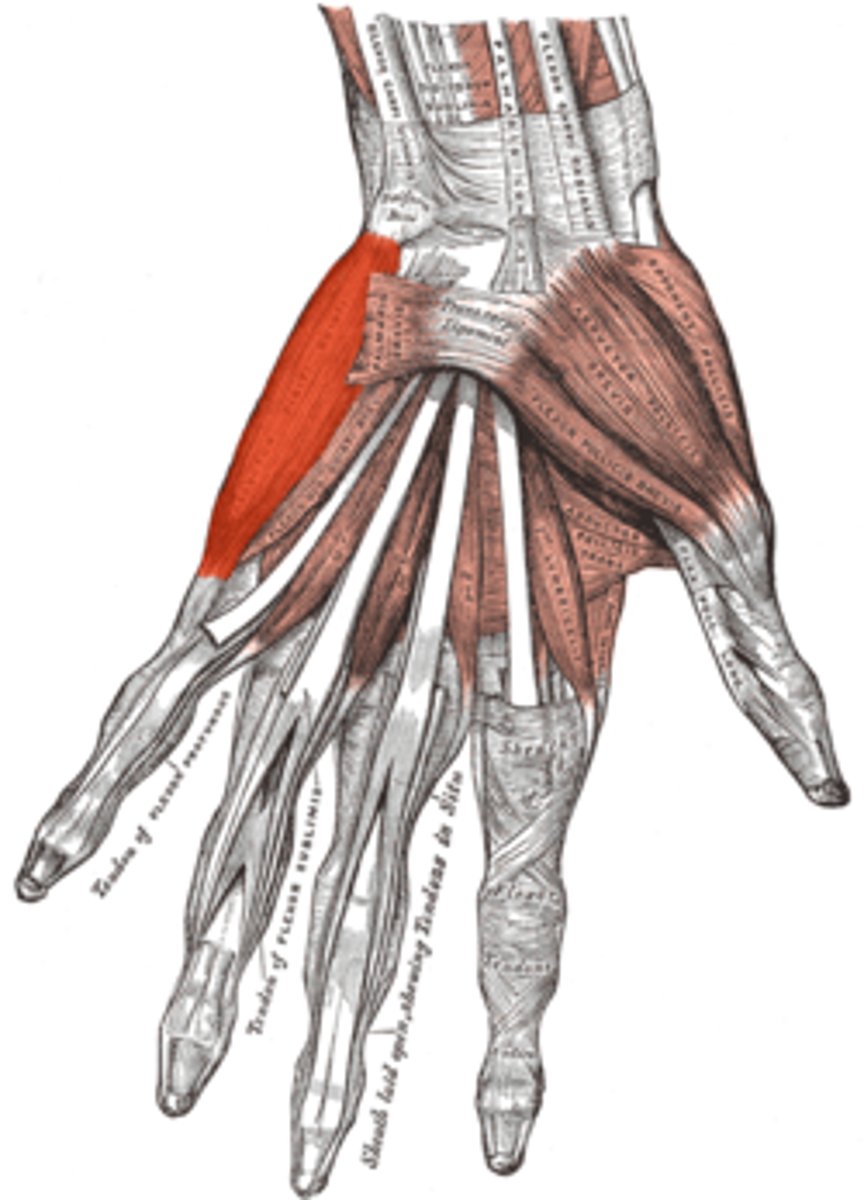
Flexor digiti minimi
Flexes the little finger
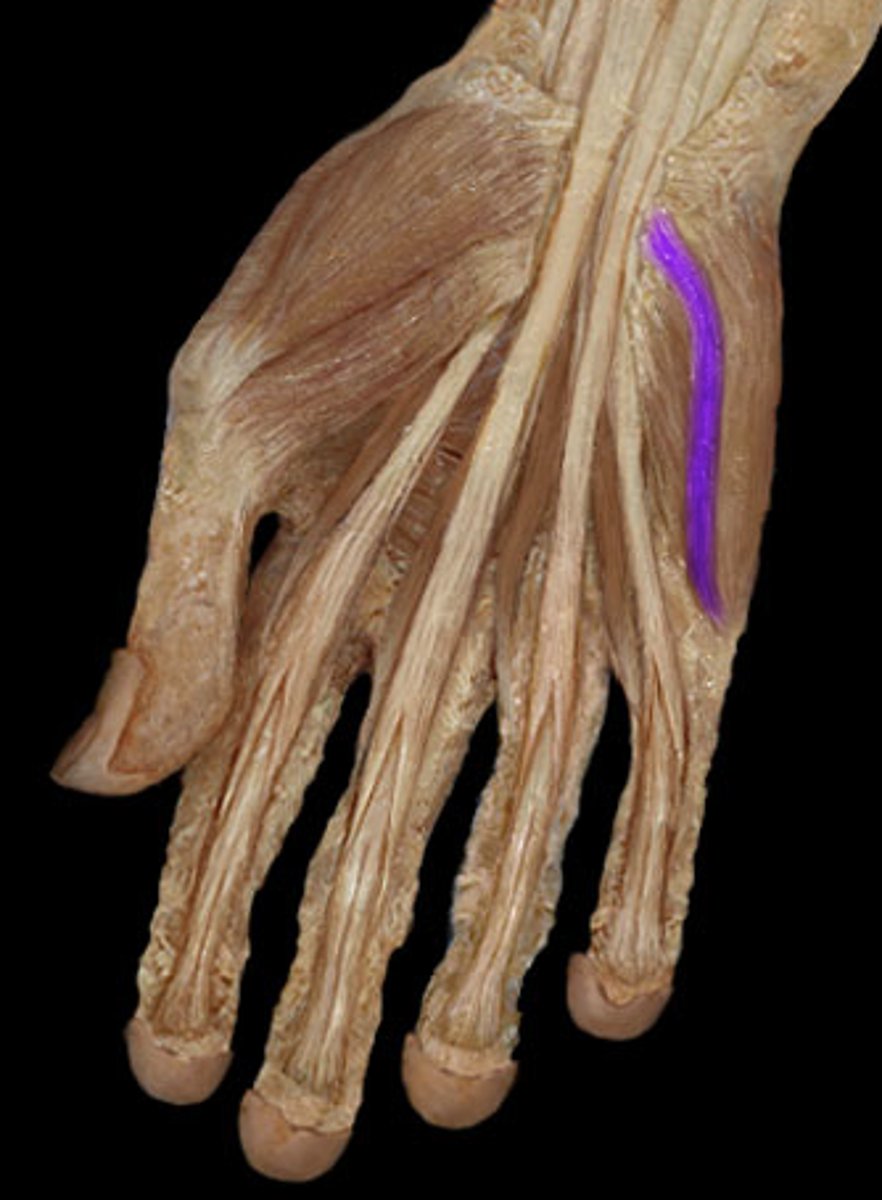
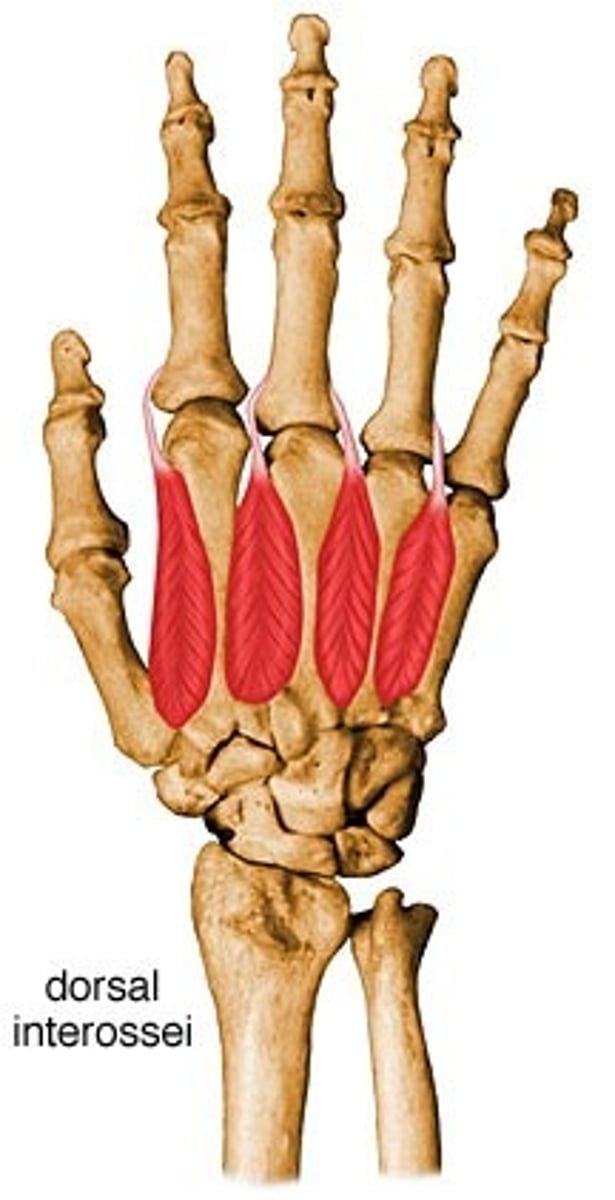
Interossei
Dorsal abduct, palmar adduct
Lumbricals
Flex metacarpophalangeal joints, extend interphalangeal joints
Capitulum
Lateral condyle of the humerus
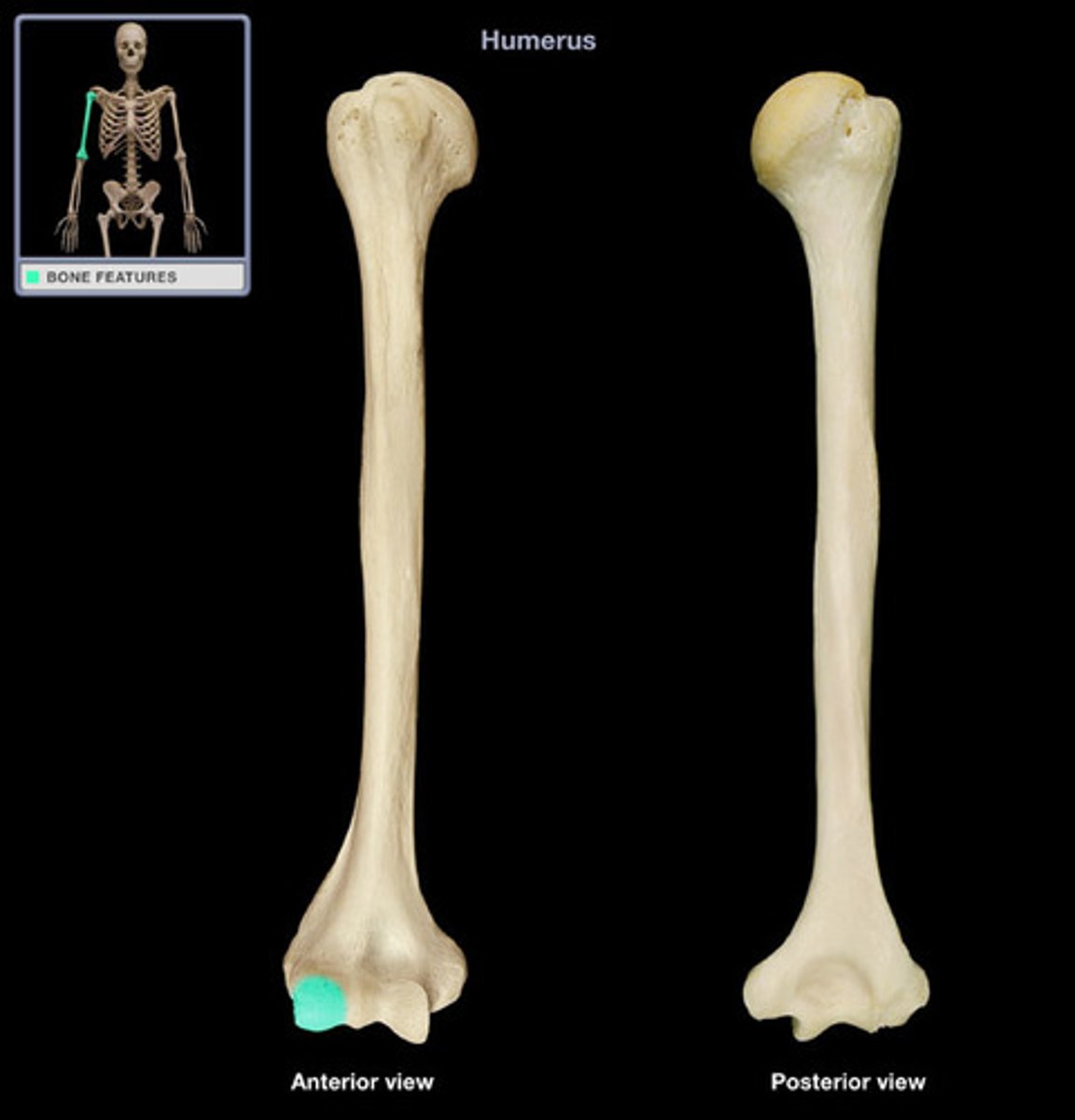
Trochlea
Medial condyle of the humerus
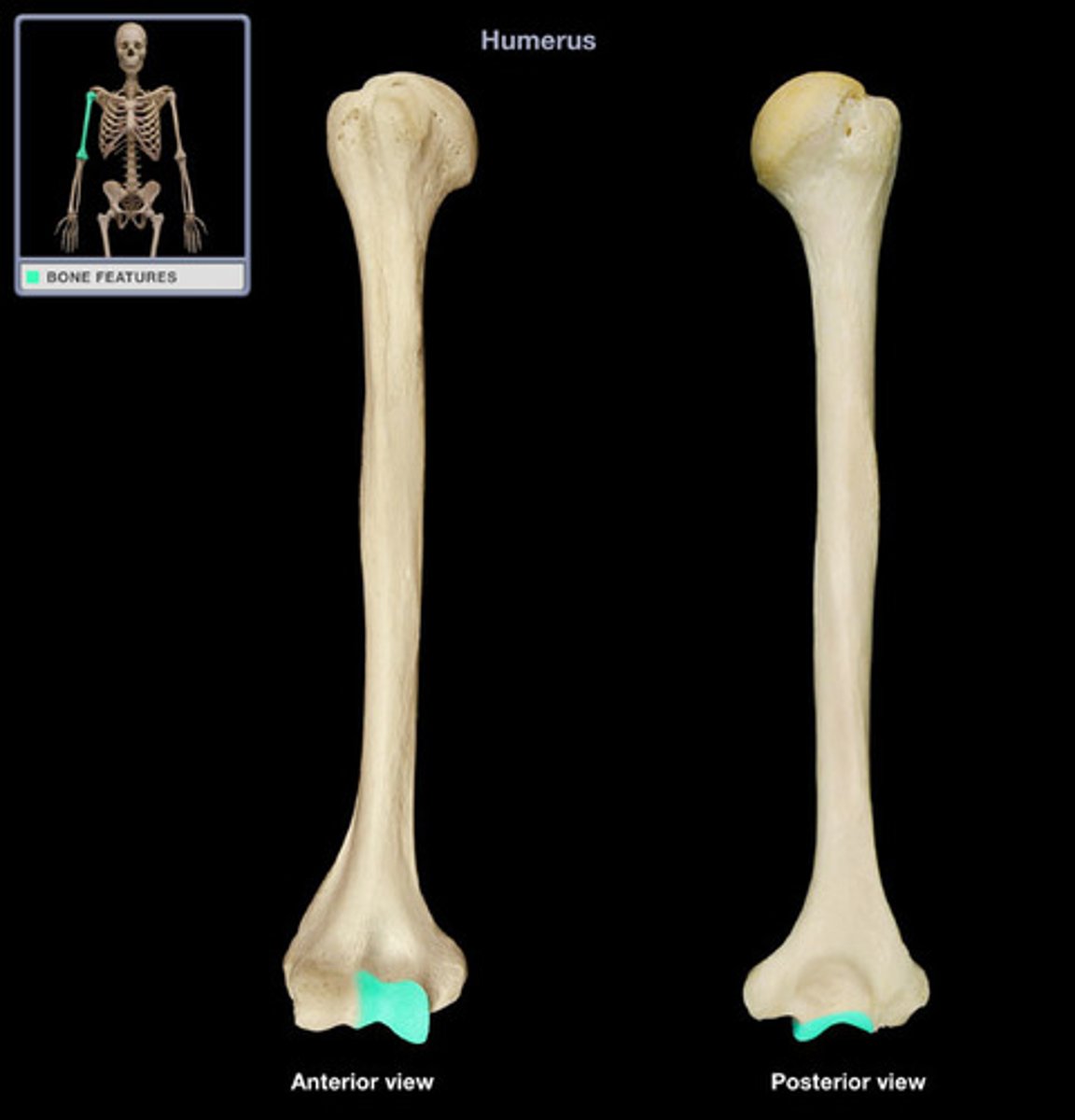
Medial epicondyle of the humerus
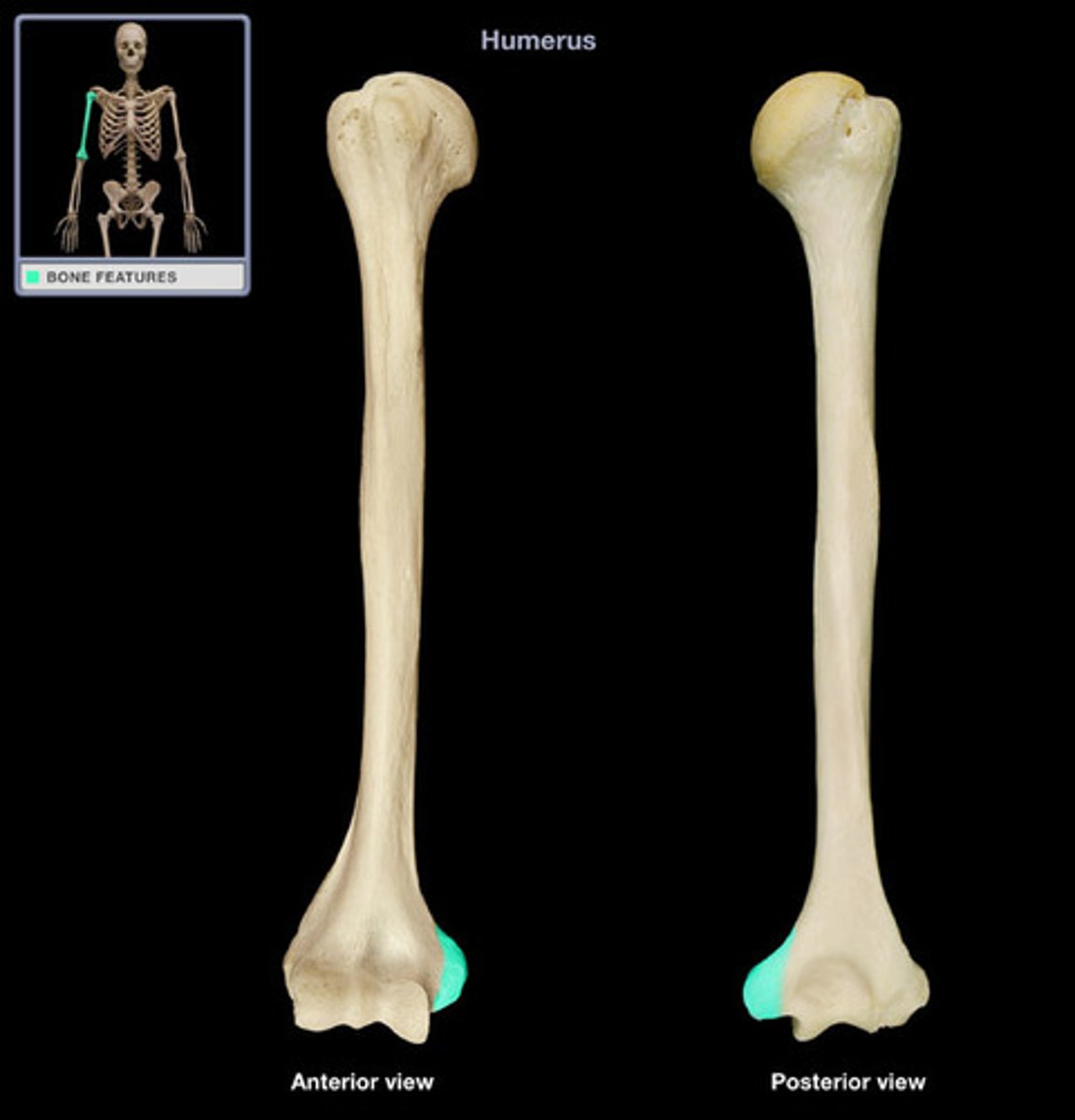
Lateral epicondyle of the humerus
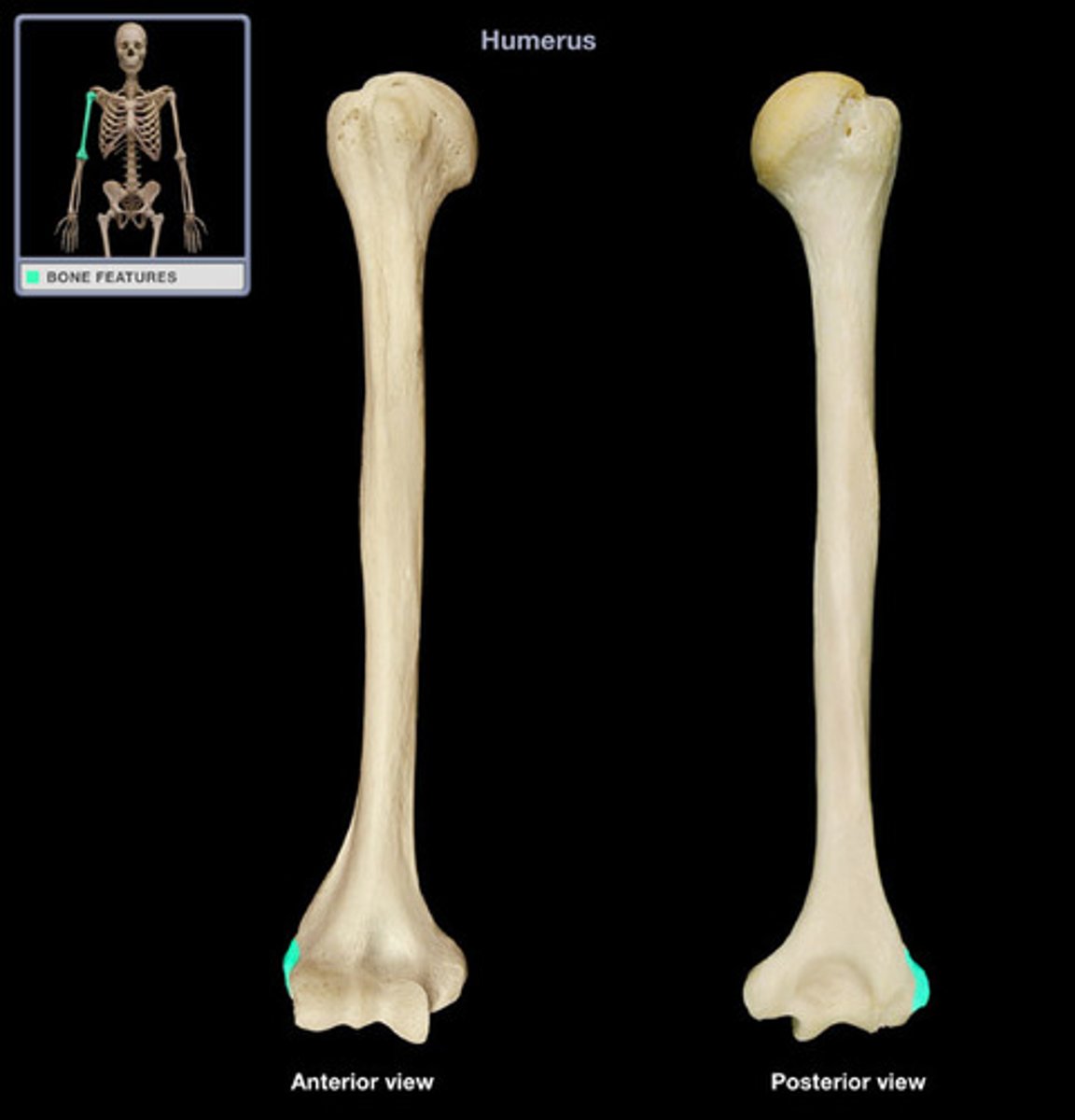
Olecranon process
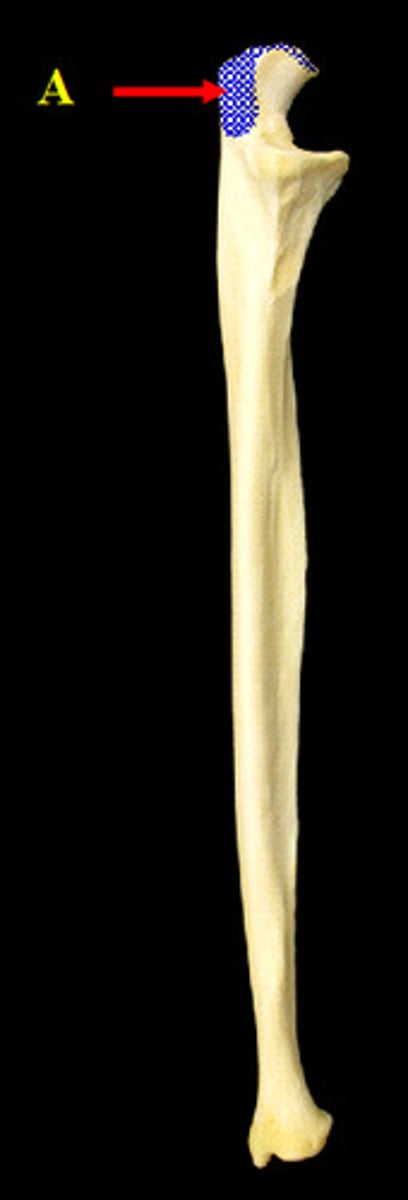
Olecranon fossa
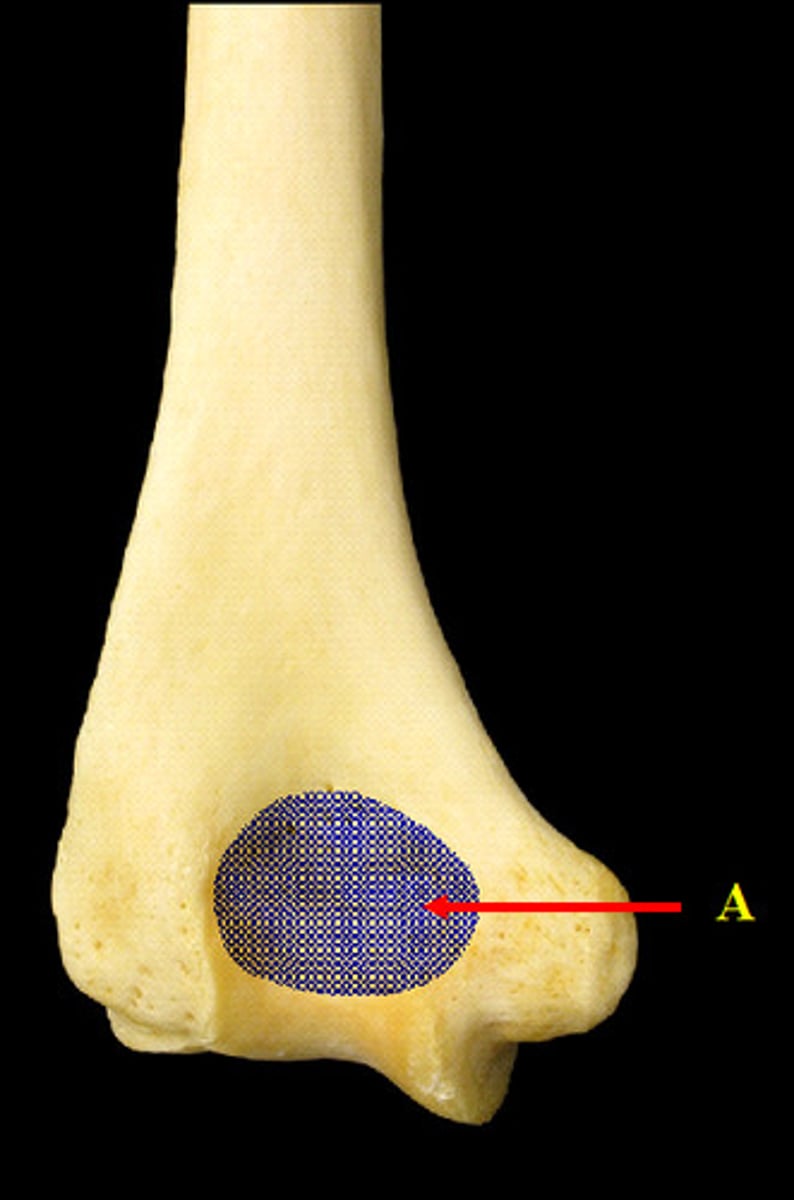
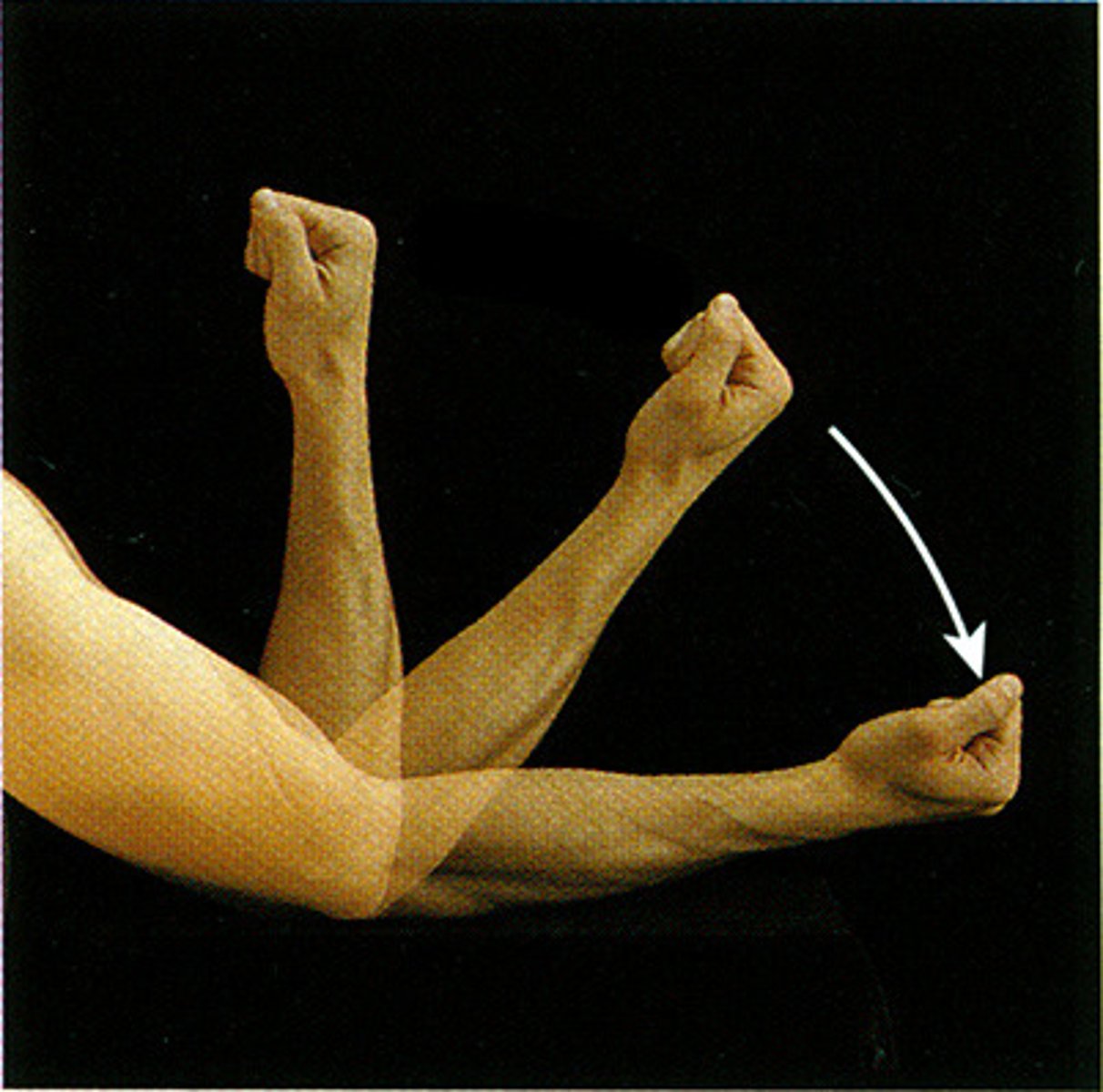
Elbow extension
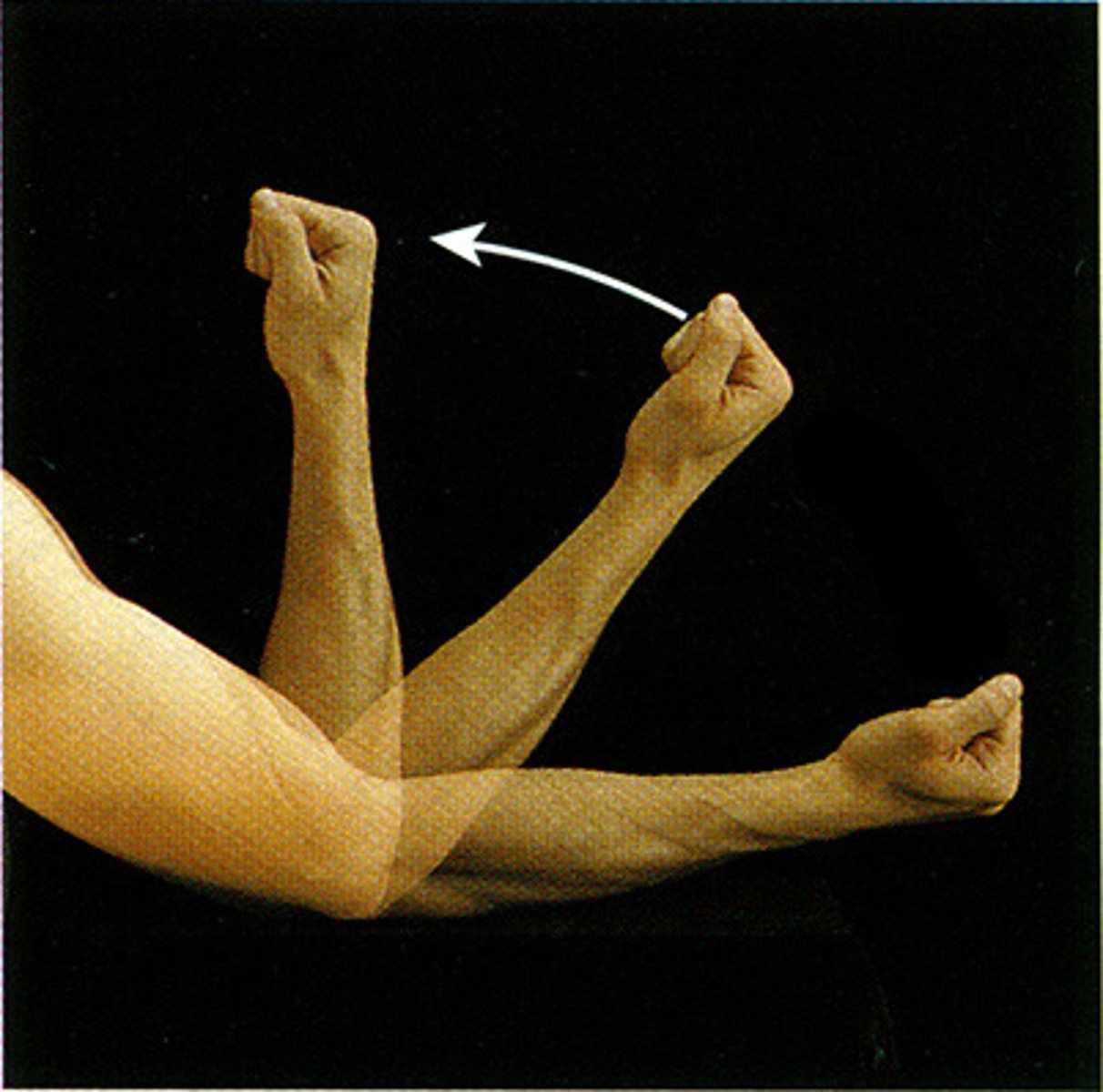
Elbow flexion
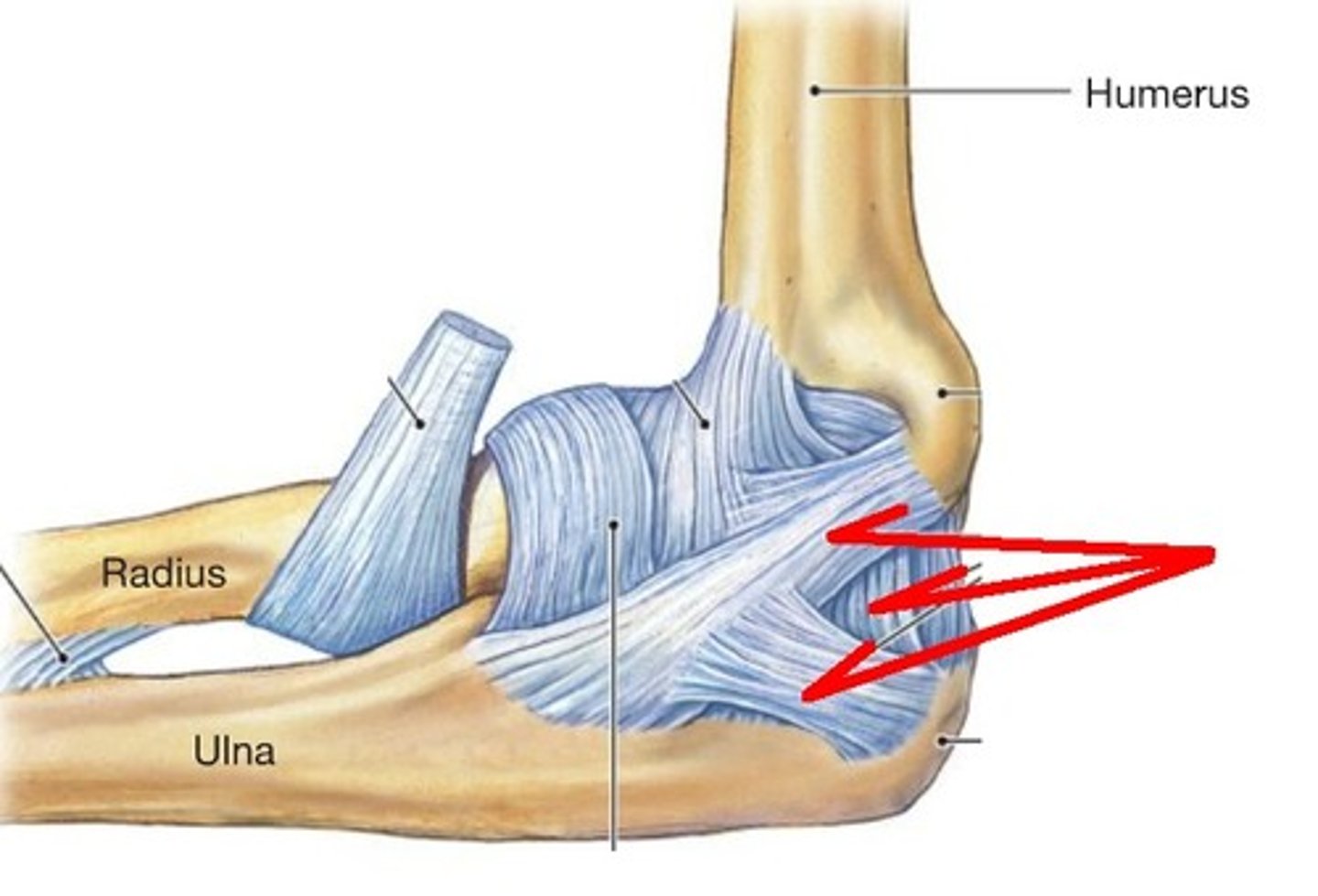
Radial collateral ligament
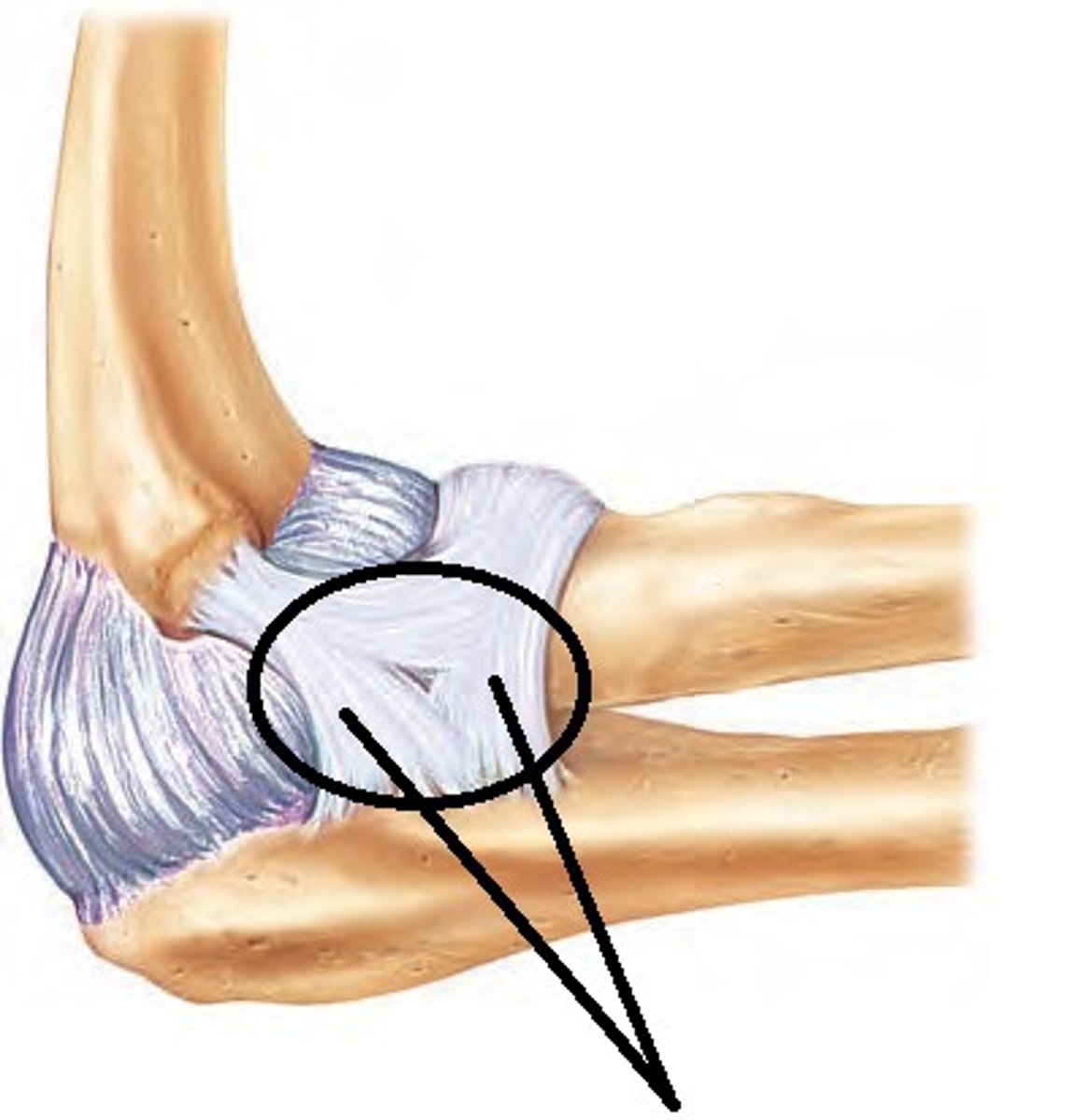
Annular ligament
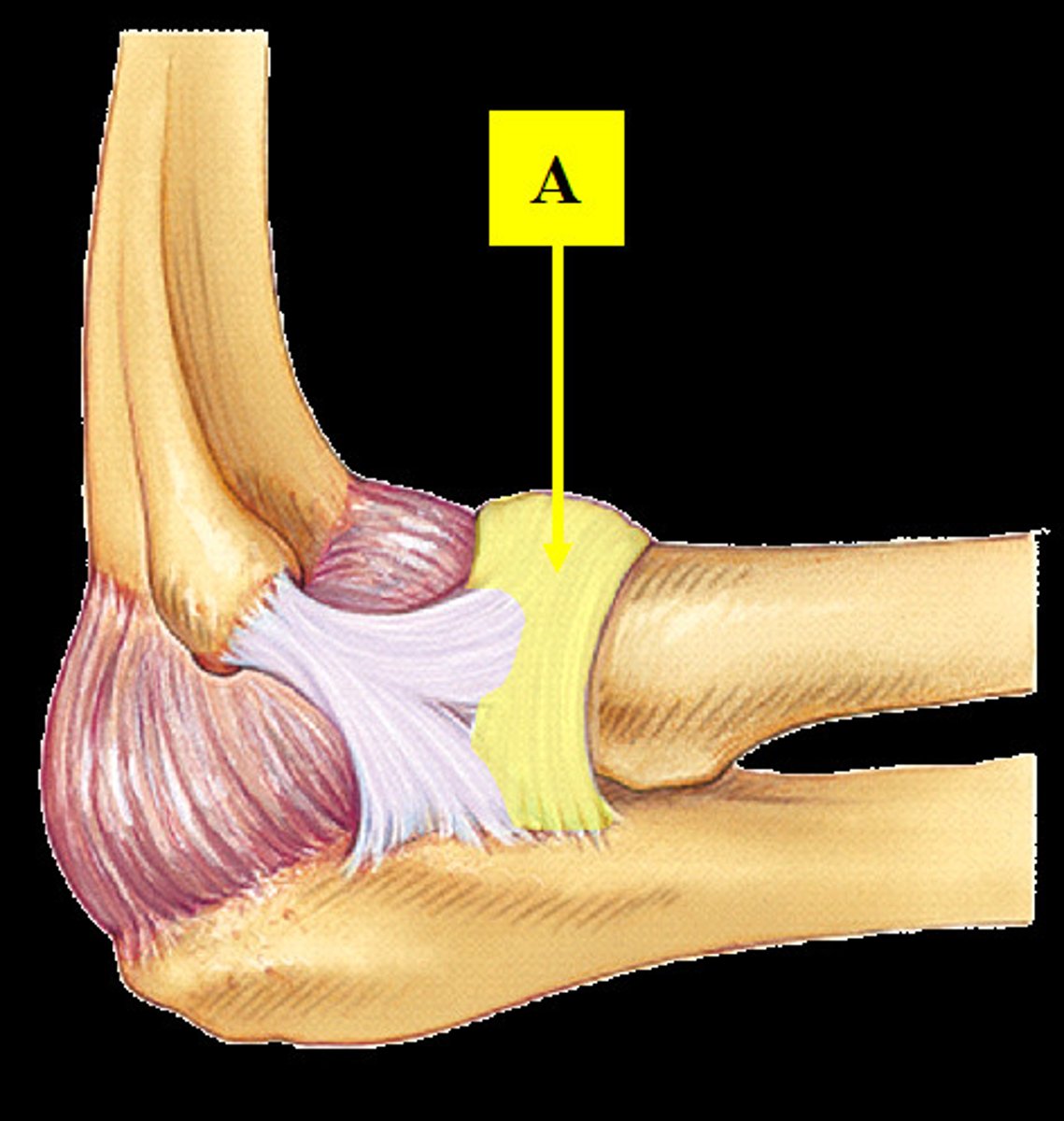
Ulnar collateral ligament
Cubital fossa
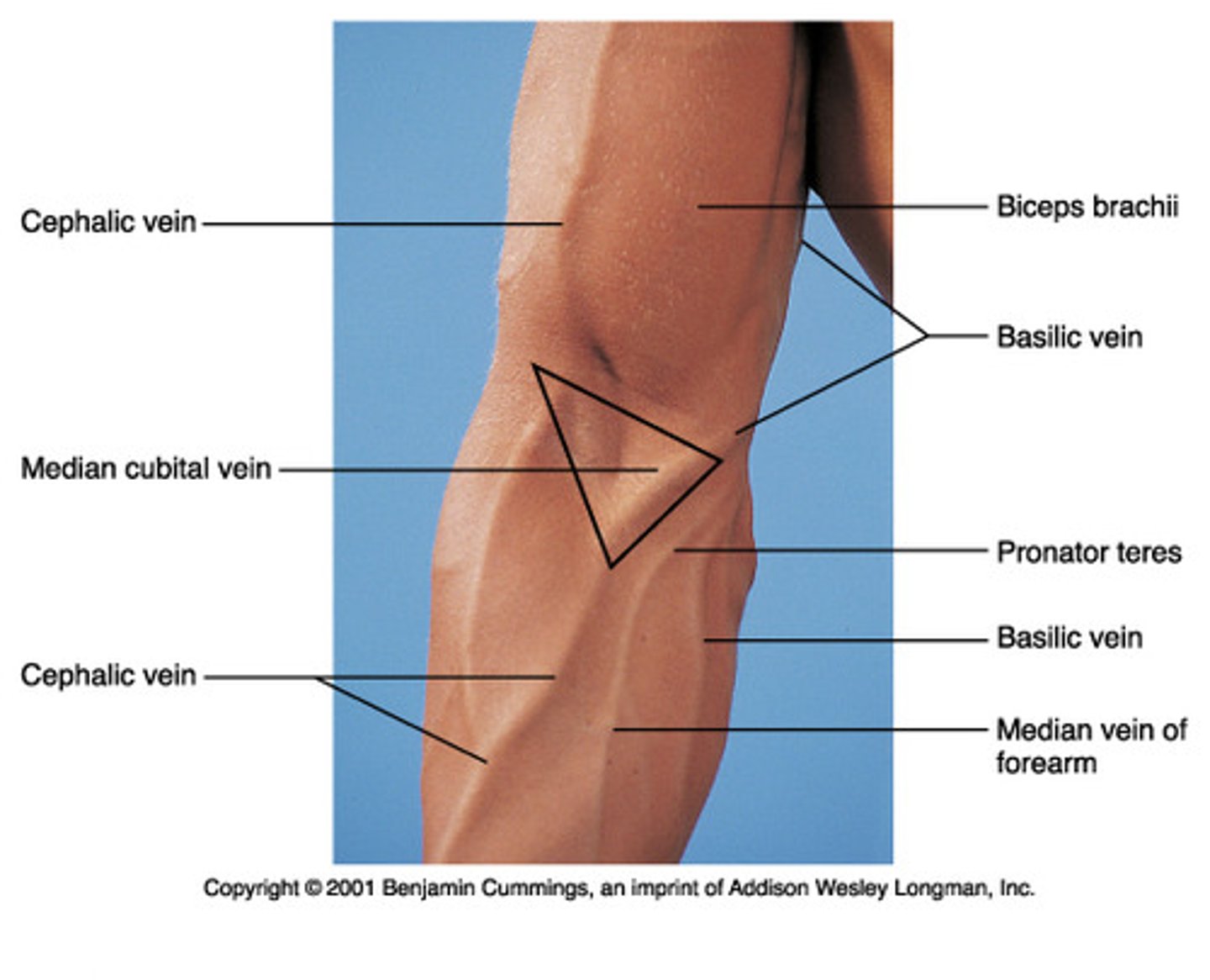
Contents of the cubital fossa
Brachial artery and vein, median nerve
Borders of the cubital fossa
Brachioradialis and pronator teres
Cubital tunnel
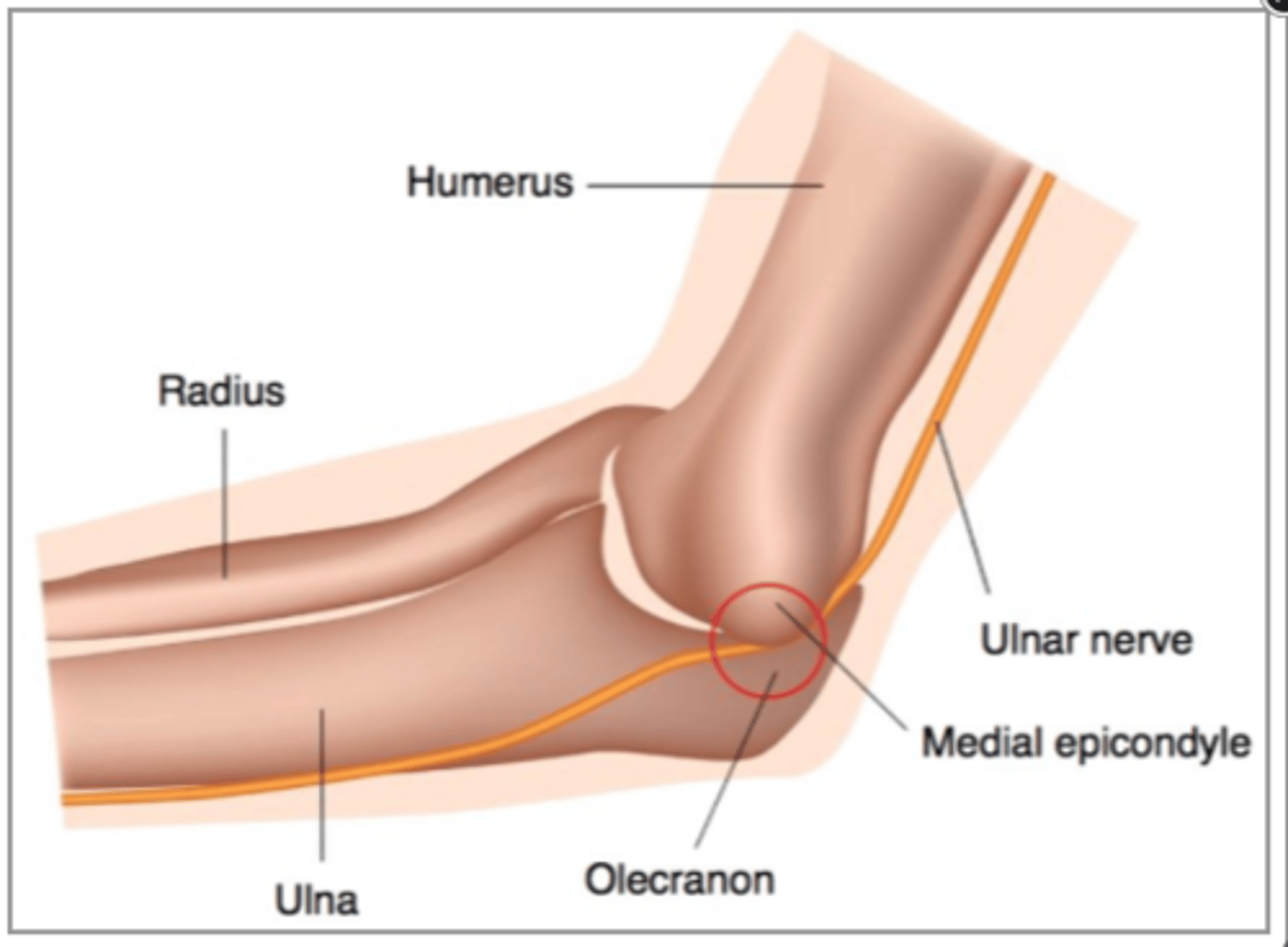
Contents of cubital tunnel
Ulnar nerve
Triceps brachii
Extends elbow
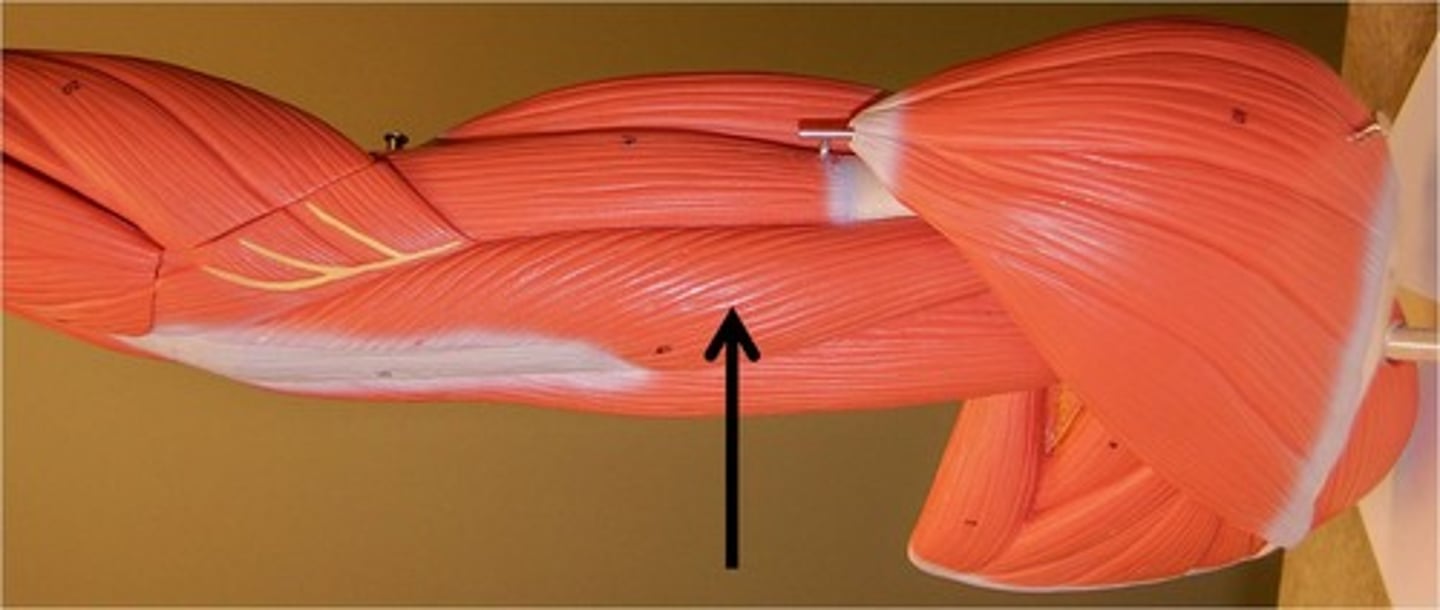
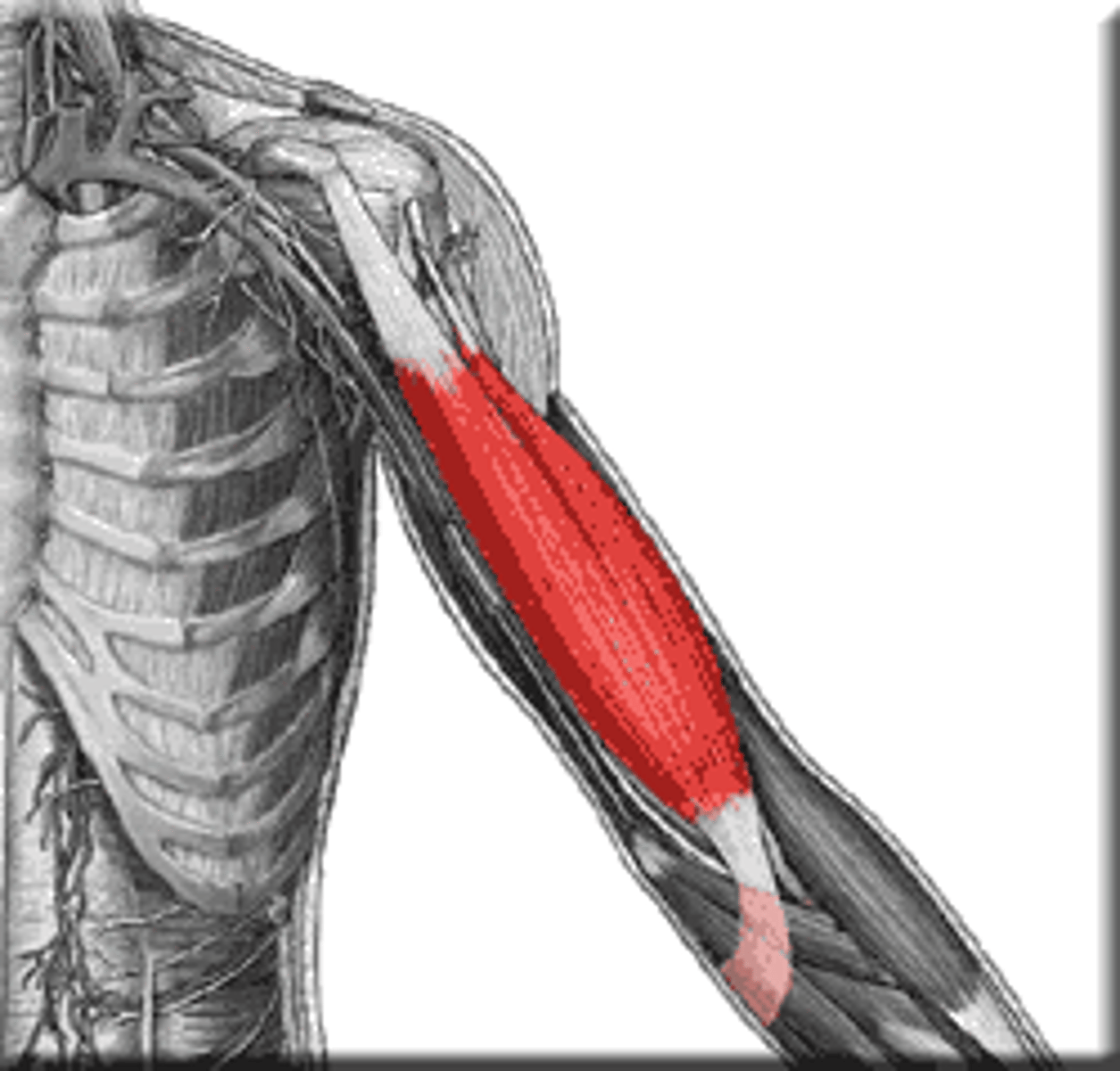
Biceps brachii
Flexes elbow
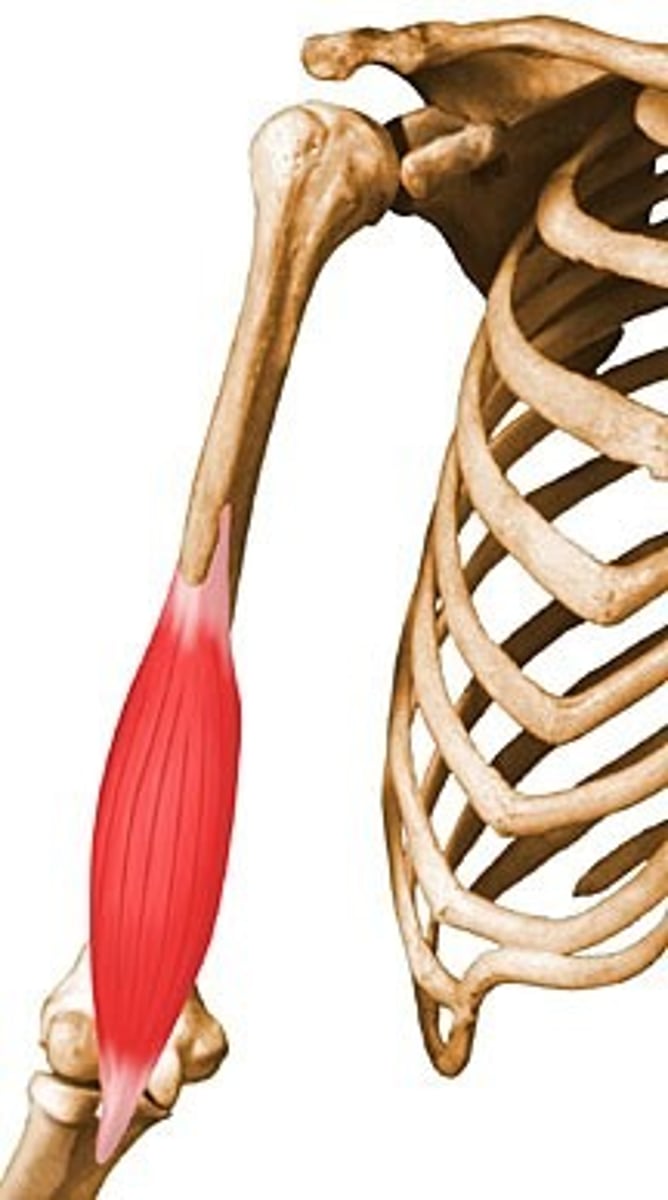
Brachialis
Flexes elbow
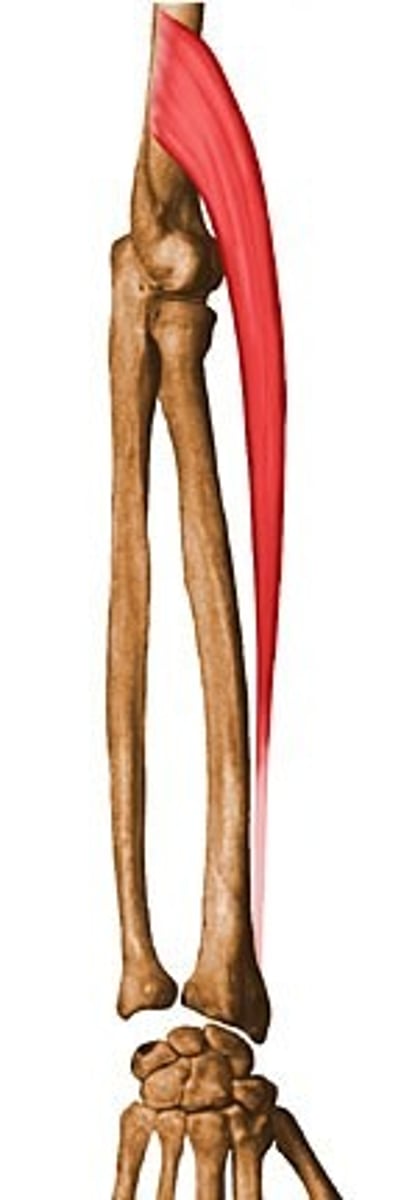
Brachioradialis
Flexes elbow
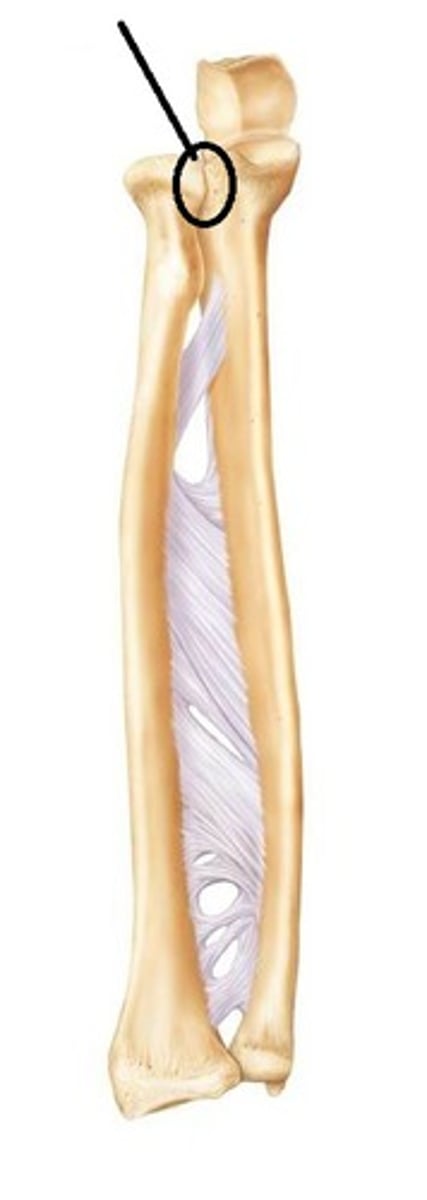
Proximal radio-ulnar joint
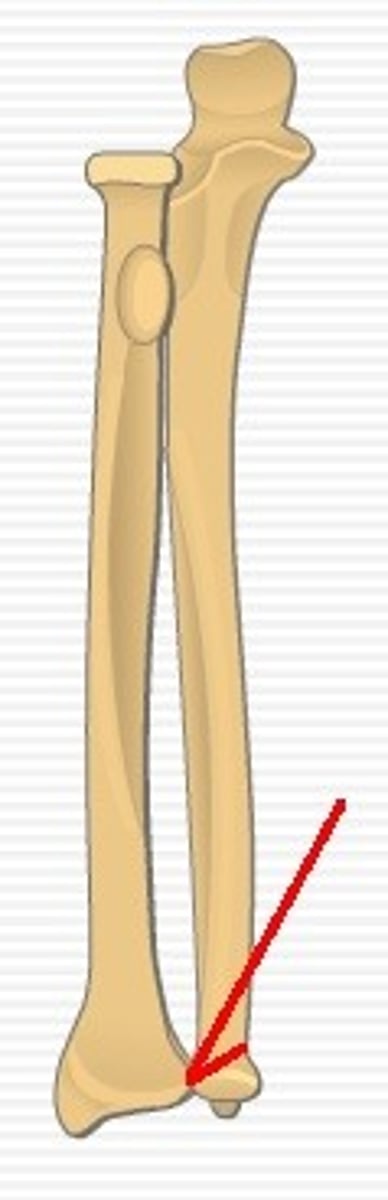
Distal radio-ulnar joint
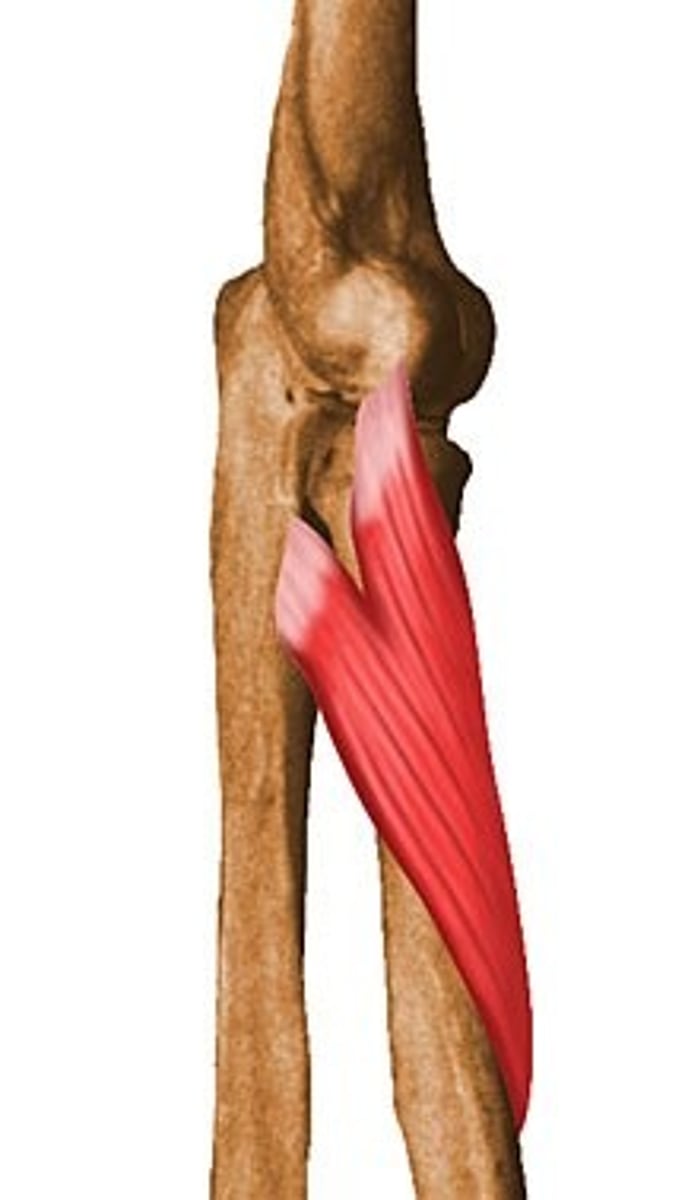
Supinator
Supinates forearm
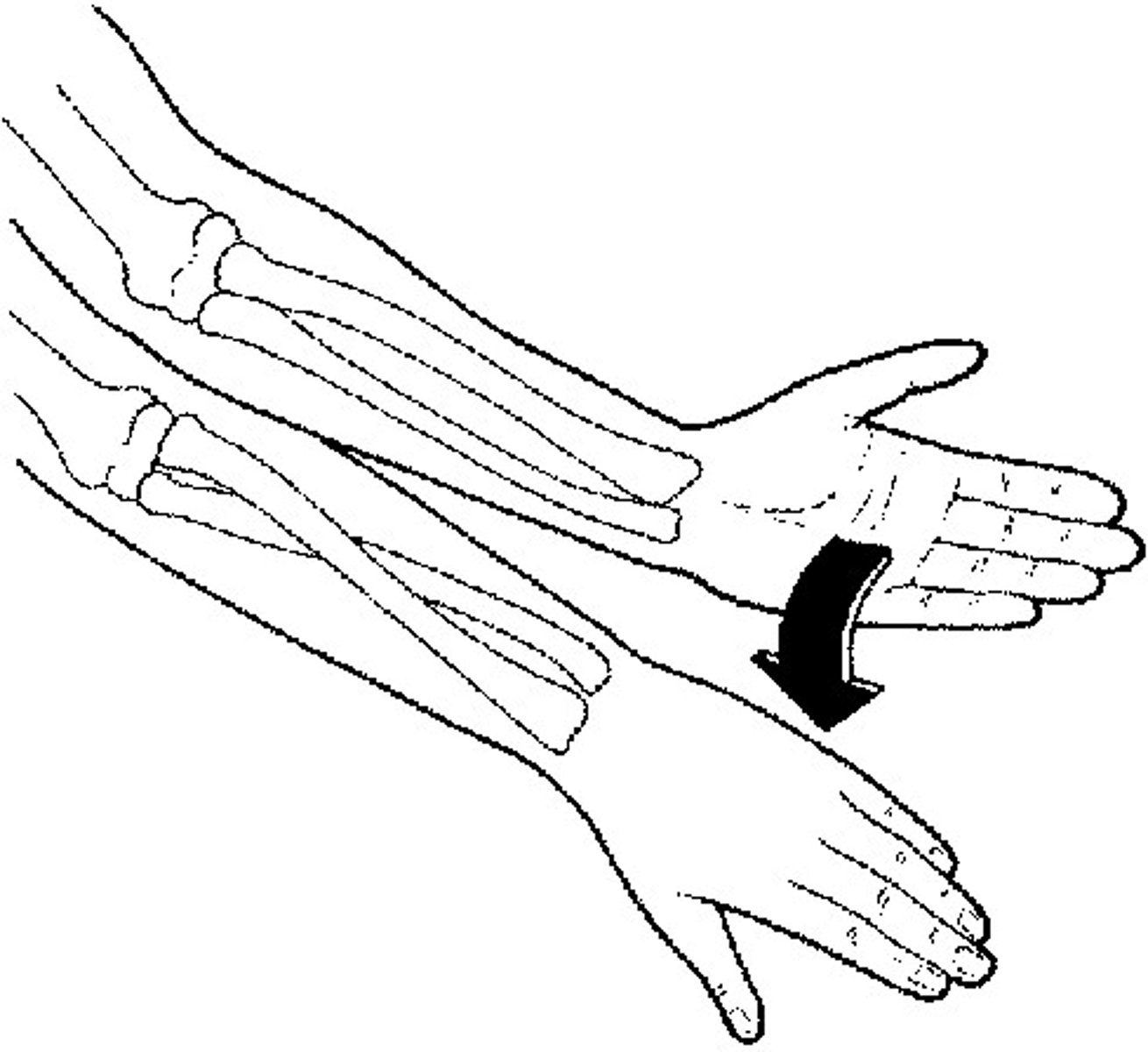
Forearm supination
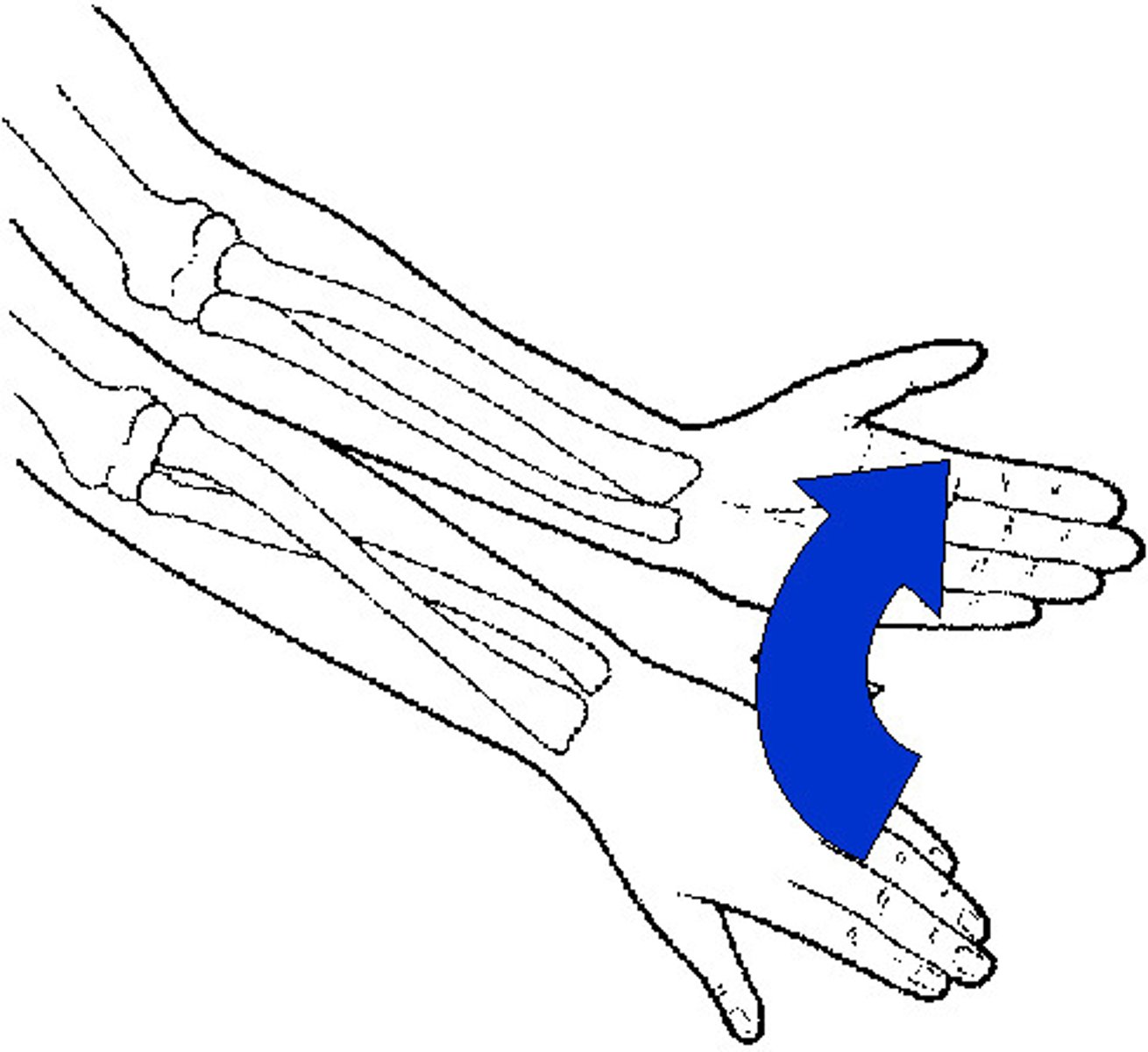
Forearm pronation
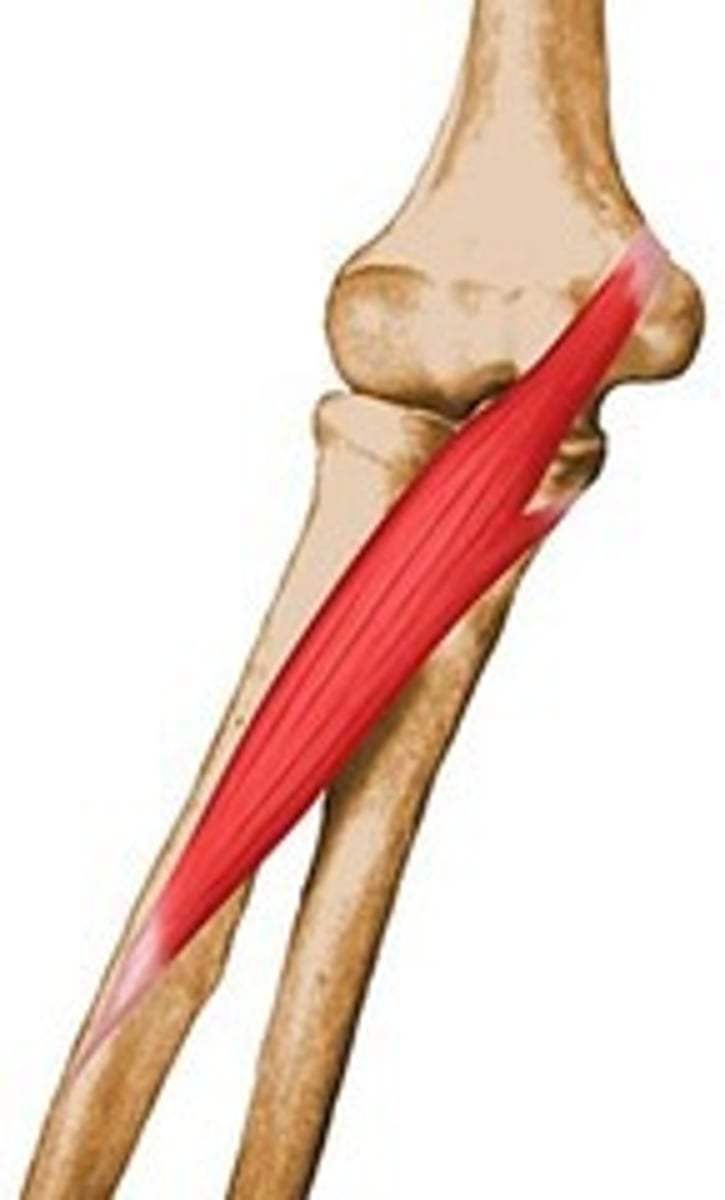
Pronator teres
Pronates forearm
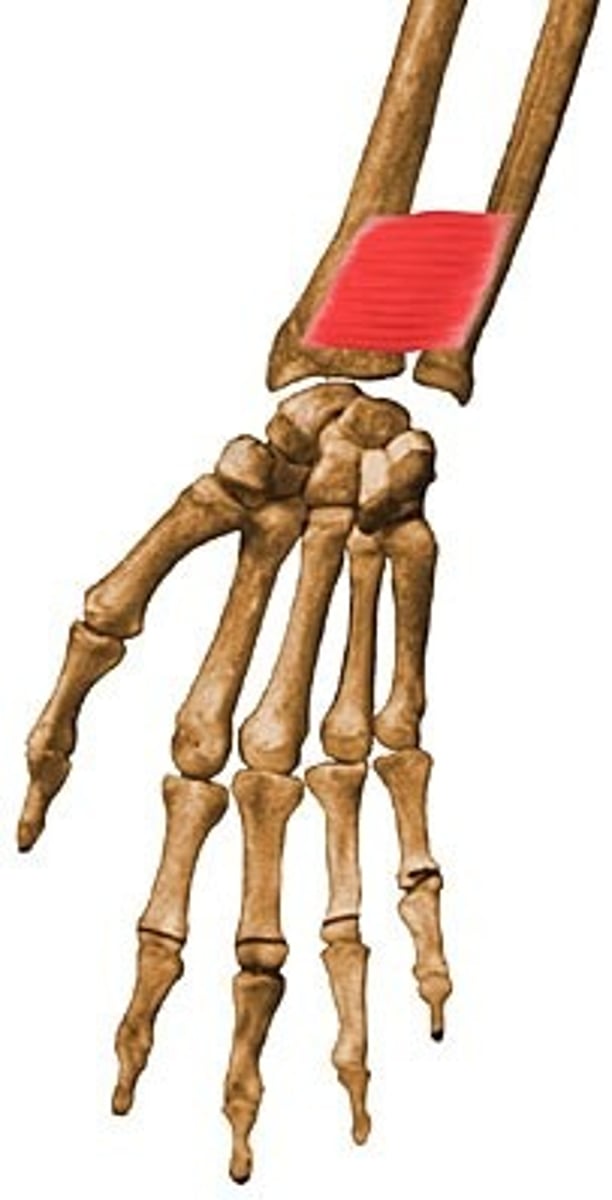
Pronator quadratis
Pronates forearm
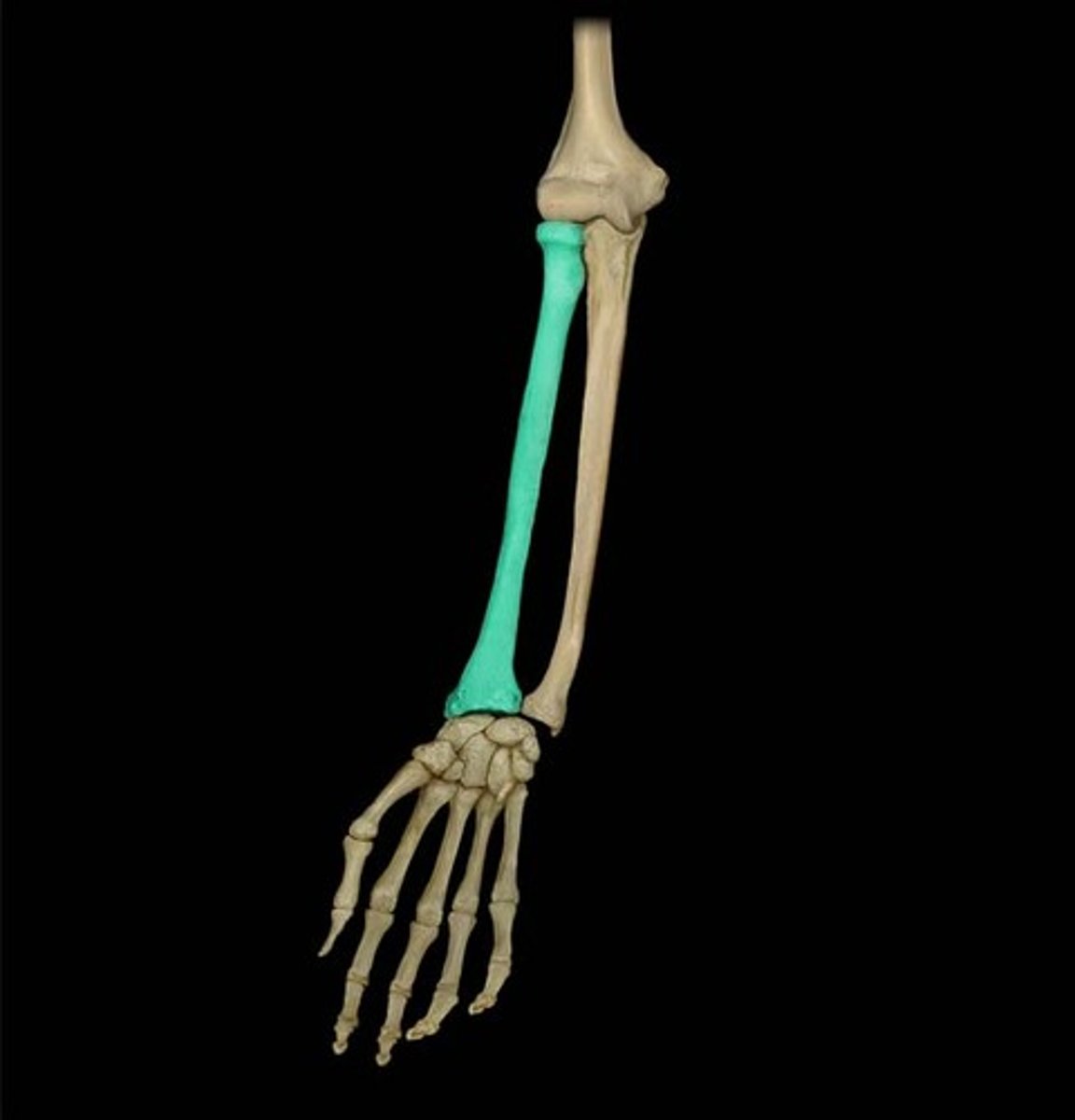
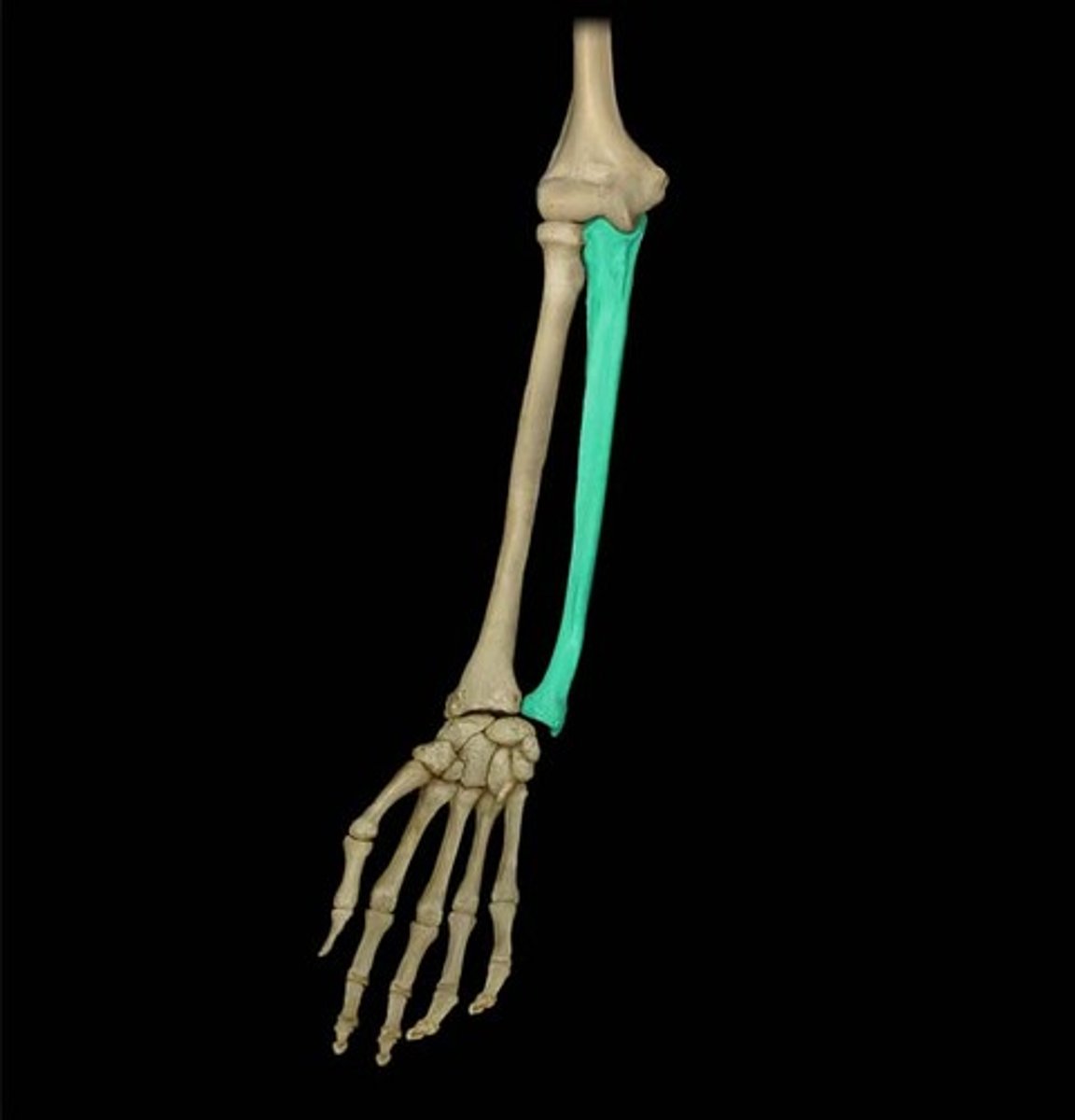
Radius
Ulna
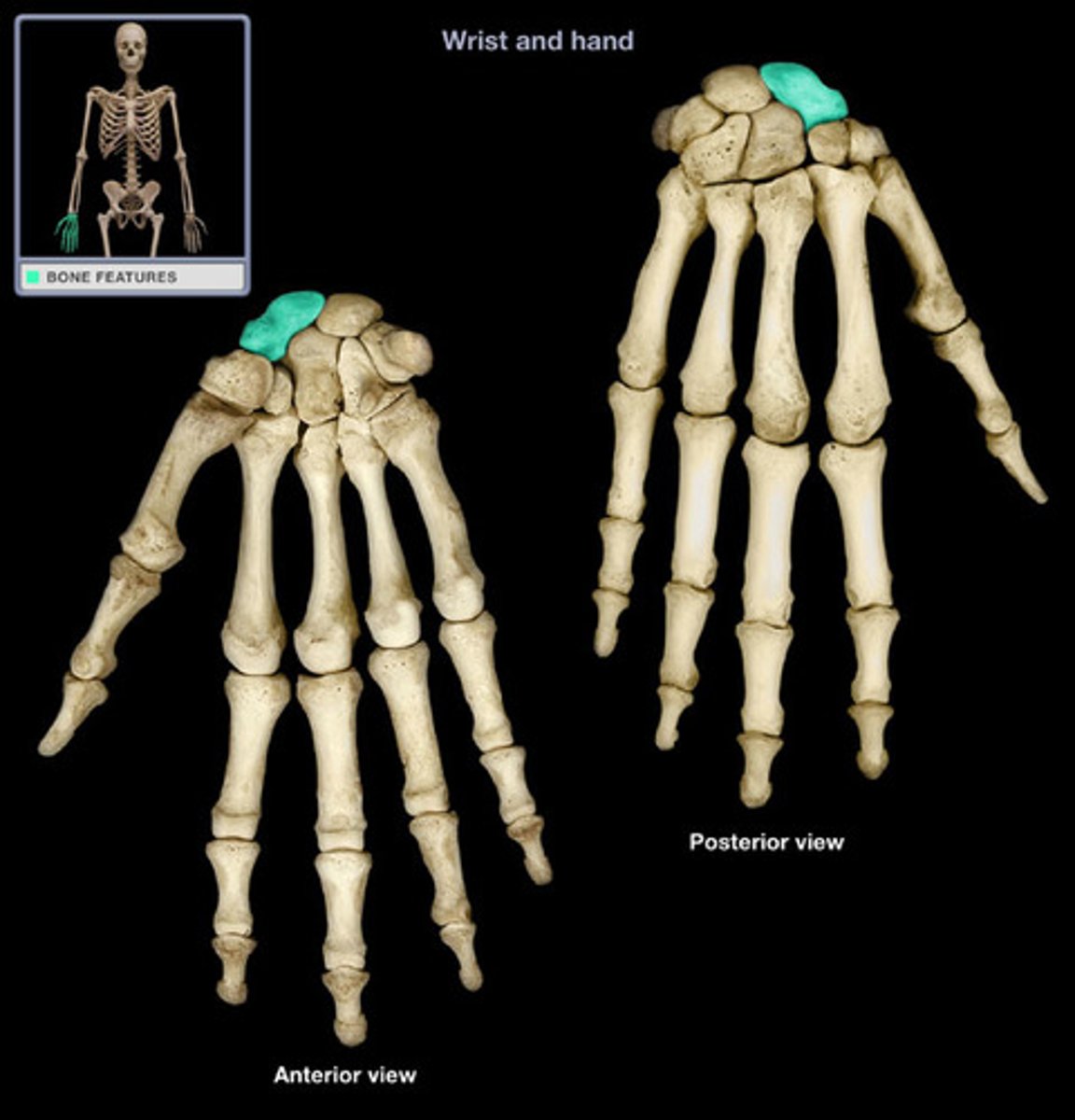
Scaphoid
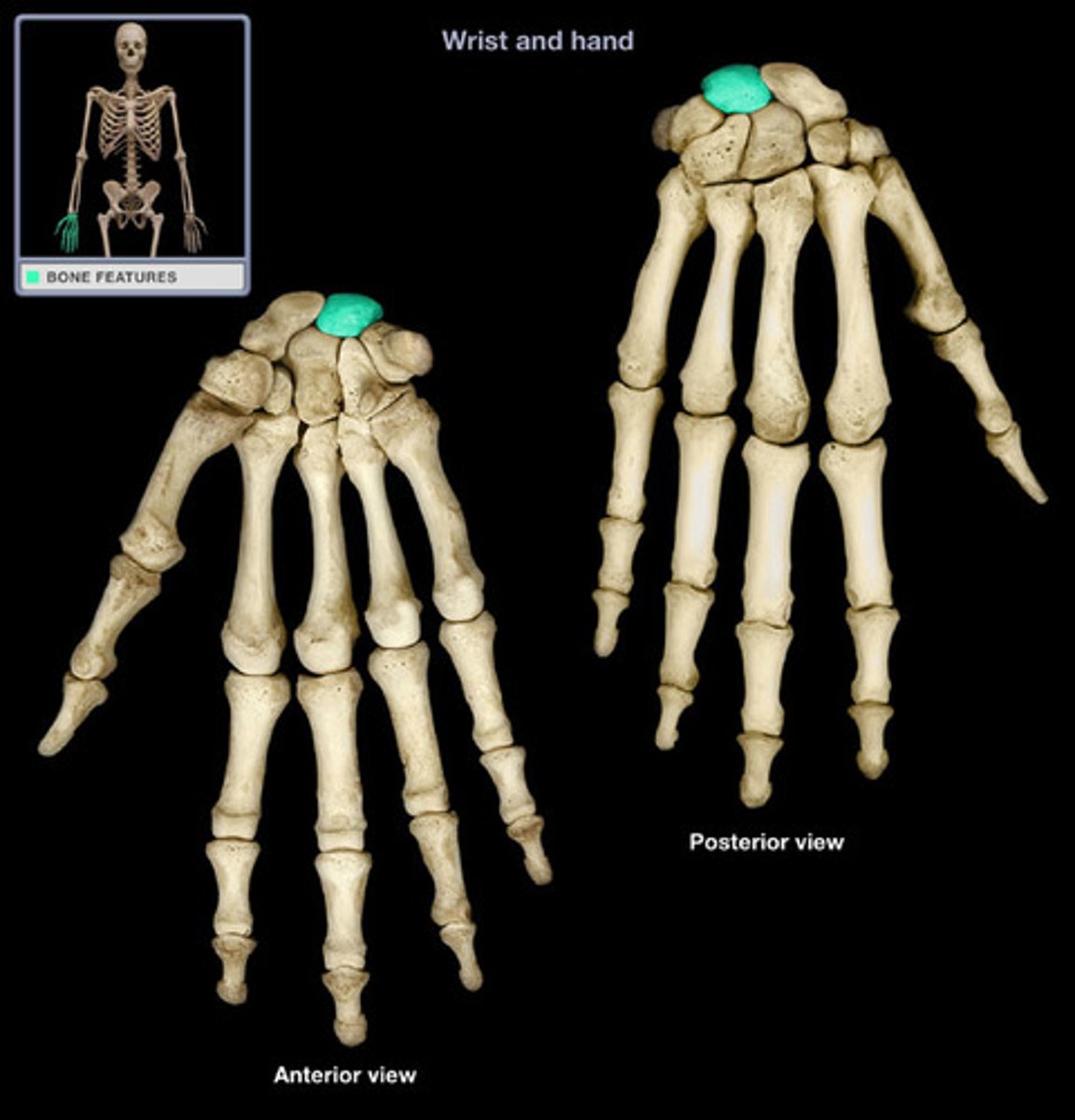
Lunate
Triquetrum
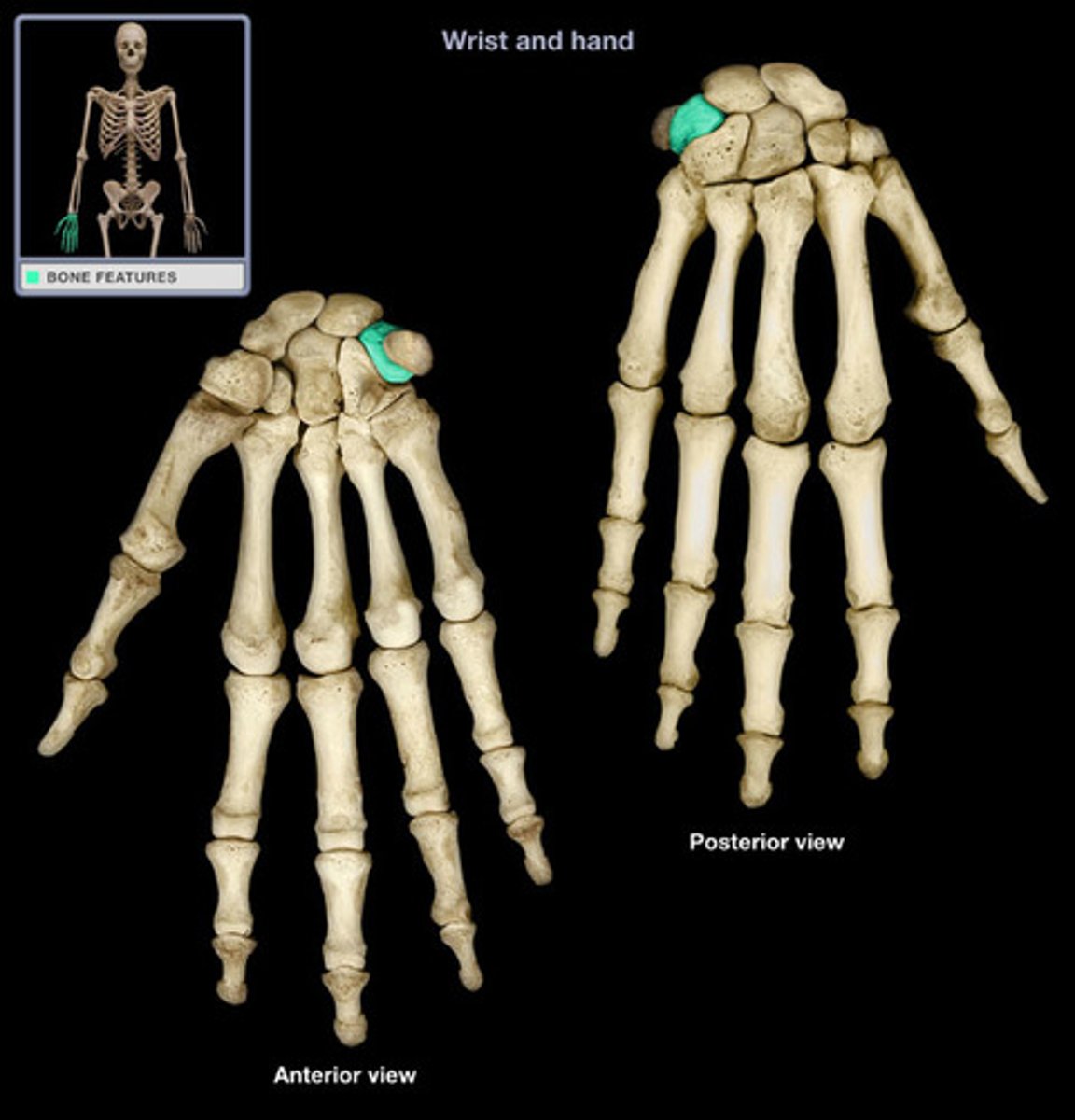
Pisiform
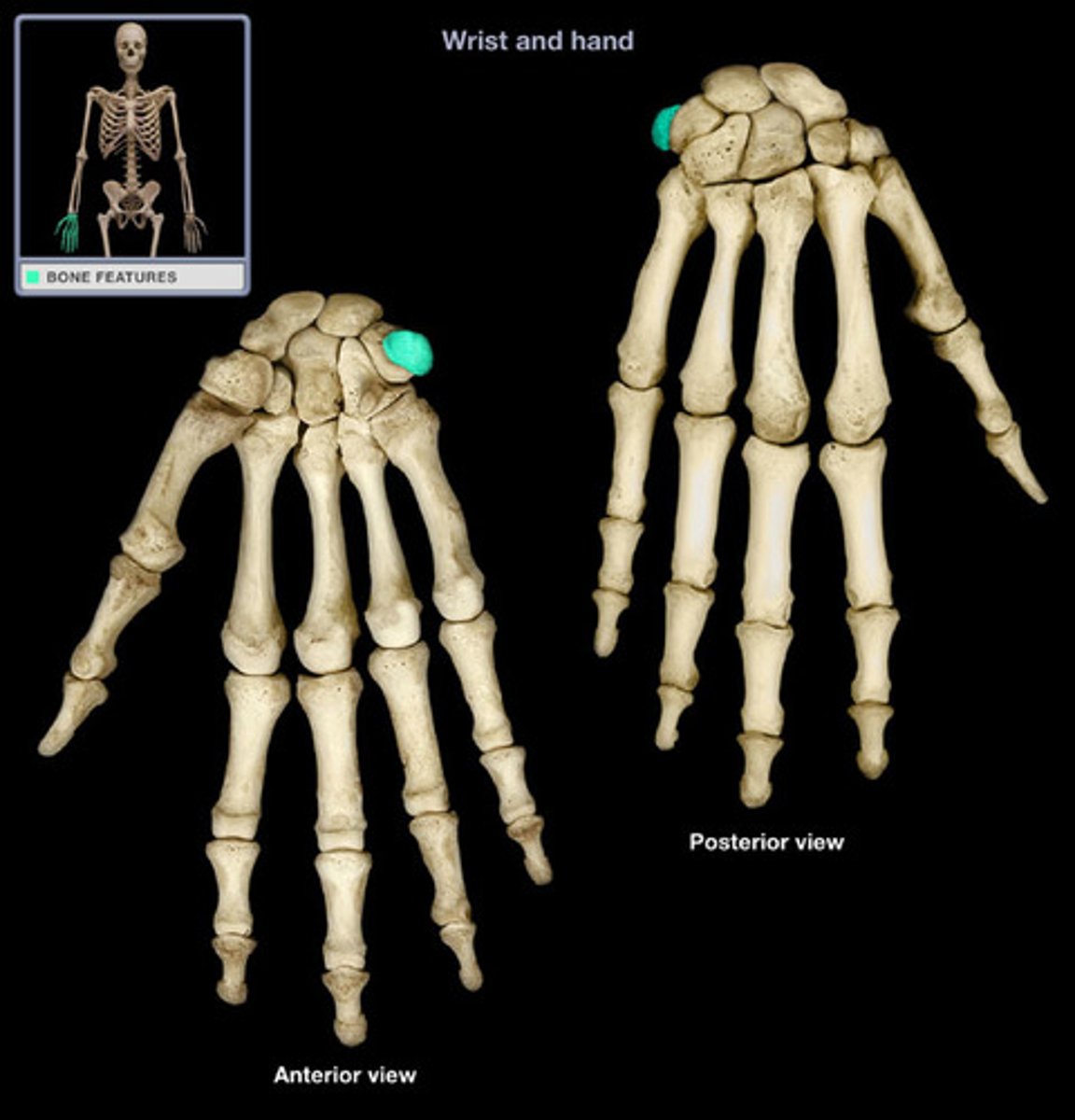
Hamate
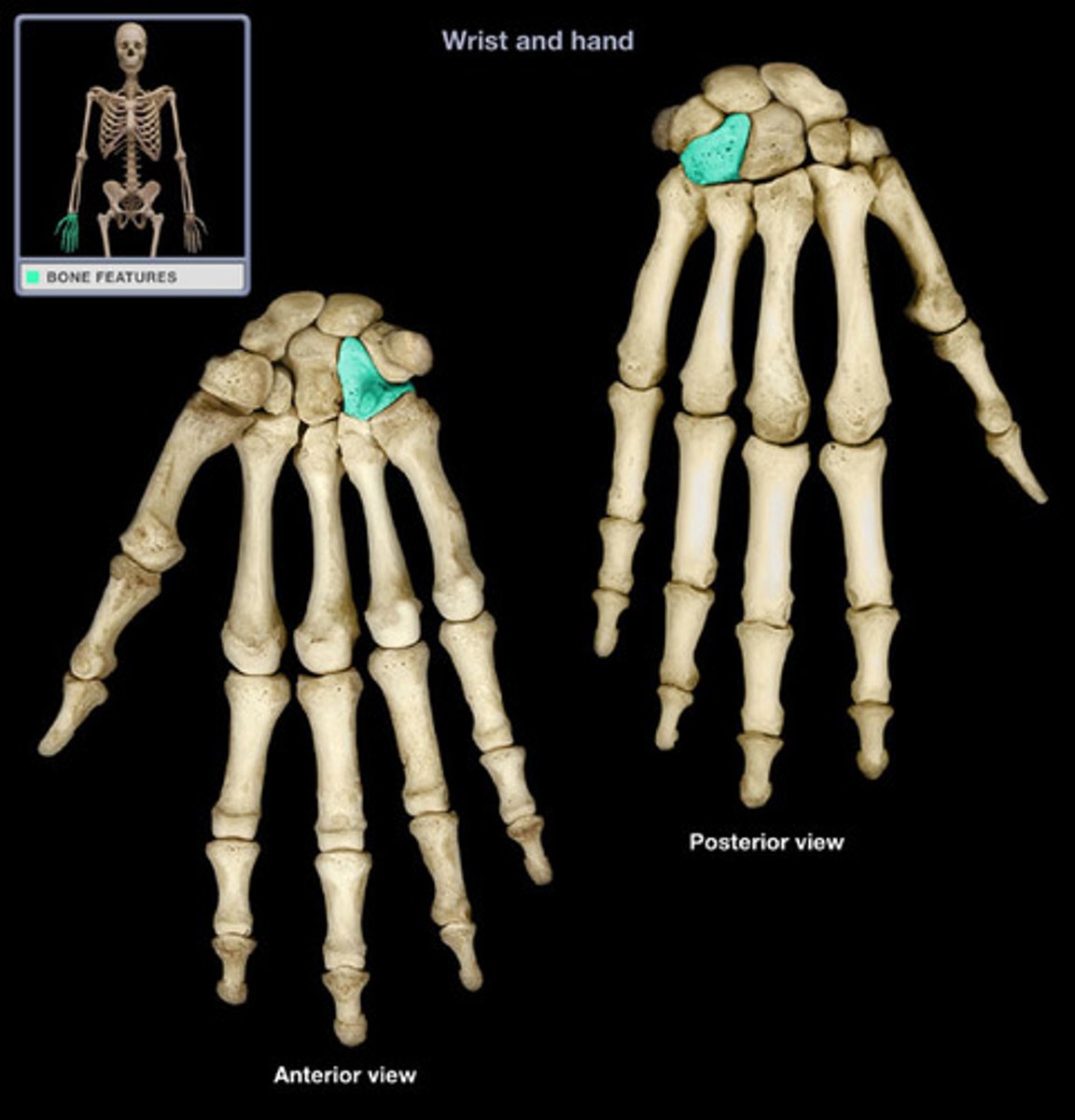
Capitate
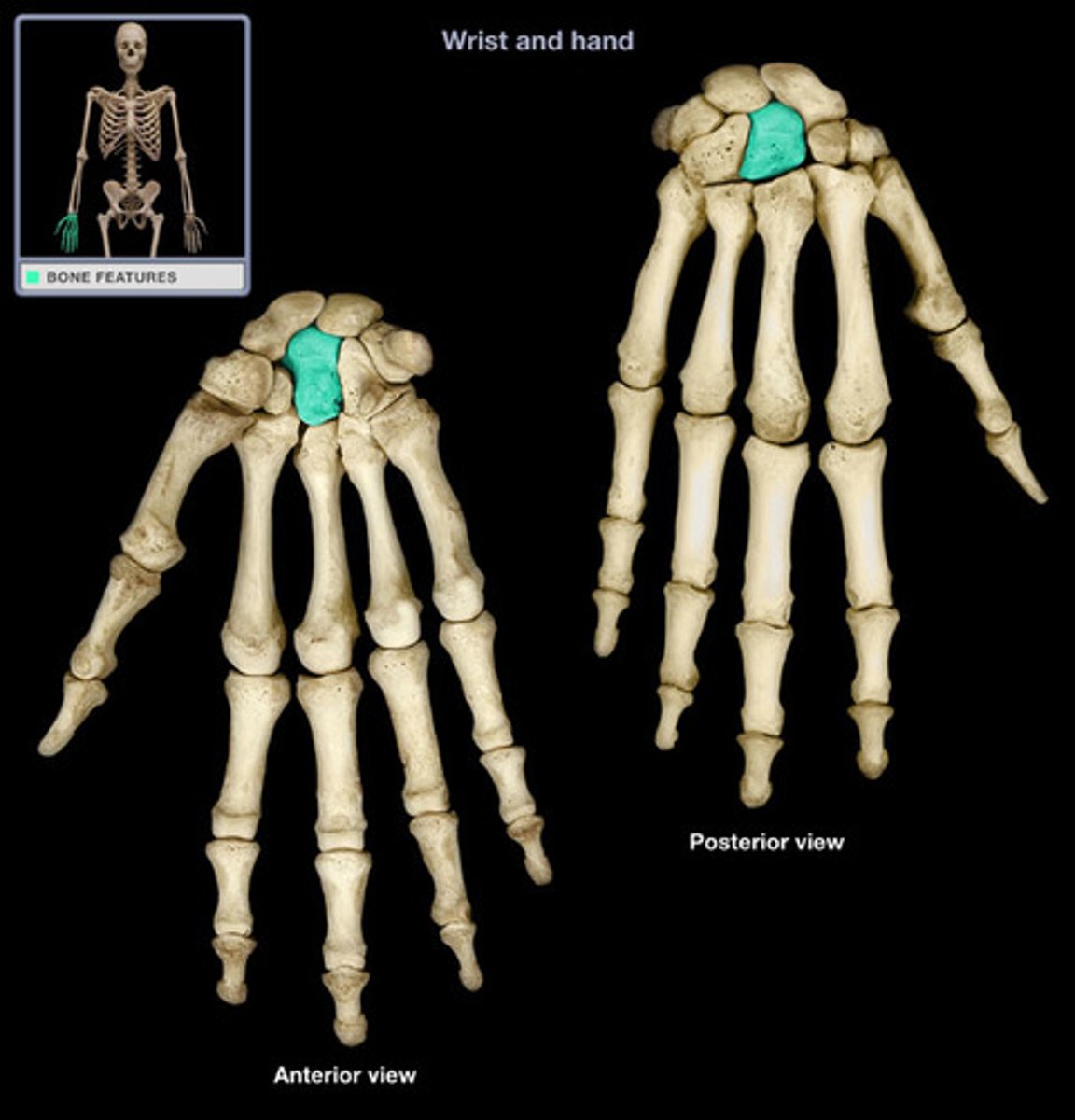
Trapazoid
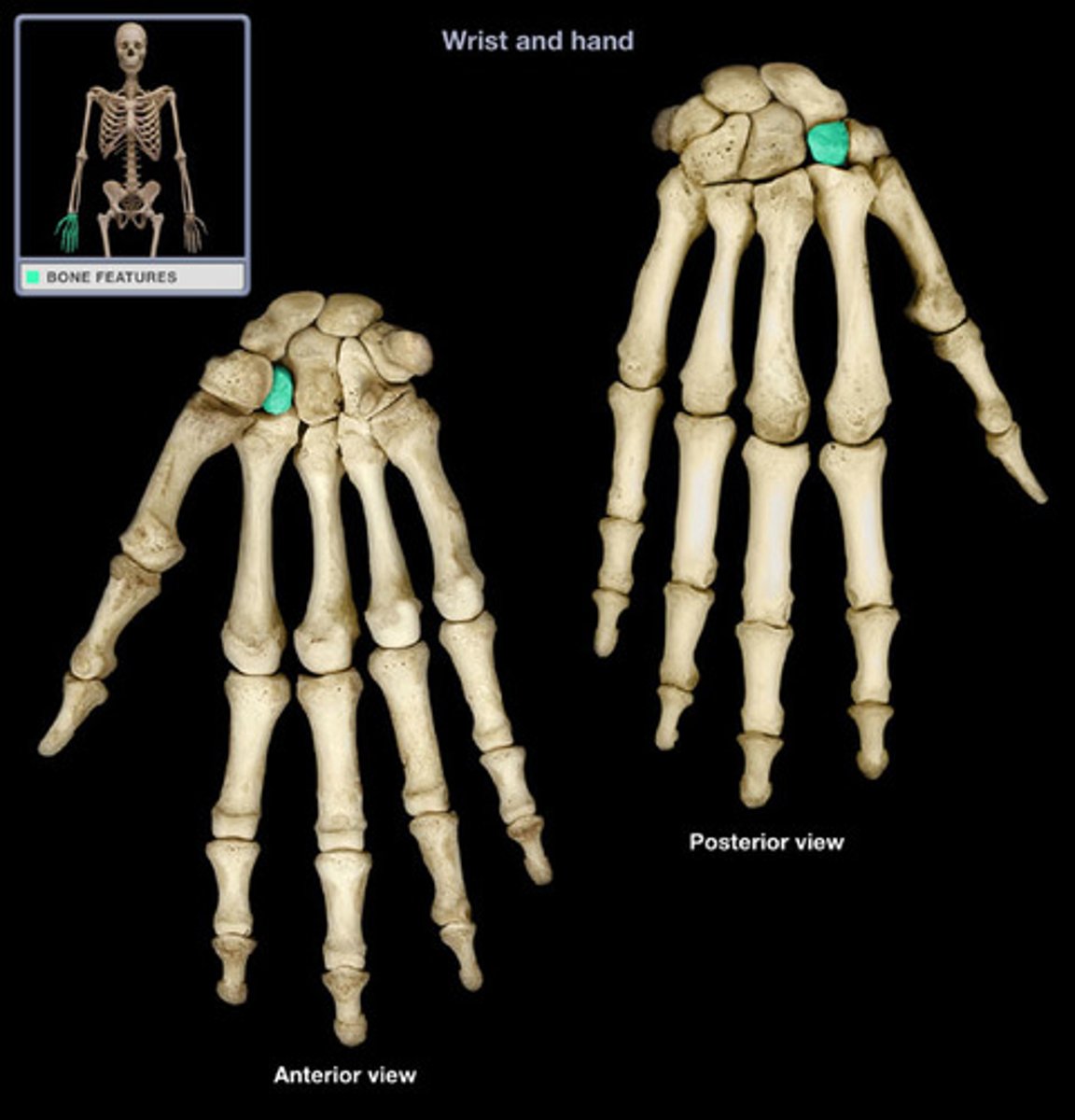
Trapezium
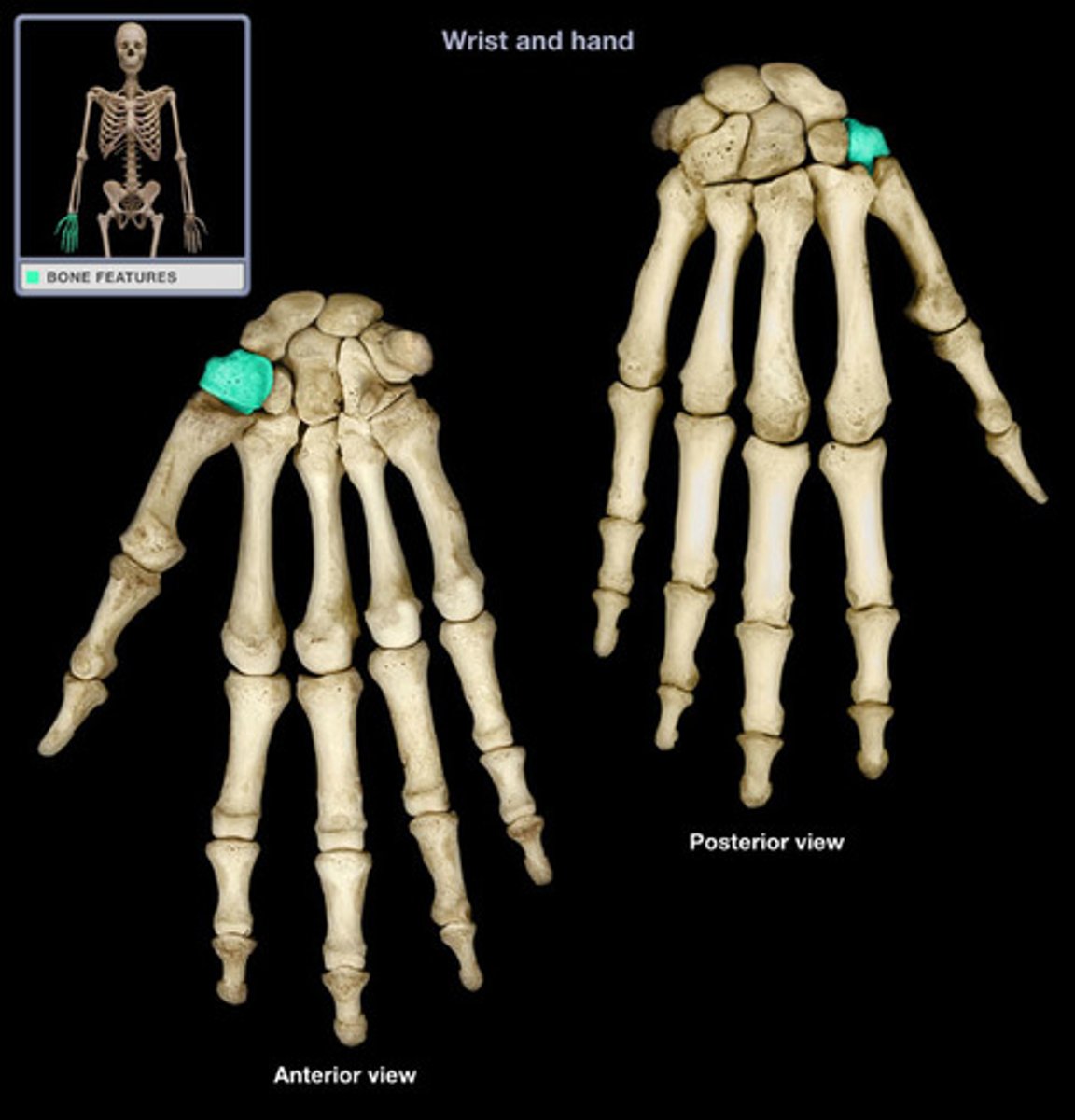
Metacarpals
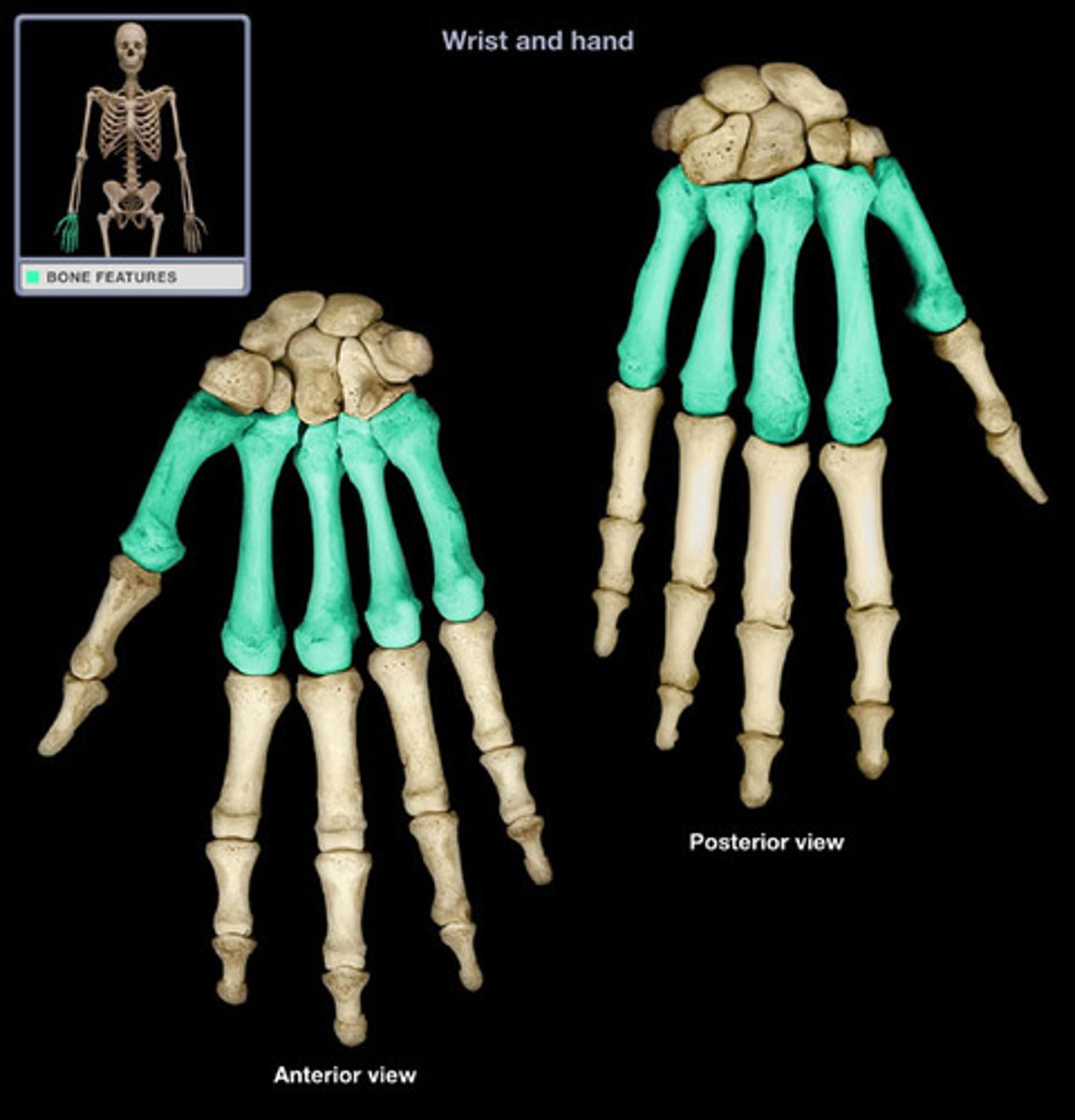
Phalanges
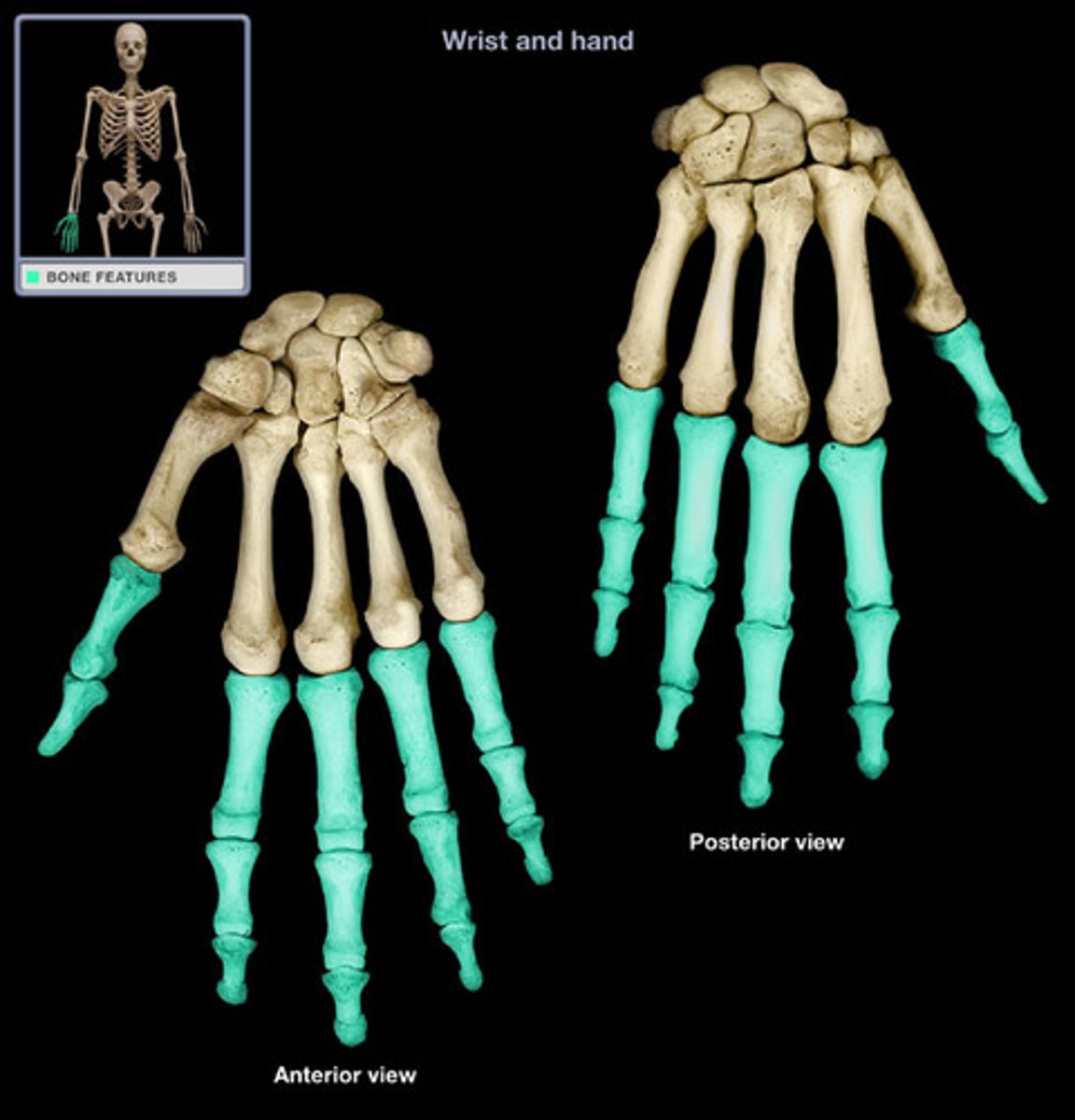
Wrist flexion
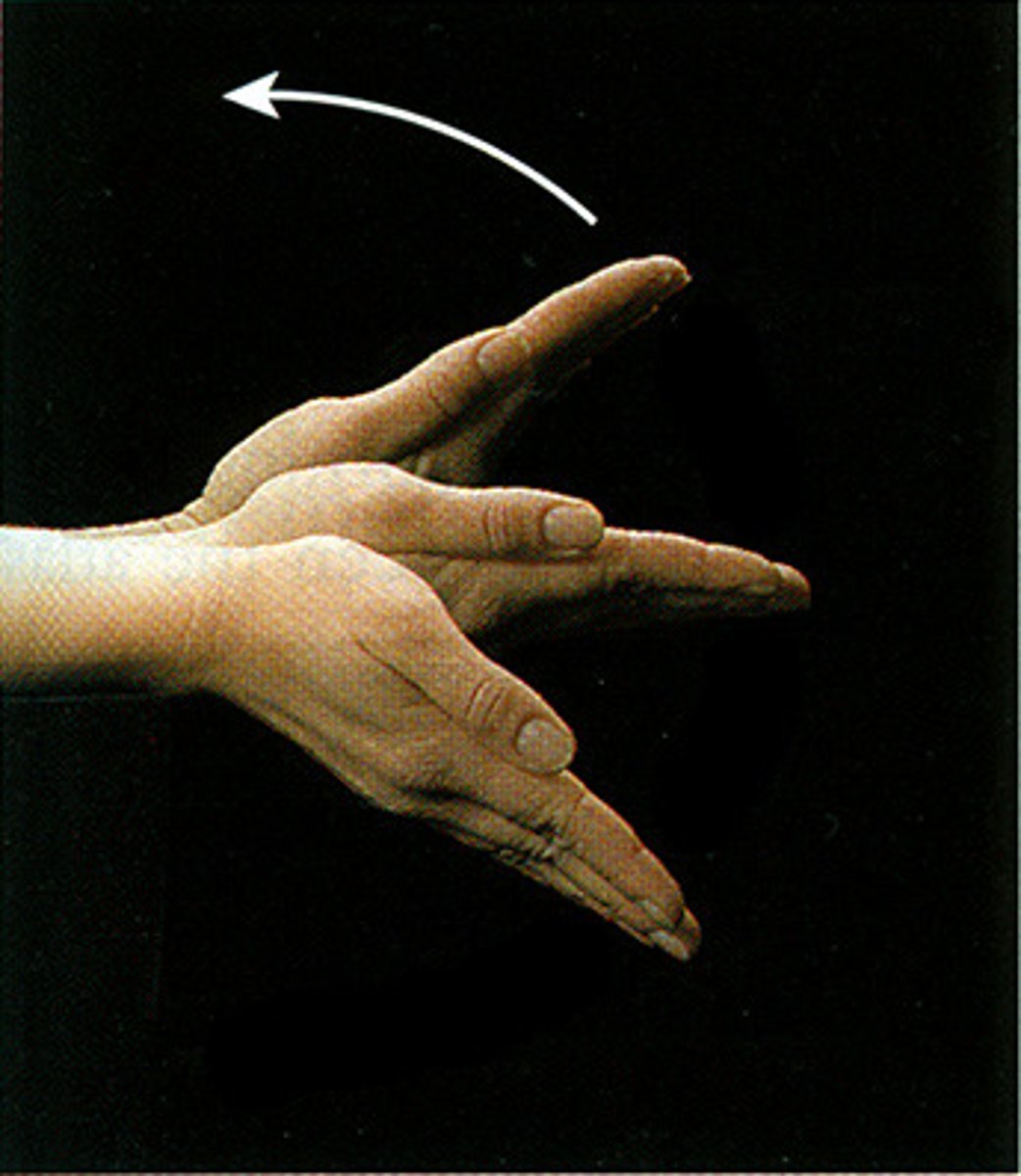
Wrist extension
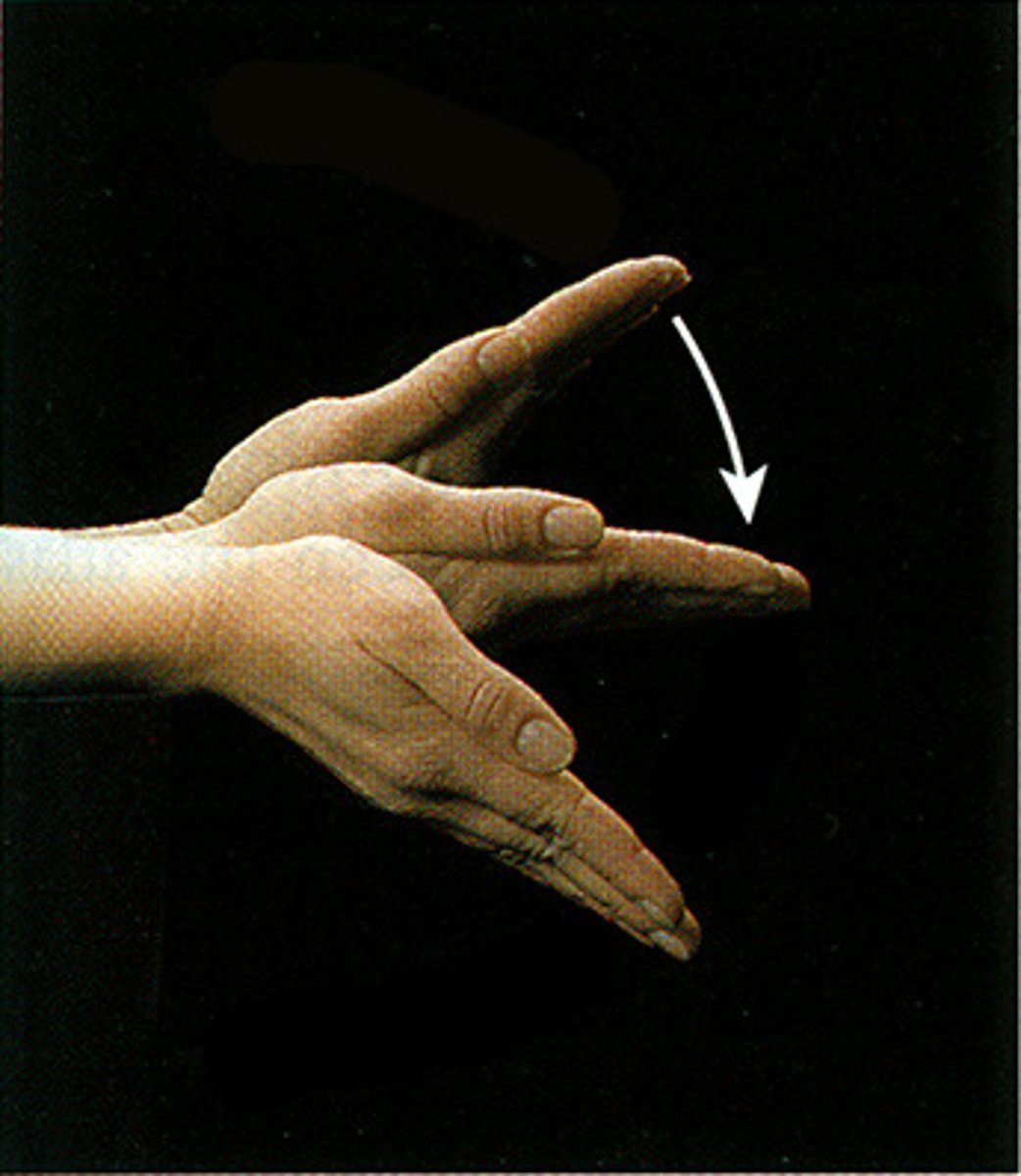
Radial deviation of the wrist
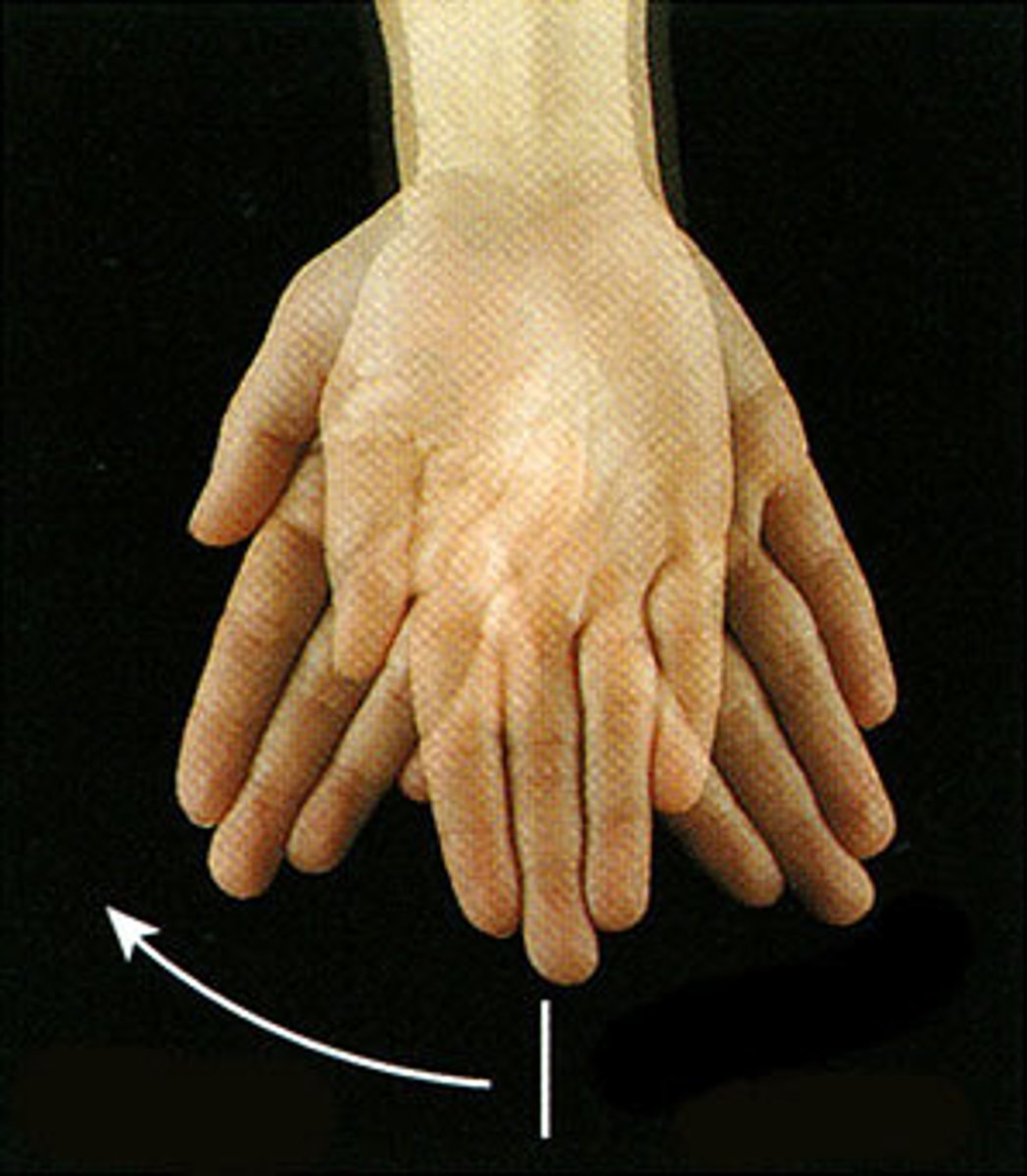
Ulnar deviation
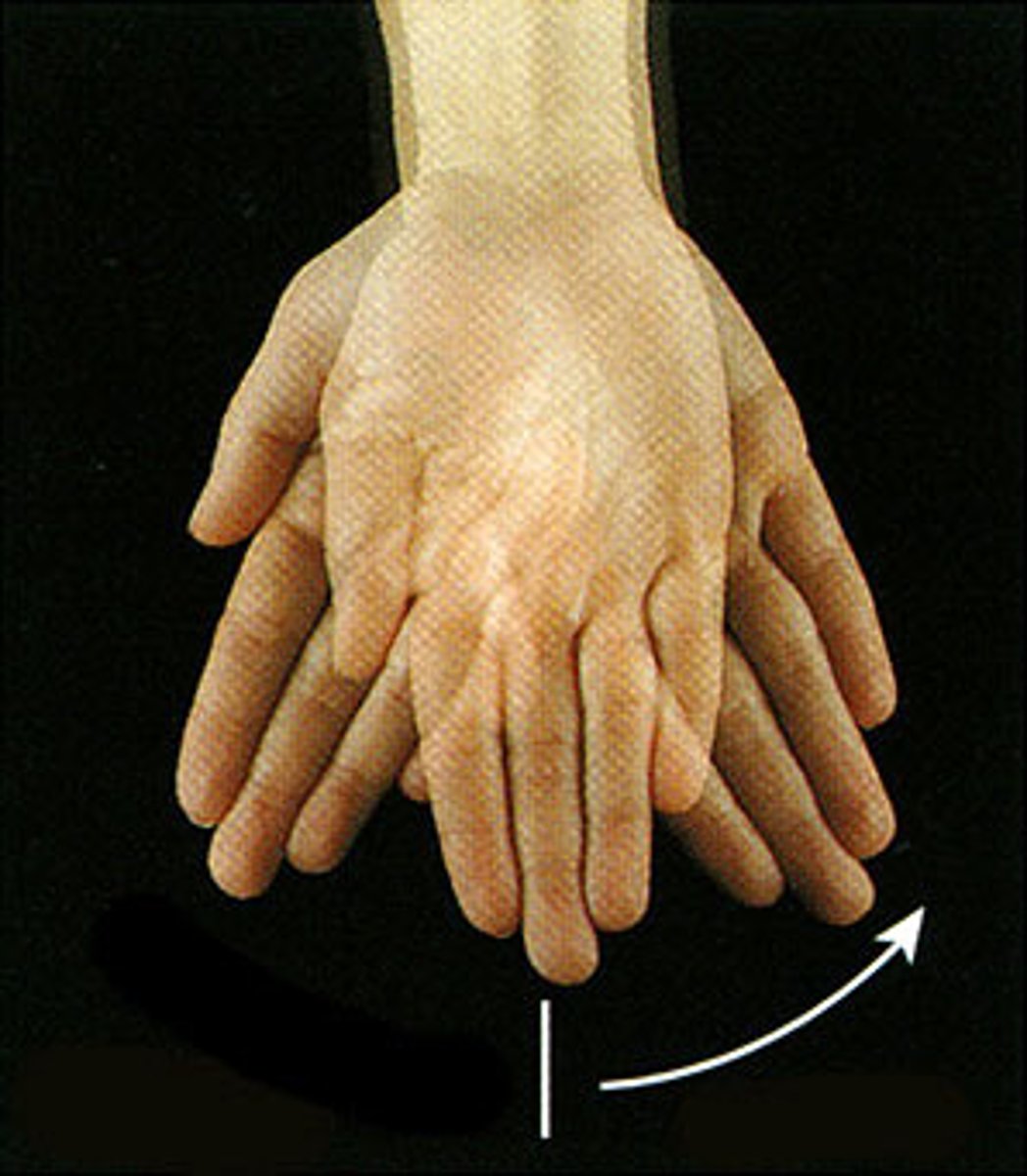
Extensor carpi radialis longus
Extends wrist
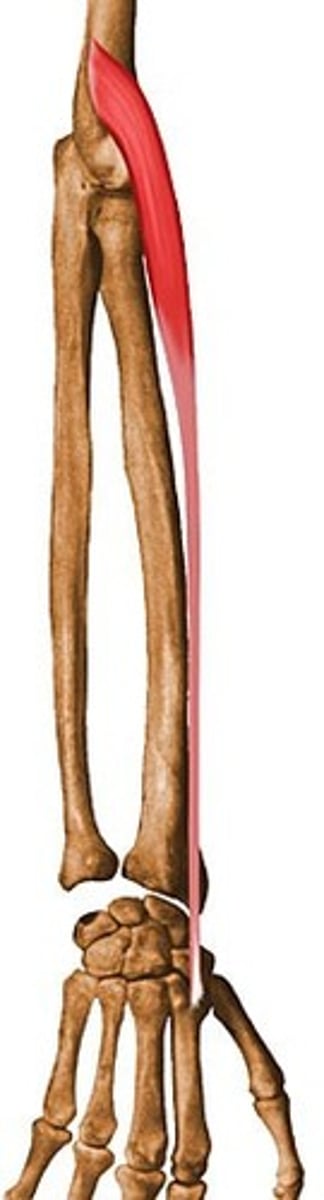
Extensor carpi radialis brevis
Extends wrist
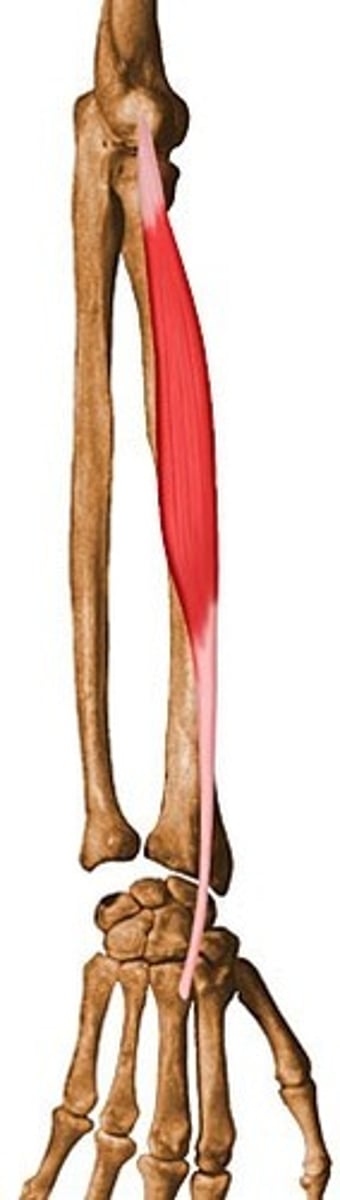
Extensor carpi ulnaris
Extends wrist
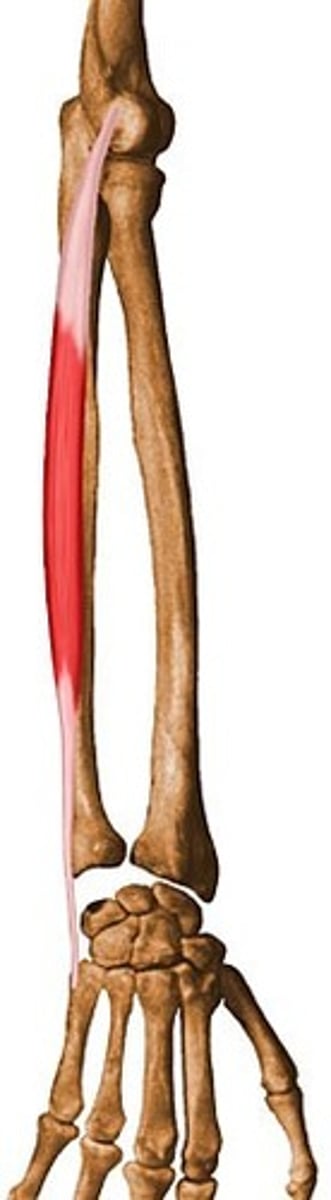
Extensor digitorum
Extends four fingers
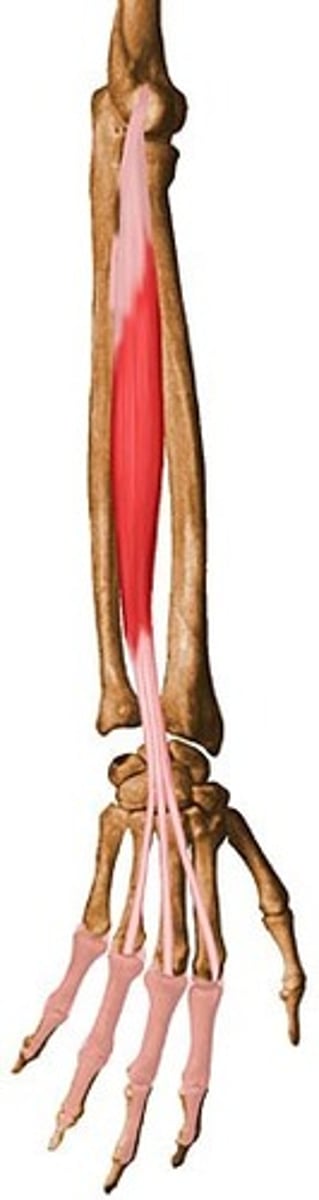
Abductor pollicis longus
Abducts thumb
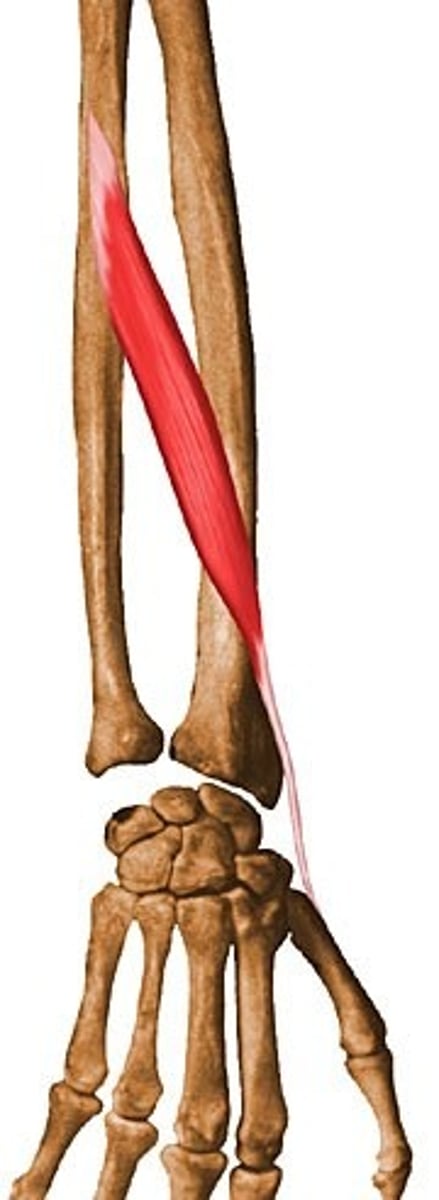
Extensor pollicis brevis
Extends thumb
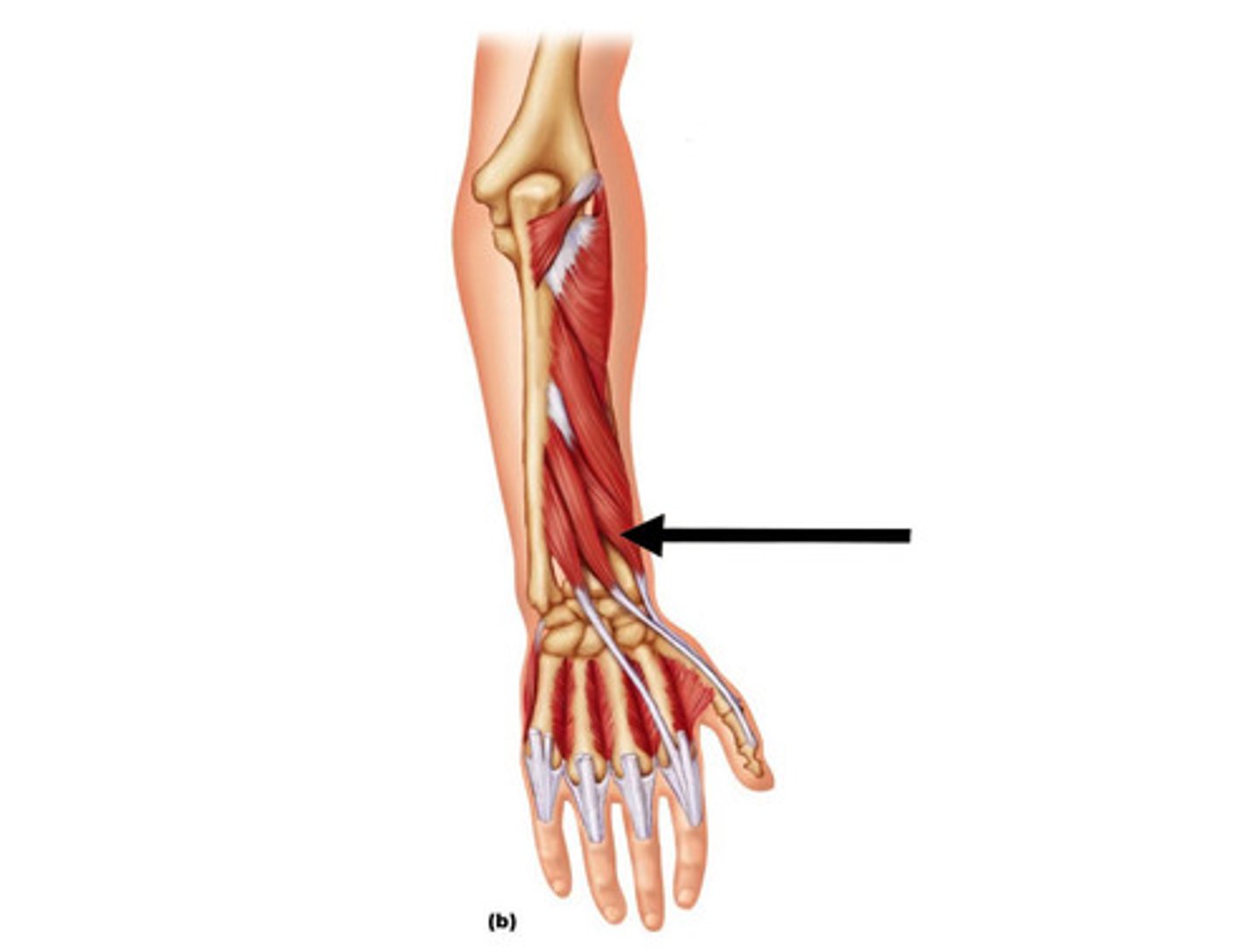
Extensor pollicis longus
Extends thumb
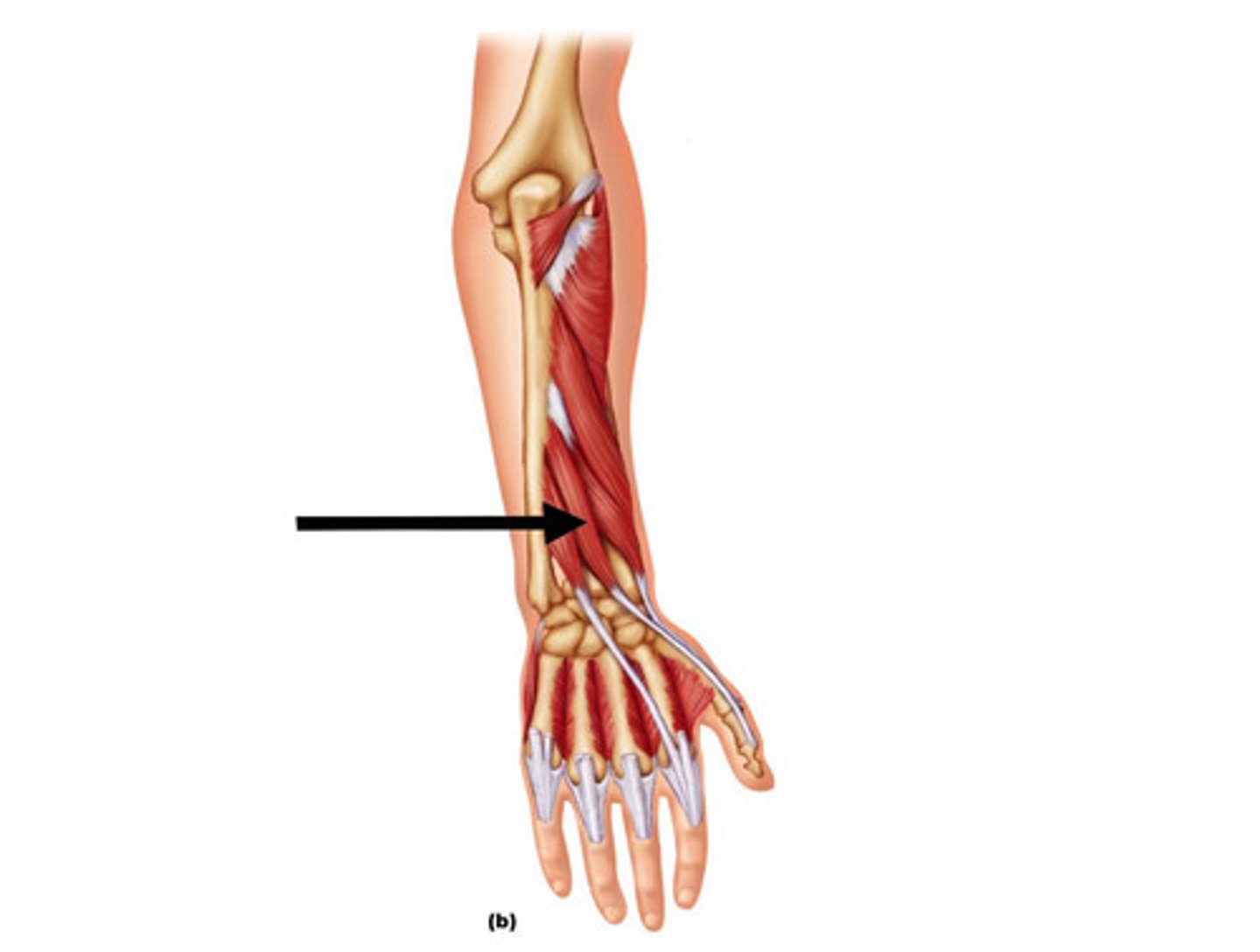
Flexor carpi ulnaris
Flexes wrist
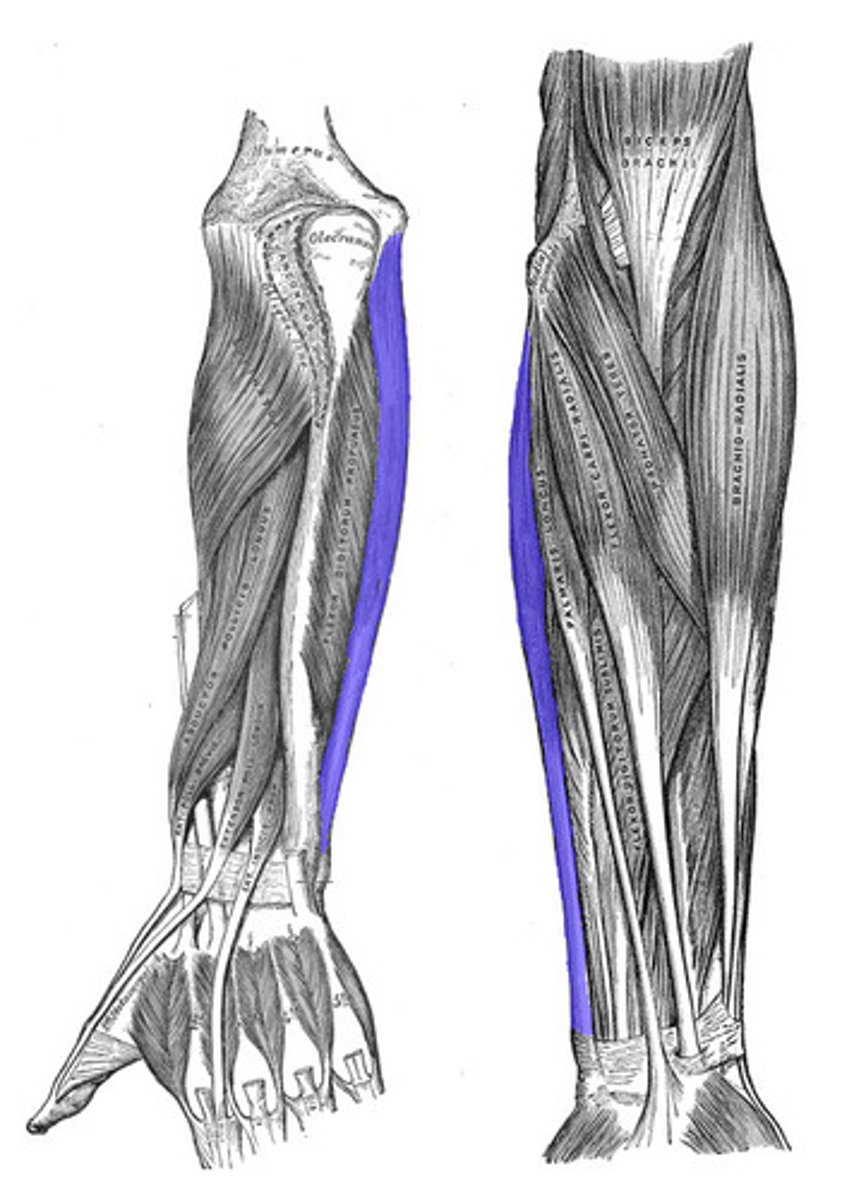
Flexor carpi radialis
Flexes wrist
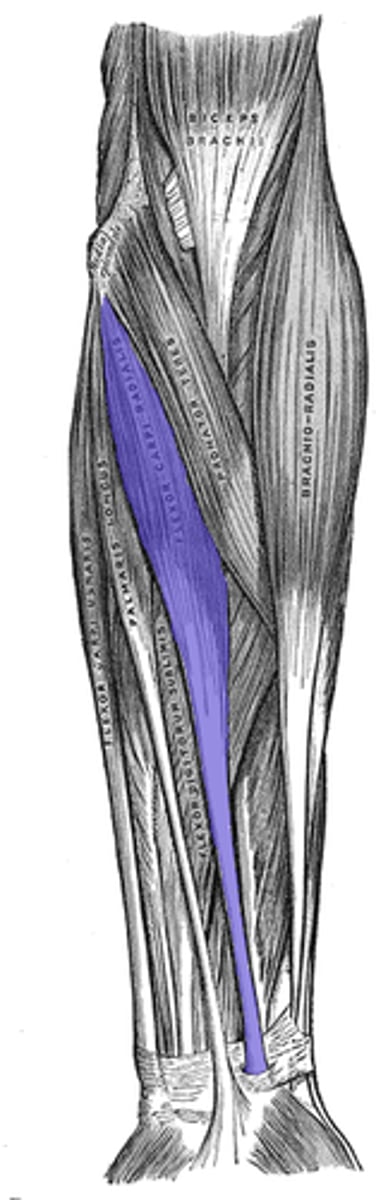
Flexor digitorum superficialis
Flexes fingers
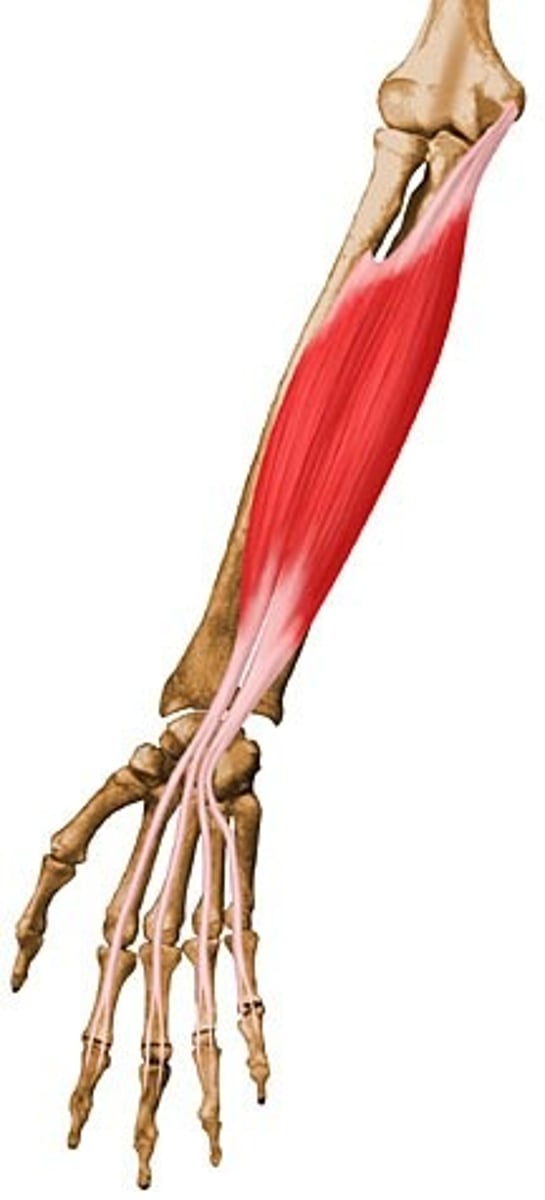
Flexor digitorum profundus
Flexes fingers
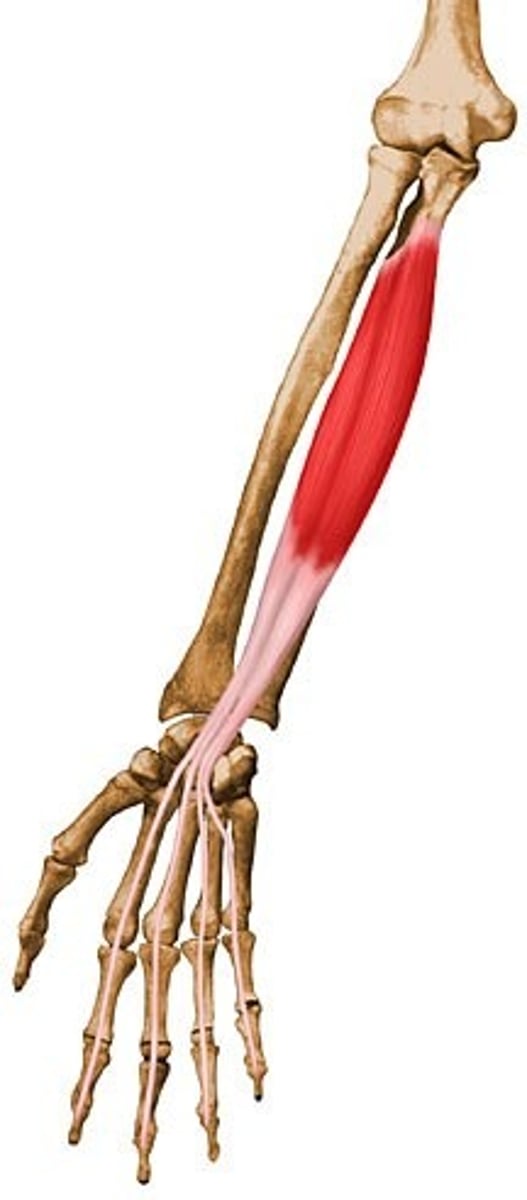
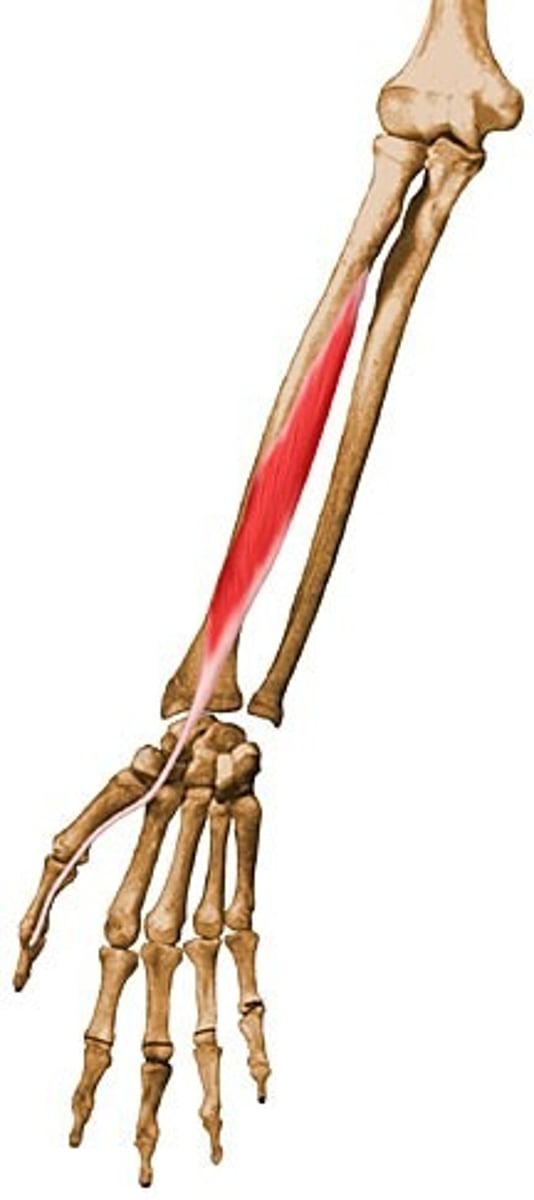
Flexor pollicis longus
Flexes thumb
Muscles that flex the elbow
Biceps brachii, brachialis, brachioradialis
Muscles that extend the elbow
Triceps brachii
Muscles that supinate the forearm
Supinator, biceps brachii
Muscles that pronate the forearm
Pronator teres, pronator quadratus
Muscles that extend the wrist
Extensor carpi ulnaris, extensor carpi radialis longus and brevis
Muscles that extend the fingers
Extensor digitorum
Muscles that extend the thumb
Extensor pollicis longus, extensor pollicis brevis
Muscles that flex the wrist
Flexor carpi ulnaris, flexor carpi radialis
Muscles that flex the fingers
Flexor digitorum superficialis, flexor digitorum profundus
Contents of the carpal tunnel
Median nerve and extrinsic flexor muscles
intrinsic
both originates and inserts in the foot
Foot/ankle functions
Allows stability (lever) and mobility (shock absorption)
Metatarsophalangeal joints
Joints between metatarsals and the phalanges. Ball of the foot
Talocrural joint
Synovial hinge joint between the talus and distal end of tibia and fibula (medial and lateral malleolus)
talocrurual joint function
provides stability due to large area of bone contacts, the shape, and collateral ligaments.
Inversion
Sole of foot facing upwards medially
Eversion
sole of foot facing upwards laterally (outwards)
Deltoid ligaments
Span from navicular bone to the talus.
Support the talocrural joint
Can be damaged by eversion injury. (rolling sole of foot outwards)
What supports the foot in the longitudinal arch superficially?
Plantar fascia/aponeurosis
What supports the foot in the longitudinal arch deeply?
Long and short ligaments, spring ligament, and anterior/posterior/lateral msucle compartments of the leg
How do muscles in the leg support the longitudinal arch of the foot?
Tibularis anterior and tibularis posterior pull upwards to hold up and medially support the arch.
Fibularis longus from lateral side reaches under the lateral side of the foot, extending its tendons to the medial side of the foot (to the medial cuneiform and first metatarsal)
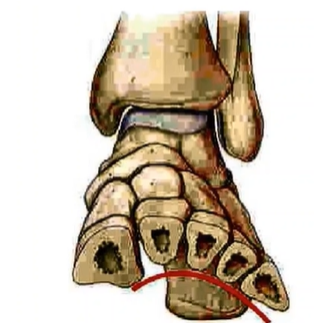
Transverse arch of the foot
Arch is formed due to wedge-shaped metatarsals, which prevent falling downwards when there is weight/forces from above
Where is the tarsal tunnel located?
Between medial malleolus and the calcaneus