Health Final: Meats & Cooking
 Call Kai
 Learn
Learn Practice Test
 Spaced Repetition
 Match
Match Flashcards
 Knowt Play
1/17

There's no tags or description
Looks like no tags are added yet.
Name | Mastery | Learn | Test | Matching | Spaced | Call with Kai |
|---|
No analytics yet
Send a link to your students to track their progress
18 Terms
Muscle Fibers
aka myofibrils
long protein filaments and contract and relax
two proteins: myosin & actin
Bundles of fiber called ________ are held together by_______
fascicles; connective tissues (collagen & elastin)
The more wrapping and netting of c.t there is (like in heavily used muscles), the tougher the meat will feel and chew.
Grain of the Meat
If you cut against the grain, you're cutting those threads short, making it more tender.
lf you cut with the grain, you leave the threads long → tougher to chew.
Identify:
→ visual inspection
→ tactile inspection
______ is the key protein that affects meat tenderness. flexible & stretchy
Collagen
Connective tissue that doesn't break down as easily = remains tough?
elastin
Cooking Collagen
When cooked slowly with moisture, collagen turns into gelatin, making meat tender and juicy.
• Low, slow cooking = melts the rubber band
• Fast cooking = keeps the rubber band intact = chewy!
Marination - Chemical Tenderization
form of chemical tenderization
Soaking meat in a flavored liquid (the marinade) that usually contains:
• Acids (like lemon juice, vinegar, yogurt, wine): can break down muscle fibers
and connective tissues, making the meat softer.
• Enzymes (from pineapple, papaya, kiwi)
• Salt: helps retain moisture by changing the structure of proteins → juicy meat.
• Oil and aromatics: oil helps carry fat-soluble flavors into the surface.
⚠ Important notes:
• Marination works mostly on the surface; it doesn’t go deep.
• Too much acid or time = mushy or "cooked" meat (like ceviche).
• Best for: thinner cuts (like flank, chicken breasts, or kebabs).
Mechanical Tenderization
Physically breaking down the structure of meat using tools or techniques like:
pounding
scoring
needling
mincing
It disrupts muscle fibers and connective tissue so they don’t contract as tightly.
• Makes the texture softer and easier to chew.
• Also allows marinades to penetrate more deeply!
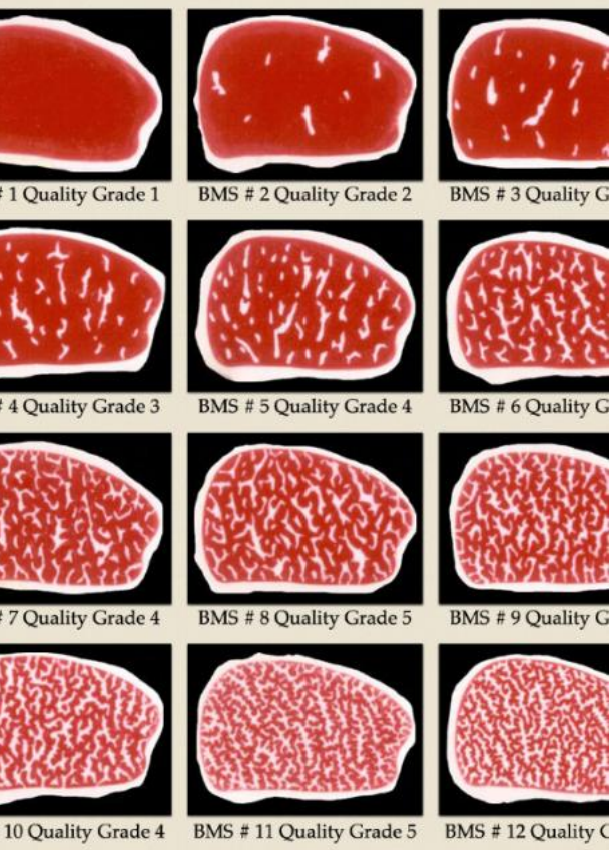
Marbling
Thin streaks of intramuscular fat running through red muscle tissue.
Fat melts during cooking, keeping meat juicy and adding rich flavor.
• Helps create a tender mouthfeel.
• More marbling = more luxurious eating experience.
🎯 Found in:
• High-quality beef cuts like ribeye, wagyu, striploin
DO NOT want this in white meat
Moist heat (braising, stewing)
: Ideal for tough cuts (e.g., chuck, brisket) to melt collagen.
Dry heat (grilling, roasting)
Better for tender cuts (e.g., tenderloin), which don’t need collagen breakdown.
Maillard Reaction
A chemical reaction between amino acids and reducing sugars
• Requires heat → usually above 140°C
• Produces brown pigments (melanoidins) and flavor compounds
• Named after French chemist Louis-Camille Maillard (1912)
Responsible for:
• The crust of baked bread
• The taste of seared meat
• The smell of roasted coffee
👃 Sensory Appeal: Makes food tastier and more appetizing
Steps of Maillard Reaction
Sugar + amino acid + >140°C → Schiff base (reversible)
Rearrangement to Amadori compound
Further reactions → melanoidins (brown pigments) and aroma molecules
Health Implications of Cooking
Can create undesirable compounds (e.g., acrylamide, heterocyclic amines)
May affect nutritional quality
Reduce exposure by: marinating, cooking with lower heat, and avoiding charring
Nutritional Value
→ Meats are considered a complete protein source because they contain all essential acids
→ Red meat is a good source of Heme iron, zinc, B12, and creatine. Women specifically need red meat occasionally to keep up with iron levels
→ Meats contain saturated fats and the amount of fat varies by cut. White meats are leaner meats that should contain little → no fat
Preservations Methods
→ Freezes well
→ salting/dehydration is used for cured meats (jerky, proscuitto)
high in sodium and calorie dense
→ smoking enhances flavor of the meat
adds antimicrobial compounds
may produce unwanted compounds
→ vacuum sealed slows aerobic bacterial growth - still requires refrigeration
Meats with little connective tissue =
cook for short time with higher temp so that the outside is browned (maillard rxn) but the inside doe not become tough
ex: grilled or roast meats
Meats with lots of connective tissue =
cook for a long time on low temp so that the c.t denatures and bundles of coagulated muscle proteins fall apart
ex: stews