Chapter 5: Volcanic eruptions
 Call Kai
 Learn
Learn Practice Test
 Spaced Repetition
 Match
Match Flashcards
 Knowt Play
1/44

There's no tags or description
Looks like no tags are added yet.
Name | Mastery | Learn | Test | Matching | Spaced | Call with Kai |
|---|
No analytics yet
Send a link to your students to track their progress
45 Terms
In 79 C.E., the citizens of Pompeii and Herculaneum in the Roman Empire were buried by pyroclastic debris derived from an eruption of ________.
Mt. Vesuvius
Viscous lava that accumulates above a vent in a bulbous mass creates a ___________
Lava dome
Ash, cinders, and blocks are all types of ________.
Tephra
A fast-moving wet slurry consisting of a mixture of water and volcaniclastic debris is termed a ________.
Lahar
Volcanic bombs are ________.
large pyroclastic fragments that acquire streamlined, polished surfaces in flight
The textural term for a basaltic lava flow that has a smooth, ropy appearance is ________.
Pahoehoe
Basaltic lavas that have a rough surfaces (that would hurt your bare feet to walk on) are called ________.
a’'a'
Basaltic lavas ________.
have low viscosity and low silica content
Lithified ash (or ash mixed with pyroclastic fragments) forms a volcaniclastic rock called a __________.
Tuff
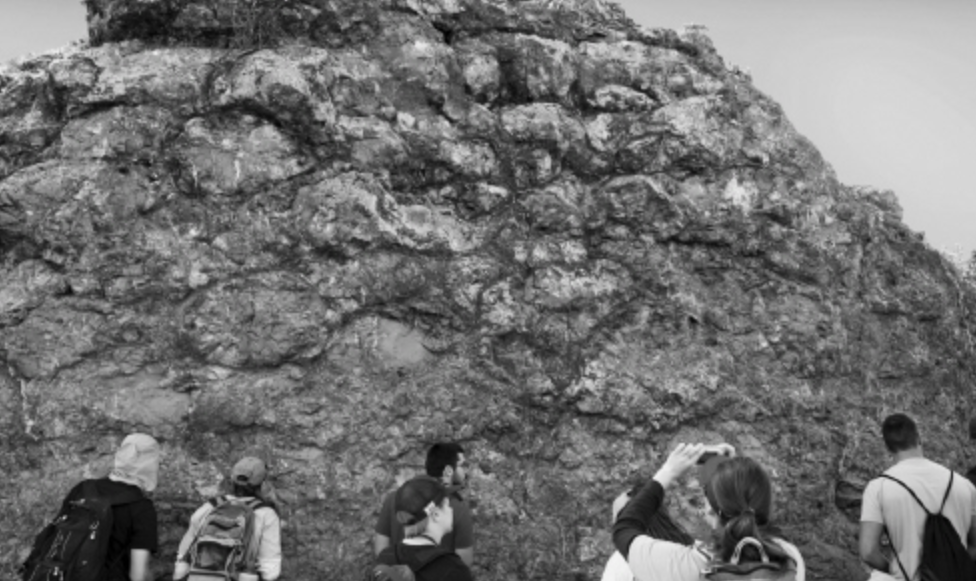
The pillow basalts in the photo most likely formed ____________.
underwater at a mid-ocean ridge
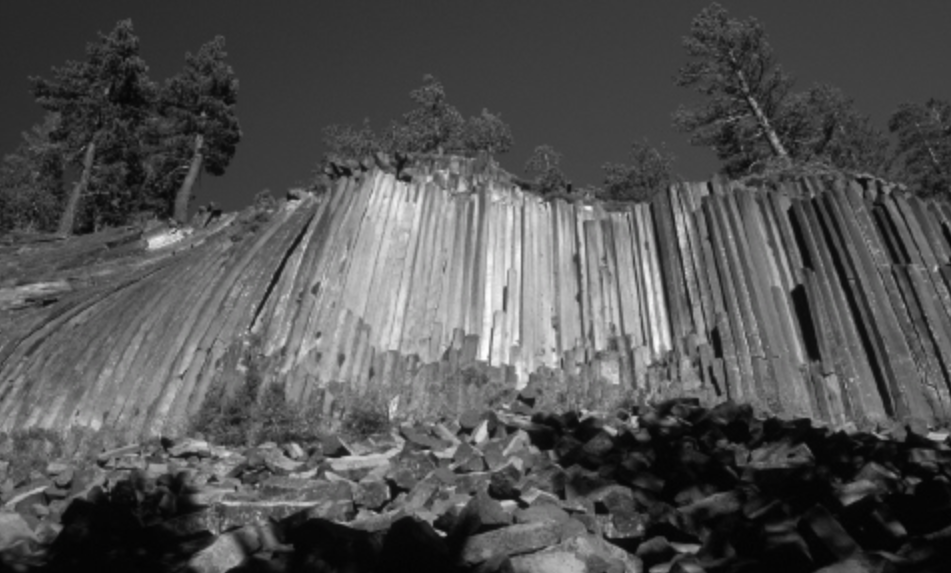
The vertical features preserved in the basalt flow in the image formed because the lava ________.
shrank as it cooled, forming tall polygonal-shaped fractures
Compared to felsic lavas, mafic lavas have a ________.
Lower viscosity
Of the three primary forms of subaerial volcanoes, ________ have the most gently sloping sides, due to the low viscosity of the basaltic lavas that form them.
Shield volcanoes
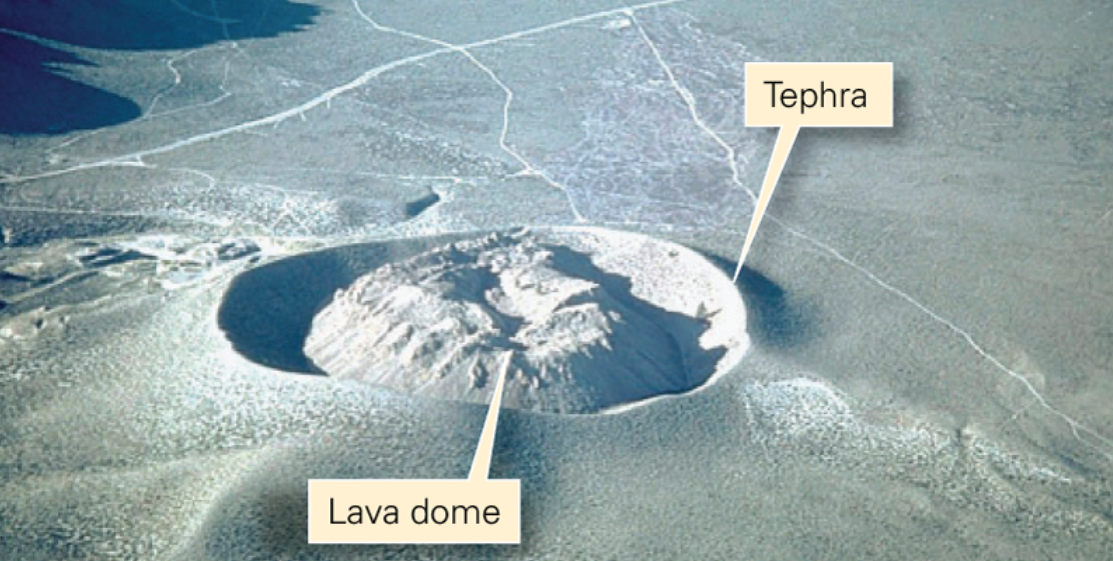
The image shows a lava dome in Panum Crater, California. What is the most likely composition of the rocks that make up this lava dome?
Felsic
Of the three primary forms of subaerial volcanoes, ________ consist of a cone-shaped pile of tephra often formed in a single eruption.
Cinder cones
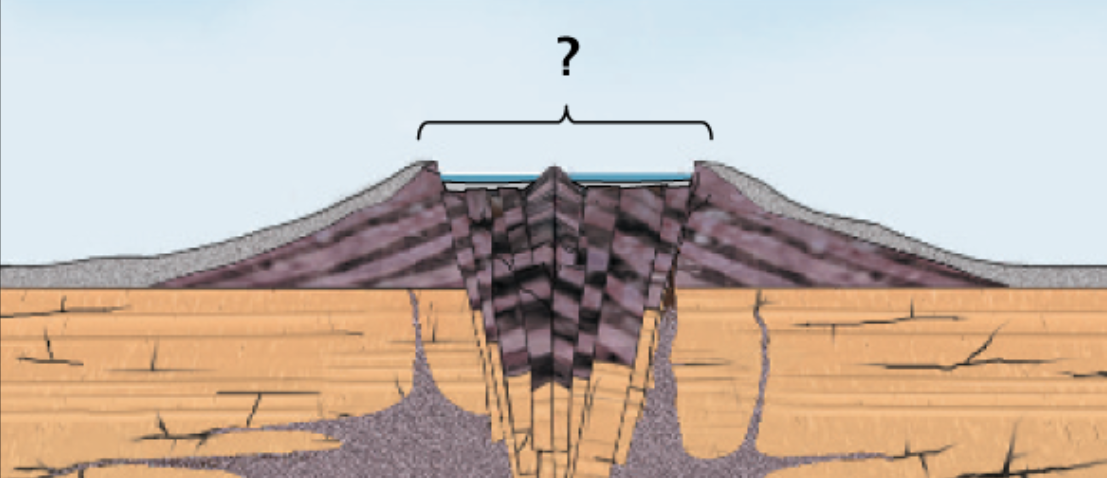
Explosive or voluminous eruptions may cause a volcano to subside or collapse into the now-empty magma chamber, producing a broad depression termed a ________.
Caldera
Of the three primary forms of subaerial volcanoes, ________ are large cone-shaped mountains that consist of alternating layers of tephra and solidified lava.
Stratovolcanoes
A mixture of air, hot ash, and pumice lapilli that rushes down the side of a volcano in a scalding avalanche is termed a(n) ________.
Pyroclastic flow
Common volcanic gases include the following:
Water vapor, carbon dioxide, and sulfur dioxide
Whether an eruption will produce lava flows or pyroclastic debris depends on the proportion of volatiles within the magma and the _______
Viscosity of magma
Nonviolent eruptions characterized by extensive flows of basaltic lava are termed ________.
Effusive
Which of the following magma compositions are most commonly erupted in continental arc settings?
Andesite and rhyolite
What magma properties would most likely lead to the formation of a shield volcano?
Low viscosity and mafic composition
Volcanism is least likely to occur in which of the following geologic settings?
Passive margin
The Columbia River Plateau is an example of a ________.
Flood basalt
The Hawaiian island chain is an example of a(n) ________.
Hot spot island chain
Volcanism in Iceland is occurring as a result of ________.
Eruptions from a hot spot that sits astride a mid-ocean ridge
Which volcanic hazard poses the greatest threat to humans?
Pyroclastic flows
What was unusual about the 1986 volcano-related disaster near Lake Nyos in Cameroon?
Volcanically derived carbon dioxide gas bubbled from the lake and suffocated people and animals nearby.
The average time between eruptions is called a(n) ________
Recurrence interval
A map that shows homes, businesses, roads and other infrastructure that lie in the path of potential volcanic hazards is called a ________________.
Volcanic hazards assessment map
Increases in heat flow, gas emissions and nearby earthquakes are all signs that a volcano _______.
May soon erupt
How do volcanic eruptions affect global average temperatures on the Earth?
Ash and aerosols block incoming solar radiation.
Olympus Mons, the largest known volcano in our Solar System, is an example of a ________.
Shield volcano
The Moon’s lunar maria are believed to be ancient __________.
Flood basalts
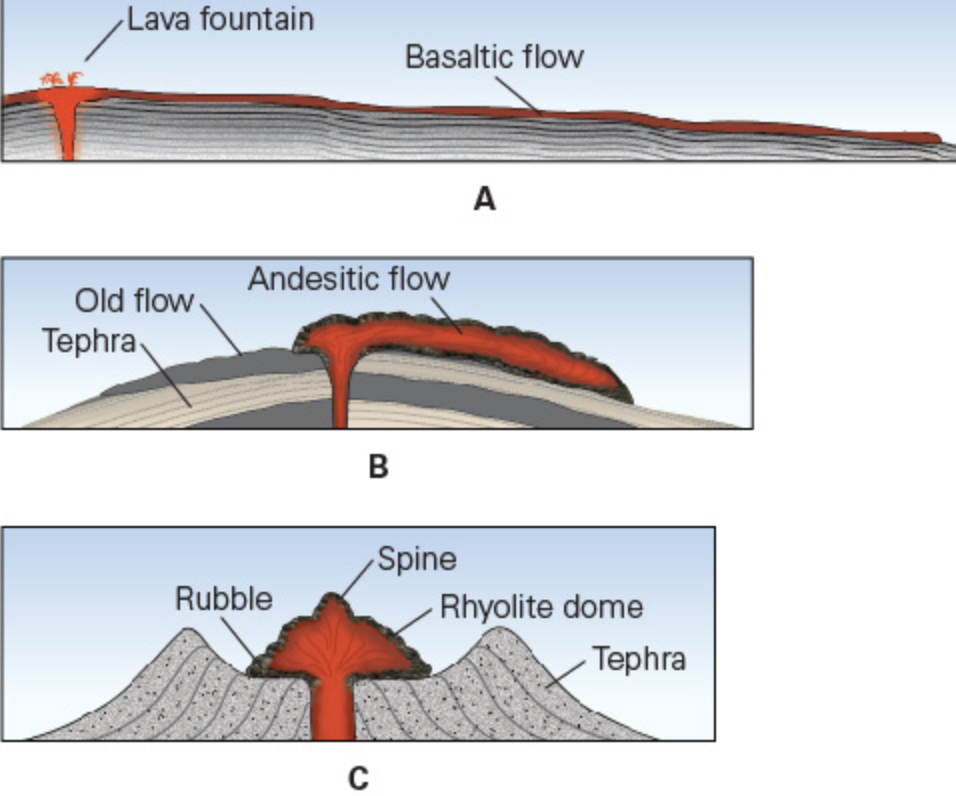
The composition of a magma has a strong influence on the viscosity of that magma. Which of the following images shows the least viscous lava flow?
A
Viscosity is a material’s resistance to flow. Felsic lavas are more viscous than mafic lavas. The lava flow in letter A is thin and has a very long runout distance, suggesting it has a lower viscosity than the thicker lavas of figures B and C.
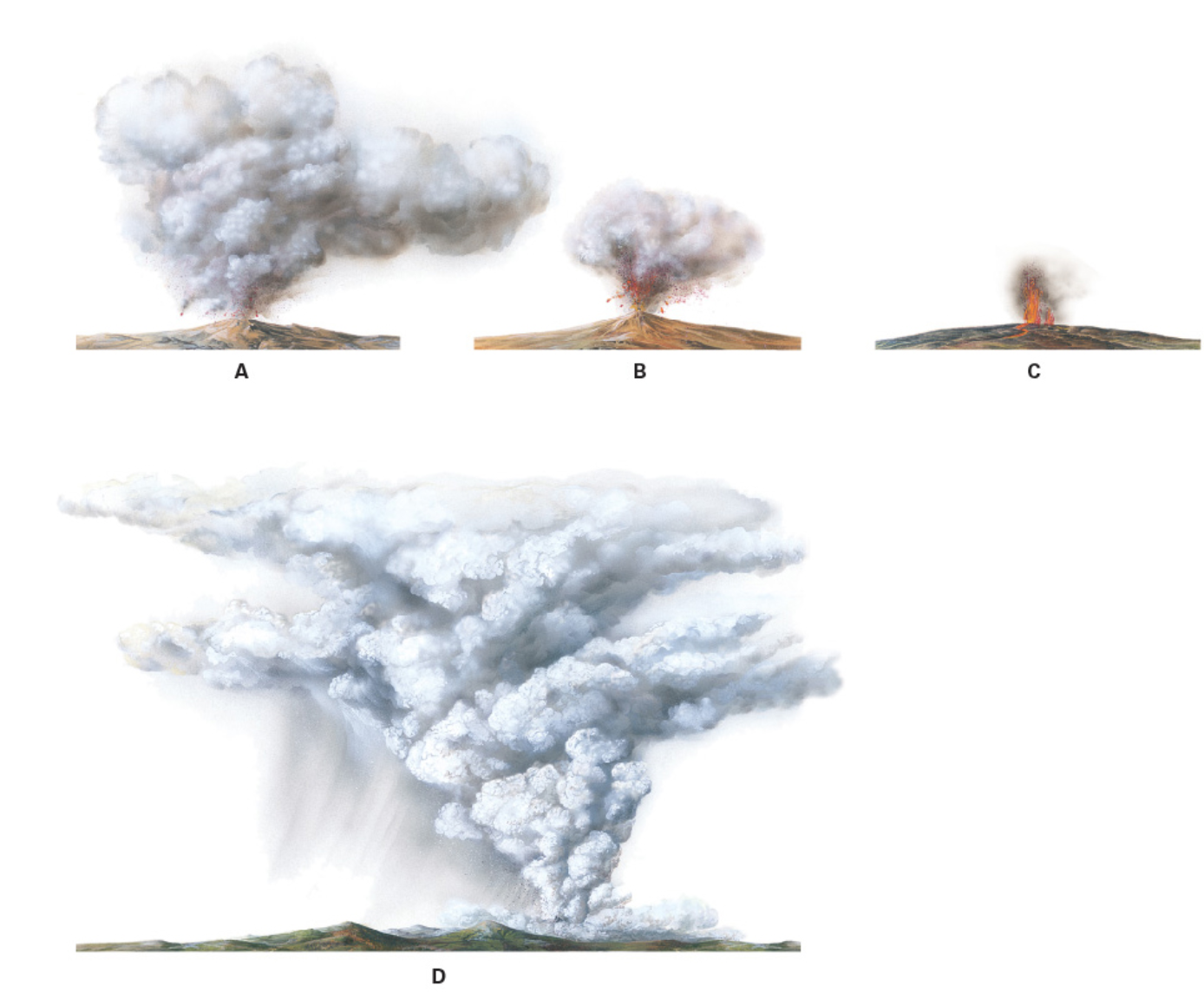
Explosive eruptions can vary in size from small fire fountains to enormous convective clouds that can travel to 10’s km height in the atmosphere. Geologists use the terms plinian, vulcanian, strombolian, and Hawaiian to describe the size and character of explosive eruptions. Match the term with the appropriate image.
A - Vulcanian, B - Strombolian, C - Hawaiian, D - Plinian
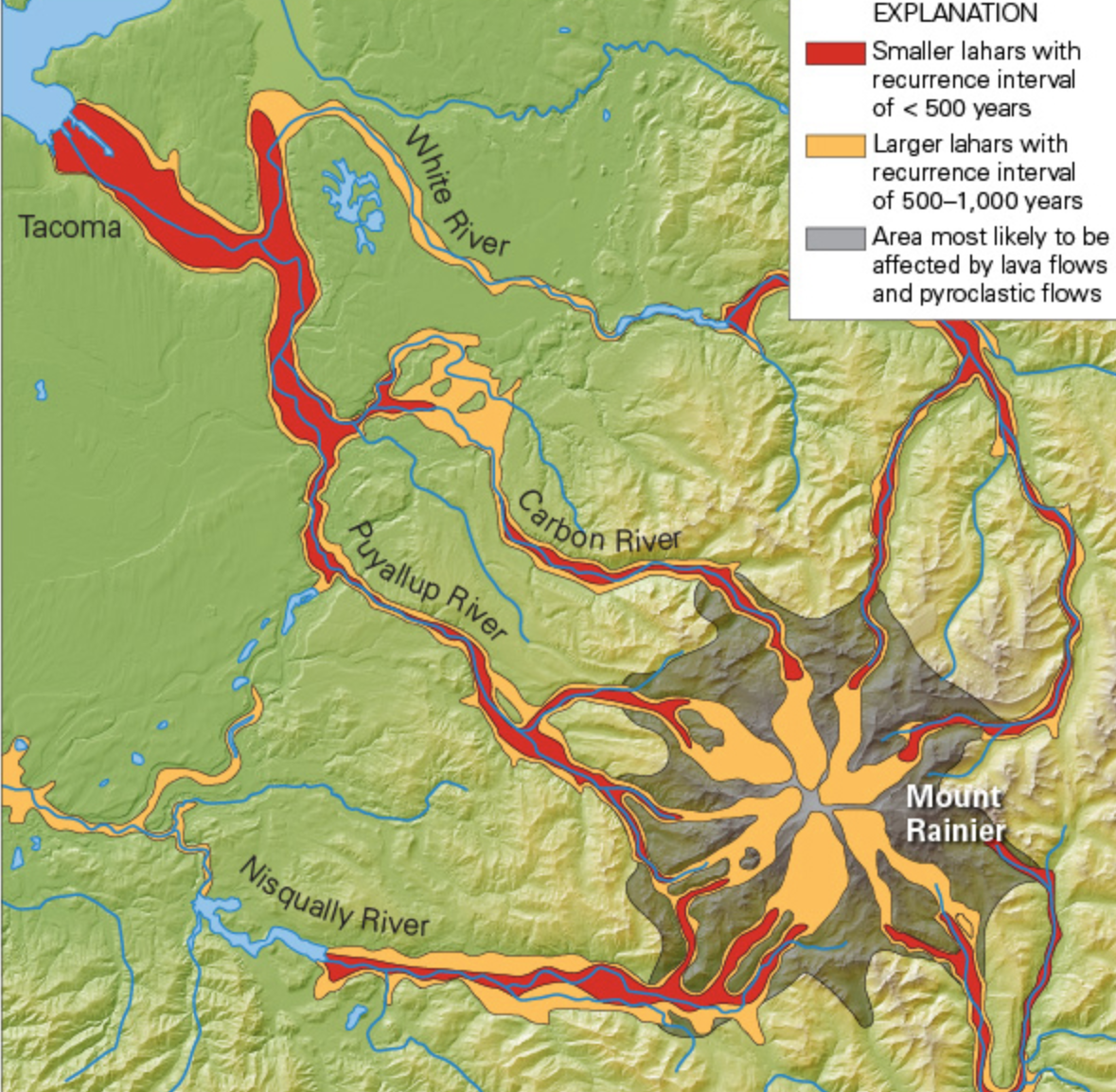
The figure below shows a volcanic hazard map for Mount Rainier in Washington State. Based on this map, which volcanic hazard(s) should Tacoma be prepared for if Mount Rainier erupts?
Lahars
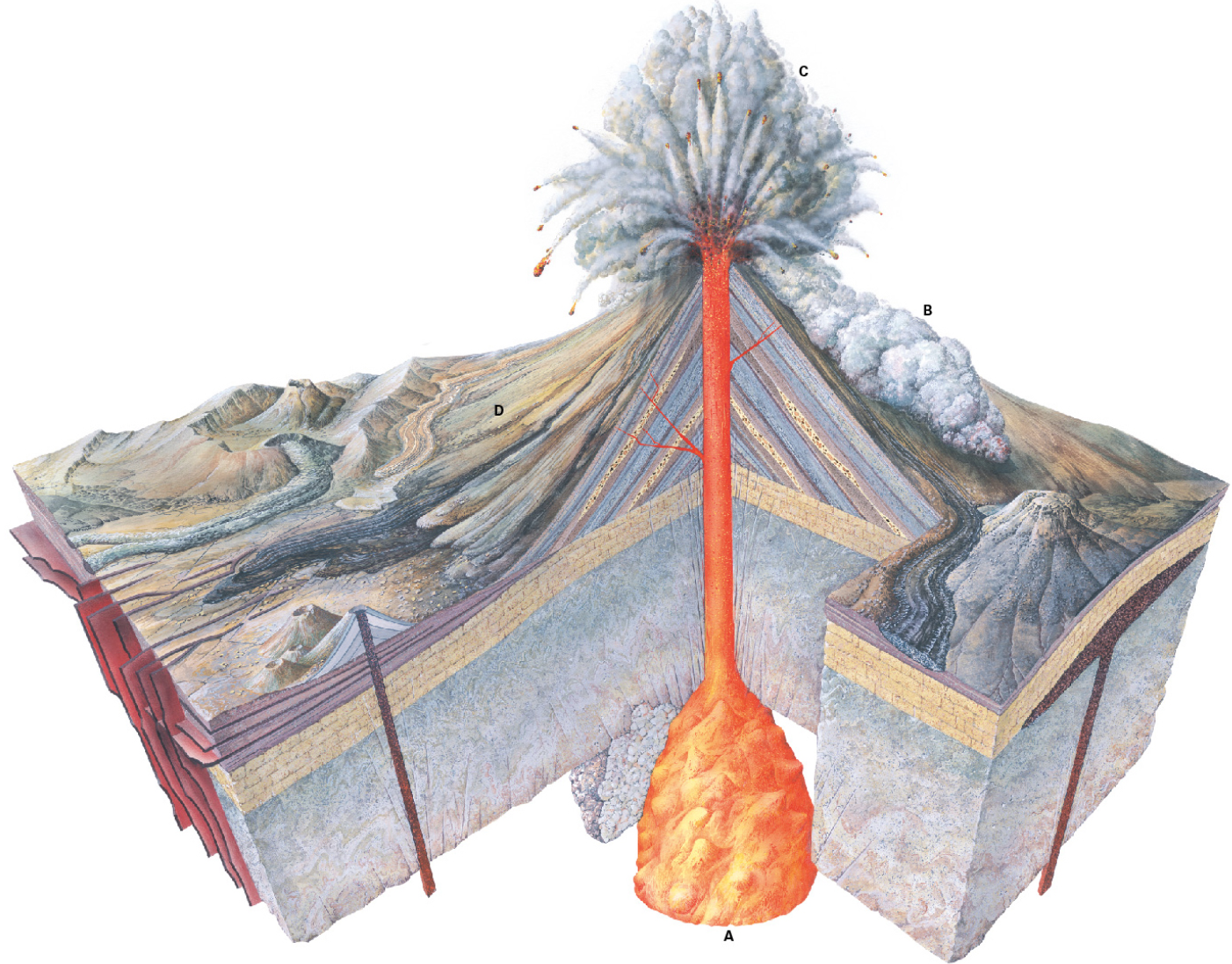
The following figure shows a cartoon cross-section of an erupting volcano. Which letter on the figure properly identifies a pyroclastic flow?
B
Pyroclastic flows are dense clouds of ash, rocks, and hot gases that thunder down the sides of volcanoes during large explosive eruptions. They can be triggered by the collapse of a convective cloud or the collapse of a summit lava dome.
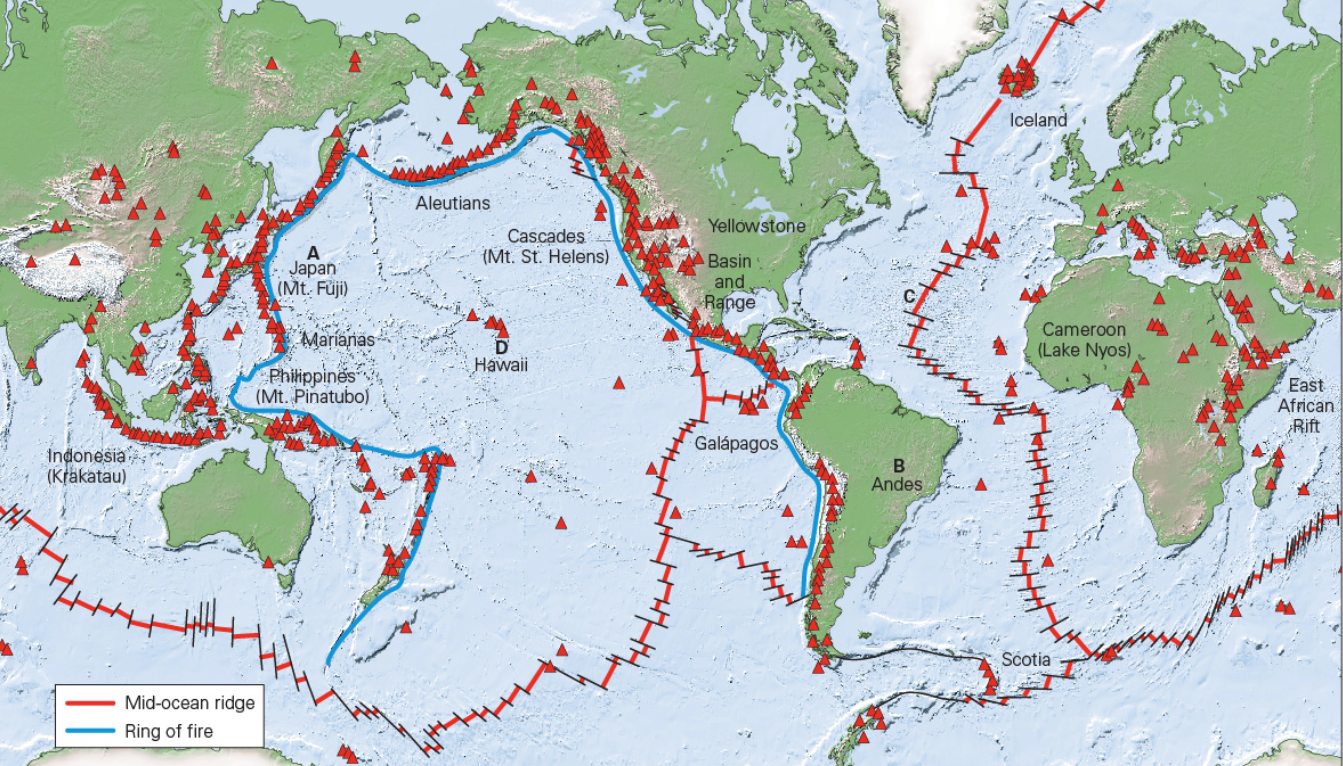
The image below shows the distribution of volcanoes around the world. At which location marked on this map would you expect to find hotspot volcanism?
D
Letter D is located on the Hawaiian Islands. This volcanic chain is located in the middle of the Pacific plate, thousands of miles from the nearest plate boundary.
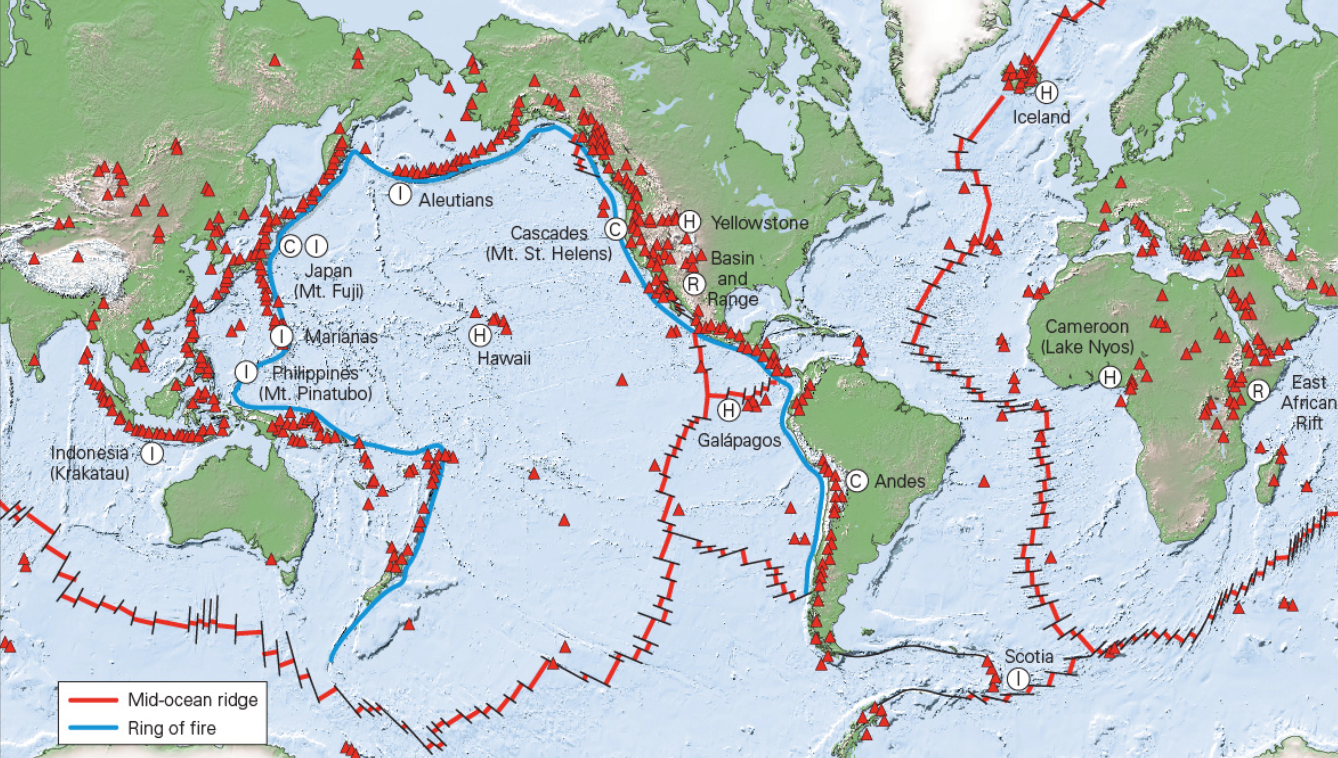
The image shows the distribution of volcanoes around the world. Based on the information on this figure, which statement BEST describes where most volcanoes are found?
Most volcanoes are located at plate boundaries.
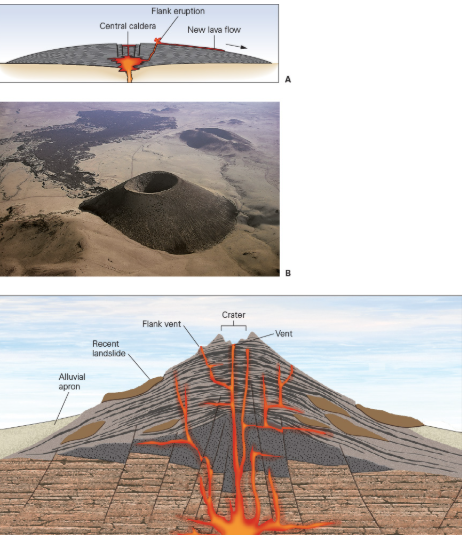
The shape of a volcano is a reflection of the type of eruptions that have occurred throughout the volcano’s lifespan. Which of the images below shows a volcano that most likely oscillated between effusive and explosive eruptions many times during its lifespan?
C
Figure C shows an idealized cross-section of a stratovolcano. Stratovolcanoes comprise deposits of ash produced by explosive eruptions, as well as lava flows that are formed during effusive stages. The interlayering of these deposits suggests that the volcano oscillated between eruptive styles many times throughout its history.
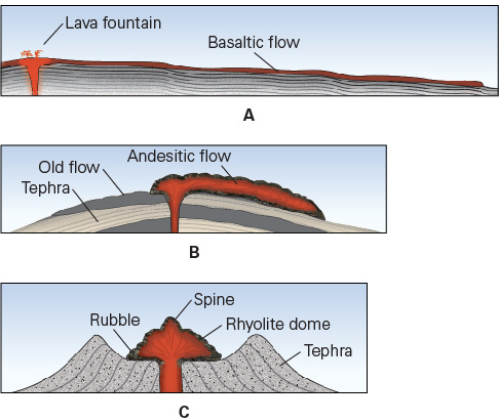
The shape of extruded lava provides an indication of the lava’s viscosity. Of the lava flows below, which one is most likely a part of an explosive volcanic complex?
C
The lava plug shown in image C is extremely thick, the result of high viscosity. High viscosity magmas contain much higher gas concentrations than low viscosity magmas do and are consequently much more explosive.
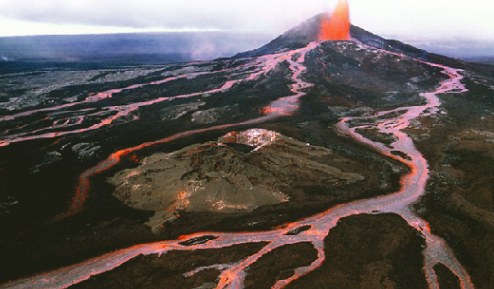
This picture shows a volcanic eruption as it occurred on the Big Island of Hawaii in 1986. Based on the type of eruption you see in this picture, what kind of volcano was developing at that time?
A shield volcano
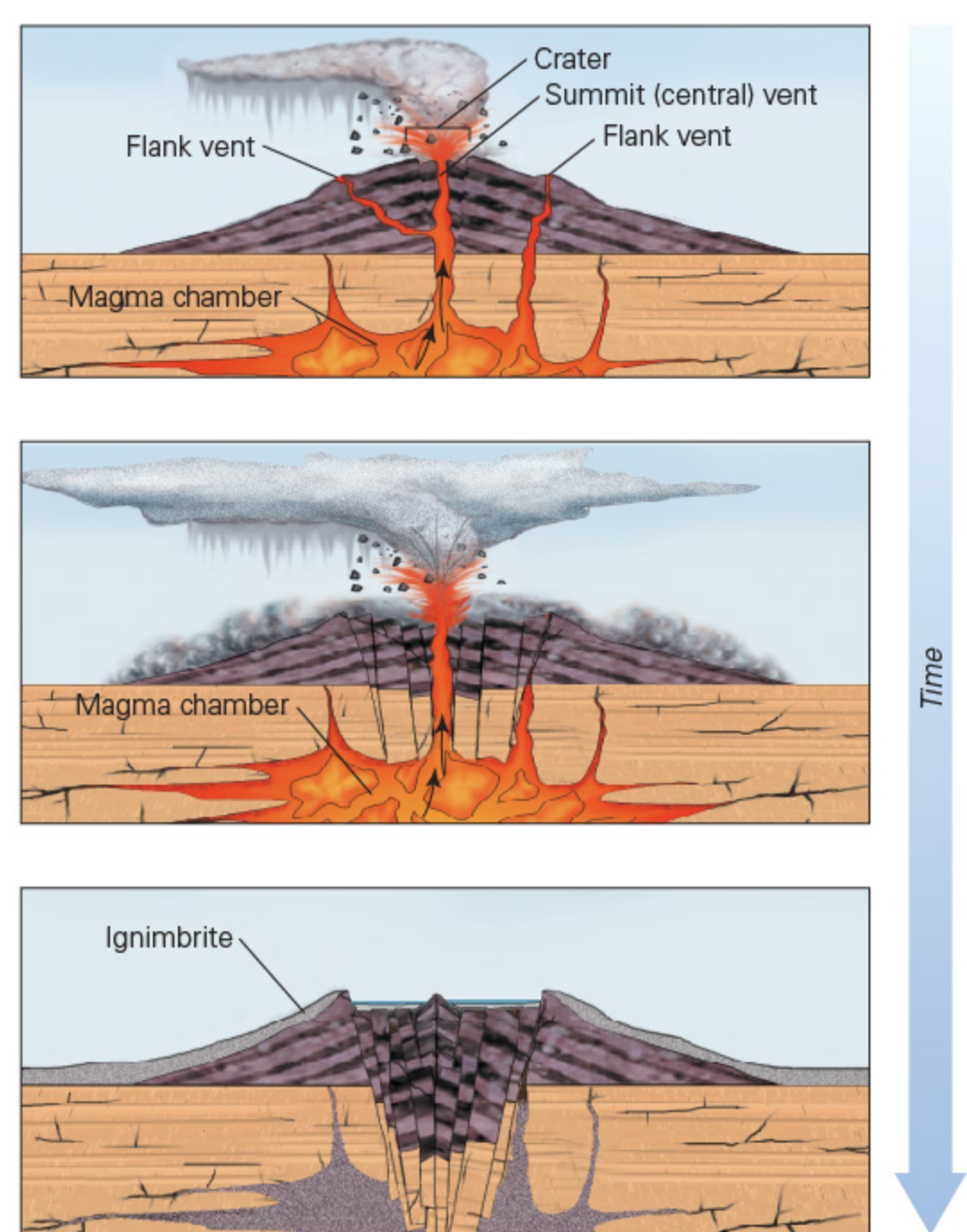
Volcanic eruptions vary in size from very small to extremely large events. This image shows the different stages of a cataclysmic eruption. What type of eruption is shown by this sequence of images?
A caldera eruption