PACIFIC AP Art History
 Call Kai
 Learn
Learn Practice Test
 Spaced Repetition
 Match
Match Flashcards
 Knowt Play
1/10

There's no tags or description
Looks like no tags are added yet.
Name | Mastery | Learn | Test | Matching | Spaced | Call with Kai |
|---|
No analytics yet
Send a link to your students to track their progress
11 Terms
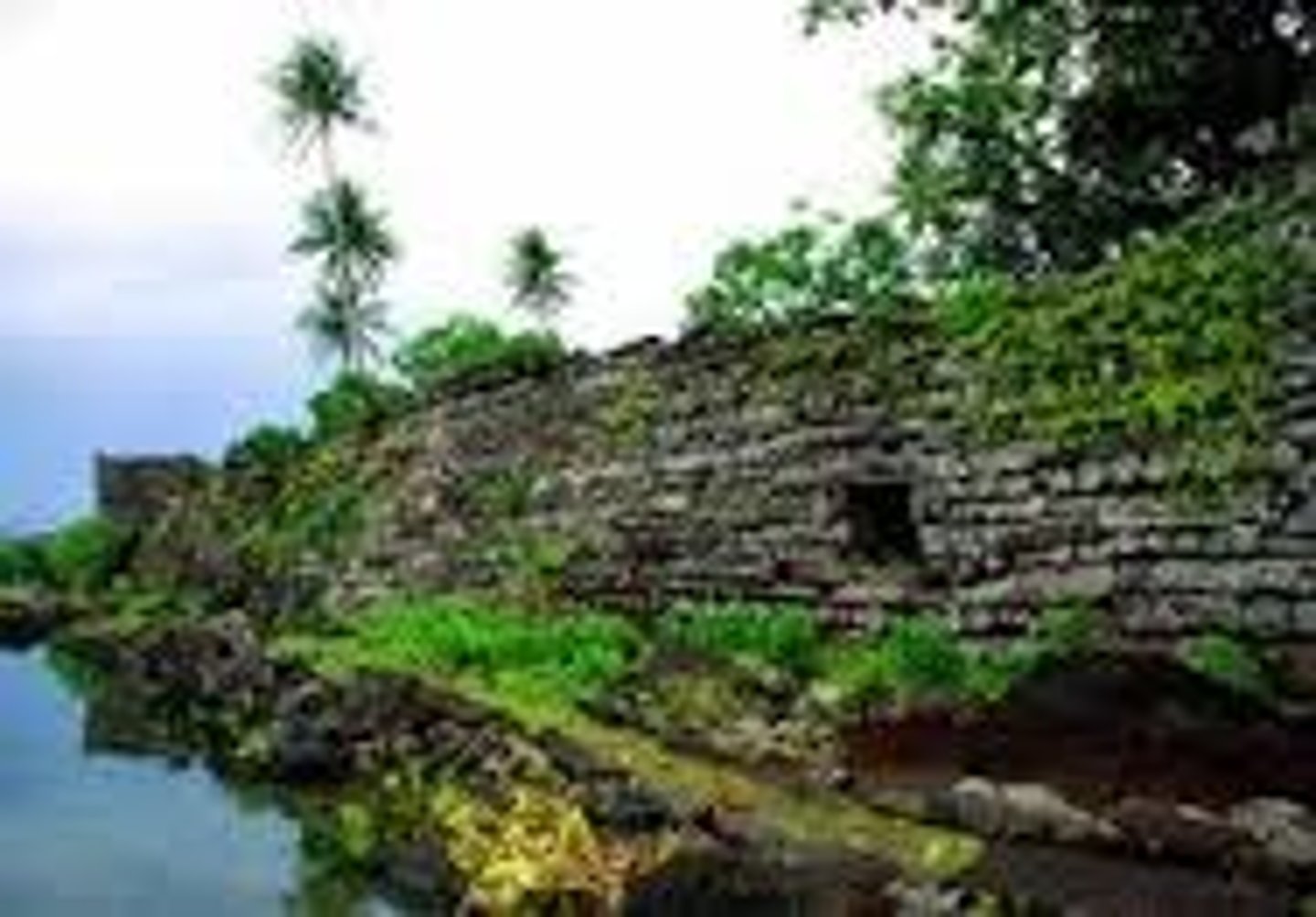
Nan Madol. Pohnpei, Micronesia. Saudeleur Dynasty. c. 700-1600 C.E. Basalt boulders and prismatic columns,
Function/ Form: complexes were built from columnar basalt, a volcanic rock that breaks away naturally to form massive rod like blocks that make an ideal building material; prismatic structures center of religion; mortuary; ritual; ceremonial for the ruling chiefs of the saudeleur dynasty; break walls for canals; protect the city from the ocean; administrative and ceremonial center
Content/ Context: highly stratified social system; home to thousands; earliest known place for such centralized political power in the western pacific; the larger homes are made for the chiefs showing the social hierarchy; there are shallow lagoons; there are walls to protect from the ocean; 92 artificial islands covering covering 170 acres; sea walls are 17 ft high and 35 ft wide; break walls are for the canals; they are reflective of the king; islands are arranged for the winds; had a cubical tomb
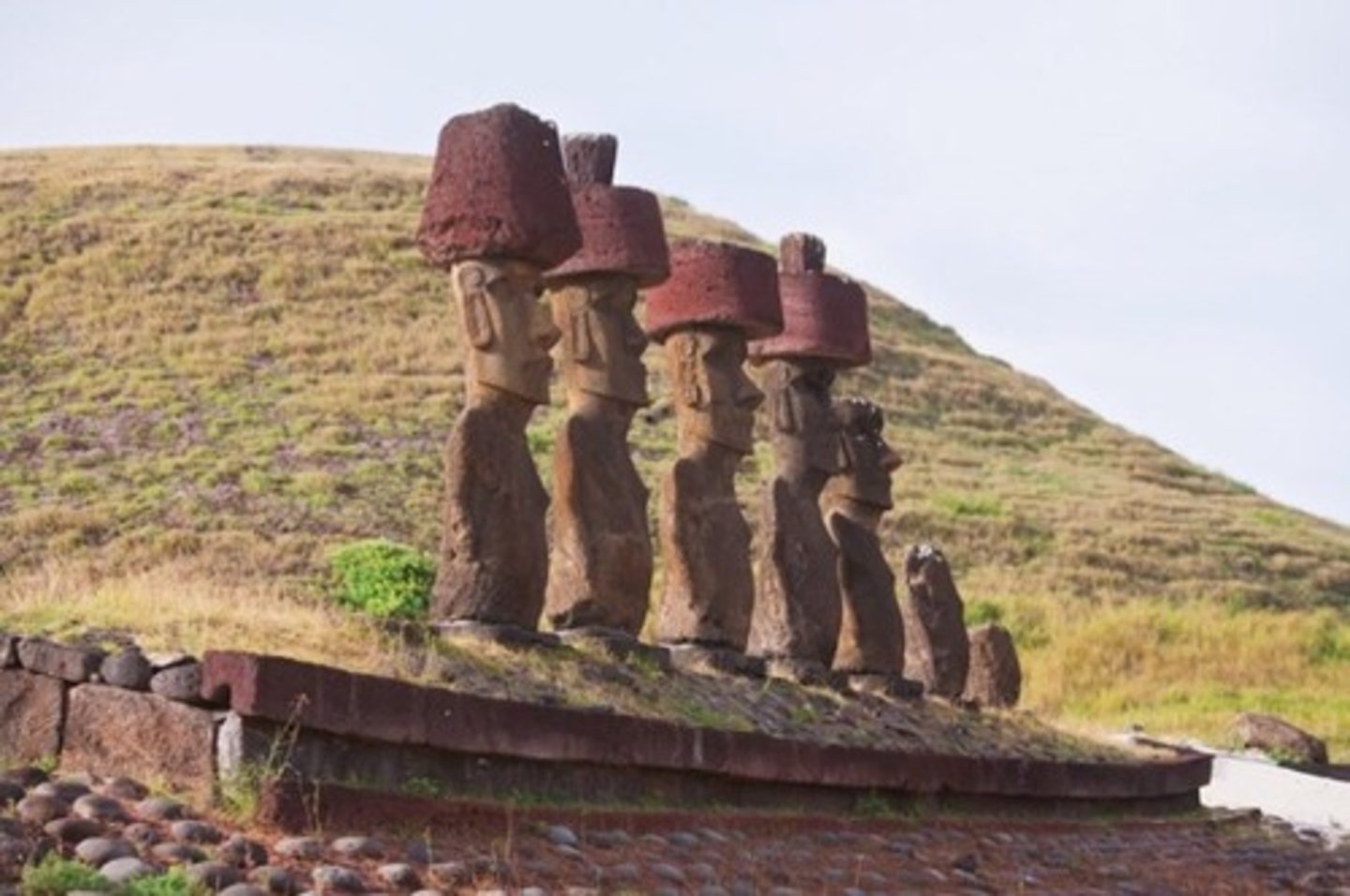
Moai on platform (ahu). Rapa Nui (Easter Island). c. 1100-1600 C.E. Volcanic tuff figures on basalt base.
Form/ Function: carved to commemorate ancestors; the backs are facing the sea so that they could keep watch over the island; represents power; many scholars believe lineage chiefs of their sons erected the moai and sculptures depict ancestral chiefs; Easter Islanders believed they had the ability to accommodate spirits or gods; statues mediate between chiefs and gods along with between the natural and cosmic worlds; burial; sacred
Content/ Context: one of the earliest datable artworks in Oceania and are also the largest; monumental sculptures; 50 ft tall and weighs 4 tons; most of the moai of huge blocky figures with fairly planar facial features: large staring eyes, strong jaw, straight nose with carefully articulated nostrils and elongated ear lobes; a number of moai have pukao (small red scoriac, a local volcanic stone cylinders that serve as a sort of top knot or hat); moarian platform; backs are facing the sea; 900 statues are still there
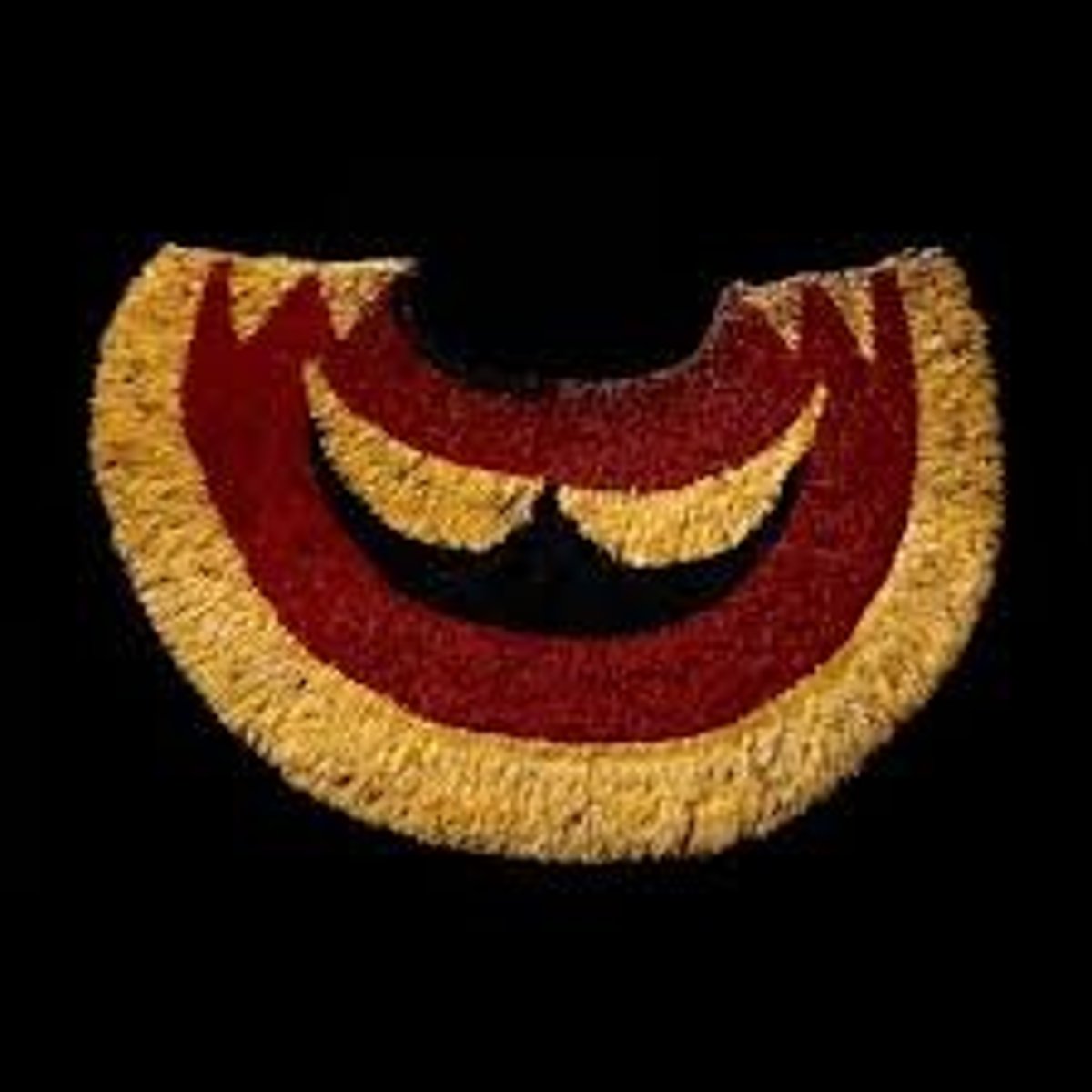
'Ahu 'ula (feather cape). Hawaiian. Late 18th century C.E. Feathers and fiber.
Form/ Function: intensive labor it takes to make this; made by attaching thousands of small bundles of feathers to a base netting, made in straight rows with pieces and were cut to form the desired shape; then tiny bundles of feathers were attached to the netting in overlapping rows starting at the lower edge worn as a cape and it is supposed to protect one's mana (preventing people and spirits from reaching you); ceremonial and used in battle; part of aristocratic culture
Content/ Context: they were used to assert chiefly power and maintain social control; its unique to Hawaiian culture; they traded 36 cloaks and brought them to England but they only saw them as exotic and weird instead of beautiful; people told stories about these cloaks being used or going through a battle; this was found on Captain Cook's last faithful voyage; men would wear these cloaks or capes
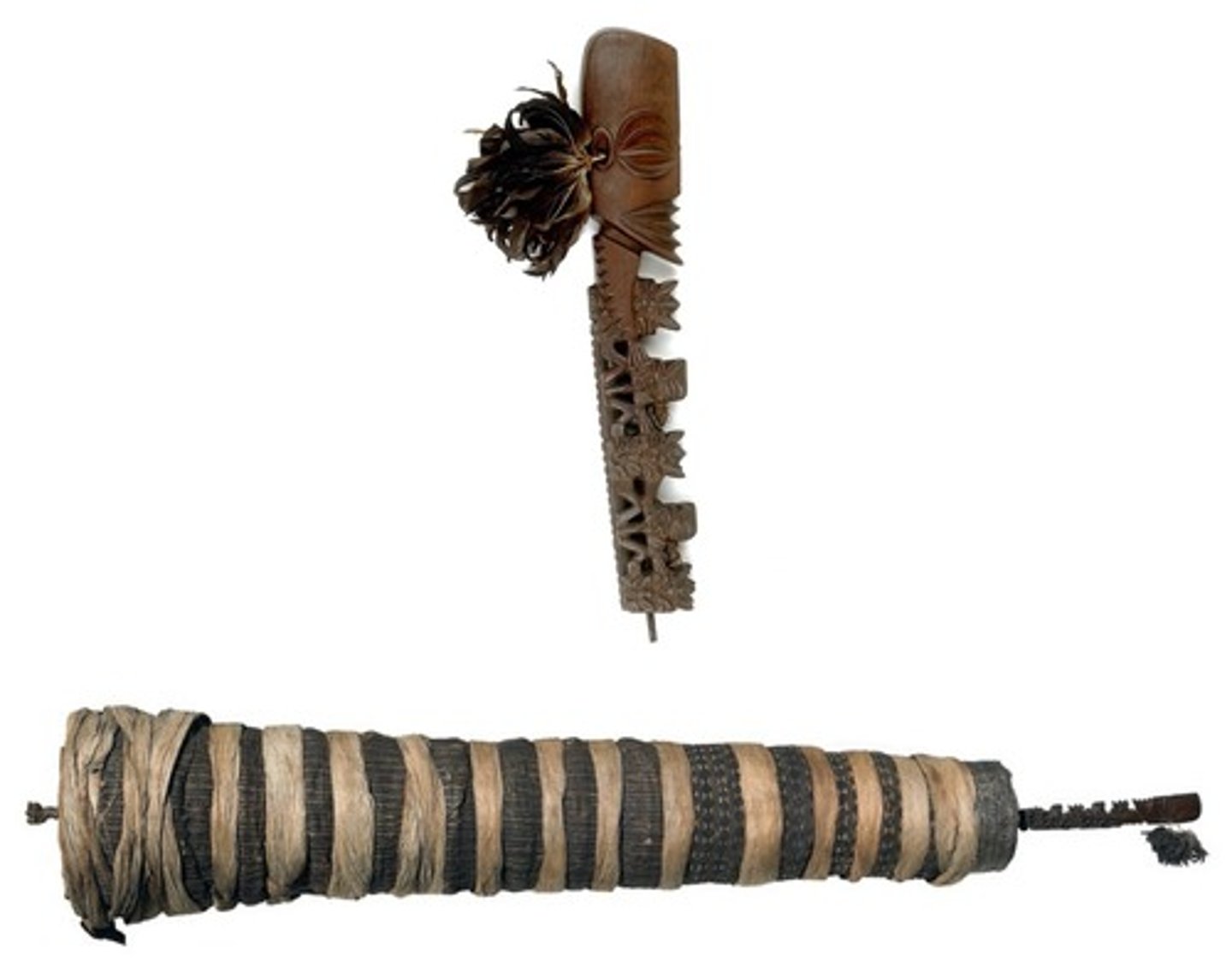
Staff god. Rarotonga, Cook Islands, central Polynesia. Late 18th to early 19th century C.E. Wood, tapa, fiber, and feathers.
Function/ Form: Religious ceremonies (possibly a fisherman's God). It was small in size for the ability to travel with the owner.
Content/ Context: They were used in worship to their deities, at the beginning of the 19th century Polynesians converted to Christianity suddenly and they were forced to destroy similar wood carvings, very few survived.
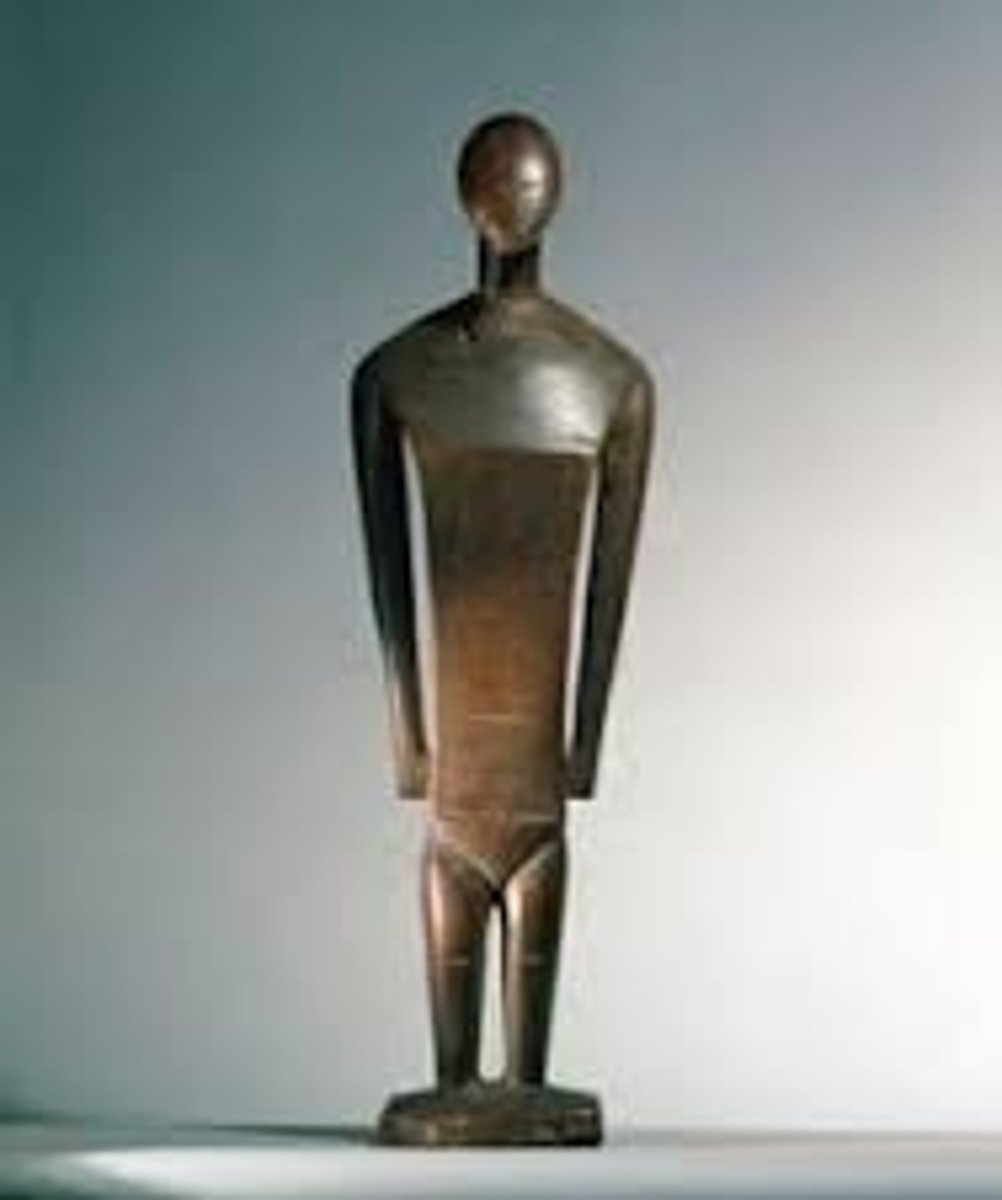
Female deity. Nukuoro, Micronesia. c. 18th to 19th century C.E. Wood.
Form/ Function: Carving, these figurines were of smaller stature and most likely required experience to achieve lines on the Deity. The figurine is known to have been used in religious ceremonies. However the specific type of ceremony is unknown. Some speculation suggest they may have been used in fertility ceremonies.
Content/ Context: Only 20 left in the world. The Female Deity is shown with many protruding areas from the elbows, shoulders, and breasts. It could be argued that they focused on the function over the form. Keeping the visual effects simple.
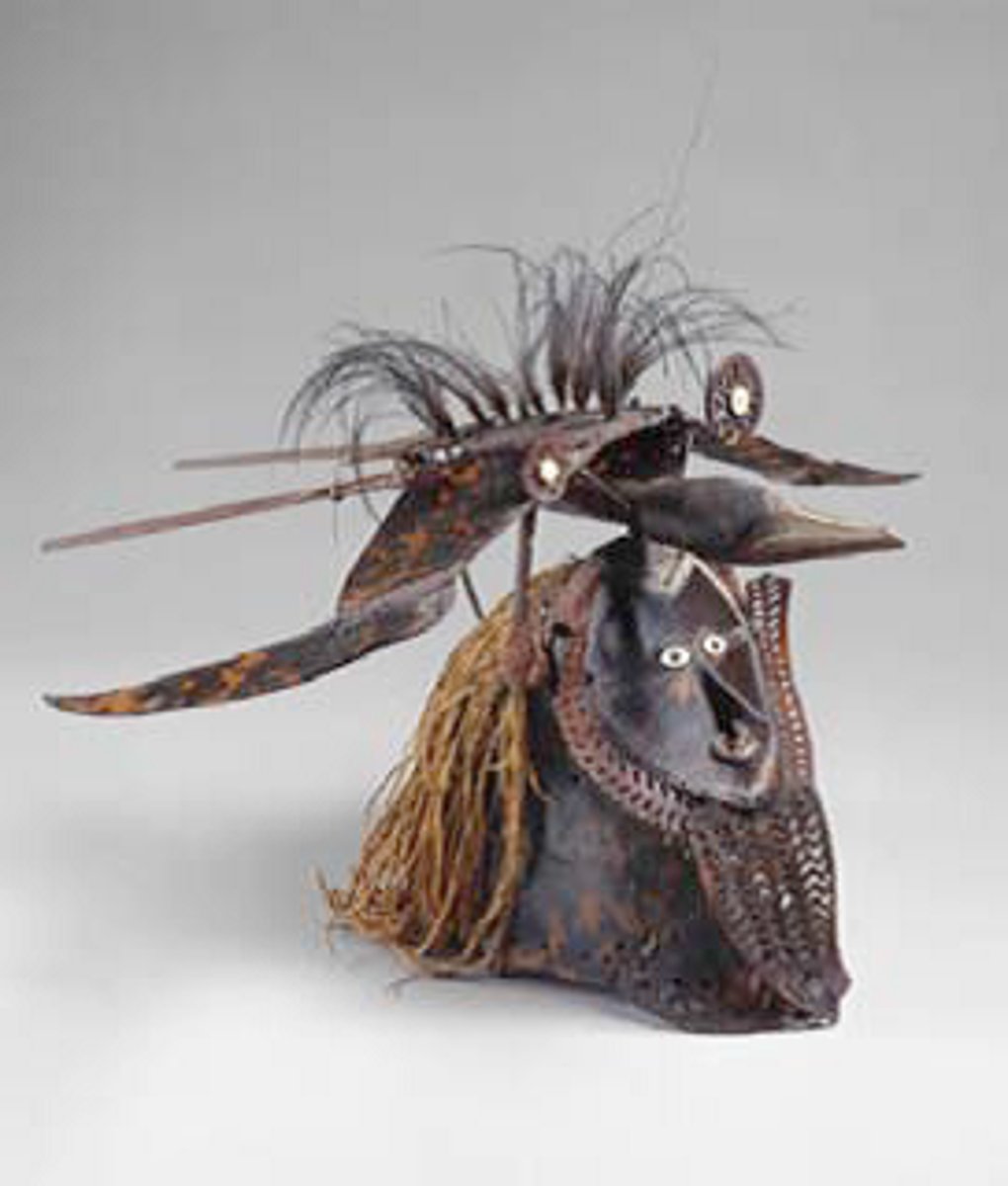
Buk (mask). Torres Strait. Mid- to late 19th century C.E. Turtle shell, wood, fiber, feathers, and shell.
Form/ Function: hand-crafted and unique to ceremony Turtle-shell masks in the western Torres Strait reportedly were used during funerary ceremonies and increase rites (rituals designed to ensure bountiful harvests and an abundance of fish and game). ritual; this is worn over the head like a mask; used for male initiation; funerary rights.
Content/ Context: The ceremonies often involved performances in which senior men, wearing the masks together with rustling costumes of grass, reenacted events from the lives of culture-heroes, drawn from local oral tradition. Divided into 3 registers: bottom (human face), middle (body of a bird), top (feathers); face has a raffia attached to it= hair; part of an elaborate costume used in a masquerade and people would dance wearing the mask; bird can be seen as a totem; width=25 in; mask made from turtle shell;
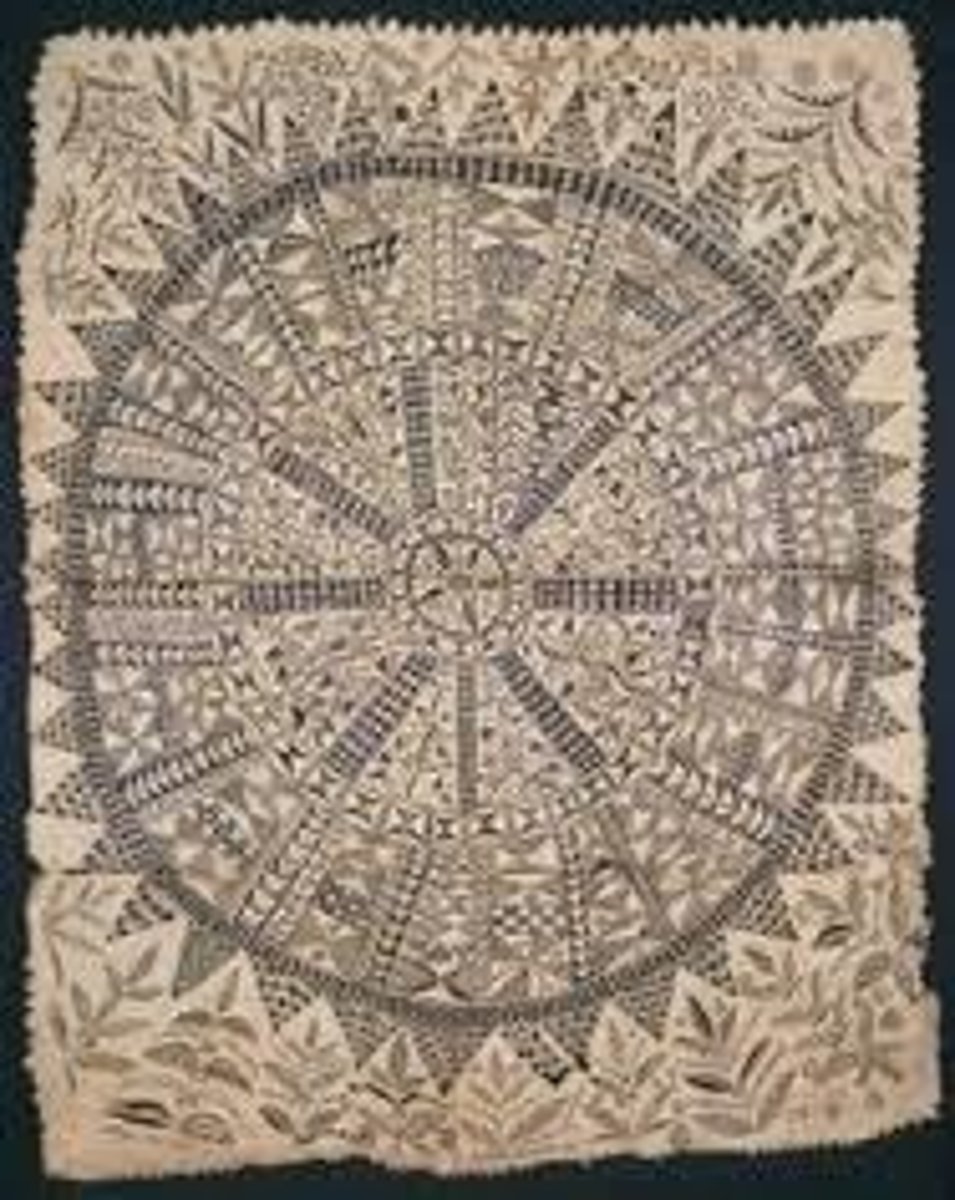
Hiapo (tapa). Niue. c. 1850-1900 C.E. Tapa or bark cloth, freehand painting.
Form/ Function: Freehand painting on the cloth. The tribe's people would beat the cloth after weaving to strengthen bonds. The Pacific Islanders were known for wrapping their sacred items in tapa cloths which was unique to their culture. The clothes varied in size and what they protected. used for clothing, bedding, or wall hangings.
Content/ Context: In the Islander culture the women's jobs were to weave and beat the Tapa clothes for use. earliest examples of hiapo were collected by missionaries. contains geometric and complex designs. the patterns have spirals, circles, squares, triangles, and diminishing motifs (they decrease in size from the border to the center).
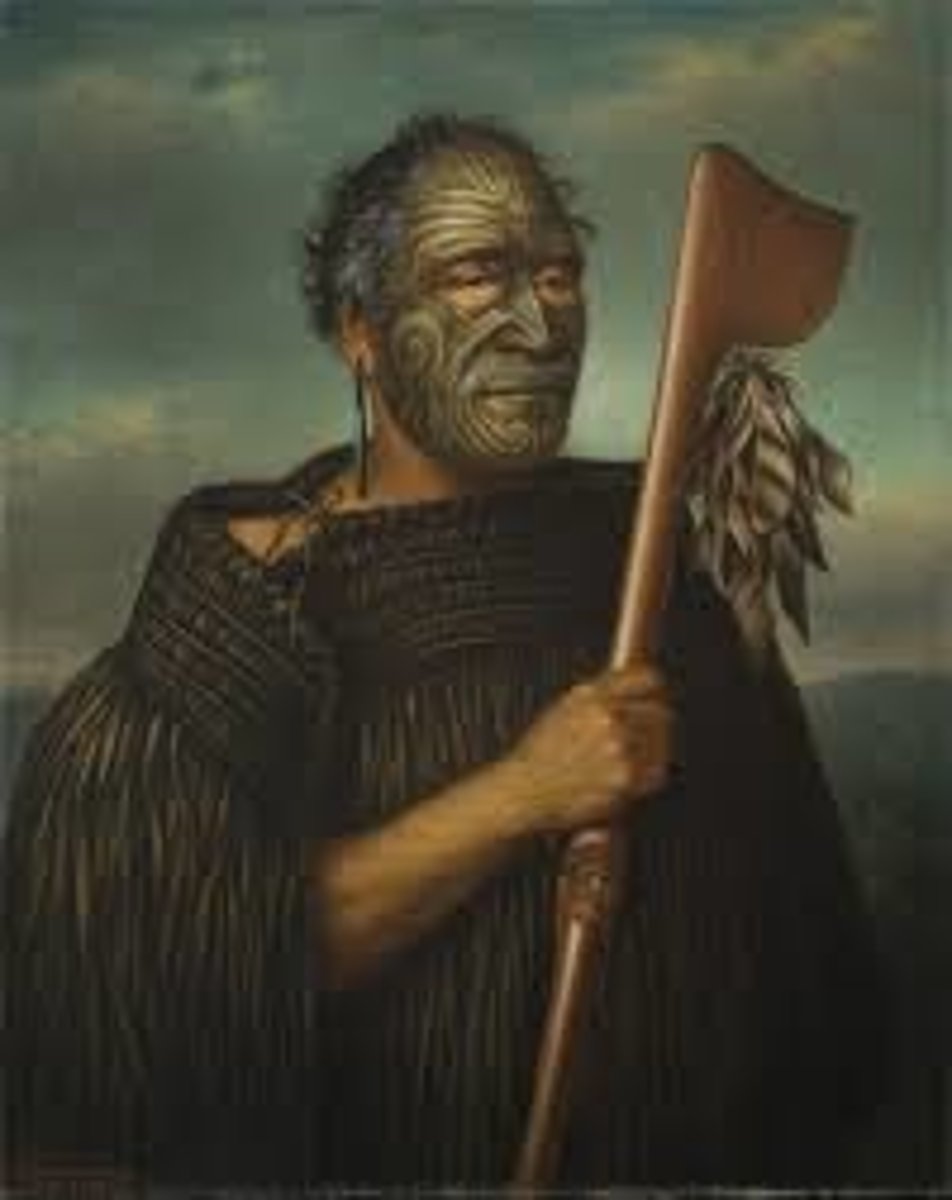
Tamati Waka Nene. Gottfried Lindauer. 1890 C.E. Oil on canvas.
Form/ Function: Lindauer based this portrait on a photograph by John Crombie who was commissioned to produce 12 photographic portraits of Māori chiefs for the London Illustrated News To commemorate the Maorian chief, Tamati Waka Nene, on being the first of the Pacific islands to join the International trade with England.
Content/ Context: Tamati Waka Nene lived in the Hokianga when it was a thriving and prosperous trading society and was said to have been an astute businessman and kindly by nature. He was the 2nd son of Tapua, leader and tohunga of Ngati Hao of Hokianga. Nene converted to the Wesleyan faith and was baptised taking his name Tamati Waka Nene after Thomas Walker. Nene saw the advantages of having Pākehā shipping traders in the area, and helped settlers as well as Wesleyan missionaries establish themselves there in 1827. Nene is wearing a tattoo mask which shower power and protection. Tattooing is called moko. The tattoo was a mark of adultment and helped soften the bone structure. Nene died on August 4, 1871.
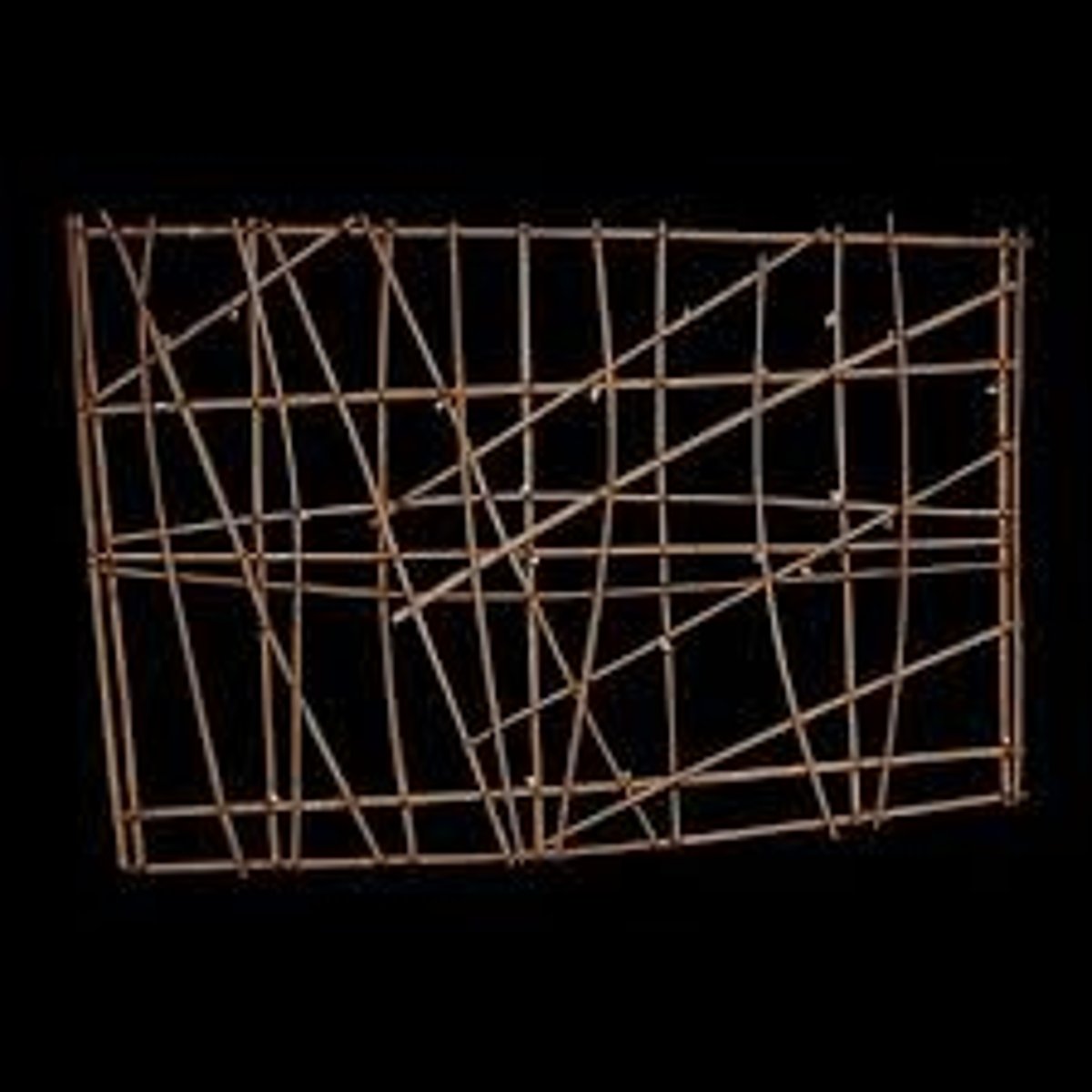
Navigation chart. Marshall Islands, Micronesia. 19th to early 20th century C.E. Wood and fiber.
Form/ Function: Rebbelib, a type of navigation chart used to cover a large section of the Marshall Islands. It shows the main pathway between the two main islands, the intersecting lines or areas marked by shells indicate locations of islands while the slopped lines indicate wave swells and the people using them usually memorized them.
Content/ Context: The Marshall Islands in eastern Micronesia consist of thirty-four coral atolls spread out across an area of several hundred miles. In order to maintain links between the islands, the Marshall Islanders built seafaring canoes. These vessels were both quick and maneuverable. The islanders developed a reputation for navigation between the islands - not a simple matter, since they are all so low that none can be seen from more than a few miles away. charts marked the location of the islands and swell along with the wave patterns. cowries and shells= islands. straight lines=currents are consistent. bent lines= wind and swells. coconut fibers= wave patterns.
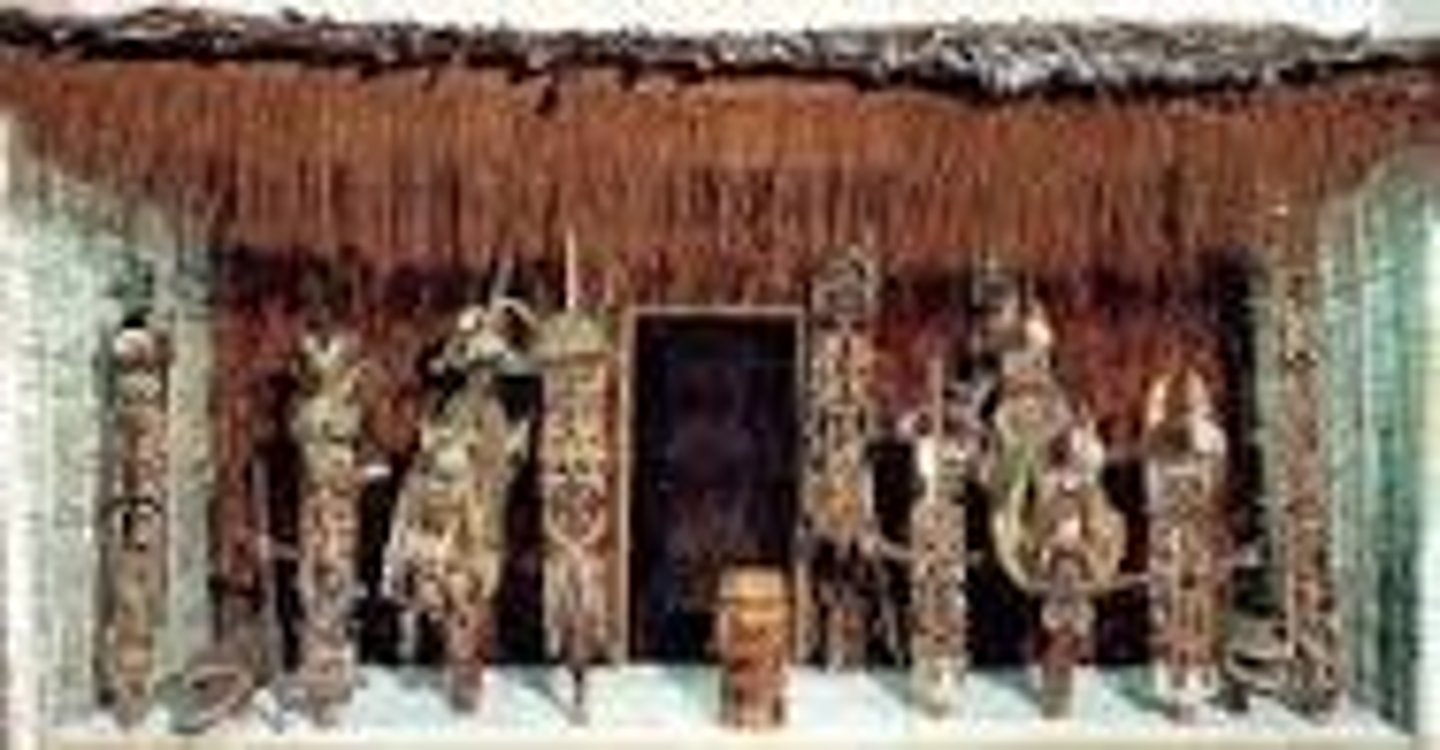
Malagan display and mask. New Ireland Province, Papua New Guinea. c. 20th century C.E. Wood, pigment, fiber, and shell.
Form/ Function: To serve as visual part of ceremony in which the dead are celebrated and assisted in their transition to the spiritual realm, the ceremonies length can be from months to years so sturdy materials for elaborate structures can withstand long time frame; centered on honoring the dead
Content/ Context: The culture behind the Malagan display and mask greatly treasure ancestry and the soul/life force of an individual which is what is often portrayed in these displays. They also believe that their loved ones spirits enter into the Malagan so these pieces are treated with the best of the best care until they are no longer needed. Once they are no longer needed they are often burned in fear of confusing other spirits trying to find their way. New Ireland has 19 islets. the ceremonies held can last from months to years. once the soul leaves the mask they burn it. it had both men and women genitalia.
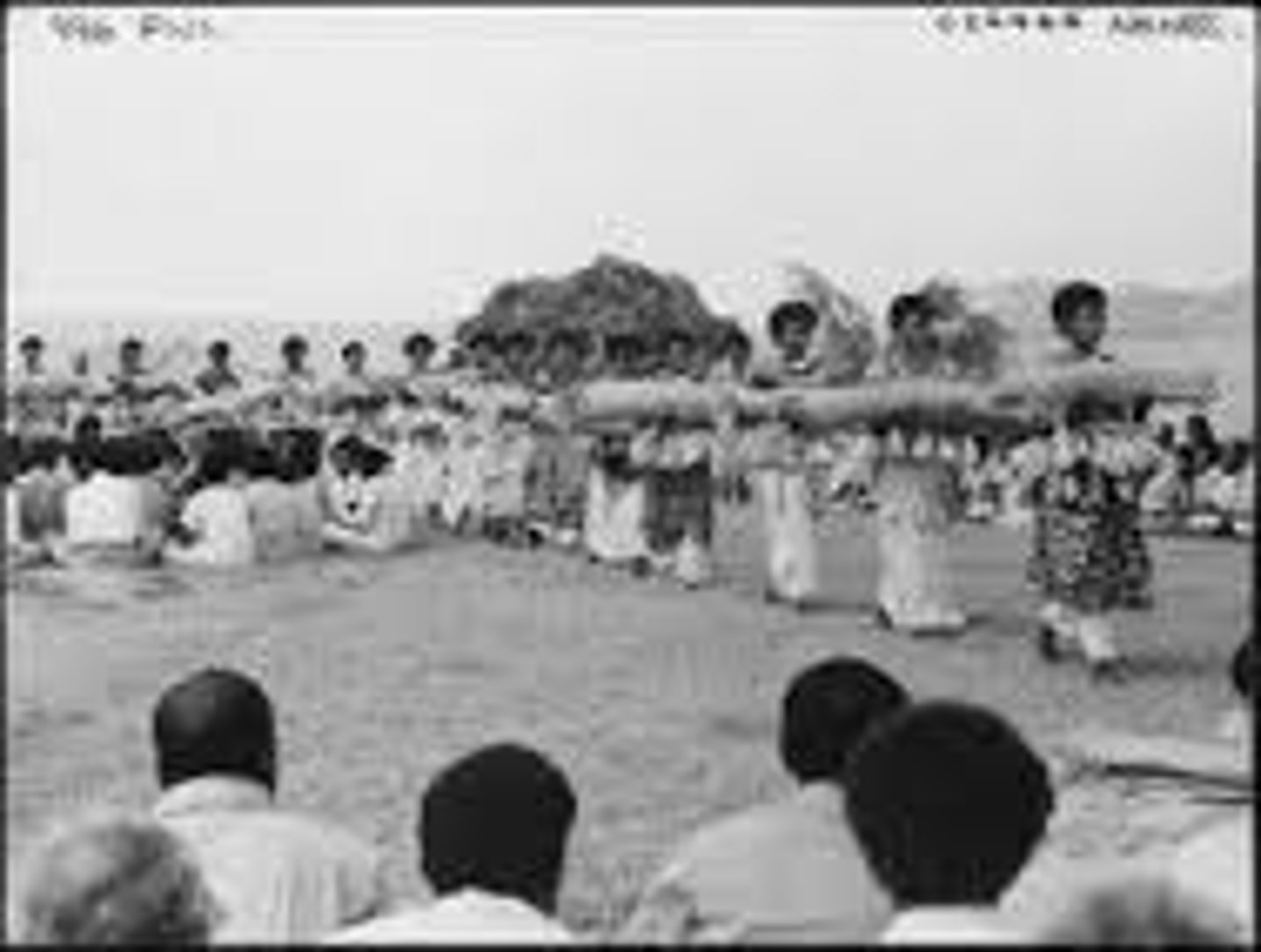
Processional welcoming Queen Elizabeth II to Tonga with Ngatu launima (tapa cloth). Tonga, central Polynesia. 1953 C.E. Multimedia performance (costume; cosmetics, including scent; chant; movement; and pandanus fiber/hibiscus fiber mats), photographic documentation.
Form/ Function: To show respect and gratitude towards Queen Elizabeth II for visiting Tonga and for commemorating the war memorial. Also I believe this served as a way of the two countries signaling their alliance and partnership. idol and spiritual. used for funerals. banner sometimes used to decorate graves. queen visited in 1953. the ngatu was placed under the body of the queen.
Content/ Context: During both world wars the people of Tonga and England have fought for same cause and have even assisted each other at times so in order to so union between two countries English royal family visits Tonga for the first time and honors those who died in the line of duty. made bark cloth for queens (it had hand painted decoration on cloth)