AP Bio Unit 4 - Cell Communication & Cell Division
 Call Kai
 Learn
Learn Practice Test
 Spaced Repetition
 Match
Match Flashcards
 Knowt Play
1/26

Earn XP
Description and Tags
Cell Communication and Cell Cycle
Name | Mastery | Learn | Test | Matching | Spaced | Call with Kai |
|---|
No analytics yet
Send a link to your students to track their progress
27 Terms
What are the three stages of cell communication?
Reception
Transduction
Response
What is usually the same of a signal that binds to the receptor on a cell?
ligand
Most signals are water soluable, so can they cross the cell membrane? Thus, where are most signal receptors located?
They cannot cross the membrane of the target cell
The cells are on the membrane (membrane bound receptor)
What happens to the shape of the receptor protein on the inside of the cell when a ligand binds to the receptor?
it changes shape, which means some chemical reactions happen
How do G-coupled protein receptors work?
Receptor is linked to G-protein
Ligand binds, causing the G-protein to change shape
This change in shape causes the GDP in the G-protein to be replaced by GTP
The G protein turns on and migrates inside the membrane to activate other proteins or enzymes
Finally, G protein returns to its normal position
How do receptor tyrroscen kinsases work?
Two monomer forms of the kinsases bind together and to two ligands (dimerize)
The new TRK grab phosphates from ATP and deliver them to their target proteins to activate them
What is a kinase?
a protein that add phosphate groups to its target substrate
How do ligand gated ion channels work?
they are either opened or close depending on whether a signaling molecule is attached to it
What is transduction?
the passing on of the message from the receptor to the target to get the desired response by the cell
What is a second messenger? Give two examples
what brings the receptor to the actual transduction phase
Cyclic AMP
Calcium ions
What is cyclic AMP?
Adenisine mono-phosphate with its one phosphate attached in a special way
How does transduction work?
The ligand activates the protein (likely a G protein) and GTP attaches
The protein activates another enzyme
This enzyme creates Cyclic AMP (second messenger)
What is a phosphorylation cascade? How does it work?
Cyclic AMP (the activated relay molecule) activates a protein by giving it a phosphate group using ATP
This goes down and down and down in a cascade until it reaches the actual target protein
Why does phosphorylation happen in a cascade, and not just by one?
Because its not just the last enzyme sending the message, all of the enzymes that were activated send it together to amplify the message
Can hormones go through the membrane? How?
yes, they diffuse
What is apoptosis?
programmed cell death
What is the order of the cell cycle? Which phases are under interphase?
G1
S. > Interphase (G1, S, G2)
G2
M
What happens in the G1 phase?
Growth
Gathering materials
Performs regular cell duties
What happens in the S phase?
DNA synthesis
All of DNA is copied
What happens in the G2 phase?
organelles are duplicated
checks to ensure the DNA was replicated correctly
What are the steps of the M phase?
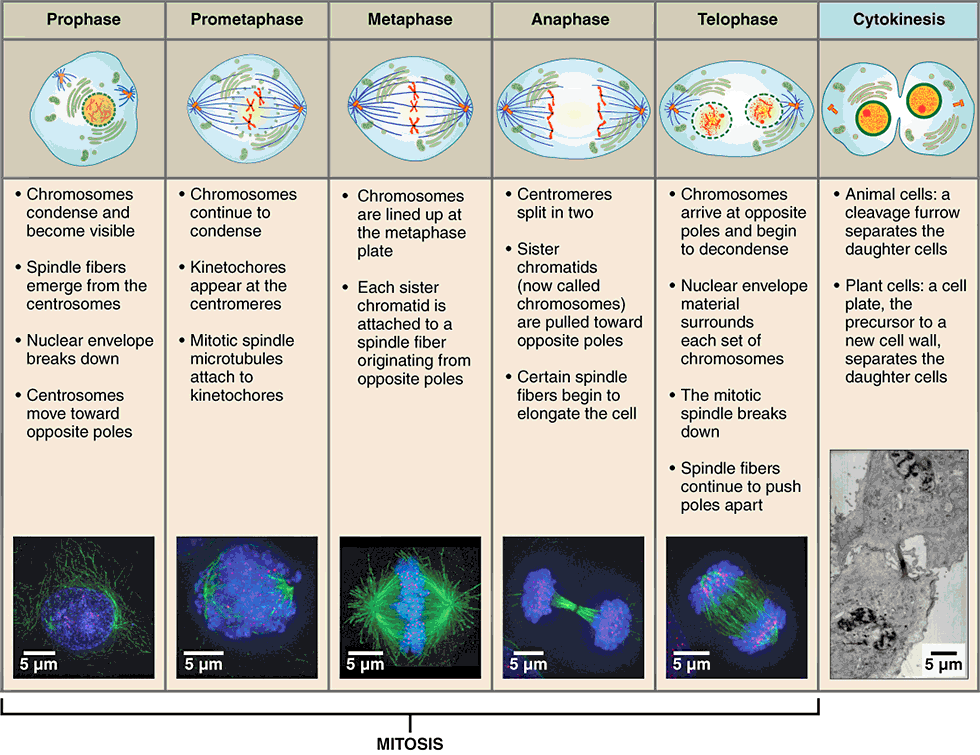
What is the molecule that controls much of the cell cycle?
cyclin
What is formed during the cell cycle when cyclin binds to cyclin-dependent kinase? What step in the cell cycle does this initiate?
MPF - Maturation promotion factor
this signals the M phase
What kinds of things stimulate cell division?
PDGF - platelet derived growth factor
injury, blood needing to clot, etc.
What is the main important thing about cancer when it comes to AP Biology?
it is UNinhibited cell division
(at a time when division is supposed to be inhibited)
What are the 2 ways cell division is inhibited?
Anchorage dependence - cells can only divide if they are in a place where they are anchored to a tissue
Density dependent inhibition - cells will not divide if they see that there are lots of other cells around them
How does cell communication tie to density-dependent inhibition of cell division?
membrane bound proteins on close-together cells send signals to each other, causing inhibition of divison