Unit 8 Test Romanesque
 Call Kai
 Learn
Learn Practice Test
 Spaced Repetition
 Match
Match Flashcards
 Knowt Play
1/15

There's no tags or description
Looks like no tags are added yet.
Name | Mastery | Learn | Test | Matching | Spaced | Call with Kai | Chat |
|---|
No analytics yet
Send a link to your students to track their progress
16 Terms
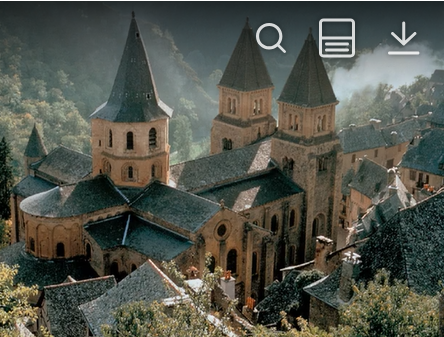
Sainte- Foy Cathedral
France c. 1050-1120
Short nave, side aisles built to full height of nave; no clerestory lighting and transept
belfry = bell tower, rises above the roof of crossing
latin style cathedral and cross
not a direct clerestory lighting - not going into the nave
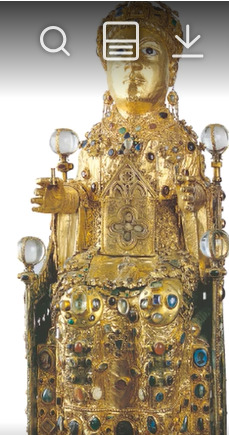
Reliquary statue of st. foy
10th-11th Century
Saint Foy was a young girl who was killed as a christian martyr because she refused to worship pagan idols. The physical remains of St. Foy’s skull are preserved in the head of this reliquary statue, which is covered in hammered gold and gemstones encased in bezels
Sculpture has the typical disproportionate head in relation to body as well as very short arms reflective of the romanesque lack of attention to realistic portraiture
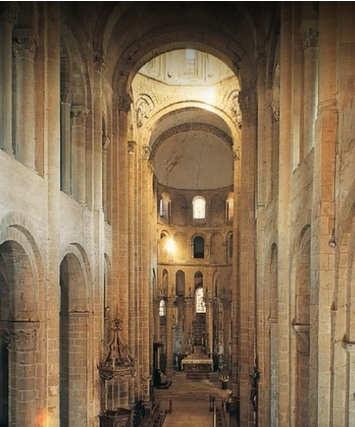
tribune and nave vaults, st foy
Conques c. 1050-1120
Romanesque builders solved problem of supporting extra weight of stone by constructing second-story gallery over side aisles
Structurally, gallery diverted thrust from side walls back onto piers of nave; also provided extra interior space for pilgrims
compound/cluster piers
round arches with ribbed vaulting
stone ceiling
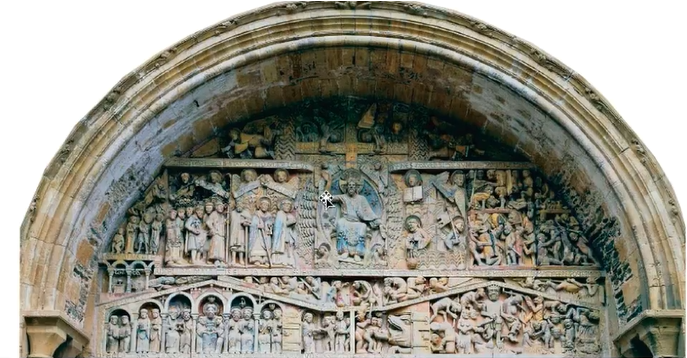
last judgement, west portal of st. foy
Tympanum of the west portal; conques, 1130
Jesus is both central and largest figure; surrounded by madorla = oval of light, containing the cross; raises right hand, reminding viewer that souls on right will be received in heaven - a visual rendition of the advantages of being “on the right hand of God”
The “saved” souls on the left are nobility and priests and the “damned” are the peasants on the right
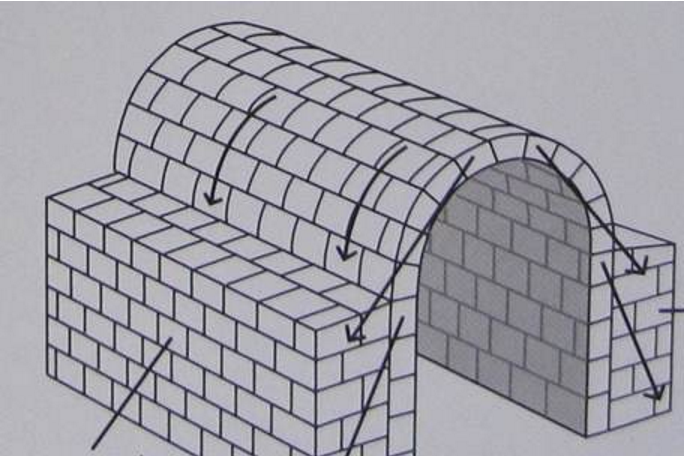
Barrel vault
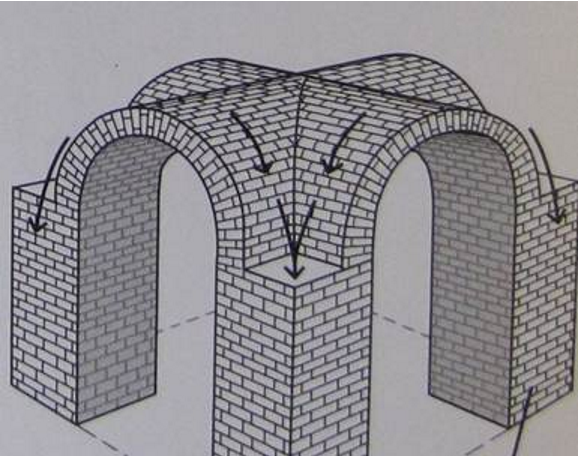
Groin Vault
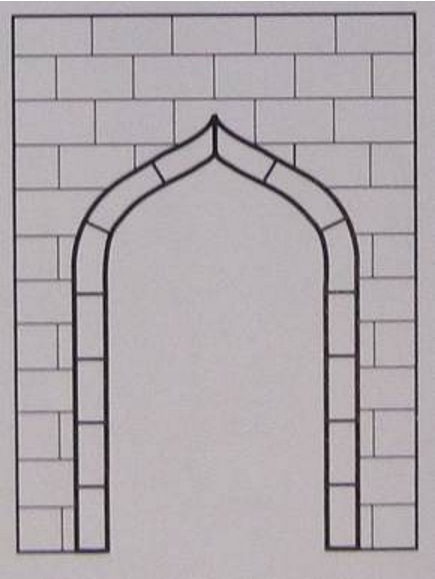
pointed arch
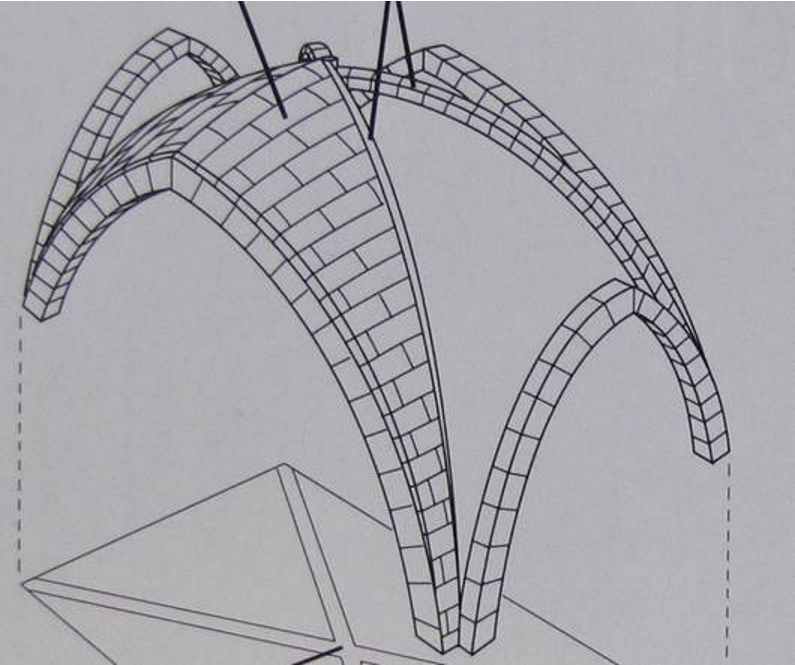
ribbed vault
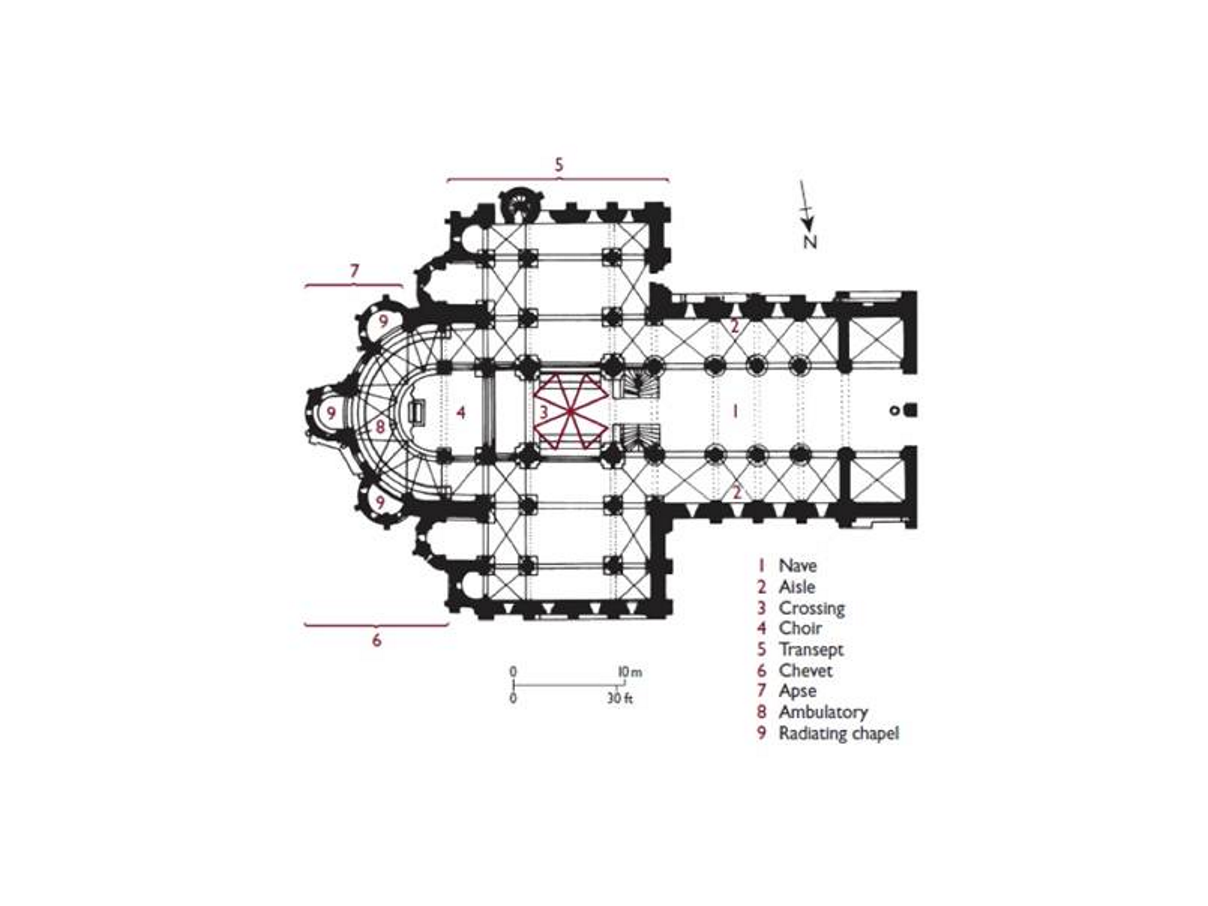
nave
aisle
crossing
choir
transept
chevet
apse
ambulatory
radiating chapel
1000-1200 AD - History
Reflects the stability and prosperity of christian church. There was an enormous amount of building activity including cathedrals, churches and monasteries; churches and monasteries; monasteries owned and controlled significant tracts of land which gave them political and economic power
In 1000 AD Vikings convert to christianity and their leaders are recognized as dukes by the french king. Christians want to re-take modern spain and portugal from muslims; muslims continue expansion in south.
Romanesque
“Roman Like” Medieval art of a variety of styles, admires roman art
Adopted forms from romans including: round arches, stone vaults, thick walls, exterior relief sculpture, taste for linear patterns, influences by byzantine and islamic traditions
Crusades
The crusades were a series of military expeditions from western christendom undertaken in the name of the cross to recapture the holy places in syria and palestine from the muslims.
Men would receive remission of time in purgatory and the promise of martyrdom if one were killed in battle
Feudalism
A social system of the middle ages whereby nobility inherits and owns all land.
The emperor owns land and grants use of it to kings for an oath of loyalty. The king in turn grants use to nobleman in exchange for oath of loyalty, taxes, and administration of the land.
The nobleman grants use to local lords who make unpaid peasants work the land in exchange for shelter and food.
At each level, military service is promised in exchange for land
Pilgrimage Roads
Penitent christians made pilgrimages to atone for their sins. Later it was common for devout christians to make pilgrimages to churches with sacred relics. Relics were the physical remains of saints including remnants of clothing and other objects associated with them. Relics (often hair, bones, and fingernails) were believed to have miraculous powers to heal. Reliquaries held the relics as they were often too fragile. ideally, one would touch the reliquary to receive healing. pilgrims would view the relics through an elaborate choir screen. the choir screen is like a giant ironwork or carved wooden gate. during the viewing, the believer would ideally absorb the healing and be able to return home.
Pilgrimage Sites
Rome: Center of christendom in the west, held st peters cathedral, papal residence, tombs of saints peter and paul
jersualem: the site of solomon’s first temple and holy sepulcher of Christ’s entry and last supper, the events that led to his death and the miracles that followed
Shrine of St. James at compstela, was also important. first christian martyr who was beheaded by king herod
New Romanesque architectural features
stone ceiling replace wooden ceiling
rib vaulting and barrel vaulting help to support the weight of the stone ceilings
buttressing with thick stone walls helps to support the weight of the stone roof
compound/cluster piers help to support the rib and barrel vaulting
Addition of a second story to the side aisles to form a gallery
No clerestory windows in the nave
addition of the ambulatory allows pilgrims to move around the apse more quickly and to see the relics.