6- fractures in primary and permanent
 Call Kai
 Learn
Learn Practice Test
 Spaced Repetition
 Match
Match Flashcards
 Knowt Play
1/20

There's no tags or description
Looks like no tags are added yet.
Name | Mastery | Learn | Test | Matching | Spaced | Call with Kai |
|---|
No analytics yet
Send a link to your students to track their progress
21 Terms
Fractures are…
2nd cause of paediatric dental care
Several etiology
Doesn’t follow predictable pattern of intensity and extent
Needs multidisciplinary approach
How do you classify dental trauma into 4 categories?
Hard tissue and pulp injuries
Luxation injuries
Soft tissues injuries
Facial and bone injuries
Name 6 hard tissue and pulp injuries
Infraction
Crown-fracture uncomplicated or complicated
Crown/root fracture uncomplicated or complicated
Root fracture
What is an enamel infraction? How to treat if severe?
An incomplete fracture (crack/crazing) of enamel without loss of tooth structure
If severe- etch and seal with bonding resin- this prevents discolouration and bacterial contamination
What is an uncomplicated crown fracture (enamel only)? Treat, it depends on…
A coronal fracture involving enamel only, with loss of tooth structure
If tooth fragment available if can be bonded back to tooth
Depending on extent and location- tooth edges can be smooth or composite can be placed
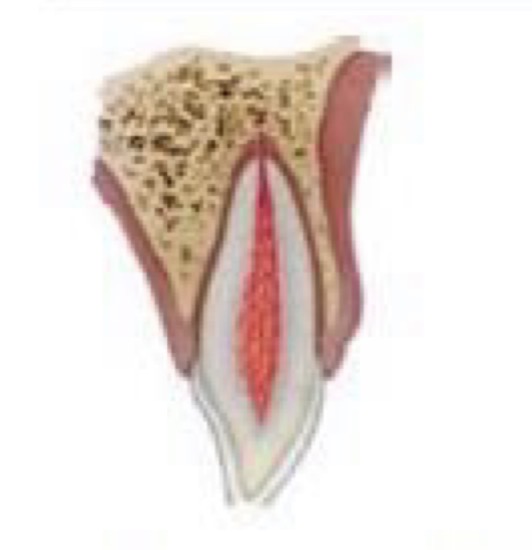
What is an uncomplicated crown fracture (enamel- dentin fracture)?
Fracture confined to enamel and dentin without pulp exposure
If fragment intact- bond back- should be rehydrated by soaking in water or saline for 20mins before
Cover exposed dentin with GIC or using bond + composite
If exposed dentin within 0.5mm of pulp (pink no bleeding)place CaOH
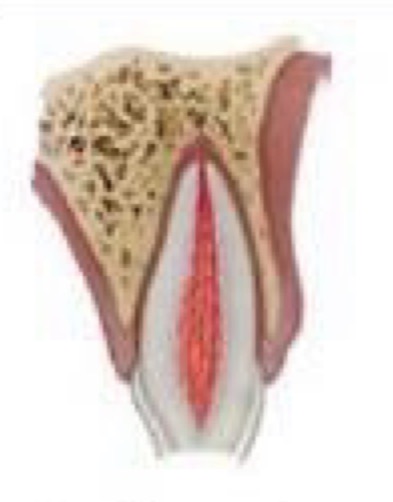
What is a complicated crown fracture (enamel-dentin fracture with pulp exposure)?
Fracture confined to enamel and dentin with pulp exposure
Immature root and open apex- PRESERVE PULP- partial pulpotomy or pulp capping
If completed root- be conservative, but if need post for crown retention- just do RCT
Place CaOH or calcium silicate cements in pulp wound
Rebond fragment or if absent- cover with GIC
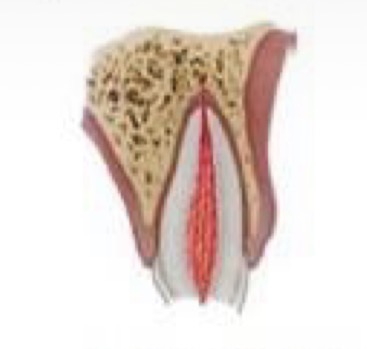
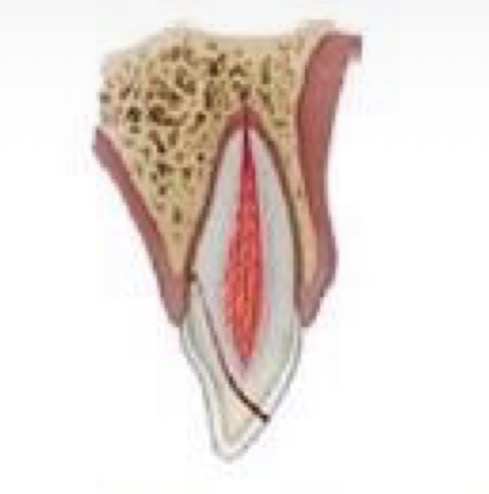
What is an uncomplicated crown root fracture (without pulp exposure)?
A fracture involving enamel, dentin and cementum
These typically extend below the gingival margin
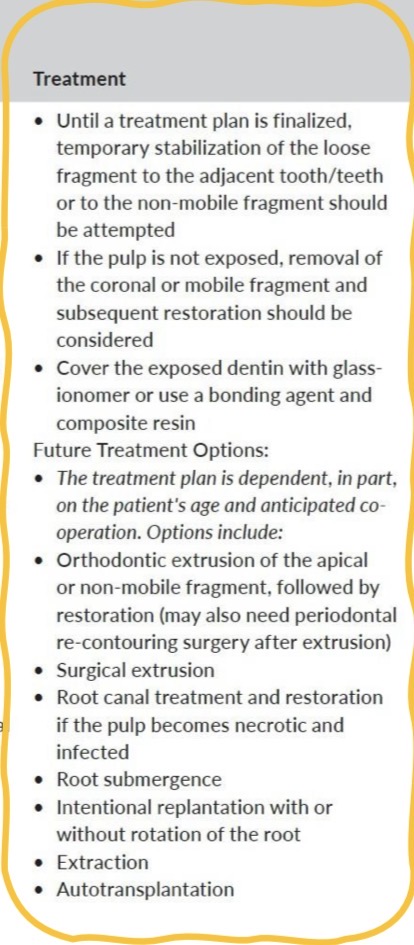
What is a complicated crown root fracture (with pulp exposure)?
A fracture involving enamel, dentin, cementum and pulp
These typically extend below the gingival margin
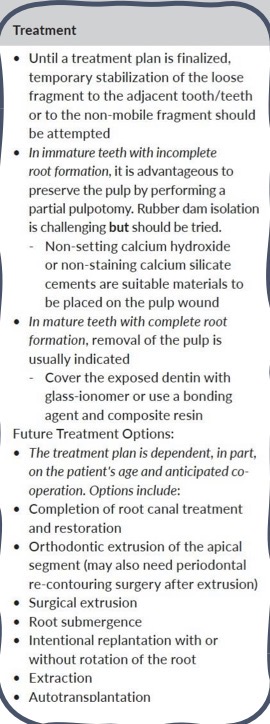
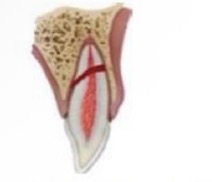
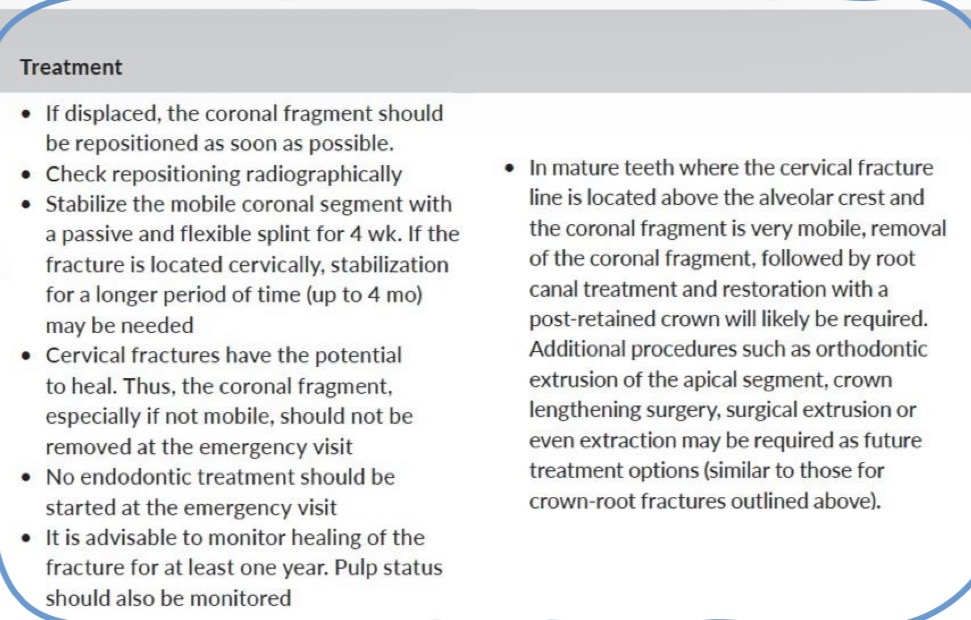
What is a root fracture?
Fracture of root involving dentin, pulp, cementum
May be horizontal, oblique or combo of both
What are 6 types of luxation injuries? (Read ppt but covered in ppt 5)
Concussion
Subluxation
Lateral luxation
Intrusion
Extrusion
Avulsion
What are 3 types of soft tissue injuries?
Laceration- cut/tear in skin by being struck by a blunt or penetrating object
Contusion- Injury with submucosal haemorrhage that occurs without tearing- usually blunt object
Abrasion- superficial wound caused by tearing of mucosa- bleeding and rough surface
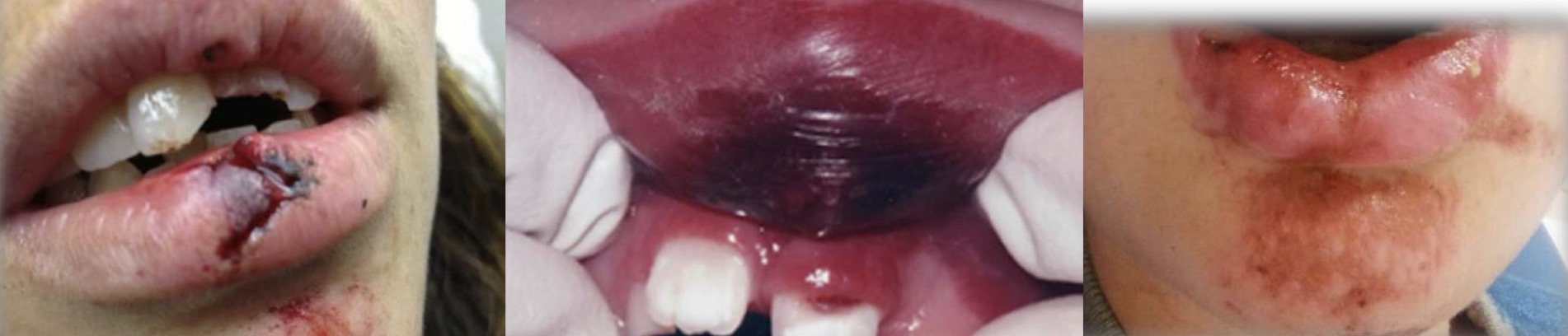
What are 4 types of facial bone injuries
Fracture of alveolar process of mandible/maxilla- involves alveolar bone and may extend to adjacent bones
Fracture of body of mandible/maxilla
Prevalence of traumatic dental injuries in children
25% of all school children
33% of adults
More freq in anteriores
Why can traumatic dental injuries occur? (Possible etiologies)
Primary dentition- 1-3yrs, crawl, stand up, walk
Permanent- more freq in boys, 6-12 yrs, violent sports/games
Abused child syndrome- intentional injuries
Traffic accidents
How do you approach the initial presentation and minimising anxiety?
Structured approach- history taking, clinical exam, collect test results, extra/intra oral photos
Be alert for concomitant injuries- head injury, facial fracture, missing tooth fragments or lacerations
Discolouration common complication of luxation injury so record colour of teeth at each visit
Antibiotics and tetanus
Why must you check the impact of orofacial primary teeth trauma on permanent dentition?
Close relationship between apex of primary tooth root and underlying perm tooth germ
May cause complications in development of perm teeth esp after intrusion, avulsion and alveolar fractures
Why may the patient need ATB or tetanus facing a TDI?
Booster if environmental contamination or injury has occurred- refer to medical practitioner within 48hrs
After a TDI, what are some parental instructions for home care?
Clean affected area with soft brush or cotton swab
Alcohol free chlorhexidine gluconate 0.12% mouth rinse applied topically 2x daily for 1 week
This prevents plaque accumulation and debris to reduce bacterial load
What prognostic factors need to be collected at initial and follow up visits?
Pulp inflammation
Necrosis
Pulpar revascularization
Change colour /discolouration
Conduct obliteration
Radicular development alteration
Radicular resorption: external or internal
Learn from page 98 down