BIOCH 200 Unit 2 - Nucleic Acids (Terms)
 Call Kai
 Learn
Learn Practice Test
 Spaced Repetition
 Match
Match Flashcards
 Knowt Play
1/47

There's no tags or description
Looks like no tags are added yet.
Name | Mastery | Learn | Test | Matching | Spaced | Call with Kai |
|---|
No analytics yet
Send a link to your students to track their progress
48 Terms
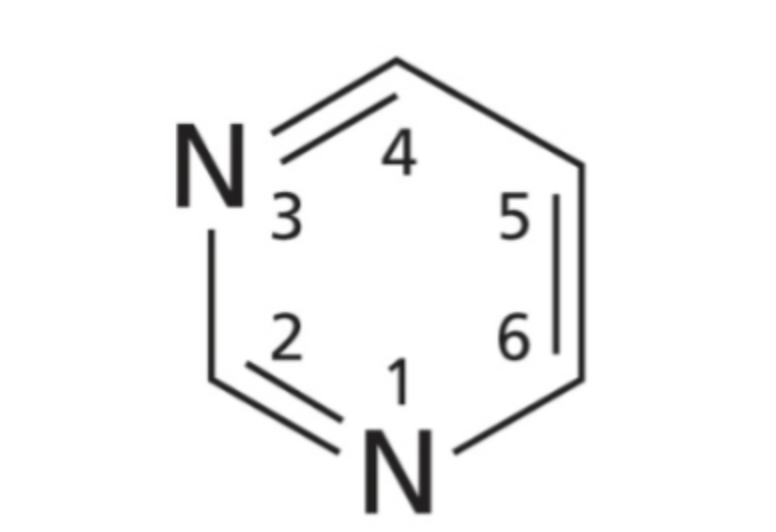
Pyrimidine Base
A class of nitrogenous base that contains 1 6-membered ring and 2 nitrogen molecules
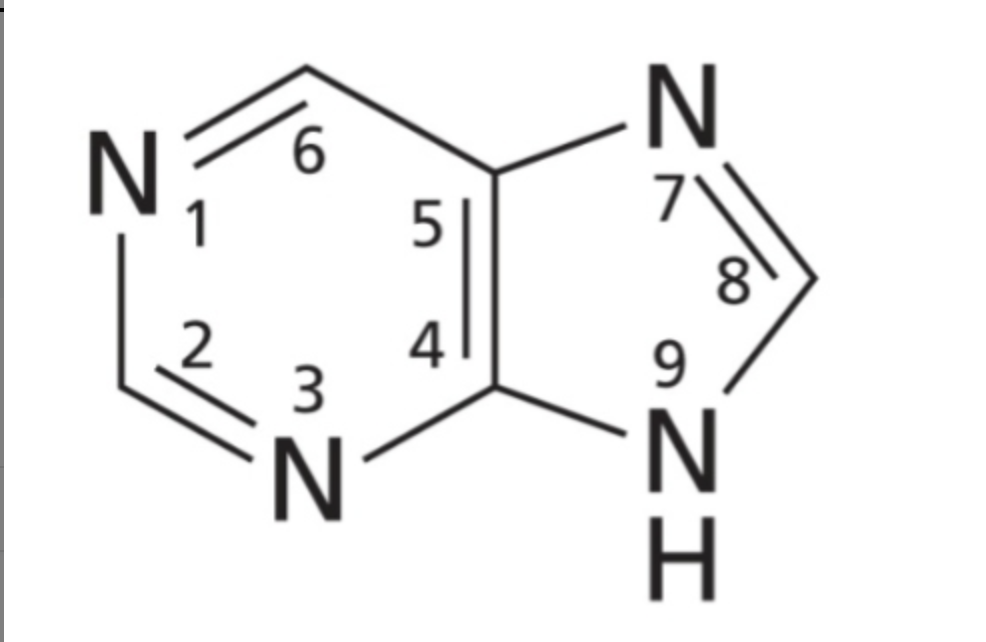
Purine Base
A class of nitrogenous base that contains 2 rings: 1 6-membered ring and 1 5 membered ring, as well as 4 nitrogen molecules
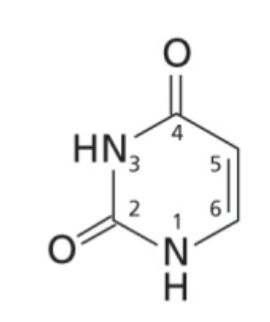
Uracil
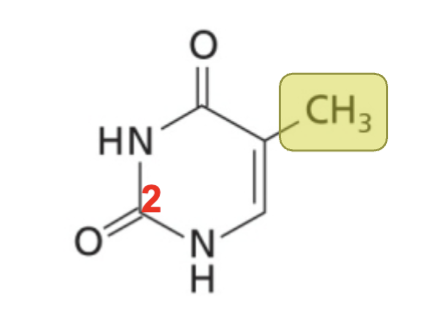
Thymine
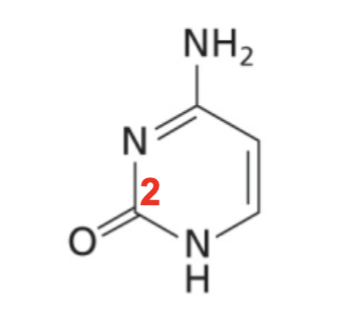
Cytosine
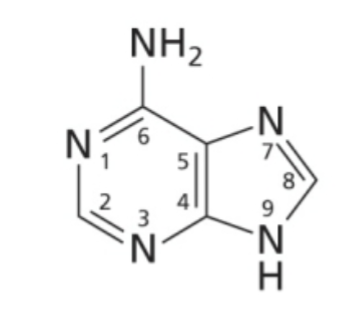
Adenine
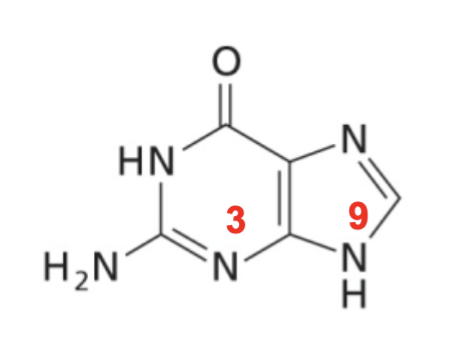
Guanine
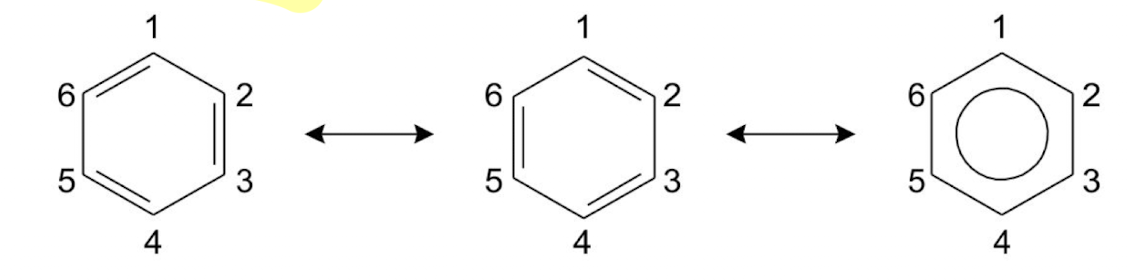
Resonance
Delocalized electrons in molecules where the bonding cannot be expressed by a single lewis structure, occurring in systems with certain lone pairs or double bonds
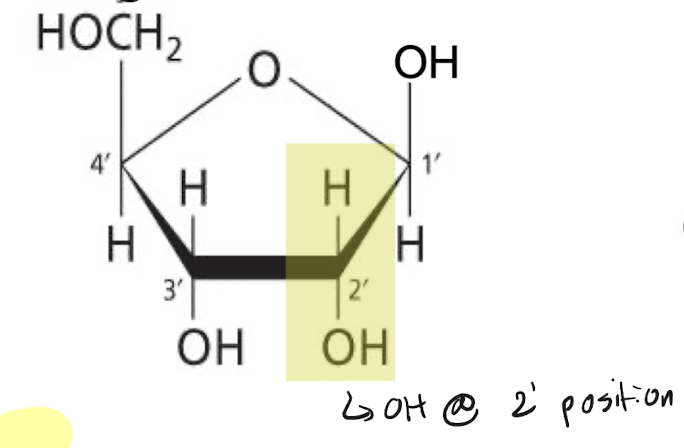
Ribose Sugar
A pentose sugar consisting of 4 hydroxyl groups (OH at C2’) typically used to create RNA
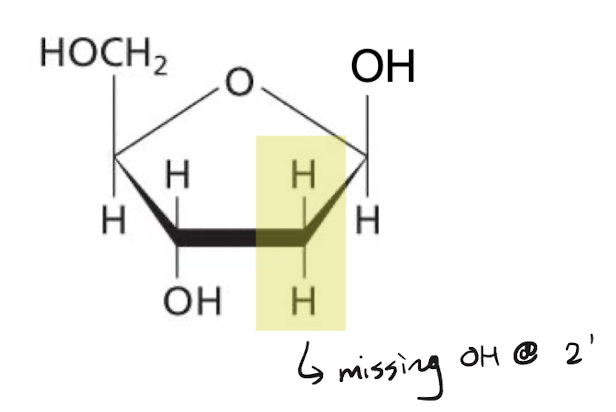
Deoxyribose Sugar
A pentose sugar consisting of 3 hydroxyl groups (missing OH at C2’) typically used to create DNA
Nucleoside
A nitrogenous base (commonly purine or pyrimidine) linked to a 5-carbon sugar
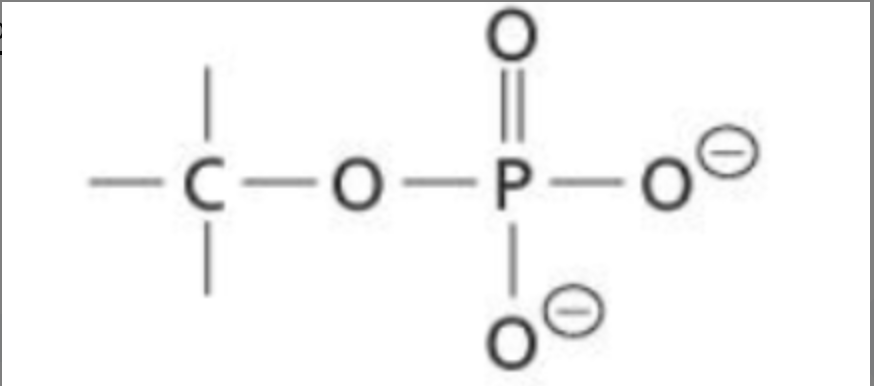
Phosphoester Linkage
A linkage between a phosphate group and a hydroxyl group that creates a P-O bond
Phosphoester
A functional group consisting of a linkage P-O bond as well as a phosphate
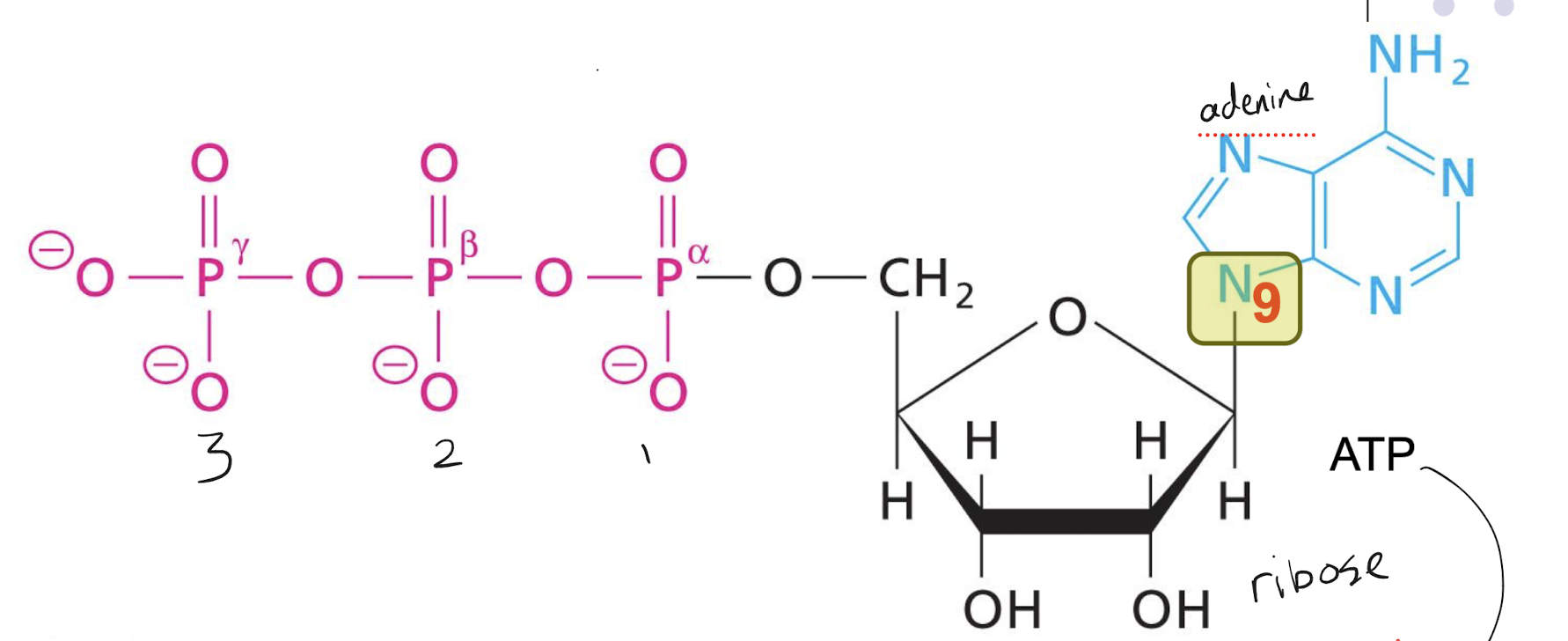
Nucleotide
A nitrogenous base (commonly purine or pyrimidine) linked to a 5-carbon sugar linked to one or more phosphates (nucleoside + phosphates)
Nucleic Acid
Polymers of nucleotides, comprised of multiple nucleotides linked by 3’-5’ phosphodiester bonds
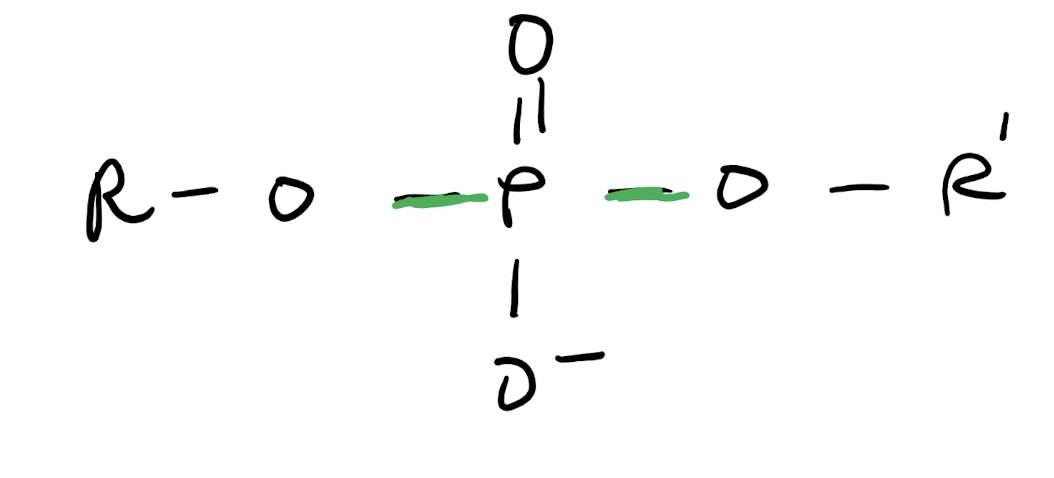
Phosphodiester Linkage
A linkage between a phosphate group and a hydroxyl group that creates two phosphoester bonds, forming a C-O-P-O-C bond chain
Phosphodiester
A functional group consisting of two P-O linkages to make a C-O-P-O-C bond chain
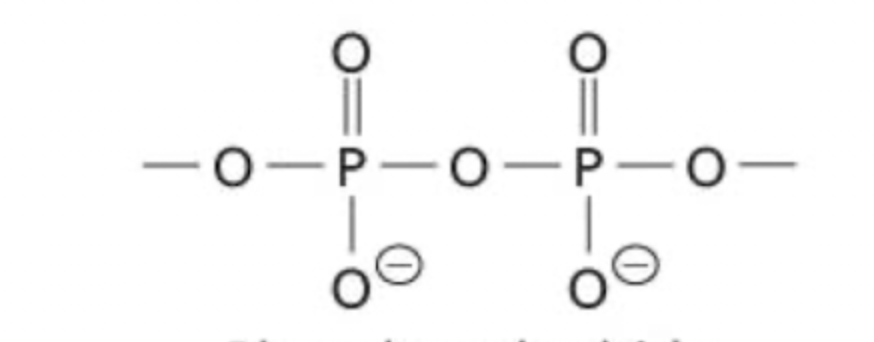
Phosphoanhydride Linkage
A linkage between two phosphate groups that creates a P-O-P bond
Phosphoanhydride
A functional group consisting of two P-O bonds adjacent to one another (POP), where each phosphorus is a phosphate group
Nucleic Acid Backbone
The polar and uniformly negatively charged backbone of DNA and RNA that consists of only the phosphate and sugar molecules
Mononucleotide
A single nucleotide not connected to any others with a pentose sugar, one nitrogenous base, and one phosphate
Dinucleotide
Two nucleotides connected to one another by their phosphate groups with two pentose sugars, two nitrogenous bases, and two phosphates
Enzymatic Hydrolysis
A method of hydrolyzing phosphodiester bonds occurring in DNA and RNA through which a phosphodiesterase regulates the specific, controlled breaking of a bond in the nucleic acid to turn it into nucleotides
Phosphodiesterase
An enzyme found in DNA and RNA that catalyzes the breakage of phosphodiester bonds in nucleic acids
Alkaline Hydrolysis
A method of hydrolyzing phosphodiester bonds occurring in only RNA through which the hydroxide ion facilitates bond breakage of a nucleic acid in basic conditions to turn it into nucleotides
DNA Primary Structure
The sequence of nucleotide residues that make up a nucleic acid
Double Helix
The secondary structure of DNA comprised of chains connected through hydrogen bonds between the bases
Chargaff’s Rule
The rule that applies only to dsDNA stating that the number of purines is equal to the number of pyrmidines in an organism, with differing AT/CG ratios in each species (%A = %T, %C = %G)
Watson-Crick Base Pair
Specific hydrogen bonding interactions between nitrogenous base pairs (A/T, C/G) based on the amino and carbonyl groups on the bases
Base Stacking Interactions
The major stabilizing force of secondary DNA structure that arises from the stacking of nitrogenous bases comprised of hydrophobic interactions and van der waals forces
DNA Groove
A section of exposed bases between the two helical strands of DNA comprised of bases that are not involved in Watson-Crick pairs in which proteins can bind
Compelmentarity
A property of DNA strands in which antiparallel strands are able to perfectly bond with one another due to containing complementary bases in the correct order
DNA Melting
Denaturation of the base stacking interactions and hydrogen bonds between double stranded DNA via the addition of heat
Midpoint of Melting (Tm)
The midpoint of a DNA melting curve in which the DNA sample is comprised of 50% ssDNA (denatured) and 50% dsDNA (not denatured), which is characteristic of the base composition of the DNA
Hyperchromicity
A property of a DNA melting curve that indicates high relative absorbance, characteristic of ssDNA
Hypochromicity
A property of a DNA melting curve that indicates low relative absorbance, characteristic of dsDNA
Hyperchromic Shift
A descriptor of a DNA melting curve that indicates a shift from low to high relative absorbance, characteristic of melting (dsDNA → ssDNA)
Hypochromic Shift
A descriptor of a DNA melting curve that indicates a shift from high to low relative absorbance, characteristic of renaturation (ssDNA → dsDNA)
Denaturation
The breaking of non-covalent bonds in an organic molecule, which is sometimes reversible
Degradation
The breaking of covalent bonds in an organic molecule, which is always irreversible
Renaturation
The reformation of a denatured organic molecule so that it regains its original conformation
Nucleation
An action in the process of DNA renaturation that occurs slowly (rate depends on complexity of DNA) in which the 2 ends of DNA are lined up together
Zippering
An action in the process of DNA renaturation that occurs quickly in which the lined up DNA base pairs are able to hydrogen bond to another to restore original conformation
pKa
The acidity of a molecule in solution, used to represent the strength of a weak acid in which the smaller, the stronger
pH
The acidity of a solution in which an acidic molecule resides, measuring the acidity of the solution itself
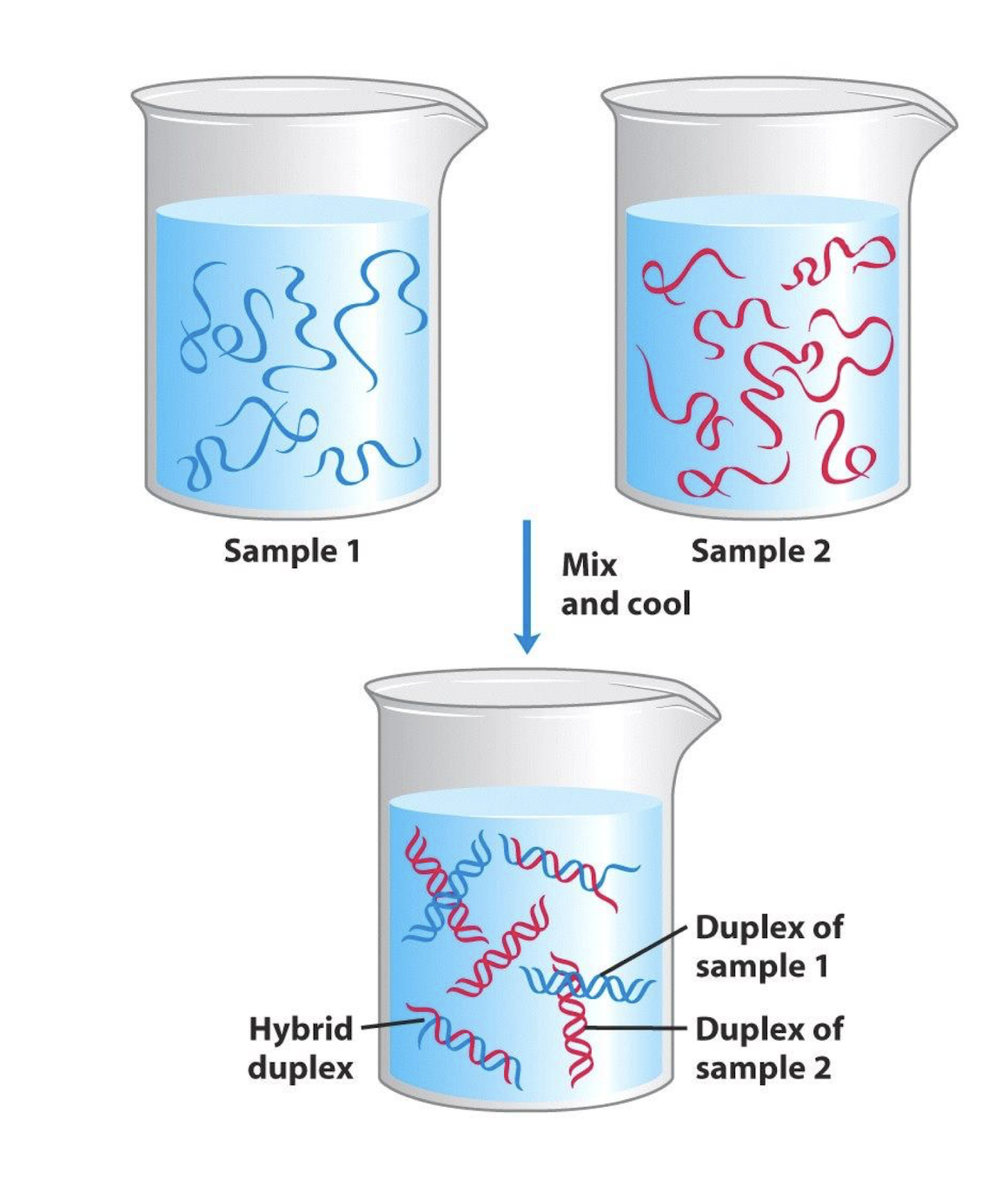
DNA Hybridization
The mixing of two different denatured DNA samples that undergo renaturation to form a duplex mix, containing one strand from one sample and one from the other
Intrastrand Base Pairing
Base pairing of nitrogenous bases within the same nucleic acid strand through folding of the strand, occurring in RNA and DNA
Interstrand Base Pairing
Base pairing of nitrogenous bases from different nucleic acid strands through Watson Crick base pairs, occurring in DNA