AP Pre Calc unit 2
 Call Kai
 Learn
Learn Practice Test
 Spaced Repetition
 Match
Match Flashcards
 Knowt Play
1/20

There's no tags or description
Looks like no tags are added yet.
Name | Mastery | Learn | Test | Matching | Spaced | Call with Kai |
|---|
No analytics yet
Send a link to your students to track their progress
21 Terms
Arithmetic sequence formula
an=ak + d(n-k)
Geometric sequence formula
an = ak (R)^n-k
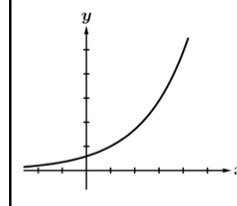
Describe the function
Increasing at an increasing rate 2(3)^x
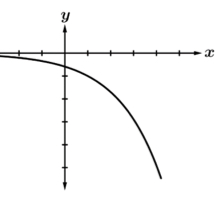
Describe the function
Decreasing at a increasing rate -3(2)^x
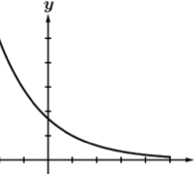
Describe this function
Decreasing at a decreasing rate 3(1/2)^x
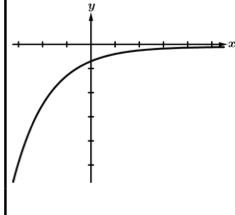
Describe this function
Increasing at a decreasing rate -3(1/2)^x
Logarithmic function reasoning
The inputs over consecutive equal-length output-value intervals are proportional.
Exponential function reasoning
The outputs over consecutive equal-length input-value intervals are proportional.
What is equivalent to the function y+4³x?
64^x
Which of the following functions is an equivalent form of the function 𝑦 = 3^𝑥+3?
𝑦 = 27∙3^𝑥
Which of the following functions is an equivalent form of the function 𝑓(𝑥) = 4^𝑥−2?
1/16(4)^x
What is an example of exponential growth?
A>0 B>0
What is an example of exponential decay?
A>0 1>B>0
inverse functions are created by switching:
x and y and solve for y
If a linear model was used but there is no pattern on the residual graph, then;
The linear model was appropriate because there is not a clear patter in the graph of the residuals.
If the graph on a semi log plot appears logarithmic, what is the data?
Linear
If the semi-log graph appears linear, what is the data?
Exponential
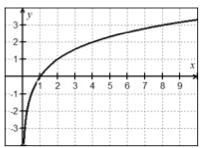
Describe this graph:
Normal log function, increasing at a decreasing rate, concave down
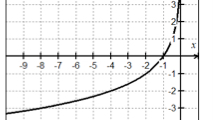
Describe this graph
Reflected across x and y axis, concave up
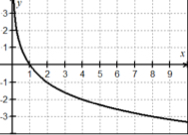
Describe this graph:
Reflected across x axis, -log3x, concave up
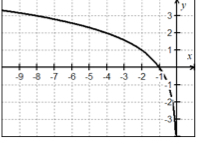
Describe this graph:
Reflected across y axis, log3-x, concave down