Biology: Topic 4: Tour of the Cell
 Call Kai
 Learn
Learn Practice Test
 Spaced Repetition
 Match
Match Flashcards
 Knowt Play
1/20

There's no tags or description
Looks like no tags are added yet.
Name | Mastery | Learn | Test | Matching | Spaced | Call with Kai |
|---|
No analytics yet
Send a link to your students to track their progress
21 Terms
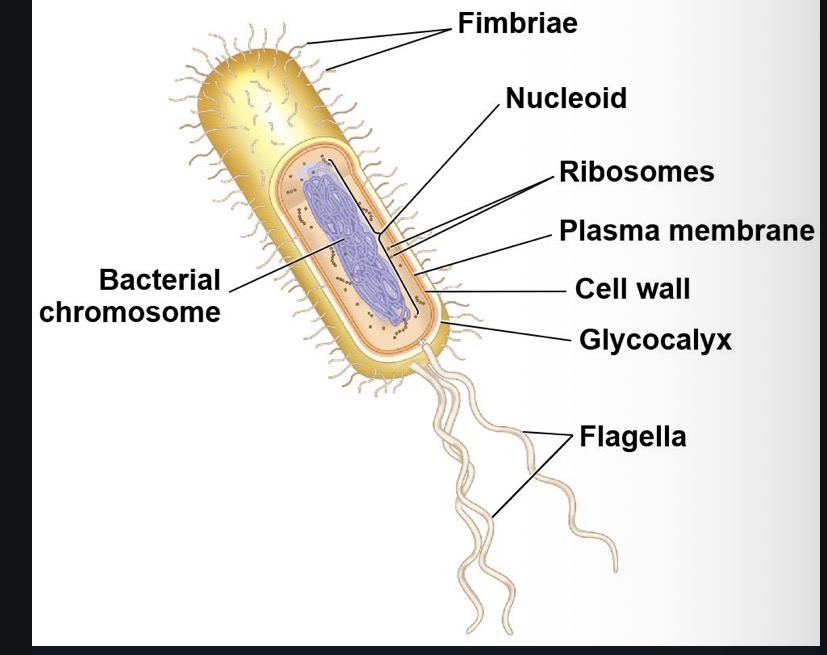
What is the glycocalyx?
Some prokaryotic cells
A carbohydrate layer outside the cell wall involved in adhesion and evading the immune system
What is a fimbria (plural fimbriae)?
some prokaryotic cells
Protein filaments also for adhesion
What is a flagellum?
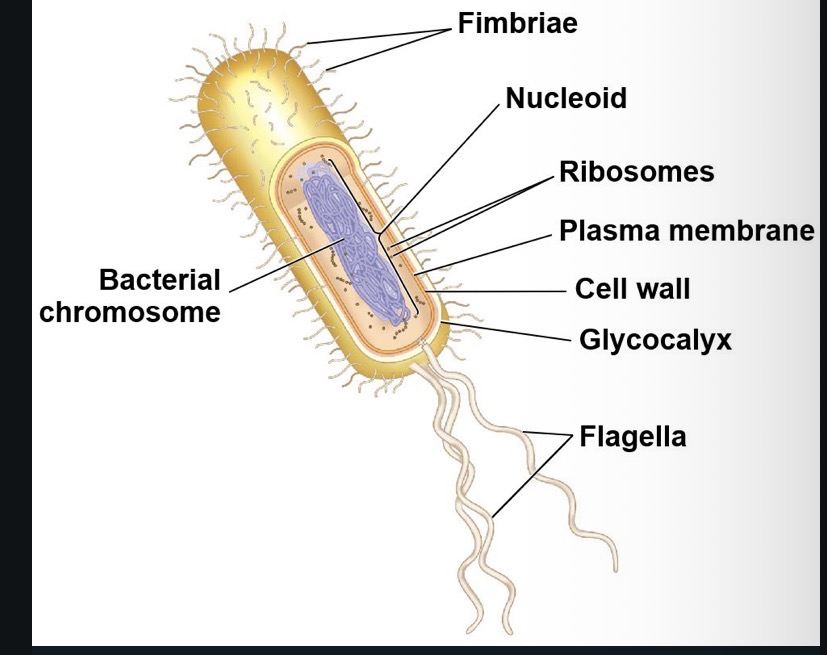
some prokaryotic cells
Rotating protein corkscrews outside the cell membrane used for locomotion
Different than eukaryotic flagella
What are plasmids?
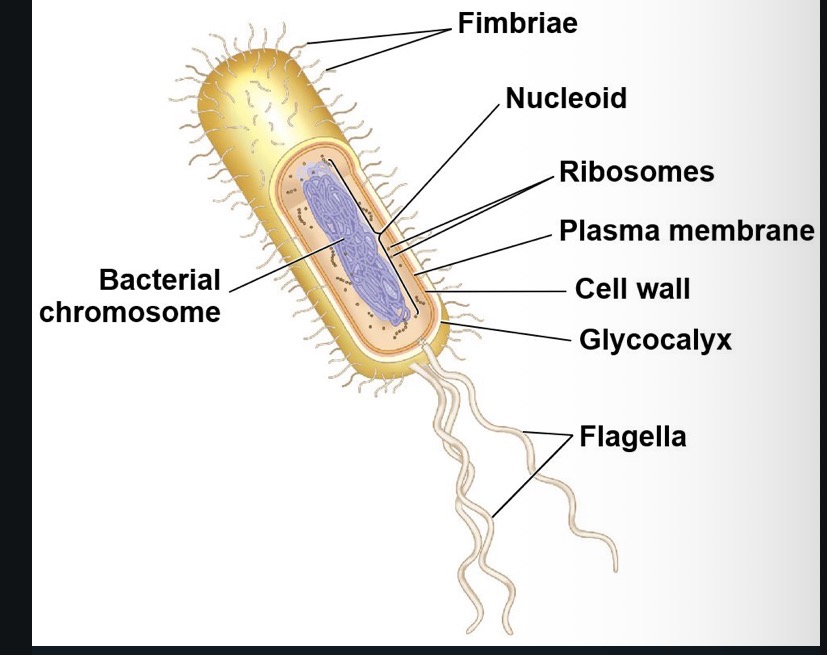
some prokaryotic cells
Small circlular DNA molecules in addition to the main chromosome, often with genes that confer antibiotic resistance or other nasty traits, can be transferred between cells
Components common to all cells
Plasma membrane
Cytosol
Ribosomes
DNA
Components found in many or all eukaryotic cells
nucleus- contains multiple linear chromosomes
Nuclear envelope - pair of lipid bilayers with space between them
Nucleoli - site of assembly of ribosomal subunits
Chromatin- DNA bound to histones
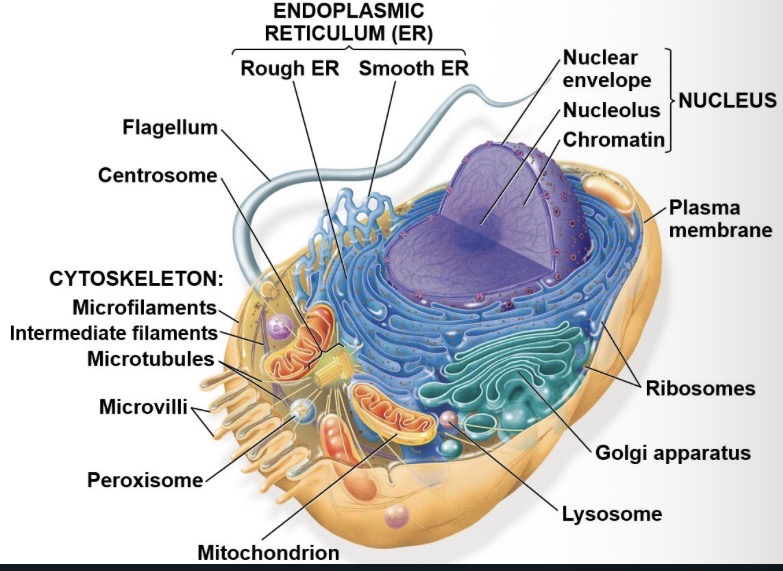
What is the rough ER?
studded with ribosomes
makes proteins destined for the Golgi body, lysosomes or secretion from the cell
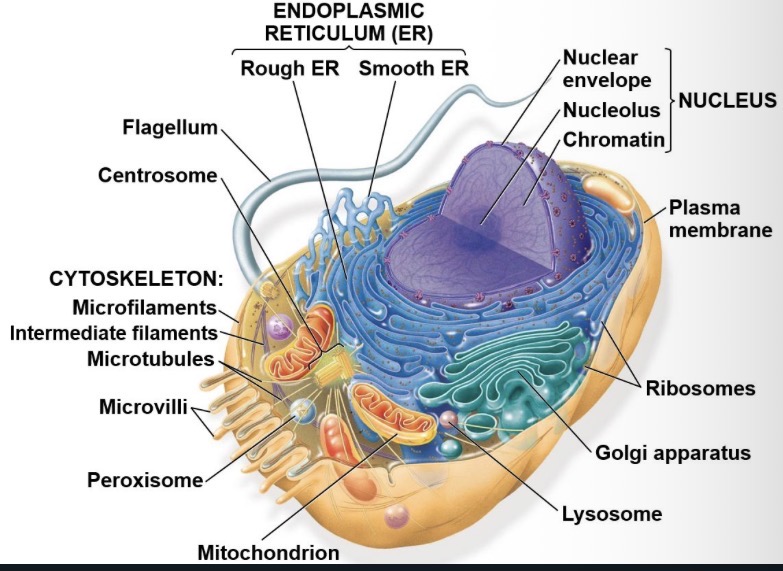
What is the smooth ER?
no ribosomes
Mostly for lipid synthesis
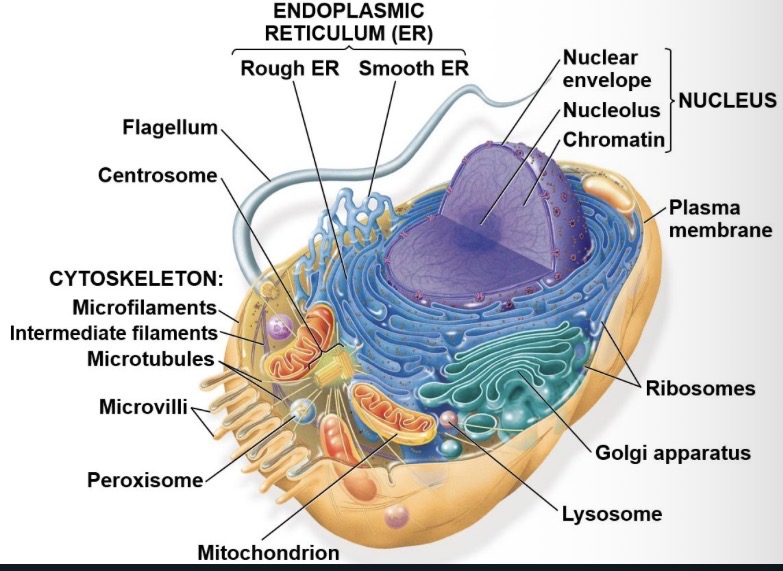
What is the Golgi body?
Processing and distribution of proteins from the rough ER
Sacs aren’t joined but vesicles carry proteins from one to the next
Vesicles move back to the ER, form lysosomes, or move to the cell membrane
What is a lysosome?
acidic sacs
Hydrolysis (breakdown) of macromolecules
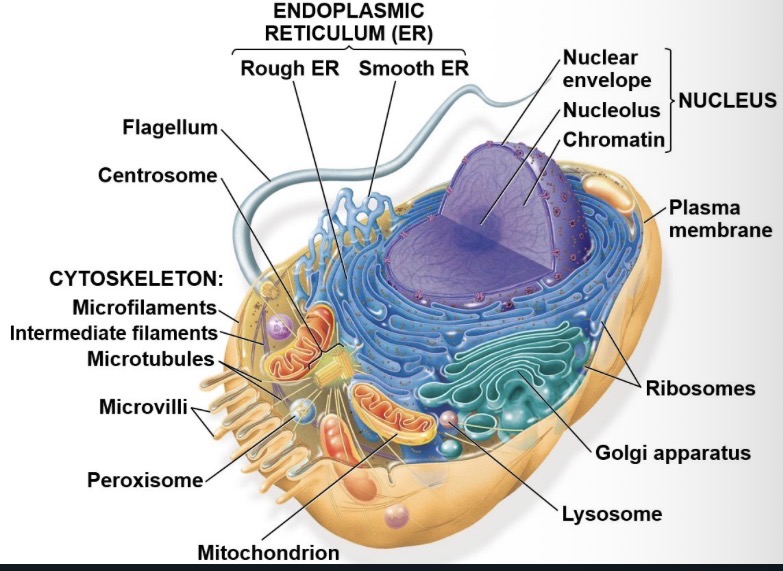
What is the mitochondria?
use oxygen to generate most of the cells ATP for energy
Cellular respiration to produce ATP
What are perioxisomes?
Contains enzymes that transfer hydrogens from various molecules onto O2, forming hydrogen peroxide, then converting it into water
For lipid and toxic substance destruction
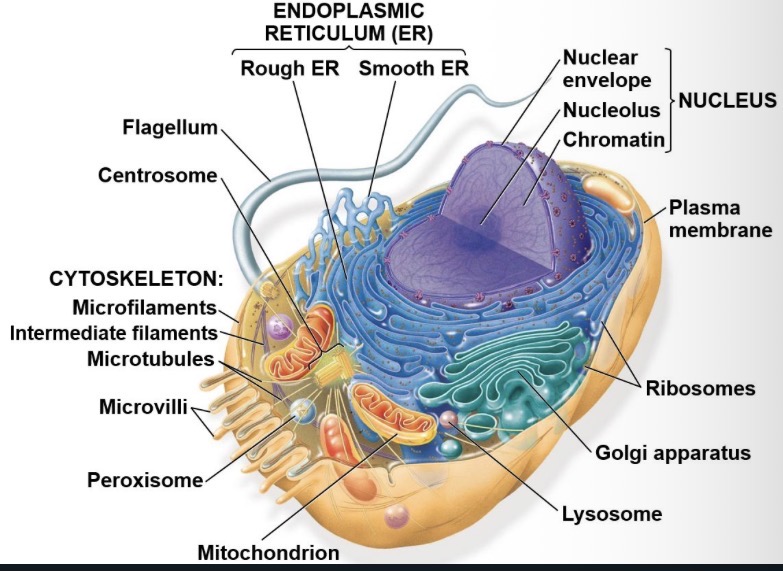
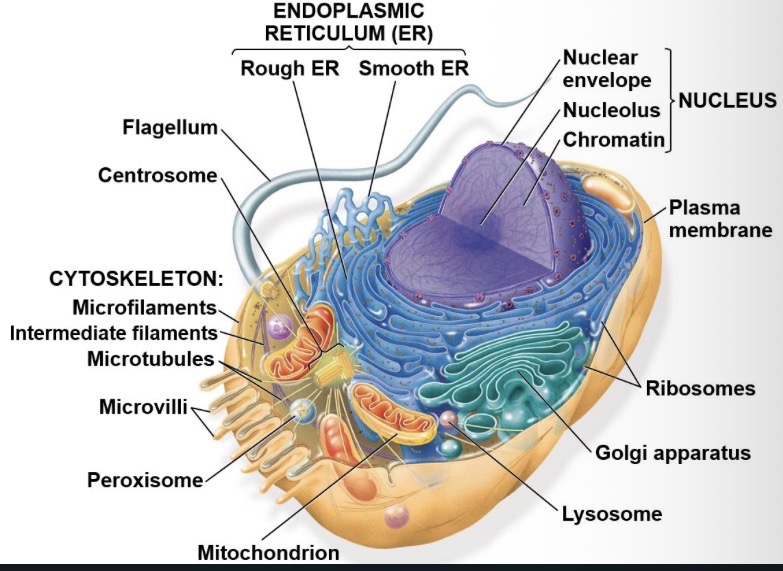
What are some of the components specific to animal cells?
microvilli - finger like protrusions that increase surface area, dont move
Flagella - move in a snake-like manner for locomotion
Cilia- shorter than flagella, for locomotion or to move fluid across the cell
Centrosome- microtubules in animal cells that radiate outwards from the centrosome
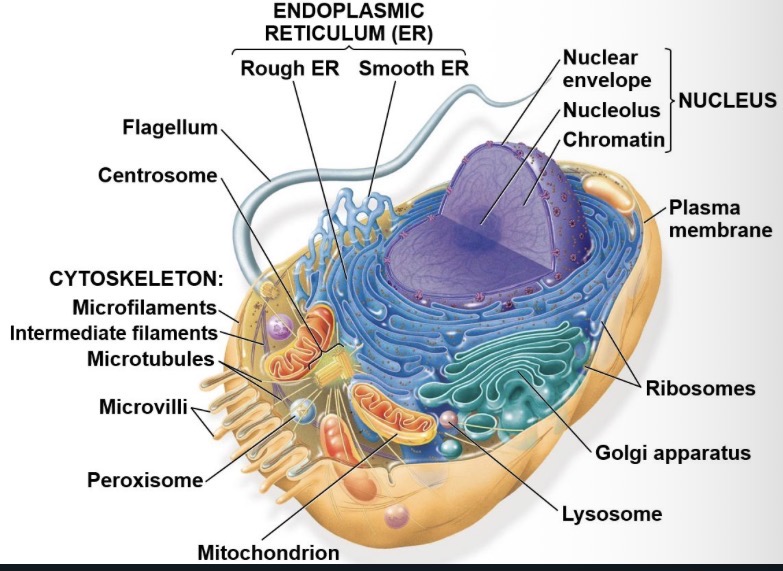
What are the components and function of the cytoskeleton in eukaryotic cells?
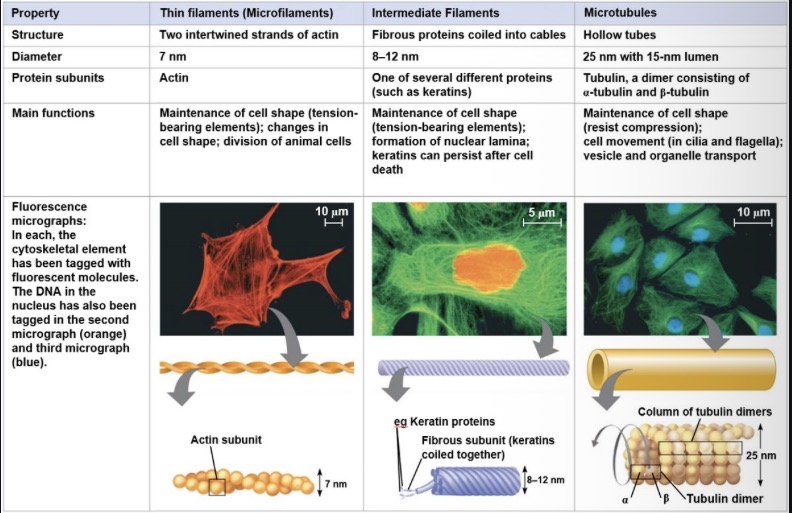
thin filaments, intermediate filaments and microtubules - protein filaments that provide shape, strength, organisation and movement
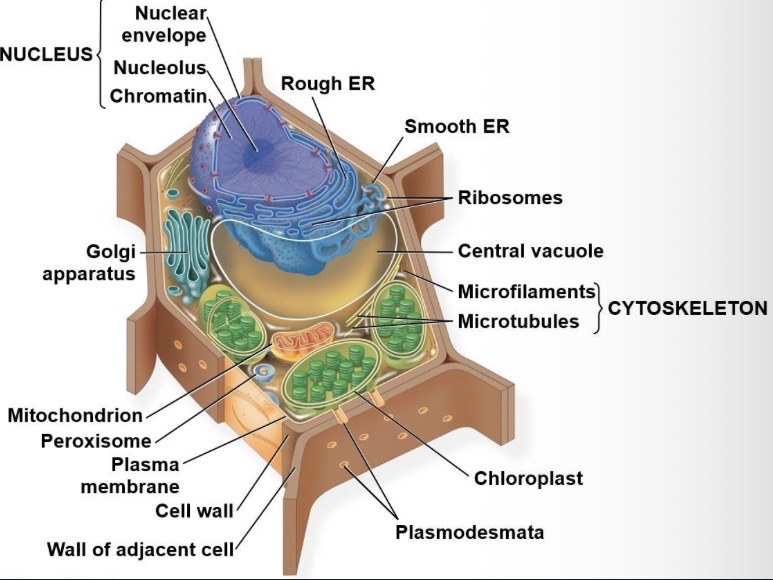
What are some components specific to plant cells?
cell wall - provides shape and strength
Central vacuole- stores water and solutes, hydrolysis of macromolecules, maintains turgor pressure
Chloroplasts- site of photosynthesis
Plasmodesmata- channels through cell walls that connect the cytoplasms of adjacent cells
What is exocytosis?
proteins to be secreted by exocytosis are make in the rough ER (e.g. could add carbohydrate to form glycoprotein)
Transported from rER to golgi by vesicles
Golgi may further process the protein
New vesicles bud from the Golgi and fuse with the cell membrane
Secretes proteins, embeds them in membrane, expands the membrane
What is the endomembrane system?
functionally linked components:
Nuclear envelope, rER and sER are physically connected
Golgi body - receives vesicles from ER
Lysosomes- bud off from Golgi
Cell membrane - receives vesicles from Golgi
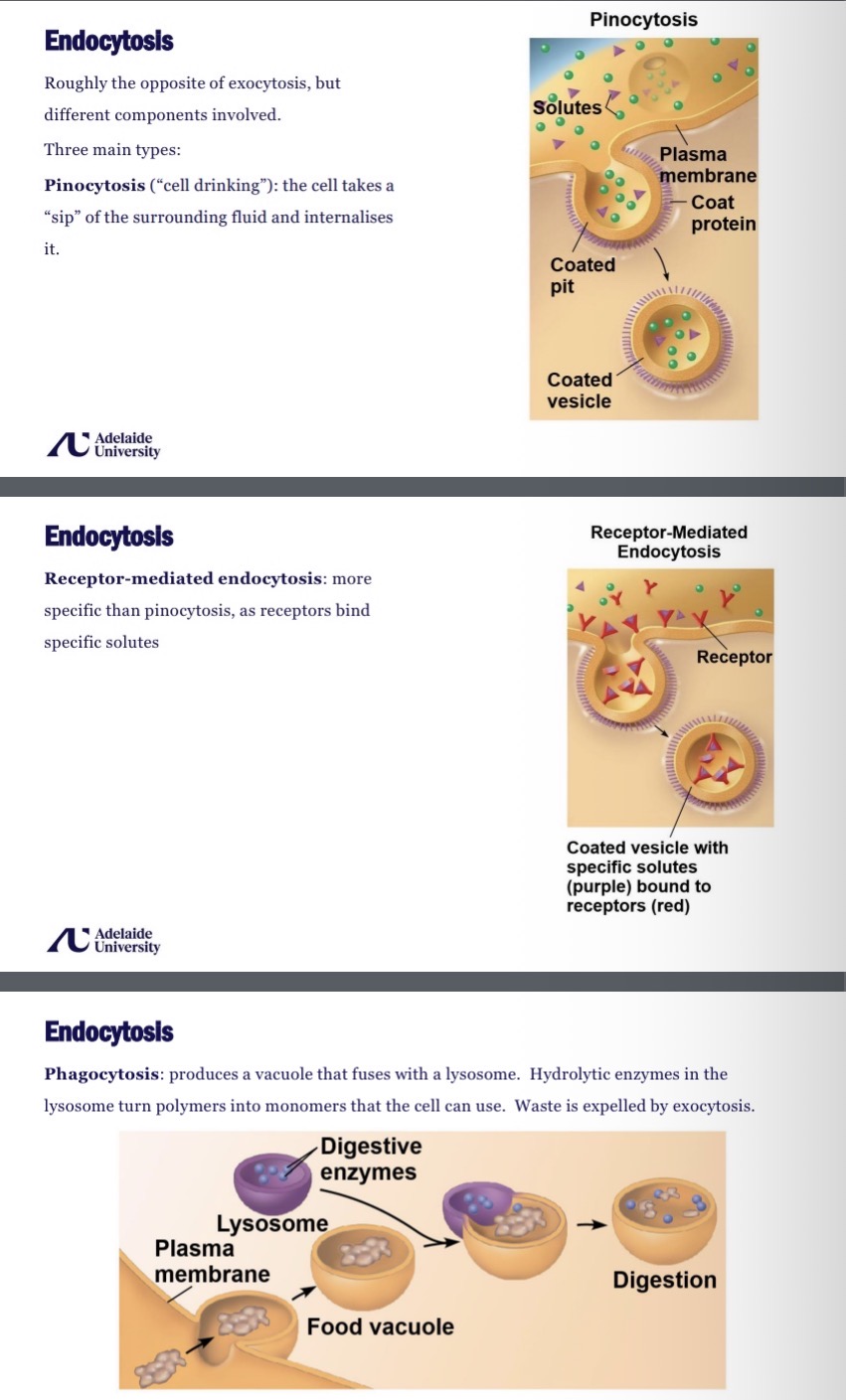
What is endocytosis?
Pinocytosis- cell takes a sip of the surrounding fluid and internalises it
Receptor-mediated- receptors bind specific solutes
Phagocytosis - produces a vacuole that fuses with a lysosome, enzymes breakdown polymers into monomers for the cell to use
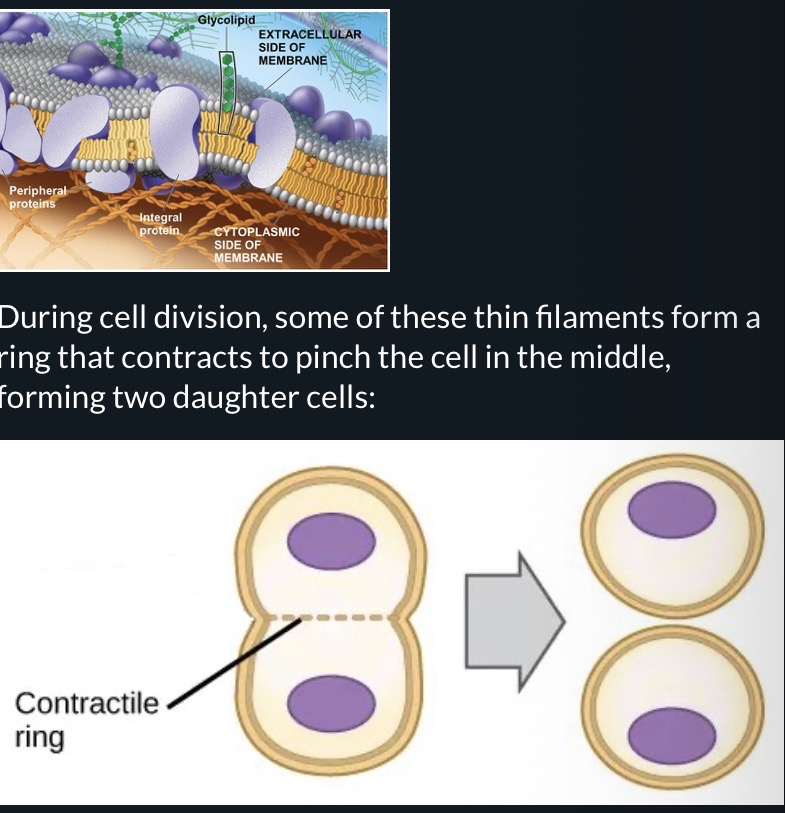
Thin filaments of the cytoskeleton?
7nm
Also called microfilaments or actin filaments
Made of protein called actin
Abundant in cytoplasms of eukaryotes, especially forming a mesh just under the cell membrane to support or change cell shape
During cell division, some of the thin filaments form a ring that contracts to punch the cell in the middle
Intermediate filaments of the cytoskeleton
8-12 nm
Variety of protein monomers
Rope like structure
Resist cell deformation
Network called the nuclear lamina sits under the nuclear envelope in human cells
Can persist long after cell death - keratins
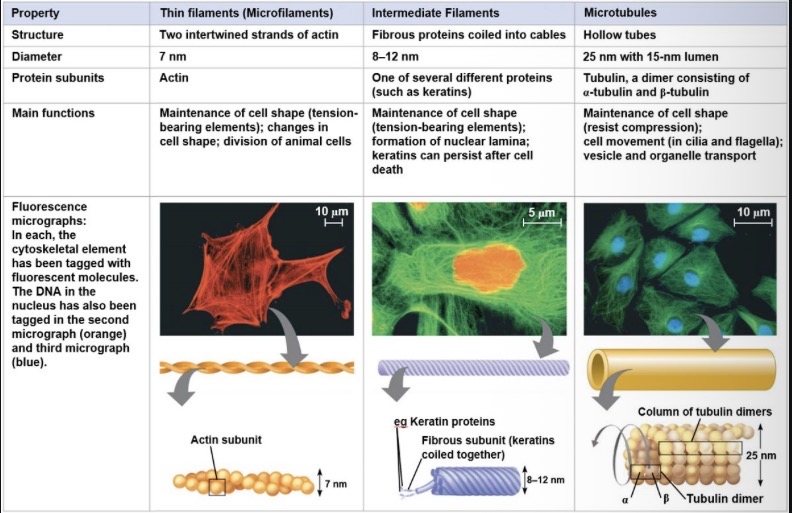
What are microtubules?
thick - 25nm
Hollow rods made of two different globular proteins - a-tubulin and b-tubulin
Grow outwards from a centrosome and radiate towards cell membrane
Stiff to resist compression
Form the cores of cilia and flagella - motor proteins use ATP to cause microtubules to slide over one another, bending them
Work like train tracks - molecular motors use ATP to pull vesicles and organelles