Lecture 8 -- Feline Upper Respiratory Tract Infection - 'Cat Flu'
 Call Kai
 Learn
Learn Practice Test
 Spaced Repetition
 Match
Match Flashcards
 Knowt Play
1/27

Earn XP
Description and Tags
These flashcards cover key points from the lecture on Feline Upper Respiratory Tract Infection, its causes, clinical manifestations, diagnosis, treatment, and prevention.
Name | Mastery | Learn | Test | Matching | Spaced | Call with Kai |
|---|
No analytics yet
Send a link to your students to track their progress
28 Terms
What are the main viral pathogens associated with cat flu?
Feline herpesvirus
Feline calicivirus
Bordetella bronchiseptica
Chlamydophila
What type of virus is Feline herpesvirus (FeHV-1)?
Double stranded DNA enveloped virus
Do NOT tend to mutate (Only one serotype at this moment)
Susceptible in environment as it can be dissolved in disinfectant
What is a key biological feature of herpesviruses?
Establish latent infection
Stress can reactivate the virus = Recurrence of disease
Can feline herpesvirus infect other species? or Is feline herpesvirus is zoonotic?
No
Herpesviruses are species-specific = Only infect cats
What are the major clinical signs of FeHV-1 infection in cats?
Severe upper respiratory disease:
Pyrexia (fever)
Lethargy
Sneezing
Dyspnoea or coughing
Nasal discharge
Hypersalivation
Eye disease:
Corneal ulceration
Keratitis = Inflammation of the cornea
Conjunctivitis
How is ocular disease caused by FeHV-1 treated?
Topical antiviral nucleoside analogues
Trifluridine
Acyclovir
What long-term complication can occur after FeHV-1 infection?
Turbinate damage → Chronic rhinitis → More prone to respiratory infections
What is the pathogenesis of FeHV-1 infection?
Oronasal infection
Incubation period (Short 2–6 days)
Because it is a acute respiratory disease
Multiplication of virus in oral/ respiratory tissue
Clinical signs resolve within 10–20 days
What type of virus is feline calicivirus (FCV)?
Single stranded RNA non-enveloped virus
Mutate easily (Large number of different strains)
Survive in environment longer because it is difficult to control by disinfectant
What are the common clinical signs of feline calicivirus infection?
Pyrexia (fever)
Sneezing
Nasal discharge
Pneumonia
Conjunctivitis
Oral ulceration
Chronic stomatitis
Lameness
Virulent systemic disease
P.S. Highlighted ones are the most classic signs
What is the “lameness syndrome” associated with FCV?
Shifting lameness between limbs
The cat may be lame on the front right, then shift to the other leg later on
Resolve without treatment
No strong evidence of permanent joint damage
Usually affects young cats
Associated with pyrexia and respiratory signs
What is chronic stomatitis?
Severe profound inflammation at the back of the oral cavity
Proliferative, tumour-like → Super painful
Difficult to treat → Cats with stomatitis often get put down
Is chronic stomatitis directly linked to Feline calicivirus?
No
“Associated with” but NOT 100% “caused by” Feline calicivirus
Since people tried to inject FCV in a healthy animal, they only got respiratory symptoms but not chronic stomatitis
What is virulent systemic disease in FCV?
Usually caused by virulent 劇毒的 FCV strain
Severe haemorrhagic syndrome, characterised by:
Facial and paw oedema
Skin necrosis and ulceration
Haemorrhage (nose or faeces)
Respiratory disease
Pyrexia
Jaundice
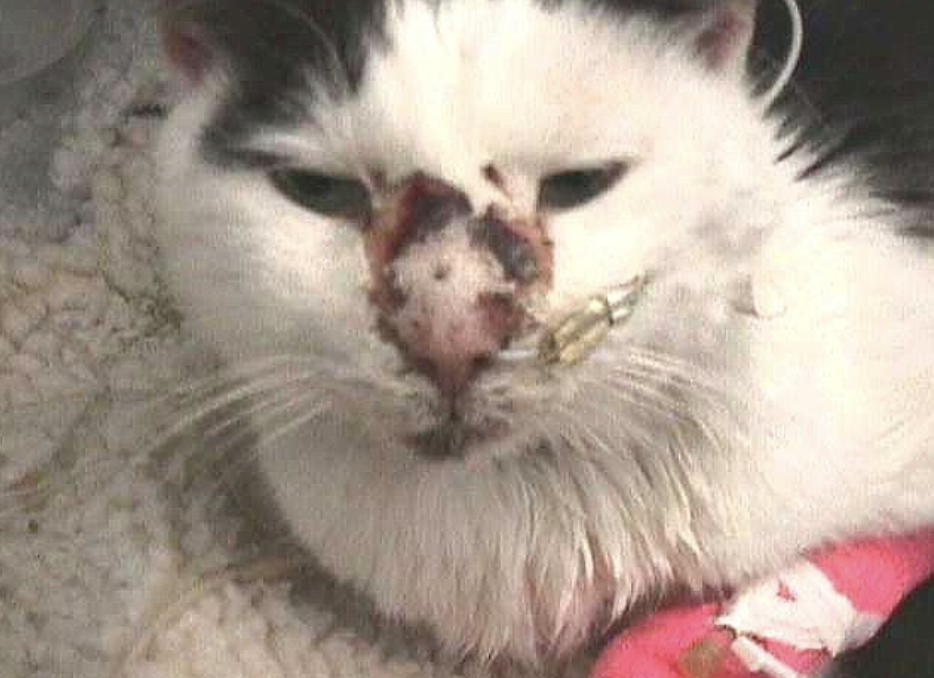
Can FCV vaccination protect cat against virulent systemic disease?
NO
How are FeHV-1 and FCV diagnosed?
Clinical signs
PCR or RT-PCR: Detects viral DNA (FeHV-1) or RNA (FCV)
Virus isolation (Banned due to COVID)
Swab from oropharynx → Culture the virus in lab (may take up to 2 weeks)
Serology
Histopathology
Observe for issue changes if biopsied
Among the diagnostic tests for FeHV-1 and FCV, which is the most commonly used in practice?
PCR, together with clinical sign
How are FeHV-1 and FCV transmitted?
Direct contact: via infectious discharges e.g. saliva, nasal or ocular secretion
Indirect contact: via contaminated personnel, formites and environment
Droplet transmission: Sneezed macrodroplets (~1m)
Aerosol transmission (Less important)
Cats have small tidal volume, they don’t tend to create an infectious aerosol when they breath
What does it mean for a cat to be a carrier of a virus?
A cat that recovered from acute infection, appears clinically normal, but still harbors and may shed the virus.
How does FeHV-1 behave in carrier cats?
A cat is infected with FeHV-1 and recovered → Become clinically normal + The animal is not shedding the virus → Virus becomes latent in the nervous system after acute infection
Stress (pregnancy, steroids, illness) can reactivate virus
Reactivation may or may not cause clinical signs BUT the animal can shed the virus during this time, potentially infecting other cats
How does FCV behave in carrier cats?
Even the infected cats have recovered and clinically normal, they still continue shedding the virus for 75days (half life ~75days)
Why can cats remain persistently infected with FCV?
FCV is a single-stranded RNA virus → High mutation rate →The virus evolves rapidly inside the cat, constantly changing its surface proteins → The cat’s immune system cannot fully neutralize all viral variants = Persistently infected
What type of organism is Chlamydophila felis?
Gram-negative, obligate intracellular parasite
How is Chlamydophila felis transmitted?
By close contact between cat
What are the clinical signs of Chlamydophila felis?
Mostly does NOT cause respiratory disease
Unilateral conjunctivitis → And become bilateral later on
Chemosis = Swelling of third eyelid and conjunctiva
How is Chlamydophila felis diagnosed?
PCR
How is Chlamydophila felis treated?
Systemic doxycycline
Is there vaccination worked against Chlamydophila felis?
Yes
BUT NOT recommended every cat gets it
Might use it for cats in rescue shelter