GCSE OCR HISTORY B CRIME AND PUNISHMENT
 Call Kai
 Learn
Learn Practice Test
 Spaced Repetition
 Match
Match Flashcards
 Knowt Play
1/190

There's no tags or description
Looks like no tags are added yet.
Name | Mastery | Learn | Test | Matching | Spaced | Call with Kai |
|---|
No analytics yet
Send a link to your students to track their progress
191 Terms
What did the church teach in Britain in 1250-1500
Sinners would go to hell
Who did most Peasants work for (1250-1500)
Lord of the Manor
Who ruled the land from 1250-1500
Lords who supported the King during times of war
Who controlled counties 1250-1500
Sheriff
What did people in 1250-1500 rely on
The land for work and food
Why were Peasants houses simple in 1250-1500
Not much money so could not afford complex structures
Why did the Law force men to carry weapons from 1250-1500
In case of war
What were most people from 1250-1500
Illiterate
Who did the people of 1250-1500 believe appointed the King
God
Cause of crime (4)
1) war of the roses
2) famine from failed harvest
3) strip farming
4) the Black Death
Felonies
serious crimes
Felonies examples in 1250-1500
Murder
Stealing goods worth more than 12d
Felonies punishments 1250-1500
Hanging
Define Outlaw
People who were on the run to escape the law
What did Outlaws in 1250-1500 typically do
Ambush travellers and burgle houses
Petty crimes
less serious crimes
Examples of Petty crimes in 1250-1500
Getting into debt
Limiting harm to people or property
What were the majority of crimes in 1250-1500
Non-violent
Most common crime in 1250-1500
Theft
When was the Black Death?
1348
When was the War of the Roses
1455-1485
In the 15th Century (1401-1500) what became a common crime in particular with the War of The Roses
Lords using their private armies to control the local area
Retainers
Private army
Why was there an increase in crime during the 14th century
Dreadful famine due to Hunger and debt
Define Homicide
the killing of one human being by another
Who did sudden deaths have to be reported to during 1250-1500
Coroner
What was included as Homicide in 1250-1500
Justified homicide
Homicide in self-defence
Accidental homicide
Suicide
Murder
Define strip farming
The farming of people in areas of land in strip shapes so land was close
What was the increased risk of crime due to strip farming during 1250-1500
People were working closely and therefore tensions rose and this led to warfare
Define Vagrancy
People wandering from place to place in search of work
When did Vagrancy become a problem
After the Black Death 1348
What was it illegal for a labourer to do after 1351
All able bodied men forced to stay in their 'Hundred"
Hundred
A way in which counties were divided
Medieval manors were allowed to do what in 1250-1500?
Devise their own laws and punishments
Define Scolding
The crime of using offensive language or abusive speech in public
When did Treason become a crime during 1250-1500
1351
Treason
Betrayal of one's country
What was included as Treason during 1250-1500
Plotting against monarch
Counterfeiting coins
Killing husband
Heresy
the crime of holding a belief that goes against established doctrine
Who supervised law and order in the hundred during 1250-1500
Two chief constables, usually wealthy farmers
What were adult men broken into in 1250-1500
Tithings (if one of the group broke the law it was the responsibility of the others to make him show up to court)
Hue and Cry
in medieval England, a call for mutual aid against trouble or danger
If you failed to join the Hue and Cry in 1250-1500 then you faced what?
A fine
Crimes 1250-1500 summary
- murder
- larceny
- debt
- limited harm to a person or property
- theft
- vagrancy (after Black Death)
- scolding (1350)
- Treason (1351)
- Heresy (1500
Punishments 1250-1500
- Hanging
- Thrown if cliff in Dover as form of hanging
- Hung, drawn and quartered
- Burnt alive
- fines
- cucking stools
- stocks
- pillorys
- prison
Who patrolled towns at night during 1250-1500
Watchmen
What did the Sheriff have to be able to track down criminals
Posse (a group of men)
What was a Parish Constable in 1250-1500
A law-enforcement officer
What was the role of a Sheriff in 1250-1500
King's law enforcer in each county
What sort of cases did Royal Courts hear in 1250-1500
Most serious crimes and were overseen by a royal judge
Where were jury drawn from in 1250-1500
Local area
Acronym for Justices of Peace
JP's
Who took over hundred courts in 1250-1500
Justices of Peace
After 1388 What did the Justices of Peace do instead of regular courts
Quarter sessions (held 4 times a year for courts)
What sort of courts dealt with most crimes in England (1250-1500)
Manor Courts
Who ran and participated in Manor Courts (1250-1500)
Lord of the Manor led and wealthy villagers made up the jury
Why were Medieval (1250-1500) juries often unwilling to convict
Know background and leniant
Who received fines from the Hundred courts and Quarter sessions in 1250-1500
King
Who received fines from Manor Courts in 1250-1500
Lord of the Manor
What was a typical punishment for a woman who was caught scolding in 1250-1500
Cucking stool
Cucking Stool
A sort of wooden toilet
What public humiliation was used for traders in 1250-1500
Stocks or Pillory
Who did Prisoners have to pay to keep them in prison from 1250-1500
Gaoler (Jailer) for bedding, food and drink
What did Hanging often involve in 1250-1500
Slow and drawn-out strangulation
Form of hanging used at Dover in 1250-1500
thrown off cliff (oof)
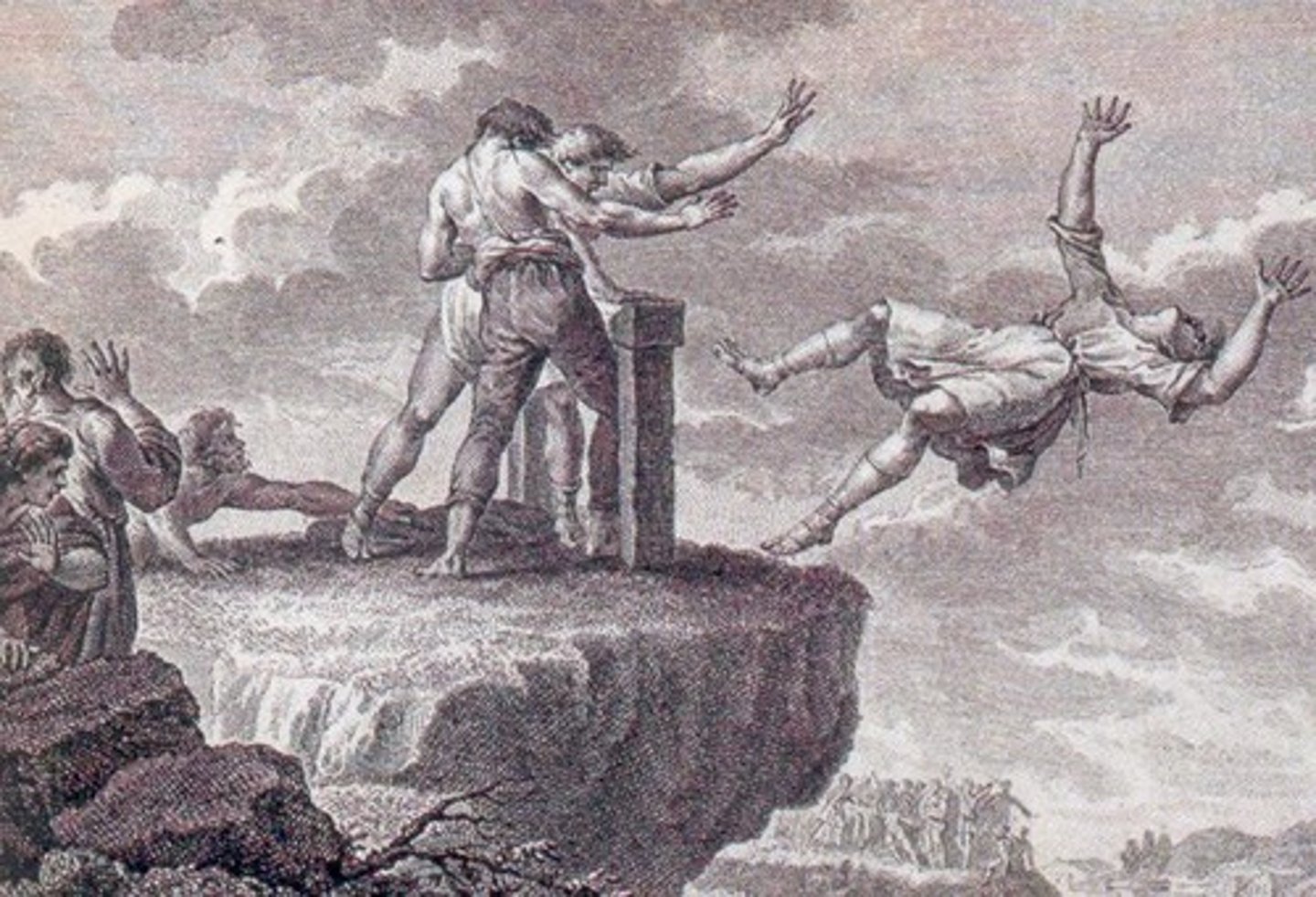
Hanging, drawing and quartering uses in 1250-1500
Used for crimes such as treason or counterfeiting coins
Being burned alive in 1250-1500 usually was used for
A wife killing her husband or other minor Treason
What happened to possessions for those who had committed a serious crime
Went to the King
What did criminals do to avoid punishment (gangs)
Try to run away and join gangs
What did criminals do to avoid punishment (cathedrals)
Offered sanctuary for 40 days and nights, staying meant they could confess and then abjure the realm (leave england)
What did criminals do to avoid punishment (friends)
If they had powerful friends, such as a jury at the manor courts, this could help them avoid trial
Other ways to escape the death penalty
- if they refused to plead guilty or not guilty they were sent back to gaol to live on rotten bread and dirty water, they avoided the king getting their property but died a long unpleasant death
- Jurors at assize courts often knew the criminal on trial and would try help
- Wealthy criminals could buy a pardon from the king
- kings often pardoned criminals in times of war if they joined the army
- A death sentence was often changed to a fine for pregnant women
What did most people continue to do for work (1500-1750)
Work in countryside ( and bad harvests could lead to hunger)
What did more people begin to do for work (1500-1750)
Wander around for work
What form of travel became popular after roads were built (1500-1750)
Stagecoach
What grew in power in 1500-1750
Power of state (Tudors)
What did the invention of the printing press result in during 1500-1750
More people could read or write
What did Puritans try to enforce during 1500-1750
More Christian behaviour
What did the reformation lead to in 1500-1750
Religious changes
What did the government charge high taxes on in 1500-1750
High value goods
What was the growth of population during 1500-1750
2.4 million in 1520
4.1 million in 1600
By 1750 How much of the population lived in towns
1/5
Population and poverty led to more ____________ in 1500-1700
Vagrancy
What new crimes were introduced by the church in 1500-1750 (5)
Drinking
Swearing
Not attending church
Scolding
Sexual immorality
Witchcraft times
1500-1650
Peaks:
1580-90 during famine
During civil war
Why was there a growth of Witchcraft during 1500-1750
Widespread belief in magic and the devil
Who did accusations of Witchcraft often begin between
Rich landowners and a poor, elderly woman
What was a popular product to smuggle during 1500-1750
Tobacco (import duties of 30%)
Why were roads particularly dangerous during 1500-1750
Poor quality and unlit and people often carried possessions with them
Was there a police force in 1500-1750
No
Was there a professional judge during 1500-1750
No, just amateur
Why were more Watchmen employed
Patrol the streets of busier towns
What is an Assize
Country's main courts in 1250-1500
What did the Assizes deal with in 1500-1750 (5)
Murder
Manslaughter
Larceny (stealing goods over 12d)
Witchcraft
Rape
What sort of crimes did Manorial courts deal with in 1500-1750
Crimes committed by people of the Manor eg letting the animals out
Public Penance in 1500-1750
A public humiliation to stand in front of church to admit sins
What were the Pillory used for in 1500-1750
Traders who traded unfairly pelted with rotten food, stones and excrement (POO!)
Disorderly women were often placed in _____________ in 1500-1750
Cucking stool and paraded around
Ducking stools
Offender tied to chair with iron band and repeatedly lowered into a river or pool
A punishment used for Scolds in 1500-1750 was
Scold's bridle (a metal hat with a projecting spike that pushed into the mouth)