P3 Electricity
 Call Kai
 Learn
Learn Practice Test
 Spaced Repetition
 Match
Match Flashcards
 Knowt Play
1/52

Earn XP
Description and Tags
From PMT
Name | Mastery | Learn | Test | Matching | Spaced | Call with Kai | Chat |
|---|
No analytics yet
Send a link to your students to track their progress
53 Terms
What can happen when insulating materials are rubbed together?
They can become (statically) electrically charged.
Why can insulators become electrically charged when rubbed together?
Electrons are rubbed from one material onto the other.
What happens to the material gaining electrons?
It becomes negatively charged.
What happens to the material losing electrons?
It becomes equally positively charged.
What is charging?
The addition or removal of electrons from a material.
How can charge be detected?
Using a gold leaf electroscope; the gold leaf is repelled by positive charge.
What happens when two electrically charged objects are brought close together?
They exert a force on each other.
What happens when two oppositely charged objects are brought close together?
They exert an attractive force on each other and attract.
What happens when two identically charged objects are brought close together?
They exert a repulsive force on each other and repel.
Why are most bodies neutrally charged?
They have an equal number of positive and negative charges.
Give an example of a non-contact force.
The repulsive or attractive force acting between two electrically charged objects.
What is an electric field?
A region in which a charged object will experience a non-contact electrical force.
Where can electric fields be found?
Surrounding any charged object.
Describe the electric field around a charged particle.
Strongest closest to the object and decreases in strength as you move away from the object.
What happens to the force between two charged objects when they are moved closer together?
The force between them becomes stronger as the separation reduces.
What precaution must be taken to prevent the build up of static charge in unwanted spark situations?
Any surfaces that are rubbing against each other should be earthed to allow the materials to discharge.
What is electric current?
The flow of electrical charge.
State the equation linking charge, current and time.
Q = I t (Charge in Coulombs, Current in Amperes, Time in Seconds)
What can be said about the value of current at any point in a single closed loop?
Current is the same at all points in a closed loop.
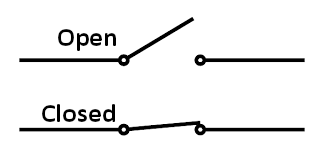
What is the circuit symbol for a switch?
What is the circuit symbol for a cell?
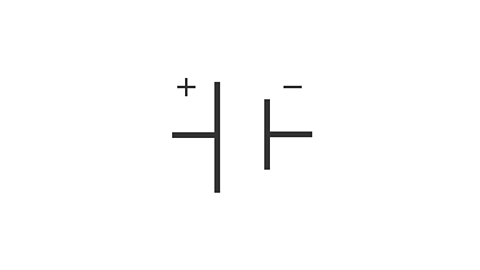
What is the circuit symbol for a battery?

What is the circuit symbol for a lamp?

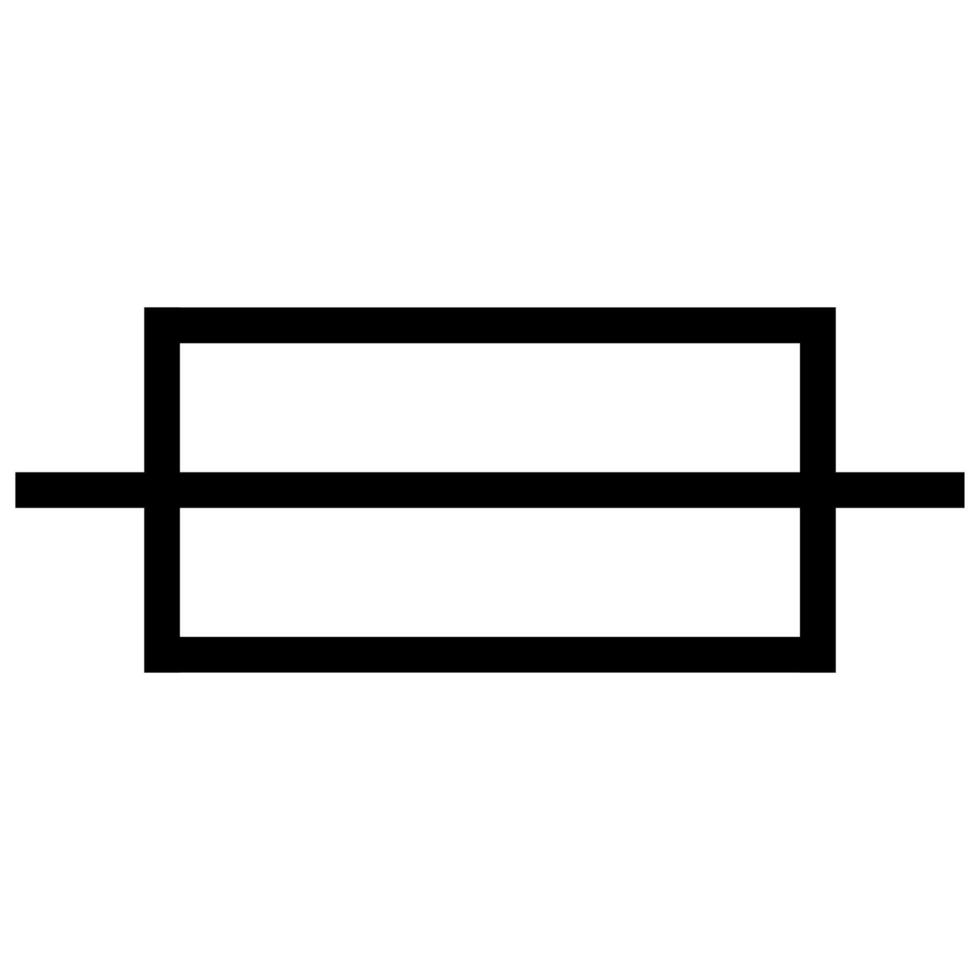
What is the circuit symbol for a fuse?
What is the circuit symbol for a voltmeter?
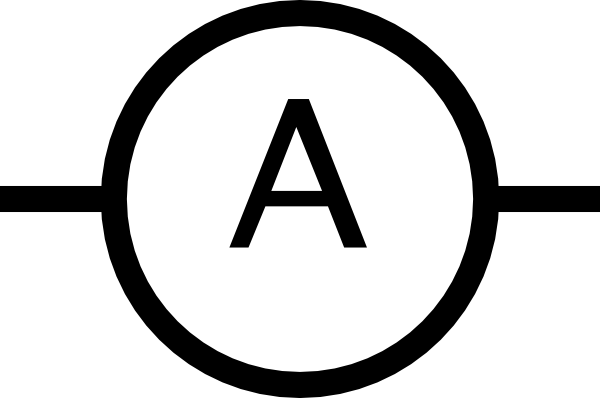
What is the circuit symbol for an ammeter?
What is the circuit symbol for a diode?

What is the circuit symbol for a resistor?

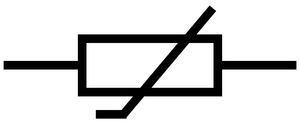
What is the circuit symbol for a thermistor?
What is the circuit symbol for a variable resistor?

What is the circuit symbol for an LDR?
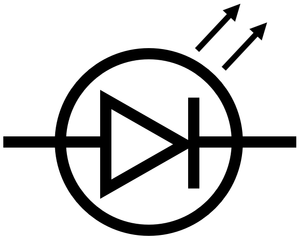
What is the circuit symbol for an LED?
What is a series circuit?
A series circuit is one in which the same charge passes through all components, so the current through each component is the same.
What is a parallel circuit?
A circuit in which the charge is split between branches.
What two factors does the current in a circuit depend on?
Potential Difference (V), 2. Resistance (R)
What equation should be used to calculate potential difference if current and resistance are known?
V = I R (Units: Potential Difference (V), Current (A), Resistance (Ω))
What is an 'Ohmic Conductor'?
A conductor for which current and potential difference are directly proportional; resistance remains constant as current changes; temperature must be constant.
List four components for which resistance is not constant as current changes.
- Lamps, 2. Diodes, 3. Thermistors, 4. Light Dependant Resistors (LDRs)
What happens to the resistance of a filament lamp as the temperature increases?
Resistance increases due to more collisions with electrons as they flow through the metal.
What is different about current flow through a diode?
The current only flows in one direction; resistance is very high in the other direction.
What happens to the resistance of a thermistor as temperature increases?
The thermistor's resistance decreases.
Give two examples of when a thermistor may be used.
- In a thermostat to turn a heater on below a certain temperature. 2. In a freezer to turn on a cooler when the temperature becomes too high.
What happens to the resistance of a LDR as light intensity decreases?
The LDR's resistance increases.
Give an application for a LDR.
Street lamps or night lights; they turn on when light levels become low enough.
What are the two ways that a component can be connected in a circuit?
- Series (same loop), 2. Parallel (adjacent loop)
How does the potential difference across two components vary when connected in series and parallel?
Series: Total P.D is shared between each component; Parallel: P.D across each component is the same.
If two resistors are connected in parallel, what can be said about their combined total resistance?
Their total resistance is less than the smallest of the two individual resistances.
If two resistors are connected in series, what can be said about their total resistance?
Their total combined resistance is equal to the sum of the two individual resistances.
State two equations for the power of a circuit.
P = I V, P = I² R (Units: Power (Watts), Current (Amperes), Potential Difference (Volts), Resistance (Ohms))
State an equation linking energy transferred, power and time.
E = P t (Units: Energy (Joules), Power (Watts), Time (Seconds))
State an equation linking energy transferred, charge flow and potential difference.
E = Q V (Units: Energy (Joules), Charge (Coulombs), Potential Difference (Volts))
How should a voltmeter be connected in a circuit?
In parallel to the component that you are measuring the potential difference for.
How should an ammeter be connected in a circuit?
In series with the branch you are measuring the current for.