MCAS/FINAL PHYSICS REVIEW
 Call Kai
 Learn
Learn Practice Test
 Spaced Repetition
 Match
Match Flashcards
 Knowt Play
1/84

There's no tags or description
Looks like no tags are added yet.
Name | Mastery | Learn | Test | Matching | Spaced | Call with Kai |
|---|
No analytics yet
Send a link to your students to track their progress
85 Terms
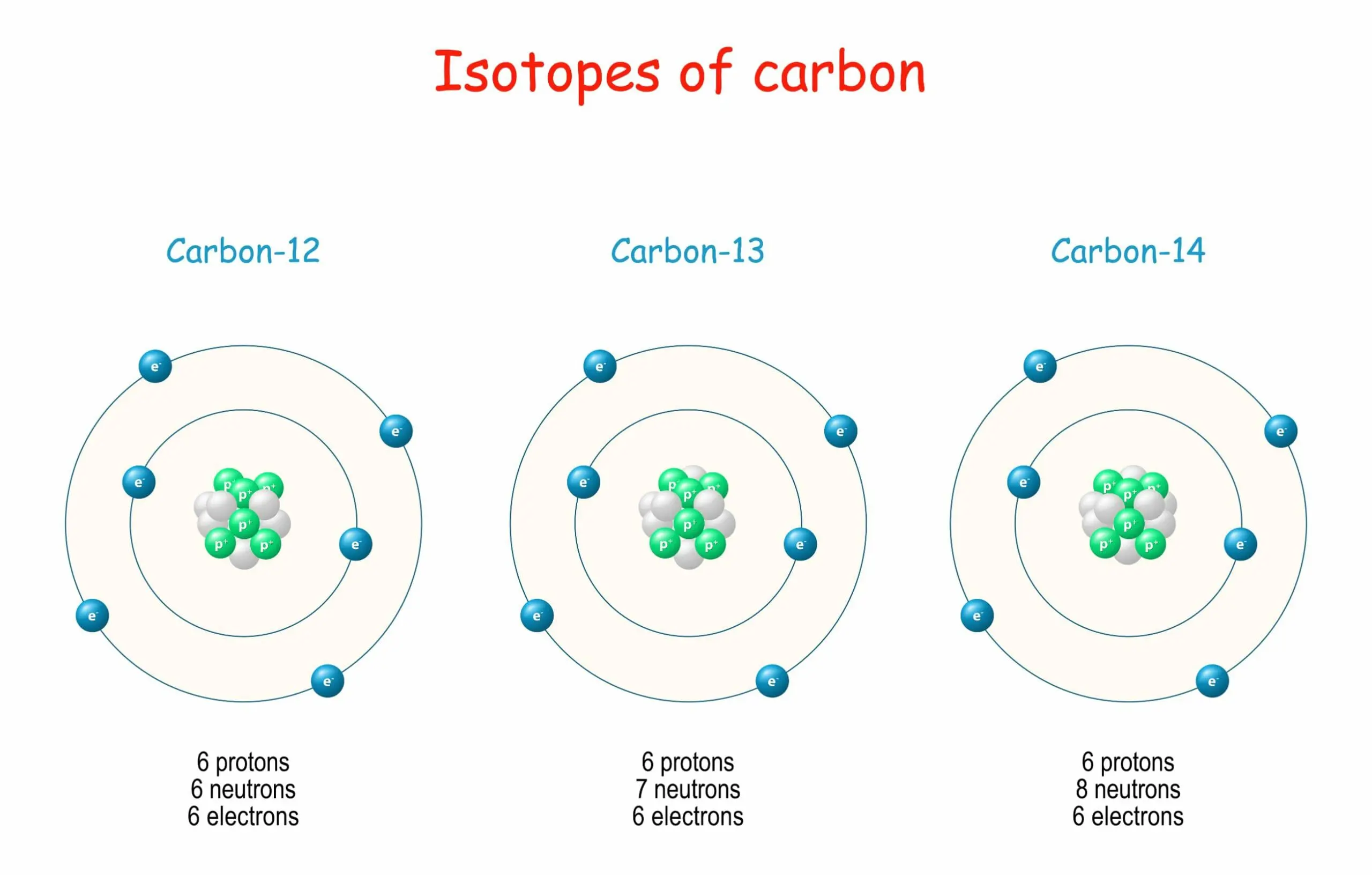
Isotopes
atoms with an unequal number of protons and neutrons (usually more neutrons)
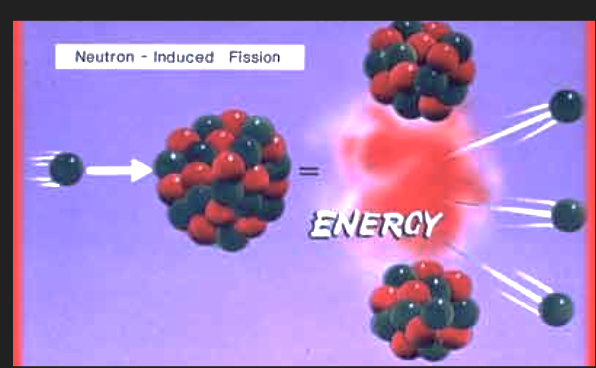
fission
the process where a heavy, unstable atomic nucleus splits into two or more smaller, lighter nuclei
ex: large unstable isotope is hit by high-speed particles
energy (light and theral energy is released)
requires less energy then fusion
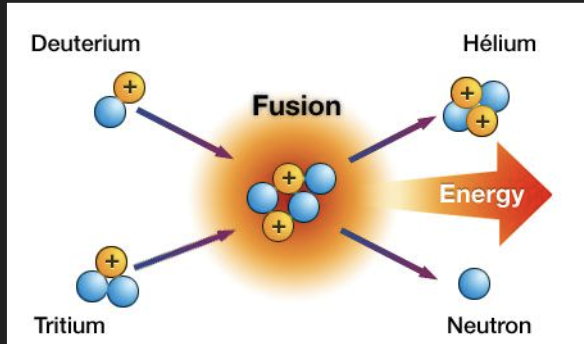
fusion
the process where two or more light atomic nuclei slam together to form a single, heavier nucleus
under extreme pressure and temperature
requires large amount of energy (in sun) and releases some
radioactive decay/nuclear decay
isotopes change by themselves and become more stable
breaking into smaller atoms/particles
influenced by atomic # & mass
types: Alpha, Beta, Gamma
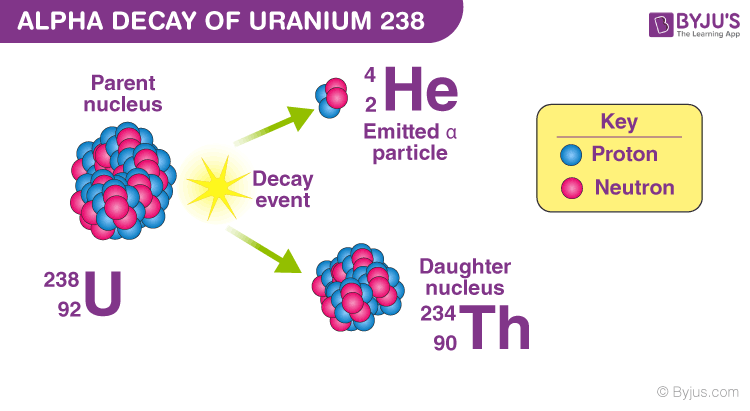
alpha decay
atom breaks into two parts and emits an helium
pair of neutron bound to pair of protons
smaller atom (whatever is left over)
MN decrease by 4 and AN decrease by 2 (turns into diff element)
release large slow-moving decay products
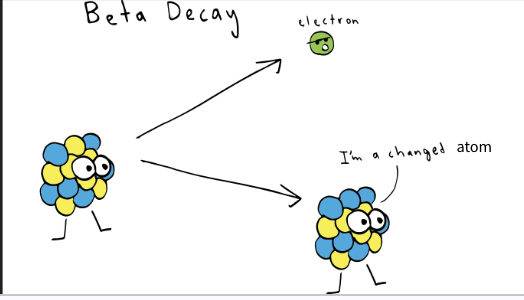
beta deacy
neutron turns into proton & releases electron to balance
turns into different element
AN increase by 1
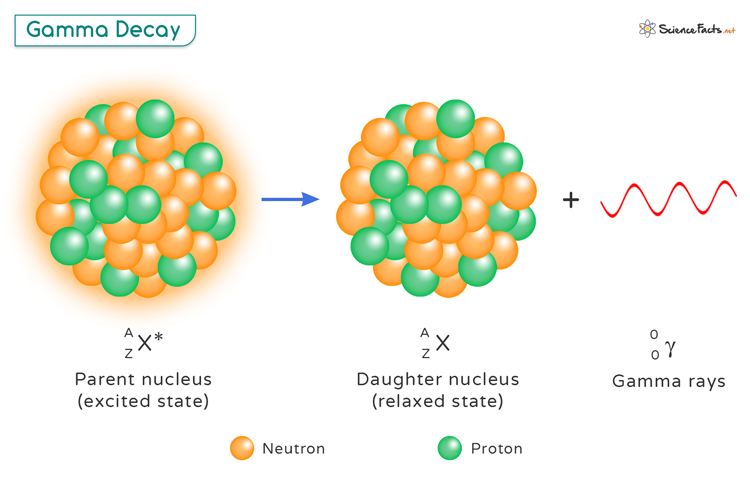
gamma decay
emits gamma ray & rearranges protons & neutrons
highest energy
no change in AN & MN and stays the same element
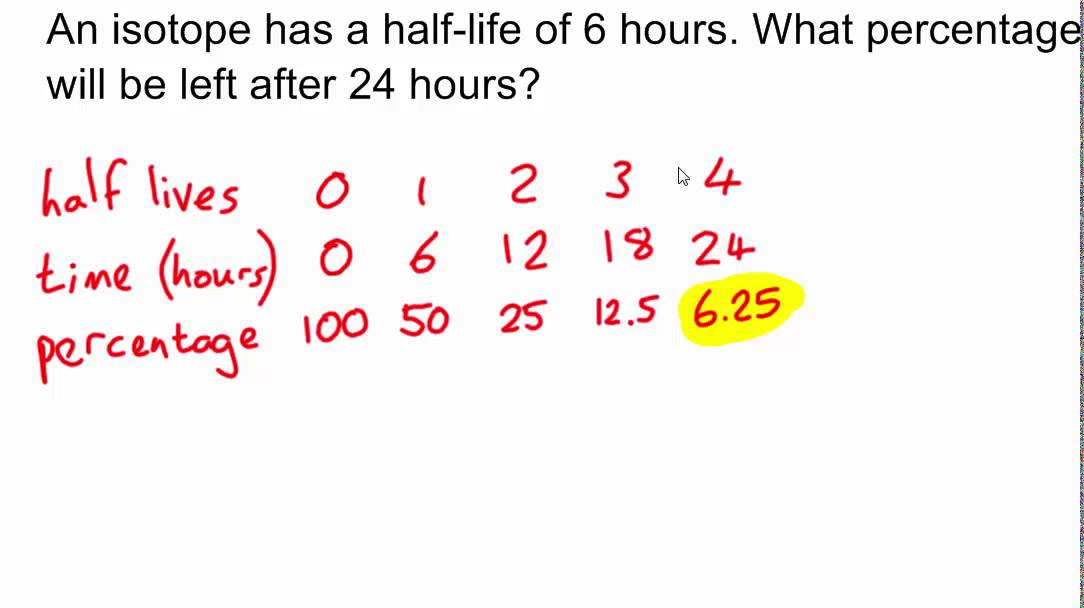
half life
amount of time for a radioactive substance to lose half its mass through decay
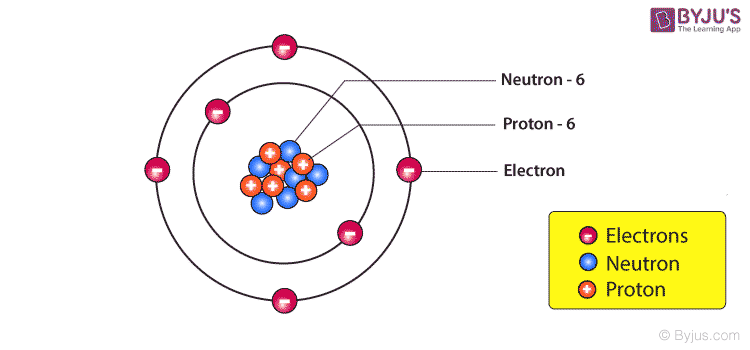
atom
center = nucleus
protons (positive)
neutron (neutral)
electrons (negative) float around the nucleus
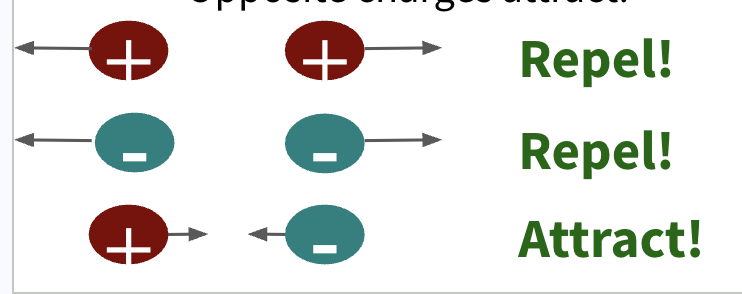
charges attraction
+ + = repel
- - = repel
+ - = attract
conductors
materials that transfer electrons easily
ex: metals, salt water, humid air
insulators
materials that do not transfer electrons easily
they can store electrons
ex: wood, plastic, rubber, thick fabric, dry air
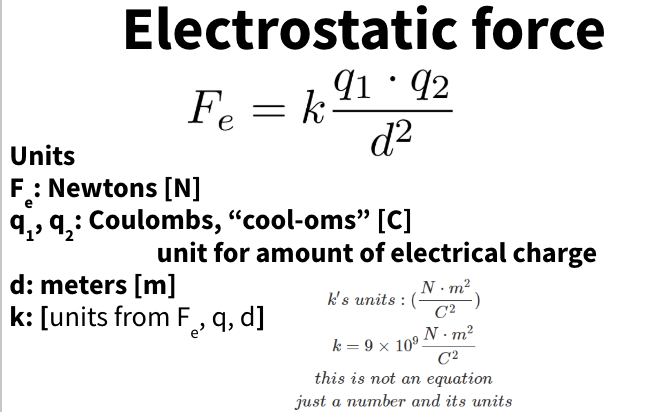
Coulomb's Law
electrostatic force between electrically charged particles
like charges repel and opposite charges attract
with a force directly proportional to the product of the charges
inversely proportional to the square of the distance between
Electrostatic force
the attractive or repulsive force that acts between electrically charged particles or objects at rest
Distance increases = Fe decreases
Charge increase = Fe increase
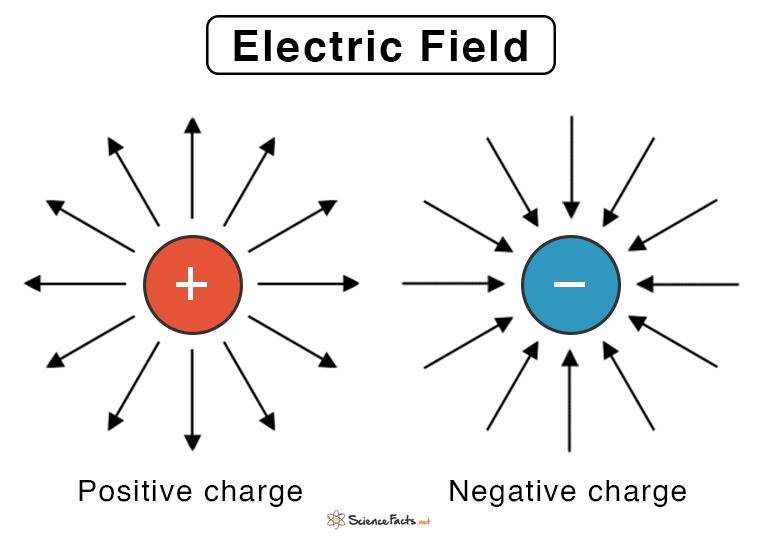
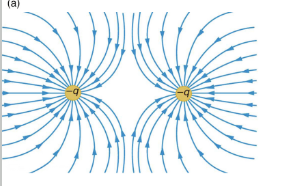
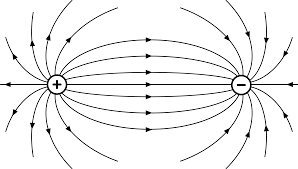
electric field
positive = outward arrows
negative = inward arrows
stronger charge = more arrows
repulsive electric fields
same charges repel (+/- & +/-)
field lines push away from each other
attracive forces
opposite charges attract, their field lines connect
electrical circuit
a closed loop through which electrons (electric charges) flow
Ohm’s Law
relationship between voltage, current and resistance
V = I x R
R = resistance (ohms)
I = current (amps)
V =voltage (volts)
Power (P)
the rate that electrical energy is converted into a different type of energy
P = I x V
units = watts or J/s
mechanical waves
require a medium (ex: sound, earthquakes) and vibrate matter
multiple styles: longitudinal, transverse, and more
fastest in solid, slowest in gas
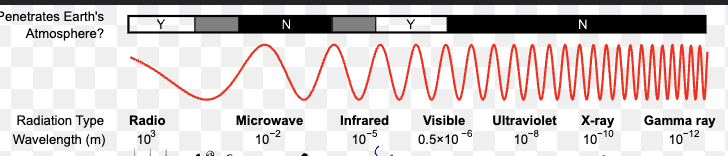
electromagnetic waves
light waves: don’t need matter to move (can travel through empty space)
only transverse
made from photons and the fastest thing in the universe
ex: light, x-rays, gamma ways, UV rays
constant speed: 3 × 10^8
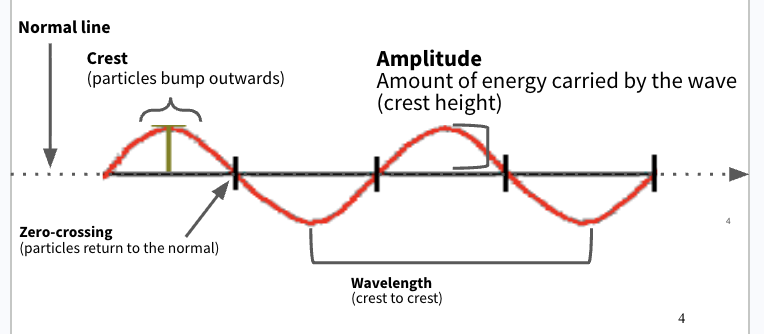
transverse waves
particles vibrate perpendicular
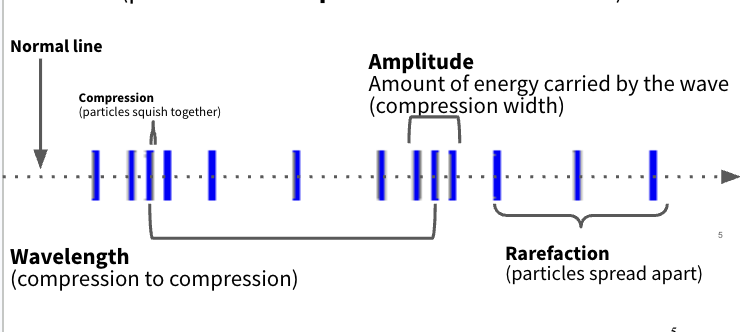
longitudinal waves
particles vibrate parallel to wave direction
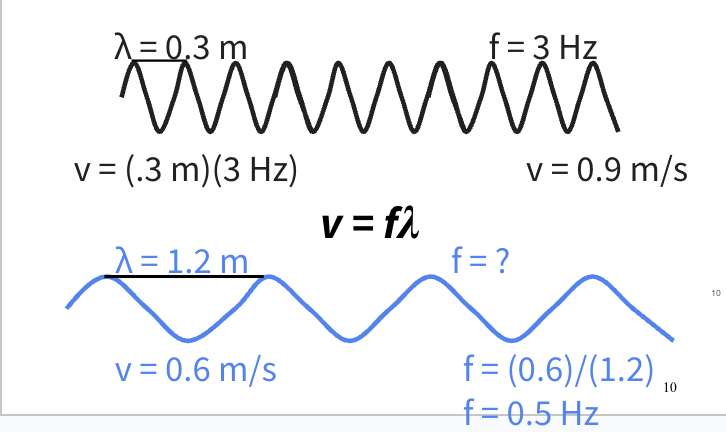
wave velocity
V = F x λ
λ = wave length
F = frequency
V = velocity
higher frequency = shorter wave length (vice versa)
Pitch
pitch = frequency
more matter thats being vibrate, the lower the pitch
Sound
mechanical waves
longitudinal waves
Doppler Effect
sound moving towards you is louder (higher frequency and less wave length)
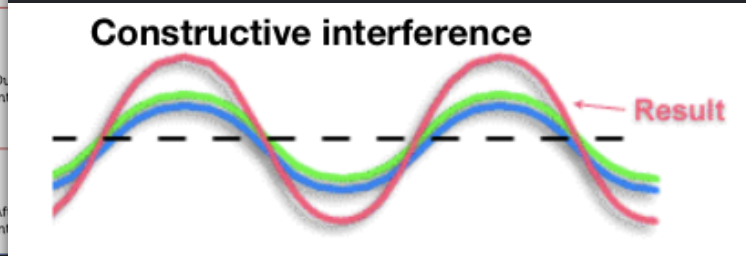
constructive interference
When two waves meet and add together
crest + crest = bigger crest
bigger wave (amplified)
higher amplitude, concentrated energy in one place
in water = bigger wave, in light = light
Destructive interference
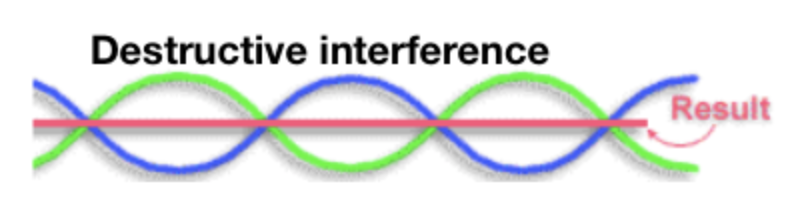
When two waves meet and cancel out
smaller wave or even zero
Lower amplitude, Can completely cancel if equal size“, “Muted” wave
in water = no wave, in light = dark
Noise cancelling headphones match the frequency and create the same wave but opposite
EM Wave Order
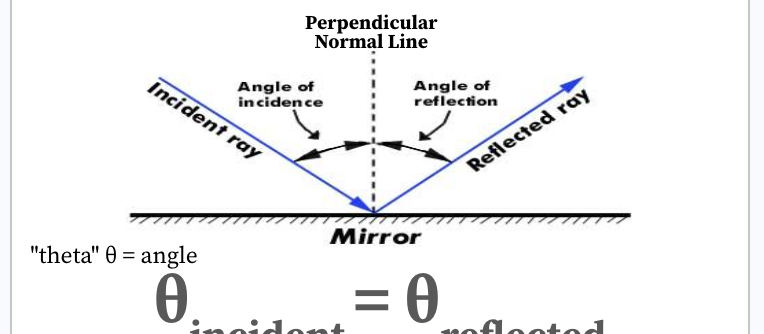
Law of Reflection
The Reflected Angle for a single ray must equal its Incident (orginal) Angle
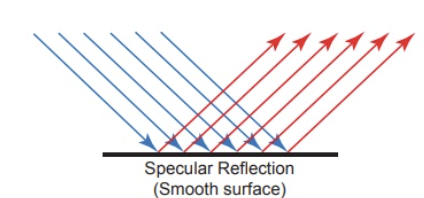
Specular Reflection
Light that is reflected in the same direction from a smooth surface (like a mirror)
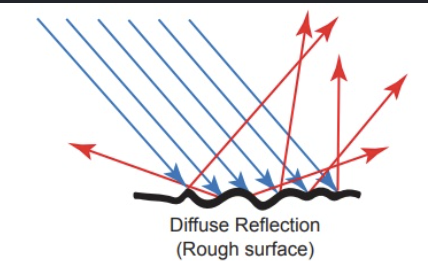
Diffuse Reflection
light that is reflected in many directions from a rough surface
can cause reflection to be blurrier
concave mirror
A mirror that curves inward (like the inside of a spoon) and can form images that are magnified or upside down depending on distance.
stuff look bigger when close
smaller and upside down when far
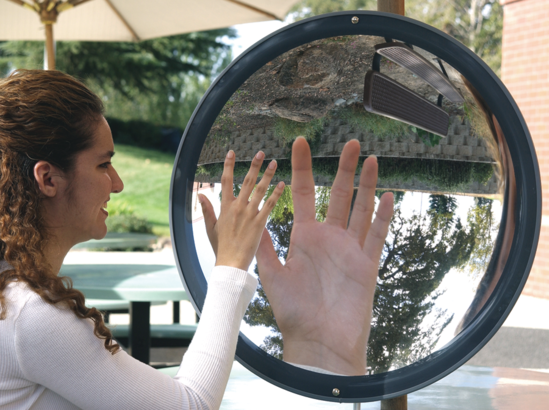
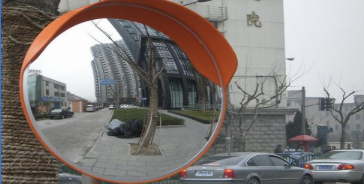
convex mirror
A mirror that bulges outward (like the back of a spoon) and always forms a smaller, upright image.
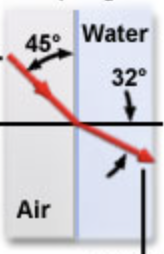
refraction
waves bend and change direction as they go from one medium to another
Less refractive to more refractive
light ways get bent towards the normal
light slows down
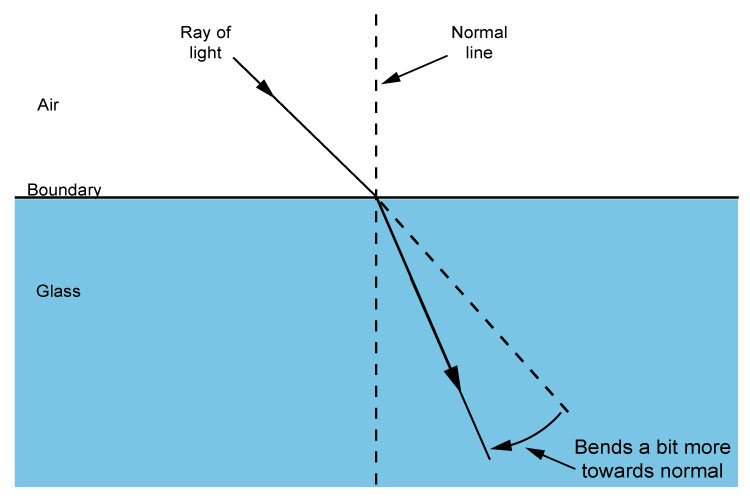
More refractive to less refractive
light rays bent away from normal
light speeds up
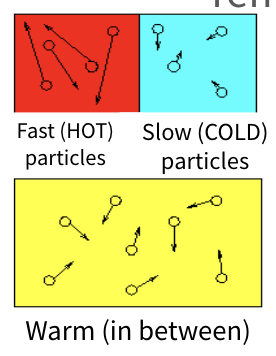
Temperature
average kinetic energy is represented by temperature
higher temperature = more kinetic energy
Heat/Thermal Energy
energy that moves from a warmer object to a cooler one
measured in Joules
Conduction
heat moves through a substance in physical contact
stick on candle flame
Convection
heat moves through a mixing or circulating fluid
boiling water
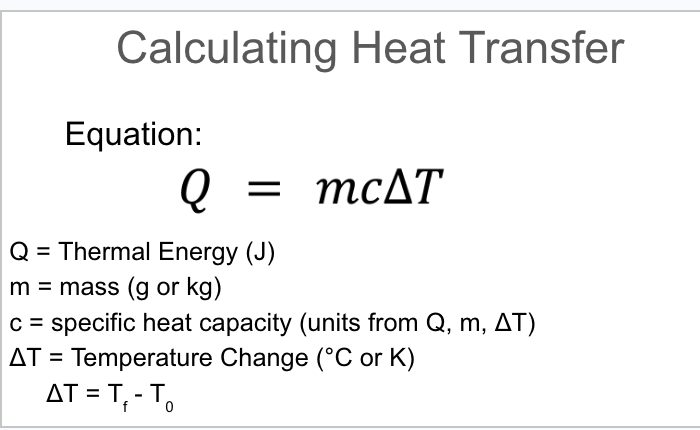
Heat Transfer
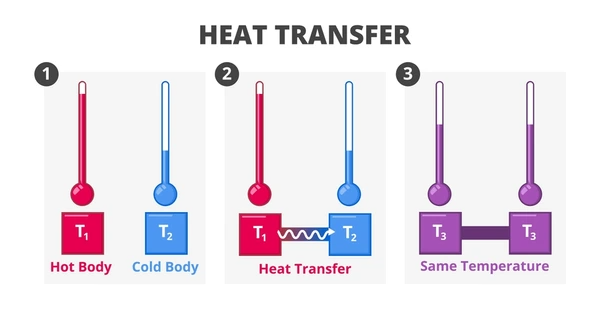
Thermal Equilibrium
is when two or more objects in contact have reached the same temperature, so no heat flows between them anymore.
heat always move from hot to cold until they reach Thermal Equilibrium
one substance gains heat from another, the other substance loses that heat
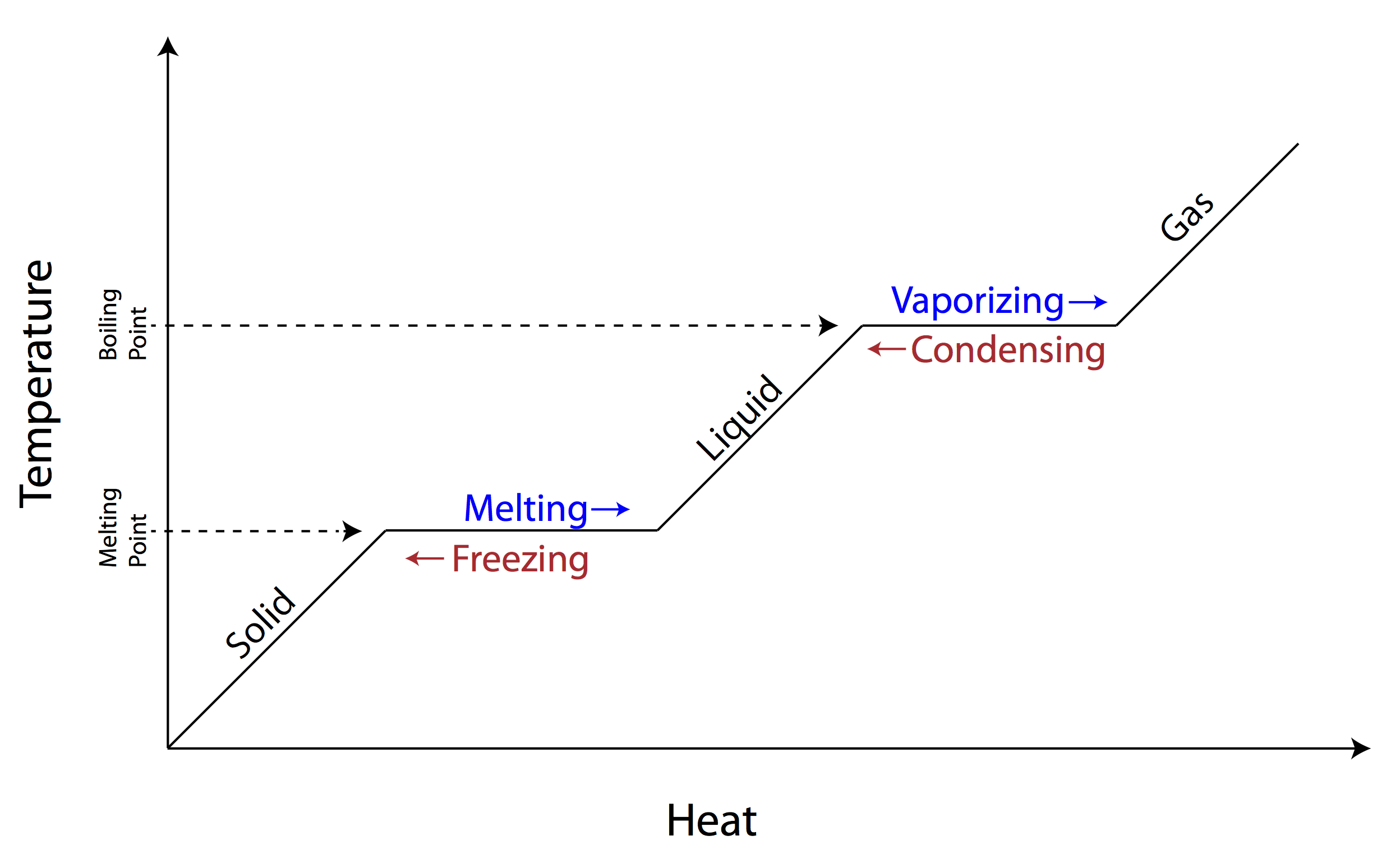
Adding Heat
attractive forces weaken, kinetic energy increases
melting, vaporization
Removing Heat
attractive forces strengthe, kinetic energy decreases
freezing, condensing
Phase Change
Heat is the “cost” or energy needed to change the phase of a substance (solid ↔ liquid ↔ gas).
It doesn’t raise temperature during the change
Instead, it breaks or forms bonds between particles
More heat = more phase change, not hotter temperature
Work
energy transfered in or out of an object
W = F x D
mechanical energy
energy that allows an object to do work
ex: kinetic and potential energy
potential energy
energy that is stored due to an object's position or condition.
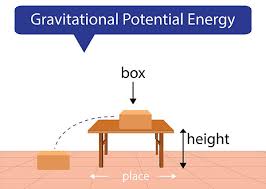
PE = mgh
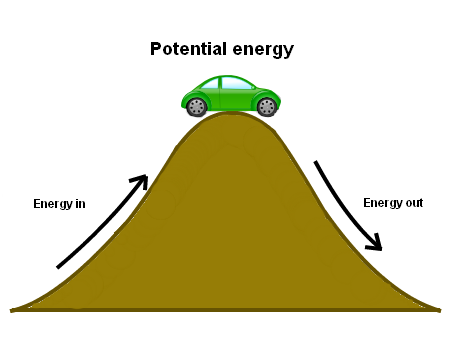
Gravitational potential energy
stored energy an object has because of its height above the ground (or another reference point).
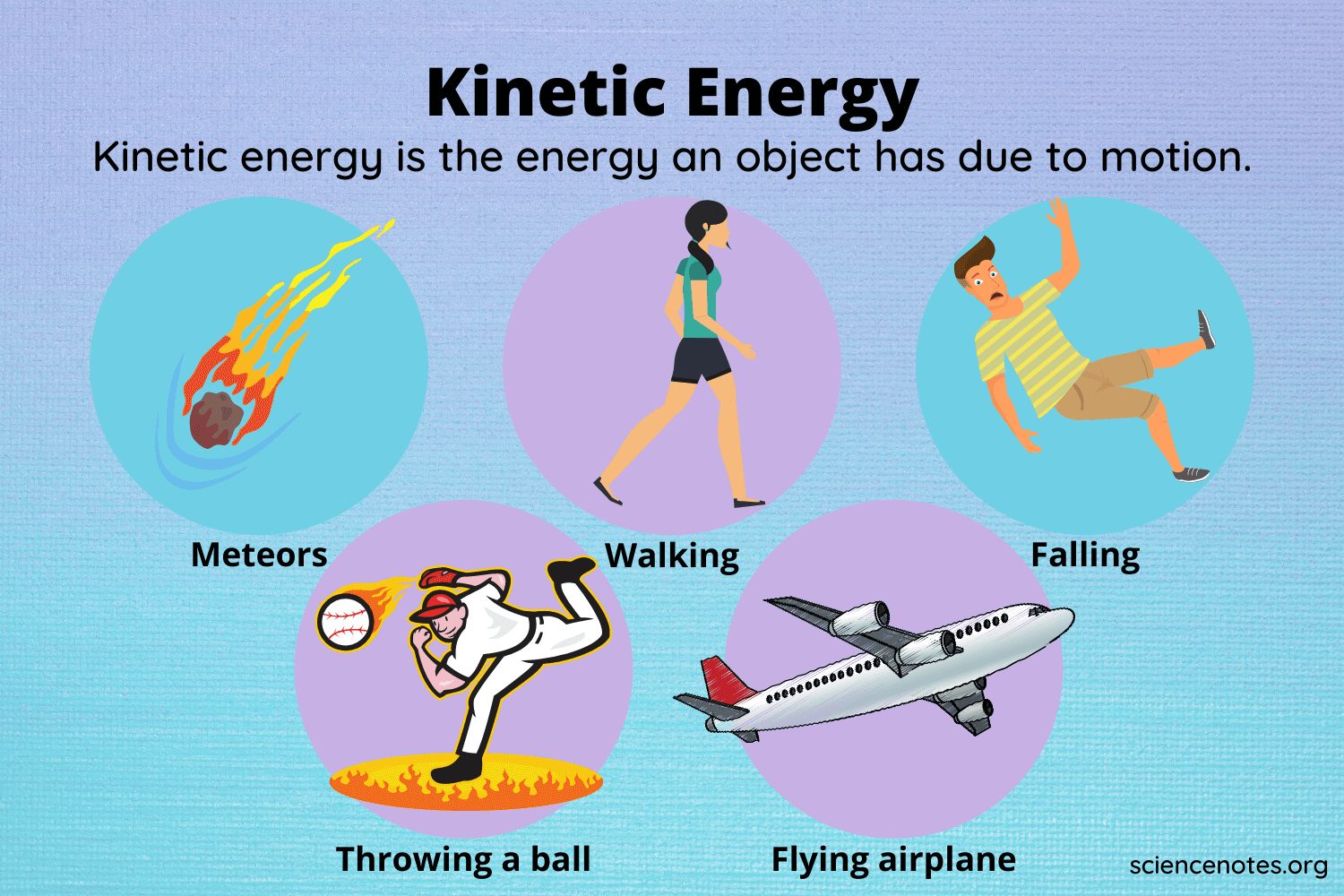
kinetic energy
the energy an object has because it is moving.
KE = ½ mv²
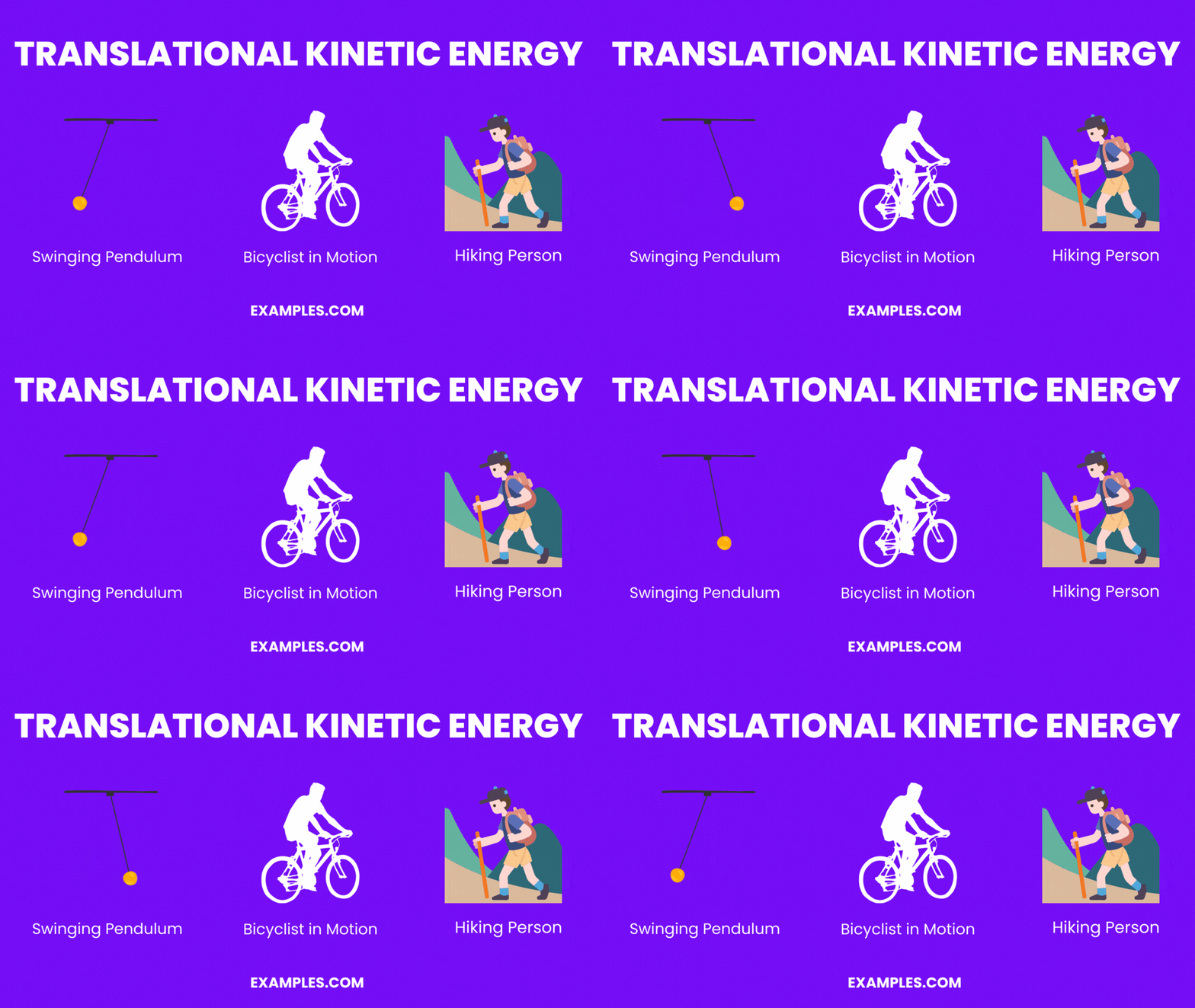
translational kinetic energy
energy due to motion from one location to another
Law of conservation for Energy
all forms of energy can be converted into a different form
potential energy decreases it becomes kinetic energy and vice versa
Total Mechanical Energy
Add Kinetic and Potential Energy
total mechanical energy doesn’t change
Power
the rate at which work is done
unit watts or J/S
P = W/change in time
Energy Efficiency
a measure of how much input energy is converted into useful output energy.
Efficiency = Energy Out/Energy In
momentum
the quantity of motion an object has based on mass and velocity
p = m x v
m = mass v = velocity
measured in kg x m/s
elastic collison
two objects hit eachother and bounce off eachother
m1v1 + m2v2 = m1v1' + m2v2'
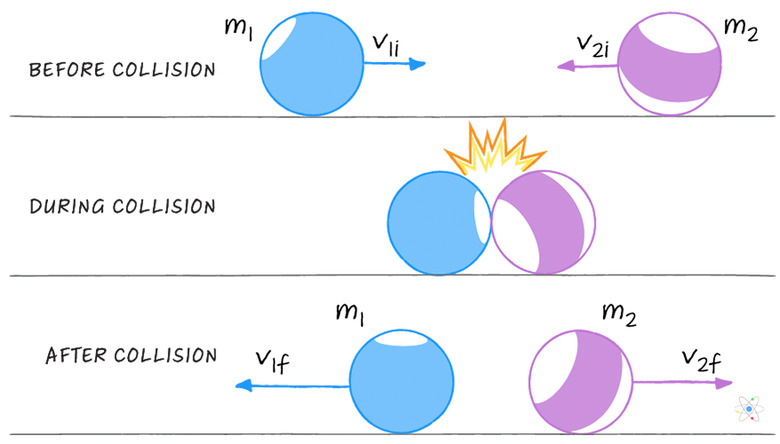
inelastic collision
The two objects, m1 and m2, have the same velocity when they are stuck together, v'
m1v1 + m2v2 = (m1 + m2)v'
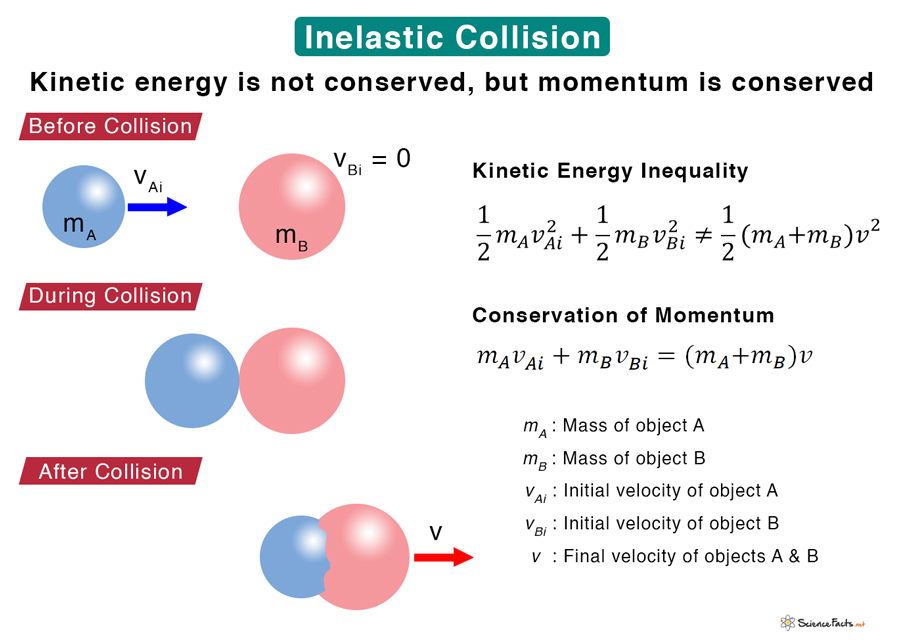
Law of Conservation of Momentum
total momentum of a group of objects doesn’t change (unless acted on by an outside force)
impulse
the change in momentum of an object when a force acts on it for a certain amount of time.
Δp = FNet(Δt)
large impulse = large forcer over short time
Fnet
Net force is the overall force acting on an object after all forces are added together (with direction).
Fnet = m x a
m increases = a decreases
a increase = fnet increase
distance
the length of the path something takes
always postive
displacement
measurement of the space in between the start and finish
negative, positive, zero
Δx = xf - x0
velocity
displacement/change in time
m/s
speed
distance/change in time
acceleration
the rate at which an object’s velocity changes over time.
a = change in velocity/change in time
gravity
when objects fall they accelerate at 9.8 m/s² due to the pull of gravity
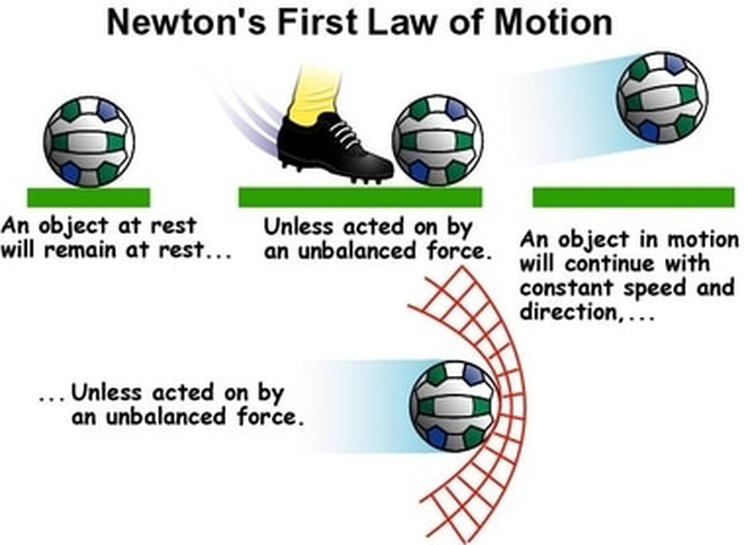
Newton’s 1st Law
An object will stay at rest or keep moving in a straight line at constant speed unless acted on by a net force.
Law of Inertia = property of an object that resists change in motion (more mass = more inertia)
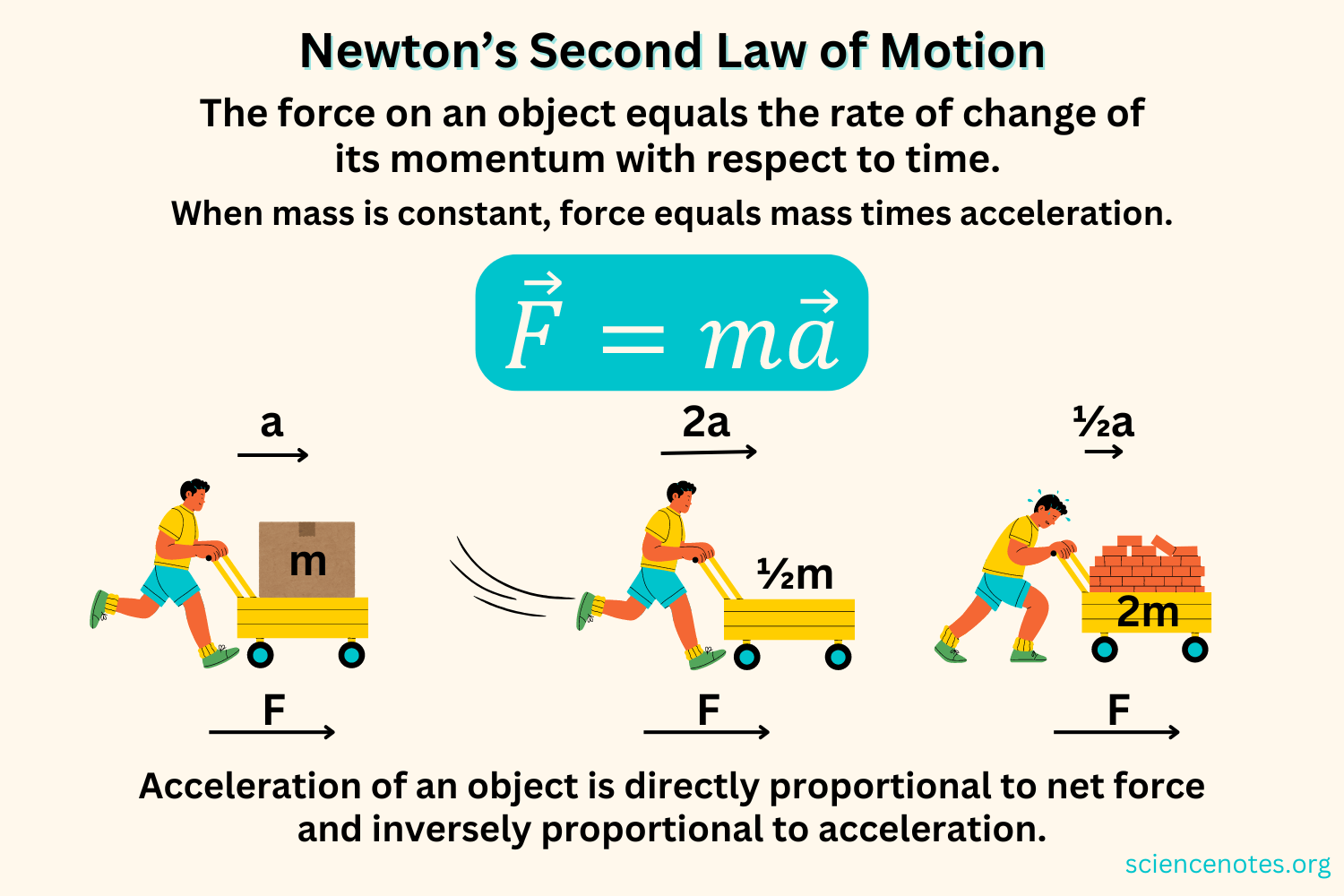
Newton’s 2nd Law
Fnet = M x A
more mass = less accerlation
more force = more accerlation
example:
It’s easier to push an empty cart than a full one
Newton’s 3rd Law
For every force, there is an equal and opposite force.
gravity opposite of normal force
applied opposite of friction
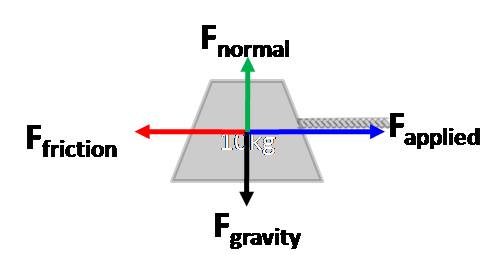
Free Body Diagrams
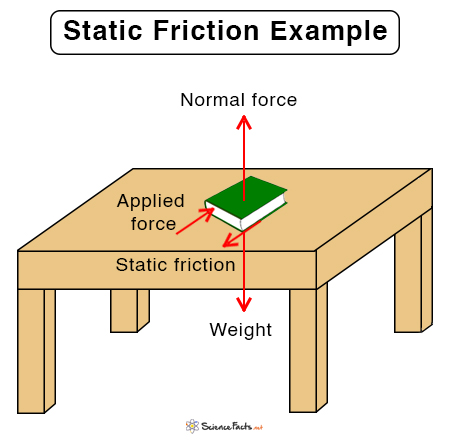
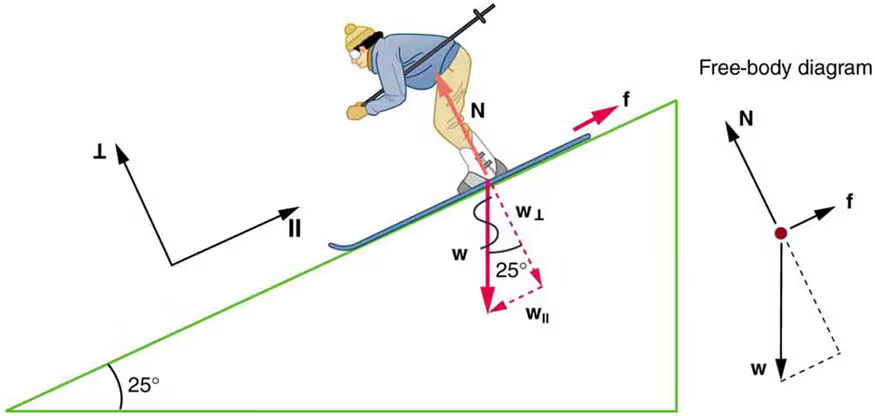
Fn = Fg
Fg = weight/the force of gravity pulling dowwn
Fnet = Fa - Ff
static friction
between two things that grip eachother but don’t move
kinetic the friction
between two things that are currently sliding against each other
coefficent of friction
number that tells you how “rough” two surfaces are and how much they resist sliding past each other.
Bigger μ → more friction (harder to slide)
Smaller μ → less friction (easier to slide)
It has no units (just a number).
μ = Ff/Fn
Fg = m x g
weight/force of gravity on Earth
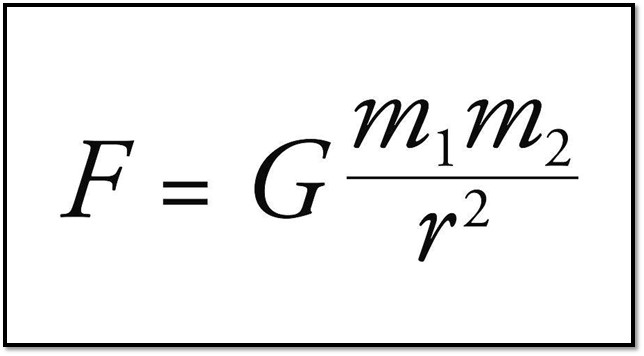
Universal Law of Gravity
M increase = Fg increase
Distance increase = Fg decrease
G = 6.7 × 10^-11
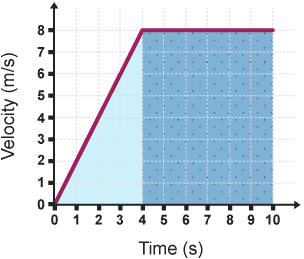
Kinematic Graph
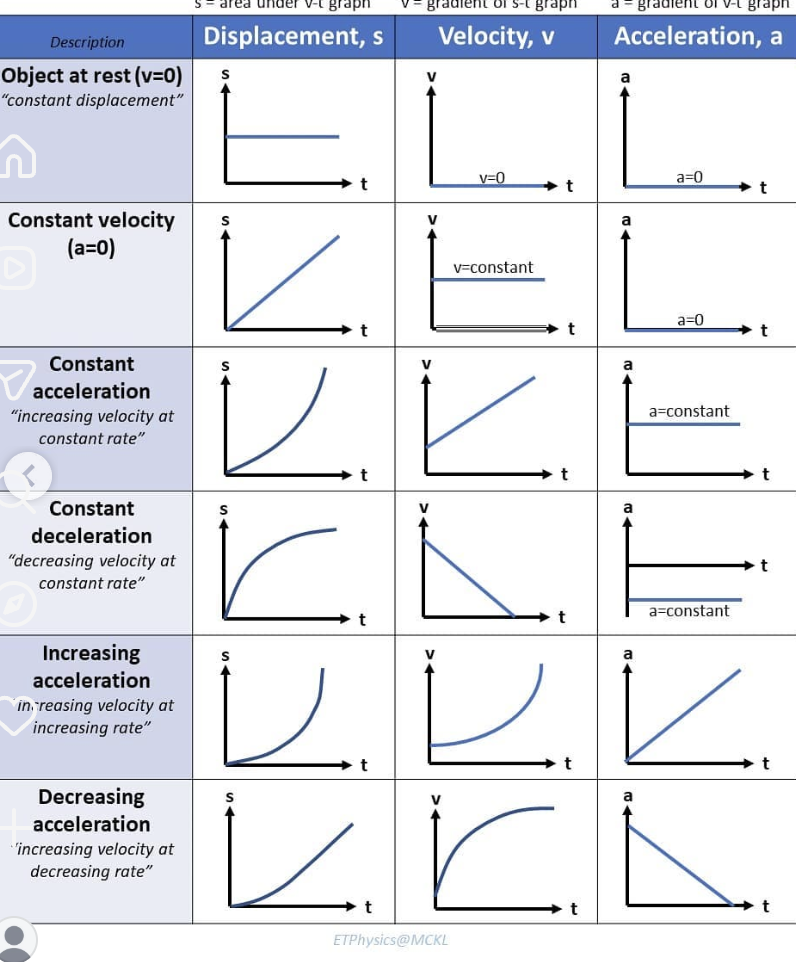
Displacment on Velocity over Time Graph
light particles
photons—discrete, zero-mass packets of energy. The most famous demonstration of this particle nature is the Photoelectric Effect, where individual photons collide with electrons to knock them out of metal
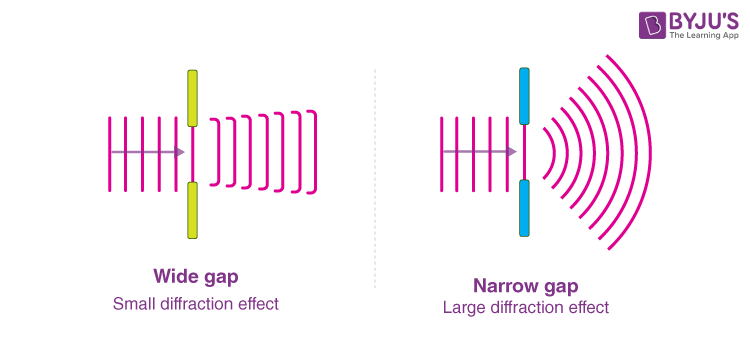
Diffracted
a wave spreads out when it passes through a small opening or around an obstacle.
Refracted
means light (or a wave) changes direction when it passes from one medium to another because its speed changes.