DAT Bootcamp: Chapter 6: Molecular Genetics
 Call Kai
 Learn
Learn Practice Test
 Spaced Repetition
 Match
Match Flashcards
 Knowt Play
 Podcast
1/157

There's no tags or description
Looks like no tags are added yet.
Name | Mastery | Learn | Test | Matching | Spaced | Call with Kai |
|---|
No analytics yet
Send a link to your students to track their progress
158 Terms
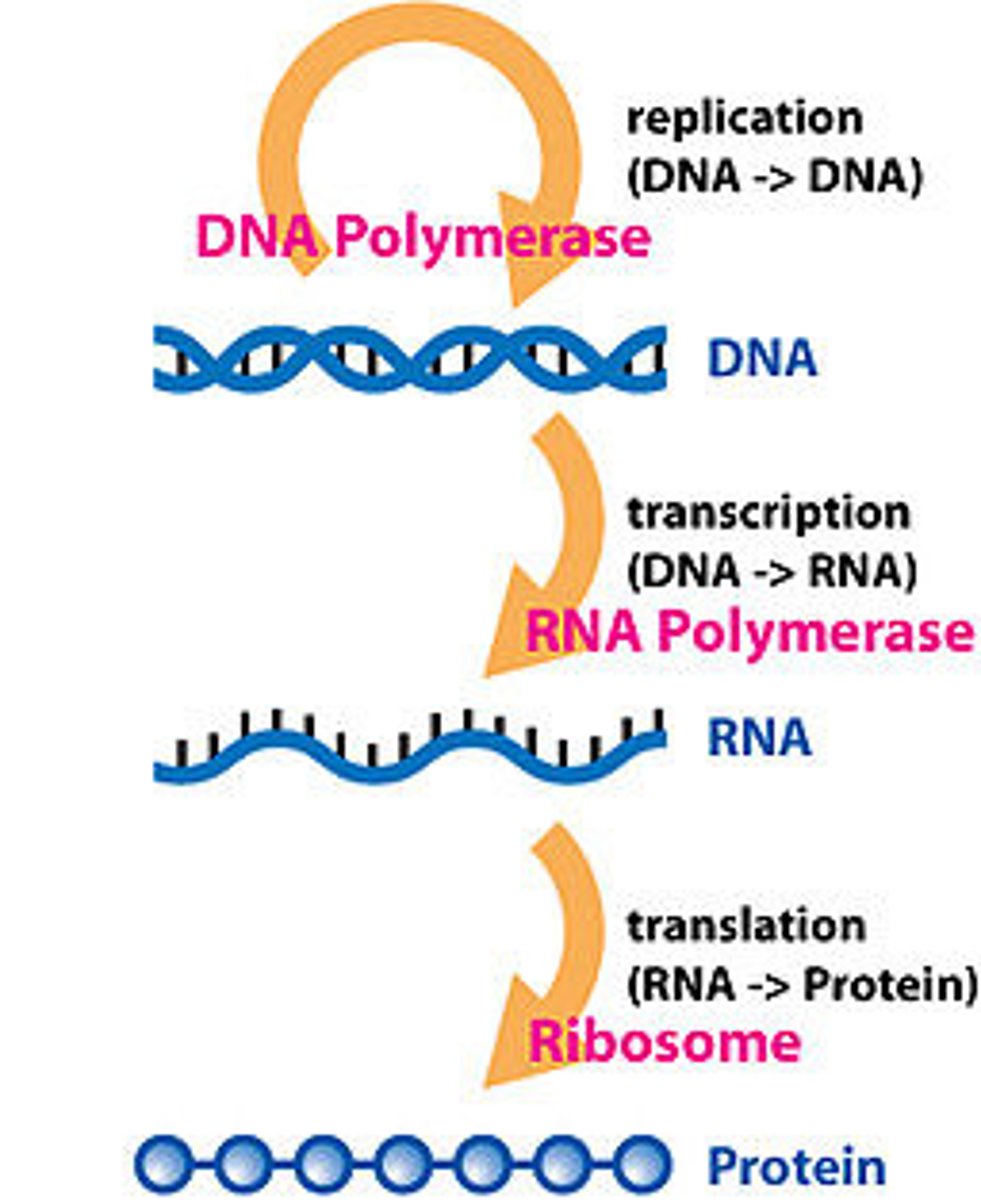
central dogma
theory that states that, in cells, information only flows from DNA to RNA to proteins
nucleotide
the basic unit of DNA
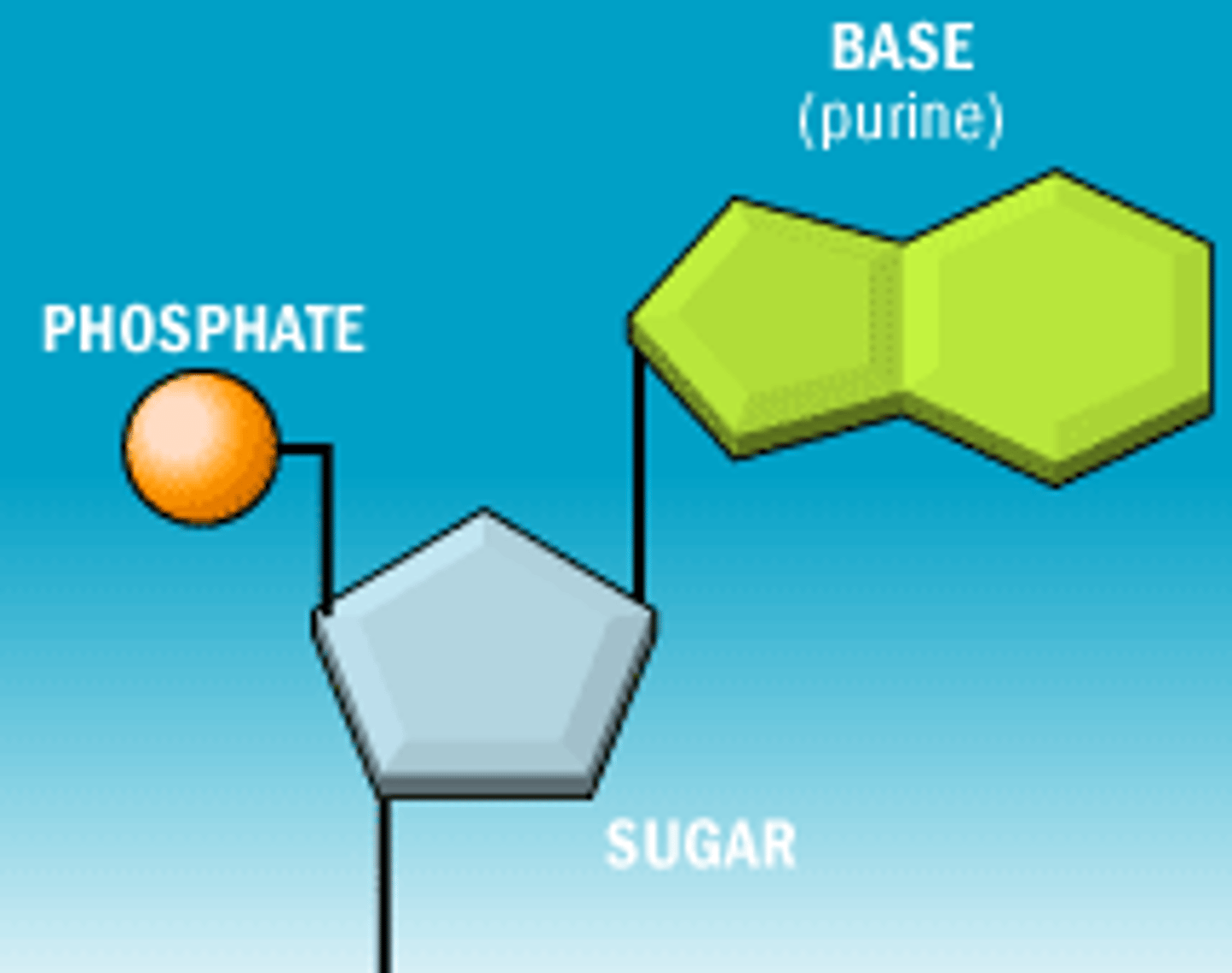
sugar, phosphate group, nitrogenous base
a nucleotide is composed of a _____ bonded to both a _____ _____ and a _____ _____
purines, pyrimidines
What are the two types of nitrogen bases found in nucleic acid?
adenine, guanine
the purines in DNA include _____ and _____
cytosine, thymine
the pyrimidines in DNA include _____ and _____
hydrogen bonds
DNA strands are held together by _____ _____ between the bases oriented toward the center
adenine
in DNA, thymine forms two hydrogen bonds with _____
cytosine
in DNA, guanine forms three hydrogen bonds with _____
antiparallel arrangement
one side of the DNA helix runs in the opposite direction to the other 5' to 3' and 3' to 5'; this is know as an _____ _____
Watson, Crick
the DNA structure was discovered by _____ and _____
topoisomerase
enzyme that uncoils the strands of DNA during replication
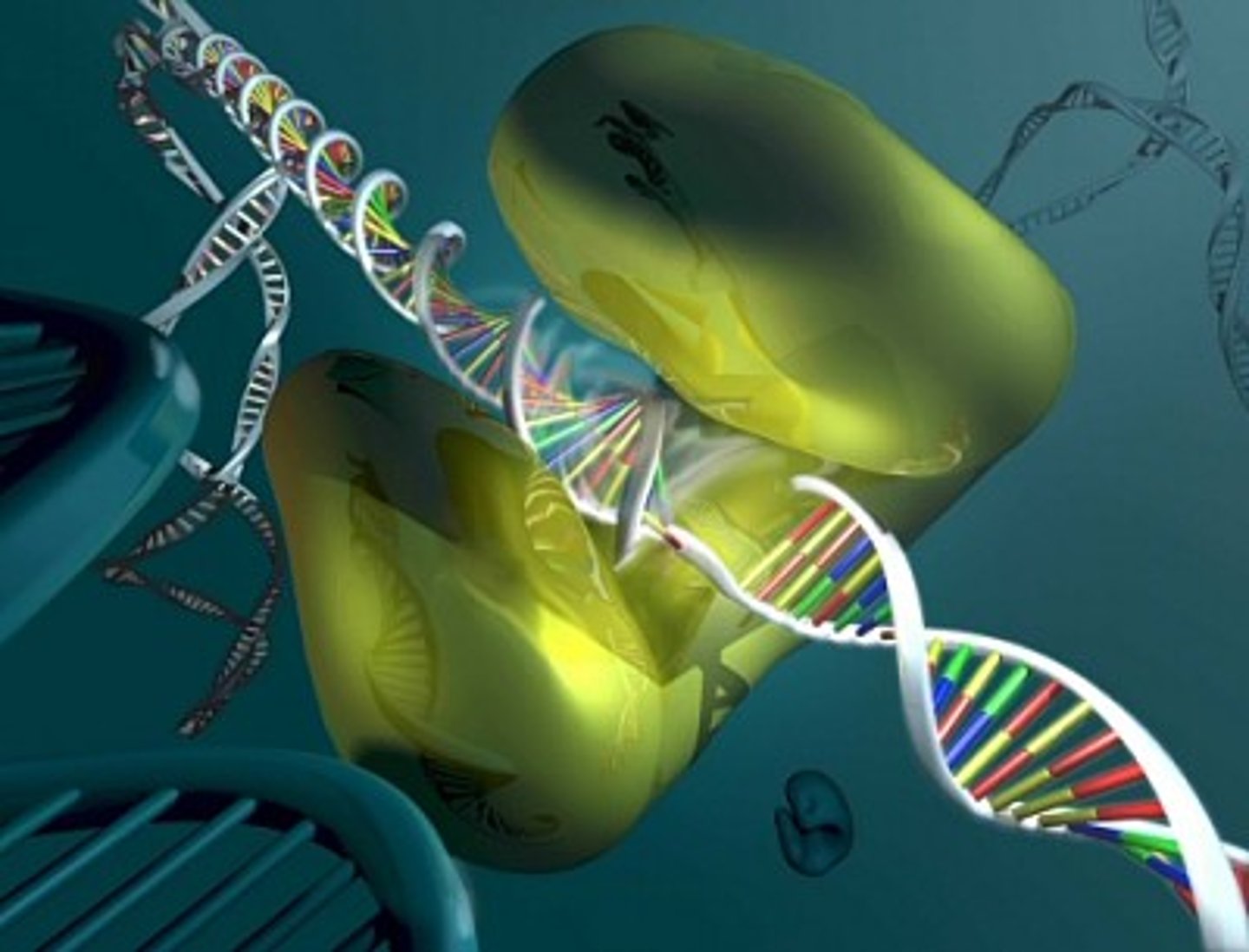
DNA helicase
enzyme that breaks the hydrogen bonds between the nitrogenous bases of each nucleotide during DNA replication
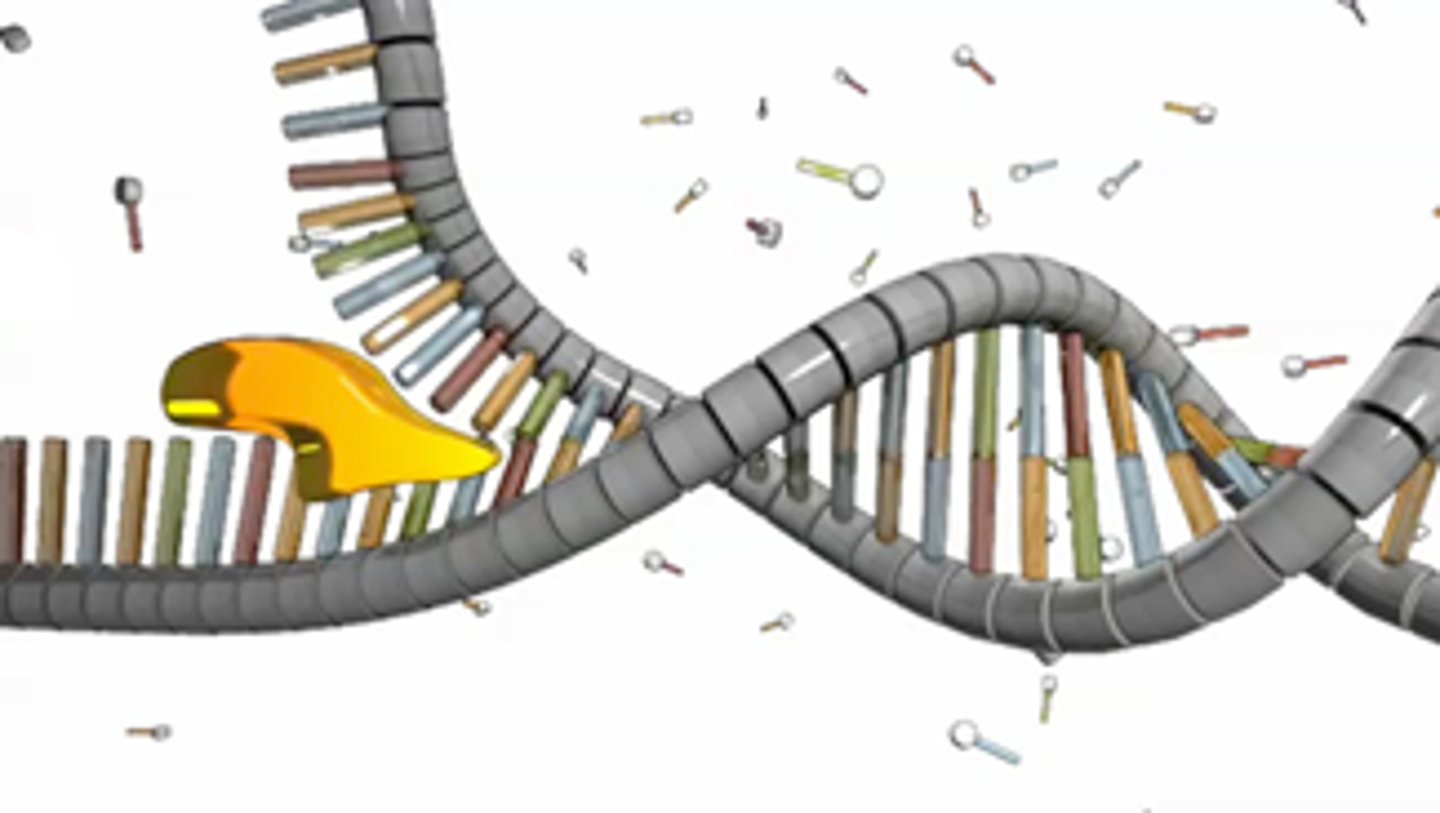
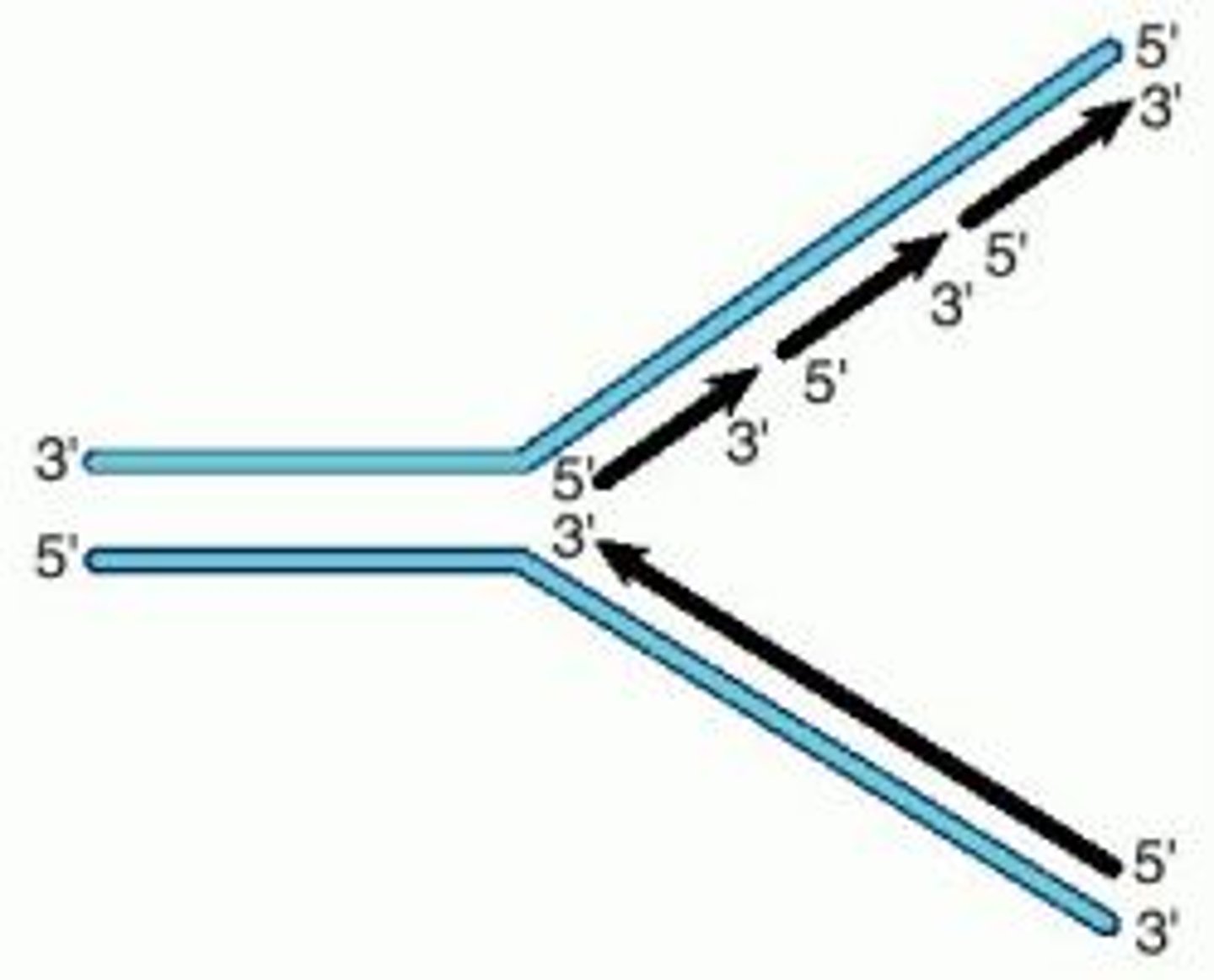
replication fork
a Y-shaped region where the parental strands of DNA are being unwound
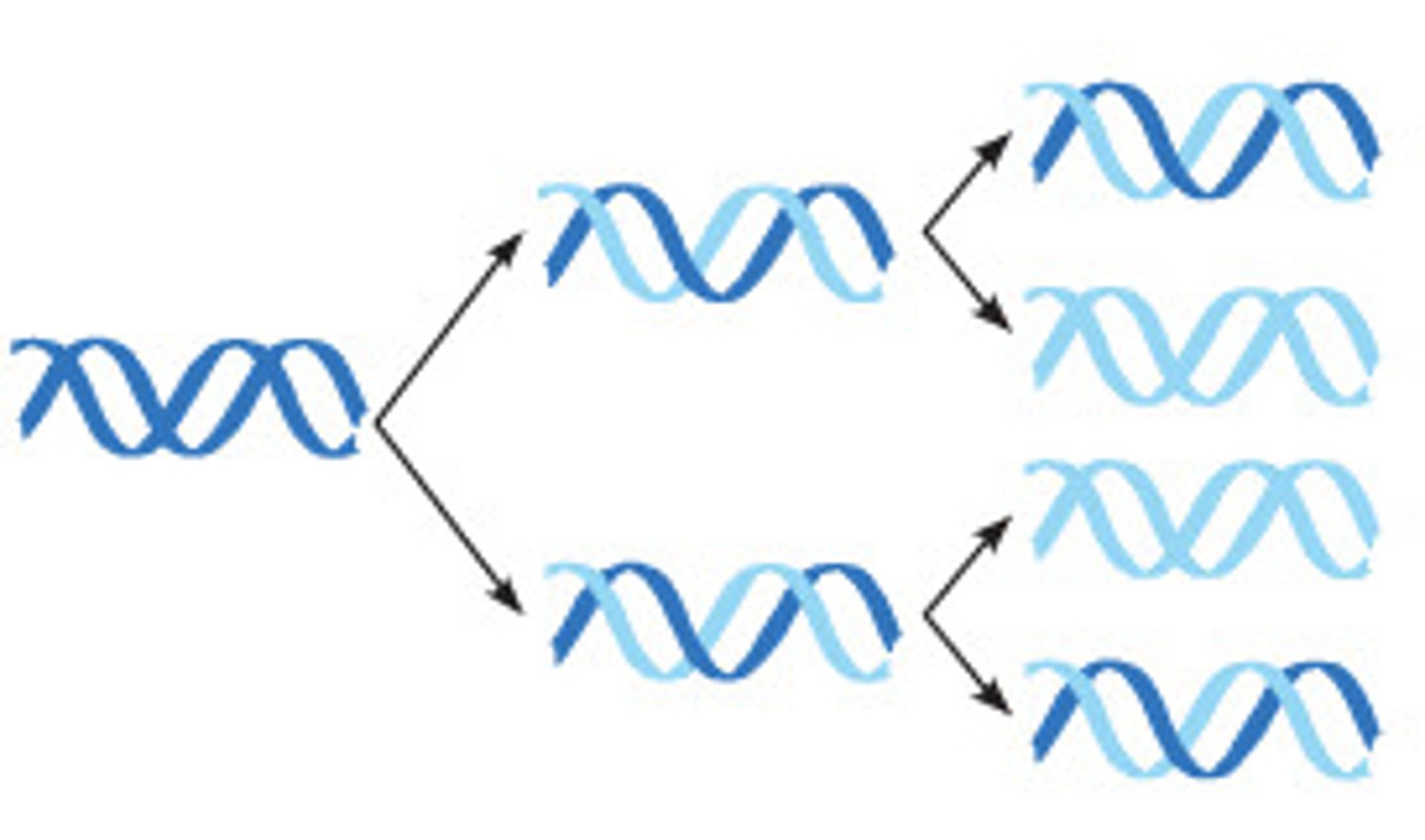
semiconservative
type of replication in which new DNA consists of one parental strand and one daughter strand
DNA polymerase
enzyme that reads the parent DNA strand and creates a complementary, antiparallel daughter strand
three, five
DNA polymerase always reads the parent strand in the _____ prime to _____ prime direction
five, three
DNA polymerase creates the daughter strand in the _____ prime, _____ prime direction
leading strand
DNA strand that is continually synthesized by DNA polymerase as it moves down the parent strand and adds nucleotides
lagging strand
DNA strand synthesized discontinuously due to limited reading direction of DNA polymerase
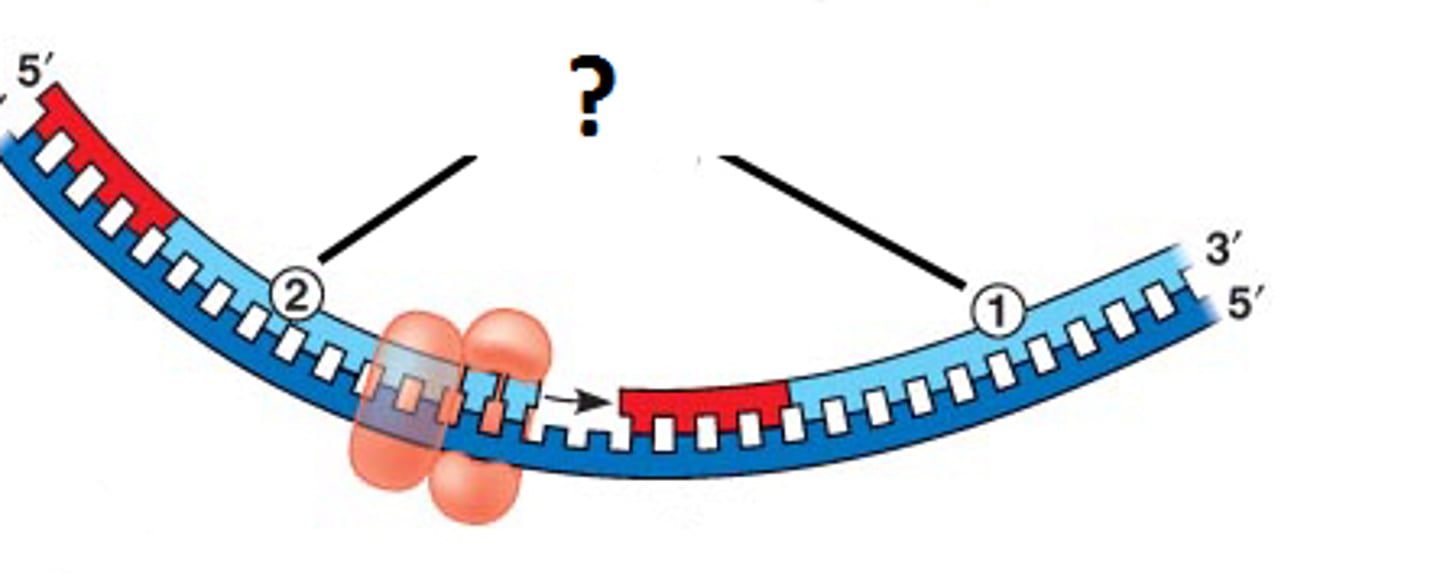
Okazaki fragments
short fragments that result from the discontinuous synthesis of the lagging strand
uracil
in RNA, thymine is replaced with _____
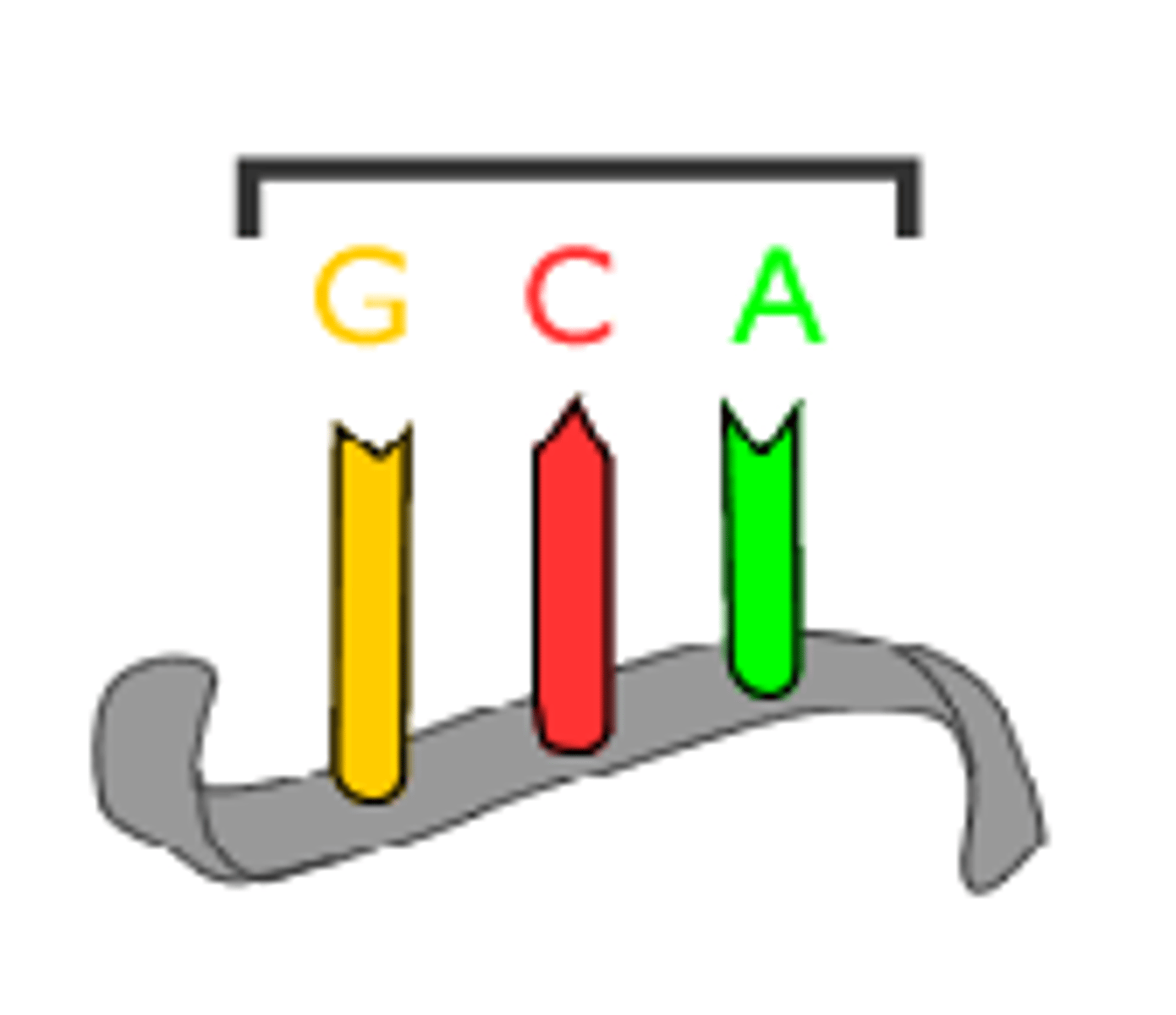
codons
DNA is transcribed into mRNA and arranged into triplets known as _____
amino acids
codons are translated from mRNA into _____
degeneracy, redundancy
most amino acids have more than one codon coding for them; this is known as _____ or _____
messenger RNA (mRNA)
carries the complement of a DNA sequence from the nucleus to the ribosomes for protein synthesis
transfer RNA (tRNA)
assists in the translation of mRNA's nucleotide code into a sequence of amino acids by bringing the amino acids coded for in the mRNA sequence to the ribosomes during protein synthesis
anticodon
in tRNA, a triplet of nitrogenous bases that is complementary to a specific codon in mRNA
ribosomal RNA (rRNA)
a structural component of ribosomes; the mRNA sequence passes through two subunits of this structure and is translated into amino acids at this time
transcription
the organic process whereby the DNA sequence in a gene is copied into mRNA
promoter region
where RNA polymerase binds to the DNA; it's a short DNA sequence found upstream from the site where transcription of a specific RNA is going to take place; in humans commonly known as a TATA box
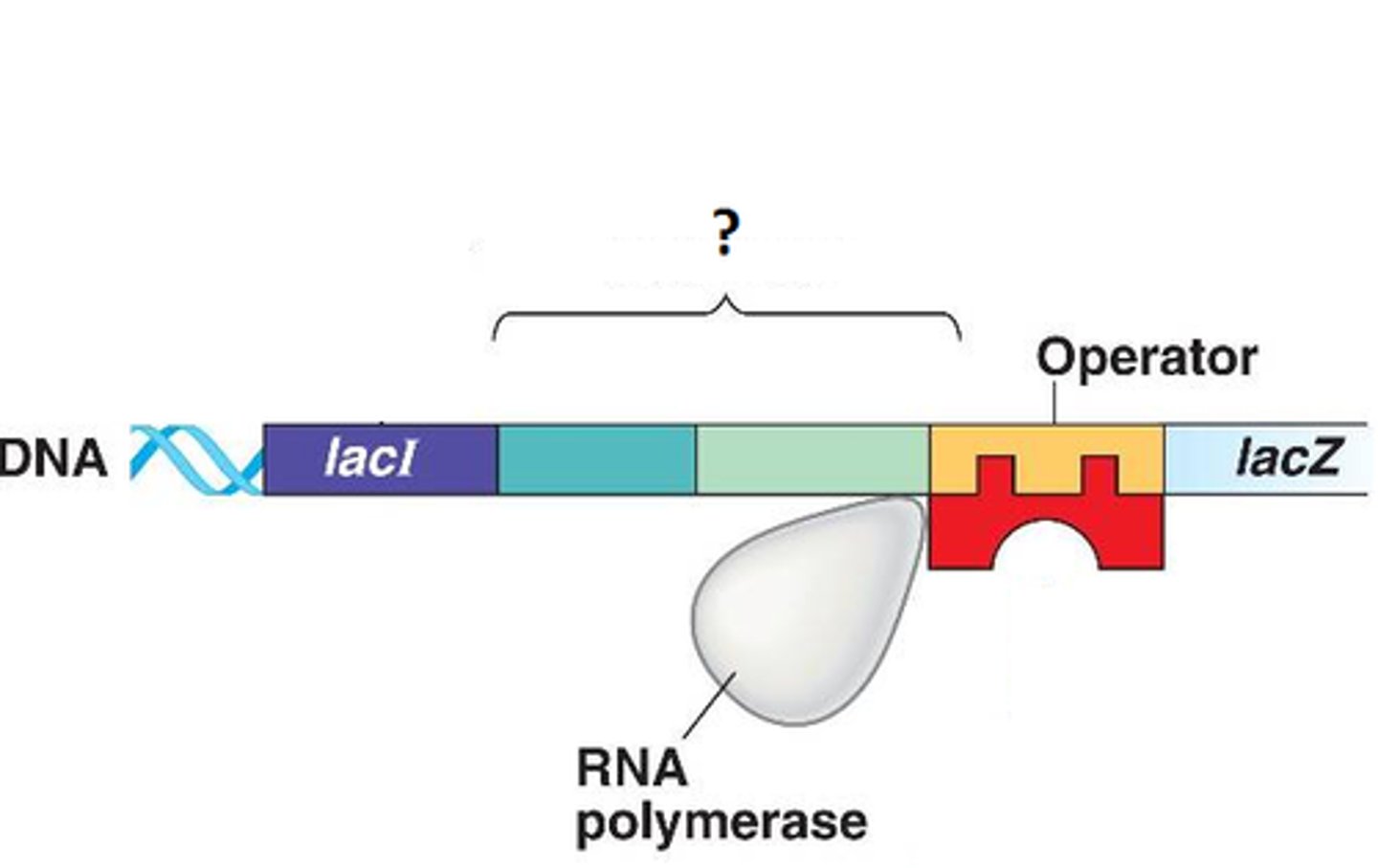
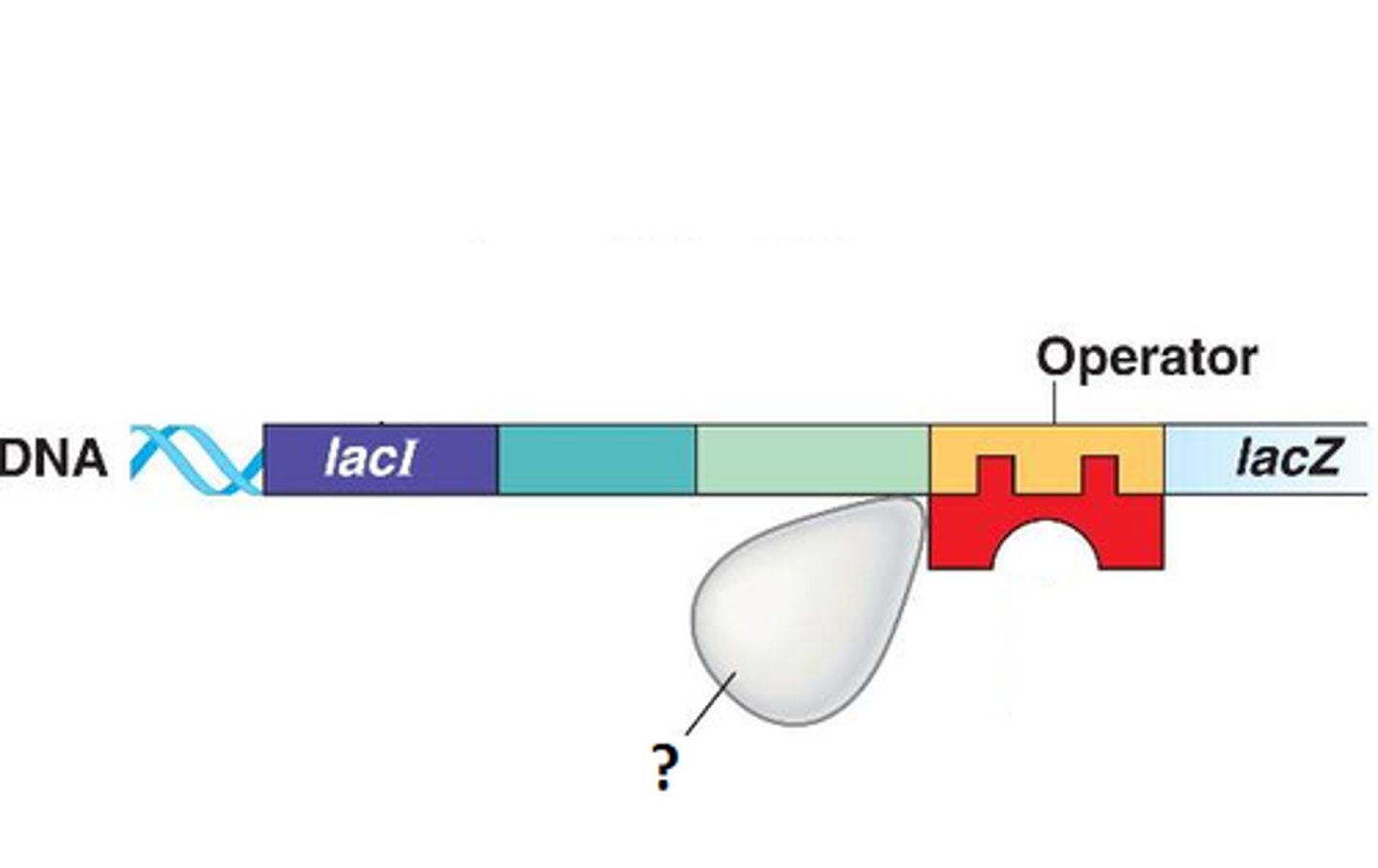
RNA polymerase
enzyme that binds to the DNA molecule and initiates transcription; recruits and adds complementary RNA nucleotides based on the DNA sequence; creates a new daughter strand of RNA in the 5-3 direction
introns
extra sequences of nucleotides that are not necessary to create the corresponding protein
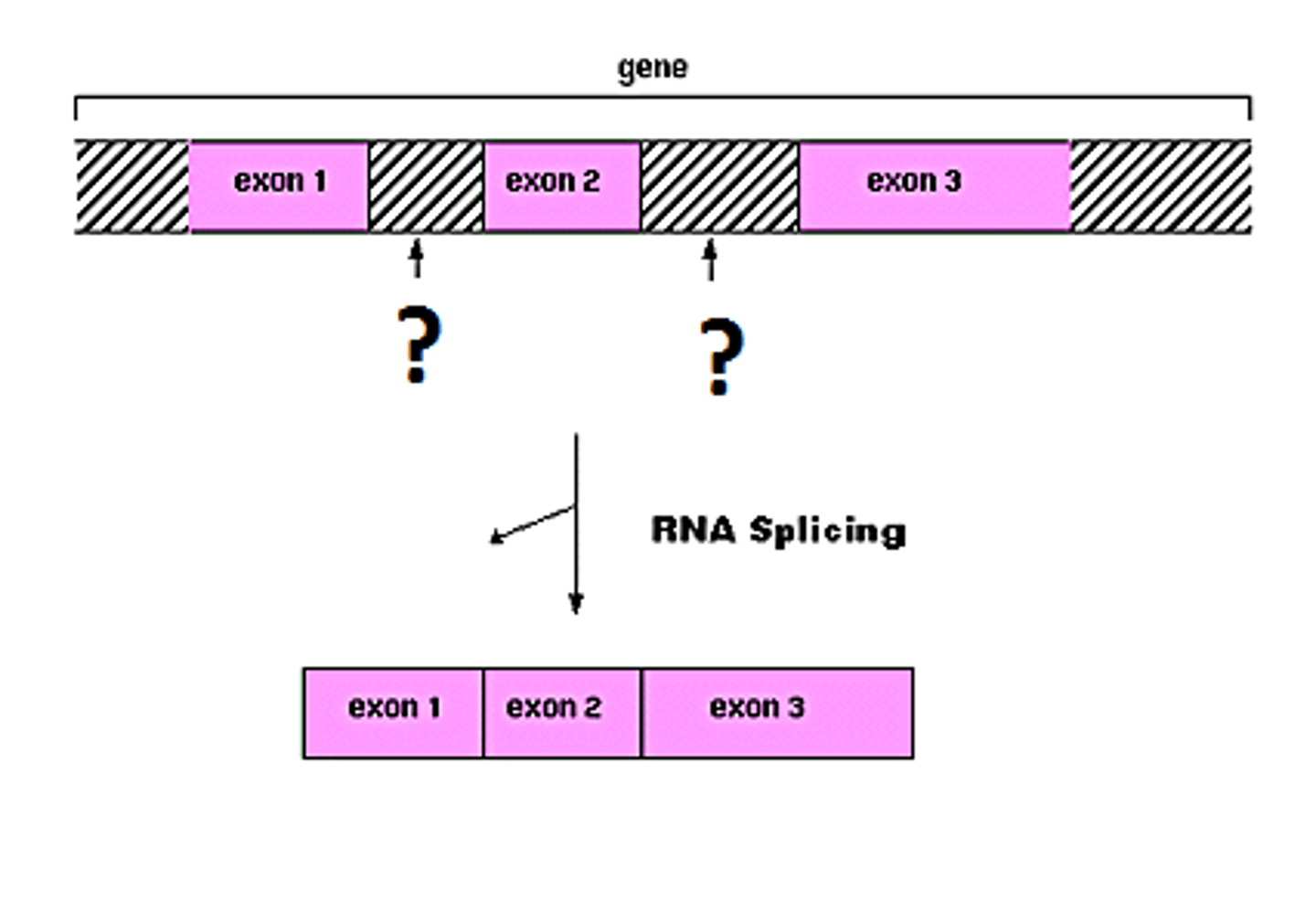
exons
the nucleotides necessary to make the protein
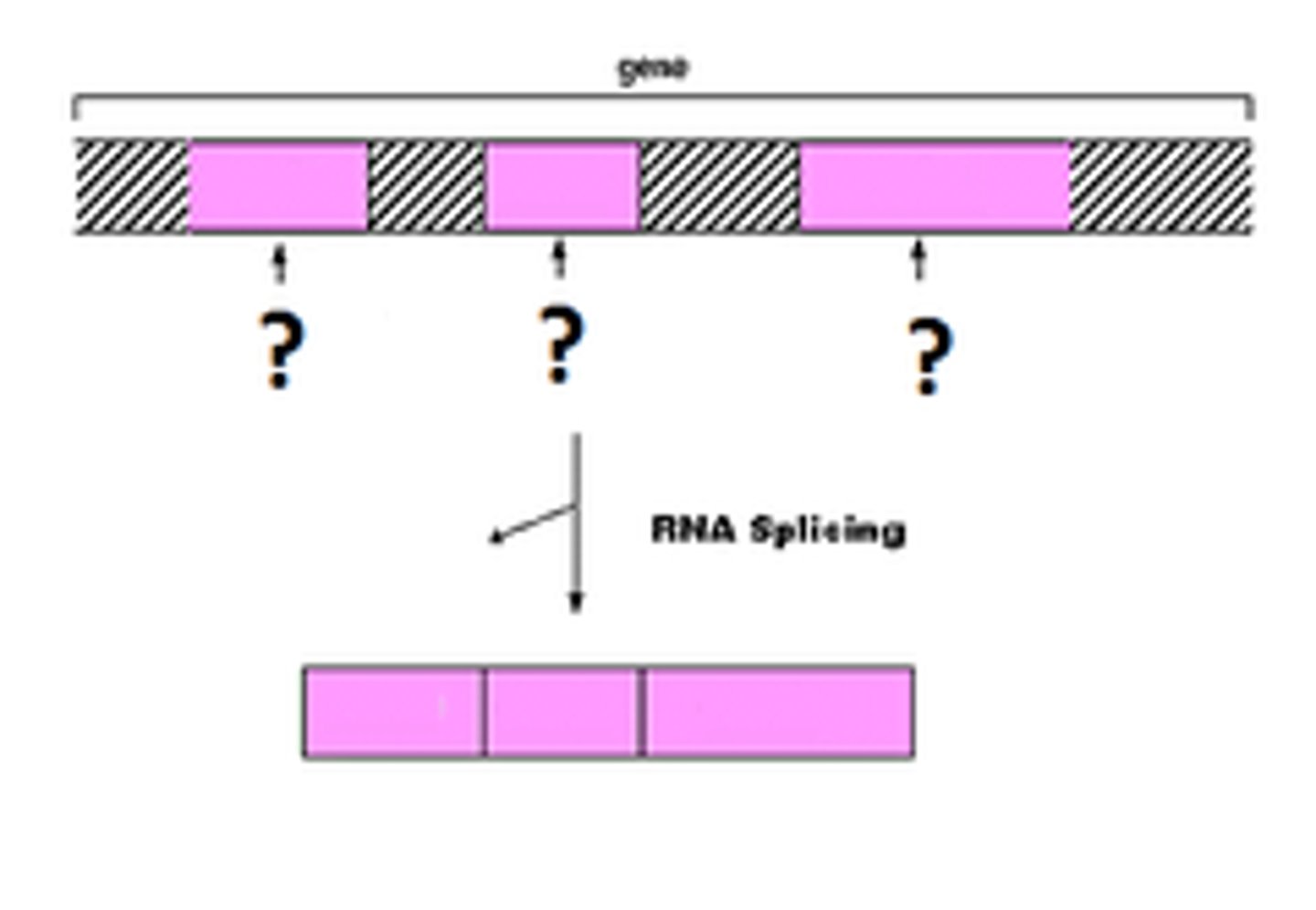
spliced, splicesome
the introns are _____ out by the _____ leaving only the exons behind
guanine cap, poly-A tail
a _____ _____ and a series of adenines known as a _____ _____ are added to the ends of the new molecule to provide protection from enzyme degradation once the RNA leaves the nucleus
translation
process through which mRNA codons are translated into a sequence of amino acids; occurs in the cytoplasm
initiation, elongation, translocation, termination
four distinct stages of translation
initiation
stage of translation in which the ribosome binds to the mRNA near its 5 prime end; the ribosome scans the mRNA until it binds to a start codon; the initiator aminoacyl-tRNA complex, methionine-tRNA base pairs with the start codon
elongation
stage of translation in which hydrogen bonds from between the mRNA codon in the A site of the ribosome and its complementary anticodon on the incoming aminocyl-tRNA complex; a peptide bond is formed between the amino acid attached to the tRNA in the A site and the amino acid attached th=o the tRNA in the P site of the ribosome; after the peptide bond formation , a ribosome caries uncharged tRNA in the P site and peptidly-tRNA in the A site
translocation
stage of translation in which the ribosome advances three nucleotides along the mRNA in the 5-3 prime direction; the uncharged tRNA from the P site is expelled and the peptidyl-tRNA from the A site moves into the P site; the ribosome then has an empty A site ready for the entry of the aminoacyl-tRNA corresponding to the next codon
termination
stage of translation in which one of three special mRNA codons, or stop codons, arrives in the A site; these codons signal the ribosome to stop translation; they do not code for amino acids
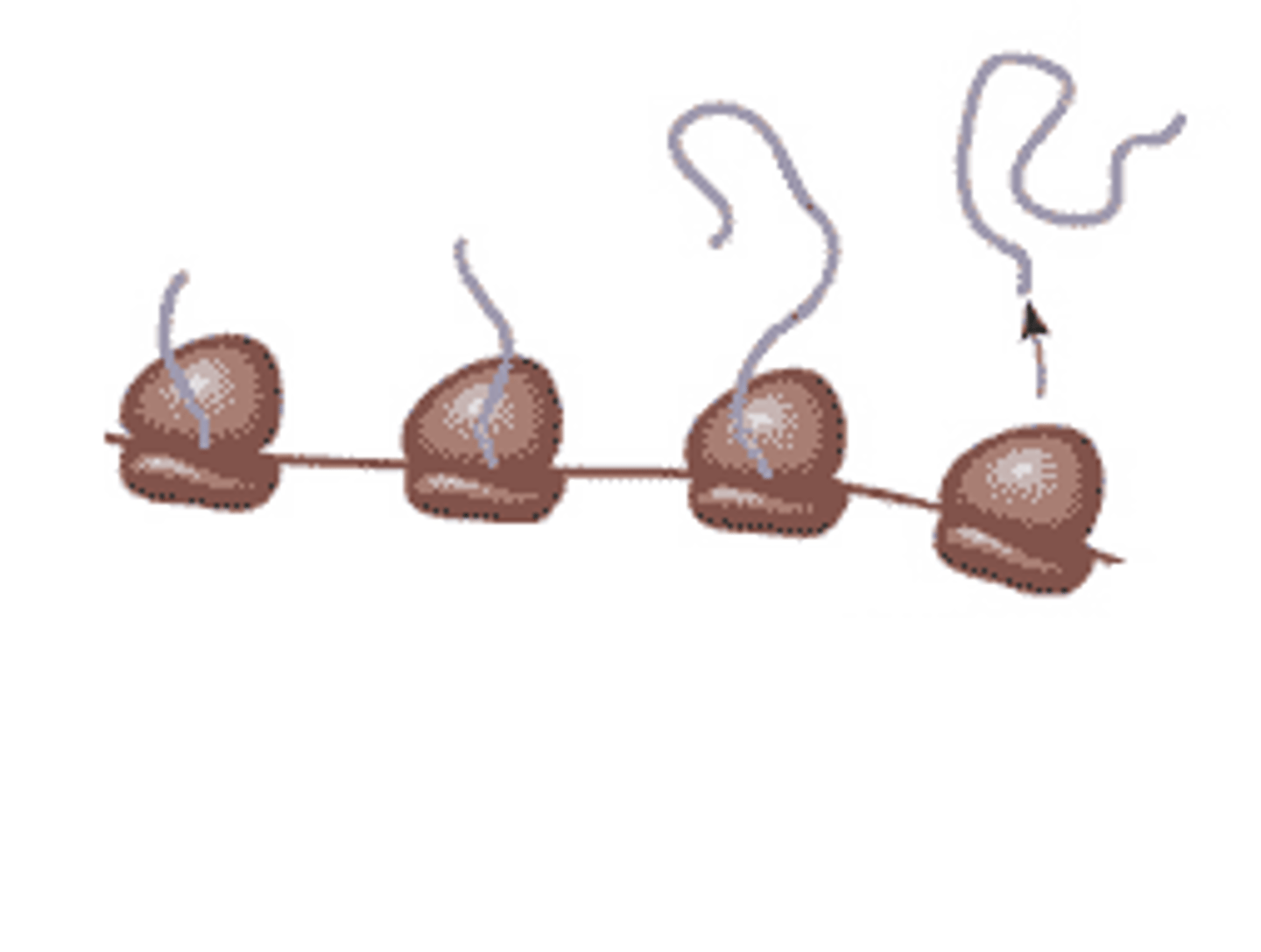
polyribosome
A group of several ribosomes attached to, and translating, the same messenger RNA molecule
stop codon
signals the end of the amino acid chain;
UAG, UAA, or UGA
start codon
AUG; the codon that signals the start of translation
ribosome
where translation takes place
A site
binding site for tRNA; binds to the next incoming tRNA complex
P site
binding site for tRNA; where the tRNA contributes its amino acid to the growing polypeptide chain
E site
binding site for tRNA; having already given up its amino acid, the tRNA is released here
double
adenine and guanine are _____-ringed nitrogen bases
single
thymine, cytosine, and uracil are _____-ringed nitrogen bass
2
adenine bonds with thymine and uracil with _____ hydrogen bonds
3
cytosine bonds with guanine with _____ hydrogen bonds
nucleosome
unit of chromatin consisting of a DNA strand wrapped around histone proteins
bacterial
histone proteins are not found in _____ DNA
9
each histone contains _____ histone proteins
H1
which histone protein keeps the DNA wrapped around the histone core?
euchromatin
represents parts of your DNA that consists of "loosely-packed" nucleosomes; meaning it is easy for RNA polymerases to access the DNA code and
transcribe our genes.
heterochromatin
represents parts of your DNA that consist of "tightly-packed" nucleosomes; these areas of DNA tend to be inactive in transcription.
positively
histones are _____ charged
negatively
DNA is _____ charged
acetylation
_____ of positively charged amino acids removes the positive charge of histones, relaxing the electrostatic attraction between the histones and the DNA. This relaxation means DNA is more loosely packed and increases transcription levels.
increases
acetylation _____ transcription levels.
deacetylation
_____ makes histones more positively charged, making them more tightly bound to negatively charged DNA. Since the DNA is more tightly bound, there is a decrease in transcription levels.
decreases
deacetylation _____ transcription levels
methylation
______ adds non-polar methyl groups to the histone, and reduces DNA transcription.
decreases
methylation _____ DNA transcription levels
phosphodiester
each single strand of DNA is made of a chain of nucleotides, which are linked together by _____ bonds
5'
the ______ end of DNA has the terminal phosphate group
phosphate
the 5' end of DNA has the terminal _____ group
3'
the _____ end of DNA has the terminal hydroxyl group
hydroxyl
the 3' end of DNA has the terminal _____ group
AT
Origins of replication tend to occur at _____ rich segments
helicase
_____ is the enzyme that 'unzips' the wound DNA double helix by breaking the hydrogen bonds between complementary purines and pyrimidines
single-strand binding proteins
after helicase unzips the DNA, _____ attach to each strand of uncoiled DNA to keep them separated
topoisomerase
As helicase unwinds the DNA, it actually creates tension ahead of the replication fork (where the strands separate). To relieve this tension, _____ creates small nicks within the DNA double helix.
DNA gyrase
a subtype of DNA topoisomerase found in bacteria and plants
DNA polymerase
the enzyme which adds new nucleotides during DNA replication
3', 5'
DNA polymerase READS the TEMPLATE strand in the _____ → _____ direction
5', 3'
DNA polymerase EXTENDS the COMPLEMENTARY strand in the _____→ _____ direction
telomeres
sequences of repeated nucleotides at the end of a chromosome that don't code anything; they're basically a 'buffer' for the real genetic code we actually use. This way, as replication occurs and that small segment of DNA at the end is not replicated, we don't lose crucial pieces of genetic information
eukaryotic
telomeres are only necessary in ______ organisms
circular
telomeres are not necessary in prokaryotes because they have _____ chromosomes
telomerase
An enzyme that catalyzes the lengthening of telomeres in eukaryotic cells.
primase
Provides a 3' hydroxyl group for DNA polymerase to attach new nucleotides to
DNA sliding clamp
Helps to hold DNA polymerase to the template strand
DNA ligase
Enzyme that covalently links the Okazaki fragments together.
S
DNA replication takes place during the _____ phase of the cell cycle
G₀
If the cell does not meet the criteria for entrance into the S phase, it will remain in _____. This is basically like a waiting room where the cell does not grow, nor will it replicate its DNA.
5', 3'
during transcription, RNA will extend in the _____ → _____ direction
cytosol
in prokaryotes, transcription occurs in the _____
sigma factor
While prokaryotic core RNA polymerase is able to bind directly to prokaryotic DNA, it
lacks the ability to target promoter sites. To work around this, prokaryotic core RNA
polymerase combines with _____ to form RNA polymerase holoenzyme . It provides RNA polymerase holoenzyme the ability to target the promoter region of bacterial DNA.
RNA polymerase holoenzyme
While prokaryotic core RNA polymerase is able to bind directly to prokaryotic DNA, it
lacks the ability to target promoter sites. To work around this, prokaryotic core RNA
polymerase combines with sigma factor to form _____ . The sigma factor provides this new enzyme the ability to target the promoter
region of bacterial DNA.
rho dependent, rho independent
two types of termination in bacteria
operon
An _____ is when a group of related genes are under the control of one promoter site.
They are common in prokaryotes as a way to regulate genes as a group; however, they
are sometimes found in eukaryotes as well. The function is to make sure the cell conserves its resources unless those resources are required.
lac operon
operon that aids in control of transcription of lactose metabolizing genes in E. coli
inducible
An _____ operon is one that is usually inactive , unless it is caused to become active .
constitutively
a gene that is always being transcribed and translated is _____ expressed
inversely
cAMP is _____ related to glucose levels
repressible
A _____ operon is one that is usually active, unless turned off somehow.