Inheritance and genetics
 Call Kai
 Learn
Learn Practice Test
 Spaced Repetition
 Match
Match Flashcards
 Knowt Play
1/40

There's no tags or description
Looks like no tags are added yet.
Name | Mastery | Learn | Test | Matching | Spaced | Call with Kai |
|---|
No analytics yet
Send a link to your students to track their progress
41 Terms
asexual reproduction
involves one parent
no fusion of gametes
offspring are 2 genetically identical daughter cells
mitosis in eukaryotic cells
binary fission in bacteria cells
sexual reproduction
sex cells called gametes are produced
new cell formed is zygote
male and female form of gamete
Gametes in humans
sperm cells are produced in testes
egg cells produced in ovaries
cells inside these organs divide by meiosis
meiosis produce 4 genetically identical offspring
product of meiosis is used in sexual reproduction
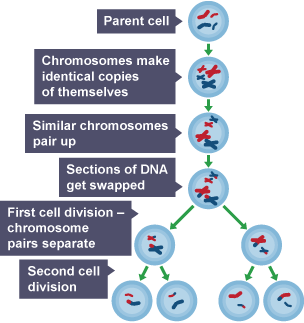
Meosis
cell doubles chromosomes DNA replication
chromosomes arrange themselves in pairs at the centre of the cell
pairs are pulled apart (division 1)
chromosomes line up at the centre again
arms of chromosomes are pulled apart (division 2)
all genetically different
Advantages of sexual reproduction
produces variation in offspring
variation gives survival advantages by natural selection
natural selection can be speeded by humans in selective breeding to increases food production
Advantages of asexual reproduction
only one parent needed
more time and energy efficient
faster
may genetically identical offspring can be produced when conditions are favourable
DNA
chromosomes are made up of long molecules of deoxyribonucleic acid DNA
polymer
double helix
each chromosome contains thousands of genes made of amino acids
enzymes control cell chemistry
human genome
entire genetic material of the organism
mitochondria have own DNA (inherited from mother)
make different proteins
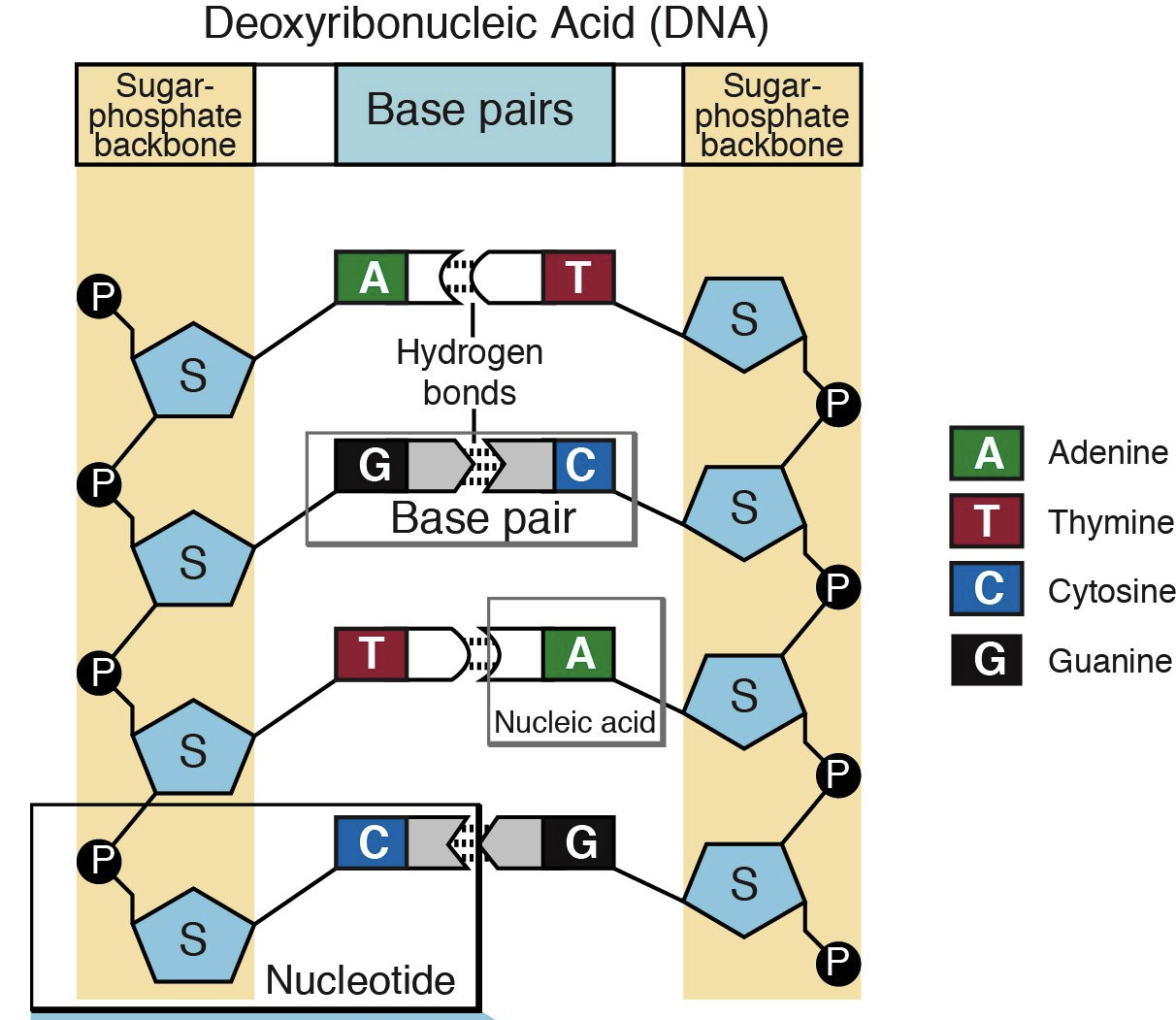
Structure of a nucleotide
made up of base sugar and phosphate
2 pairs A & T and C&G
held together by hydrogen bonds
shape of double helix
Genes
chromosomes divided up into sections of DNA
each gene contains coded genetic information to make one protein
this genetic code is coded by base pairs
genetic code
sequence base code for amino acids makes protein
controls cell activity and structures
1 gene code for 1 protein
polypeptides and dipeptides hold amino acids together
triplet code
a sequence of 3 base codes for one amino acids
also known as a codon
How proteins work
different amino acid sequences create different proteins
When the protein chain is complete it folds up to form a unique shape
This unique shape enables the proteins to do their job as enzymes, hormones or forming structures in the body such as collagen.
Protein synthesis
Transcription
mRNA can move out of nucleus & attaches to ribosomes
to correct the sequence of amino acids are brought to ribosomes and joined together (translation)
this amino acid sequence forms into a protein
transcription
DNA can’t travel out of the nucleus to the ribosomes (too big) so the base code of each gene is transcribed (copied) onto an RNA molecule called messenger RNA
mutation
Random changes of gene can occur by changing the bases
Most are harmless and do not alter the protein, or only alter it slightly so that its appearance or function is not changed.
A few mutations can cause:
the protein’s shape to be altered. E.g. a different shaped active site on the enzyme will mean that it cannot bind to its substrate or a structural protein (collagen) can lose its strength
Different protein to be created and so intended function is not carried out
non-coding DNA
Some parts of the DNA are not used for coding
These parts are used to either switch off or switch on a gene
If mutations occur here, a gene could be expressed (Switched on) and so make a lot of proteins or be switched off and not make enough proteins
what is an allele
alternate version of the same gene
one from mother one from father
homologous pairs → code for same parts of the body
phenotype
actual characteristic expressed by the person’s gene
genotype
the combination of alleles that a person has that codes for their specific phenotype
homozygous
two of the same alleles
heterozygous
two different alleles
monohybrid cross rules
always use the same letter for the two alleles but use uppercase for the dominant allele and the lowercase for the recessive
when yous show breeding use an X
put phenotypes in circles
show all possible outcomes
give answers as a percentage
monohybrid cross
when you look at one characteristic from a man and a woman and see what their offsprings could have
both have two alleles each & can pass either one to their offspring in either their sperm/cell
genetic conditions
inherited in your genes from your parents
colour blindness,cystic fibrosis, sickle cell anemia
polydactyl (having extra fingers) caused by dominant allele
cystic fibrosis is a recessive disease (f) only inherited if (ff)
For and against embryo screening
For | Against |
help people stop suffering | implies genetic disorders are unwanted/undesirable |
treating disorders are expensive | slippery slope → people could chose features of child |
expensive | |
Screening for genetic disorders
two main methods to screen embryos:
amniocentesis
chorionic villus sampling
IVF
amniocentesis
takes fluid from around developing fetus
contains fetal cells used for genetic screening
chorionic villus sampling
takes small tissue from developing placenta
Carrying out embryonic screening
DNA isolated from the embryo cells and tested for specific disorders
if screening shows that a fetus is affected the parents have a choice
adv and disadv of embryo screening
adv | disadv |
could reduce high societal cost of healthcare and support children with genetic disorders | increase risk of miscarriage |
avoid children being born into pain/suffering | can give false positive/negative result |
selective breeding
artificial selection of parents with desired characteristics from a mixed population
bred together
offspring with desired characteristics
are bred together
continues over many generations until all show desired characteristics
Inbreeding
consequences of selective breeding
gene pool reduced
all animals closely related
diseases could wipe out the whole population as the genes have a similar weakness
genetic engineering
a process which involves modifying the genome of an organism by introducing a gene from another organism to give a desired characteristic
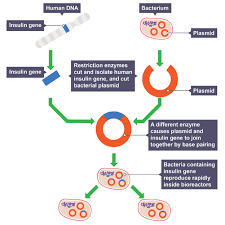
Genetic engineering to produce insulin
bacterium with ring of DNA called a plasmid
plasmid taken out of bacterium and split open by enzyme
insulin gene cut out by an of DNA by enzyme
plasmid with insulin gene in it taken by bacterium
bacterium multiplies many times
insulin gene is switched on & insulin is harvested
steps to adult cell cloning
nucleus removed from an unfertilised egg cell
nucleus taken from adult body cell e.g skin cell
nucleus from adult cell is inserted in empty egg cell
new egg cell is given a tiny electric shock → stimulates to start dividing to form embryo cells
when embryo has developed into ball of cells it’s inserted into a womb of adult female to continue development
benefits and risks of cloning
benefits | risks |
produce useful proteins in milk | cloning animals |
medically useful | produce lots of organisms with identical genes |
save animals from extinction | reduces variety in population |
bring back extinct animals | less likely to survive |
tissue culture
plant cells are taken from parent
grown in growth medium with hormones
new plants are made - clones of the original parent plant due to meristem tissue throughout the plant
useful as we can preserve rare species of plants and grow them in plant nurseries to produce more
plant cuttings
take cuttings from older plants
plant them with growth hormones to produce clones quickly
this method is older, cheaper and simpler than tissue culture (doesn’t make as many plants)
embryonic cloning
splitting apart cells from a developing animal embryo before they became specialised
then transporting the identical embryo into host mothers