Lab 5
 Call Kai
 Learn
Learn Practice Test
 Spaced Repetition
 Match
Match Flashcards
 Knowt Play
1/71

There's no tags or description
Looks like no tags are added yet.
Name | Mastery | Learn | Test | Matching | Spaced | Call with Kai |
|---|
No analytics yet
Send a link to your students to track their progress
72 Terms
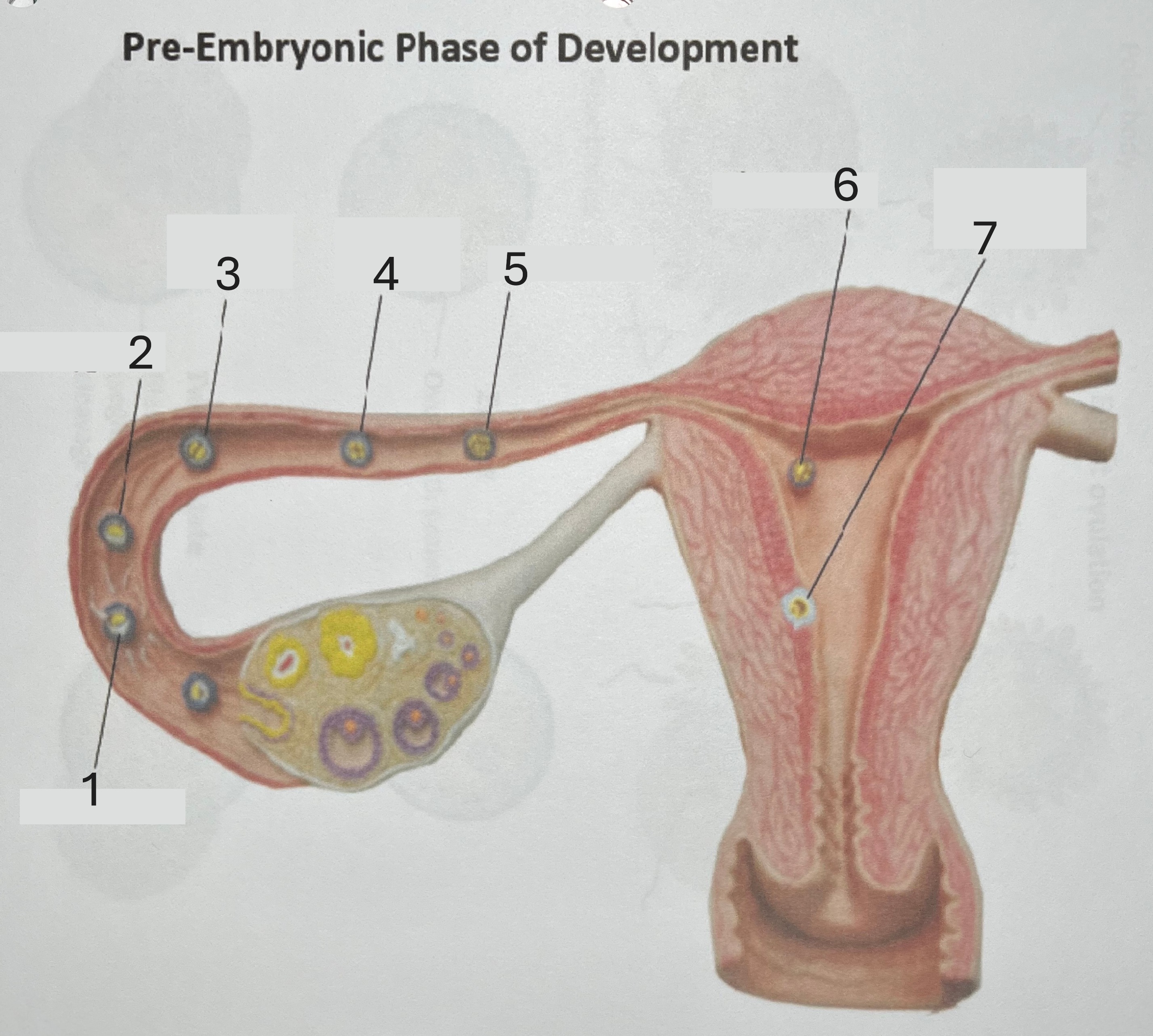
1
Fertilization
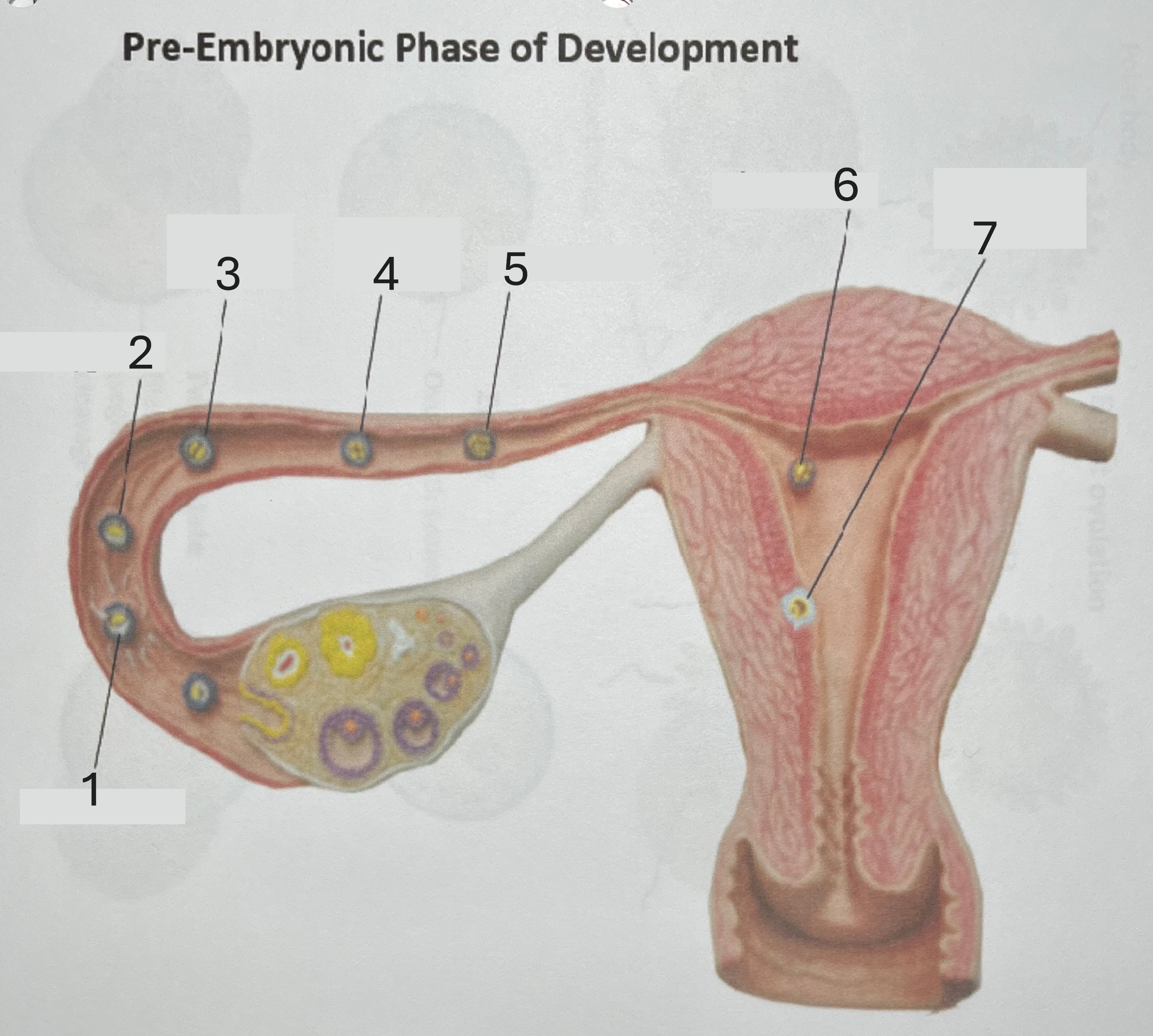
2
Zygote
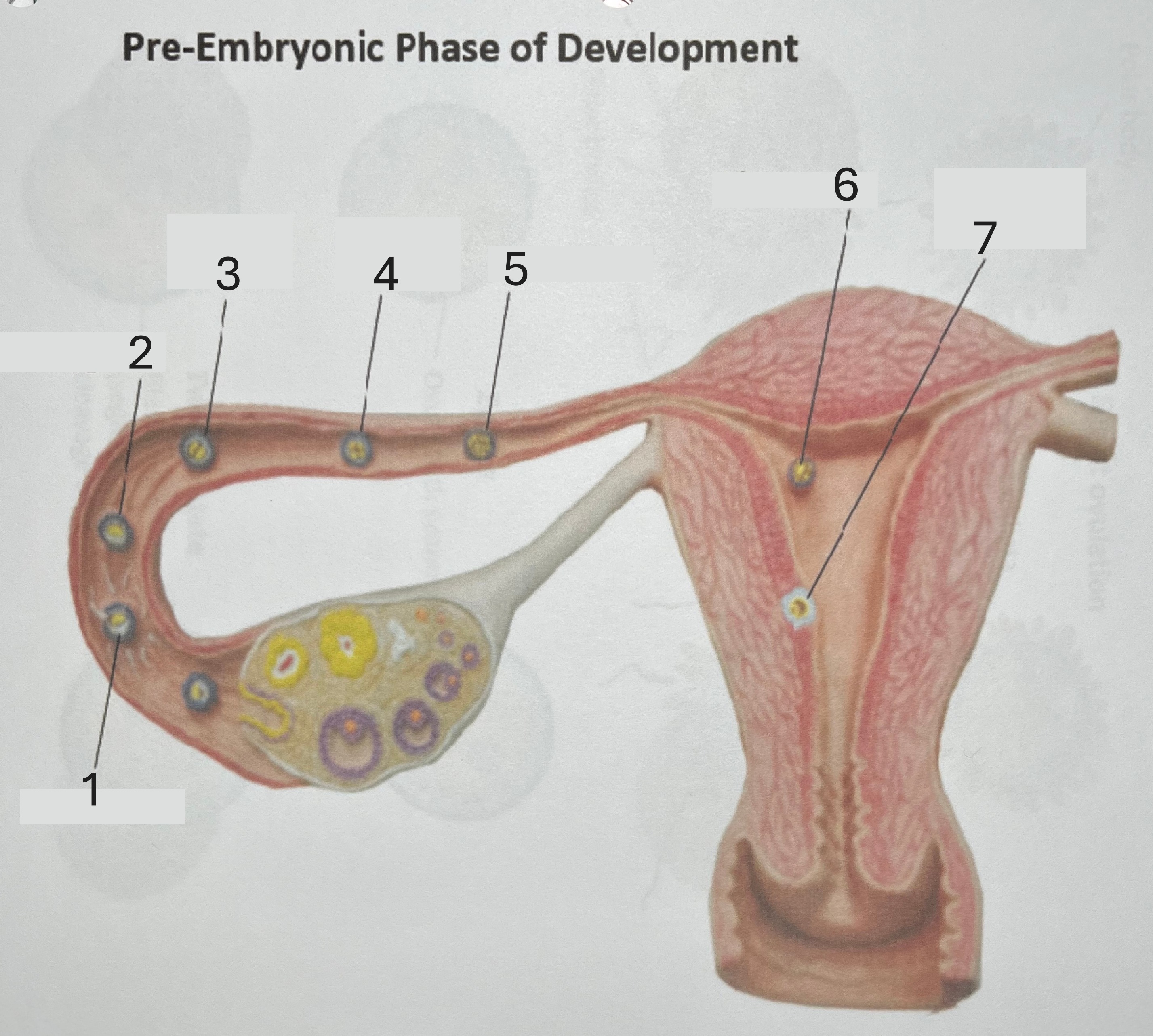
3
Two-cell state
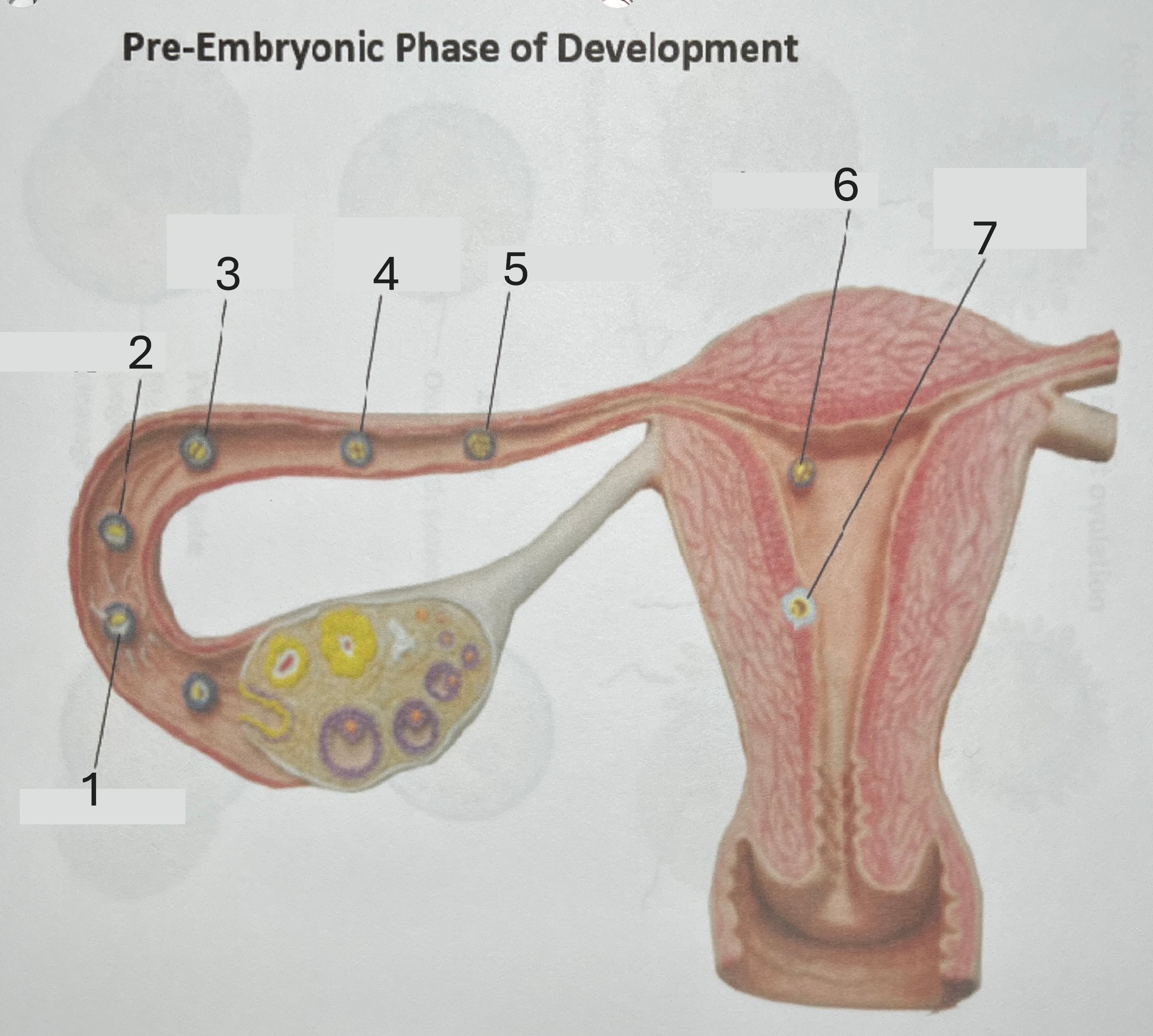
4
Four-cell state
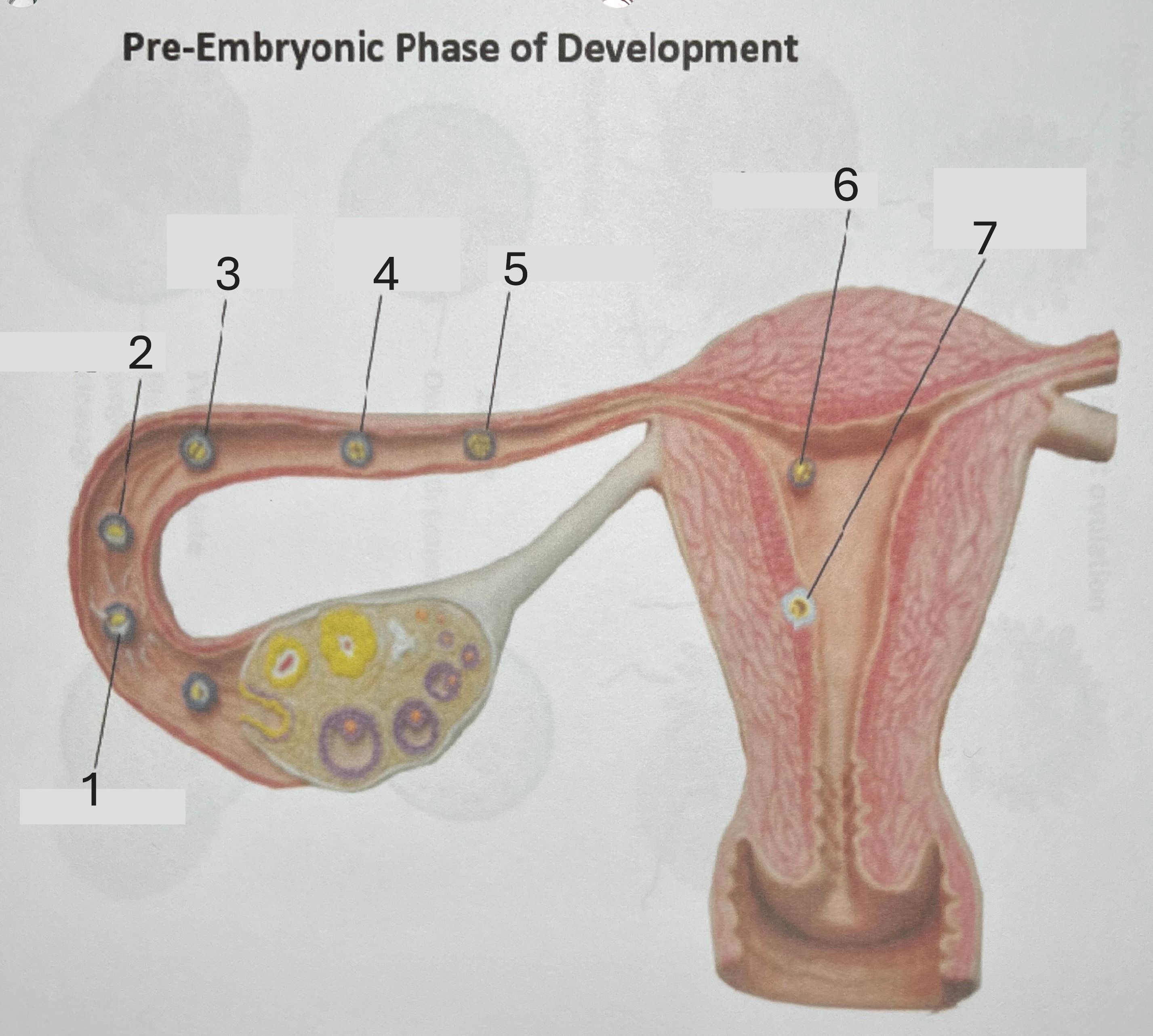
5
Morula
6
Blastocyst
7
Implanted embryo
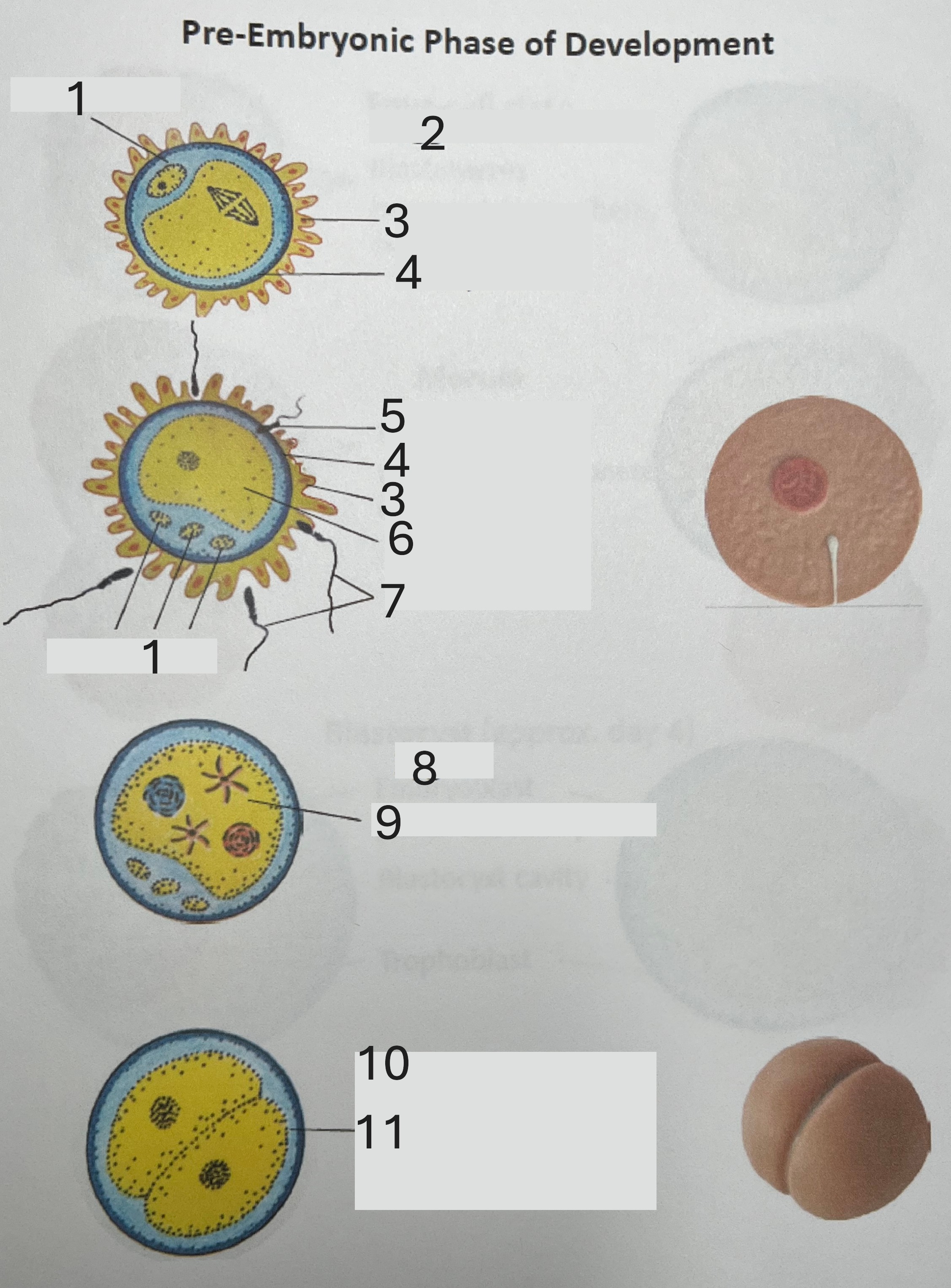
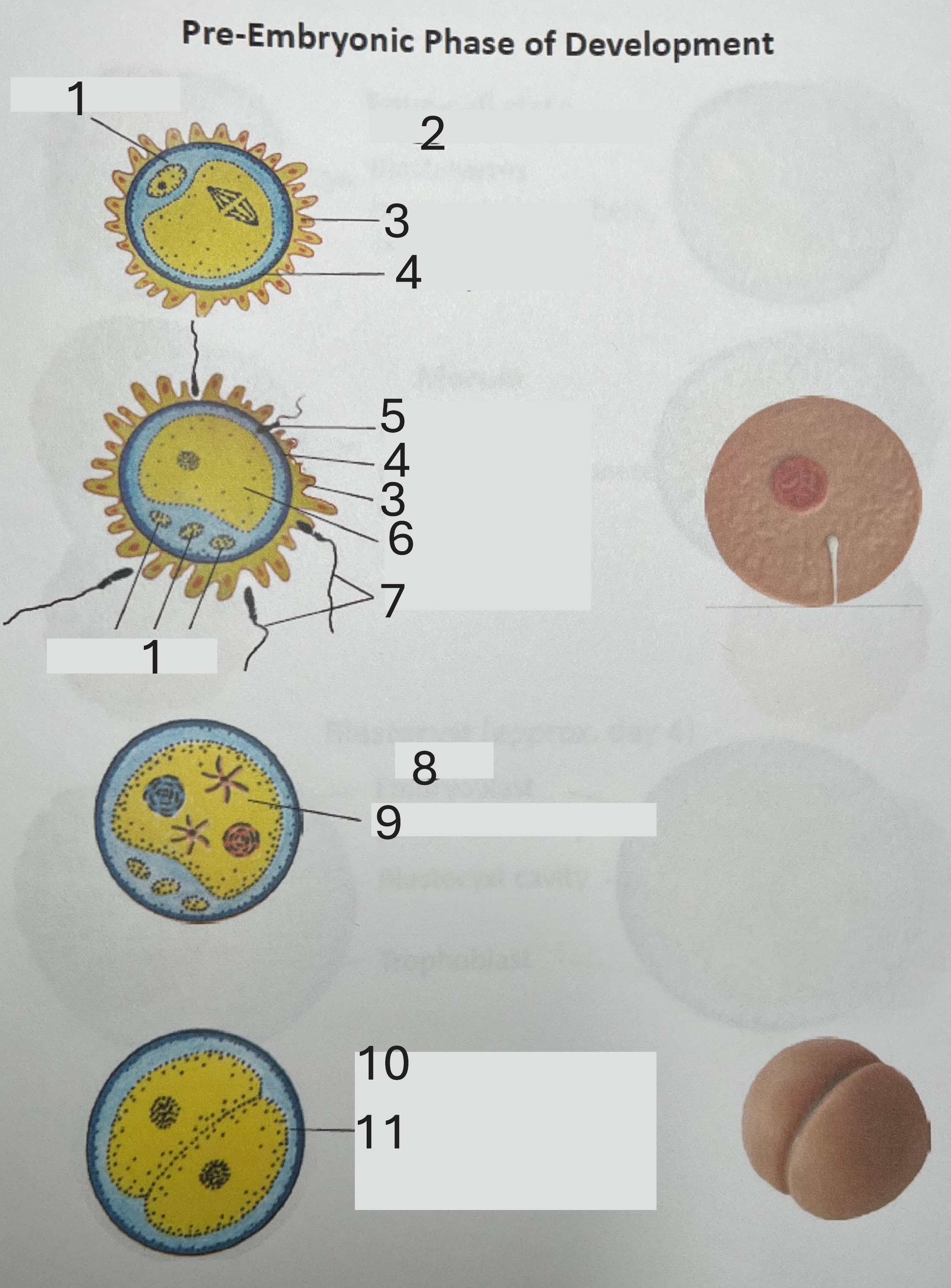
1
Polar body
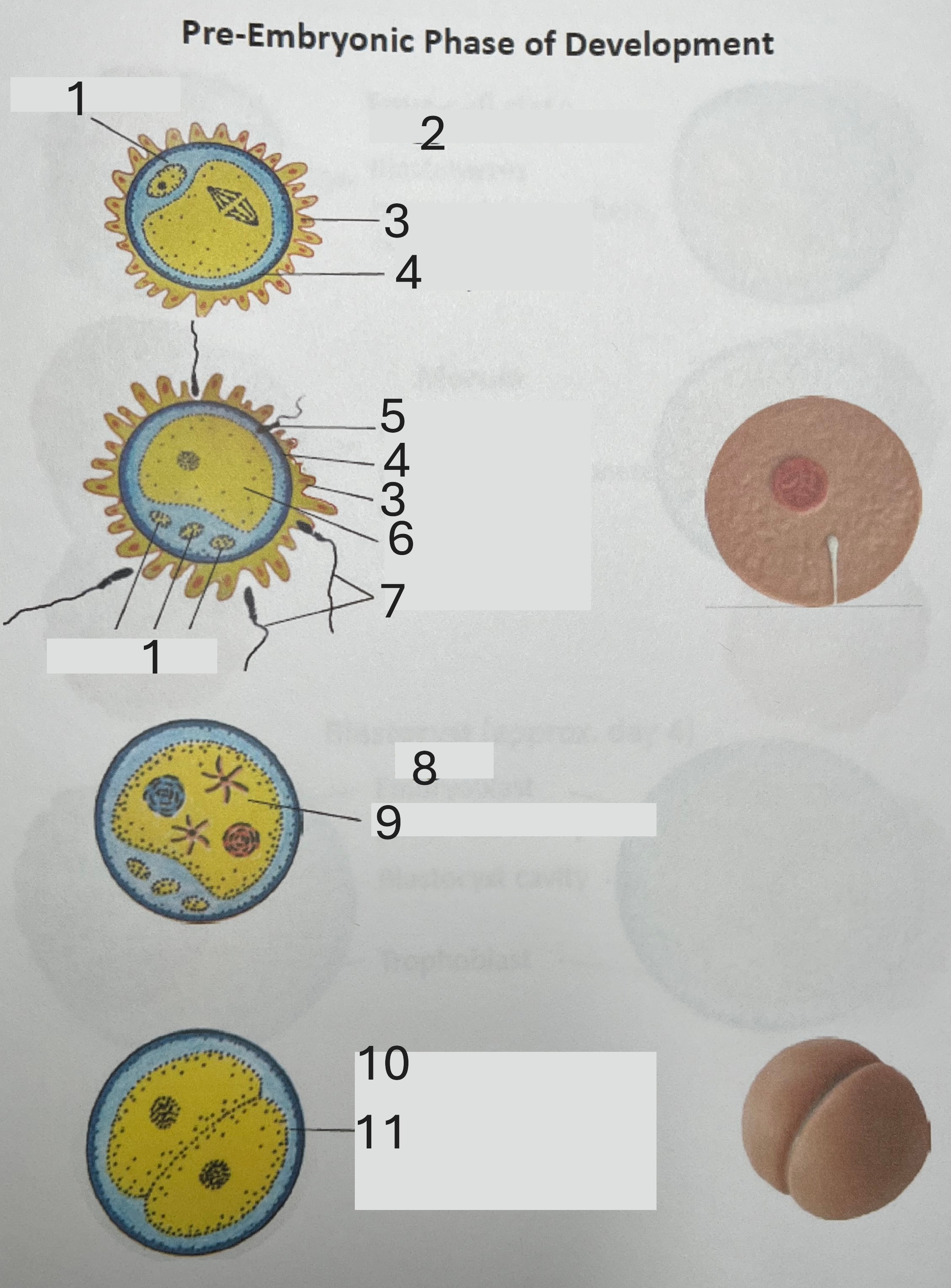
2
Egg at ovulation
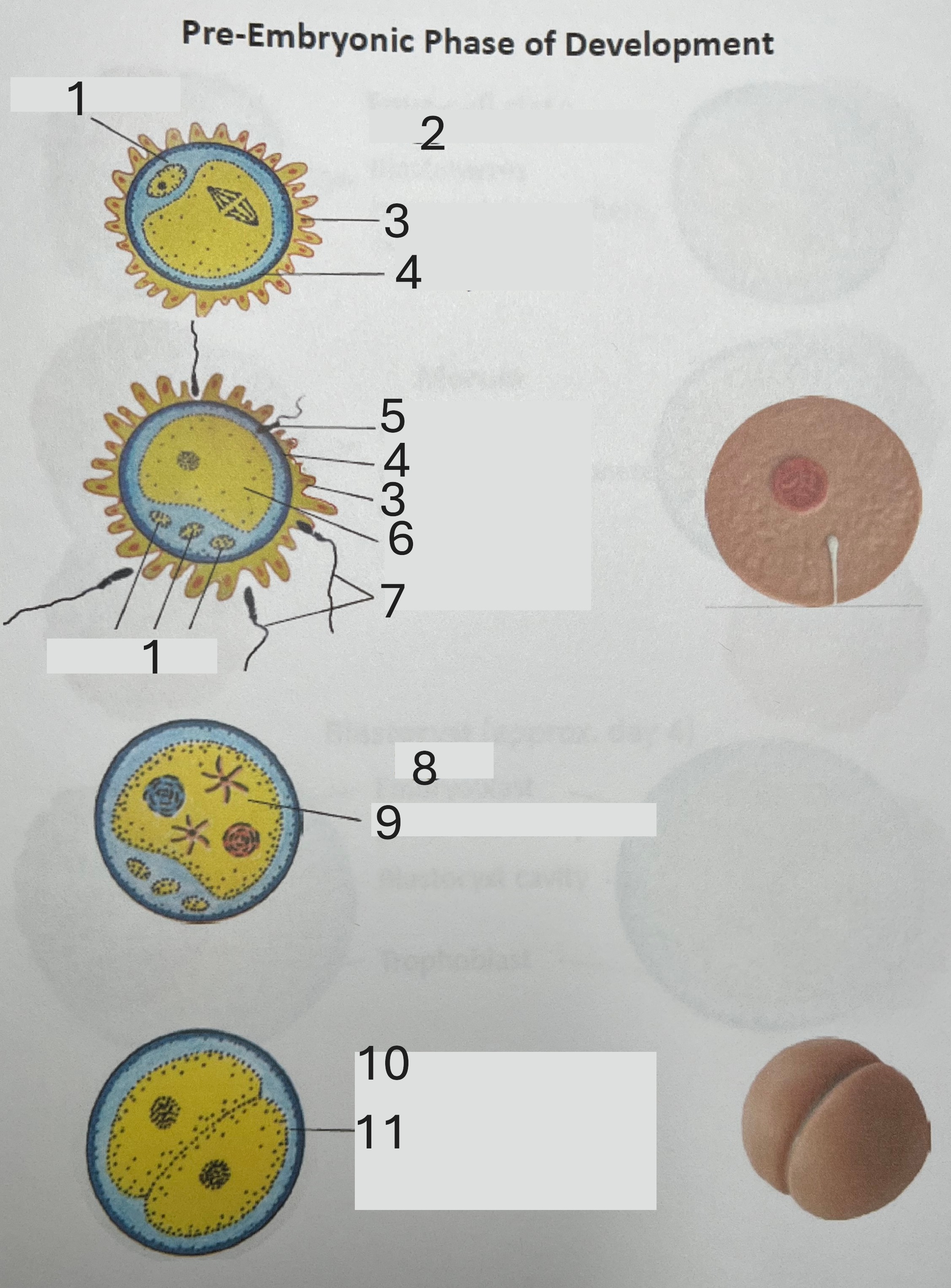
3
Corona radiata
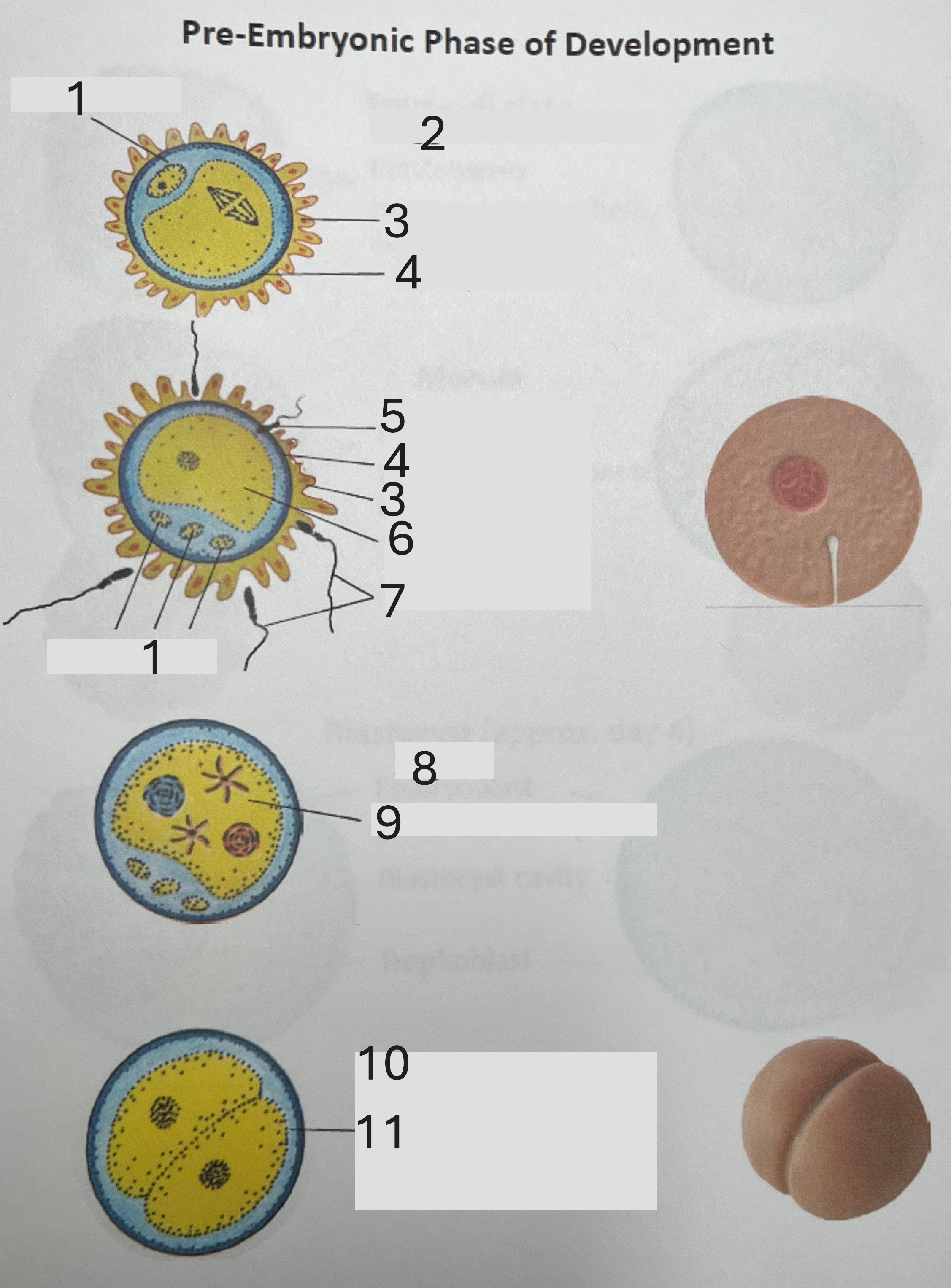
4
Zona pellucida
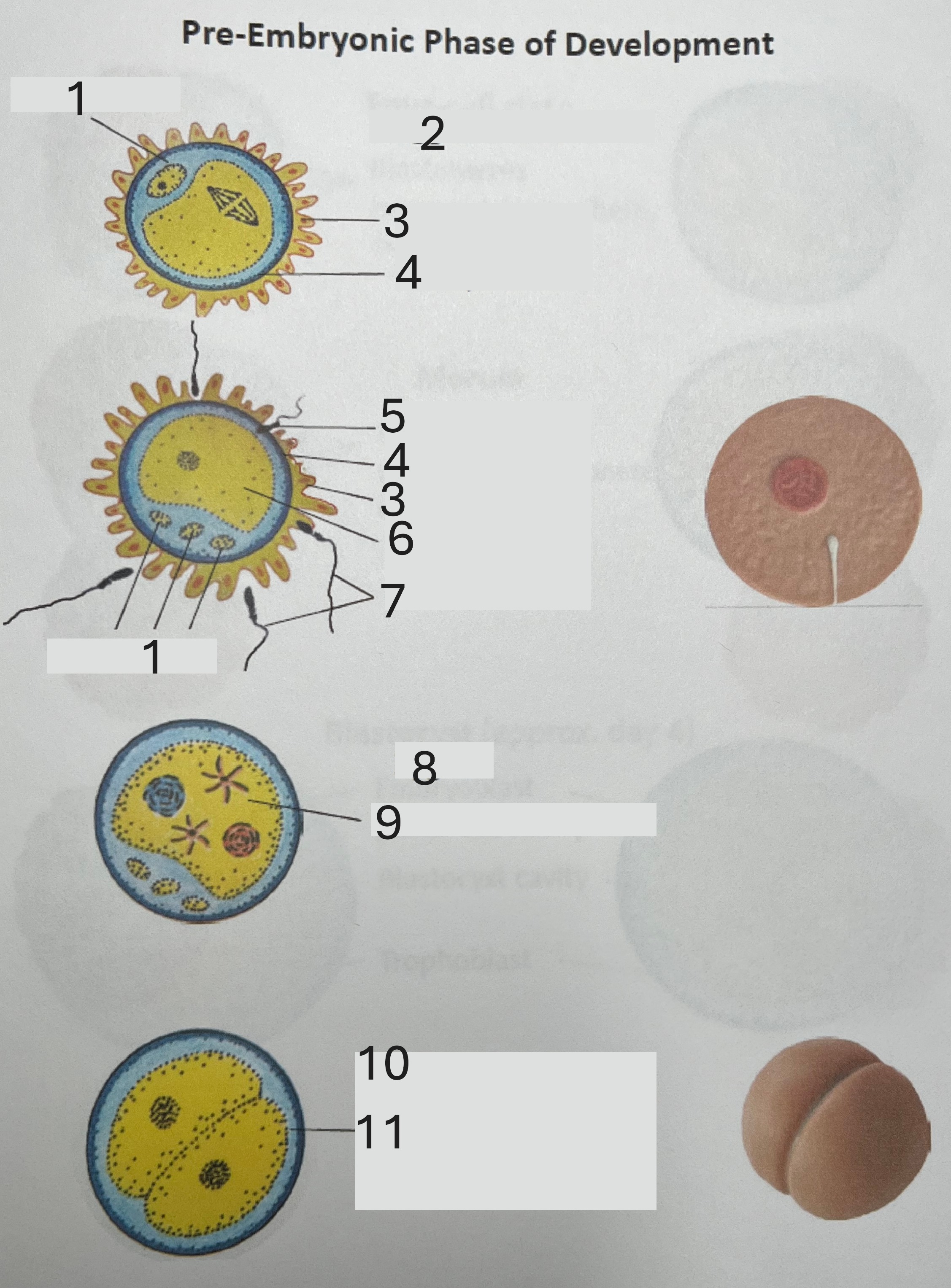
5
Fertilization
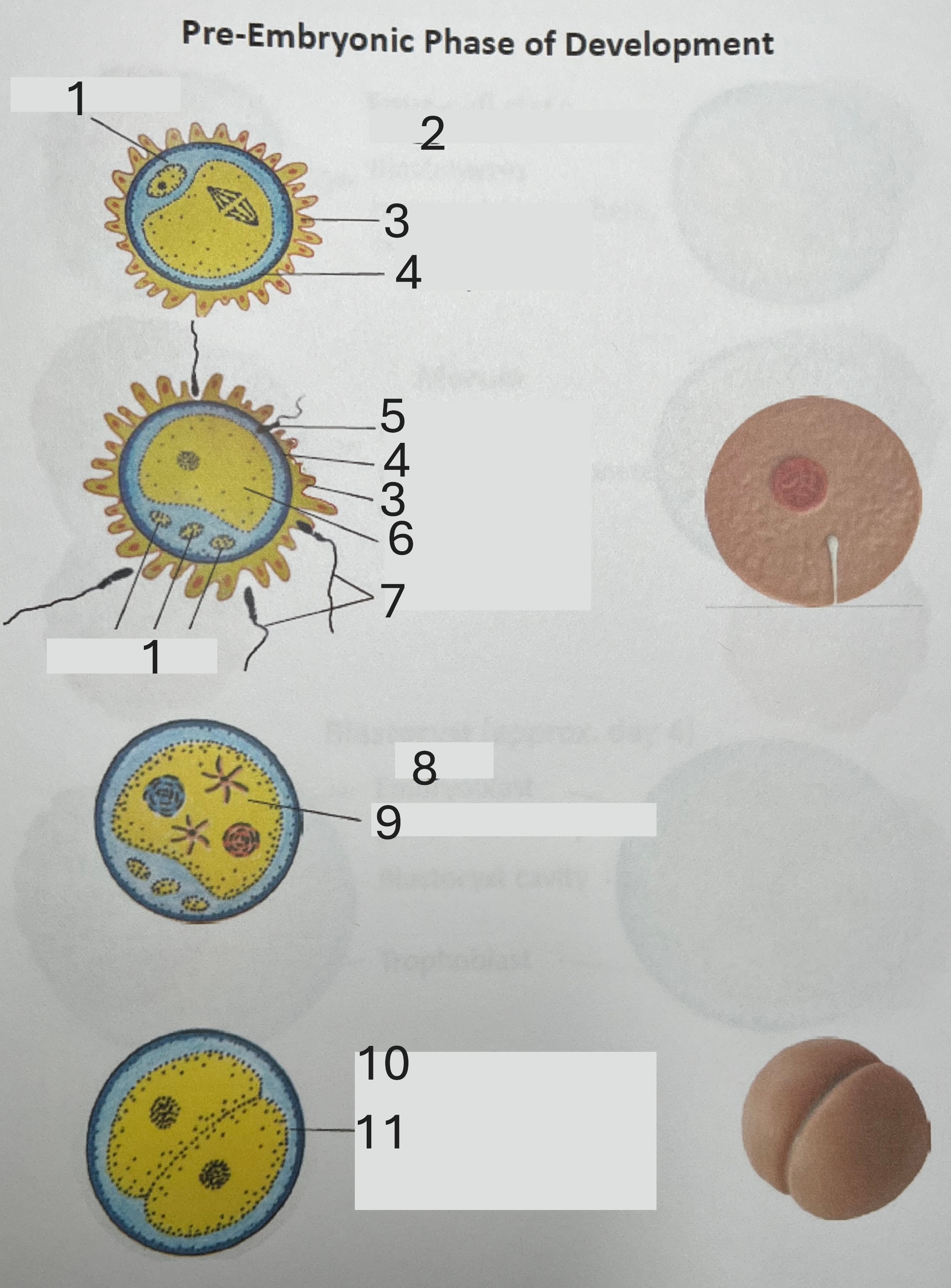
6
Ovum
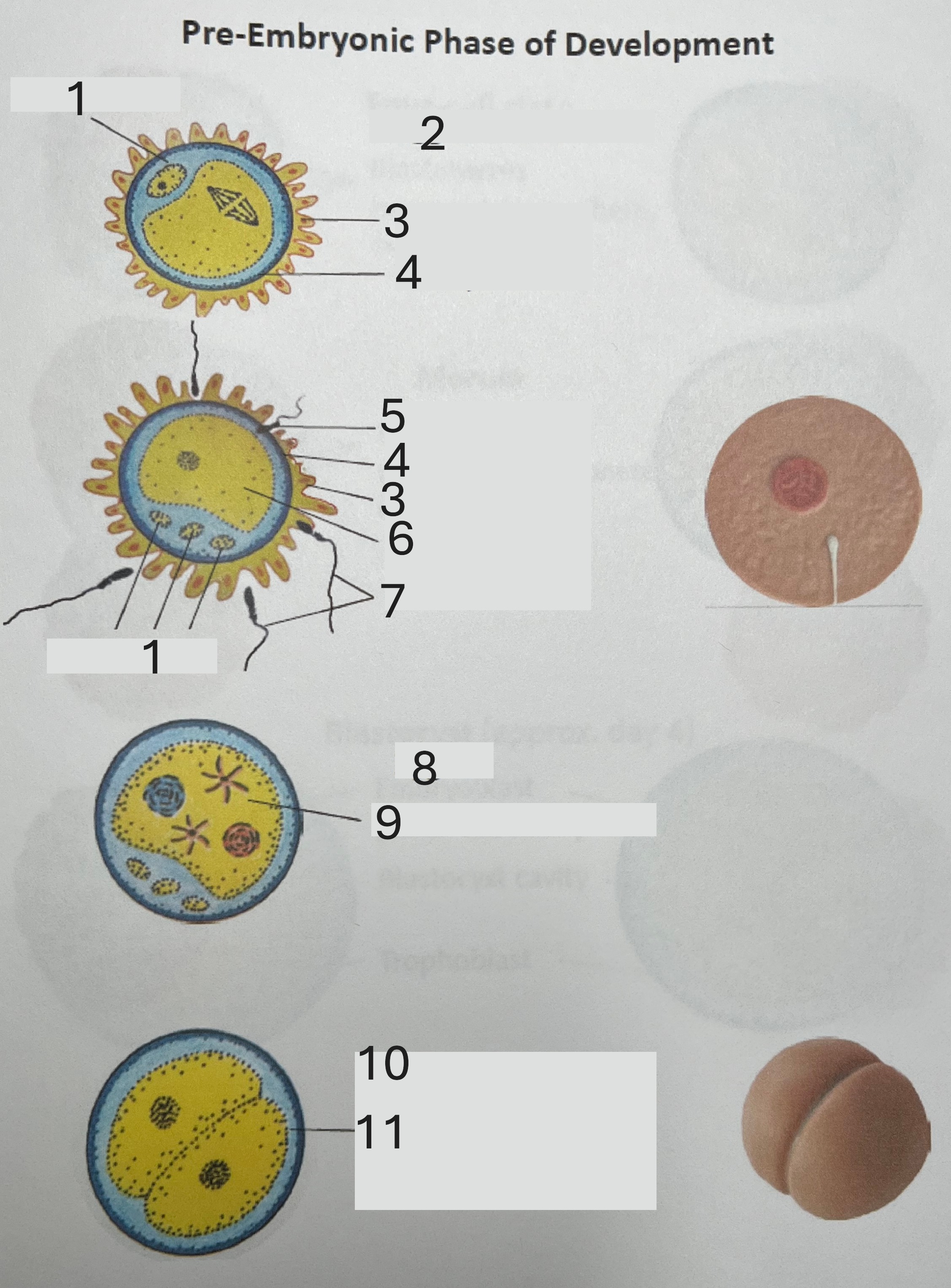
7
Sperm
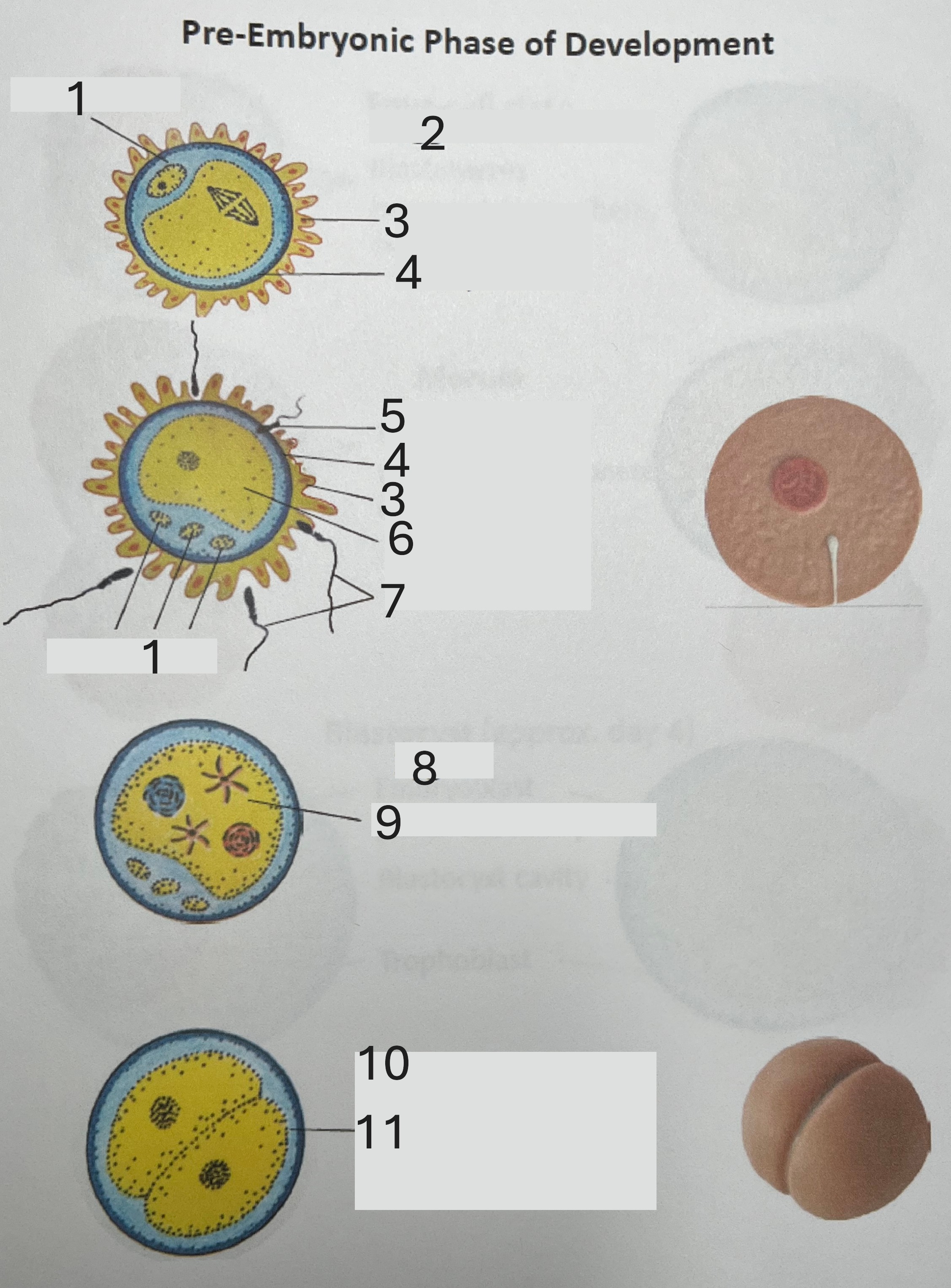
8
Zygote
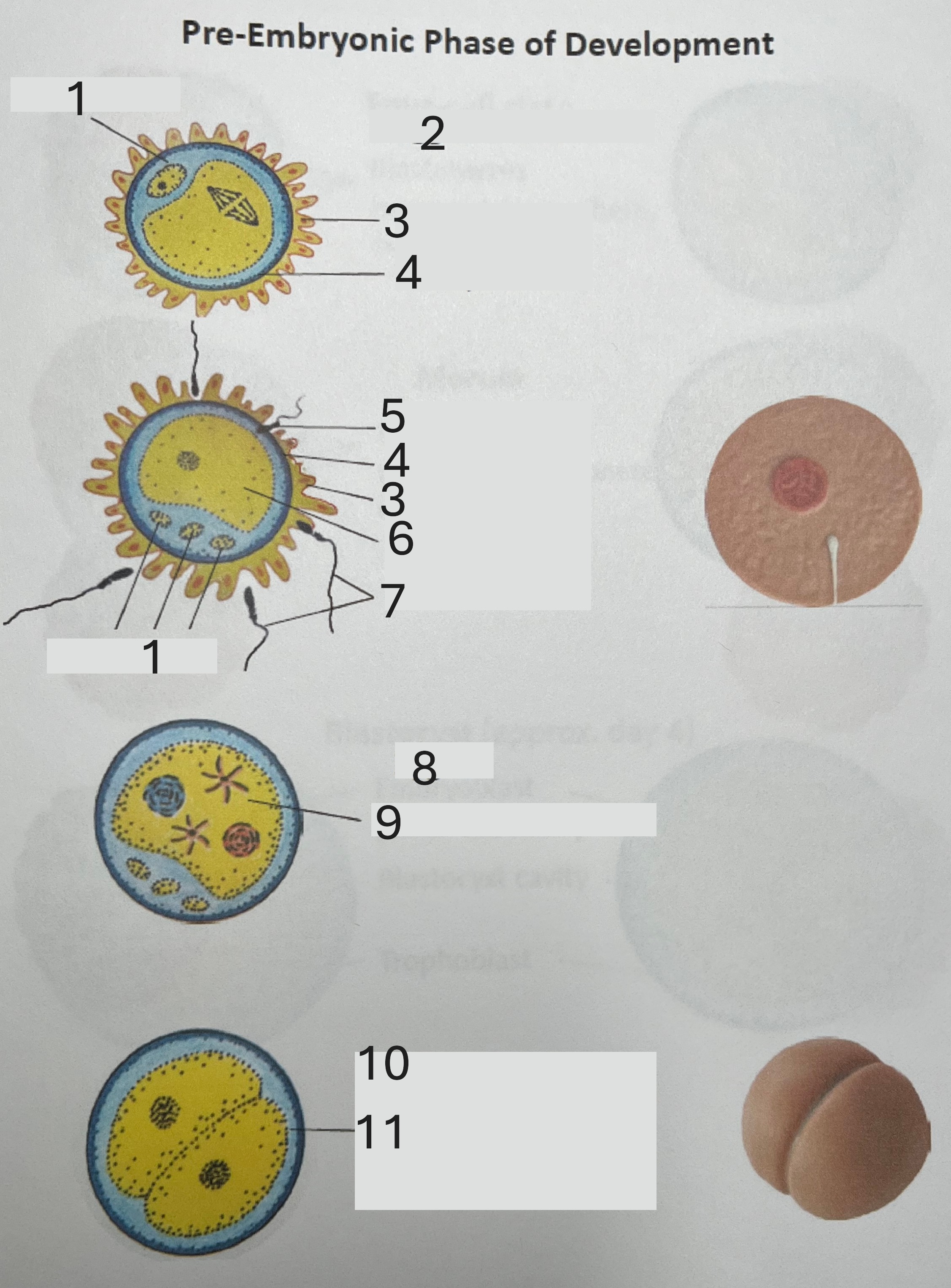
9
Ovum with pronucleus
10
Two-cell state
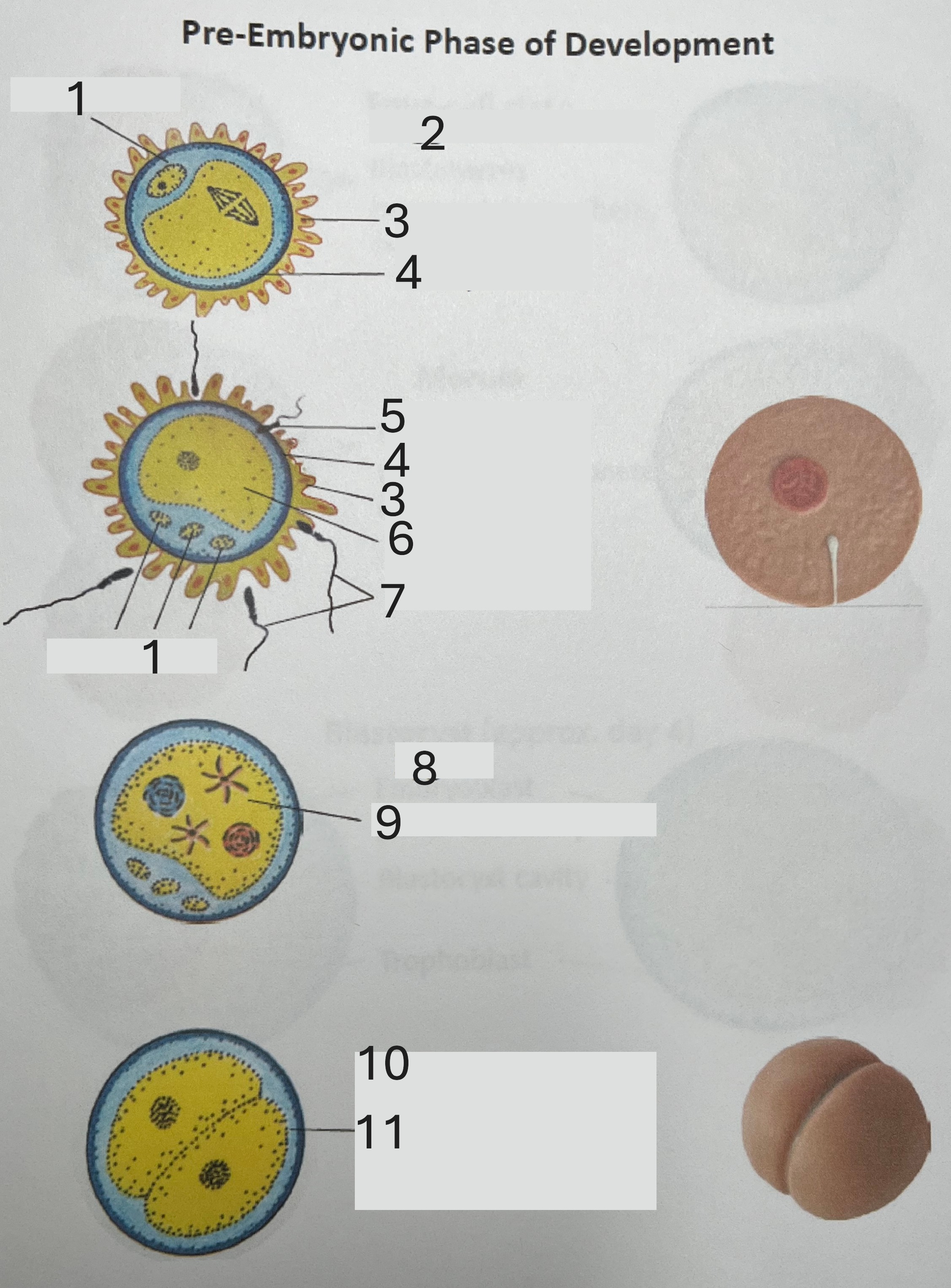
11
Blastomere
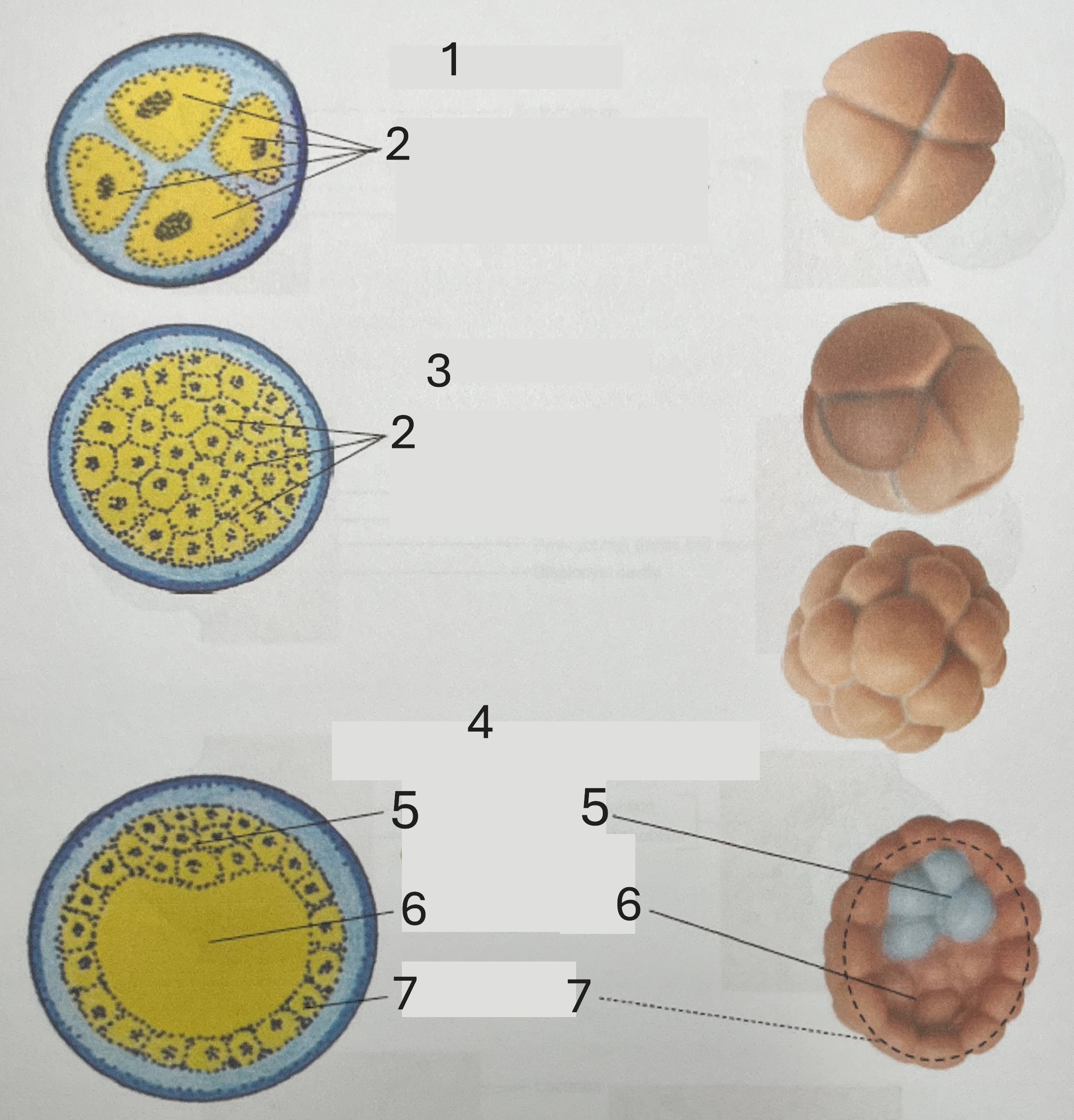
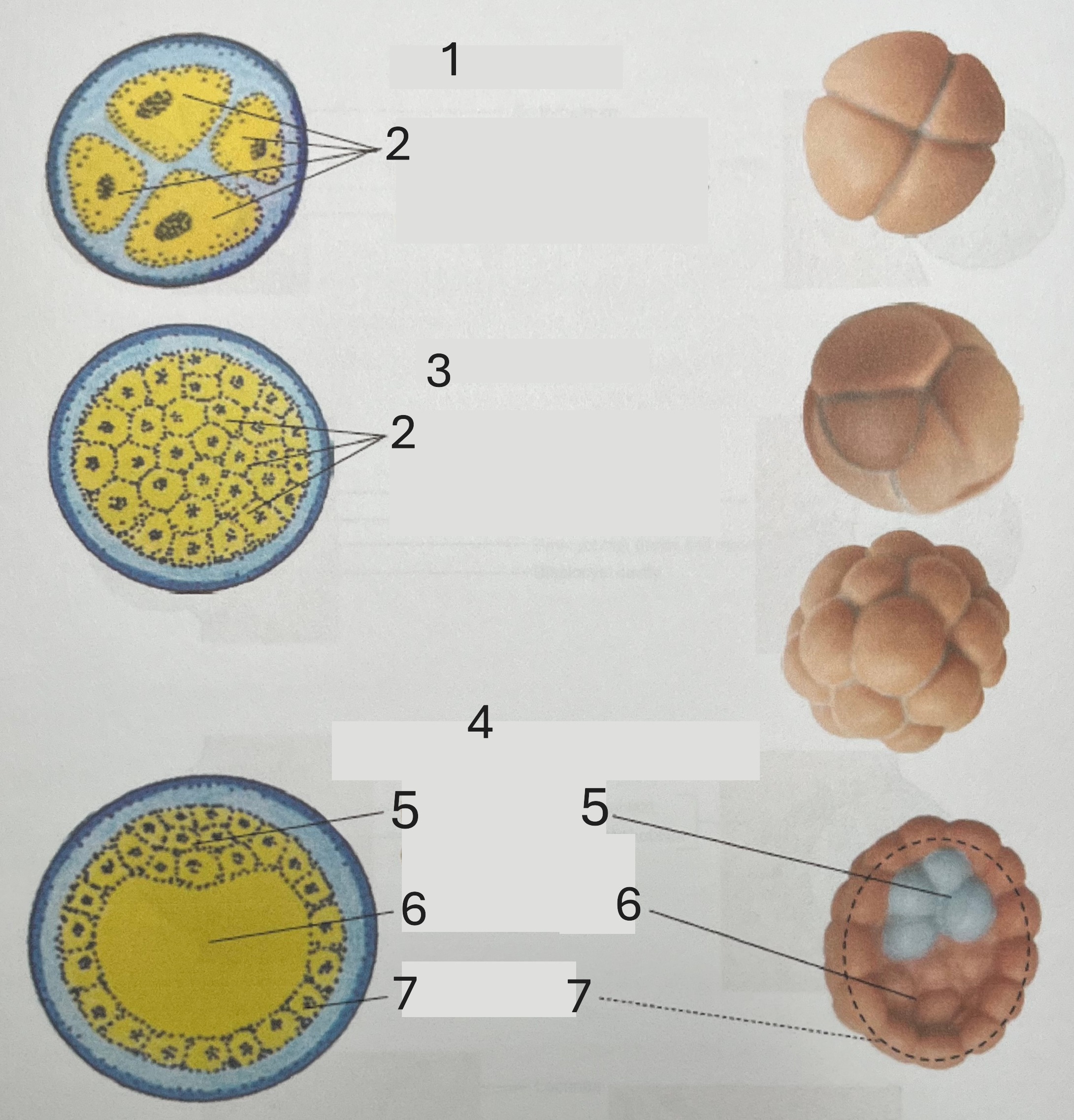
1
Four-cell state
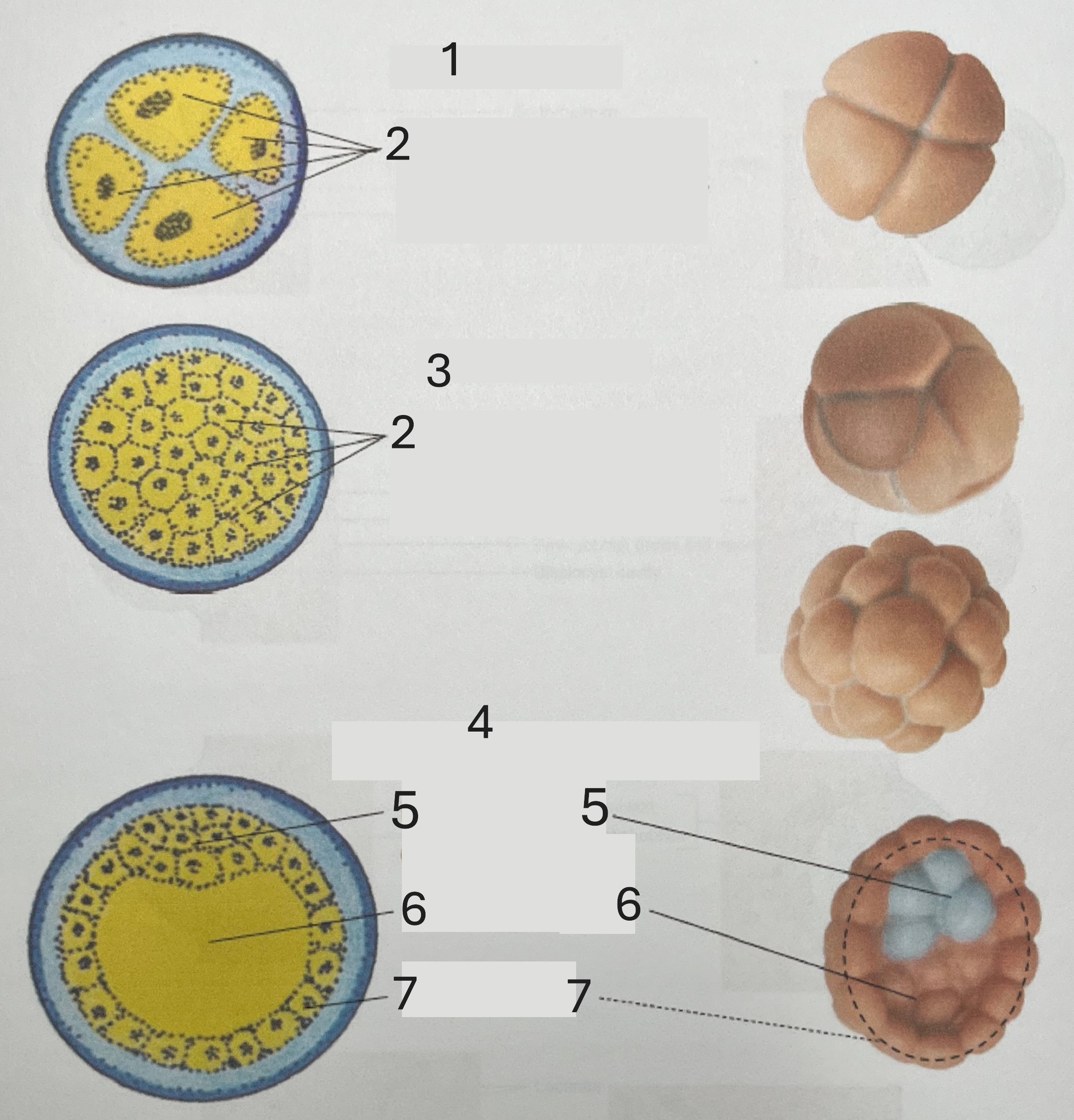
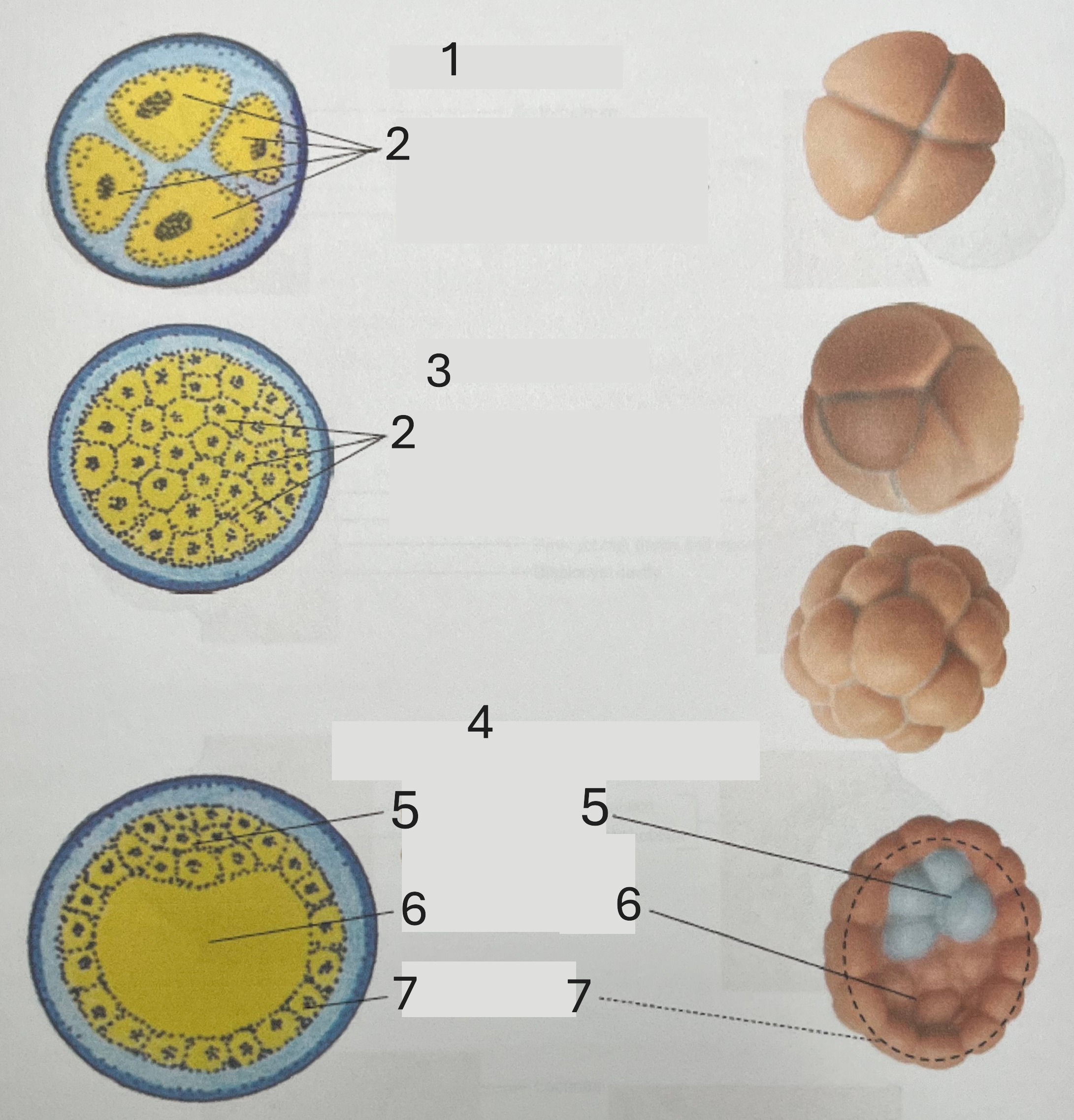
2
Blastomere
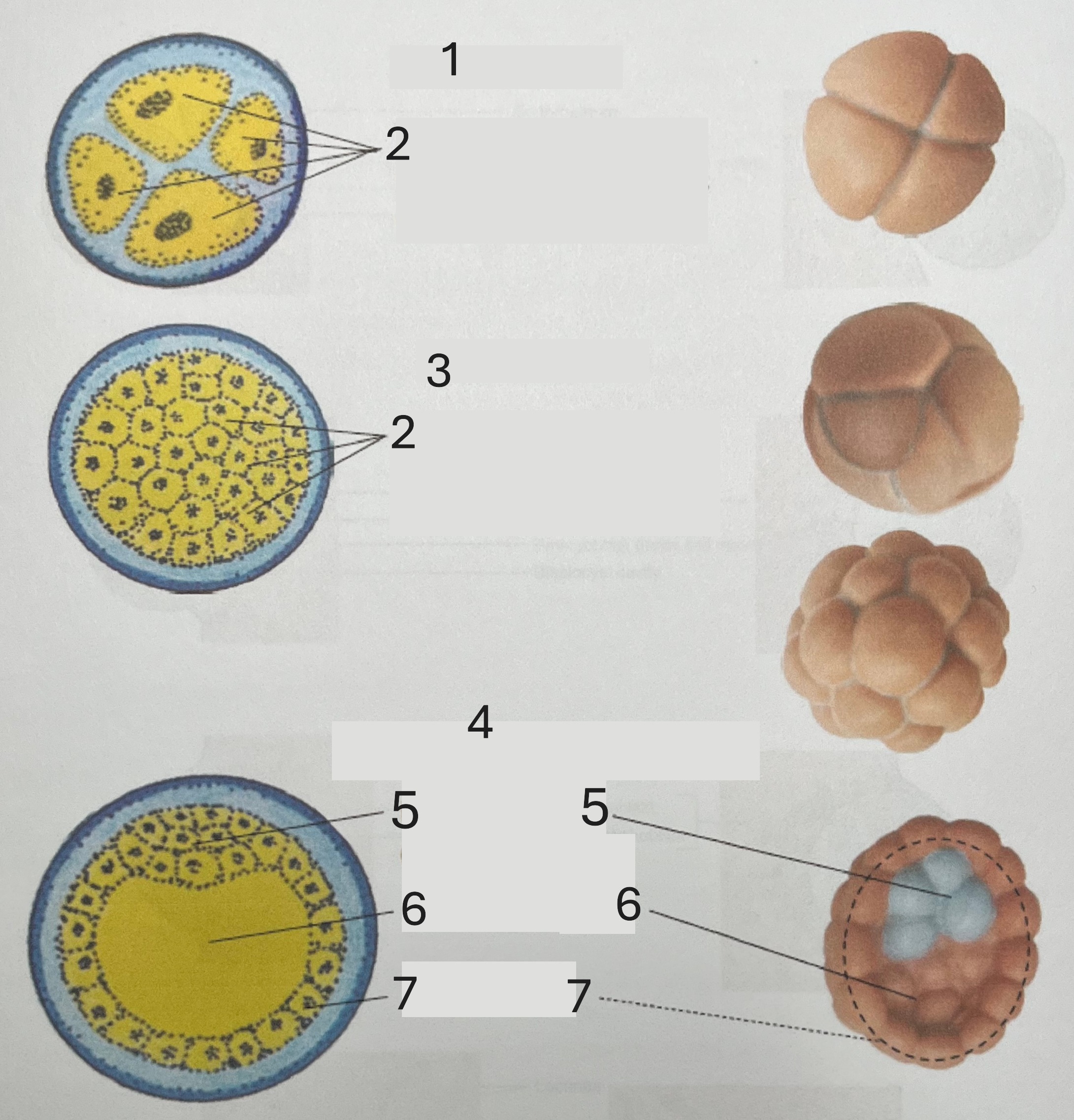
3
Morula
4
Blastocyst
5
Embryoblast (inner cell mass)
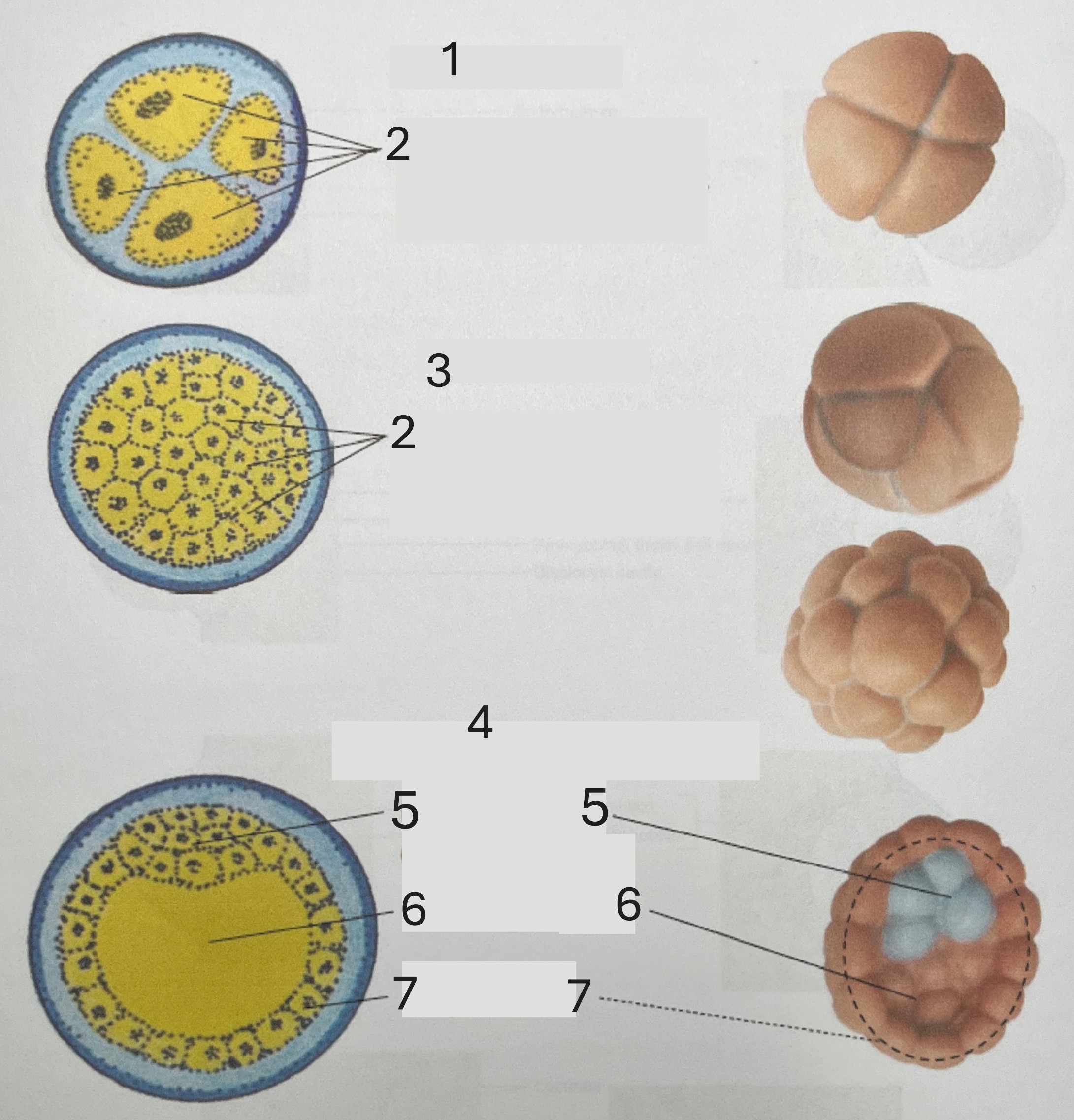
6
Blastocyst cavity
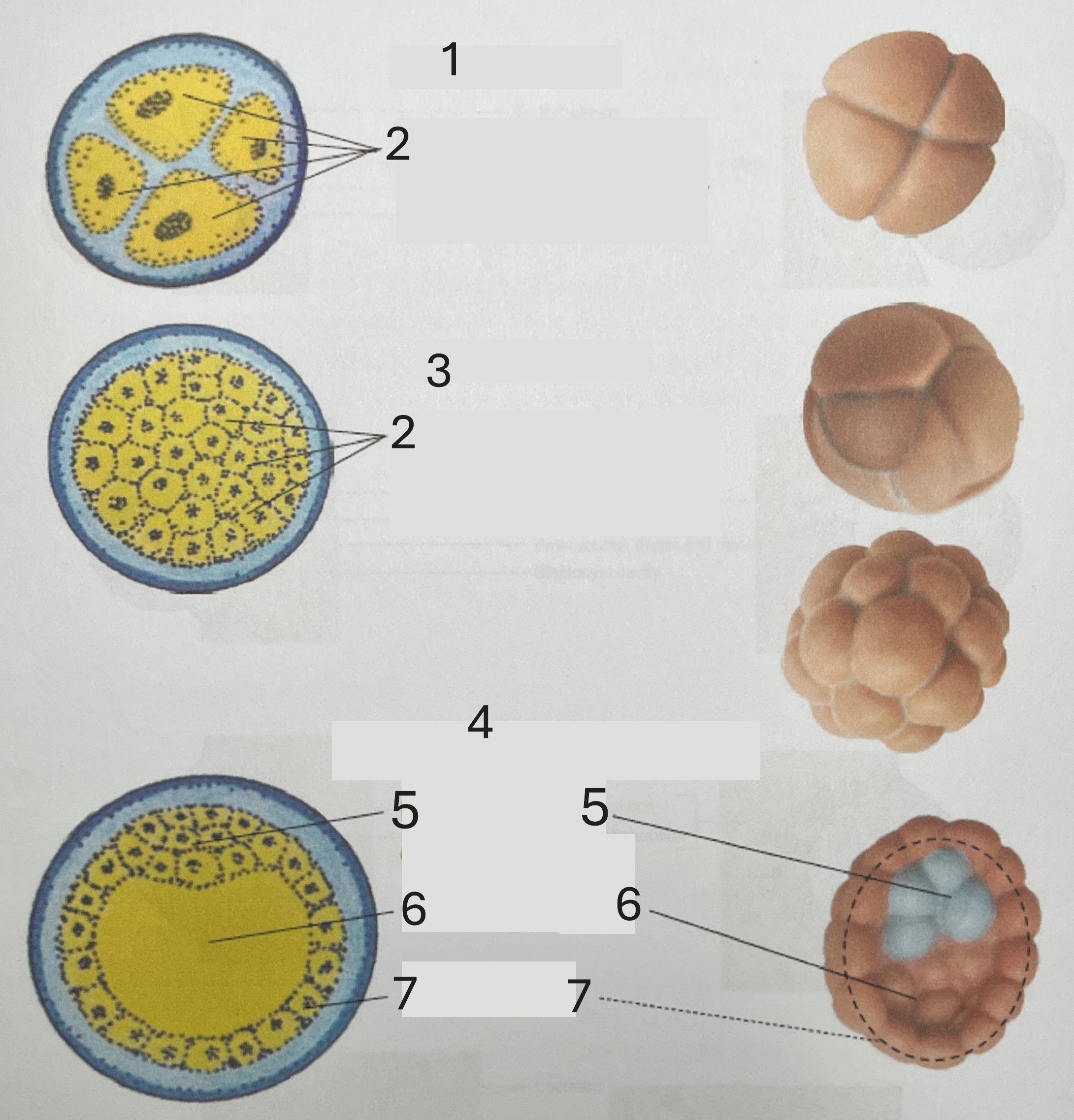
7
Trophoblast
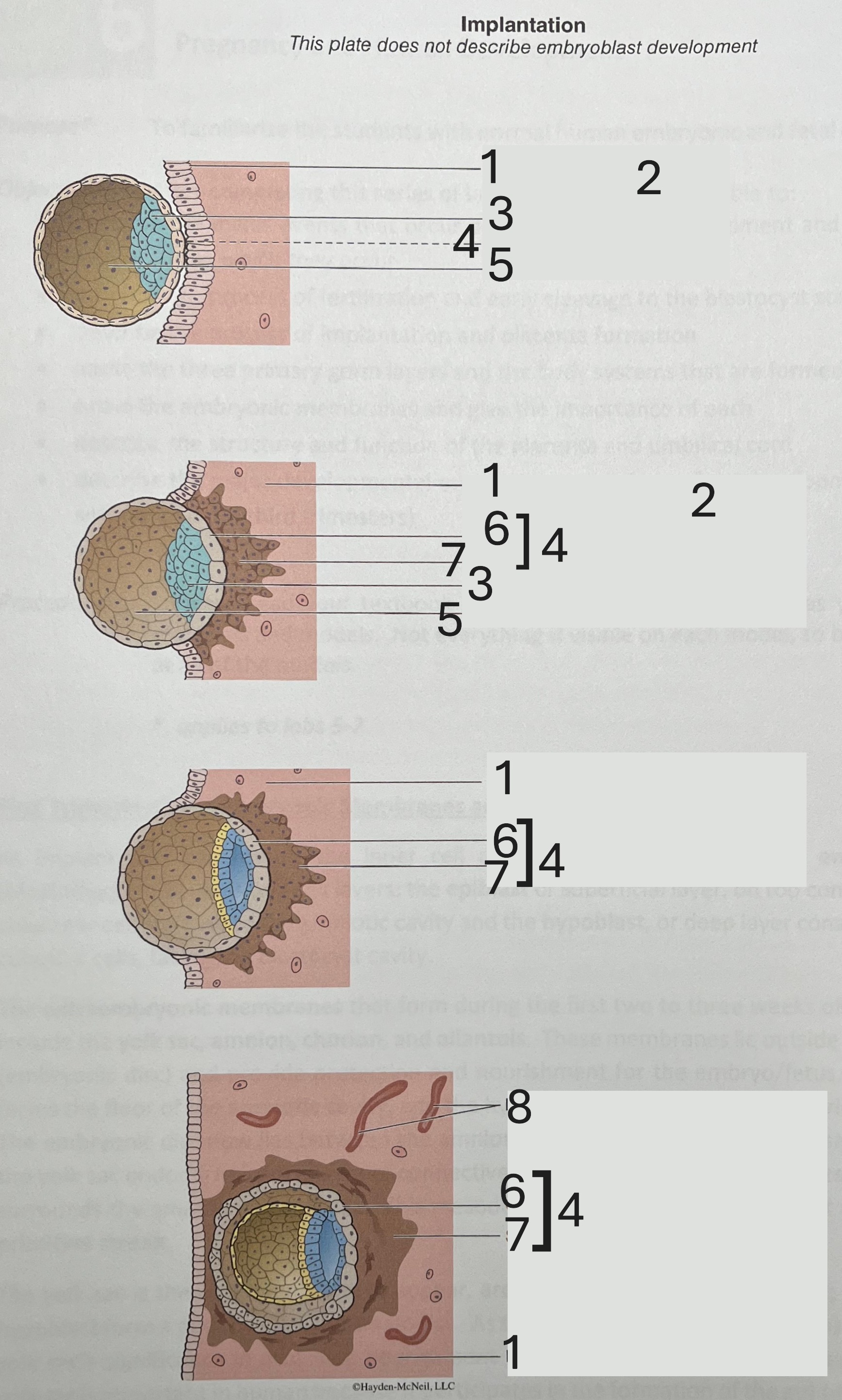
1
Endometrium
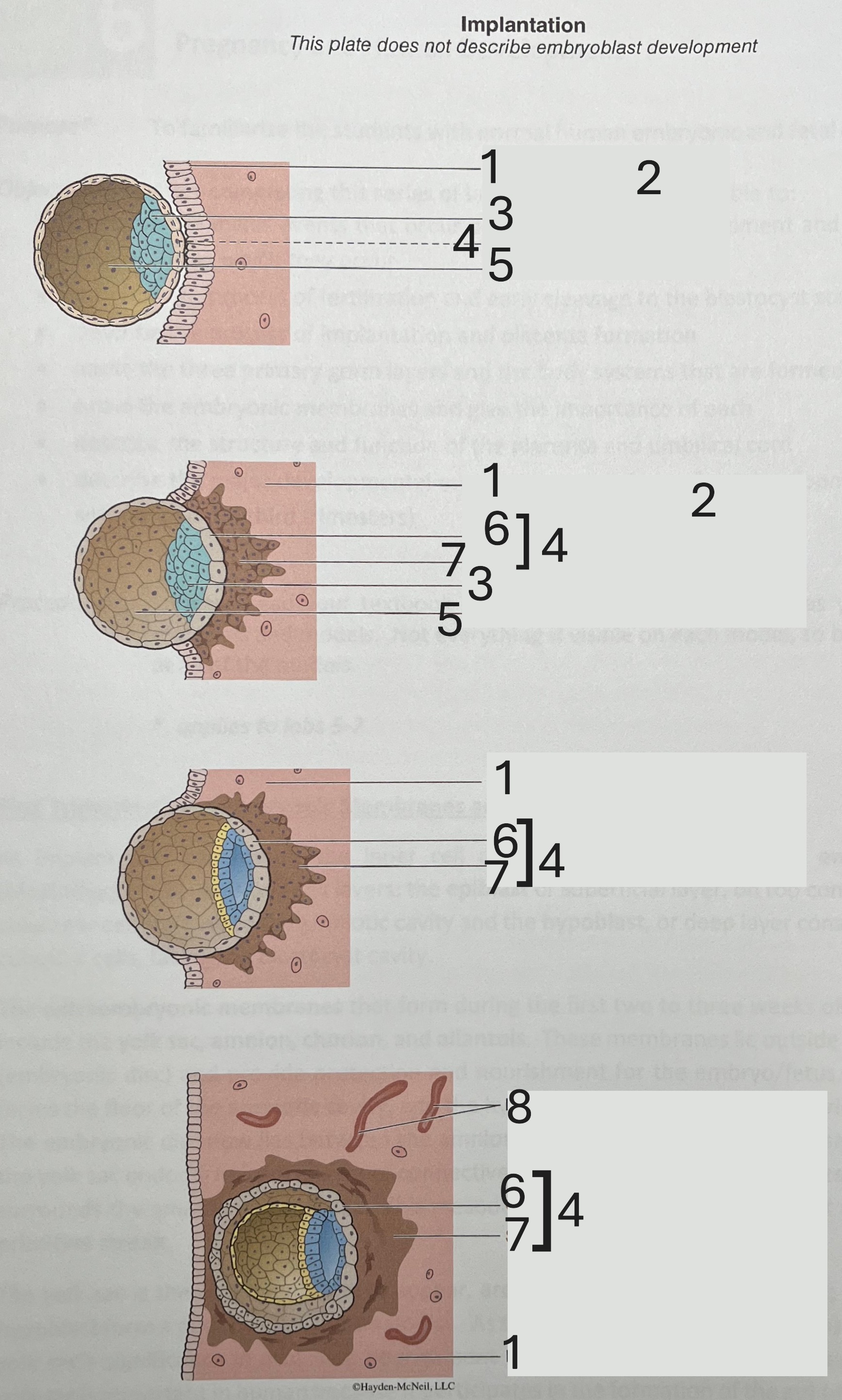
2
Blastocyst
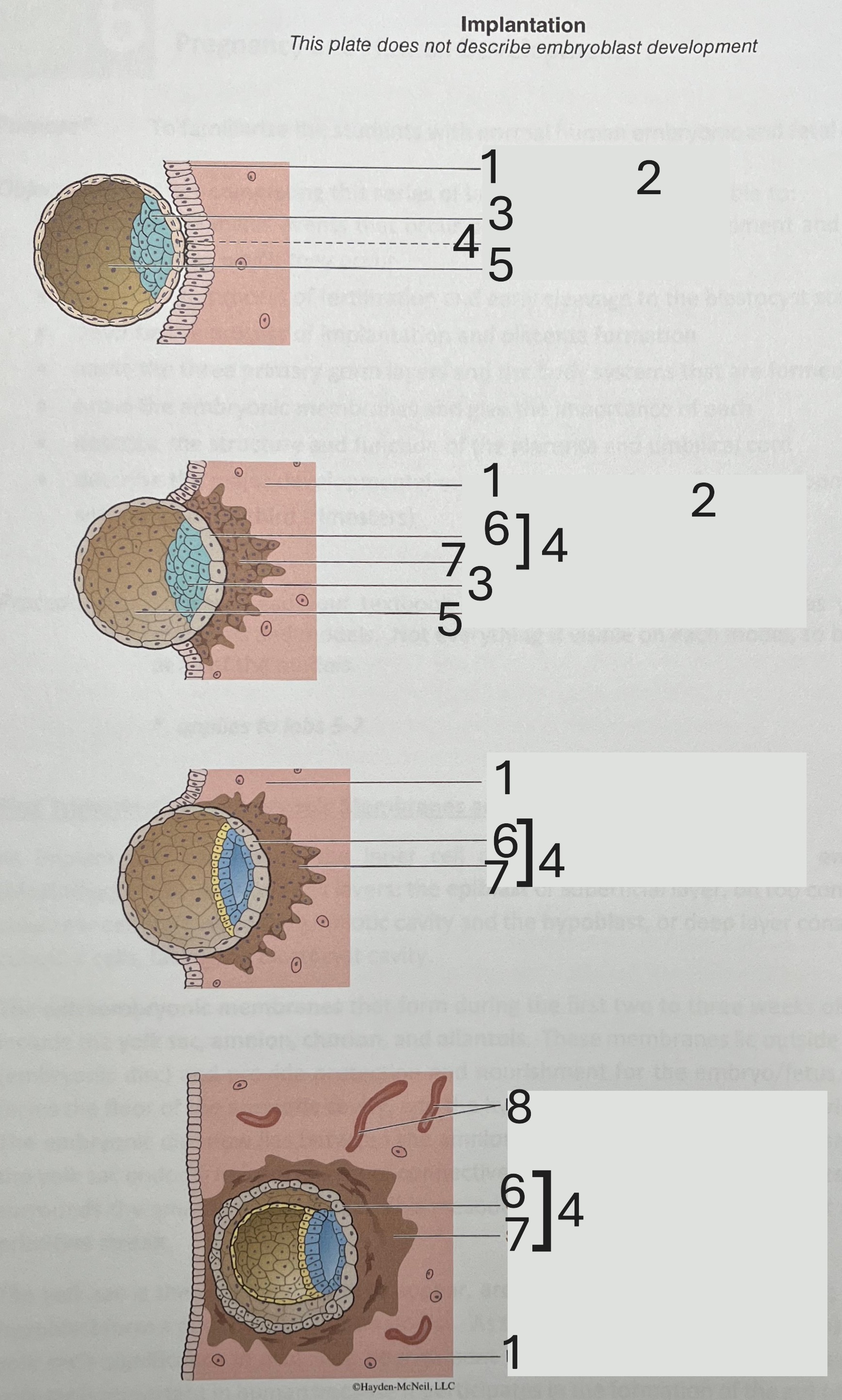
3
Embryoblast
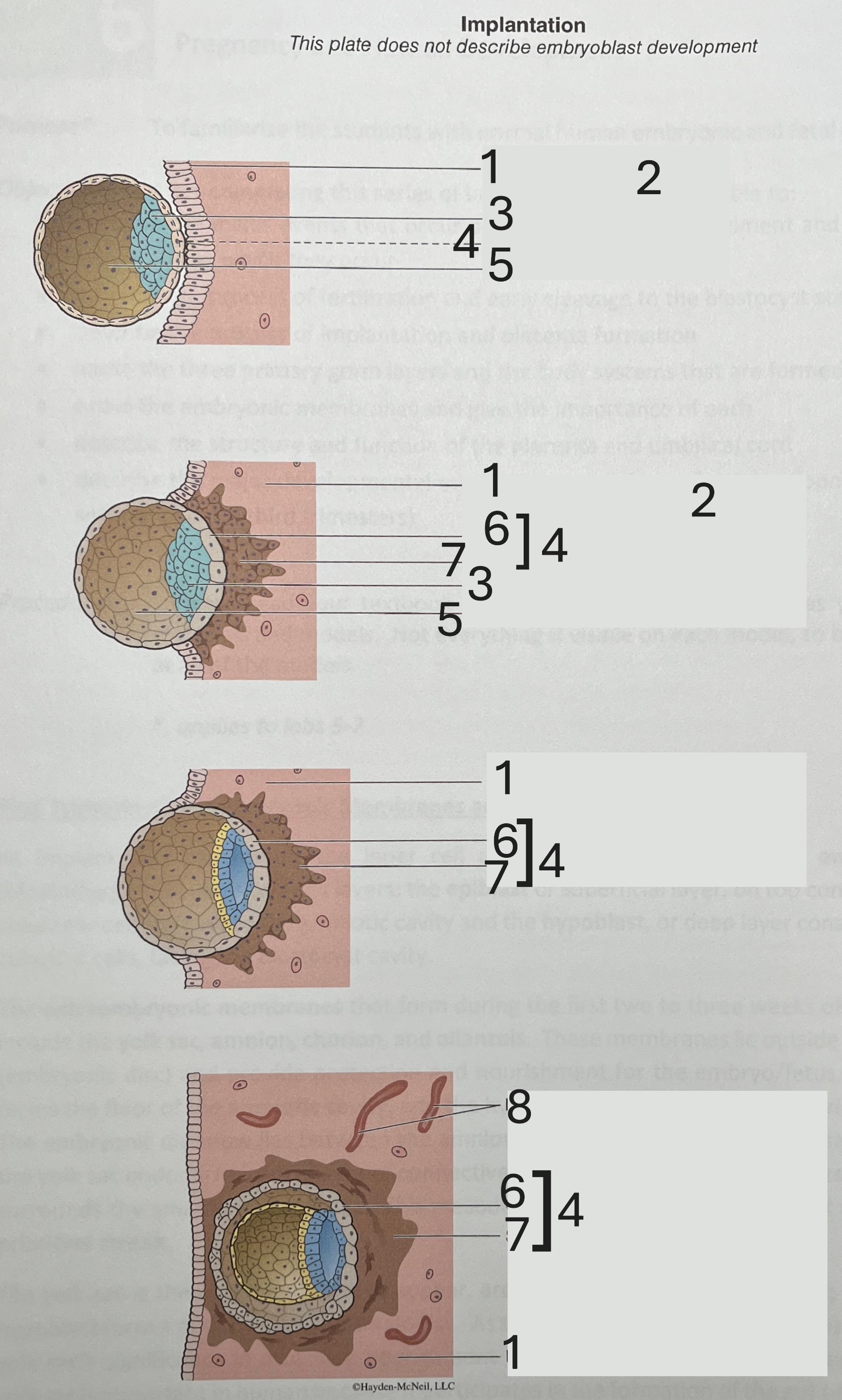
4
Trophoblast
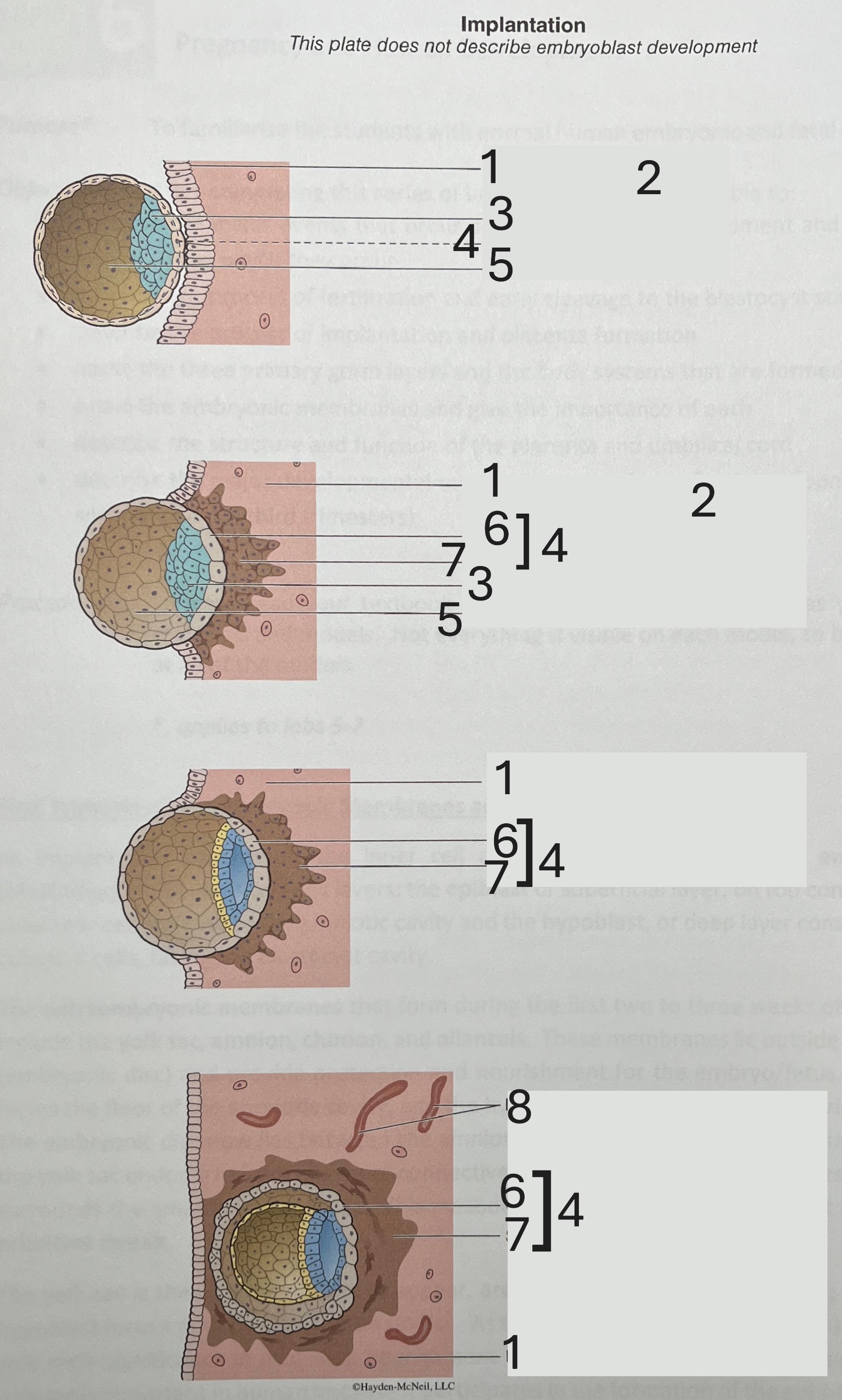
5
Blastocyst cavity
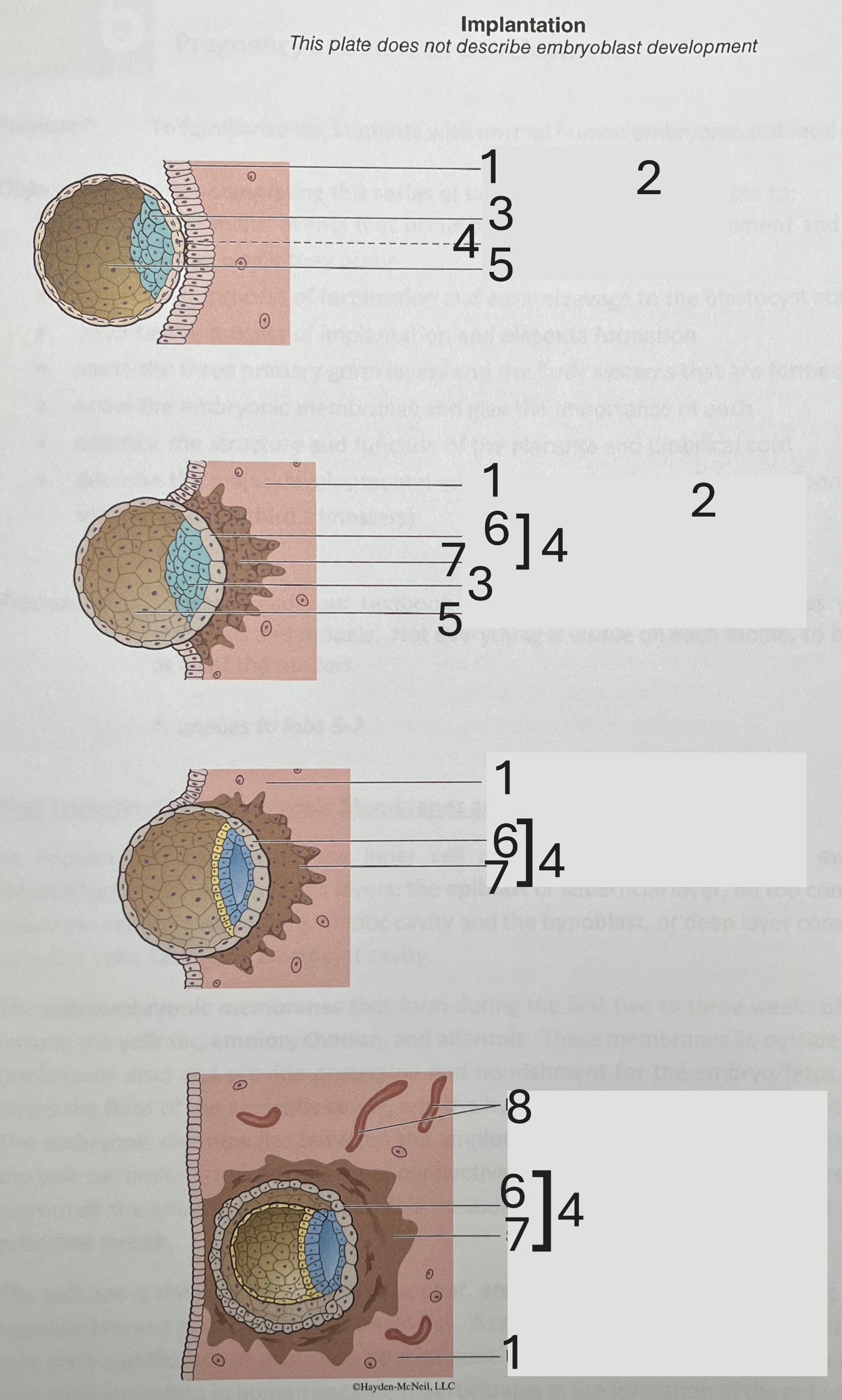
6
Cytotrophoblast
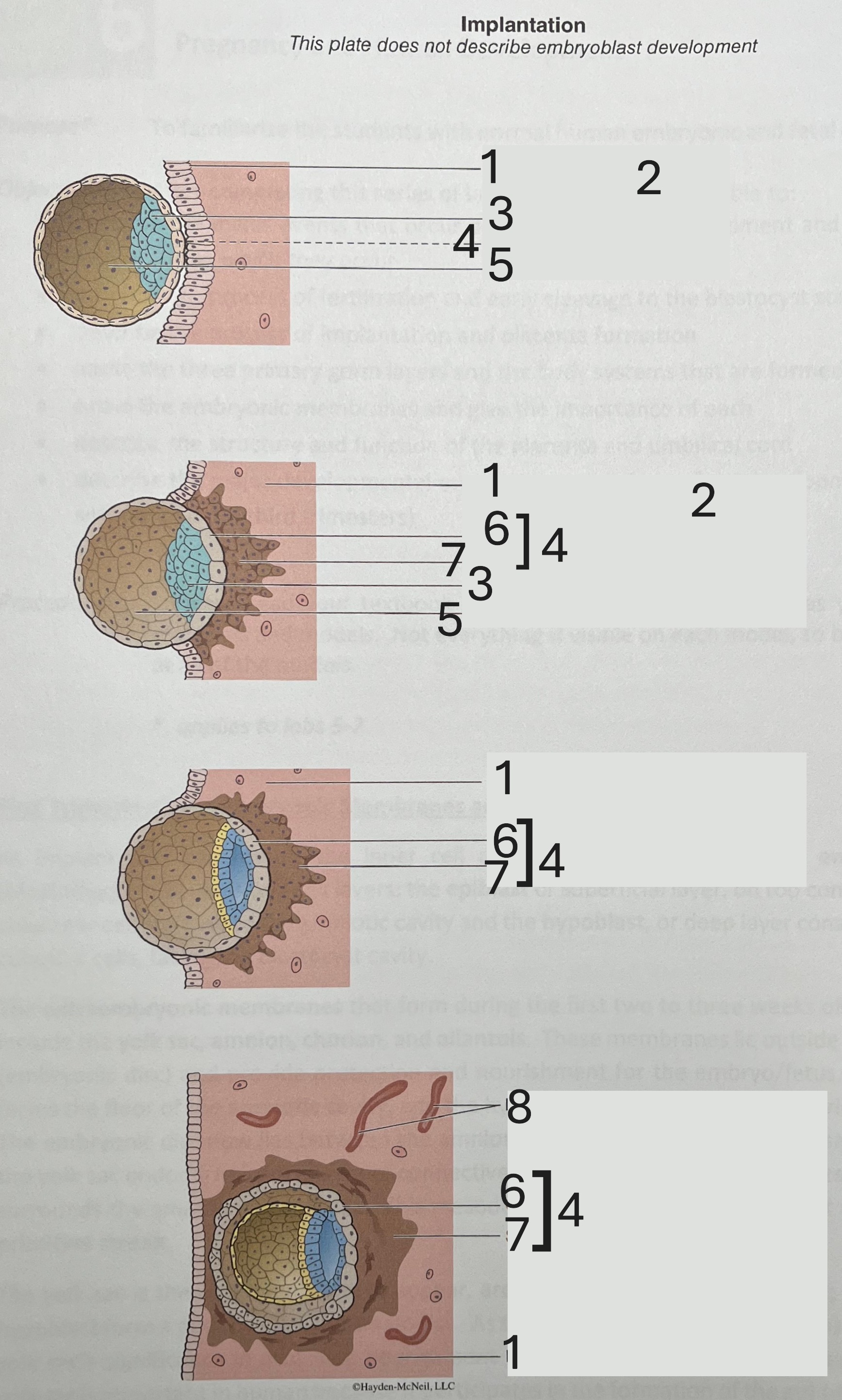
7
Syncytiotrophoblast
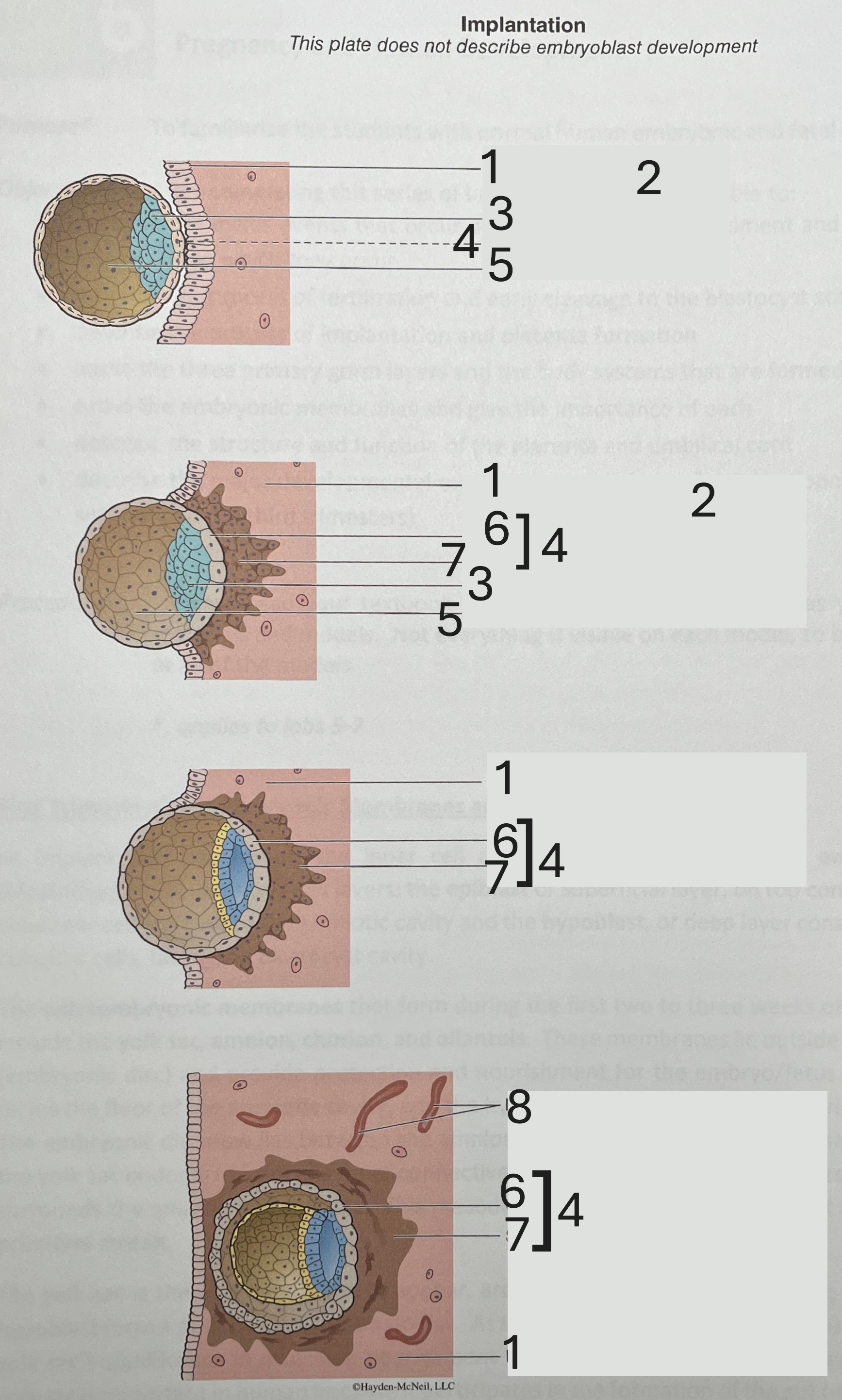
8
Lacunae
States that cells come from preexisting cells
Cell Theory
Reproductive cells: eggs for females and sperm for males
Gametes
The pregnant women’s developing offspring
Conceptus
During the embryonic period the conceptus is called
embryo
During the fetal period the conceptus is called
fetus
Fertilization to week 8
Embryonic period
Embryonic period to week 9
fetal period
The period during which an embryo develops
Gestation
The period from the first day of the last menstrual period through 13 weeks and 6 days of gestation.
The embryo develops cell layers that are precursors to organ systems.
First trimester
Characterized by growth in length, mass gain, and the appearance of functional organ systems
Second trimester
Increases in length and mass continue to occur and all organ systems either become functional or are prepared to become functional at birth
Third trimester
processes involved in the specialization of cells in the developing conceptus and the migration of those cells to produce anatomical structure and function
Morphogenesis
process through which a parent cell divides to form new daughter cells
Cell division
divide by mitosis
Somatic cells
process of cell division in eukaryotic cells where a single parent cell replicates its chromosomes and divides to produce two genetically identical daughter cells
mitosis
Having a pair of each type of chromosome, so that the basic chromosome number is doubled
diploid
Reside in the gonads and divide by meiosis
Germinal cells
Sequence of two divisions of a diploid germinal cell to produce haploid cells
Meiosis
have only one chromosome of each homologous pair
Haploid
a small, haploid cell formed during oogenesis that contains very little cytoplasm and generally cannot be fertilized
Polar body
process of the sperm and ovum joining their haploid nuclei to produce a diploid zygote
Fertilization
Process where the ovary release an egg which begins moving along the uterine tube
Ovulation
a layer of follicular cells that surrounds the zona pellucida of a secondary egg
Corona radiata
is a thick, transparent, noncellular extracellular matrix that surrounds the plasma membrane of an egg
Zona pellucida
each set of nuclear material
Pronucleus
consists of repeated mitotic divisions of the zygote
Cleavage
the individual cells produced by the rapid mitotic division
Blastomere
cell number increase to 2
Two-cell state
cell number increase to 4
Four-cell state
blastomeres are organized into a solid mass of 16 or more cells
Morula
inner cell mass gives rise to the embryo
Embryoblast
structure formed in the early embryonic development
blastocyst
hollow ball of cells form an internal cavity called
blastocyst cavity
Trophoblast
consists of multinucleated cytoplasmic mass in which no cell boundaries can be seen
syncytiotrophoblast
is the inner layer of the trophoblast in the developing placenta, consisting of distinct, mononucleated cells that serve as stem cells or progenitors for other trophoblastic types
cytotrophoblast
begins when the blastocyst touches the endometrium
implantation
inner mucous membrane of the uterus
endometrium
uterine vessels that supply oxygenated blood to the placenta and collect deoxygenated blood after exchange
maternal blood vessels