religion, magic, and witchcraft - part 2
 Call Kai
 Learn
Learn Practice Test
 Spaced Repetition
 Match
Match Flashcards
 Knowt Play
1/147

Earn XP
Description and Tags
week 8-12
Name | Mastery | Learn | Test | Matching | Spaced | Call with Kai |
|---|
No analytics yet
Send a link to your students to track their progress
148 Terms
witchcraft is a type of magic with lots of
social ramification
lots of stereotypes
becoming more and more popular, though, now
witch - definition
people suspected of practicing social prohibited forms of magic, either deliberately or unconsciously
they are usually scapegoats (blamed for lots), members if persecuted groups, and reflect social tensions
a witch can also be a substance, or something within a persons body
allegations of witchcraft
erupt in ‘waves’ in response to social tensions
for ex, in a time of migration + the arrival of HIV, witches were blamed
sorcerer - definition
someone who actively seeks to harness supernatural power to affect others or control conditions
can be positive or negative
is a pragmatic, conscious practicing involving acts of magic that lead to person power
the use of magic is very purposeful to increase personal power
divination
the use of magic in the supernatural realm to understand the future or about things that may be hidden
wanting to know about the unknown through oracles, looking at signs, or the use of religious specialists who deploy certain agents
using DNA is a form of divination, since you are using signs to understand the future (usually health related)
what do witches, sorcerers, and divination have in common?
magic
magic is the
‘work’ that witches do, the ‘power’ that oracles utilize to divine the future, and what sorcerers use
what is magic?
an idea/belief that the relationship between an act and its effect rests on a mystical connection (rather than an empirical or scientific one)
manifests in texts, spells, acts, rituals, and objects

problematic anthropological history of magic - Stanley Tambiah
understanding of magic was tide into trying to figure our what religion is, which lead to magic and religion being seen as a separate dichotomy
Protestantism argued for the importance of ‘thinking’ about God, rather than ecstatic experience
influenced thinking about religious as faith/belief (rather than religion as practice, altered states, rituals, or magic)
very Eurocentric way to look at magic!
Edward Taylor - what magic, religion, and science have in common
they are explanations of the world and the events in it
but did have opinions on which was more or less primitive
James Frazer - what is magic?
an attempt to compel supernatural forces or beings to act in certain ways
he believes that religion, on the other hand, is an attempt to please these beings
suggests that a core concept is the idea of sympathy - like produces like
what does Frazer mean by “like produces like”?
items (like) associated with or symbolic of the intended victim an identify them (like) and carry out the spell
The Law of Similarity
The Law of Contagion
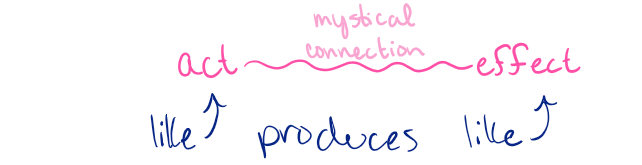
the law of similarity
imitative magic: if thing X is like thing Y, whatever is done to X will happen to Y
consider voodoo dolls
the law of contagion
contagious magic: things once in contact with something else/a person can still have an effect on that thing/person
if a paper falls out of a book, we can do a spell on that paper to impact the whole book
polyjuice potion: we use somebodies hair to look like their entire body
how evolution relates to early division of magic and religion
magic was seen as the most primitive, followed by religion, and then science as the most rational/developed system of explanation
magic seen as ‘faulty’, ‘defective technology’, or merely ‘psychological’
significantly correlates with colonization
magical thinking - a psychological category
where we perceive that we can change events by thinking about them
typical of young children (bc they’re not developed) but seen as problematic in adults (bc it isn’t a ‘rational’ way to look at the world
North American views of magic consider it to be superstition or belief in supernatural
thinking of magic as faulty - impacting anthropology
religion was distanced from magic, they reglegated magic to:
the past
‘primitives’ that are ‘pre-rational’ (non Westerners)
women
all belief in magic (and ASC) were seen as irrational, and all results seen as psychological
Tylor’s explanation for why magic is still widely practiced, even though its ‘false’
assigns it to psychological effects
legacy relevant to today - some still assume magic works as a psychodrama, placebo effect, or a self-fulfilling prophecy
BUT, this does not account for its potency, realness, and consequences
we need to consider how it feels real for people
seeing science as the only rational way to think perpetuates colonialism and patriarchy
how contemporary anthropologists consider magic
use the word magic to refer to practical, conscious actions intended to effect supernatural change
look at local usage and cultural applications to see how magic/religion is understood (looking at the particular)
an example of looking at the particular in magic
witchcraft!
Eurocentric views of witchcraft
communicate values, typically about greed, s3xuality, and a nightmare of witches prowling around at night
often directed at women, especially the excesses of woman
associated with anti-social and deviant behaviour
what anthropologists look at
how is anti-sociality deployed? (when are people labelled a witch?)
why would ‘rational’ people develop an interest in practicing magic or witchcraft?
how does witchcraft and sorcery work to police behaviour and reinforce social values? (ppl get killed when accused!)
how does it explain misfortune and illness, and what are the consequences for those that are accused
similarities between witches and poor neighbours - Pamela Moro
same qualities: being unsocial, isolated, stingy, unfriendly, and moroseness, etc.
people in social marginal positions are vulnerable to accusations of witchcraft
witchcraft and sorcery - power
we can ask under which circumstances power is wielded and when a behaviour becomes deviant - who, what, and when does it become anti-social, and what is done about it?
by what authority do we determine behaviour to be deviant and power-to-be-wielded problematically?
accusations of witchcraft tell us about these things!
before, this has largely been determined by the Catholic/Protestant church
shifts correlated with increase in accusations of witchcraft
in sub-Saharan Africa, shifts in globalization, economic, and political shifts (and the social shifts that come with those)
new corporations come in, lots of moving for work, new dynamics in families, certain ppl did rly well while others failed, so people start asking why?
then, HIV/AIDS came in; another misfortune they want to blame on something/someone
HIV and witchcraft
HIV - understood to be self inflicted thru immoral behaviour
witchcraft - beyond the individuals control, a product of malicious human action, blame is externalized
so, more socially acceptable as an illness narrative
but, households afflicted by the illness may become socially isolated and lose support, leading to L economic situations
using witchcraft to explain misfortune/illness
can have devastating implications
using witchcraft to blame economic shifts that favour some over others + upsurge in illness/death
we blame witches in manifestations of uncertainty, moral disquiet, and unequal rewards in contemporary moments
why are so many people into astrology now?
we are in a period of tremendous social change
social tension + COVID
so, we are drawing on magic
Ajala & Ediomo-Ubong - reading intro
Ibibio (people of South Nigeria) - belief in witchcraft is extremely influential
believe they have power to determine or alter another person’s life
accusations toward older women, unkind/unfriendly/social distant people, and more recently children
those accused are despised, excluded, and ignored
Ajala & Ediomo-Ubong - witchcraft and health seeking beh
many reject modern medical services and prefer traditional healers/faith-based healing
these alternatives are thought to counteract the power of witches
BUT: but increases morbidity and mortality
Ajala & Ediomo-Ubong - witchcraft among the Azande
witches associated with misfortune, jealously, and rivalry
witchcraft beliefs often create social tension and conflict
Ajala & Ediomo-Ubong - witchcraft among Nupe and Gwari
witches as evil, capable of destroying life mysteriously, consume souls of others
Ajala & Ediomo-Ubong - social threats
some define witchcraft as harm caused thru supernatural powers
seen as a threat to the community
represents hostility
Ajala & Ediomo-Ubong - 2 roles in witchcraft beliefs
those who perceive hostility - individuals who believe someone is harming them through witchcraft
those accused of causing hostility - believed to possess supernatural harmful powers
Ajala & Ediomo-Ubong - fear of witchcraft accusations can
reduce social tension in certain relationships
can regulate conflict
esp since most accusations are of people close to them
Ajala & Ediomo-Ubong - Ibibio and Azande
shared beliefs - witchcraft is not based on rituals, spells or magical medicines. it is considered a psychic or supernatural act
used to believe it was an inherent quality, now Ibibio belief suggests the powers are acquired from an existing witch
Ajala & Ediomo-Ubong - witchcraft substance
ibibio believe in a physical substance located in the stomach
can force the witch to vomit it out
may not be visible unless supernatural powers are used
Tiv believe is tsav, which grows in the heart and looks like a liver. can be good or bad
Ajala & Ediomo-Ubong - harm from witches
agricultural, disease spread, and physical attacks
Ajala & Ediomo-Ubong - nighttime
Ibibio believe witches gather at night in groups
Ajala & Ediomo-Ubong - 2 meanings of witchcraft
behavioural meaning → someone who behaves abnormally or antisocially, deviance
someone who confesses to practicing magic or is identified by trad doctors, spiritualists, or other witches
Ajala & Ediomo-Ubong - 2 types of witches
black witchcraft - evil
white witchcraft - non-harmful
Ajala & Ediomo-Ubong - healthcare in Ibibio
traditional medicine widely used, combines medical knowledge + spiritual beliefs + social relationships
act as mediators between witches and patients
Witches of Gambaga - film overview
women who are accused of witchcraft are often beat (attempted to be killed) or exiled
Gambaga has a place for runaway witches, but they must work for the chief
need lots of money to leave
must be proven to not be a witch before they can leave
guilt determined by chicken
neo-paganism
a new-ish religious movement, but often not considered religious (a broad term for polytheistic, nature-based spiritual traditions)
issue with definitions
sexuality in witches
either extreme - use sex to manipulate or are too ugly for sex
gender and witches
the term ‘witch’ was used in a derogatory way for the excesses of women (what ppl think they are doing too much of) or for them breaking social norms
in the actual practice of neo-paganism is feminism and equality!
1960s and witches
we know religion can be a force for change (new religious movements) or to conserve (fundamentalism)
in response to the rise of new religious movements, the anti-cult movement pushed back + the rise of the American fundamentalist Christian movement
they meshed AFM movement with politics to push back against these new movements
truing to keep patriarchal traditions, very b/w way to look at religion (we are right, they are wrong)
moral panic in 1970s
turned into a moral panic of satanic cults and satanic ritual abuse
films were released about possession
got people wrapped up with ideas of cults, and that all cults are satanic
huge pop-culture change
michelle remembers - book from 1980s
work of a woman and a psychiatrist who uncovered repressed memories of satanic ritual abuse
media frenzy spurred fears about children at school being forced to engage in ritual beh of a devious nature
blamed on games (dungeons and dragons) and heavy metal music LMAO
created fears that satan can repress memories
what was a result of this moral panic?
new mix of right-wing Christianity, psychiatry, social work, and law enforcement
new diagnosis of multiple personality disorder (aka dissociative identity disorder) lead to possibility of possession!!
witchcraft and neo-paganism was also lumped in with this!
Interview with Sabina Magliocco - overview
a cultural anthropologist and folklorist
know for research on modern Pagan and witchcraft communities
Interview with Sabina Magliocco - her book: Witching Culture
examines modern Paganism in North American
emphasizes personal spiritual experience rather than strict doctrinal belief
one of the fastest growing religious movements in North America
Interview with Sabina Magliocco - characteristics of neo-paganism
Focus on nature spirituality.
Celebrates seasonal festivals.
Rituals involve creativity, symbolism, and community participation.
Spirituality is often experiential rather than dogmatic.
Interview with Sabina Magliocco - folklore
neo-paganism is largely influenced by folklore and historical scholarship
Interview with Sabina Magliocco - folklore is not ____, but instead
static
continuously evolving and being adapted
Interview with Sabina Magliocco - rituals in paganism
highly artistic and participatory
combine elements from ancient mythology, folk tradition, and personal creativity
Interview with Sabina Magliocco - purpose of ritual
1. Creates a sense of community
2. Transforms ordinary consciousness
3. Encourages spiritual experience
Connects participants with nature and the divine
Interview with Sabina Magliocco - important tool in rituals
music
Interview with Sabina Magliocco - festivals
many pagan traditions celebrate the wheel of the year, with 8 festivals
they emphasize connection with seasons, celebration of agricultural rhythms, and community gatherings
Interview with Sabina Magliocco - brigid
a Celtic goddess
eventually incorporated into Christianity (common pattern)
she has her own festival, she is a symbol of creative inspiration and associated with renewal and transformation
pagans celebrate the
divine feminine
Interview with Sabina Magliocco - magic
viewed as symbolic thinking, emotional engagement, psychological transformation
not always viewed as supernatural power
Interview with Tanya Luhrmann - overview
psychological anthro who studies how culture shapes subjective experiences
how do ordinary people come to experience invisible beings as real?
how do cultural practices shape perception and interpretation of inner experiences?
studied modern witches, psychiatrists, and Evangelical Christians
Interview with Tanya Luhrmann - witchcraft: training
modern magic required training the imagination, including
visualization
meditation
rituals
symbolic actions
goal is to learn to experience magic as real
belief often comes after practice not before
Interview with Tanya Luhrmann - witchcraft: process of magical training
Practice rituals.
Experiences become vivid.
Person begins to believe experiences are real.
Interview with Tanya Luhrmann - witchcraft: imagination can become ___ real
perceptually
so, they train the mind to pay attention to internal experiences and treat imagination as meaningful
Interview with Tanya Luhrmann - psychiatry: interpretation
experiences such as hearing voices are symptoms of illness
models are culturally shaped (Western/Eurocentric)
Interview with Tanya Luhrmann - Christians: God
describe talking with, hearing, and feeling the presence of God
training includes:
prayer
worship
meditation on scripture
journaling convos with God
with repetition, believers become better at perceiving God’s presence
Interview with Tanya Luhrmann - so, why do people experience invisible as real?
they learn it, they are taught it through their culture
all depends on interpretation
Coven - overview
4 individual women who practice modern witchcraft
we see them try out different covens
we see them look into their family history to learn more about the type of witchcraft in their bloodline
lots of discussion about past lives
anthropologists and death
started to notice that people were doing something with death (specific rituals around death were seen)
the idea that something happens after death is common
how people conceive of the dead/how we feel about death in general shapes
how the living interact with them
spirits, ghosts, and ancestors
all given special and unique status in the afterlife, and have diff effects on the living
the ancestral world (in many cases) is an extension/model of the real world
our ancestors are thought to act like people in this world
2 major attitudes shape the interaction between the living and the dead
that the dead have left the society and are separated from the living
the dead remain active members of society (just in a different role)
cult of the dead
in societies where dead are separated from the living
return of the dead is undesirable, could result in disruption of social order and routine of life
based on a fear of the dead
function of beliefs and practices → aid in overcoming the grief the survivors feel for the dead
separation is awful, sad, and very strong
most rituals work to keep living and dead separte
ancestor cults
in societies where the dead are active and ongoing members
the living are concerned with the welfare of their ancestors
funeral ceremonies undertaken to ensure smooth transition for the ancestor, focusing on them retuning to society in a new status
ancestors play a positive role to the group
rituals, customs, and rites ensure the comfort of the dead person in the after life
rituals in ancestor cults
mostly about keeping the dead comfortable and making the transition to the afterlife properly, needs to be done in this life
reinforces society’s customs through expression of unity and ensuring that the participants will get the same treatment in their deaths
protection in ancestor cults
participation and accuracy in performing rites ensures protection against misfortune thru supernatural punishment
ghosts understood to fulfill this role; considered to be dead people with unfinished business with the living (have human motivations)
they haunt people - tells us about ourselves and what we will do to avoid this
western funerals
often very sad
dead is separate from us, buried
after death they are taken to morgue or cremated
our reactions to dead bodies tell us about our experiences and ideas about death → a clear separation between the living and the dead
berawan funerals
goal → keep a close eye on the decaying body
first stage: rites performed immediately for 2-10 days, corpse placed in large jar/coffin
second stage: corpse is stored in longhouse/platform in graveyard for 8 months (very visible)
third stage: corpse moved to longhouse for 6-10 days, family entertains guests, bones removed and cleaned
fourth stage: remains/bones moved to mausoleum
berawan funerals - implication
funeral rites make sense with mourning practices, related rituals, myths, and beliefs
believe soul is separated from body at death, and can’t reanimate the decaying corpse, but also can’t enter the land of the dead until its a perfect spirit
journey of spirit mirrors the decaying corpse, only when the body is gone can the spirit move on
tremendous fear that a non-human spirit will reanimate the corpse, creating an unkillable spirit - so, we protect it and keep an eye on it!
Peter Metcalf - others as ‘exotic’
as we learn to think of other people’s ways as natural, we simultaneously begin to see our own as strange
Berawan were unnerved by American burial practices, and were disgusted by the embalming (to delay decomposition) and putting in a coffin (all alone in the cold)
cannibals as monsters
made into monsters in our culture, French Colonialists used the word Zombie to perpetuate racism and colonialism
used it to justify assert superiority of their group over native Haitians
zombies
an ‘other’, based on our collective fears abt the relationship between the living and the dead: they look like our loved ones but are soulless
cannot act rationally, cannot be reasoned with, act as non-persons, and we ALL have the potential to be monsters
apart of the view that the dead should not come back in this realm
apart of the view that the person-hood is in the brain, explaining why they say Zombies eat brains and have no brains
Wari’ cannibalism - Beth Conklin
wrote an ethnography about the practice of mortuary cannibalism by the Wari’
argues for the necessity in understanding the practice of cannibalism as embedded within wider cultural frameworks, rather than as a singular facet of a ‘primitive’ or ‘savage’ tribe
prejudice views label these people as monsters for eating flesh
theories of cannibalism
often laced with a sense of deviance:
people eat others to either incorporate some aspect of the other/gain power from/over them
Conklin says, though, the Wari’ practice of eating dead relatives is situated in notions of kinship, identity, the body, and cosmology
eating the corpse is a sense of transformation in the face of death and the families bereavement
Wari’ - cultural view of the body
they see the body as a significant symbolic and physical site of social interaction and relationship
believe we relate to people thru their physical beings
understandings of Wari’ identity say a person is created by bodily processes and fluids thru their stages of growth and development
Wari’ - understanding of spiritual realm (white-lipped peccaries)
humans and animals understood to have predatory-prey relationships MIRRORED in the relationship between the dead and the living
certain prey animals (white-lipped peccaries) are seen as appropriately edible, based on spiritual characteristics
they are believed to be provided as ancestors, offering themselves as food to support the community
when individuals die, they are incorporated into the realm of ancestors, whose spirits become embodied in the white-lipped peccary, who then offer themselves as food
a TRANSFORMATION
what does consuming the body do for transformation?
a loved one becomes transformed from a living person to an ancestor through eating the body
since the physical body is so central to the Wari’ identity, it is transformed thru dismemberment, roasting, and consumption
eating transforms grief and separates the living from the dead
the body is the connection, so eating them = consuming their grief
but now…
it illegal to eat people, so they have been forced to stop their traditions
can have significant implications on wellbeing and burial feelings
day of the dead
people visit cemeteries to clean, repaint, and decorate graves
altars in homes prepared with offerings of food, drink, candles, and flowers (things the deceased would like!)
veil between the living and the dead is very thing
death is not feared - death imagery is common in stores, parties, offices, etc.
day of the dead - consuming items from altars
the living puts out the best of everything on the alters
the living eats it and the dead consumes the essence (flavour and scent)
they belong to the same realm; they are sharing food
we know the dead has visited if smell and taste disappear, strange noises, food rolling, liquid level lowering, etc.
day of the dead - relationships
relationships between the living and the dead are expressed at an individual and community level
the living welcome, feed the dead, carry out their obligations
if you don’t treat the dead well, something bad can happen to you or ur community
so, u are honoring yourself, the dead, and your community
day of the dead - death and life
life - a journey involving struggle, hard work, but redemption
death - a step in the journey toward eternal life, not a tragedy since it leads to a better life
familiar, natural, inevitable
awareness of death + closeness to the dead = greater appreciation for life
archaeology of death
we noticed a change, there was a new pattern showing that people were making meaning out of death
people were being buried with objects, indicating a belief that they would need them
one of the functions of religion
to deal with uncertainty and unknowability that is the human condition
how we understand the nature of death, ancestors, souls, and ghosts tells us about the supernatural part of us (like a soul) and its relationship to the living body
attempts to deal w uncertainty abt this relationship form the basis of ritual action, beliefs, and worldview
bread and butter of anthro of religion
our end of life rituals inform us abt the relationship between our physical body and soul, for ex
death - in general
a fundamental human experience, but the ways of understanding it are elaborated by the ways we treat the dead and postulate their continuance
anthropology of death looks at
variation in how the living and the dead interact with one another, how desired this interaction is, the kinds of deaths that occur (and their responses), and the disposal of bodies
how do our actions in this life determine life after death?
early days of anthro of death
strong interest in uncommon forms of death, but overall tendency to look for universal features in responses to death
resulted in huge comparative efforts
now, we focus on more sophisticated ethnographies on the particulars of death (looking at death within a culture, not simply searching for universals)
much work on the anthro of death is centered on
life!
we look at death as a disturbance of the social order/body, and a break in social and family networks
how grief and mourning function in society
the variety of mortuary rituals and how they work
such as rites of passage (as most funeral rites are these)