Vogue
 Call Kai
 Learn
Learn Practice Test
 Spaced Repetition
 Match
Match Flashcards
 Knowt Play
1/54

There's no tags or description
Looks like no tags are added yet.
Name | Mastery | Learn | Test | Matching | Spaced | Call with Kai |
|---|
No analytics yet
Send a link to your students to track their progress
55 Terms
What are some features of a magazine?
Shares some formal characteristics with newspaper
Printed on high quality paper and staples
Magazines are published much less frequently and do not provide up to date info on the day’s news
What has caused the need for magazine to need to adapt and evolve?
The rise of commercial TV in the 50s and 60s created greater competition for audiences and advertisers
Circulation peaked I the late 50s and 60s
Drop in sales in recent years
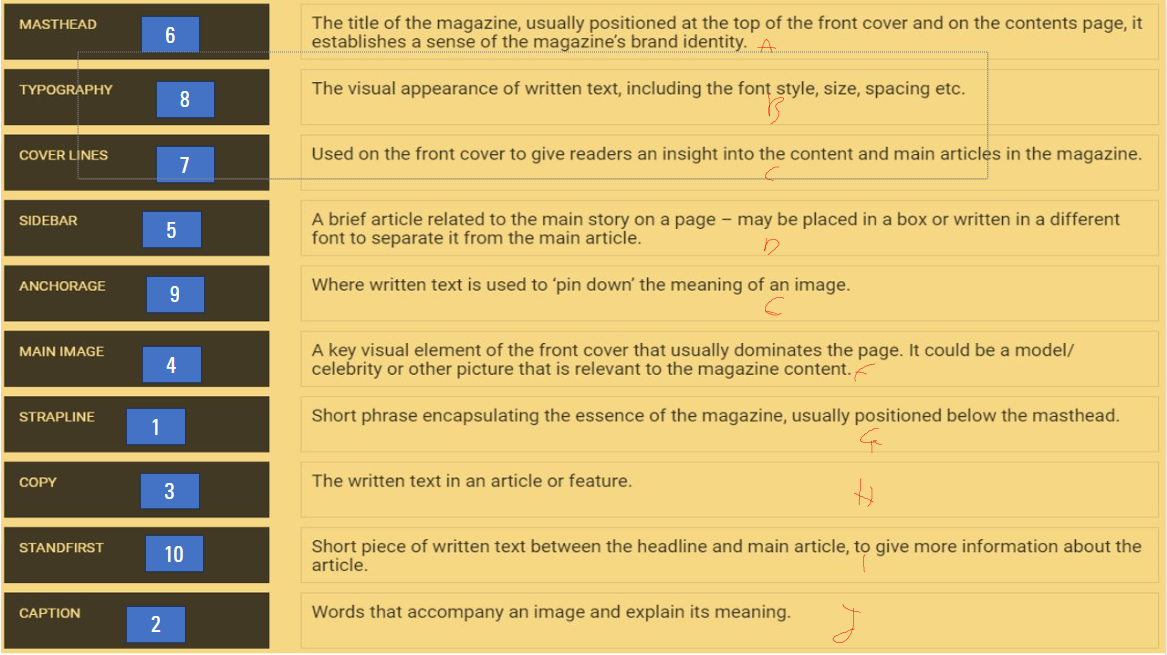
Explain the features of a magazine:
Strapline
Caption
Copy
Main image
Sidebar
Masthead
Coverlines
Typography
Anchorage
Standfirst
What is a periodical magazine?
Aa magazine published at regular time intervals
What are the similarities and differences between magazines today and those in the 1960s?
Both then and now have engaging visuals, use of brand power and the targeting of niche markets like fashion, sport, home design, etc.
Difference arises due to technological advancements and changing ideology
Now we have much high quality images as well as the digital convergence of these magazines online
We have a much more pluralistic identity about gender performativity, LGBTQ+ figures, etc.
Why are magazines struggling now and how is this combatted?
Digital convergence (Hesmondhalgh) means that now people are starting to consume media all on one device- their phone
Other media outlets like TV, social and media and so on can provide the same content without a cost and therefore outcompete magazines
Magazines going online means much less money is spent on print productions while reaching a wider audience (reducing risk and maximising profit)
When was the first edition of the Vogue magazine launched and the first edition in the UK?
First edition American vogue magazine published in 1892
First British vogue in 1916
What is the context of the 1960s in terms of women?
2nd Wave feminism
Equal pay, financial and reproductive freedom
Introduction of the contraception pill in 1961- women have more autonomy, more choice
In the US the equal pay act of 1963 saw that women be paid the same as men for the same job, this happened in 1970 in the UK
Female autonomy was becoming increasingly common
1962- 26,000 women entered university in the UK
What is the context of the 1960s economically?
Golden Age of Capitalism
Mass consumerism was very highly promoted as we see in the Vogue magazine
Shelia Black’s “Money and Answers” section shows us even women were looking to manage their finances
Focus on the nuclear family included things like owning a home
Economy growing the the rates of employment were high
Moved forward from post war period of austerity
How is Vogue influenced by the post-war economic boom?
Magazines like Vogue were used as vehicles for selling
The Heatwave Holiday ad is targeted at women who have the financial freedom to go on Holiday
Features articles on clothing for holidays- “Heatwave Holiday”
“Rayne” shoes being sold as summer shoes in a variety of colours
Rise in female sexual liberation
Sexualized outfits/fashionable makeup- the Cutex advert suggests it’s makeup products are the “bare essentials”
Women travelling
Economic boom
Change in social attitudes towards women’s independence
All of this feeds into consumerism
How is Vogue’s articles influenced by the era of change, increased social freedoms, feminist movements, sexual liberation in the 1960s?
“Money- questions and answers” by Sheila black
Women fighting fore equal pay in the workplace and can work jobs
Author of the article is a woman
Article discusses finances, budgeting for clothes and the independence of married women
Sheila black was a financial journalist in spite of their gender
Lots of focus on motherhood- reflect patriarchal undertones- soap ad
Women beautiful by a hegemonic standard “Bare essentials” Cutex ad
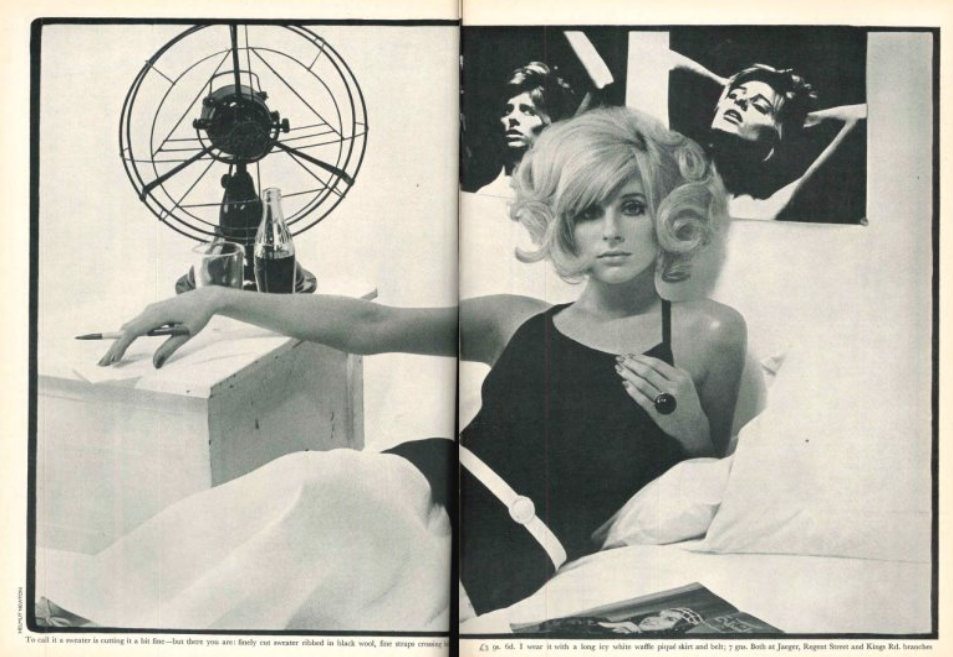
The Holiday Heatwave ad have a women very scantily clad laid across a bed- very erotic for the time
How is the Vogue 1965 edition influenced by pop culture?
Sophia Loren is the face of this editions of the magazine- big Hollywood actress
Mentions of famous artists like Andy Warhol- made iconic art of celebrity icons such as Marilyn Monroe
What are the key purposes of a magazine front cover and how is this purpose fulfilled?
Engages the audiences often with a celebrity
Allures potential readers into purchasing the magazine
The front cover is the first impression of what the magazine is about and if it’s worth your time
Reputable people on the cover- gives the brand a sense of legitimacy- celebrity endorsement
Front cover lines- inform readers of the content, creates a sense of need to see what’s in the magazine or purchase what they are selling
Establishes the genre
Aspirational for audiences- link to Gauntlett’s identity theory- providing a direction for living
All done to convince people they should buy the magazine
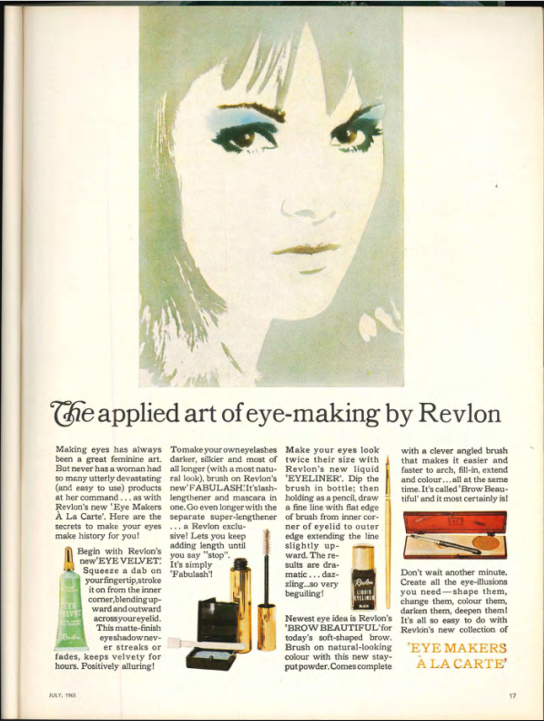
How does this Revlon advert create meaning?
Revlon advert has implied binary oppositions between women before and after makeup
Constructs the idea that no makeup is not an option, therefore Revlon is the only option
Idea links to consumerism
Calling it an “art” makes it seem more distinguished, sophisticated- the target audience for Vogue at this time would have been middle to upper classes
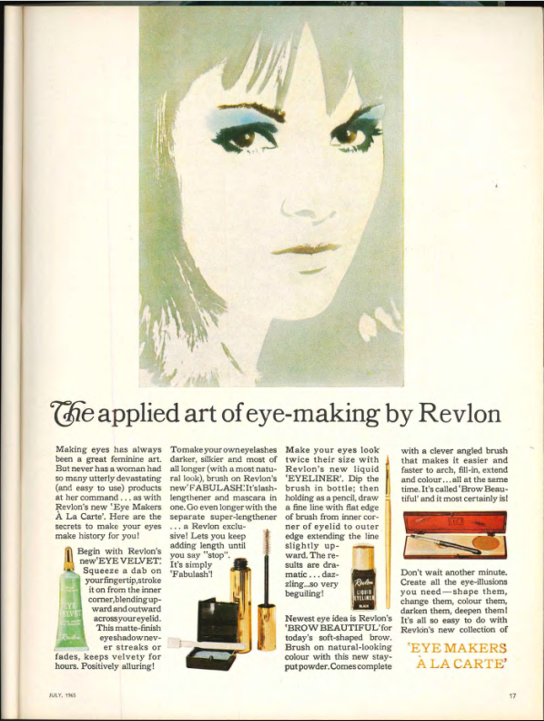
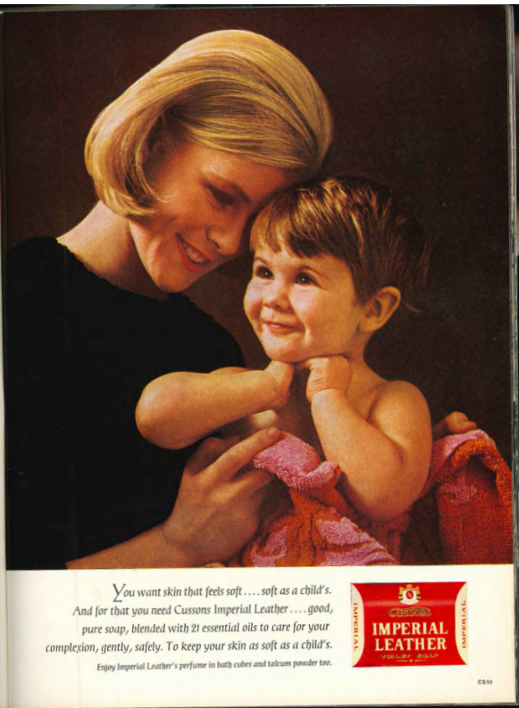
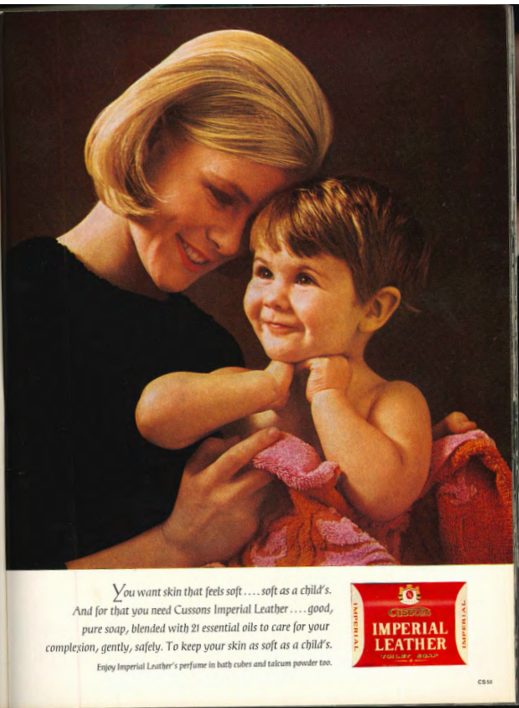
How does this Imperial Leather ad create meaning?
Implied binary opposition between masculinity and femininity
The mother is assumed to be the caretaker, the housewife, cook, cleaner
The absence of the father could imply that this is not his role within the nuclear family- perhaps he is at work
Sets a body standard for women- They must have skin “as soft as a baby”- appeal to male gaze and patriarchal values
All ads are for makeup and soap rather than for bigger purchases like homes or investment into education- being “woman enough” is the most important decision a woman can make for herself
Women should be only concerning themselves with menial tasks like choosing to buy soap
How does Sheila Black’s “Money and Answers” article create meaning?
Implied binary opposition between vogue reader vs non-vogue readers
Vogue readers presented as intelligent, rich, good taste
Also education vs no education
Upper class v lower class
Sheila Black V Vogue- Vogue plays into consumerism, Sheila is promoting investing
Men vs women- men are controlling over women’s finances
Shows us how women are starting to take control over their own finances- independence from men, breaking hegemonic patriarchal values
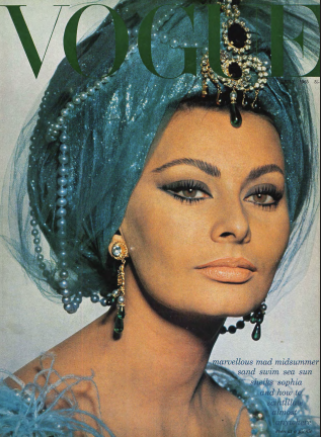
How does the front cover of the 1965 edition of the Vogue magazine create meaning?
Sofia Loren- star actress in Hollywood
Bold makeup- less natural, more liberated
Using colour on the front cover back when it was expensive- high value magazine
Direct eye contact- creates a relationship between the model and the reader
Idolises her as a star/gives a direction for living (Gauntlett identity)- indirectly persuades readers to keep reading- feeds into consumerism in the gold age of capitalism
Sofia Loren has an ‘exotic’ look- entices viewers and provides a means of escapism (Bulmer and Katz, Sofia is Italian
Blue and gold- luxury
Costume codes- turban, jewellery, more associated with Asian cultures, leans into exotic idea even though she is just Italian (trying to be acceptable to hegemonic ideology while still pushing boundaries slightly)
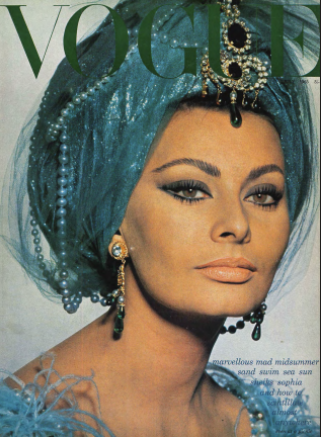
Why is using a high profile celebrity such as Sofia Loren useful for Vogue magazine?
It is an indirect endorsement of the magazine and what they are advertising
Audiences more likely to follow Vogue
Gain viewership due to fans of Sofia Loren finding the magazine
These people are more likely to invest in the magazine and it’s advertisements
How many Vogue’s 1965 edition be seen as not progressive?
Most people presented are white- hegemonic beauty standard
Omission of people of colour- symbolic annihilation
Reinforces ideologies of hegemonic beauty standards- white, heterosexual, cisgender
By omitting people of colour, they are subconsciously seen as less desirable traits to have
Reinforcing hegemonic ideology and informing the beliefs of the audience (Gerbner’s cultivation theory)
What is David Gauntlett’s identity theory?
Identity is fluid
Media provides tools and resources for identity construction
Audiences are active
Identity is linked to choice and lifestyle
The media constructs role models which provide ‘a direction for living’
How can we link Gauntlett’s identity theory to Vogue?
Sofia Loren is a large Hollywood actress, Vogue is providing the tools through advertising of beauty/clothing products to follow Sofia Helin (providing a direction for living), feeds into consumerism and capitalism
Identity linked to choice and lifestyle- Vogue uses pictures of beautiful women such as in the Cutex advert to make audiences link making the choice to invest in the product in also gaining this woman’s lifestyle of going out in summer with the “bare essentials” and being “woman” enough to wear the lipstick, identification with beauty standards of the 1960s
Audience members are not as active as they are now- in some ways through questions and answers through Sheila Black, they can engage with the media products and actually shape what is being said or sold within the magazine; however they could not produce their own content to the extent we can now with social media
Unrealistic beauty standards
Costume codes- new fashion ideas (miniskirt, makeup styles)
Some representation of women- motherhood, women looking after children while the man isn’t present (breadwinner vs housewife)
How does Vogue reinforce traditional gender roles?
Imperial leather advert enforces gender roles through who is represented, how they are represented and who is omitted
The woman is presented as hegemonically beautiful and is holding her baby- reinforces gender stereotypes that women must have skin “as soft as a baby” and that they are mothers
Omitting the father shows the idea of men being the breadwinner and not at home taking care of their children while the women does the housework- shows this to be a good thing
How does Vogue objectify women for the male gaze?
Women are presented as object for the audience to stare at such as the Cutex adverts showing that women when they go out need to look “woman” enough as a “bare essential” for themselves when its really to please patriarchal beauty standards
The Holiday Heatwave advert sexualised the woman as she is laid across her bed in only a tank top- very provocative for the time
To what extent does Vogue challenge Van Zoonen’s theory of gender representation?
Gender is not presented as something that can be discussed- symbolic annihilation
There is no representation of any trans/queer models within their text
Rather, gender roles are presented as set in stone (men are breadwinners, independent, must always be masculine while women are housewives and mothers)
Sheila Black article shows that women were staring to be taken more seriously within thew workplace
Gender isn’t a spectrum, it’s two binaries enforced by a patriarchal society
How does Maslow’ Hierarchy of needs apply to Vogue?
Items like makeup, lipstick and clothing are presented more as physiological needs rather than for self actualisation
This promotes the idea of mass consumerism
How and why are particular social groups, in a national and global context, under-represented or mis-represented.
In the 1960s, the fight for equal rights was still being fought for black people to be treated equally to white people.
They have little representation within the Vogue magazine because this was marketed to ABC1 upper class white women in particular, whereas black people may not have had the liberty to spend money on a magazine.
How do representations invoke ideologies and position audiences?
The way women are represented as sexualised, object and mothers positions and ads promoting to spend their money buying beauty products audiences to align with patriarchal values as they see that women are supposed to appeal to the male gaze.
Women subconsciously reinforce the idea of having to buy ‘x’ item in order to appeal to males as they are inferior and need to compete with other women
This competition then reinforces mass consumerism
Who is Anna Wintour?
Appointed editor-in-chief of Vogue in 1988
Made Vogue more relevant by featuring pop stars, athletes and accessible fashion
Since the 1990s she’s led the Met Gala, a huge fundraising event for the Metropolitan Museum of Art's Costume Institute
Helped establish the CFDA/Vogue fashion fund to provide support and mentorship to up and coming American designers
She spearheaded combining high fashion with everyday items, brought pop stars and culture into the magazine, introducing celebrity cover models
This made fashion more approachable to a wider audience
Who is Vogue’s audience and how are they targeted? Think about:
Demographic/psychographic
Age
Gender
Socio-economic group
Interests
Lifestyle
Geographic location- UK or US by virtue of it being a magazine in English
Psychographic:
Mainstreamers- following the latest trends through fashion magazines such as makeup, styles, clothing
Aspirers- seeking status, the Revlon advert presents their beauty products as an “art” form
Reformer- wanting to free oneself and live without restriction- women seeing this want to free themselves from the shackles and patriarchy for example in the Sheila Black article or the Holiday Heatwave ad, promoting the sexual liberation of women
25-44 years old
Ads like going on holiday and beauty products appeal to younger women a it promotes their freedom and sexual liberation
Imperial Leather advert is more targeted towards housewives and mothers
Gender- Female
Can see this through advertisements and topics addressed
Interests- fashion, beauty finances, liberation, feminism, pop culture
Sofia Loren, Holiday heatwave and Cutex ads
Lifestyle- women exploring the world and to mothers/housewives
Imperial Leather, Sheila Black, makeup adverts
How many sales were women’s magazines making in the 1960s?
12 million per week
How popular is Vogue?
Vogue has more international sales than any other fashion magazine
They know who their audience is, they understand what makes them tick and what affects them.
Vogue have been marketing to the same field of women since their first issue landed in the hands of female fashionistas.
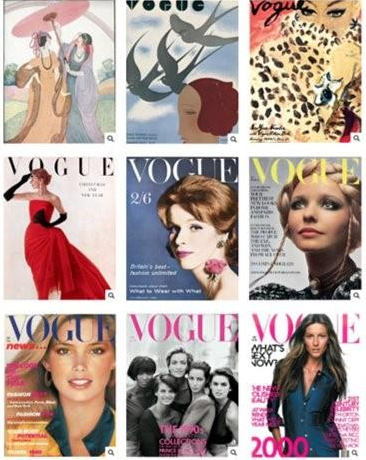
How have Vogue covers changed over the years?
Less artistic- use real photography- improvement of tech
Masthead gets bigger as the brand comes more important
Modern texts use more airbrush/editing
Vogue have kept up to date with media and design demands
They understand what sells and how to sell it
These images show the evolution of imagery used on cover shots as photography and editing has advanced
How has Vogue over time reached more audiences?
Voguer has diversified in different ways- Men's vogue, Conde Nast Fashion fund gives financial support to new designers- made into a TV show on Amazon
Teen Vogue, American Vogue, British Vogue, Vogue France, and Vogue Italia. Other prominent editions include Vogue Arabia, Vogue China, Vogue Japan, Vogue Spain, and Vogue Scandinavia
All of this is to make money and dominate the market- profit and power
Vogue his 6 million monthly users in Jan 2021 on their website, and the organic traffic is up 100% year on year
Diversified to online content like Youtube
How does Vogue favour an ABC1 audience over a C2DE one?
Reference to poetry- aimed at more well-read ABC1 audience with cultural capital- implication that readers of Vogue are knowledgeable in literature
C2DE less educated (oppositional)
Money article highlights the desire for financial independence and how the patriarchy hinders this
Challenges ideas of male control over finances
Upper class readers at that time would understand the legal limitations of needing a male signature to get a loan
Preferred reading: Middle to upper class- has money
Oppositional reading: Working class

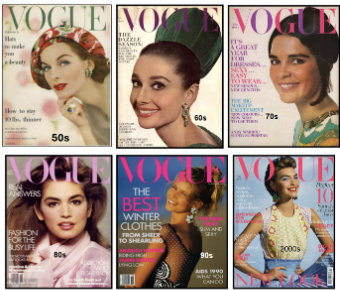
How has Vogue cultivated ‘ideals of feminine beauty over time? (Gerbner cultivation theory)
Repeated the same white, cisgender, straight, skinny figure in all of their covers from the 50s
Use of the words “slim, sexy, perfect, thinner” is used to make you associate beauty with these characteristics
Use of celebrity figures also makes the reader associate these feminine qualities with success
Only young people used- idea that youth is beautiful
Wearing heavy makeup
Expensive luxury clothing
Lack of diversity in ethnicity, age, LGBTQ+ representation, different body types
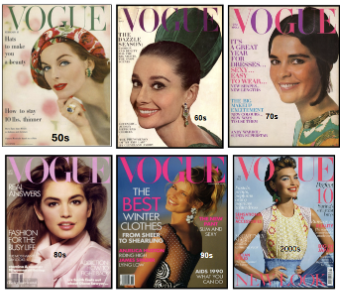
Who would be the preferred reading for Vogue in the 1960s compared to now?
In the 1960s- preferred reading would be a white, female audience who would typically be middle or upper class and possible mothers
Now Vogue is aimed towards many different types of people- females, Men’s Vogue, Teen Vogue, showcasing LGBTQ+ people and so on
1960s- worked on the idea of heterosexual, cisgender beauty, thin bodies (hegemonically beautiful)
Vogue now features gender queer people like Cynthia Erivo (non-binary) on their covers as this has become more socially acceptable
How may the 1960s man react to the Sheila Black article? (Hall’s Reception)
The 1960s man may take away something useful from the Sheila Black article: Money and Answers as he would typically be the breadwinner so advice on how to budget and invest would be seen as the duty of the “man of the house”
Might be opposed to this article however as it threatens the patriarchal structure of the nuclear family
How may the 1960s man respond to the Holiday Heatwave article?
They may also like the idea of women being sexualised as it fits into the “male gaze”
He might oppose ideas of women being sexualised, especially if it’s a religious man, or one who holds much more conservative values, believing a woman must “save themselves” for a worthy man
They may dislike the idea of the liberation of women from normal patriarchal structures like the nuclear family as well as sexual freedom due to things like the contraceptive pill
How may a 1960s feminist react to Vogue
A feminist audience may be oppositional to Vogue because more radical feminists may just see Vogue promoting feminism as a ploy to feed into capitalism through advertising and sales
Also encourages a focus on the body- estranges women from politics, economics and lawmaking
Some feminist may appreciate Vogue attempting to help women manage their finances and promote sexual freedom
What is Hesmondhalgh’s theory and how is it relevant to print media?
Sees media industries as being dominated by a small number of conglomerates
Methods of reducing risk include vertical and horizontal integration, reliance of established genres, stars and narratives
Newspapers are a risk as readers can be unpredictable
To be successful, media conglomerates must utilise digital media platforms
What is Conde Nast?
A huge media conglomerate that rules the magazines industry
Attracts more than 144 million consumers worldwide across its industry leading print, digital and video brands
Contains some of the most iconic titles in media:
Vogue
Vanity Fair
Glamour
Brides
GQ
Wired
How has Vogue gone global and how does this link to Hesmondhalgh?
There are 26 global versions of Vogue
Vogue’s international success links to Hesmondhalgh’s idea of repeating genres, does and conventions that are already popular and repeating them to minimise risk and maximise profit
How has Vogue taken risks since it’s creation?
Vogue has historically taken a lot of risk and it is one of the reasons it is seen as a brand leader
Vogue was one of the first magazines to use colour photography which was more expensive but their affluent audience could afford it
In the 1960s, Vogue was taken over by Advance Publications (horizontal integration), which lead to Vogue taking even bigger risks. For example, Vogue was the first magazine to feature a black woman on its front cover in the 1970s.
Vogue has also diversified into the fashion industry as it has it’s own fashion school
How does Vogue utilise star power?
Vogue is known for working with celebrities to boost sales
Rihanna
Harry Styles
Beyonce
Justin and Hailey Bieber
This reduces risk as they give an indirect endorsement of the magazine and draw in their own fans to become potential audiences members of Vogue which maximises profit
What is Curran and Seaton’s theory?
Media is controlled by a small number of conglomerates driven by the logic of profit and power
Media concentration limits variety, creativity and quality
More socially diverse patterns of ownership help to create the conditions for more varied and adventurous media productions
How does Vogue use advertising to gain profit and power? (Curran and Seaton)
Conde Nast main aim is to make profit so over half of Vogue is taken up by advertisements which audiences accept as Vogue is seen as an opinion leader
This all links to consumerist ideology in the 1960s in the Golden Age of Capitalism
The holiday heatwave and Money and Answers article are primarily commercial in their appeal and purpose
It currently costs £36,00 to advertise in Vogue, back in the 1960s, it would have cost hundreds of pound which is today’s money would translate to thousands
How could Vogue conform and subvert Curran and Seaton’s theory?
Vogue is owned by Conde Nast, which is owned by Advanced Publications.
As a result, it could be argued that this limits Vogues variety, creativity and quality. It is rarely political.
However, Vogue has been known to take creative risks and is an opinion leader.
Is it the case that Vogue is scared of branching out to a new target audience, or more that they have found a winning formula which they wish to emulate throughout their products?
What parts of Vogue supports Curran and Seaton’s theory?
Heavy use of advertisements
Use of stars to boost profit
Mainly focuses on beauty
Vogue is owned by Conde Nast- worldwide magazine brand
26 Global Version of it- brand repetition, globalization, limits variety and creativity
Can be seen as following existing trends
What parts of Vogue challenges Curran and Seaton’s theory?
Presents an “exotic” star on the front cover
Challenges ideas of the patriarchy and supports women’s liberation
Sheila Black article on money and Answers- diversifying from just beauty (lifestyle advice)
Media concentration has actually led to greater quality- colored photographs for example
Hesmondhalgh is more applicable- use of stars (Sofia Loren)
Is a trendsetter rather than being trend driven
What do economic factors refer to?
Production, distribution and circulation in a global context
The significance patterns of ownership and control
The significance of economic factors including funding
Budgetary constraints/commercial viability of media texts
How was Vogue funded in 1965?
Vogue was funded by Advertising and Magazine sales (dual revenue stream)
What must a magazine do to be commercially successful and how has Vogue done this?
In order to be commercially successful magazines must have quality content (in depth research, engaging articles, excellent photography), target an audience niche, delivery relevant content
They must also make use of digital convergence since less and less people buy physical print magazines by the year
Vogue has done this by being the frontrunners in terms of magazine photography quality and trendsetting, targeting a female audience with topics like fashion beauty and so on
They also have a website
How does Vogue’s magazine show symbiosis?
In the 1965 version, the advertisements and the content of the Vogue magazine could be seen as symbiotic because of the fact that the advertisements play into the articles and they promote each other’s brand identity.
The Revlon ad is highly relevant for example as it’s promoting it’s makeup in a fashion magazine, Vogue also gets paid for the advertisements
Why was Vogue so popular in the 1960s?
In the 1960s there would be little distraction from other activities as there were no digital forms of media and Vogue was the main outlet for fashion in magazines
Some of the things that’s showed the high production value of Vogue in the 1960s is the glossy paper that was higher quality than their weekly competitors, colour photography which vogue pioneered and use of iconic fashion photographers and collaborations with celebrities
How does Vogue have a long shelf life?
To have a long shelf life means that the magazine must have relevant information well past it’s date of publication.
Vogue does this by keeping up with trends and through the quality of the magazine physically.
They publish less frequently, creating a more premium product