Body Mechanics/Ergonomics
 Call Kai
 Learn
Learn Practice Test
 Spaced Repetition
 Match
Match Flashcards
 Knowt Play
1/16

There's no tags or description
Looks like no tags are added yet.
Name | Mastery | Learn | Test | Matching | Spaced | Call with Kai |
|---|
No analytics yet
Send a link to your students to track their progress
17 Terms
reference images
Clinical Significance
>60% dental professionals report Musculoskeletal Disorders
Ergonomics directly impacts career longevity
Prevention begins early in training
MSDs are cumulative and preventable
Early adoption improves long-term outcomes
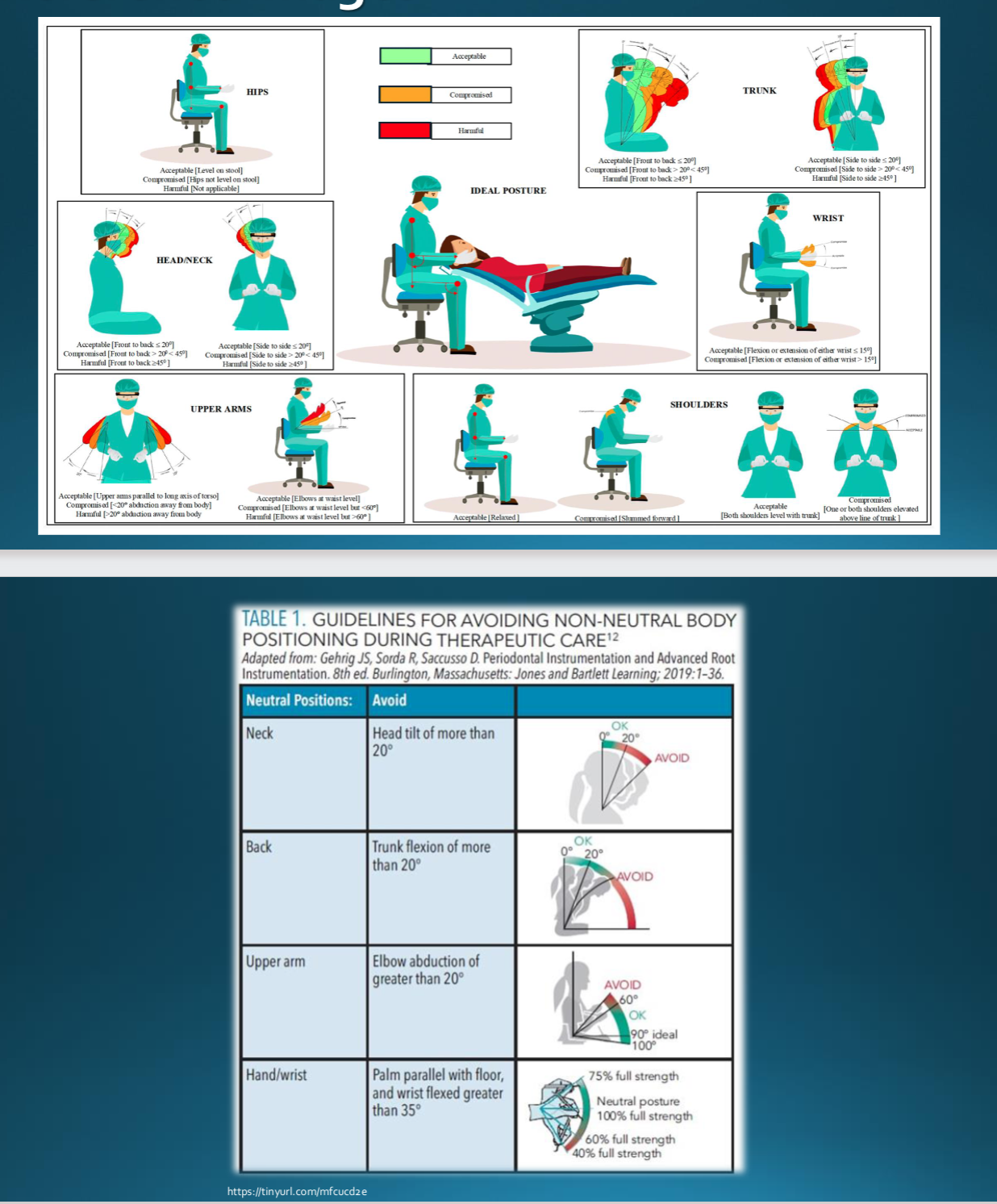
Neutral Clinician Posture
Neutral spine (ear–shoulder–hip alignment)
Head flexion ≤20°
Shoulders relaxed
Elbows flexed at 90°
Knees stacked over ankles
Feet apart, providing a wide base
Tighten core toward the spine
Hand & Wrist Position
Neutral wrist
Stable finger rest
Controlled instrumentation
Patient Positioning
Adjust patient—not clinician
Oral cavity at elbow height
Patient maintains neutral posture
Proper headrest positioning
Maxillary Positioning
Supine position
Chair back nearly parallel to the floor for maxillary treatment areas
Chin-up position
Maxillary arch angled backward
Nose and chin alignment
Occlusal plane orientation
Mandibular Positioning
Semi-Supine:
Chair back raised slightly for mandibular treatment areas
Chin-down position
Chin lower than nose
Occlusal plane parallel to the floor
Contraindications to Maxillary and Mandibular Positioning
Cardiovascular Problems
Arthritis
Respiratory Problems
*Utilize Semi-Supine Positioning*
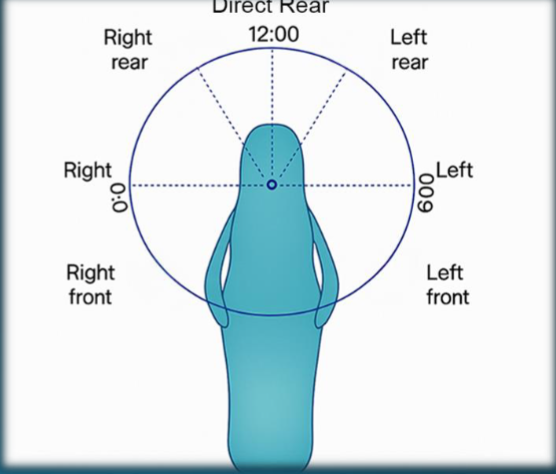
Clock Positions
12 o’clock = behind patient
9 o’clock = right side (RH clinician)
3 o’clock = left side (LH clinician)
8 o’clock = front-right (RH clinician)
4 o’clock = front left (LH clinician)
Reposition to maintain ergonomics
Clinician Errors
Head flexion >20°
Trunk flexion or rotation
Elevated shoulders
Improper working height
Critical Errors: Clinician
Adjusting the clinician rather than repositioning the patient
Failure to reposition (clock position)
Continuing instrumentation despite strain
Inability to self-correct posture
Critical Errors: Hand and Wrist
Sustained wrist flexion, extension, or deviation from neutral
Lack of a stable intraoral or extraoral finger rest, compromising control
Loss of instrument control or excessive force
Critical Errors – Patient Positioning
Failure to adjust patient position, resulting in clinician compensation
Incorrect chair positioning for the arch being treated:
Maxillary not in proper supine/chin-up position
Mandibular not in the appropriate chin-down position
Patient’s oral cavity not positioned at the clinician’s elbow height, forcing strain
Clinical Competency Risks: Unsafe performance may result in
Musculoskeletal injury
Reduced instrumentation precision
Loss of visibility/access
Compromised patient care
Failure of clinical competency assessment
CDCA Emphasis
Neutral posture consistency
Independent self-correction
Ergonomic positioning throughout treatment
CDCA Expectations
Consistently maintains neutral ergonomic posture throughout all phases of care
Positions the patient appropriately before and during instrumentation
Maintains head flexion ≤20° with neutral spine alignment
Utilizes correct clock positions to ensure access without compromising posture
Maintains neutral wrist and stable finger rests for controlled instrumentation
Demonstrates independent self-correction without faculty prompting
Avoids all critical ergonomic errors and unsafe positioning
Completes procedures without observable musculoskeletal strain
Key Takeaways
Ergonomics directly impacts career longevity and clinician safety
Patient positioning determines clinician posture—never compensate with your body
Neutral posture = ear–shoulder–hip alignment with ≤20° head flexion
Proper clock positioning enables access without strain
Musculoskeletal disorders are cumulative but preventable
Ergonomics is a clinical competency, not a preference