AHI 1A Final Terminology
 View linked note
 Call Kai
 Learn
Learn Practice Test
 Spaced Repetition
 Match
Match Flashcards
 Knowt Play
1/29

There's no tags or description
Looks like no tags are added yet.
Name | Mastery | Learn | Test | Matching | Spaced | Call with Kai |
|---|
No analytics yet
Send a link to your students to track their progress
30 Terms
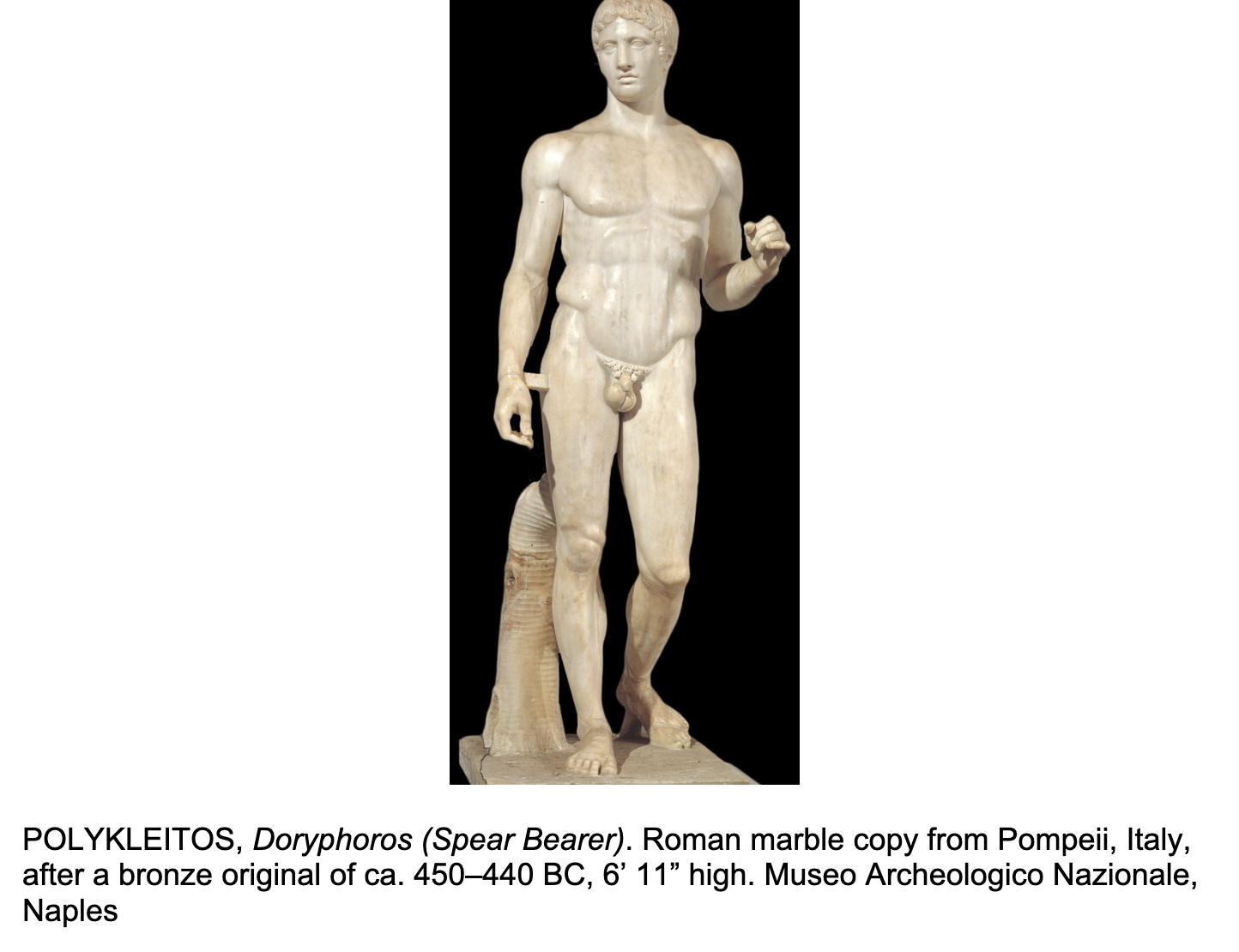
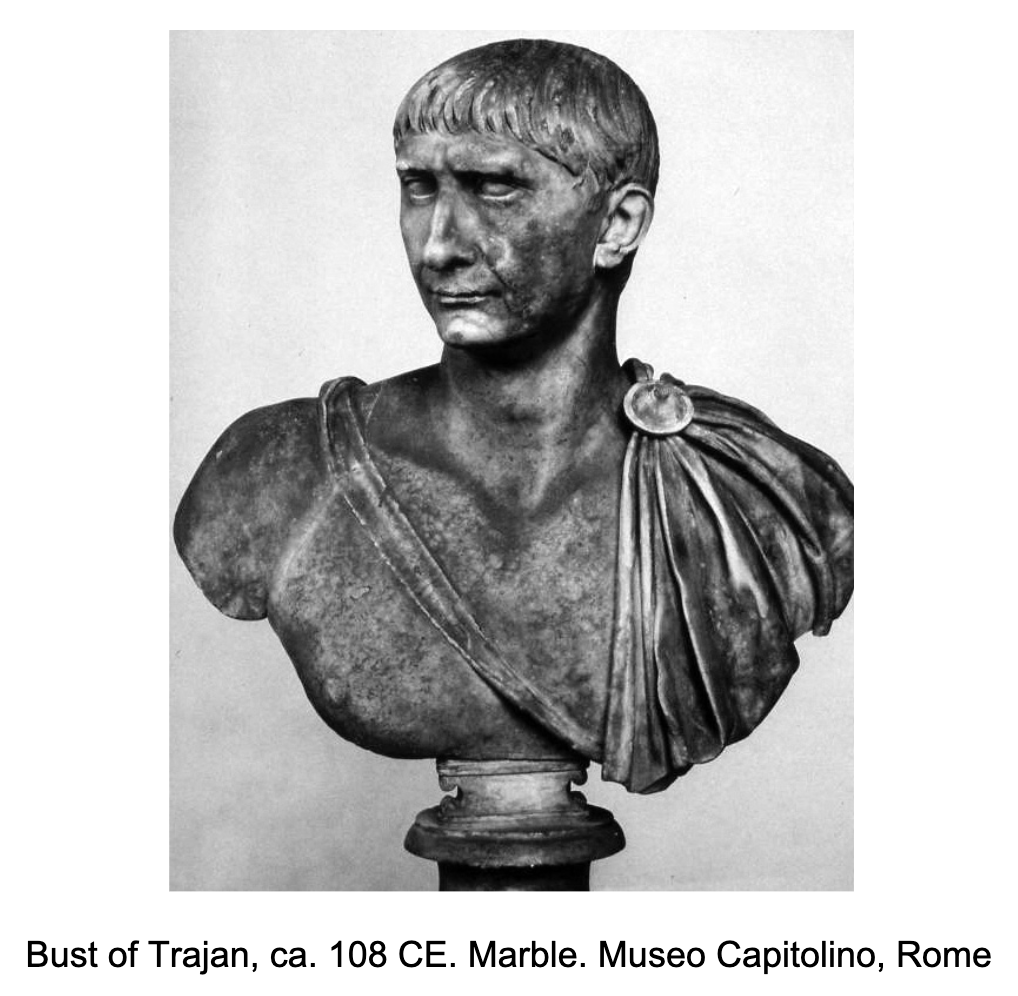
Contrapposto
A sculptural pose where the weight of the body shifts onto one leg, creating a sense of movement and naturalism, as seen in Greek sculpture.
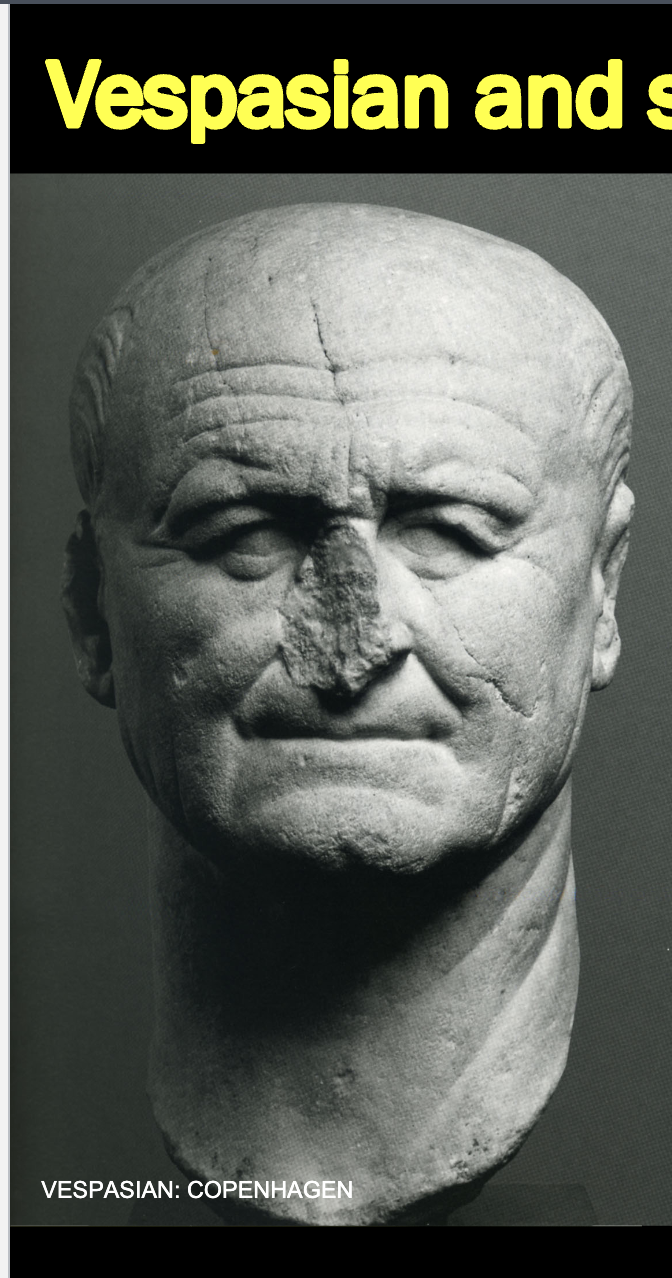
Verism
A Roman artistic style that emphasizes hyper-realistic and unidealized depictions of individuals, often highlighting age and experience to convey wisdom and virtue.
Chryselephantine
A luxurious sculptural technique combining gold (chrysos) and ivory (elephantine), typically used for large cult statues in ancient Greece.
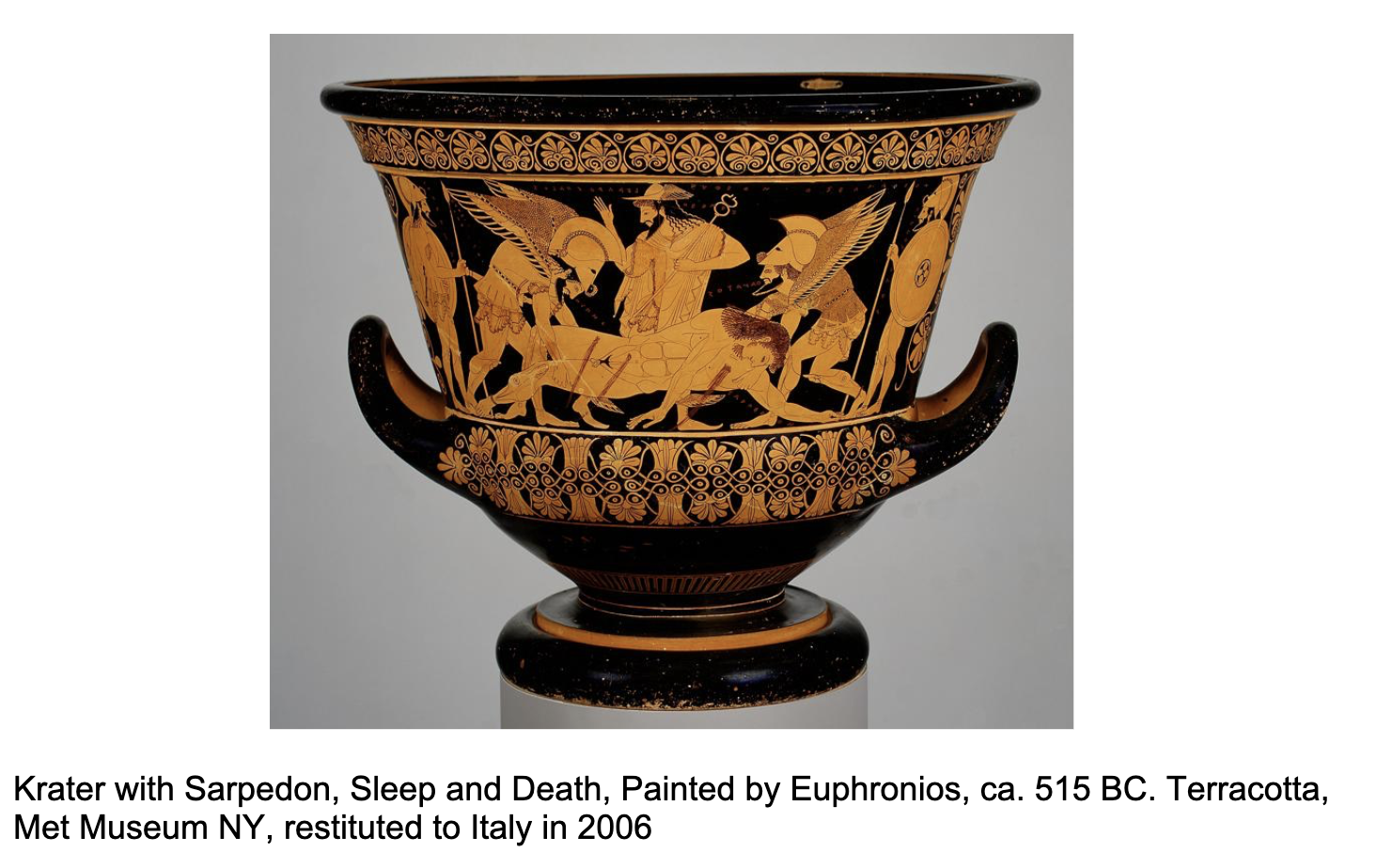
Krater
A large ancient Greek vessel used for mixing wine and water, often elaborately decorated and used in symposia.
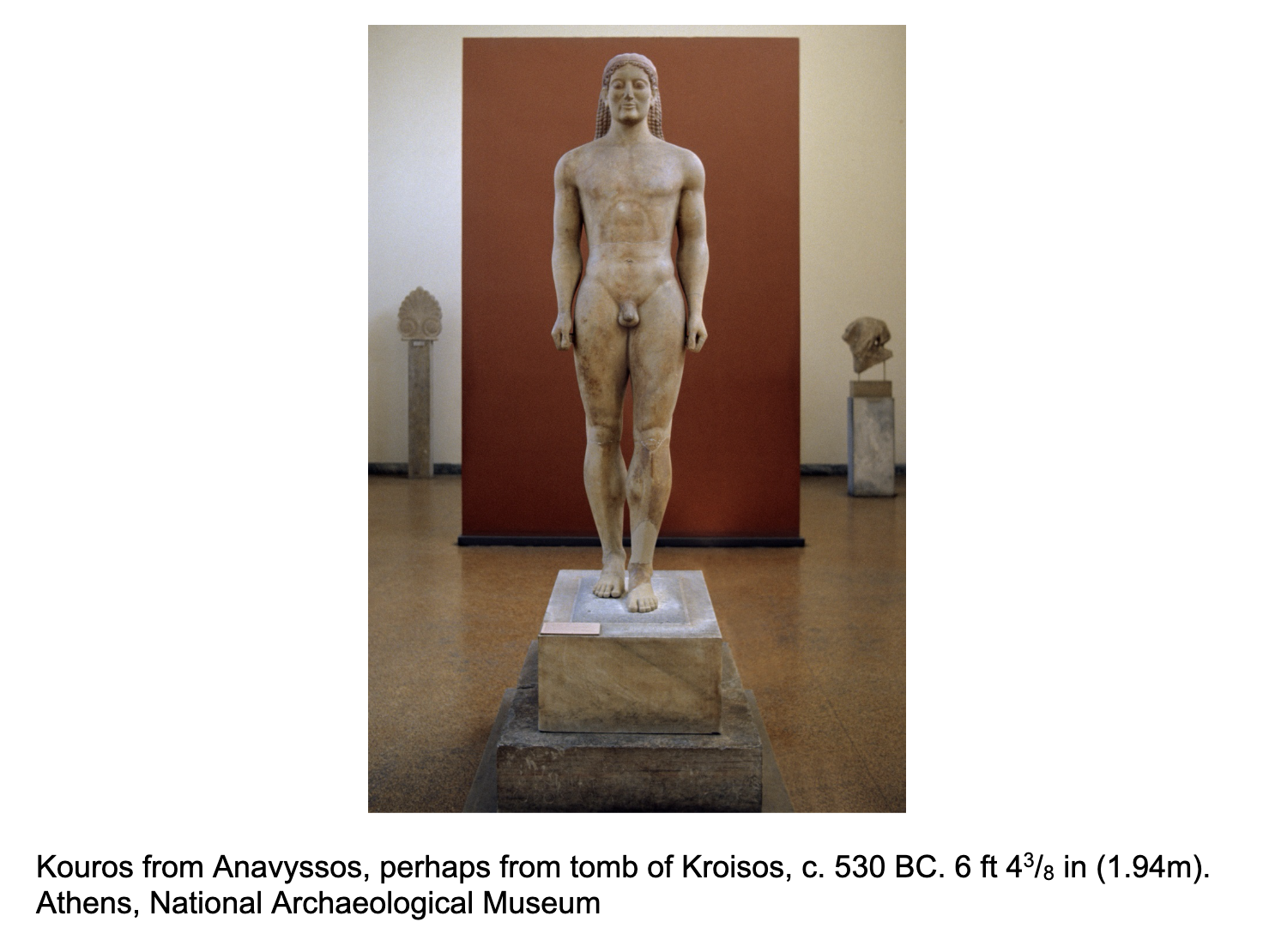
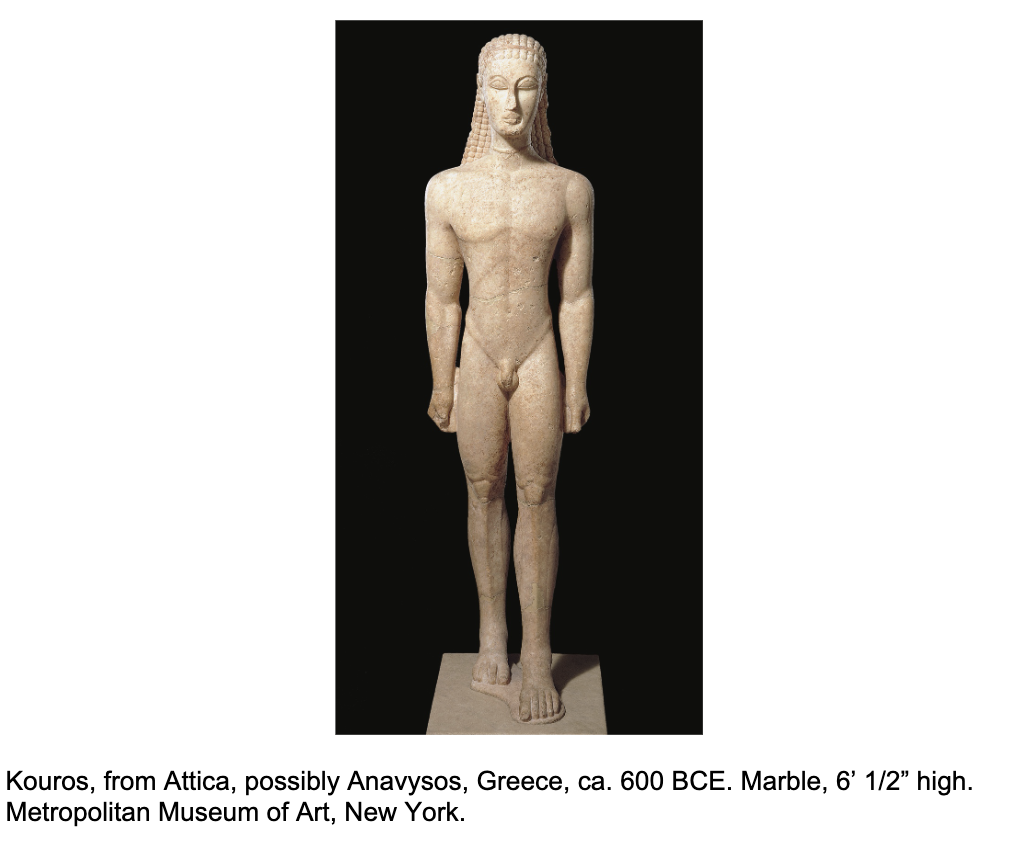
Kouros
An Archaic Greek statue of a young male, typically nude, standing in a rigid and frontal pose, symbolizing youth and vitality.
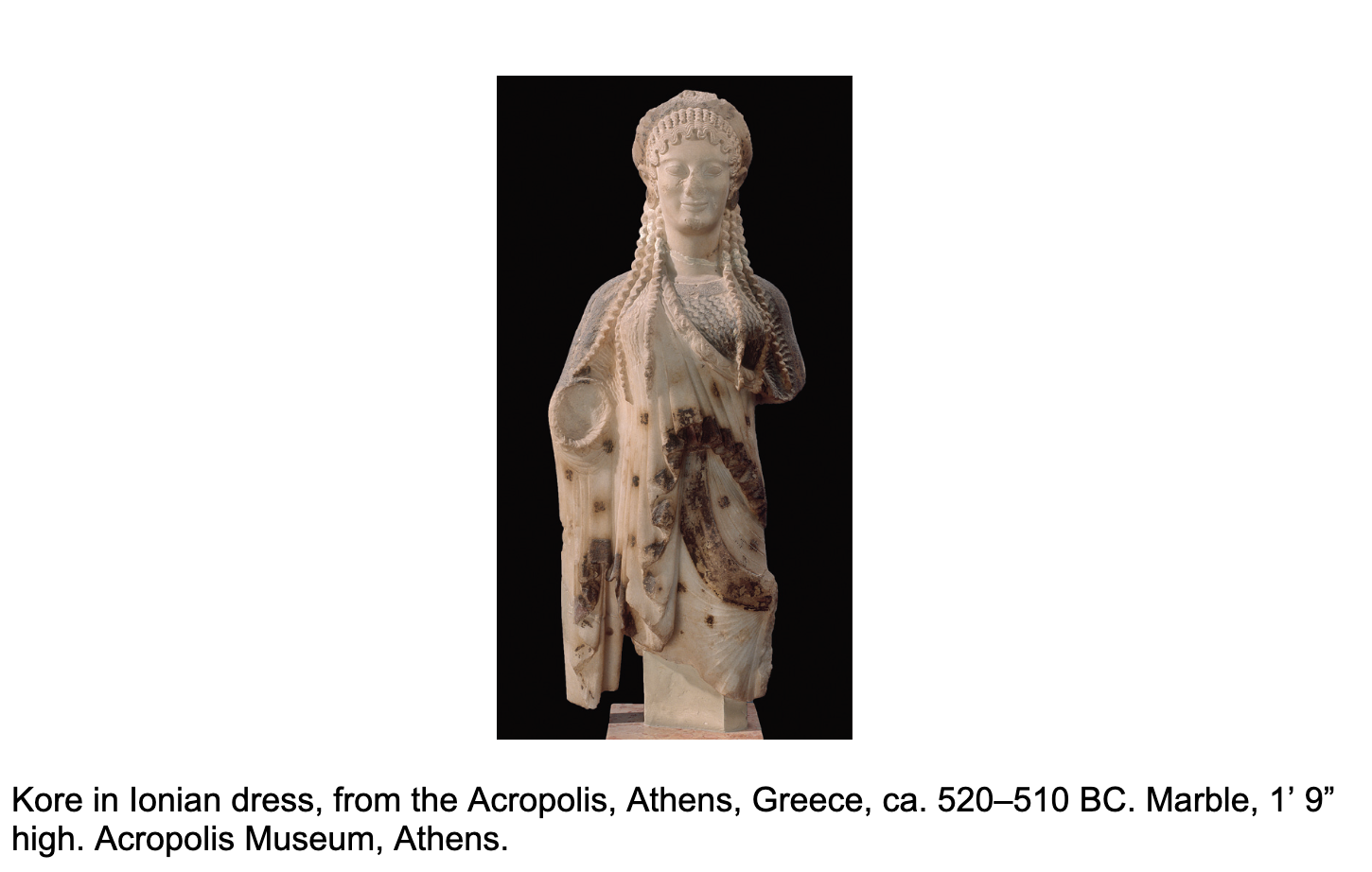
Kore
The female counterpart to the kouros, depicting a young woman, often clothed and representing ideals of femininity and piety.
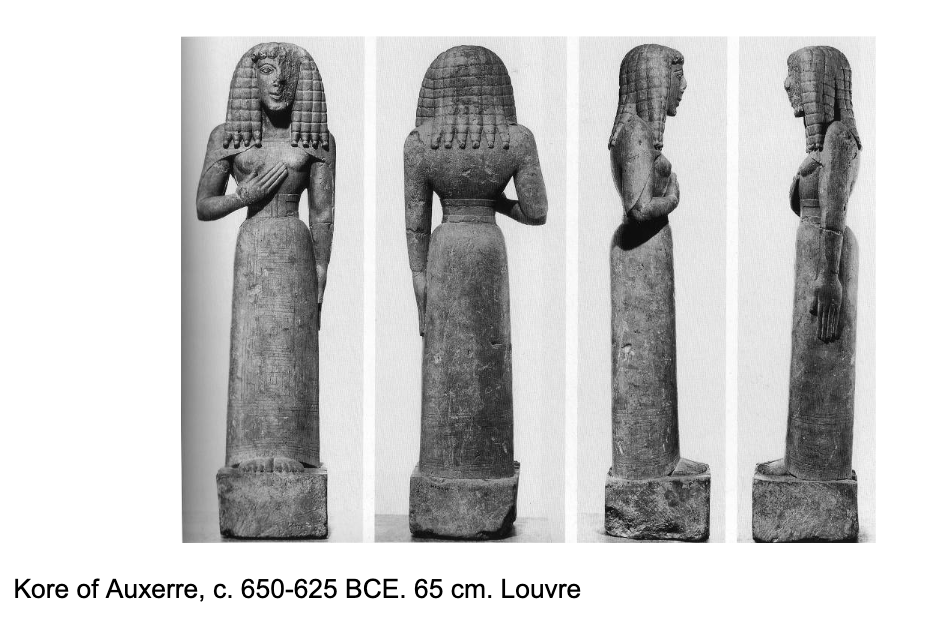
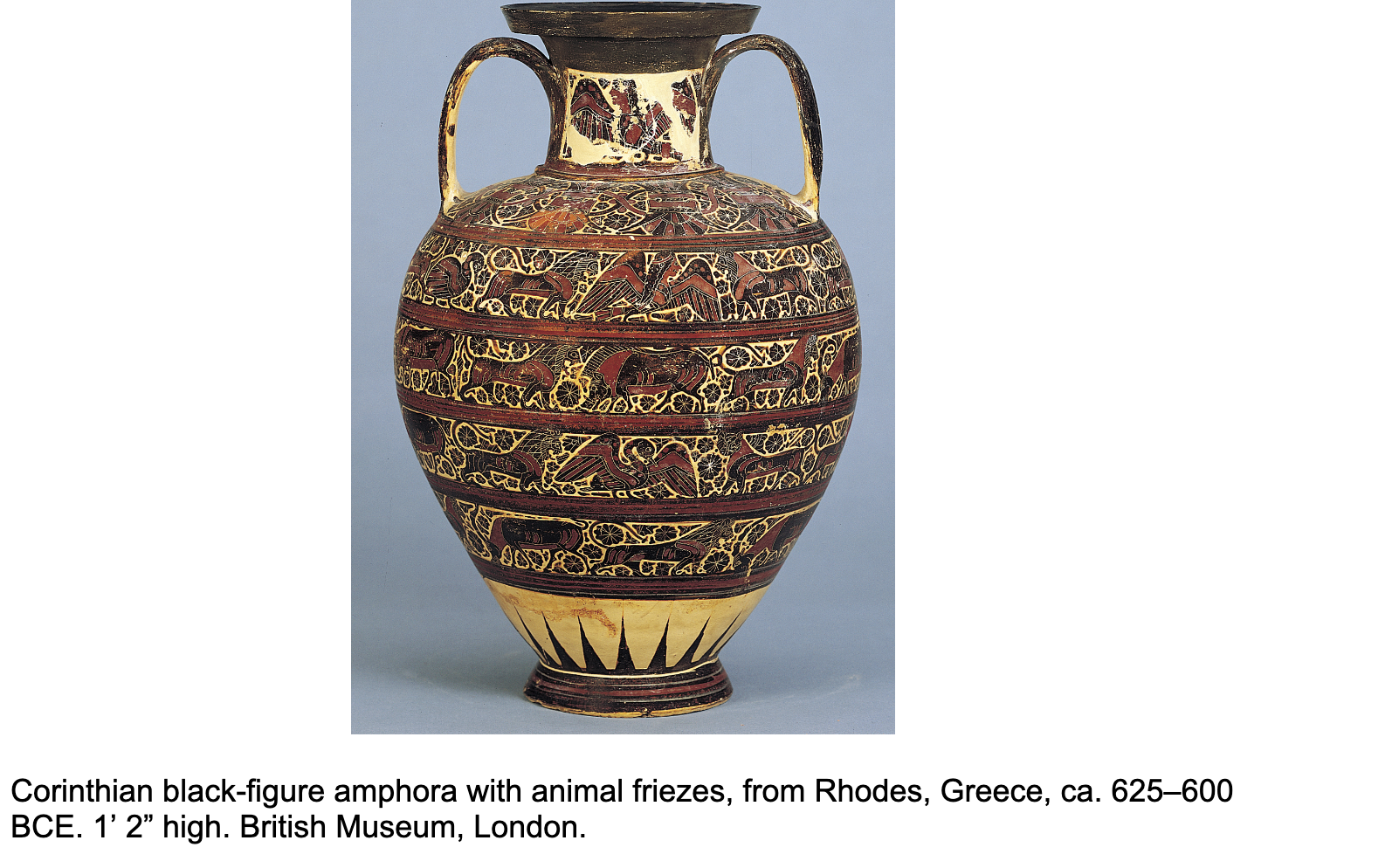
Daedalic Style
An early Greek sculptural style characterized by geometric forms, triangular faces, and stylized hair, reflecting a transition to more naturalistic forms.
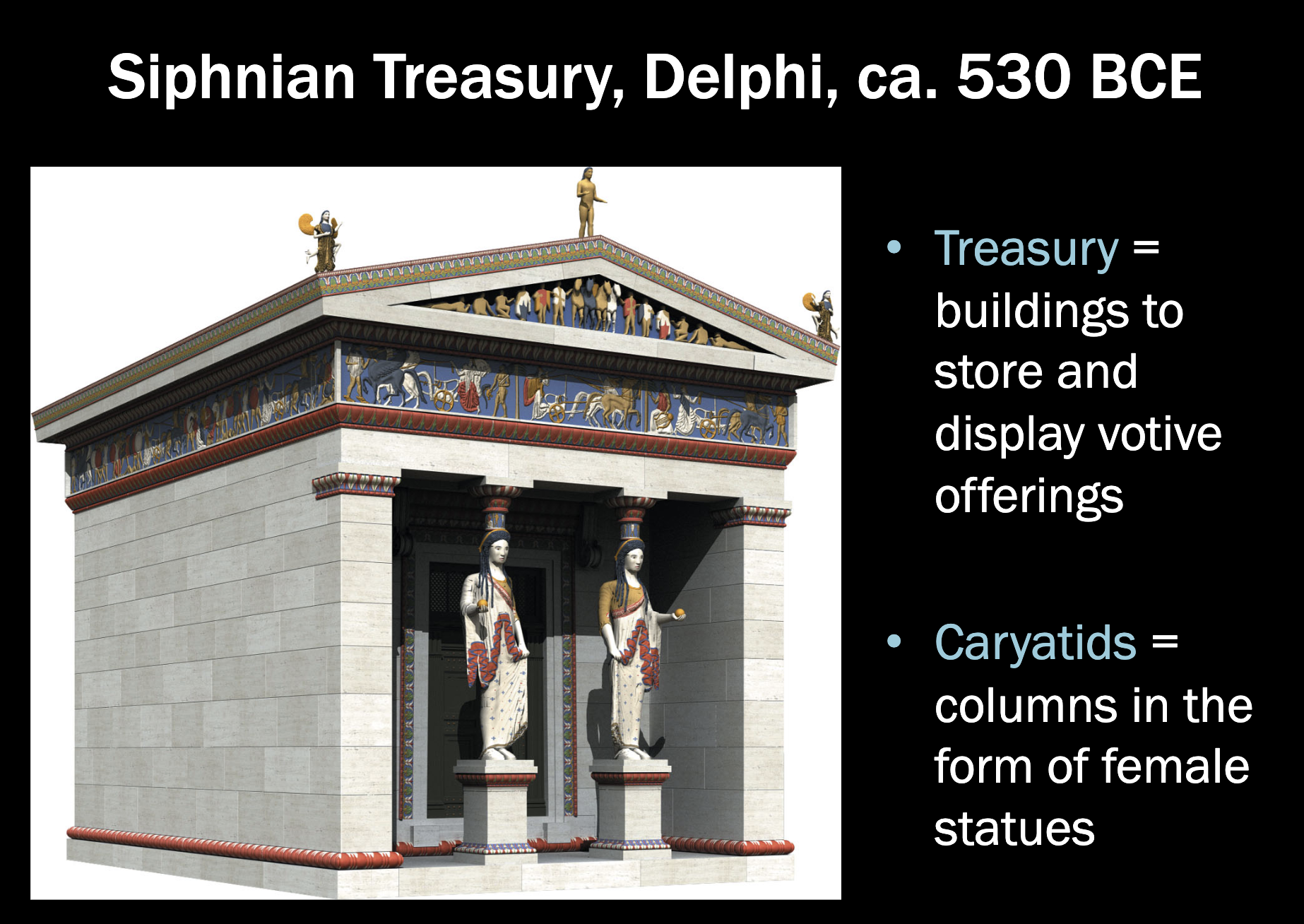
Treasury
A small, temple-like structure in sanctuaries, built by city-states to house votive offerings and display wealth and piety.
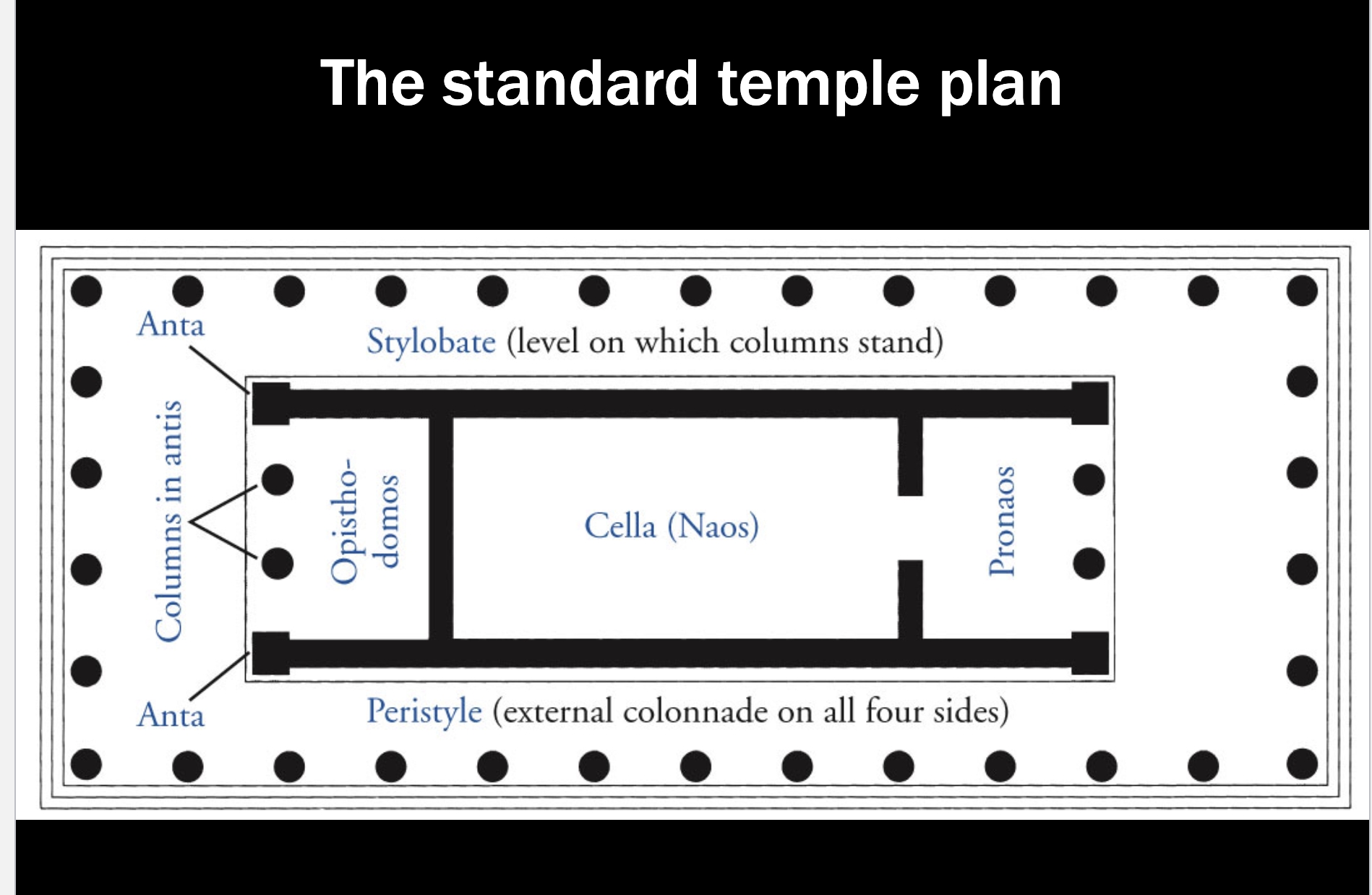
Cella or Naos
The central chamber of a Greek or Roman temple, where the cult statue of the deity was located.
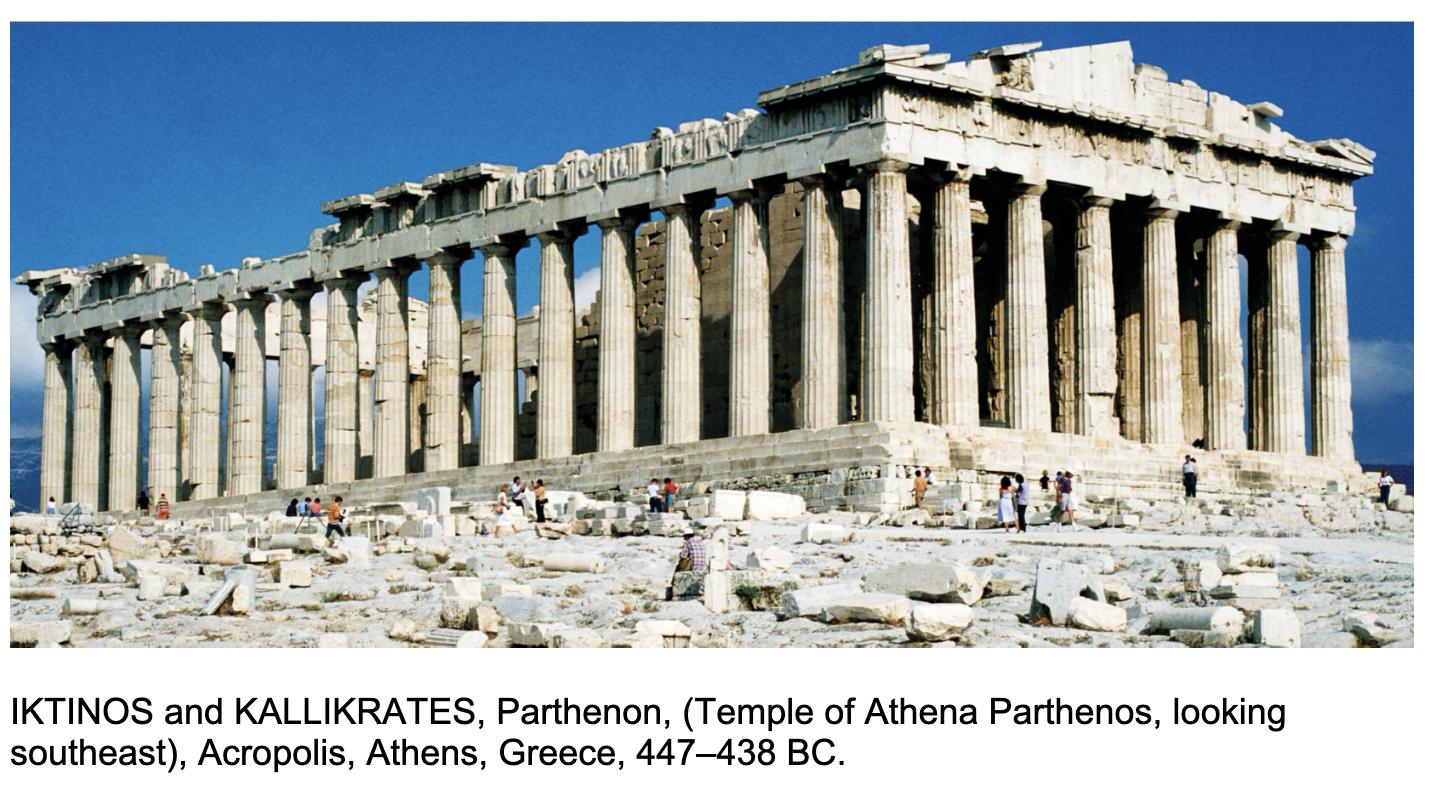
Peristyle
A surrounding colonnade in a Greek or Roman building, often enclosing a courtyard or garden, emphasizing harmony and order.
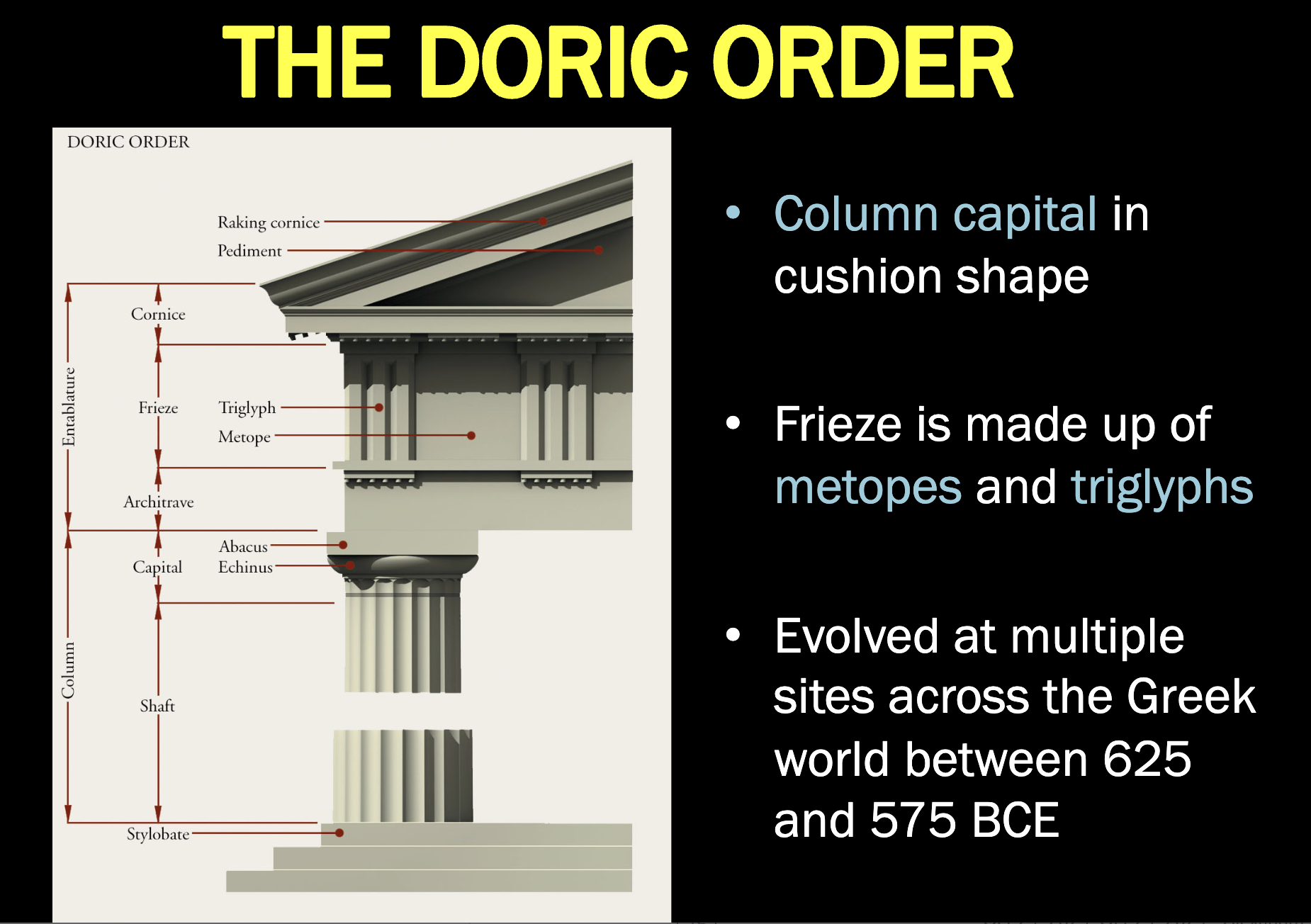
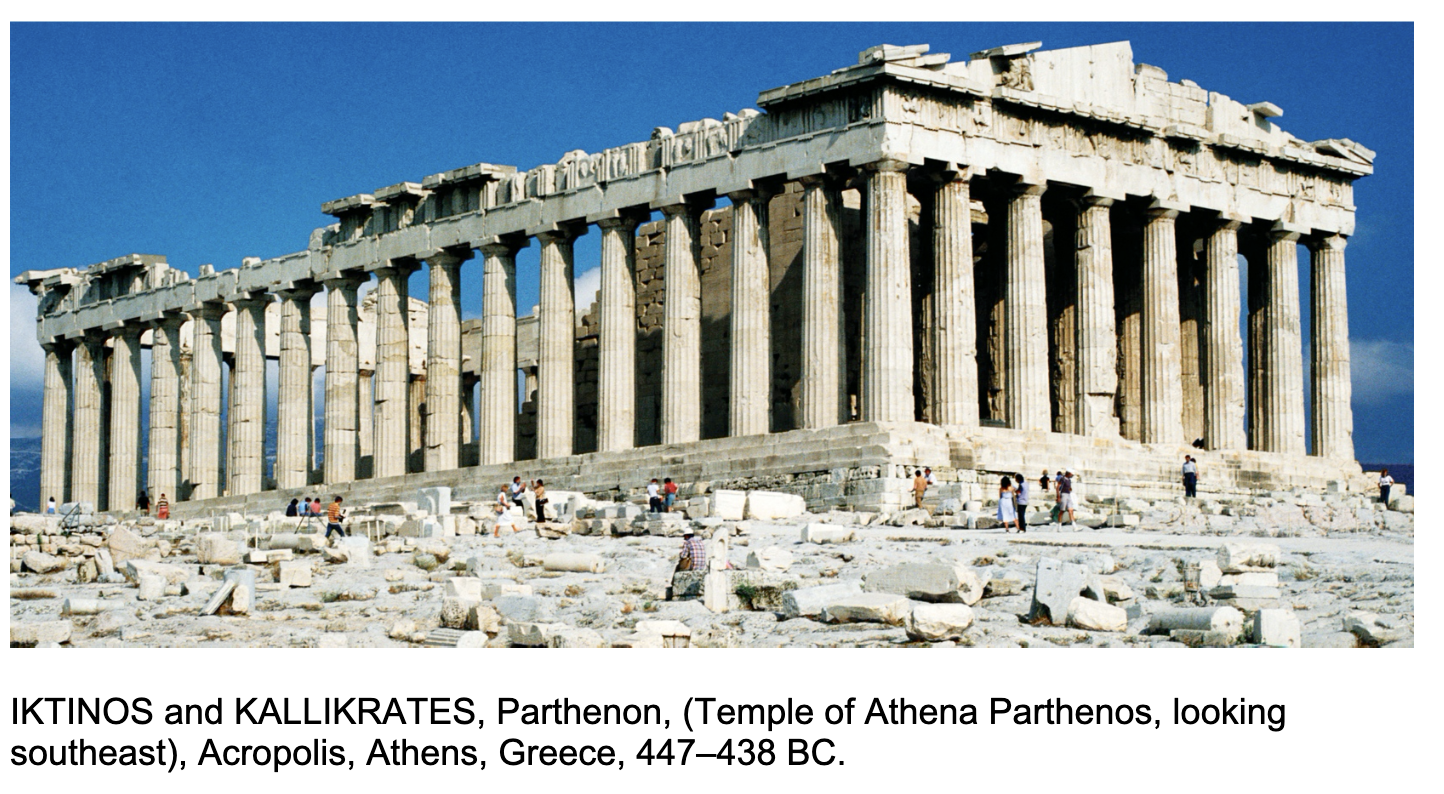
Doric Order
The simplest of the classical architectural orders, characterized by sturdy columns without bases, plain capitals, and a frieze with triglyphs and metopes.
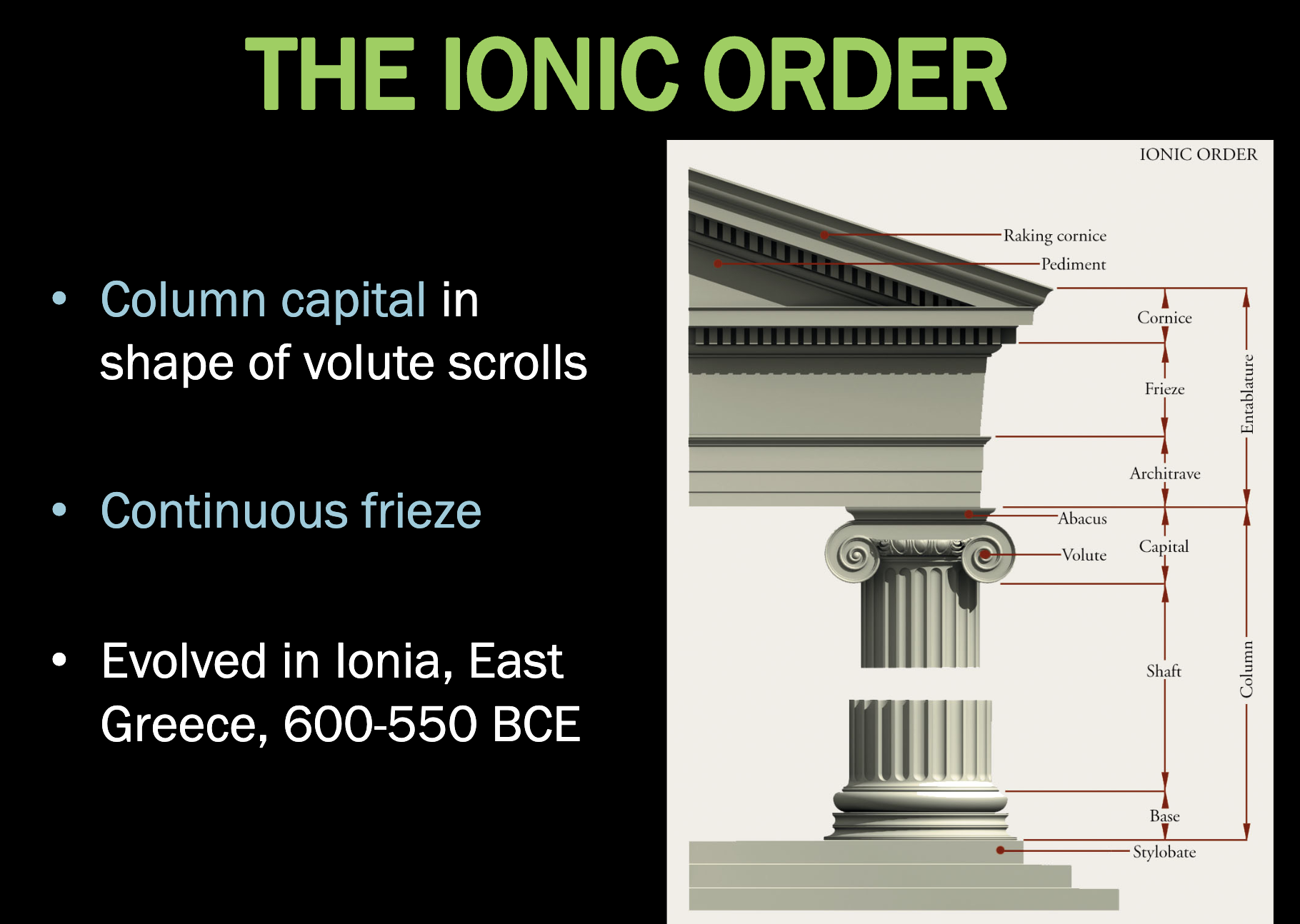
Ionic Order
An architectural order with slender, fluted columns, distinctive scrolled capitals (volutes), and a more decorative frieze.
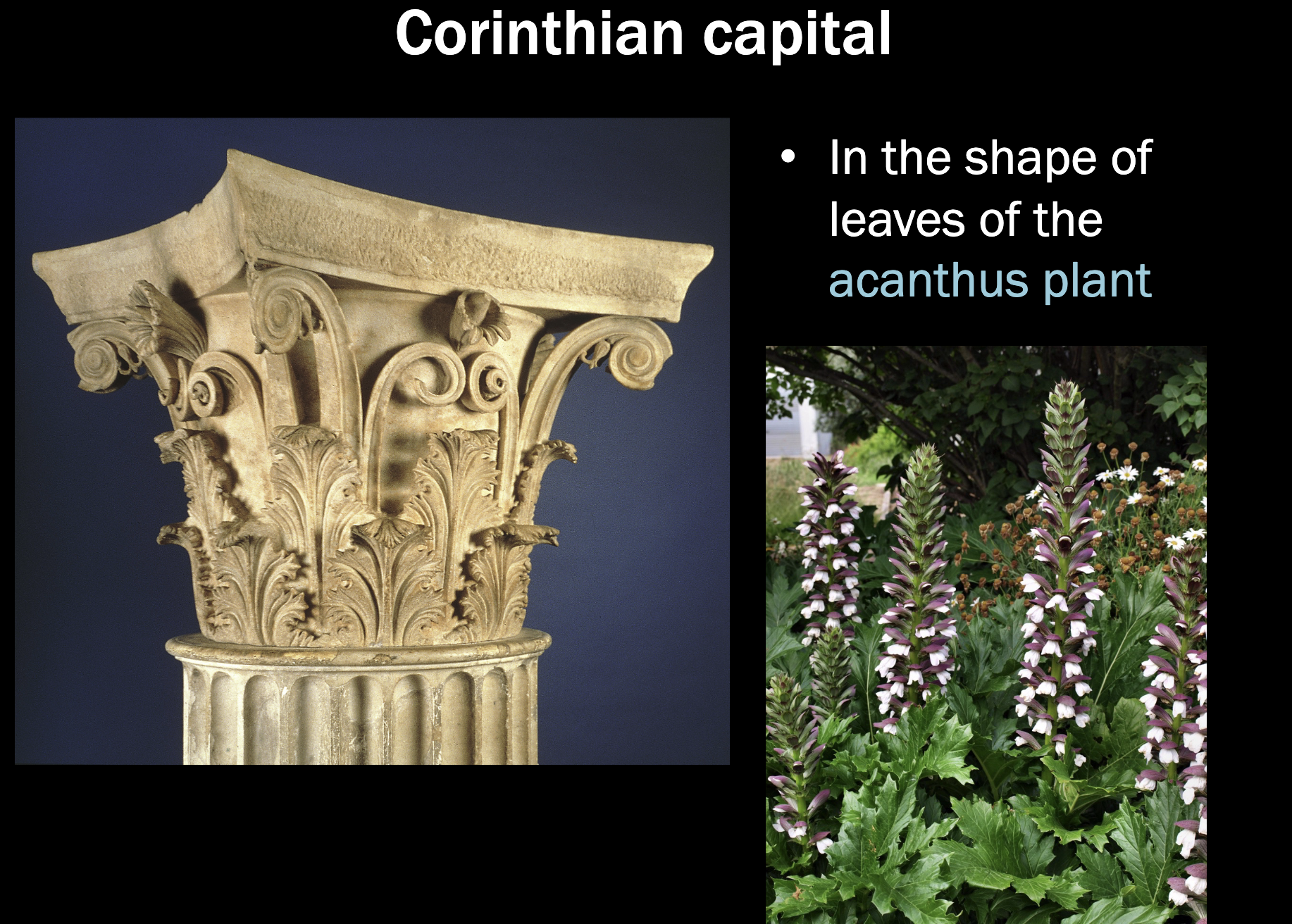
Corinthian Capital
The most ornate of the classical capitals, decorated with acanthus leaves and small scrolls, exemplifying elegance and complexity.
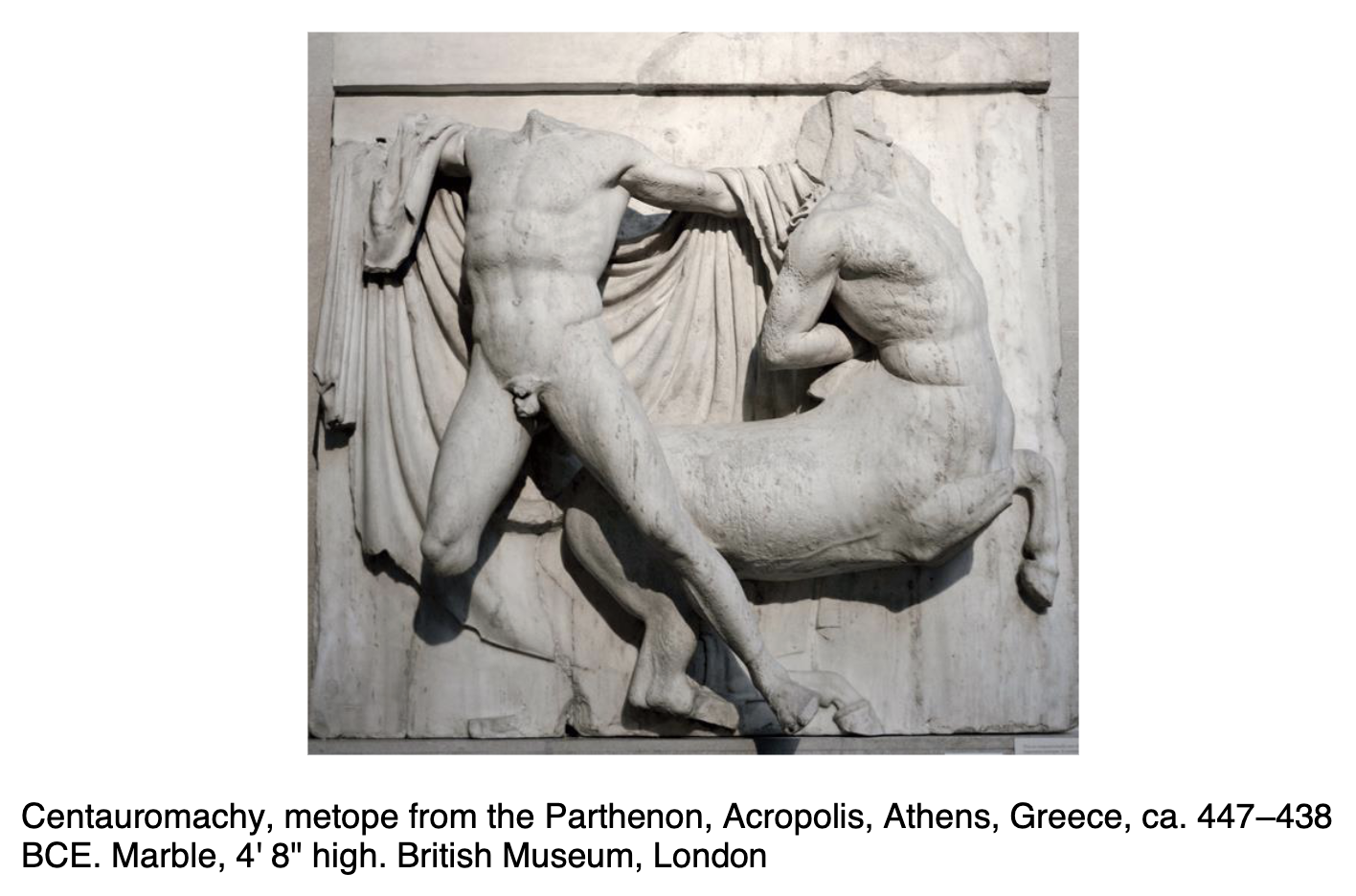
Metope
A rectangular panel, often decorated with relief sculpture, located between triglyphs in a Doric frieze.
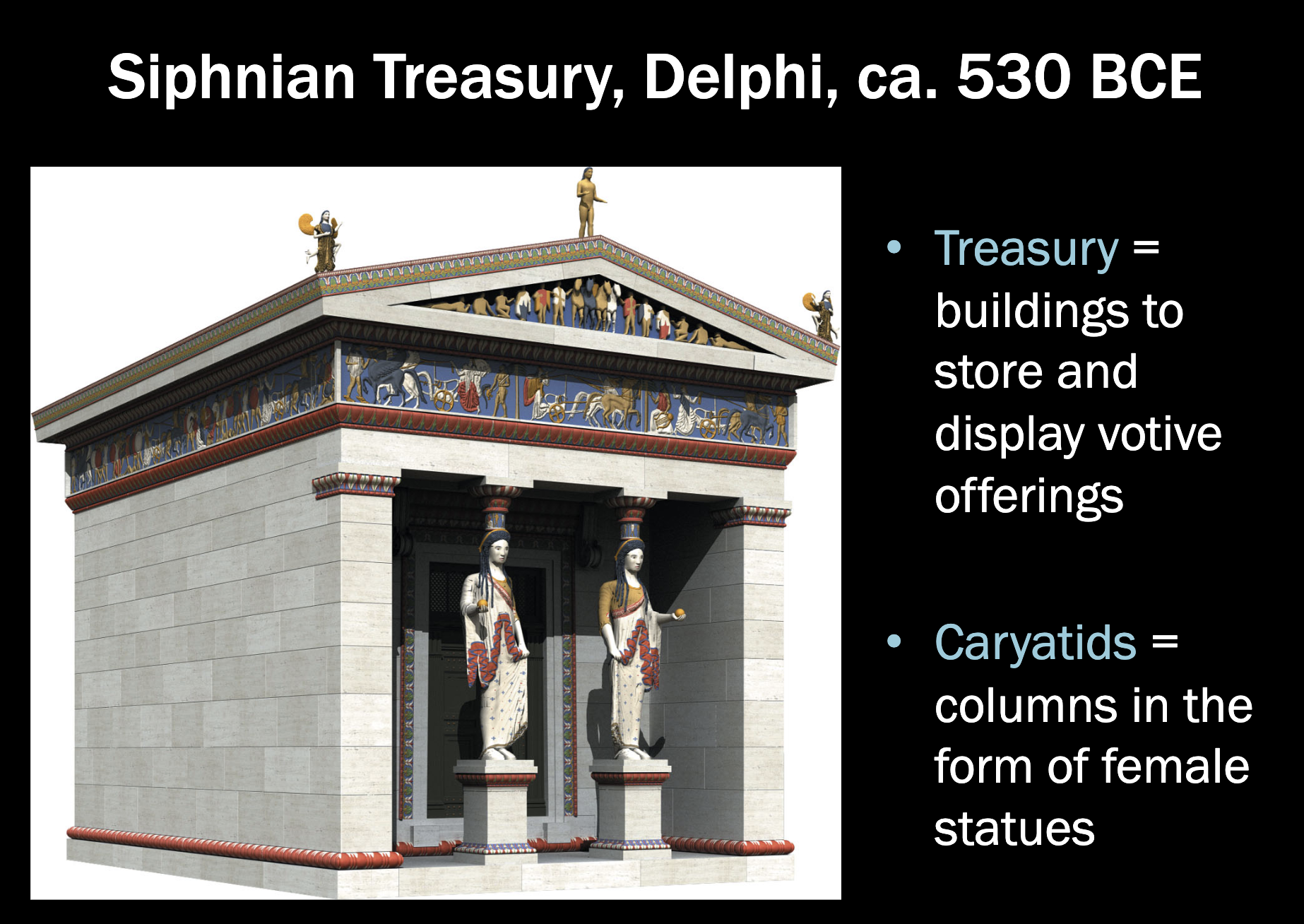
Caryatid
A sculpted female figure used as an architectural support in place of a column.
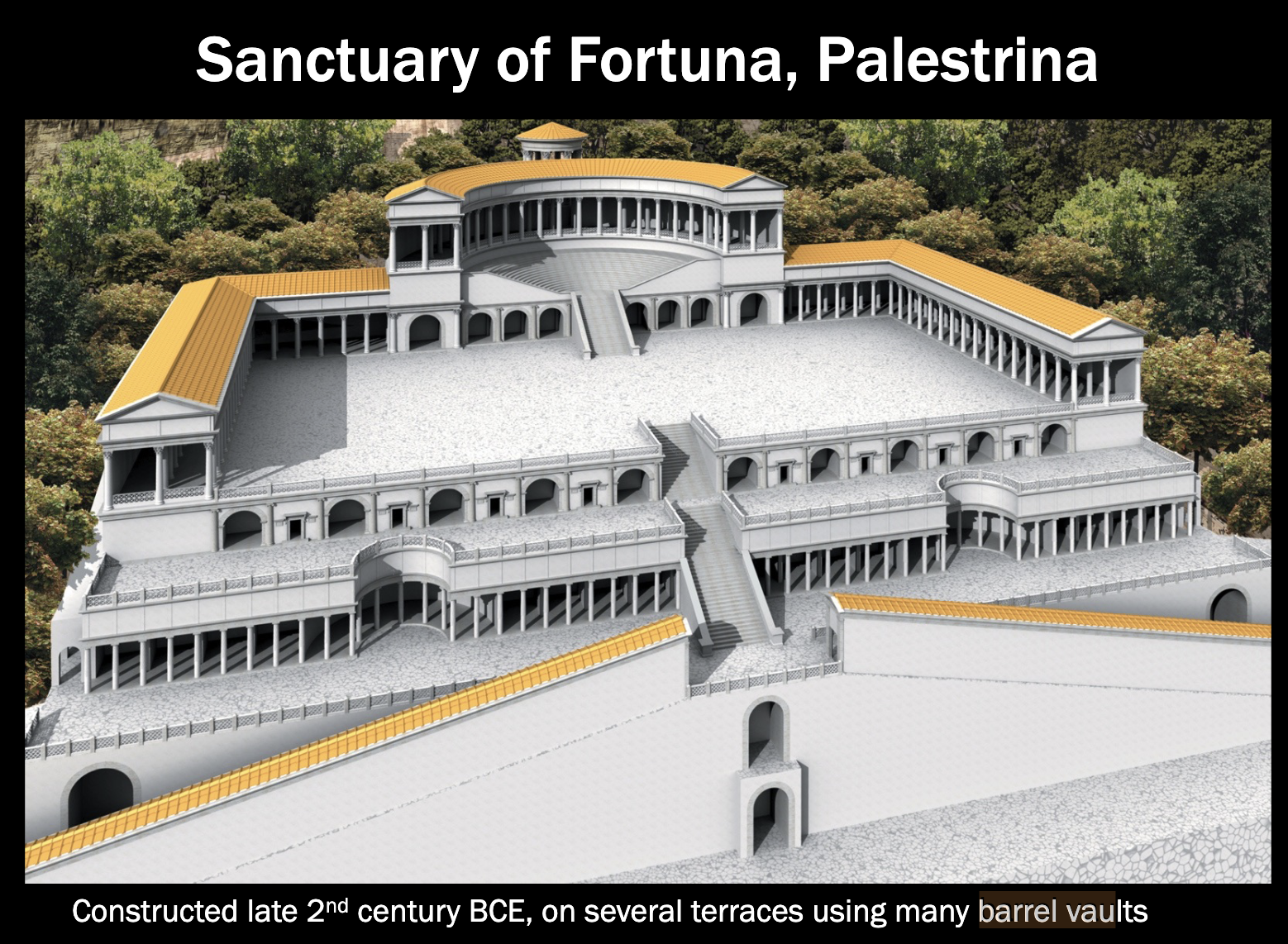
Barrel Vault
A continuous, semi-cylindrical vault resembling a tunnel, commonly used in Roman architecture.
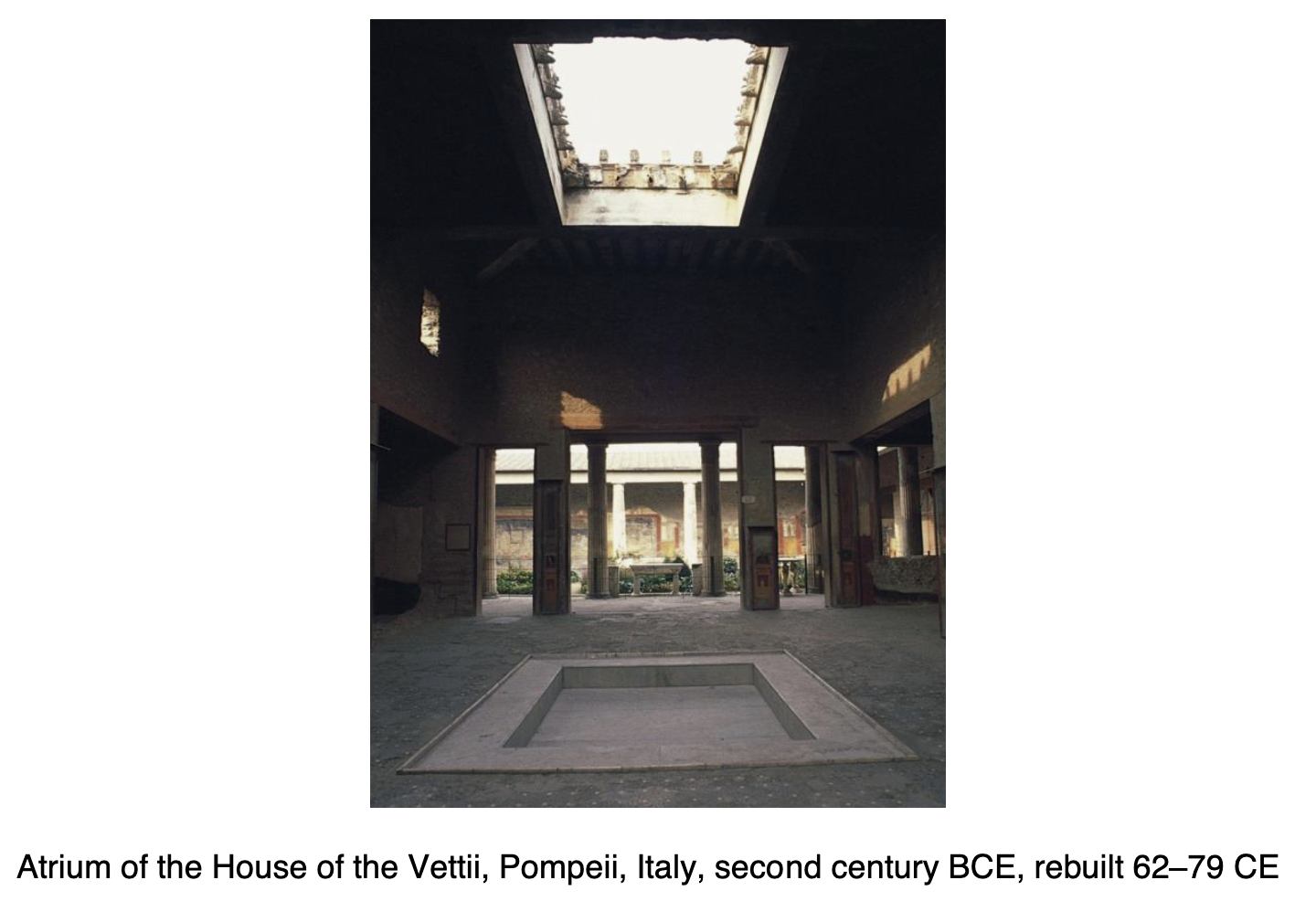
Atrium
The central, open-air courtyard in Roman houses, often serving as a social and light-gathering space.
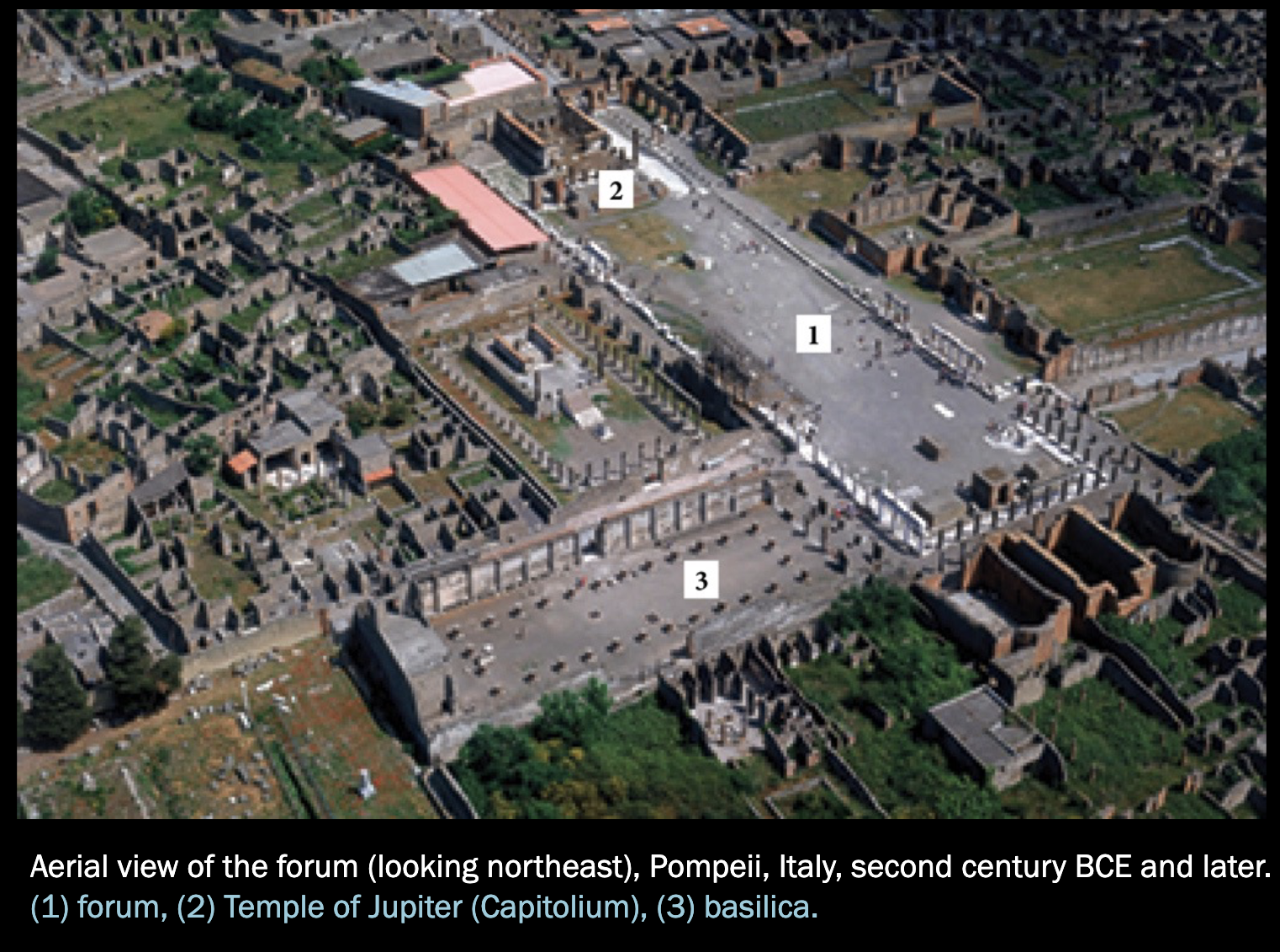
Forum
The civic, religious, and commercial heart of a Roman city, serving as a public gathering space.
Damnatio Memoriae
A Roman practice of erasing a person's memory and legacy, often through the destruction of images and inscriptions.
Spolia
Reused building materials or sculptures from older monuments, often incorporated into new constructions.
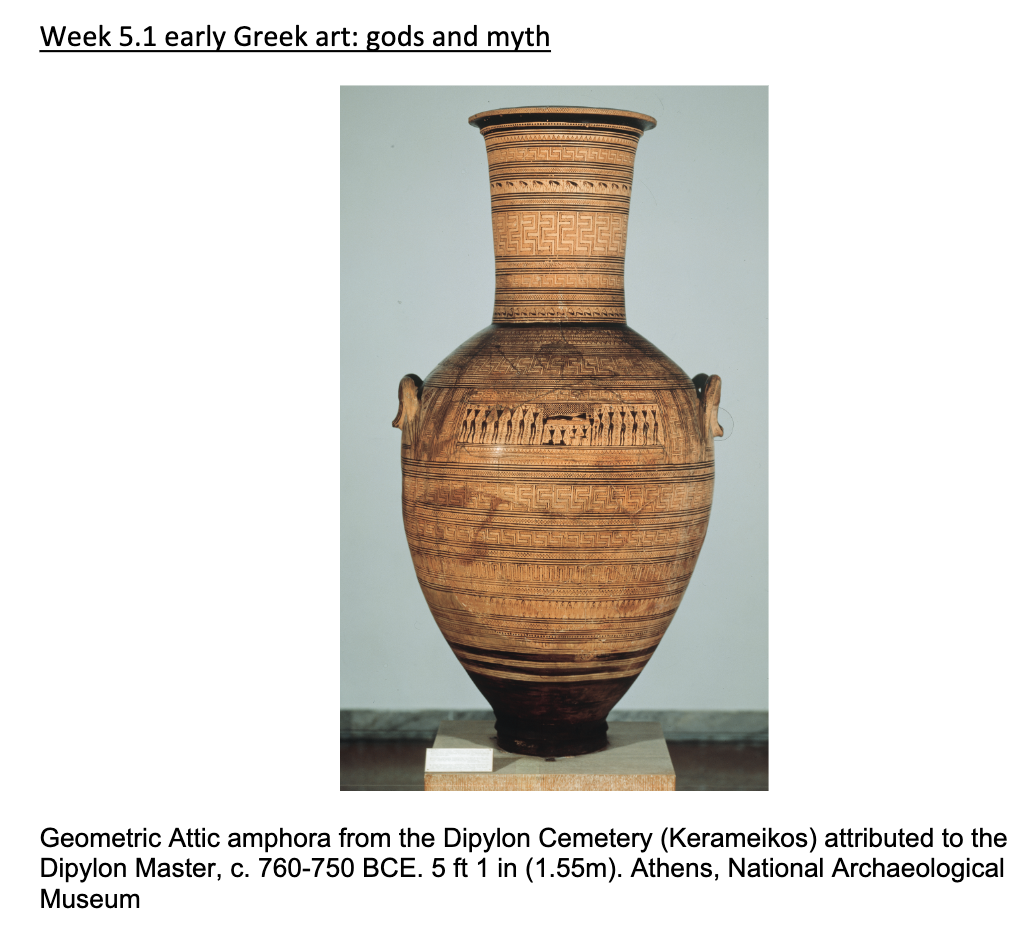
Geometric Period
900-700 BCE
repeated bands of patterns
many figures had triangular heads or bodies
geometric vases & porttery w/ shapes
many geometric shapes in art and motifs, characterized by stylized human and animal forms.
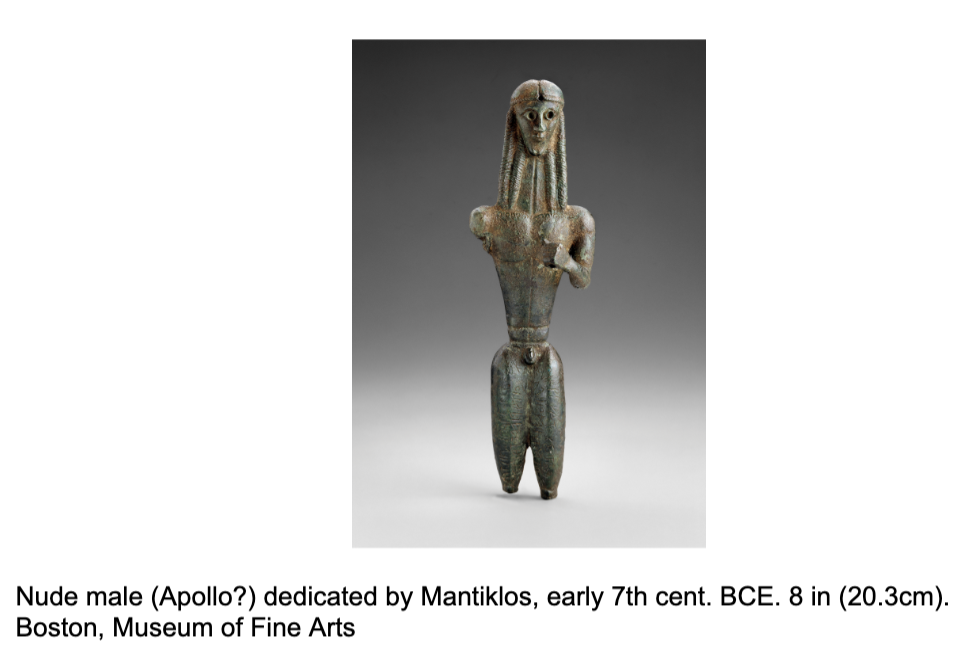
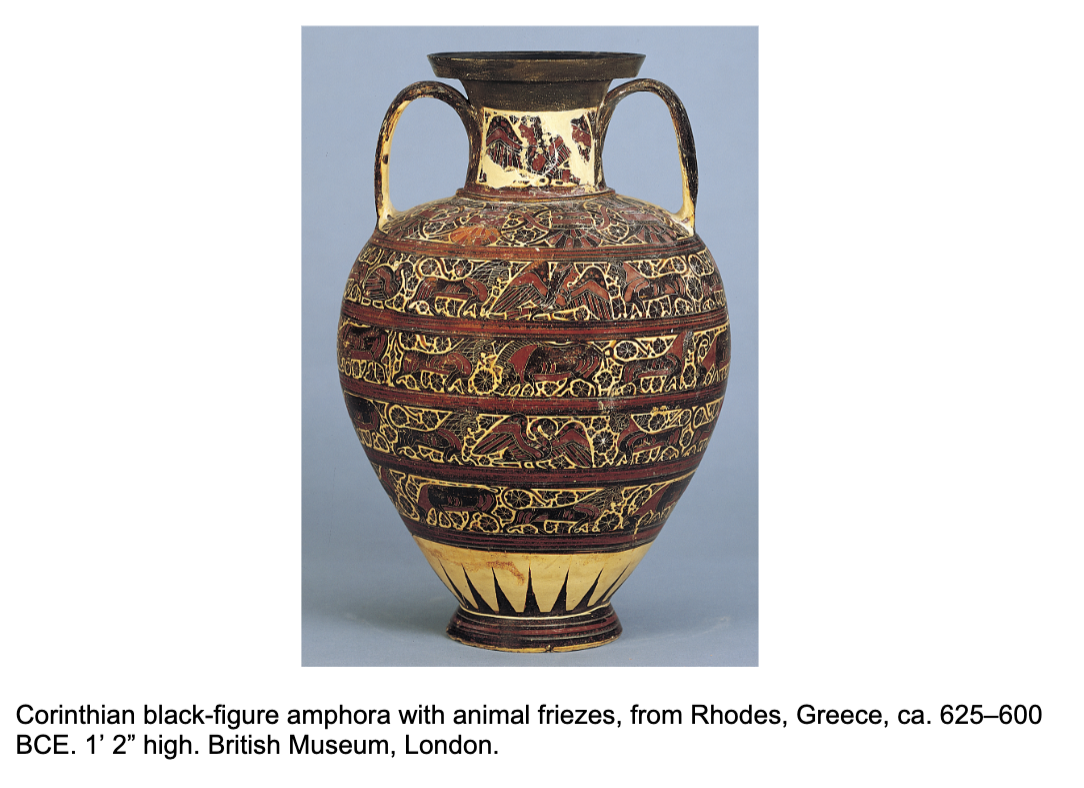
7th Century BCE
700-600 BCE
mythical creatures
Near Eastern influence
mesopotamia etc.
Daedalic style and artistic developments in Greece, marked by increasing naturalism and the representation of human figures.
Archaic Period
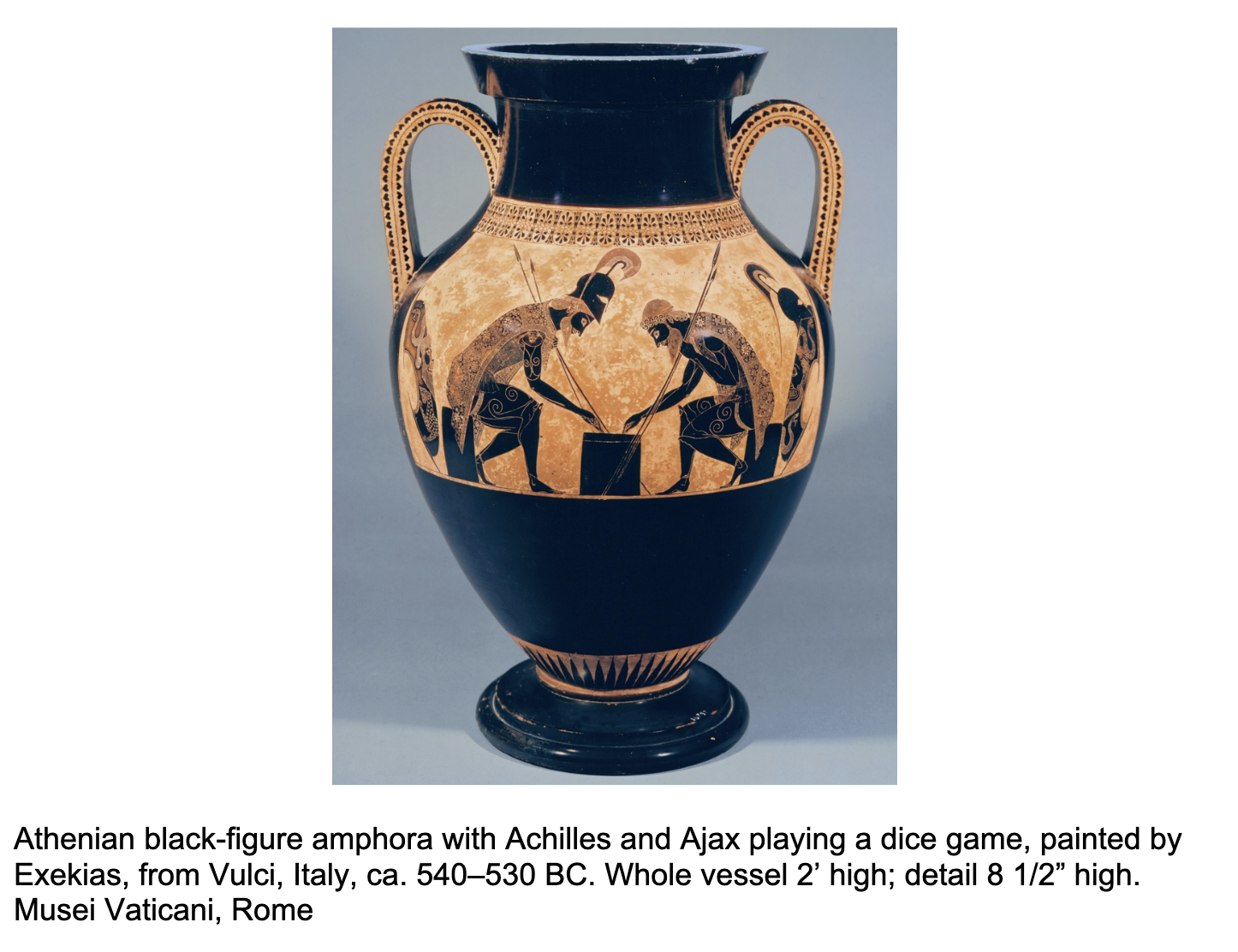
600-480 BCE
Black-figure & red-figure techniques
Doric Order & Ionic Order
ornate long hair & Archaic smiles in statues
slight emotion added to statues
front rigid pose & sharp lines in statues
Classical Period
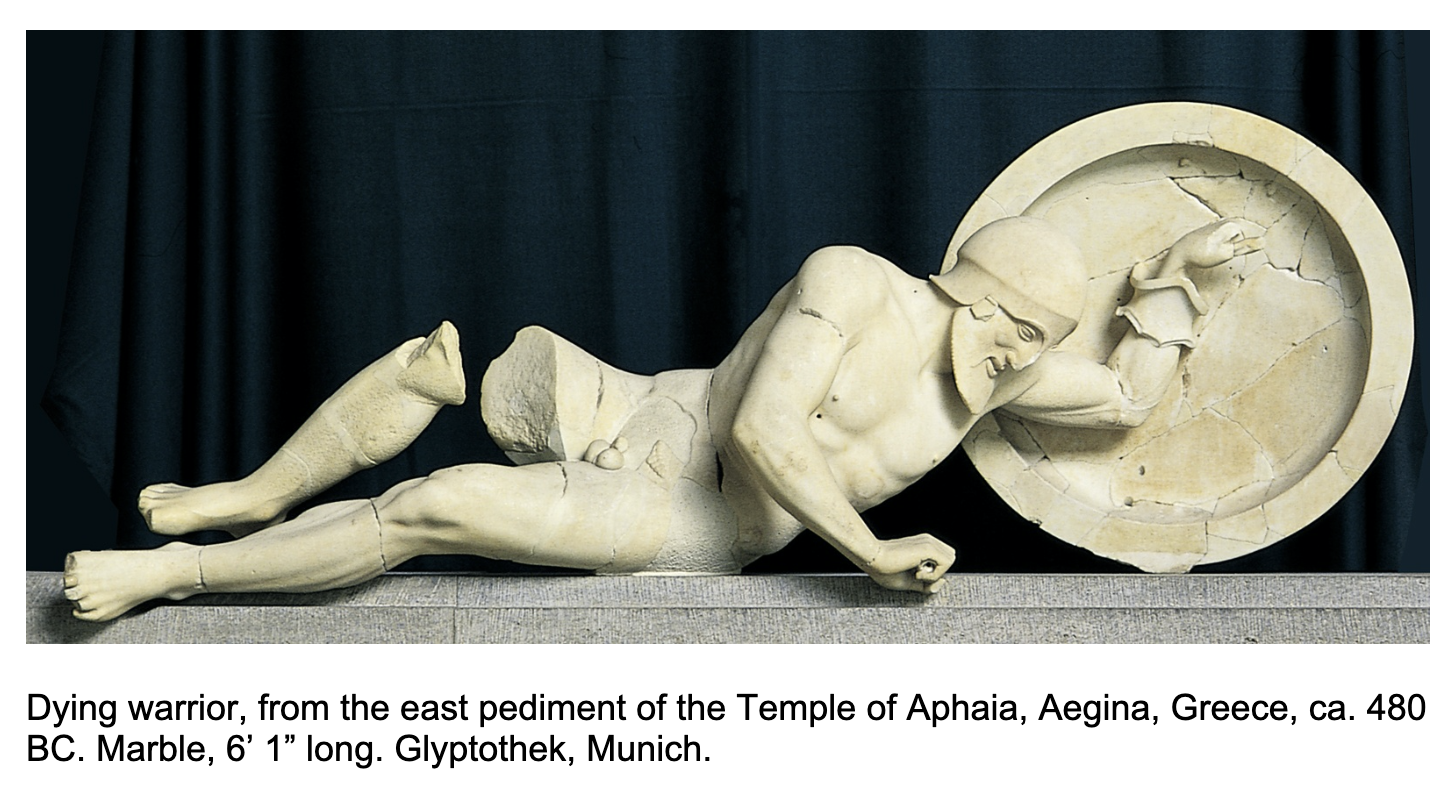
480-323 BCE
head looks to the side
corinthian order
limbs move freely
more emotion shown in statue
softer lines in statue
contrapposto stance
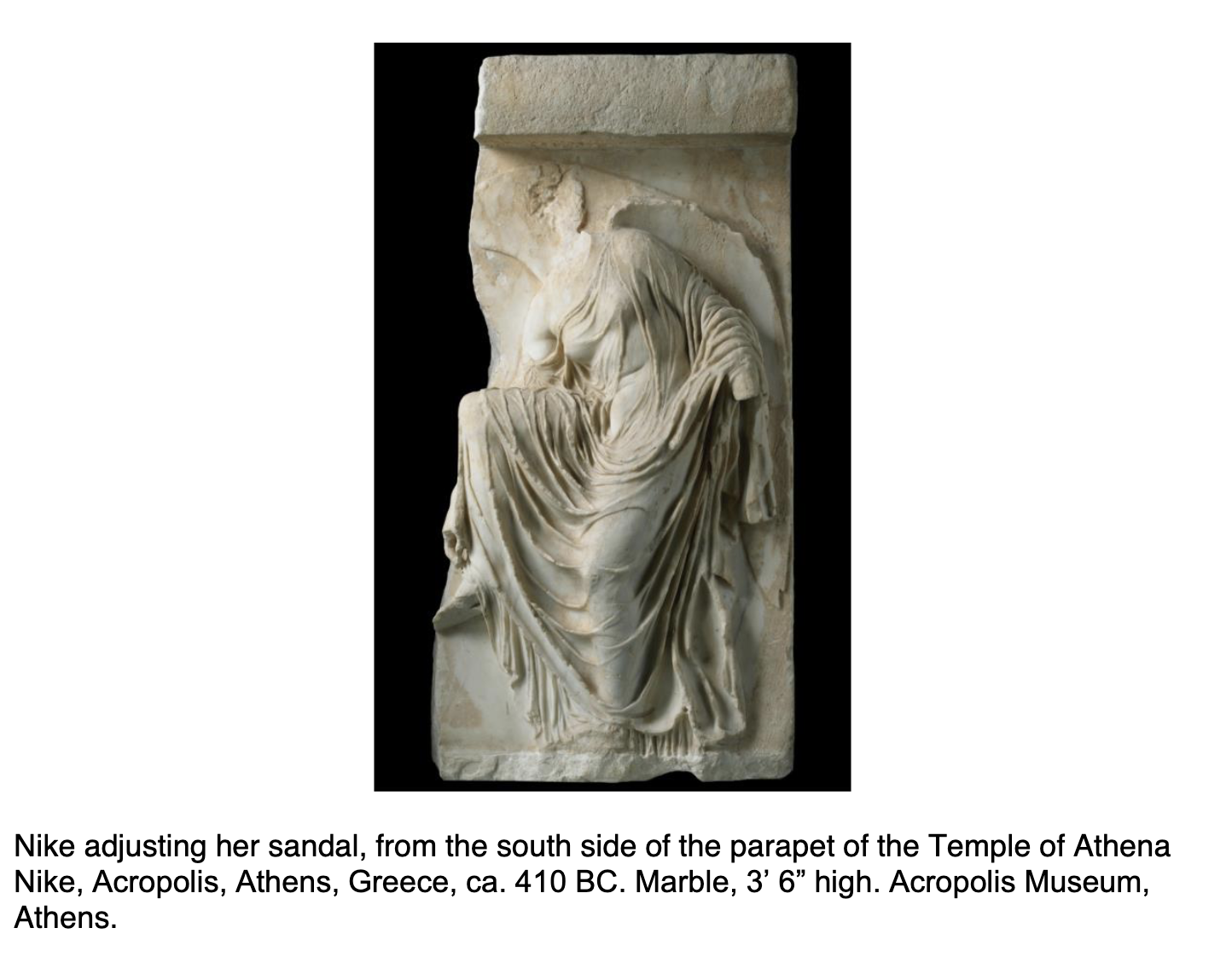
wet drapery look
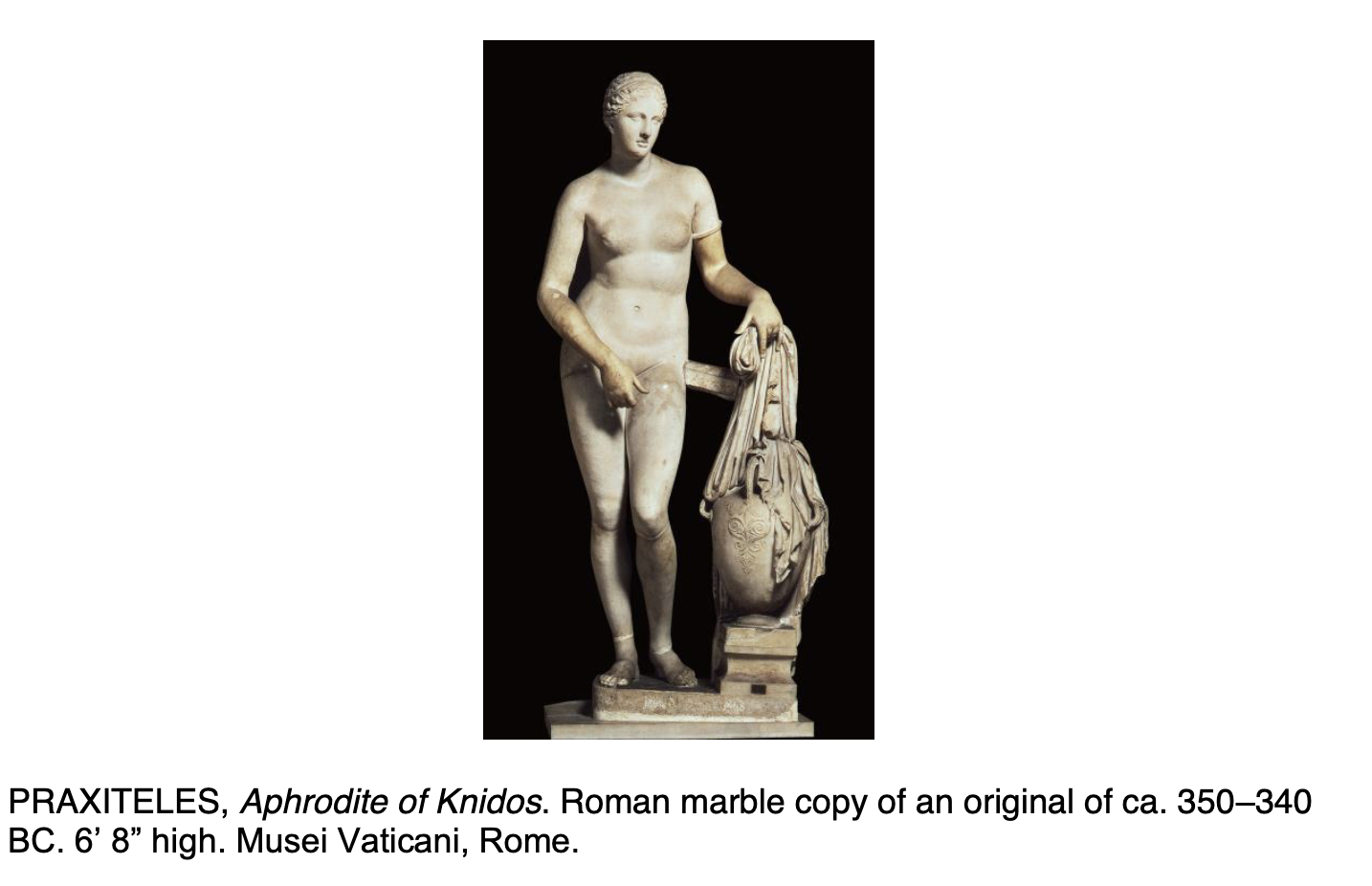
Late Classical Period
400-323 BCE
humanizing heros & gods/godesses
1st nude goddess statue OMG
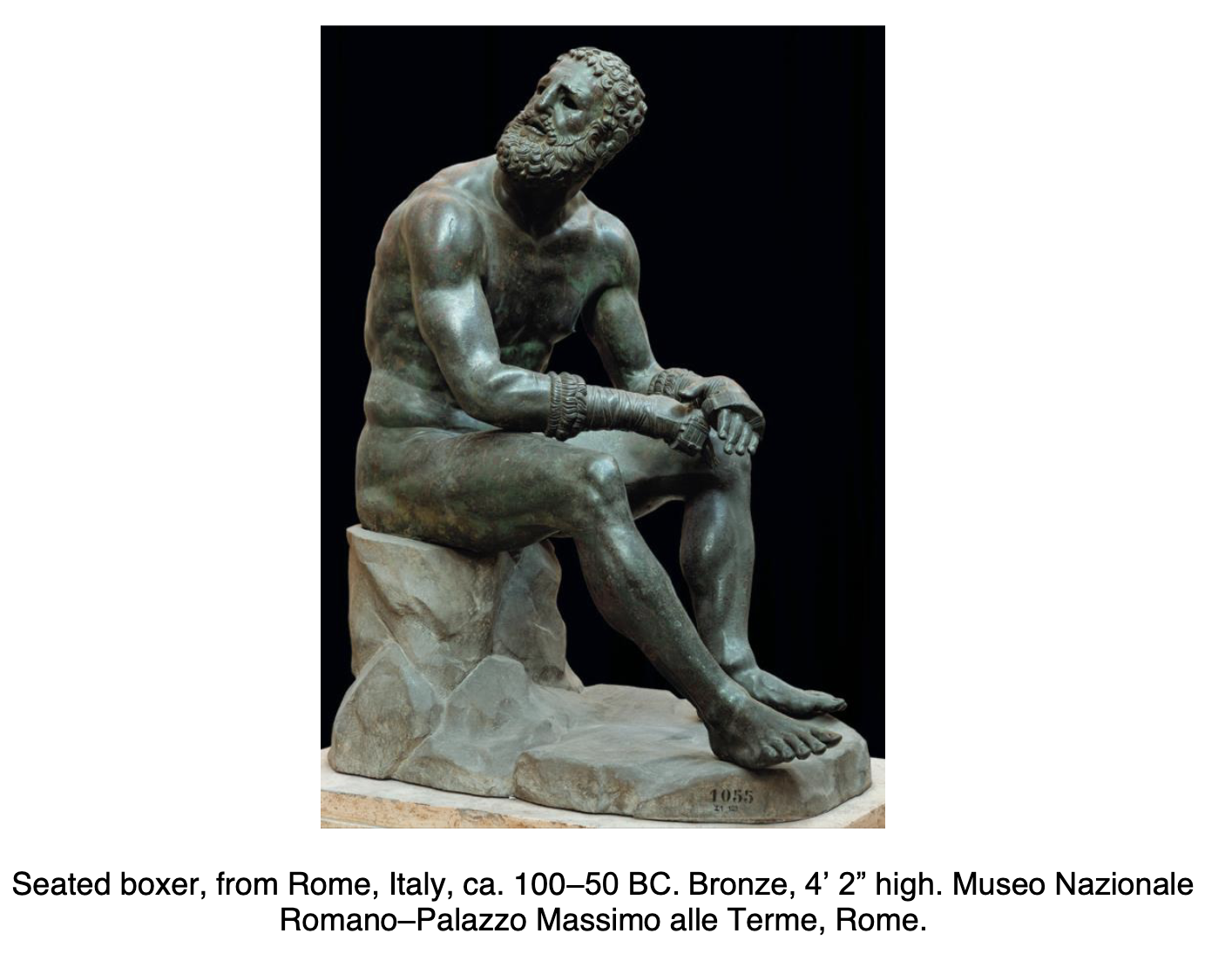
Hellenistic Period
323-32 BCE
statues interact w/ the world around them
very realistic statues
statues carry props sometimes
or captured doing activities
movement in body of statues resemble normal human
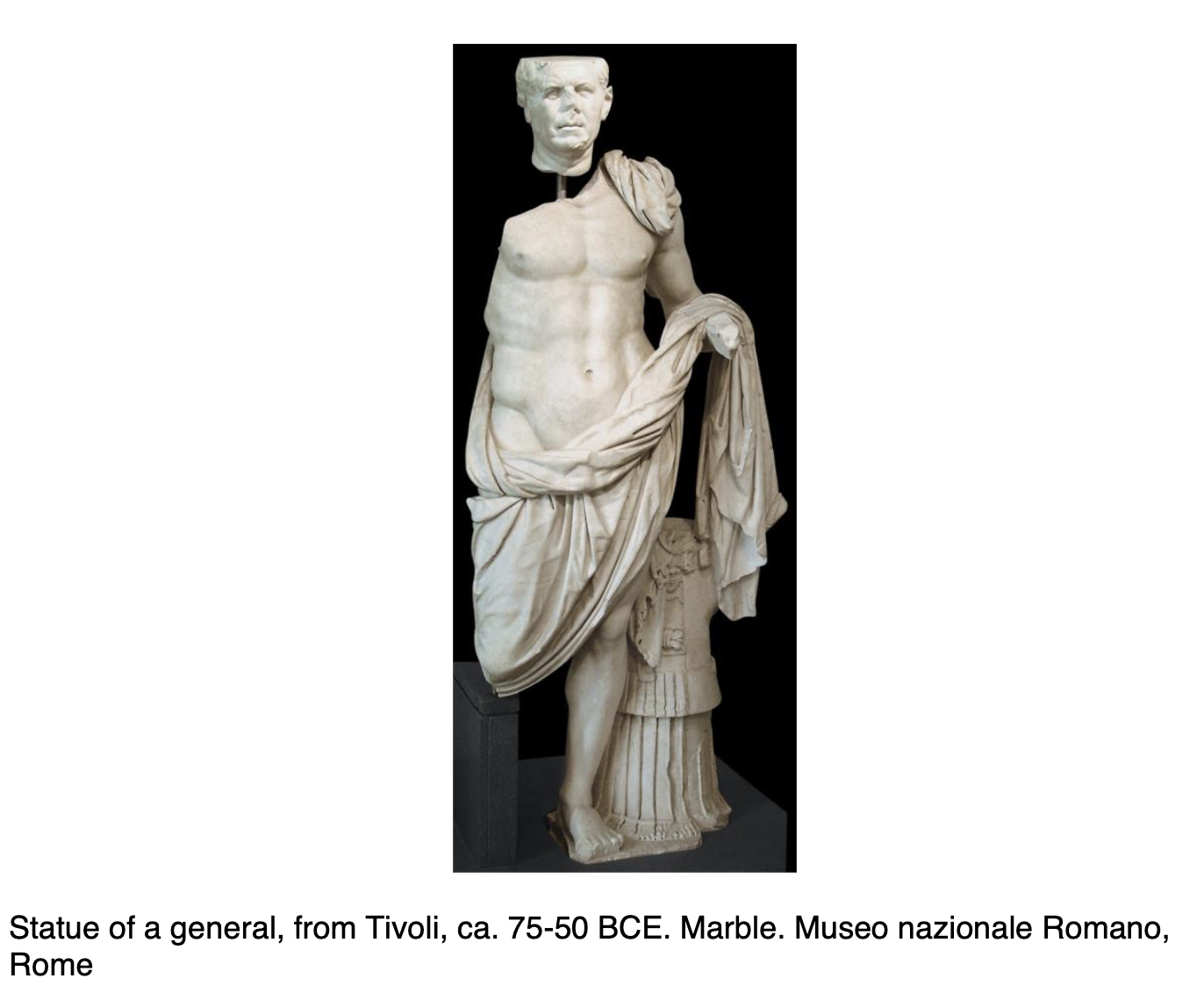
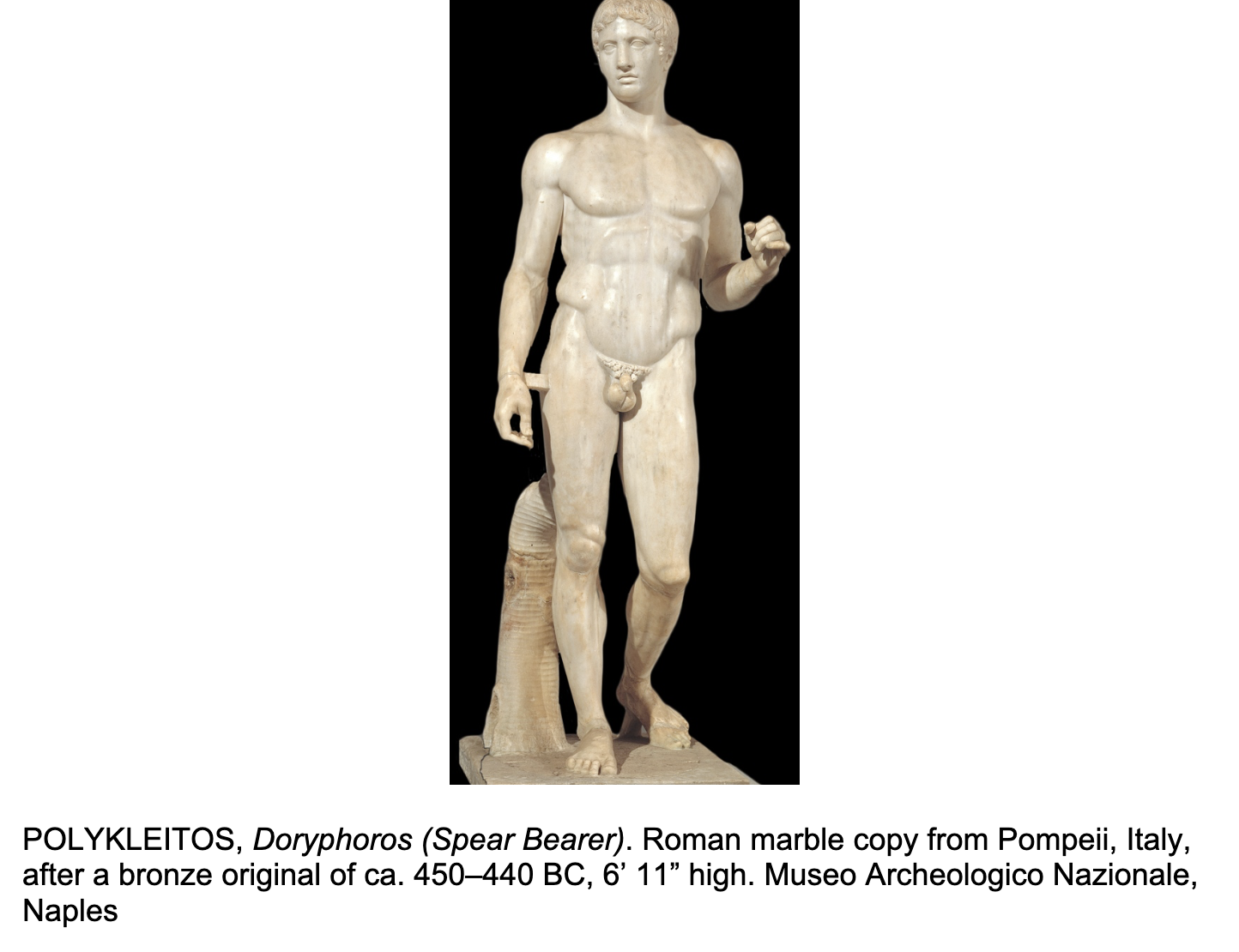
Classical Period
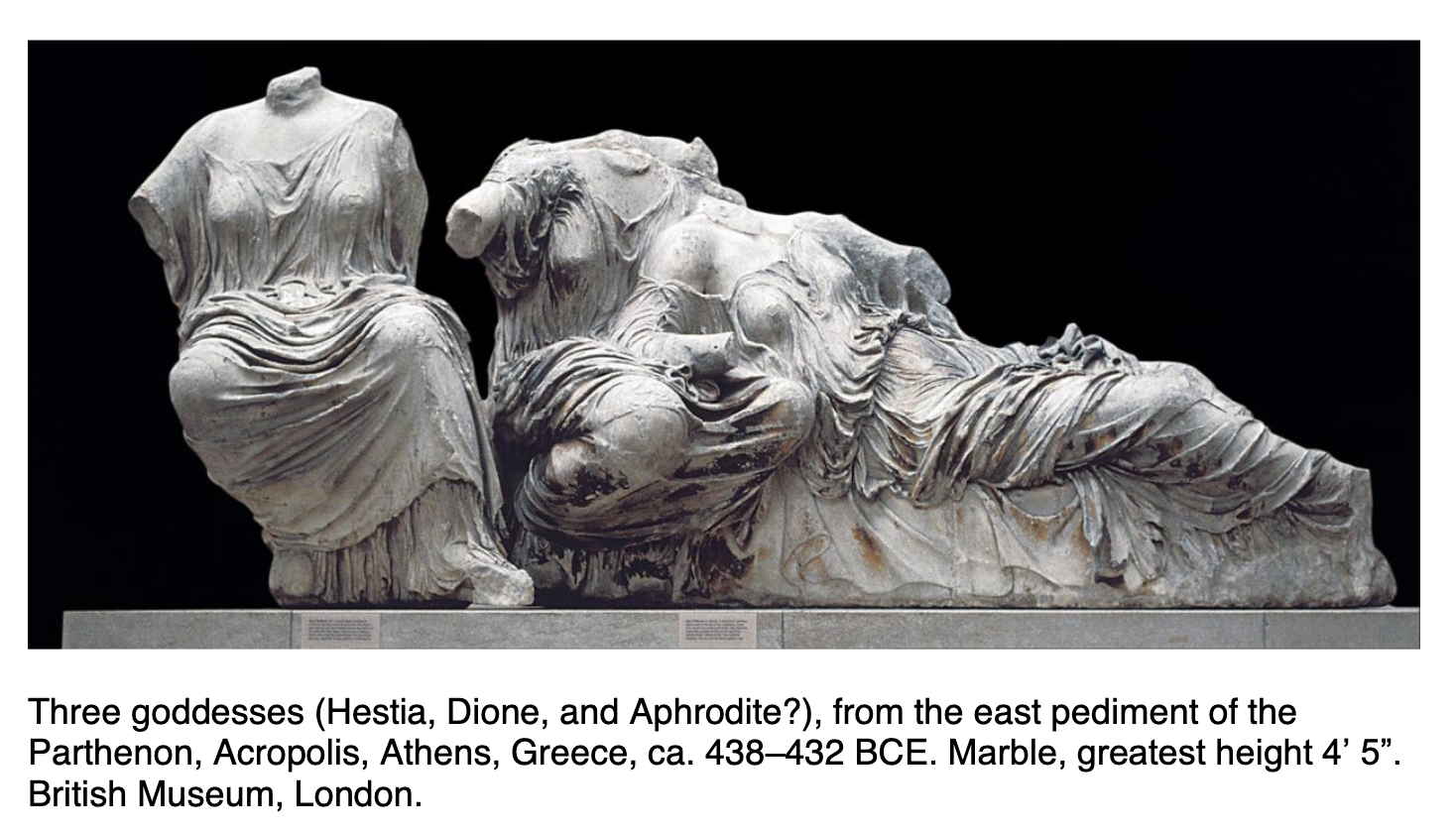
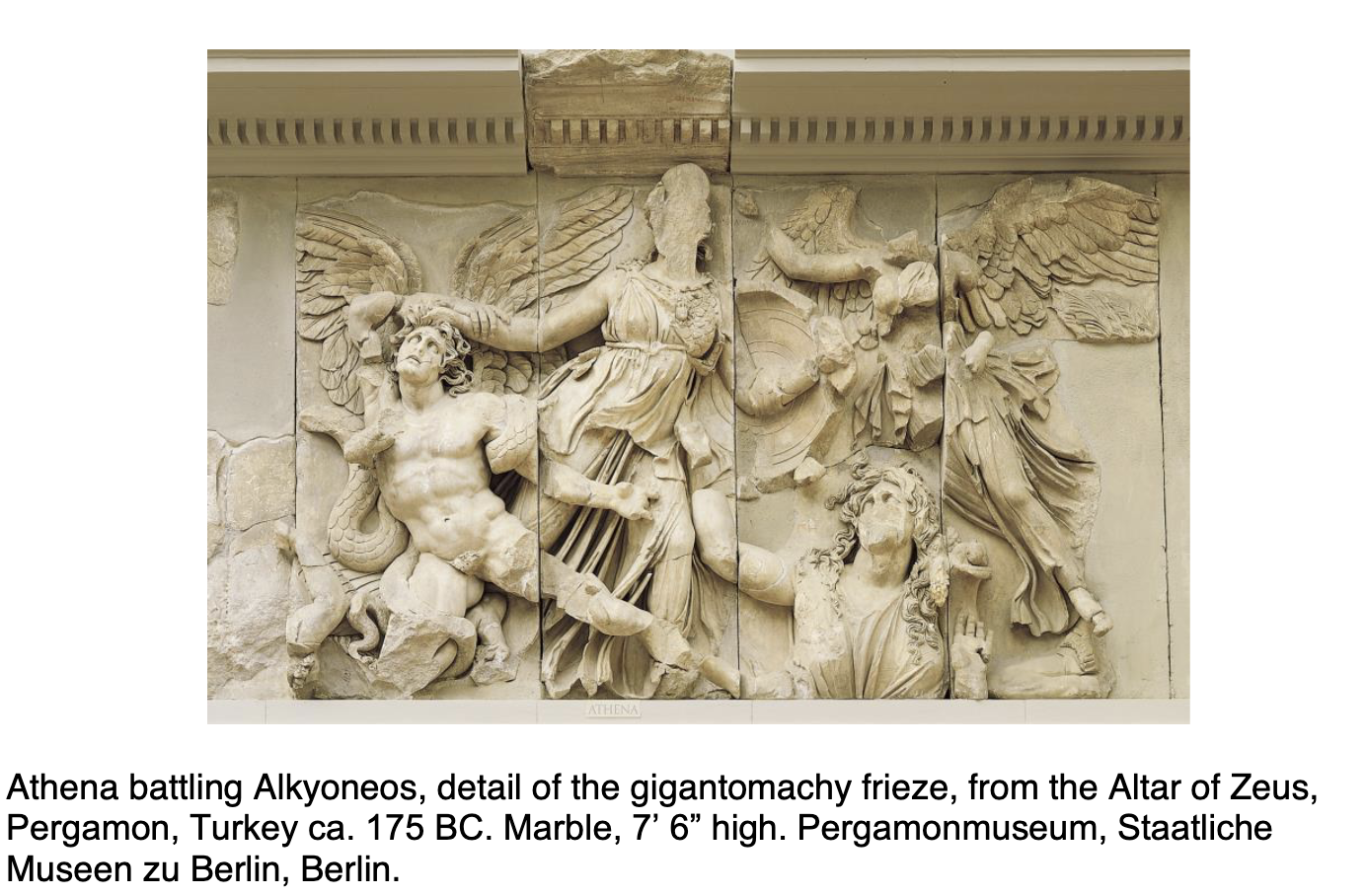
Frieze
A frieze is a horizontal decorative band, often found in classical architecture, that is part of the entablature—the structure resting on top of columns. It is typically located between the architrave (the lowest horizontal band) and the cornice (the uppermost projecting section).
Doric: the frieze consists of alternating triglyphs (three vertical grooves) and metopes (plain or sculpted panels).
Ionic: the frieze is often a continuous band and may feature elaborate relief sculptures, such as scenes from mythology, history, or daily life.
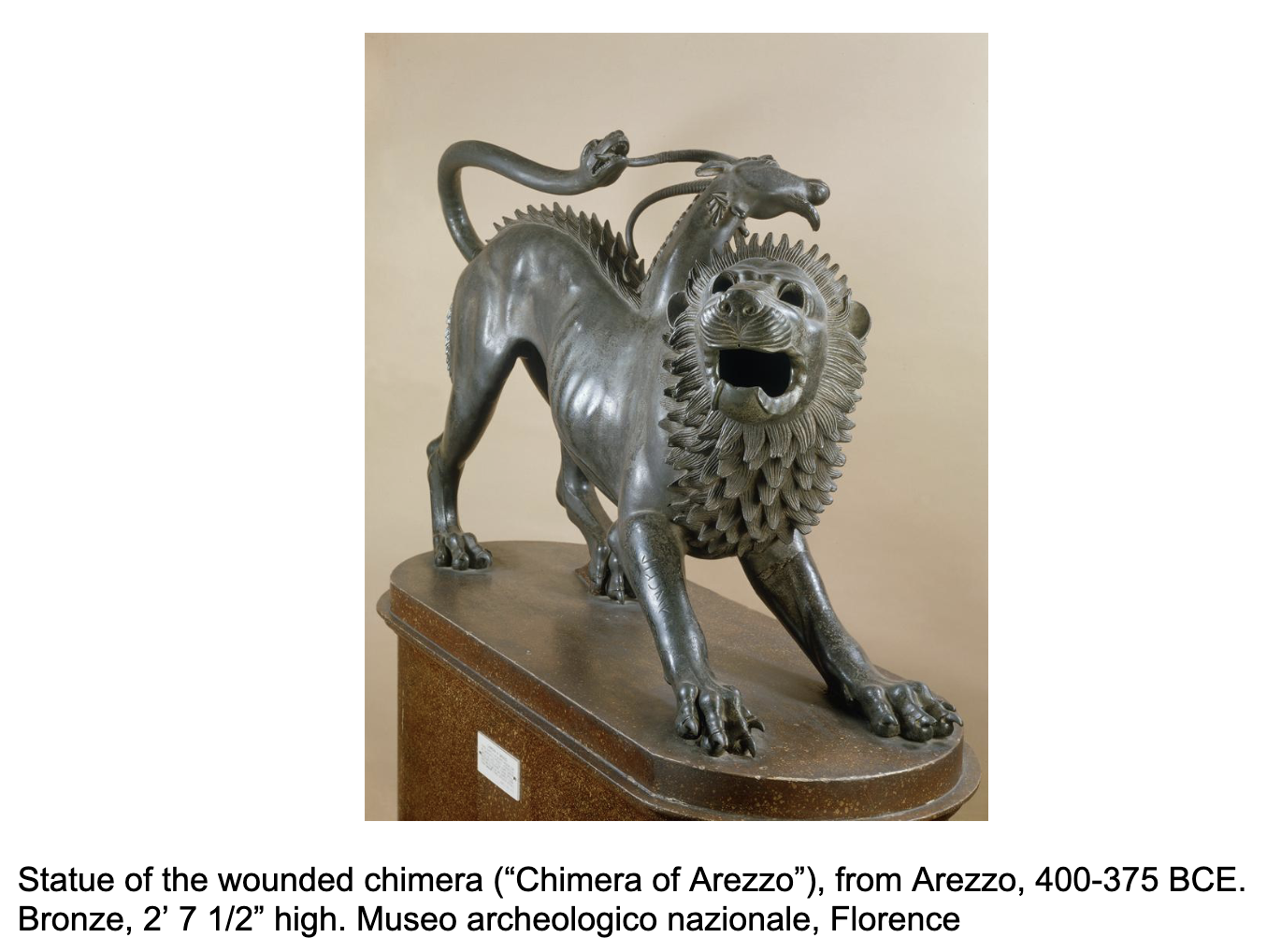
Etruscan art
Art from the Etruscan civilization (9th–1st century BCE in central Italy), known for terracotta sculptures, vibrant tomb frescoes, elaborate metalwork, and distinct temple architecture. It focused on funerary themes, everyday life, and mythology, blending Italic traditions with Greek and Near Eastern influences. Influenced Roman art and culture.
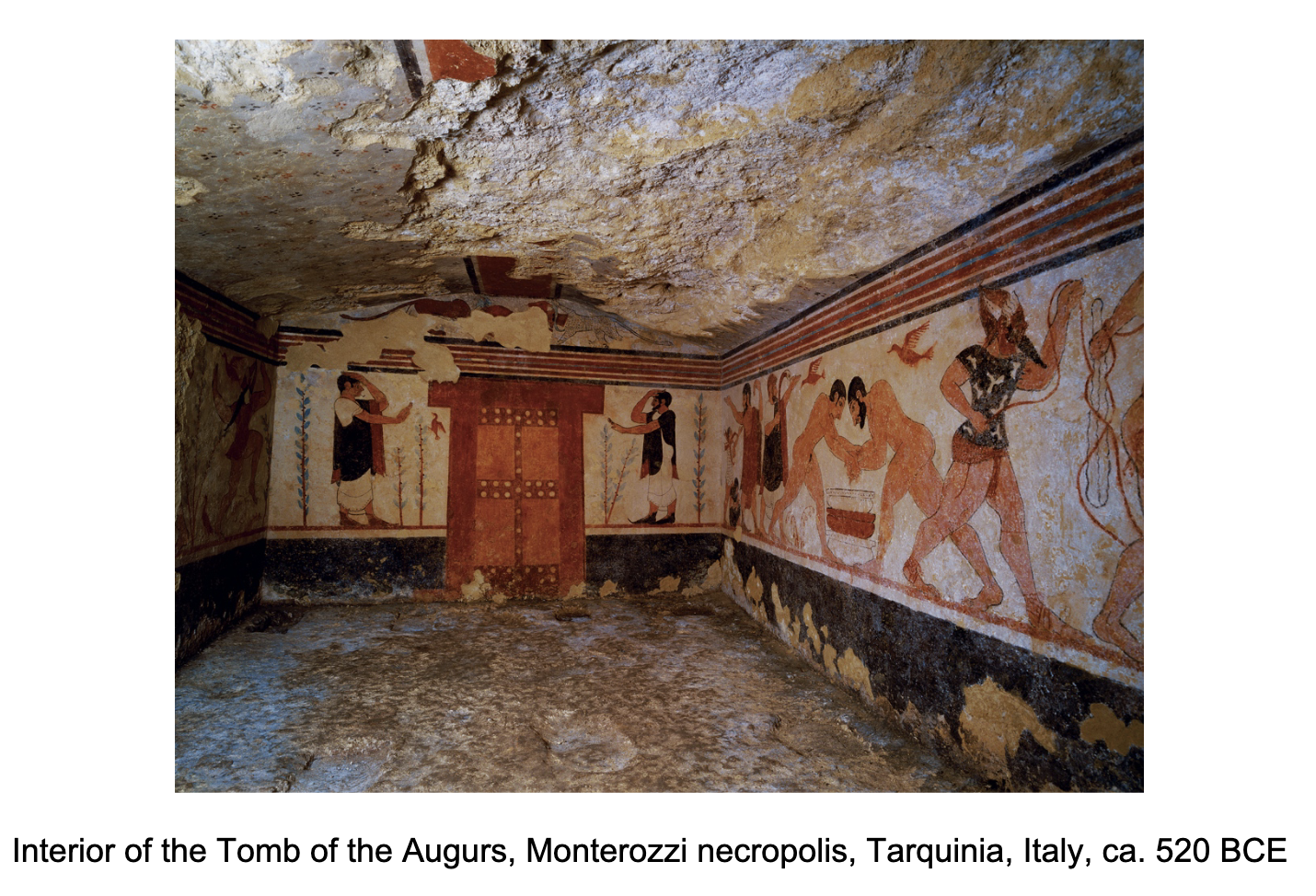
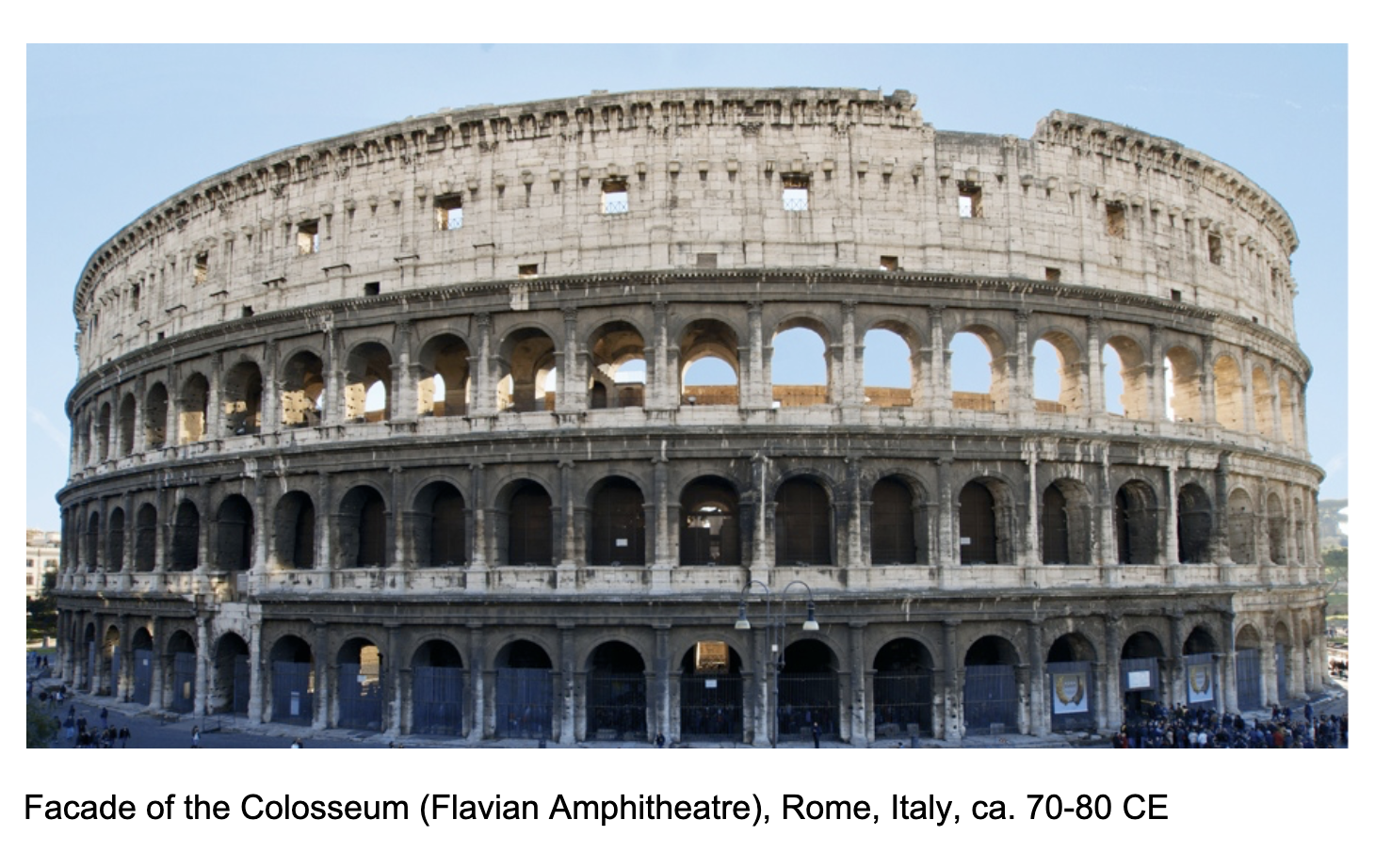
High of the Empire