Chapter 20: Molecular Technologies
 Call Kai
 Learn
Learn Practice Test
 Spaced Repetition
 Match
Match Flashcards
 Knowt Play
1/14

There's no tags or description
Looks like no tags are added yet.
Name | Mastery | Learn | Test | Matching | Spaced | Call with Kai |
|---|
No analytics yet
Send a link to your students to track their progress
15 Terms
Recombinant DNA Technology can be used to:
Investigate relationship between DNA sequence and phenotype
Study gene structure and gene expression
Gene therapy, screening for human diseases, recombinant vaccines
Producing transgenic plants and animals in agriculture and research
What is Gene Cloning and what is it used for?
Gene cloning: the process of making many copies of a gene
Gene cloning helps researchers understand contribution of gene to cell structure and function
What are the two types of DNA involved in gene cloning?
Chromosomal DNA
Source of the gene or DNA segment of interest from the species that carries the gene
Vector DNA
Serves as the carrier of the DNA segment to be cloned
Vectors originally derived from plasmids and viruses
What is the role of Plasmids in Gene Cloning?
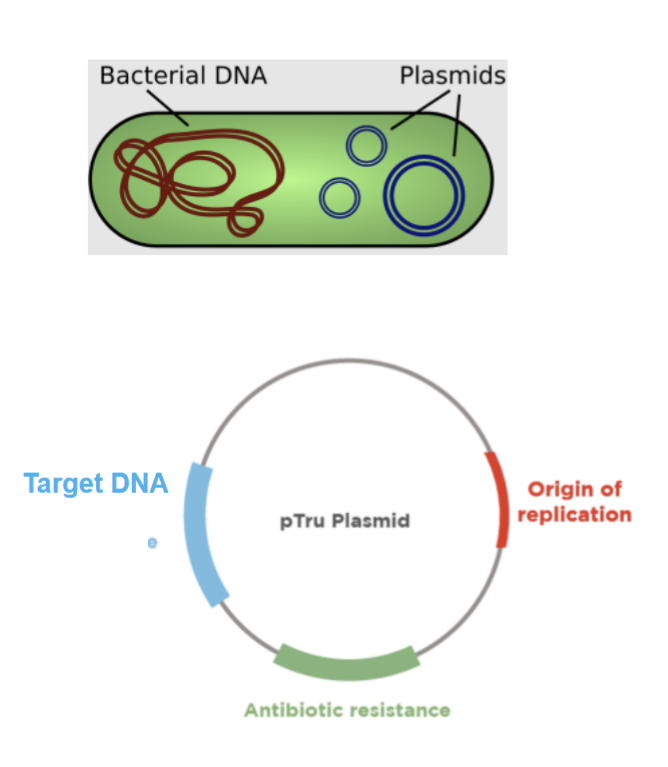
Most vectors are plasmids – originally from bacteria
Small, circular, double-stranded DNA molecule that is distinct from a cell's chromosomal DNA
Unique sites where pieces of target DNA can be inserted
They also carry an antibiotic resistance gene, allowing bacteria to survive exposure to antibiotics
What is the role of Restriction Enzymes in Gene Cloning?
Key step in cloning is insertion of chromosomal DNA into a plasmid or viral vector
Can be accomplished by cutting and pasting DNA fragments
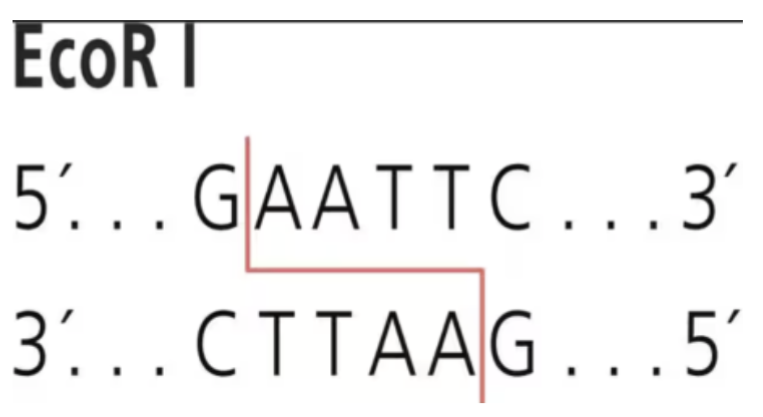
The enzymes used to cut or digest DNA are known as restriction endonucleases or restriction enzymes
These bind to specific DNA sequences and then cleave the DNA at two defined locations, one on each strand
Originally made by bacterial cells to protect them from invasion by foreign DNA
Definition of Gene Cloning
Refers to molecular methods that produce many copies of a gene
Definition of Reproductive Cloning
Refers to methods that produce two or more genetically identical individuals
What was the first mammalian cloning and how was it done?
In 1997, Ian Wilmut and colleagues at the Roslin Institute announced the first mammalian cloning
A sheep, “Dolly”
Strategy for cloning Dolly:
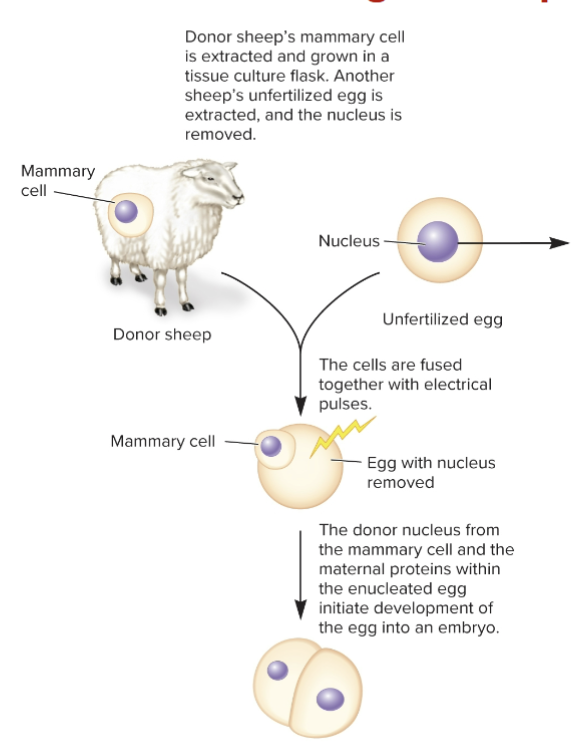
Mammary gland cells were collected and grown in the lab
Using electrical pulses, a mammary cell was fused with a nucleus-free egg from a second sheep
The zygote began to develop
The embryo was implanted into a surrogate mother sheep
148 days later, Dolly was born
Why was Dolly possibly “genetically older” than she actually was?
Dolly’s DNA were “older”
At 3 years, the length of her telomeres were similar to a 9 to 10 year old sheep
Developed a progressive lung disease called sheep pulmonary adenomatosis
Died when she was 6 years old
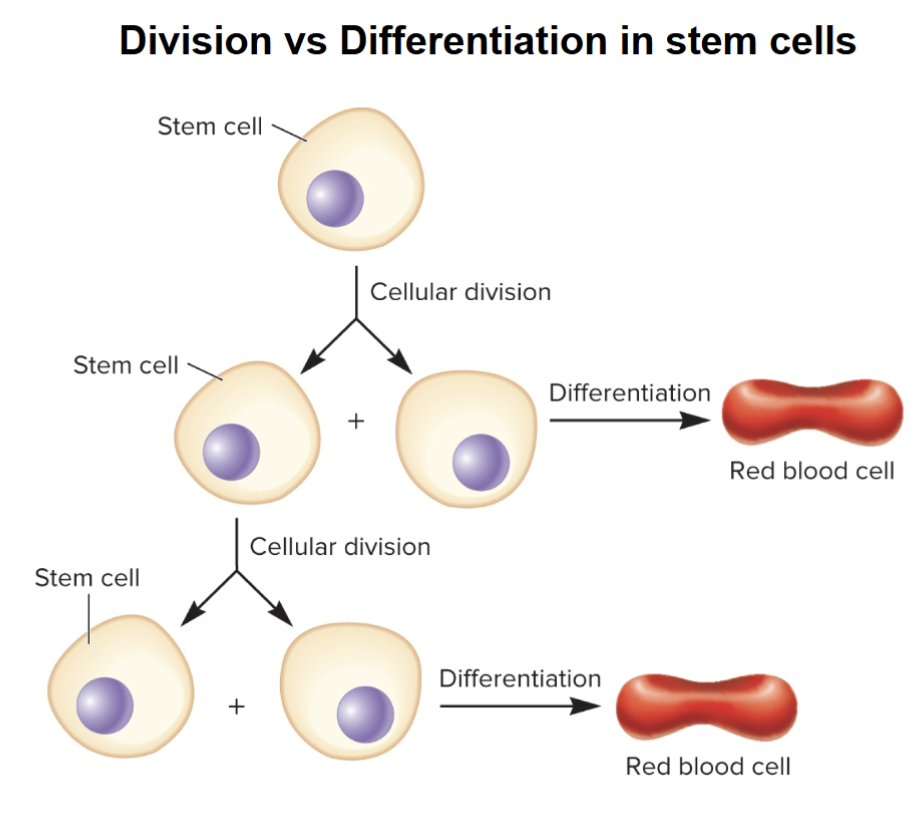
Definition of Stem Cells
Supply the cells that construct our bodies from a fertilized egg
In adults, stem cells also replenish damaged cells
What are the two common characteristics of Stem cells?
Ability to divide
Can differentiate into one or more specialized cell types
What are the four types of stem cells?
Totipotent stem cells can give rise to all cell types
Pluripotent cells (such as embryonic stem cells or ES cells) can differentiate into almost every cell, but can’t give rise to an entire, intact individual)
Multipotent cells can differentiate into several cell types
Unipotent cells can only differentiate into one cell type
Definition of Gene Editing
Experimentally altering the sequence of a gene is called gene mutagenesis or gene editing
What is the CRISPR-Cas system in bacteria?
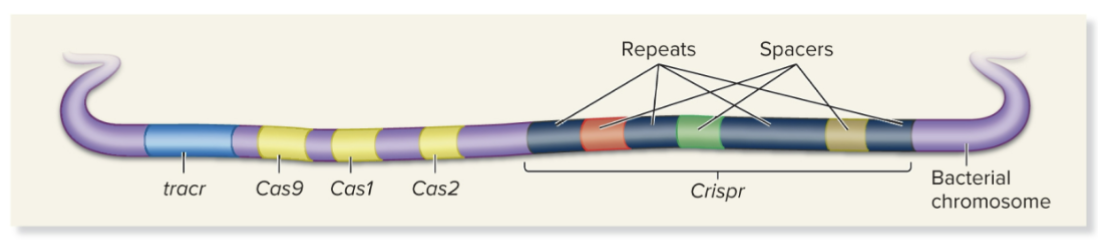
The CRISPR-Cas gene system provides bacteria with a defense against invasion by bacteriophages
Crispr gene has a group of clustered, regularly interspaced, short, palindromic repeats; hence the name CRISPR
The repeats are interspersed with short, unique sequences, which are called spacers
How was CRISPR-Cas modified to be used in gene editing technology?
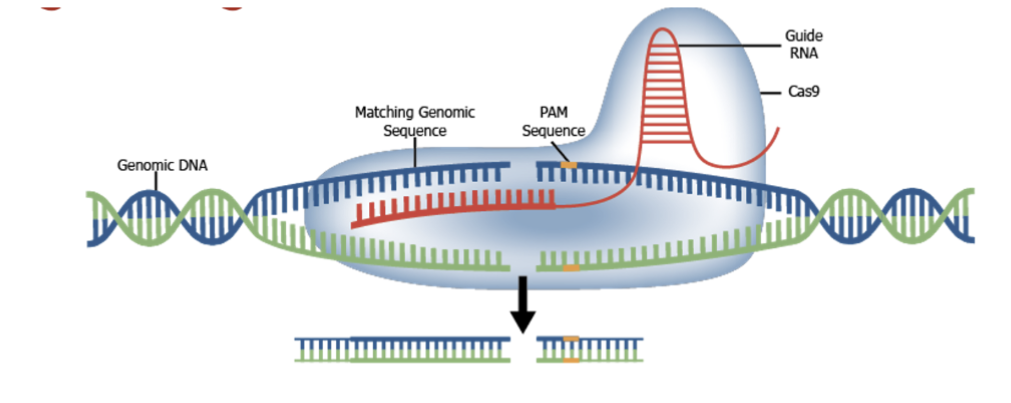
Researchers created a modified version of tracrRNA called the guide RNA (gRNA)
Instead of viral DNA, this gRNA has a sequence complementary to the target sequence in a gene to be mutated
This gRNA then binds to the Cas9 protein, similar to that in bacteria
Inject this complex into an individual, which is then guided it to the gene of interest
The complex makes necessary break in this target gene