Astronomy unit 1.05 Finding Objects in the Sky Vocabulary
 Call Kai
 Learn
Learn Practice Test
 Spaced Repetition
 Match
Match Flashcards
 Knowt Play
1/12

Earn XP
Description and Tags
Vocabulary flashcards covering the key terms and coordinate systems used for tracking celestial objects in the night sky as described in the honors lecture notes.
Name | Mastery | Learn | Test | Matching | Spaced | Call with Kai |
|---|
No analytics yet
Send a link to your students to track their progress
13 Terms
Altitude
The apparent height of a celestial object above the horizon, measured as an angle.
Azimuth
The direction of a celestial object from the observer, expressed as the angular distance from the north or south point of the horizon to the point at which a vertical circle passing through the object intersects the horizon.
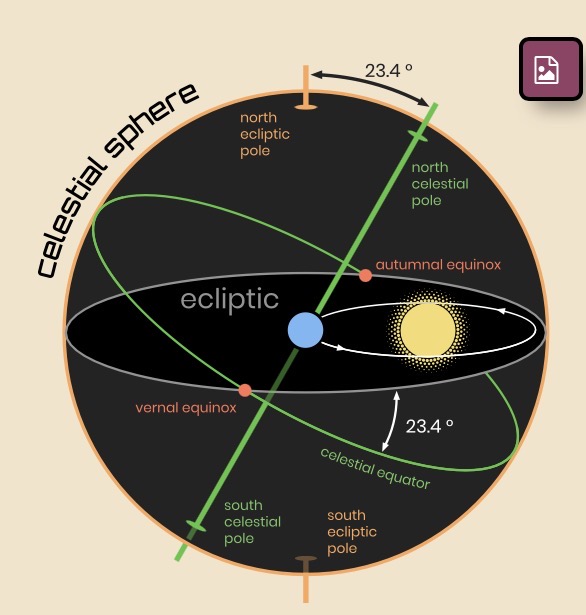
Celestial Equator
The projection into space of the Earth’s equator; an imaginary circle equal distances from the celestial poles.
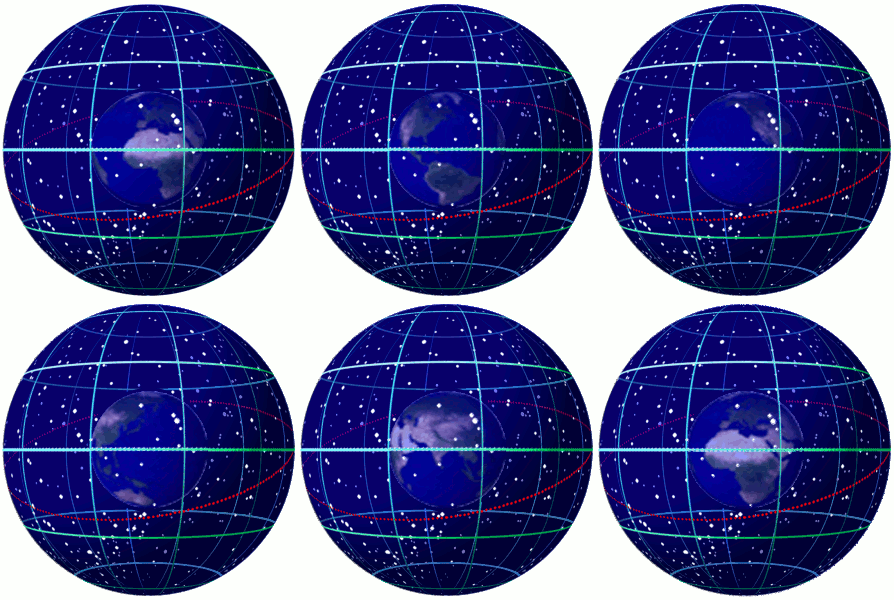
Celestial Sphere
A surface that shows the stars appearing to be fixed to a curved surface above the observer.
Circumpolar
A star or motion above the horizon at all times in a given latitude.
Declination
The angular distance of a point north or south of the Celestial Equator measured in degrees.
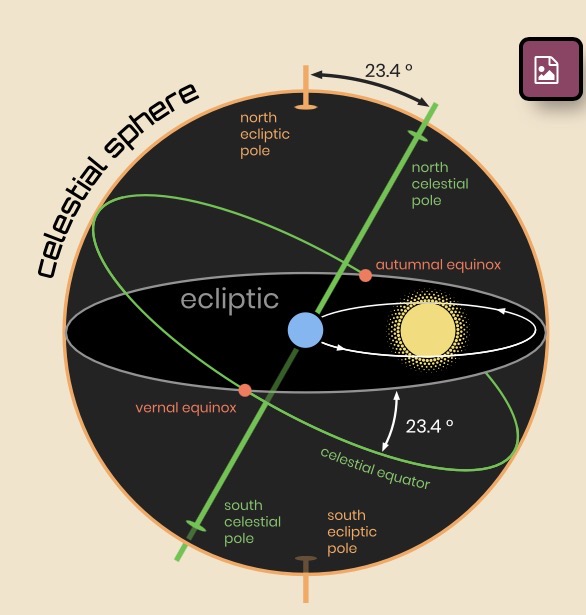
Ecliptic Plane
A plane in which Earth and most other planets orbit the sun in a disk-shaped region.
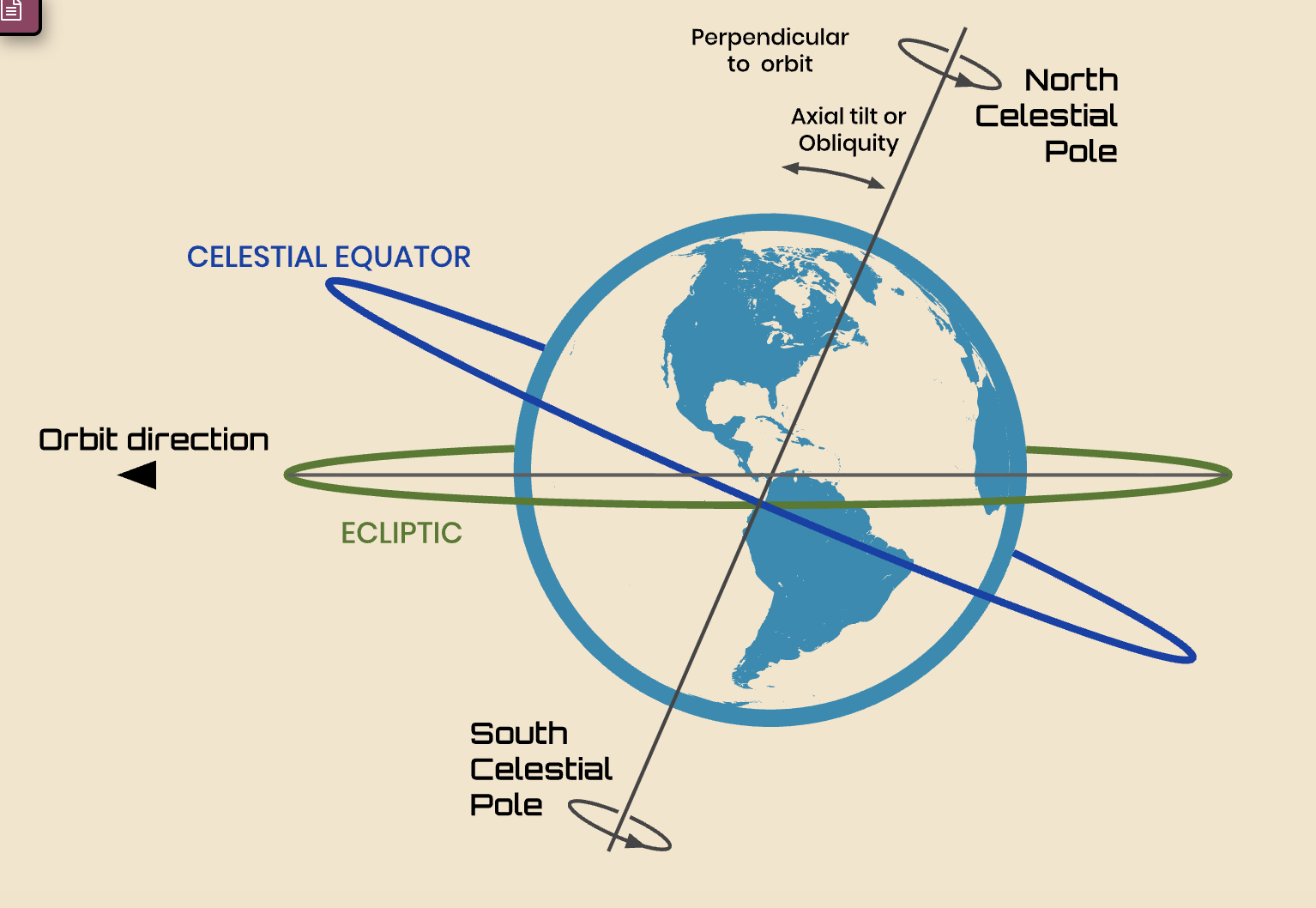
North Celestial Pole
The northernmost point on the celestial sphere directly above either of the Earth’s geographic poles, around which the stars and planets appear to rotate during the night.
Right Ascension
The angular distance east of the vernal equinox, measured along the celestial equator in hours, minutes, and seconds.
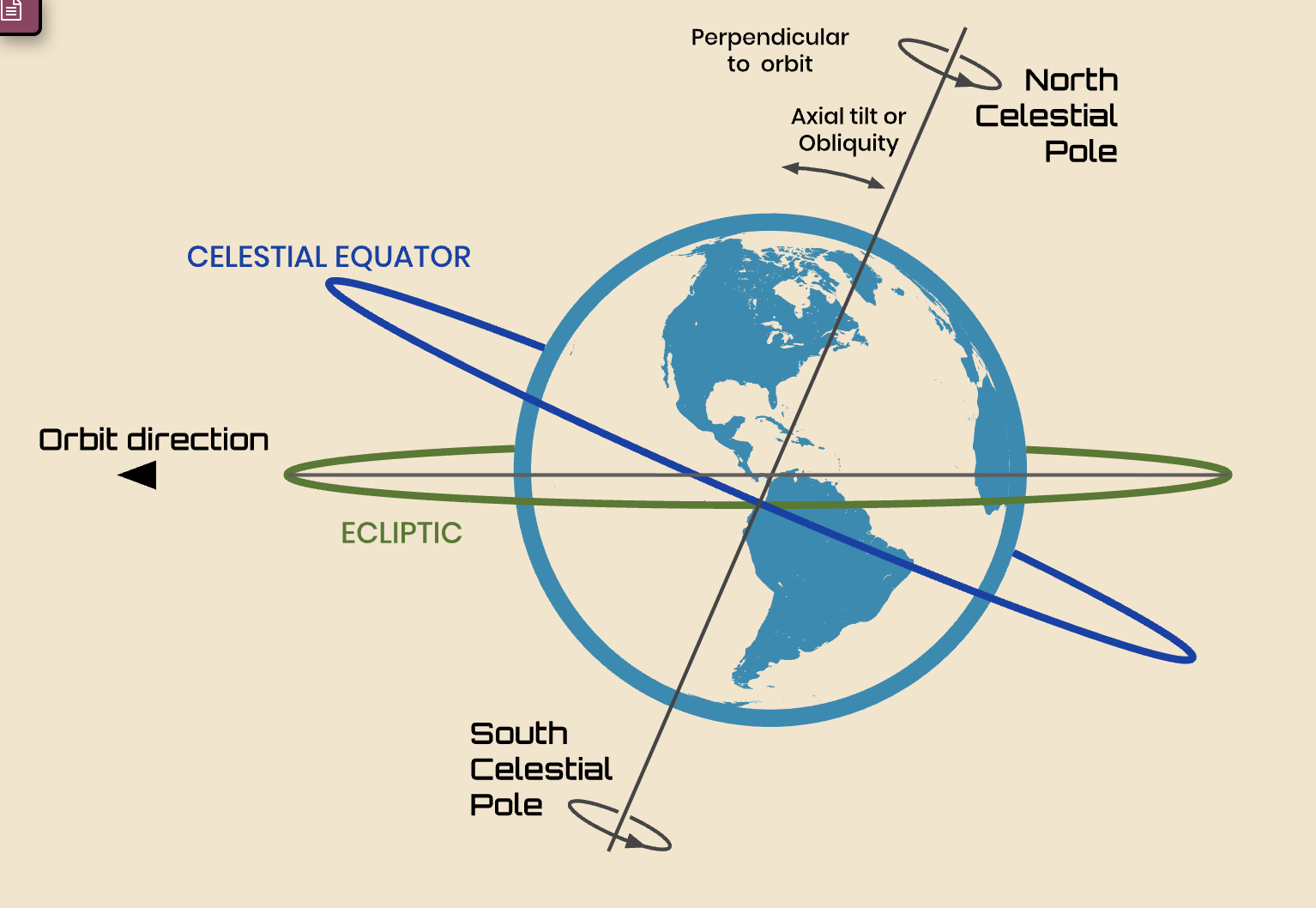
South Celestial Pole
The southernmost point on the celestial sphere directly above either of the Earth’s geographic poles, around which the stars and planets appear to rotate during the night.
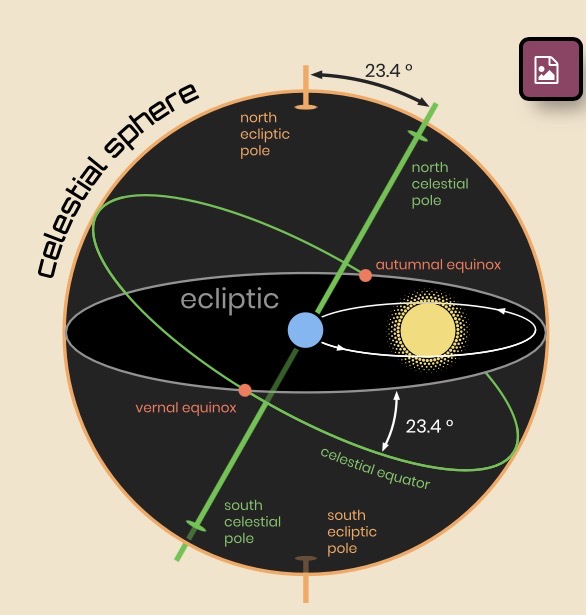
Vernal Equinox
The equinox in March, when the sun crosses the celestial equator in a northerly direction, marking the prime meridian of right ascension; the zero point of right ascension and declination.
Zenith
The highest point reached by a celestial or other object.
Zero Point
The point from which the coordinates in a coordinate system are measured.