MODULE 12: Cleaning and Sanitizing
 Call Kai
 Learn
Learn Practice Test
 Spaced Repetition
 Match
Match Flashcards
 Knowt Play
1/73

There's no tags or description
Looks like no tags are added yet.
Name | Mastery | Learn | Test | Matching | Spaced | Call with Kai |
|---|
No analytics yet
Send a link to your students to track their progress
74 Terms
What is cleaning?
removal of food particles, dirt, and stains that can be seen on the surface using hot water and detergent followed by rinsing with clean water
bacteria still present
What is sanitizing?
process of reducing the number of harmful microorganisms by using very hot water or a chemical solution
How can allergen proteins be removed?
must be removed with detergent
What surface areas in the operation must be cleaned and rinsed?
ALL surfaces (ex: floors, locker rooms, and common areas
What kind of surfaces need to be sanitized?
any surface that is used for food needs to be cleaned, rinsed, and sanitized and allowed to air dry
ex: tableware, utensils, food preparation surfaces, trays, carts, drawers, shelves, and other equipment that comes into contact with food
When should you clean and sanitize food surfaces?
after each use
when soiled
when changing from raw to ready to eat foods
after any interruption
after four hours if a piece of equipment is in constant use
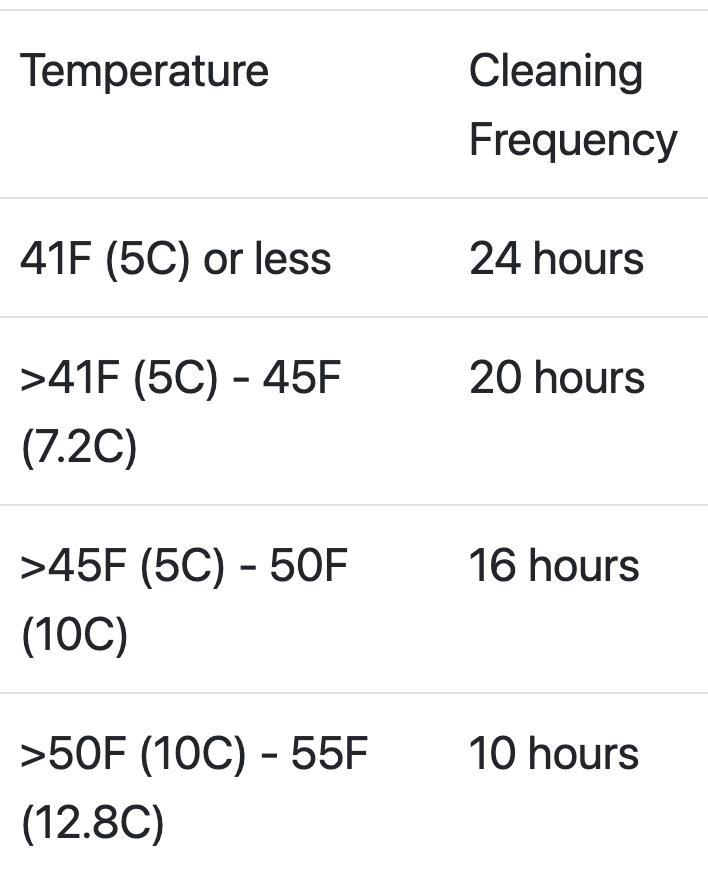
What does the frequency to clean utensils and equipment used with TCS foods depend on?
depends on the temperature of the work area
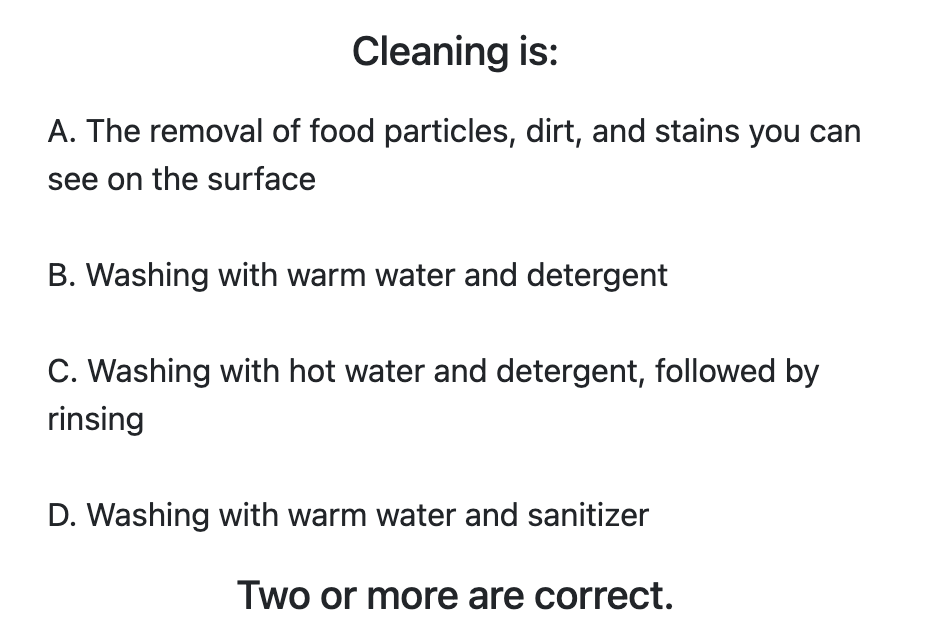
A and C
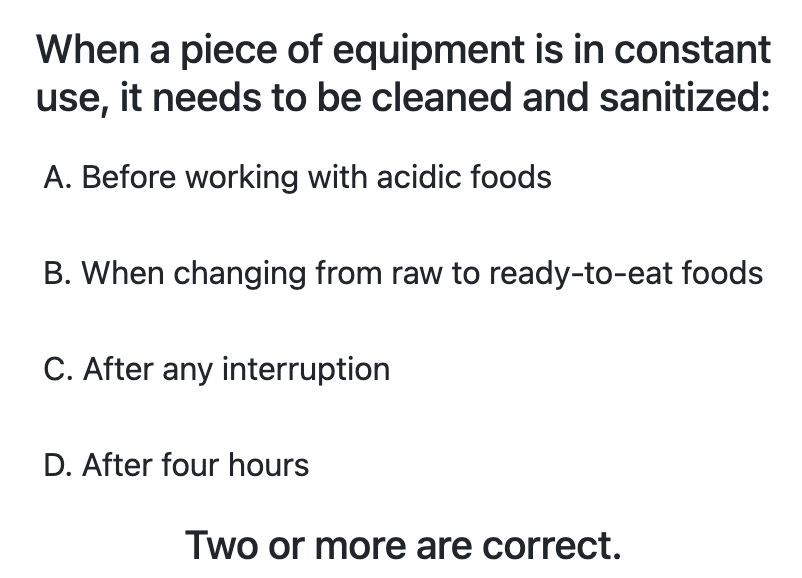
B, C, and D
What are four types of cleaning products?
detergents
acid cleaners (delimers)
abrasive cleaners
solvents (degreasers)
What are characteristics of detergents?
make cleaning easier and faster
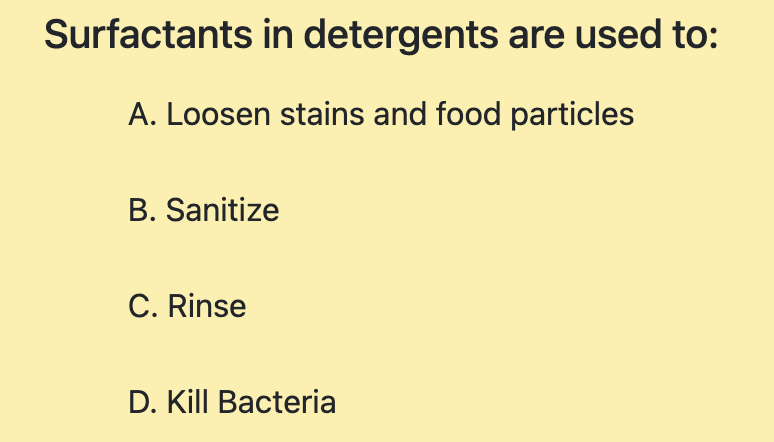
alkaline base that contain surfactants that penetrate soil and lift it from surfaces
loosen grease, oil, mineral deposits, and protein-based food particles
once loosened, needs to be brushed away by hand or by machine
all detergent solutions need to be rinsed away with no soapy residue
What are characteristics of acid cleaners/delimers?
used on heavier dirt and stains detergents don’t remove
effective for removing mineral deposits
can also remove tarnish on brass and copper and clean rust stains
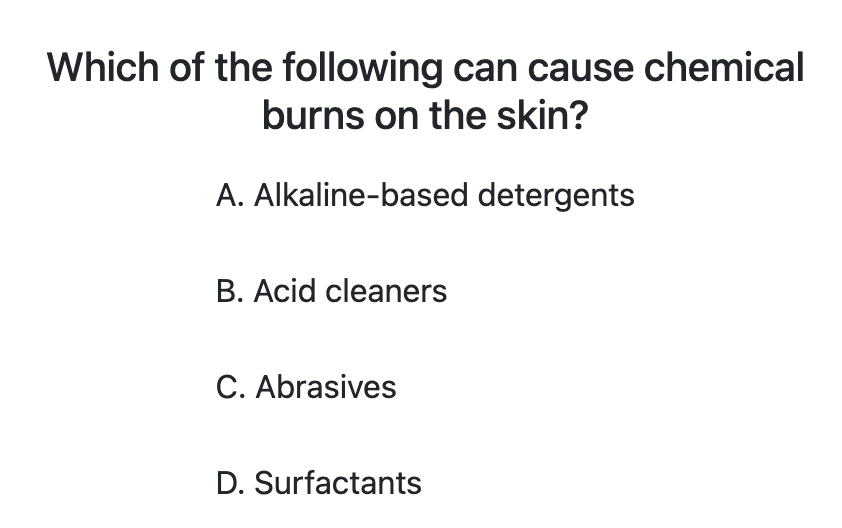
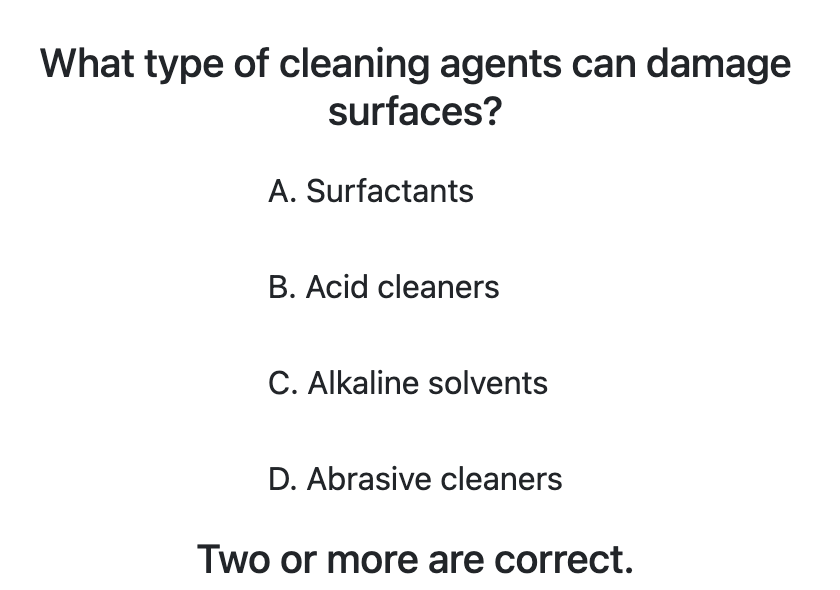
product surfaces can be damaged and can cause chemical burns to the skin even by low concentrations therefore we need to wear gloves and ensure that we read instructions carefully and use product for appropriate job and surface
What are characteristics of abrasives?
used to remove difficult dirt and stains through the use of finely ground minerals like silica
can potentially scratch surfaces which then become contaminated with bacteria
must be sure to rinse away all of the abrasive cleaner
What are characteristics of solvents?
alkaline detergents containing grease dissolving agents
often used at full strength and thus can be expensive for large areas
effective for smaller areas like oven doors, range hoods, and grill backsplashes
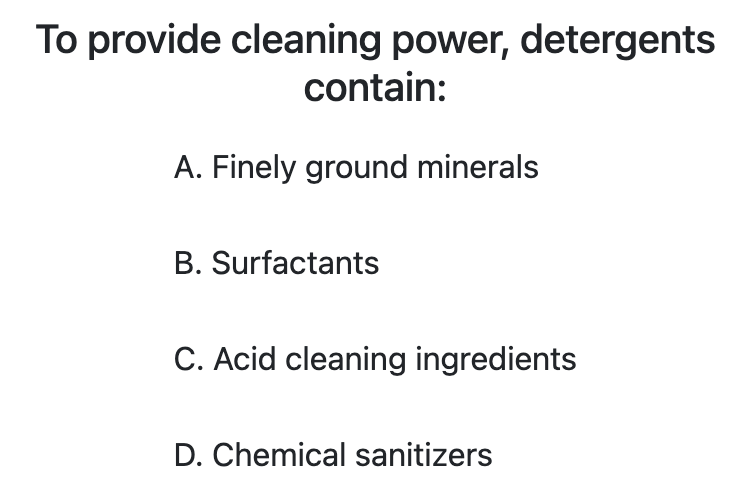
B
A
B
B and D
How often should tableware, utensils, equipment, and food contact surfaces be sanitized?
must be sanitized between uses
What are the two methods of sanitizing?
heat sanitization
chemical sanitization
What are characteristics of heat sanitization?
very hot water is used
water must stay at temperature of at least 171F (77C) for a minimum of 30 seconds while item is being rinsed
time may vary by jurisdiction
may require a heat booster to reach adequate temperature
In which cases is heat sanitization the best case to sanitize?
best suited for tableware and utensils that need to be held under water for at least 30 seconds
can use dish basket to dip items in scalding water
can also use high temperature dish washing machines
What are characteristics associated with chemical sanitization?
items need to be completely submerged or dipped into a chemical sanitizing solution
effectiveness is impacted by water temperature, hardness, and pH level
follow manufacturers instruction for time, temperature, and concentration of solution as every product is different
What are test kits used for?
used to ensure proper concentration of mixed sanitizing solution by matching color
change solution when it is dirty or mix and chemicals with water is no longer at the proper strength
What are three approved sanitizers?
chlorine compounds
iodine compounds
quaternary ammonium (Quats)
regulated by state and federal EPA, employees must have access to these products during hours the facility operates
What is a SDS?
Safety Data Sheet
suppliers and manufacturers are required by OSHA to provide Safety Data Sheets for hazardous chemicals
provides employee right to know information
current SDS must be kept accessible to all employees
What kind of info is present on the SDS?
the safe use and handling of hazardous chemicals
how to identify hazardous ingredients
what precautions to take when using a particular chemical
correct PPE to wear such as rubber globes or boots
fire, physical, and health hazards
first aid information and proper uses of first aid materials
manufacturers name, address, and phone number
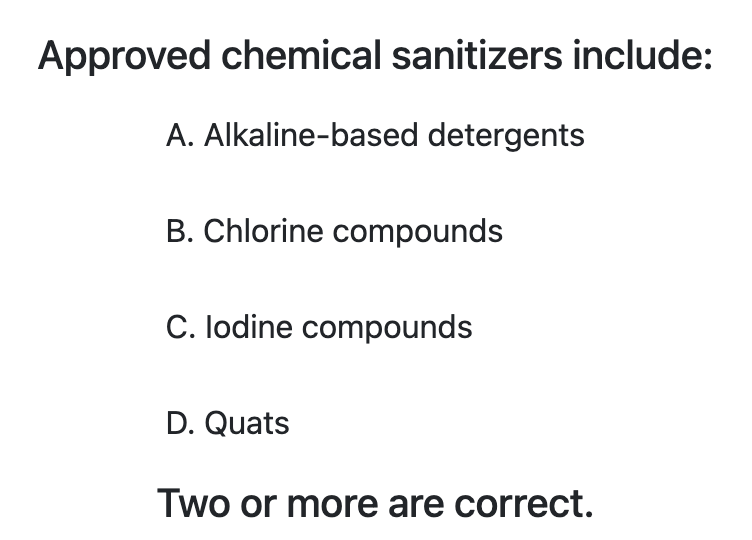
B, C, and D
What are sanitizer guidelines?
guidelines provided by the FDA for chemical sanitizer effectiveness
workers must be familiar with guidelines
What are some advantages associated with chlorine compounds?
most commonly used as they are effective on a wide variety of bacteria
least expensive
What are some disadvantages with chlorine compounds?
may cause damage to metals
can irritate skin if improperly mixed
effectiveness decreases with the rise of the pH
deteriorates in storage or when exposed to light
needs to be used in small batches as it dissipates rapidly
inactivated by organic material in solution
What concentration should chlorine compounds be mixed to?
50-99ppm
What water temperature is ideal for chlorine compounds?
75-100F (24-38C)
contact time for at least 7 seconds, however contact time can change if water temperature is higher
What kind of water do chlorine compounds work with?
can work with both hard and soft water
still need to check guidelines for manufacturer recommendation
What pH is ideal for chlorine compounds?
8-10
What are advantages of iodine compounds?
effectiveness at low concentration
color indicates strength (darker brown is stronger)
not inactivated as quickly by organic material
less irritating to skin
less corrosive than chlorine and thus can be used on metal and rubber
What are some disadvantages of iodine compounds?
more expensive than chlorine
may stain some surfaces
effectiveness decreases with increase of pH
What concentration should iodine compounds be mixed to?
12.5-25 ppm
What is ideal water temperature for iodine compounds?
at least 68F (20C)
will need contact time for at least 30 seconds
What kind of water can be used with iodine compounds?
need to check with manufacturer
What is the ideal pH for iodine compounds?
3-5
What are advantages of quaternary ammonium compounds (QUATS)?
popular general purpose sanitizer because it is effective at range of temps and pH
non-toxic, odorless, and colorless
not inactivated as quickly by soil
non corrosive to metal and non irritating to skin
remains active for short time after they have dried
What are disadvantages of quaternary ammonium compounds (QUATS)?
not effective for all types of microorganisms
doesn’t work as well in hard water
not compatible with some detergents
leaves a residue on surfaces
What water temperature should QUATS be mixed in with?
at least 75F (21C)
What concentration, contact time, water harness, and pH are needed with QUATS?
varies, check with manufacturer
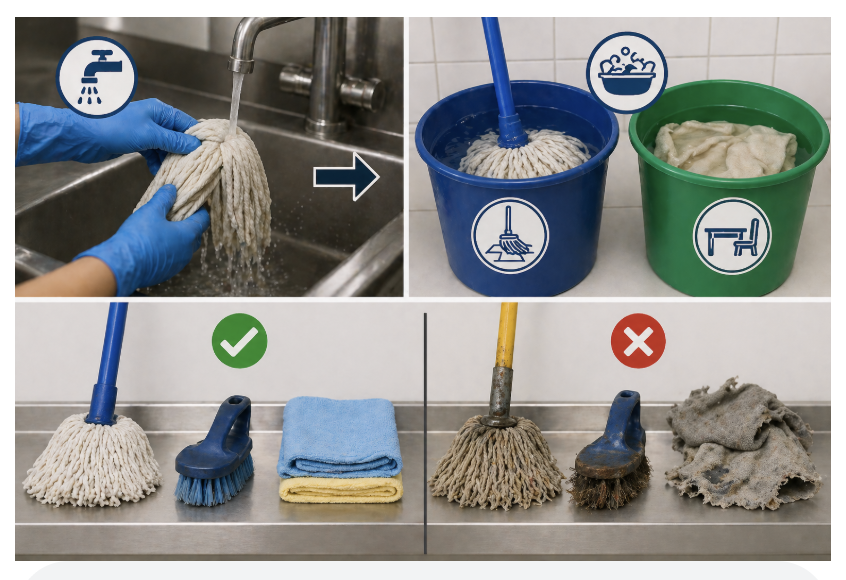
How often should cleaning supplies be rinsed?
after each use
never clean tools, mops, or brushes in sinks used for food prep, dishwashing, or handwashing
clean and rinse buckets
How should cleaning supplies be stored?
stored in sanitizing solutions in different buckets depending on use
keep items used for cleaning food prep surfaces separate from items used for other purposes
store cleaning supplies and equipment away from food and food prep areas
throw solutions down a drain or utility sink (not in street, alley, storm drain, toilet, or urinal
should hang brushes, brooms, and mops to air dry
wash used towels each night or hand them to air dry
When should throw away cleaning supplies?
should throw away cloths and mops if they show wear or smell bad
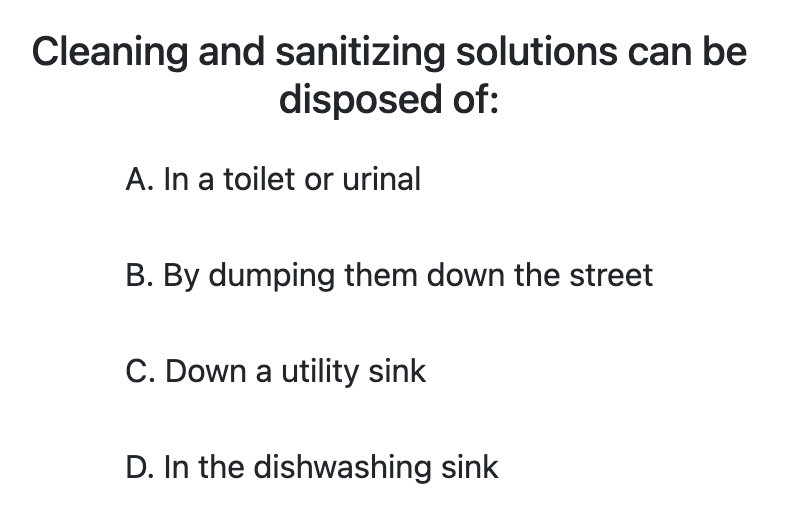
C
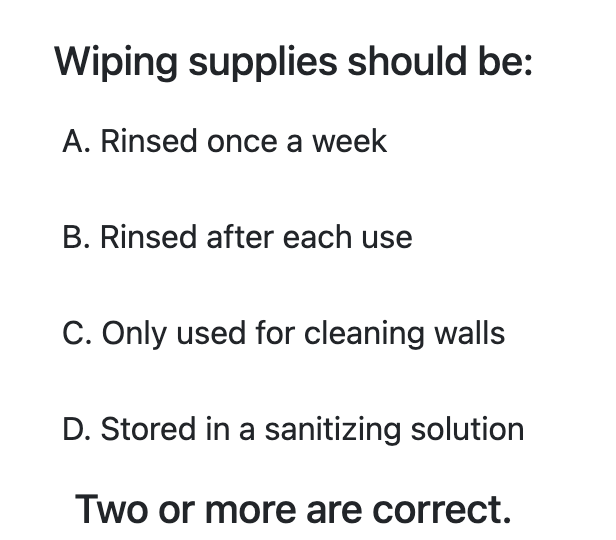
B and D
Why are dishwashing machines preferred over handwashing?
can handle larger amounts of items in shorter time
use very hot temperatures
distribute cleaning and sanitizing agents evenly in right strengths
What should be checked before using a dishwashing machine?
check that tanks contain clean water
check that spray arms are clear
verify detergent levels are correct
check thermometers are in good working order and that water is getting to proper levels during cycles
What should be done before loading a dishwasher?
tableware and utensils should be scraped by hand and pre-rinsed before loading the machine
pre soak or scrub stubborn food particles
How should dishes be stored after they have been washed?
prepare dishes in an areas where it will not come in contact with or contaminate food or clean equipment
places dishes and utensils in racks, trays, and baskets so spray will reach all surfaces
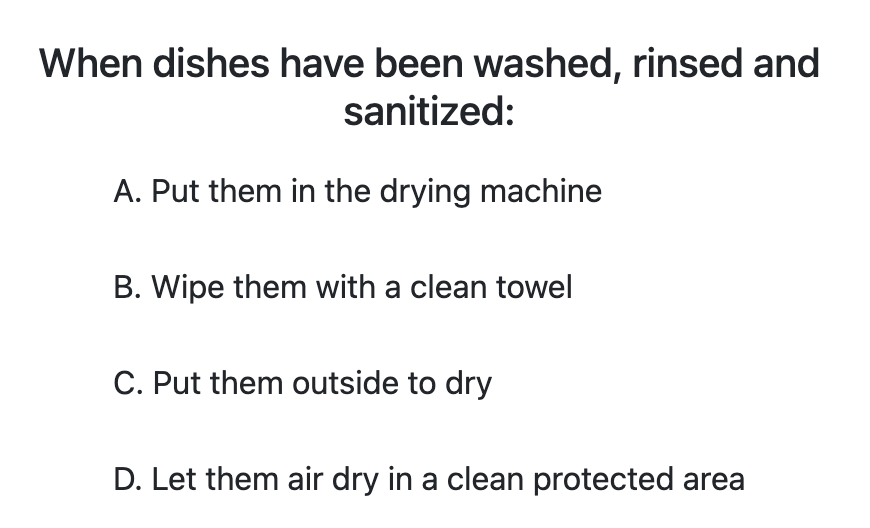
allow items to air dry after cycle and never use a towel to dry items
How should items that cannot be be cleaned in a dishwashing machine be cleaned?
manual cleaning
need large sinks with three compartments and adequate drain boards
What are the five steps for manual cleaning and sanitizing?
remove food and dirt
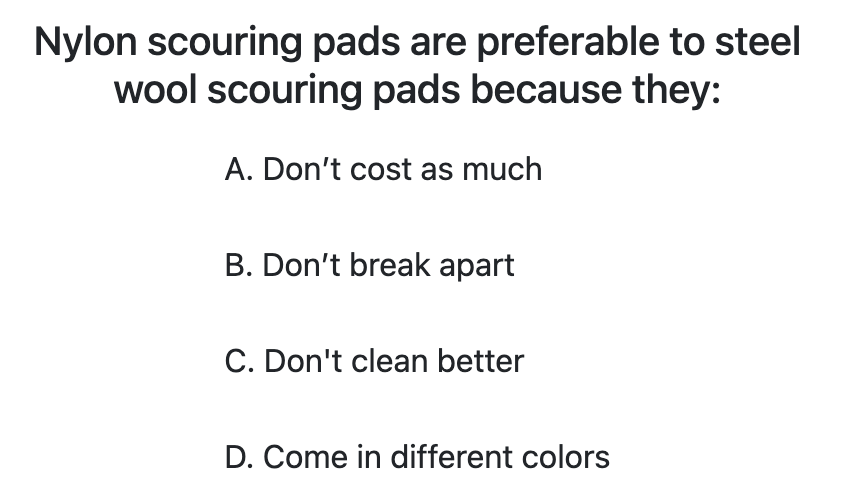
wash (either with brush, cloth towel, or nylon scrub pads)
rinse (can be dipped in standing water or rinsed)
sanitize (do not rinse after sanitation)
air dry
change water and detergent when suds are gone or water is dirty
What should be done before manual washing?
must clean and sanitize sinks and drain boards
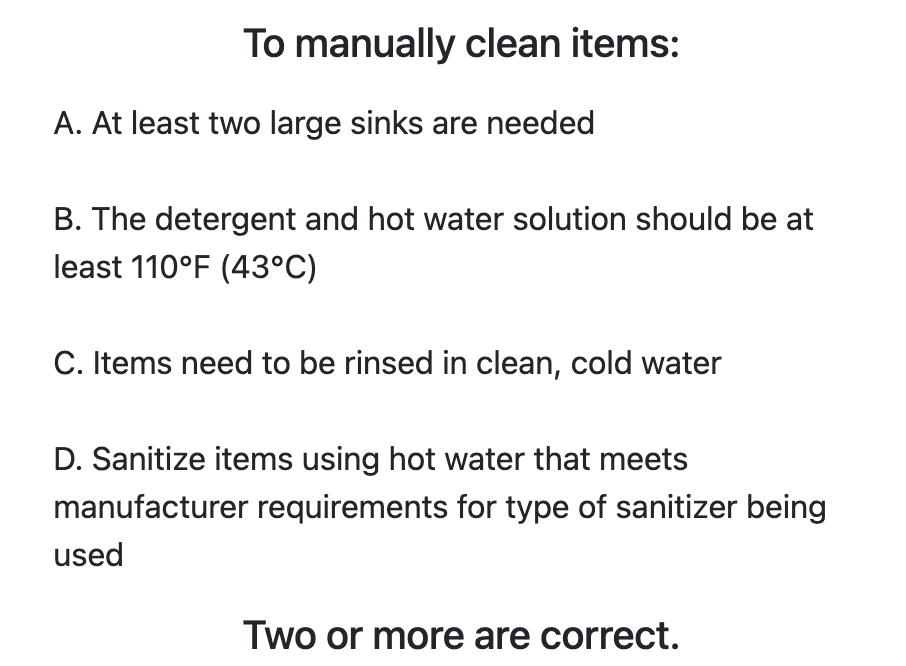
fill first sink with detergent and water (≥110F aka 43C)
fill second sink with clean warm water
fill third sink with water and chemical sanitizer (temp here varies depending on type of sanitizer used)
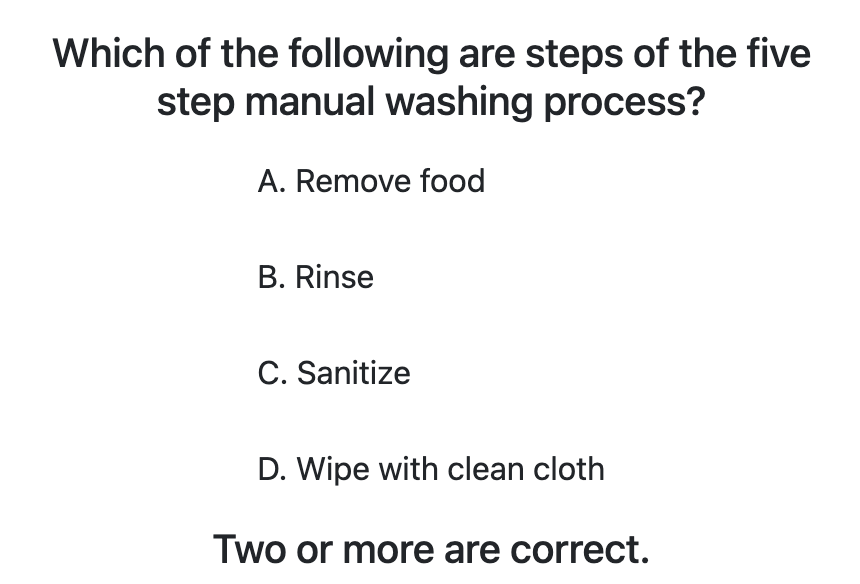
A, B, and C
B
B and D
D
What do the most effective cleaning schedule specify?
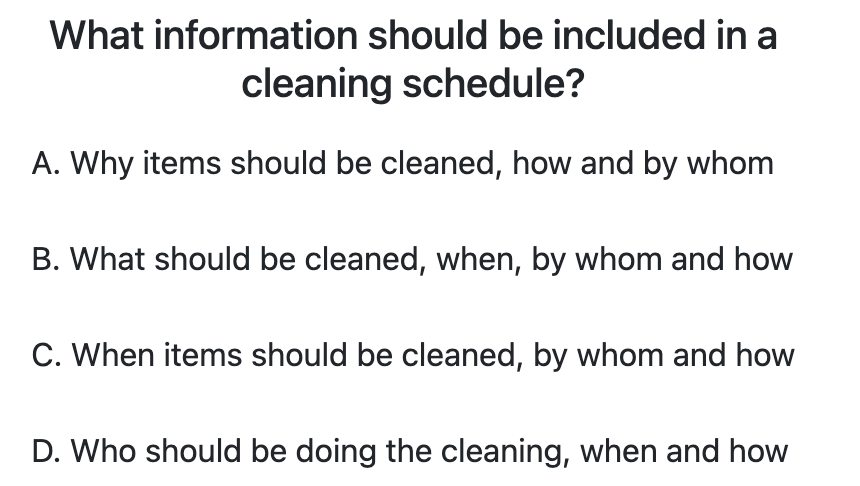
specifies area, items to be cleaned, tasks, and frequency
assign cleaning tasks to job title
sometimes may need more than one person or a professional cleaning company
provide instructions for cleaning tasks
include materials, chemicals, and protective clothing
cleaning tasks should be oversee and reviewed/supervised
update schedule when procedure changes
get feedback from staff on schedule
How often should trays, carts, drawers, and shelves be cleaned?
should be cleaned and sanitized before storing items that are clean
How often should cooking equipment be cleaned?
burners and stoves: several times a day
grills: remove food and grease
ovens and hot oil cookers: clean area around
knobs and handles: at least once ad ay
microwave: at least once a day
How often should dishwashers be cleaned?
at least once daily
need to see instructions for specific machine procedures
How often should floors and mats be cleaned once a day and when?
at least once a day
clean when least amount of food is out
use dust free cleaning methods for floors (vacuum cleaning, or wet cleaning washing down)
post signs when floors are wet
What are examples of stationary, or closed system equipment? How should they be cleaned?
these are equipment such as drink dispensers or soft serve ice cream machines
must be cleaned in place
circulate cleaning and sanitizing solutions throughout so it comes into contact with all interior surfaces
In general what are the different steps associated with cleaning and sanitizing stationary equipment?
unplug the equipment
remove the removable parts and wash, rinse, and sanitize
scrape and remove food from surfaces
wash the equipment with approved cleaner and tool
rinse
sanitize
air dry before putting back together
B
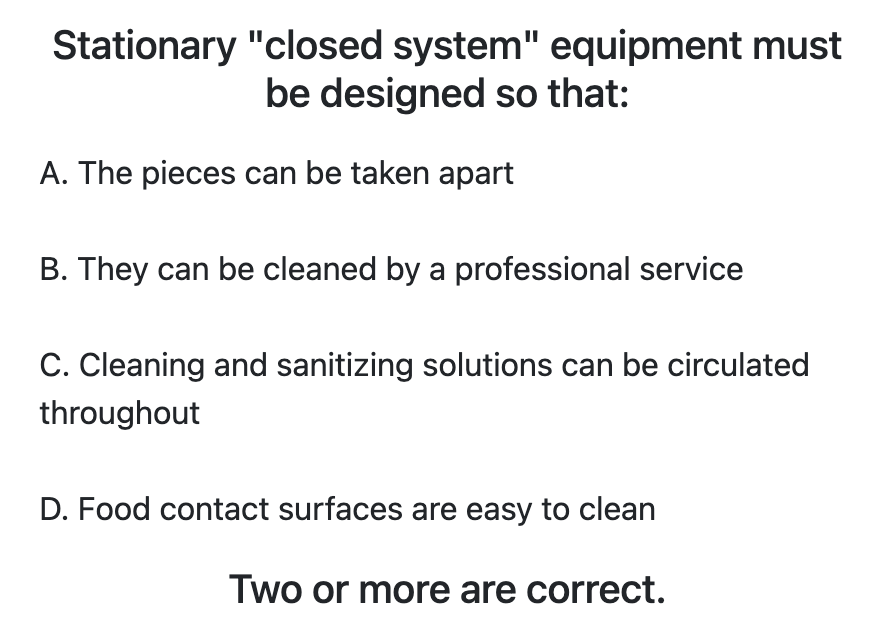
C and D
What should be done after a sick customer throws up or has diarrhea?
must be cleaned up correctly and safely
vomit and diarrhea an contain dangerous pathogens that lead to foodborne illness outbreak
operations must have a written up plan for cleaning up vomit and diarrhea that must specify actions that employees must take
What should be specified in the written plan for cleaning up after sick customer or staff?
how the waste will be picked up
in what kind of container the waste will be placed
what protective equipment and clothing is to be used
how the area will be cleaned, sanitized, and disinfected after the waste is removed
how the equipment and clothing will be handled, cleaned, sanitized, and disinfected
how to isolate contaminated area and keep staff from the isolated area
what to do with food that might have come in contact with the waste or sick person
how to remove the sick person form the facility as fast as possible
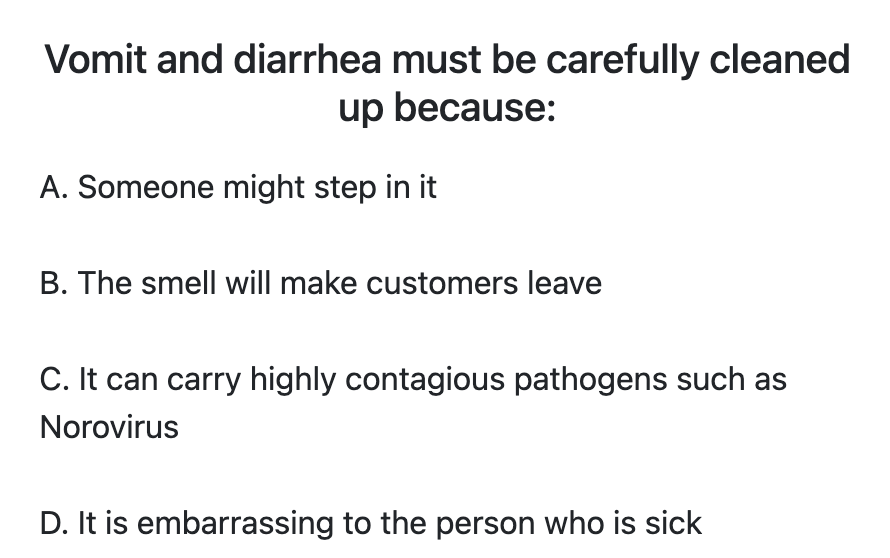
C
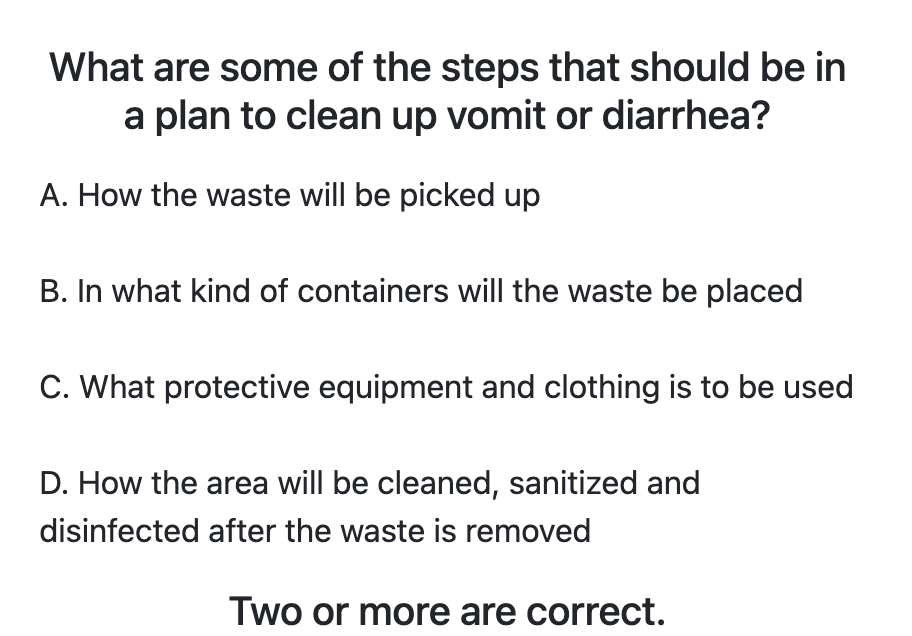
A, B, C, and D