Algebra Test 8/31/23
0.0(0)
Studied by 3 people Call Kai
 Learn
Learn Practice Test
 Spaced Repetition
 Match
Match Flashcards
 Knowt Play
Card Sorting
1/17

Last updated 10:37 PM on 8/30/23
Name | Mastery | Learn | Test | Matching | Spaced | Call with Kai |
|---|
No analytics yet
Send a link to your students to track their progress
18 Terms
1
New cards
Set-builder notation?
Example: {x|-3≤x
2
New cards
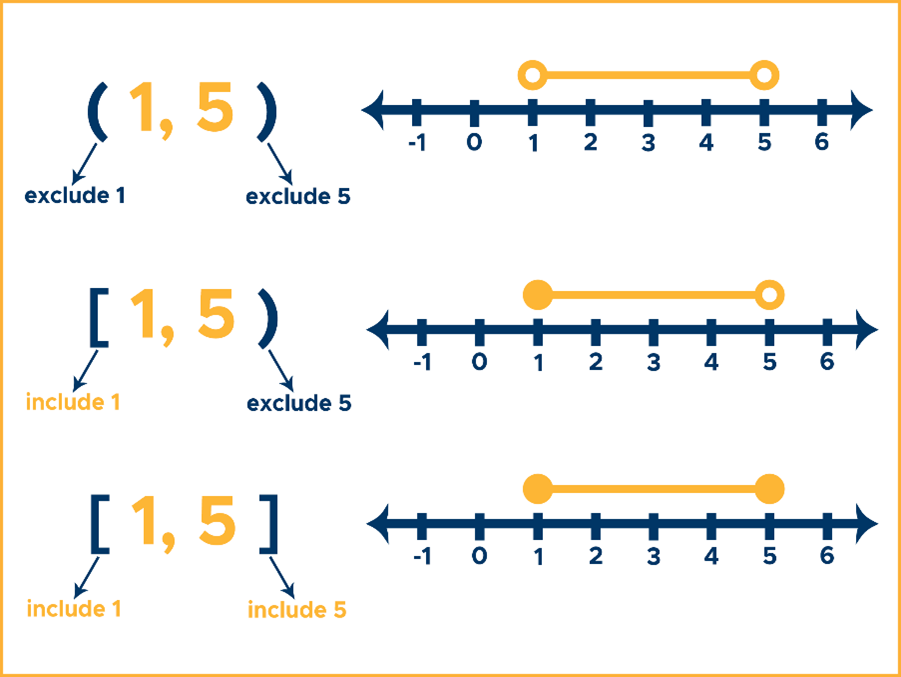
Interval notation?
Example: \[3,5) You will use a bracket, \[, if the number is included and will use a parentheses, (, if it’s not.
3
New cards
Interval notation on a graph?
Look at picture for an example. If the number is included, then you will use a filled in circle and if it’s not you’ll use a empty circle.
4
New cards
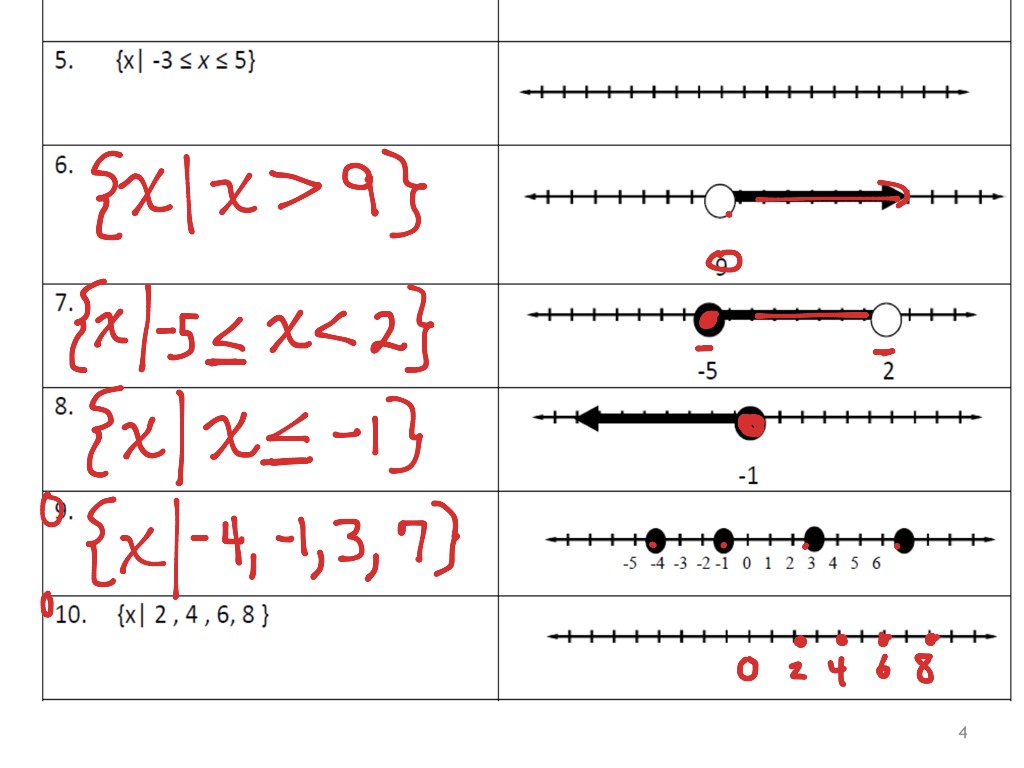
Set-builder notation on a graph?
Look at the picture for an example. If the notation has the word “or”, then there will no shading between the two numbers and if it has the symbol “≠” then it will be shaded everywhere except for that number.
5
New cards
What is the symbol for natural numbers and how do you use it in a set-builder?
The symbol is “N” and this is how you use it: {x|∈N; 5≤x}
6
New cards
What is the symbol for whole numbers and how do you use it in a set-builder?
The symbol is “W” and this is how you use it: {x|∈W; 0≤x}
7
New cards
What is the symbol for integers numbers and how do you use it in a set-builder?
The symbol is “Z” and this is how you use it: {x|∈Z; -18≤x}
8
New cards
What is the symbol for rational numbers and how do you use it in a set-builder?
The symbol is “Q” and this is how you use it: {x|∈Q; ½≤x}
9
New cards
What is the symbol for irrational numbers and how do you use it in a set-builder?
The symbol is “I” and this is how you use it: {x|∈I; π≤x}
10
New cards
What is a parent function?
It’s the base function in a family.
11
New cards
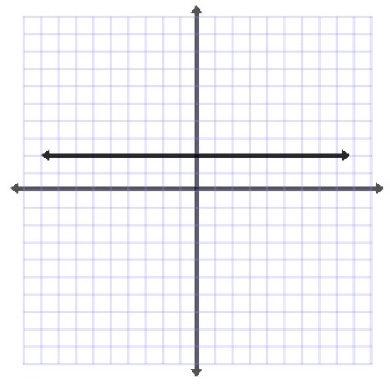
What is the parent function of the Constant family?
Look at the picture for a graph example. The parent function is f(x)=1. This family will never have a variable in its functions.
12
New cards
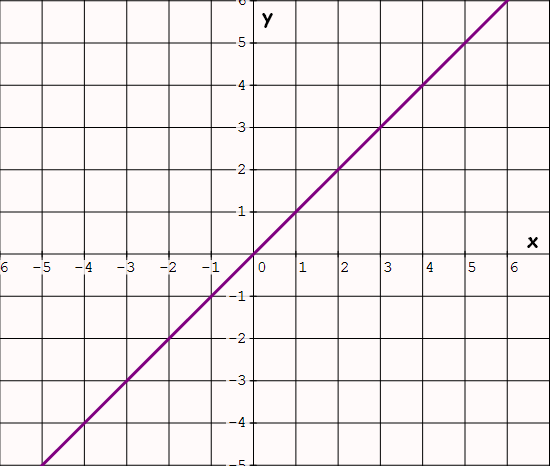
What is the parent function of the Linear family?
Look at the picture for a graph example. The parent function is f(x)=x. This family will always have the x variable in its function, but it won’t be in the bars. Bars: | |.
13
New cards
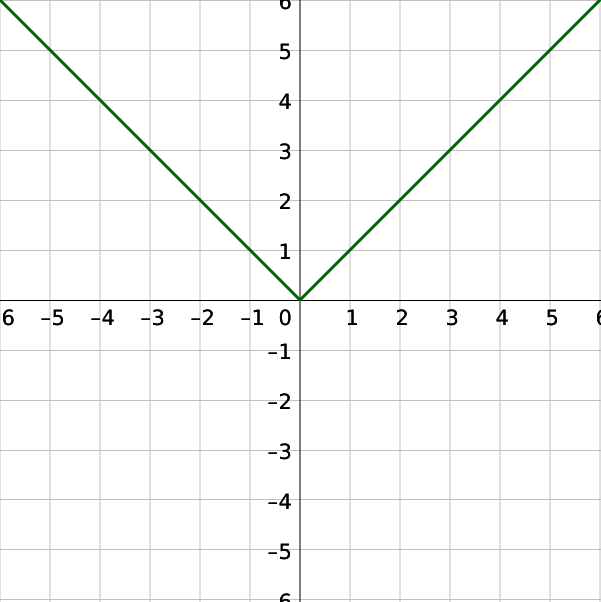
What is the parent function of the Absolute Value family?
Look at the picture for a graph example. The parent function is f(x)=|x|. This family will always have the x variable in its function and it will be in the bars. Bars: | |.
14
New cards
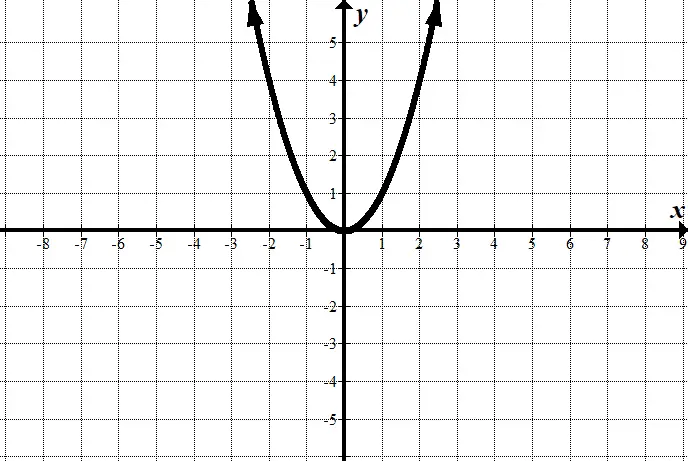
What is the parent function of the Quadratic family?
Look at the picture for a graph example. The parent function is f(x)=x² . This family will always have the x variable in its function and it will always be squared:
x².
x².
15
New cards
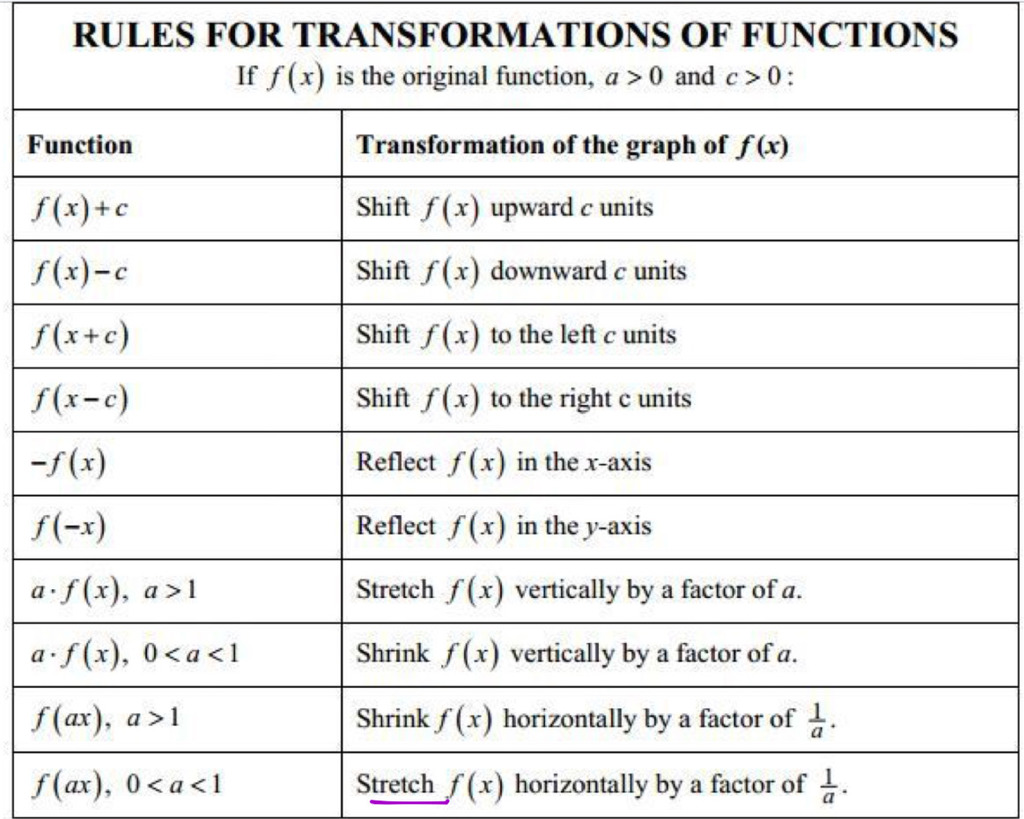
What are the transformation rules?
Look at the picture for the full table on the rules. There are horizontal and vertical tranlations which are used with adding or subtracting. There are reflectons across each axis which are used when taking the negative or opposite. There is a vertical stretch or compression which is used with multiplying.
16
New cards
How do you use translations?
You will use the horizontal when the addition or subtraction symbol is grouped in with the x and you’ll use the vertical when it’s not. The horizontal will cause the function to move to the left or right on the graph based on if it’s subtraction or additon and vertical will cause it to move up or down. THINK OPPOSITE WHEN LOOKING AT THE RULES SHEET!
17
New cards
How do you use reflections?
You will use the horizontal when the negative symbol is grouped in with the x and you’ll use the vertical when it’s not. The horizontal will cause the function to flip across the y-axis on the graph and vertical will cause it to flip across the x-axis.
18
New cards
How do you use streches and compressions?
At this current moment we are only using vertical. So, you will use the vertical when whatever it’s multiplying with is grouped in with the x. The vertical will cause the function to strech away from the x-axis on the graph if the multiplying variable is >1 and will shrink toward from the x-axis if it’s between 0 and 1.