Genitourinary - Exam 2 (Gynecological conditions)
 Call Kai
 Learn
Learn Practice Test
 Spaced Repetition
 Match
Match Flashcards
 Knowt Play
1/108

There's no tags or description
Looks like no tags are added yet.
Name | Mastery | Learn | Test | Matching | Spaced | Call with Kai |
|---|
No analytics yet
Send a link to your students to track their progress
109 Terms
How often should a female get a pap smear exam done
every 3 years (after baseline at 21)
The menstrual cycle is a vital sign of
overall endocrine health
HPO (hypothalamic-pituitary-ovarian) axis function
uterine and endometrial health
Normal menstrual cycle
24-38 days
flow up to ~7 days
Endometrial cycle (uterus) three phases
menstrual phase
proliferative phase (estrogen driven)
secretory phase (progesterone driven)
Endometrial cycle (uterus) - Menstrual phase
shedding of functional layer of endometrium
bleeding and cramping (prostaglandins)
Endometrial cycle (uterus) - Proliferative phase
estrogen driven
endometrium thickens
glands and blood vessels regenerate
Endometrial cycle (uterus) - Secretory phase
progesterone driven
endometrium prepares for implantation
if no pregnancy → menses
Three parts of the pelvic exam
observation and speculum exam
bimanual exam
recto-vaginal exam
What is the goal of a pap smear (assess transitional zone of cervix for…)
screen for cervical cancer
Urinary tract infection (UTI)
suprapubic tenderness on palpation
red/swollen urethral meatus
absence of systemic signs (fever)
Types of UTIs (Upper to lower)
Pyelonephritis - infection of kidneys
Cystitis - infection of bladder
Urethritis - infection of urethra
Why are UTIs more common in women
shorter urethra
What is the best way to prevent risk of UTI after intercourse
urinate afterwards
Bacterial vaginosis
thin, homogenous gray-white discharge
“fishy” odor
Candida vaginitis
thick, white, “cottage-cheese” discharge
vulvar erythema
itching and burning
Trichomonas
frothy, yellow-green discharge
“strawberry cervix”
strong odor
Uterine prolapse
uterus descends into or beyond vaginal canal due to weakened pelvic floor muscles and ligaments
MC in postmenopausal women who had multiple vaginal deliveries
What is the best standard for diagnosis of uterine prolapse
physical exam
Uterine prolapse treatments
pelvic floor exercises (kegels)
pessary devices (donut, ring, gellhorn)
hormonal therapy
surgical repair
What are the two types of cervical cancer
squamous cell carcinoma (MC)
adenocarcinoma
Cervical cancer pt presentation
persistent HPV infections
dyspareunia
pelvic pain/discomfort
abnormal vaginal bleeding
unusual vaginal discharge
unexplained weight loss and fatigue
Cervical cancer exam findings
friable/ulcerative cervix
abnormal bleeding from cervix
enlarged and tender cervix
Cervical cancer risk factors
persistent HPV infections
multiple sex partners
early sexual activity
smoking
immunosuppression
long-term use of oral contraceptives
What is the gold standard for diagnosing cervical cancer
cervical biopsy
Cervical cancer treatment
watchful waiting
loop electrosurgical excision procedures (LEEP)
conization
radiation, chemo, hysterectomy
pelvic exenteration
Vulvar cancer types
squamous cell carcinoma (MC)
melanoma
Vulvar cancer pt presentation
persistent itching, burning, pain
skin changes (color or thickening)
hx of HPV
immunosuppression
pain/tenderness
visible lump/ulcer/wart-like growth
bleeding unrelated to menses
Vulvar cancer exam findings
visible lump/ulcer/lesion
color changes or thickening skin
tenderness/induration/fixed masses
enlarged inguinal lymph nodes
Vulvar cancer risk factors
HPV infection
>50
chronic vulvar conditions (lichen sclerosis)
smoking
immunosuppression
hx of cervical cancer
What is the gold standard for diagnosing vulvar cancer
biopsy
Vulvar cancer treatment
topical treatments
surgical excision
radiation/chemo
radical vulvectomy
Types of vaginal cancer
squamous cell carcinoma (MC)
adenocarcinoma
Vaginal cancer pt presentation
abnormal vaginal bleeding (postcoital)
watery/bloody vaginal discharge
pelvic pain or pressure
dyspareunia
mass in vagina
Vaginal cancer exam findings
mass/ulcer/lesion in vaginal wall
abnormal discharge
palpable mass or thickening of vaginal wall
Vaginal cancer risk factors
HPV infection
>60
hx of cervical cancer
smoking
What is the gold standard for diagnosing vaginal cancer
biopsy
Vaginal cancer treatment
topical treatments
surgical excision
radiation/chemo
vaginectomy
pelvic exenteration
During the bimanual exam, if you find a tender and enlarged ovary what could the possible causes be
cyst, torsion, acute infection
During the bimanual exam, if you find a fixed, nodular adnexal mass what could the possible causes be
endometriosis or malignancy
During the bimanual exam, if you have fullness with marked tenderness and FEVER what could the possible causes be
abscess
What is the MC tumor of the gynecoid pelvic and MC reason for a hysterectomy
Myomas (Uterine Fibroids)
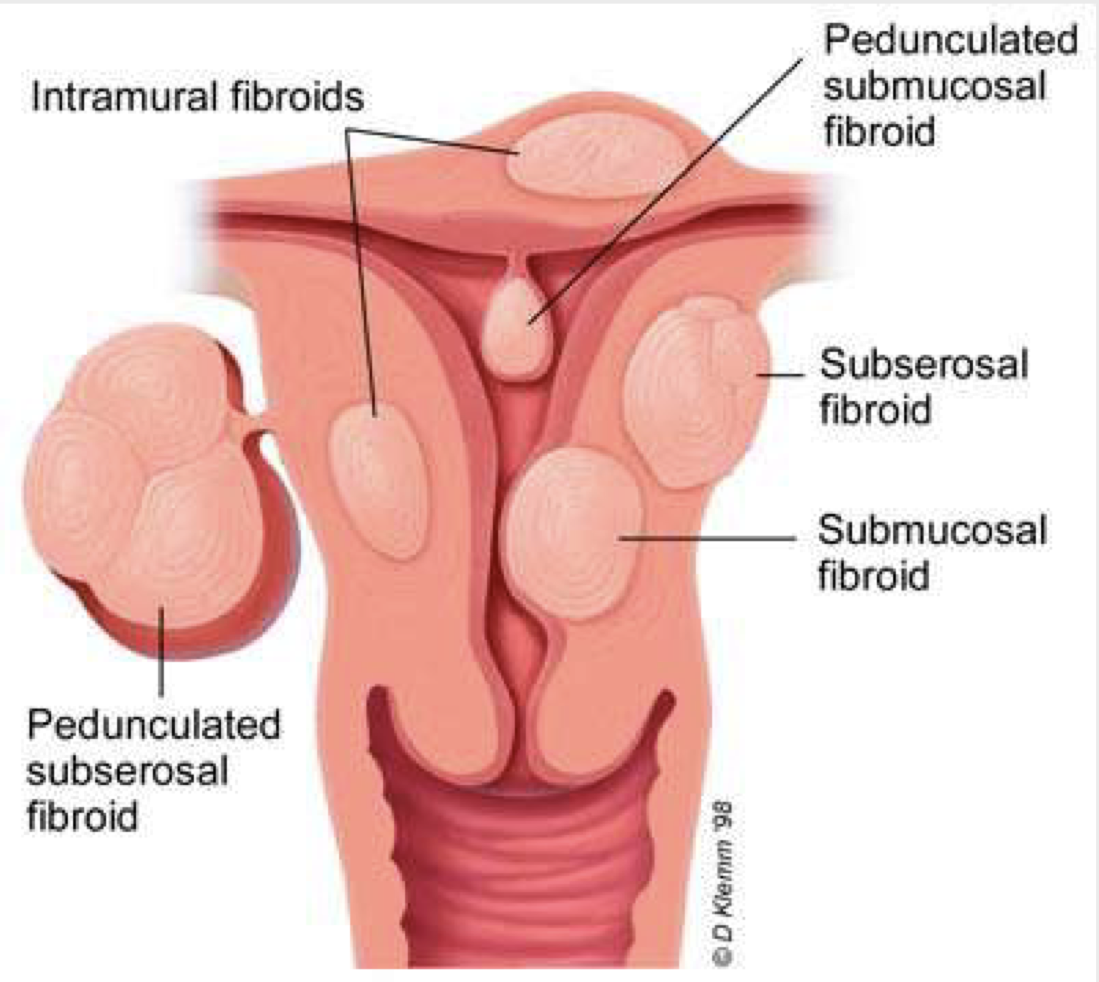
Myomas (Uterine Fibroids) types
Subserosal - grow on outer surface of uterus
Intramural - grow within the uterine wall
Submucosal - protrude into uterine cavity
Myomas (Uterine Fibroids) pt presentation
MC asymptomatic
hx of frequent urination/constipation, infertility or recurrent miscarriages
family hx of fibroids
menorrhagia
pelvic pressure/pain
dyspareunia
abdominal distortion
Myomas (Uterine Fibroids) risk factors
MC closer to menopause
African American
family hx
estrogen + progesterone promote growth
obesity
nulliparity
What is the best way to diagnose Myomas (Uterine Fibroids)
transvaginal ultrasound
What is the x-ray finding for Myomas (Uterine Fibroids)
cauliflower-like radioopaque mass
Myomas (Uterine Fibroids) treatments
watch and wait
hormonal therapy = GnRH
UAE
myomectomy
hysterectomy
Ovarian cysts types
functional cysts (follicular and corpus luteum cysts) (MC)
dermoid cysts
endometriomas
cystadenomas
polycystic ovaries
Ovarian cysts pt presentation
MC asymptomatic
sudden onset of dull or sharp pelvic pain (one side)
menstrual irregularities or pain during menses
feeling bloated/fullness or abdominal distension
dyspareunia
nausea/vomiting (esp. if cyst ruptures)
Ovarian cyst exam findings
palpable mass or tenderness on affected side
Ovarian cyst risk factors
reproductive age
hormonal imbalance
pregnancy
endometriosis
severe pelvic infections
What is the primary diagnostic tool used to dx ovarian cysts
transabdominal or transvaginal ultrasound
Ovarian cysts treatments
watchful waiting and pain management
hormonal therapy - birth control
laparoscopic cystectomy
oophorectomy
Salpingitis types
acute - sudden onset, severe symptoms
chronic - long-standing, recurrent, less severe symptoms
Salpingitis pt presentation
previous dx of STI (chlamydia or gonorrhea)
fever and chils
abnormal vaginal discharge
dyspareunia
dysuria
irregular menstrual bleeding or spotting
Salpingitis exam findings
purulent/mucopurulent cervical discharge
friable cervix
adnexal tenderness
chandelier sign
tenderness along posterior aspect of pelvis (inflamed fallopian tubes)
Salpingitis risk factors
hx of PID or STIs
sexually active <25
IUDs
hx of pelvic surgery
What is the gold standard for dx salpingitis
laparoscopy
Salpingitis treatments
antiobiotics and pain management
drainage of abscess
salpingectomy
What is the MC bacterial cause of Pelvic inflammatory disease (PID)
chlamydia
Pelvic inflammatory disease (PID) is a leading cause of ______ in women due to damage to the fallopian tubes
infertility
Pelvic inflammatory disease (PID) pt presentation
persistent/severe lower abdominal pain
fever and chills
dyspareunia
dysuria
abnormal uterine bleeding
Pelvic inflammatory disease (PID) exam findings
abnormal vaginal/cervical discharge
friable cervix
chandelier sign
Pelvic inflammatory disease (PID) risk factors
increase of exposure to STIs
hx of PID or STIs
sexually active <25
What is the gold standard to dx Pelvic inflammatory disease (PID)
laparoscopy
Pelvic inflammatory disease (PID) treatment
antibiotic therapy and pain management
drainage of existing abscesses
hysterectomy
salpingo-oophorectomy
Endometriosis common sites
ovaries, fallopian tubes, outer surface of uterus, pelvic lining
When does endometriosis begin
onset of menses
symptoms confused with “typical” dysmenorrhea or UTIs
Dr not taking symptoms seriously
Endometriosis pt presentation
pelvic pain correlating with menstrual cycle
pain during bowel movements/urination/menstruation
fatigue, bloating, nausea
severe menstrual cramps unresponsive to pain relief
menorrhagia
dyspareunia
infertility
chronic pelvic pain
Endometriosis risk factors
family hx
early menarche (1st period)
short menses but heavy flow
nulliparity
autoimmune
Asian and Caucasian
Endometriosis exam findings
fixed and tender uterus
palpable nodules
chandelier sign
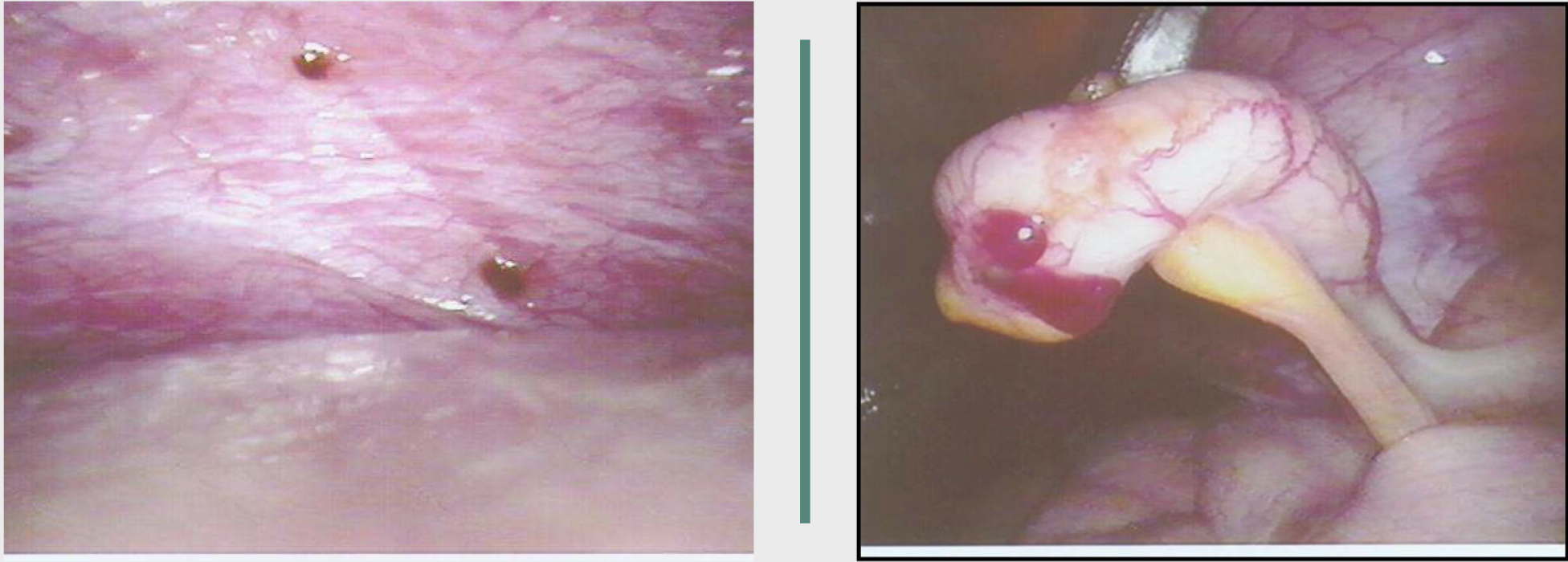
Endometriosis gold standard for dx
laparoscopy
Endometriosis treatments
hormonal therapy - birth control, GnRH
pregnancy
laparoscopy
hysterectomy
What is one of the MC causes of infertility
Polycystic ovary syndrome (PCOS)
Polycystic ovary syndrome (PCOS) pt presentation
irregular menstrual cycles or amenorrhea
excessive hair growth on face, chest, back (hirsutism)
acne or oily skin
thinning hair or male-pattern baldness
acanthosis nigricans
Polycystic ovary syndrome (PCOS) risk factors
genetic predisposition (PCOS or diabetes)
obesity
insulin resistance
sedentary lifestyle
What is the primary diagnostic tool to dx Polycystic ovary syndrome (PCOS)
transvaginal ultrasound
What blood tests could be used to dx Polycystic ovary syndrome (PCOS)
elevated androgens (testosterone)
LH
low or normal FSH
insulin levels
thyroid function
Rotterdam criteria for PCOS (dx requires 2/3!!)
irregular ovulation or anovulation
hyperandrogenism (clinical/hormonal)
polysystic ovaries on US
Polycystic ovary syndrome (PCOS) treatments
lifestyle modifications
oral contraceptives
anti-androgen meds
metformin
IVF
Ovarian cancer types
epithelial (MC) - originating from cells on outer surface of ovaries
germ cell - arise from cells that produce eggs
stromal - develop from CT cells that hold ovary together
Ovarian cancer is the __ MC cause of cancer-related deaths in women
5th
Ovarian cancer pt presentation
persistent bloating or abdominal distension
pelvic or abdominal pain (vague or persistent)
changes in bowel habits
unexplained weight loss or gain
Ovarian cancer exam findings
palpable adnexal mass or ovarian enlargement
tenderness or irregularity in adnexa
eval for metastasis
Ovarian cancer risk factors
>50 (postmenopausal)
family hx (BRCA1 and 2)
nulliparity
early menarche or late menopause
long term HRT
obesity
fertility treatments
Ovarian cancer dx primary imaging tool + definitive dx
pelvic ultrasound
biopsy
Ovarian cancer treatments
surgical excision
chemo/radiation
hysterectomy
bilateral salpingo-oophorectomy
What is the MC gynecological cancer in the US
uterine cancer
Uterine cancer types
endometrial carcinoma (MC)
uterine sarcoma
Uterine cancer pt presentation
abnormal vaginal bleeding (postmenopausal!)
pelvic pain or pressure
dyspareunia
unexplained weight loss
Uterine cancer exam findings
abnormal vaginal discharge or blood
enlarged or irregularly shaped uterus
tenderness or masses in uterus
Uterine cancer risk factors
>50 (postmenopausal)
estrogen hormone therapy long term
obesity
family hx
endometrial hyperplasia
diabetes and hypertension
Uterine cancer dx primary imaging tool and gold standard
transvaginal ultrasound
endometrial biopsy
Uterine cancer treatment
hormonal therapy (progestins)
surveillance
radiation/chemo
total hysterectomy
bilateral salpingo-oophorectomy
Cancer prevention screening recommendations
cervical cancer - pap smear
breast cancer - mammography
ovarian cancer - routine screening
endometrial/uterine cancer - awareness
vulvar/vaginal cancer - self-exams and gynecological exams
Perimenopause pt presentation
irregular menstrual cycles
hot flashes and night sweats
mood swings
sleep disturbances
vaginal dryness or discomfort during intercourse
Menopause pt presentation
hot flashes, night sweats, sleep disturbances
vaginal dryness and thinning of vaginal walls
decreased bone density
weight gain
hair thinning
What supplements can women take to help with hot flashes
black cohosh
vitamin E and K
What is the primary medical treatment for menopause
estrogen hormone therapy
Menopausal physcial changes
vaginal rugae flatten
cervix, uterus, ovaries decrease in size