Microstructure of the Endocrine System Pt. 2 - Thyroid, Parathyroid, Adrenal Glands
 Call Kai
 Learn
Learn Practice Test
 Spaced Repetition
 Match
Match Flashcards
 Knowt Play
1/120

There's no tags or description
Looks like no tags are added yet.
Name | Mastery | Learn | Test | Matching | Spaced | Call with Kai |
|---|
No analytics yet
Send a link to your students to track their progress
121 Terms
an encapsulated gland in the anterior neck inferior to the larynx, abutting (wrapping around) the trachea
What is the thyroid?
consists of two lateral lobes connected by a thinner isthmus
What is the structure of the thyroid like?
synthesizes two important hormones -> thyroid hormone (T3 and T4) and calcitonin
What is the function of the thyroid, and explain?
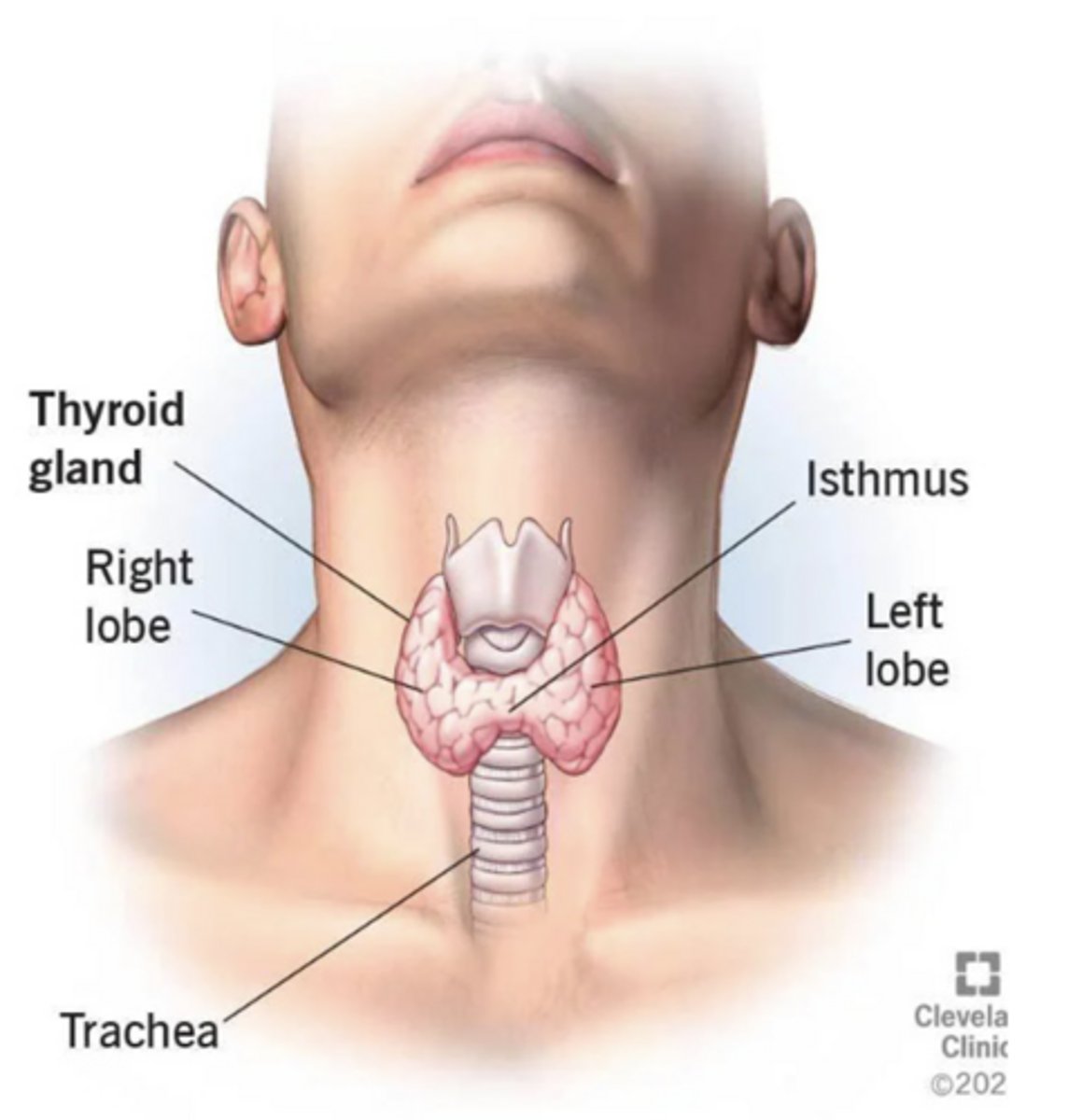
affects many systems of the body to stimulate basal metabolism, cardiac output, well-being, etc
What is the function of thyroid hormone (T3 and T4)?
T3 is the active form of thyroid hormone, whereas T4 is largely inactive and stored/transported in the blood
How do T3 and T4 compare?
functions in regulating Ca2+ and phosphate by reducing their levels in the blood
(calciTONine TONES down calcium!)
What is the function of calcitonin?
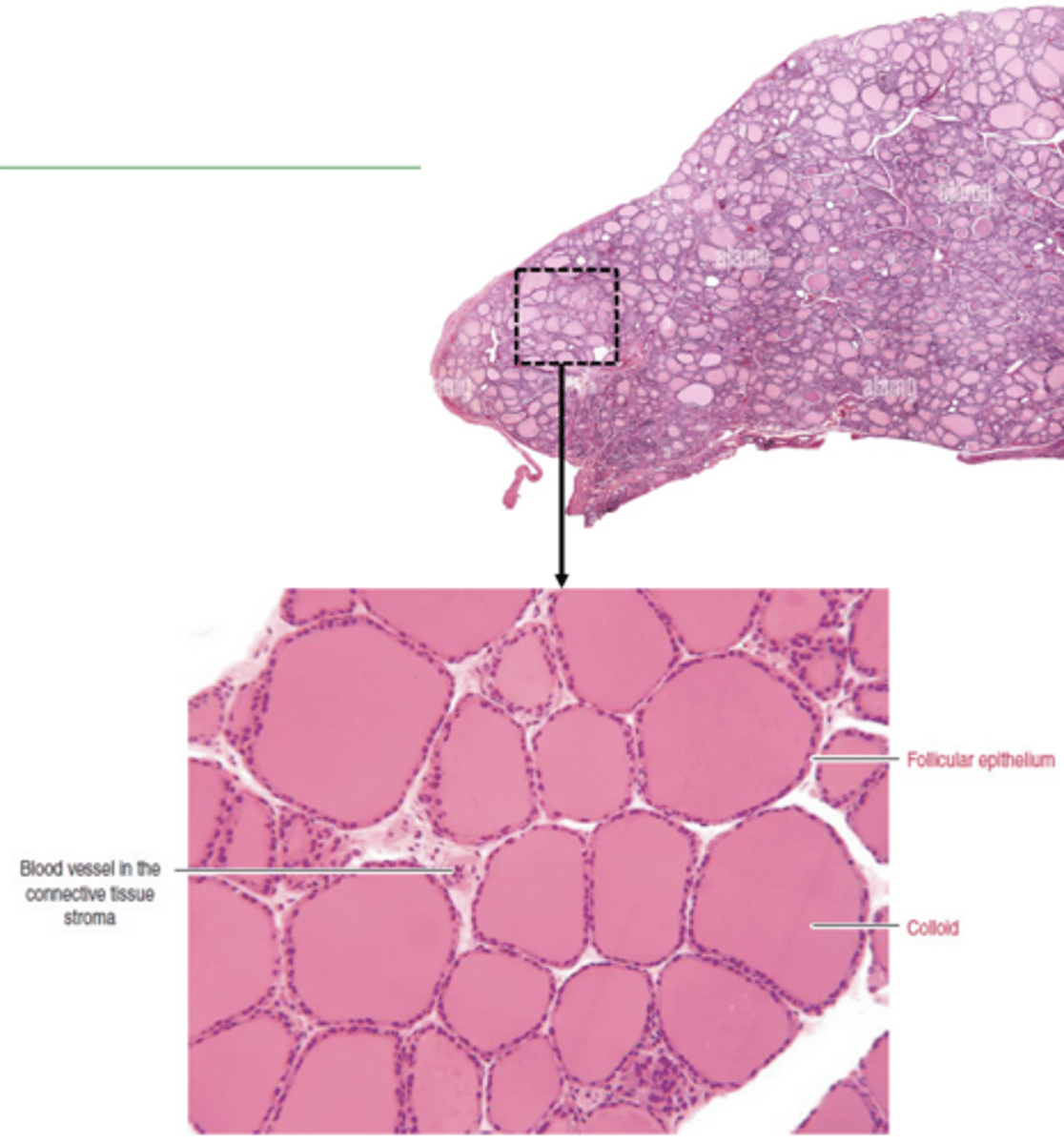
follicles of various sizes -> spaces filled with colloid surrounded by follicular epithelium
What does the histology of the thyroid consist of, and explain?
pink
How do the thyroid colloids stain with H&E?
thyroglobulin -> an inactive precursor to T3/T4 hormones that is synthesized by the thyroid follicular cells
What do the thyroid colloids contain, and explain?
T4 is an inactive prohormone (w/ 4 iodines) that acts as a stable storage form in the blood with a long half-life, while T3 is the active hormone (w/ 3 iodines) responsible for immediate cellular metabolic effects -> T4 can often be converted to T3 within specific tissues
How do T3 and T4 compare?
is of variable height depending on how active the follicle is, but often appears as cuboidal
What is the structure of the follicular epithelium that surrounds the thyroid colloid like?
parafollicular cells (aka C cells)
What cells are found within follicular epithelium or in the surrounding CT of the thyroid?
they have a very pale cytoplasm
How do the parafollicular cells (aka C cells) stain with H&E?
thyroid histo:
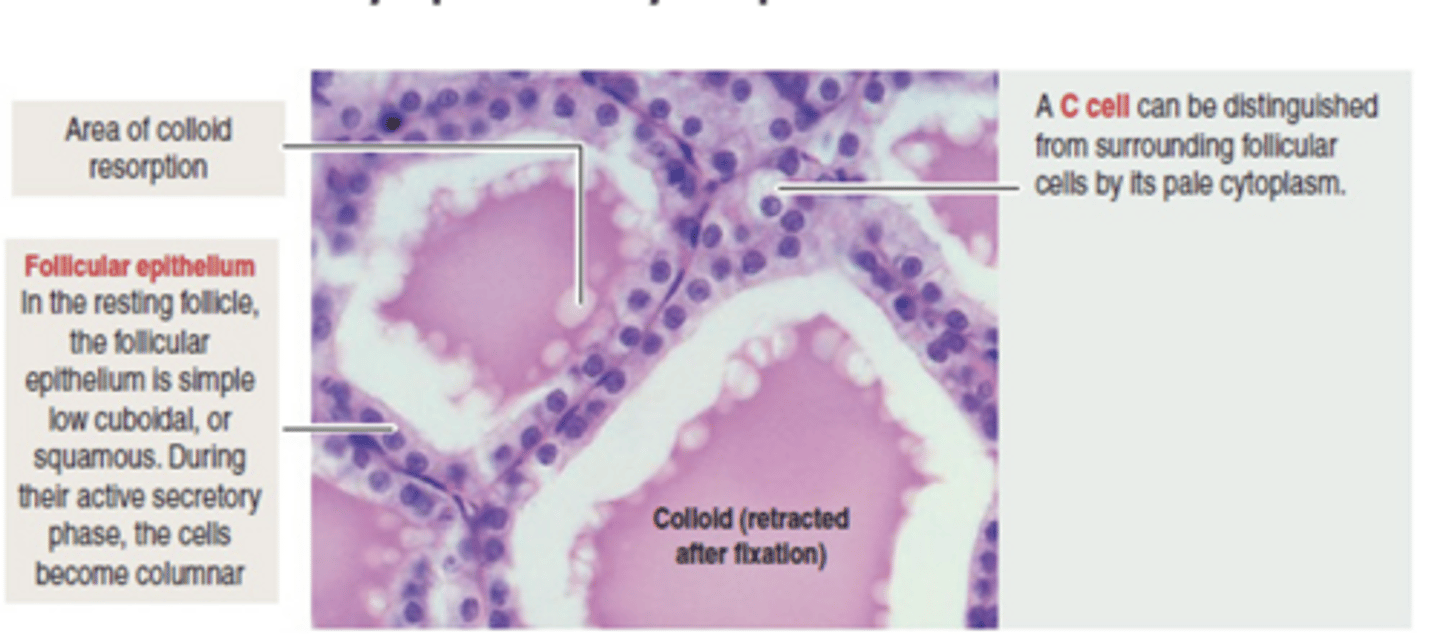
thyroid histo:
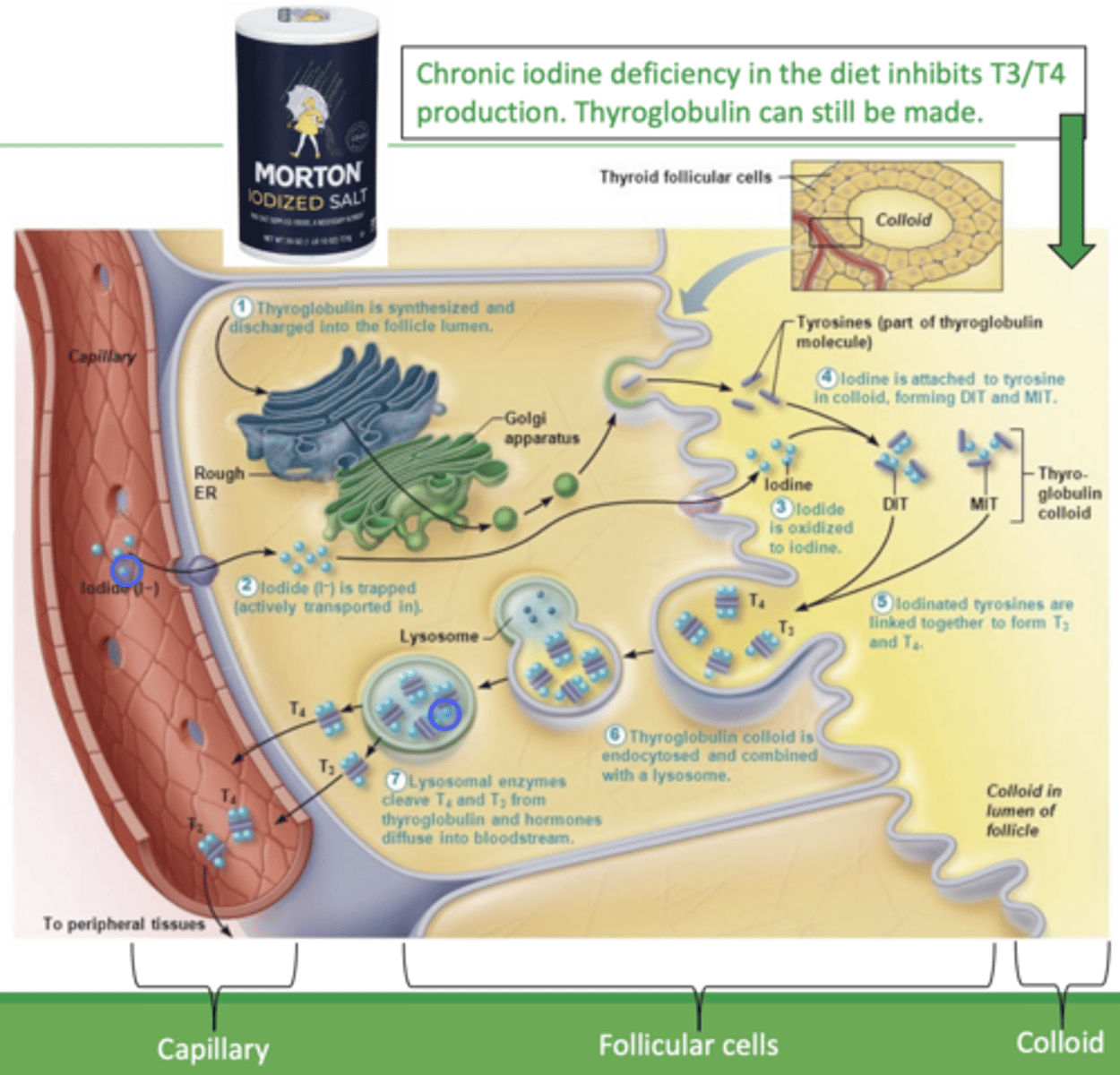
-synthesize thyroglobulin and store it in colloid
-pull iodinated thyroglobulin from colloid and cleave it
What are the 2 important functions performed by thyroid follicular cells?
iodine
What is a key element in the T3 and T4 hormones?
iodine is transported into the cell from the bloodstream and added to thyroglobulin in the colloid
How does iodine act as a key element in the T3 and T4 hormones?
-triiodothyronine (T3)
-tetraiodothyronine (T4)
What is formed when the thyroid follicular cells pull iodinated thyroglobulin from colloid and cleave it?
thyroid stimulating hormone (TSH)
What is the function of thyroid follicular cells stimulated by?
made by basophils, specifically thyrotropes in the anterior pituitary
Where does thyroid stimulating hormone (TSH) come from, and explain?
inhibits T3/T4 production
What happens in chronic iodine deficiency in the diet?
it can still be made!
What happens to thyroglobulin in chronic iodine deficiency in the diet?
thyroid follicular cells:
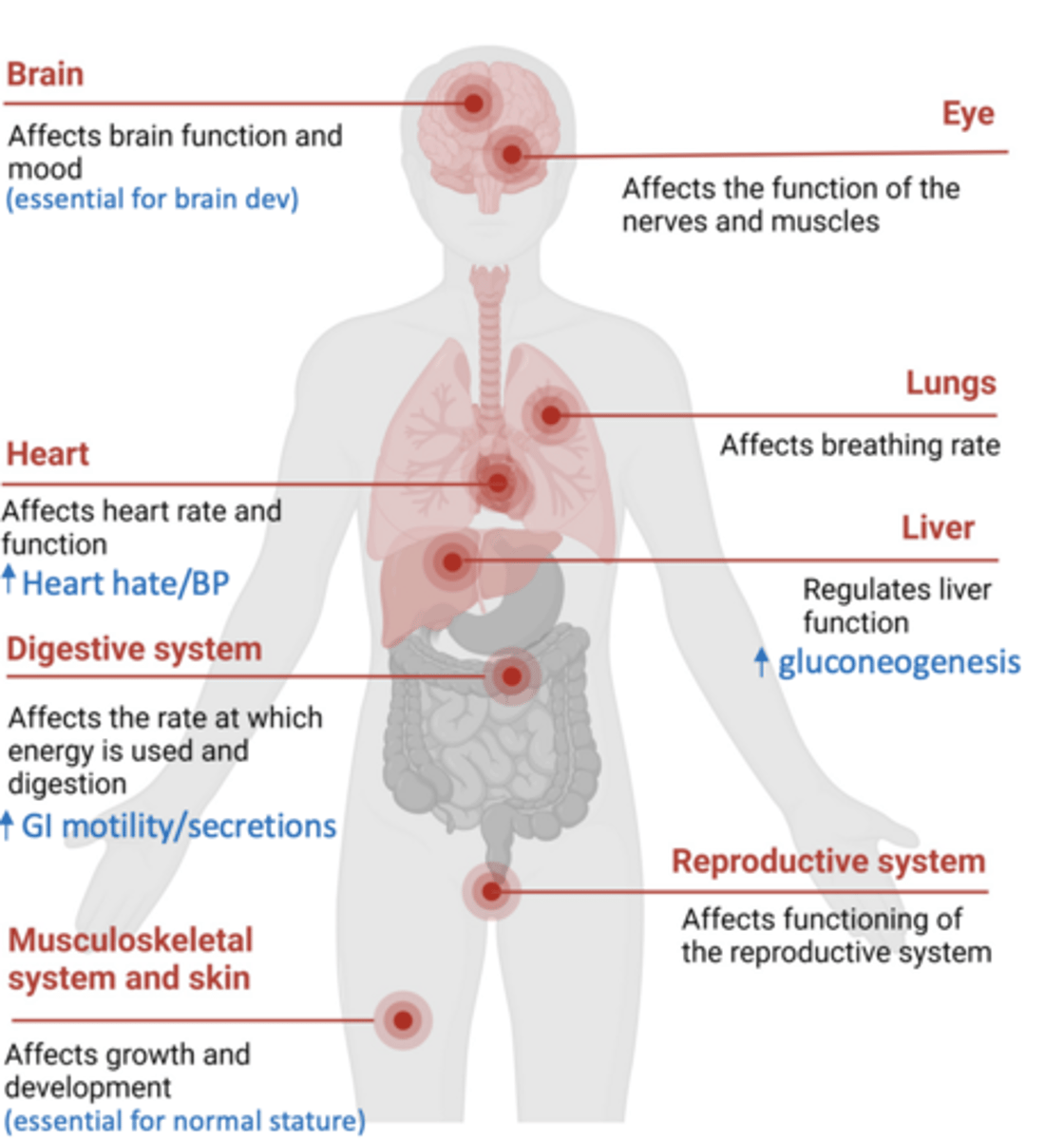
affects nearly every tissue in the body
What is the role of thyroid hormone (T3 & T4) in the body?
-essential for development
-regulates metabolism
-amplifies response to the sympathetic NS
What are the 3 main processes in which thyroid hormone (T3 & T4) functions?
required for brain development and achieving normal stature (bone growth)
How is thyroid hormone (T3 & T4) essential for development?
-increases rate of O2 consumption
-increases heat production
-promotes lipid and carbohydrate metabolism
In what 3 ways does thyroid hormone (T3 & T4) regulate metabolism?
increases receptors on muscle to allow for efficient usage and increases fat breakdown to allow for energy mobilization
How does thyroid hormone (T3 & T4) amplify the response to the sympathetic NS?
T3 and T4 functions:
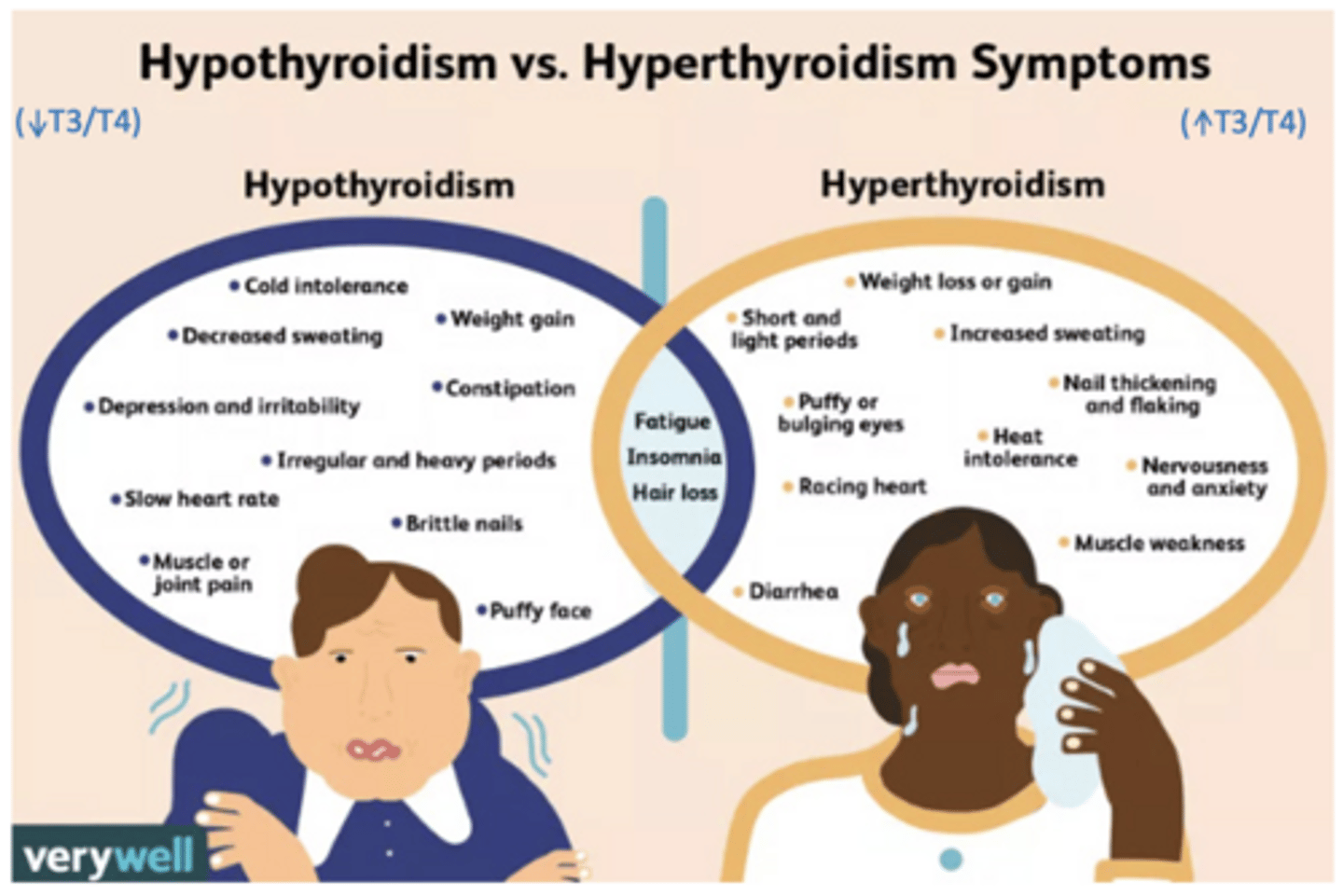
hypothyroidism -> decreased T3/T4
hyperthyroidism -> increased T3/T4
How does the basis of hypo- versus hyper-thyroidism compare?
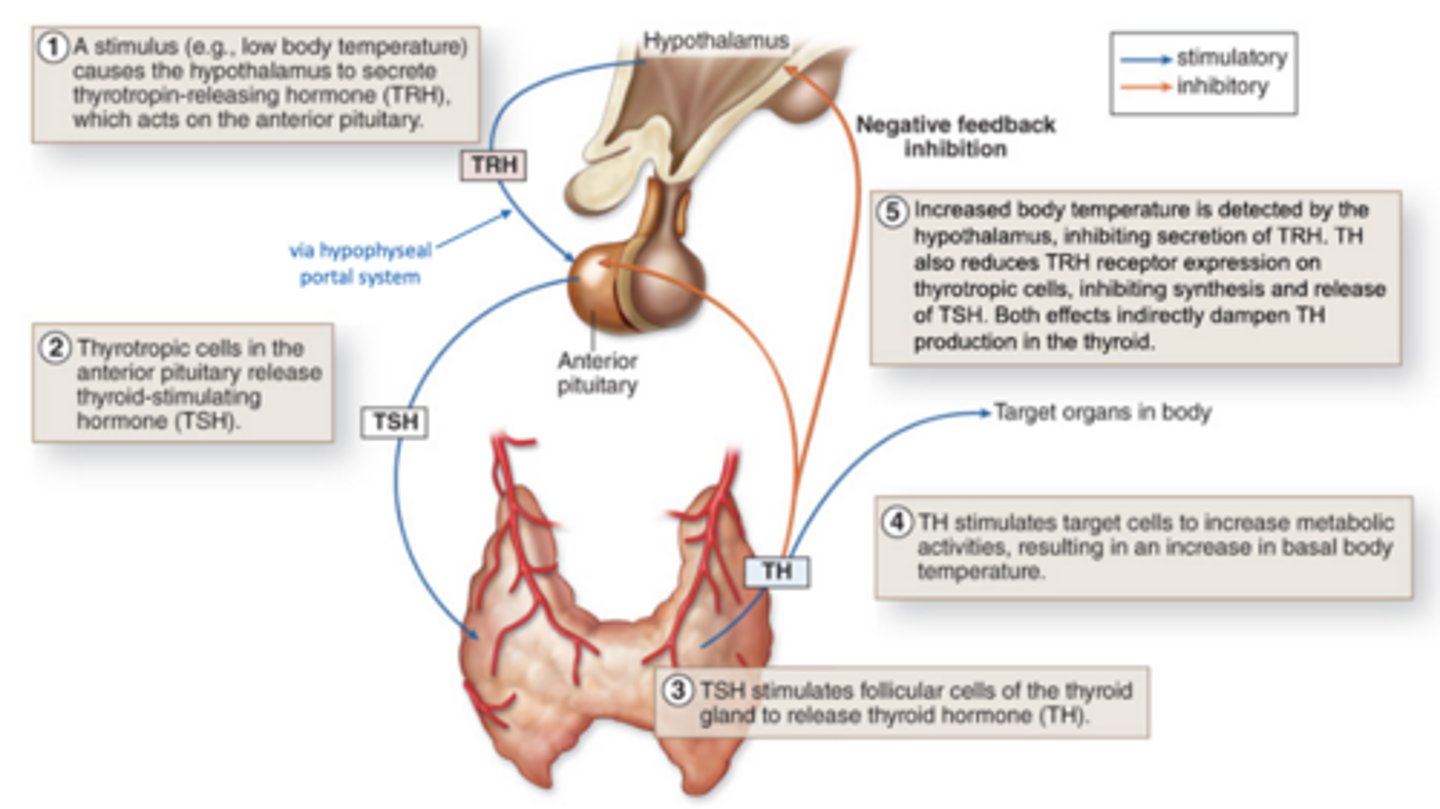
a stimulus, such as low body temperature, causes the hypothalamus neurons to secret TRH into the hypophyseal portal system to act on anterior pituitary
How does thyroid hormone regulation and negative feedback loop begin?
thyrotropic cells (basophils) in the anterior pituitary release TSH
What happens when TRH acts on anterior pituitary?
TSH stimulates follicular cells of the thyroid gland to release TH
What happens when thyrotropic cells (basophils) in the anterior pituitary release TSH?
TH stimulates target cells to increase metabolic activities, resulting in an increase in basal body temperature
What happens when TSH stimulates follicular cells of the thyroid gland to release TH?
-increased body temperature is detected by the hypothalamus, inhibiting secretion of TRH
-TH also reduces TRH receptor expression on thyrotropic cells (basophils of anterior pituitary), inhibiting synthesis and release of TSH
-> both effects indirectly dampen TH production in the body
How does negative feedback occur when TH stimulates target cells to increase metabolic activities, increasing basal body temperature?
thyroid hormone regulation and negative feedback loop:
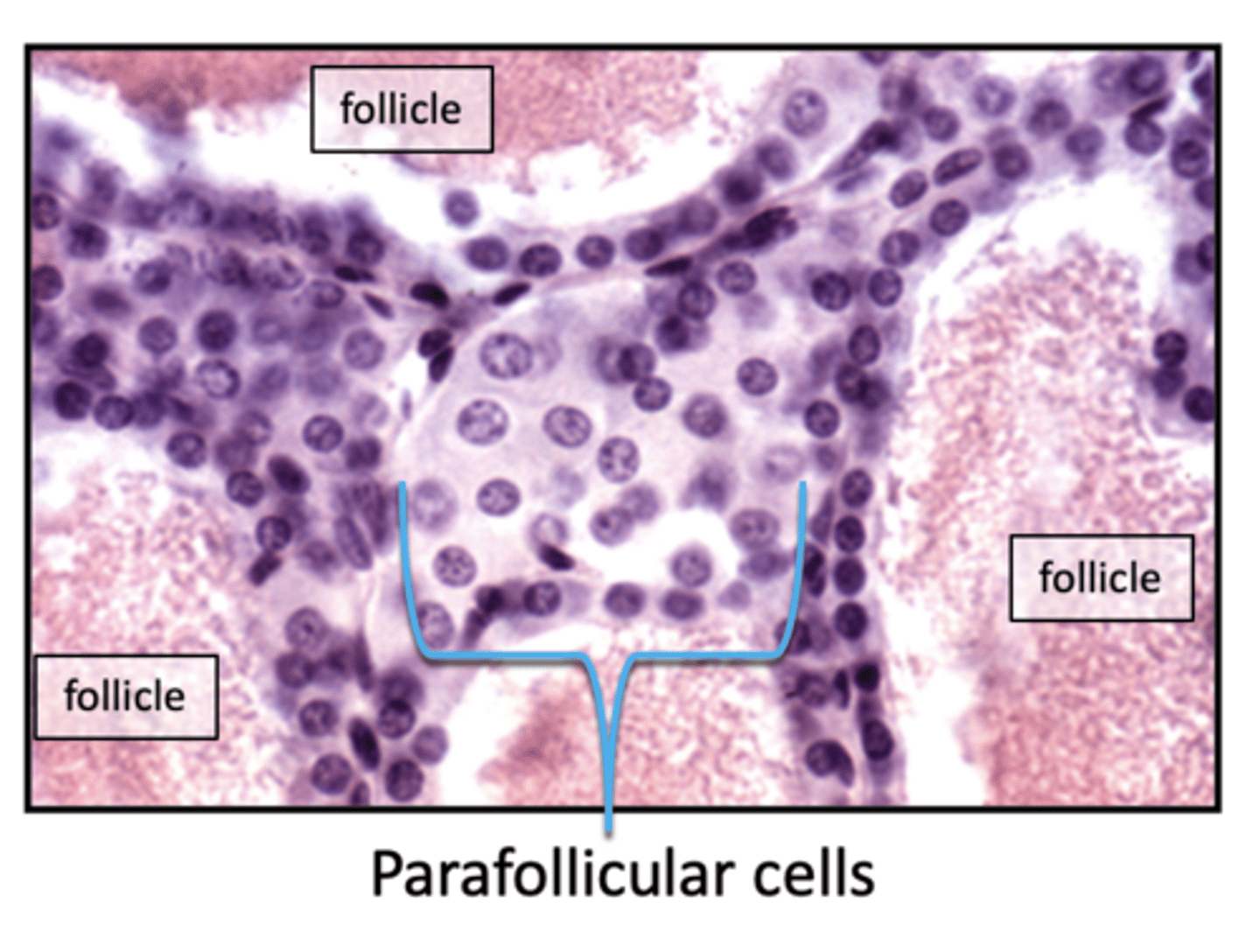
thyroid cells that synthesize calcitonin
What are parafollicular cells (aka C cells)?
a hormone that decreases blood Ca2+ levels (TONES down Ca2+)
What is calcitonin?
-stimulates osteoblasts to scavenge Ca2+ and build bone
-inhibits osteoclasts from breaking down bone
In what 2 ways does calcitonin function to decrease blood Ca2+ levels?
-neural transmission
-muscular contraction
-cellular signaling
What 3 main functions is Ca2+ regulation critical for?
clear cytoplasm
How do parafollicular cells (C cells) appear on histology with H&E?
histo of parafollicular cells (C cells):
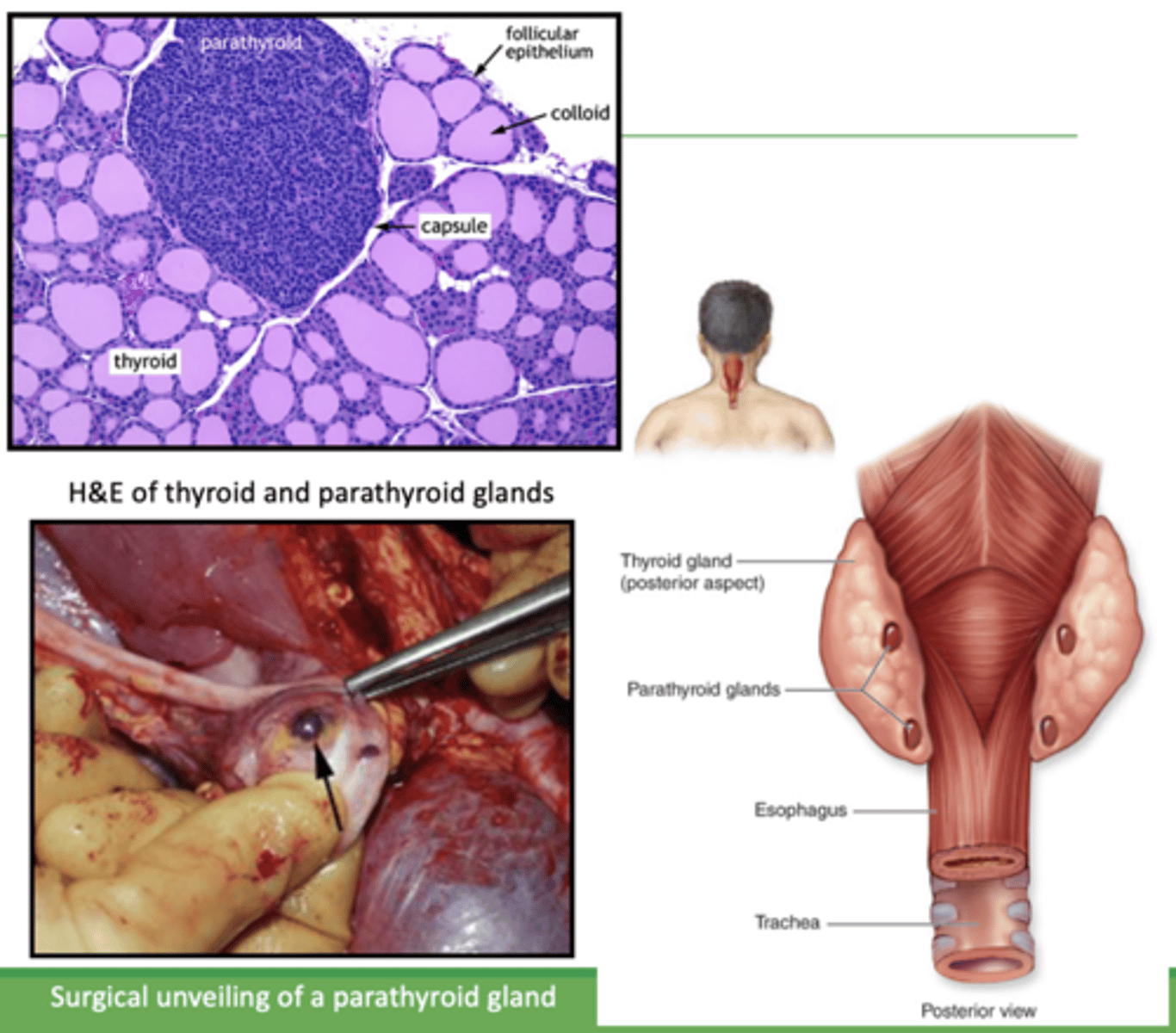
4 parathyroid glands are attached to the posterior surface of the thyroid lobes
Where are the parathyroid glands located?
seed-sized; darkly staining
What is the structure of the parathyroid glands both grossly and histologically?
synthesize parathyroid hormone (PTH)
What is the function of the parathyroid glands?
regulates blood Ca2+ concentrations; by increasing Ca2+ levels in the blood
(opposite of calcitonin!)
What is the function of parathyroid hormone (PTH), and explain?
parathyroid glands:
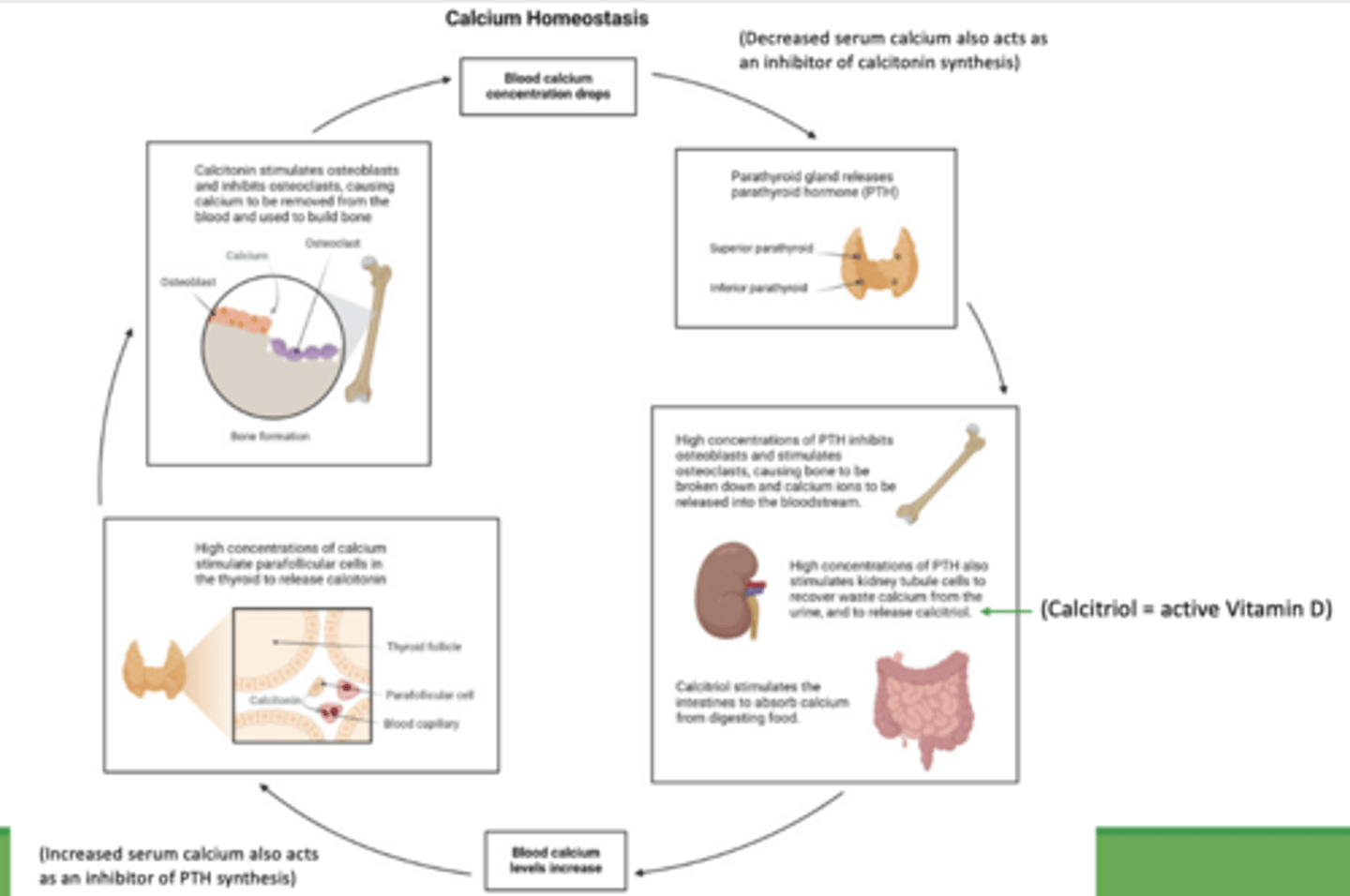
high [Ca2+] stimulates parafollicular cells in the thyroid to release calcitonin and acts as an inhibitor of PTH synthesis
What happens when blood calcium levels are increased?
stimulates osteoblasts and inhibits osteoclasts, causing Ca2+ removal from blood to be used to build bone
How does the calcitonin released in response to increased blood [Ca2+] function?
low [Ca2+] stimulates parathyroid glands to release PTH and acts as an inhibitor of calcitonin synthesis
What happens when blood calcium levels are decreased?
-high [PTH] inhibits osteoblasts and stimulates osteoclasts, causing bone to be broken down and Ca2+ ions to be released into the bloodstream
-high [PTH] stimulate kidney tubule cells to recover waste Ca2+ from the urine and to release calcitriol (active vitamin D)
What are the 3 main effects of PTH released in response to decreased blood [Ca2+]?
stimulates the intestines to absorb Ca2+ from digesting food
What does the release of calcitriol (active vitamin D) do?
calcium homeostasis:
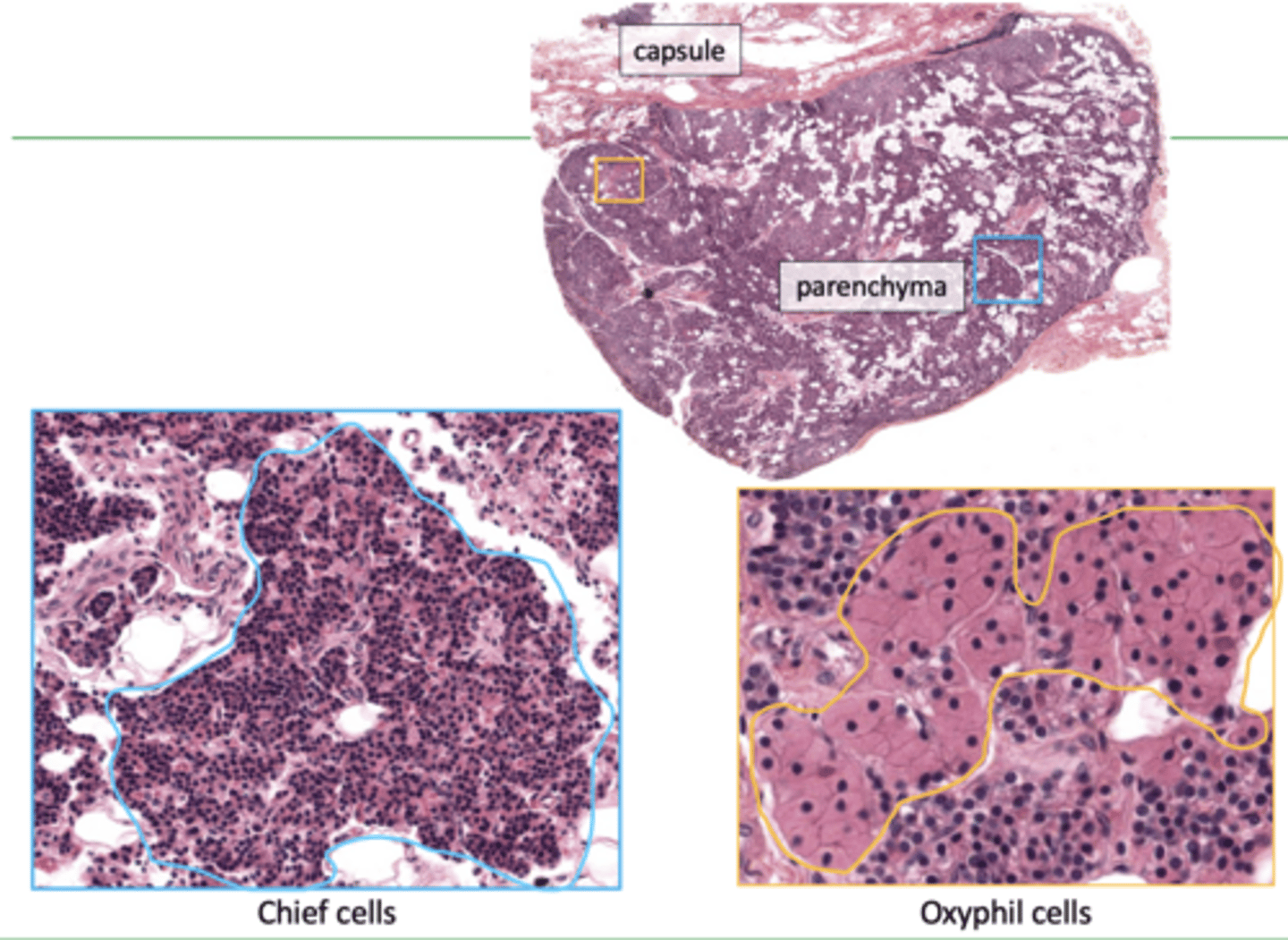
-chief cells -> synthesize PTH
-oxyphil cells -> have no known function
What are the 2 cell types that comprise the parathyroid glands, and explain the function of each?
numerous with small, round darkly-stained nuclei and scanty cytoplasm
How do parathyroid gland chief cells appear on histology?
larger, less numerous with eosinophilic (pink) cytoplasm
How do parathyroid gland oxyphil cells appear on histology?
parathyroid gland histology:
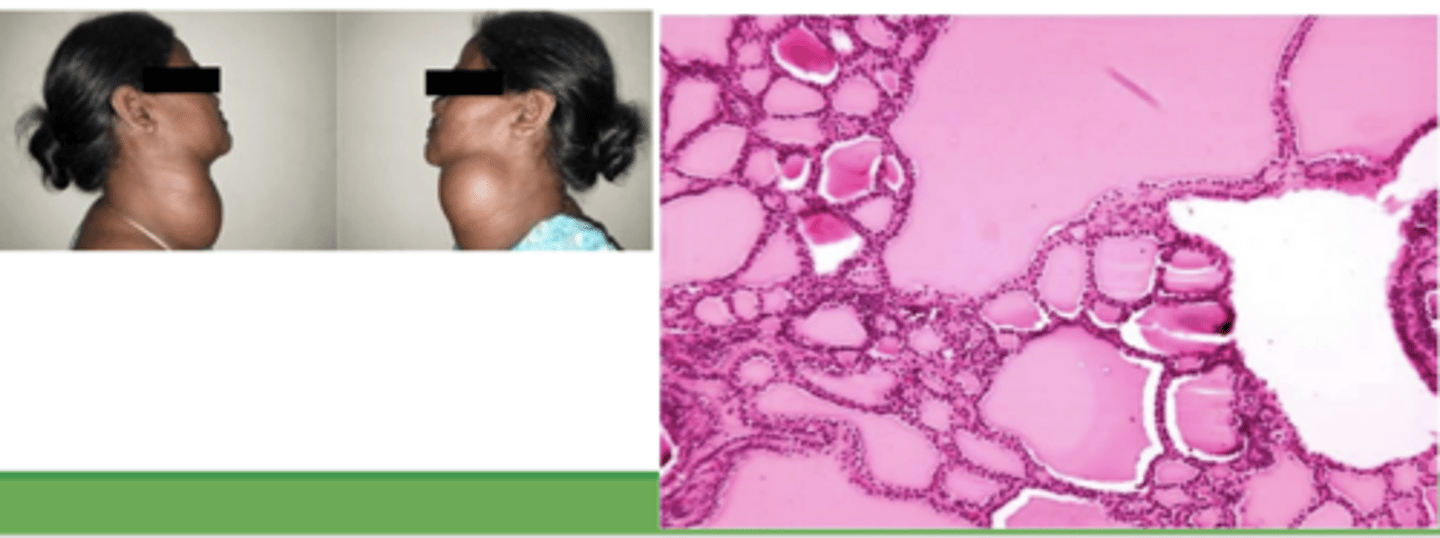
thyroid -> goiter, due to hypothyroidism
A 47-year-old woman presents with a large, painless swelling of the neck that has rapidly increased in size over the last 2 years. She reports experiencing low moods, weight gain, cold intolerance, and breathlessness on exertion. What organ may be causing the problem, and explain?
encapsulated triangular glands sitting on the superior aspect of the kidneys
What are adrenal glands?
embedded in pararenal adipose tissue and fascia
How are the adrenal glands oriented within the body?
-outer cortex
-inner medulla
What 2 main components do the adrenal glands consist of?
produces steroid hormones
What is the function of the outer cortex of the adrenal glands?
produces epinephrine and norepinephrine
What is the function of the inner medulla of the adrenal glands?
well-vascularized
What is a significant characteristic of the inner medulla of the adrenal glands?
adrenal glands (note the many lumens for veins in the medulla):
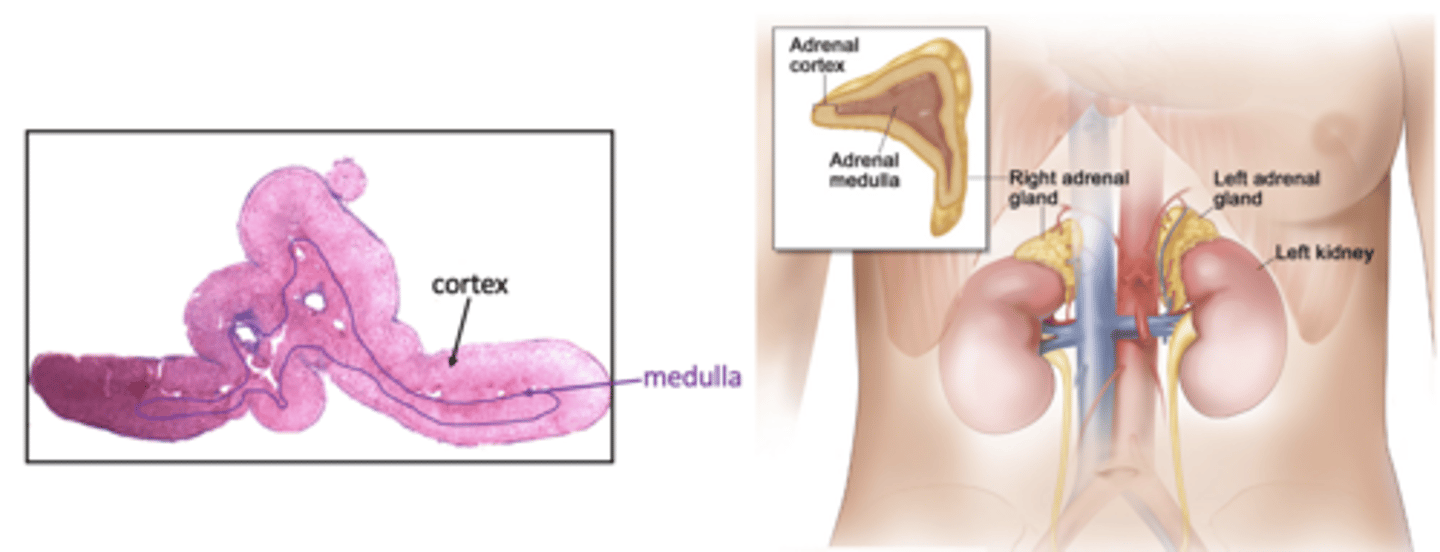
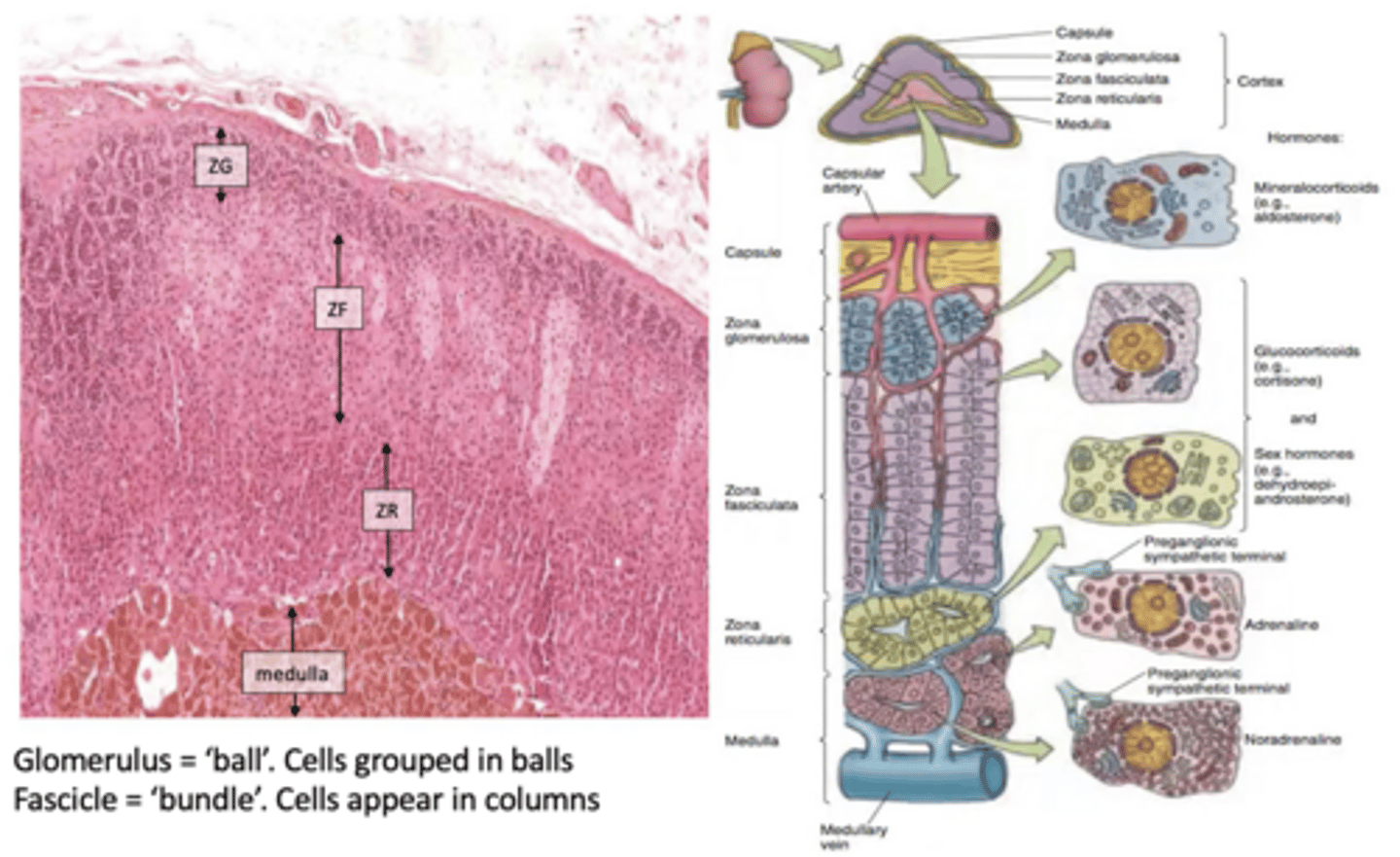
has 3 distinct zones of specialized secretory cells
What is the composition of the adrenal cortex like?
-zona glomerulosa
-zona fasciculata
-zona reticularis
What are the 3 distinct zones of specialized secretory cells in the adrenal cortex from the outermost to the innermost?
cells grouped in balls and separated by CT and capillaries (glomerulus = "ball")
How does the zona glomerulus appear histologically?
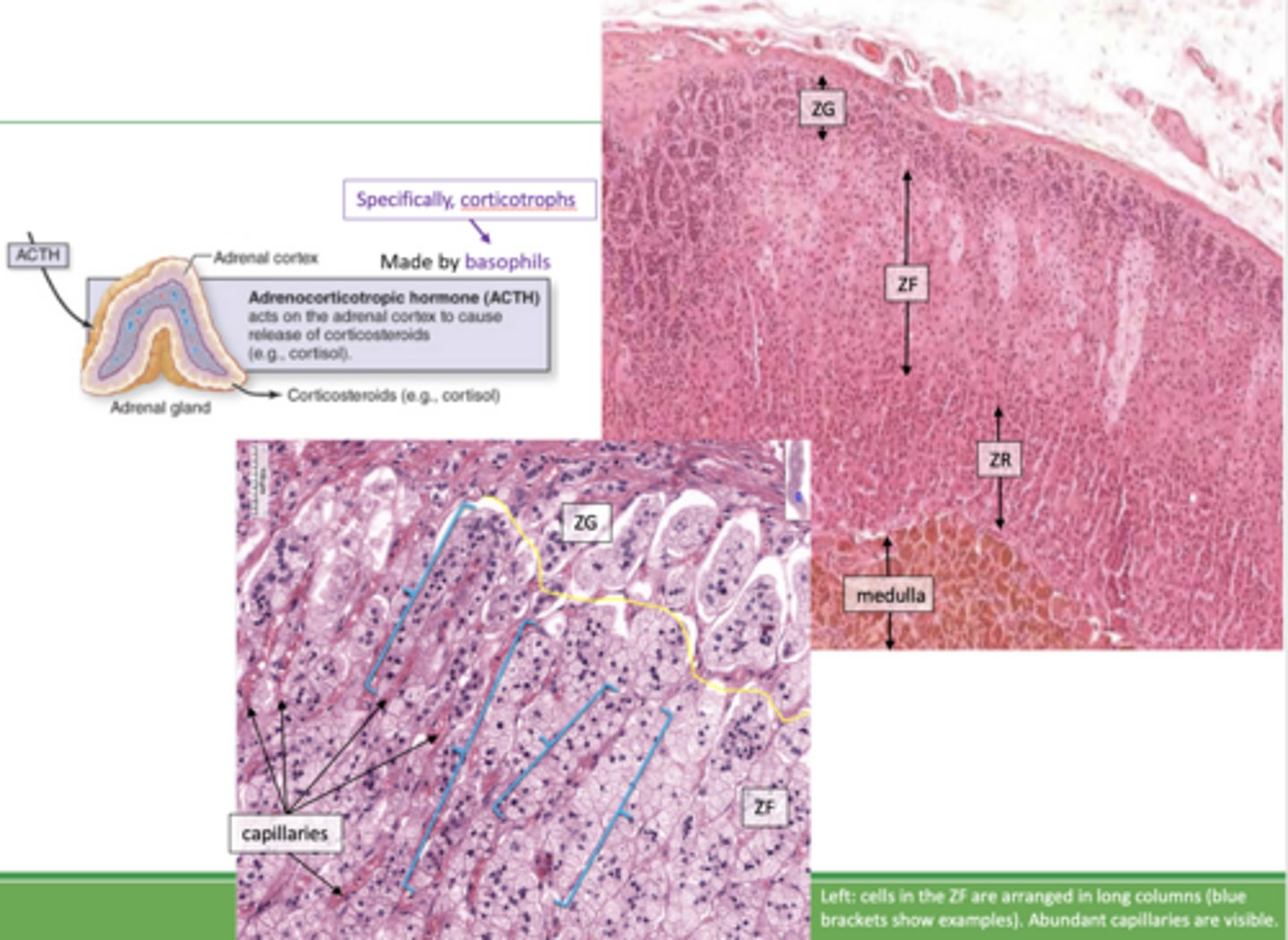
cells appear in columns (fascicle = "bundle")
How does the zona fasciculata appear histologically?
adrenal cortex:
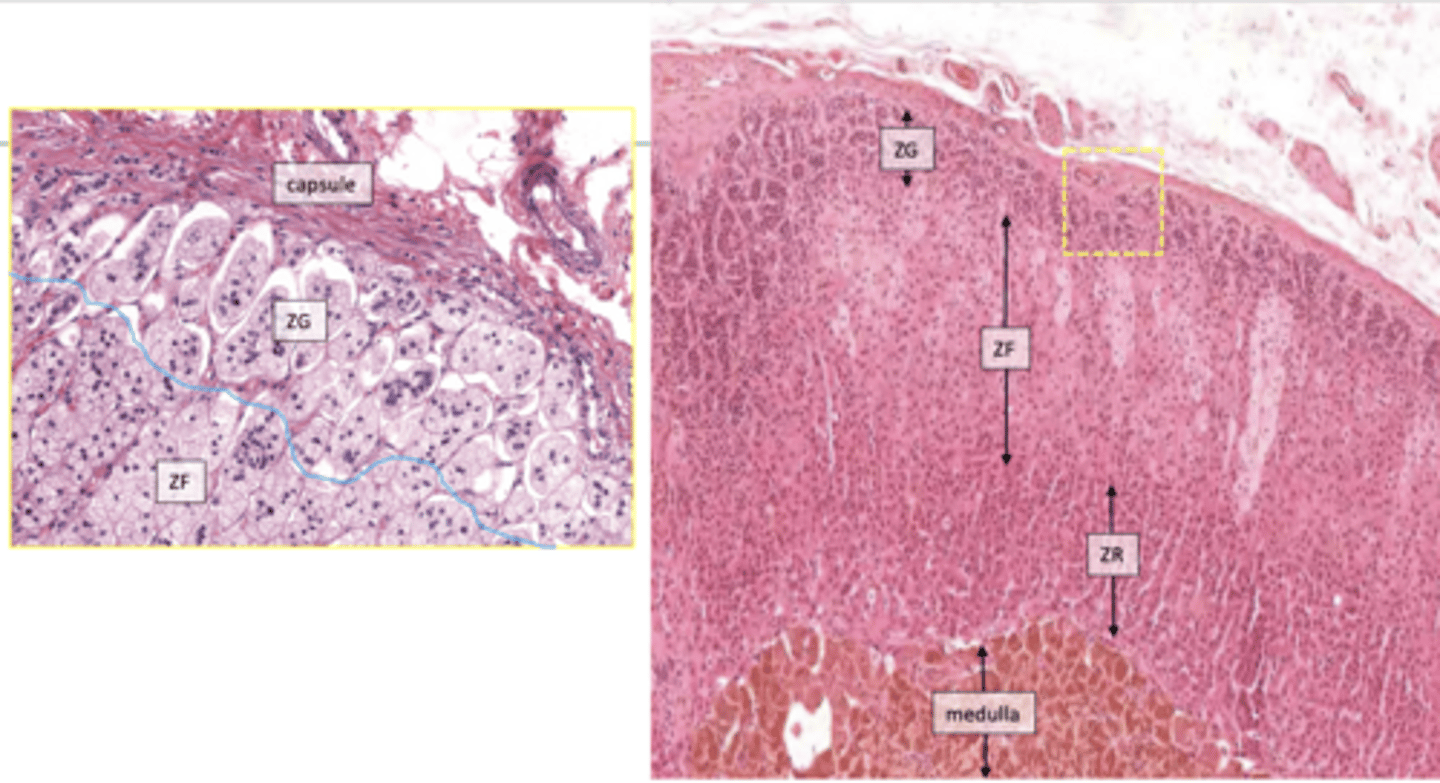
in the adrenal cortex beneath the capsule (outermost of 3 layers)
Where is the zona glomerulosa located?
arranged in "balls"
How are the cells arranged in the zona glomerulosa?
cells have small, round, darkly-staining nuclei and a 'foamy' cytoplasm
What is the appearance of cells in the zona glomerulosa like?
due to lipid content
Why do cells of the zona glomerulosa have a 'foamy' cytoplasm?
produce aldosterone
What is the function of the cells of the zona glomerulosa?
works on the distal convoluted tubules of the nephrons of the kidney to stabilize BP by stimulating reabsorption of Na+ and water
What is the function of aldosterone, produced by the cells of the zona glomerulosa?
by drop in BP/blood volume
How is synthesis of aldosterone by the cells of the zona glomerulosa stimulated?
zona glomerulosa of adrenal cortex:
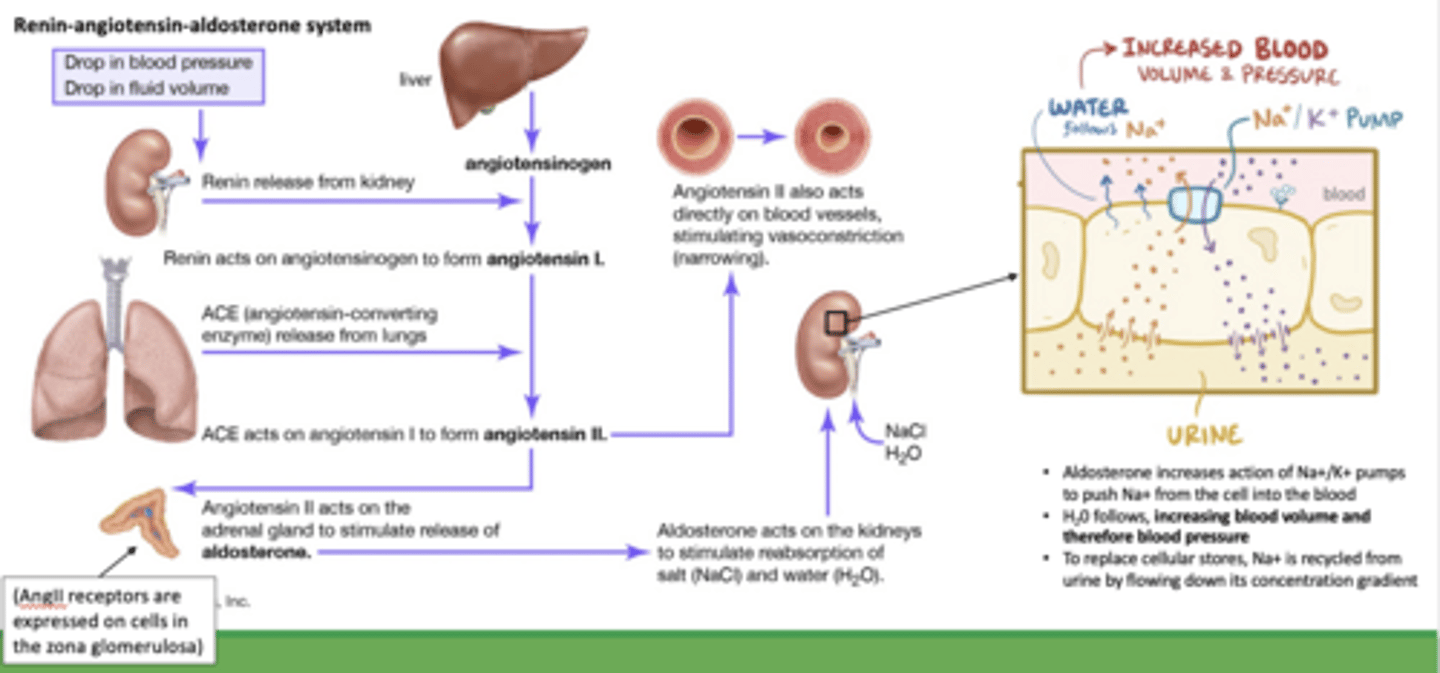
renin released from the kidney converts angiotensin released from the liver into angiotensin I
How does the renin-angiotensin-aldosterone system (RAAS) function when there is a drop in BP or fluid volume?
ACE (angiotensin-converting enzyme) released from the lungs angiotensin I to form angiotensin II
What happens when renin released from the kidney converts angiotensin released from the liver into angiotensin I?
-acts on adrenal gland to stimulate release of aldosterone, which acts on kidneys to stimulate resorption of NaCl and water
-acts directly on blood vessels to stimulate construction
-> both increase BP/blood volume
What are the 2 main functions of angiotensin II?
AngII receptors are expressed on cells in the zona glomerulosa
How does angiotensin II act on the adrenal gland?
it increases action of Na+/K+ pumps to push Na+ from the cell into the blood, which H20 follows, thus increasing blood volume and therefore blood pressure
-> to replace cellular stores, Na+ is recycled from urine by flowing down its concentration gradient
How does aldosterone act on the kidney to increase blood volume/BP, and explain?
aldosterone involvement in fluid balance:
the middle (and largest) layer of cortex
What is the zona fasciculata?
contains 2-cell wide vertical cords, bordered by strings of CT and capillaries
What is the composition of the zona fasciculata of the cortex like?
similar to ZG with small, dark nuclei and frothy cytoplasm and can appear lighter due to lipid volume
How do the cells of the zona fasciculata compare to those of the zona glomerulosa on histology?
primarily make cortisol, specifically the basophils/corticotrophs
What is the function of cells of the zona fasciculata of the cortex, and explain?
-activities of basal metabolism such as glucose homeostasis
-stress response, prolongs sympathetic 'fight or flight' response
What 2 main functions is cortisol, made by the zona fasciculata of the cortex, involved in?
-suppresses digestive system
-suppresses immune responses
-triggers feelings of fear and alarm
In what 3 ways does cortisol from the zona fasciculata prolong the sympathetic 'fight or flight' response?
zona fasciculata:
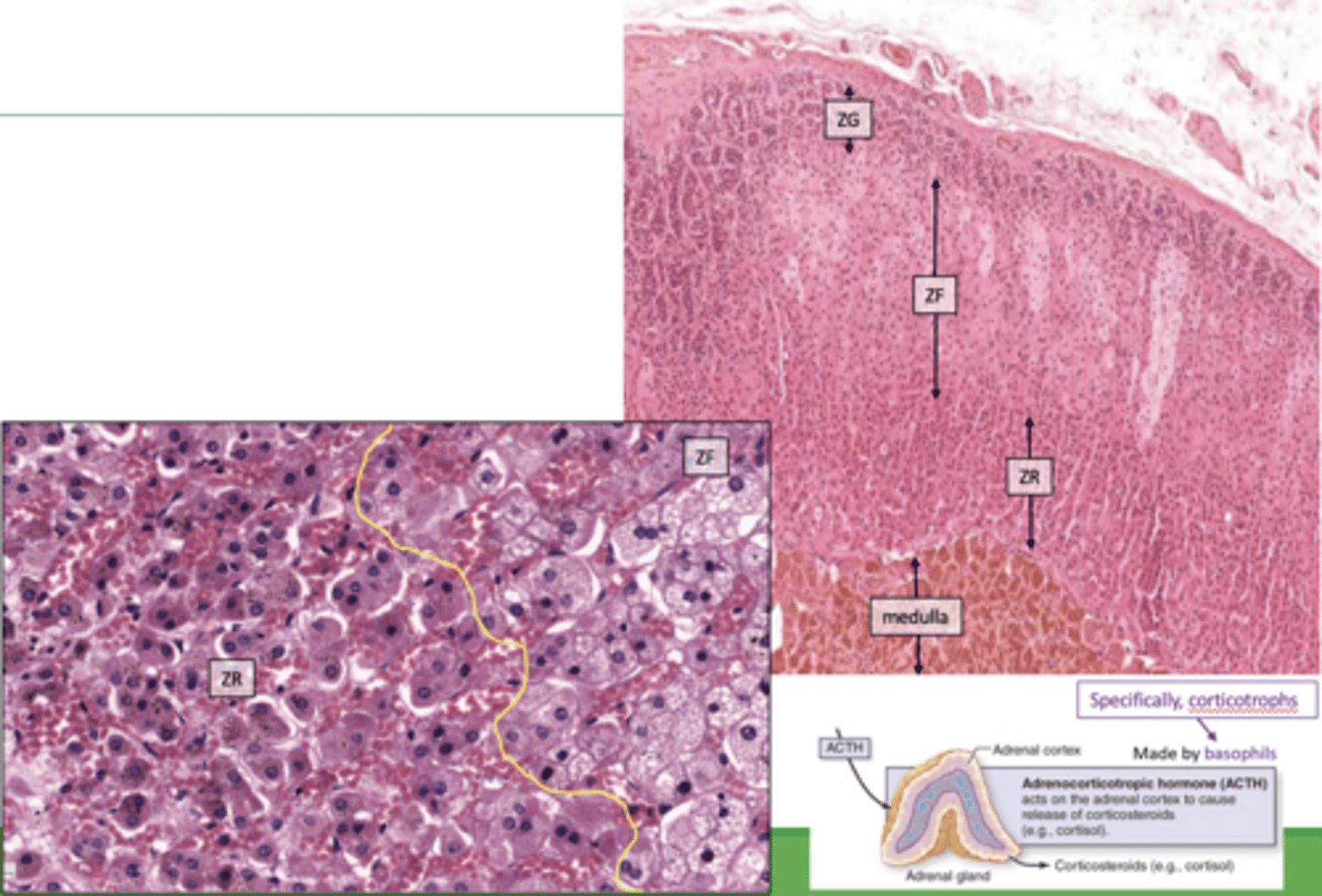
zone of adrenal cortex closest to medulla
What is the zona reticularis?
looser arrangement of intensely staining (dark) cells and cells have fewer lipids, generally appearing darker than zona fasciculata
What is the composition of the zona reticularis of the cortex like?
make dehydroepiandrosterone (DHEA)
What is the function of the cells in the zona reticularis of the cortex?
a precursor to androgens such as testosterone and estrogen
What is dehydroepiandrosterone (DHEA)?
ACTH
What is the synthesis of dehydroepiandrosterone (DHEA) stimulated by?
zona reticularis of the cortex:
symptoms of primary adrenal insufficiency corresponding to the layer affected
What does sufficient damage to the adrenal cortex cause?