DPRP 712- OSCE exam practice questions
 Call Kai
 Learn
Learn Practice Test
 Spaced Repetition
 Match
Match Flashcards
 Knowt Play
1/63

There's no tags or description
Looks like no tags are added yet.
Name | Mastery | Learn | Test | Matching | Spaced | Call with Kai |
|---|
No analytics yet
Send a link to your students to track their progress
64 Terms
1- labial notch
2- labial flange
3- buccal notch
4- buccal flange
5-coronoid contour
6- alveolar groove
7-area of tuberosity
11- median palatine groove
12- incisive fossa
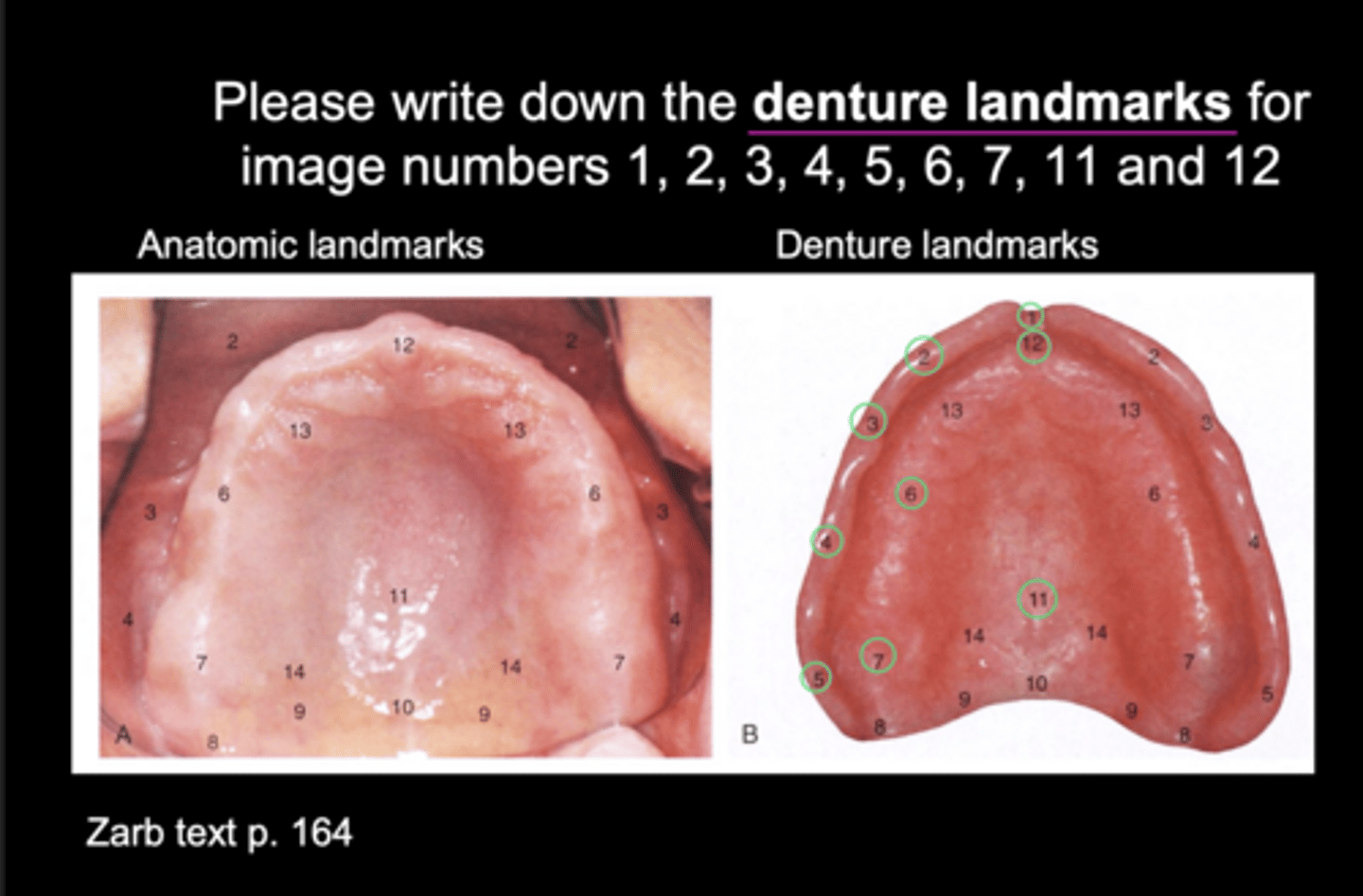
1-labial frenulum
2-labial vestibule
3-buccal frenulum
4-buccal vestibule
5- n/a
6- residual alveolar ridge
7- maxillary tuberosity
11-median palatine raphe
12-incisive papilla
Write down corresponding anatomic landmarks
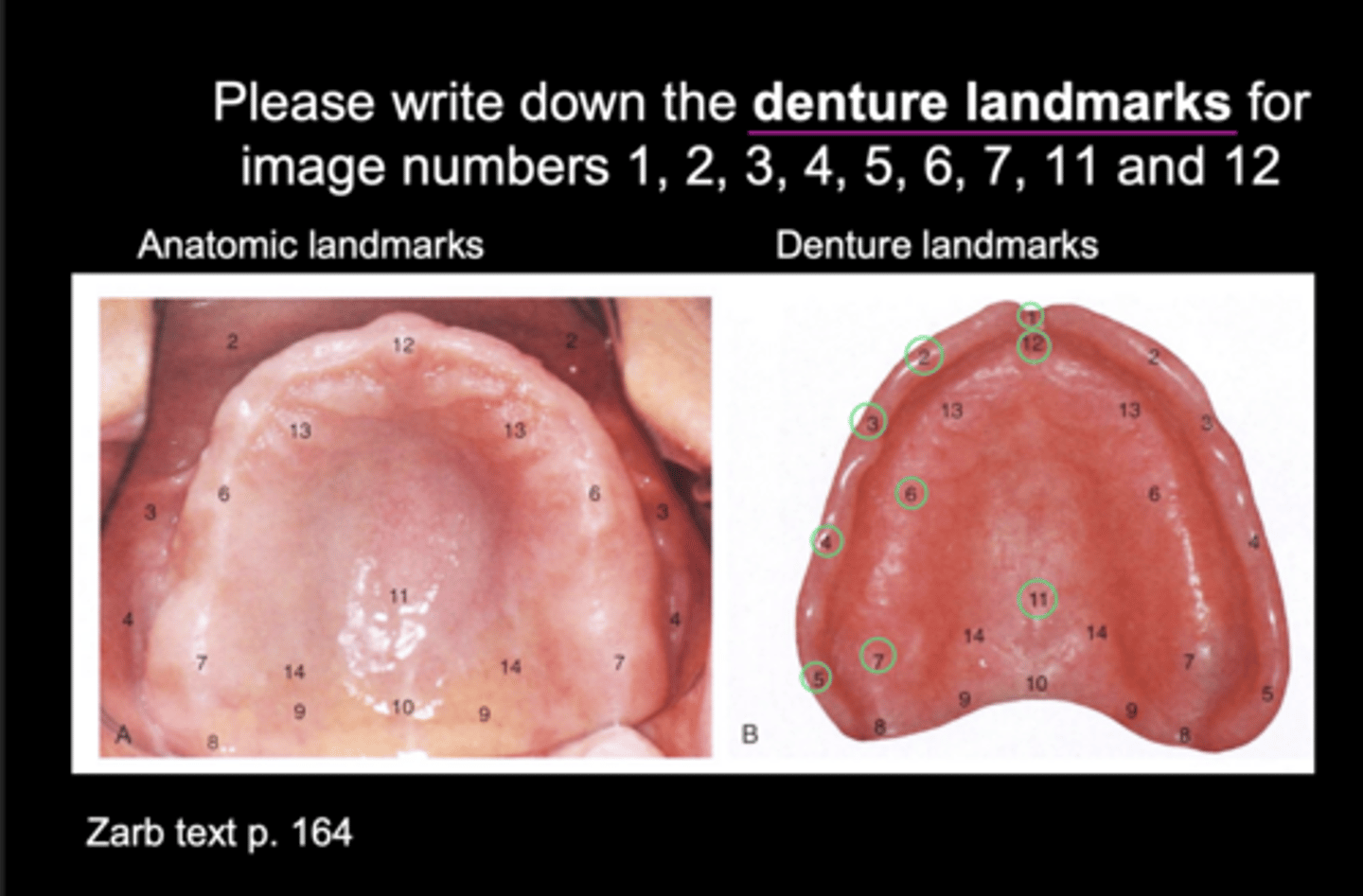
Yellow- posterior lingual flange
Red- pterygomandibular flange
Blue- posterior buccal flange
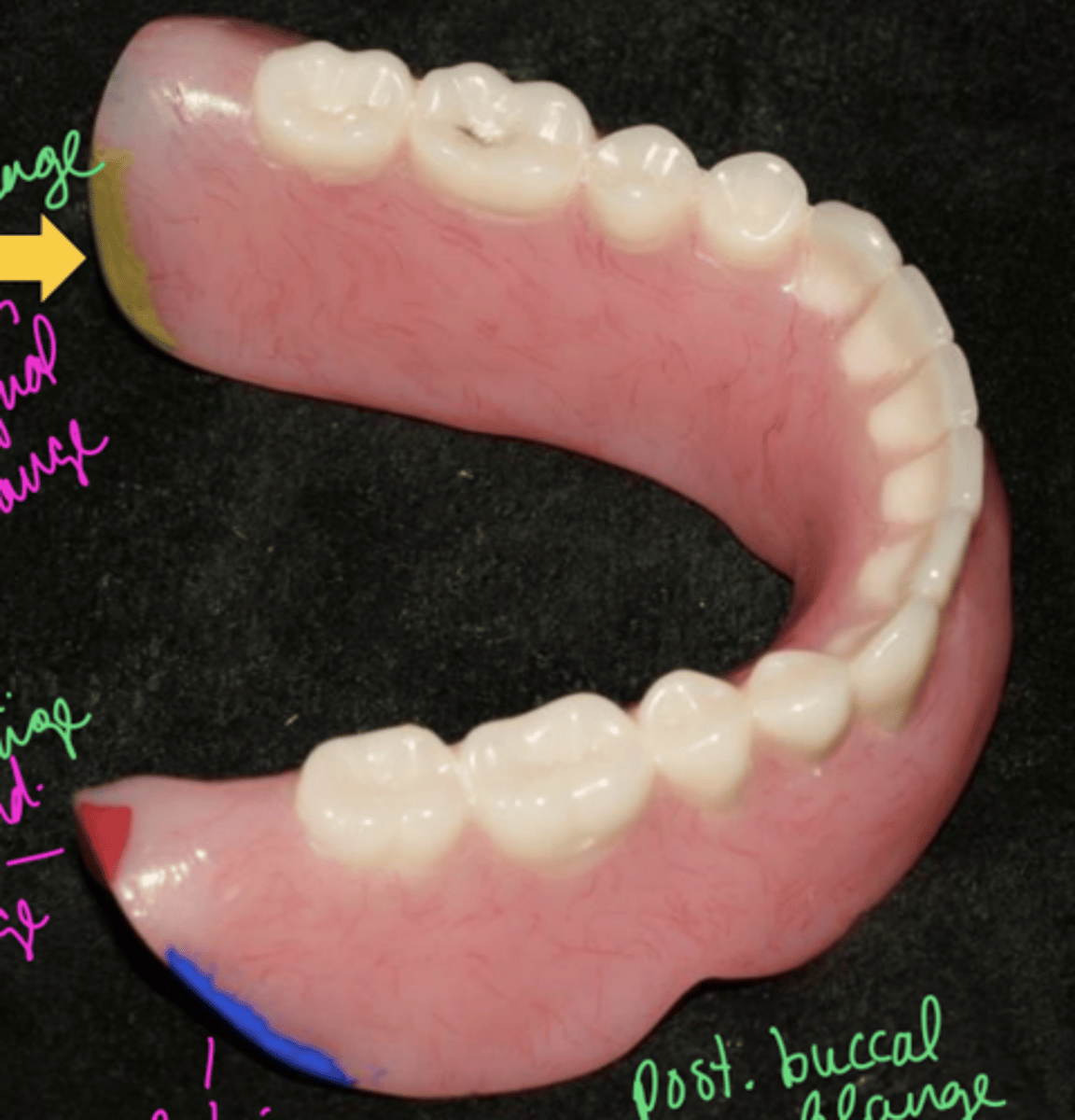
6- buccal shelf
7-retromolar pad
10- alveo-lingual sulcus
12- lingual frenulum
13- area of premylohyoid eminence
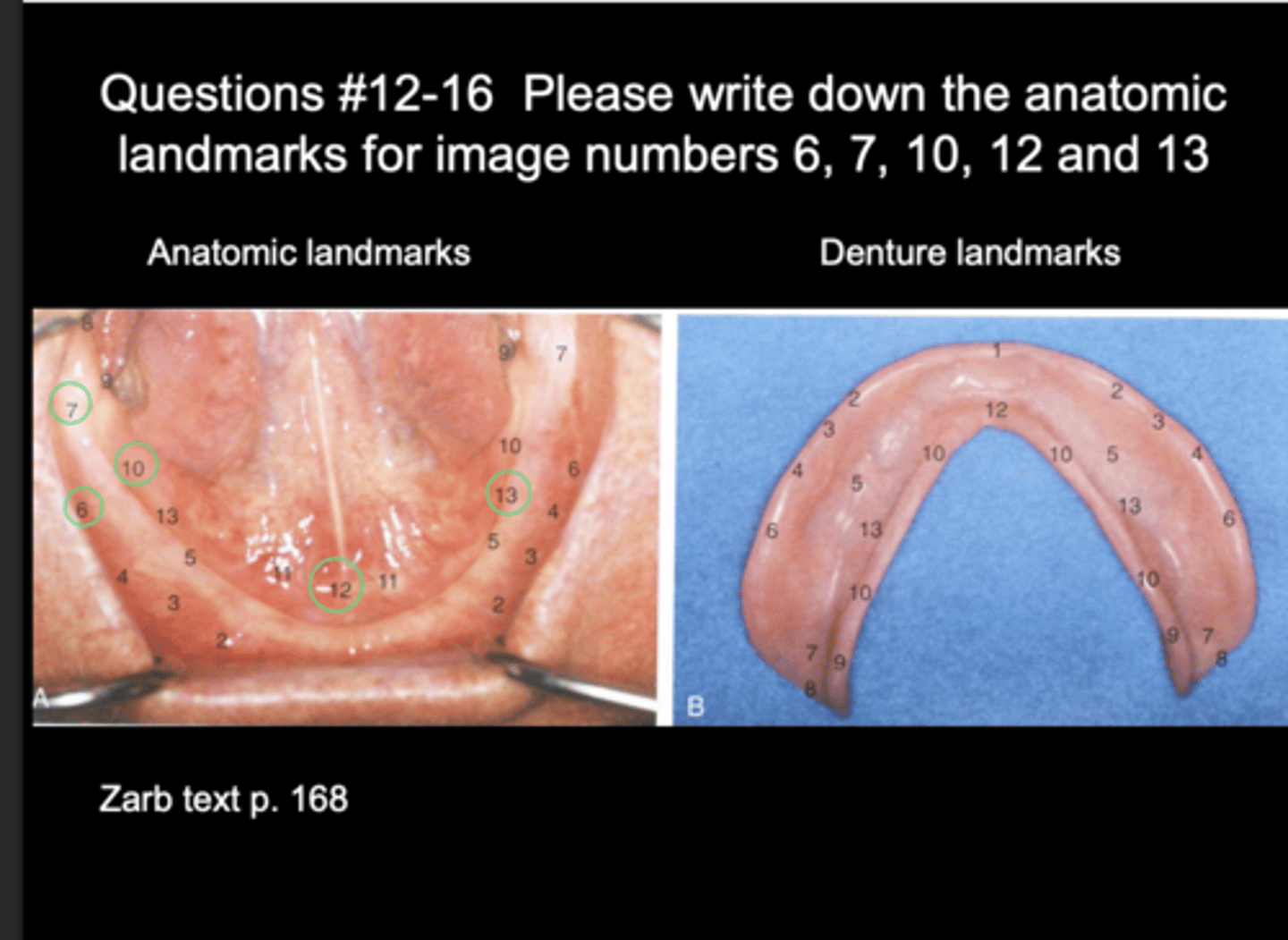
6- buccal flange
7- retromolar pad area
10- lingual flange
12- lingual notch
13- area of premylohyoid eminence
write down corresponding denture landmarks
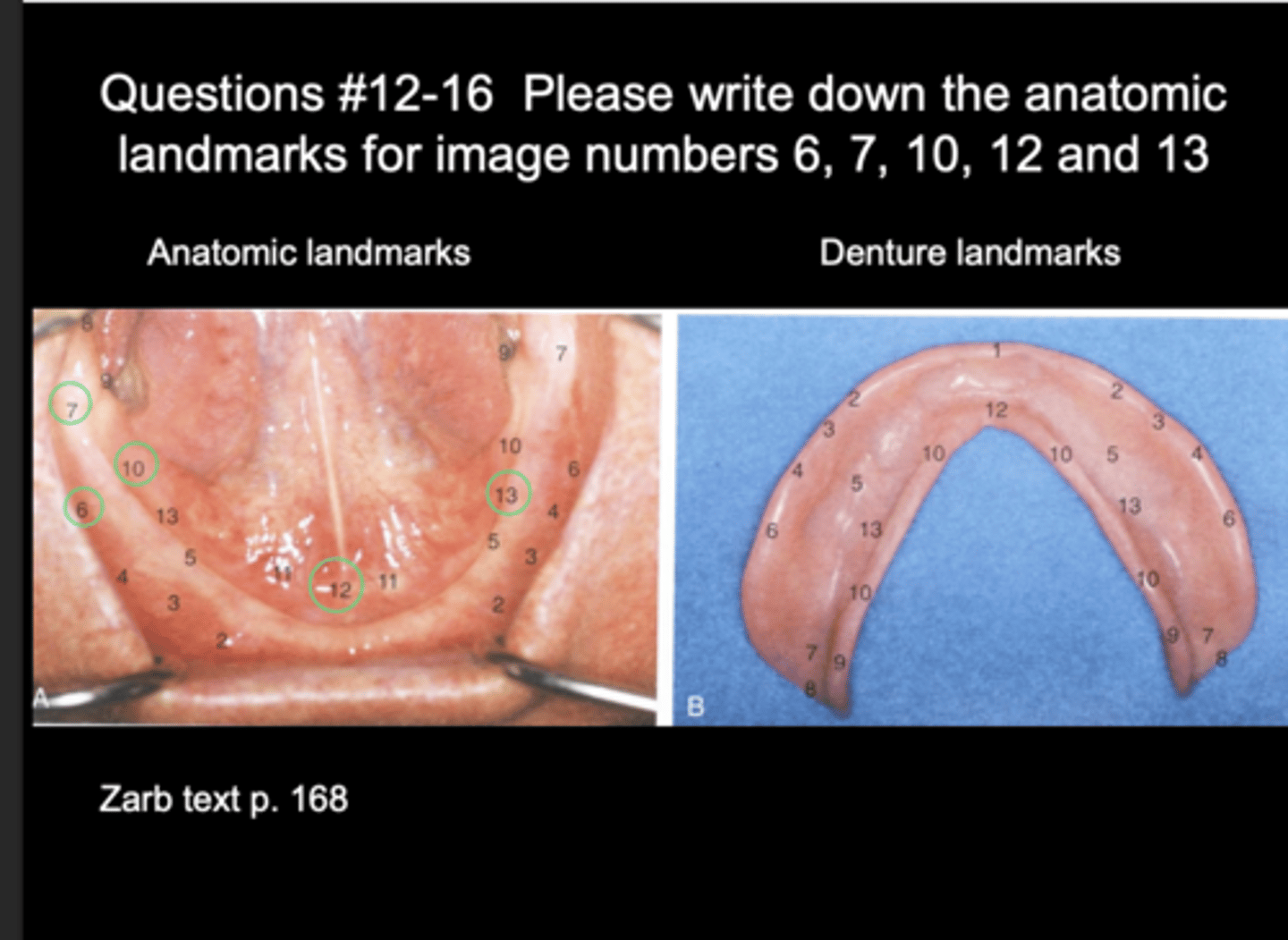
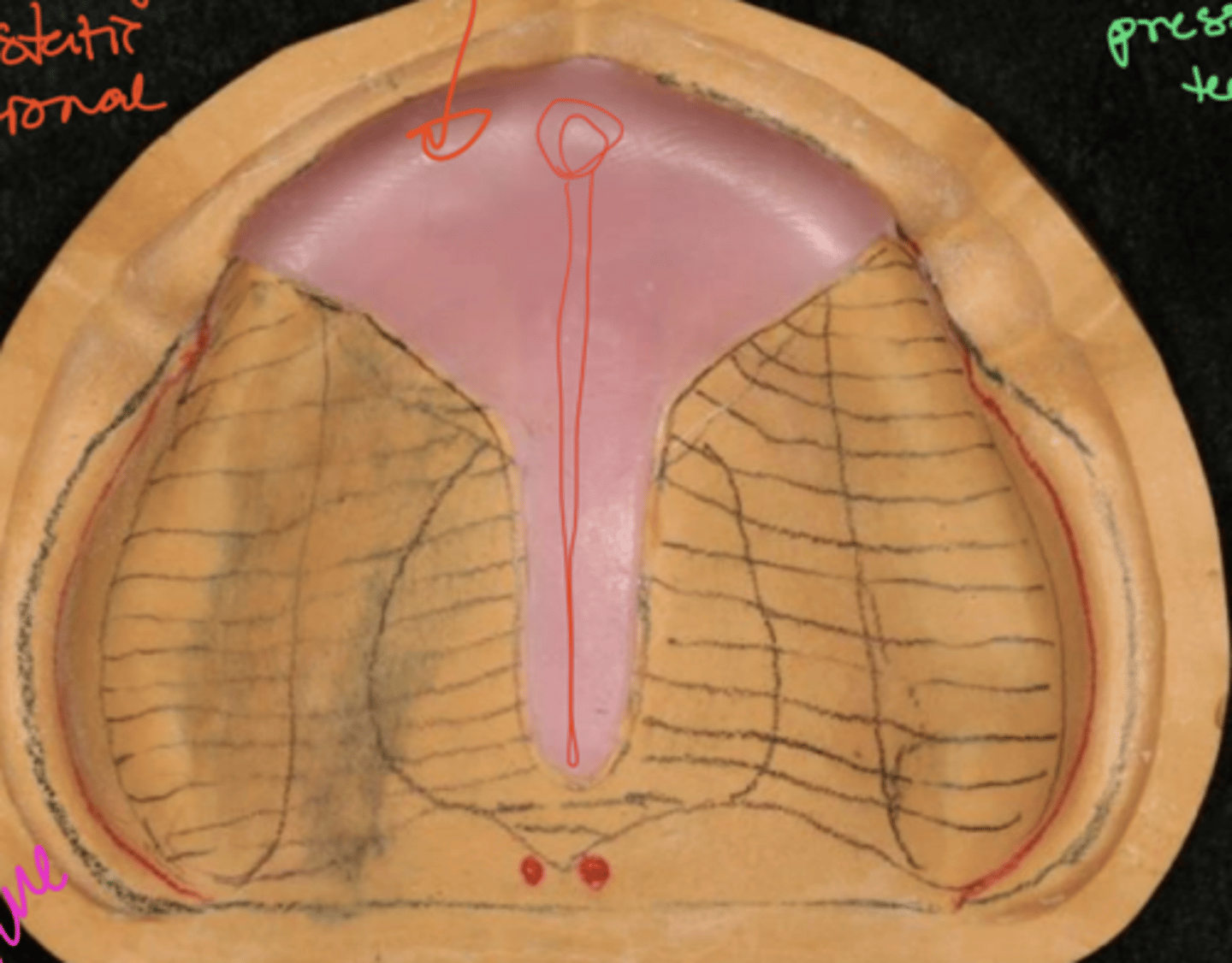
PIP (pressure indicating paste) and mizzy sprayed over PIP
indicates too much pressure down middle of palate (relief area)
to fix this you remove some of the denture in that area and establish pressure spots in primary areas
what is being used in this situation and what is occurring
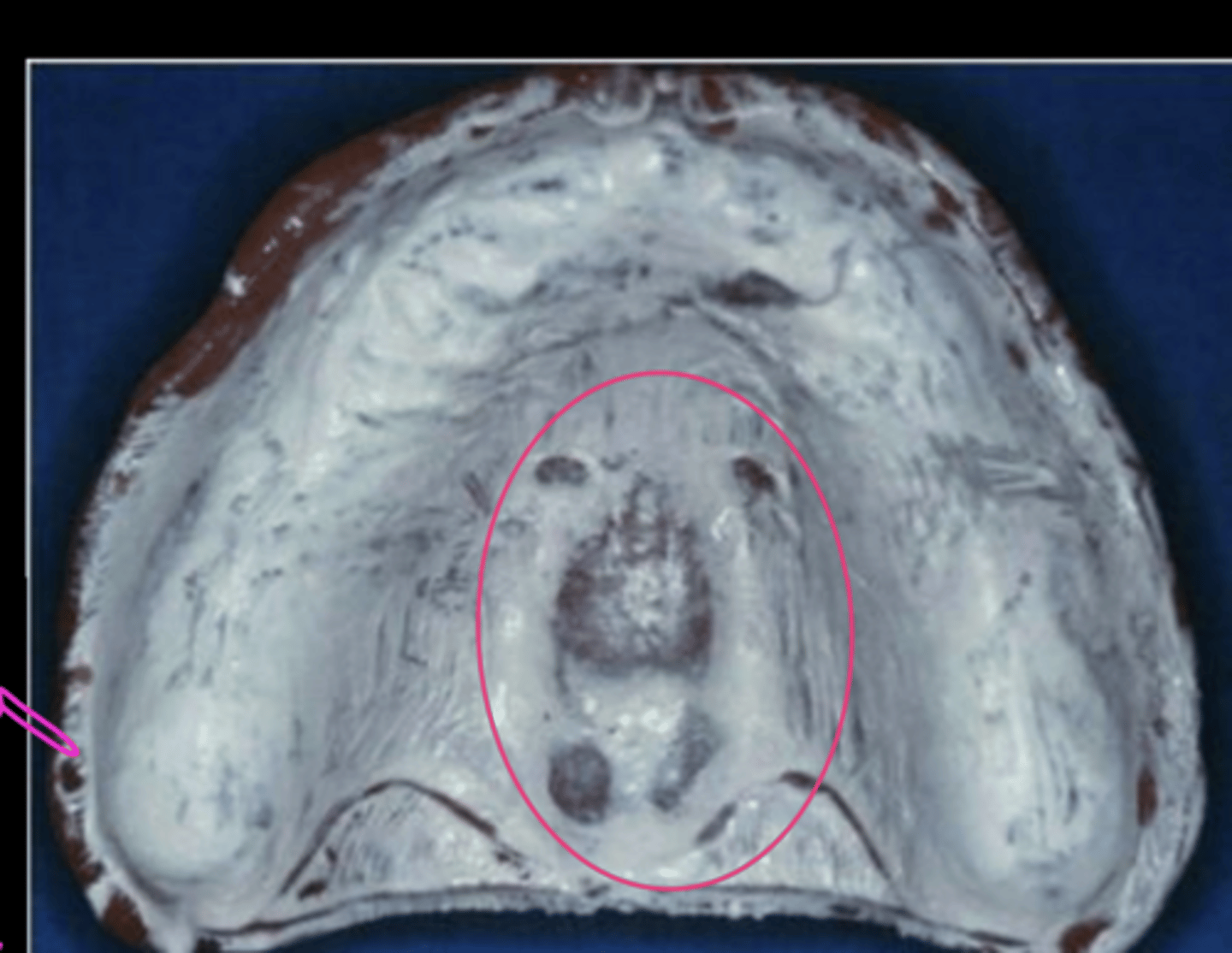
Addition polymerization of PMMA
R= initiator benzoyl peroxide
what is this? what is R?
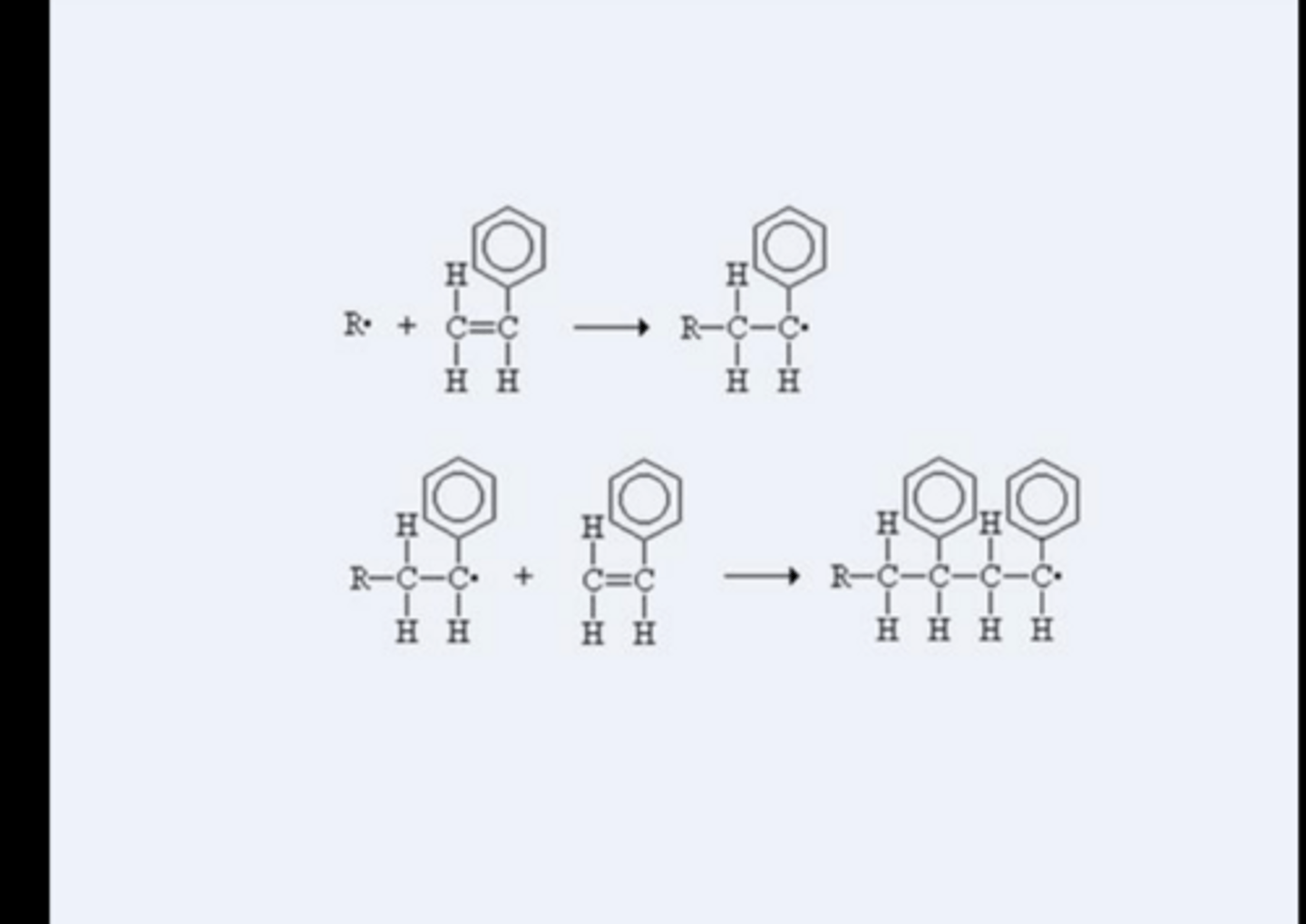
Palatal contour- use occlude powder spray to make a palatogram of denture contour
S curve- slight ridges medial to maxillary posterior teeth, the patient made S sound
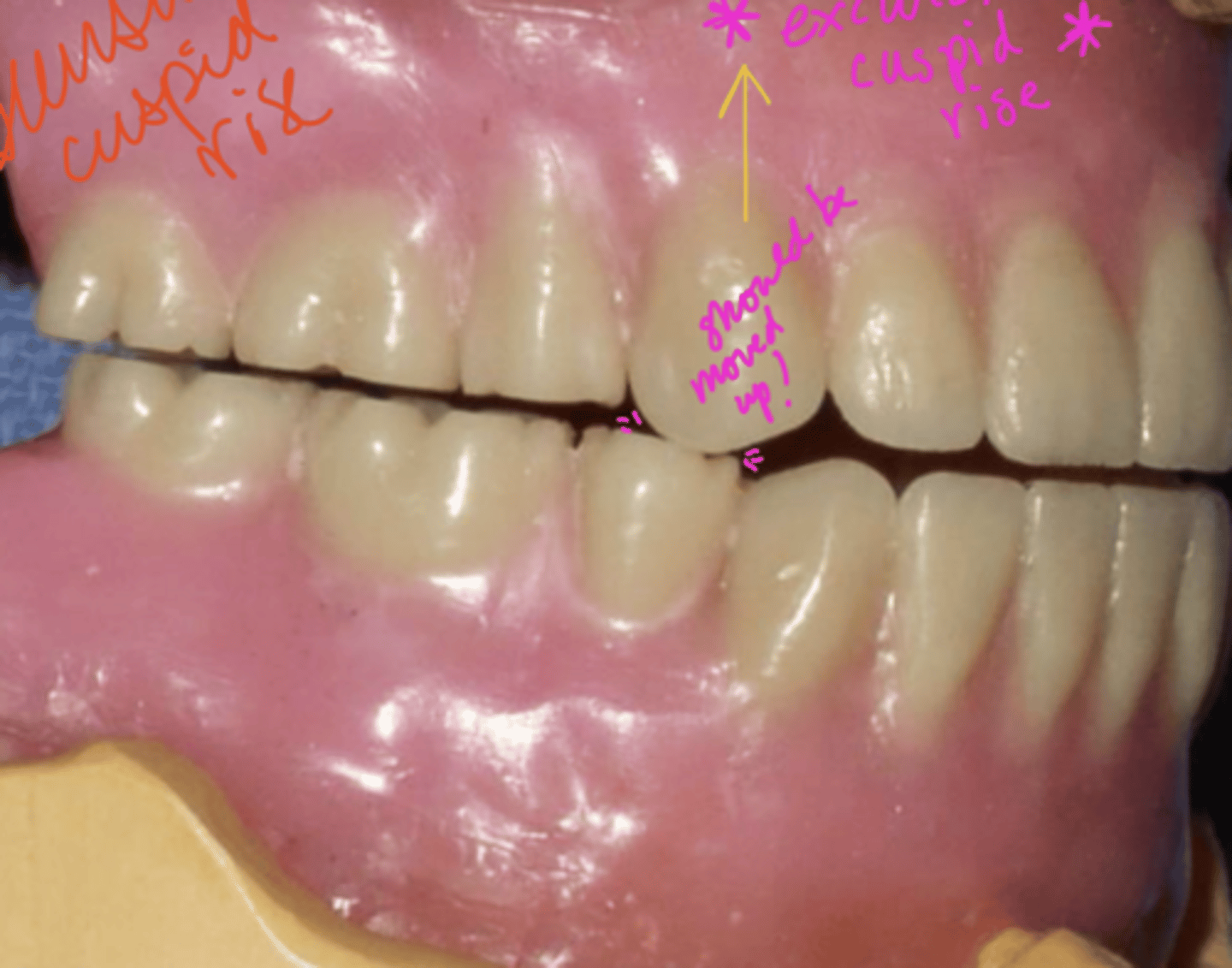
what is going on in this image
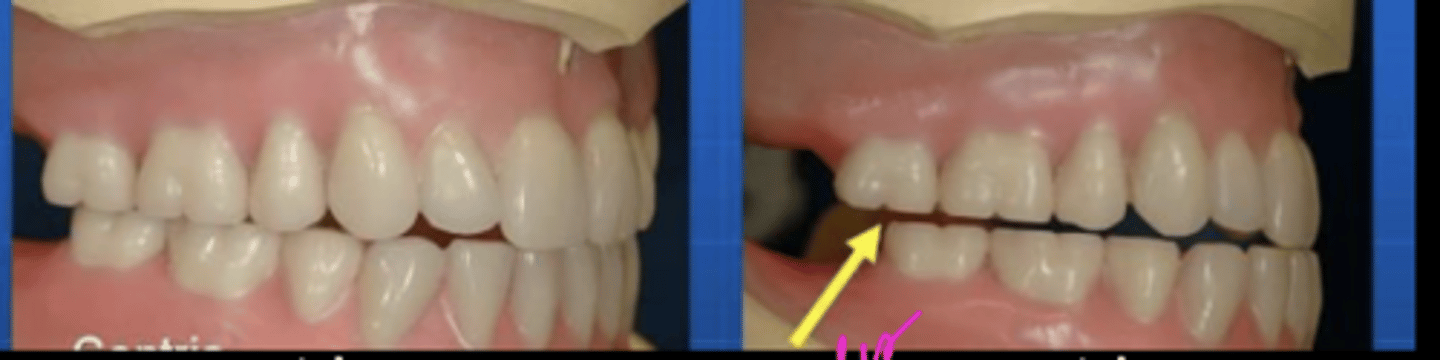
Excursive cuspid rise
maxillary canine interfering with eccentric movement and should be moved gingivally
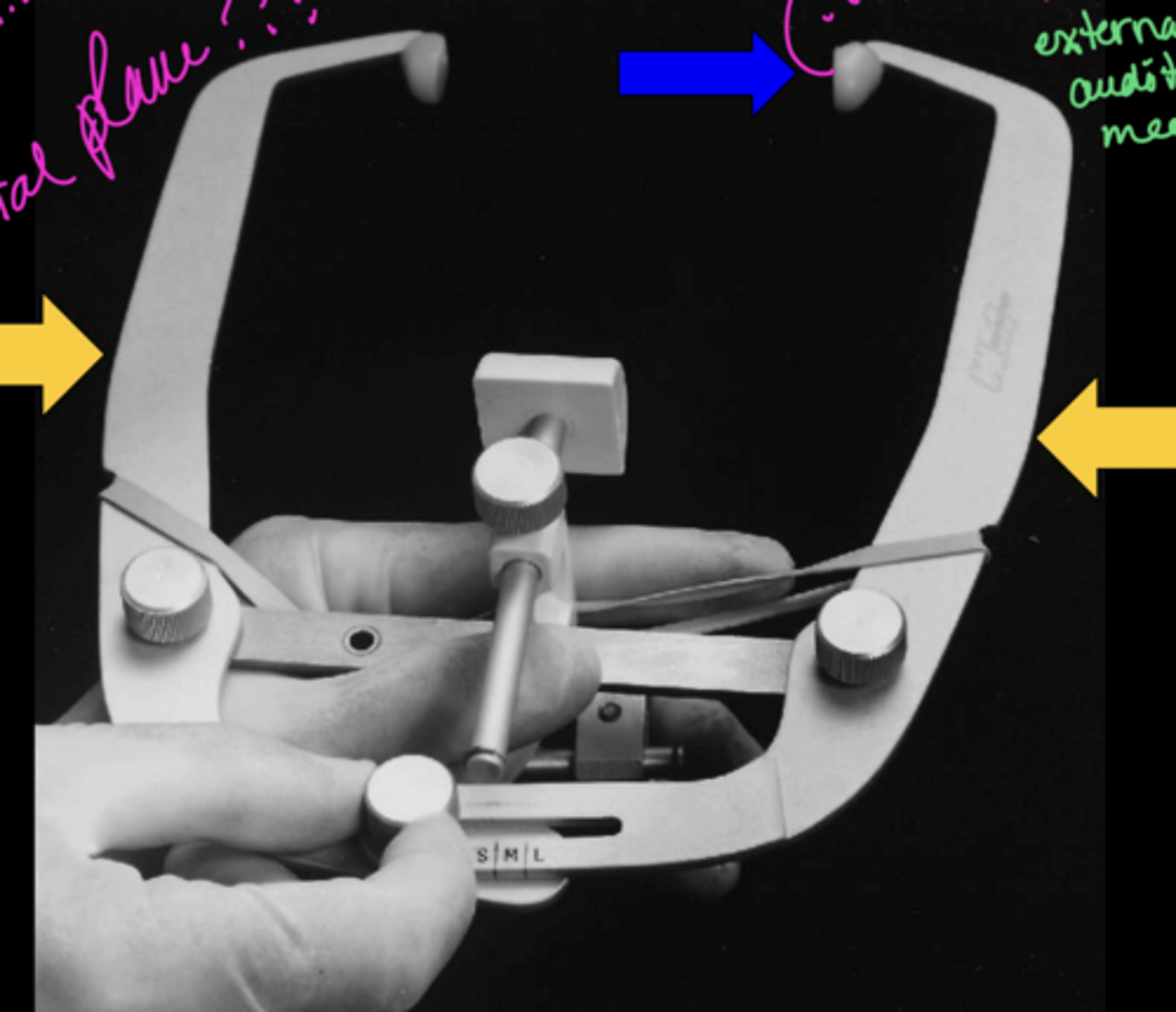
Blue- external auditory meatus
Yellow- Frankfort plane
Facebow is used to orient maxillary cast to transverse hinge axis on articulator
What are the arrows pointing to and what is this instrument used for
a- ascending ramus
b- 2/3 retromolar pad height
c- over the ridge line
d- lingual control line
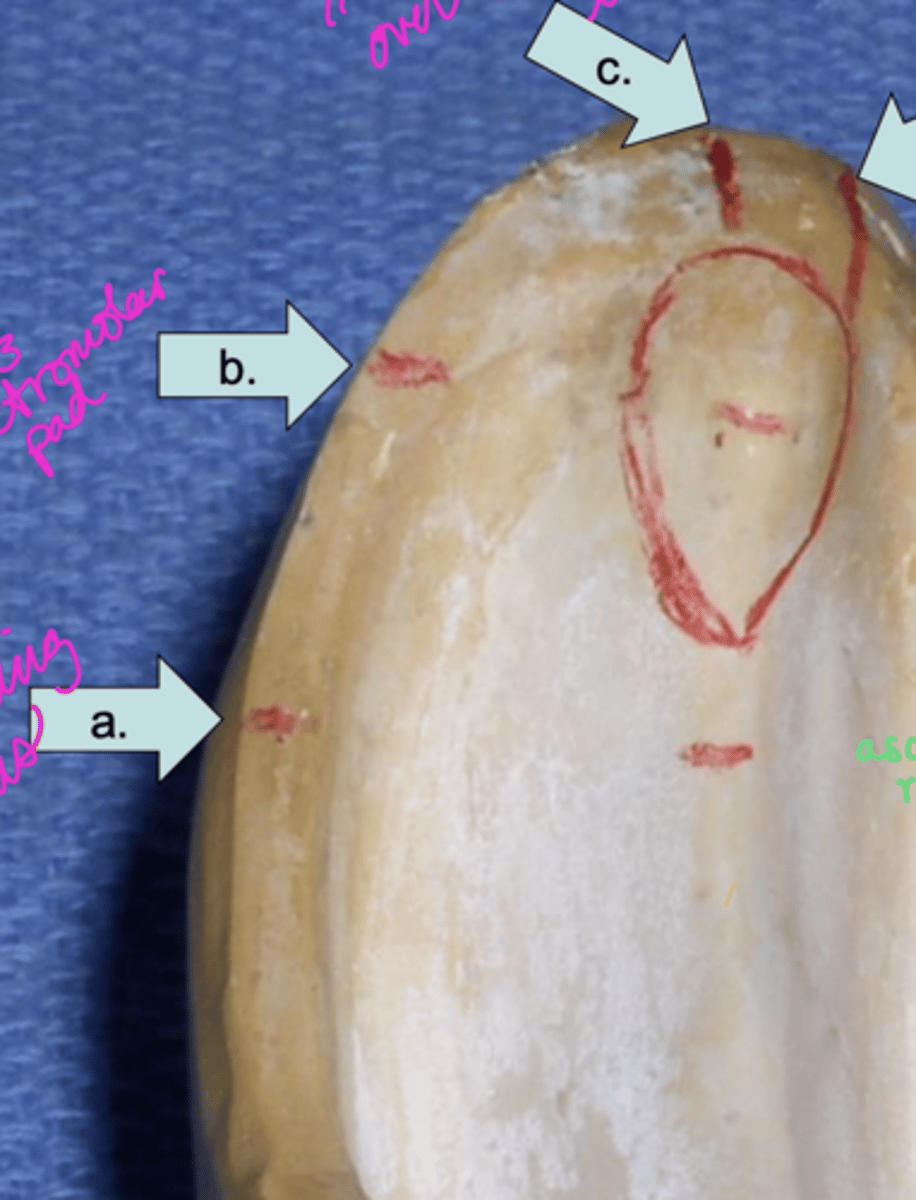
external and internal oblique lines meet here, no teeth distal to ascending ramus
what meets at ascending ramus and do we want to set teeth past this line?
a-secondary bearing area
b- secondary bearing area
c- relief area
d- primary bearing area
e- non contributory
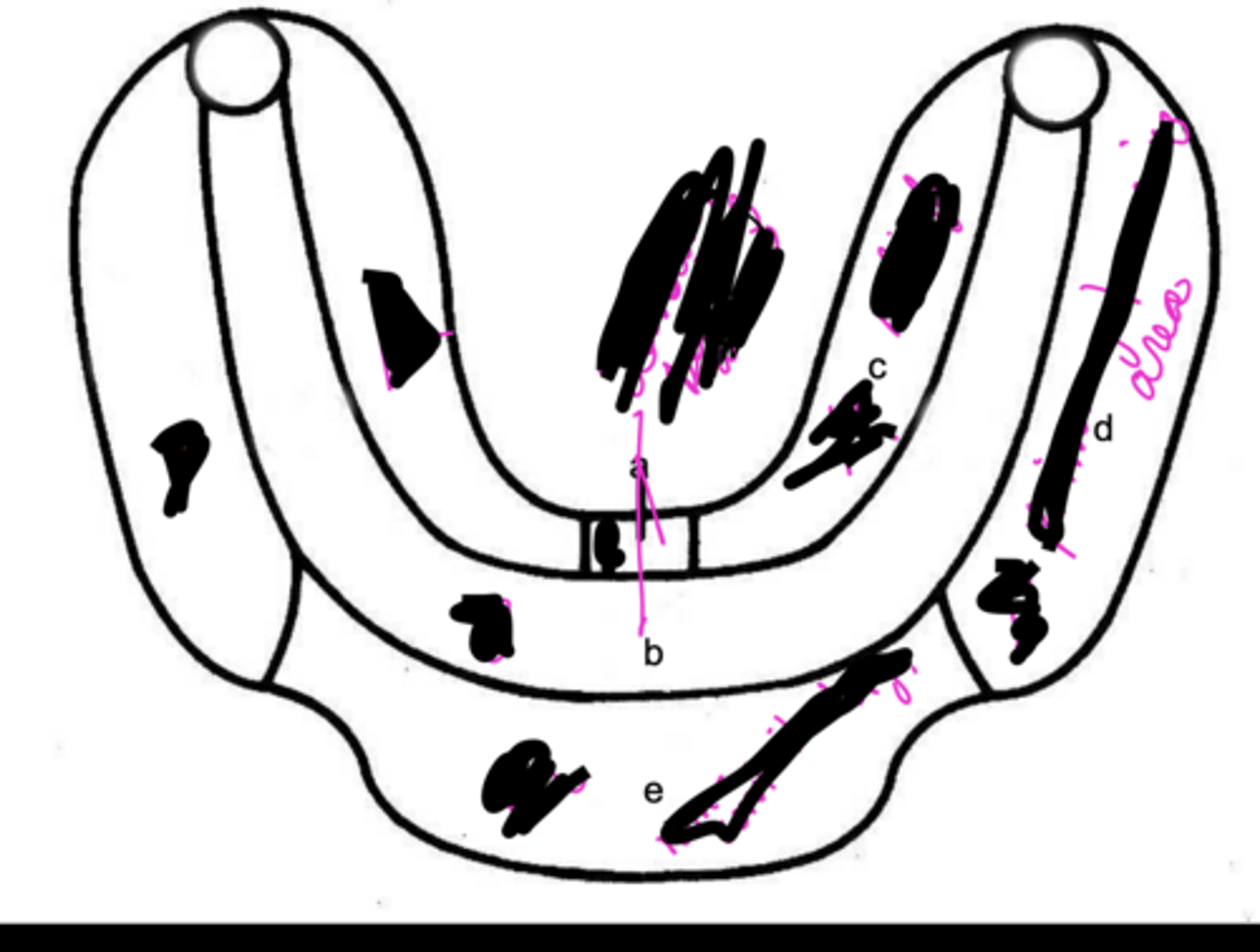
selective pressure technique- wax blocks out areas to relieve- incisive papilla and midpalatine suture
what technique is being used
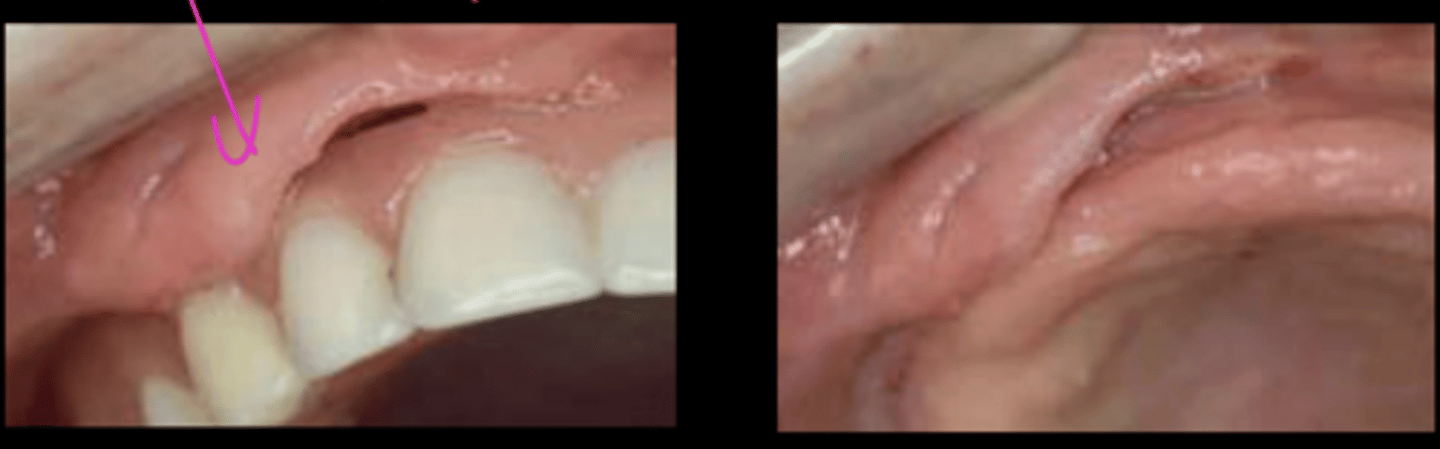
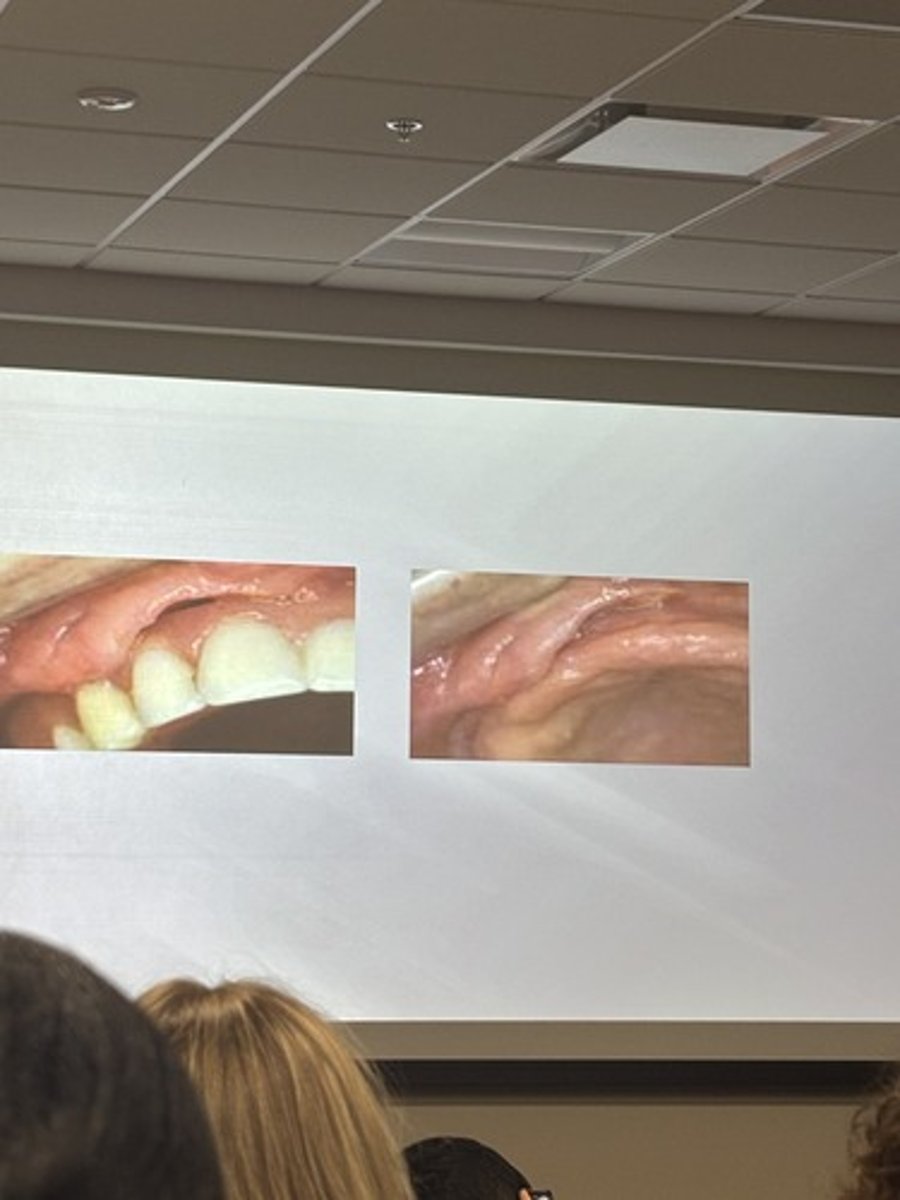
Inflammatory fibrous hyperplasia from too long denture wear
epulis fissuratum
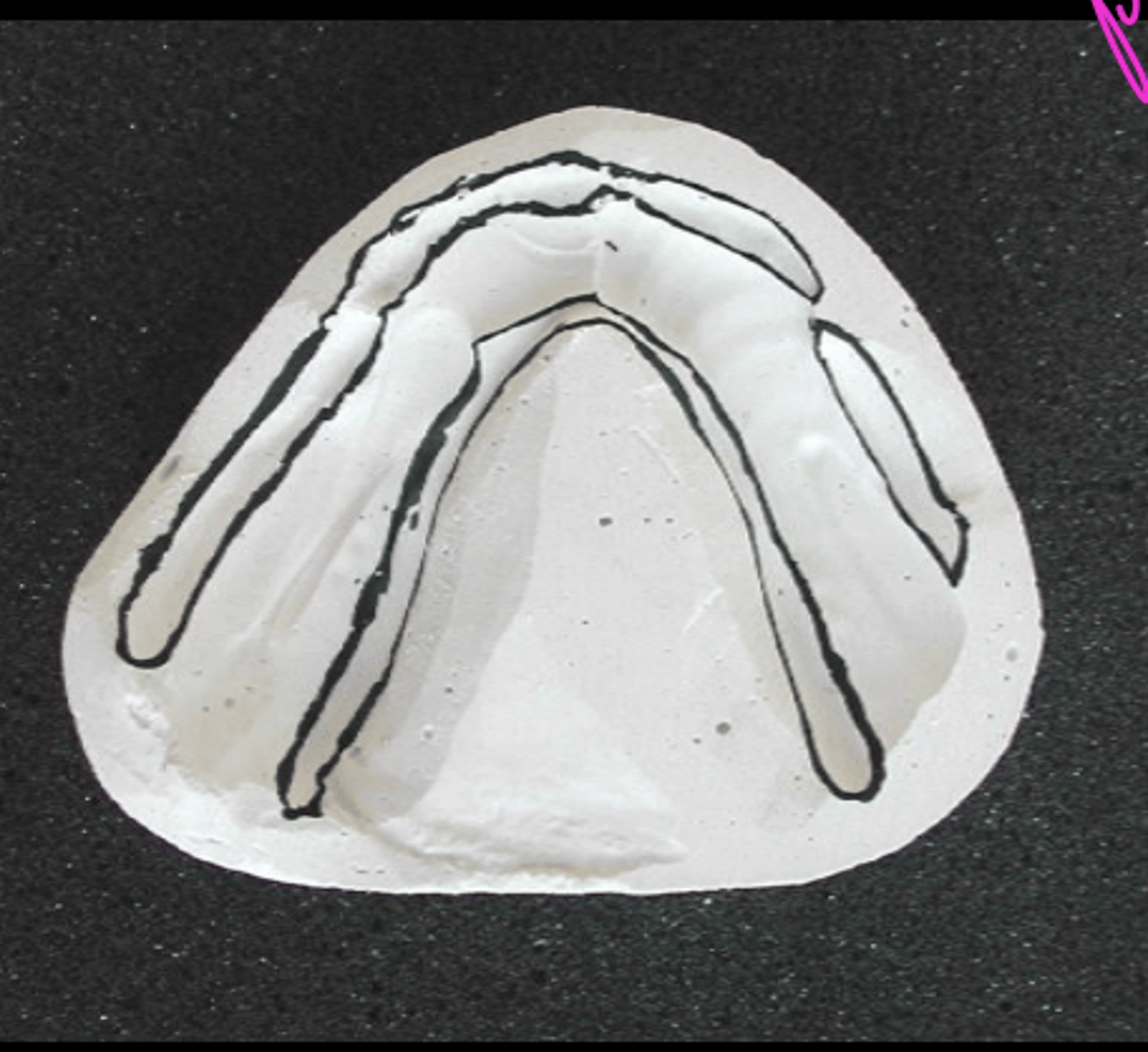
remount paddies- areas the dentures contact
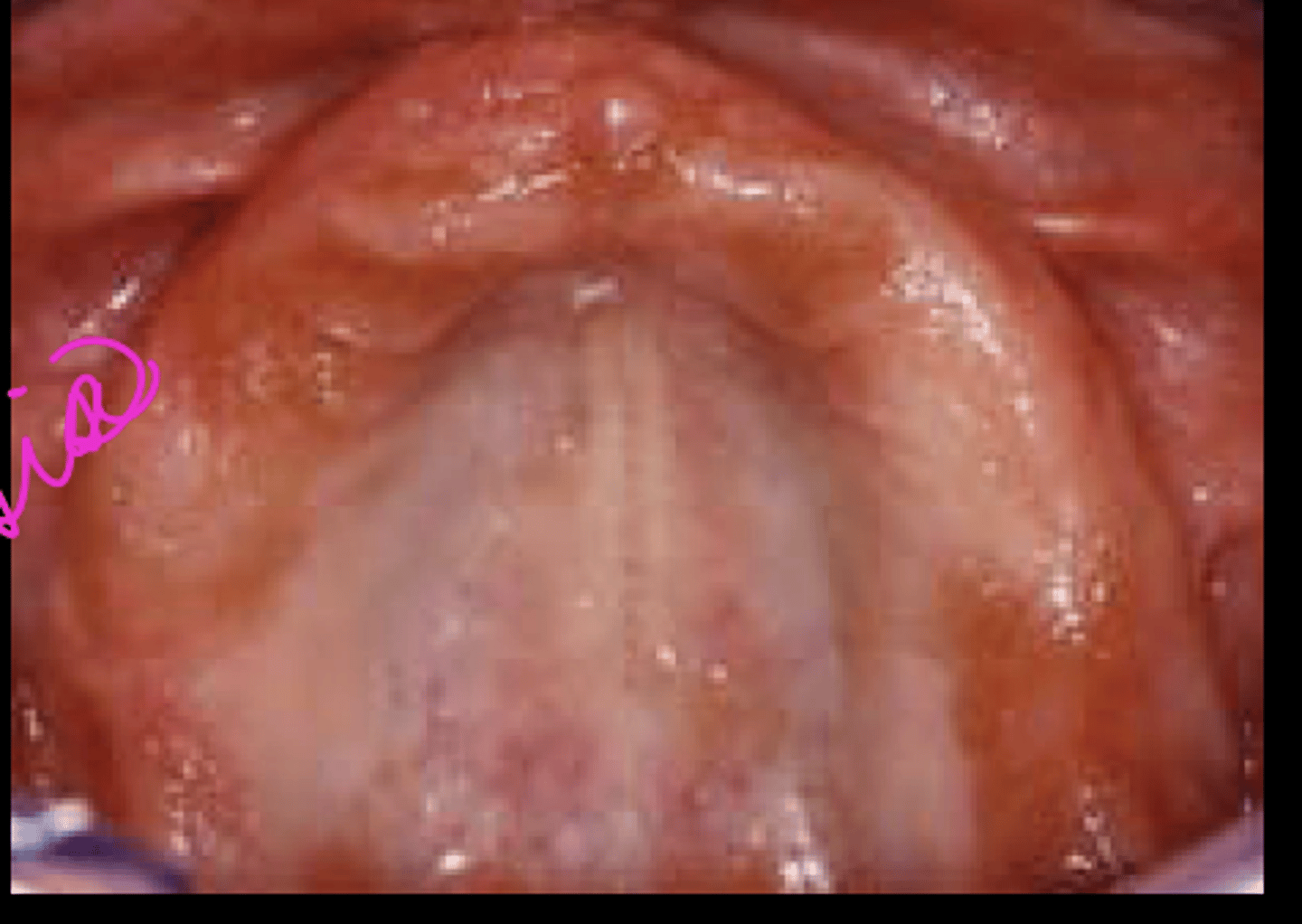
Papillary hyperplasia from ill-fitting maxillary dentures
Pinpoint hyperemia of type I denture stomatitis
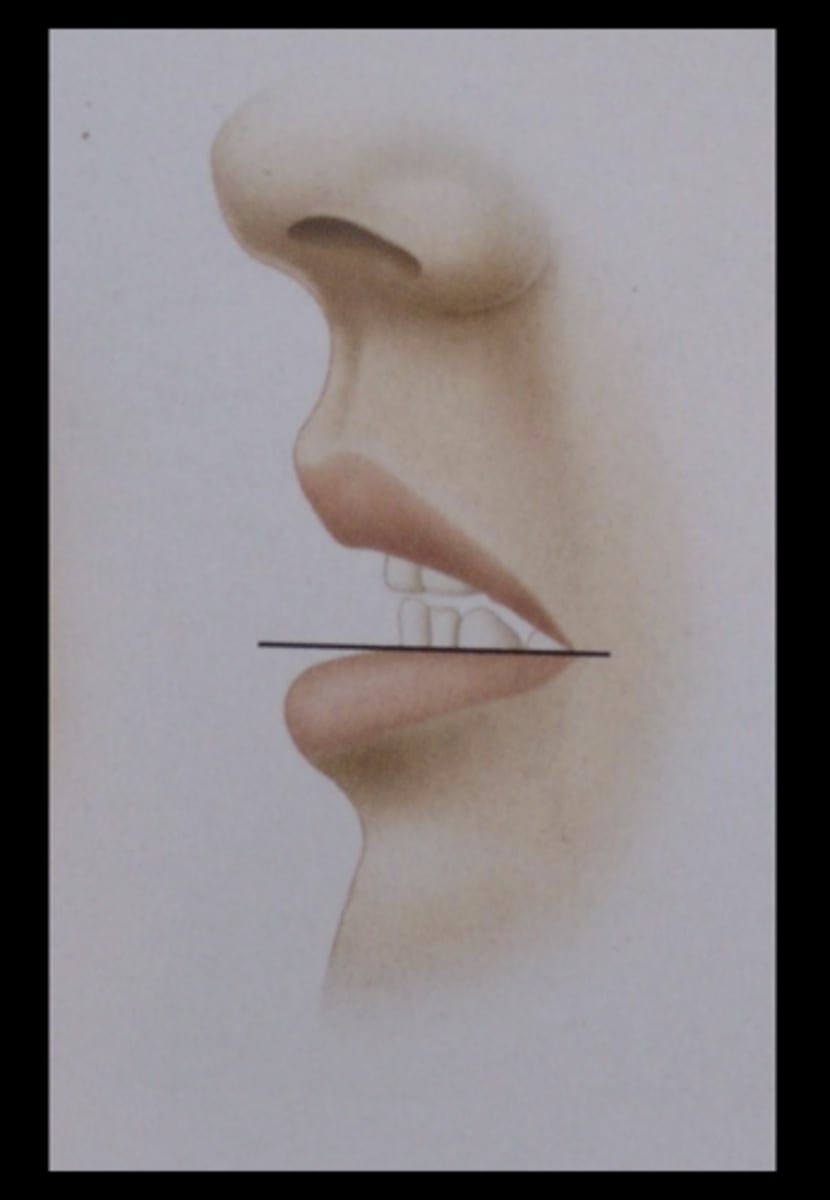
lower lip line, relationship of lower teeth to lower lip
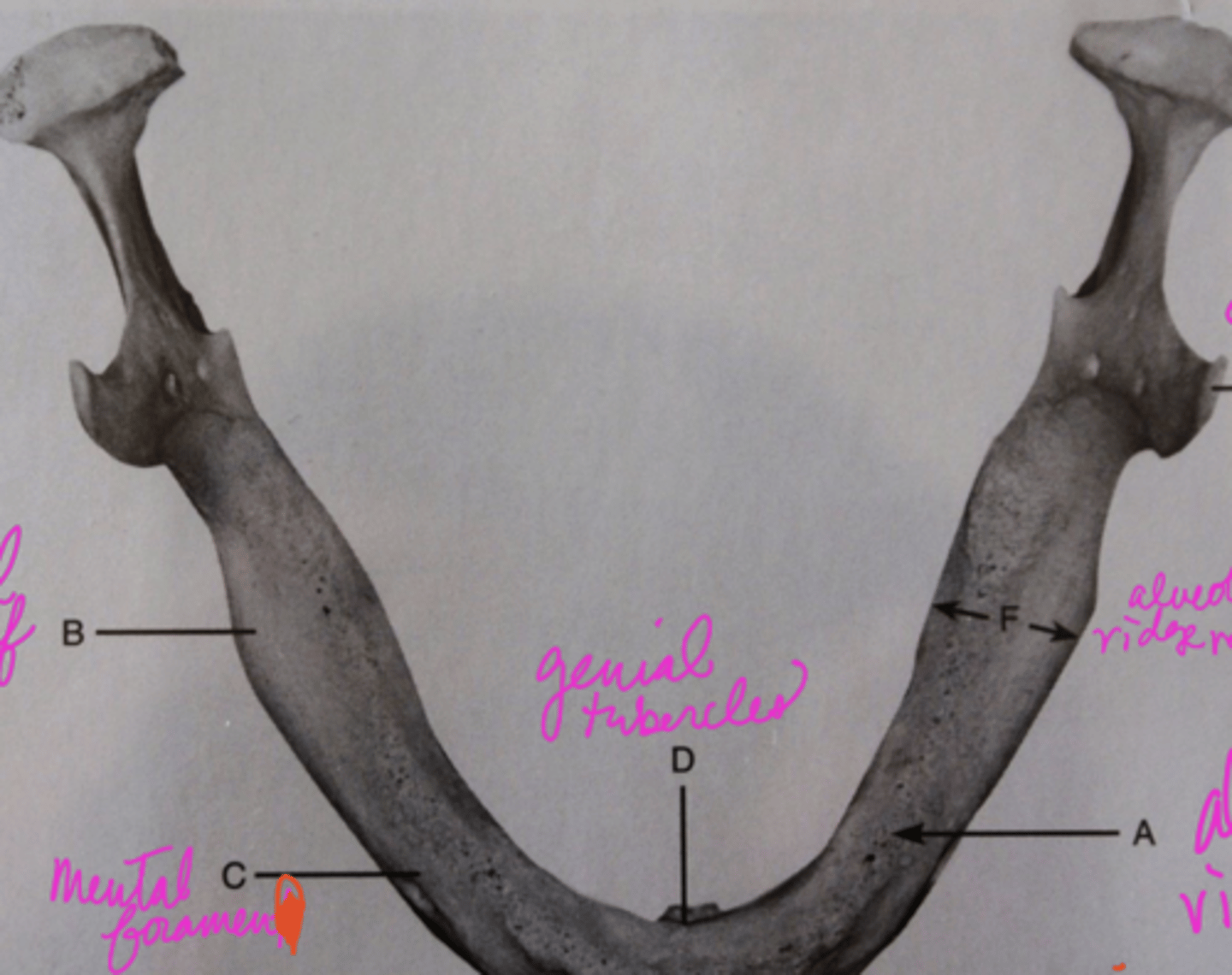
a- alveolar ridge
b- buccal shelf
c- mental foramen
d- genial tubercles
e- coronoid process
f- alveolar ridge (resorbed) so basal seal is wider and longer
using Fox occlusal plane to mimic campers plane (acanthion to external auditory meatus)
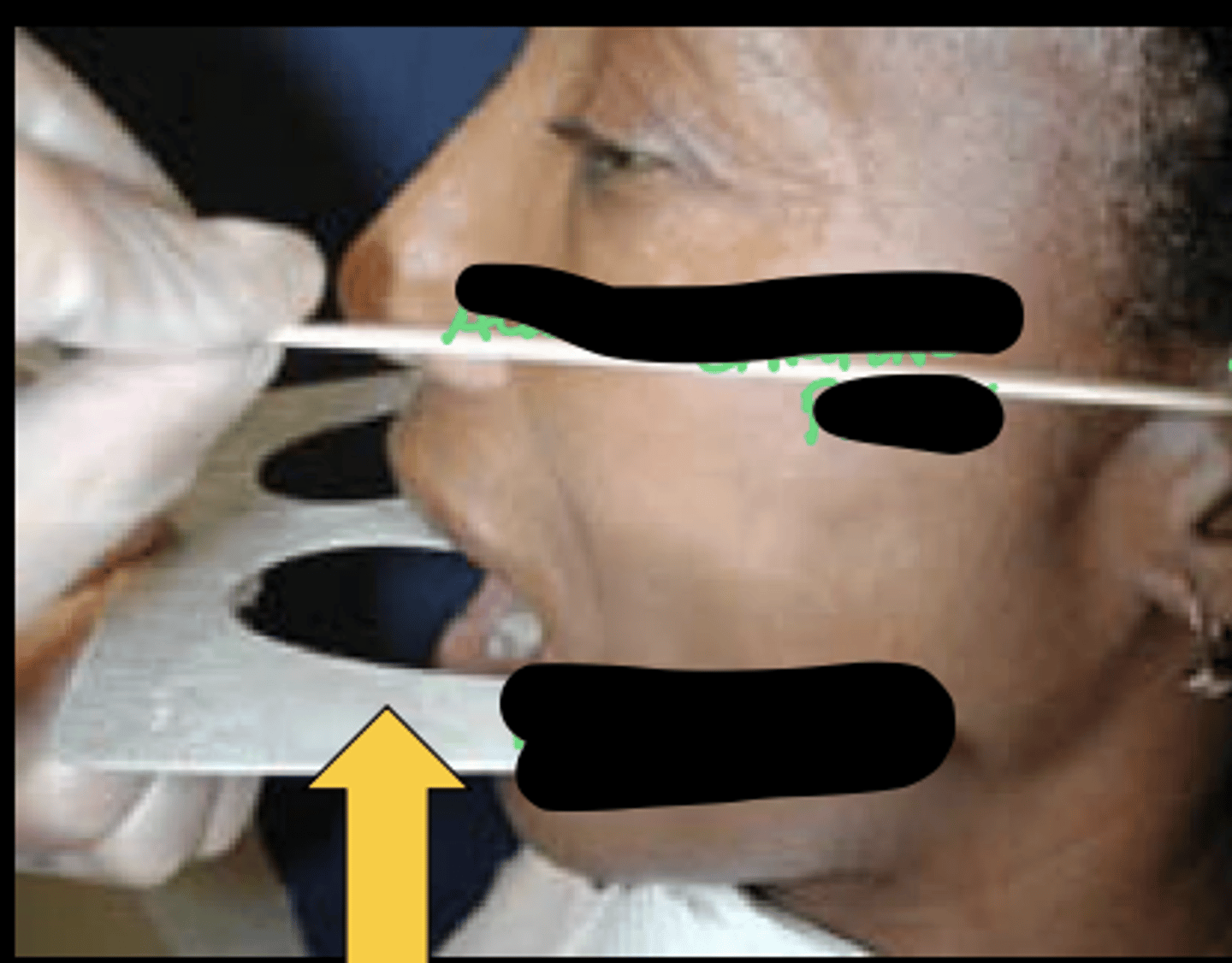
10 degrees
Campers line is at an angle of ____ relative to Frankfort
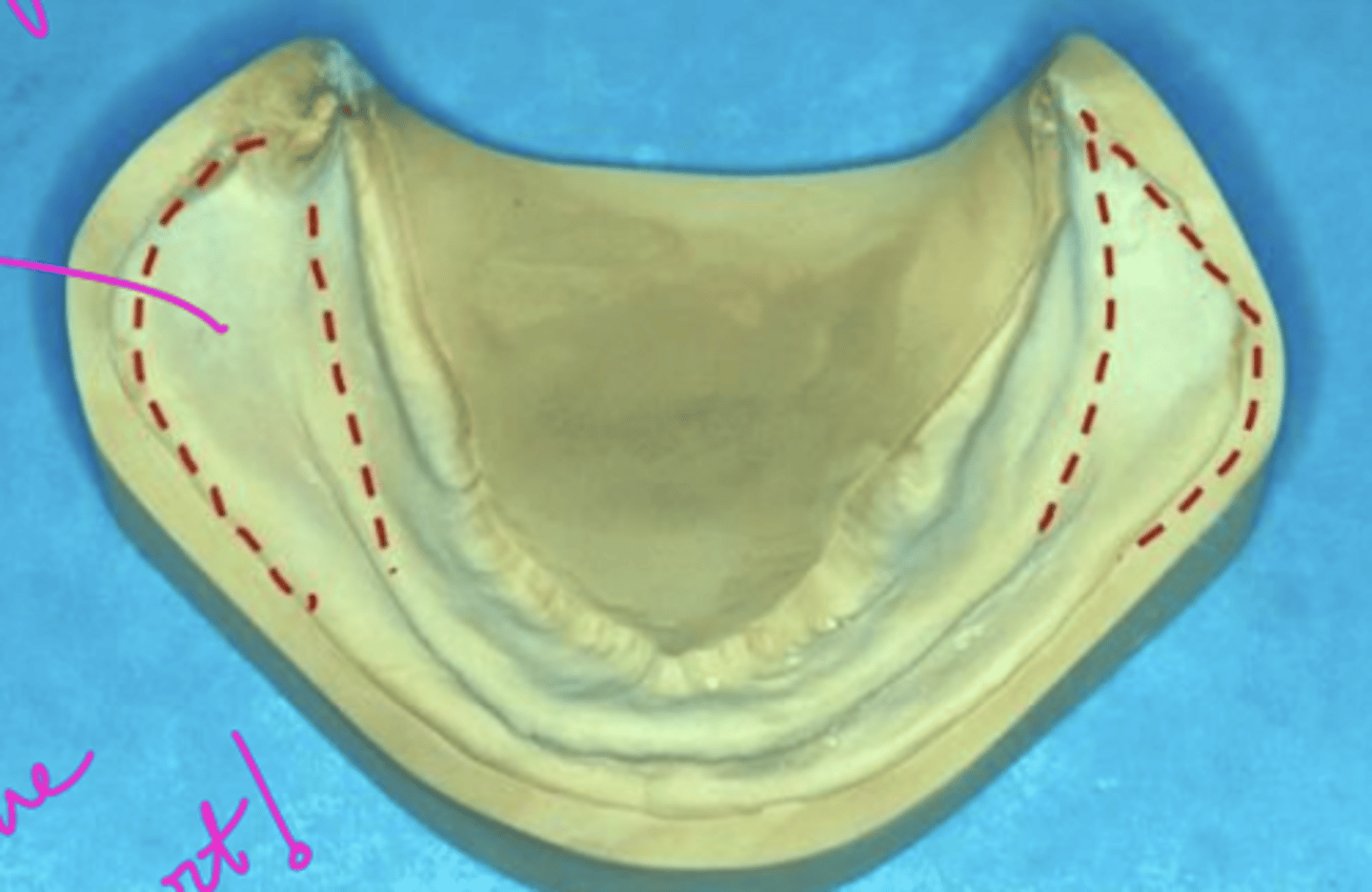
Buccal shelf area- greater access to buccal shelf means more support available to denture.
Access is determined by attachment of buccinator
primary bearing area
what is outlined? the size of the outline (access) is determined by what? What type of area is this?
Christensen's phenomenon- as the mandible moves forward in protrusive, the condyles move downward and forward, which move the mandibular posterior teeth downward, creating a space between them and maxillary teeth.
what phenomenon is this
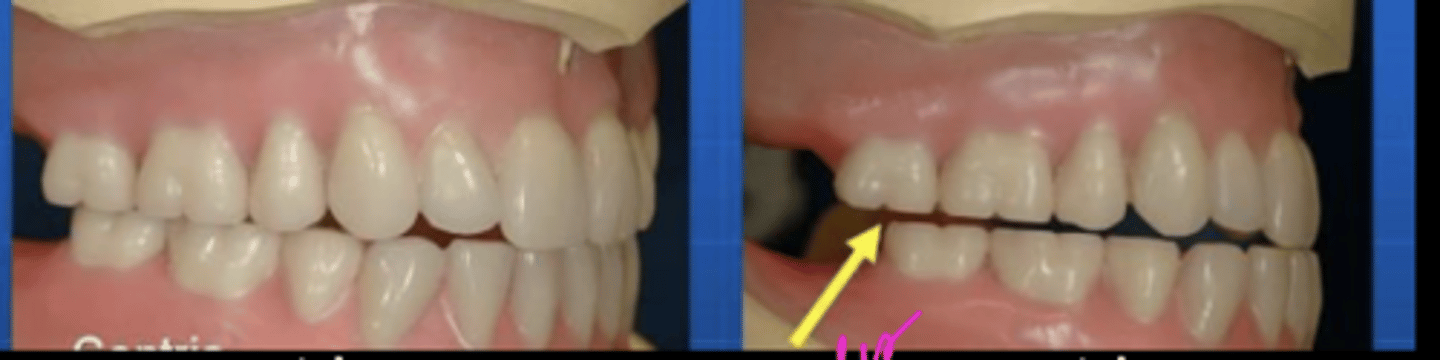
yes, unless compensating curves are incorporated
can this lead to instability of full dentures
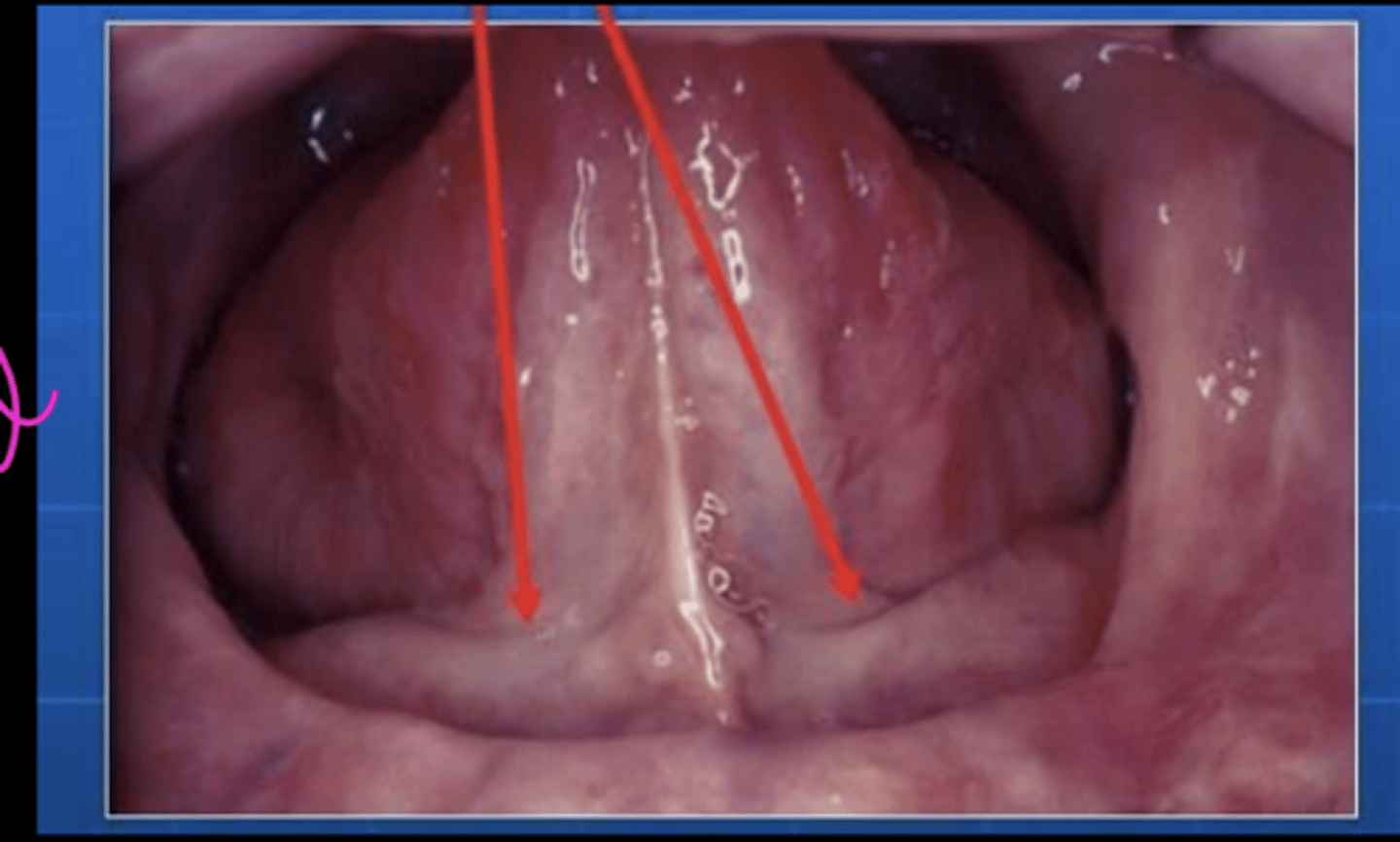
sublingual folds
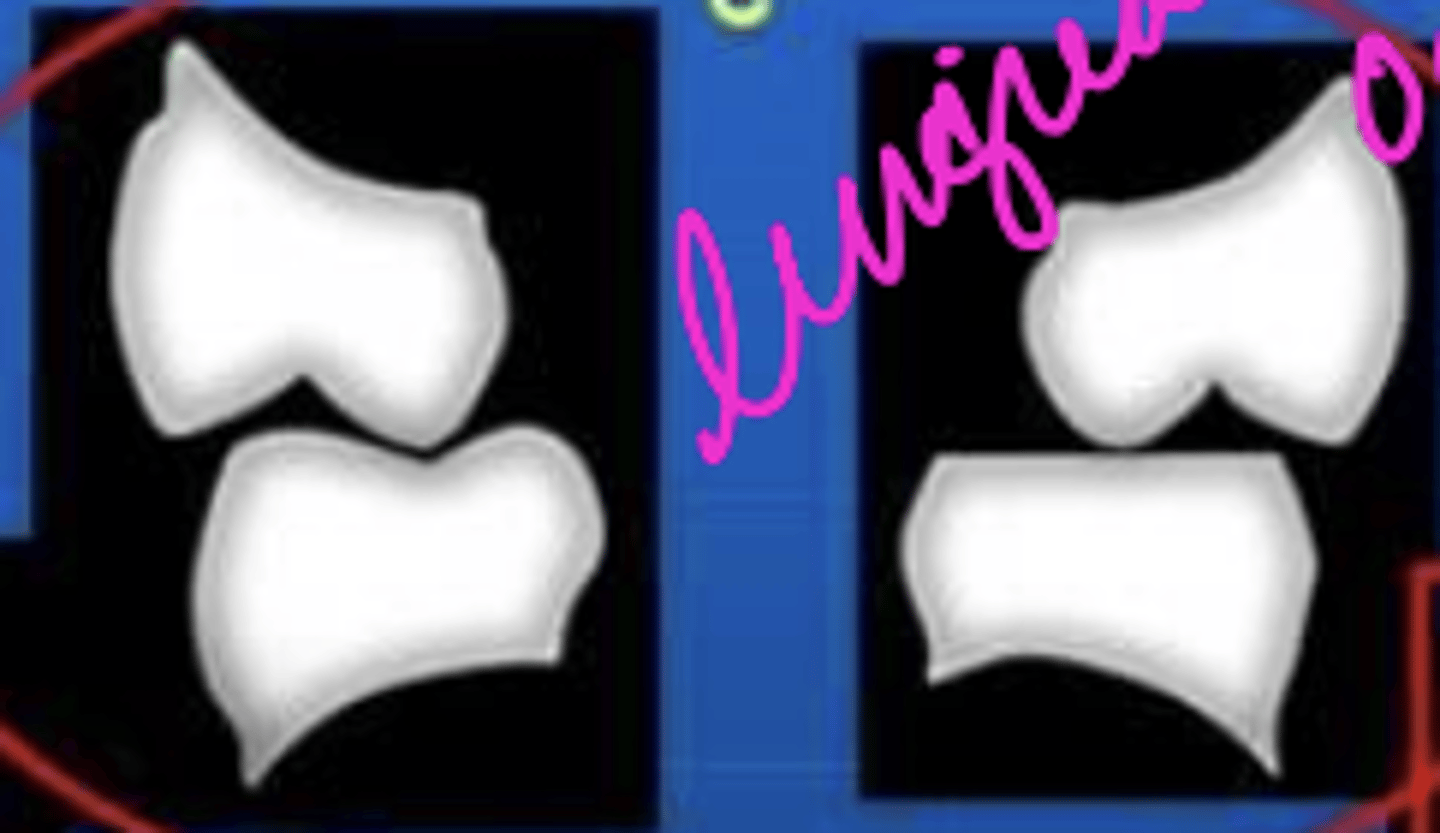
lingualized occlusion of semi anatomic teeth
what type of occlusion
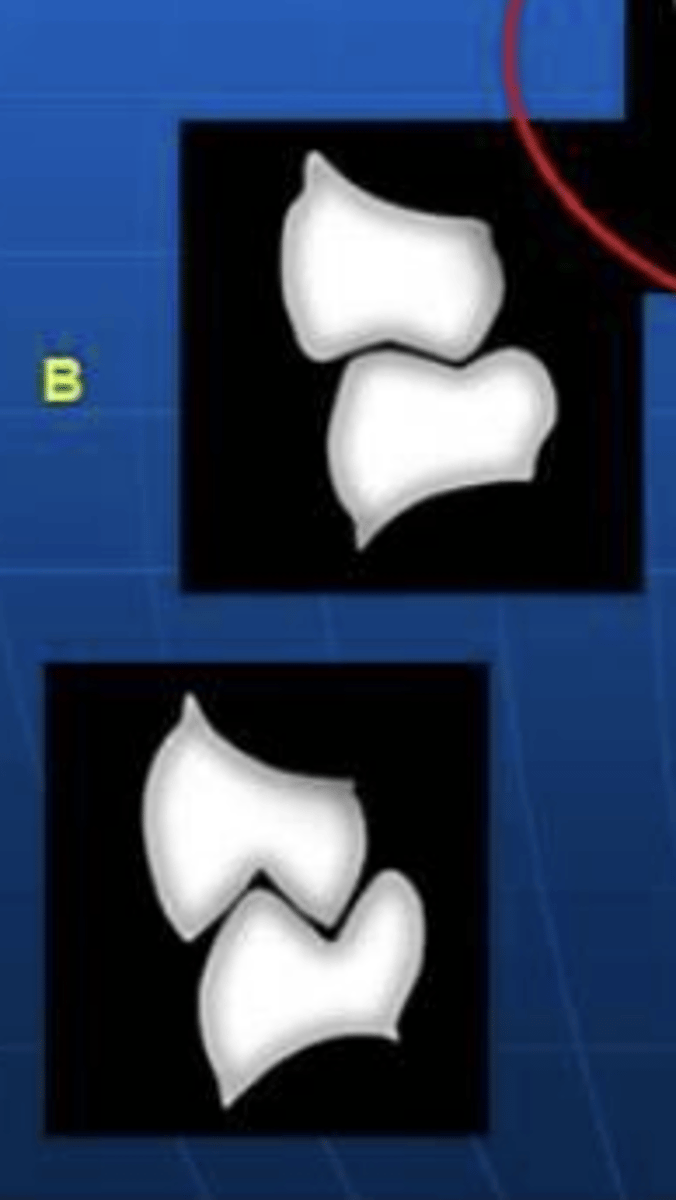
flat teeth with compensating curve, monoplane teeth (nonanatomic)
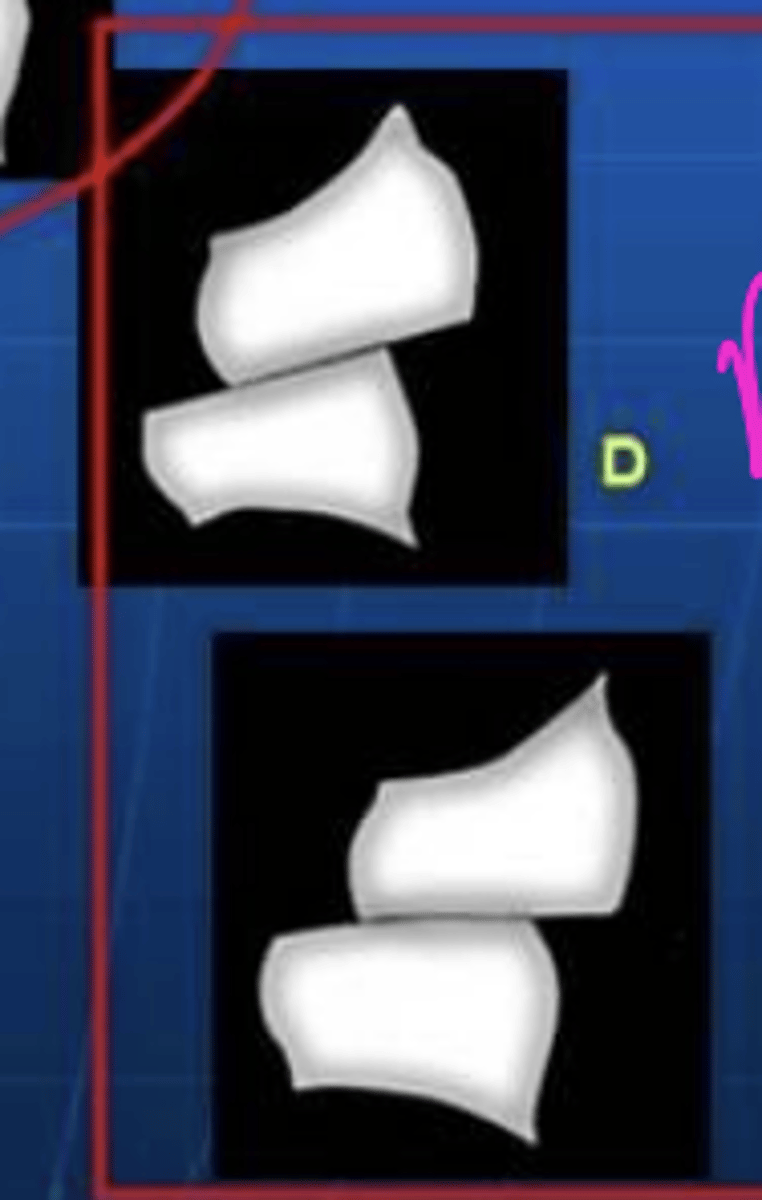
anatomic
what type of teeth
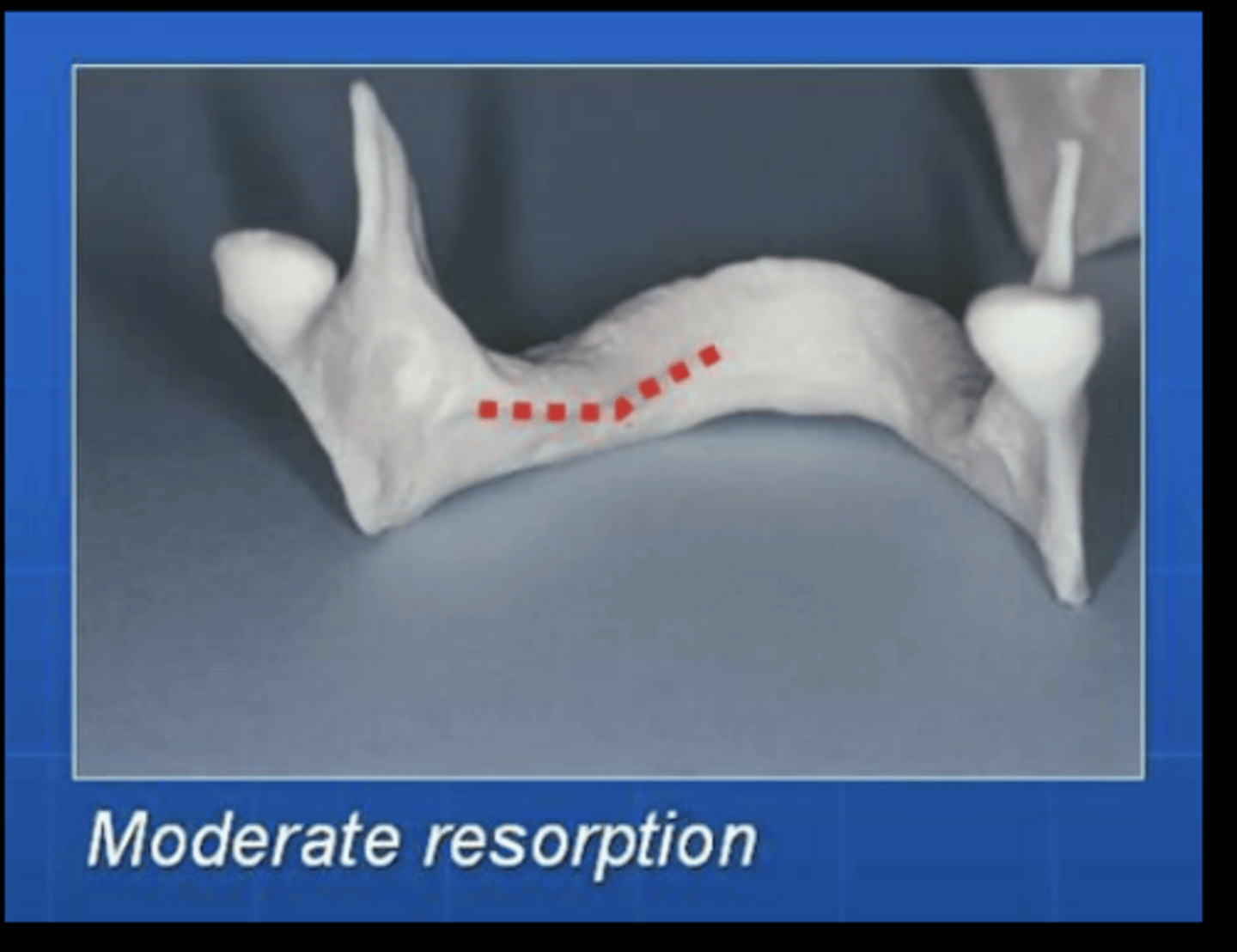
mylohyoid line
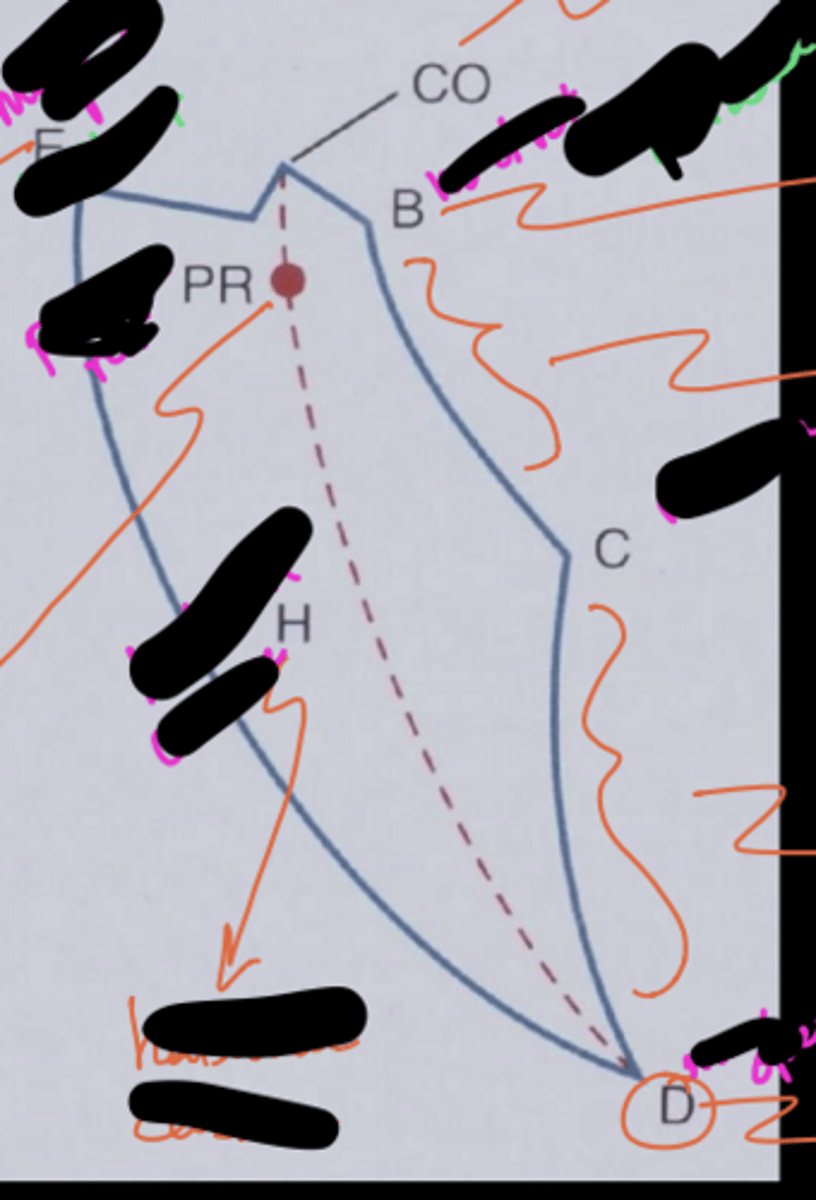
B- most retruded position
B-C: hinge movement
C- rotation
C-D: translation
D- max opening
E- most protrusive
PR- postural rest position
H- habitual closure
Label everything, and indicate what movement occurs between BC and CD
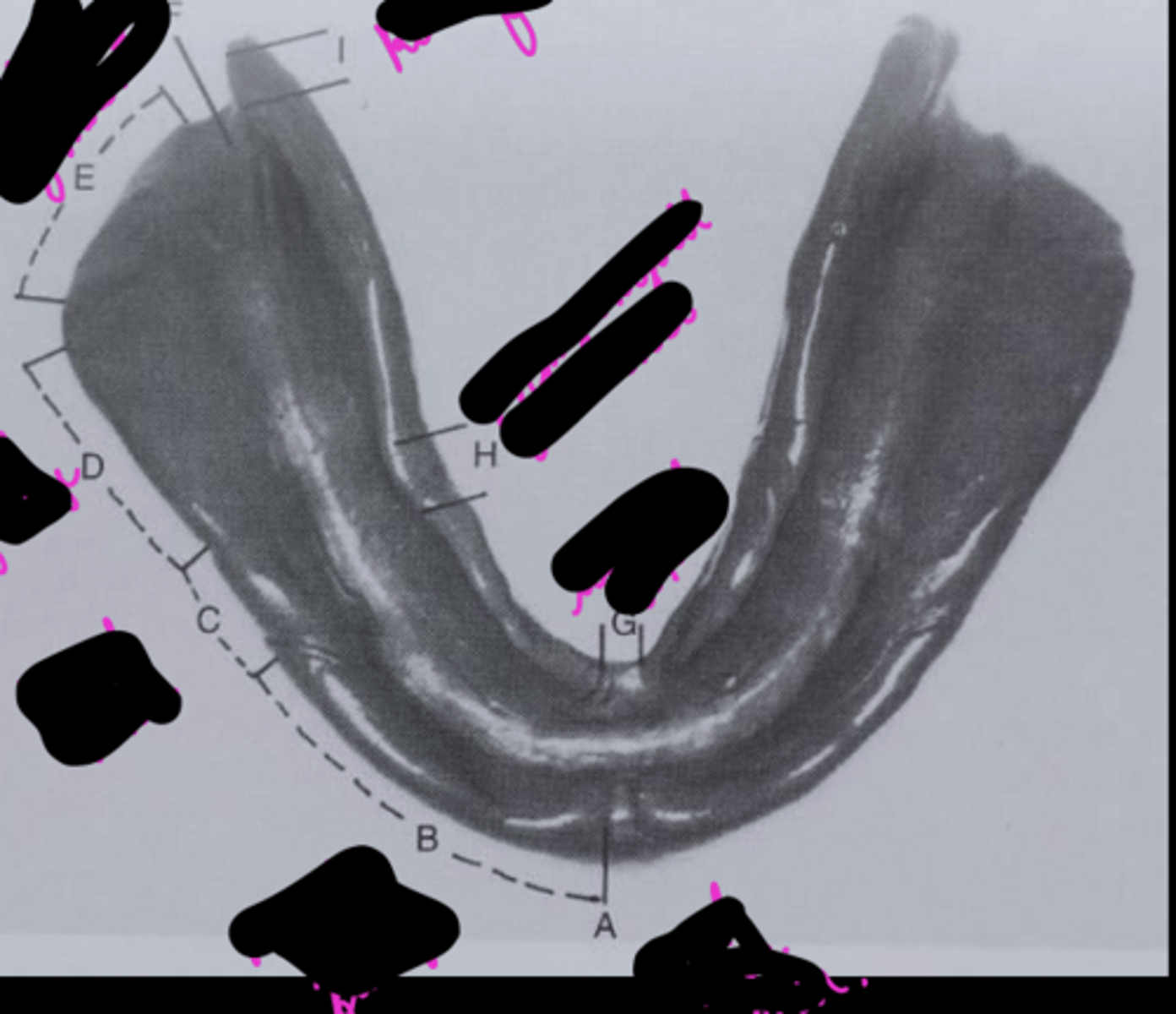
completed final impression with border outline landmarks
A- mandibular labial notch
B- mandibular labial flange
C- mandibular buccal notch
D- buccal flange
E- Area influences by masseter
F- retromolar pad area
G- lingual notch
H- premylohyoid eminence
I- lingual flange extending to retromylohyoid fossa
toward to tongue and extend below attachment of mylohyoid muscles
this allows the mylohyoid muscles to contract and raise floor of mouth without displacing lower denture
what does the S curve of lingual flanges slope towards? What does this allow?
reach mucolingual fold of tissue in floor of mouth and maintain denture seal
The length of the lingual flange in the molar region of mandibular denture allows it to
posterior end of lingual flange bending laterally toward mandible to fit into retromyloyoid fossa
what part of denture guides tongue onto top of lingual flange
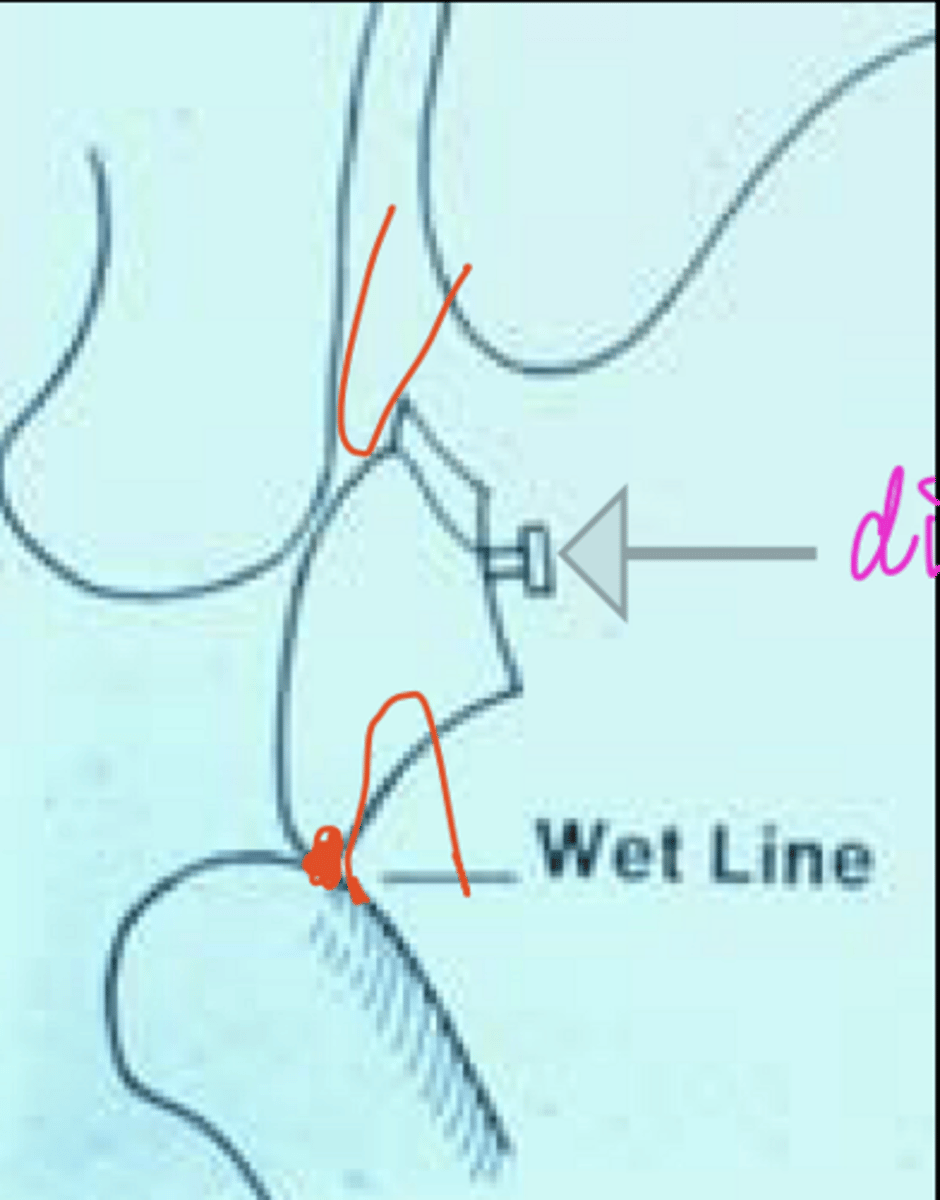
diatoric (needed for porcelain teeth)
fricative f and v sounds are made by allowing maxillary incisors to touch slightly inverted lower lip and wet/dry line
whats the arrow pointing to? what sounds associated with wet line
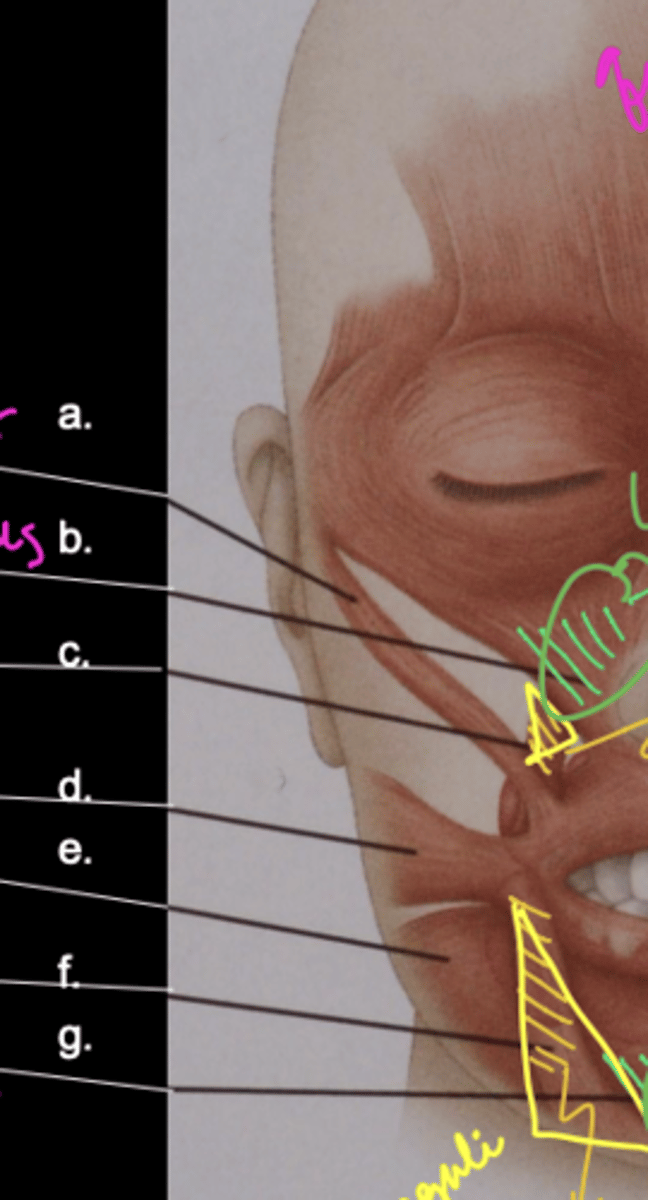
a- zygomaticus major
b- levator labii superiorus
c- levator anguli oris/caninus
d- risorius
e- platysma
f- depressor anguli oris/triangularis
g- depressor labii inferiors/quadratus
retracted cheek- buccinator attaches along external oblique line at A
B- retromylohyoid fossa
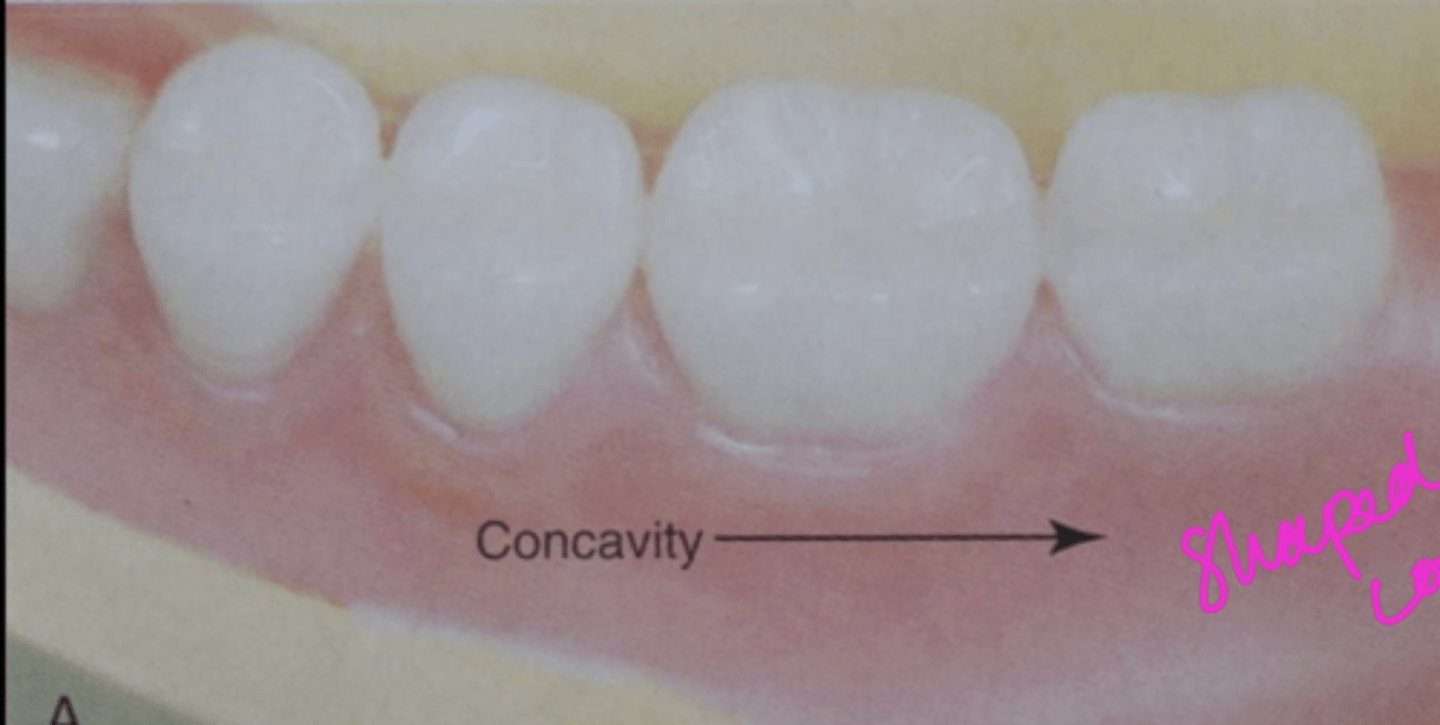
denture ulceration due to overextension
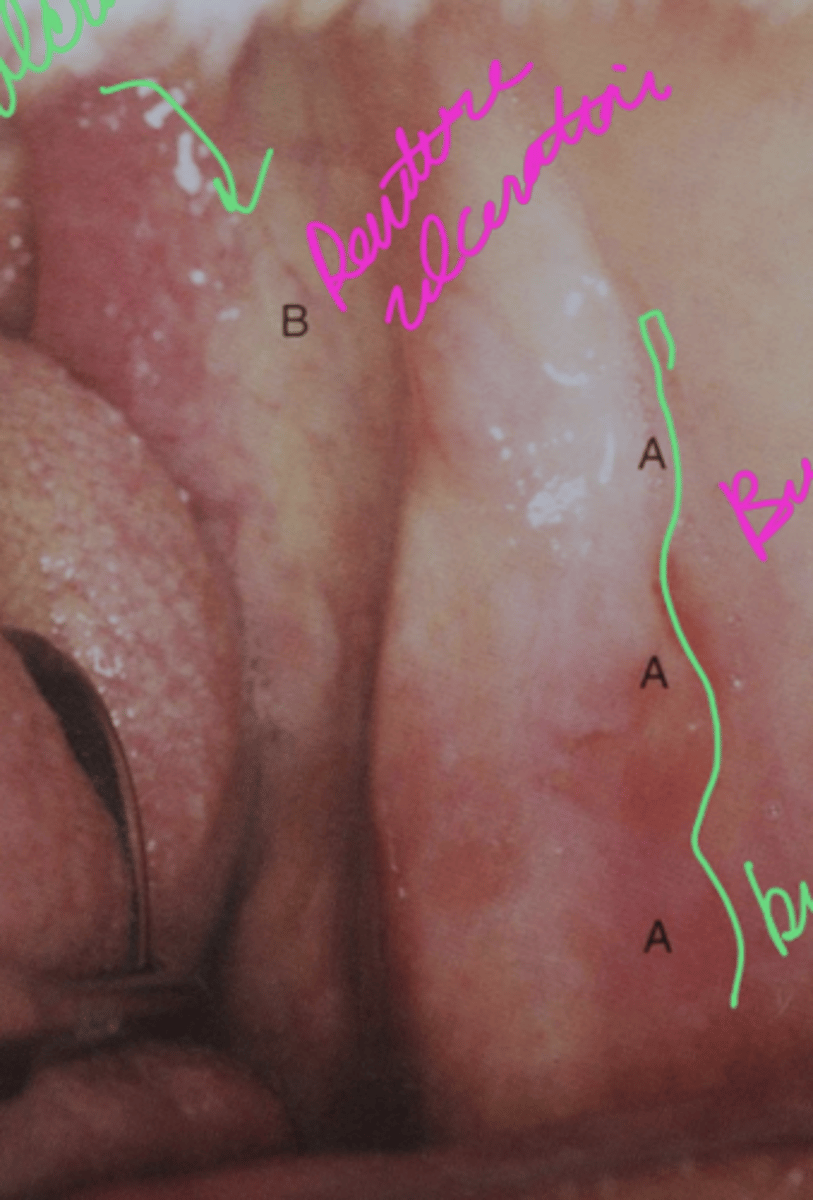
concavity shaped to conform to tongue and cheek muscle activities which stabilize denture
buccinator prevents lateral displacement of denture
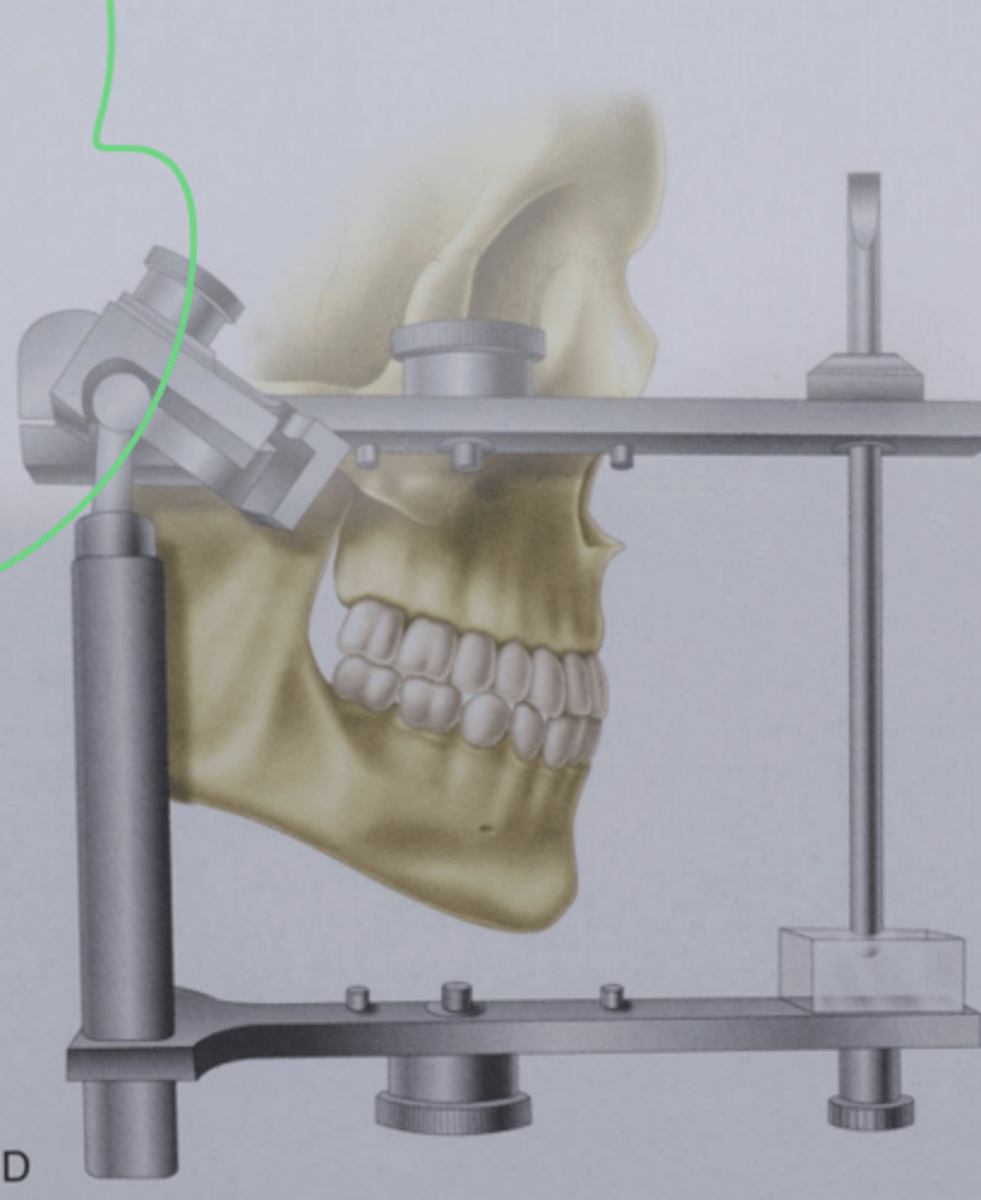
Arcon articulator provides anatomical similarity between teeth and condyles
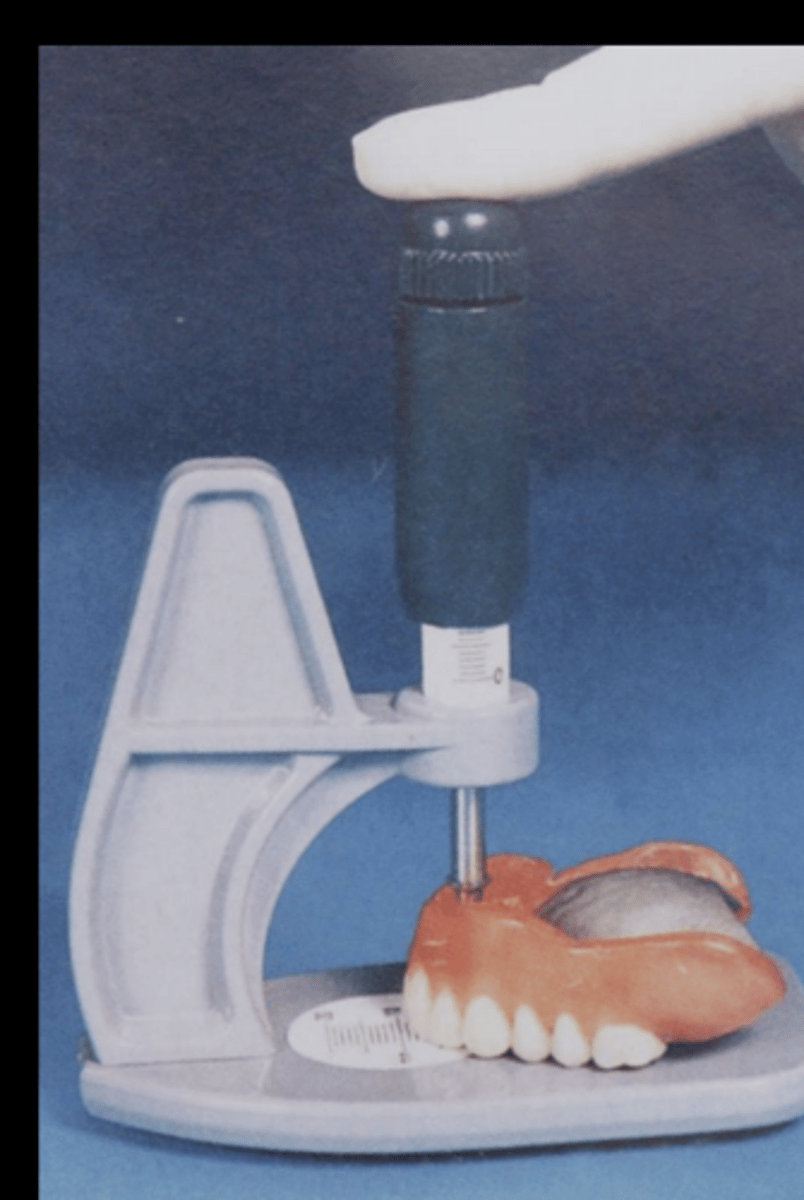
alma gauge record vertical and horizontal distance between incisal edge and incisive papilla intalgio
Trubyte tooth indicator- nonscientific method to determine tooth shape for anterior teeth based on shape of face
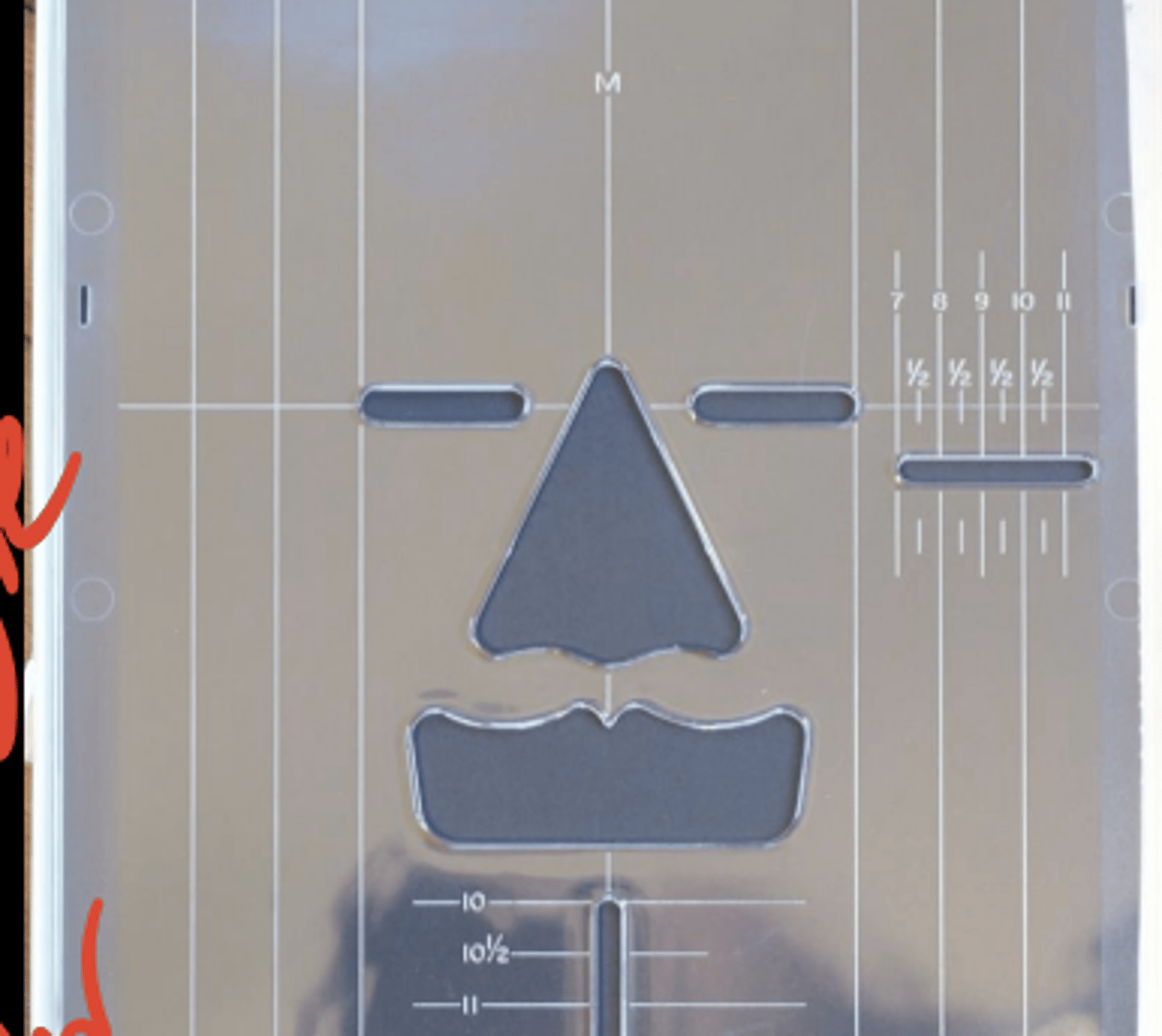
1/16; zygoma
Width of max central is ____ width of face measured at ______
1/16
length of max central is ______ height of face
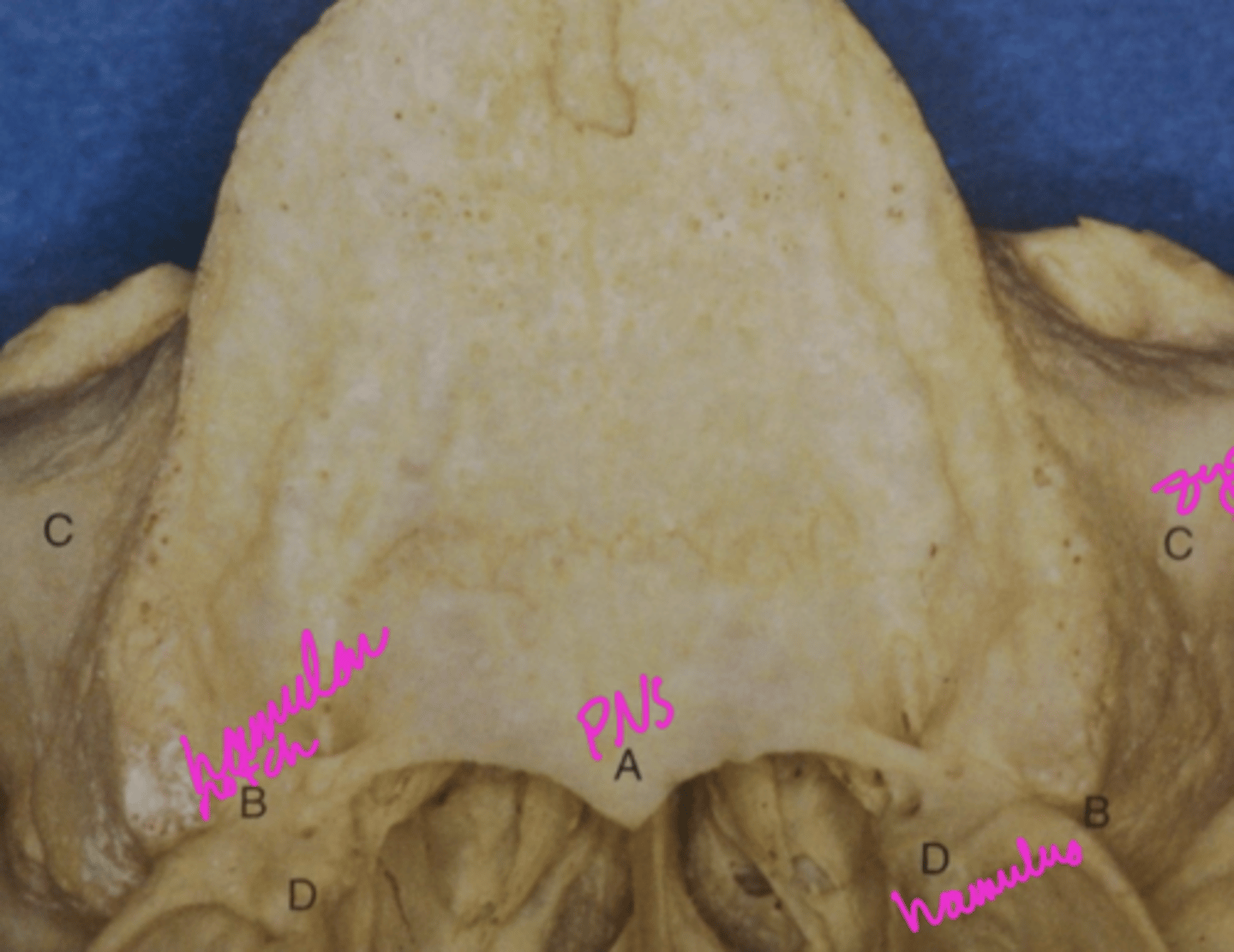
A- Posterior nasal spine
B- hamular notch
C- zygomatic process
D- hamulus
Knife edge residual ridge with severe resorption
mandibular custom tray woth handle extending from buccal frenulum to retromolar pad
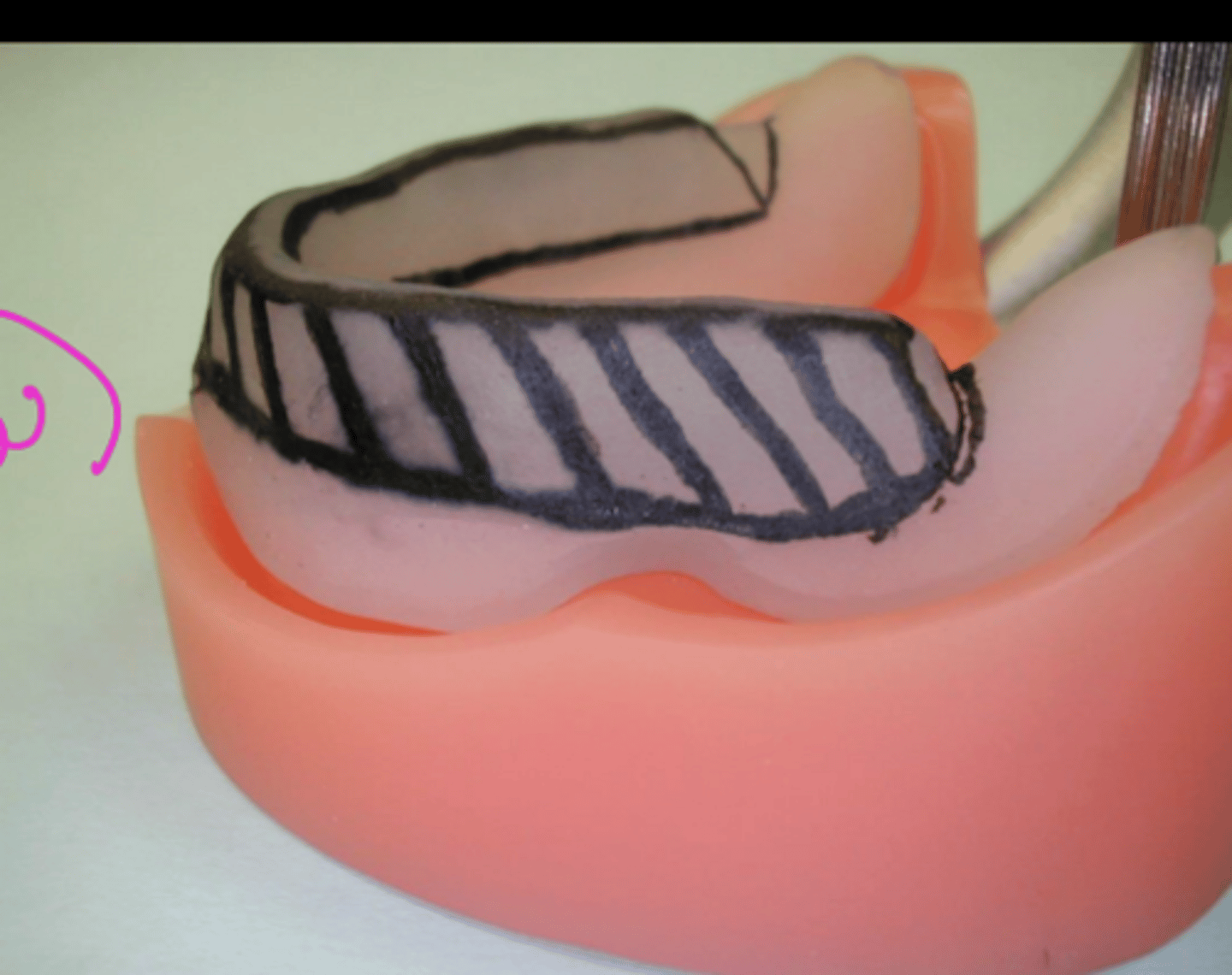
2-3 mm
Extension of tray borders are _____ short of anticipated denture prosthesis extension (for border molding)
urethan dimethyacrylate matrix with acrylic copolymer resin beads
what is this showing
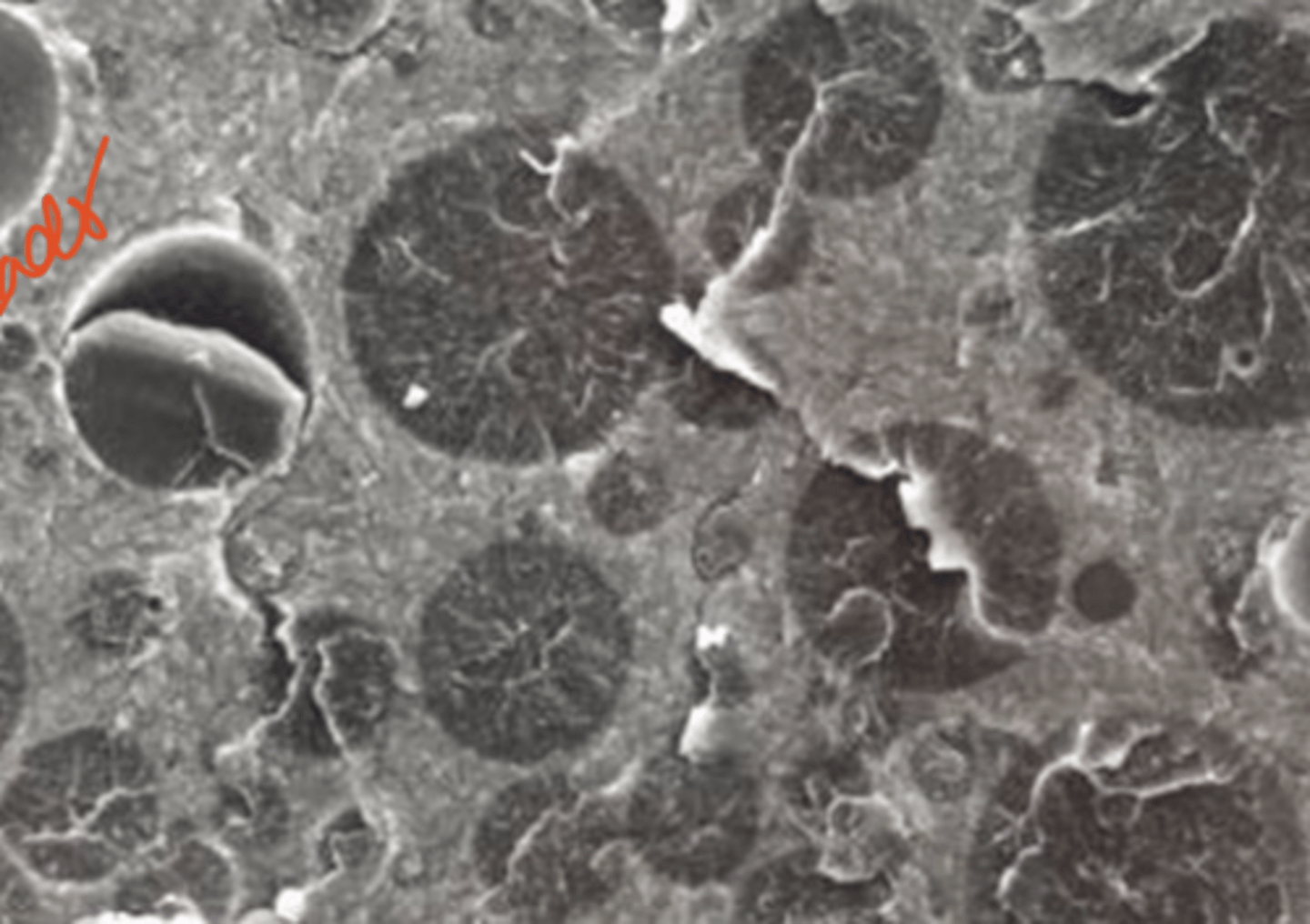
ease to trim with burs, retention to PVS adhesive, allows repair and/or additions
Purpose of acrylic beads in triad tray
Posterior palatal seal
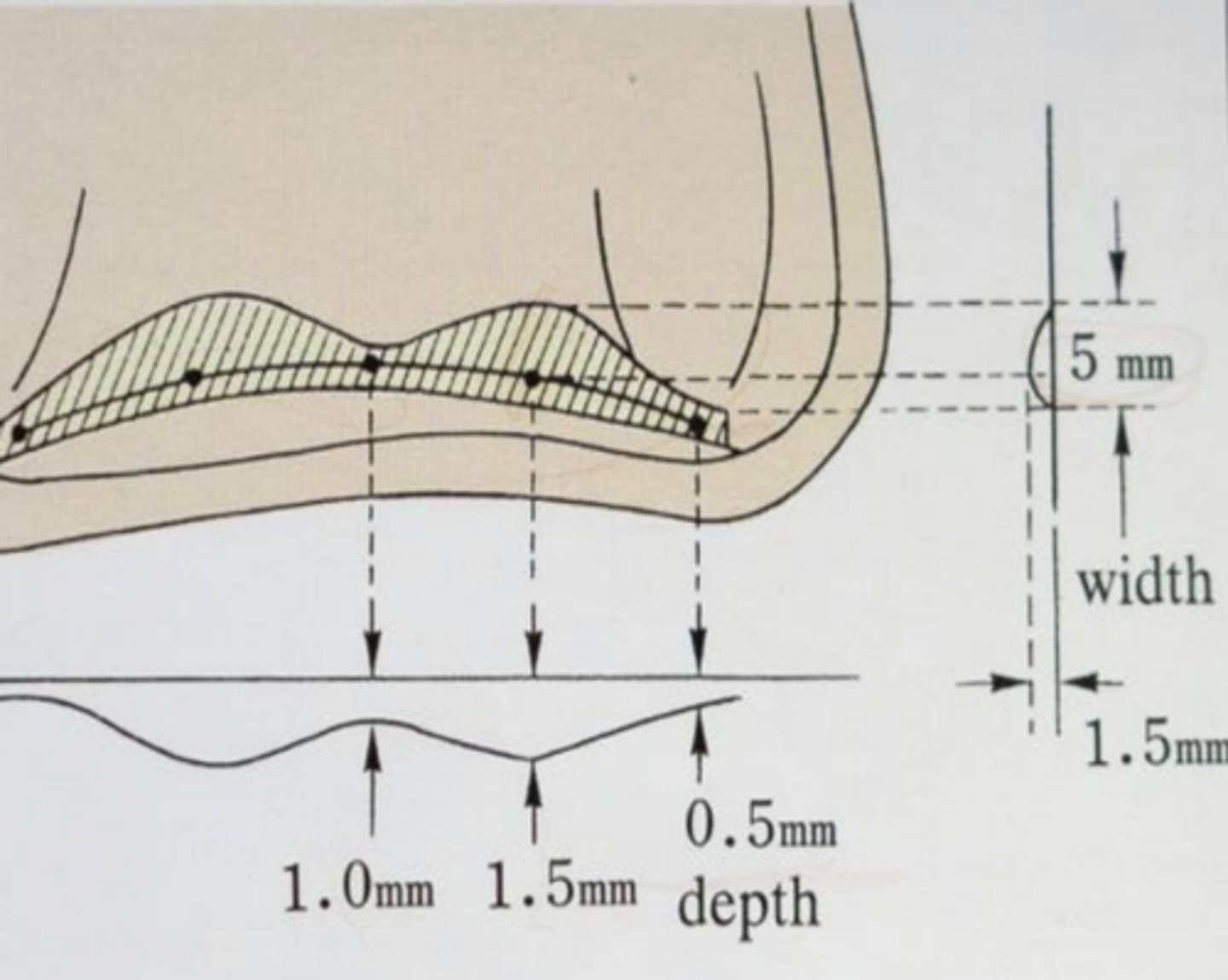
Aids in Retention 2. Seals out food 3. Sunken most distal part of the denture is less noticeable to the tongue 4. Decreases the gag reflex 5. Increases the thickness of the posterior portion of the denture.
Advantages of the Posterior Palatal Seal
forward to posterior border of denture (vibrating line), 2mm anterior to fovea palatinae
extend 3mm lateral to hamular notches
Location of posterior palatal seal
Split Cast Technique: A method to verify your mounting If mounting is correct, the three indexes will meet.
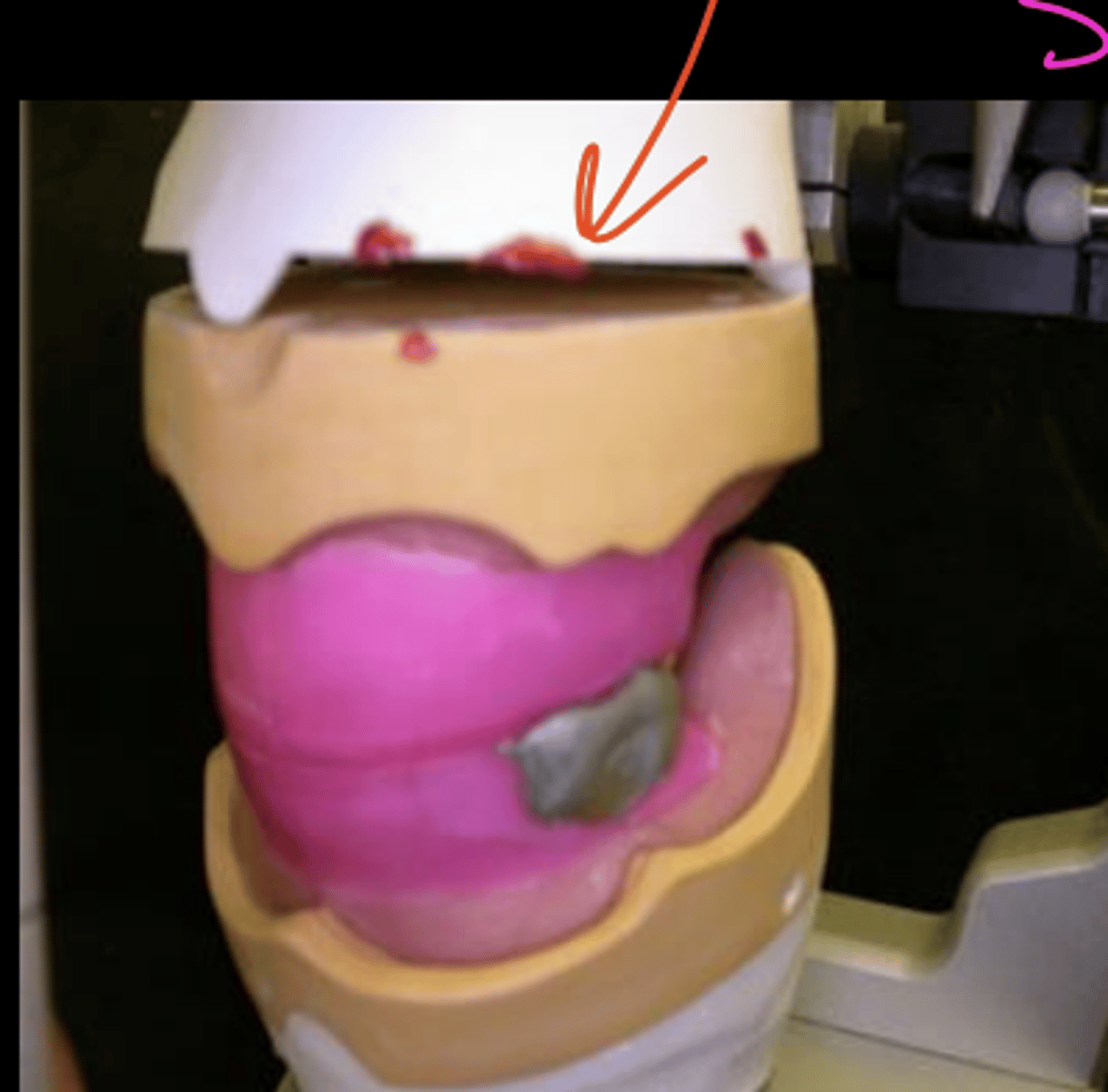
aluminum
Aluwax contains
You must maintain the anterior portion of the rim to maintain the occlusal vertical dimension which you previously determined to be appropriate.
what must you maintain when doing aluwax
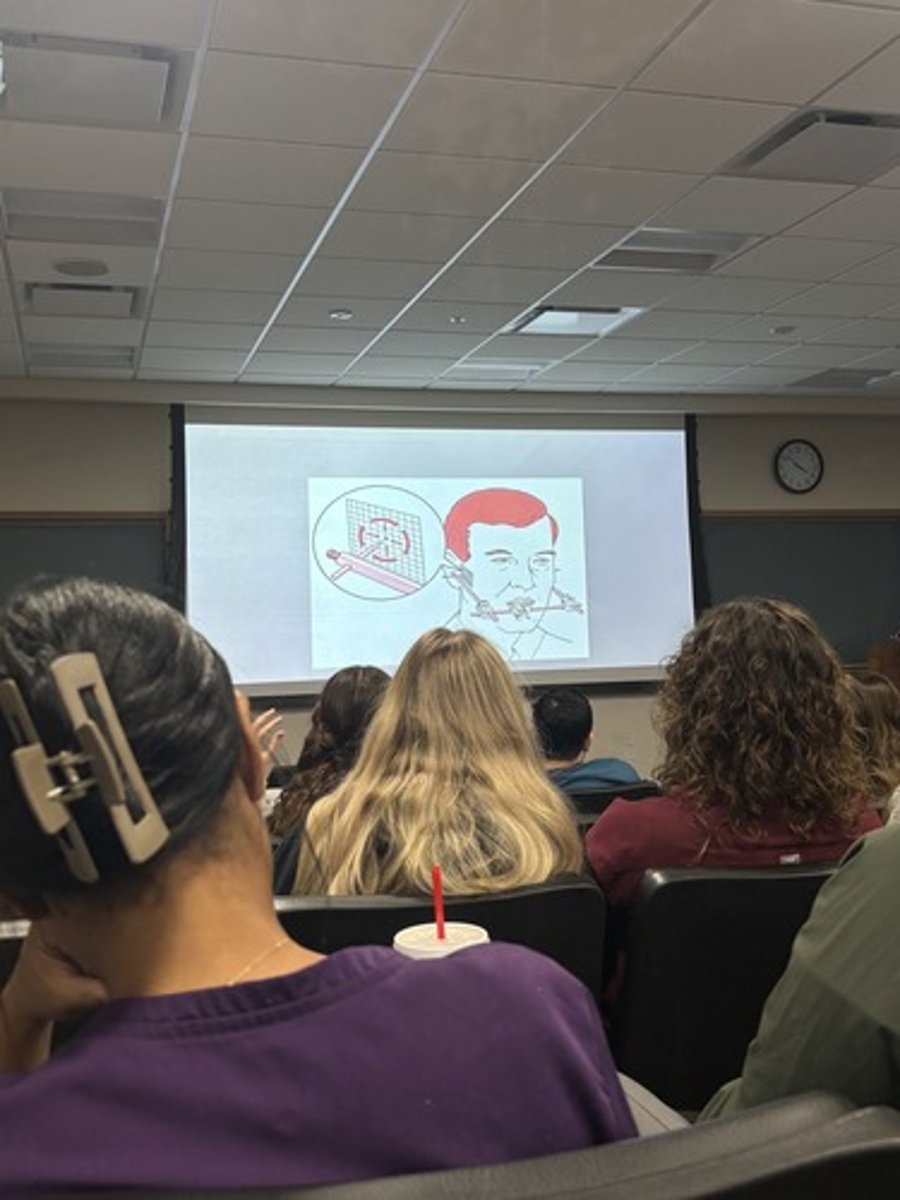
Facebow
what is this
Inflammatory fibrous hyperplasia from too long denture wear
T
T/F this is the wet line
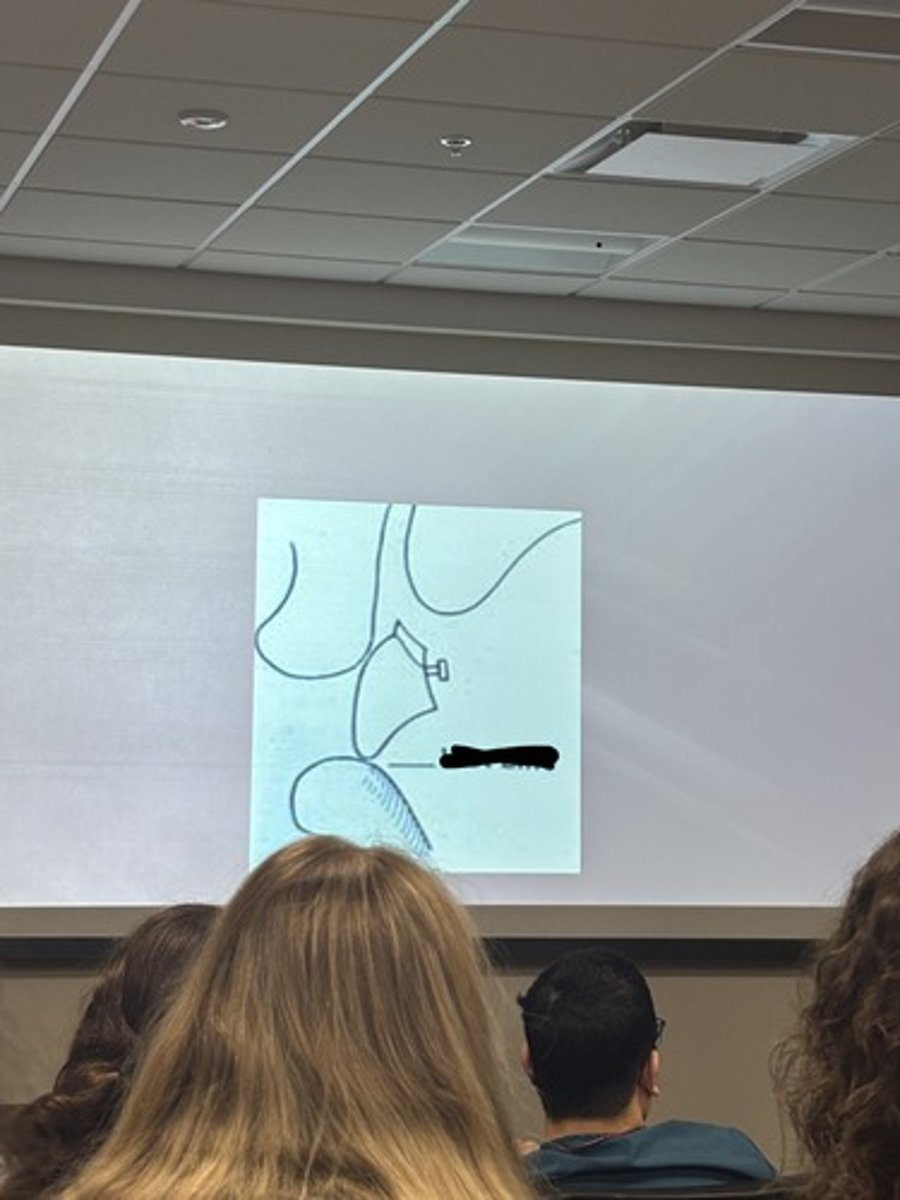
Ascending ramus, 2/3 RMP, over the ridge line, lingual control line
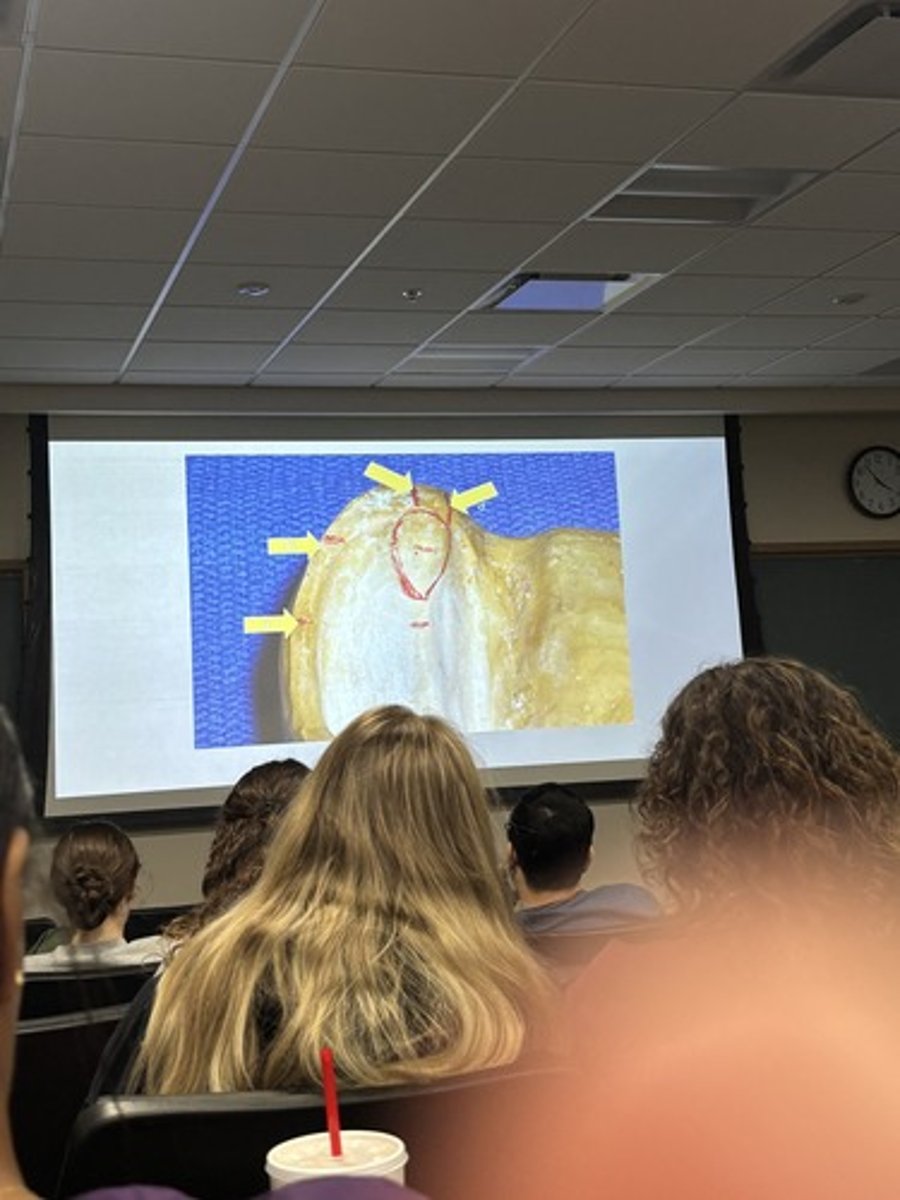
index cuts, used when you want to separate mounting from cast
what are these
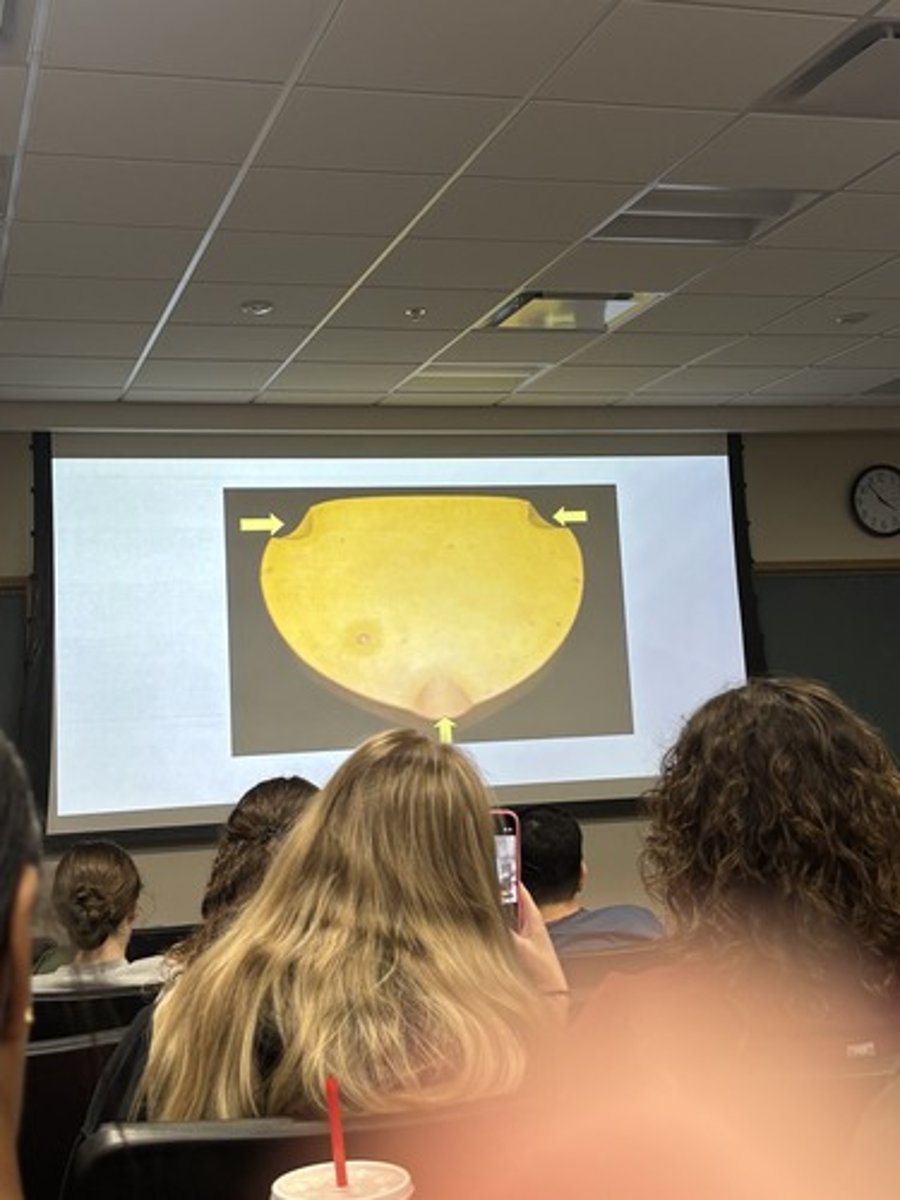
x- 10+ mm; y-3-5 mm; z-2-3 mm
measurements of x,y,z
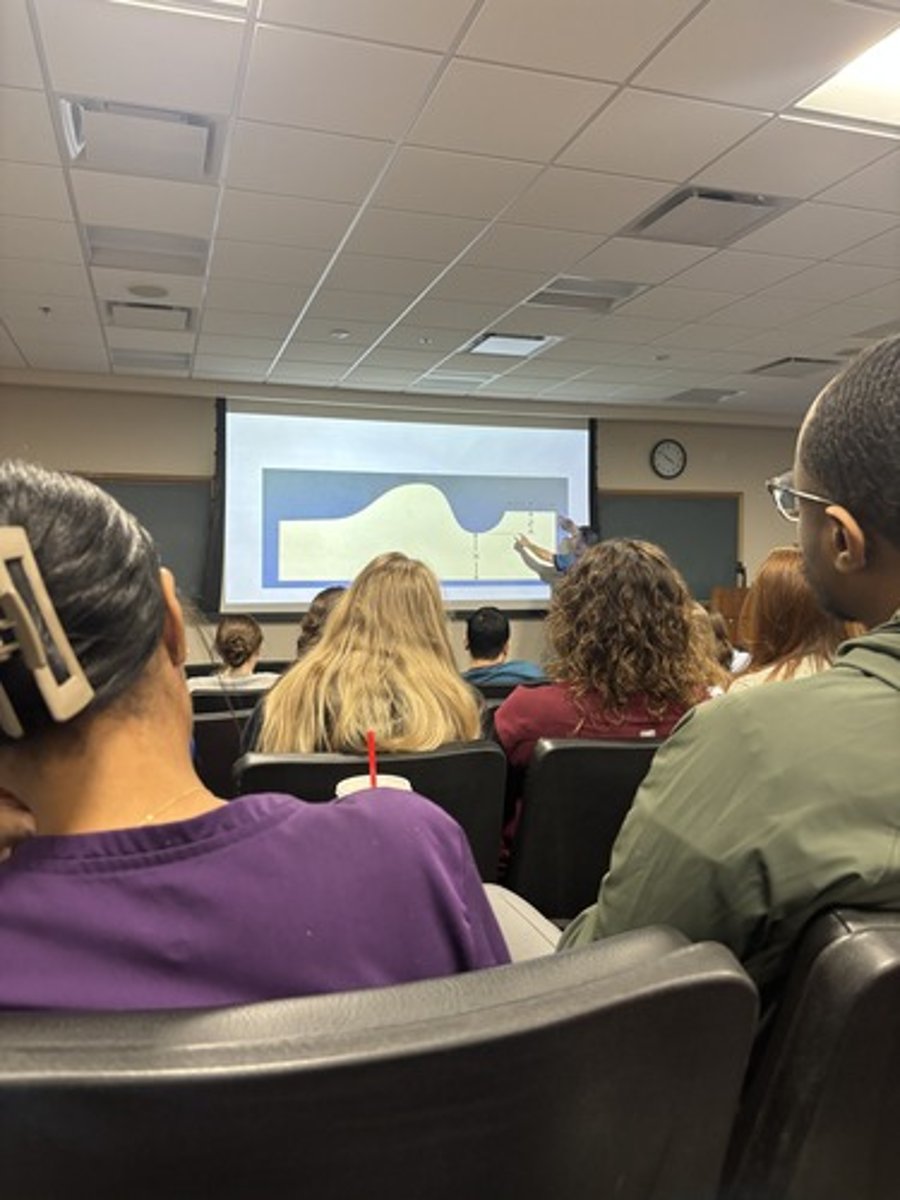
Anatomic cusp angles
30 degrees and up
semi anatomic cusp angles
10-22 degrees
nonanatomic cusp angles
0 degrees
Still learning (7)
You've started learning these terms. Keep it up!