14.1 The Male and Female Reproductive System
 Call Kai
 Learn
Learn Practice Test
 Spaced Repetition
 Match
Match Flashcards
 Knowt Play
1/54

There's no tags or description
Looks like no tags are added yet.
Name | Mastery | Learn | Test | Matching | Spaced | Call with Kai |
|---|
No analytics yet
Send a link to your students to track their progress
55 Terms
gonads
organs that produce reproductive cells (testes and ovaries)
sex hormones
the chemical compounds that control the development and function of the reproductive system
gametes
sperm (males), ova/egg (female)
primary sex characteristics
reproductive organs, ducts, glands and other structures directly involved in reproduction
secondary sex characteristics
physical traits that develop during puberty but not directly apart of reproduction
seminiferous tubules
long coiled tubes that make up the testes; where sperm is produced (spermatogenesis)
interstitial cells
produces testosterone; located between seminiferous tubes
male primary sex characteristics
gonads (testes)
scrotum
epididymis
ductus deferens
penis
seminal vesicles
prostate gland
Cowper’s gland
male secondary sex characteristics
facial/body hair
deeper voice
broader shoulders
narrower hips
coarse skin
more obvious muscle development
female primary sex characteristics
gonads (ovaries)
oxiducts
uterus
cervix
vagina
vulva
female secondary sex characteristics
minimal facial/body hair
prominent breasts
higher voice
more rounded shoulders
wider hips
less prominent muscle development
urinary bladder
a muscular sac-like organ that stores urine before it leaves the body
ductus deferens
a tube that transports sperm from epididymis to urethra during ejaculation
urethra (m)
a tube that carries urine from bladder and semen during ejaculation outside of body
penis
organ that releases semen during reproduction into female reproductive tract
glans penis
a sensitive, rounded tip of penis. the urethral opening (where sperm and urine exits) is located here
foreskin
a fold of skin protecting the glans penis; can be sensitive
seminal vesicle
pair of glands located behind urinary bladder; produces mucus-like fluids containing fructose which provides energy for sperm, and prostaglandins
prostaglandins
trigger contractions of smooth muscle in female reproductive tract — assisting sperm movement
ejaculatory duct
carries semen into urethra during ejaculation and ensures urine and semen are not transported at the same time
prostate gland
produces alkaline fluid that reduces the acidity of female vagina, improving sperm survival
Cowper’s gland
releases pre-ejaculate which lubricates male urethra and reduces its acidity
epididymis
site of sperm storage and final maturation
testes
male gonads; produce sperm and testosterone
scrotum
a pouch of skin that consists of and regulates the temperature of testes
ureter
tube that transports urine from kidney to urinary bladder
spermatogenesis
spermatogonium (2n) → mitosis → two spermatocytes (2n) → each undergoes meiosis → four spermatids (n)
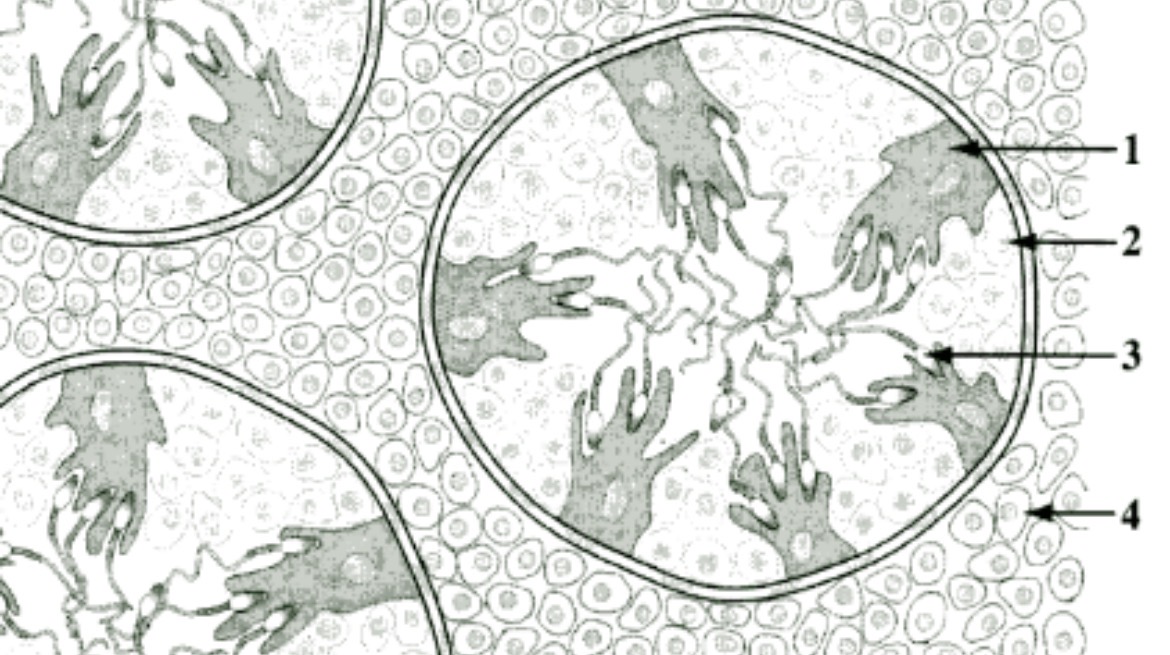
Figure 1
Sertoli cell
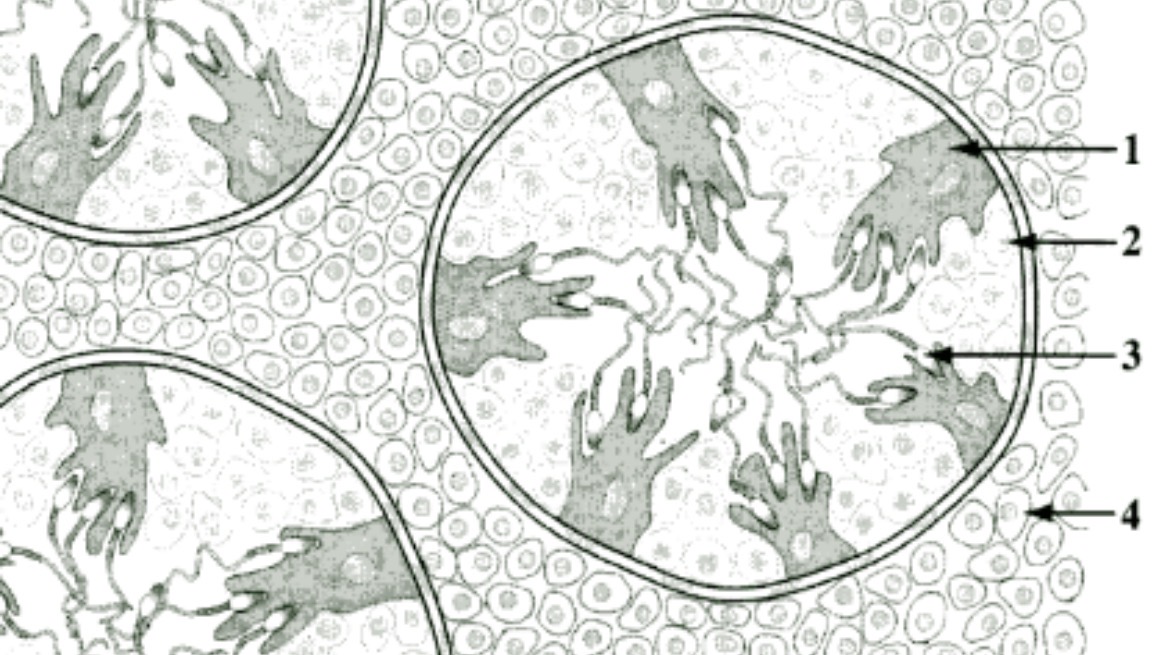
Figure 2
Spermatocytes/spermatids
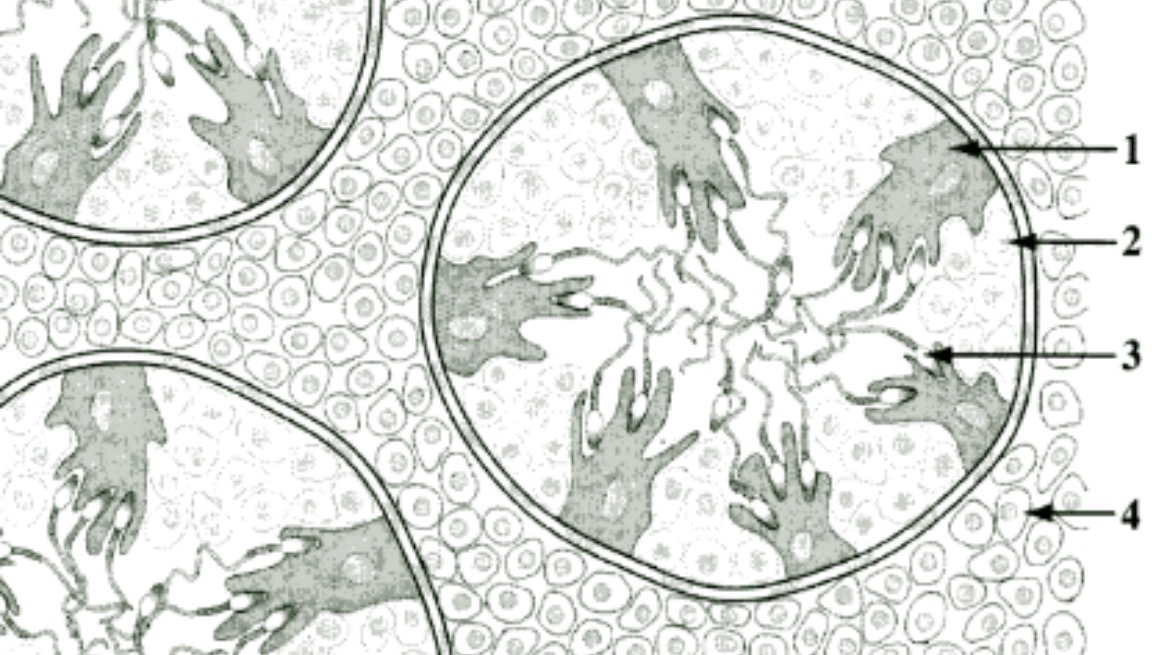
Figure 3
Developing sperm
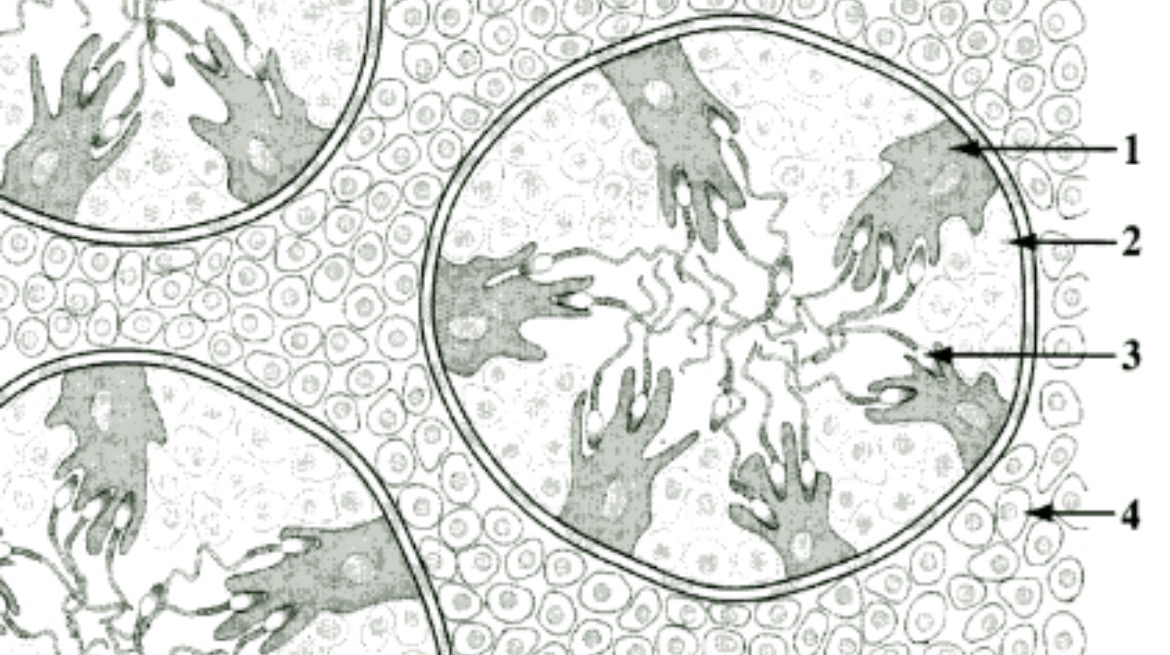
Figure 4
Interstitial cells
process of sperm development
developing sperm (spermatids) are supported and nourished by sertoli cells
from each testis, sperm is transported to epididymis
within each epididymis, the sperm mature and become motile
process of erection
penis shaft is made up of erectile tissue containing blood spaces
during arousal, nerve impulses cause muscle relaxion in arteries entering penis
erectile tissue fills with blood
veins leading away from penis constrict
penis becomes erect
process of ejaculation
vas deferens, seminal vesicles, ejaculatory duct and prostate gland all contract rhythmically
forces semen into/out of urethra
ejaculated semen (3-4mL) consists of
500 million sperm cells
semen is made up of four substances
fructose and prostaglandins
mucus
alkaline buffer
sperm cells
acrosome
contains enzymes that help sperm break through outer layers of egg during fertilization
head
contains the nucleus (DNA) and acrosome
middle piece
contains many mitochrondria and provides ATP for sperm movement
tail (flagellum)
uses whip-like motion to propel sperm movement
ovaries
female gonads; site of oogenesis — release eggs (ova) and hormones (estrogen and progesterone). alternates so only one ovary produces an egg each month
follicles
a single, immature ovum develops in each follicle. protects and nourishes egg. site of estrogen production
estrogen is produced in
follicles within ovary
ovulation
each month, a single follicle matures and ruptures, releasing the egg into the oviduct
fimbriae
sweep/guide egg into oviduct during ovulation
oviduct (fallopian tube)
transports egg from ovary to uterus using muscle contractions (peristalsis) and cilia. site of final maturation and fertilization
uterus (womb)
muscular organ that holds and nourishes a developing fetus
endometrium
inner lining of uterus which is supplied with blood vessels to provide nutrients to fetus. thickens each month in preparation of fertilized egg
menstruation
endometrial lining is shed if no fertilized egg is present
cervix
opening from uterus to vagina; contains cervical glands that produce a mucus which blocks the spread of bacteria and aids sperm mobility
vagina
canal that receives penis and allows the birth of baby and menstrual blood out of body. lubricated by cervical glands and is acidic
urethra (f)
only carries urine out of body
vulva
external part that includes labia majora/minora (skin folds), clitoris and urethral/vaginal openings
follicular phase
primary oocyte (2n) present at birth splits into secondary oocyte (n) upon ovulation forms an egg — becomes either fertilized or lost