Roman Arch. Exam 2
 Call Kai
 Learn
Learn Practice Test
 Spaced Repetition
 Match
Match Flashcards
 Knowt Play
1/74

There's no tags or description
Looks like no tags are added yet.
Name | Mastery | Learn | Test | Matching | Spaced | Call with Kai |
|---|
No analytics yet
Send a link to your students to track their progress
75 Terms
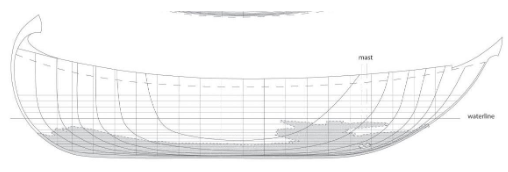
Codicaria - flat-bottom river vessel
used to transport goods from the big ships
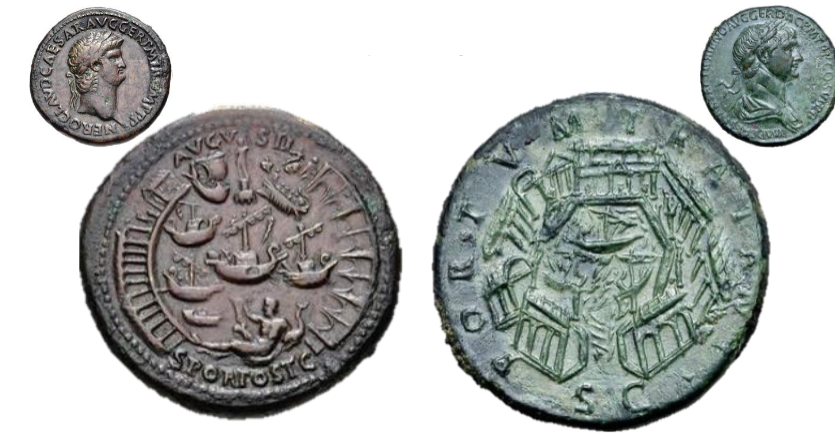
Left
minted under Nero, 62-68 CE
Finished claudian port
He is known for the bread and circus - bread - relation to the grain given out
Right
Minted under Trajan, 122-114 CE
Bird eyes view down onto the port
More realistic about the architecture
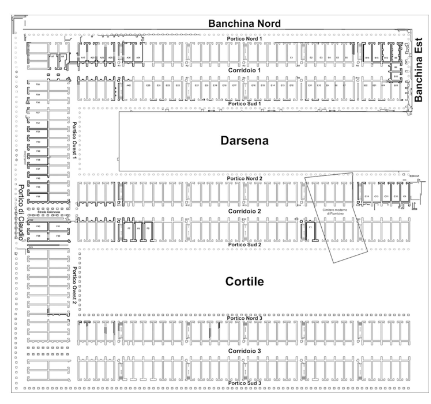
Claudian Portico, Portus
Horrea: Grain warehouse
Annona: Grain dole
Sections
Banchina Nord
Darena
Cortile
To keep supply outside of Rome
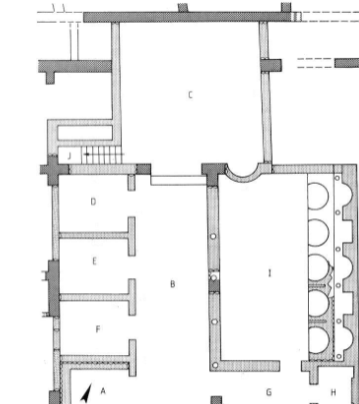
House of Cupid and Psyche
4th c
Name based on statue
Mosaics
Opus sectile
Black and white
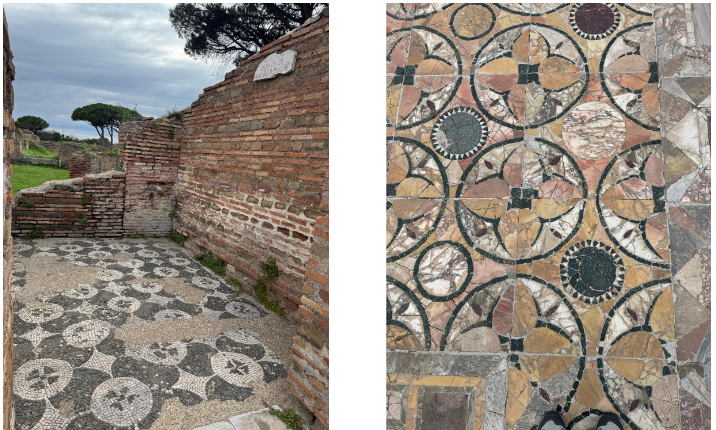
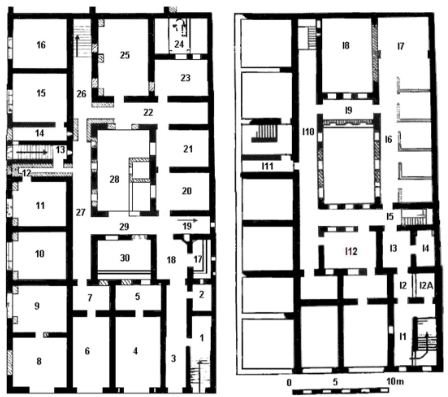
Insula of Diana, Ostia
Apartment
Units that are shop fronts
Units some are one room
Seasonality of shipping - not everyone living year round
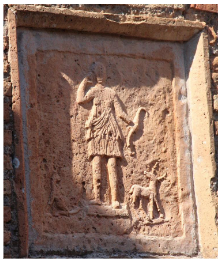
Insula of Diana - named from plaque
the higher up you go the cheaper they are
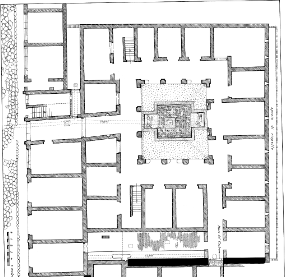
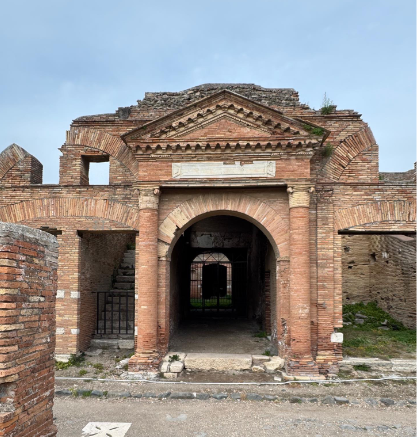
Horrea Epagathiana, Ostia
145-150 AD
Owned by two freedmen, Epagathus and Epaphroditus
Raised floors in grain building to prevent mold
Multi-storied structure
Common style/format Horrea
Shops attached
Courtyard
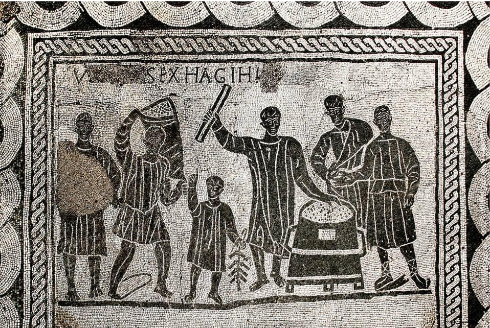
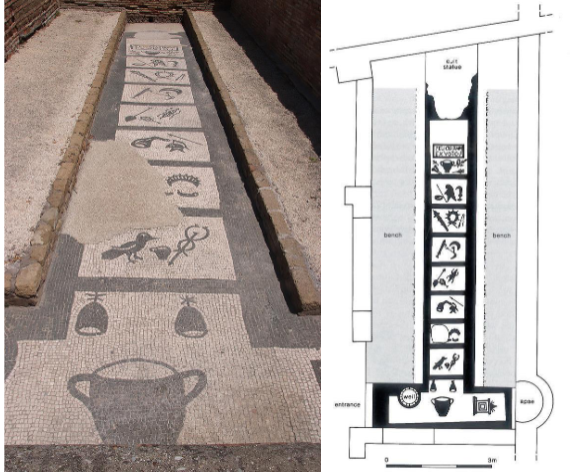
Mosaic
Mensores: grain measurers
Modius - equivalent to 8.7 dry liters, ~2 US gallons
Rutela - to level out the grain
Scene - the hall of the measurers
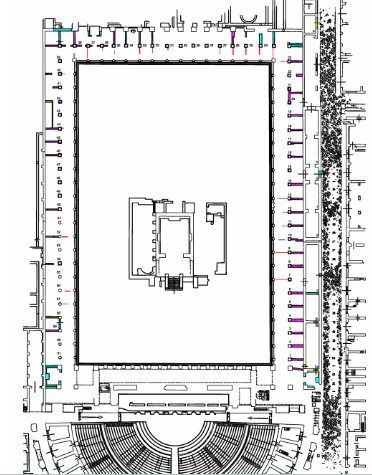
Piazzale della Corporazione, Ostia
Collegia: “guilds”
Naviculari: Shippers
Negotiantes: traders
Sacred space and one of business, there is a temple in the middle
Capped on one end with a theatre
Houses the collegia, business and religious gathering of individuals
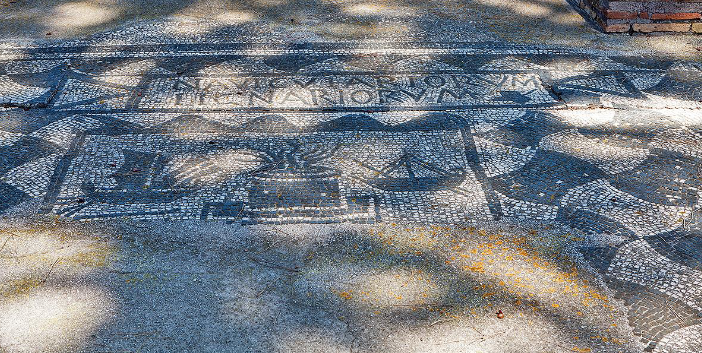
Black and white mosaic that belong to a unit, mosaic out in front- offices belong to the collegia
Often tells you of the business of the unit, like wood shippers,
More commerce focused
Isola Sacra
False island between Portus and Ostia
1st c BCE - 4th CE
Along the Via Severiana (road)
Primary low and middle-class occupants
Small to monumental tombs
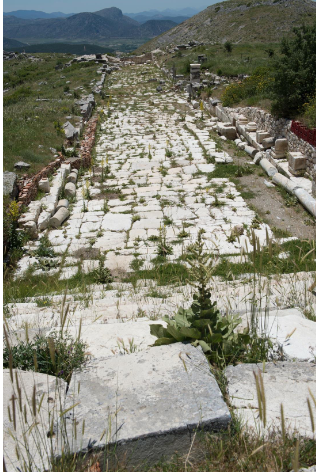
Augustan Road
Colonnaded street
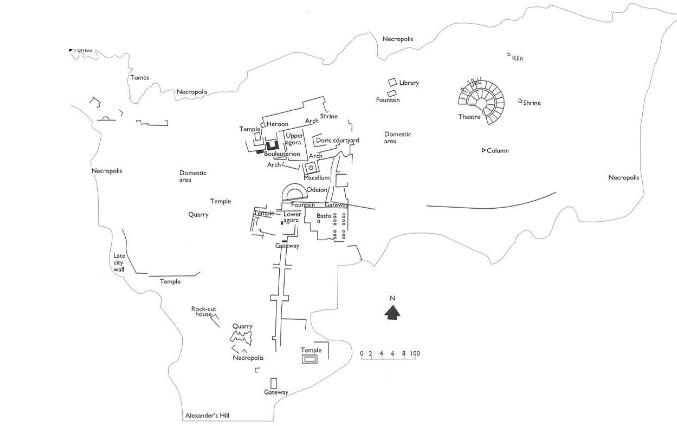
Timeline
Sagalassos
Late 5th BCE - Achaemenid Empire
333 BCE - Captured by Alexander the Great
3rd c -133 - Hellenistic Kingdoms
129 BCE - Bequeathed to Romans, becomes part of provincia Asia
63 BCE - Reorganisation of provinces and client kingdoms, ruled by Amynatas of Galatia in 36 BC, last ruler of the area
25 BCE - Death of Amyntas, incorporated into province of Galatia by Augustus
Temple of Apollo Klarios, marked city as Roman
romans don’t knock down what was there and build up a roman Sagalassos around the Hellenistic Sagalassos
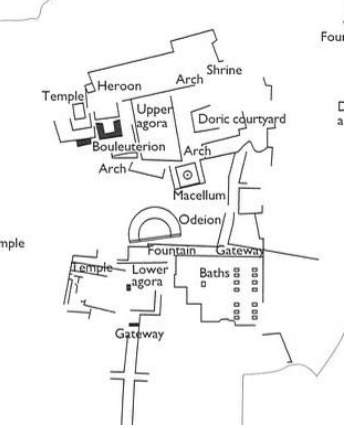
Sagalassos
Roman period - roman additions, another agora(forum), arch, gateways, temple by gate, use street/gate way to lay out the city
Street - paved, colonnaded, also shoots off the street to shops, etc.,
Hadrian first building boom after Augustus
Benefaction
Locals dedicating money for spaces like priest getting money to build the Apollo Klarios to dedicate it to Augustus
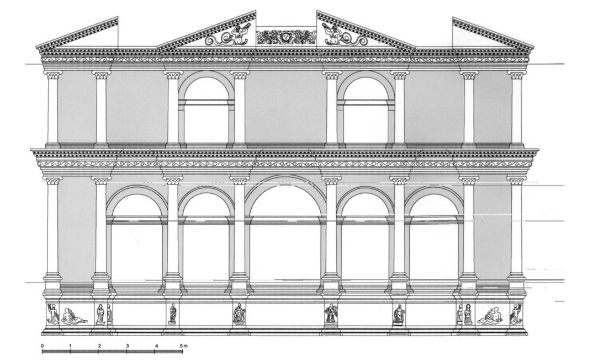
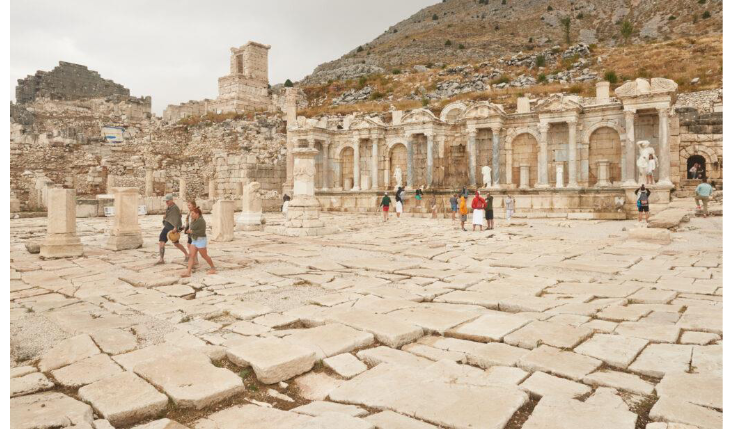
Hadrianic Nymphaeum:
The Sculptural Program
Nymphaeum - water feature, big water fountain
Built near the Apollo Klarios built under Augustus
Private citizen building to in the honor of an emperor
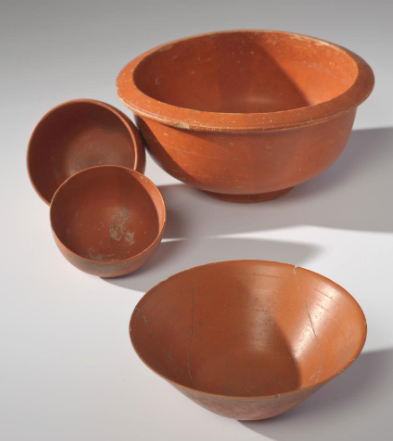
Sagalassos Red Slipware (SRSW)
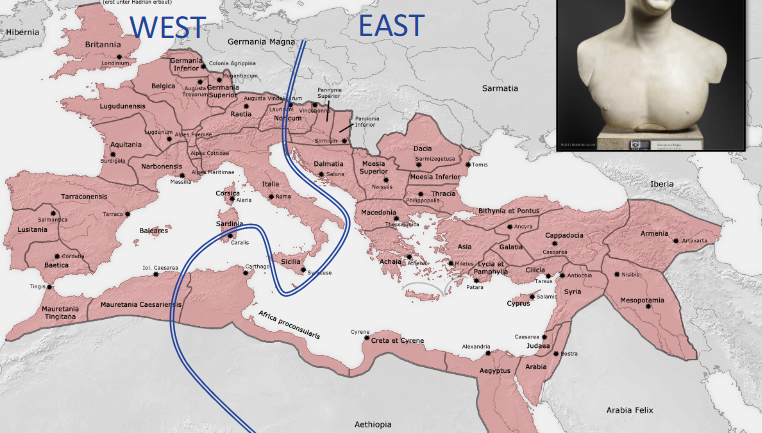
The Roman Empire at 117 AD
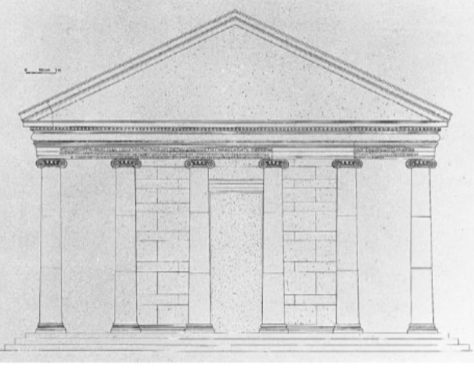
Temple of Apollo Klarios, Sagalassos
Dedicated by Augustus - not example of imperial cult
Imperial benefaction
The high priest of the cult pays to revamp it
Imperial Cult
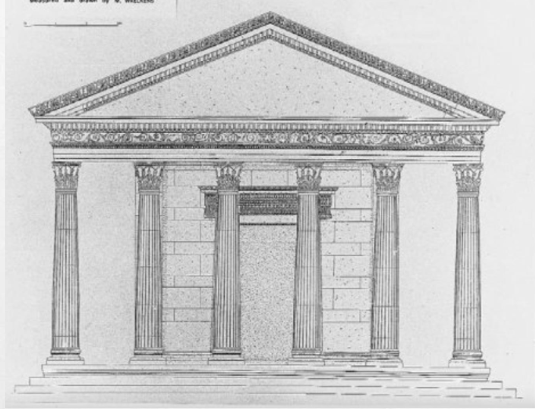
Temple of Divine Hadrian and Antonius Pius, Sagalassos
Prominent family
Imperial Cult
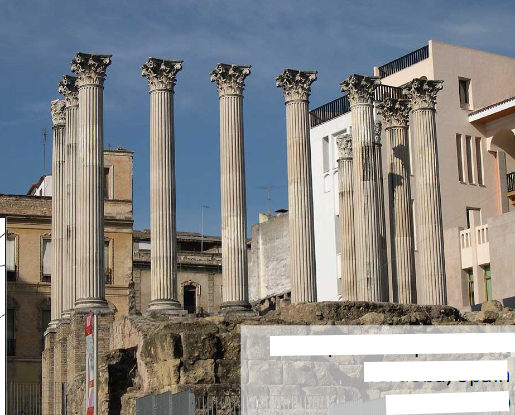
Temple of Imperial Cult
Cordoba, Spain
late 1st c. AD
Example of Euergetism
Established under augustus and tiberius
Dedicated under imperial cult center
Local individual who is buying into this
Euergetism
“Doing good deeds”
Social obligation for social/political returns
In Rome, and the provinces, by local elites and emperors
Evidence
Public buildings
Honorific statues
Inscriptions
Why?
Competitions of cities
Not all cities are going to be favored by Rome the same why
Build to be in contendence for neokoros
Attention from the emperor
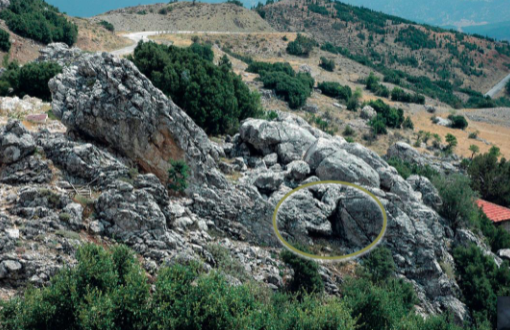
Rock Sanctuary
200 BC - 250 AD
Sagalassos
Goes out of use in 250 AD
Pottery
Terricotta figurines
Aphrodite, Athena, Hygieia, Isis, Kybeele, Tyche, Eros, Hermes
Glass vessel sherds
Animal bones
Roman don’t usually have natural sanctuaries
Syncretize
Of the mother goddess and aphrodite
Shell necklace - aphrodite
Pacidian space having roman culture
Imperial Cult
Imperial cult = worship of the deceased emperor
Neokoros: seat of Imperial cult in a province
Not only the emperor but also the whole family line
Apotheosis (deification) recognized by Senate
Popping up in buildings that already exist
Small religious spaces in buildings
Temples
Any big public building, off to the side
Process that is welcomed into provinces abroad
Helped to
Regulate state-sponsored worship
Unify / enhance the connection of the provinces to the roman core
Fit into polytheistic religion of the Empire
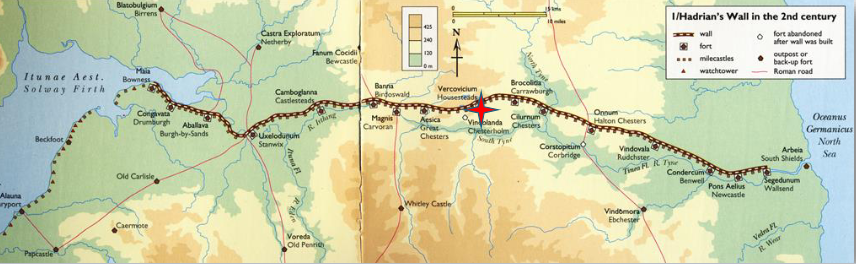
Hadrian’s Wall
2nd c. AD
Begun in 122 AD
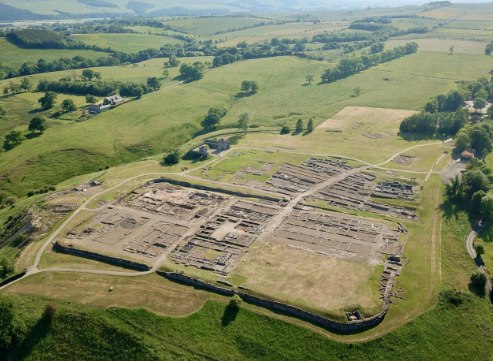
16 garrisons
Medieval record of being 12 meters tall
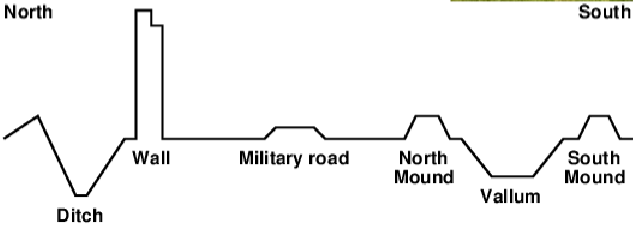
Defensive features
Not natural features
Ditch system to keep barrier between road
Vallum - shallower ditch, mound on either side
Runs almost the entirely the entire wall
Vindolanda
In the middle of england
Tablets
Found at Vindolada and auxiliary fort on Hadrian’s wall
Occupied from AD 85-370
Tablets from 5, pre-Hadrianic phases (AD 85-130)
Early forts - timber
Stone fort 2nd c CE overlays earliest forts
Ink preserved on them
Thin pieces of wood with cursive writing on them
Stylus Tablet 836
Wax tablet
May be attempts to burn the tablets, but bc it is so damp couldn’t
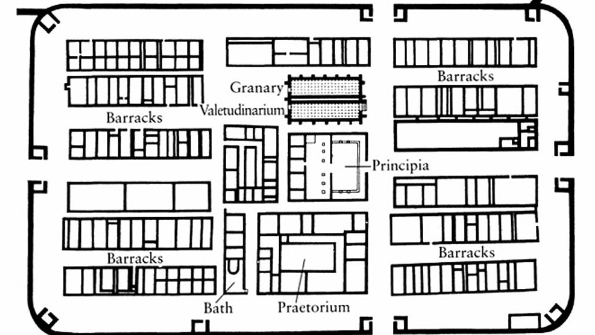
The Roman Castrum: Basic Layout
Principia: head quarters
Via Principia = main street
Granary: grain storage
Praetorium: “commander’s house”
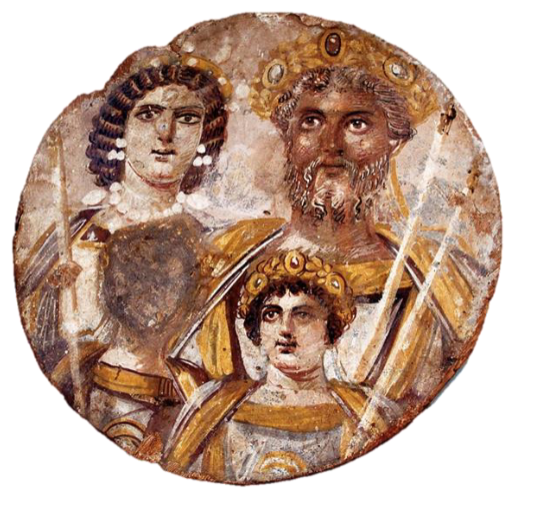
Severan family portrait
Severan AD 199
Location: Fayum portrait (Egypt)
Similar to that of Fayum portrait
No provenance -findspot
No provenance before Berlin Museum
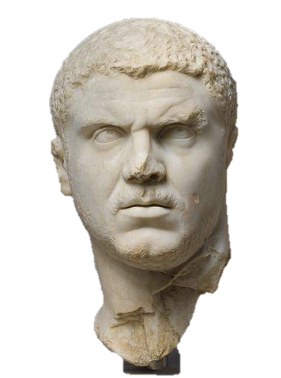
Portrait of Caracalla
212-217 AD
Severan
co-Augustus with Geta after father’s death
First in line of military emperors - “military style”
Angry facial features
Not concerned looking like previous emperors
Moved away with deep carving in hair, baroque style
Economic problem under Caracalla and continues after him
Considered a reign of terror
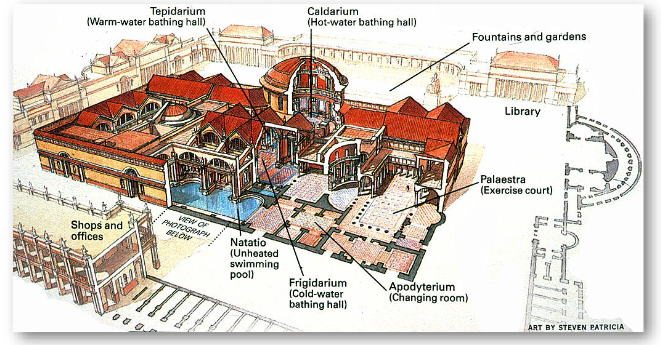
Baths of Caracalla
Rome
AD 211-217
Standard format
Bath experience
Cycle of rooms
Start cold progress into a warmer space and into a hot space, gradually
Symmetrical - one side for men and other for women
Gifted to the people
Artwork
Farnese Hercules - ‘weary hercules’, after last labor
Origin. 4th BC Greek
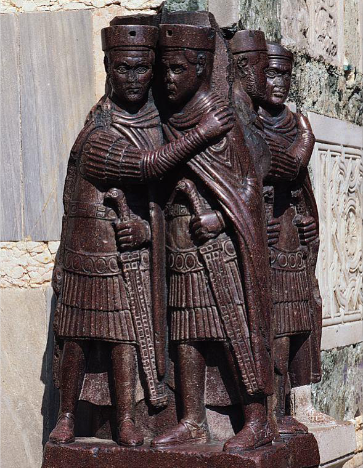
The Tetrarchs
305 AD
Porphyry - material, imperial material - expensive
Once Constantinople, now Venice
Augustus - bearded and Caesar are embraced
Similitudo - similarity, imitation
Not individual portrait of individuals
Harmony elected by the individuals who look similar
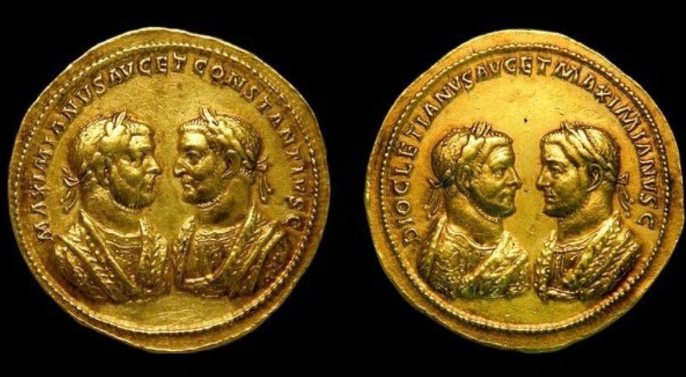
Medallion of the Tetrarchy
Western tetrarchs on left, and Eastern on right
Strong joint message
Tetrarchy
Ruling together but emperor of their own region
Put on their own building programs, etc. to enforce the notion of peace and stability
Two Augustuses and Two Caesars
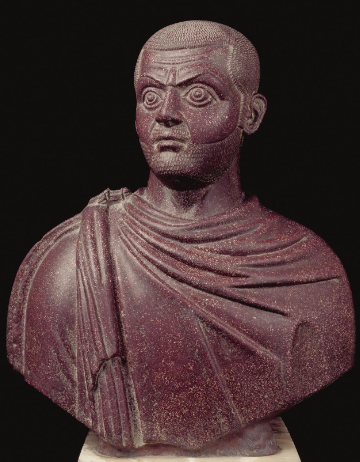
Tetrarch
Porphyry
Cairo
Early 4th c
Stippled bearded in organized way - not what a beard looks like
Features are more abstracted than stylized
Convey power with long stare and jaw long - sever
Can’t tell who the tetrarch it is
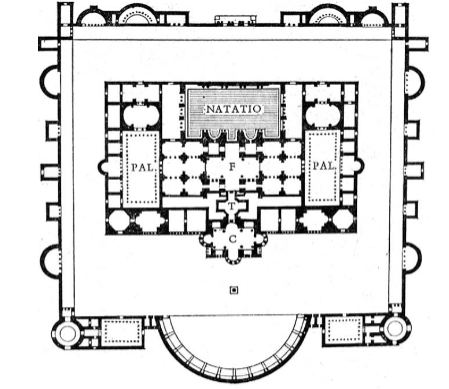
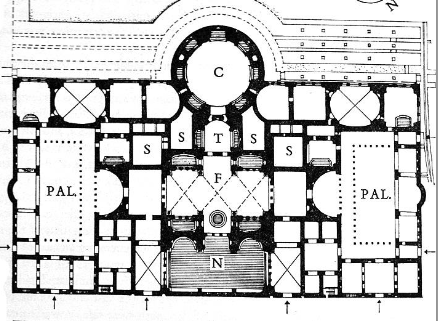
Baths of Diocletian
Symmetrical
Cycle of rooms
Palaestra on each side
Unlike Caracalla
Outer area
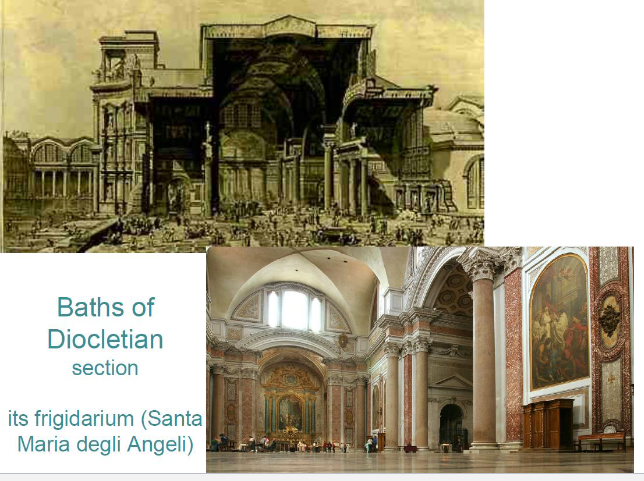
Turned into a church - Santa Maria degli Angeli - its frigidarium
Imperial baths would be all over the city
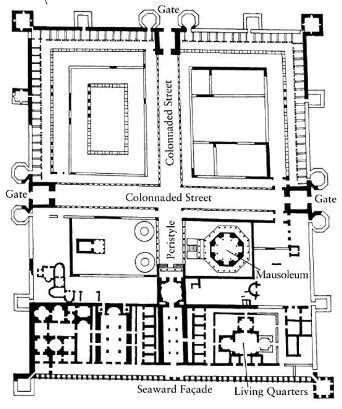
Diocletian’s (retirement) Palace
Complex, scale of a roman camp town
Split, Croatia
Ca. 300
Hefty gates and wall - compared to military fortrace
Peristyle
He dies in Split
Mausoleum w/in his palace
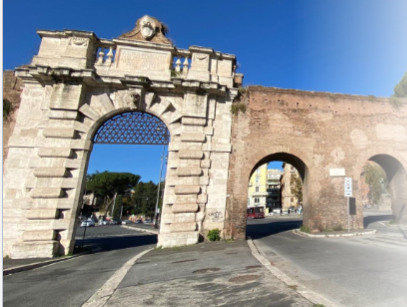
Aurelian -Marks the shift from soldier emperors
Toward the end of the soldier emperors
Aurelian Wall
12 miles circuit with towers every 100 RF , fortified gates
Built using walls of existing spaces, reuse of monuments for construction materials
Ex: ampetheatre is built into the wall
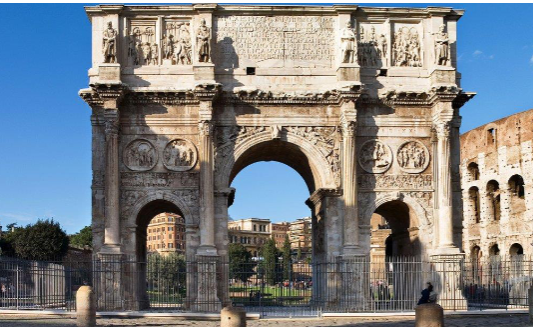
Arch of Constantine
Rome
AD 312-315
After his victory at the Milvian bridge
Different from other arch, it that it is a civil conflict not roman vs others
Reuse of Hadrianic imagery, pull from Marcus Aurelius’, also Trajan
Winged victory with trophy-like Arch of Titus
“Great Trajanic Frieze” is reused in central arch
Reliefs
Battle of Mulvian bridge
arrival in Rome
oration on rostra in Roman Forum
Largesse to citizens, “giving” imagery
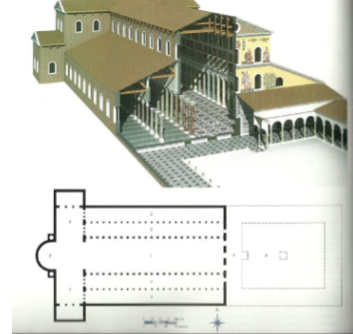
Old St. Peter’s
Apse
Becomes the standard church format
Under Constantine
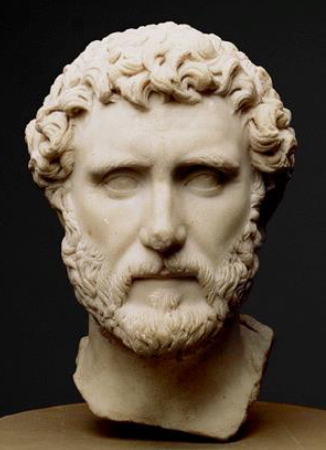
Antonius Pius
140-150 AD
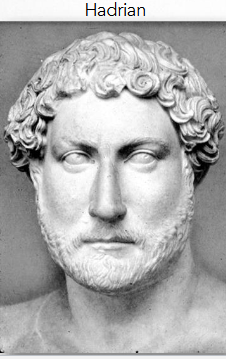
Hadrian
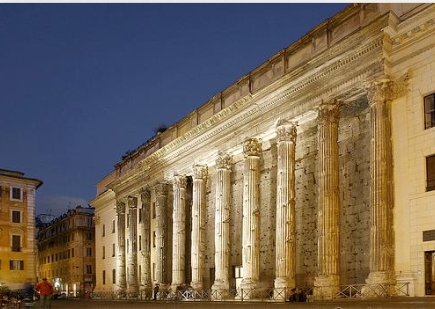
Temple of the Devine Hadrian
Campus Martius, Rome
Dedicated 145
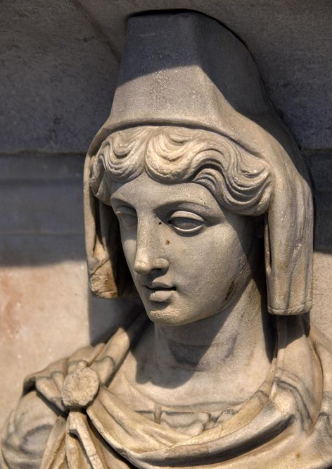
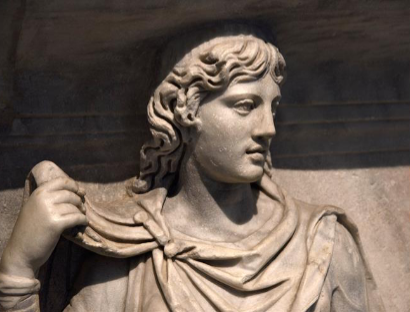
Parthia, Personified
Phrygian cap
Temple of Deified Hadrian
145 CE
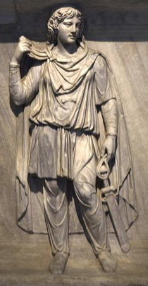
Scythia, Personified
Temple of Deified Hadrian
145 CE
Province reliefs
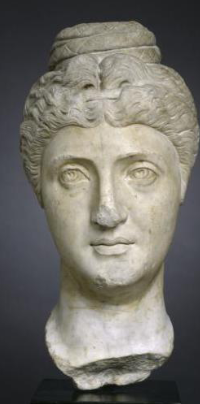
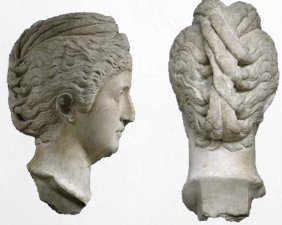
Wife of Antoninus Pius - Faustina the Elder
2nd half of the 2nd c
Love match
Antonius has her deified after she dies
He builds a temple for her
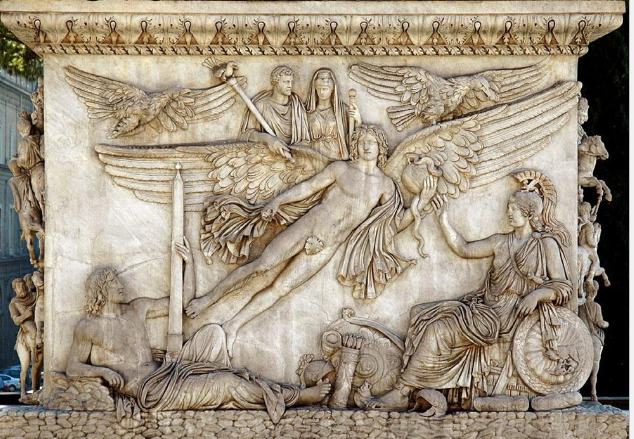
Campus Martius
AD 161
Egyptian granite
Sides
Front:
Antonius and Faustina being deified apotheosis
Roma bottom right
Campus Martius holding the sun dial of Augustus
Classicizing mode, idealized bodies
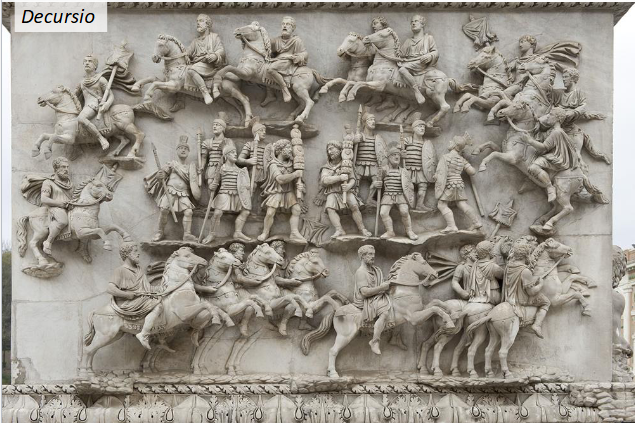
2nd side:
Identical
Decursio
Guys surrounded by men on horseback
Stockier figures
Typically tied to local style, less realistic style proportions
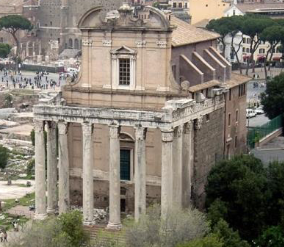
Temple of Antonius and Faustina
Roman Forum
141-161 AD
They add Antonius name after he dies
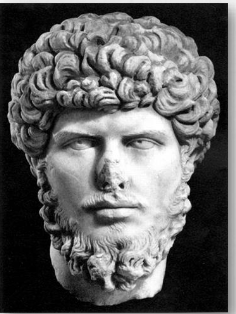
Lucius Verus
AD 160-169
Co-emperor w/ Marcus Aurelius
Silver bust- rare
Some statues have Greek idealized, athletic
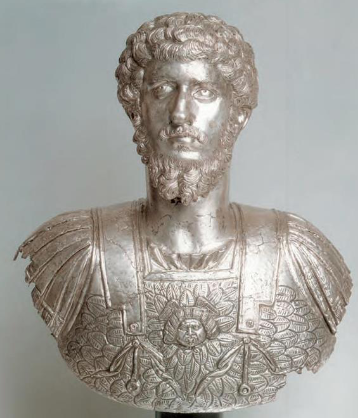
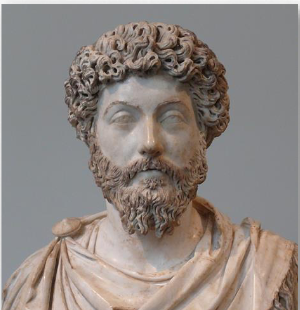
Marcus Aurelia
Curly hair, slightly longer beard, forky beard
Intellectual
co-emperor w/ Lucius Verus
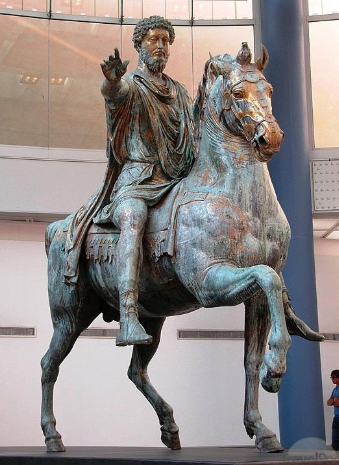
Marcus Aurelius Equestrian statue
Rome
175 ad
Only bronze statue in full
At some time, people believed it was Constantine the first Christian emperor
Gesture of clemency
Saddle blanket- link its Sarmatian tribes, his success in a Marcomanni wars
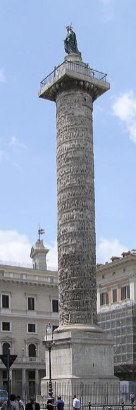
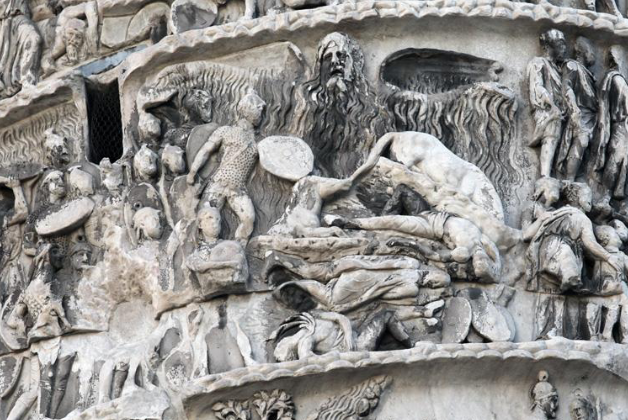
Column of Marcus Aurelius
Rome
180-192 AD
Celebrate victory of Germanic tribes
Miracle of Rain
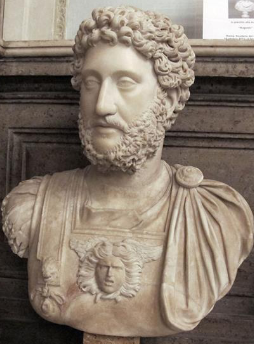
Commodus
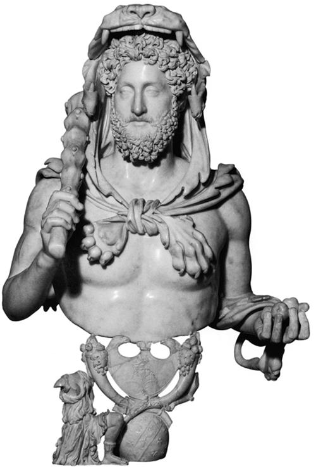
Commodus as Hercules
AD 190
Thinks of himself as a strong warrior type
Period = Antonine
His imagery link to Hercules, club, lion skin
People would characterize as a megalomaniac
Praetorian guard assassinates him
Heavy lids - Marcus Aurelius and latter
Son of Marcus Aurelius
His is Damnatio Memoriae - erasure of memory, removing the face and physical signs of the emperor's presence form society
Last of the Antonine line
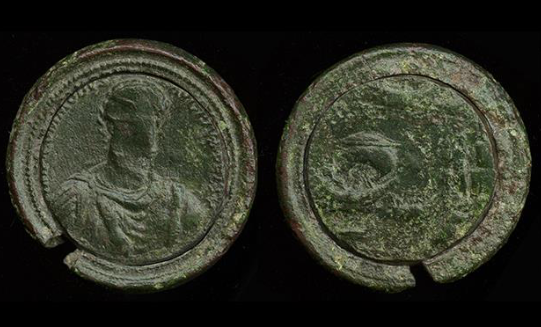
Damnatio Memoriae
coin of Commodus, minted 191 AD
erasure of memory
removing the face and physical signs of the emperor's presence form society
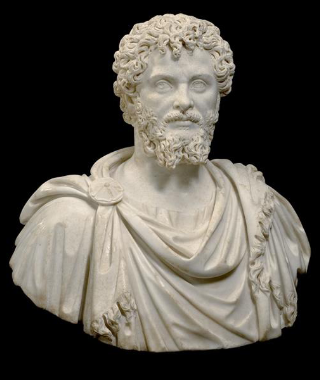
Septimus Severus
Sons: Caracalla + Geta
Wife - Julia Domna
Bust of Septimius Severus
200-210 AD
Has political clout from being a governor
Military emperor
Continuing the beard - Marcus Aurelius, the split beard
Heaver eye lid
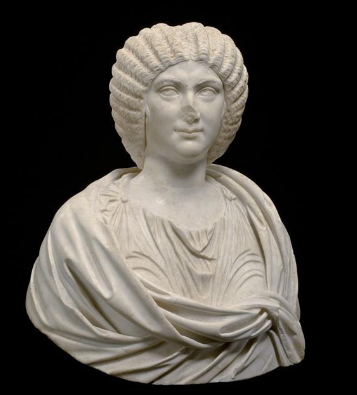
Julia Domna
201-211 AD
New wig type
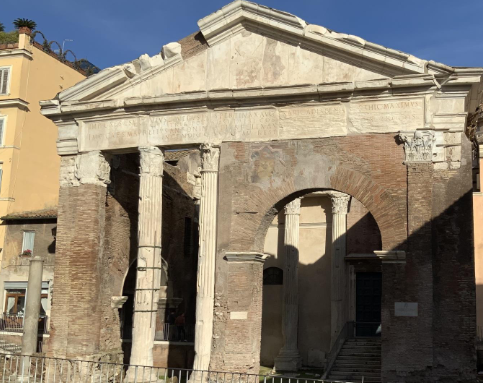
Porticus Octavia
part of Severan (re-)building
Inscription
Tell he replaces after the fire
Gardens, Temples: of Juno Regina, and Jupiter Stator, library
Originally built by Augustus and builds it for his sister
Sculptures by a Greek sculptor
Connection of artwork to roman women
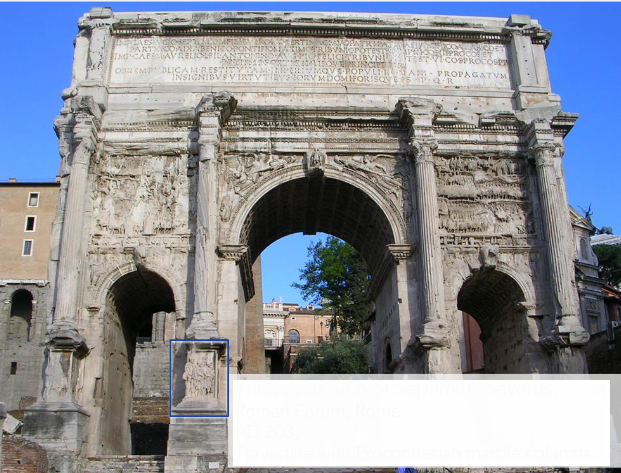
Triumphal Arch of Septimus Severus
Roman Forum, Rome
AD 203
Travertine with Proconnesia marble columns
Decorative
First triple arch
Similarities of Titus’s arch
Winged victory holding a trophy
Depicted differently
Above main arch is a sculpture of a man
Imagery
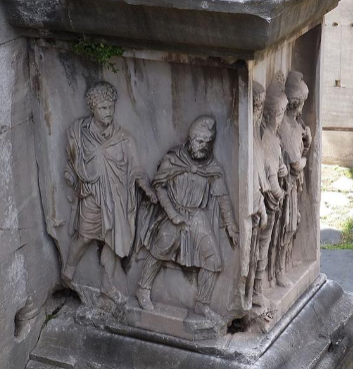
Stack registers - Parthia and the Arab people
Parthian prisoners of war
Column bases
Phrygian cap - Parthians
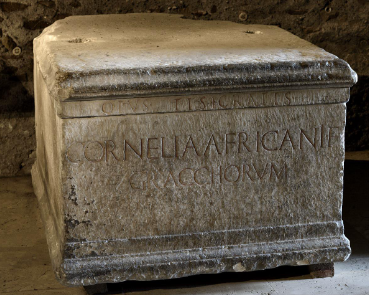
Base Cornelia Africanus Statue
Mother of the Gracchi
2nd CE brother
Known for reform in favor of the poor
So she is held up to be an ideal mother figure
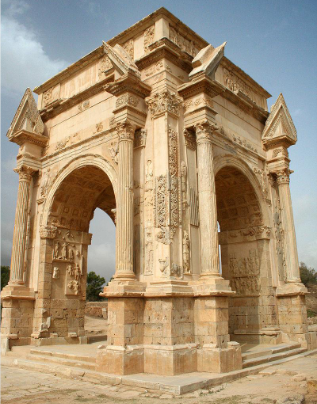
Tetrapylon Triumphal arch of Septimius Severus
Leptis Magna
AD 203-204
Broken Pediments - intentional
Decorative
Flower stuff going inbetween
He has a special column type
Going back to flora and fana like Augustus
Winged victory like on the arch of Titus
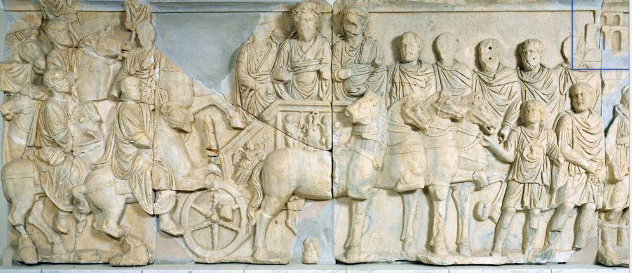
Imagery
Triumph
Chariot like emperor in it and next to him is his wife, known with going on campaign with him
Procession of people
Peaceful scene
AD 203-204
Ritual Sacrifice
The cow being sacrifice
No human sacrifice in roman world
AD 203-204
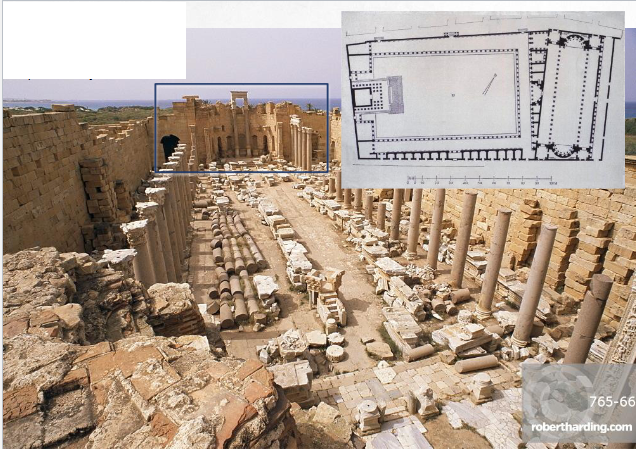
Severan Basilica
Severan form
Leptis Magna, 216 AD
Said he would bestow/dedicate the arch and Basilica
Basilica - rectangular, central aisle with 2 side aisle, colomanide
Modeled after the basilica olympia
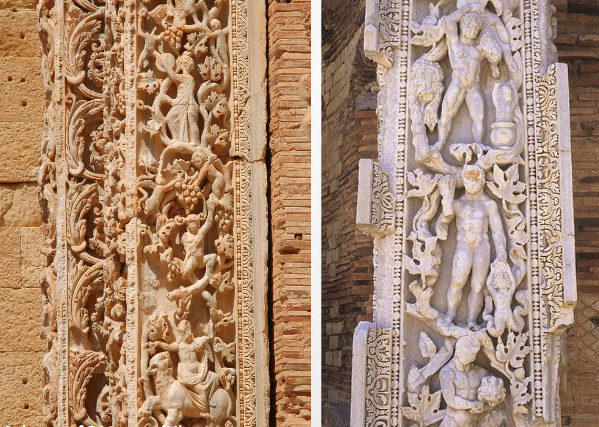
Scroll - depict myths
Herakles labors
Dionysus, maenaids, panthers
Node to the original phoenician colony
Severan baroque - deep drilling, creating a deep shadows, create dramatic
Label on basilica said its finished by Caracalla, Imperator is fully written out when it is usually shortened
Why?
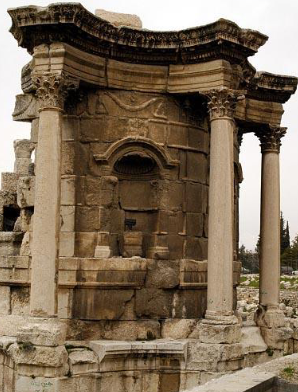
Temple of Venus-Astare
Heliopolis
Province: Syria (now Baalbek, Lebanon)
Dedicated: Severan
His wife is Syrian, familial ties
Severan baroque
Forma Urbis
In the Templum Pacis
18m x 13 m
Stone map
Building made by Septimius Severus so has to made in this time period
Somethings are emphasis more than others
Public buildings are labels not private
Not a true map over given one point of time
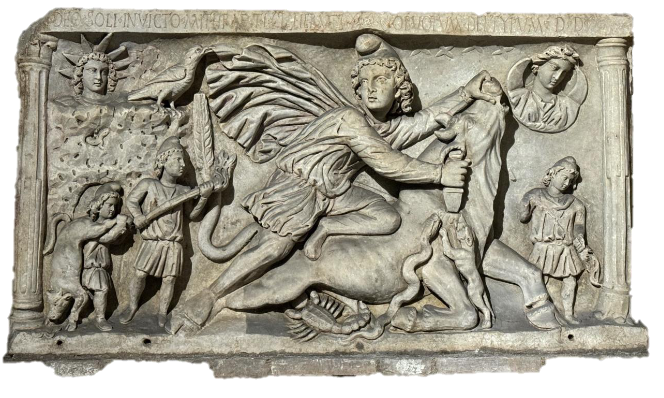
Mithraism
tauroctony - bull-slaying scene
mystery cult
levels of initiation
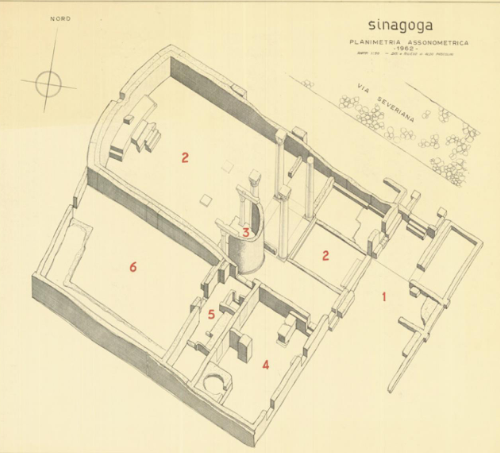
Jewish Community in Rome
Synagogue in ostia
56 AD
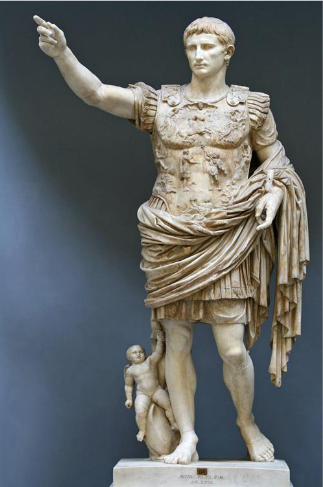
Augustus
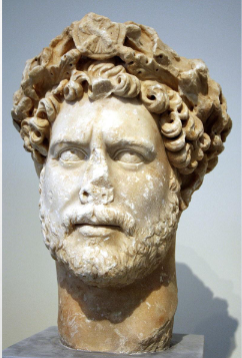
Hadrian
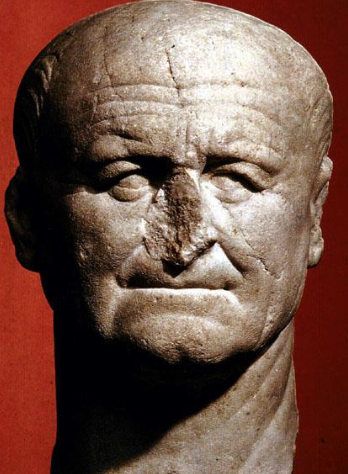
Vespasian
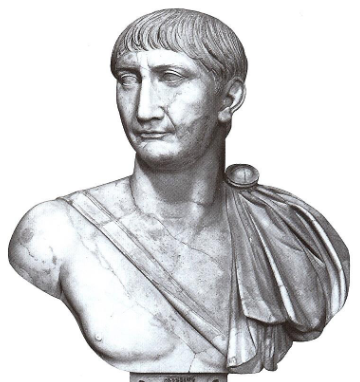
Trajan
Julio-Claudians
27-68 AD
Augustus
Tiberius
Caligula
Claudius
Nero
Flavians
69-98 AD
Vespasian
Titus
Domitian
Nerva
Nerva-Antonines
96-192 AD
Nerva
Trajan
Hadrian
Antoninus Pius
Marcus Aurelius
Lucius Verus
Commodus
*Adopted emperors
Severans
193-235 AD
Septimius Severus
Caracalla
Macrinus
Elagabalus
Alexander Severus
The Soldier Emperors
235-275 AD
Maximinus Thrax
Philip the Arab
Trebonianus Gallus
Aurelian
*NOT elected by the senate, the army made them Emperors of Rome
Tetrarchs
284-305
Diocletian
Maximian
Constantius Chlorus
Galerius
Maxentius
Licinius
Constantine I
Spolia
re-use of older architecture and decorative
Severus does this in his building program
so does Aurelian in his wall
Severan Baroque
deep drilling, creating a deep shadow, create dramatic
Example: Severian Basilica, the columns depicting Hercules Labors and imagery of Dionysus
Necropolis
cemetery, “city of the dead”
Ex:
Cerveteri
Chamber Tombs
monument rectangular or square structure with a vaulted roof
Isola Sacra
Vault Tomb
a small chest like tomb, typically 1×2m
Isola Sacra