topic 5.3 - high performance sport and mental health
 Call Kai
 Learn
Learn Practice Test
 Spaced Repetition
 Match
Match Flashcards
 Knowt Play
1/18

There's no tags or description
Looks like no tags are added yet.
Name | Mastery | Learn | Test | Matching | Spaced | Call with Kai |
|---|
No analytics yet
Send a link to your students to track their progress
19 Terms
what is high performance sport
includes:
1. olympic/paralympic level
2. international level i.e. world championships
3. national events competing to be on olympic team
4. pro sports league (eg. nba, nfl)
athletes at this level are considered high performance athletes
what is mental health and mental healht struggles
- what lets ppl cope w stress of life, realizing what their capable of, leanrning, working well and contribute to thei rcommunity
- anything causing a person to sruggle w coping w the above
what is mental illness
medical disorders the disturn a persons thinking, behaviour and experesion of emotion
eg. MDD< anxiety, ED's
mental illness and struggles prevalence in canadian adults, HP athelets worldwide and canadian hp athletes
Canadian adults (normal)
20% mental illness
33% mental health struggles
hp athletes worldwide
20-40% mental illness
50-100% mental health struggles
**higher than what we see in Canadian adults
Canadian hp athletes
40% mental illness
Unknow % for struggles
risk factors to mental ilness/struggles
- being a man
- being injured, esspecailly if severe (improtatnto have athleted to come to sessions still )
- performance/winning focuses training environmentts
protectectie factors to mental illness/struggles
- developmentn focused/supportive trainng environment
- strong relationships in and out of sport
- strong coping skils
Barriers to Help-Seeking
1. Mental health literacy
= ability to access and understand information related to maintaining positive mental health (WHO, 2024)
2. Stigma
" People will think I'm weak..., ill get cut from the team"
But this has changed a lot since the early 2000s
Eg.simone biles, naomi osaka
(Mental Health) Policy/Programs in Canadian Sport
1. athlete assistance program
2. game plan
3. canadian centre for mental health in sport
Athlete Assistance Program
- prpgram funcded by federal gov that pays cnadain representing athltese a salary if they meet certain guidlines (eg. placement, no of events)
- if u get physically injured youll still get the salary BUT NOT mental illness (even though both can put u out of training)
*athletes often lie and saying they have physical injury or continue but w declinding performance
game plan
canadian program that provides supports to athlets like education and mental health theorupist funcind (3k)
**however they need to ask for the therapist and only have access to approved thepists
Canadian Centre for Mental Health in Sport: Mental Health Strategy for High Performance Sport in Canada
- a program currently being implemeted which placed policies to make the system more supporteing for athlete mental healh
**but no way to ensure policy is being followed, no punishment if it doesnt
guest lectureer lauren dickler masters research purpose
Purpose: To explore the experiences of Canadian National Team athletes training and competing with diagnosed mental illnesses, with a particular focus on their career journeys.
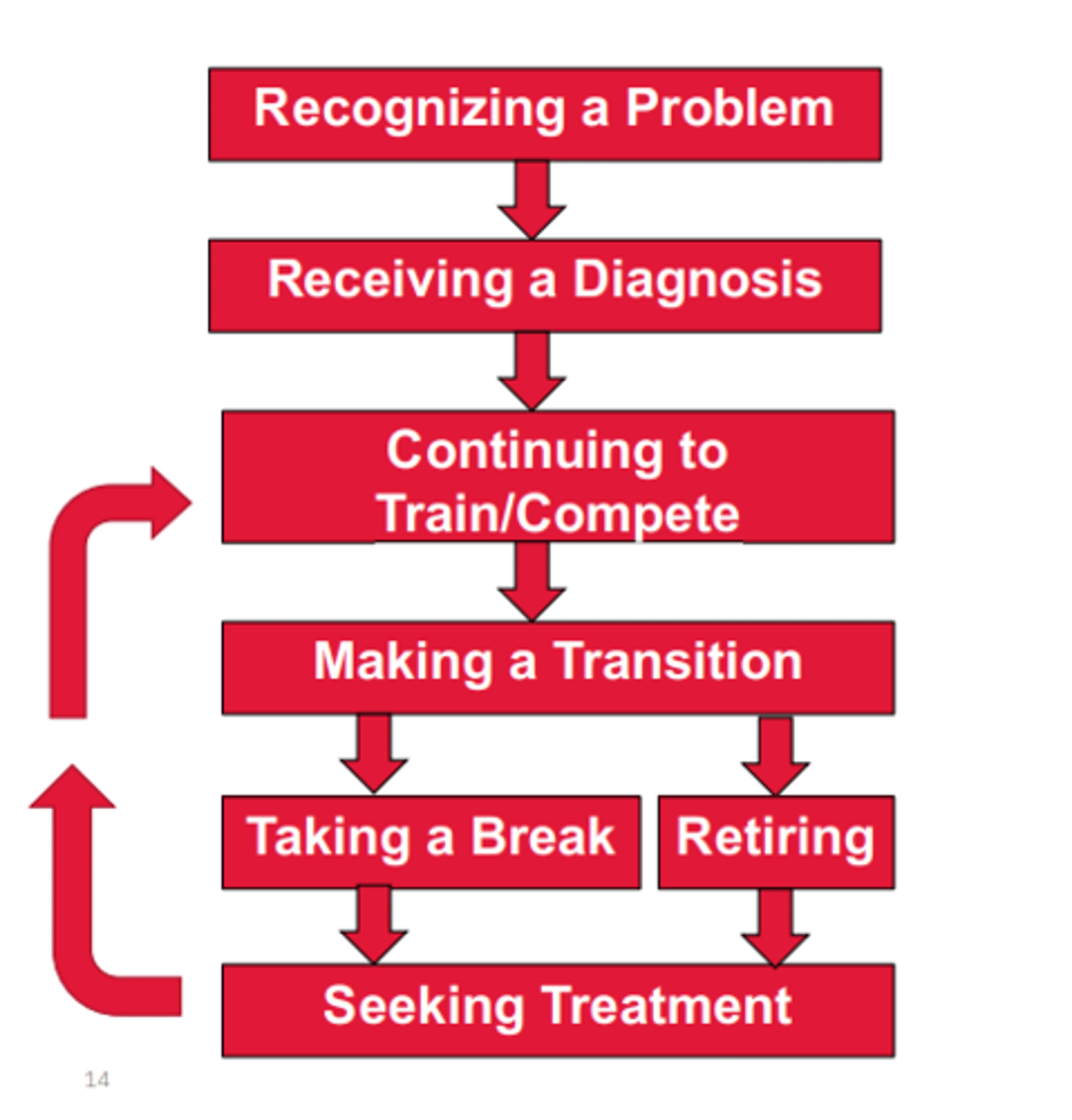
came up with the athlete mental health journey
Athletes' Mental Health Journey
- recognize problem
- receive diagnosis
- continue to train and compete
- make a trasnision into a break or retiring
- seek treatment
- can possibly go back to training or competeing
DIAGNOSIS (NON)-DISCLOSURE: why do athetes w mentlah ilnness not share w athletic peers
Shared with at least 1 family member.
Shared intermittently with coaches over time - only if and when necessary.
DID NOT share with athletic peers
why?
1. perceived stigma
2. Self-stigma
3. Misconceptions of mental toughness
what is perceve stigma vs self stigma
perceived: What you think other people will think about you eg. "They'll think I'm just looking for attention"
self: When you start to believe those negative stereotypes yourself
"I'm weak"
"I'm broken"
**"Toughing it out" is a prized trait of athletes
Potentially explaining why stigma towards mentally ill athletes is greater than stigma towards nonathletes
Stigma is the greatest barrier preventing athletes from seeking help
(MISCONCEPTIONS OF) MENTAL TOUGHNESS
beleif that you have to mentaly tough to be a hp athlete
thta mental illness = mentally weak ... FALSE
Continuing to train/compete
Athletes often keep training/competing even when struggling mentally because of:
- Denial
- Strong athletic identity
- Comfort in routine
- fear of mentla healht medication (doping accusations, side effects)
**training can act as treatment!!! sport can healp them cope w struggles
Discussion: Paradox of High-Performance Sport
Is it necessary to withdraw from high-performance sport to seek comprehensive treatment?
But what if training is their treatment?
Can training and competition serve as a form of treatment? •
Athletes' Recommendations for Improved Sport Journeys
1. better access to mental health support
2. improved mental health reporting and funding (rn only physical injuries are focused)
3. education to decrese stigma *most imporvment here w ahtletes sharing their stories