D3.1 Reproduction SL
 Call Kai
 Learn
Learn Practice Test
 Spaced Repetition
 Match
Match Flashcards
 Knowt Play
1/70

There's no tags or description
Looks like no tags are added yet.
Name | Mastery | Learn | Test | Matching | Spaced | Call with Kai |
|---|
No analytics yet
Send a link to your students to track their progress
71 Terms
Sexual reproduction
contributes to genetic diveristy → good for adapating to a changing environemnt
Asexual reproduction
produces genetically identical offspirng
good for non changing environemnts
faster, less energy can colonize a new area easily
Examples of asexual reproduction
binary fission
mitosis
budding
vegetative reproduction
Role of meiosis in sexual reproduction
meisosi breaks up the parent alleles producing genetically diffrent cells
the egg cell and sperm cell then fertilize leading to formations of new comibnations → genetic diversity
Egg cell vs sperm cell
Egg cell:
large
doesnt move
stores nutrients
has organelles
only one per menstraul cycle
Sperm cell
motile → flagellum
very small
no food reserves
travels to the egg
millions of sperms produced
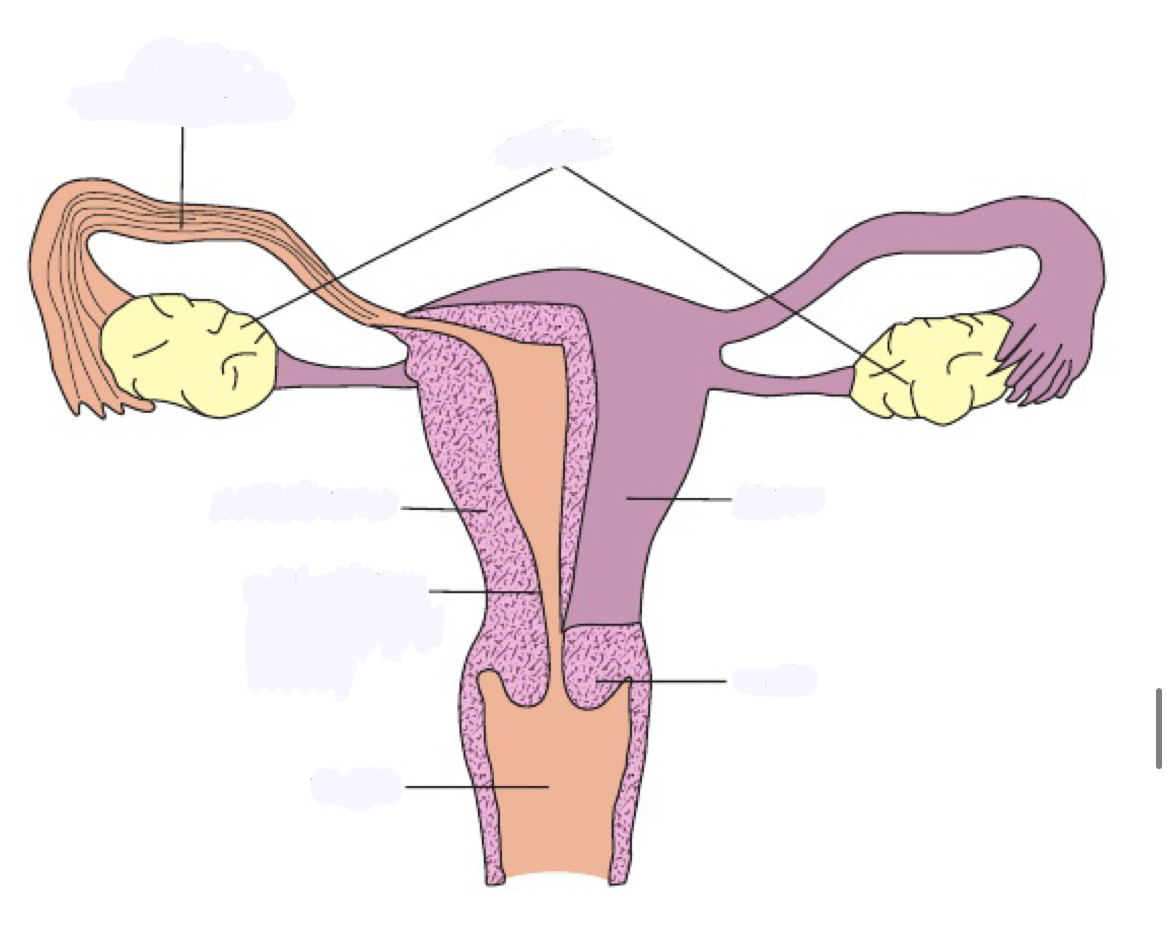
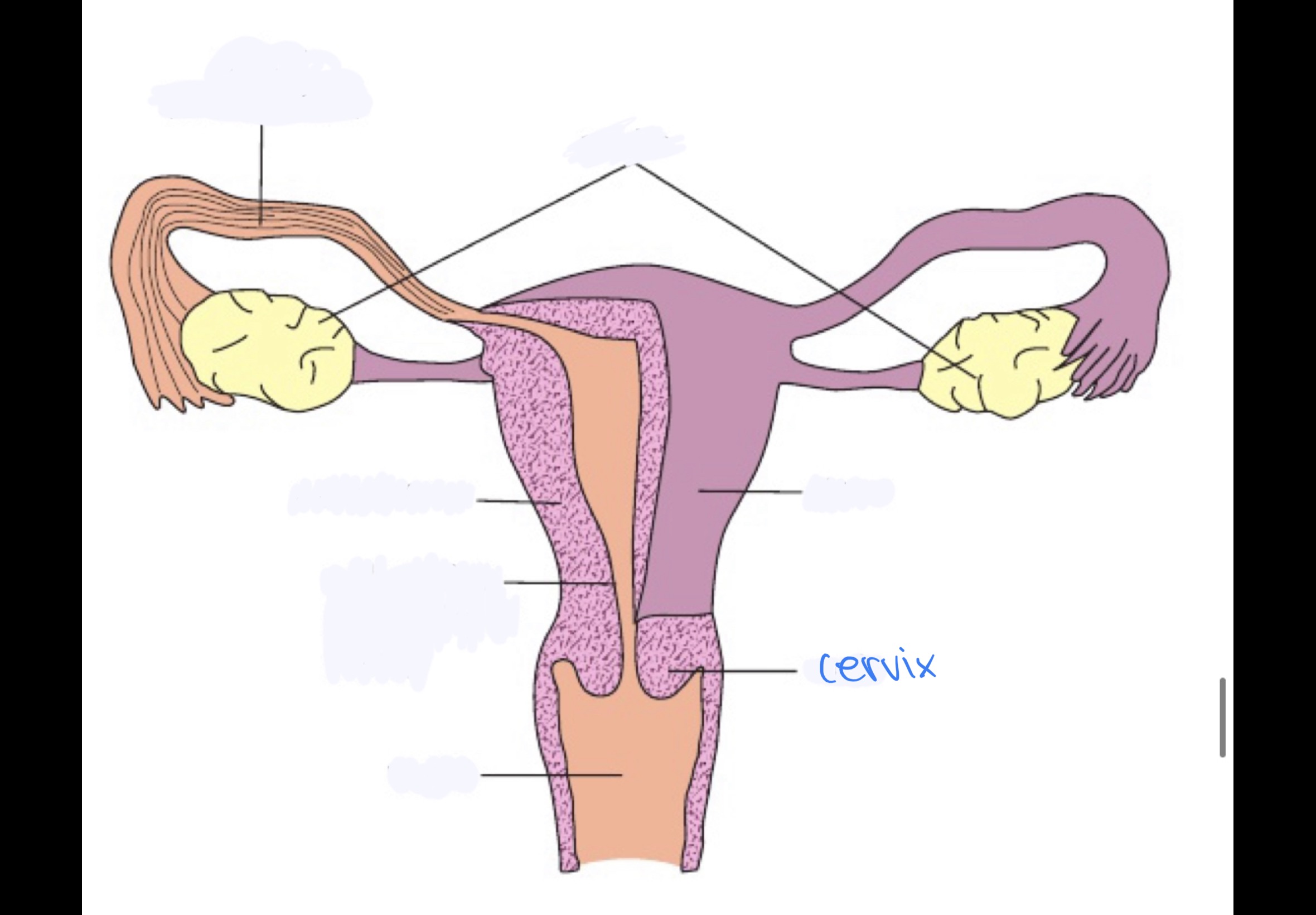
Where are ovaries
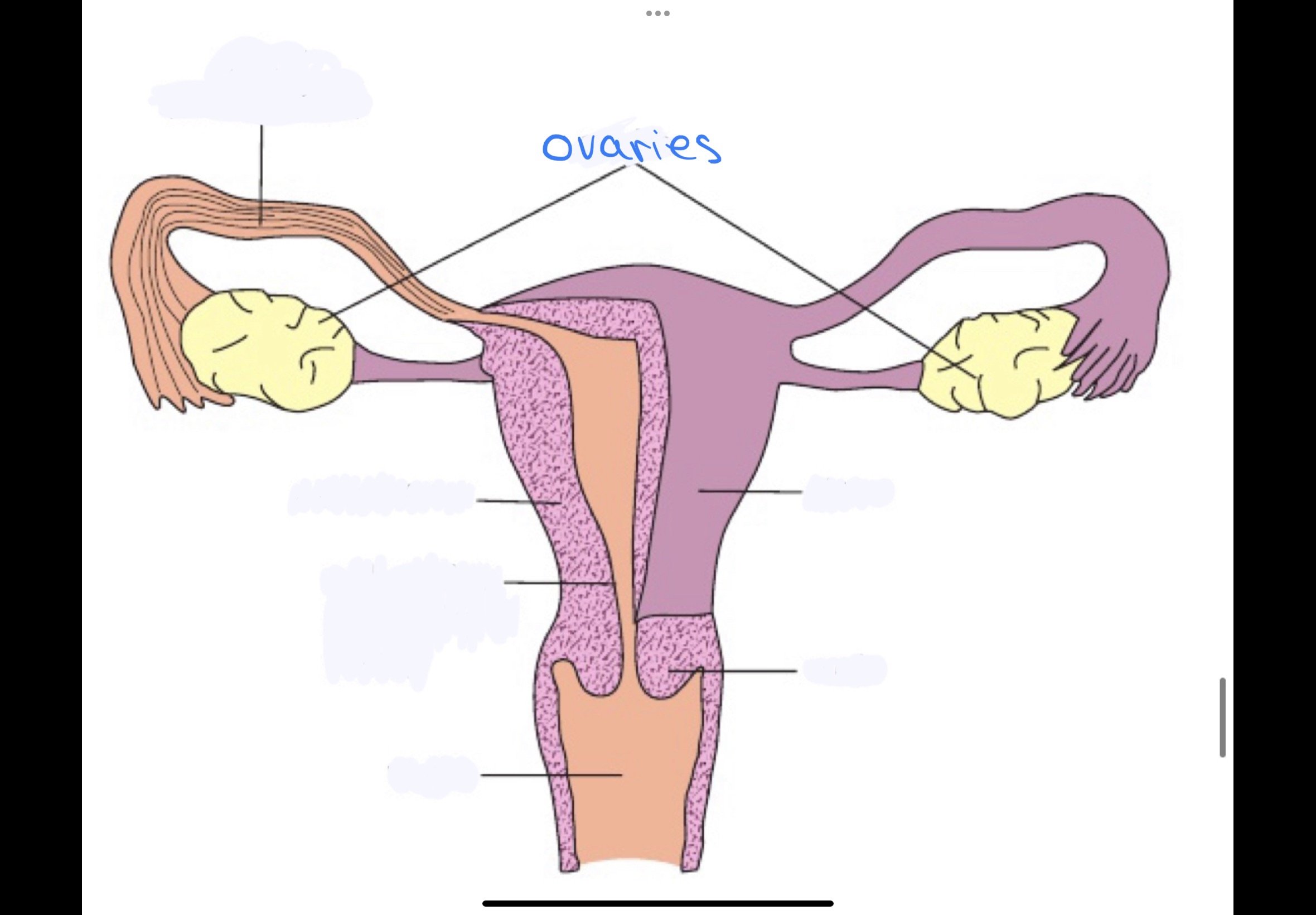
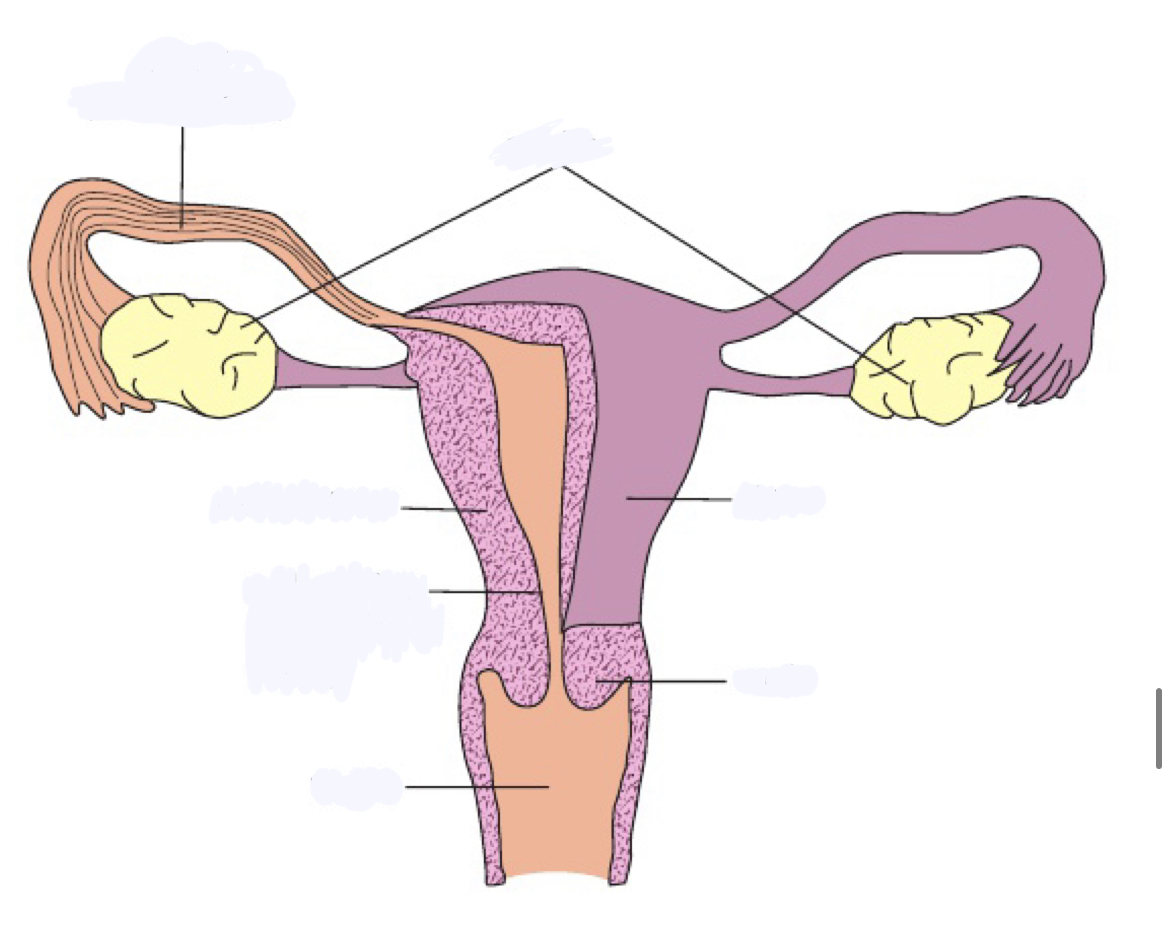
Where is the vagina
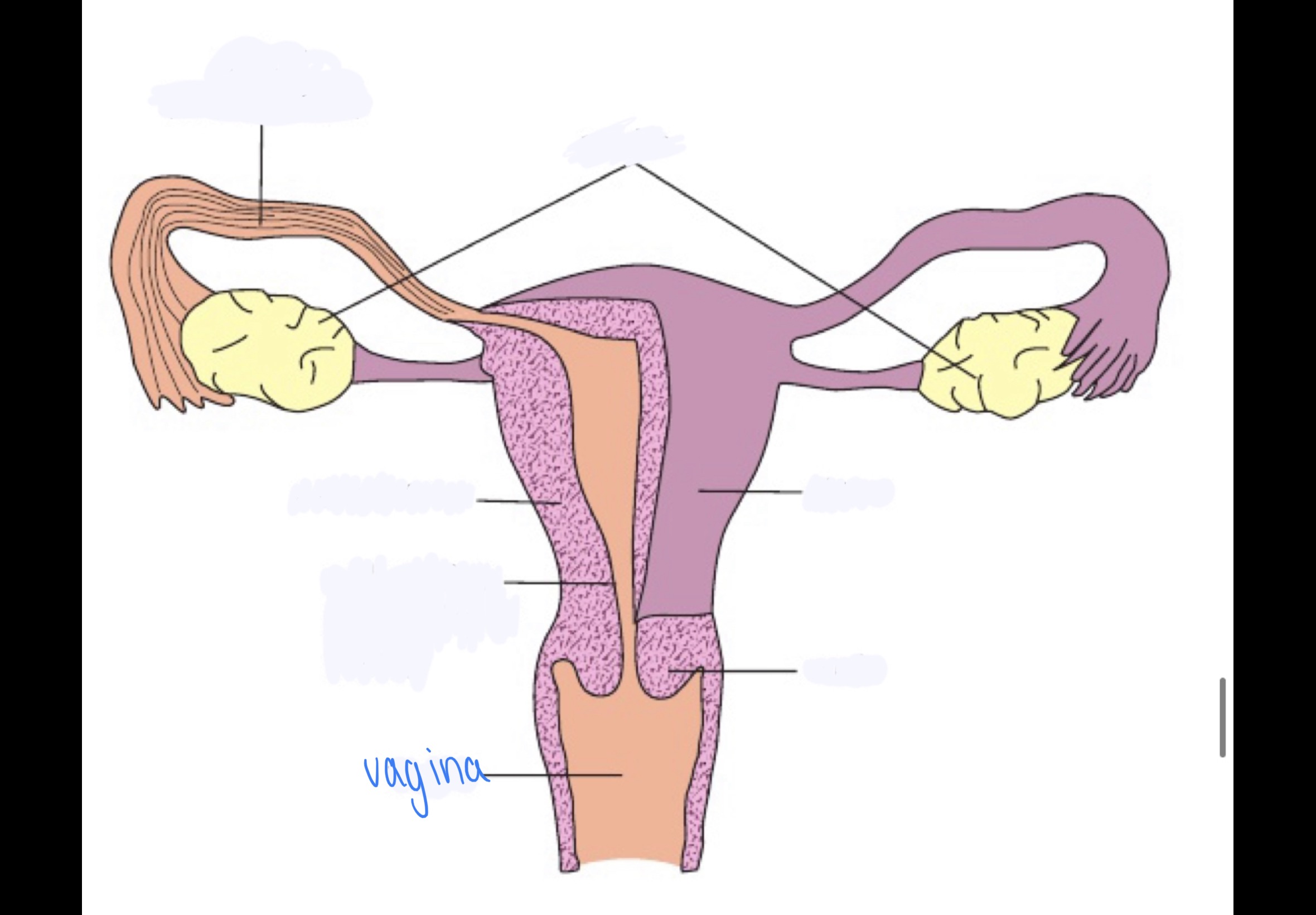
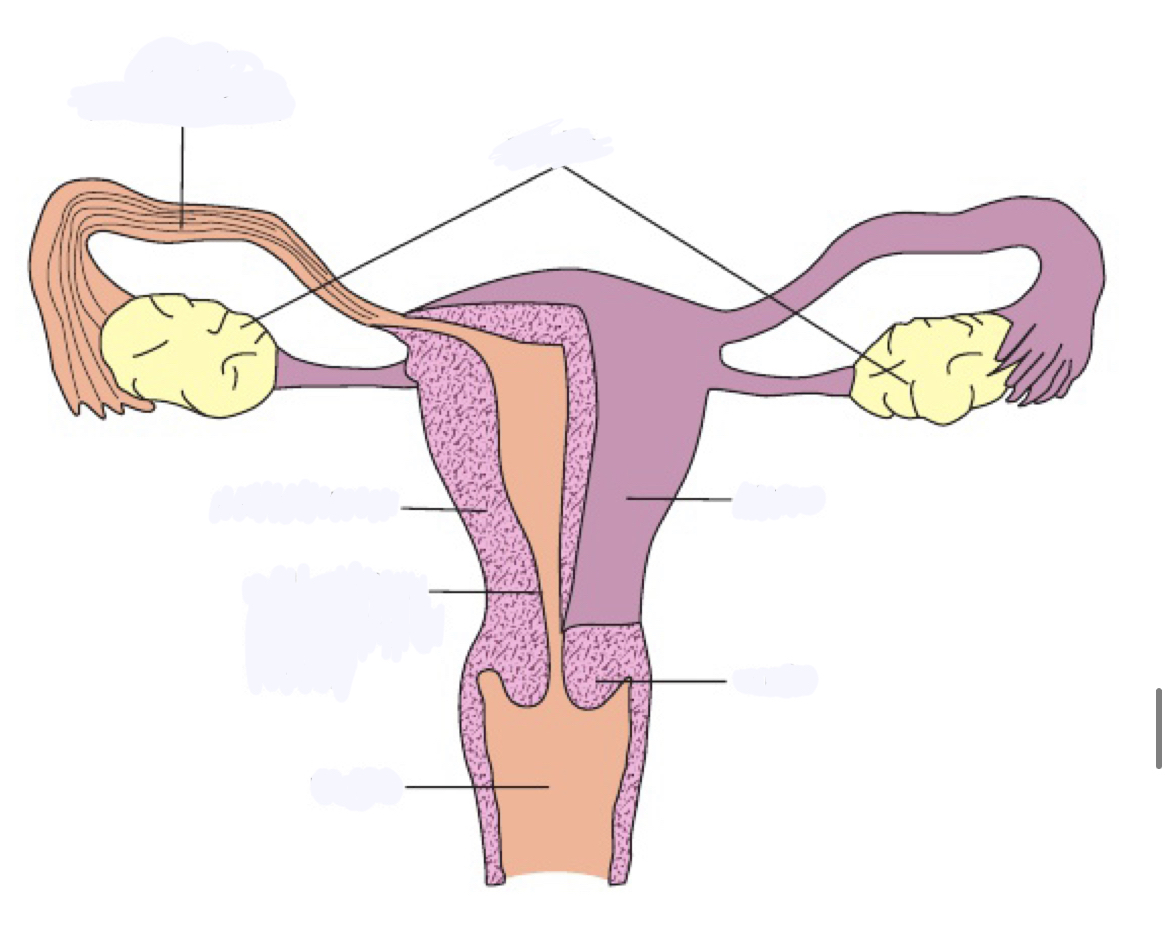
Where is the cervix
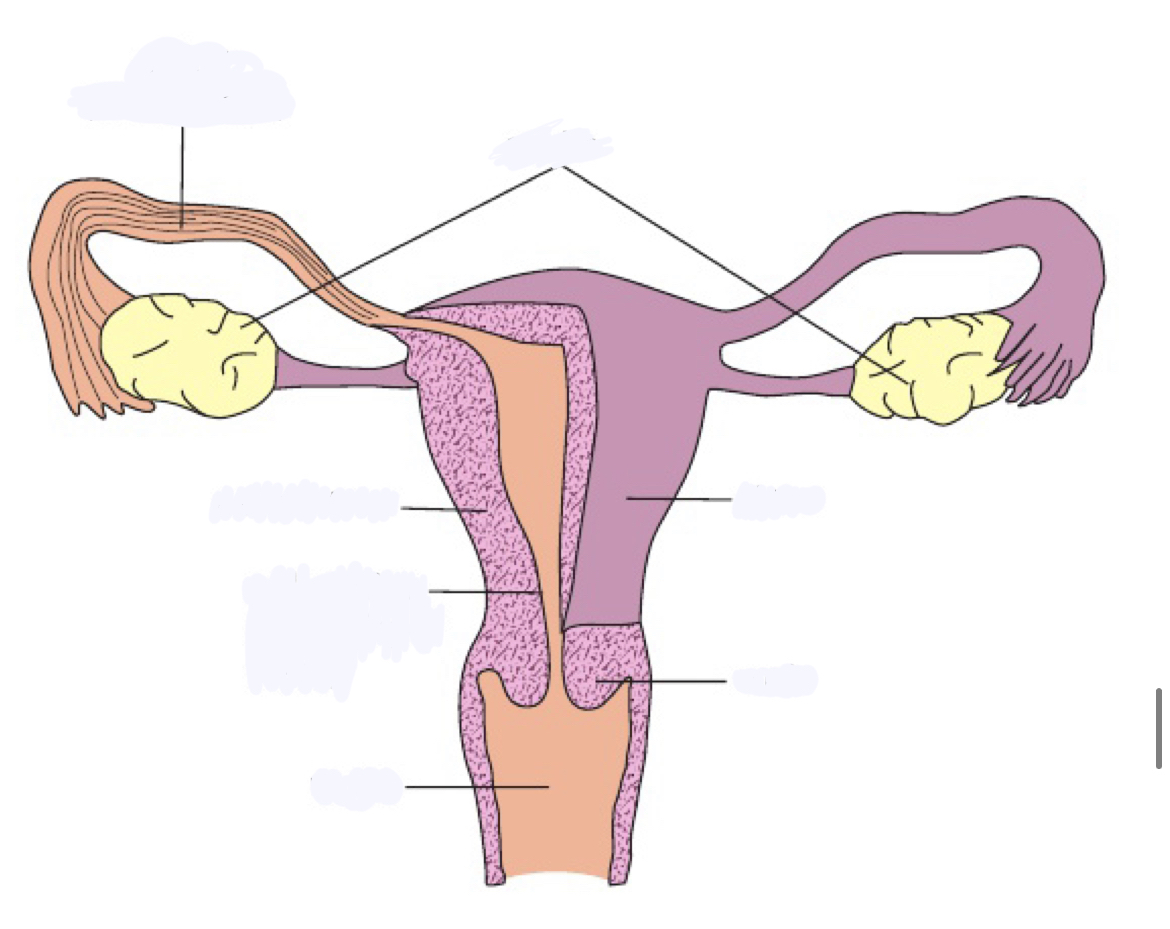
Where is the uterus
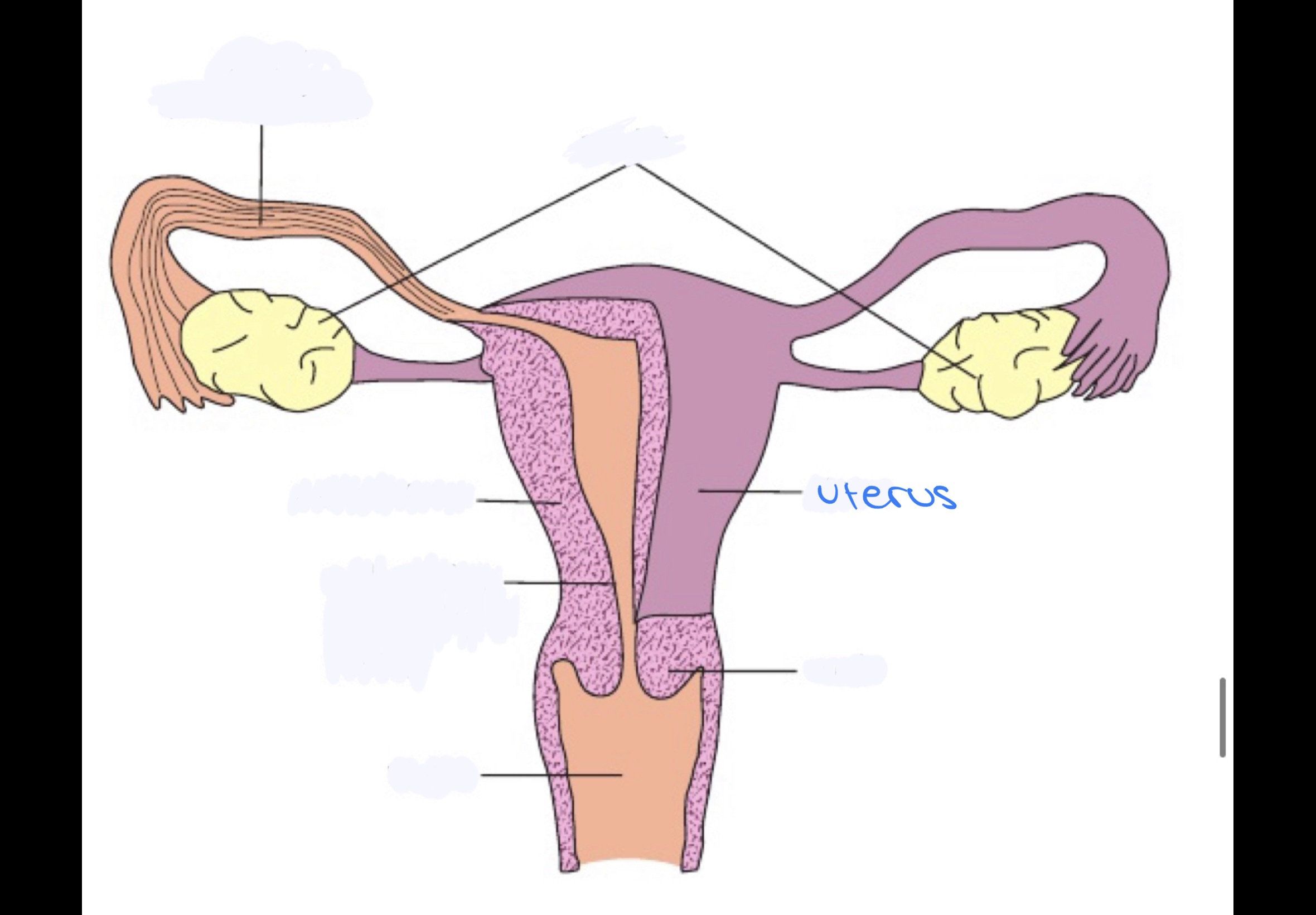
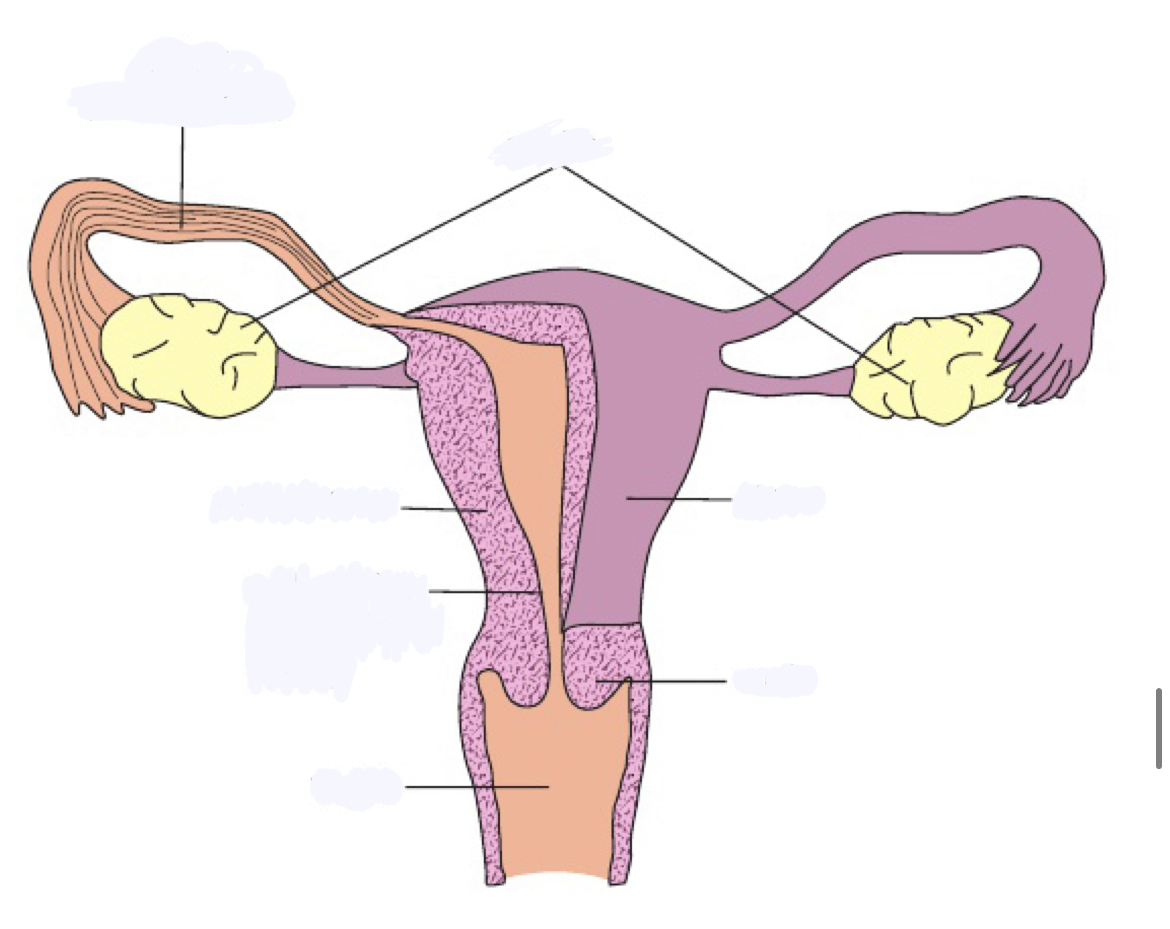
Where is the oviduct
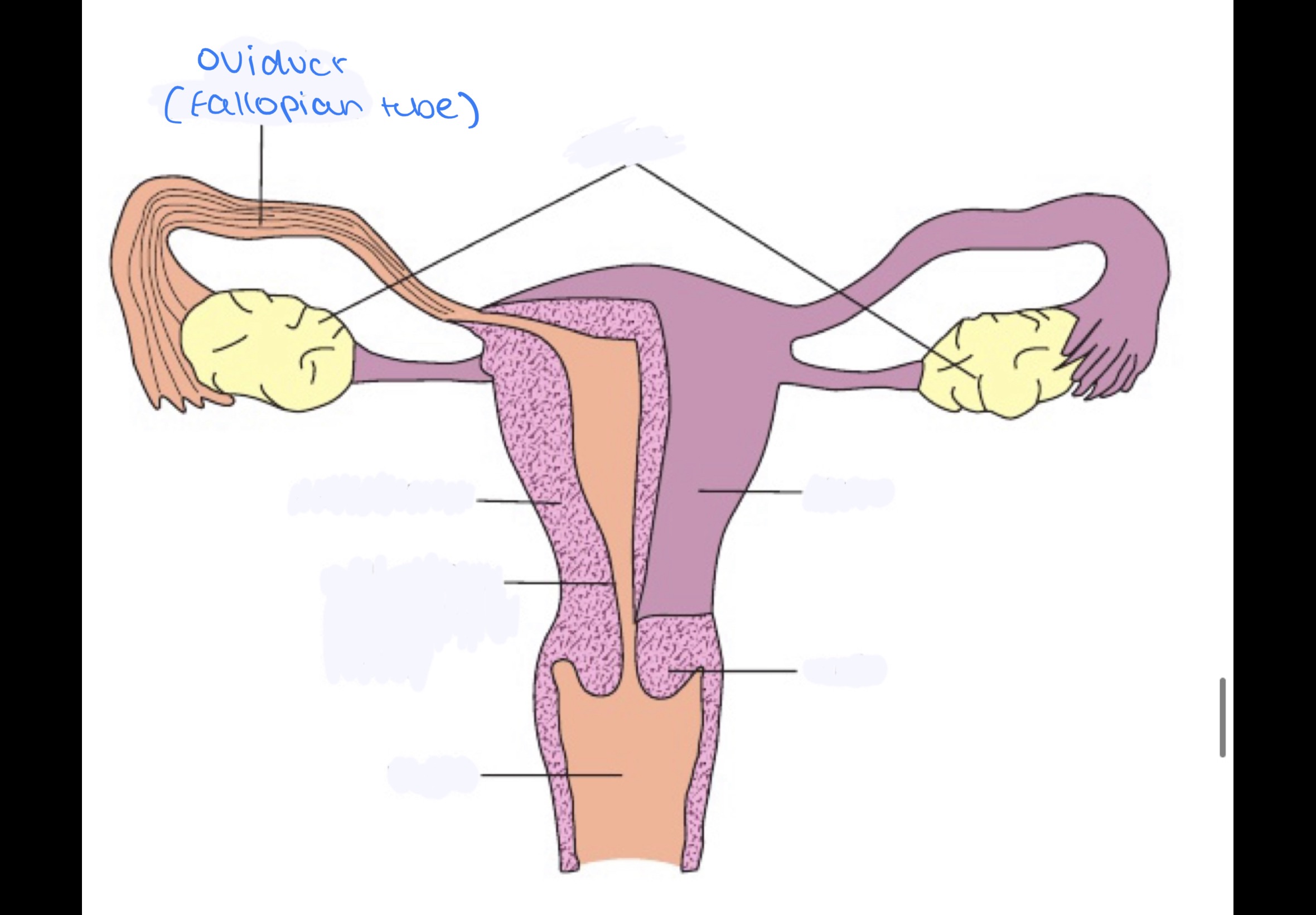
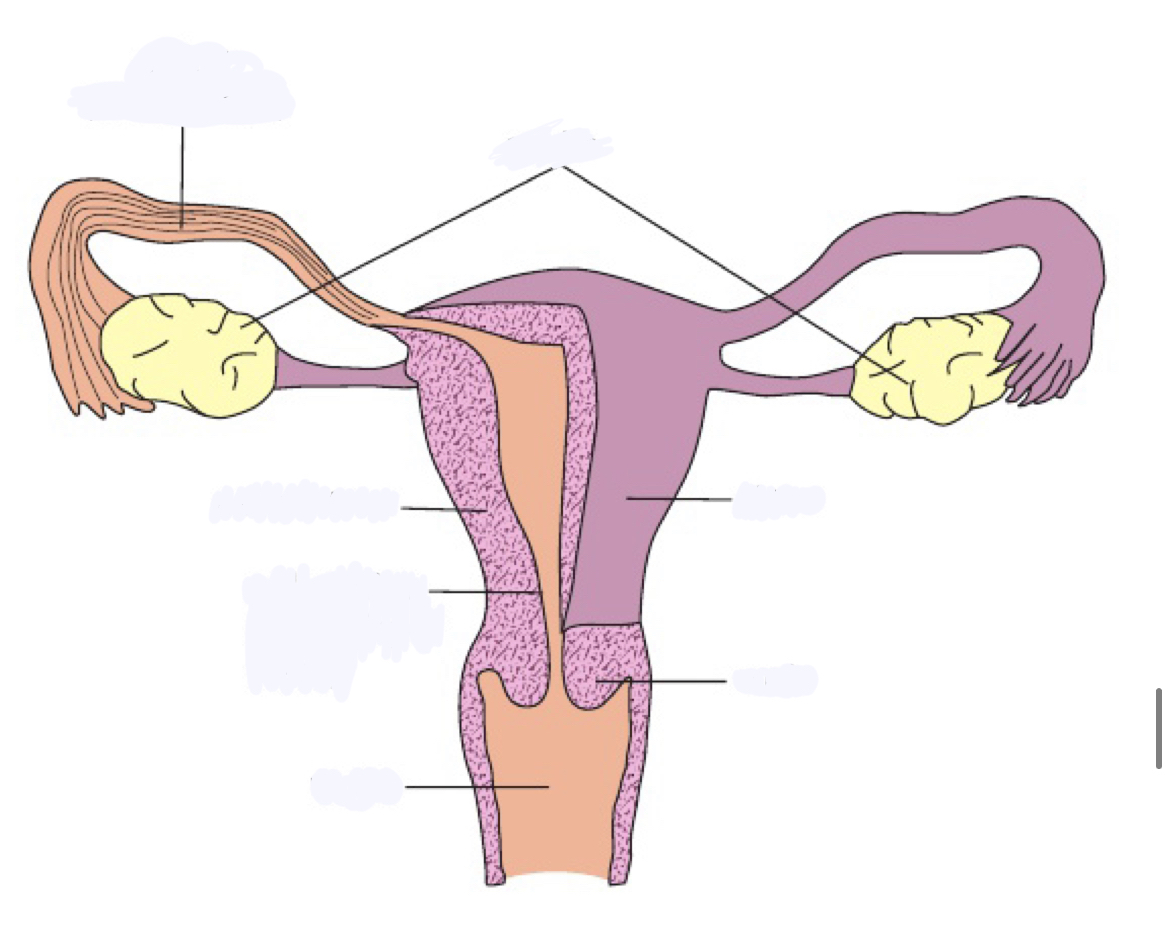
Where is the endometrium
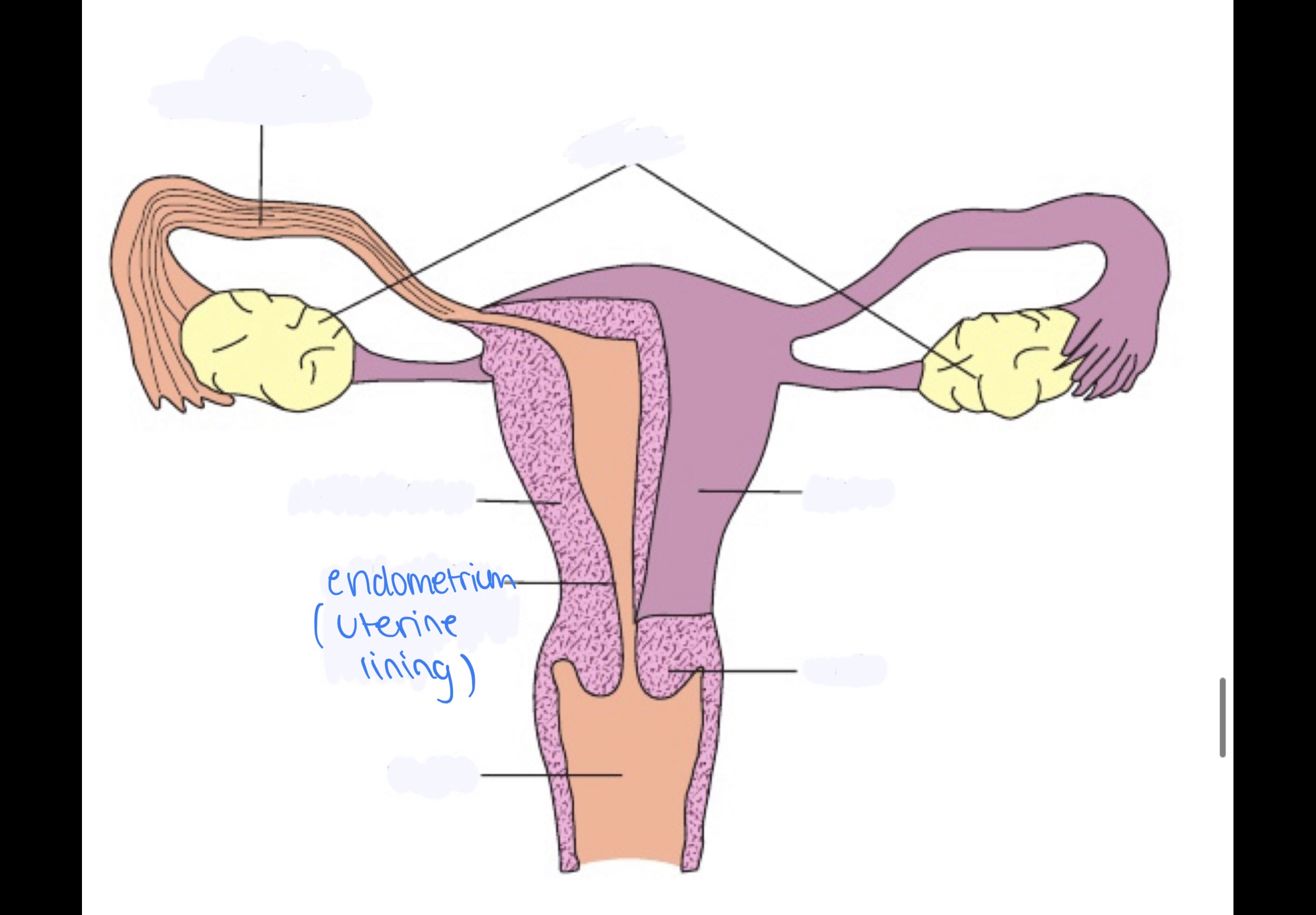
Role of vagina
semen ejaculated there during sexual inetrcourse
Role of cervix
sperm eneters there for fertilzation
pathway for childbirth
Role of oviduct
transports egg from ovaries to the uterus
Role of uterus
early embryo will be implanted there
Endometrium role
highly vascual lining
Role of ovaries
produce oestraidol
produce the egg
corpus luteum created there → secretes progestorne
ovulation occurs there
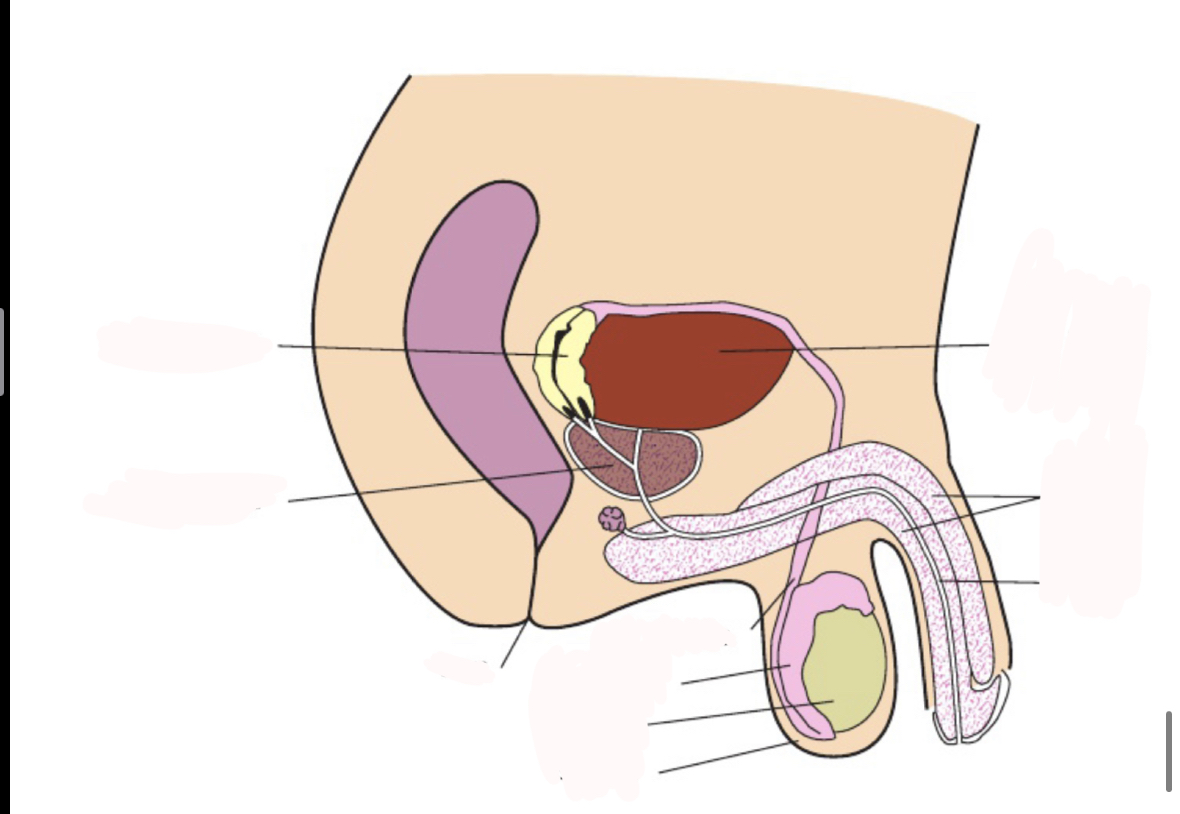
Where is urethra
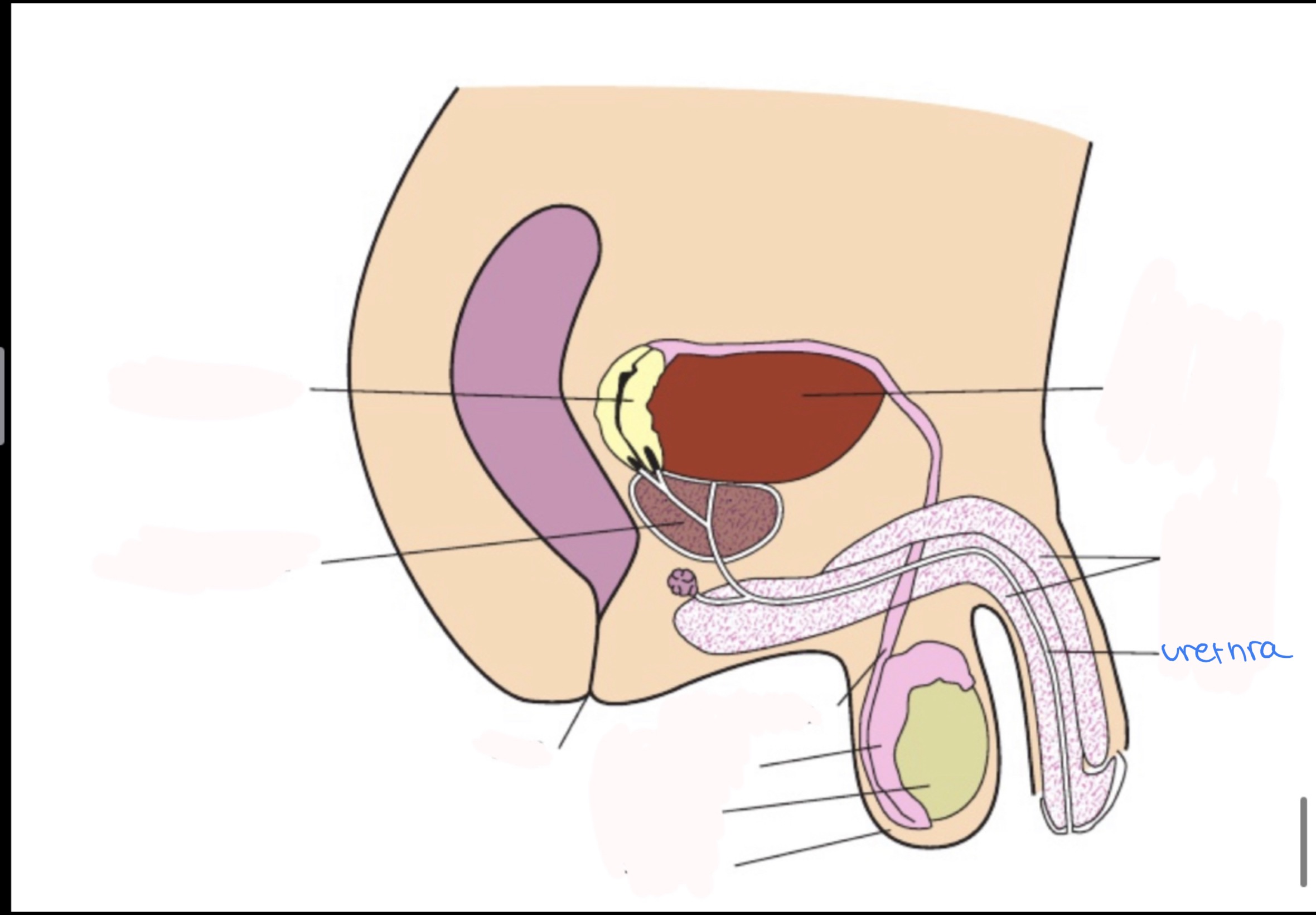
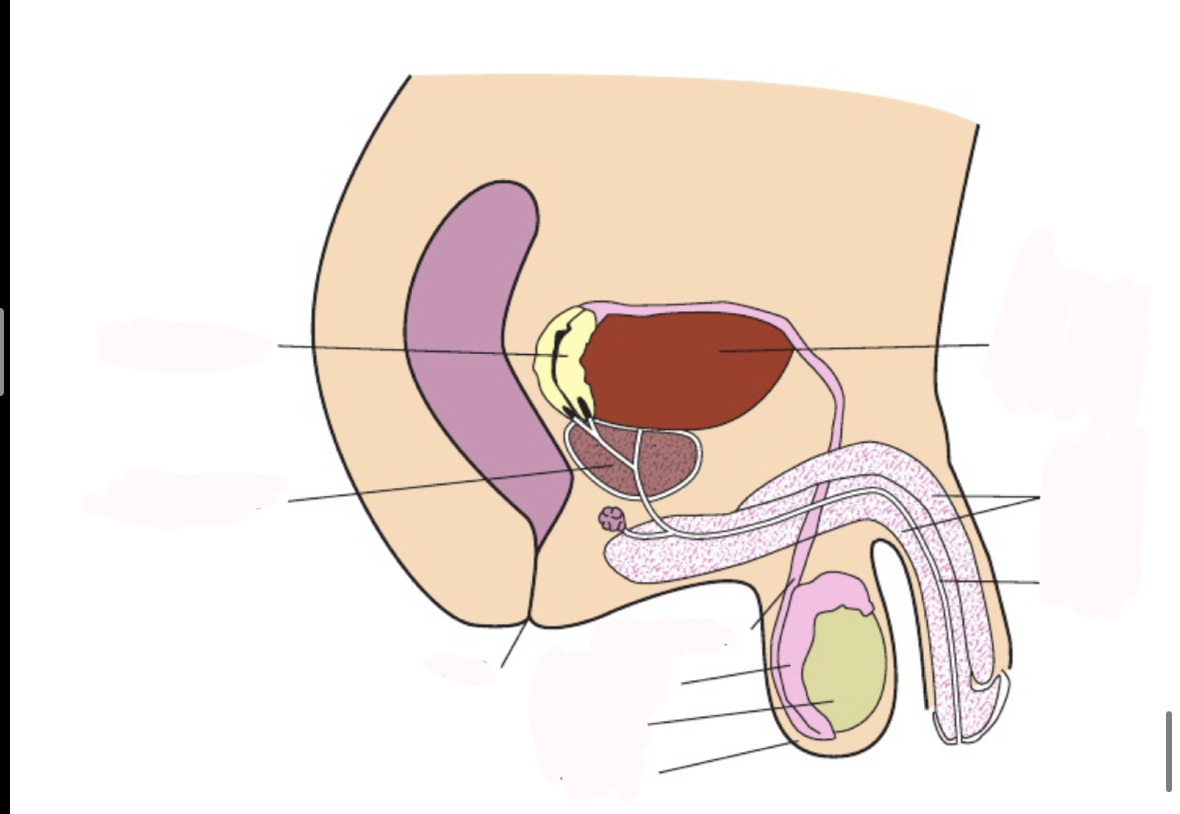
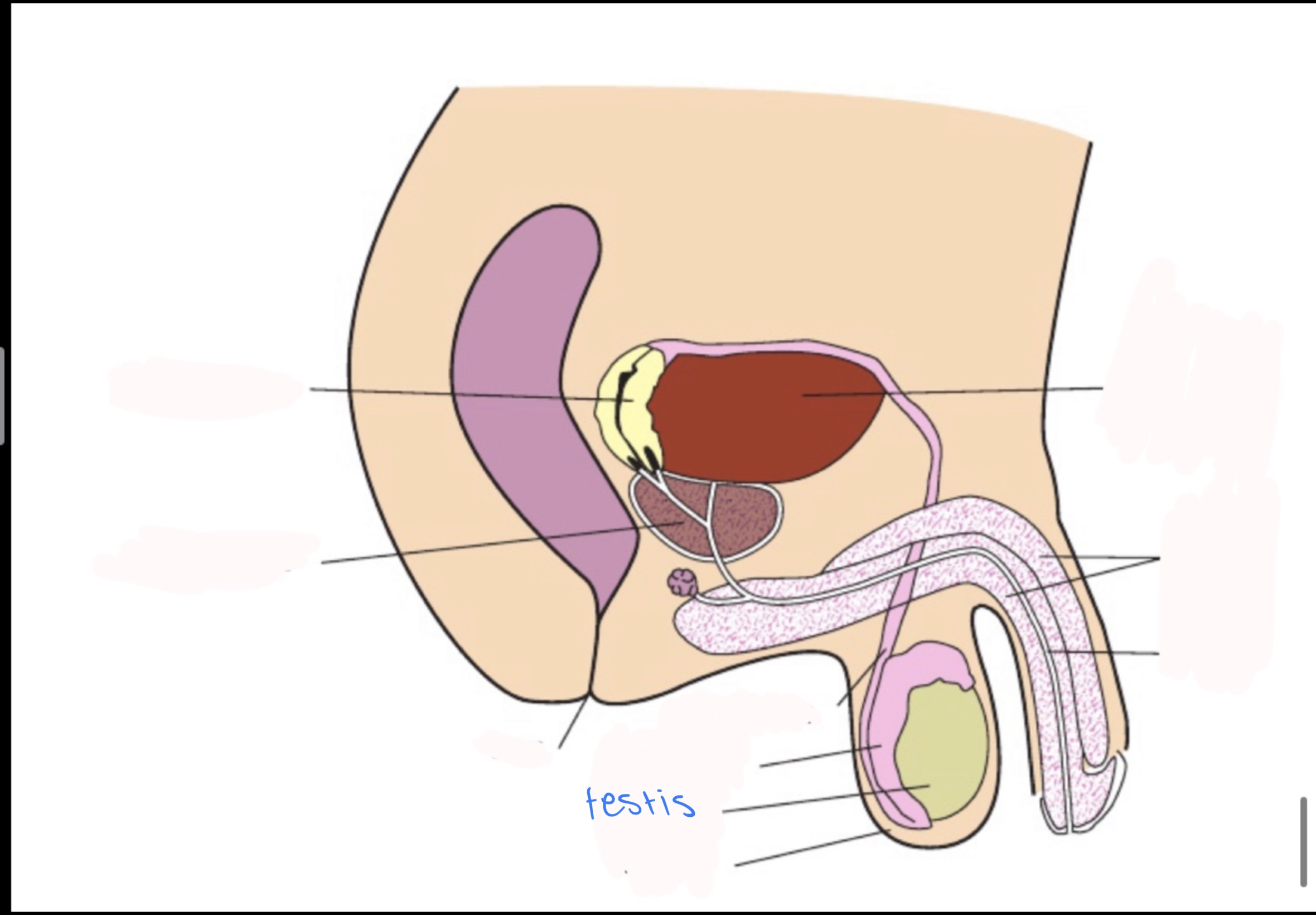
Where is scrotum
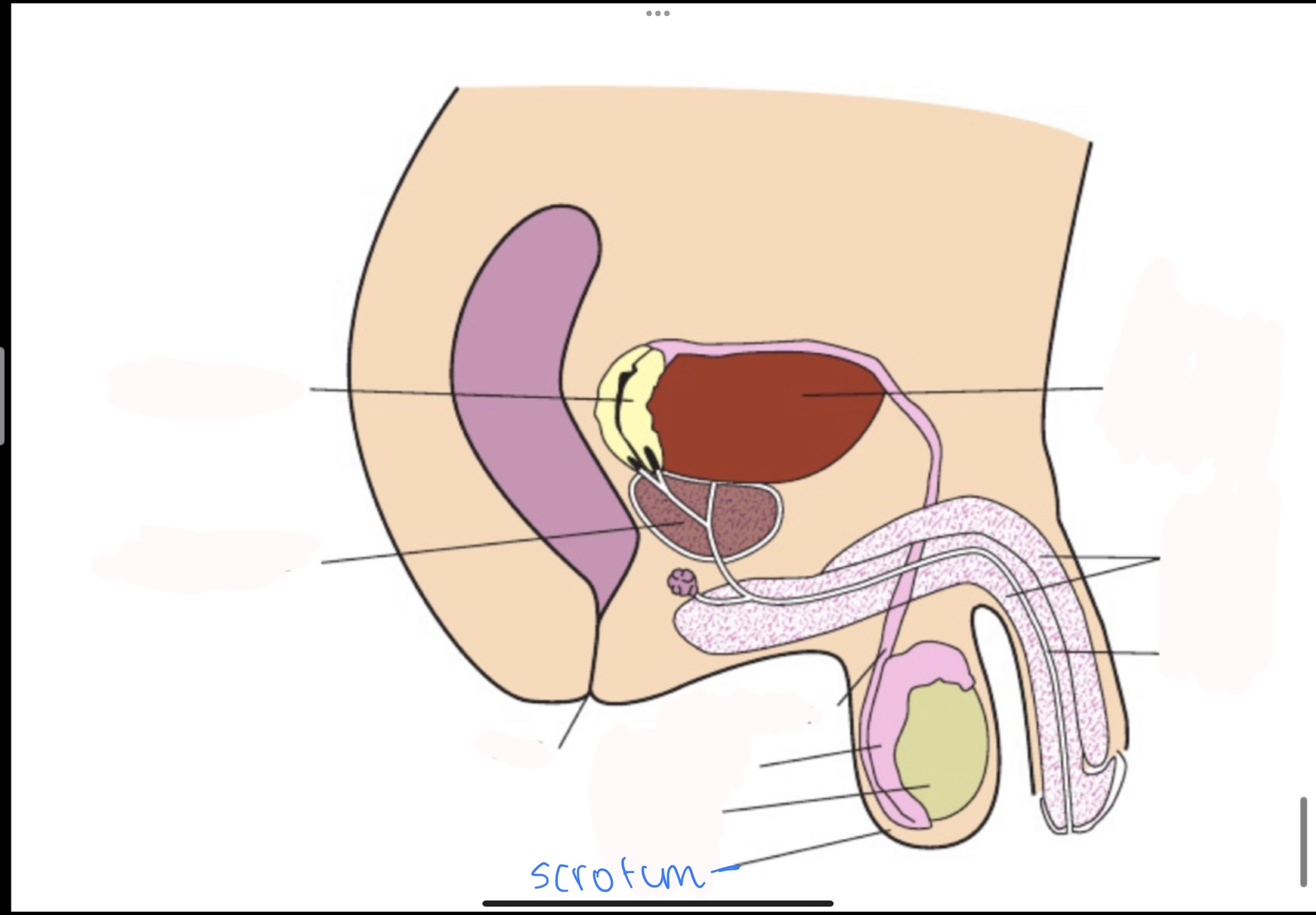
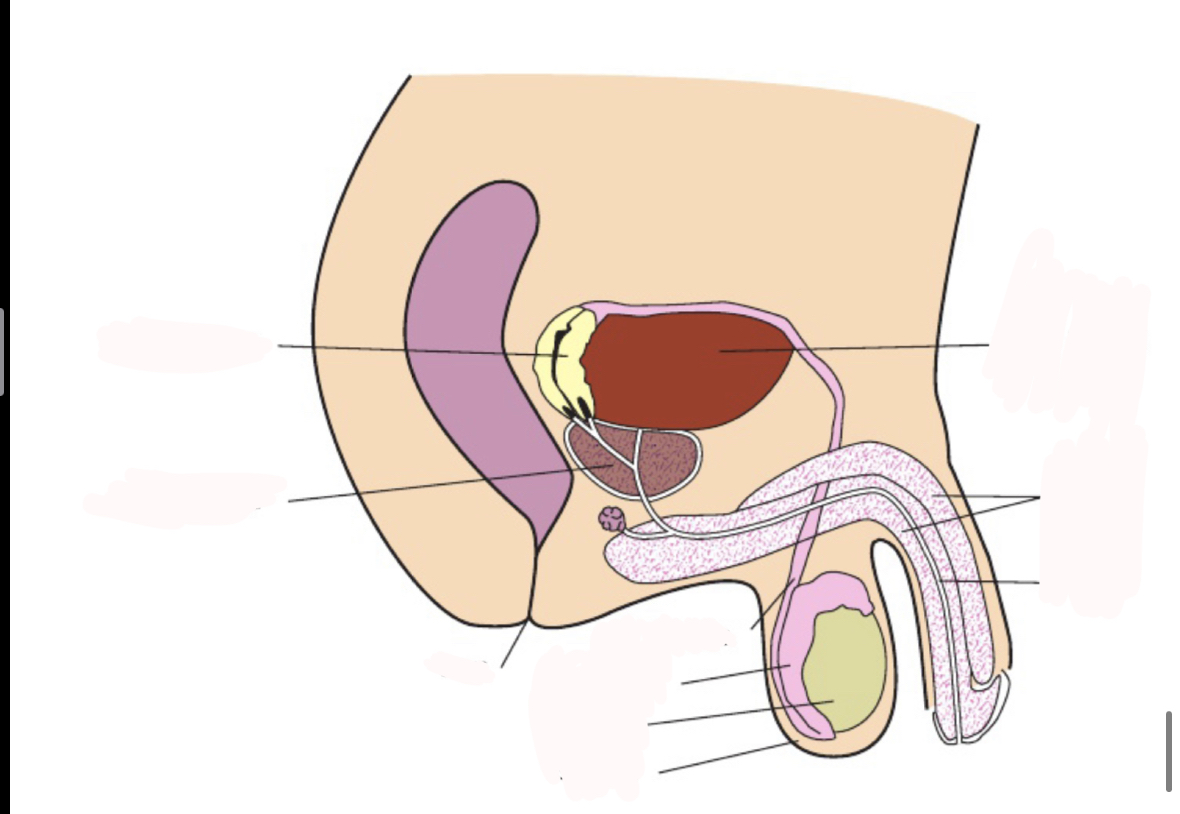
Where is testis
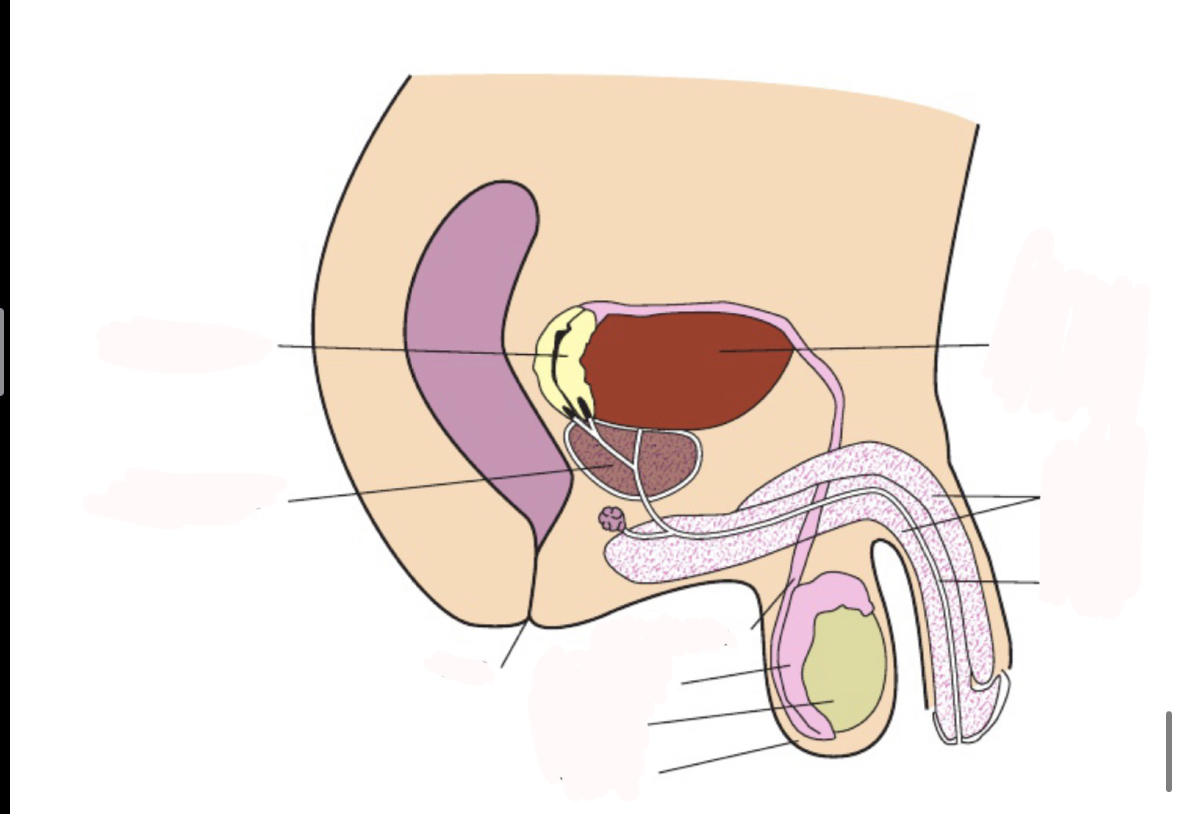
Where is the epididymis
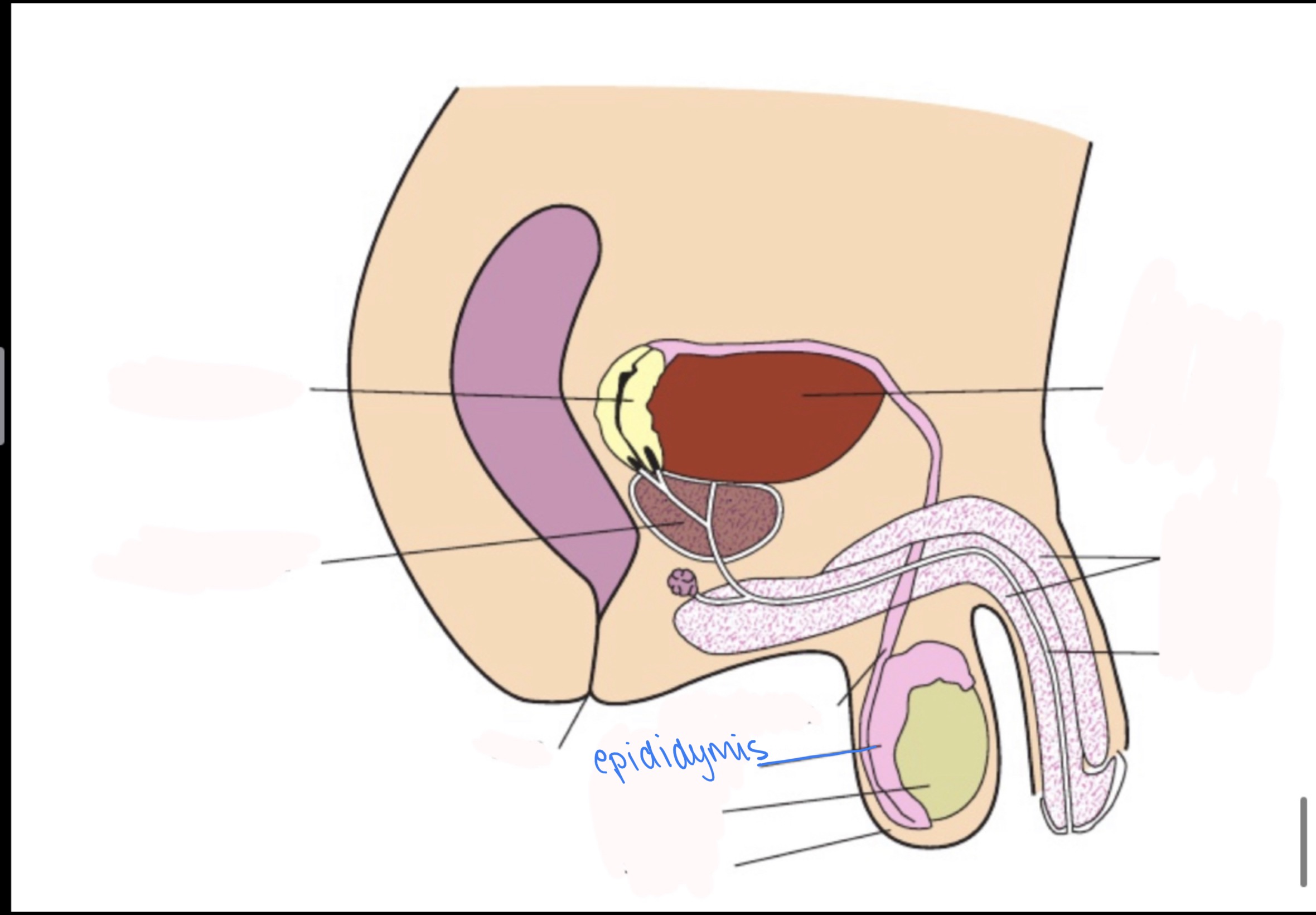
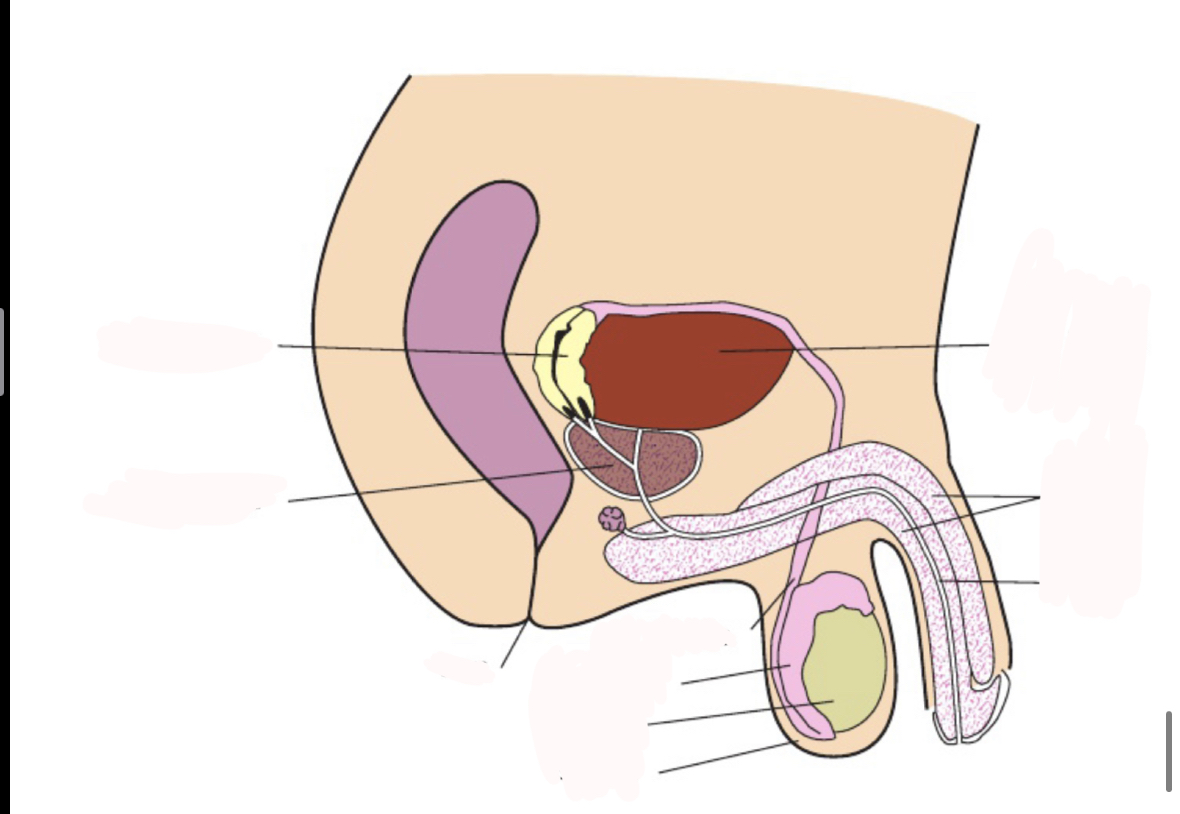
Where is the vas deferens
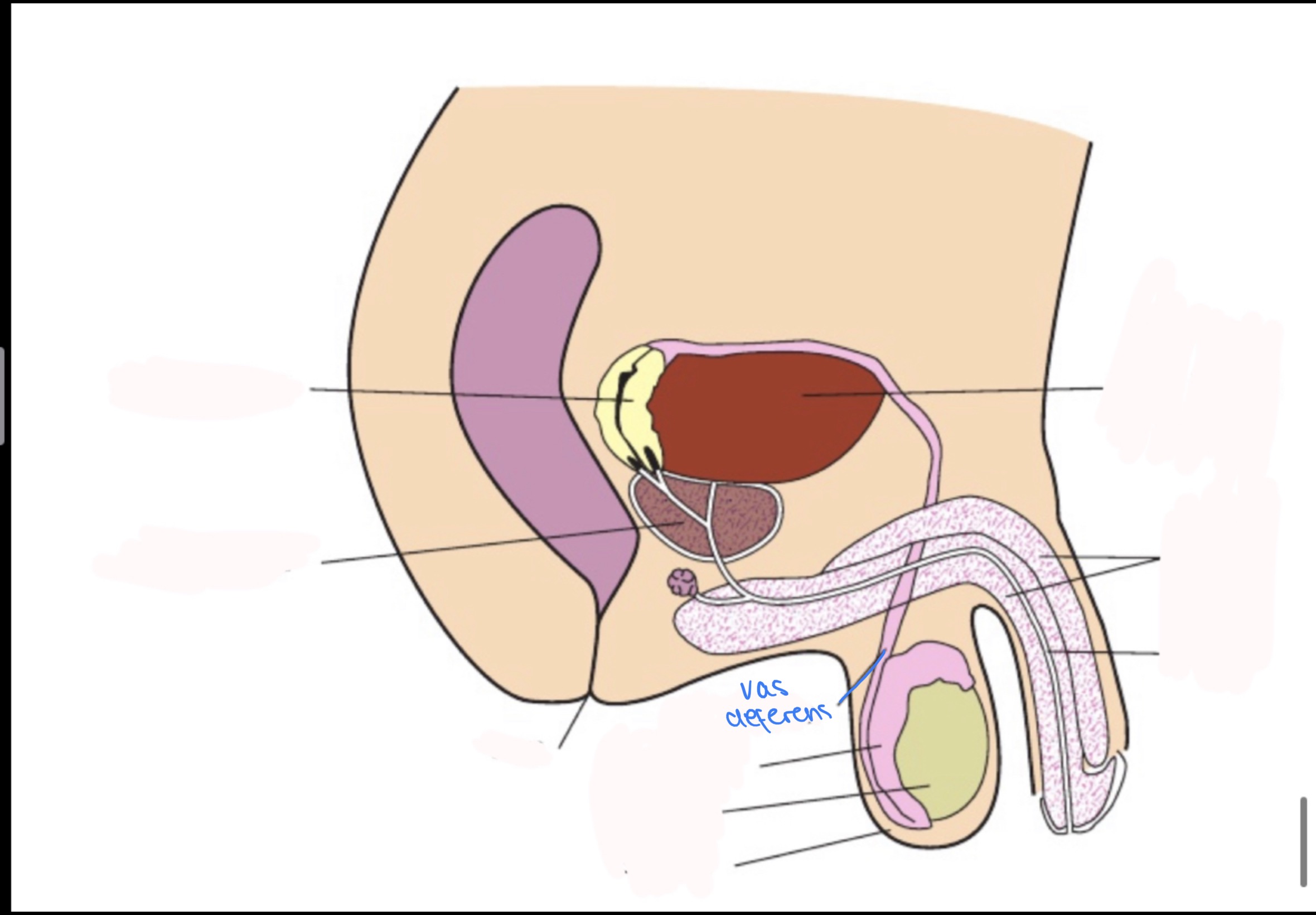
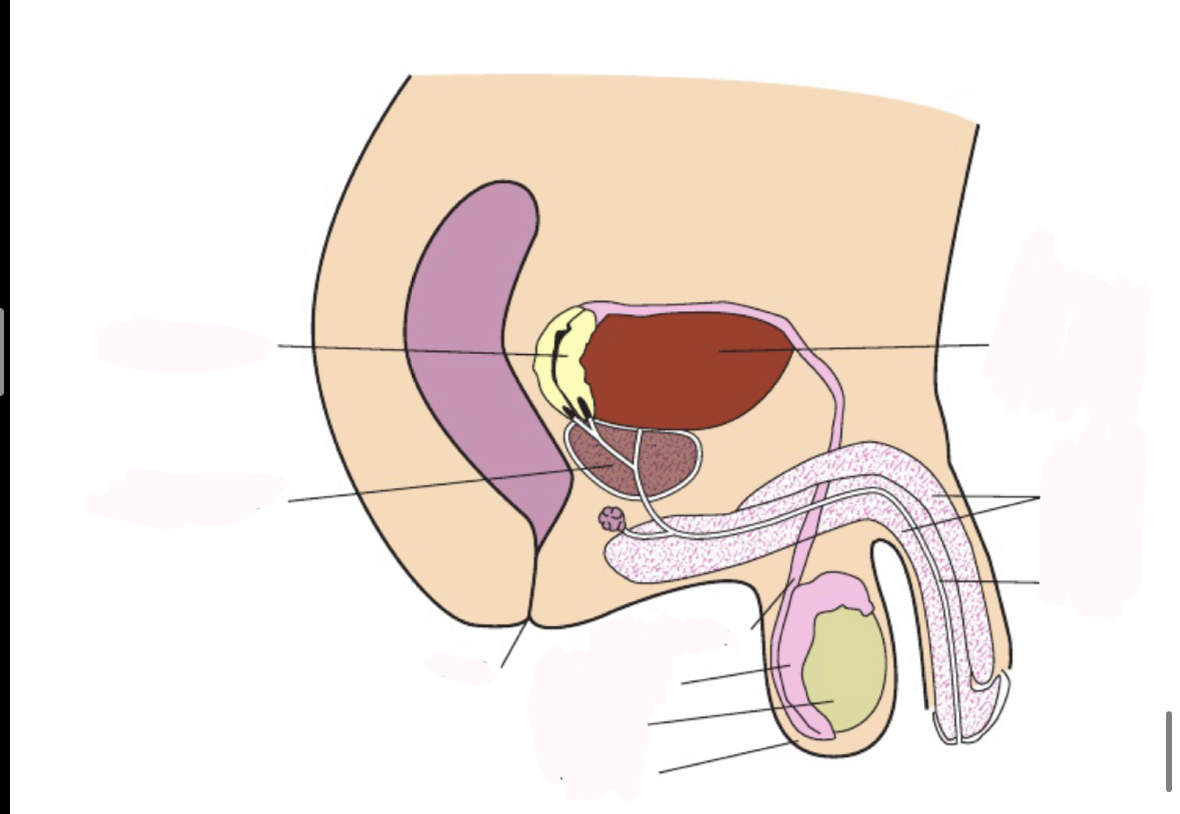
Where is the urinary bladder
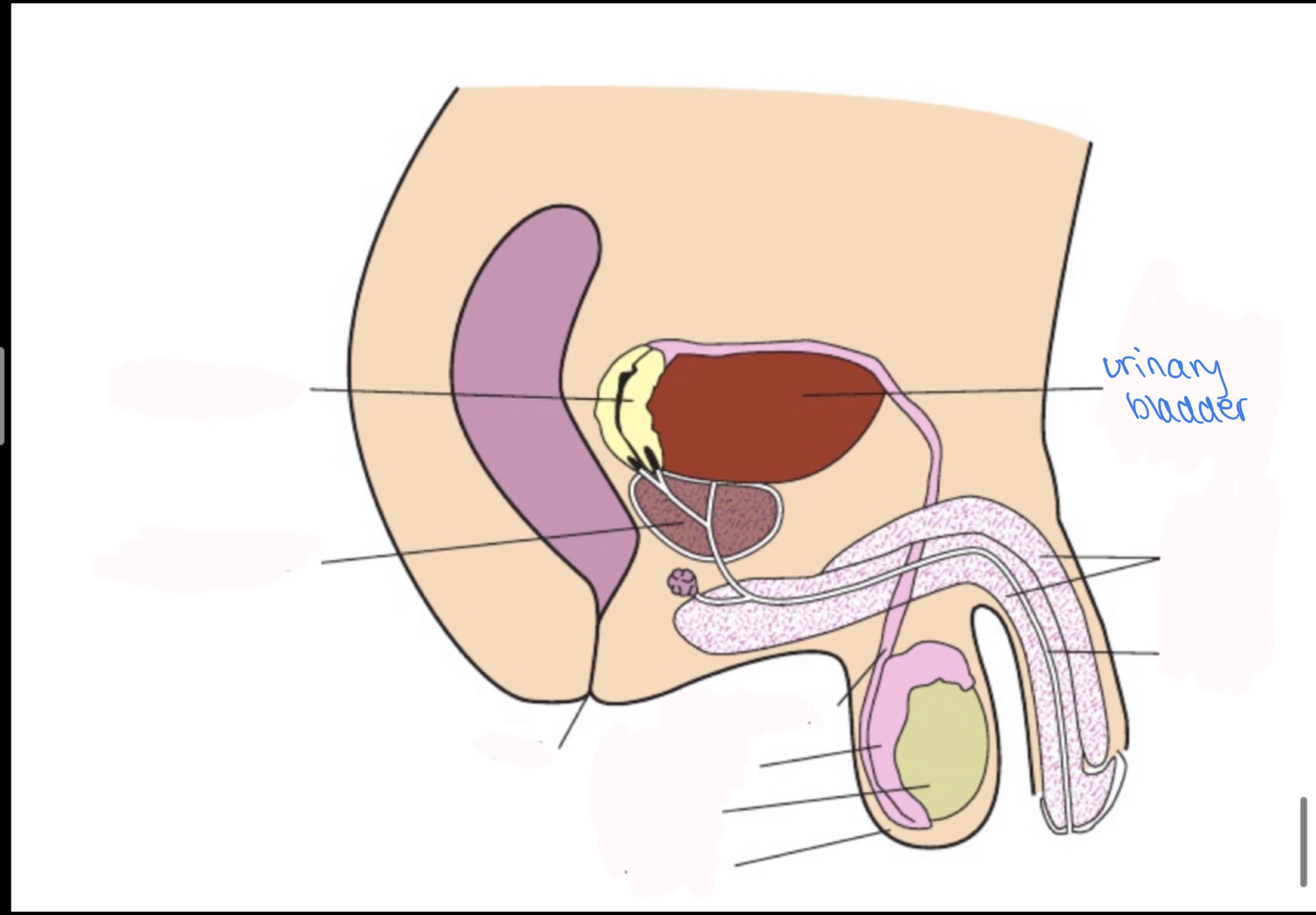
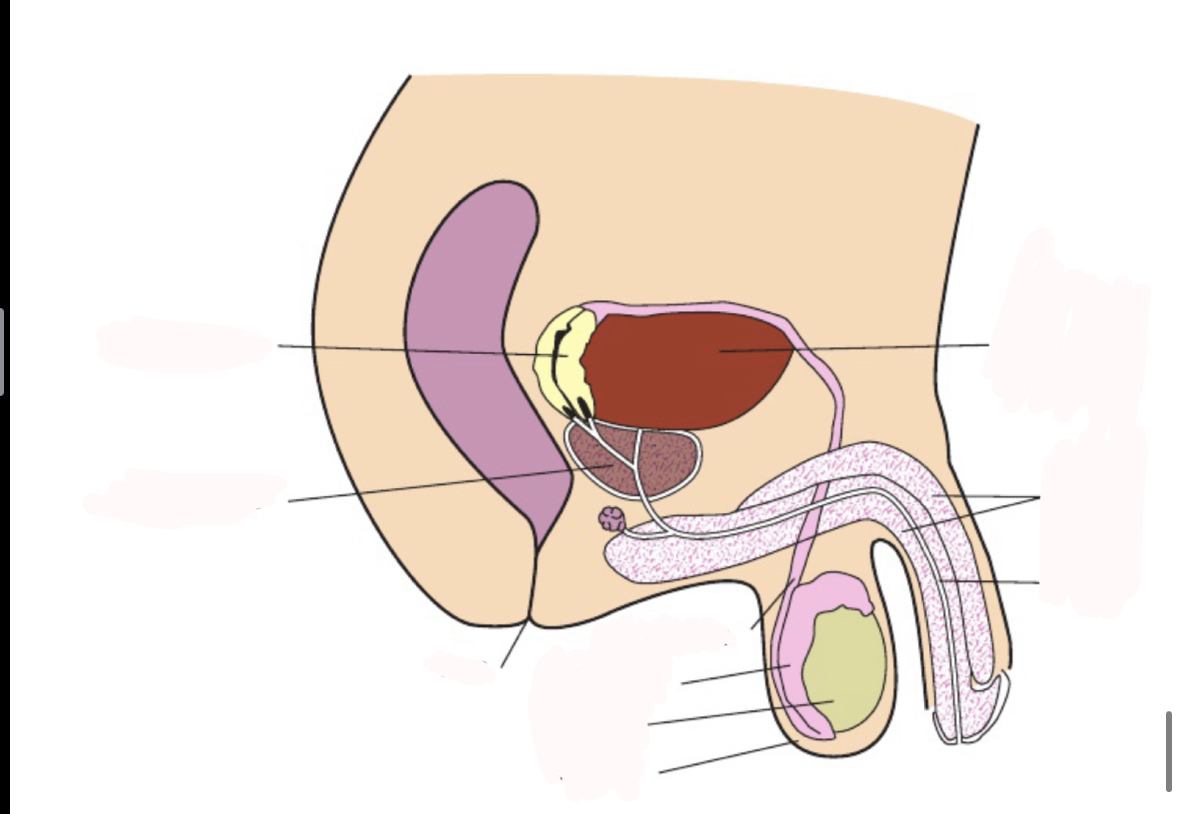
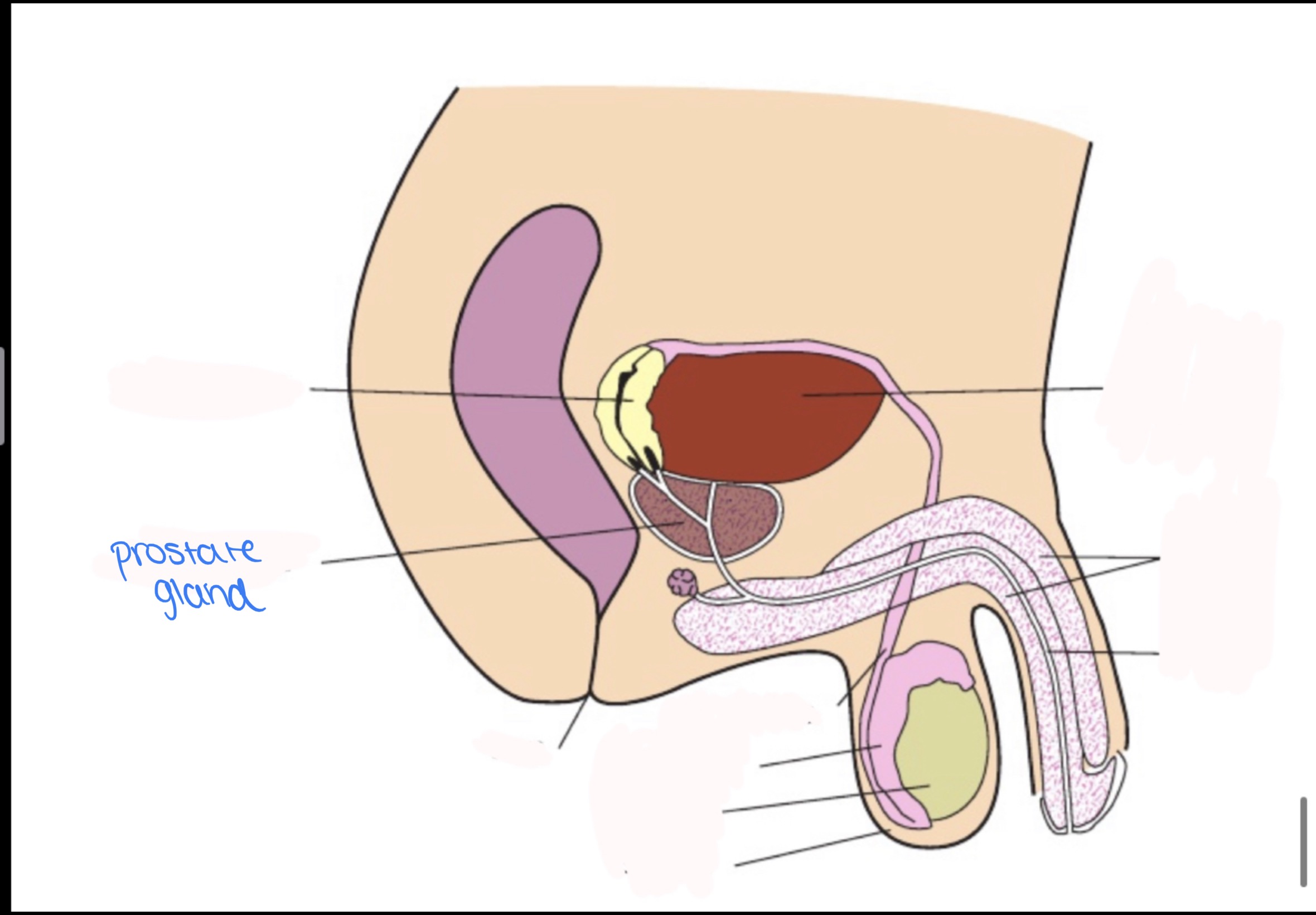
Where is the prostate gland
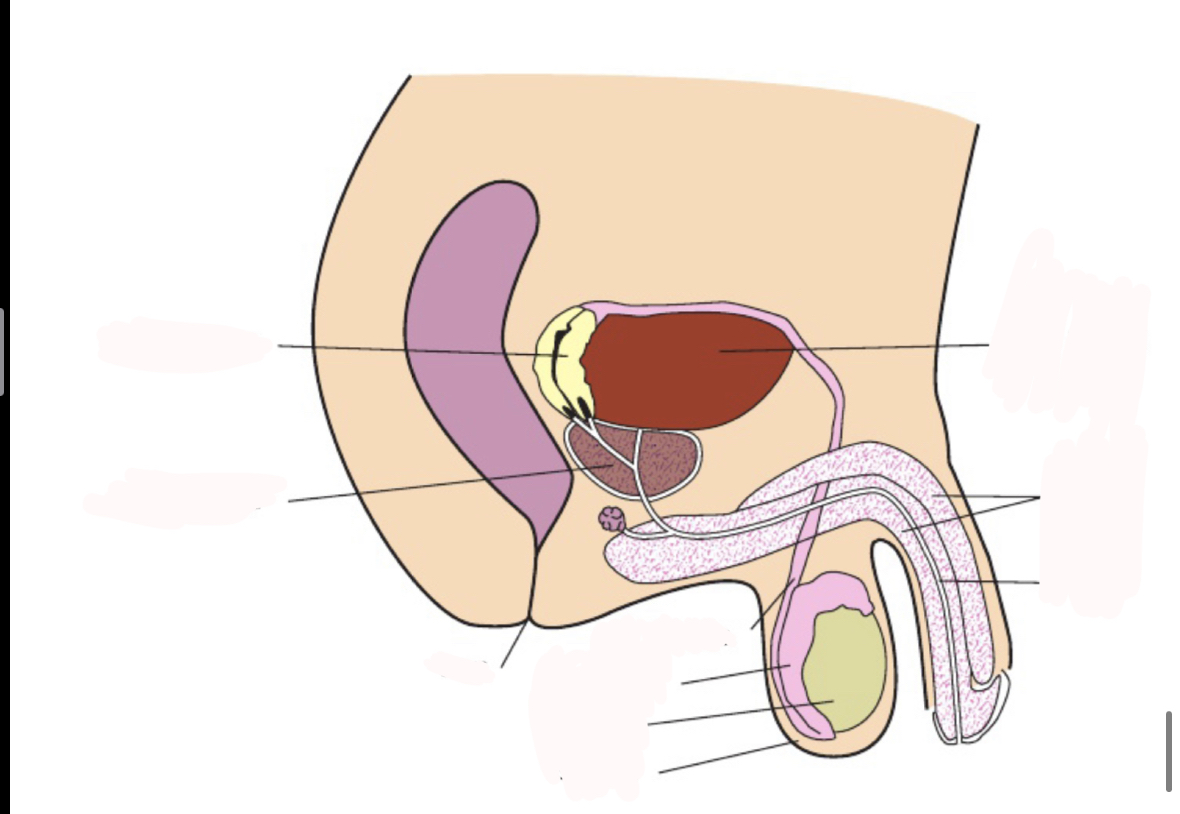
Where is the seminal vesicle
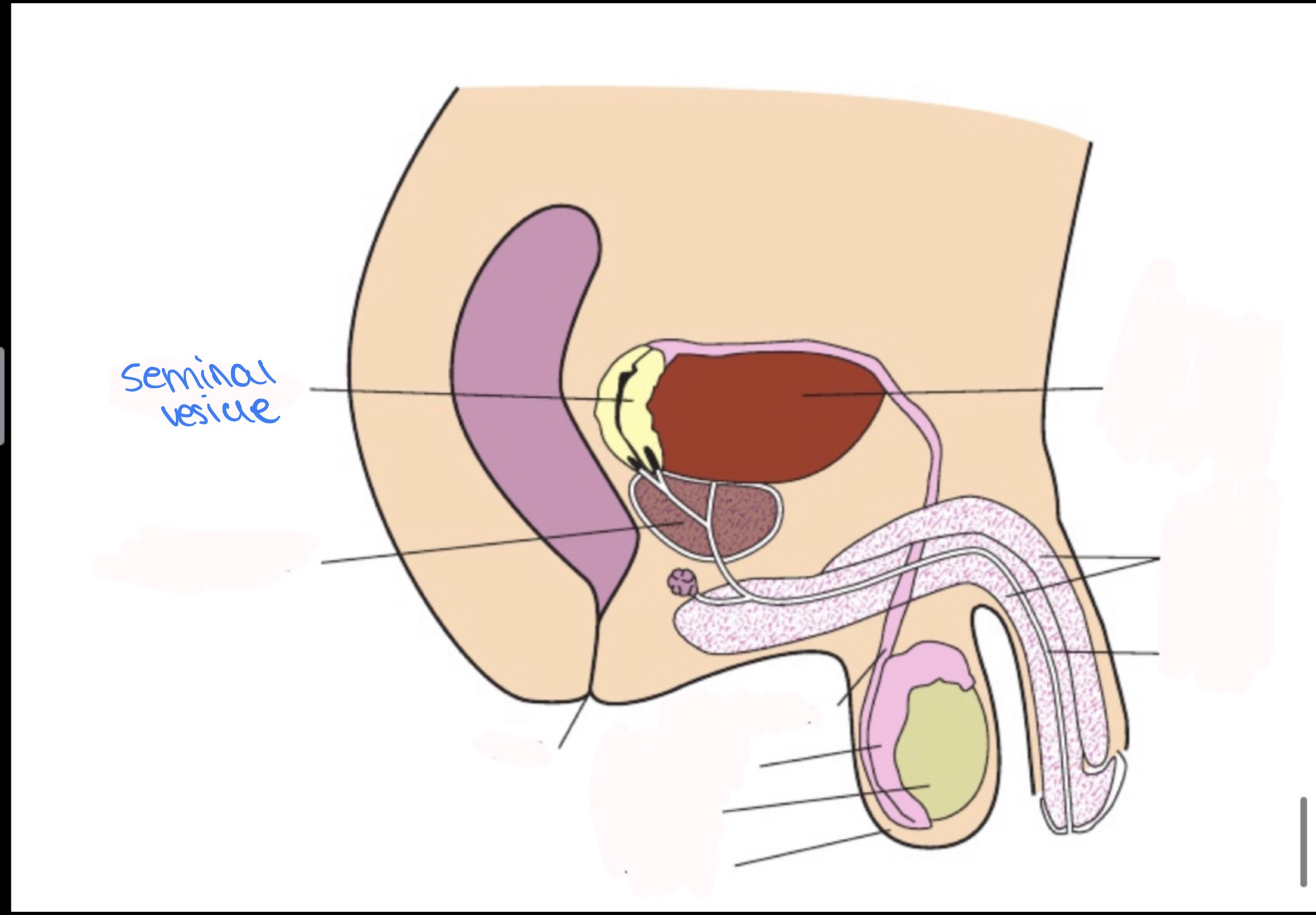
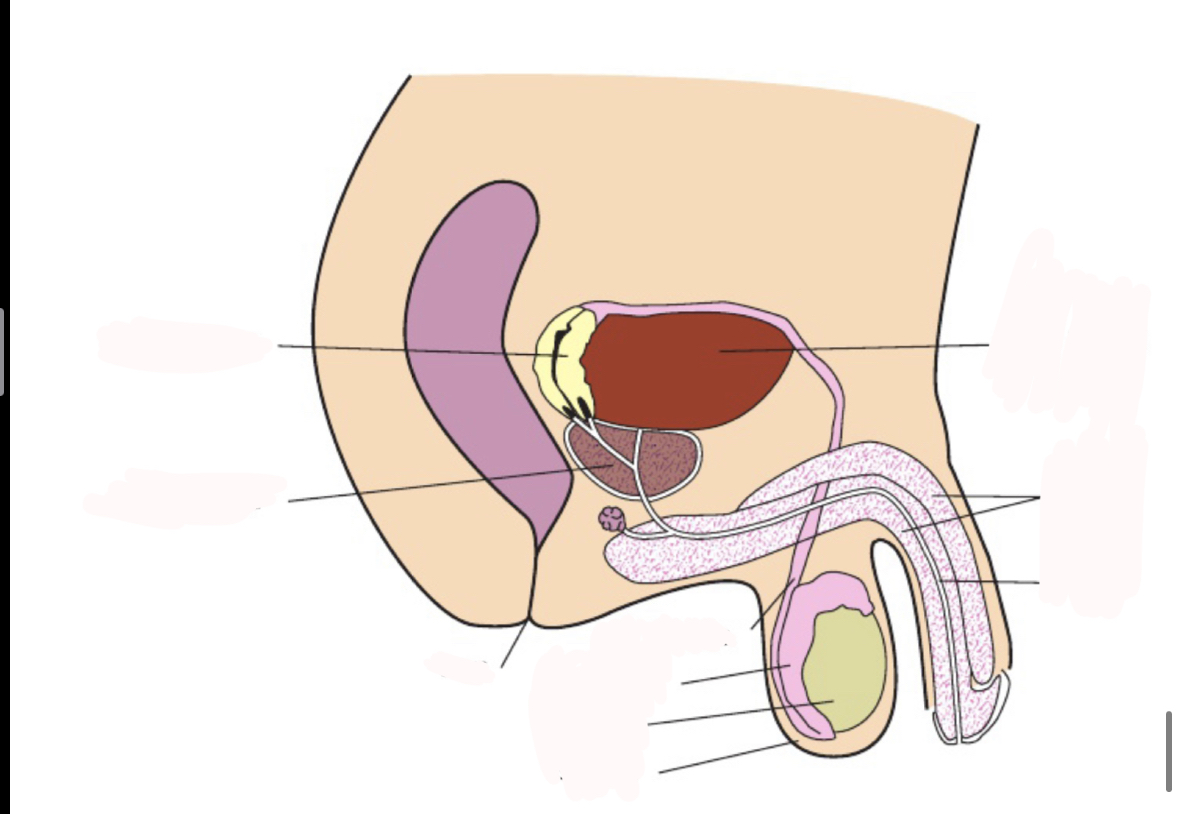
where is the erectile tissue of penis
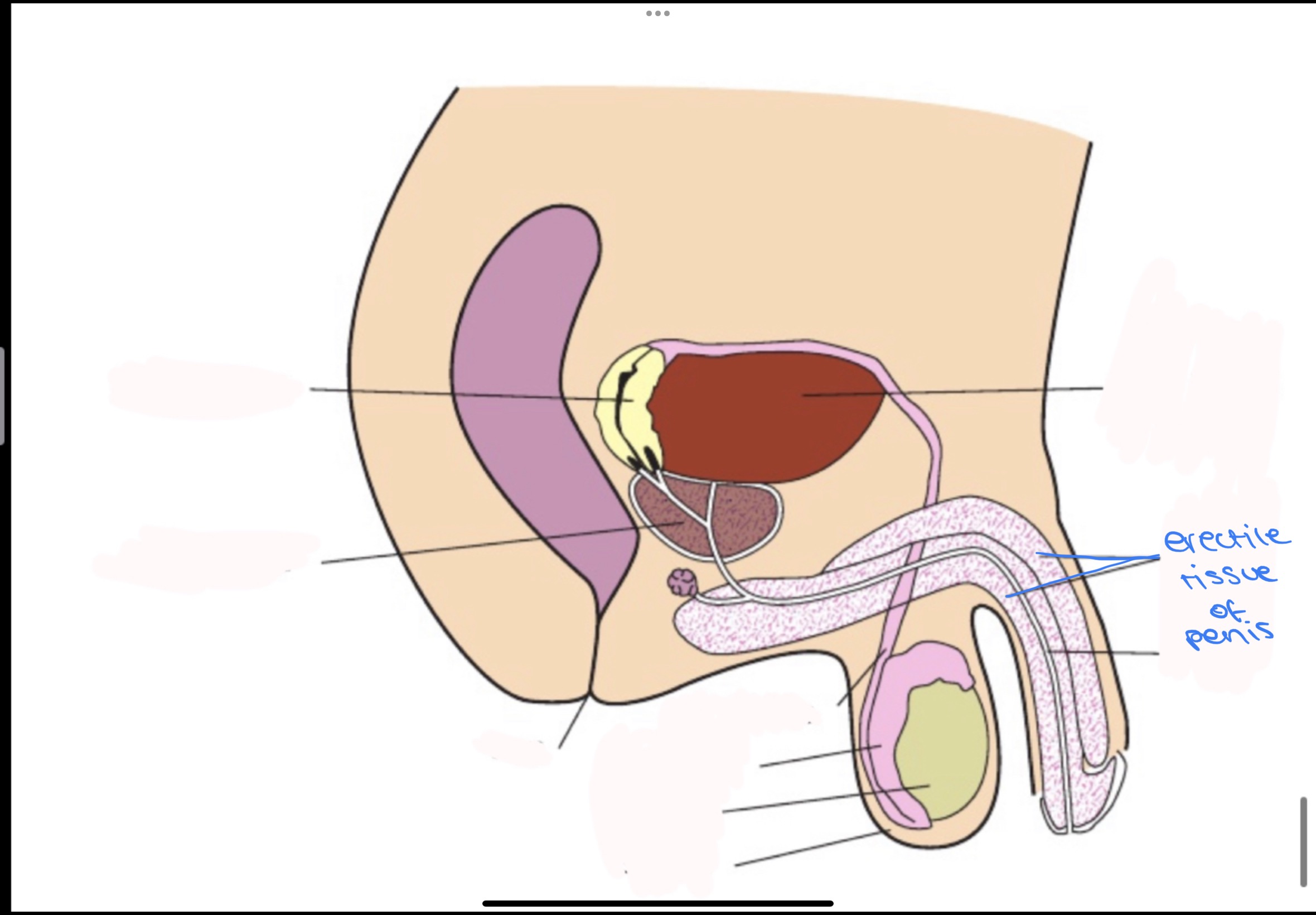
Role of testes
produce sperm in seminiferous tubules
Scrotum role
sac that holds testes outside body for lower temp then that of the body
epididymis role
sperm recieved, matures and gains motility
vas deferens role
tube that sends mature sperm from epididymis to urethra
seminal vesicles role
add seminal fluid to semen
prostate gland role
produces semen
penis
erection
urethra
tube thorugh which semen and urine leave the body
Phases in menstural cycle
follicular phase - first 14 days
lutheal phase
Role of GnRH
hypothalamus priduces GnRH
the target tissue is next to pituitory galnd
Results in secretion of FSH and LH → target tissue: ovaries
FSH and LH role
increase production and secretion of oestradiol → target tissue: endometrium → increased density of blood vessels
production of a Graafian follicle
spike in LH and FSH → ovulation
Positive feedback loop: FSH, LH and oestradiol
FSH and LH stimulate prodution of oestradiol
oestradiol stimulates pituitaory to release more FSH and LH
spike in FSH and LH → ovulation
Progesterone
folicle begins secretion → follicle turns into corpus lutheum
role of progestrone: maintains thickened highly vasuclar endometrium
Negative feedbak loop due to oestradiol and progestrone
high levels of progestorne and oestradiol prevent hypothalmus of secretion of GnRH and hence FSH and LH
if No pregnancy what happends
corpus lutehum breaks down
decline in progestrone and oestradiol
blood vessles of endometrium rupture → menstruation
Negative feedback → due to drop in oestrdaiol and progestorone
progestorone and oestadiol drop
increase in GnRh and hence FSH and LH
Ovarian cycle
control production and relase of egg
Uterine cycle
preparation and maintance of endometrium to recive fertilized egg
Process of fertilization
sperm enter from vagina
thorgh cervix into Fallopian tubes
Release hydrolytic enzymes from acrosomes to get through the zona pellucida
If one spermaoozon eneters vesicles reelased from egg that detroy mitochodnria and falgellum
The sets of chromosmes remain seperated forming membranes - called pronucleus
undego DNA rep
Temporray membrane dissolves
Mitosis begins
In vitro fertilization process
medication that suspends normal menstural cycle
female then taked meds including FSH to stimulate follicle growth - leading to superovulation
Eggs are harvested surgically
In lab combined with sperm
One to three embroys implanted into uterus
Sexual reproduction in hermaphroditic plants
hermaphroditic - which have both male and female parts its still sexual reproduction - selfpolination
meiosis produces ovules and pollen grains which are haploid which then divide by mitosis
Cross polination
petals that attarct pollinators
anther positioned such that polinators come in contact without realising
goes to stigma
pollen when adheres to stigma will grow into pollen tube - with two male nuclei
ovule - three haploid nuclei
one and one fertilize
one sperm and two eggs produce and endoserm which will nourish the embryo
Characteristics of insect pollinated flowers
bright colours
scent
sticky pollen
sticky stigma
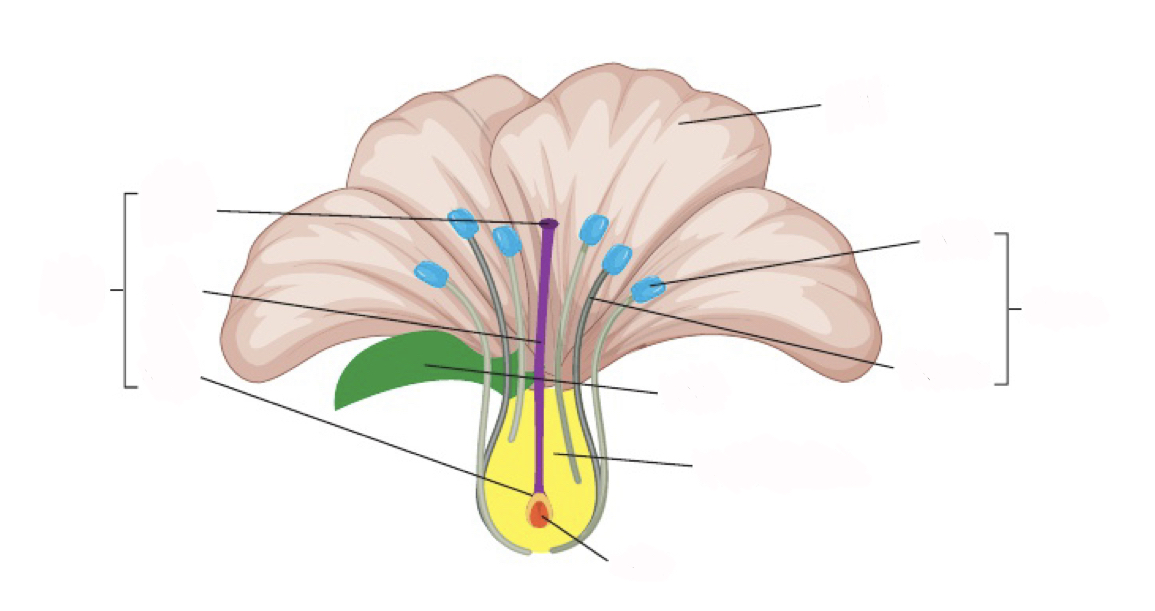
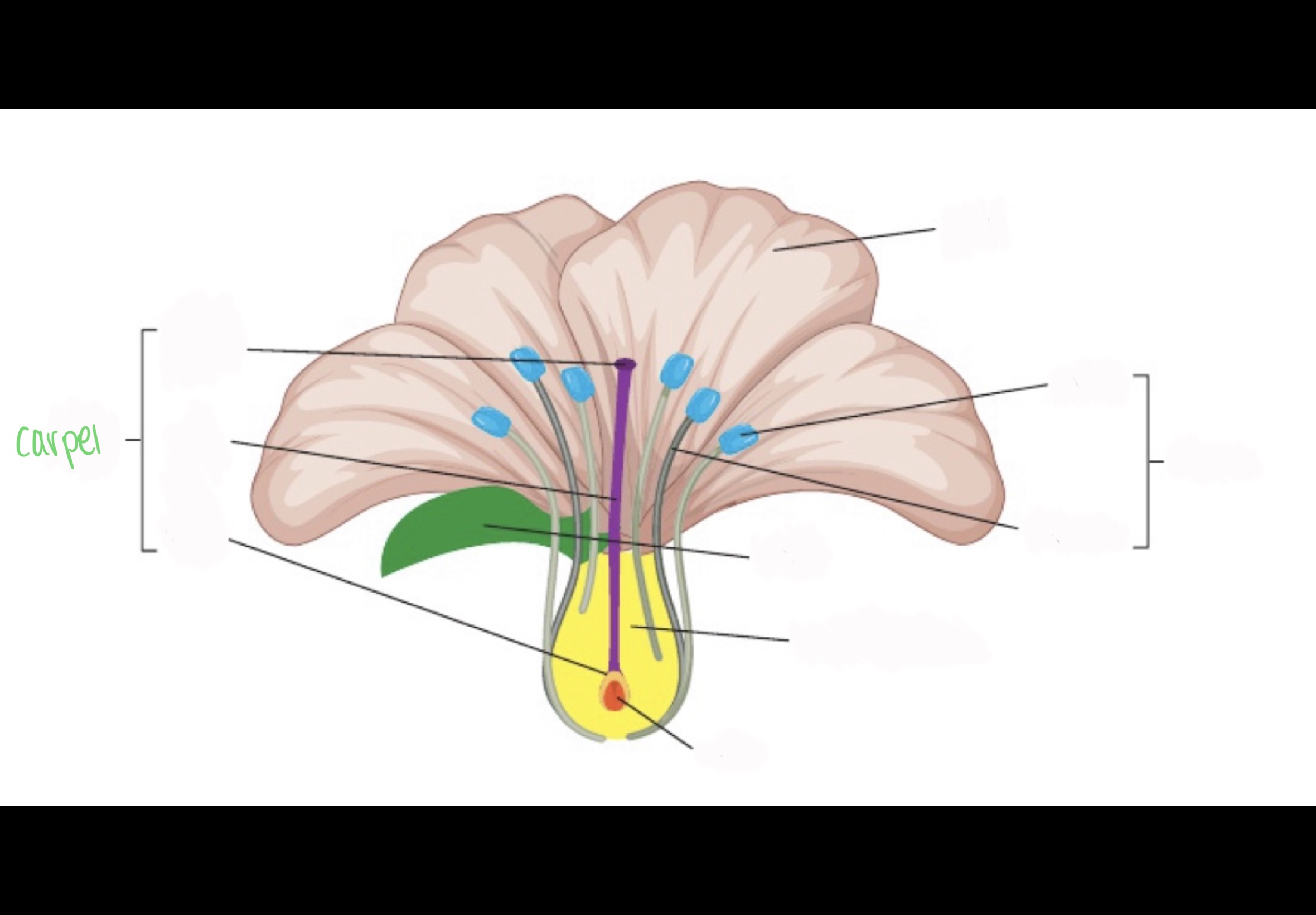
Where is petal and sepal
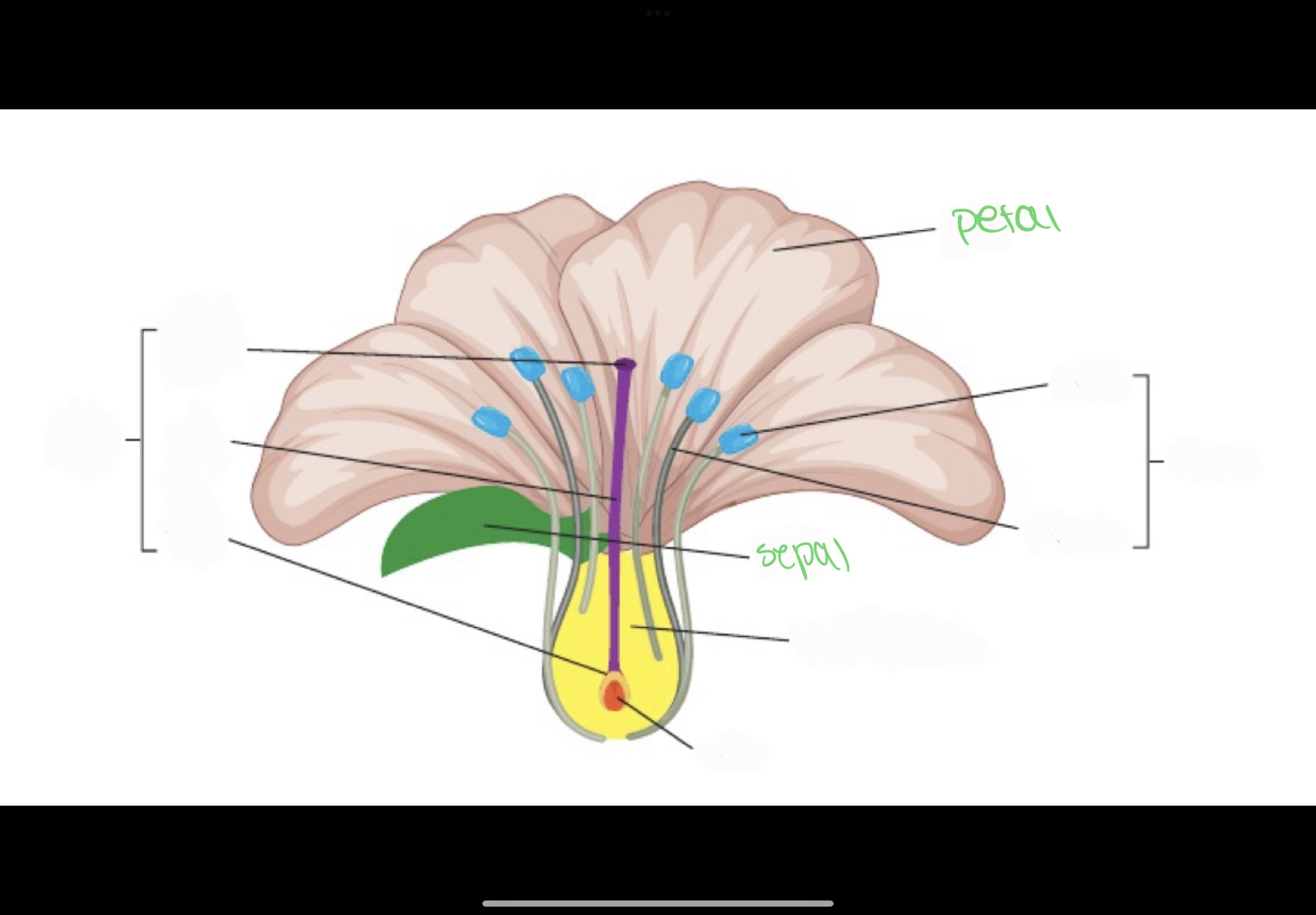
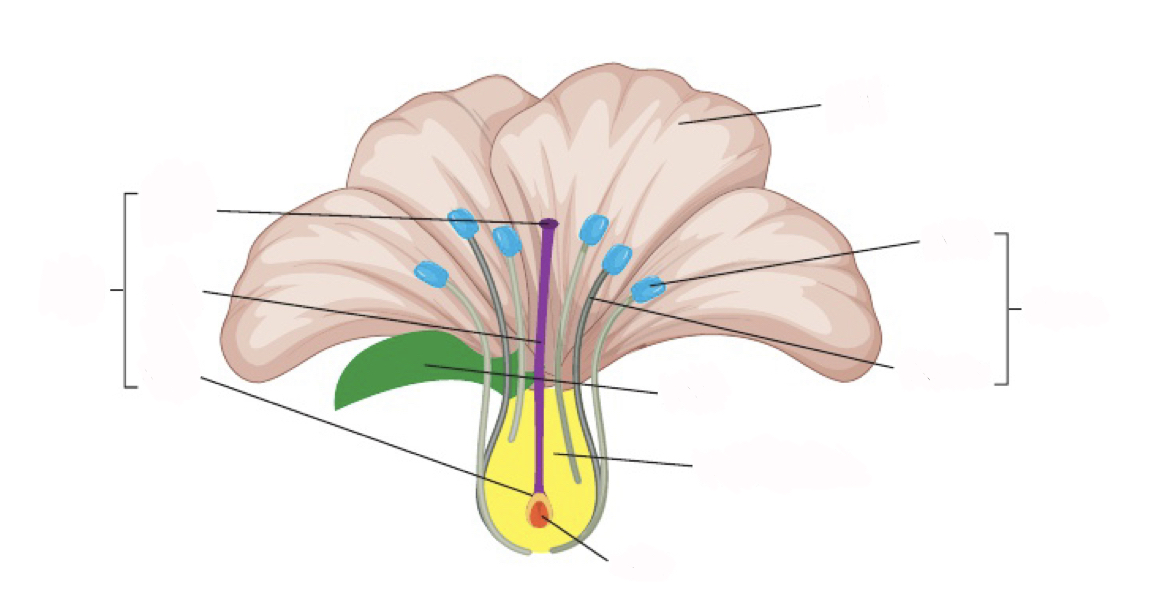
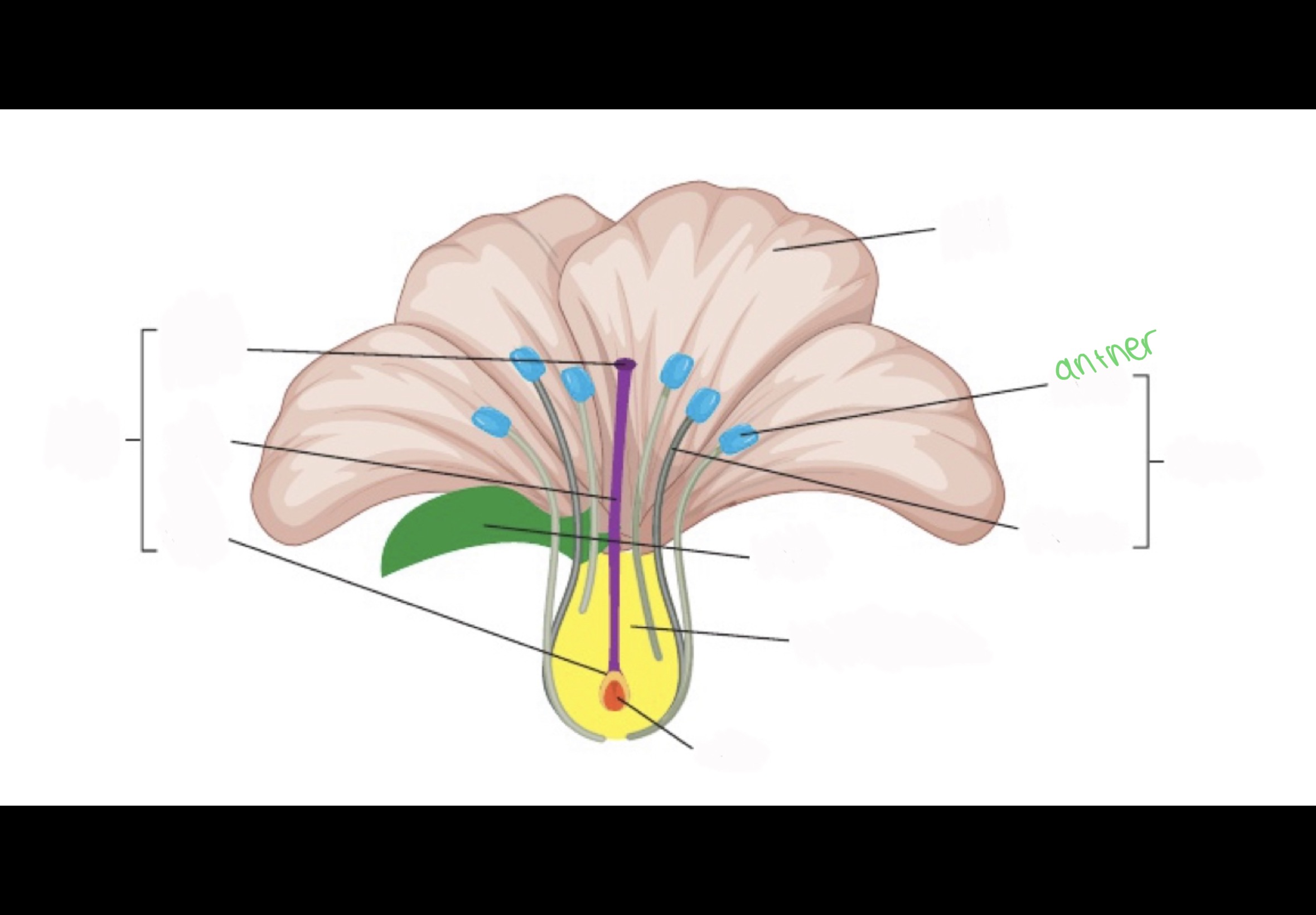
Where is anther
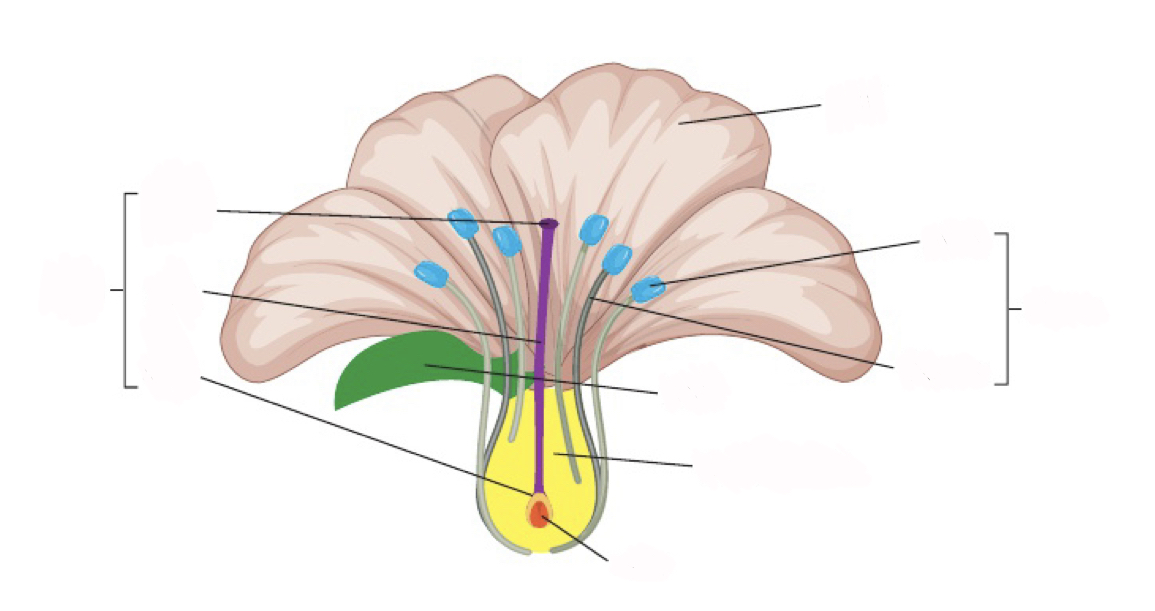
Where is filament
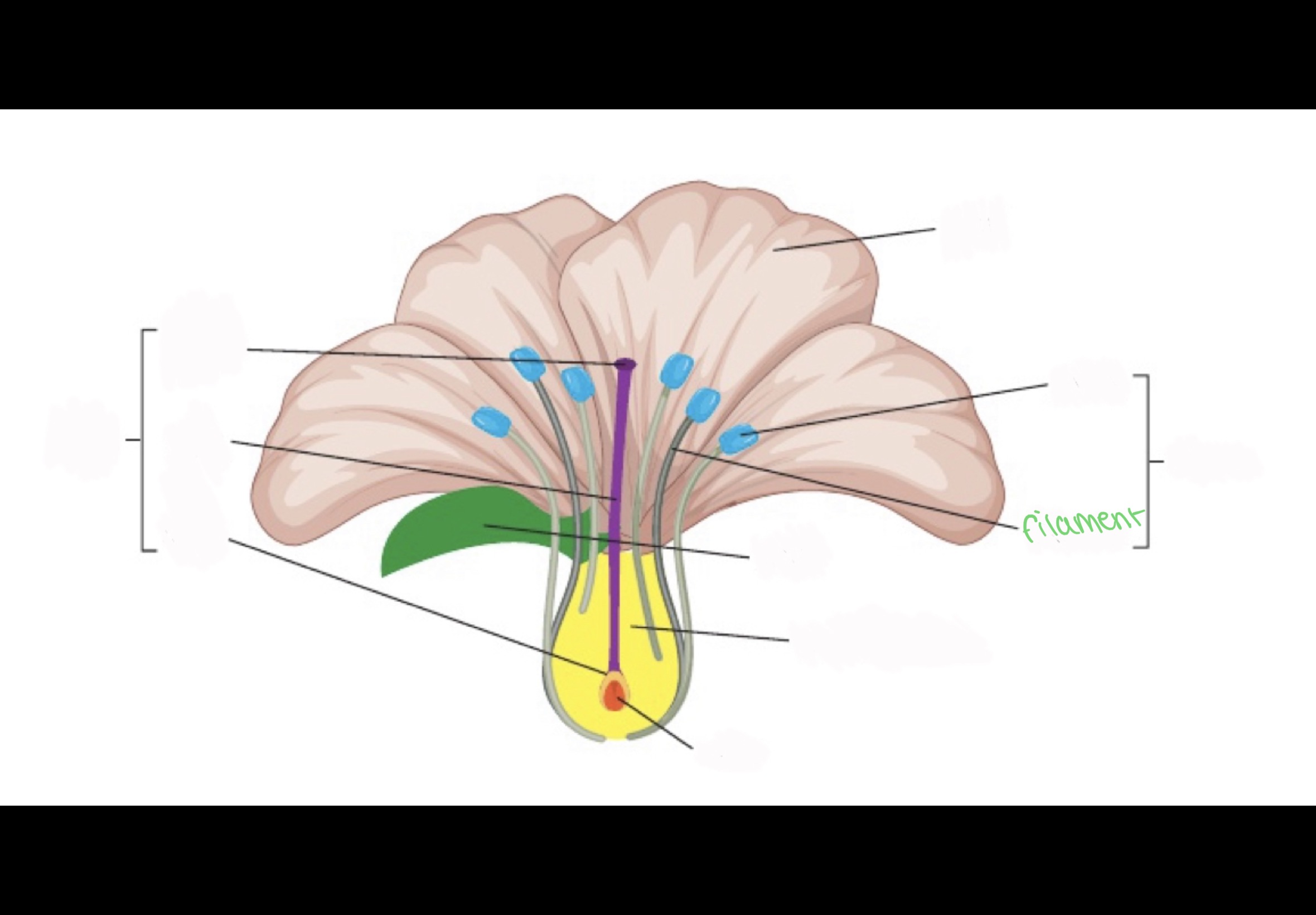
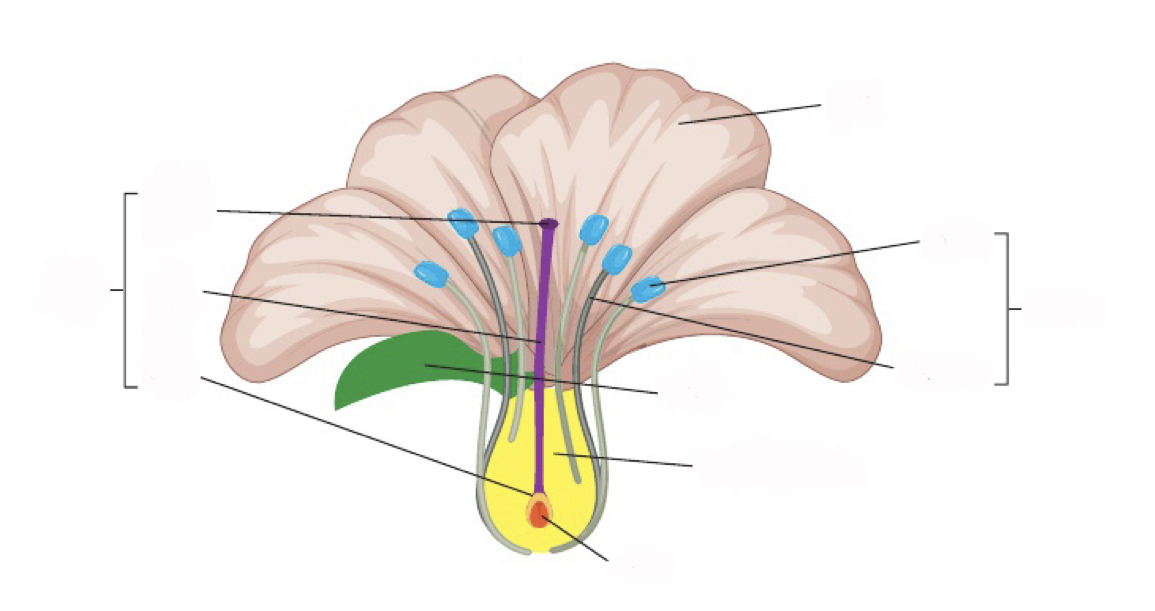
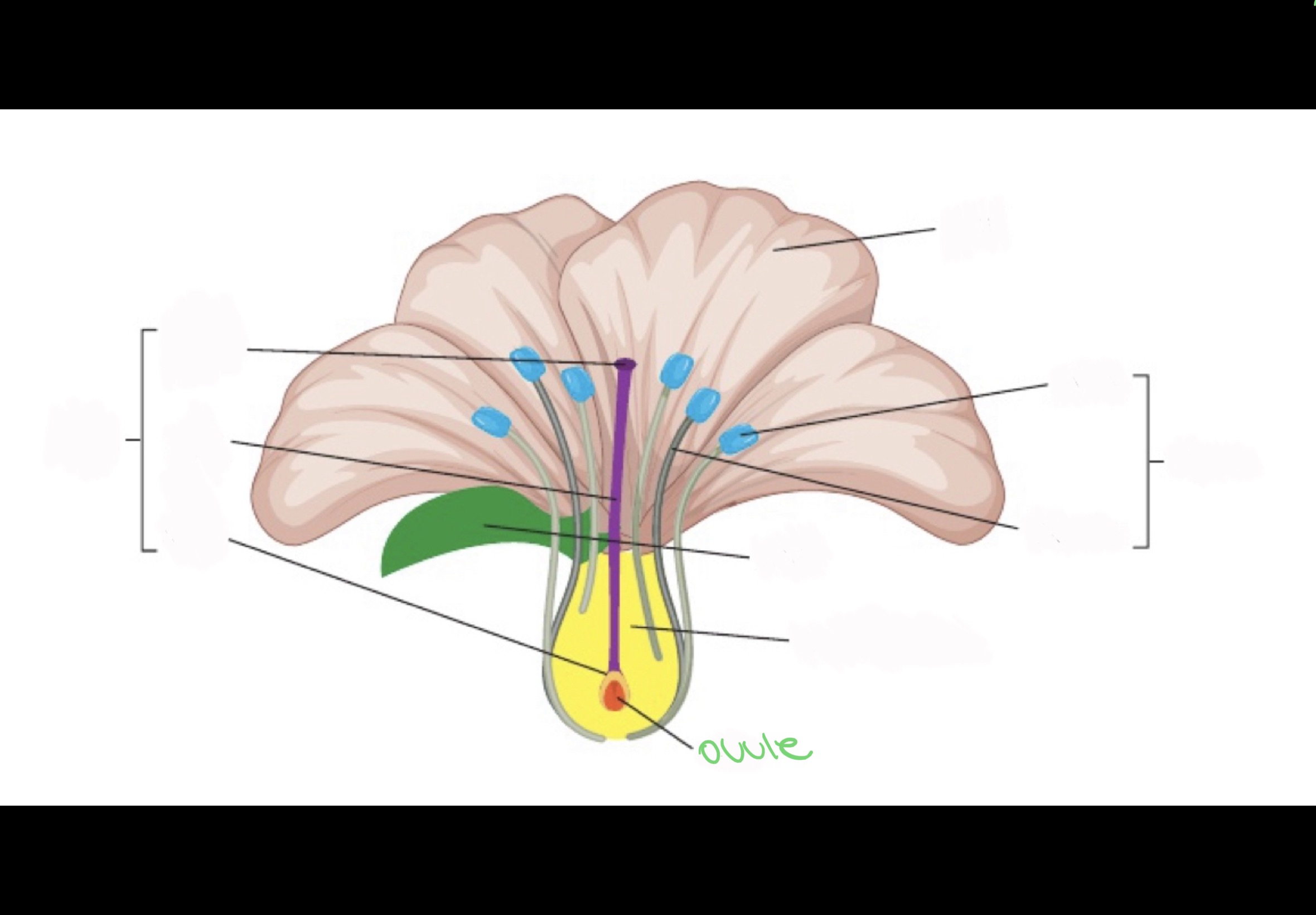
Where is ovule
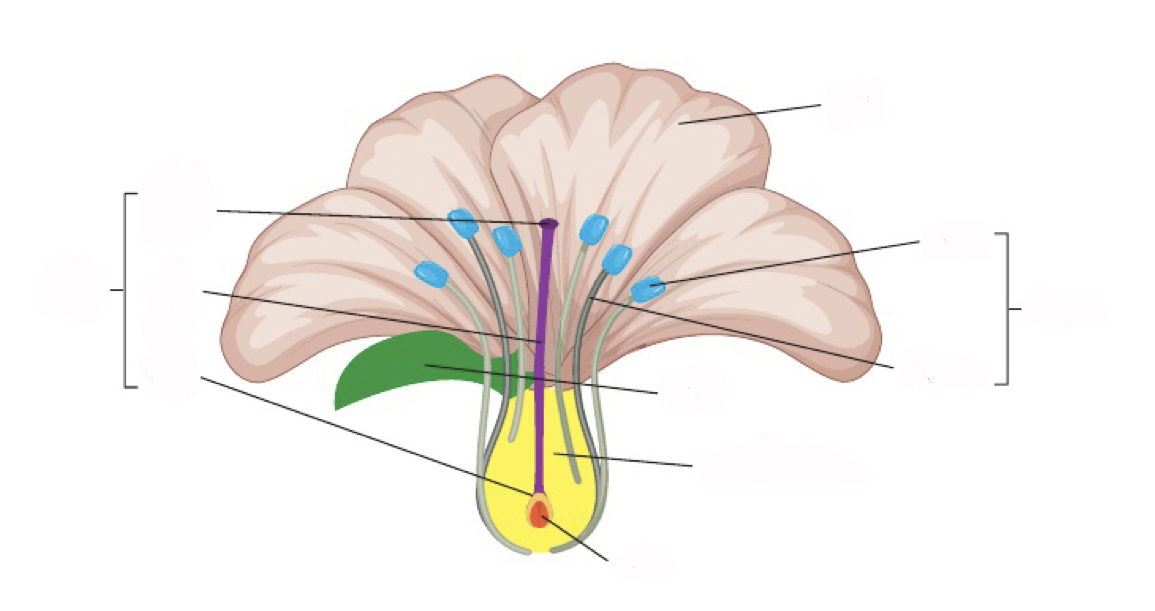
Where is stigma
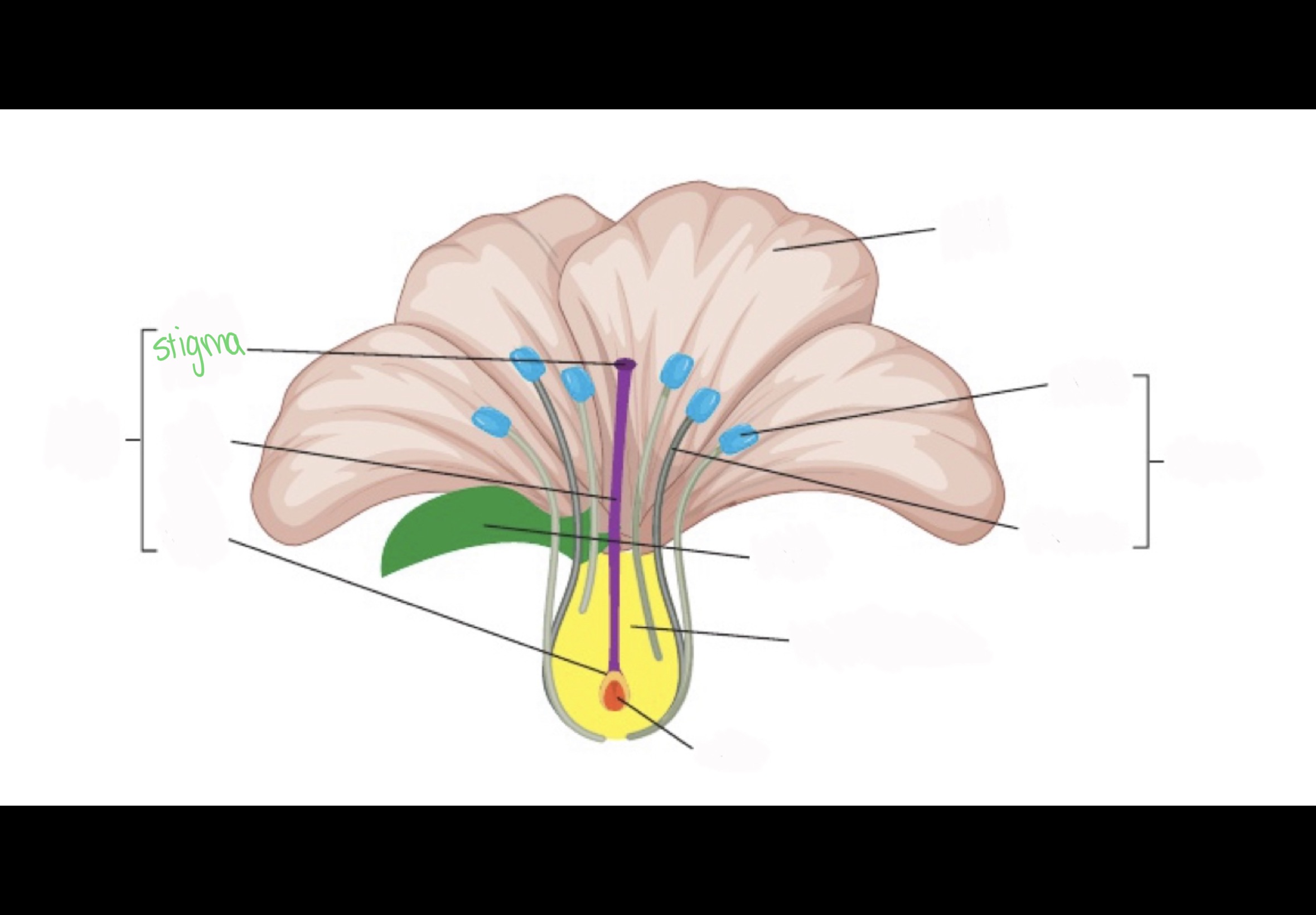
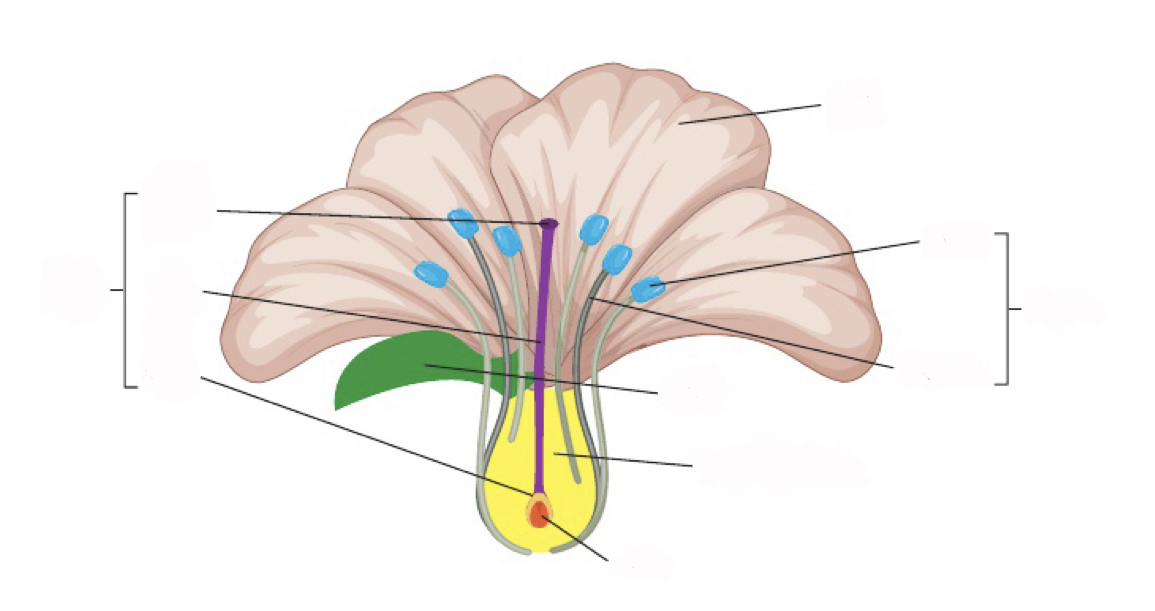
where is stamen
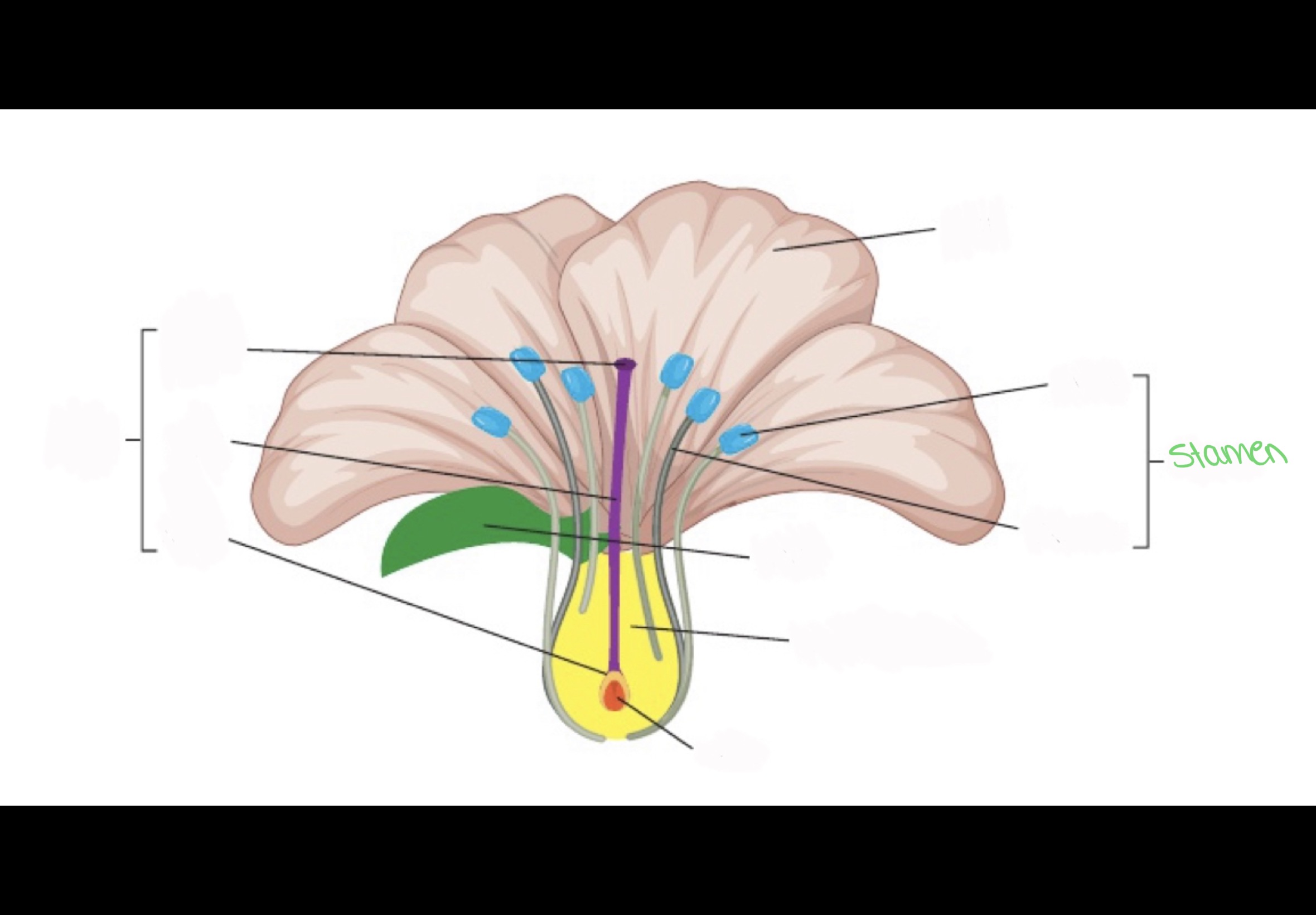
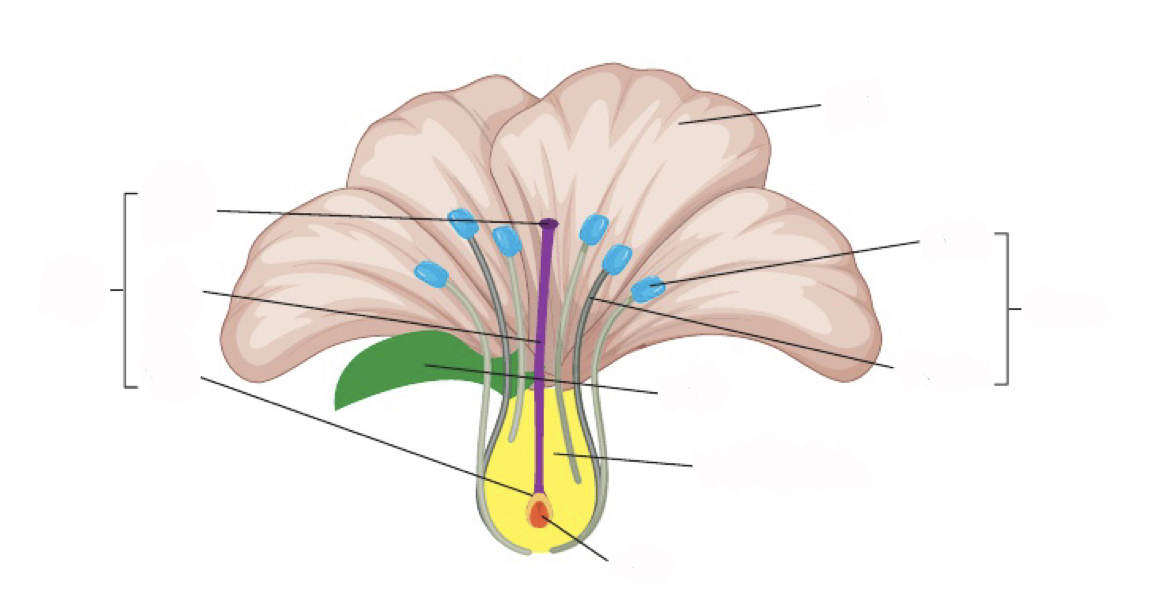
where is ovary
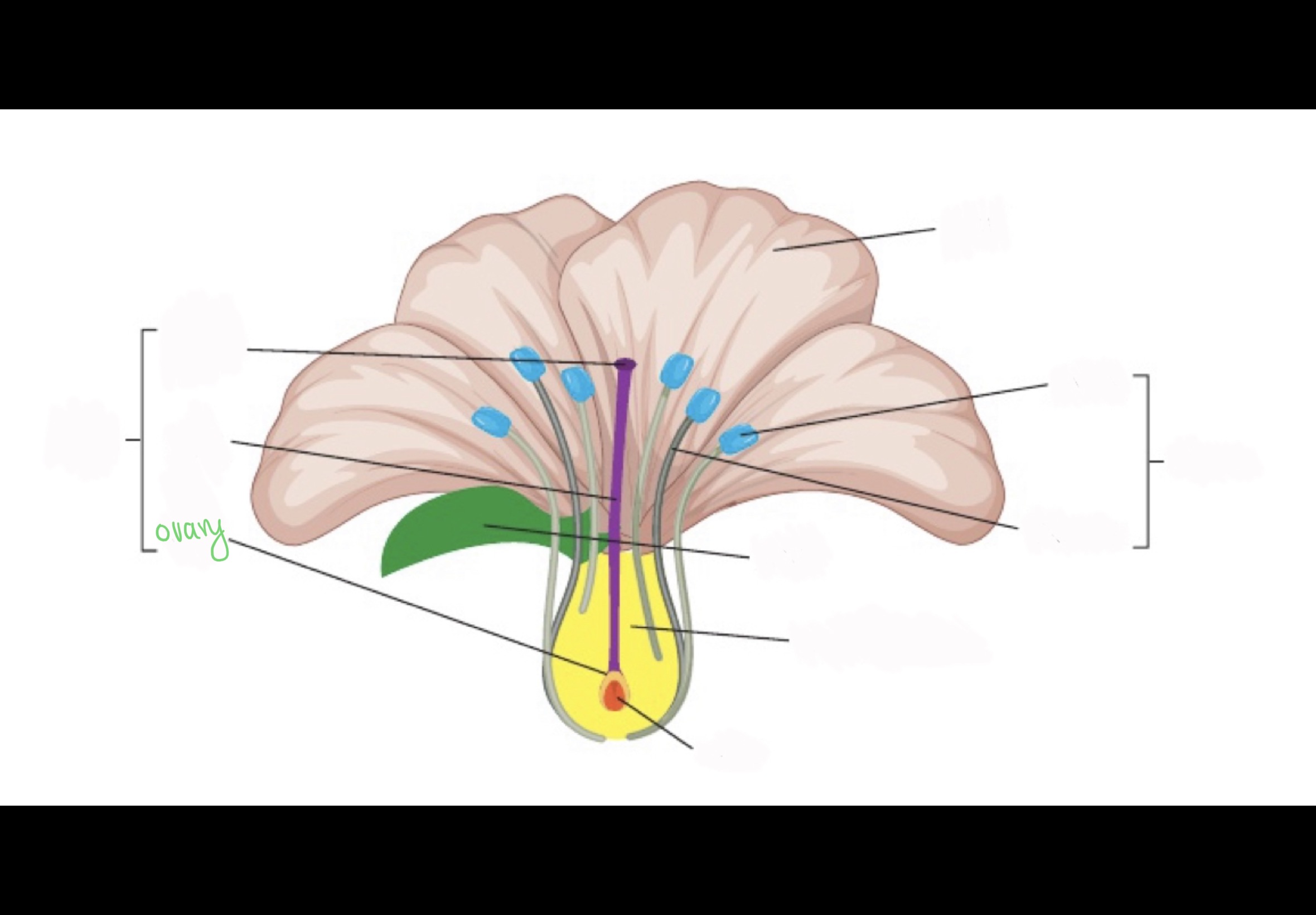
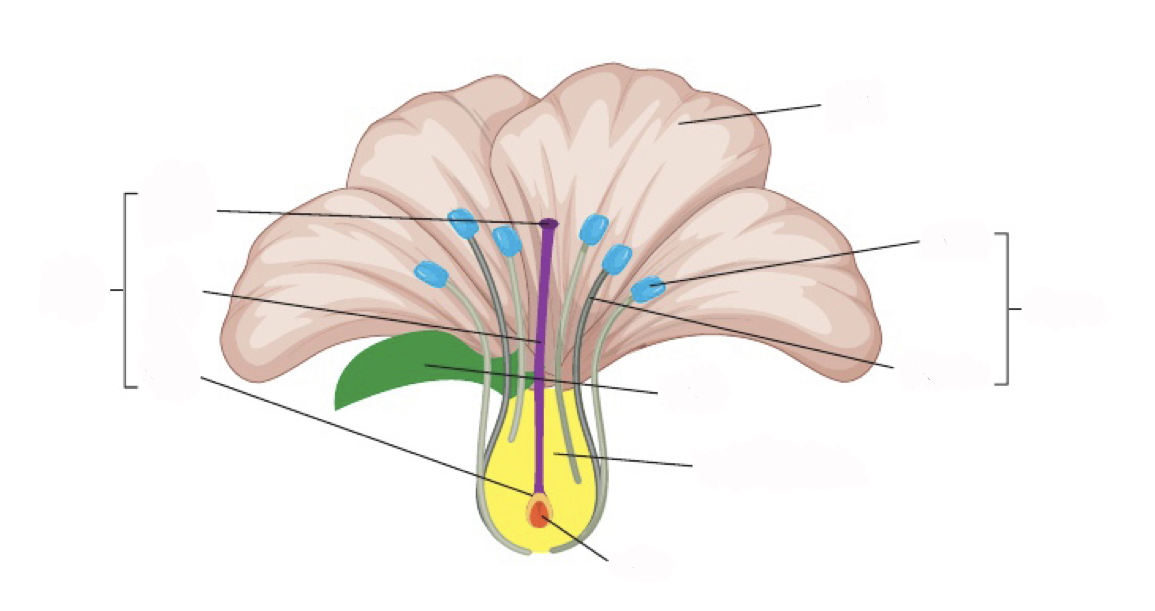
where is carpel
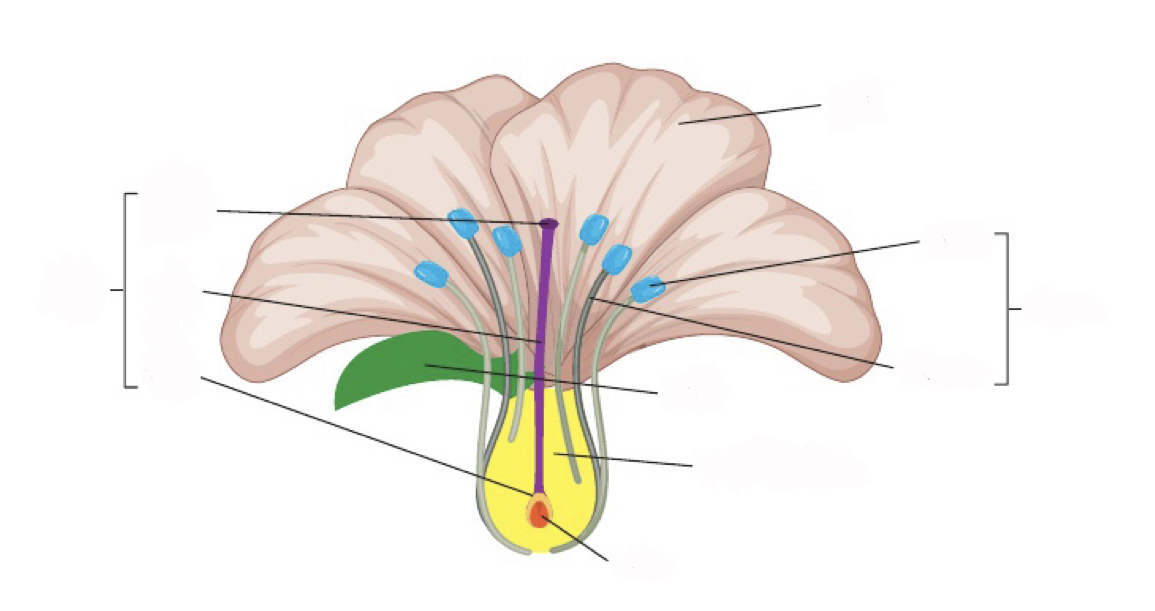
where is style
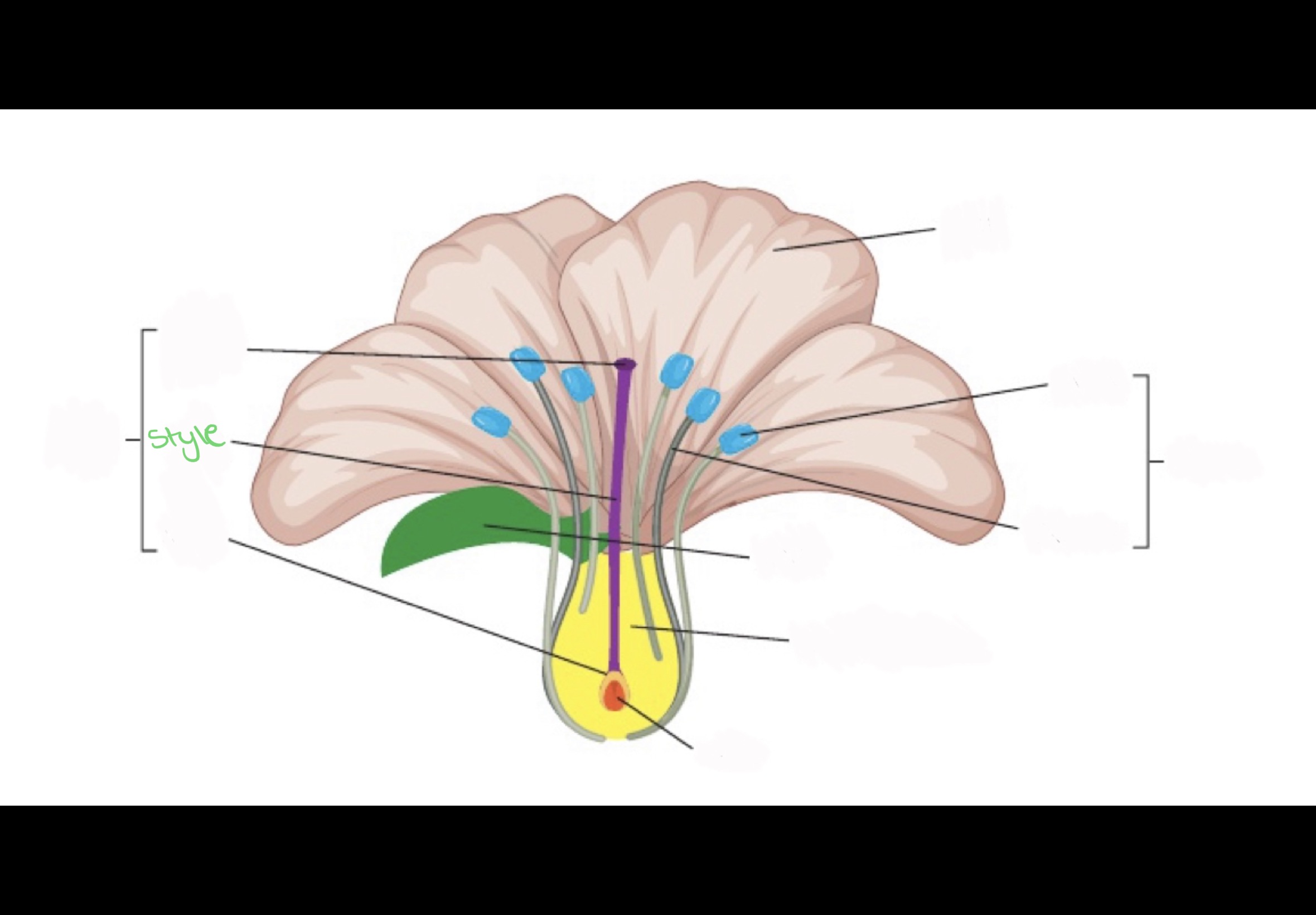
Role of petal
attracts polinators
Role of sepal
proetcts developing flower
Role of anther
produces male gametes
Role of filament
holds anther
Role of stigma
pollen lands
role of style
holds stigma
role of ovary
contains one or more ovules
ovule
female nuclei develop
Self incompatibility mechanisms
when pollen lands on the same plant - the growth of pollen tube is reduced or stopped
Ways in which this occurs:
pollen grain fails to germinate into pollen tube
poleln grain germinates but cant enter through stigma
can enter but pollen nuclei degerate before fertilization
fertilization occurs but the embryo degenerates
Seed dispersal
travel by wind
by water
can have pods which dry out and then they pop dispersing away from plant
fruits consumed by animals when digested the coat reamins and give off in faeces far from plant
What is necesarry for seed gerimnation
water
oxygen
approporiate temprature
Dormancy
low metabolism
low water content
can last for years
seed can sustain harsh conditions
Process of seed germination
Imbibition - seed uptakes water activates enzymes
enzymes digest food from endosperm tissue rasnfered by cotyledons which allow for cell respiration and proetin syntheis
First fill grow a radicle into the ground
The first structure that will emerge over the ground is the hypotocyl - against gravity → lifting cotyledons above ground