Core Mathematics A-Level
 Call Kai
 Learn
Learn Practice Test
 Spaced Repetition
 Match
Match Flashcards
 Knowt Play
1/56

Earn XP
Description and Tags
I love Lily
Name | Mastery | Learn | Test | Matching | Spaced | Call with Kai |
|---|
No analytics yet
Send a link to your students to track their progress
57 Terms
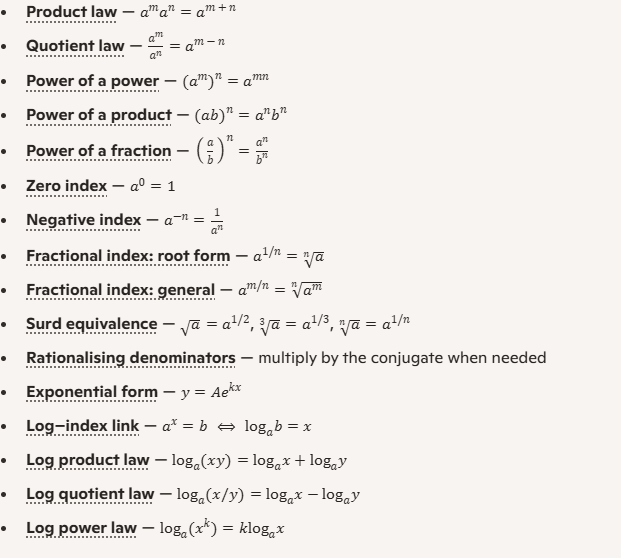
Laws of Indices
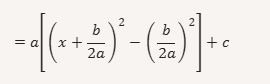
Completing the Square
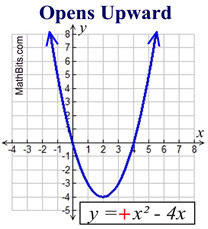
Quadratic Graphs: Positive
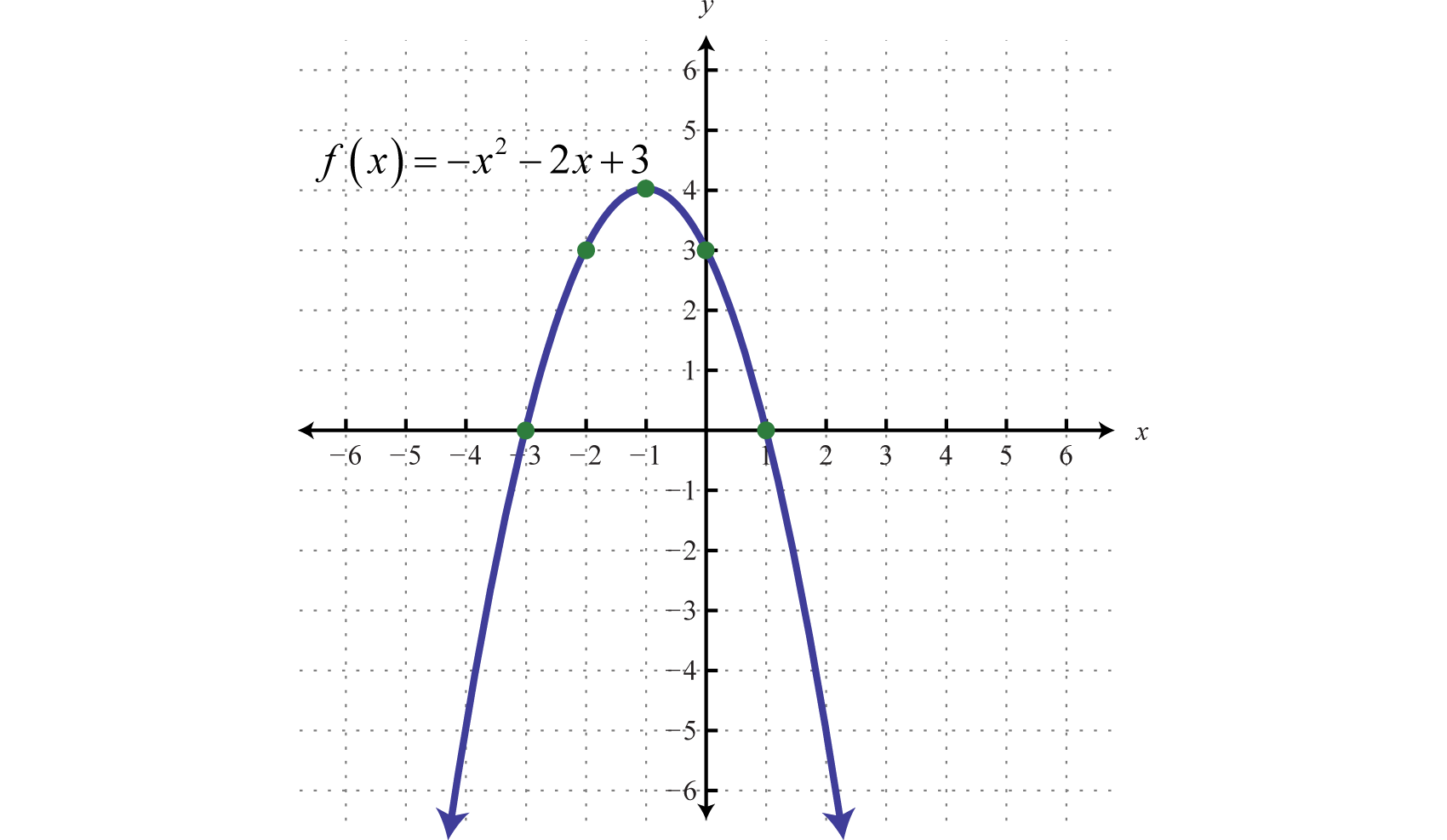
Quadratic Graph: Negative
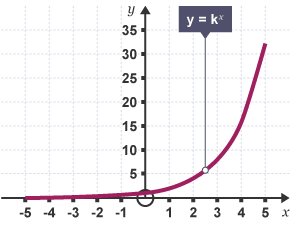
Exponential Graphs, Positive
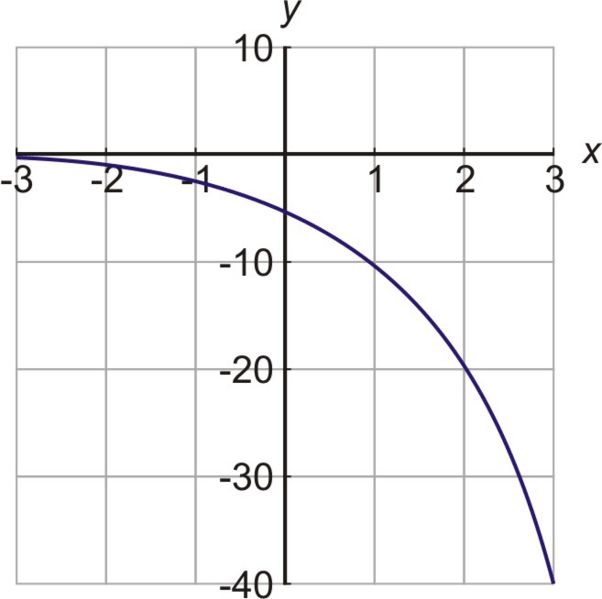
Exponential Graph, Negative.
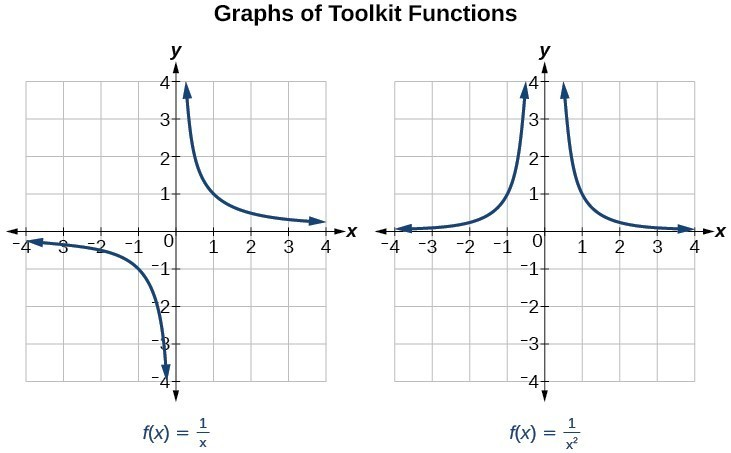
Reciprocal Graphs x and X²
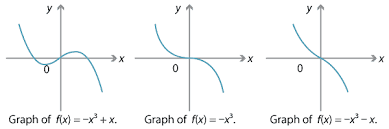
Cubic Graphs
Domain, Range
Range: All valid Y values. Domain: All valid x values.
Composite Functions
With two functions when you feed one into another.
I.e if you have f(x) and g(x)
f(g(x)) means sub G into F.
Inverse Functions
How to find the inverse of a function
1. Replace f(x) with y.
2. Swap positions of x and y in the equation.
3. Rearrange/solve to make y the subject
4. Replace y with f(x)-1
Domain and range values swap when function inversed.
Must be one-to-one to have an inverse
Partial Fractions
Check if the fraction is proper; if not, perform polynomial division.
Factor the denominator fully.
Write the partial fraction form using constants (A, B, C…) in the correct structure.
Multiply both sides by the full denominator to clear fractions.
Substitute convenient x‑values to find constants where possible.
Equate coefficients to find any remaining constants.
Rewrite the original fraction using the constants found.
Proceed with the required operation (usually integration or simplification).
Gradient, Midpoint, distance

Equation of straight line with two known coordinates.
y-y1=m(x-x1)
Equation of a circle
(x-a)²+(y-b)²=r²
where a is x coordinate of centre and b is y coordinate of centre
Gradient conditions parallel and perpendicular.
Parallel: Two gradients equal
Perpendicular lines: Negative reciprocal gradients or they multiply to -1.
Circle Theorems.

Increasing, Decreasing, Periodic Sequences.
Increasing sequence — a sequence where each term is greater than or equal to the previous term.
Decreasing sequence — a sequence where each term is less than or equal to the previous term.
Periodic sequence — a sequence where terms repeat in a fixed cycle after a certain number of steps.
Arithmetic Sequence Equations
For nth term: Un=a+(n-1)d
For sum: Sn=n/2(a+l)
Where a is first term, d is common difference and l is last term.
Geometric Sequence Equations
Nth term: Tn=ar^n-1
Sum: Sn=a(1-r^n)/1-r
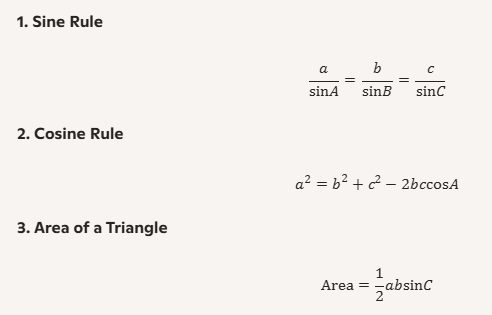
Sine rule, cosine rule, area of triangle.
In all three triangle formulas (Sine Rule, Cosine Rule, Area Formula), the letters a, b, and c always mean the same thing:
a, b, c (side lengths)
a = side opposite angle A
b = side opposite angle B
c = side opposite angle C
Radian Formulae.

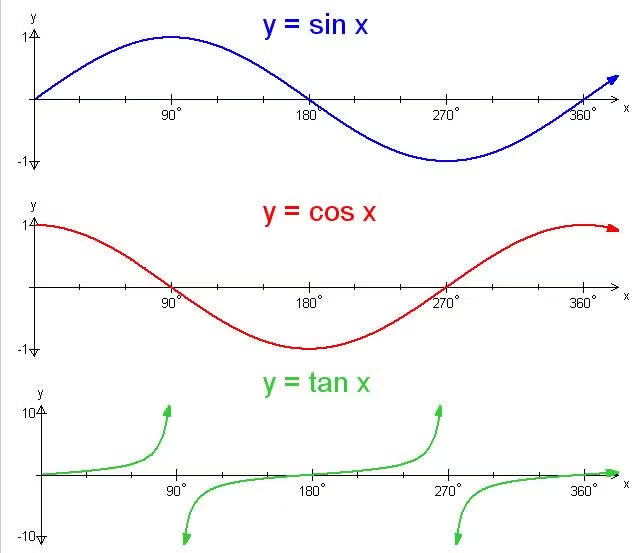
Sin cos tan sketching.
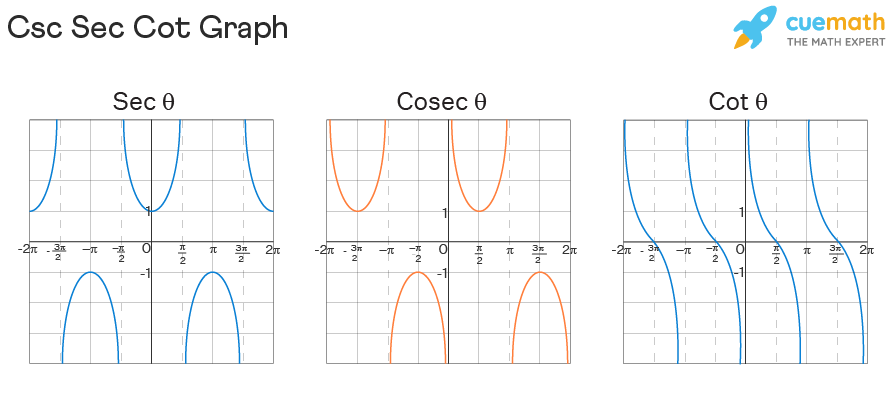
Cot, Cosec, Sec.
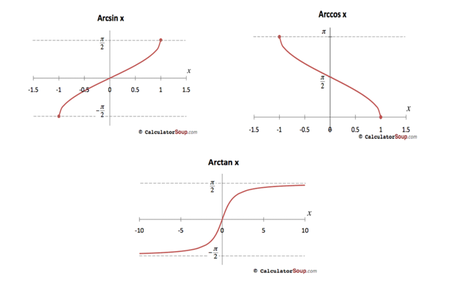
Arcsin Arctan Arccos
ALL Trig Identities
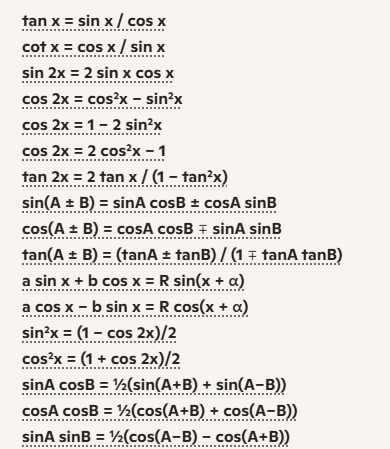
Harmonic Form
Write the target form
Expand using the compound‑angle identity
Match coefficients
Find R using Pythagoras
Find α using tanα = b/a
ALL Log Solving Question.
Simplify both sides to one log using known laws then drop logs and solve.
SOME Logs solving.
Put all logs on one side and constant terms on the other.
Use law of logs to simplify to a single log.
Change from log form to power form.
NO logs solving
Method 1: Change to power form.
OR
Method 2: Take logs of both sides,
Reduction to linear form
Use trig identities to rewrite powers or products
Convert everything into sin x and cos x
Factorise where possible
Use identities to simplify to a single trig function
Solve the resulting linear trig equation
Differentiation from first principles
Write the limit definition of the derivative
Substitute f(x+h) and f(x) into the formula
Expand brackets or expressions fully
Simplify the numerator
Factor out h from the numerator
Cancel the h with the denominator
Take the limit as h → 0
Chain Rule differentiation
Differentiate outer function, then differentiate inner function and multiply the two.
Product Rule differentiation
Differentiate u and v to u’ and v’ then multiply uv’ and u’v and add them together.
Implicit Differentiation
Differentiate both sides with respect to x
Differentiate y‑terms using the chain rule
Attach dy/dx to every differentiated y‑term
Collect all dy/dx terms on one side
Factor out dy/dx
Solve for dy/dx
Parametric Differentiation
Differentiate x with respect to t
Differentiate y with respect to t
Form dy/dx as (dy/dt) ÷ (dx/dt)
Simplify the expression
Substitute a given t‑value if required
Parametric to Cartesian Steps
Isolate t in one equation
Substitute into the other equation
Use identities or algebra to remove t
Rearrange into Cartesian form
State domain restrictions if needed
Connected Rates of Change Steps
Identify all given relationships between variables
Differentiate each relationship with respect to time
Substitute known values into the differentiated equations
Link the required rate to known rates using the equations
Solve for the unknown rate
Reverse Chain Rule
Spot an inside function and its derivative
Let u equal the inside function
Differentiate u to get du
Rewrite the integral fully in terms of u
Integrate with respect to u
Substitute back to x
Ln integrals
Rewrite the integrand so ln(x) is the “inside” function
Let u = ln(x)
Differentiate to get du = 1/x dx
Rewrite the whole integral in terms of u
Integrate with respect to u
Substitute back to x
Integration by substitution
Choose a substitution u = inside function
Differentiate to get du
Rewrite dx in terms of du
Rewrite the entire integral in u
Integrate with respect to u
Substitute back to x
Integration by parts
Choose u and dv
Differentiate u to get du
Integrate dv to get v
Apply the formula uv − ∫v du
Integrate the remaining integral
Simplify the final expression
Integrating partial fractions
Split the expression into partial fractions
Integrate each fraction separately
Use ln for 1/(x−a) terms
Use power rule for (x−a)ⁿ terms
Use arctan form for irreducible quadratics
Add +C
Differential equations
Separate variables if possible
Integrate both sides
Add the constant of integration
Use initial conditions to find the constant
Rewrite the solution in terms of y
If the equation is not separable, the A Level method switches to:
Rewrite into integrating factor form dy/dx + P(x)y = Q(x)
Find the integrating factor e∫P(x)dx
Multiply the whole equation by the integrating factor
Recognise the left side as a product derivative
Integrate and solve for y
Integration of parametric functions
Write the integral as ∫ y (dx/dt) dt
Differentiate x with respect to t
Substitute x(t) and y(t) into the integral
Integrate with respect to t
Apply limits by converting x‑limits to t‑limits
Evaluate the definite integral
newton-raphson
1) Start with an equation f(x) = 0
This is the equation whose root you want to approximate.
2) Choose a starting value x₀
You need an initial guess close to the root so the method converges.
3) Use the formula xₙ₊₁ = xₙ − f(xₙ)/f′(xₙ)
This is the Newton–Raphson iteration.
It uses the tangent line at xₙ to jump closer to the root.
4) Repeat the iteration until values settle
Each iteration moves you closer to the actual root.
Stop when xₙ stops changing to the required accuracy.
5) State the root to required decimal places
This is your final numerical approximation.
Definition of population, census and sample
Population- Whole set of items that are of interest
Census- observation of whole population
Sample- Observations from a subset of the population
Advantages and disadvantages of census and samples
Census advantages: Gives completely accurate result
Census disadvantages: Time consuming and expensive. Cannot be used when testing process destroys item. Difficult to process massive data amounts.
Sample advantages: Quicker and cheaper. Less people respond. Less data to process
Sample disadvantages: Data may not be accurate, and may not be large enough to give information about subgroups.
Definition of sampling unit, frames and parameters
Sampling unit- Individual units of population
Sampling frame- When units are named or numbered to form a list
Parameter- A number that describes the entire population