S2: Sampling and Experimental Approaches (combined)
 Call Kai
 Learn
Learn Practice Test
 Spaced Repetition
 Match
Match Flashcards
 Knowt Play
1/53

There's no tags or description
Looks like no tags are added yet.
Name | Mastery | Learn | Test | Matching | Spaced | Call with Kai |
|---|
No analytics yet
Send a link to your students to track their progress
54 Terms
What determines the sampling methods we use?
Questions that the study will address
Nature and patchiness of target species and/or habitat
Practical considerations e.g. site and habitat type
Economic considerations (expensive)
Previous adopted practice
Benthic size
Benthic size classification for Nanobenthos: Shallow water v.s. Deep sea
(microflora & fauna)
< 63 μm (shallow water) and < 43 μm (deep sea)
Benthic size classification for Meiofauna: Shallow water v.s. Deep sea
63 – 500 μm (shallow water) v.s. 43 – 300 μm (deep sea)
Benthic size classification for Macrofauna: Shallow water v.s. Deep sea
500 μm – 3 cm (shallow water) v.s. 300 μm – 3 cm (deep sea)
Benthic size classification for Megafauna
> 3 cm
Identifiable in seafloor images
What are the four stages of benthic gear deployment?
Preparation of the gear before deployment
Deployment
Processing of the sample between deployments
Post-deployment processing of samples
At water depths typical of the shelf,
How long does it typically take to obtain a single grab sample?
Almost 1 hour
(compared to around 20 mins at 30m water depth under calm conditions)
Macrofaunal sampling techniques: Trawls types
Beam, otter
→ -Larger mesh; larger fauna
Including more benthic fish
Agassiz/ Blake
Shrimp
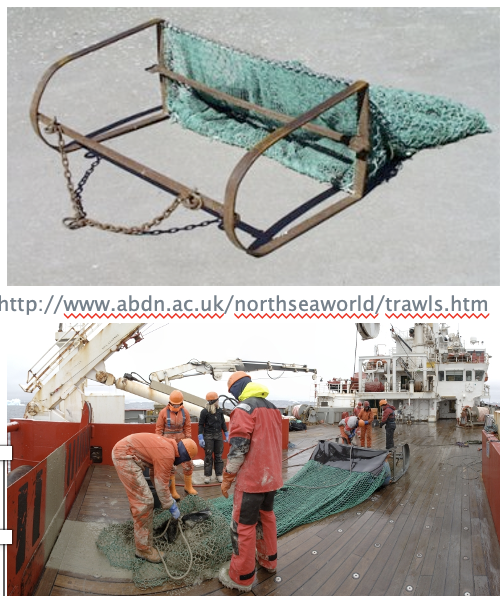
Macrofaunal sampling techniques: Trawls positives and negatives
Qualitative
Wide coverage
For Epifauna ~ live at the surface of the sediment
Low efficiency
Preliminary survey use
Macrofaunal sampling techniques: Fishing dredges
Scallop dredge
Oyster dredge
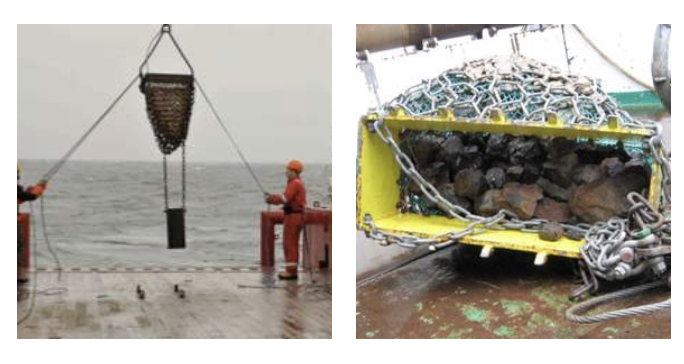
Macrofaunal sampling techniques: Fishing dredges positives and negatives
Qualitative
Wide coverage
Epifauna (and rock) ~ live at surface of the sediment
Designed for hard substrates
Low efficiency
Preliminary survey use
Macrofaunal sampling techniques: Bottom sleds type
Epibenthic sleds
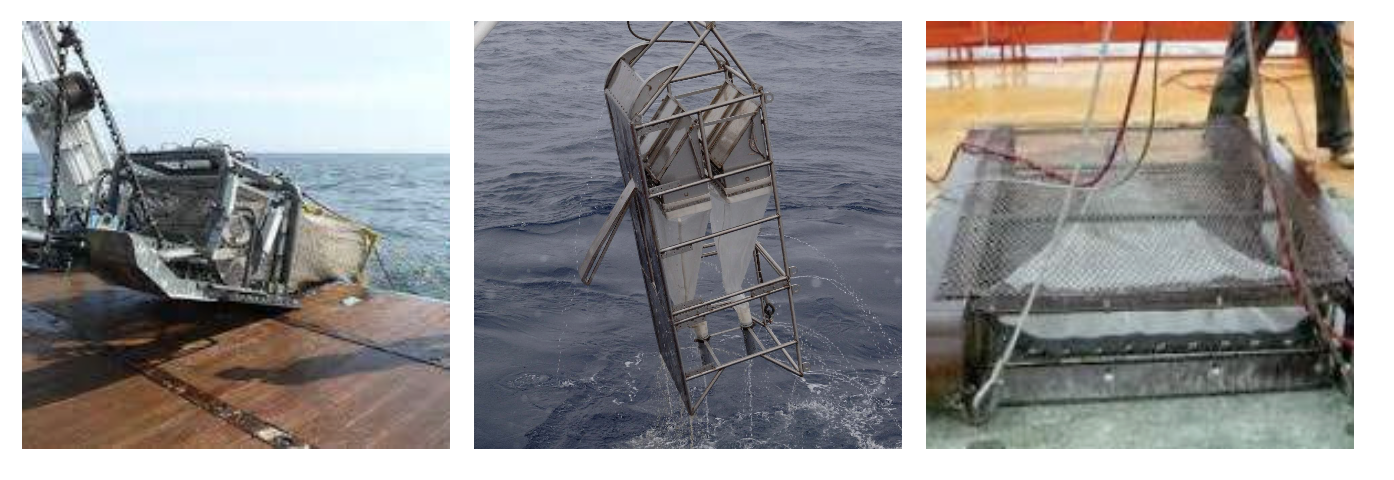
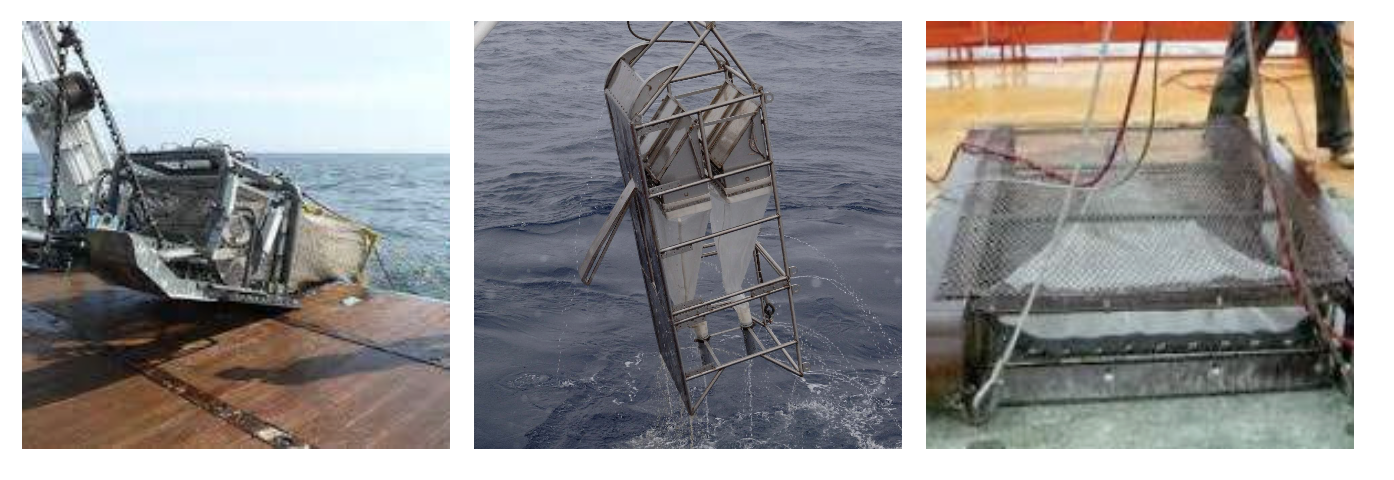
Macrofaunal sampling techniques: Bottom sleds positives and negatives
Semi-quantitative
Reduced coverage
Epifauna & benthopelagic taxa ~ living just above the sediment
Low efficiency & contamination
Macrofaunal sampling techniques: Bottom sleds main feature and modifications
Heavy frame enclosing the net
Some modified designs, e.g. tickler chains, open and closing mechanisms or flow meter
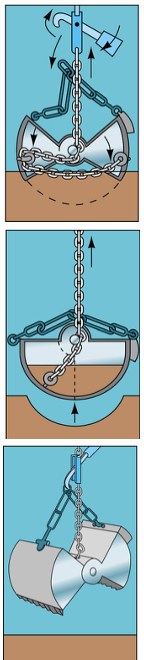
Macrofaunal sampling techniques: Grabs types
Van Veen grab
Smith-McIntyre grab
Day grab
Hamon grab
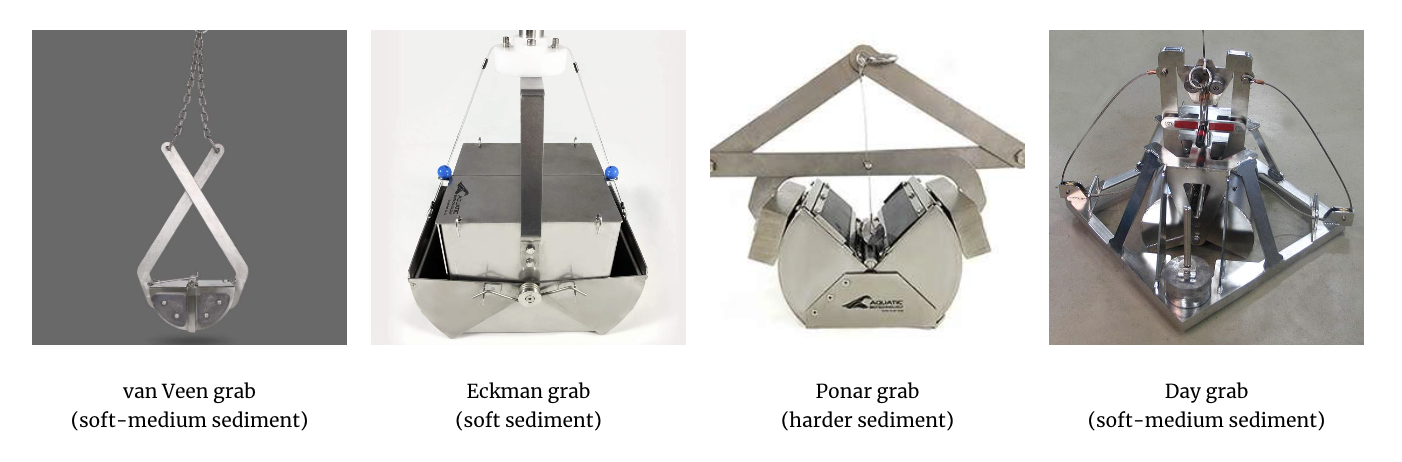
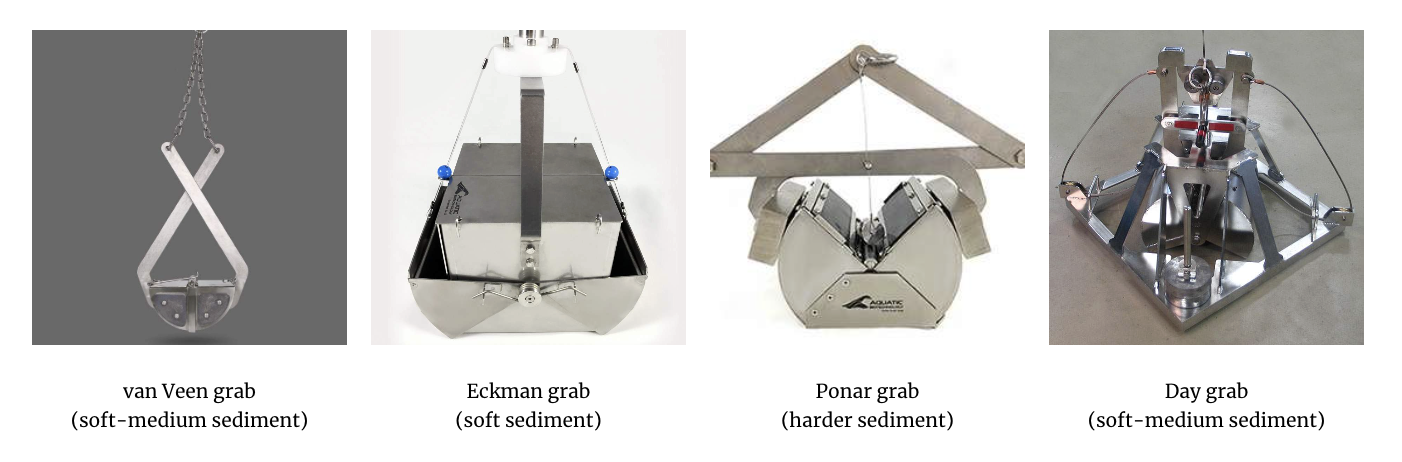
Macrofaunal sampling techniques: Grabs positives and negatives
(Semi-)Quantitative
Sessile & discretely sessile epifauna & infauna (living in sediment) to the depth excavated
Limited coverage
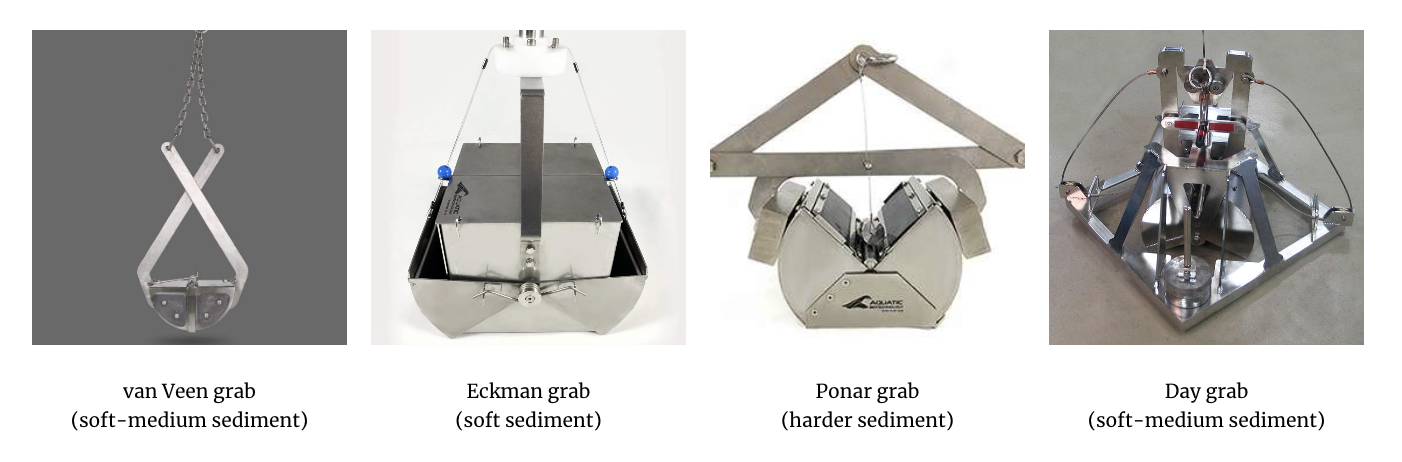
Macrofaunal sampling techniques: Grabs efficiency
Depends on the depth of burrowing
Grabs penetrate < 10 cm (max 15 cm)
Bow wave effect
What is the 'bow wave effect' in the context of grabs and box samplers?
Effect associated with descent
where the pressure wave can remove surficial sediments and fauna before the sampler makes contact.
Macrofaunal sampling techniques: Box samplers type
Box core
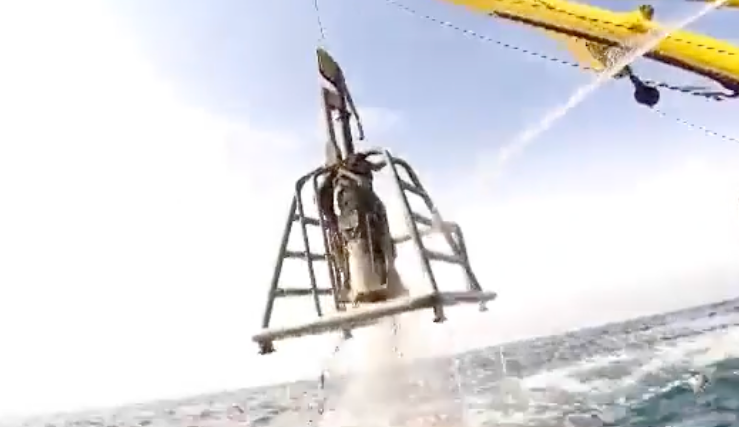
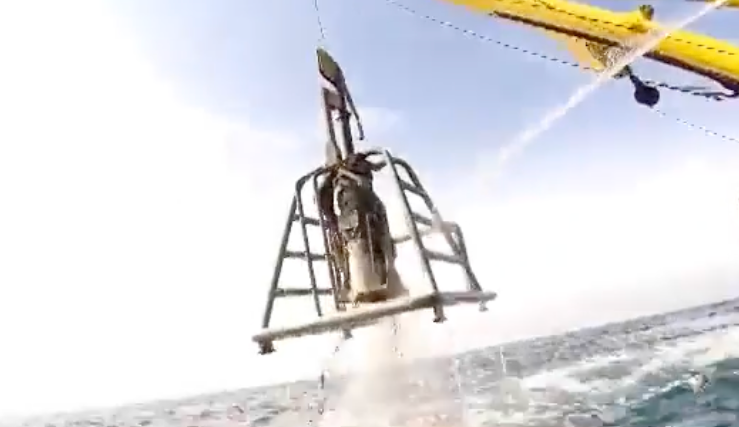
Macrofaunal sampling techniques: Box samplers features
Quantitative
Infauna
Limited coverage
Macrofaunal sampling techniques: Box samplers efficiency +/- compared to standard grab for quantitative sampling
Reliable & collects a relatively deep, large, undisturbed sample
that retains SWI & supernatant water
Large & expensive
Macrofaunal sampling techniques: Corers & Multiple Corers types
Hand-held corers
Multiple corer (including Megacorer)
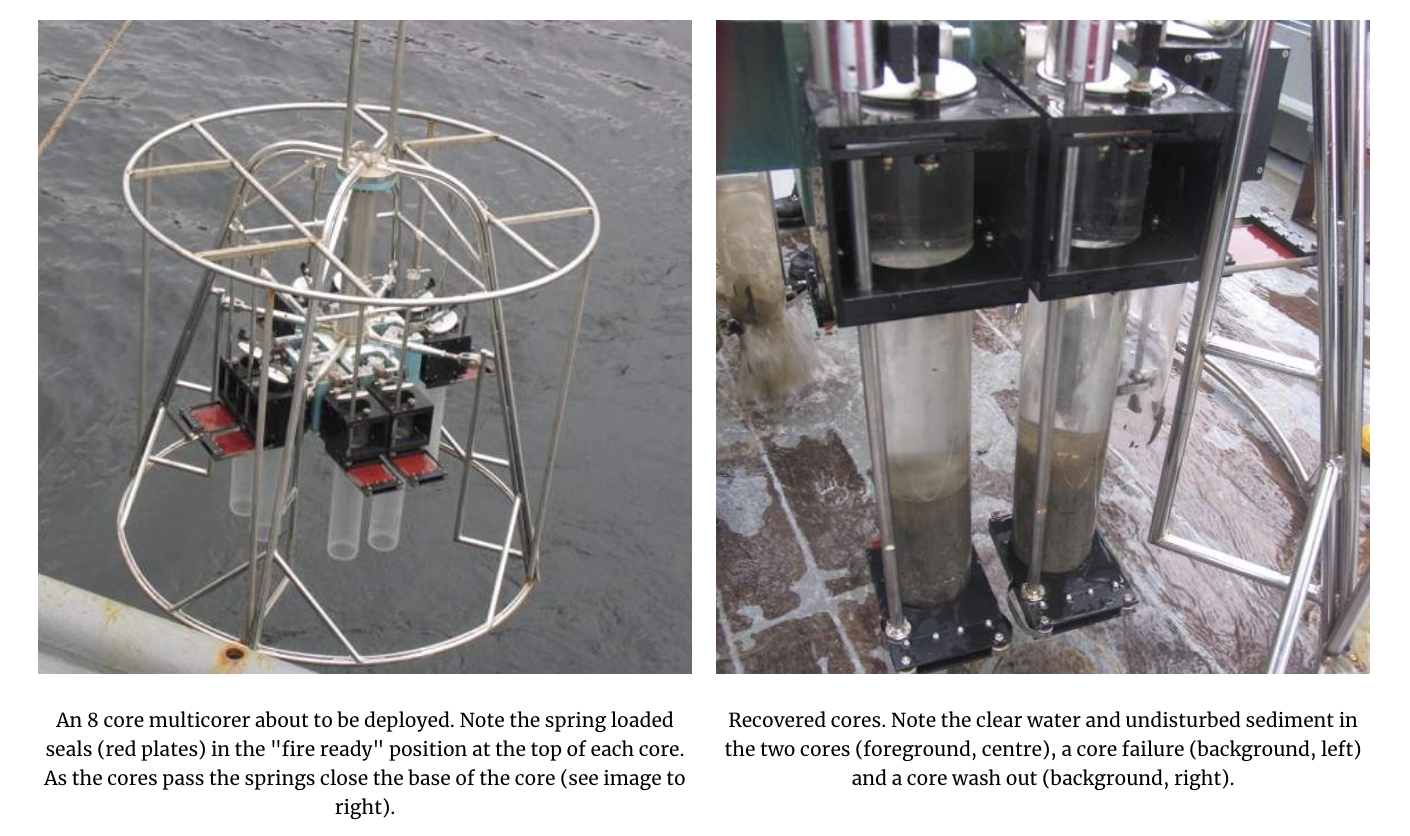
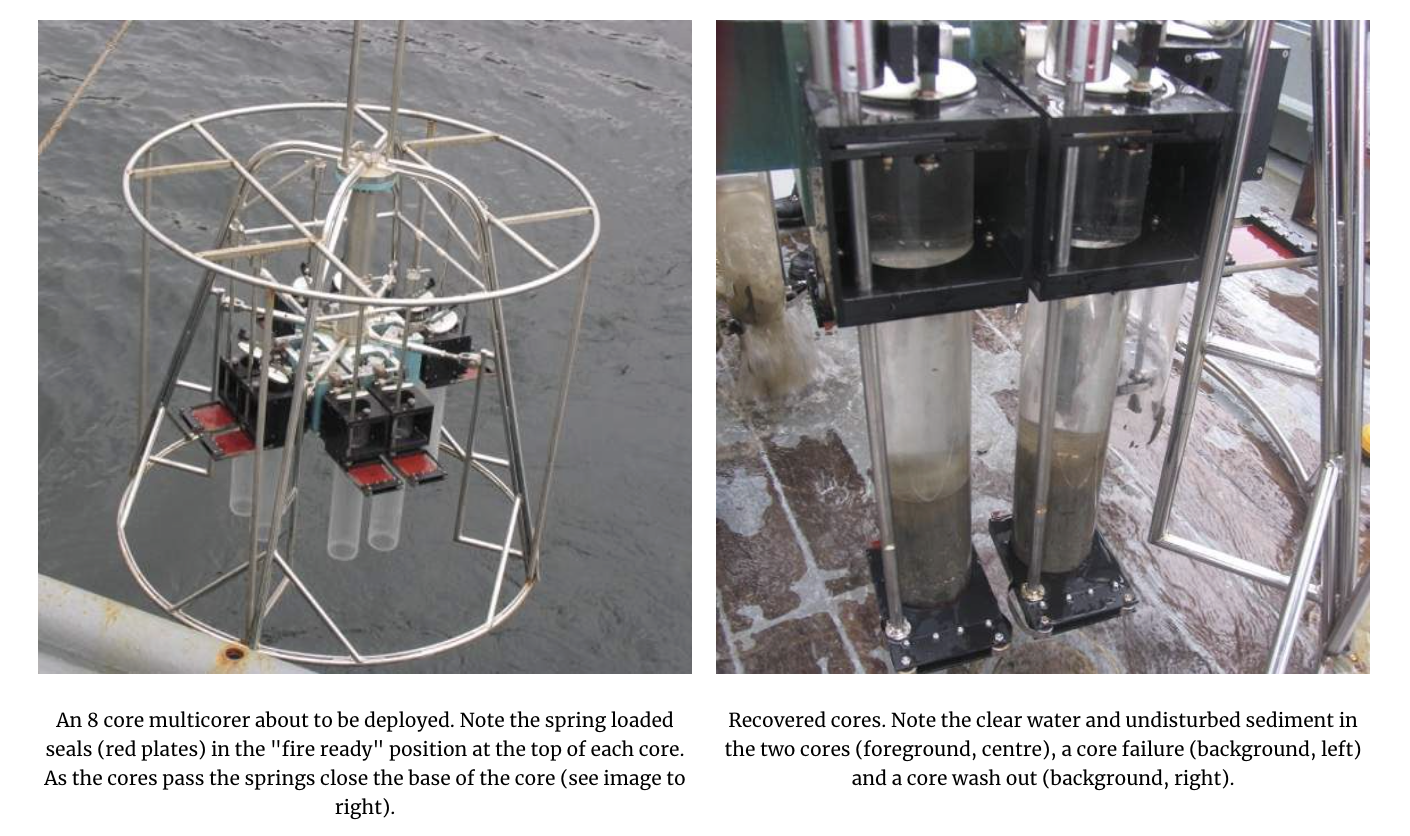
Macrofaunal sampling techniques: Corers & Multiple Corers features
Quantitative
Limited coverage
Infauna
Macrofaunal sampling techniques: Corers & Multiple Corers efficiency +/-
Similar to a Box corer
Less of a bow wave effect compared to traditional Box corer and grabs
What prevents sediment and water loss in a Craib corer?
A ball closure mechanism and hydraulically dampened penetration into the sediment.
What determines the efficiency of the benthic sampling gear?
Digging characteristics of the sampler
- depth of penetration, volume of sediment & degree of disturbance
Efficiency of capture
- representative picture of density & distribution
Technical characteristics
- ease of manipulation, weight, ease of access to sample, safety and mechanical reliability
What determines the sampling methods we use?
Nature and patchiness of target species and/or habitat
Practical considerations
Questions that the study will address
Economic considerations
Previous adopted practice
How sampler choose what benthic sampling gear to use?
Sampler choice depends on survey requirements, working conditions and availability of suitable gear
Why are trawls used despite being qualitative and having low efficiency?
Useful for identifying rare species or those with a patchy distribution by covering wide areas quickly.
Why is the use of multicorers sometimes cautioned against in experimental design?
A risk of pseudoreplication if all cores from a single deployment are treated as independent replicates.
For macrofauna processing, what is the standard mesh size of the final sieve?
Typically 500 μm
after an initial wash through a coarse sieve of 5 mm5mm or 1 cm1cm.
Which chemicals are used to preserve faunal returns after sediment removal?
Reserved in either 70% industrial methylated spirit (IMS) or 4% formaldehyde
What is the purpose of adding a 1% Rose Bengal stain to faunal samples?
Aids in the visual location of fauna during the sorting stage.
Megafaunal sampling techniques: Optical imaging techniques
Megafaunal sampling techniques: Optical imaging techniques
Megafaunal sampling techniques: Carrier platforms
Megafaunal sampling techniques: Carrier platforms
Megafaunal sampling techniques: Carrier platforms
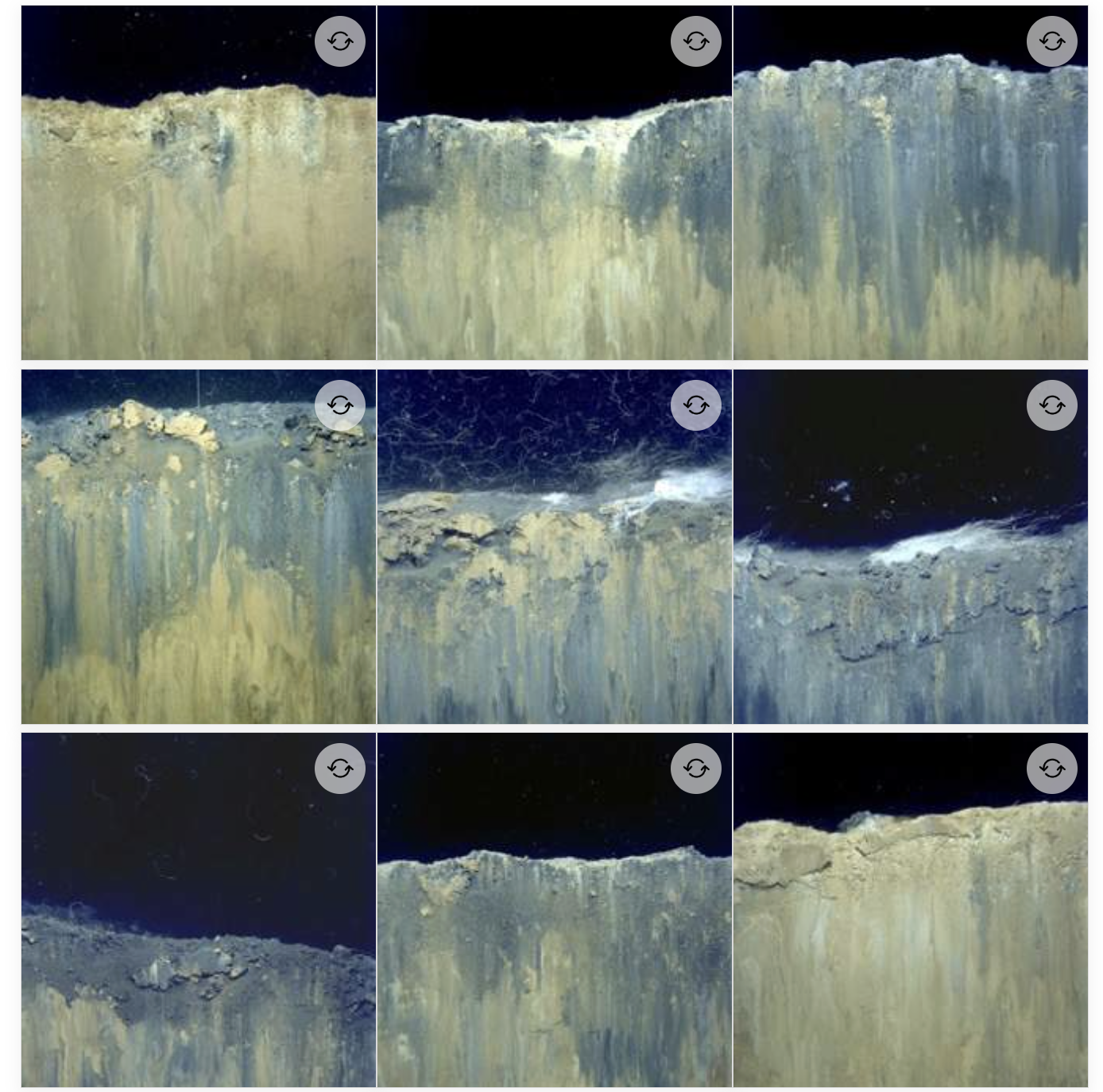
Sediment profile as advanced through the transect (with SPI)
How does benthic sampling differ in the deep sea
Time consuming
- Requires special skills and failure rates can be high
Gear is larger & heavier than equivalent apparatus
- Excessive winch wire needed
Specific problems
- Replicated sampling
- Lower faunal densities & body size
Benthic sample processing - what causes results to differ
Size of mesh selected matters
Timing of sampling is important
Variability & variation in benthic populations
Genetic differences between animals
Environmental effects
Different types of organism
- M or F, species, age etc.
Sampling & experimental errors
What five key factors determine the sampling methods used by benthic ecologists?
Economic considerations, previously adopted practice, questions to be addressed by the study, nature and scale of patchiness of substrate and/or biology, and practical considerations such as site and habitat type.
Megafaunal: What was the original purpose of Sediment Profile Imaging (SPI) developed by Don Rhoads?
To understand invertebrate-sediment relations below the sediment-water interface (SWI).
Megafanual: What are the physical limitations of using a Sediment Profile Imaging (SPI) camera?
It is limited to soft-to-medium sediments and requires calmer weather conditions for deployment.
Megafaunal: How do Autonomous Underwater Vehicles (AUVs) navigate to complete biological surveys?
They follow pre-programmed routes, often using a 'mow the lawn' pattern, to cover an area without operator intervention.
Megafaunal: Define the three-dimensional rotation axes used in AUV assessment.
Yaw (rotation about a vertical axis)
Pitch (nose up/down about a transverse axis)
Roll (rotation about a longitudinal axis).
What are four biological and environmental factors that cause benthic patchiness?
Disturbance (natural and anthropogenic)
recruitment
predation
competition
What is the difference between spatial and temporal replication in benthic studies?
Spatial replication: predicts abundance based on factors like sediment type
Temporal replication: focuses on seasonal patterns and disturbance over time.
How can a researcher determine if the number of samples taken is representative of the parent population?
By conducting a preliminary assessment and calculating a running mean or a collectors curve.
What is Stratified sampling in benthic ecology?
A strategy used when the parent population is made up of subsets (strata) of known size.
What are the common consequences of a poor experimental survey design?
Large but useless data sets, wasted time and money, unanswered research questions, and unwieldy statistical analysis.
What is an Agassiz trawl specifically designed to do?
It is designed to skim over the surface of the seafloor to selectively sample decapod crustaceans, echinoderms, gastropods, and fish.
What is the 'ISIS' in the context of deep-sea carrier platforms?
It is a Remotely Operated Vehicle (ROV) capable of operating at depths of 6500m .