L9 - antimocrobila resistance in the food chain
 Call Kai
 Learn
Learn Practice Test
 Spaced Repetition
 Match
Match Flashcards
 Knowt Play
1/40

There's no tags or description
Looks like no tags are added yet.
Name | Mastery | Learn | Test | Matching | Spaced | Call with Kai |
|---|
No analytics yet
Send a link to your students to track their progress
41 Terms
Antimicrobial
theraputic drug that kills bacteria or stops their growth
Empiric vs definitive antimicrobial therapy
Empiric is an initial therapy given for community anf hospital-aquired infections:
due to unavailability of microbial results within 24hrs
empiric and guided by clinical presentation
commonly through broad-spectrum antimicrobials or sometimes through combination of antimicrobials
Definitive therapy:
starts once microbiological results are available
attempt should be made to switch broad-spectrum intimicrobial therapy to narrow-spectrum regime
to reduce toxicity and cost of antimicrobials and prevent antimicrobial resistance
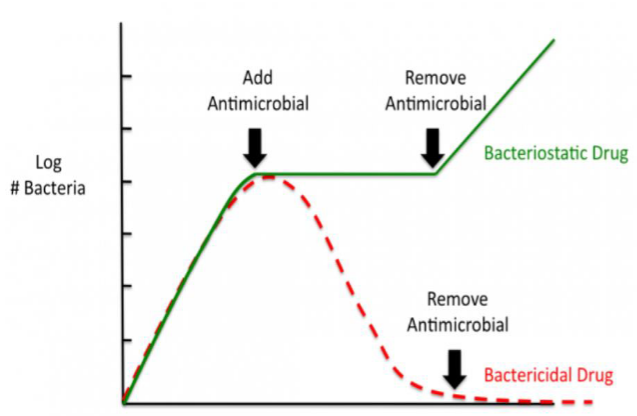
Bacteriostatic VS bactericidal
Bactericidal agents kill bacteria directly, whereas bacteriostatic agents inhibit bacterial growth and reproduction, relying on the host's immune system to clear the infection.
antimicrobial combinations
When antimicrobials exhibit synergistic activity against a
microorganismWhen critically ill patients require empiric therapy before
microbiological etiology and/or antimicrobial susceptibility can be
determined (Empiric vs Definitive Antimicrobial Therapy)To extend the antimicrobial spectrum beyond that achieved by
the use of a single agent for treating polymicrobial infectionsTo prevent the emergence of antimicrobial resistance
Antimicrobial resistance
ability of a microorganism to survive and multiply in the presence of an antimicrobial agent that would normally inhibit or kill that particular type of microorganism
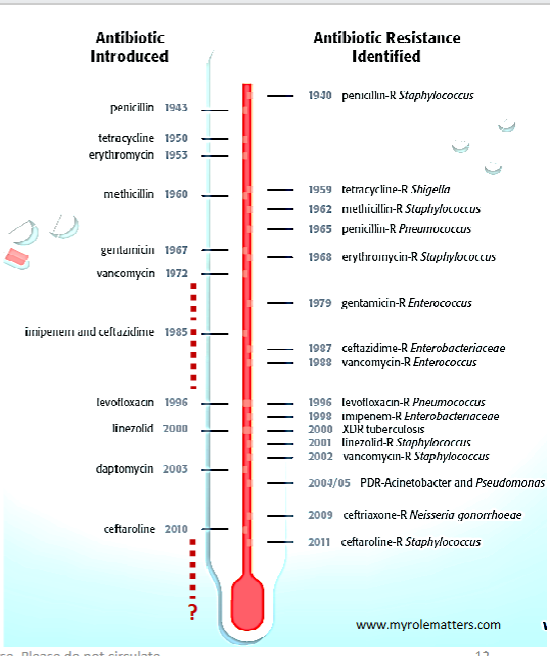
timeline of microbial resistance
key targets of antimicrobials
Cell walls/membrane synthesis
Nucleic acid synthesis (DNA gyrase, folate synthesis)
Protein synthesis (RNA and ribosomes)
Intrinsic resistance
innate ability of a bacterial species to resist activity of an antimicrobial through its inherent structural or functional characteristics
Lack of affinity of the antimicrobial for bacterial target
Inaccessibility of the antimicrobial into bacterial cell
Extrusion of the antimicrobial by chromosomally encoded active exporters
Innate production of enzymes that inactivate the antimicrobia
bacterial strategies for antimicrobial resistance (genetic)
selection pressure leads to increasign population of mutated resistant bacteria
horizontal gene transfer - bacterial transformation, transduction or conjugation
transformation - bacteria uptake naked DNA
transduction - bacteriophages transfer bacteria; DNA
bacterial cells transfer DNA (i.e. plasmids, transposons, integrons) through pili
bacterial strategies for antimicrobial resistance (mechanistic)
Efflux and decreased antimicrobial penetration
efflux pumos and decreased uptake/permeability
modification of antimicrobial
chemical alterations of the antibiotic
destruction of the antibiotic molecule
modification of target
target protection and modification (mutational or enzymatic or complete replacement) of target site
Antimicrobial resistance (AMR) globally
resistance can spread across borders - travel, tourism, global trade
case study - 2008 swedish patient travelled to India, became sick with a newly identified multidrug resistant infection
AMR global burden
4.95 million deaths associated - 2019
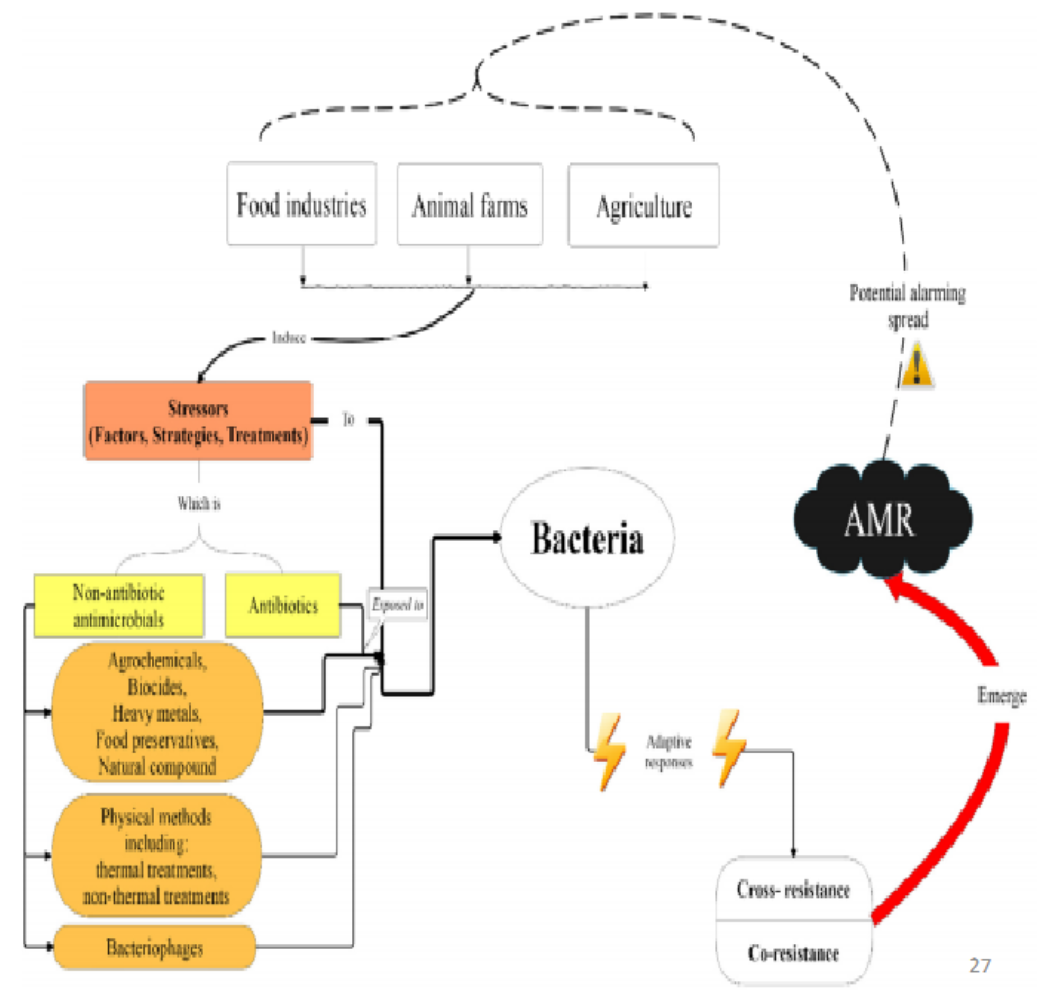
key drivers of AMR emergence
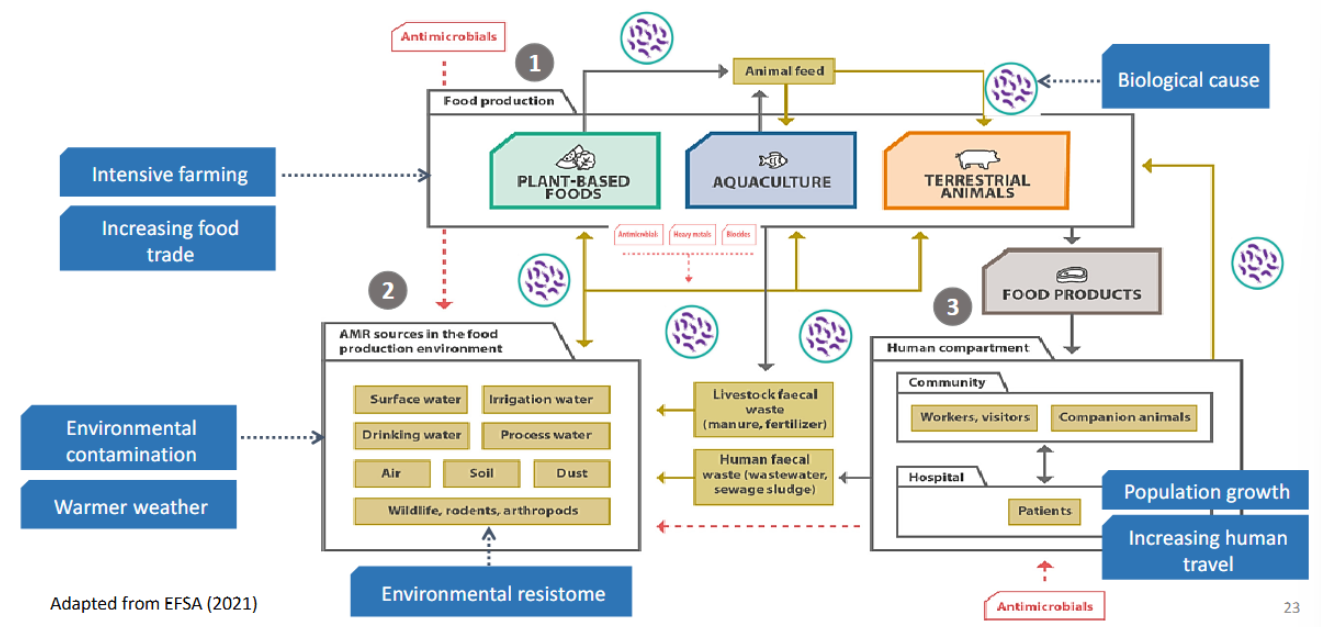
germs from food and animals
intensive farming practices - increasing demand for food
biological causes:
selection pressure
mutation
horizontal gene transfer
Environmental resistome
Over-or innapropriste prescription of antibiotics
source and transmission routes of AMR - food chain
antimicrobial consumption in food animals
rise by 67% by 2030 - double in Brazil, Russia, India, China, South Africe
rise is driven by increased consumer demand in middle income countries. also shift to large scale farms where antimicrobials are used routinely
initiatives to preserve antibiotic effectiveness while simultaneously ensuring food security in low(er)-income countries
antibiotic use in singapore aquaculture sectors
Individual factor
Personal experience and knowledge about antibiotic use in farming systems
participants generally found better alternative strategies to increase fish survival including purchase of better quality fish fry, good hygiene practices, and other nonconventional forms of disease management
marker related factor
high price of antibiotics in singapore coupled with stiss competition from neighbouring countries
regulatory factor
regular oversight from food authority as well as the stringent antibiotic-free requirements by fish harvesters and exporters
Regular oversight from local food authority was helpful. Economic disincentive was particularly salient among farmers raising lower-value food fish such as tilapia and milk fish. In addition, fish farmers were sensitive to increasing consumer awareness about food safety
non-antimicrobials and AMR
farm-fork continuum
Roles of coastal aquaculture environment in dynamic of AMR
High concentrations of ARG and MDR E. coli in surface waters of
farms and transect; limiting antimicrobial use in feed, and improving microbial water quality monitoring are keys.
Roles of vectors in dissemination of AMR
Wild birds and rodents could play a role in AMR transmission across
sectors; close monitoring and environment management are keys
• Multi-drug resistant (MDR) E. coli found in wild birds (23%, 6/26) and rodents (10%, 2/20) droppings.
• These MDR strains were detected with various antimicrobial resistance genes and could be considered as part of the environmental resistome.
• Findings underscores: o close monitoring on AMR bacteria in potential reservoirs; and o necessity of environment management (including food and farm environment).
Climate in changing epidemioligy of AMR
• An increase in 10°C across was associated with an increases in
antimicrobial resistance of 4.2%, 2.2% and 2.7% for the common pathogens (E. coli, K. pneumoniae and S. aureus)
• Increasing climatic temperature and population density are associated with increasing antimicrobial resistance
Tackling AMR
Political factors – governance, health system & infrastructure, antimicrobial stewardship, surveillance systems, multi-stakeholder engagement, access to water and sanitation
Economic factors - resources, access to appropriate antimicrobials
Sociological factors - educational status and awareness, cultural practices and beliefs e.g. anti-vaccines, traditional practitioners and borrow medicines from their neighbours
Technological factors - laboratory facilities and human resources, healthcare innovations through computerised real-time reporting of data
Industry factors – investments and incentives in research and development of newer drugs
Global priority list of AMR
highest priority:
cephalosporins
glycopeptides
macrolides and kelolides
polymyxins
quinoloncs
NSAP
National strategic plan of action
developed in 2017 by one health government agencies
progress report released in 2020
NSAP identified 5 core strategies to combat AMR
communication and education
surveillance and risk assesement
research and evidence
prevention and control of infection and
optimisation and stewardship of antimicrobials
2 globalstrategies for tackling AMR
Reduce the demand for antimicrobials so the current stock of drugs lasts longer
increase the supply of new antimicrobials effective against drug-resistant bugs
reduce demand for antimicrobials
• A global public awareness campaign
• Improve sanitation and prevent the spread of infection
• Reduce unnecessary use of antimicrobials in agriculture and their
dissemination into the environment
• Improve global surveillance of drug resistance and antimicrobial consumption in humans and animals
• Promote new, rapid diagnostics to reduce unnecessary use of antimicrobials
• Promote development and use of vaccines and alternatives
• Improve the number, pay and recognition of people working in infectious disease
Increase supply of new antimicrobials
• A global innovation fund for early stage and non-commercial R&D for new
antimicrobials
• Better incentives to promote investment for new drugs and improving
existing ones
Build a global coalition for real action - via the G20 and the UN
SFA’s efforts in SG against AMR
Education surveillance and risk assessment
research
prevention and control of infection
optimisation of antimicrobial use
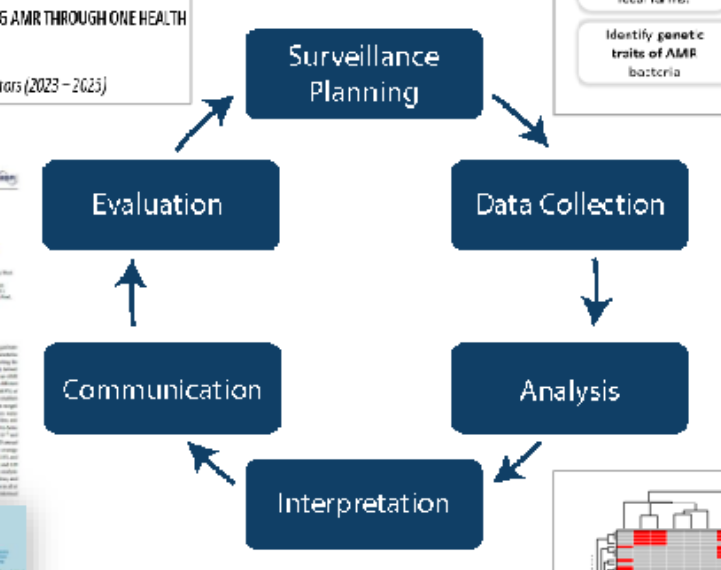
AMR surveillance in food chain
E.coli in raw meat
higher in market than supermarkets
retail and storage conditions can impact AMR bacterial contamination and proliferation
30% raw meat samples found with ESBL E. coli.
Highest positive rate found in chicken, then raw pork then raw beef
positive rates are significantly higher in wet markets
positive rates vary with sample categories accros various countries
Active surveillance
AMU surveys local farms and veterenary industries
Antimicrobial Residues Surveillance
AST of foodborne and veterenary bacterial isolates obtained through surveillance programs
Passive surveillance
AST of bacterial isolates obtained through the existing monitoring programs across food chain and animal sectors
Genome monitoring
Genomi analysis of targeted bacteria from food animals and humans
AMR data generation
phenotypic AMR profile by AST
methods: disk diffusion, E-test, VITEK AST, Broth microdilution using regional plates
breakpoint interpretation - CLSI or EUCAST
Genotypic AMR profile by PCR and/or while genome sequencing
drug residue detection and quantification
Data and exposure science
horizon scan and data analytics
quantitative risk modelling
AMR surveillance
in companion and wildlife animals, local farms and food products
measures level of AMR in bacteria from food
monitor the use of veterinary drugs in imported foods and local farms
Identify gentic traits of AMR bacteria
who does this? - centre for animal and veterenary sciences, NParks, Nationa centre for food science, SFA
Innovative AMR methodology
aquaculture environments - highly dynamic - creates contamination patterrns that point-in-time may miss
patho-bio-gen monitoring with hydrodynamic modelling conducted at SG coastal sites, integrated with mathmatical modelling incorporating hydrodynamics
identified hotspots at coastal sites near fish farms and seasonal variation during southwest monsoon
impact:
developed and published for global knowledge sharing
international interest in applying these models
SG benefits strategically from enhanced AMR detection and capability being atopted by key exporters of aquaculture products
raising stakeholders awareness
SFA AMR webpage
world antimicrobial awareness week outreach
collaboration with IHLs on education curricula and programme
outreach to local farmers on AMR annd good AMU practices
continued food safety vigilance and joint responsibility
good hygiene and manufacturing practices. including through cleaning, chilling, and avoiding cross-contamination, reducing exposure to bacteria
thorough cooking
local farms
control drug usage
list of banned drugs
prohibition of antimicrobials in growth promotion
proper recod keepig of drug usage
educate local farmers
implement good animal husbandry practices for disease presention and management - reduce use of antibiotics
adopt prudent and responsible use fo antibiotics
International efforts
One health global leaders on AMR
established by quadripartite organizations, consultation with UNSG, launched Nov 2022
ASEAN
SG lead country for AMR initiatives for livestock and aquaculture
strengthen regional capabilities through provision of training, such as drug residues testing of food products
FAO collaboration
surveillance guidelines for livestock and aquaculture
participating in missions to assess countries AMR surveillance capabilities in livestock and food
Enhance AMR communication - data driven
promote prudent use of antimicrobials and disease prevention
Government - Sharing AMR surveillance data to overseas competent authorities in the form of report cards to raise awareness. professional educatioin in the form of training and briefing
Industry - communication on AMR findings to local poultry farms. guides to farmers on fighting AMR through good animal husbandry practices and prudent use of antimicrobials
Consumers - WAAW outreach, public campaigns raise awareness for condumers about preventing AMR