MIZ Lab Exam 4
 Call Kai
 Learn
Learn Practice Test
 Spaced Repetition
 Match
Match Flashcards
 Knowt Play
1/102

There's no tags or description
Looks like no tags are added yet.
Name | Mastery | Learn | Test | Matching | Spaced | Call with Kai |
|---|
No analytics yet
Send a link to your students to track their progress
103 Terms
Phylum Arthropoda
Subphylum Crustacea
Class Malacostraca
Order Decapoda
what are the 3 general body types
how many maxillipeds
how many pereopods
shrimp-like, crab-like, lobster-like
3 pairs maxillipeds
5 pairs pereopods = 10 legs
Phylum Arthropoda
Subphylum Crustacea
Class Malacostraca
Order Decapoda
what are the 2 suborders
Dendrobranchiata and Pleocyemata
Phylum Arthropoda
Subphylum Crustacea
Class Malacostraca
Order Decapoda
Suborder Dendrobranchiata
habitat
feeding
body
type
gills
describe pereopods
describe pleon
other
mostly benthic, few planktonic
omnivore/scavenger, mostly on animals
body
shrimp like
Dendrobranchiate gills (“dendro” = tree-like)
pereopods = 1-3 chelate, small
pleon segments overlap 1=>2=>3=>etc.
major commercial group, Penaeid shrimp
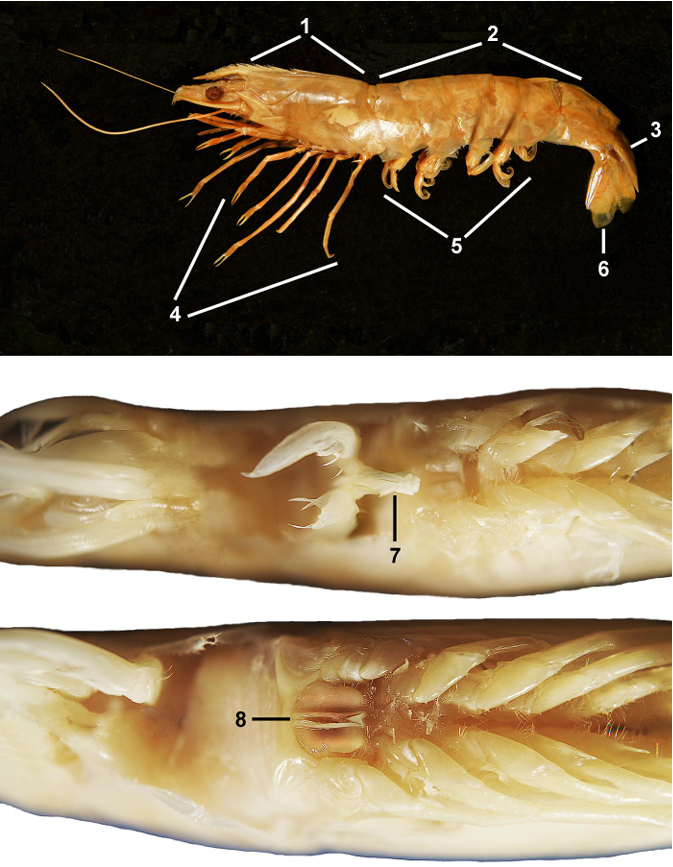
taxa
label
Arthropoda:Crustacea:Malacostraca:Decapoda:Dendrobranchiata (penaeid shrimp)
1. cephalothorax; 2. pleon; 3. telson; 4. pereopods 1-5; 5. pleopods 1-5; 6. uropods; 7. male petasma; 8. female thelycum
Phylum Arthropoda
Subphylum Crustacea
Class Malacostraca
Order Decapoda
Suborder Pleocyemata
what are the 9 infraorders
Stenopodidea, Caridea, Axiidea, Gebiidea, Anomura, Brachyura, Achelata, Polychelida, Astacidea
Phylum Arthropoda
Subphylum Crustacea
Class Malacostraca
Order Decapoda
Suborder Pleocyemata
gills
body plan
non-dendrobranchiate gills
most are crab-like, the last two infraorders are lobster-like
Phylum Arthropoda
Subphylum Crustacea
Class Malacostraca
Order Decapoda
Suborder Pleocyemata
Infraorder Stenopodidea
aka
habitat
feeding
body
size
what is on the carapace and pleon
describe pereopods
other
banded coral shrimp
on structure, reefs
carnivore, cleaners
body
small
thorny body over carapace and pleon
pereopods 1-3 chelate, 3rd is large
popular in aquarium trade
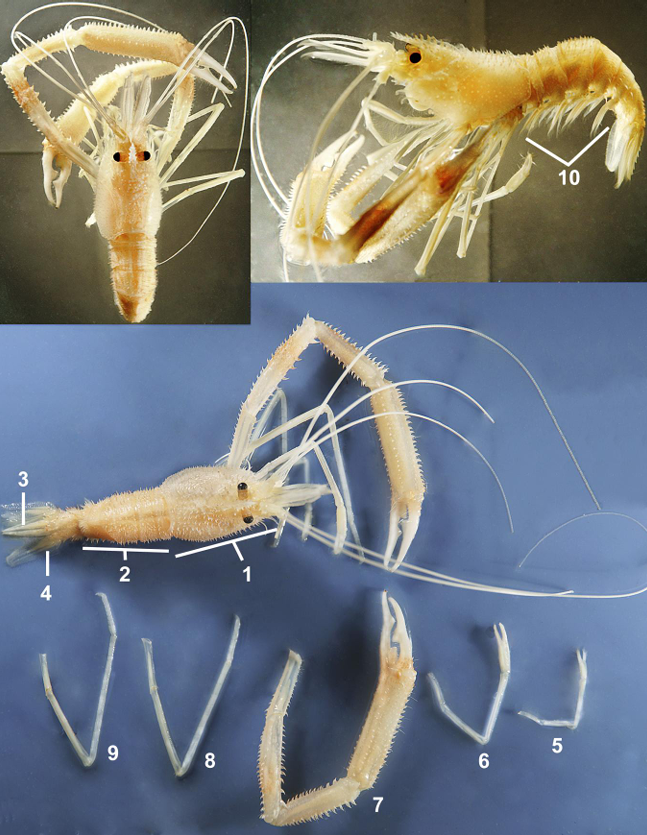
taxa
label
Arthropoda:Crustacea:Malacostraca:Decapoda:Pleocyemata:Stenopodidea
1. cephalothorax covered by carapace; 2. pleon (abdominal segments); 3. telson; 4. uropods; 5. 1st pereopod; 6. 2nd pereopod; 7. 3rd pereopod; 8. 4th pereopod; 9. 5th pereopod; 10. pleopods
Phylum Arthropoda
Subphylum Crustacea
Class Malacostraca
Order Decapoda
Suborder Pleocyemata
Infraorder Caridea
aka
habitat
feeding
body (easiest to get confused w/ dendrobranchiate)
what is significant about 2nd pleon segment
describe pereopods
freshwater prawns
ALL
ALL
body
2nd pleon overlaps the 1st and 3rd pleon segments
pereopods 1-2 chelate (may be enlarged or not)
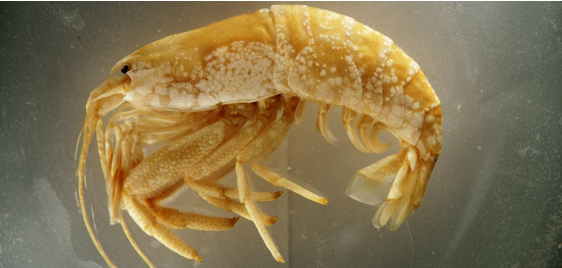
taxa
Arthropoda:Crustacea:Malacostraca:Decapoda:Pleocyemata:Caridea
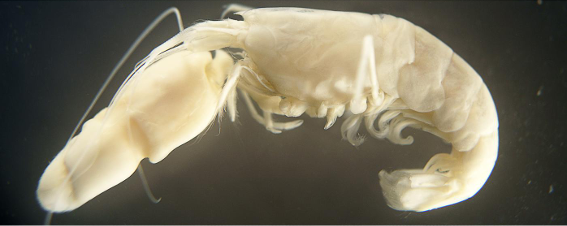
taxa
Arthropoda:Crustacea:Malacostraca:Decapoda:Pleocyemata:Caridea
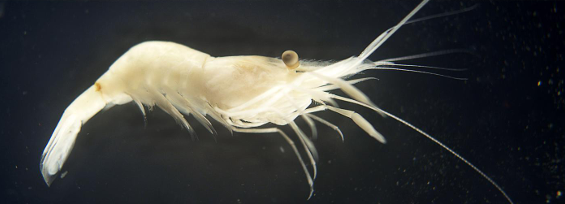
taxa
Arthropoda:Crustacea:Malacostraca:Decapoda:Pleocyemata:Caridea
Phylum Arthropoda
Subphylum Crustacea
Class Malacostraca
Order Decapoda
Suborder Pleocyemata
Infraorder Axiidea
aka
habitat
feeding
body
describe pleon
describe pereopods
ghost shrimp, mud shrimp
sand/mud, constructs burrows
particulate
body
elongate, weakly calcified pleon
pereopod 1-2 are chelate, 1 is large (front half resembles hermit crab, back half resembles crayfish)
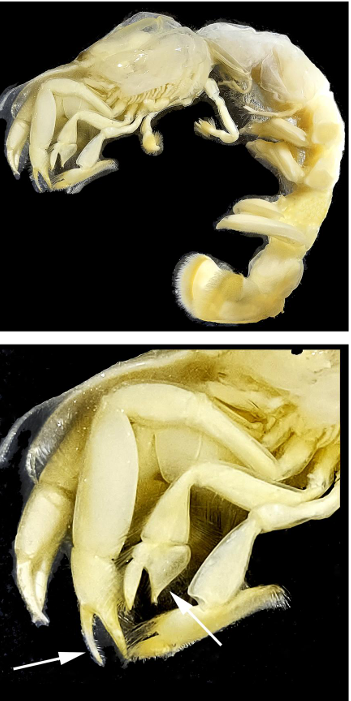
taxa
what are the arrows pointing to
Arthropoda:Crustacea:Malacostraca:Decapoda:Pleocyemata:Axiidea
arrows point to first and second pereopods
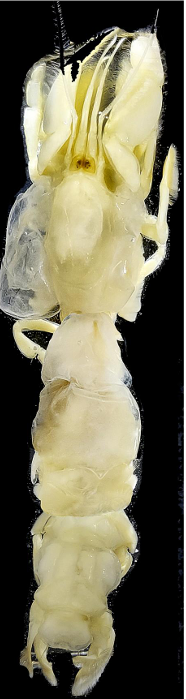
taxa
Arthropoda:Crustacea:Malacostraca:Decapoda:Pleocyemata:Axiidea
Phylum Arthropoda
Subphylum Crustacea
Class Malacostraca
Order Decapoda
Suborder Pleocyemata
Infraorder Gebiidea
habitat
feeding
body (looks similar to Axiidea)
describe pleon
describe pereopods
sand/mud, constructs burrows
particulation
body
elongate pleon, weak (but stronger than Axiidea)
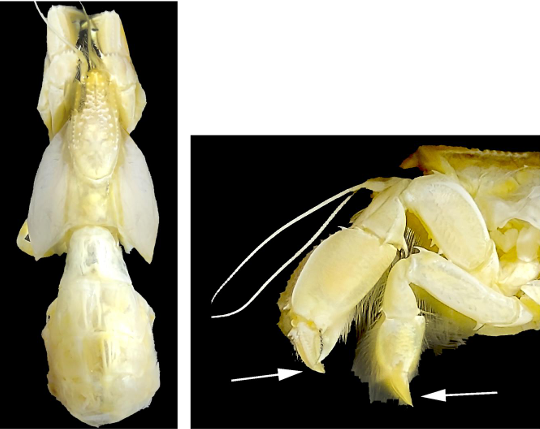
pereopod 1 is chelate and large
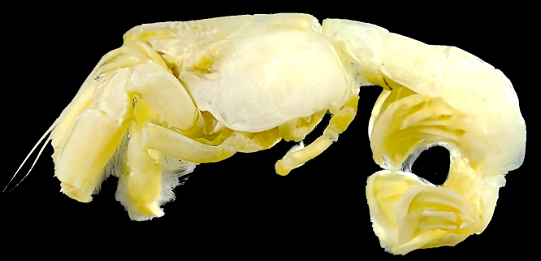
taxa
Arthropoda:Crustacea:Malacostraca:Decapoda:Pleocyemata:Gebiidea
taxa
what are the arrows pointing to
Arthropoda:Crustacea:Malacostraca:Decapoda:Pleocyemata:Gebiidea
(arrows point to first and second pereopods)
Phylum Arthropoda
Subphylum Crustacea
Class Malacostraca
Order Decapoda
Suborder Pleocyemata
Infraorder Anomura
aka
habitat
feeding
body
describe pleon
describe pereopods
hermit crabs, king crabs, squat lobster
benthic
ALL
body
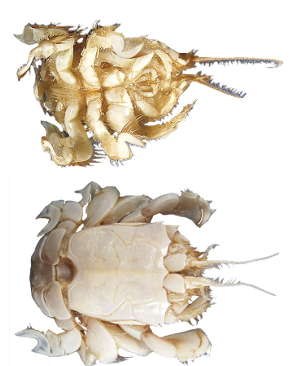
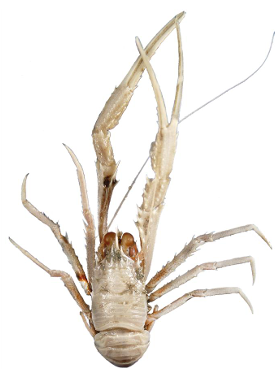
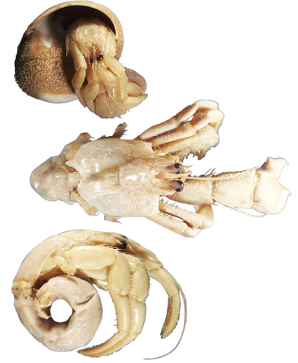
pleon in under the body, loose and moveable. also soft which is why it uses shells to hide in
pereopod: 1st is chelate and large, 5th is very small (so looks like it may only have 4) (pictured in notes)
taxa
Arthropoda:Crustacea:Malacostraca:Decapoda:Pleocyemata:Anomura
taxa
Arthropoda:Crustacea:Malacostraca:Decapoda:Pleocyemata:Anomura
taxa
Arthropoda:Crustacea:Malacostraca:Decapoda:Pleocyemata:Anomura
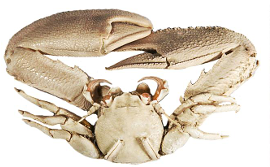
taxa
Arthropoda:Crustacea:Malacostraca:Decapoda:Pleocyemata:Anomura
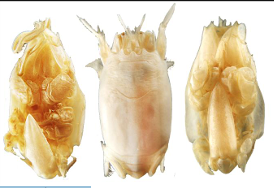
taxa
Arthropoda:Crustacea:Malacostraca:Decapoda:Pleocyemata:Anomura
Phylum Arthropoda
Subphylum Crustacea
Class Malacostraca
Order Decapoda
Suborder Pleocyemata
Infraorder Brachyura
aka
habitat
feeding
body
describe pleon
describe pereopods
true crabs = blue crabs, ghost crabs, etc.
benthic
ALL
body
pleon is under body and tight
pereopod: 1st is chelate and large, 5th is not very small (pictured in notes)
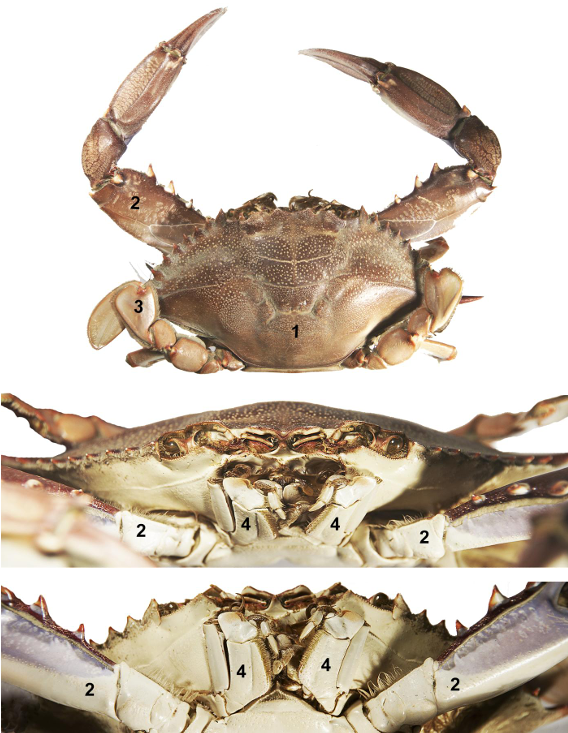
taxa
label numbers
Arthropoda:Crustacea:Malacostraca:Decapoda:Pleocyemata:Brachyura
1. cephalothorax covered by carapace; 2. 1st pereopod – cheliped; 3. 5th pereopod; 4. 3rd maxilliped
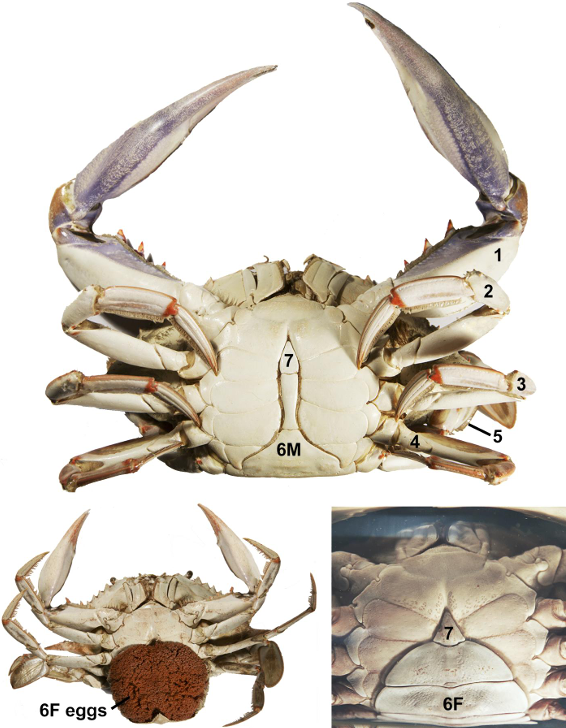
taxa
label numbers
Arthropoda:Crustacea:Malacostraca:Decapoda:Pleocyemata:Brachyura
1. 1st pereopod – cheliped; 2. 2nd pereopod; 3. 3rd pereopod; 4. 4th pereopod; 5. 5th pereopod; 6. pleon (abdominal segments); 7. telson (M-male, F-female)
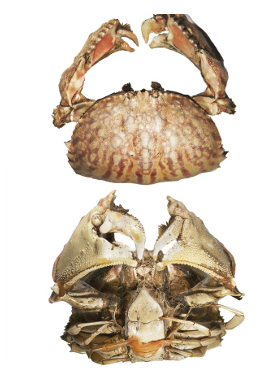
taxa
Arthropoda:Crustacea:Malacostraca:Decapoda:Pleocyemata:Brachyura
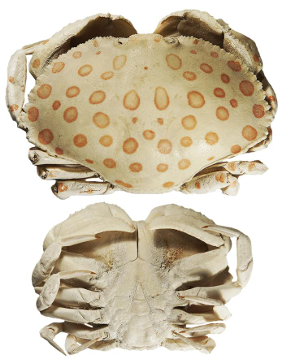
taxa
Arthropoda:Crustacea:Malacostraca:Decapoda:Pleocyemata:Brachyura
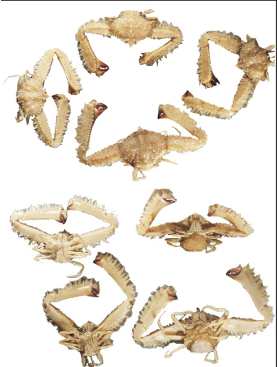
taxa
Arthropoda:Crustacea:Malacostraca:Decapoda:Pleocyemata:Brachyura
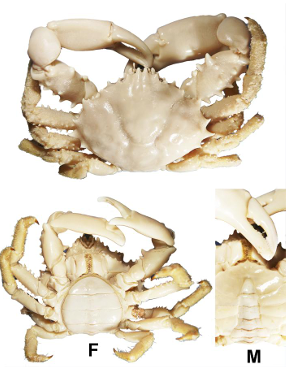
taxa
Arthropoda:Crustacea:Malacostraca:Decapoda:Pleocyemata:Brachyura (M = male, F = female)
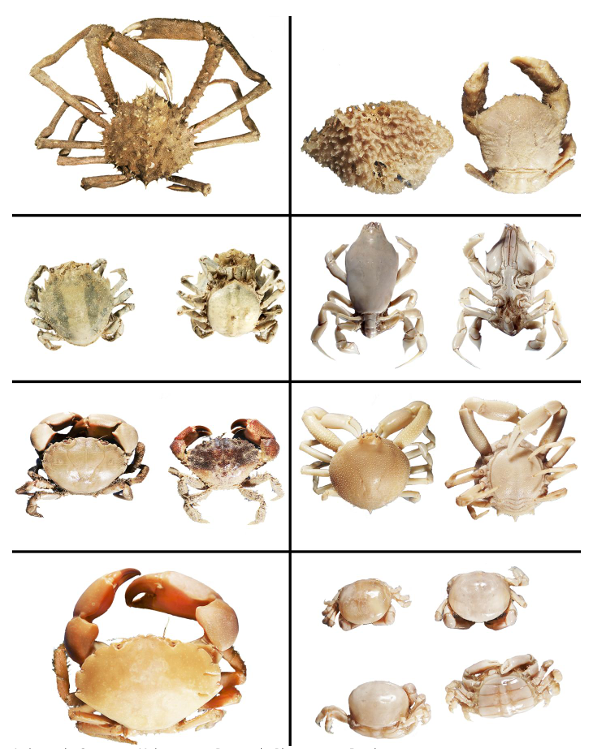
taxa
Arthropoda:Crustacea:Malacostraca:Decapoda:Pleocyemata:Brachyura
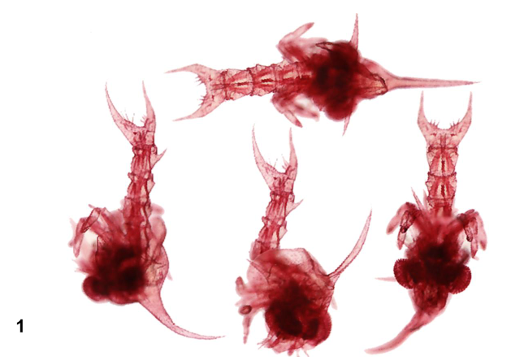
taxa
larva type
Arthropoda:Crustacea:Malacostraca:Decapoda:Pleocyemata:Brachyura
1. zoea larvae
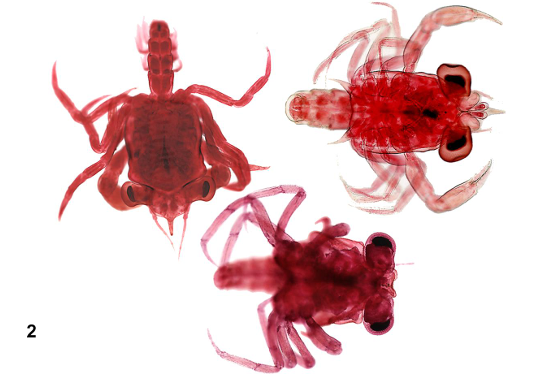
taxa
larva type
Arthropoda:Crustacea:Malacostraca:Decapoda:Pleocyemata:Brachyura
megalops larva
Phylum Arthropoda
Subphylum Crustacea
Class Malacostraca
Order Decapoda
Suborder Pleocyemata
Infraorder Achelata
habitat
feeding
body
basic body plan
describe antennae
describe pereopods
on structure, reefs
omnivore/scavenger - mostly animals
body
lobster-like
can have long or disk antennae (long would be in spiny lobster to push away predators)
pereopods w/out chelate (hence the name)
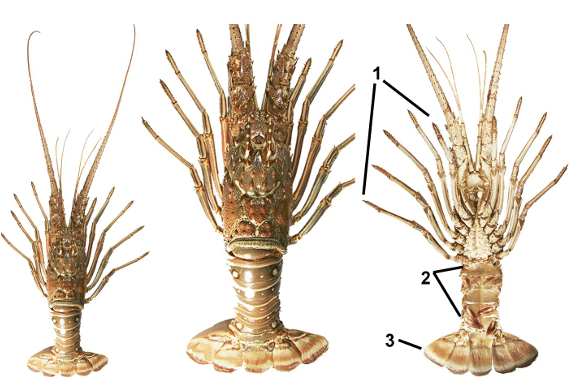
taxa
label numbers
Arthropoda:Crustacea:Malacostraca:Decapoda:Pleocyemata:Achelata
1. pereopods 1-5; 2. pleopods 2-5; 3. uropods
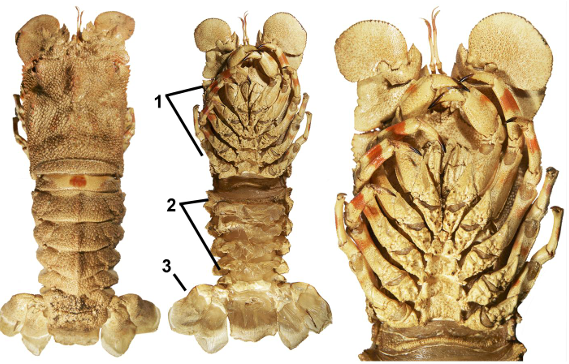
taxa
label numbers
Arthropoda:Crustacea:Malacostraca:Decapoda:Pleocyemata:Achelata
1. pereopods 1-5; 2. pleopods 2-5; 3. uropods
Phylum Arthropoda
Subphylum Crustacea
Class Malacostraca
Order Decapoda
Suborder Pleocyemata
Infraorder Polycheilda
habitat
feeding
body
shape of body
describe pereopods
deeper water sand/mud bury
carnivore/scavenger
body
flat body so squished dorsal to ventral
pereopods: 1st-4th chelate, sometimes 5 is present, 1st is largest
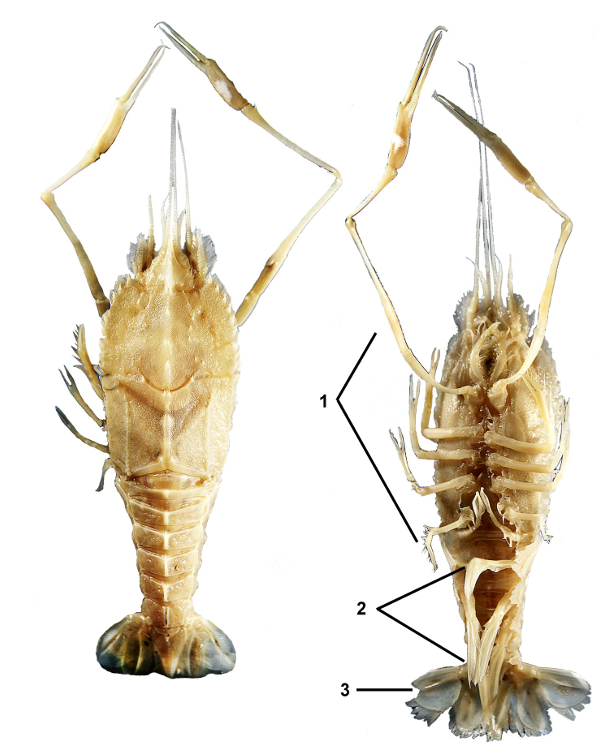
taxa
label numbers
Arthropoda:Crustacea:Malacostraca:Decapoda:Pleocyemata:Polychelida
1. pereopods 1-5; 2. pleopods 1-5; 3. uropods
Phylum Arthropoda
Subphylum Crustacea
Class Malacostraca
Order Decapoda
Suborder Pleocyemata
Infraorder Astacidea
habitat
feeding
body
describe pereopods
benthic
omnivore/scavenger - mostly animals
body
pereopod: 1st-3rd chelate, 1st is large
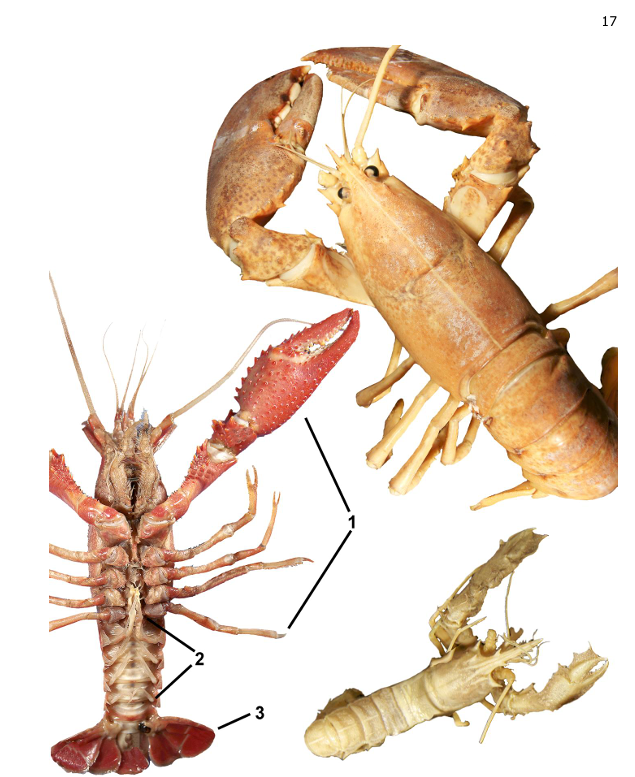
taxa
label numbers
Arthropoda:Crustacea:Malacostraca:Decapoda:Pleocyemata:Astacidea
1. pereopods 1-5; 2. pleopods 1-5; 3. uropods
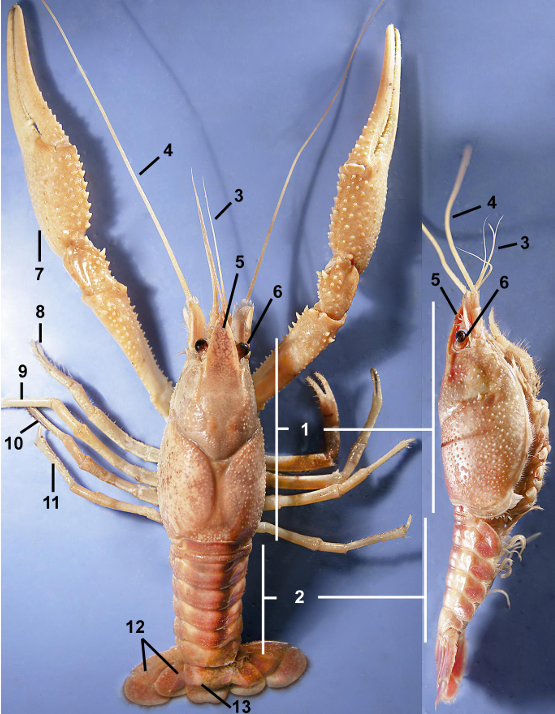
taxa
label numbers
Arthropoda:Crustacea:Malacostraca:Decapoda:Pleocyemata:Astacidea
dissection (external dorsal view) 1. cephalothorax covered by carapace; 2. pleon (abdominal segments); 3. 1st antenna; 4. 2nd antenna; 5. rostrum; 6. eye; 7. 1st pereopod – cheliped; 8. 2nd pereopod; 9. 3rd pereopod; 10. 4th pereopod; 11. 5th pereopod;12. uropods; 13. telson
taxa
label numbers
Arthropoda:Crustacea:Malacostraca:Decapoda:Pleocyemata:Astacidea
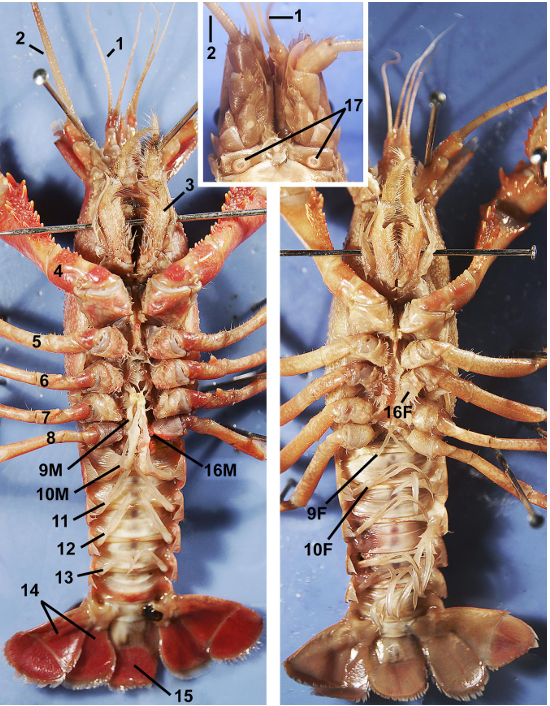
dissection (external ventral view) 1. 1st antenna; 2. 2nd antenna; 3. 3rd maxilliped; 4. 1st pereopod – cheliped; 5. 2nd pereopod; 6. 3rd pereopod; 7. 4th pereopod; 8. 5th pereopod; 9. 1st pleopod; 10. 2nd pleopod; 11. 3rd pleopod; 12. 4th pleopod; 13. 5th pleopod; 14. uropod; 15. telson; 16. opening of gonadal ducts (M-male at base of 5th pereopod, F-female at base of 3rd pereopod: see next page for close-up); 17. openings of antennal glands
taxa
label numbers
Arthropoda:Crustacea:Malacostraca:Decapoda:Pleocyemata:Astacidea
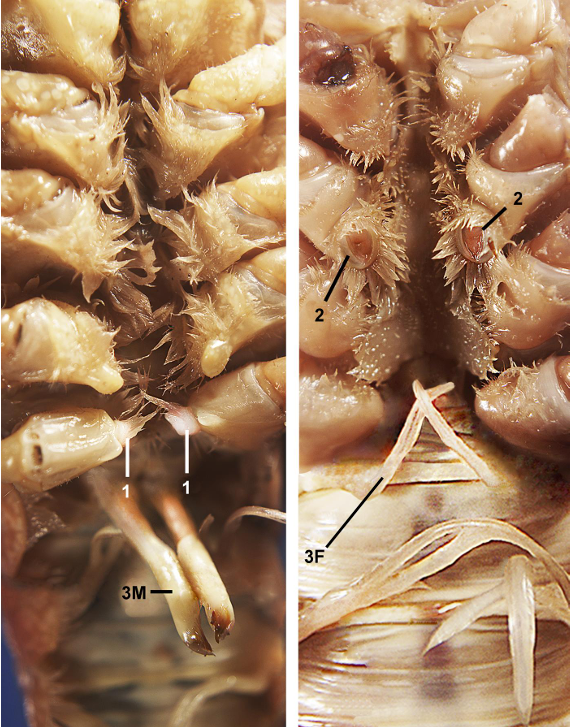
dissection (close-up external ventral view) 1. opening of male gonadal ducts; 2. opening of female gonadal ducts; 3. 1st pleopod (M-male, F-female)
taxa
label numbers
Arthropoda:Crustacea:Malacostraca:Decapoda:Pleocyemata:Astacidea
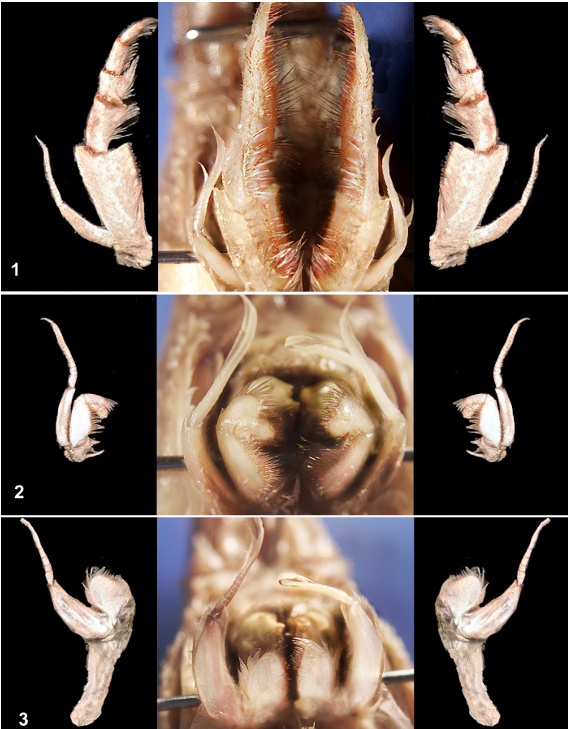
dissection (external ventral view mouth area) sequential removal of mouth parts 1. 3rd maxillipeds; 2. 2nd maxillipeds; 3. 1st maxillipeds
taxa
label numbers
Arthropoda:Crustacea:Malacostraca:Decapoda:Pleocyemata:Astacidea
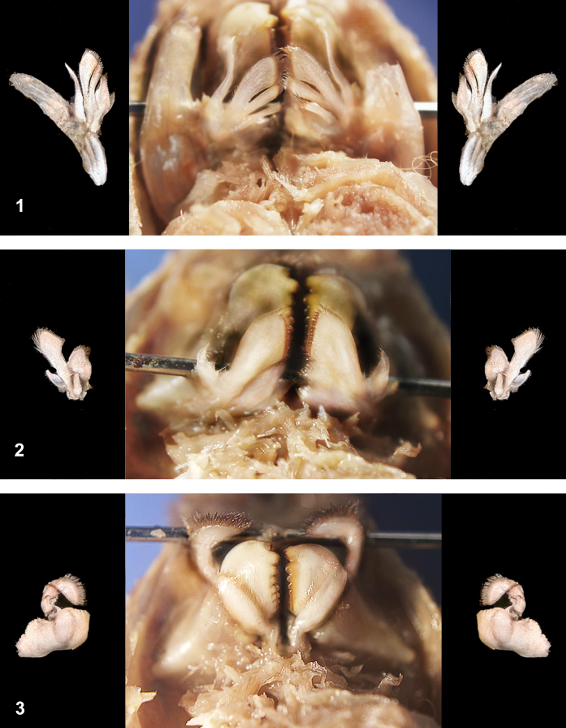
dissection (external ventral view mouth area) sequential removal of mouth parts 1. 2nd maxillae; 2. 1st maxillae; 3. mandibles
taxa
label numbers
Arthropoda:Crustacea:Malacostraca:Decapoda:Pleocyemata:Astacidea
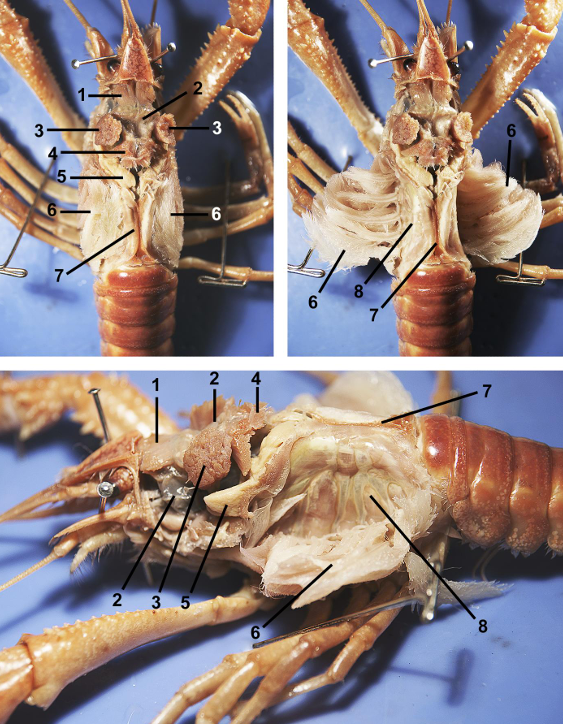
dissection (internal thorax area) 1. anterior gastric muscle; 2. stomach; 3. mandibular adductor muscle; 4. posterior gastric muscle; 5. digestive gland (hepatopancreas); 6. gills; 7. pericardial membrane; 8. epimeral wall
taxa
label numbers
Arthropoda:Crustacea:Malacostraca:Decapoda:Pleocyemata:Astacidea
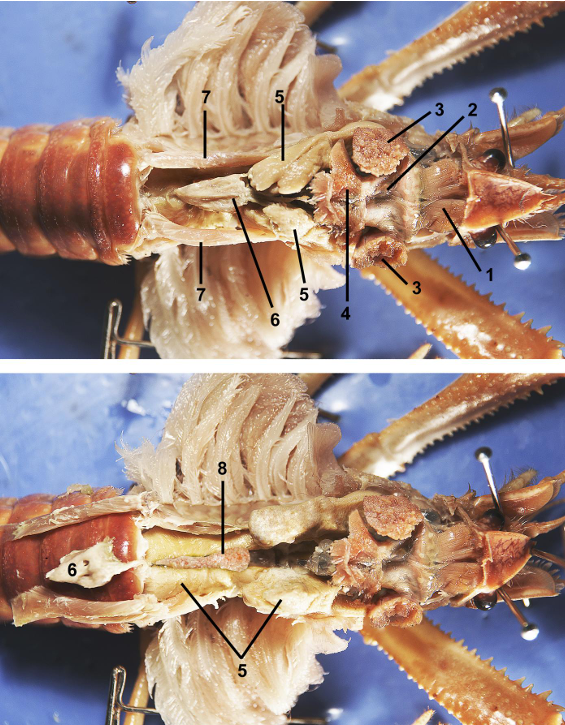
dissection (internal thorax area) 1. anterior gastric muscle; 2. stomach; 3. mandibular adductor muscle; 4. posterior gastric muscle; 5. digestive gland (hepatopancreas, upper and lower lobes); 6. heart (lower view heart removed); 7. abdominal extensor muscles; 8. gonads
taxa
label numbers
Arthropoda:Crustacea:Malacostraca:Decapoda:Pleocyemata:Astacidea
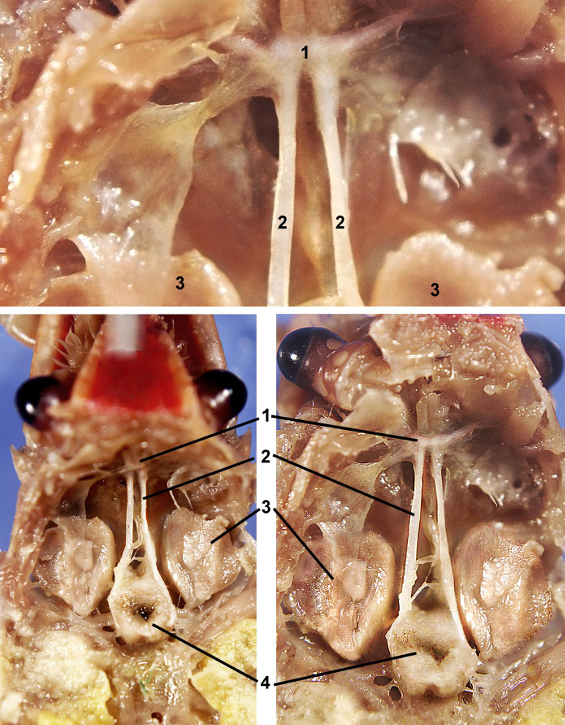
dissection (internal head area with stomach removed) 1. brain (anterior ganglia); 2. circumesophageal connectives; 3. antennal gland & sac; 4. esophagus
taxa
label numbers
Arthropoda:Crustacea:Malacostraca:Decapoda:Pleocyemata:Astacidea
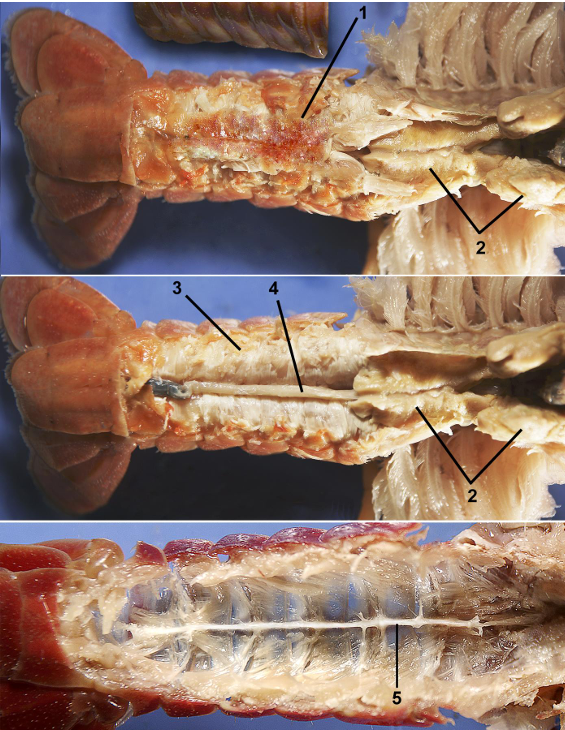
dissection (internal pleon area, middle view extensors removed, lower view extensors and flexors removed) 1. abdominal extensor muscles; 2. digestive gland (hepatopancreas, upper and lower lobes in thorax); 3. abdominal flexor muscles; 4. intestine; 5. nerve cord
Phylum Echinodermata
what are the 5 classes?
Crinoidea, Asteroidea, Ophiuroidea, Holothuroidea, Echinoidea
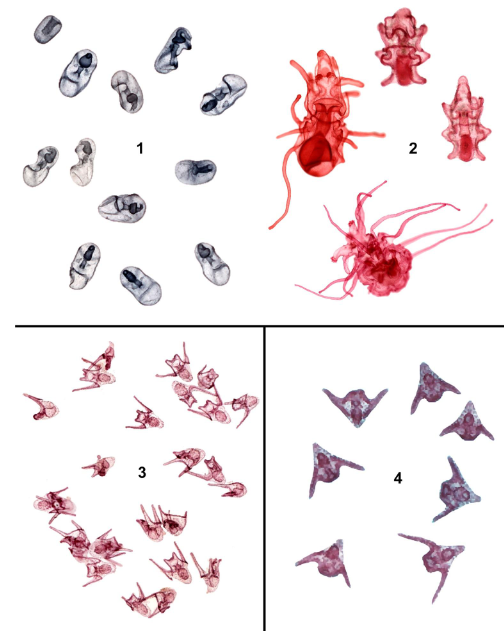
label the larva stages
1. asteroid bipinnaria; 2. asteroid brachiolaria; 3. echinoid echinopluteus; 4. ophiuroid
ophiopluteus
Phylum Echinodermata
describe its skeleton
describe its endoskeleton
describe water vascular system (WVS): opening, middle, end
what is catch connective tissue used for
what are the 2 orientation types
what is its symmetry
CaCO3 skeleton
endoskeleton ossicles which fuse to form spines and plates
WVS: madreporite = opening letting water in (location is diagnostic) => set of canals throughout the body => ends in podia/tube feet
catch connective tissue helps hold plates together in starfish arms
orientation: oral (mouth side) and aboral (non-mouth side)
pentameric symmetry in most (so in 5’s)
Phylum Echinodermata
Class Crinoidea
aka
habitat
feeding
body
what are the 4 main body part
aka sea lilies and feather stars
on structure, reefs
filter particulate
body
calyx, cirri (used for walking), arms, pinnules on arms
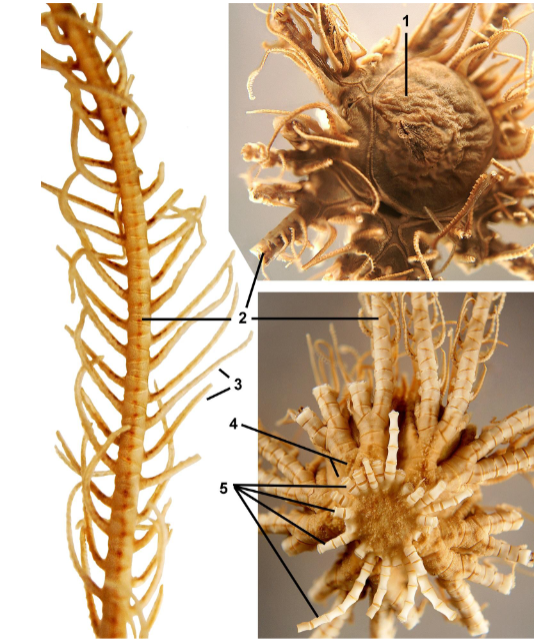
class?
label
Crinoidea
1. tegmen; 2. arms; 3. pinnules; 4. calyx; 5. cirri
Phylum Echinodermata
Class Asteroidea
aka
habitat
feeding
body
structure on aboral and oral side
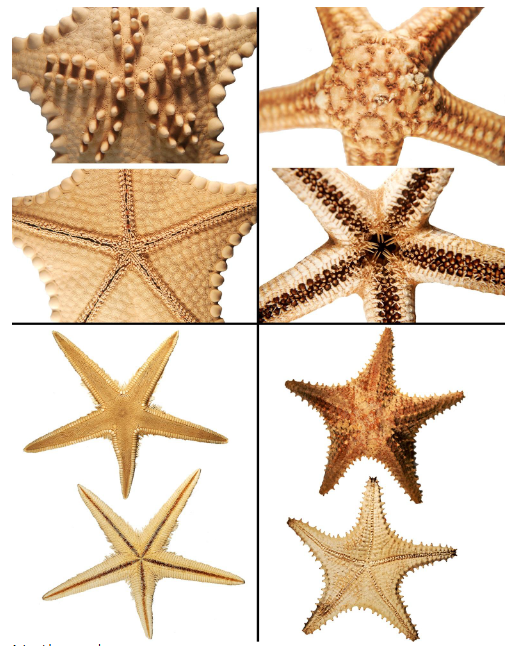
aka starfish
benthic
carnivore
body
aboral has madreporite
oral has mouth in the center and ambulacral groove where the tube feet are
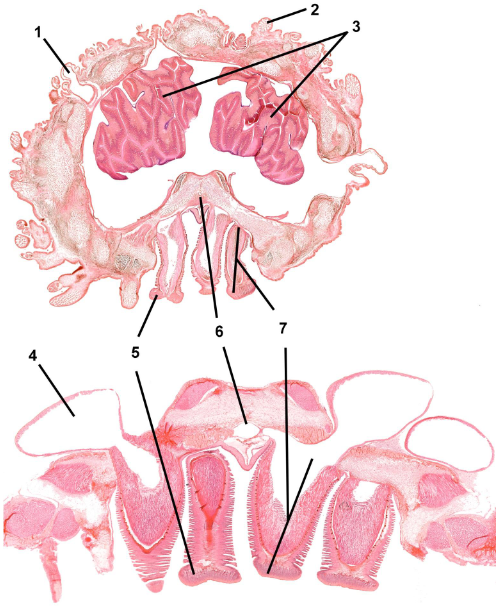
class
label
Asteroidea
1. papulae; 2. spine; 3. pyloric caeca; 4. ampulla of podia; 5. sucker of podia; 6. radial canal; 7. podia
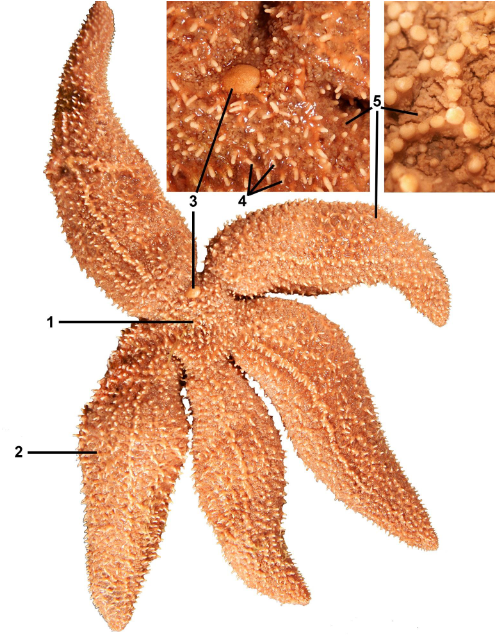
taxa
label
Asteroidea
dissection (aboral side of body) 1. disk; 2. arm; 3. madreporite; 4. spines; 5. papulae
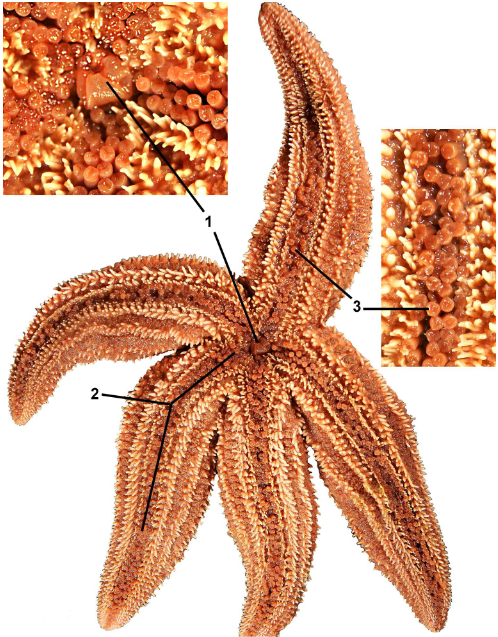
taxa
label
Asteroidea
dissection (oral side of body) 1. mouth; 2. ambulacral groove containing podia; 3. podia
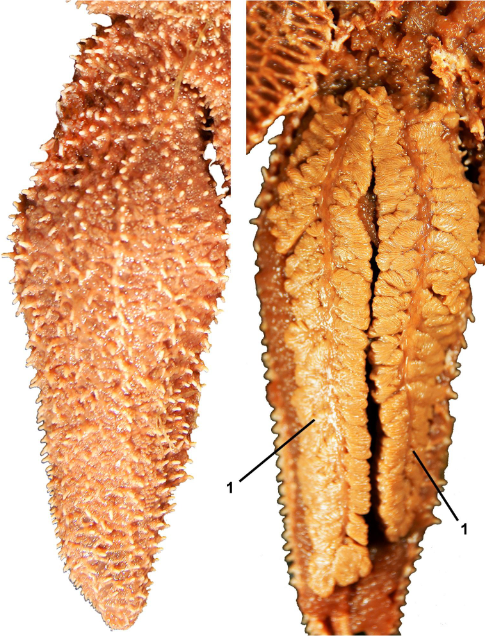
class
label
Asteroidea
dissection (right view: external covering of arm removed) 1. pyloric caeca
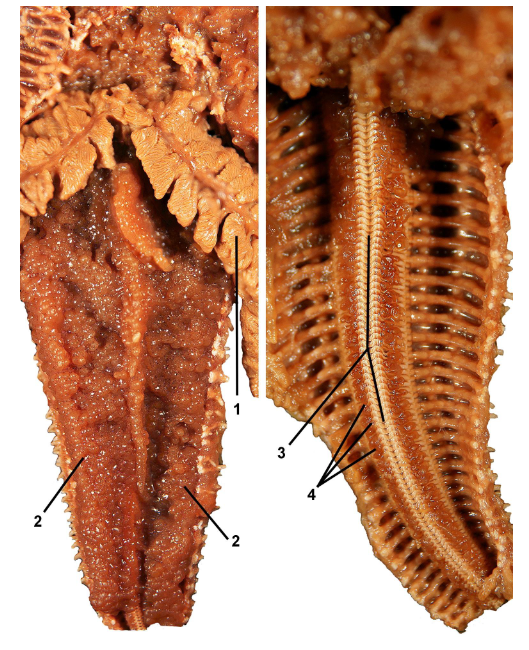
class
label
Asteroidea
dissection (right view: pyloric caeca and gonads removed from arm) 1. pyloric caeca; 2. gonads (under pyloric caeca); 3. ambulacral ridge containing radial canal; 4. ampullae of podia
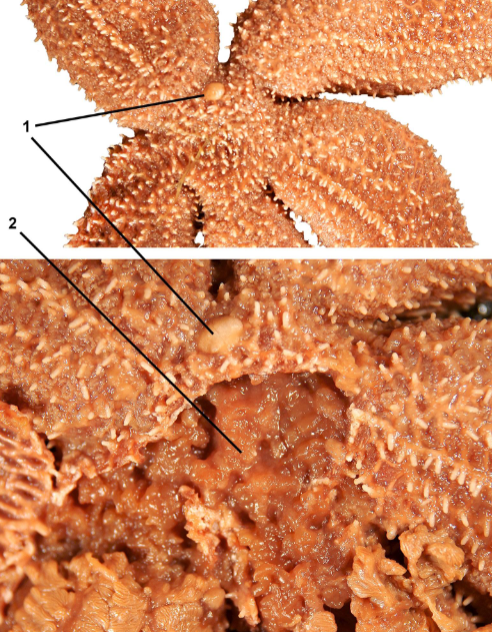
class
label
Asteroidea
dissection (bottom view: external covering of disk removed) 1. madreporite; 2. pyloric stomach
class
label
Asteroidea
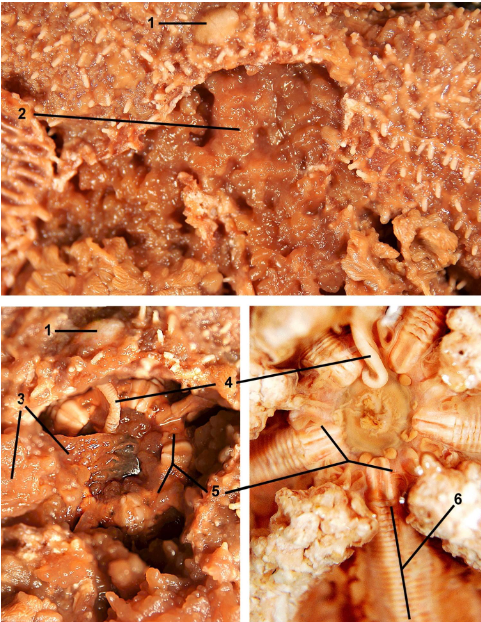
dissection (bottom left view: pyloric stomach removed; bottom right view: stomachs, pyloric caeca, gonads removed) 1. madreporite; 2. pyloric stomach 3. cardiac stomach (under pyloric stomach) 4. stone canal; 5. oral frame around mouth containing ring canal; 6. ambulacral ridge containing radial canal
class
Asteroidea
Phylum Echinodermata
Class Ophiuroidea
aka
habitat
feeding
body
what side is the madreporite on
aka brittle stars
benthic, some epizoic
ALL
body
madreporite is on the oral side
class
label
Ophiuroidea
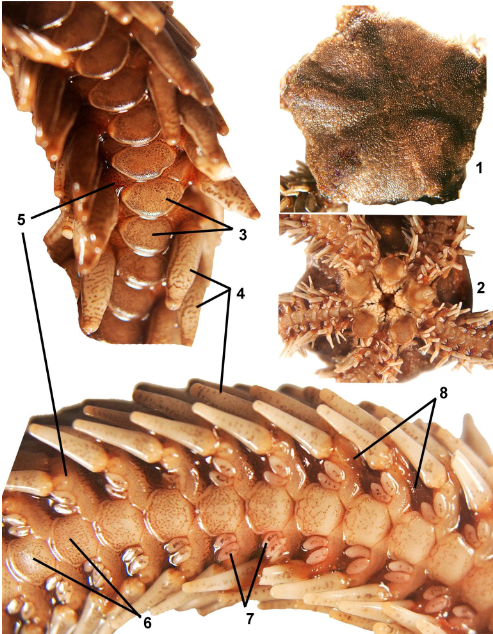
External 1. aboral side of disk; 2. oral side of disk; 3. aboral arm plates; 4. spines; 5.
side arm plates with spines; 6. oral arm plates; 7. tentacle (podia) scales; 8. tentacles (podia)
class
label
Ophiuroidea
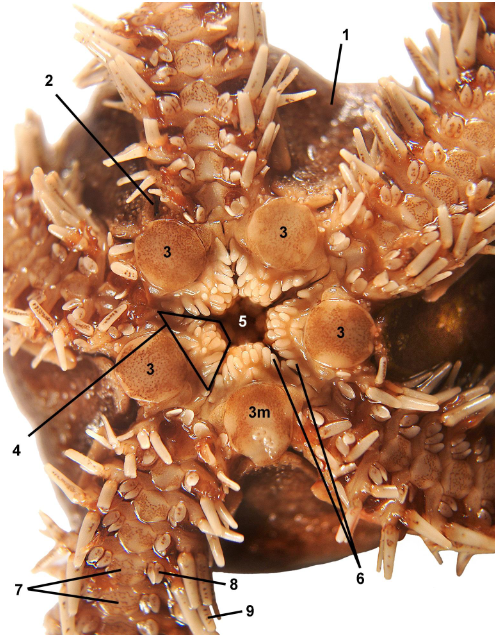
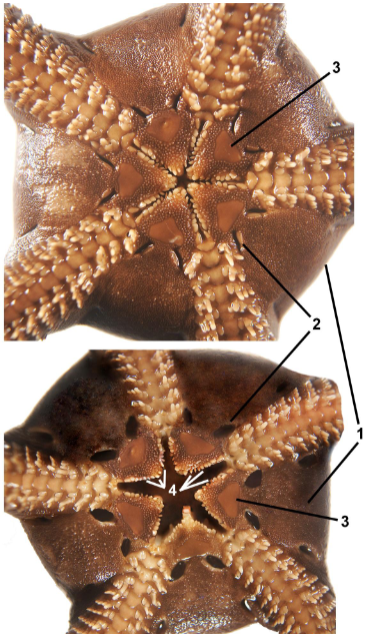
External (oral side of disk) 1. interbrachial area, 2. genital (bursal) slit; 3. oral shields
(3m madreporite); 4. one jaw of mouth frame; 5. mouth; 6. oral papillae (line edge of jaws around mouth); 7. oral arm plates; 8. tentacle (podia) scales; 9. spines
class
label
Ophiuroidea
External (oral side of disk) 1. interbrachial area, 2. genital slit s; 3. oral shields; 4. oral
papillae (line edge of jaws around mouth)
class
label
Ophiuroidea
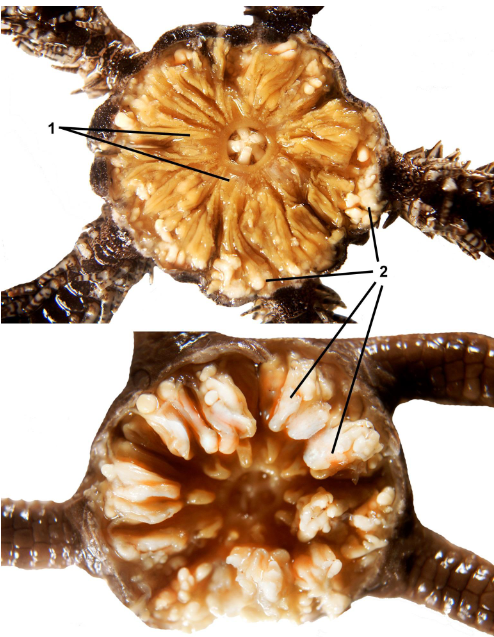
dissection (top view: external covering of disk removed) 1. stomach ; 2. gonads (under
stomach)
class
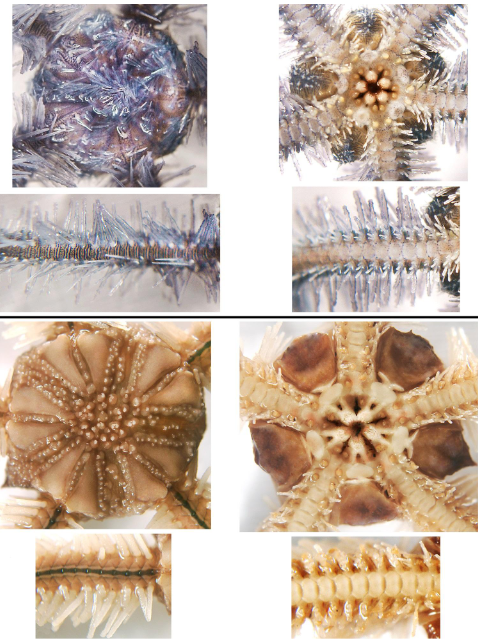
what is the left and right side showing
Ophiuroidea
left view: aboral side disk and arm; right view: oral side disk and arm
class
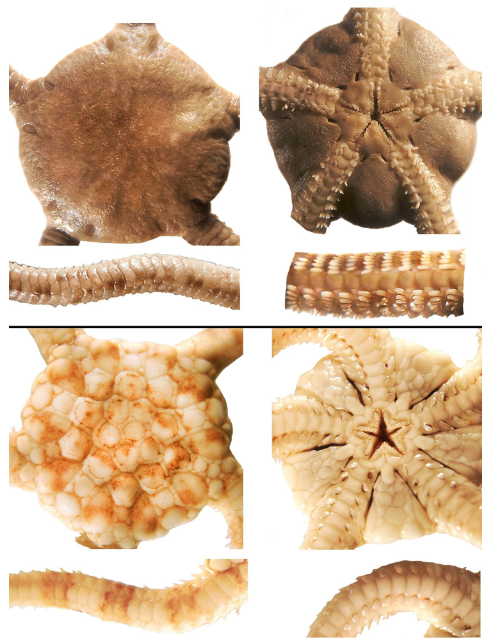
what is the left and right side showing
Ophiuroidea
left view: aboral side disk and arm; right view: oral side disk and arm
Phylum Echinodermata
Class Holothuroidea
aka
habitat
feeding
body
madreporite location?
what is at oral end?
what is notable about the ossicles?
sea cucumbers
benthic
particulate
body
madreporite is located internally
tentacles on the oral side
ossicles embedded in skin, used for taxonomy
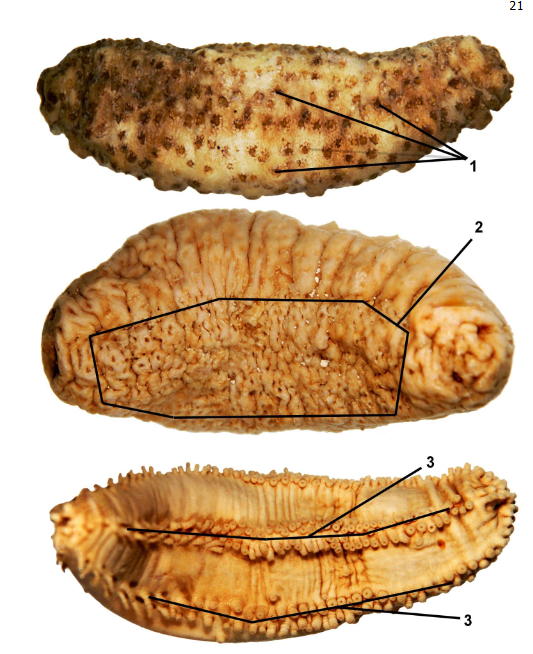
class
label
Holothuroidea
external 1. podia scattered across body ; 2. podia in ventral sole; 3. podia in radii
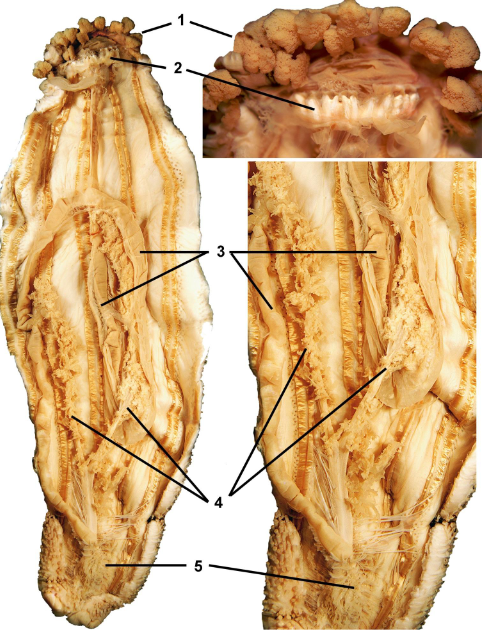
class
label
Holothuroidea
dissection 1. tentacles; 2. calcareous ring; 3. intestine; 4. respiratory trees; 5. cloaca
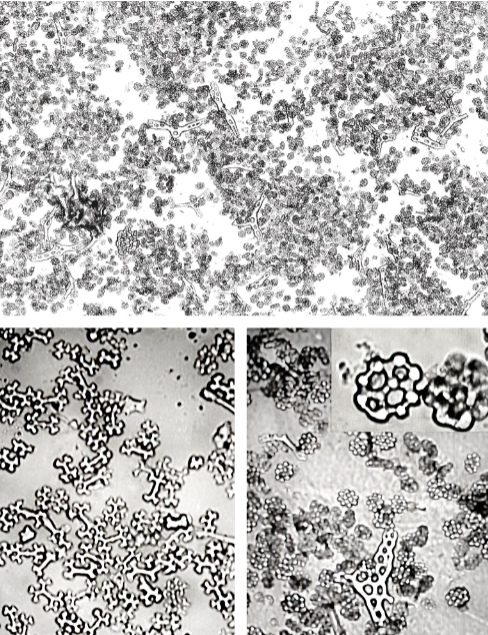
class
what is shown
Holothuroidea
ossicles from body wall
Phylum Echinodermata
Class Echinoidea
aka
habitat
feeding
body
what two forms plates can fuse in to?
what are the 3 body forms and some key features?
sea urchins, sand dollars, sea biscuits
epibenthic, or bury in sand
ALL
body
plates can fuse into tests (like a shell) or spines
body forms:
sea urchin = globe shape test w/ spines; Aristotle’s lantern = teeth for anchoring
sand dollar = flat test; petals on aboral side; Aristotle’s lantern present
Heart urchins = petals form grooves; no Aristotle’s lantern so sediment passes through
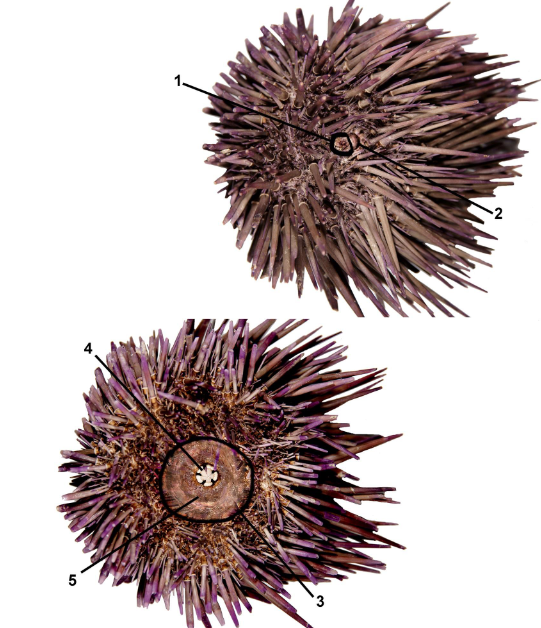
class
label
Echinoidea
(sea urchin body plan, external) 1. periproct at aboral pole; 2. madreporite; 3. peristome
at oral pole; 4. jaws of Aristotle's lantern protruding from mouth ; 5. peristomial membrane
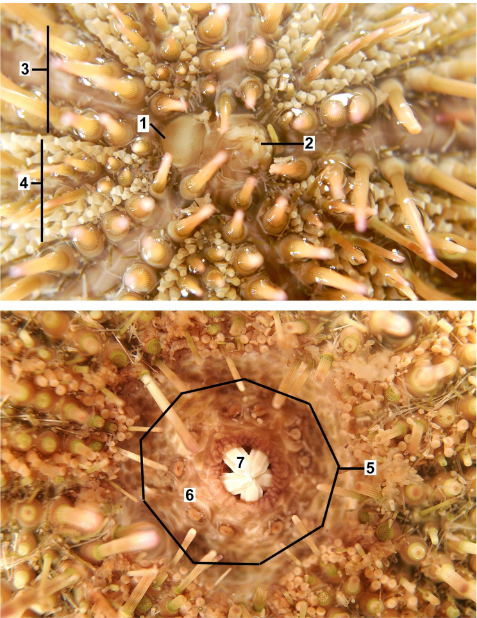
class
label
Echinoidea
(sea urchin body plan, external) 1. madreporite; 2. periproct at aboral pole; 3.
interambulacral area of test (without podia); 4. ambulacral area of test (with podia). 5. peristome at oral pole; 6. peristomial membrane; 7. jaws of Aristotle's lantern protruding from mouth
class
label
Echinoidea
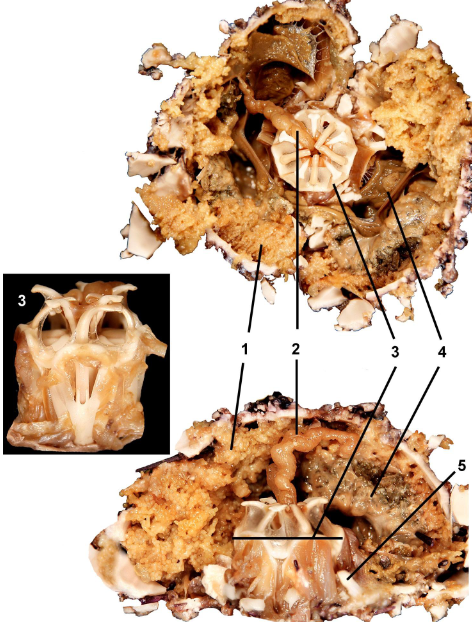
dissection (sea urchin body plan, internal) 1. gonads; 2. esophagus; 3. Aristotle's
lantern; 4. intestine; 5. auricle
class
label
Echinoidea
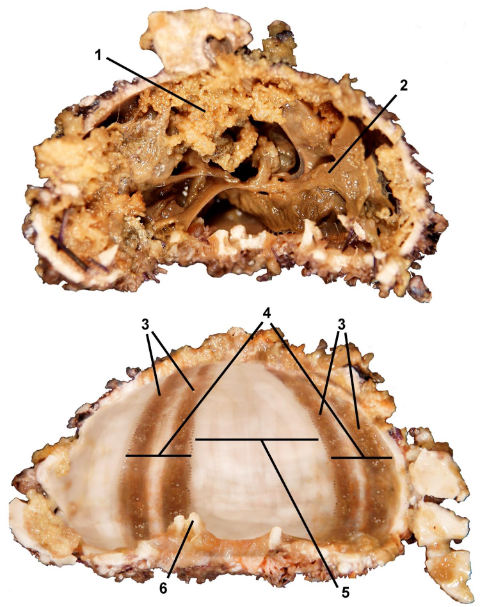
dissection (sea urchin body plan, internal; bottom view: all internal organs removed ) 1.
gonads; 2. intestines; 3. ampullae of podia; 4. ambulacral area of test (with podia); 5.
interambulacral area of test (without podia) ; 6. auricle
class
label
Echinoidea
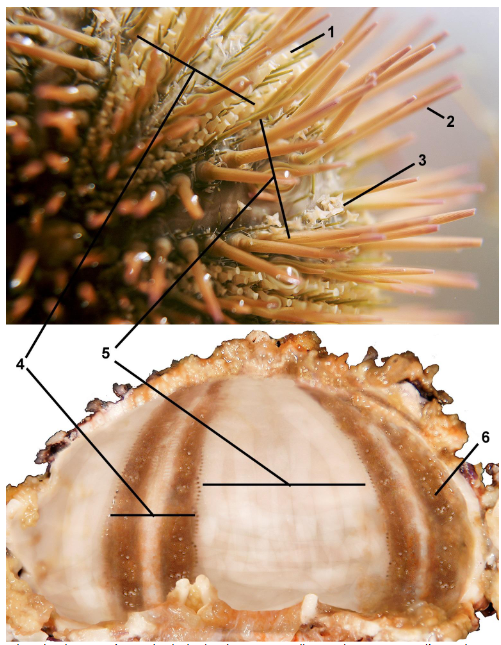
dissection (sea urchin body plan, bottom view: all internal organs removed ) 1. podia; 2.
spines; 3. pedicellariae; 4. ambulacral area of test (with podia); 5. interambulacral area of test
(without podia); 6. ampullae of podia
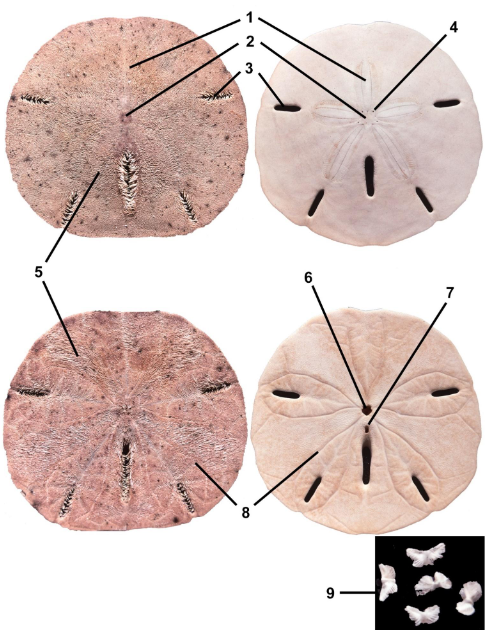
class
label
Echinoidea
sand dollar (sand dollar/sea biscuit body plan; left view: with spines; right view: without
spines) 1. petals on aboral side; 2. madreporite; 3. lunules; 4. gonadal pore s; 5. spines; 6.
peristome and mouth on oral side; 7. periproct; 8. food grooves; 9. Aristotle's lantern removed from
body
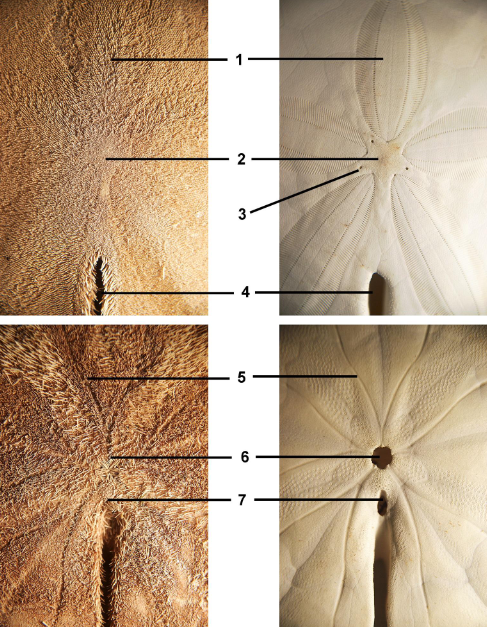
class
label
Echinoidea
sand dollar (sand dollar/sea biscuit body plan; left view: with spines; right view: without
spines) 1. petals on aboral side; 2. madreporite; 3. gonadal pores; 4. lunules; 5. food grooves on oral side; 6. peristome and mouth 7. periproct
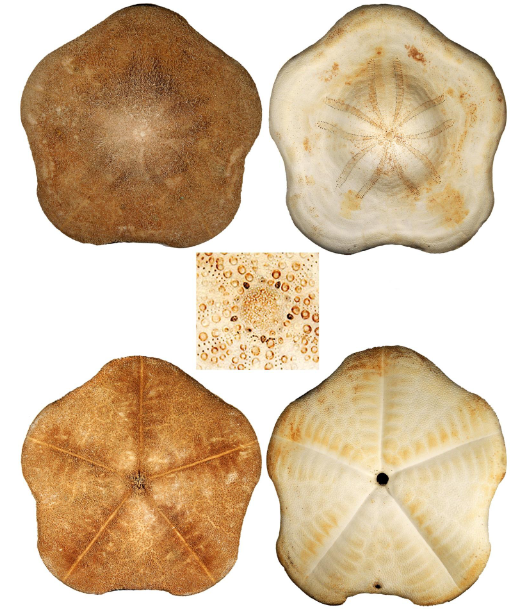
class
label
Echinoidea
example sea biscuit (sand dollar/sea biscuit body plan; left view: with spines; right view:
without spines; center view: enlargement of madreporite & gonadal pores area)
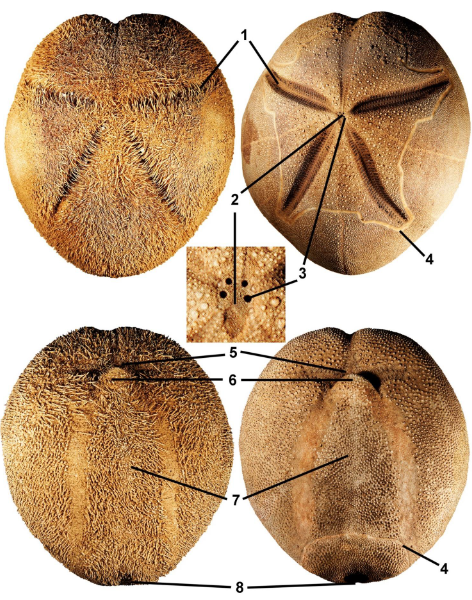
class
label
Echinoidea
(heart urchin body plan; left view: with spines; right view: without spines; center view:
enlargement of madreporite & gonadal pores area) 1. petals on dorsal side; 2. madreporite; 3.
gonadal pores; 4. fascioles; 5. peristome and mouth; 6. labrum; 7. plastron on ventral side; 8.
periproct
Phylum Hemichordata
what is the class
Enteropneusta
Phylum Hemichordata
Class Enteropneusta
aka
habitat
feeding
body (pictured in notes)
what are the 3 main parts
acornworms
sand
deposit particulate
body
trunk => collar (resembles acorn) => proboscis
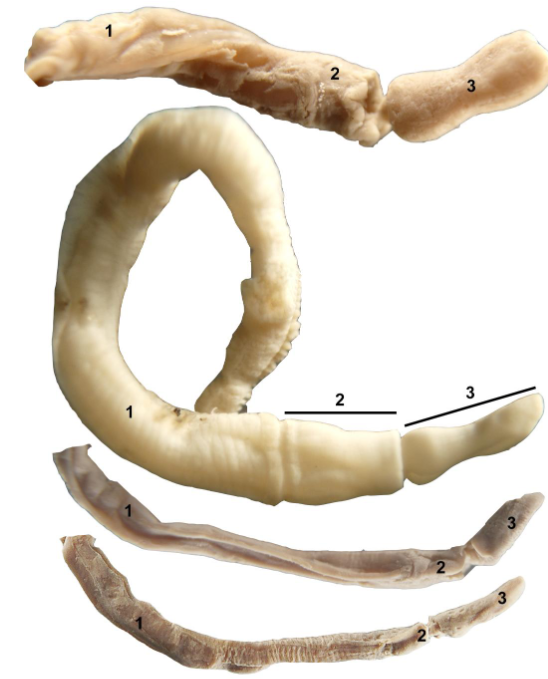
taxa
label
Hemichordata:Enteropneusta
1. trunk; 2. collar; 3. proboscis
Phylum Chordata
what are the 2 subphylums?
Cephalochordata and Tunicata
Phylum Chordata
what is present in the nervous system?
what other 2 features are present?
dorsal nerve cord, notochord present (=structural element along back of animal)
gill slits
post anal cords
Phylum Chordata
Subphylum Cephalochordata
what is the class
Leptocardii
Phylum Chordata
Subphylum Cephalochordata
Class Leptocardii
aka
habitat
feeding
general body shape
Lancelets
sand
filters small particulate
flat, elongate, few cm (looks like a tiny eel)
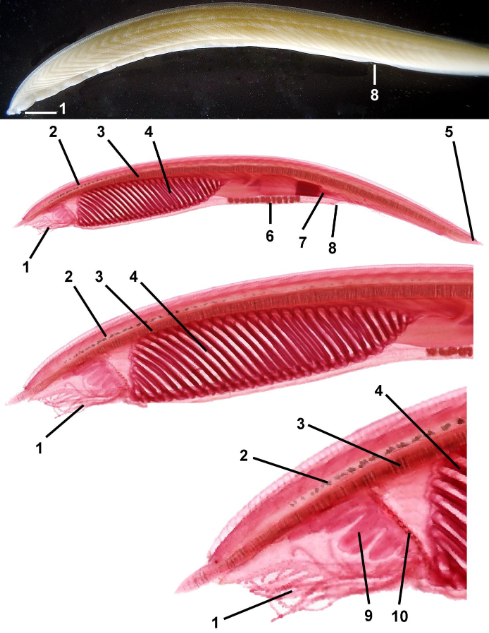
taxa
label numbers
Chordata:Cephalochordata:Leptocardii
1. oral cirri; 2. nerve cord; 3. notochord; 4. pharyngeal
basket; 5. tail fin; 6. gonads; 7. intestine; 8. atriopore; 9. wheel organ; 10. velum
Phylum Chordata
Subphylum Tunicata
what are the 3 classes?
Ascidiacea, Thaliacea, Appendicularia
Phylum Chordata
Subphylum Tunicata
what is the main distinguishing feature?
tadpole larva stage
Phylum Chordata
Subphylum Tunicata
Class Ascidiacea
habitat
feeding
growth form type
body
describe outer covering
describe siphons
attached to structure
filter small particulate
colonial and solitary versions
body
thick tonic = outer cover of body
2 siphons = water goes in, what goes out
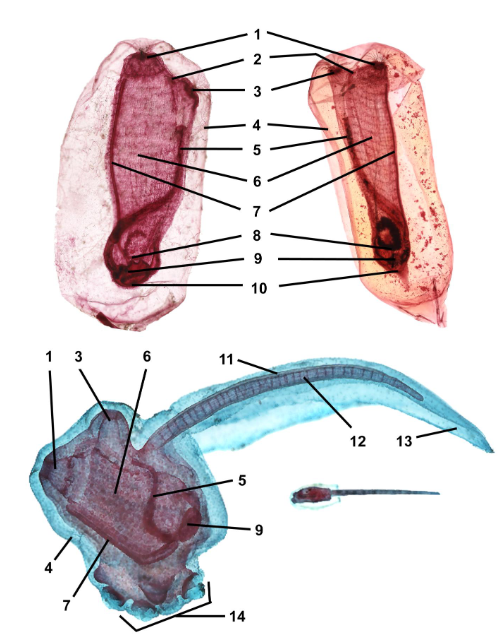
taxa
label
Chordata:Tunicata:Ascidiacea
(top adult, bottom tadpole larvae) 1. incurrent siphon; 2. ganglia; 3. excurrent siphon; 4. tunic; 5. intestine; 6. pharyngeal basket; 7. endostyle; 8. gonads; 9. stomach; 10. heart; 11. nerve cord; 12. notochord; 13. tail; 14. adhesive papillae
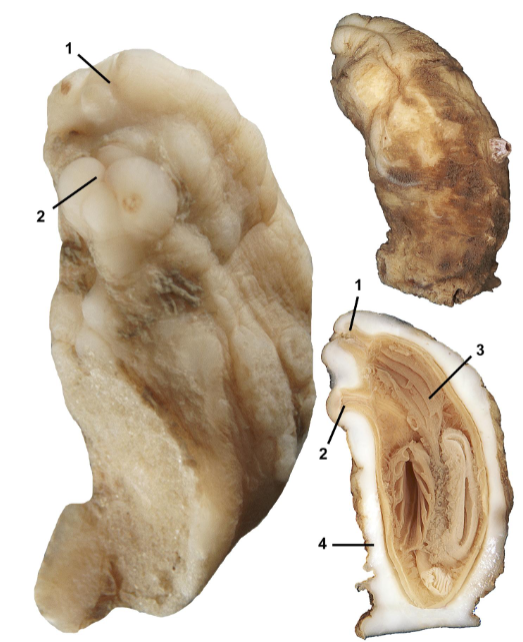
taxa
label
Chordata:Tunicata:Ascidiacea
1. incurrent siphon; 2. excurrent siphon; 3. pharyngeal basket; 4. tunic
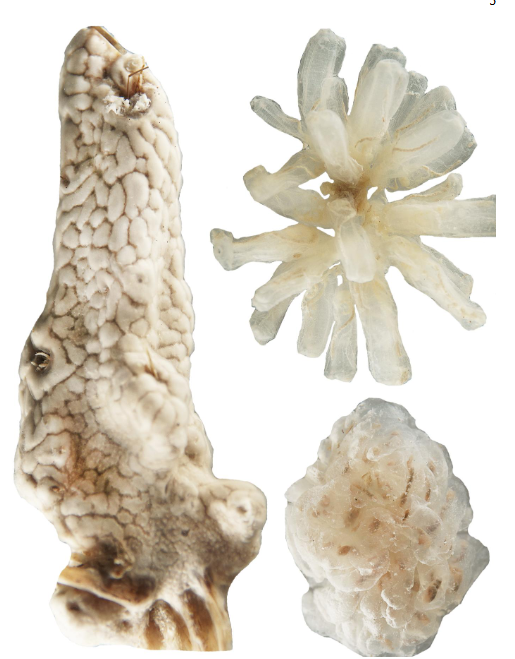
taxa
label
Chordata:Tunicata:Ascidiacea
Phylum Chordata
Subphylum Tunicata
Class Thaliacea
habitat
feeding
growth form type
body
describe outer covering
describe siphons
planktonic
filters small particulate
colonial and solitary phases
body
thin tunic
siphons occur at opposite ends = flow through system