History of Interior Design
 Call Kai
 Learn
Learn Practice Test
 Spaced Repetition
 Match
Match Flashcards
 Knowt Play
1/217

There's no tags or description
Looks like no tags are added yet.
Name | Mastery | Learn | Test | Matching | Spaced | Call with Kai |
|---|
No analytics yet
Send a link to your students to track their progress
218 Terms
China
A Culture of Quiet Beauty, Continuity, and Perfection of details
Confucianism & Taoism
Philosophical Systems of Thinking and Being. Both based on the Principle Concept of Yin and Yang Opposites. Differ in emphasis on Communal life vs Individuality/withdrawal.
Yin
Male, Dark, Rest, Interiors
Yang
Female, Light, Action, Exteriors
Yin and Yang
Desire for Harmony in life, Mediation is a key tenant
Feung Shui
Philosophy of living and arranging space.
Means Flow of Energy or "Art of Placement"
Believed to affect personal wealth, health, and relationships.
A pseudoscience based in the precepts of astrology
Dictated positioning of walls, buildings, and furnishings based on the orientation of the sun and East/West Alignment
Based on Polarity or opposites outlined in Taoism: Yin and Yang.
Warmth/Coldness. Light & Darkness. Odd and even numbers (odd better)
Number 9 is considered lucky.
Chinese Architecture: Dominant Characteristics
Most Respected Qualities: Repose & Adherence to Precedence.
Built to withstand earthquakes
Native Wood Construction
Mortise & TennonConstruction
Strong Horizontal Line
Axial Orientation
Symmetry
Primary Structures: Temples, Palaces & Residences.
Lack of Monumental structures such as government buildings or large public religious structures
Rooflines
Color Mattered!
Chinese Plans: 4 Basic Elements
Courtyard:
Transitional and communal spaces within a larger compound
Walled Enclosures:
Separated the contemplative dwelling spaces (both interior and exterior) from the functional hurried facets of domesticity
Walls sometimes were connected to the outside enclosed structures
Walls formed gateways to the next space.
Moongates
North-South Orientation:
House usually on the North side of the Courtyard, facing South for warmth and most light
Axiality:
Mostly rectangular in shape, often symmetrical.
Chinese Houses:Dominate Characteristics
Inter-generational Family Living
Symmetrical, Axial Layout of disconnected structures grouped into a compound enclosed by a wall.
Individual units connected by paths, pools, and footbridges
Central courtyard(s)
Usually one Story Tall, constructed of indigenous woods.
Chinese Houses
Separate Men's & Women's areas, each distinctly identifiable.
Window openings were covered in strong paper and narrow strips of wood configured in geometric latticework.
Furniture placement was according to rank within the family. Honored seat was furthest from the door.
Chinese Palaces
Defensive Moat surrounded the outer wall.
Multiple gardens
Men and women living separately
Imperial Palace in the Forbidden City is the most elaborate, originally begun in 15thcentury.
Series of courtyards. Outer courtyard dedicated to governmental business, inner courtyard for the Imperial family.
Dynasty
was a political and governmental period defined by a succession of family members who ruled for several generations. In China each dynasty represented different characteristics of invention, art, war, expansion, trade, isolation, etc.
Confucius
urged the Chinese people to live moralistic lives
Taoism
urged meditation and withdrawal from society
Dragon
symbol of emperor
Birds
especially the Phoenix are symbols of the Empress
Chrysanthemum
symbolizes Autumn and the number 9, which is considered a lucky #.
Clouds
good fortune and happiness
Lotus
is a Buddhist symbol for purity
Pomegranete
was a symbol for fetility
Mortise and Tennon
Concern for earthquakes in construction methods led to using stronger blank to hold structural members in place, rather than depending on mass and durability of material for structural stability.(as seen in Egyptian and Classical structures) . They actually also did not depend on nails to hold wood pieces in place, further fortifying them against earthquakes.
Shrine
Place of sacrifice and worship. Could be circular or square, low or multiple levels.
Temples
Pagoda was a Buddhist Shrine built into a tower. Served as a symbol of a tomb or a place where Budhist relics were stored. Massive contribution of Buddhist religion to Chinese architecture. Pagoda based on the Indian Stupa, which was a tomb or symbol of tomb to hold relics. Usually polyganol with square or octagonal shapes. Always had an odd number of stories. Even is unucky. Originally a tower constructed over the shrine. Typically built of wood or brick, usually polyganol , square or octagonal in shape. Always an odd number of stories,. Even was unlucky. Always built on a platform and topped with a lotus bud. Eventually pagoda became a superstitious feature to ward off evil spirits. Less religious.
Who influenced Western design?
The Chinese and the Japanese
-Chinese items were the first imported on the Western side! (more popular)
What were the materials that the Chinese and Japanese used?
Silk, Porcelain, Lacquer
-interest sparkled by material use, not necessarily style
Silk
-striking the western culture
-light, delicate, expensive, incredible fabric
-the West learned how to produce silk
-they did not know the origin of silk and did not know how to grow silk worms
-so much demand for import
Porcelain
-imported from China, delicate
-nice patterns, translucent
-The West tried to learn how to use the product but did not find the right prices
Lacquer
-glossy finish with lots of depth
-The West thought they could paint and gild the surface
What happened in 1624?
Japan restricted access to all trade but the Dutch
What happened in 1853?
Commodore Perry forcibly opens to the West (they began to see Japanese items)
What happened in 1856?
-Paris painter Felix Bracquemond found wood block prints in packing material for China
-James McNiel Whistler was excited by them
What was important about Western art?
-it was asymmetrically balanced, which was Whistler influenced
-was also seen in Japanese design
-used blank space for design
-Screens were imported
-Kimonos were a decorative element
Peacock Room
-designed by Whistler
-one of the most famous interior rooms
-housed in the British Museum -> Chicago -> DC
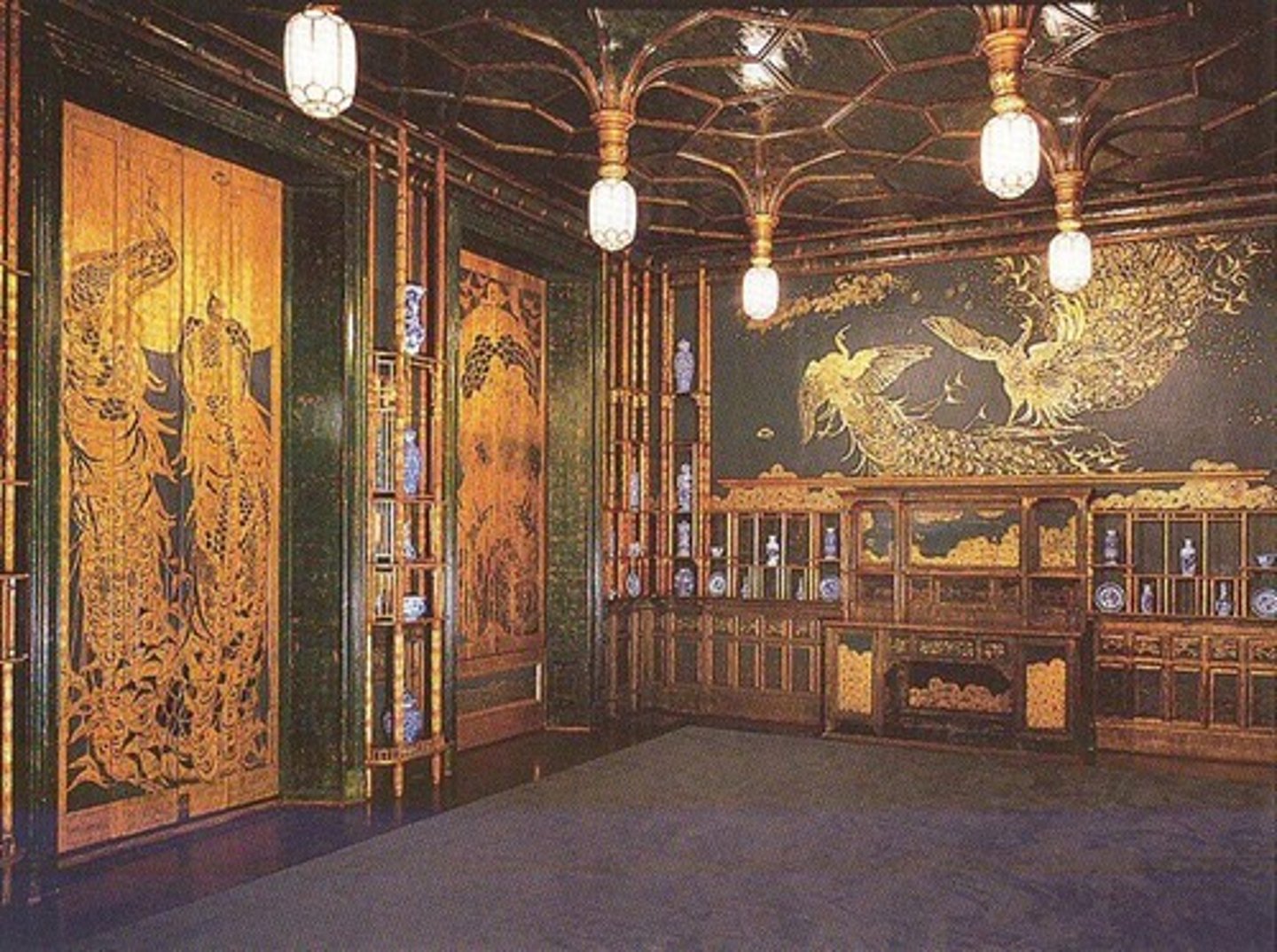
London 1862 International Exhibition
-first Japanese design show in Europe
-it was influenced and created a market selling Japanese designs
-it was a revival of copying other cultures
Feng Shui
-"wind and water" (bad or good luck)
-established as a sitting technique
Chi
-cosmic, human, Earth
Yin and Yang
-yin: dark, feminine, water, air
-yang: light, masculine, fire, Earth
-productive energy flow
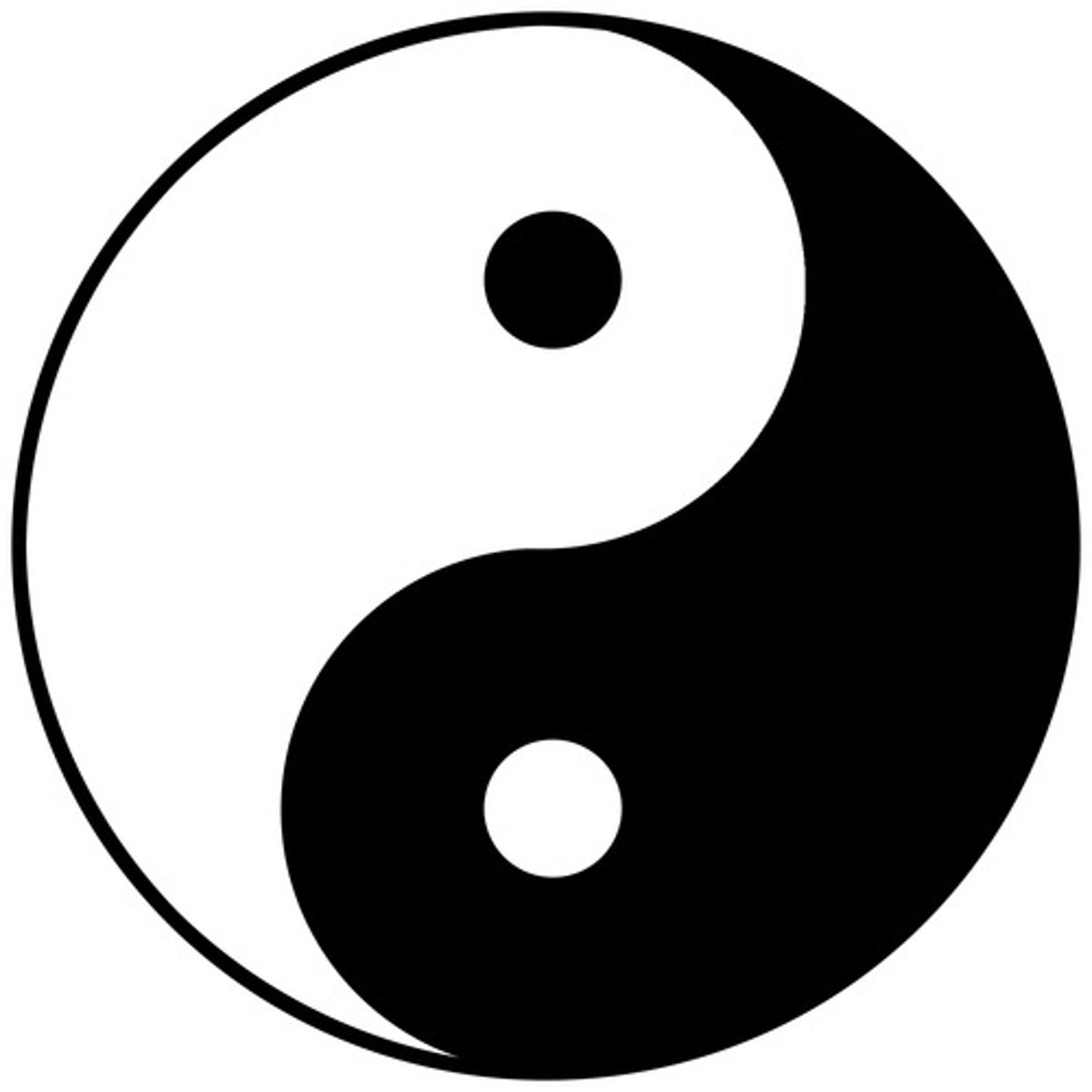
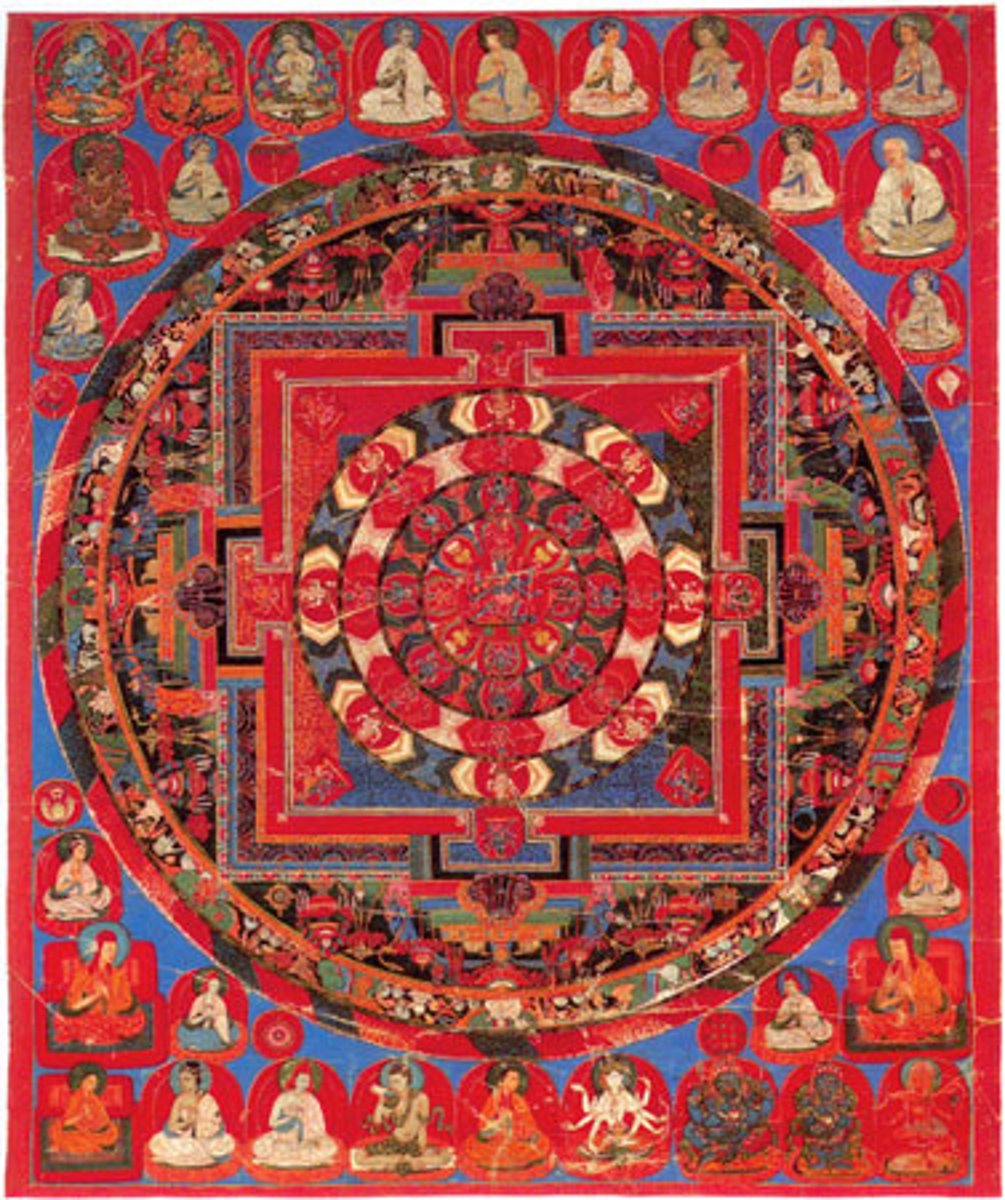
Mandala
-most popular copied Asian motif
-cosmos-universe (representation)
-square in a circle
-Hindu/Buddist
-Aids Meditation (focus and peaceful)
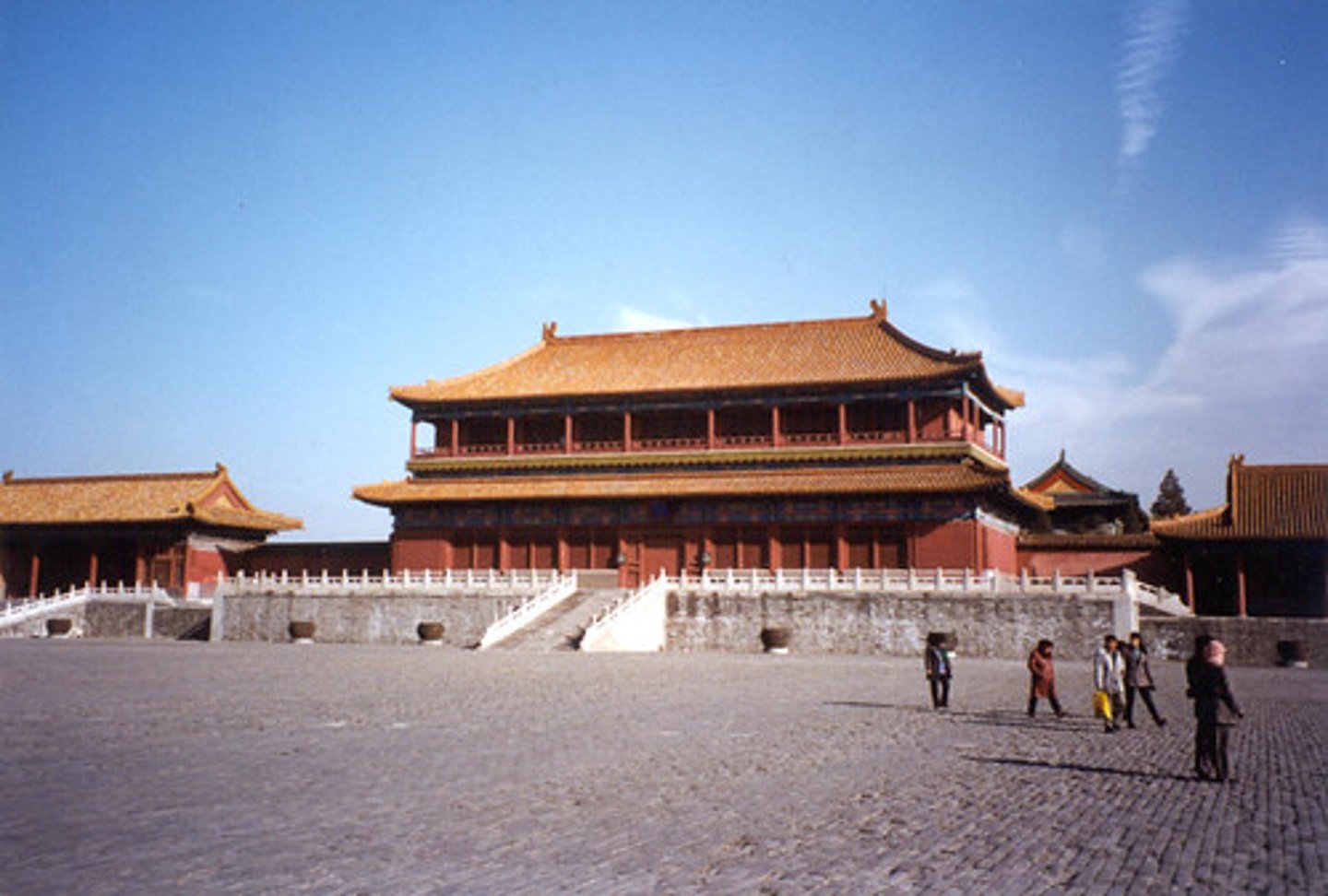
Forbidden City
-Chinese architecture, design
-sometimes copied by Western design
-pagoda gabled roofs (stacking) that were imported, tile roofs
-colors used: red, green, gold
-motifs repeated
Chinese and Japanese Structure
-they both used tile roofs
-the roof structure is unique, but the West only copied the style of the roof and its exterior appearance, not its structure
-very complex, brackets lock together, holds the roof in place
-rounded edges are characteristic
-ascending levels to hold the roof (protection from insects)
-late 1800s arts and crafts movement
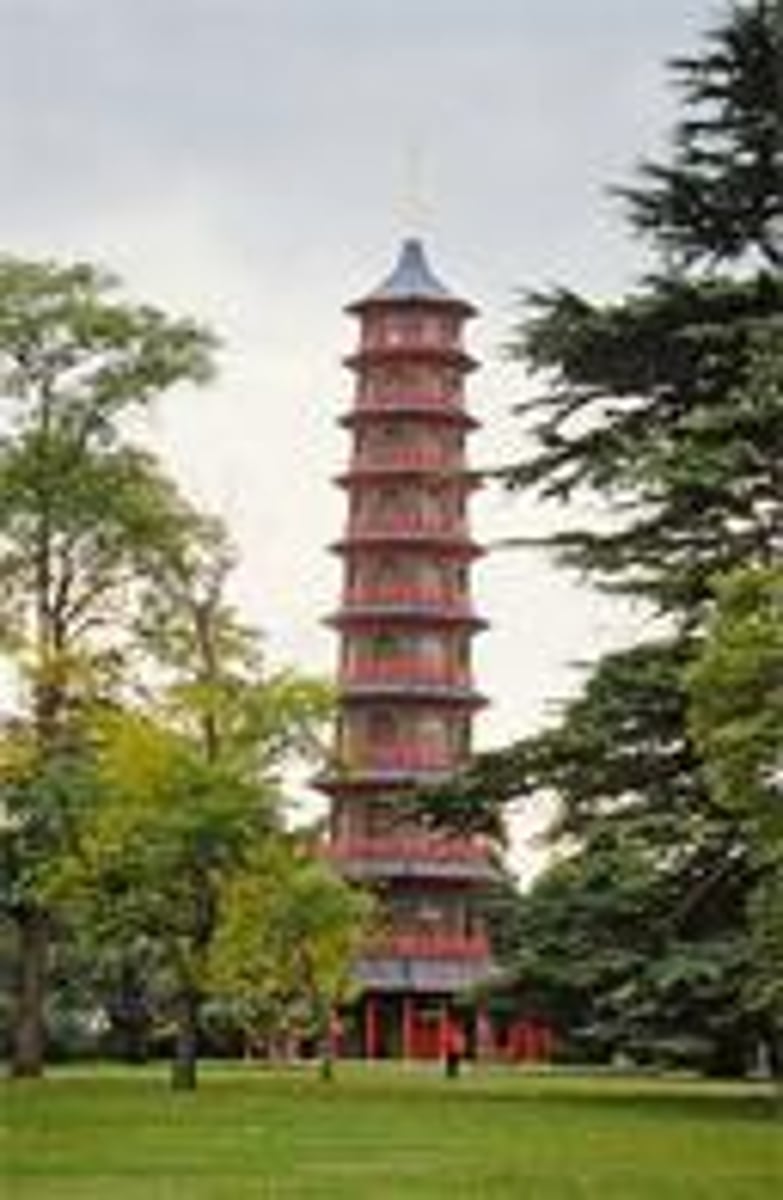
Chinese Pavilion - Kew Gardens
-Western design used this for exotic reasons
-exterior appearance
-no purpose, just something to look at
-color: red, material: laquer
Charles and Henry Greene
-American architects that studied Japanese architecture
-they were struck by the natural materials (arts and crafts movement)
-brackets, structures, rounded edges
What was the difference between Chinese and Japanese's surroundings? What did they have in common?
-it was geographically different, but they shared aesthetics, waterfront, and nature
-China: had more space, landscaping had a larger scale
-Japan: more modest, had less space so they learned how to use the space
Chinese Scholar's Stone
-found objects
-respect for nature, different sizes
-object intended for contemplation: asymmetrical, perforated, textural
-natural textures speak for themselves
Bonsai
-small, Chinese full-grown tress
-you have control of its growth
-you need patience, careful with clipping
-showed interest in 1960s
-asymmetrical
Japanese Gardens
-domestic houses are not that big because they do not have a lot of space
-nature has interesting characteristics: it has scaled down, no flowers in gardens, graveled, altered
-stones, emphasis on the natural world
-echoes the idea of larger landscapes
Mies van de Rohe's famous quote
"More is Less, Less is More"
Chinese Design/Interior
-furnishes with the scale that we are use to, such as small tables and vases
-nicely framed vision of the landscape, significantly impacts the interior (same with the Japanese design)
Japanese Interior
-none to very little furnishings (sparse)
-simple interiors, traditional (line movements and mats)
Tatami mats
-simple, plain, weaving pattern
-not a lot of color is used, only natural colors
-standard sizing allows modular building systems
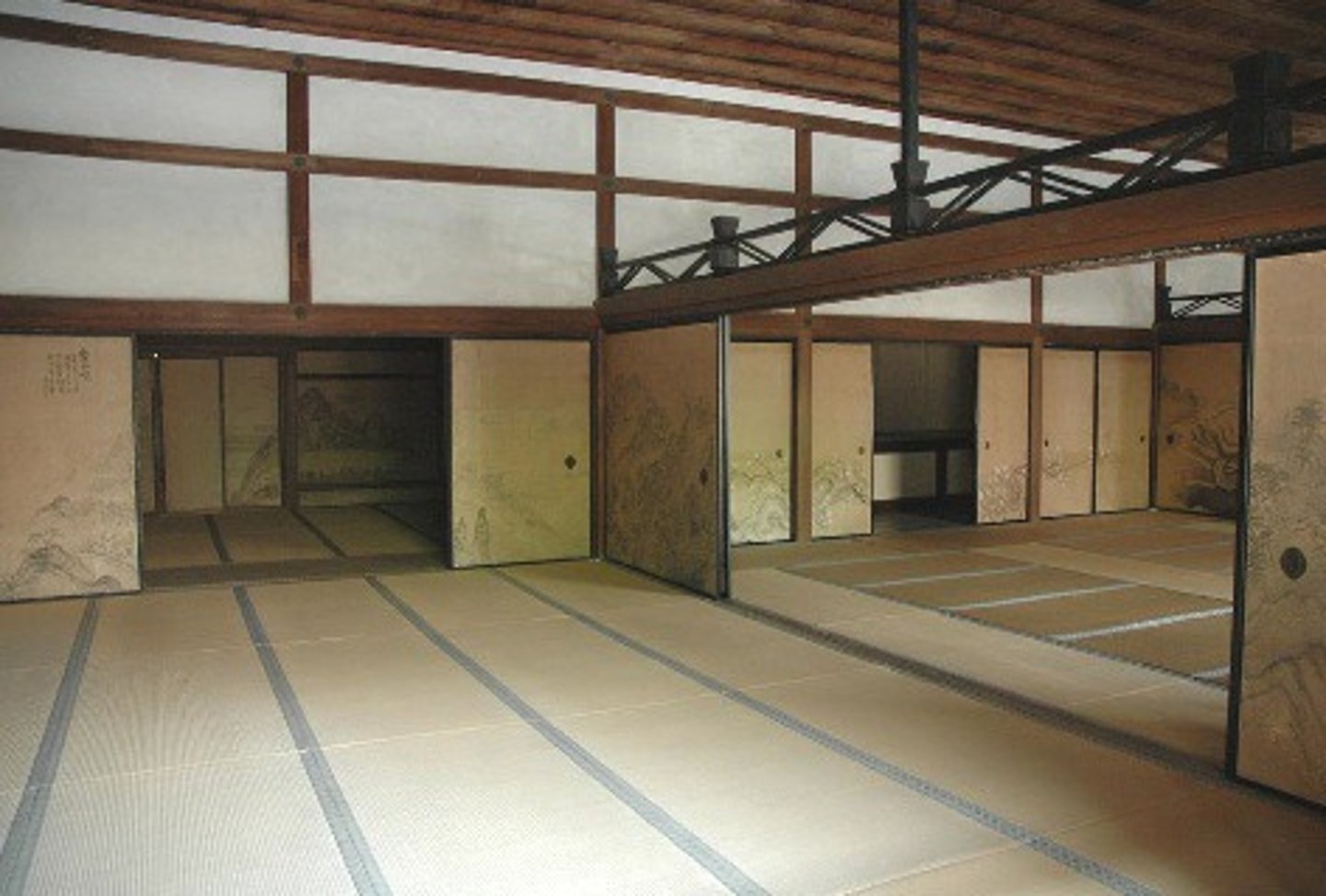
Tokanoma
-the focal point of a room: space of contemplation
-rectangular, simple lines
-appreciation from calm/quiet
-not very ornate, but sometimes calligraphy is added
-sometimes it is tradition to add a small tree (sapling)
Shoji Screen
-sliding screens that are flexible, opens up the space (Western design walls tend to be where they are)
-maximize space, small country
-very functional, used in interior as well
-not very ornate, geometric design
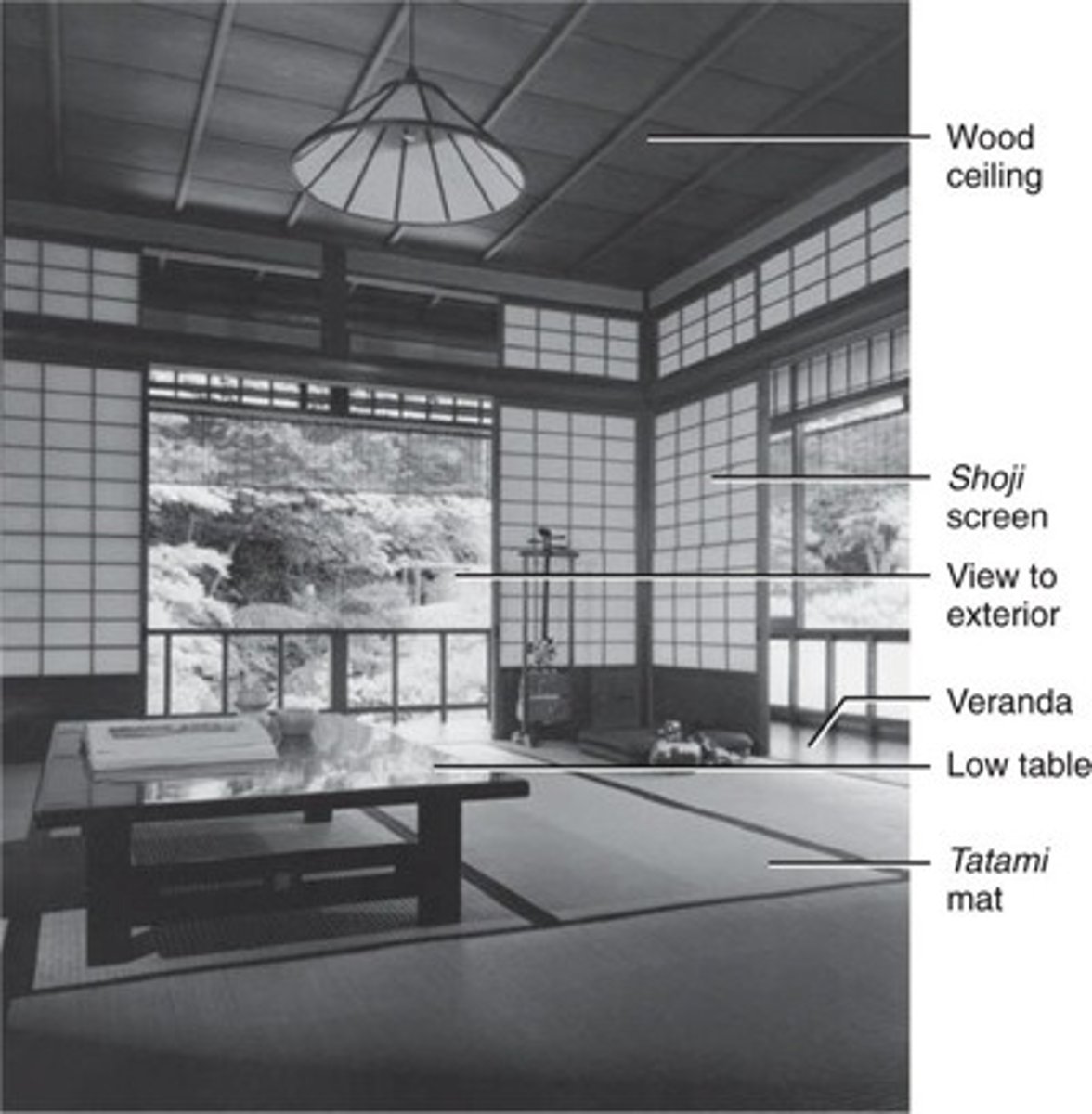
Japanese Furniture
-it is a minimalist design, no furnishings
-it is traditional to kneel in rooms with pillows
-Japanese like to look at the total package: exterior, interior, landscape, the whole space
Katsushiro Soho: Living Treasure of Japan
-modern piece, basketry
-high value for aesthetics
-someone who is older/knowledgeable to their modern piece
Chinese Furniture
-wooden chairs with rounding of edges
-contains a backsplat: curved to make more comfortable
-contains a yoke back: same concept, bar across the top
-usually the seat is not shaped or upholstered
-there is sometimes a cushion on top
-the chairs contain shaped stretchers
Chinese Exports
-17th and 18th century Western cultures wanted Chinese pieces
-designed differently to appeal to audience, not just domestic likes
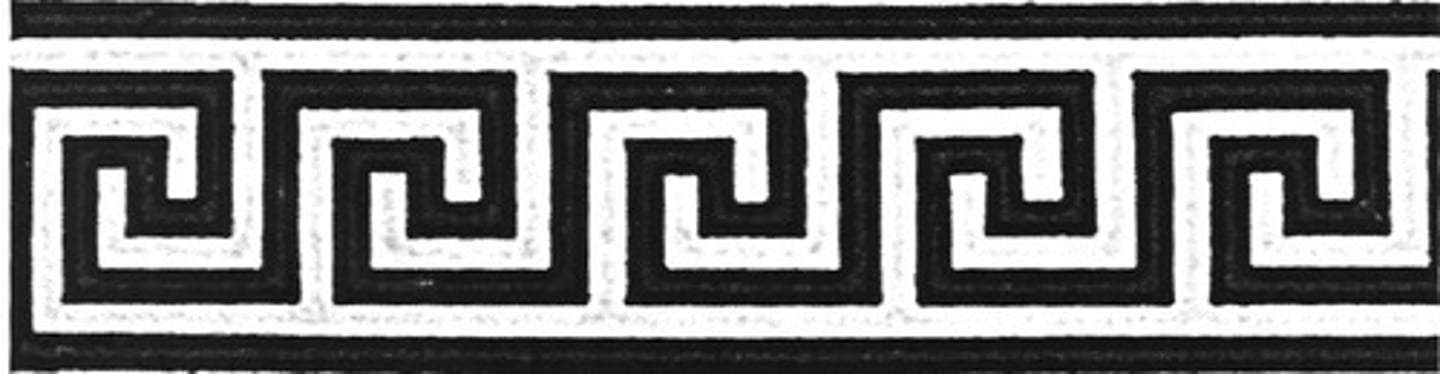
What is the most commonly used motif for Chinese design?
-Fret Motif
-not a border, visually complex
-linear components together in a new assembly
Chinese Folding Chair
-semi-circle chair with a back splat
-apron: shaped design under the seating part of the chair
Chinese "Closets"
-storage bases (wardrobes)
-wood, sometimes uses lacquer
-contains over-sized hinges and locks (made a purpose of how it was made)
-no pediment (minimal tops)
Small Chinese Tables
-practical
-shaped stretchers
-brackets
-rounded edges
-marble inlays - summer furniture
Chinese Storages
-hardware, carvings, but mainly simple
-western influence
-curved at the top
Chinese Screens
-laquer was used for the screens and was made traditionally, applied with multiple layers
-non-permanent division of space
-it was a time-consuming process
-screens were popular in the 18th century and were exported (movable)
What are the two types of lacquer?
-Coromandel laquer
-Cinnabar laquer
Coromandel Laquer
-black or red backdrop with ornamental patterns
-can be gilded
-the West was fascinated by the design, they copied and painted it - but they did not add depth
-it was very expensive, but could import
-can be used on small furniture
Ilene Gray
-admired lacquering
-was taught to use it correctly on her furniture
Cinnabar Lacquer
-brilliantly red
-mercury used
-carved into depth
-example: used on small vases, cast and risen
Chi-lin
-Chinese unicorn motif that symbolizes good fortune
-Westerners took motifs out of context
-domestic consumption, export ware
-only readable to the culture because they understand
Dragon Motif
-serpent-like, trails through piece
-imperial dragon: royal family of China
-5-toed dragon: strength, protection
-positive symbol
Mandala
-Buddhist/Hindu
-circle in a square
-collection of different cultures
- quiet, peaceful approach
-contemplative...serene
How is Japanese design assembled?
-a lot of open space between each design
-use of repetition, structure
-soften edges
How was export ware popular?
-most items were made in China
-most items were plain when exported, but could be customized after
-highly collectable, may see human figures
-floral motifs were used (Chinese)
-asymmetry (Western design is symmetrical)
Aesthetic Movement
-collected blue and white China that were Japanese objects (China from Japan)
-displayed collectables on shelves in nicely design interior rooms that would grab people's attention (Peacock Room)
-not export ware
- Japanese art was fascinating: asymmetry, motifs, balancing space, style
James McNeil Whistler
-very involved with Japanese art and collectables
-paintings depicted the culture and traditions
Chinese tables
-bird's tail at the end
-shaped stretchers
-experimented and explored through design
18th Century
-fascinated with Chinese design, revival
-elaborate pieces that transformed into European design
-picked up on pagoda, brackets, black splat
19th Century
-Anglo-Japanese: Japanese design mixed with European design
Islamic Design
-Middle Ages were fascinated
-19 century were extremely interested: found out through inexpensive publications, heavily influenced, inspired
-the walls were flat: structured, ornate, lots of components/motifs
-the scale of the motifs does not vary: consistent, controls the design (small scale designs)
-geometric framework
Islamic Arch
-pointed arch
-more flexible than semicircular arch
-open space
-Islamic culture liked to explore design through the arches
Minarets
-similar form of the Obelisk
-a space inside to call for prayer (faithful tradition)
-symmetry -rigid, steady, and positioned
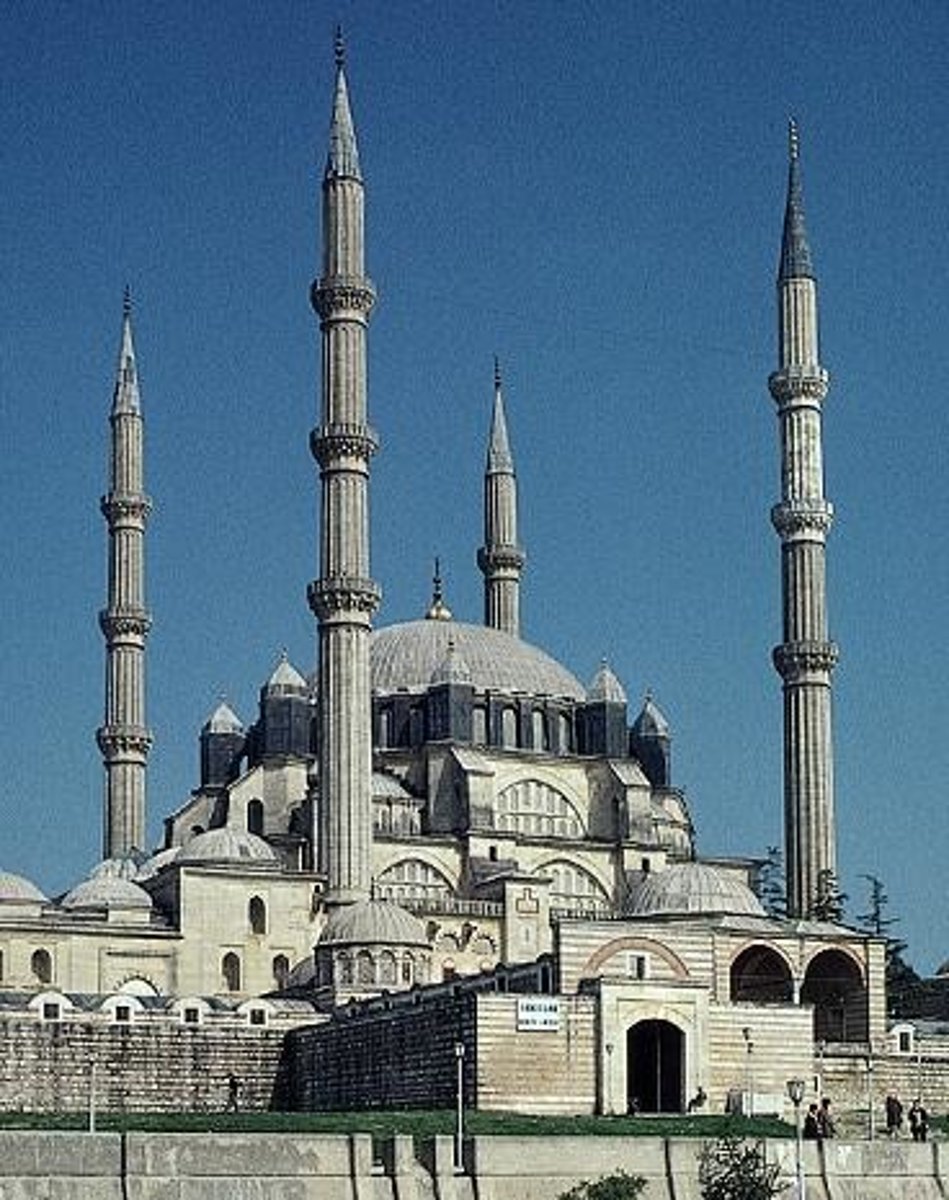
Islamic Culture and Colors
-value in symmetry
-pattern is flat against the surface
-used vibrant colors on tiles, sometimes neutral
Islamic Gardens
-greenery (plants) is an attraction
-geometric shapes
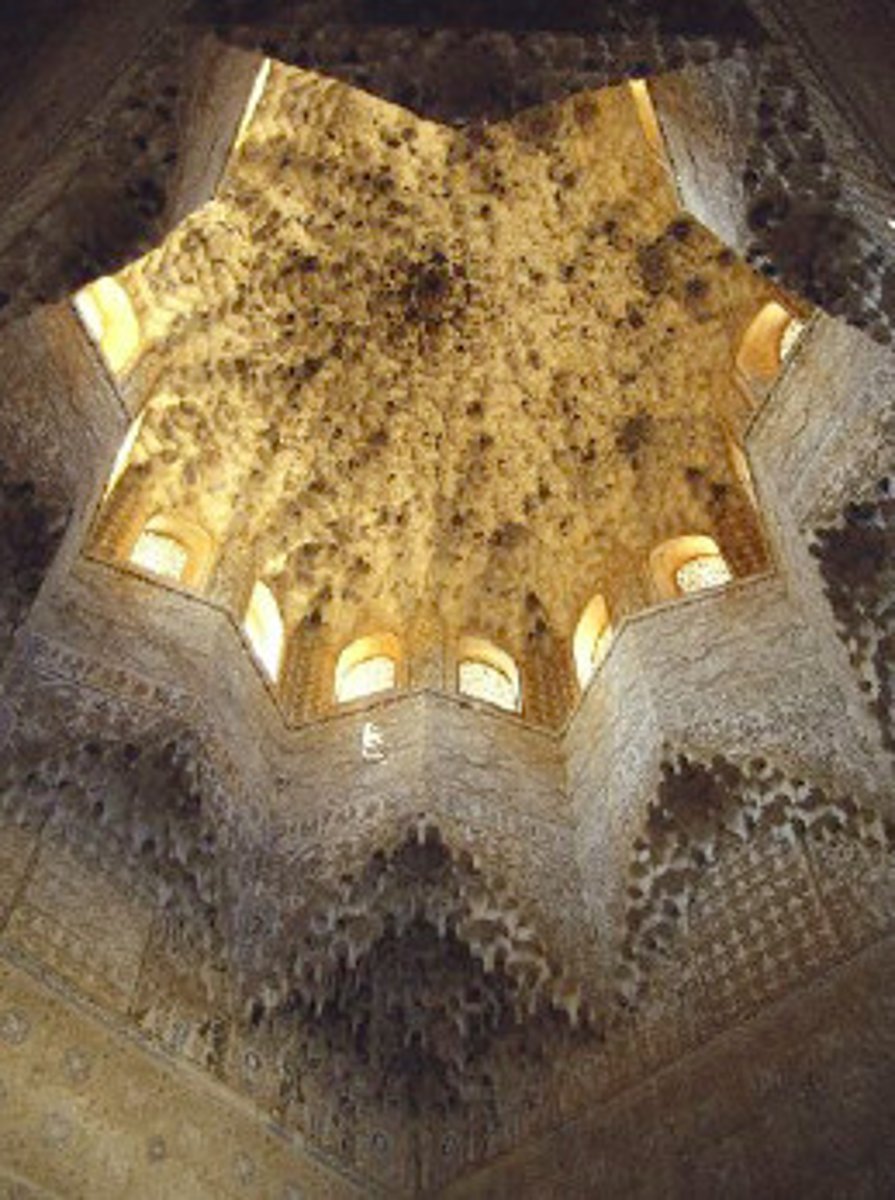
Stalactite Work
-design of rock formations: not replicating natural cave, just looks like it
-series of small arches
-very organized, small scale
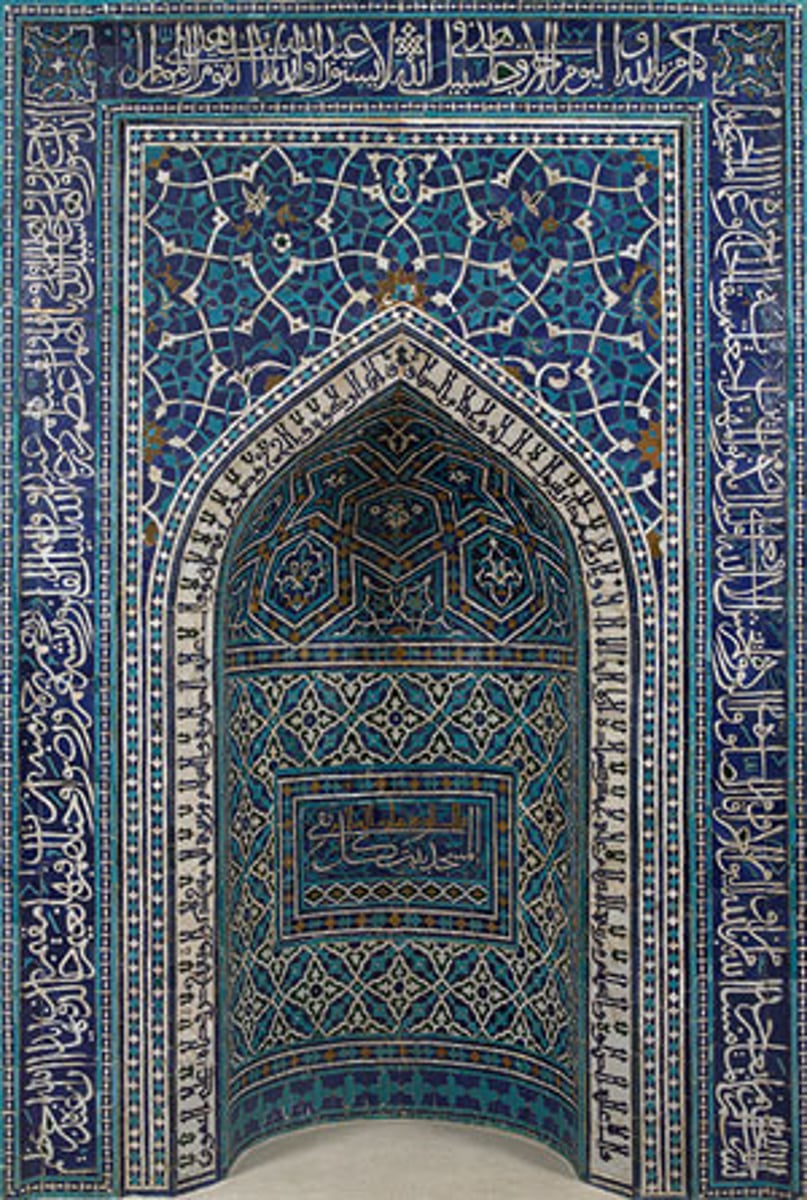
Mihrab
-prayer niche
-indicates direction of Mecca
-have variations of wall surfaces
-interior of a Mosque
Alhambra
-has aesthetic appeals: landscape, garden, reworked building
-from Spain
-fountains give a cooling and refreshment concept, lion fountain was the most popular
-ornament was the secondary feature, extremely stylized
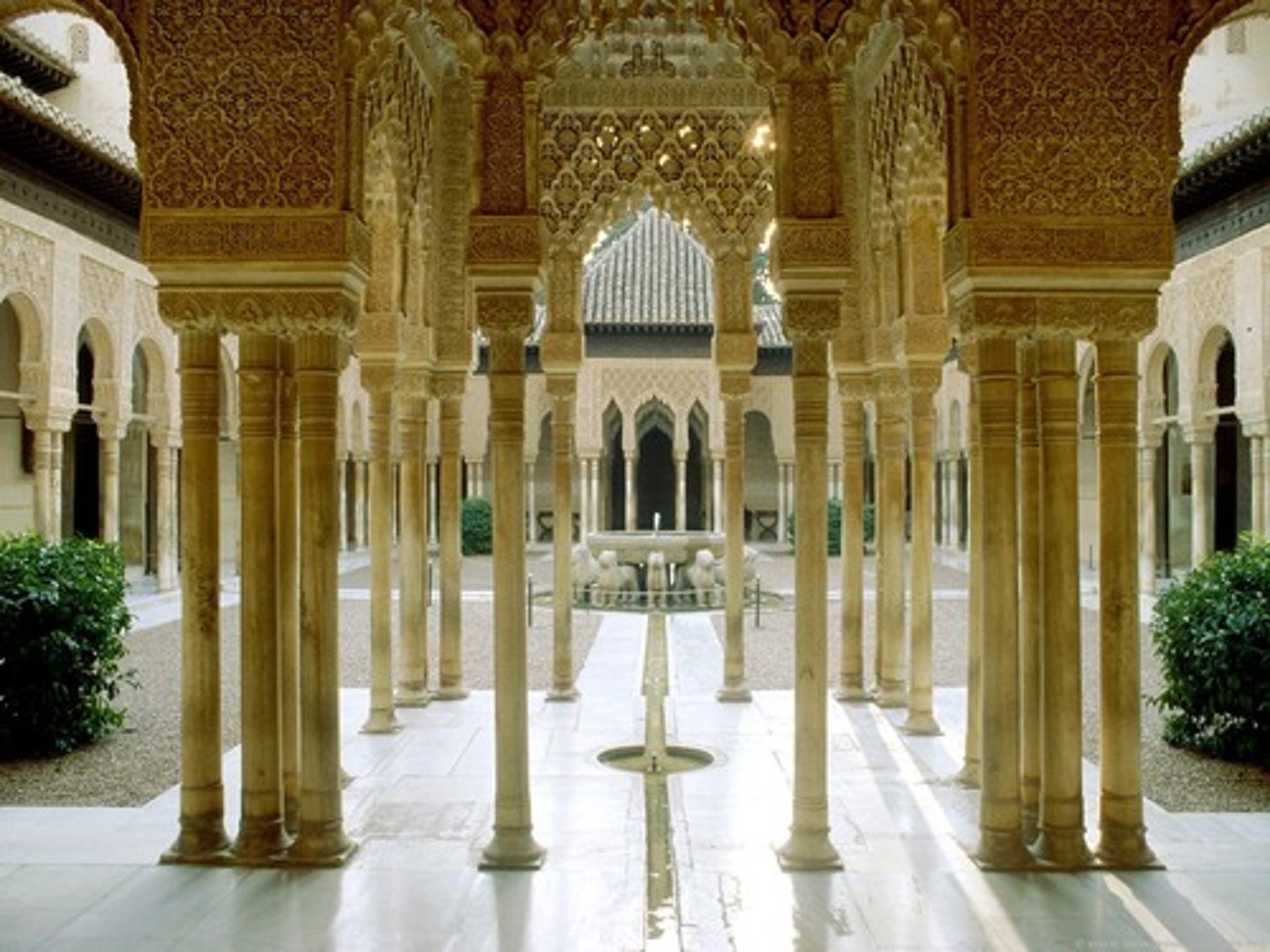
Moorish Design
-the spanish version of Islamic inspiration
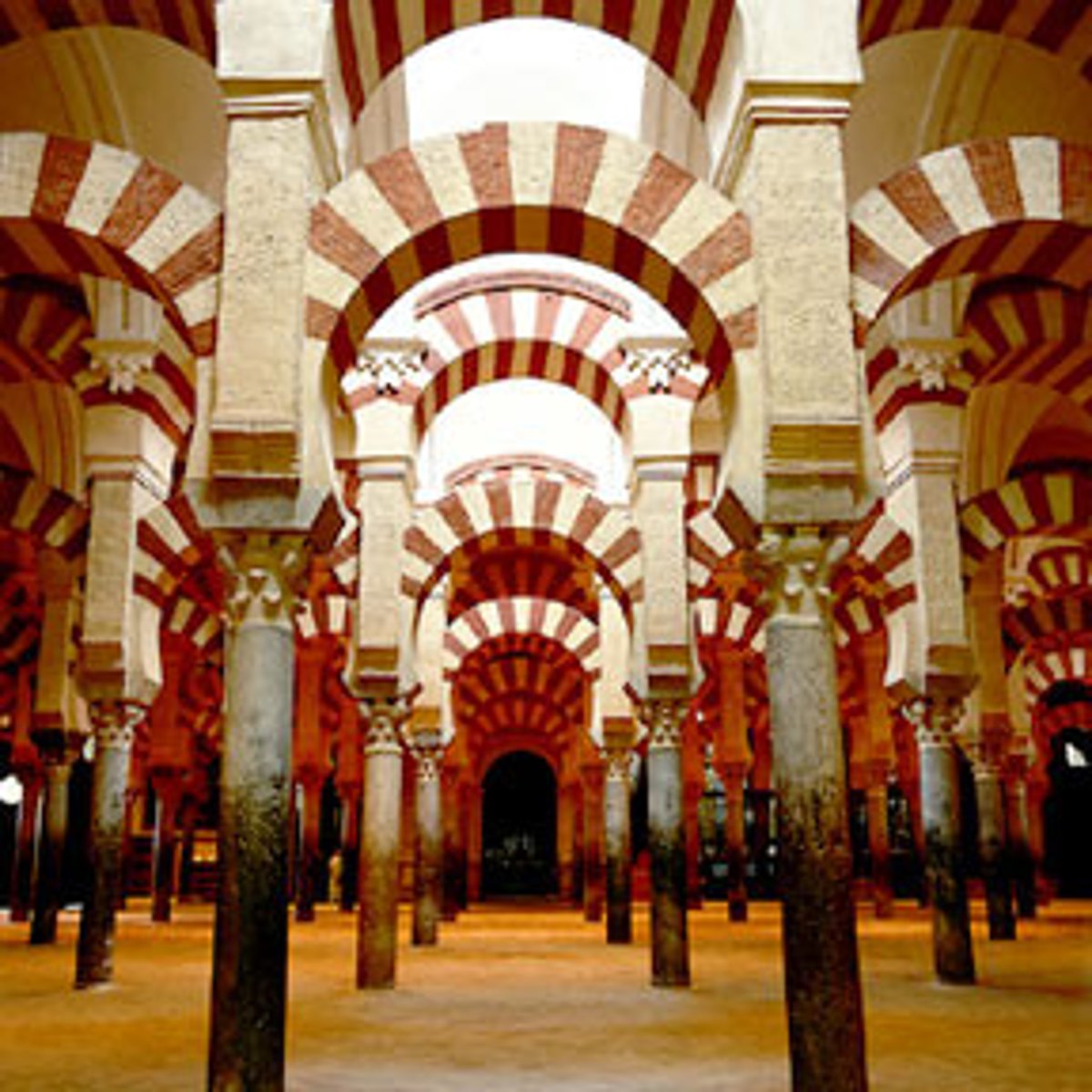
Horseshoe Arch Shape
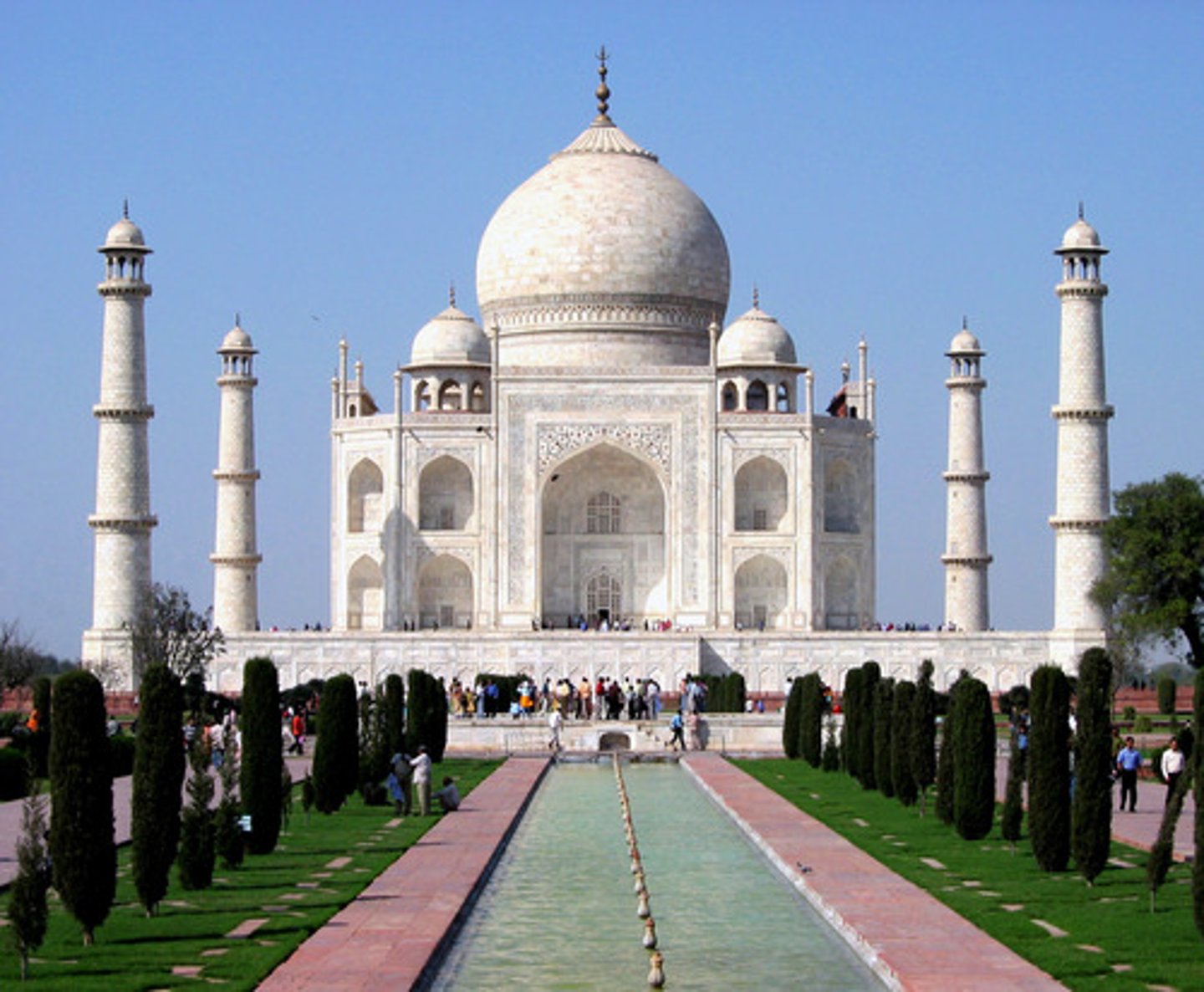
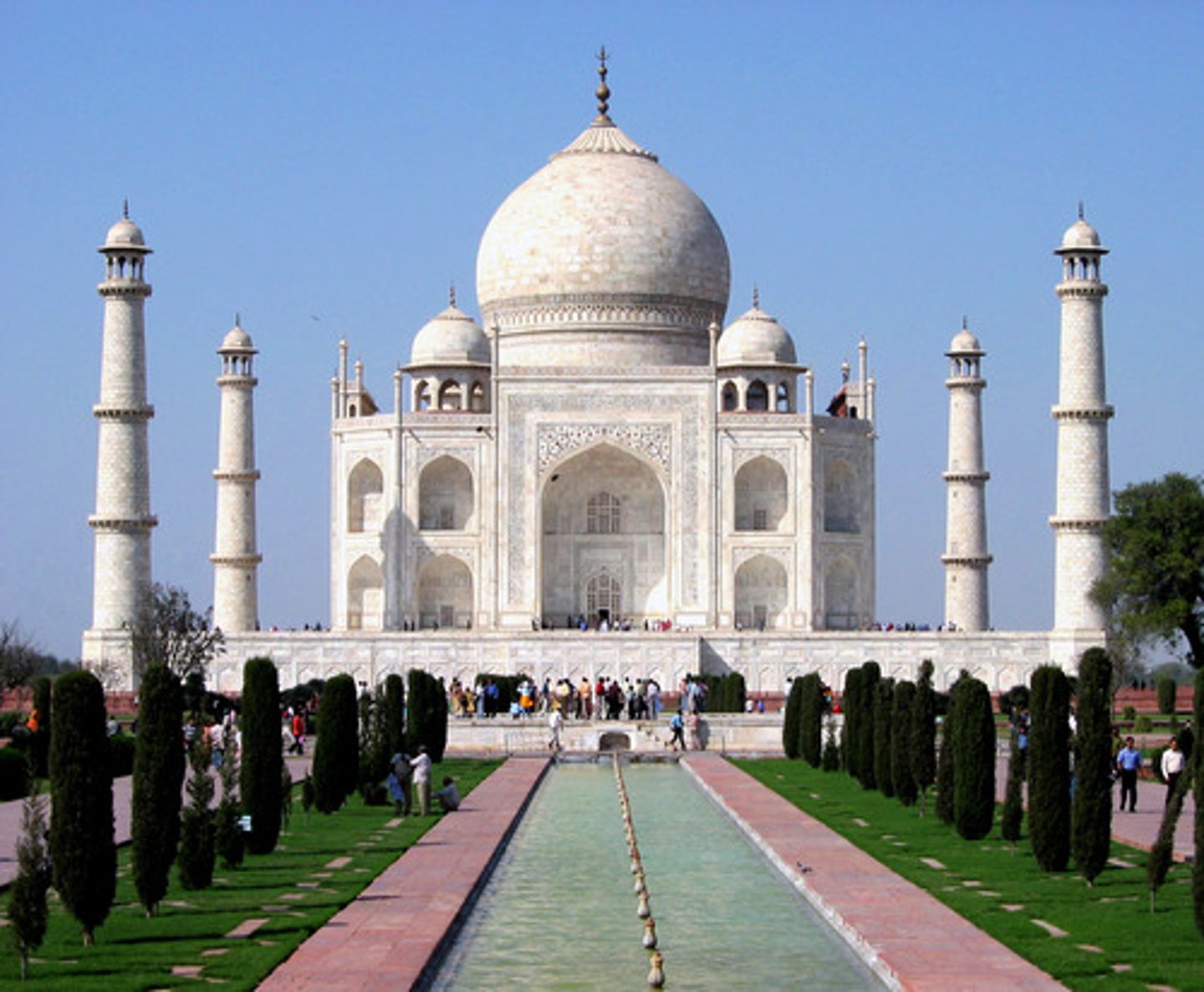
Taj Mahal with Minarets
- built as a tomb for woman
-perfectly proportioned, symmetrical
-multiple domes
-one of the most beautiful buildings in the world
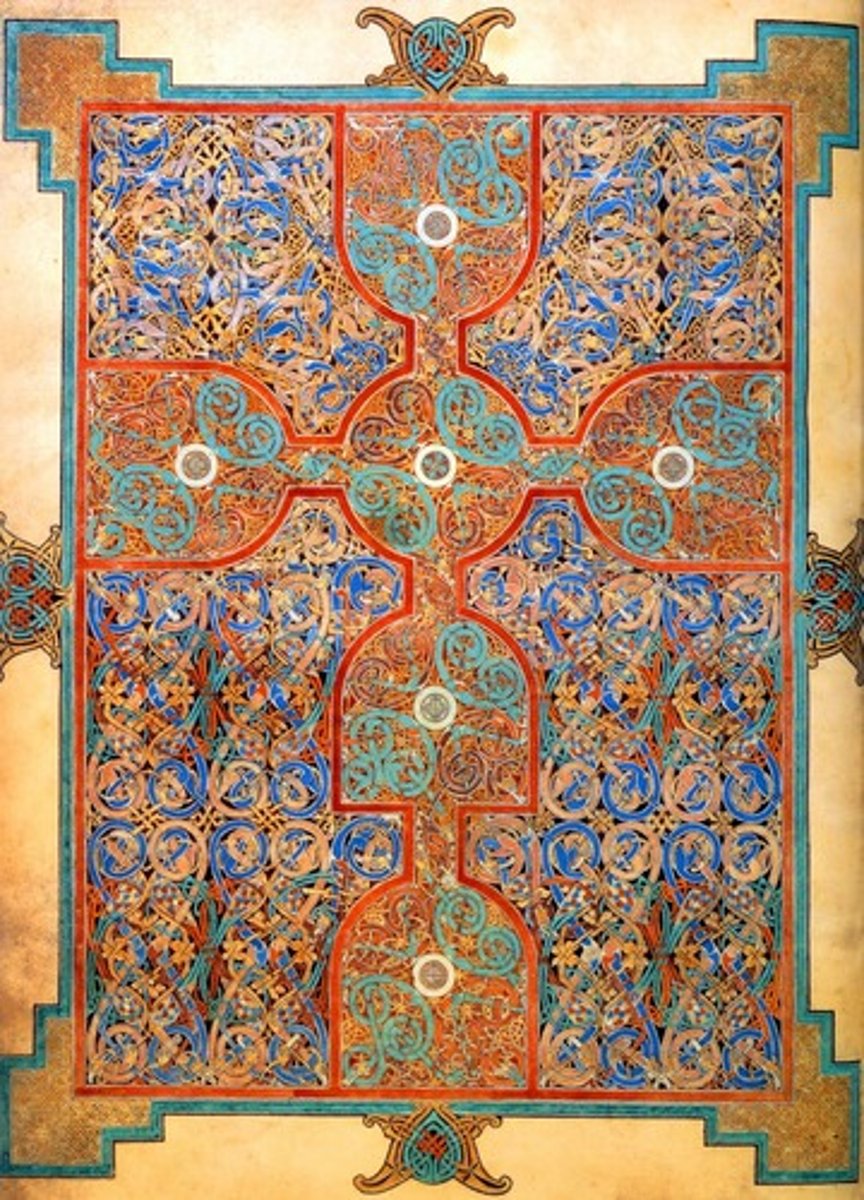
Pattern Books
-great volume, cheap (19th century)
-based on Islamic design, enormous influence
-great culture
Byzantine Culture
-recycling of Islamic buildings
-highly influenced
Middle Eastern Rugs (Islamic Carpets)
-ornamental, collectable, high-quality
-vibrant colors
-hand-knotted carpets, hundreds of knots to the inch
-they were portable so customers could be exposed to patterns
-shown up in paintings (Western)
-some thought it was so valuable that it shouldn't b placed on the floor
-spun and dyed wool
Frederic Leighton
-Victorian artist
-inspired by Islamic design
Frederic Church
-Olana
-In the U.S. (NY)
-design was in the interior and exterior: Moorish tables
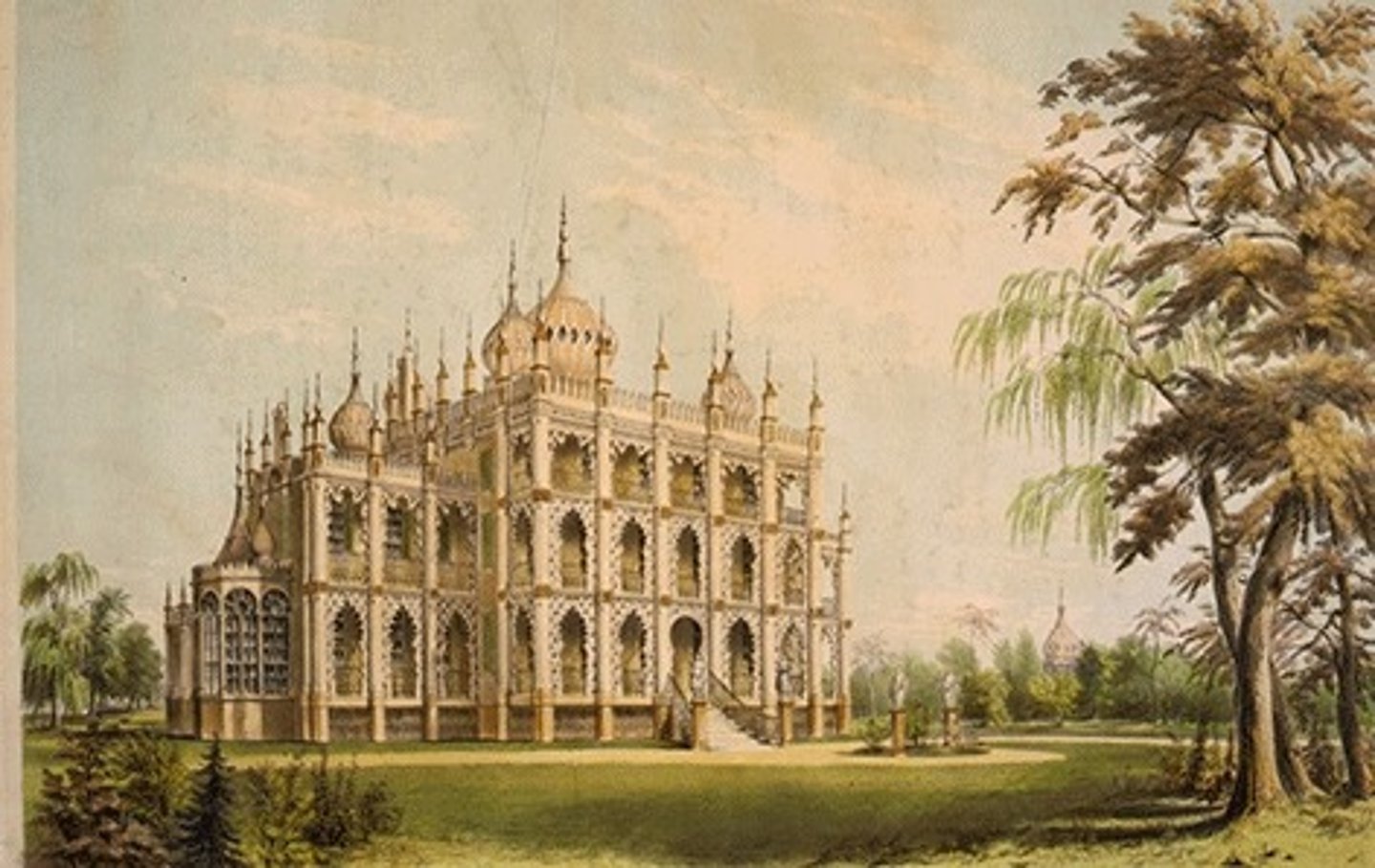
Iranistan
-PT Barnum built himself
-building is no longer available
Sheila Hicks
-designed prayer rugs
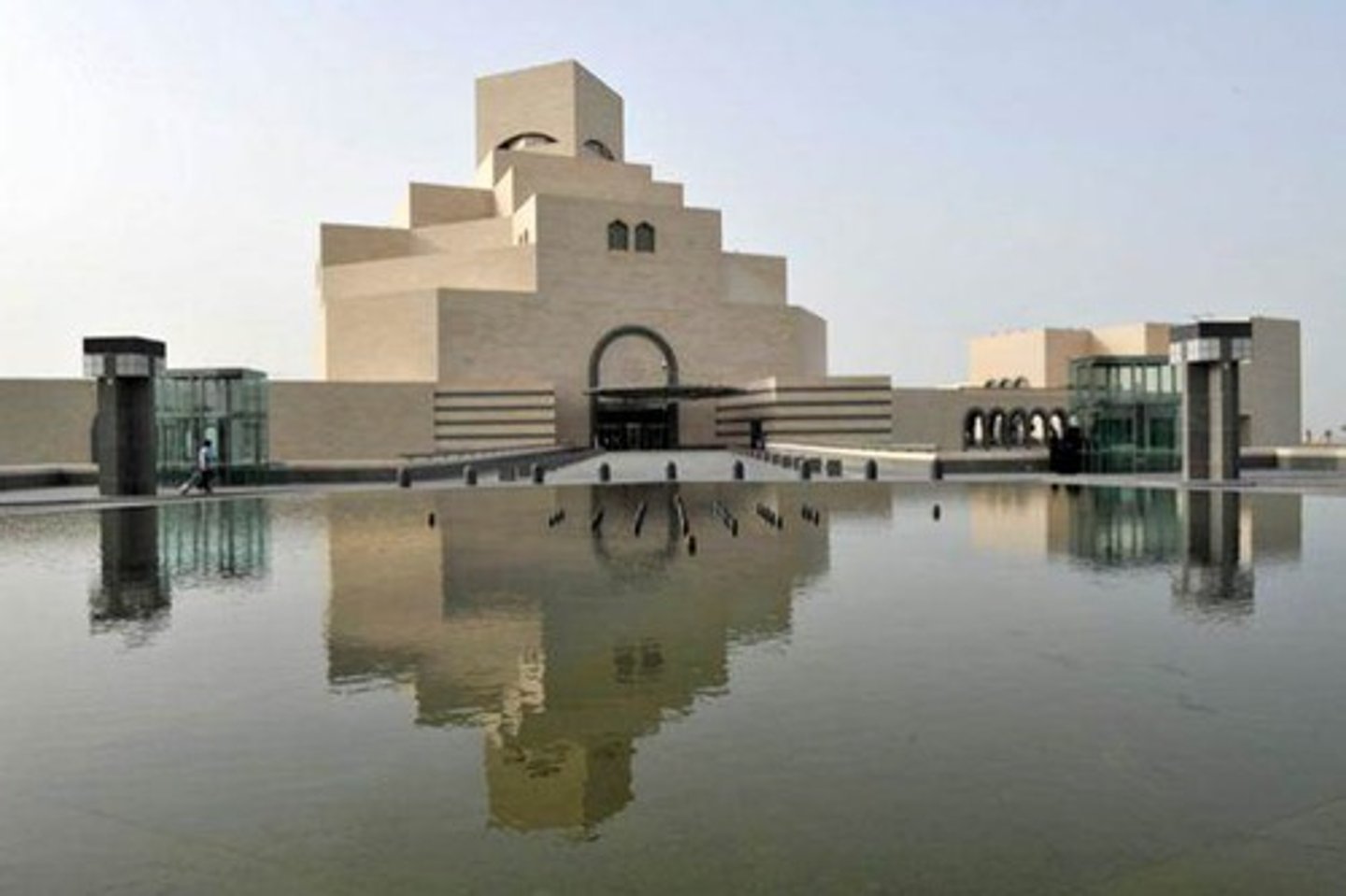
Museum of Islamic Art
-architect: I.M. Pei
-drew inspirations, modern approach
-clean surfaces, no ornaments
-a gesture toward islamic design
-located in Doha, Qatar
Aga Khan Museum
-architect: Fumihiko Maki
-landscape architect: Vladimir Djurovic
-located in Toronto
Byzantine Design Location
-Instanbul, Constantinople, Byzantium
Hagia Sophia
-a recycling purpose of a building
-Christian, Marinets, Islamic
-not a lot of open space, small windows
-classical influence
-lots of ornament, line movement (interior not exterior)
-mosaics are guided and it shows hierarchy of christianity
Justinian at San Vitale in Ravenna 527
-linear quality
-stiff appearance
-mosaics: stones are not flat, but shadows and highlights are flat