L3. Large Posterior Direct Restorations
 Call Kai
 Learn
Learn Practice Test
 Spaced Repetition
 Match
Match Flashcards
 Knowt Play
1/102

There's no tags or description
Looks like no tags are added yet.
Name | Mastery | Learn | Test | Matching | Spaced | Call with Kai |
|---|
No analytics yet
Send a link to your students to track their progress
103 Terms
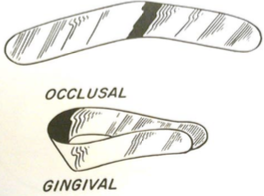
small side —
large side —
small side — gingival
large side — occlusal
The open end of the Tofflemire retainer should not face ____ because you will not be able to take it out correctly.
occlusally
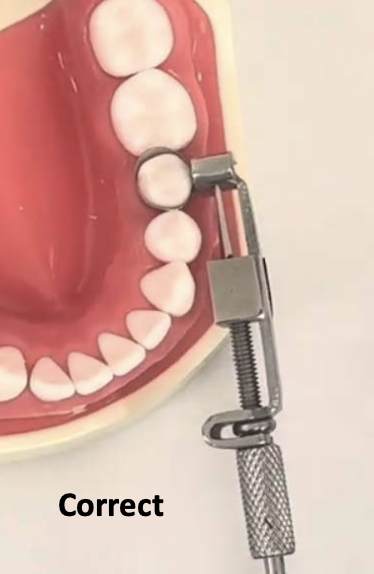
The lingual retainer is angled to go above the _____ teeth
mandibular
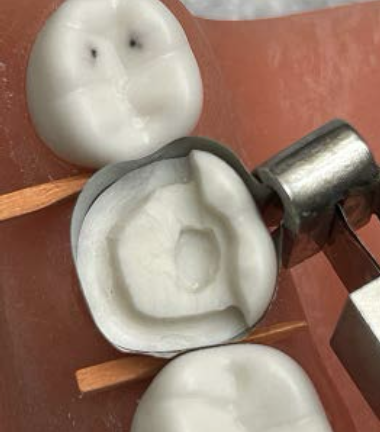
Small openings in accessible areas (____/____) are acceptable because overhangs can be removed after curing.
buccal/lingual
Small openings in inaccessible areas (____/_____) are NOT acceptable because overhangs CANNOT be removed after curing.
mesial/distal
The Tofflemire band should be burnished against the _____ for improved contact
adjacent tooth
(T/F)
You can slightly lift up the handle of the retainer when restoring to burnish the band against the tooth.
True
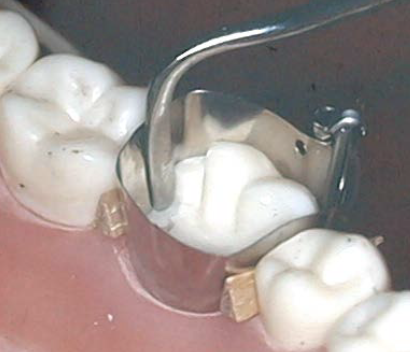
What should you do if there is limited tooth structure remaining for support and retention of the retainer?
Adjust Tofflemire mesially so open area is against tooth structure
Alternatively, add a small section of matrix
Gaps occur where
matrix enters holder
How do you correct gaps when using a Tofflemire retainer?
Add an additional piece of matrix to close the gap
Choose another technique
When restoring with composite, consider using the ____ wedge technique
alternate
alternate wedging
wedge one side and restore, and then repeat for the other side
what do you have to consider when restoring two adjacent preps with amalgam?
condensation pressure may distort proximal contour — must refine contour of first restoration before moving onto the second
what can help prevent improper gingival embrasure contour?
use one large wedge, or two small wedges
wedge both from the buccal and lingual
can you add another wedge if the original one is too small?
yes
open margins can be caused by
improper wedge placement or size — too high or too large
how do you correct open margins on restorations?
slot repair technique — slot needs to be large enough
when doing an MOD, you notice that the distal contact is too light. what can you do when restoring the mesial?
use a sectional matrix on the mesial to tighten distal contact
separating ring will provide better separation
what are the (2) rules of tofflemire placement?
1 mm above marginal ridge
1 mm below gingival cavosurface margin
why is it important for the tofflemire band to be 1 mm above the marginal ridge?
allows for overfilling + carving of marginal ridge
what happens if the tofflemire is overextended occlusally?
may affect occlusal embrasure (too small) and enlargen the occlusal table
proper placement of wedge closes ______, which prevents _____
closes gingival margin
prevents overhangs
gaps at the cavomargin allow
overhang
overhangs can cause (2):
perio defect
decay
After wedging, you should use an explorer to (3):
Check for gaps
Remove trapped dam
Check for trapped tissue or loose friable enamel
Using a ___ wedge with Tofflemire allows for adequate tooth separation
solid (wooden or plastic)
wedge-wedging
used to close gingival gap found on maxillary first premolar caused by mesial root fluting
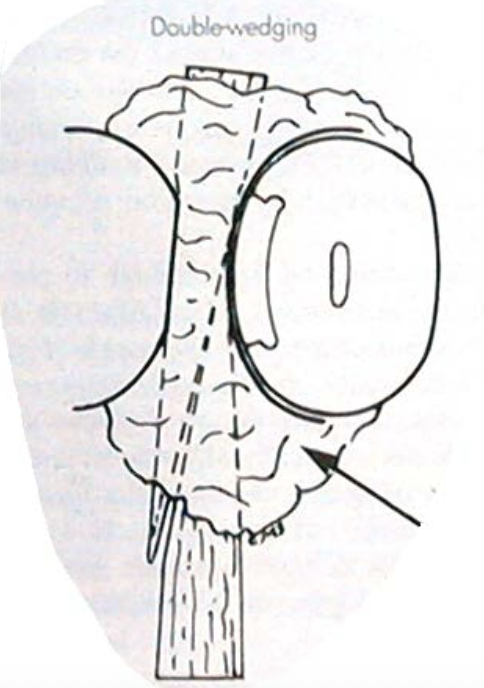
double-wedging
used for wide proximal boxes (B/L)
wedges are side by side, not stacked
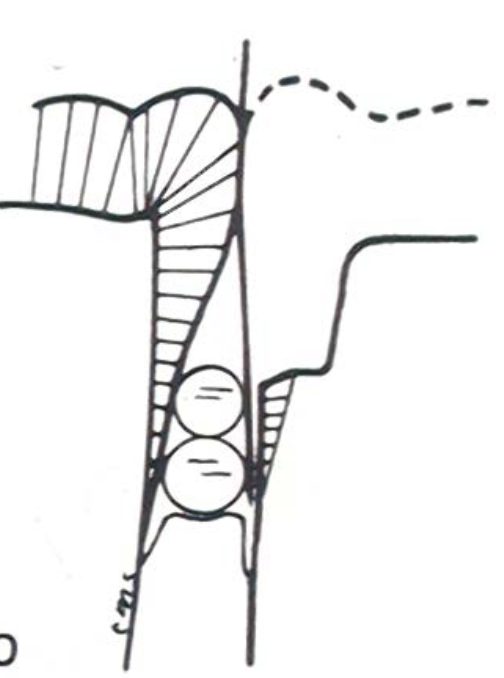
piggy-back wedging
stacked wedging
used for deep and large gingival embrasures (recession)
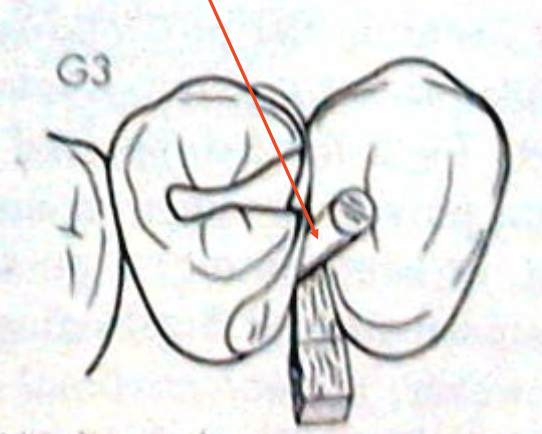
when applying the matrix, the retainer should be on the ___ side with the open end facing ___
buccal
gingival
when placing a wedge from the buccal, you should loosen the retainer using the ___ knob and swing the retainer ___ to allow for the wedge to fit.
large
buccally
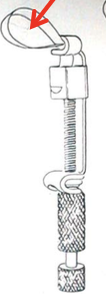
This matrix retainer is used for (2):
mandibular left
maxillary right
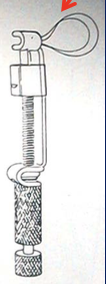
This matrix retainer is used for (2):
mandibular right
maxillary left
The open end of the retainer faces ____
gingivally
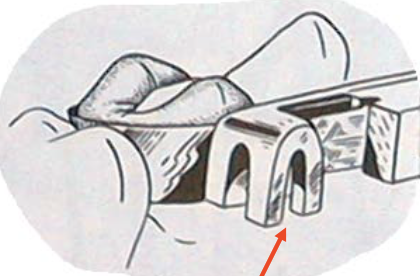
Why should the open end of the retainer face gingivally?
to allow for separate removal of the retainer and band
when removing the matrix band, you should remove the ____ and then the ____ after.
retainer
band
turn the large knob counterclockwise to _____ diameter
increase
turn the small knob counterclockwise to ________
release band from retainer
the band should be removed at a __° angle into ____ for additional support of the amalgam
45°
remaining tooth structure
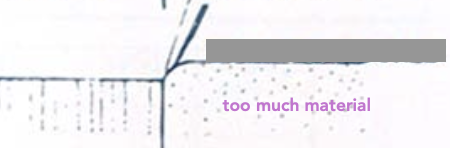
over-contoured
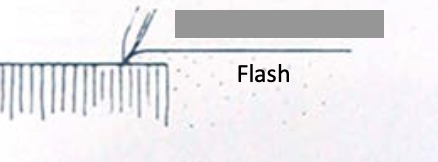
overhang
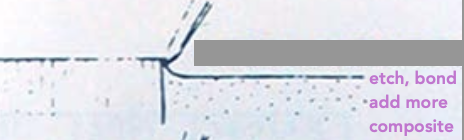
under-contoured
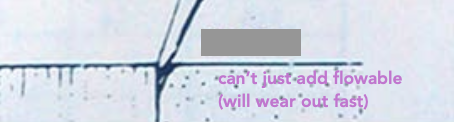
open
you should use an explorer after restoring to check for
margin integrity
when correcting open margins on composite using the slot repair technique, you should:
remove 1 mm of composite
create undercut
when correcting open margins on amalgam using the slot repair technique, you should:
remove 2 mm of amalgam
if you over-carve anatomy, you will produce
thin fragile margins
when looking at physiologic occlusal anatomy of your restoration, you are evaluating the (2):
primary anatomy
size and shape of the cuspal inclines
your restoration should be in ___ with the adjacent teeth in the quadrant
harmony (occlusal equilibrium)
when checking your restoration with articulating paper, all ___ and ___ contacts on the restoration should be consistent with contacts on other teeth in that quadrant.
centric
excursive
what are (2) types of errors that can happen when evaluating centric occlusion?
hyper occlusion
hypo occlusion
what are (3) types of incorrect occlusal interferences?
working
nonworking
protrusive
protrusive interference
(for both maxillary centrals)
mandibular central + lateral must make contact with (1) maxillary central
canine guidance
when canines are tip to tip, none of the posteriors should be in contact
should there be contact between supporting or nonsupporting cusps?
supporting cusps
what kind of mark is seen when there is hyperocclusion?
bulls eye
when checking for occlusion with articulating paper, which area should NOT have contact?
cavomargin of restoration
working interference occurs between
1 supporting cusp
1 nonsupporting cusp
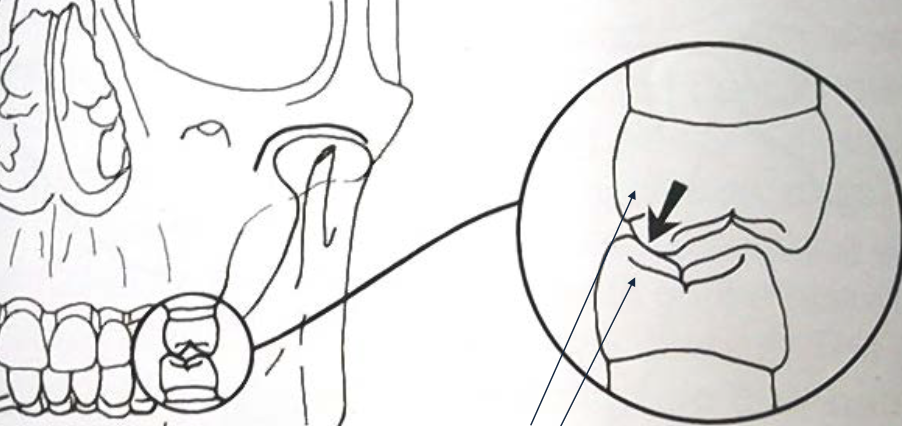
what is the working side?
the side the mandible moves to
inner —> outer incline
buccal — lingual facing
should you grind down supporting cusps?
NO (unless absolutely necessary)
you SHOULD move the supporting cusps, but should not shorten then
nonworking interference occurs between
two inner inclines
two supporting cusps
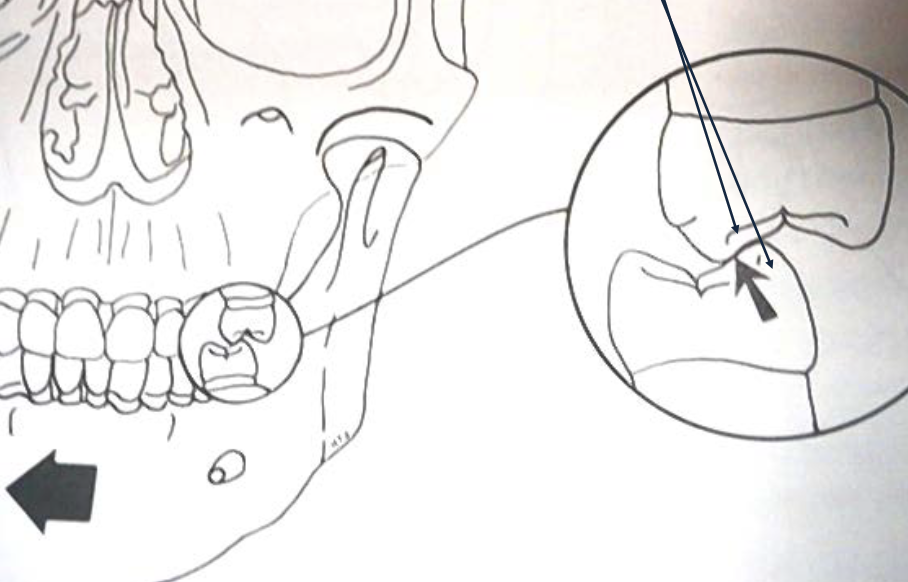
when correcting working interference, which cusp should you adjust?
nonsupporting cusp
when correcting nonworking interference, you should adjust
inner incline of maxillary teeth
In protrusive interference, maxillary cusps contact on the ___ incline
distal
In protrusive interference, mandibular teeth contact on the ___ incline
mesial
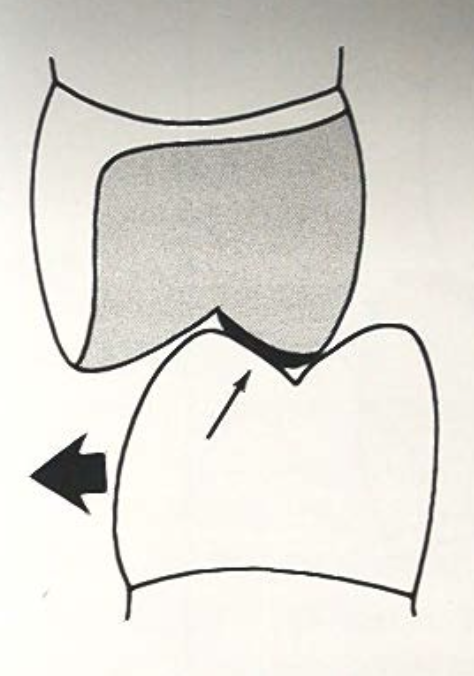
A premature contact on the buccal facing (inner) incline of the maxillary lingual cusp produces a ___ shift of the mandible
buccal
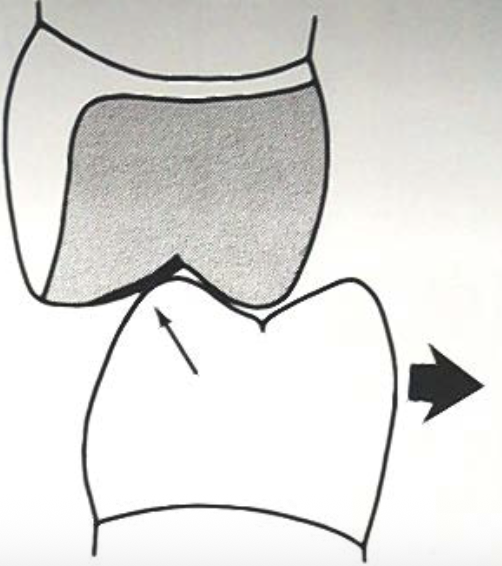
A premature contact on the lingual facing slope of the maxillary buccal cusp produces a ___ shift of the mandible
lingual
Isthmus ___ affects required occlusal anatomy
width
Restorations with a wide B/L dimension required a ____ for the opposing supporting cusp
recessed area
what happens when you misplace the cusps on a restoration?
wide occlusal table
restricted occlusal embrasures
most likely hyper-occlusion
what should you do if you misplace the cusps and have restricted occlusal embrasures?
adjust the outer incline of the cusp
adjust the height of the cusp tip
buccal and lingual embrasures are affected by the ___ and ___ of the contact
size
shape
buccal and lingual embrasures are affected by_____ and ______
external contours
occlusal table
which of the following is more important:
A. making the marginal ridge of the restoration high so that it is in occlusion
B. making sure the marginal ridge of the restoration is at the same height as the adjacent marginal ridge
B. making sure the marginal ridge of the restoration is at the same height as the adjacent marginal ridge
what could count as clinically substandard when assessing marginal integrity?
open margins
Should you have light or heavy contact for amalgam restorations?
Light — amalgam will fracture under heavy occlusion
what instruments can you use to correct overhang?
discoid-cleoid
hollenbach
you can use incremental layering of composite on the _____ of the tooth because it is stickier
oxygen inhibited
do you have to etch and bond every increment of composite in the oxygen inhibited layer?
NO — already sticky
(T/F)
You can add fresh amalgam to set amalgam
False
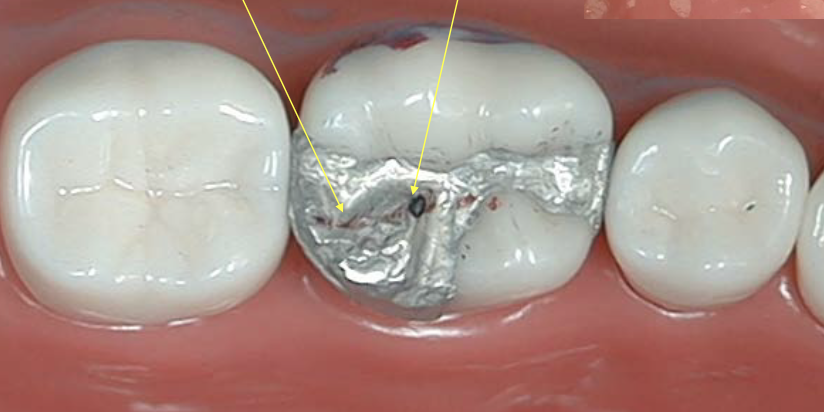
The red marks indicate ____ interference
working
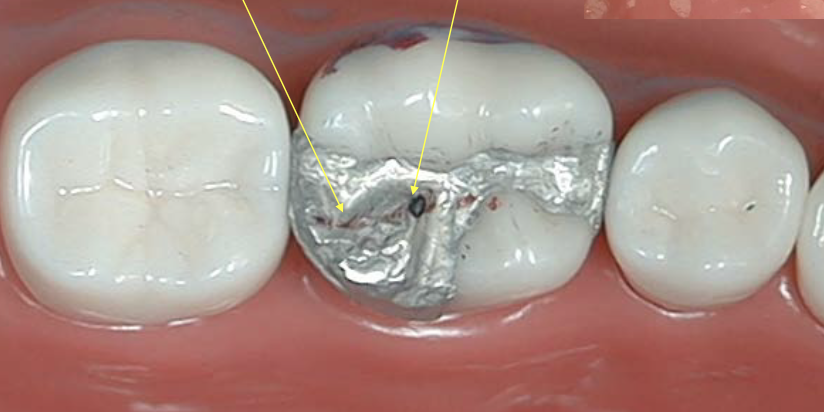
The black marks indicate ____ interference
centric
(T/F)
The cusp tip of nonsupporting cusps should be as tall or shorter than a supporting cusp.
True
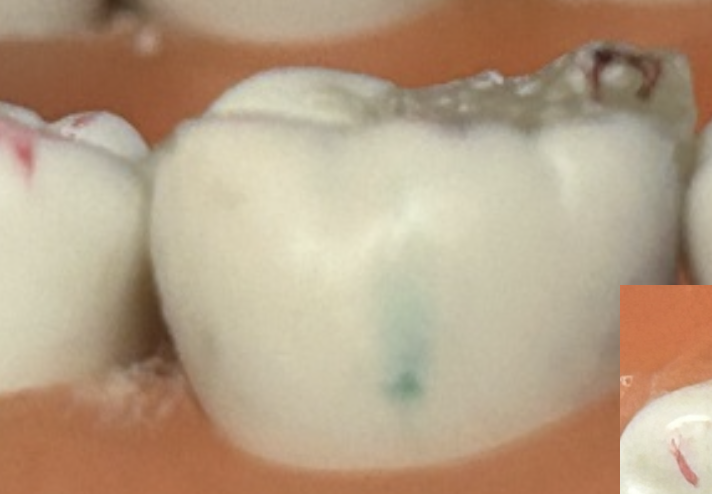
This is an example of ______ interference
working
BULL — Buccal of Upper, Lingual of Lower
working side interference
Maxi B
Mandi L
nonworking side interence
Maxi L
Mandi B
(inner inclines)
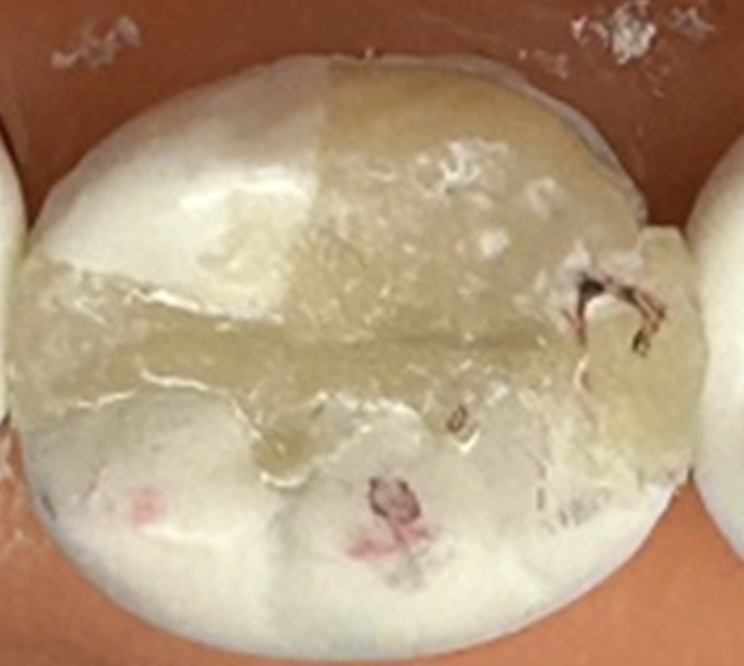
Identify (4) errors with this restoration
Failed attempt at slot prep repair of an open contact
Flash
Halo at the cavomargin
Substandard finish and polish
why do halos form at the cavosurface margin of restorations?
debris from finishing/polishing gets stuck under the cavosurface margin
this debris does NOT bond to the tooth and gets stuck in the restoration edges
what should you do to remove flash?
use a finishing bur (football)
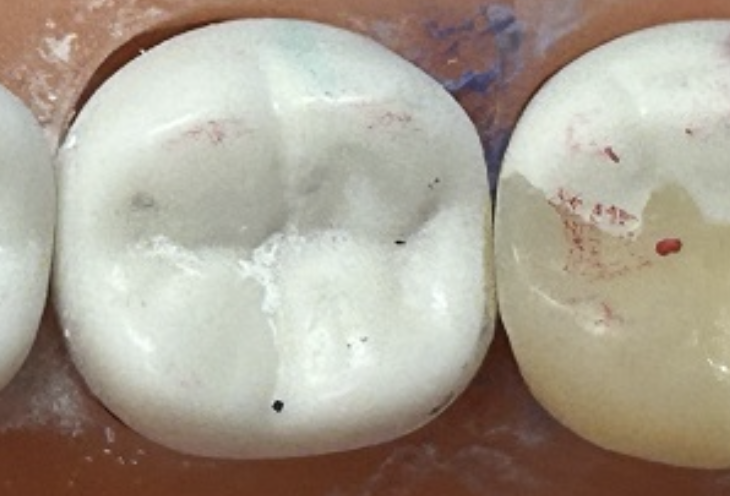
Identify (2) errors with this restoration
Hyper-occlusion
Adjacent tooth is placed incorrectly (lol)
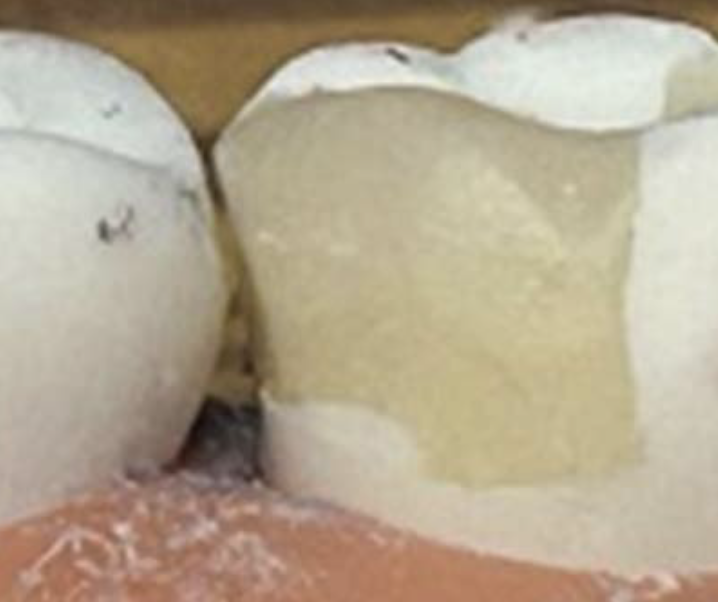
Identify (2) errors with this restoration
Open contact/margin
High marginal ridge
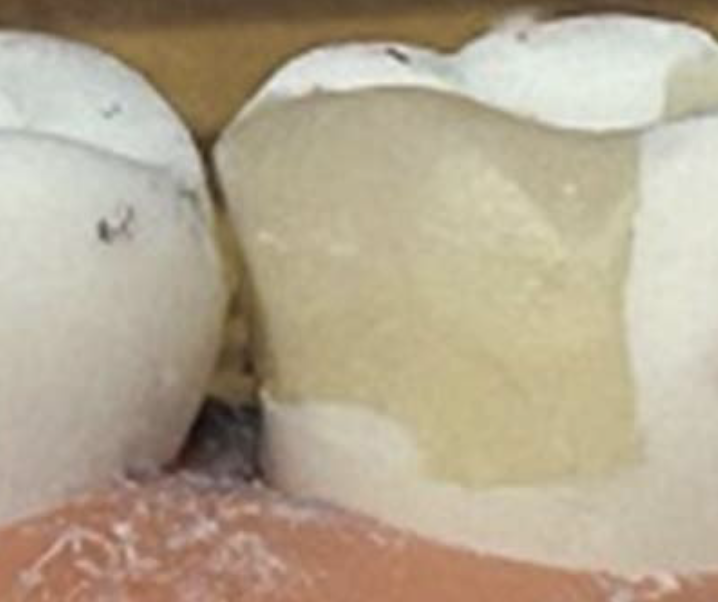
How should you fix this restoration?
Better band and wedge placement
Loosen Tofflemire slightly
Correct with partial restoration replacement
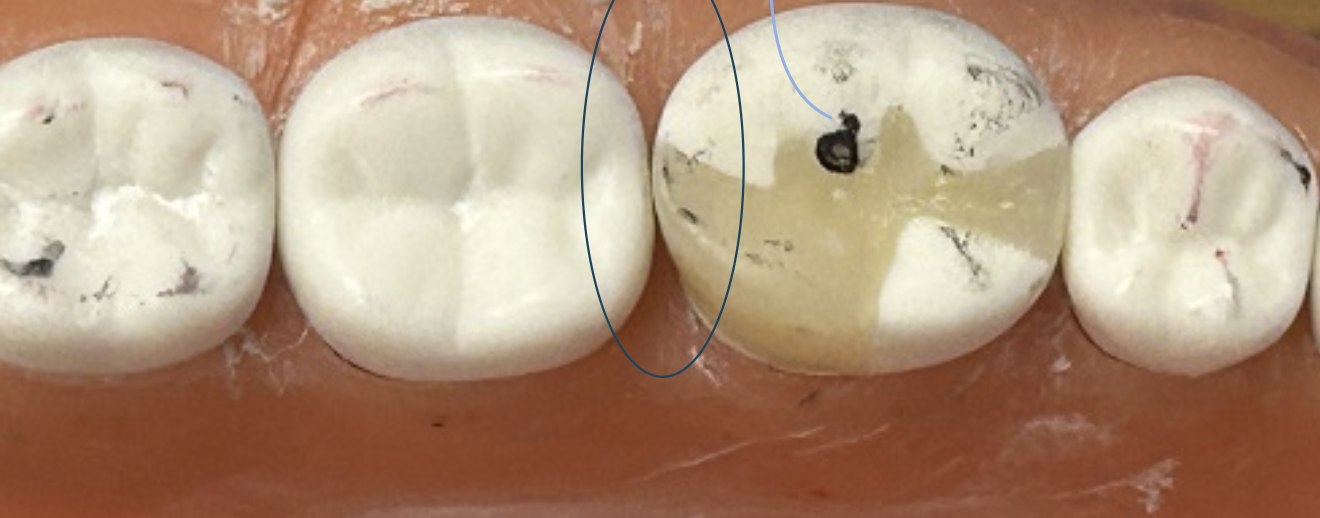
Identify (2) errors with this restoration
Hyper-occlusion on the cavosurface margin
Light distal occlusion
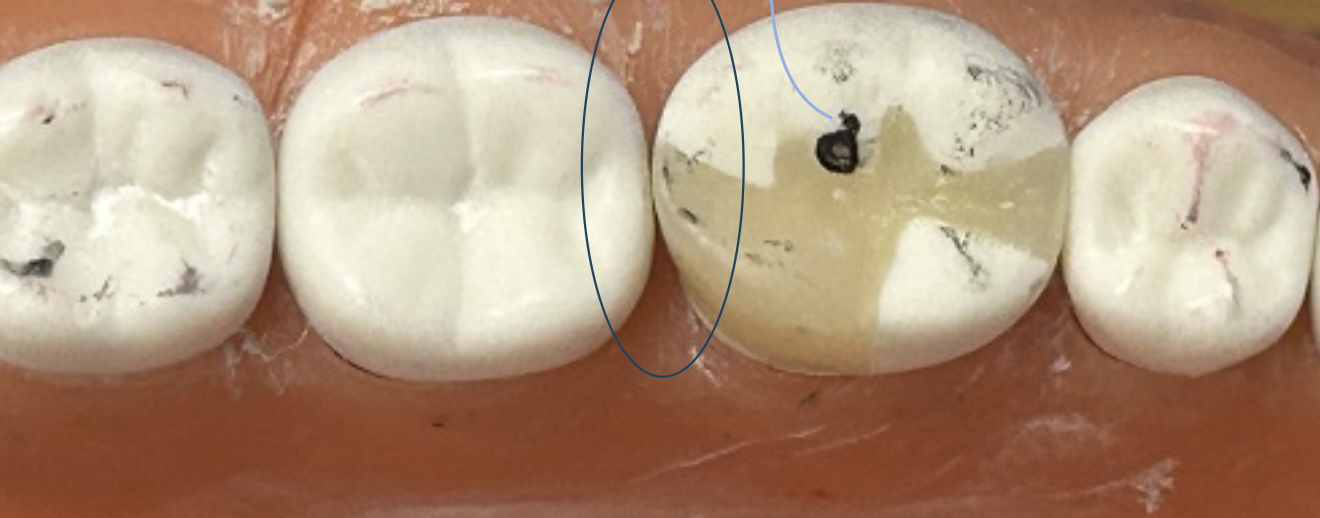
How should you fix this restoration?
Adjust restoration so that there is NO contact at the cavosurface margin
Slot prep repair to fix light distal contact
What are some possible causes of open or light proximal contact?
Incorrect wedge size
Improper burnishing of matrix band
Overuse of finishing disk at proximal contact
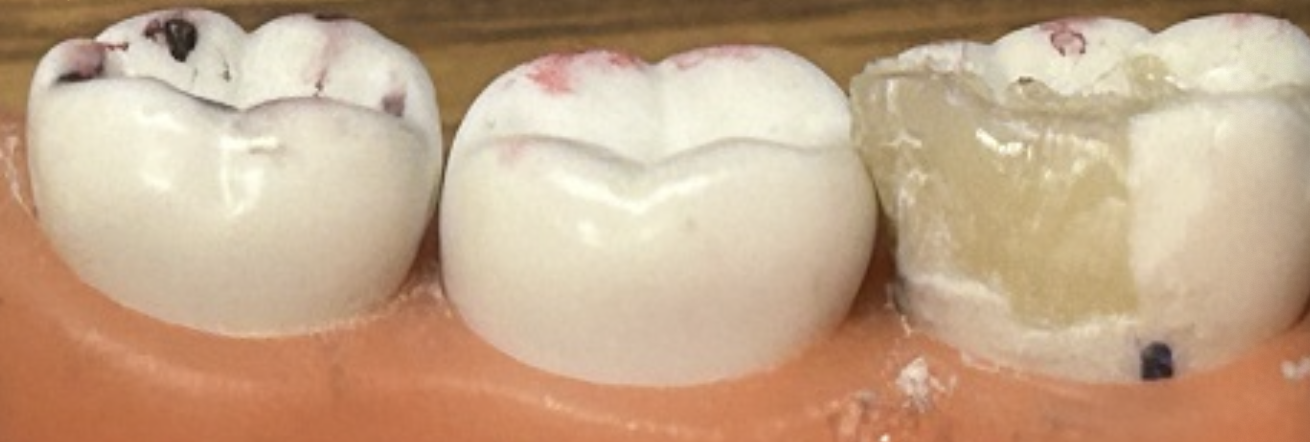
Identify (4) errors with this restoration
High marginal ridge
Open margin
Poor gingival embrasure
Finish and polish
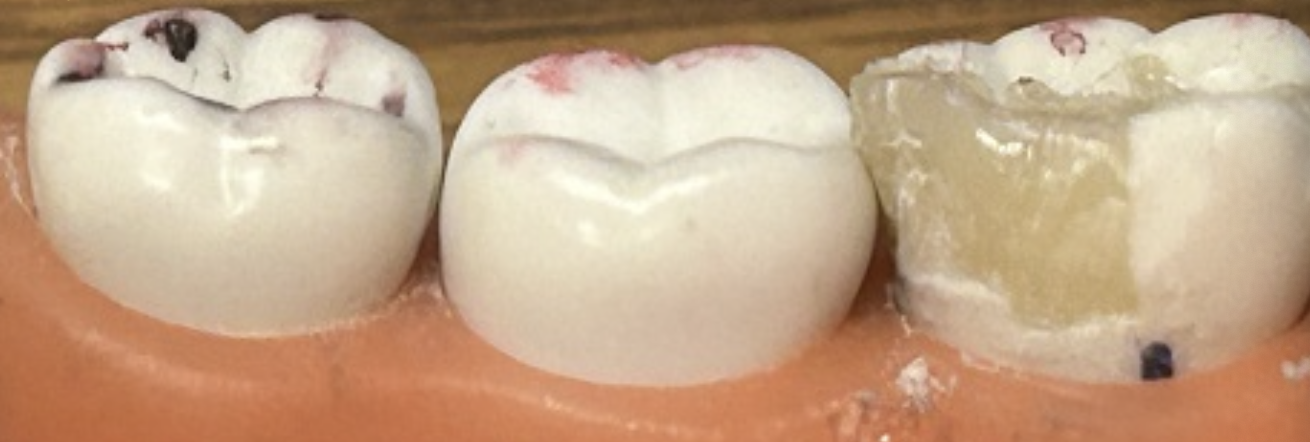
How would you correct this restoration?
Proper wedge placement technique
Proper finishing and polishing technique
Evaluate occlusion
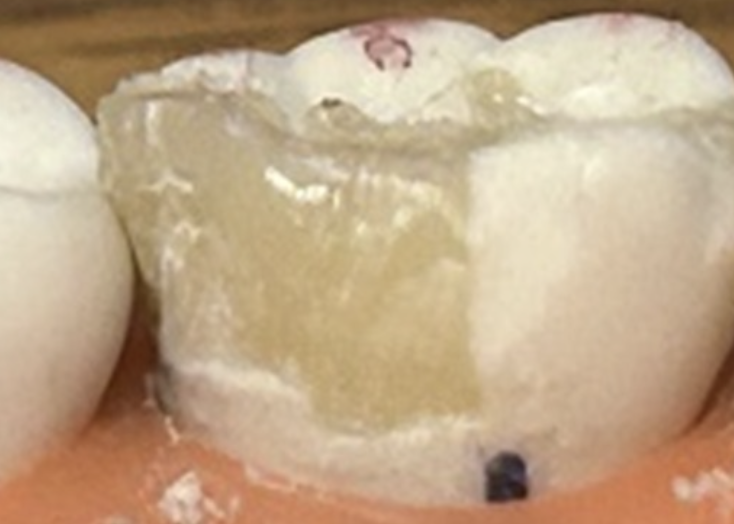
This is an example of _____ side interference
non-working
How do you avoid bubbles at the cavosurface margin of your restoration?
use clean instrument
use a small amount of bonding agent
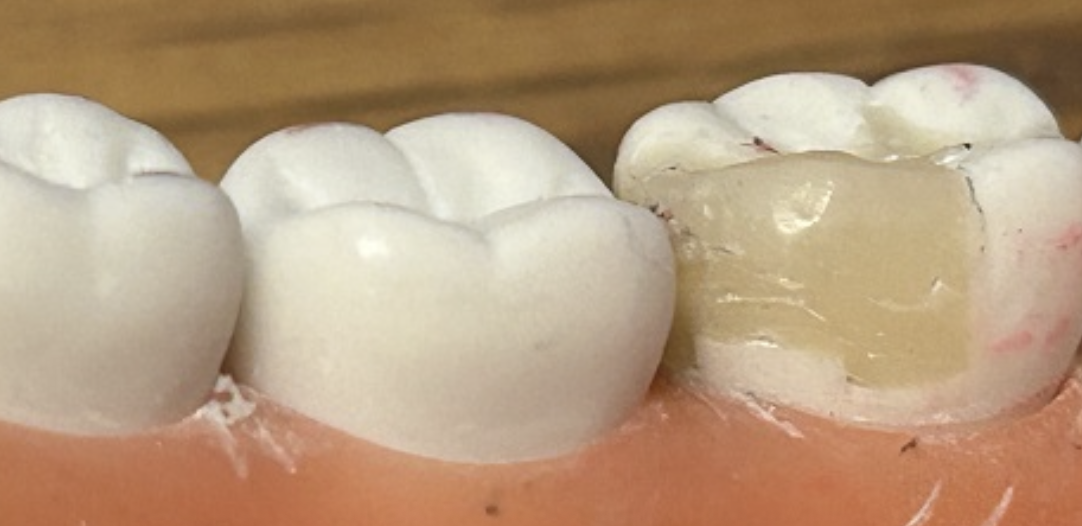
How would you correct this restoration?
Continue finishing with finishing burr (clockwise)
Etch and bond more composite