Comprehensive Veterinary Ophthalmology: Diseases, Diagnosis, and Treatment
 Call Kai
 Learn
Learn Practice Test
 Spaced Repetition
 Match
Match Flashcards
 Knowt Play
1/82

There's no tags or description
Looks like no tags are added yet.
Name | Mastery | Learn | Test | Matching | Spaced | Call with Kai |
|---|
No analytics yet
Send a link to your students to track their progress
83 Terms
What is conjunctivitis?
Inflammation of the conjunctiva.
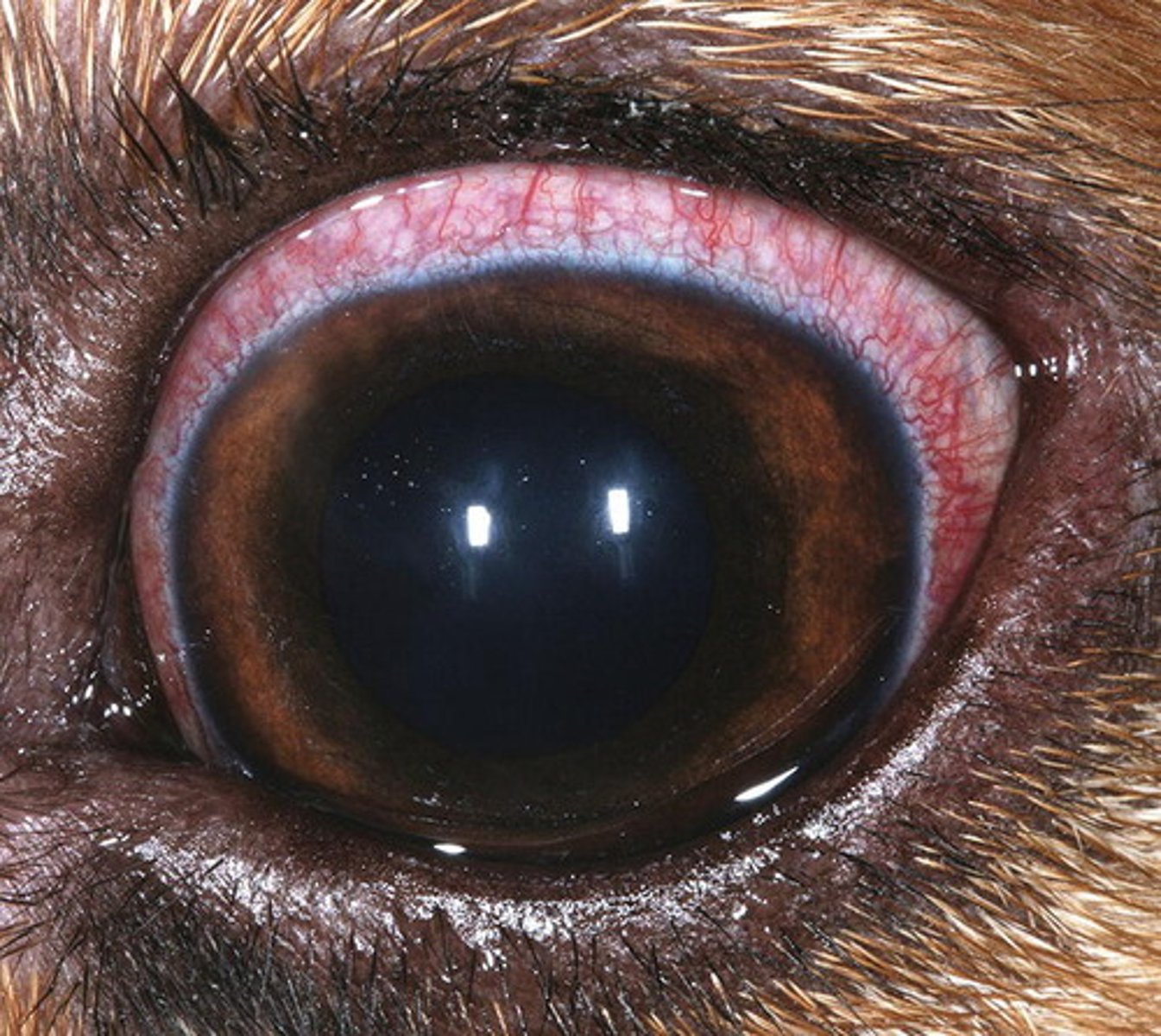
Is conjunctivitis considered a primary or secondary disease?
Secondary.
What are the two types of conjunctivitis and which species are they commonly associated with?
Non-infectious - dogs; Infectious - cats.
What is the most common cause of bilateral conjunctivitis in young kittens?
Feline Herpes virus/calicivirus.
How do you diagnose and treat conjunctivitis?
Visual exam; topical antibiotic ointment and cleaning.
What is epiphora?
An overflow of tears.
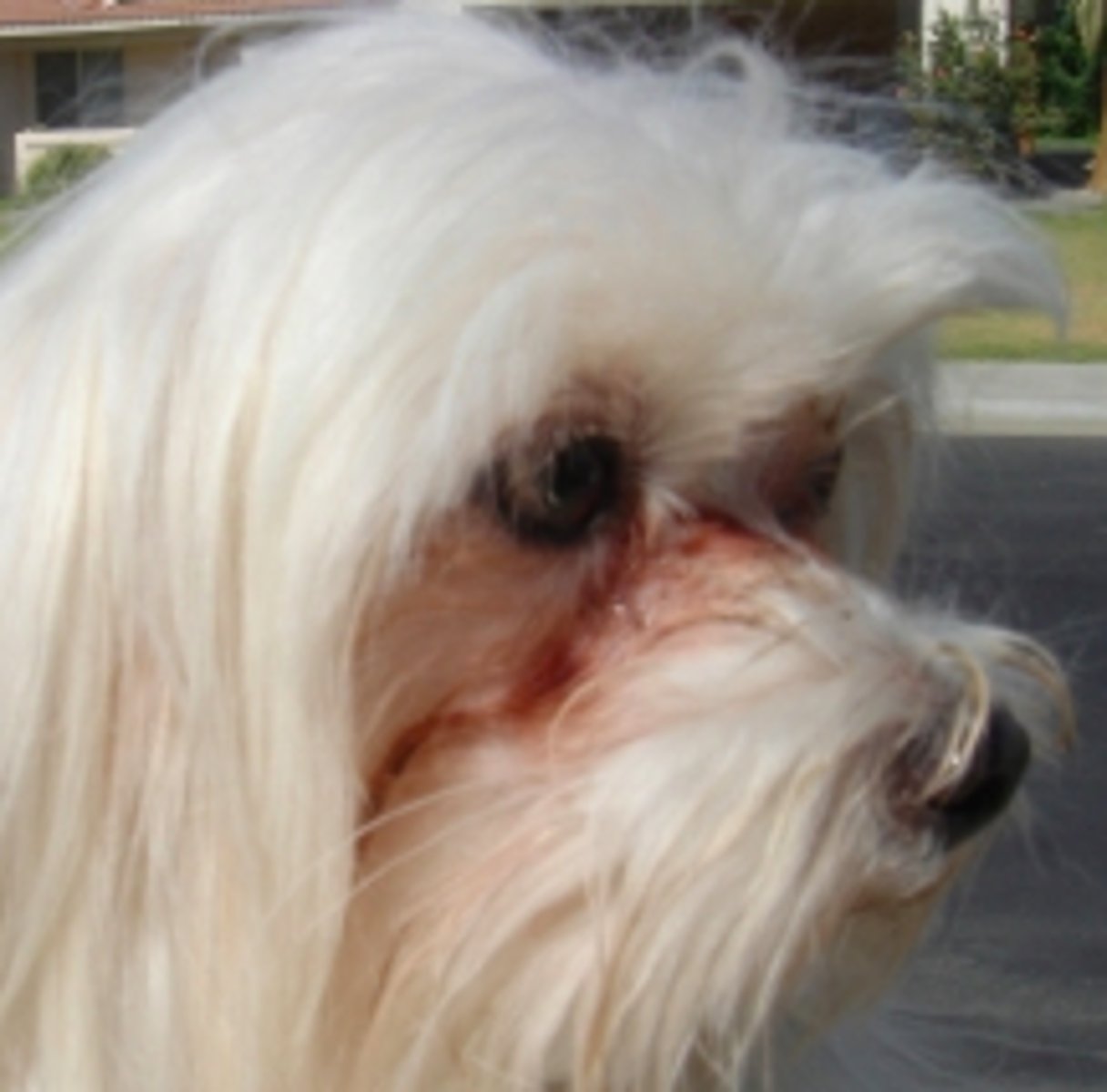
What causes overproduction of tears?
Ocular pain/irritation.
What can cause epiphora?
Excessive hair/face folds, entropion/ectropion, cilia.
What are the symptoms of epiphora?
Watery eyes, wet facial hair, secondary bacterial infection, facial hair discoloration.
How do you diagnose and treat epiphora?
Eye exam/fluorescein dye test; treat primary cause, flush nasolacrimal ducts, surgically open puncta, antibiotic ointment, trim facial hair, etc.
Which species do eyelid tumors tend to be malignant?
Cats.
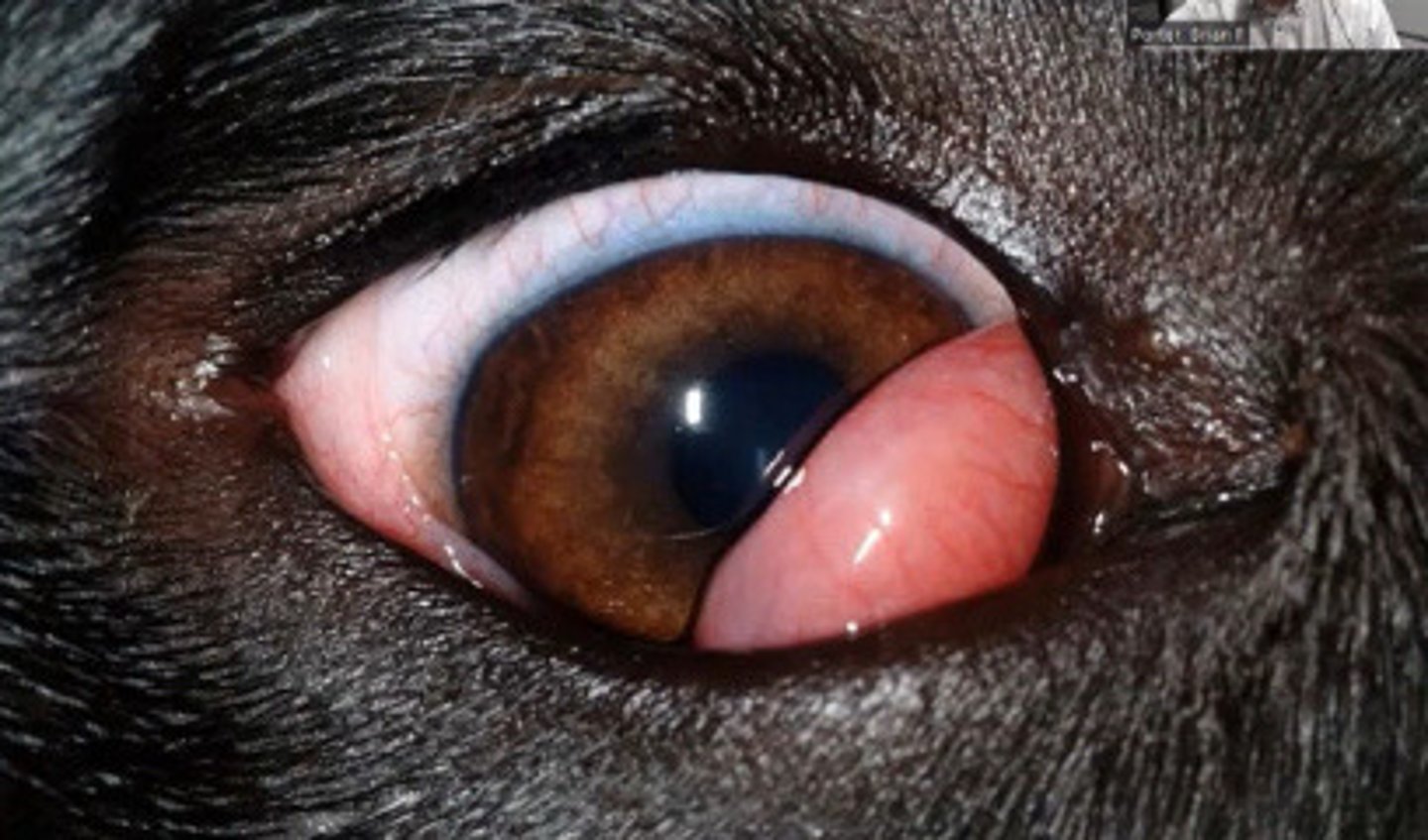
What is cherry eye (PTEG)?
Nictitating membrane hypertrophy: tissue swells - out of place/lack of circulation.
What breeds are predisposed to cherry eye?
Bulldog, Basset Hound, Boston Terrier, etc.
What are the symptoms of cherry eye?
Reddened enlargement of tissue at the medial canthus, epiphora, conjunctival irritation.
At what age does cherry eye typically occur?
Dogs less than 2 years old.
How do you diagnose and treat cherry eye?
Clinical signs, breed, consider tumor; surgery.
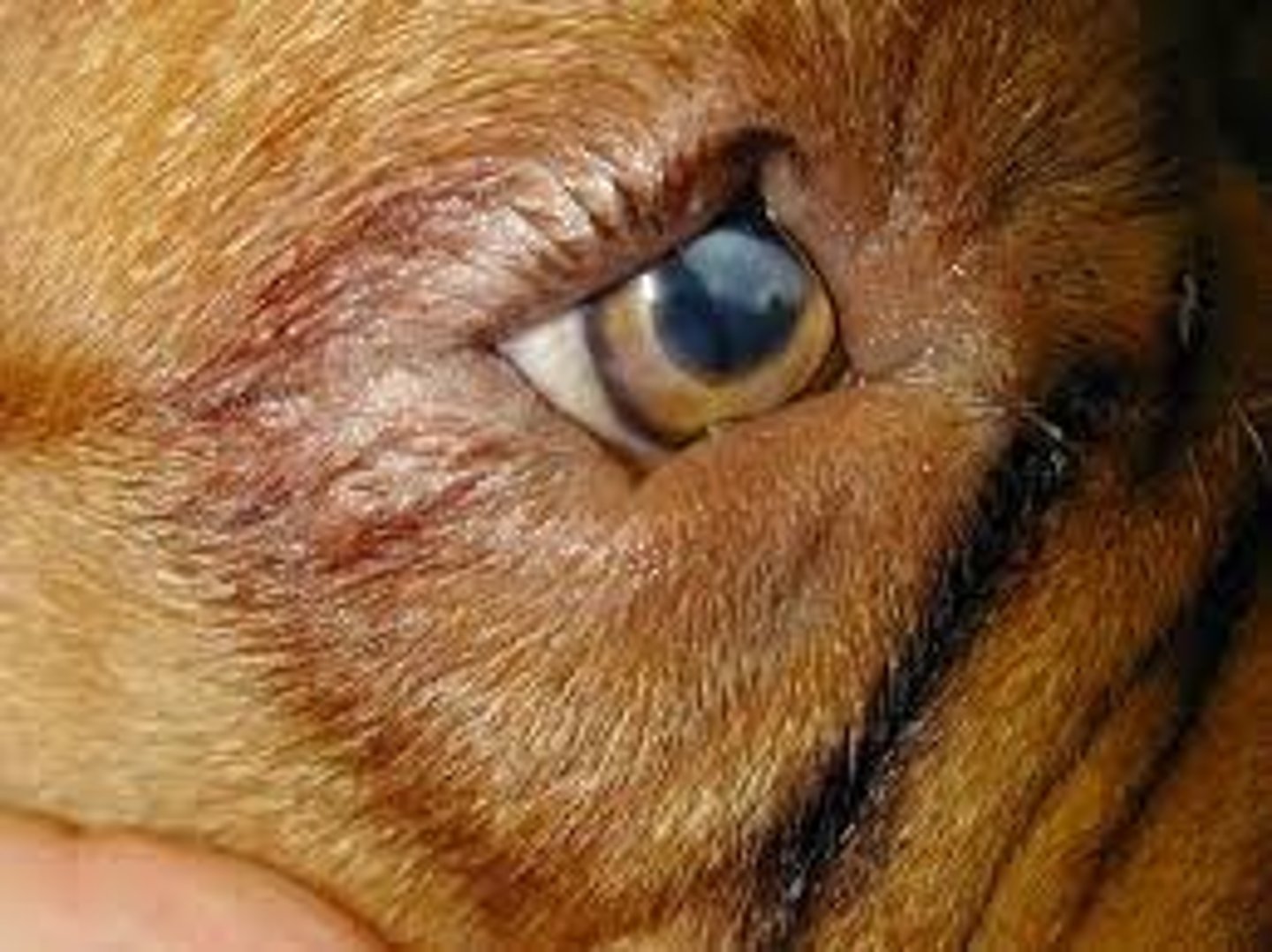
What is entropion?
Eyelid rolls in against the cornea.
What breeds are predisposed to entropion?
Collie, Great Dane, Irish Setter, Doberman, Golden, Rottweiler, etc.
What are the symptoms of entropion?
Eyelids roll in, ocular pain, redness, discharge, corneal ulcers.
How do you treat entropion?
Surgical correction of eyelid.
What is ectropion?
Eyelid is excessive and droops.
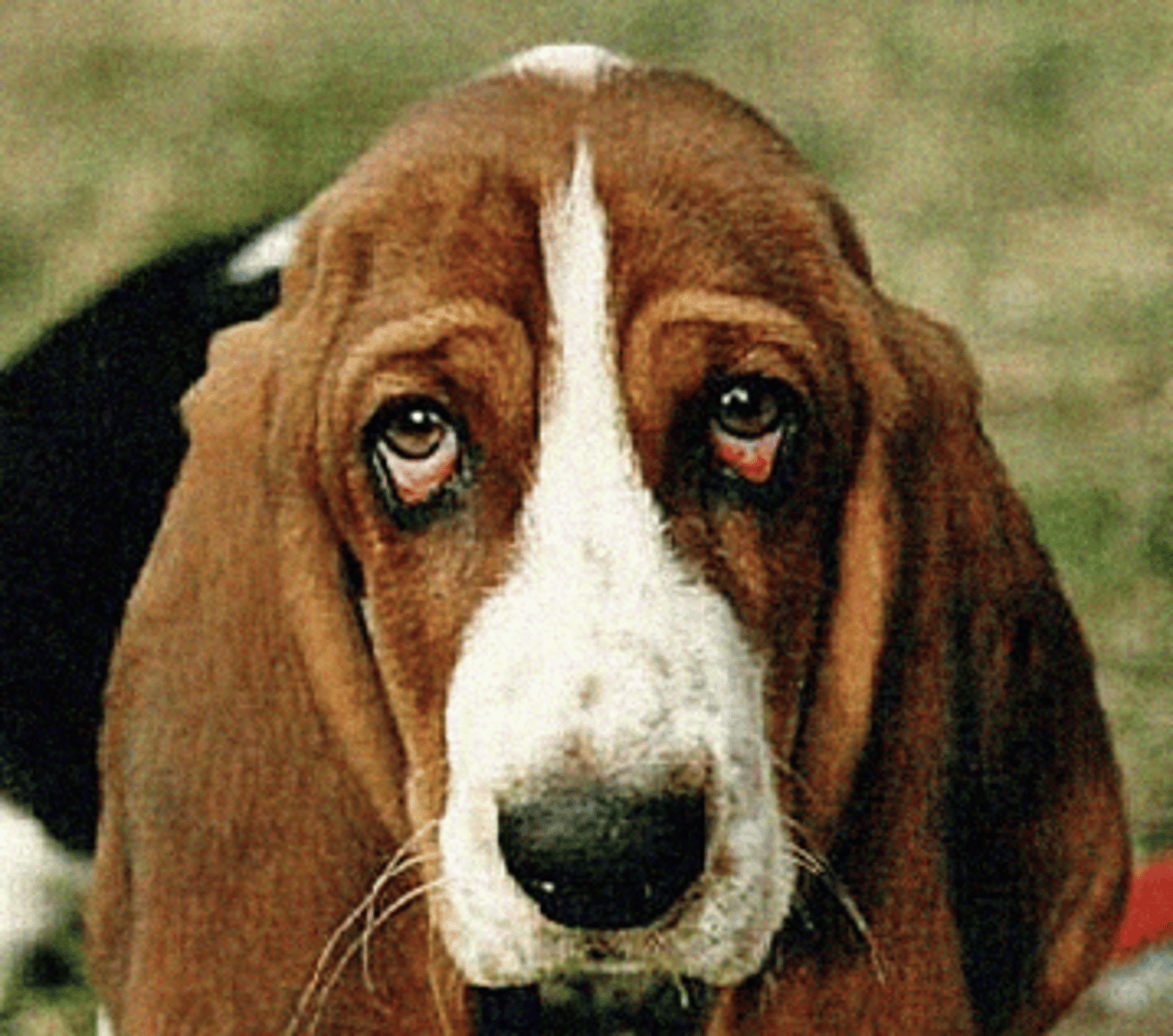
What breeds are predisposed to ectropion?
Basset, Bloodhound, Cocker Spaniel, Bulldog, etc.
What are the symptoms of ectropion?
Lid eversion, conjunctivitis, eye drainage.
How do you treat ectropion?
Surgical correction of lid.
What is a corneal ulcer also known as?
Ulcerative keratitis.
What is a corneal ulcer?
Full-thickness loss of corneal epithelium, exposing underlying stroma layer.
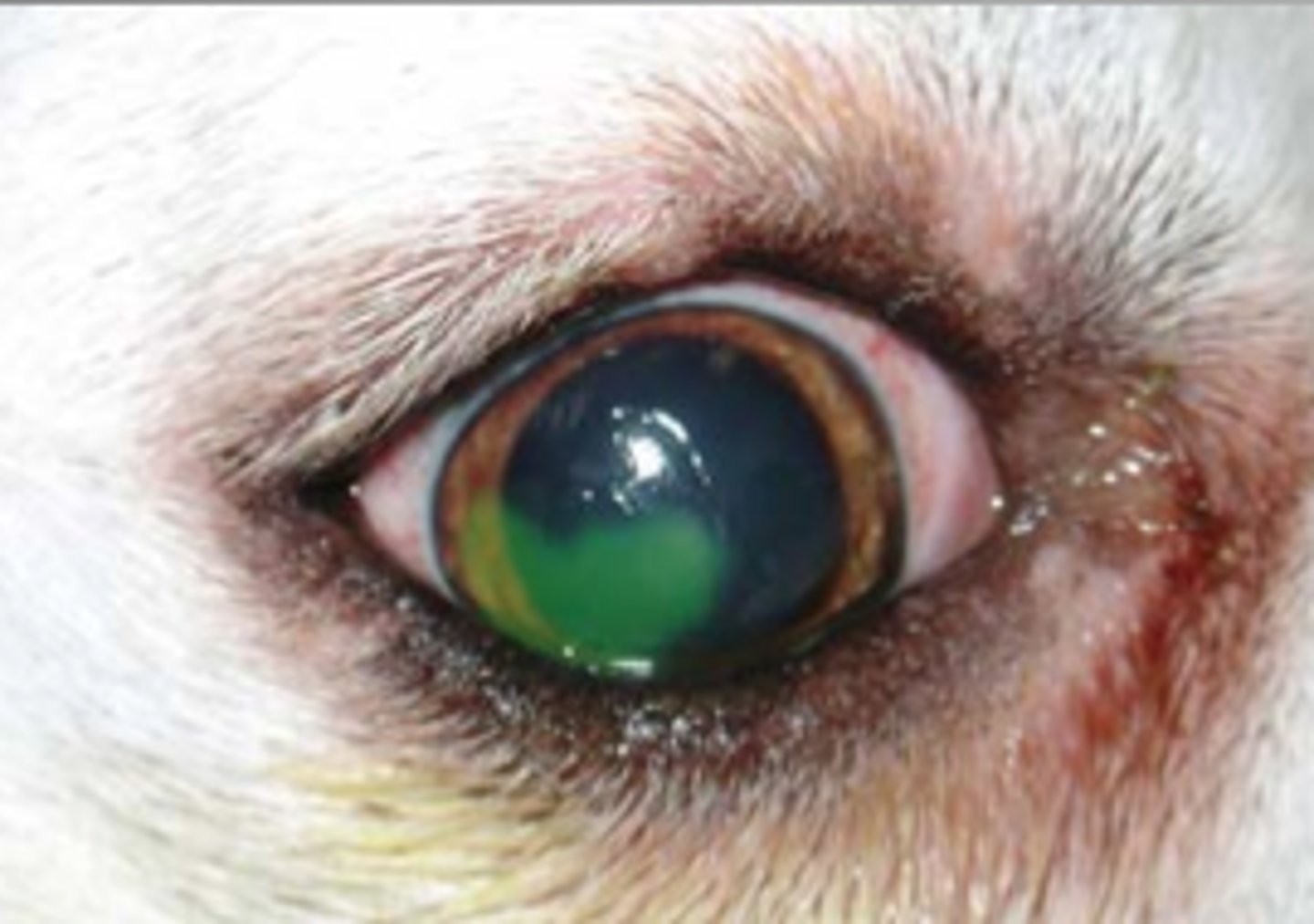
What can cause a corneal ulcer?
Trauma, chemicals, foreign objects, other eye diseases, FHV.
What are the symptoms of a corneal ulcer?
Ocular pain, epiphora, red conjunctiva/sclera.
How do you diagnose a corneal ulcer?
Fluorescein stain & eye exam.
What is the treatment for a corneal ulcer?
Topical atropine and antibiotics, serum drops, potential surgery.
What should never be used in the treatment of a corneal ulcer?
Steroids.
What is dry eye also known as?
Keratoconjunctivitis sicca.
What is the abbreviation for dry eye?
KCS.
What is dry eye?
Loss of tear production.
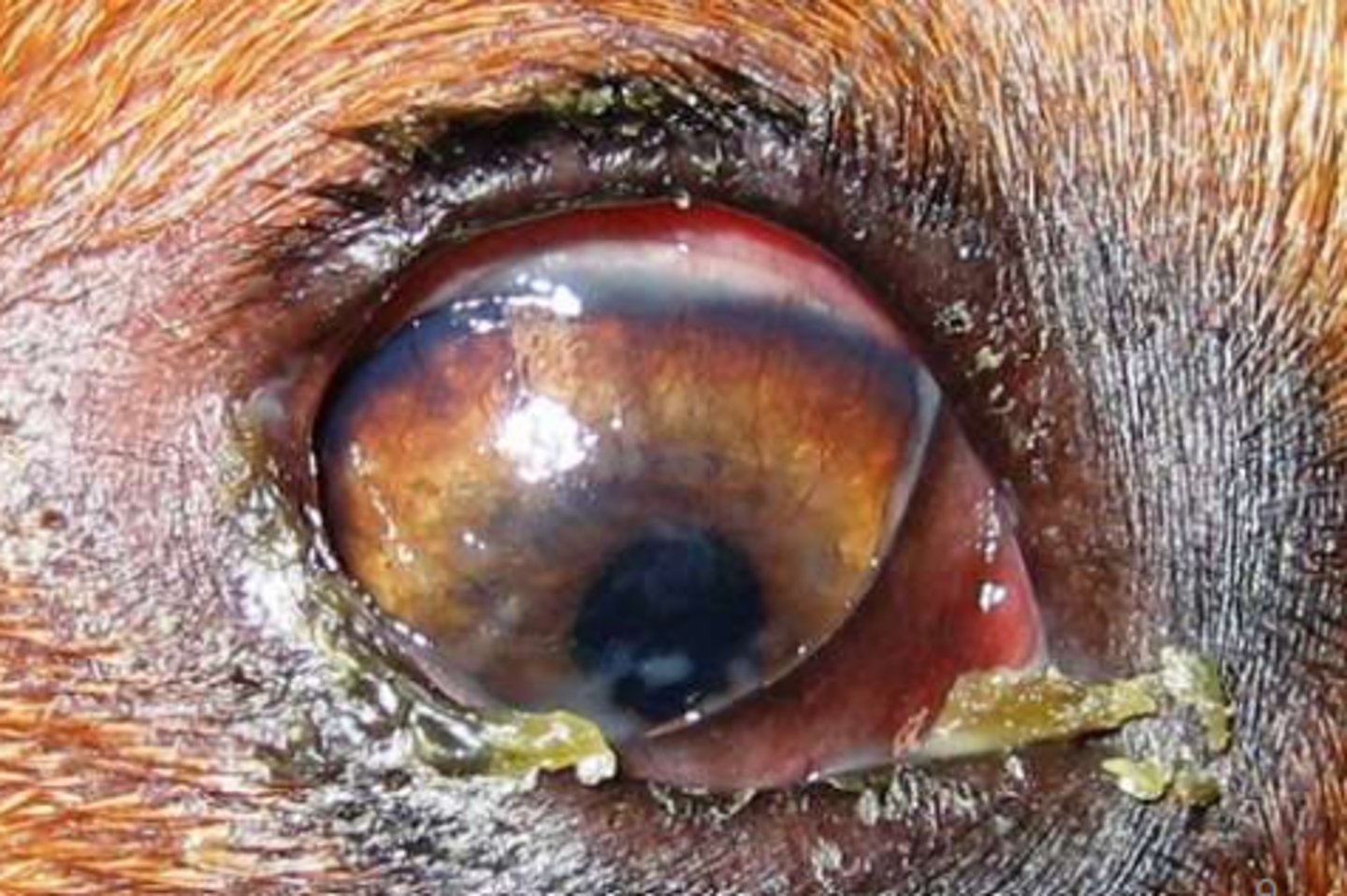
What are two causes of dry eye?
Viral infections and immune-mediated disease.
What are the symptoms of dry eye?
Recurrent conjunctivitis, corneal ulcers, dry/dull/irregular appearance, mucoid eye discharge.
How do you diagnose dry eye?
Schirmer tear test (15-25 mm/min).
How do you treat dry eye?
Tear stimulation with cyclosporine or surgery.
What can occur if dry eye is not treated?
Blindness.
Is dry eye a lifelong condition?
Yes.
What is glaucoma?
Inc. intraocular pressure (IOP) - 30 mm/Hg or more.
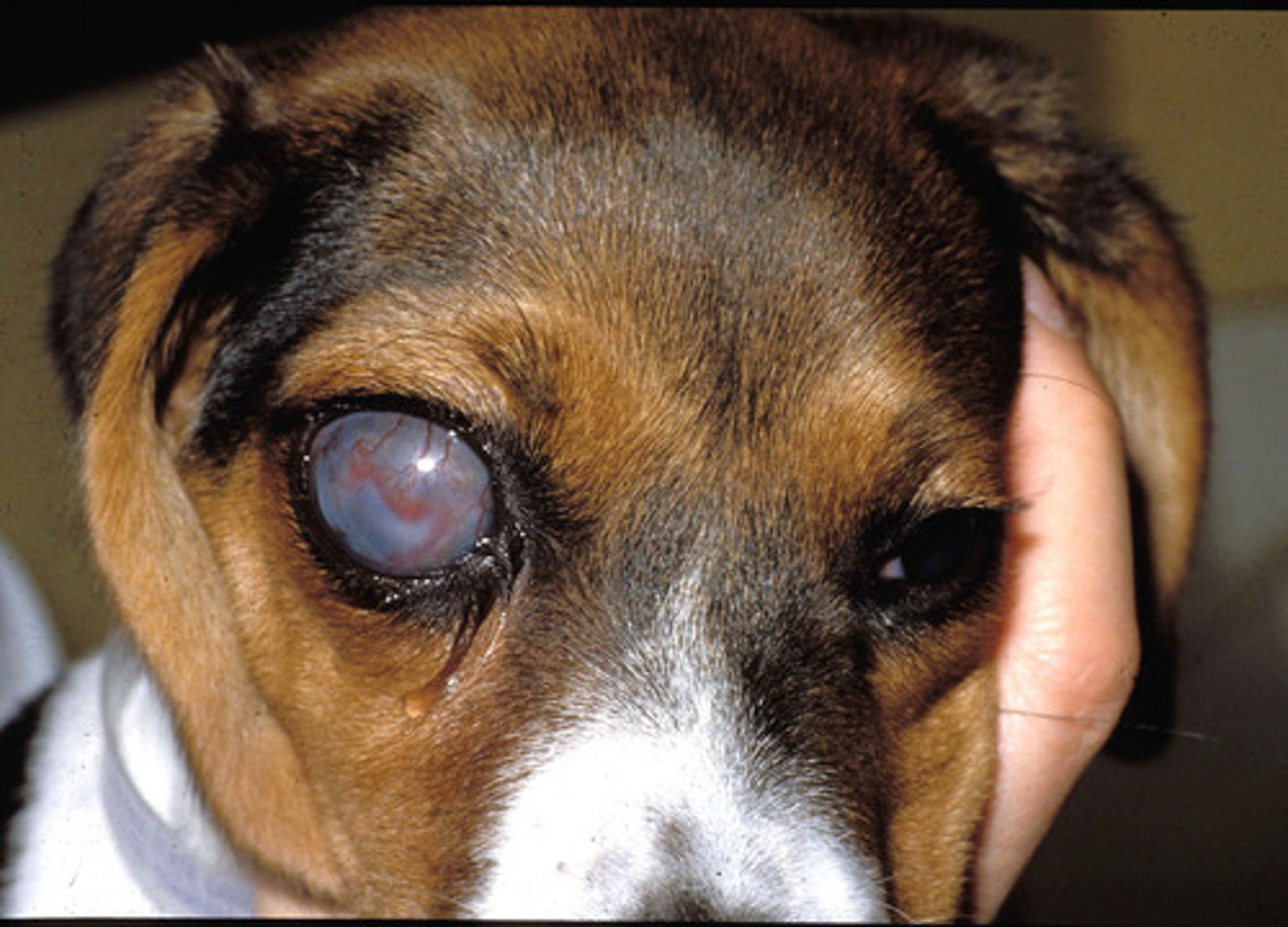
What are the two types of glaucoma?
Primary and secondary.
Which type of glaucoma is a congenital disease?
Primary (occurs in Cockers, Bassets, Chows, etc.).
What are the symptoms of glaucoma?
Pain, bloodshot conjunctiva, corneal edema, dilated pupil (unresponsive to light), enlarged globe, blindness.
Is acute or chronic glaucoma considered an emergency?
Acute.
How is glaucoma diagnosed?
Measure IOP with a tonometer.
What are treatment options for glaucoma?
Drops, IV mannitol, oral medications, surgery.
What is senile nuclear sclerosis?
Cloudy-eyed appearance in older animals.
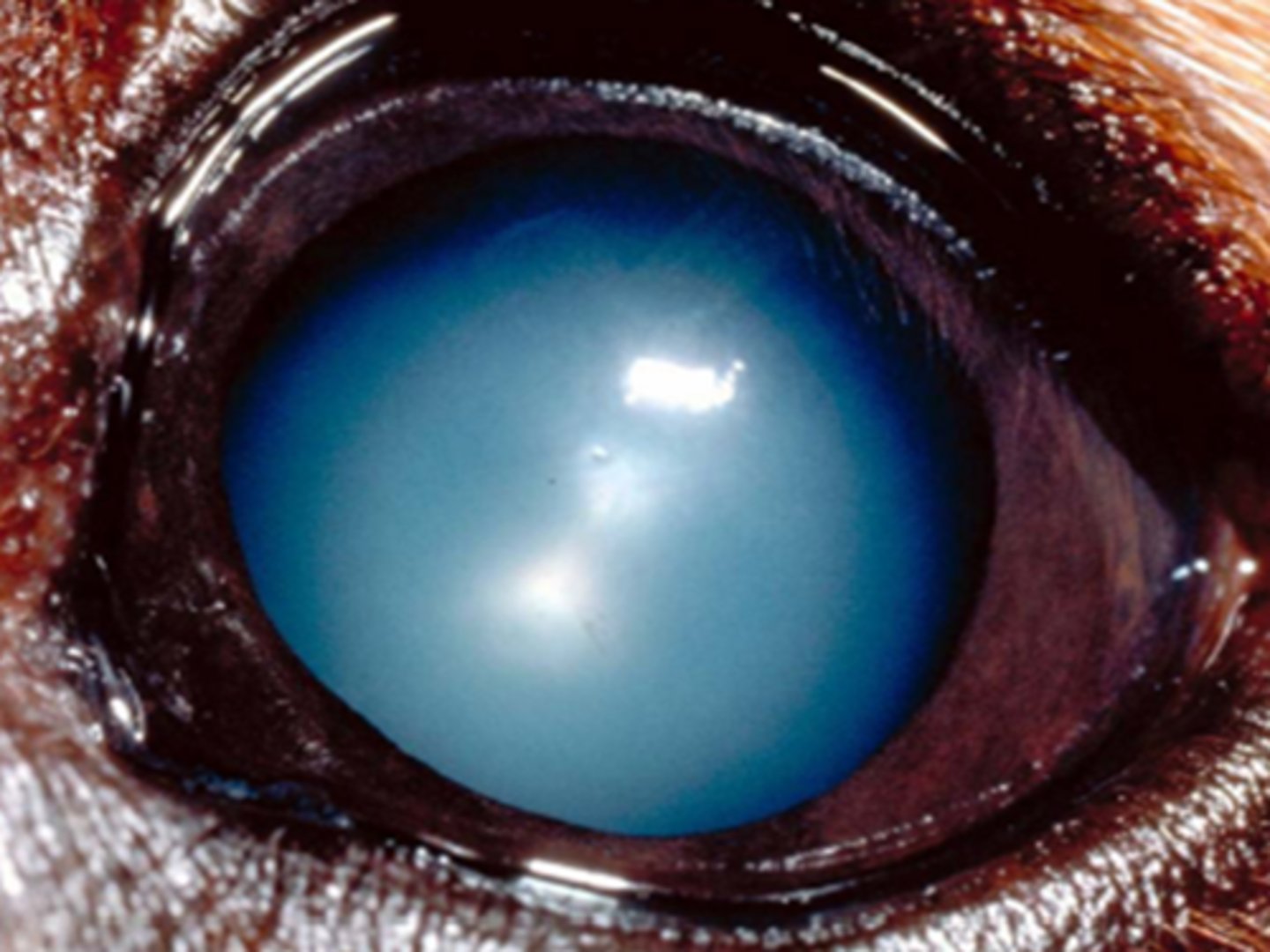
When is senile nuclear sclerosis commonly seen?
As the animal ages.
Is senile nuclear sclerosis a normal change to the eye?
Yes.
Is vision impaired with senile nuclear sclerosis?
No.
What should senile nuclear sclerosis be differentiated from?
Cataracts.
What is a cataract?
Lens displays opaqueness.
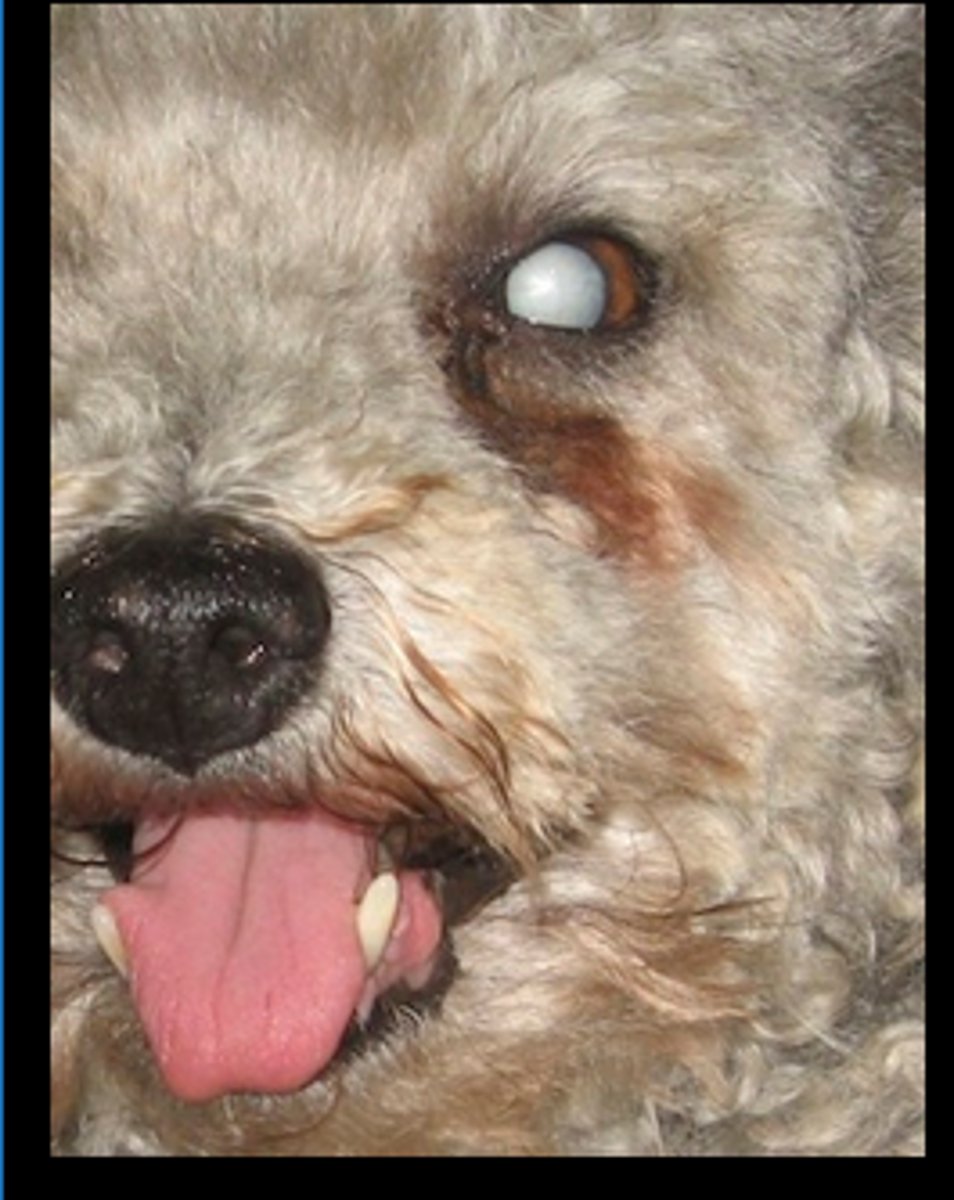
Is vision impaired with cataracts?
Yes.
What disease process can cataracts be seen with?
Diabetes.
What are the symptoms of cataracts?
Progressive vision loss w/ opaque pupillary opening.
How are cataracts diagnosed?
Exam with tracking/menace/maze + blood tests + ERG.
What are treatment options for cataracts?
Surgical lens replacement.
What is progressive retinal atrophy?
Retina deteriorates gradually.
What is the abbreviation for progressive retinal atrophy?
PRA.
What breeds are predisposed to progressive retinal atrophy?
Poodle, Golden, Collie, Irish Setter, Cocker, etc.
What is the cause of progressive retinal atrophy in cats?
Taurine deficiency.
What are the symptoms of progressive retinal atrophy?
Loss of night vision, retinal thinning, blindness.
How is progressive retinal atrophy diagnosed?
Eye exam looking at retina, bloodwork, ERG.
What are treatment options for progressive retinal atrophy?
None.
What is the alternate name for chronic superficial keratitis?
Pannus.
Which type of cells within the cornea accumulate with chronic superficial keratitis?
Granulation/epithelial tissue.
What structures make up the uvea layer of the eye?
Iris, ciliary body, choroid.
What is the purpose of performing a Schirmer tear test?
To assess the amount of tear production in the eye.
What is normal tear production?
15-25 mm/min.
What could alter a pet's tear production prior to performing a Schirmer tear test?
Other ocular procedures (irritation, ocular saline, etc.).
What is the purpose of tonometry?
To measure intraocular pressure.
What is the abbreviation for intraocular pressure?
IOP.
What is normal IOP in a patient?
12-22 mm/Hg.
What equipment is used to obtain a patient's IOP?
Topical ophthalmic anesthetic drops, tonopen/tonometer.
How many readings should be done when testing for IOP?
Three readings, average the three readings.
What could affect a tonometry reading?
Pressure applied to the jugular vein/orbit may falsely elevate results.
What is the purpose of a fluorescein dye test?
Detection of abrasions or ulcers of the cornea.
How do you perform a fluorescein dye test?
Place ocular saline on dye strip, place drop with dye in eye, examine eye with blue light for positive uptake, rinse eye.
What is the purpose of flushing the nasolacrimal duct?
To determine patency of nasolacrimal duct and relieve minor obstructions.
What equipment is necessary to perform a flushing of the nasolacrimal duct?
Cotton/gauze/cotton-tip applicator, irrigation solution, lacrimal duct dilator, eye cannula, syringe w/ 5 mL of sterile saline, proparacaine.
What are corneoconjunctival cultures used to diagnose?
Corneal bacteria, fungi, pathogens.
What should be stopped prior to collecting a corneoconjunctival culture sample?
Instilling topical medications.