Social Psychology FINAL EXAM
 Call Kai
 Learn
Learn Practice Test
 Spaced Repetition
 Match
Match Flashcards
 Knowt Play
1/1275

There's no tags or description
Looks like no tags are added yet.
Name | Mastery | Learn | Test | Matching | Spaced | Call with Kai |
|---|
No analytics yet
Send a link to your students to track their progress
1276 Terms
Herbert Spencer
19th century, British sociologist
extended Charles Darwin’s theory of evolution by natural selection from the biological realm to the psychological
argues that properties of the mind that produce social behavior are inherited through a process of evolution
Sigmund Freud
human behavior directed primarily by aggressive and seggsual drives. His theories laid the groundwork for psychoanalysis, emphasizing the influence of the unconscious mind on behavior.
aggessive behavior critical for competing for scarce resources & avoiding predators
sexual behavior critical for reproducing and perpetuating genes
John Watson - behaviorism
argued that psychology should focus only on overt behavior because it can be directly observed and measured
most human behavior is learned in response to the demands of the environment
behaviors followed by desirable outcomes reoccur, undesirable outcomes dont reoccur
social cognition perspective
understand how people perceive, remember, and interpret events and individuals in their social world, including themselves
5 influential perspectives in social psychology
social cognitive
evolutionary
cultural
social neuroscience
existential
evolutionary perspective
focus on how humans are a species of animal and that their social behavior is a consequence of particular evolved adaptations
cultural perspective
focus on the influence of culture on thought, feeling, and behavior
social neuroscience
focus on the neural processes that underlie social judgment and behavior
existential perspective
focus on the cognitive, affective, and behavioral consequences of basic aspects of the human condition such as the knowledge of mortality, the desire for meaning, and the precarious nature of identity
humans are cultural animals
only humans create their own symbolic conception of reality, this creation is culture.
meaning to life, representation of reality
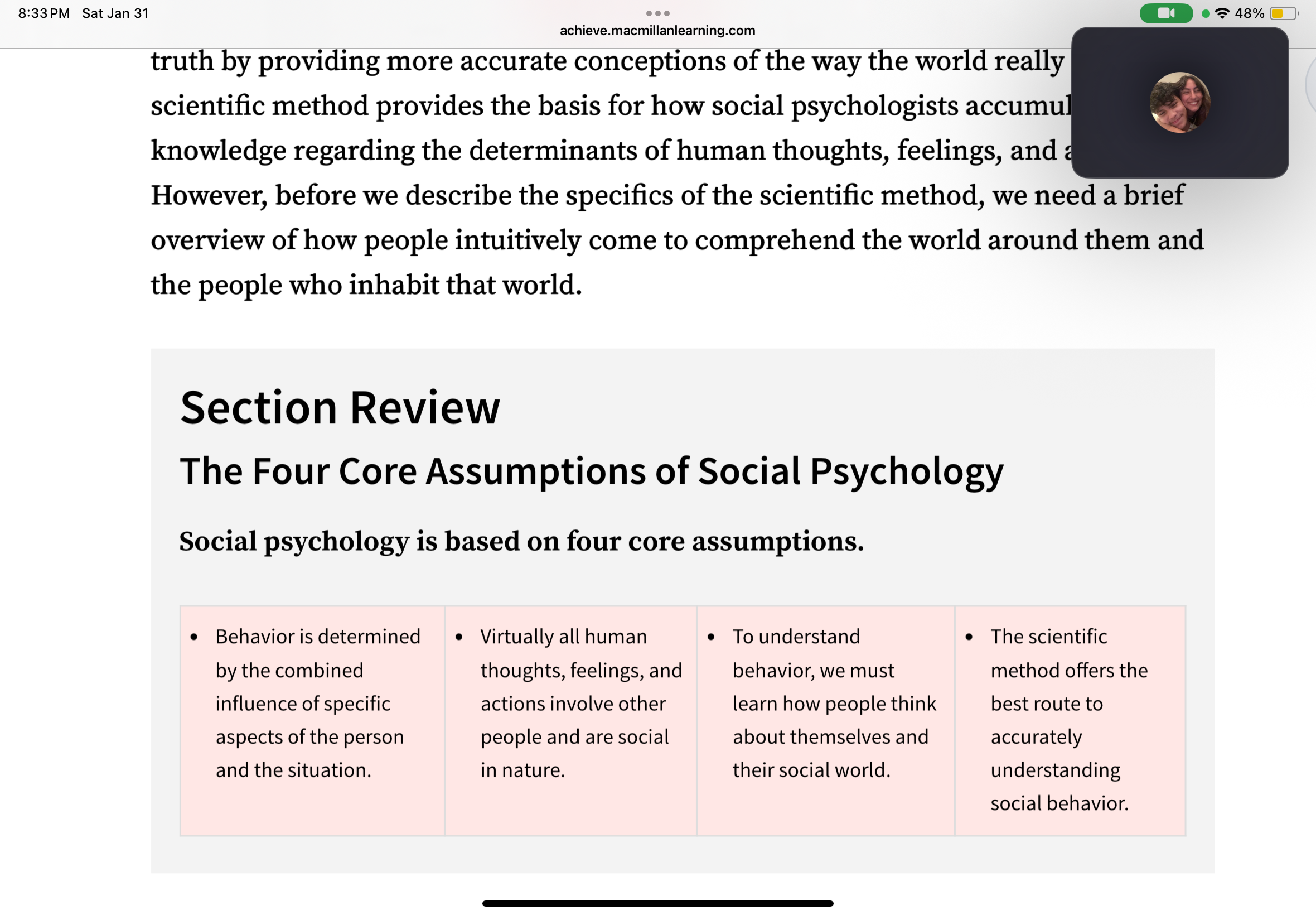
Assumption of Social Psychology #1
Kurt Lewin (1936)
any given behavior is determined by the combined influences of individual features of the person and specific aspects of the situation
a person’s environment profoundly influences how they think, feel, and act in social life
dispositions
consistent preferences, ways of thinking, and behavioral tendencies that influence us across varying situations and over time
Assumption of Social Psychology #2
Behavior depends on a socially constructed view of reality
all thoughts, feelings, and actions are social in nature
Assumption of social psychology #3
behavior is strongly influenced by our social cognition
we try to understand others by interpreting their thoughts, intentions, and feelings based on social context.
Assumption of Social Psychology #4
The best way to understand social behavior is to use the scientific method
experiments, observation, etc.
section review ch1: 4 core assumptions
Heider’s Attribution theory (1958)
the view that people act as intuitive scientists when they observe other people’s behavior and infer explanations about why those people acted the way they did
people are intuitive scientists
causal attributions
we observe other people’s behavior and try to figure out why they acted the way they did
cultural knowledge
what shapes attributions
a vast store of information accumulated within a culture that explains how the world works and why things happen as they do
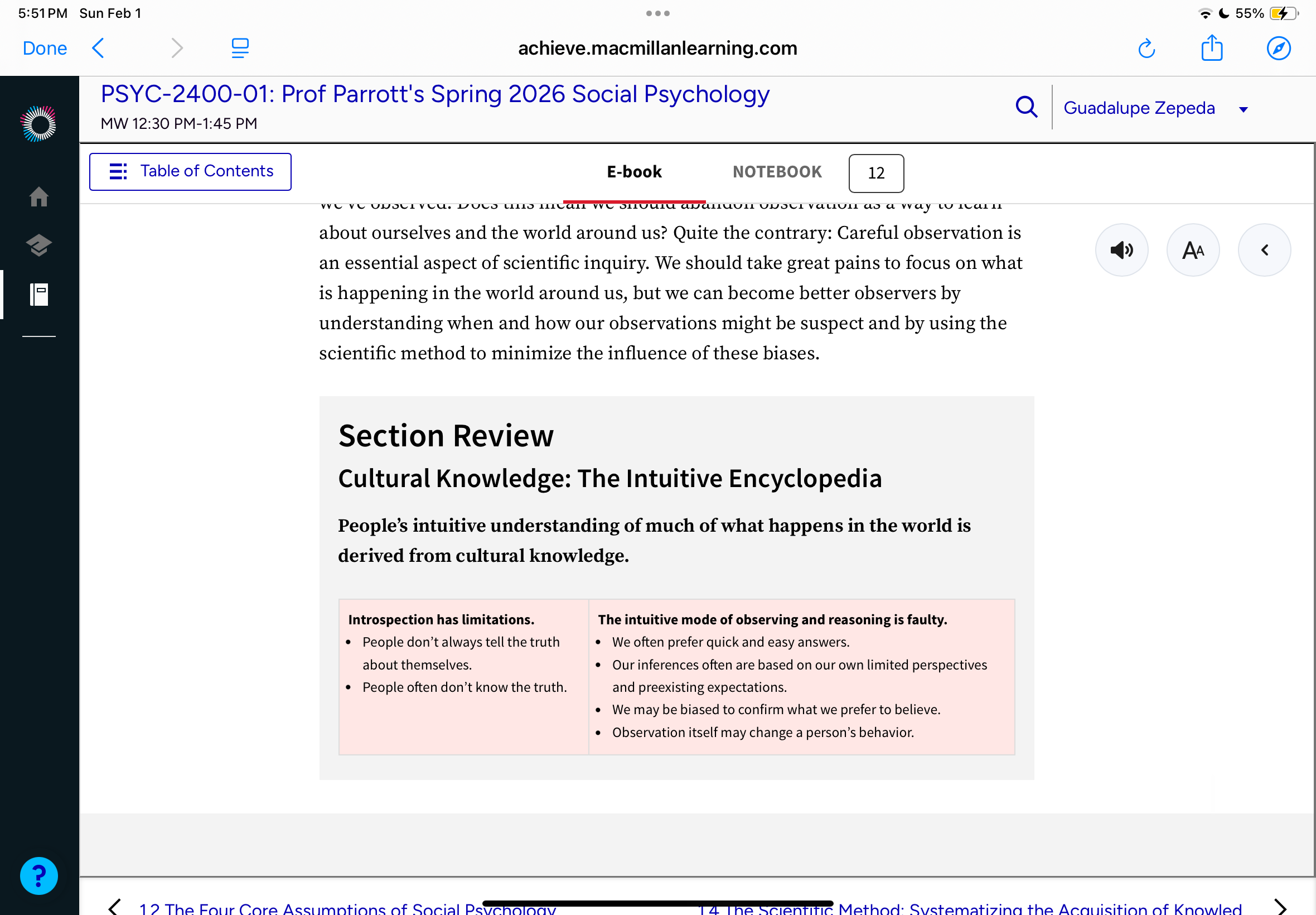
Explaining behavior through introspection
people’s explanations for their own behavior can sometimes be misleading
people dont always tell the truth because of biases and self-serving motives
people often dont really know what they think they know
dont know why they do what they do or feel the way they feel
people’s explanations for their feelings are often incorrect (1977)
our observations come from our own unique and limited perspective
our reasoning processes may be biased to confirm what we set out to assess
Richard Nisbet and Tim Wilson (1977)
peoples explanations for their feelings are often incorrect
female shoppers at large department store showed 4 pairs of stockings from left to right on a table
asked to select fav and explain why
they were all identical except for differences in scent and randomized order
people usually prefer products they evaluate last
71% chose stockings on right side of table
women said differences in color or texture, nothing abt placement on table
human capacity for introspection is quite limited
cognitive misers
people who avoid expending effort and cognitive resources when thinking and prefer to seize on quick and easy answers to the questions they ask. if we think an explanation makes sense, we tend to accept it without much thought or analysis
if events are unexpected or important to use, we make better inferences about others’ behaviors and how the world works
confirmation bias
tendency to seek out information and view events and other people in ways that fit how we want and expect them to
Lord et al 1979 test
confirmation bias
students in intro psych class tested on their feelings on capital punishment
read two studies, one concluded capital punsihment reduced crime, the other concluded it didnt reduce crime
after, students were asked to evaluate the quality of each study and their findings.
everyone in study reported their current attitude about capital punishment and they all were still in favor of their preexisting beliefs
found these more convincing
Tanya Chartrand and John Bargh (1999) - subtle influence of others
in this study, people were paired together to make judgements about pictures
one pair was real participant, other a confederate
sometimes confederate rubbed their face, shook a food repeatedly during a task
the naive participants mimicked these nervous behaviors of the confederates
participants didn’t realize these effects but clearly were influenced
confederate
someone working with the experimenters
ch 1 section review: cultural knowledge
theories
explanations on how or why things happen as they do
research
the process whereby scientists observe events in the world, look for consistent patterns, and evaluate theories proposed to explain those patterns.
scientific method
hypothesis
observation & testing
data collection
analysis of results
reporting
Reliability
consistency of measurement over time and across different situations.
can it be replicated
Validity
knowing that test actually measures what its supposed to measure, does it effectively do its job
research methods
surveys
naturalistic observation
case studies
DO NOT DETERMINE CAUSATION
surveys
allow us to generalize to a population
randomly sample people
naturalistic observation
just observe and take notes
patterns of behavior
interactions in a natural setting without manipulation of variables.
case studies
sample size is generally low, sometimes single individual
and provide in-depth insight into a specific subject or phenomenon.
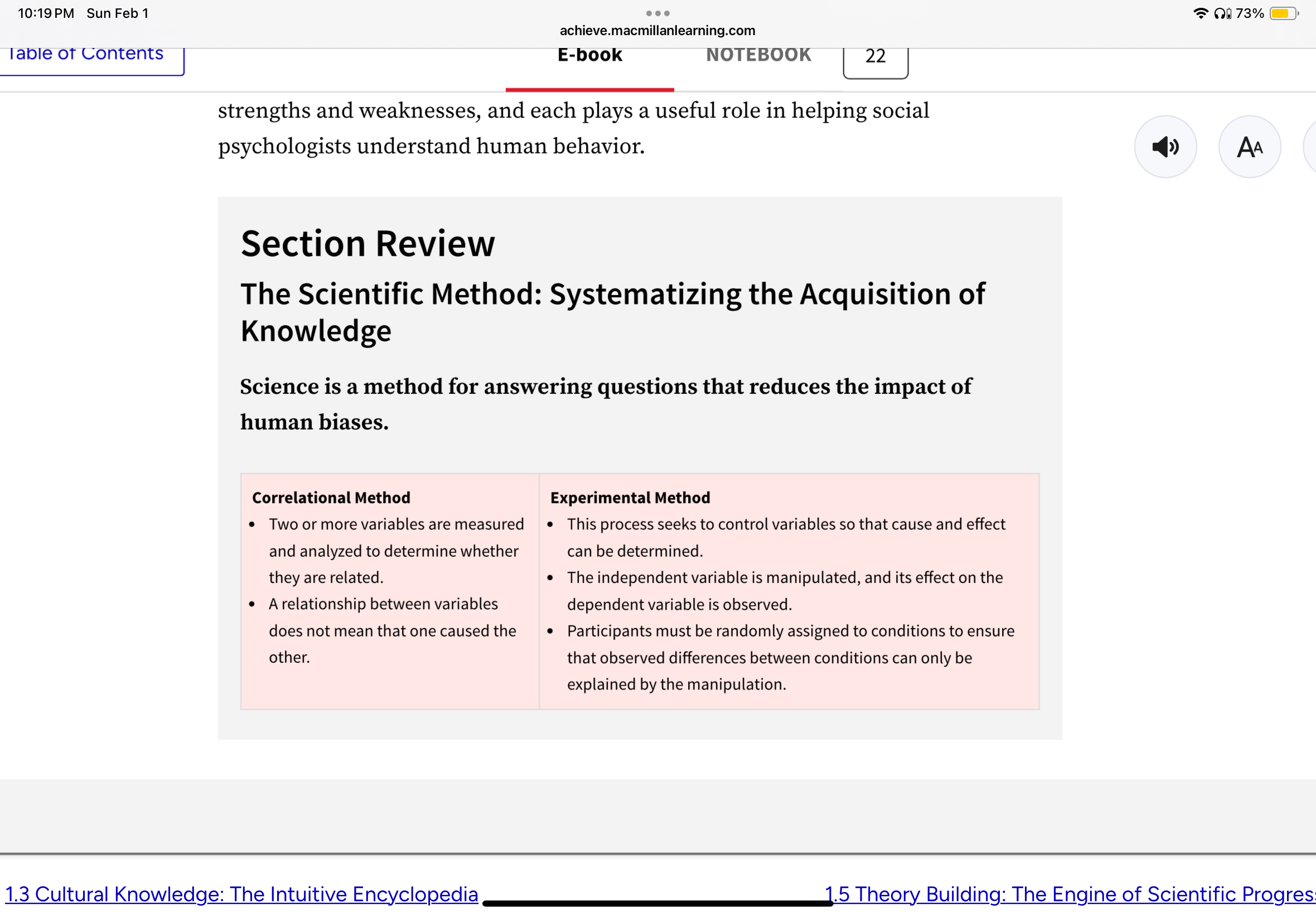
experimental research
involves manipulating one or more variables to determine their effect on a dependent variable.
manipulation: isolate one variable as a cause (independent variable)
participants should be the same on average
IV and DV and all other variables held constant
This method allows for the establishment of causation
random assignment
assign people randomly to either experimental group or control group.
This process helps eliminate selection bias and ensures that each participant has an equal chance of being assigned to any group.
effectively equalizes everything
if they differ at end of experiment, must be bc of the manipulation of independent variable
double blind procedure
participant and experimenter are both blind as to who gets real IV and who gets placebo.
hypothesis
an if-then statement that follows logically from a theory and specifies how certain variables should be related to each other if the theory is correct
bridge from theory to research
stereotype threat theory
states that individuals perform worse on tasks when they fear confirming negative stereotypes about their social identity
1955 Claude Steele and Joshua Aronson
poor performance by members of stigmatized groups as it creates anxiety or distraction, impacting concentration and overall performance.
correlational method
two or more preexisting characteristics (variables) of a group of individuals are measured and compared to determine whether and/or to what extent they are associated.
The correlational method examines the relationship between variables without manipulation, often used to identify patterns or associations.
stigma consciousness
tendency to be highly conscious of one’s stereotyped status and to believe they these stereotypes shape how one is viewed by others.
Liz Pinel 2005
correlation coefficient
a positive or negative numerical value that shows direction and strength of a relationship between two variables typically ranging from -1 to +1.
positive/ negative tells us direction
closer to 1 or -1 tells us its strong, closer to 0 is weak
why correlation isnt causation
reverse causality problem: we dont know which is the cause and which is the effect
third variable problem: an external factor may influence both variables, leading to a spurious correlation.
longitudinal studies
two variables measured at multiple points in time
can make us more conficent about likely causal order
eg: Huesmann, Lagerspetz, Eron 1984
violent television watched in childhood correlated positively with amt of aggressive behavior as adult
aggressiveness in childhood doesnt mean you watch violent television as adult
third variable problem remains, not causaiton
internal validity
when all requirements of experimental method are met
it is possible to conclude that the manipulated IV caused any observed changes in measured DV
steele and aronson (1995)
stereotype threat caused reduced performance among members of stigmatized groups
tested on verbal ability (black and white students)
asked to indicate race on answer form prior to beginning test
control group took test with no mentioning of race
when participants were reminded of theri race, their performance dropped, not for white students
interaction
the pattern when the effect of one IV and the DV depends on the level of a second variable 4
random assignment
participants assigned to conditions in such a way that each person has an equal chance of being in either condition
solves problem of preexisting differences among participants in two conditions
field research
outside the laboratory, conducting research in natural settings to observe behaviors as they occur in real life.
capture social behavior as it occurs out in the world
quasi-experimental designs
groups of participants are compared on some dependent variable, but for practical or ethical reasons, they are not randomly assigned.
ch 1: scientific method section review
what makes for a good theory in social psych
organizes observations
explains observations
provides direction for research
generates new questions
has practical value
contact hypothesis
Gordon Allport in Nature of Prejudice (1954)
the idea that specific forms of contact between groups can break down stereotypes and negative feelings and thus reduce prejudice and intergroup conflict
operational definition
entails finding a specific, concrete way to measure or manipulate a conceptual variable
operationalizing a DV refers to specifying how it will be measured in a particular study
operationalizing a IV refers to precisely the procedures and stimuli that will be used to manipulate some variable of interest
construct validity
degree to which a dependent variable measures what it intends to measure or an IV manipulates what it intends to manipulate
manipulation check, directly assesses whether manipulation created the change that was intended
confounded variable
when more than one conceptual variable differs across conditions in an experiment, the IV is confounded
alternative explanations make it unclear which conceptual variable really is responsible for the changes in the dependent variable that occur
external validity
ability to generalize one’s findings beyond the group of ppl studied
W.E.I.R.D
Western, educated, industrialized, rich, democratic societies that are often the sample in psychological research.
direct replication
attempting to use the same methods and measures used by the original researchers
sample is large
manipulation is strong
measures are reliable
moderator variables
theoretically explain when, where, or for whom effects are most likely to occur
meta analysis
process of analyzing data across many related studies to determine the strength and reliability of a finding
registered report
study that is accepted for publication on the strength of the methods and importance of the question but before results are known.
limitations of science
aspects of reality that we humans cant know
our knowledge comes from our sense organs which doesn’t register the things actually happening in the world
although scientific method may be objective, the human beings who apply it are not
not all questions can be answered scientifically
human values exert influence on the way science is conducted
ch 1 theory building section review
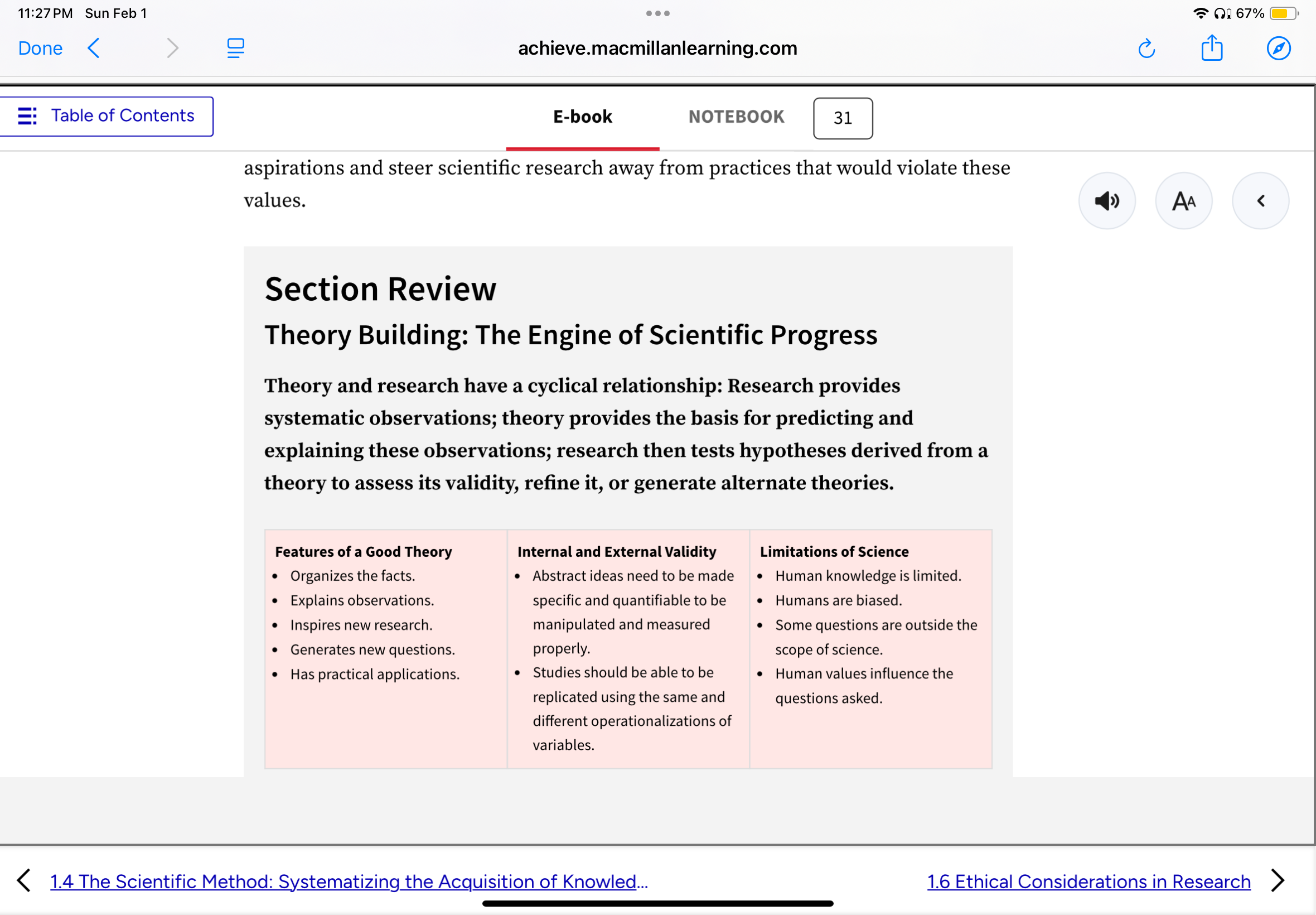
horrible treatments conducted
Nazi doctors in concentration camps during WW2
injected pregnant women with toxic substances to refine abortion and sterilization techniques
Tuskegee syphilis experiment, conducted btwn 1932-1972 by US Health Service
in order to study progression of syphilis, scientists didn’t tell African Americans that they and syphilis.. didnt give them any penicillin
Milgram’s 1974 experiments
study on obedience and authority
participants believed they were giving middle-aged man extremely painful and potentially lethal electric shocks that tested how far individuals would go in obeying an authority figure, despite moral objections.
cover story
an explanation of the purpose of the study that told to participants, but is different from the TRUE purpose
most social psychological experiments involve some level of deception
demand characteristics
aspects of an experiment that can reveal its purpose, potentially influencing participants' behavior and responses.
subtle cues in an experiment that lead participants to guess the research aims and alter their behavior to fit expectations, threatening internal validity
change their behaviors introducing alternative explanations for results of study
experimenter bias
researchers have own desires and biases, can affect how they treat participants even if the researchers themselves are unaware of it.
they should be “blind” to experiment, don’t know which condition a particular participant is in
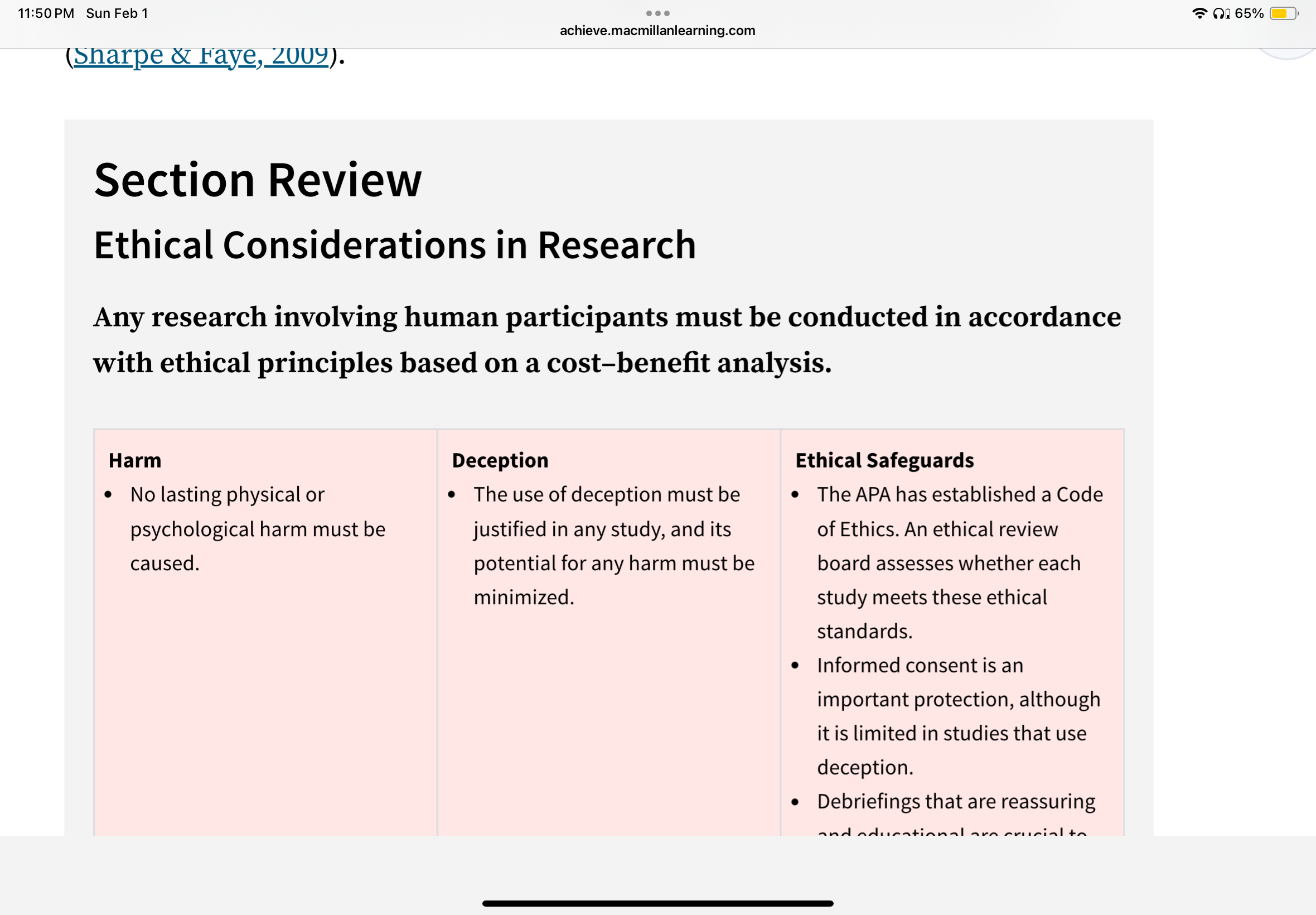
APA Code of Ethics
psychological researchers in US must abide by these rules
ethical review boards that judge whether potential benefits of reserch outweigh the research’s potential costs
participants give informed consent to take part in any study
debriefing
conducted by experimenter, probes for suspicion about true purpose of the study, gently reveals deceptions, clarifies true purpose of the study and explains why deception necessary to achieve the goals of the research.
ch 1 section review: ethical considerations in research
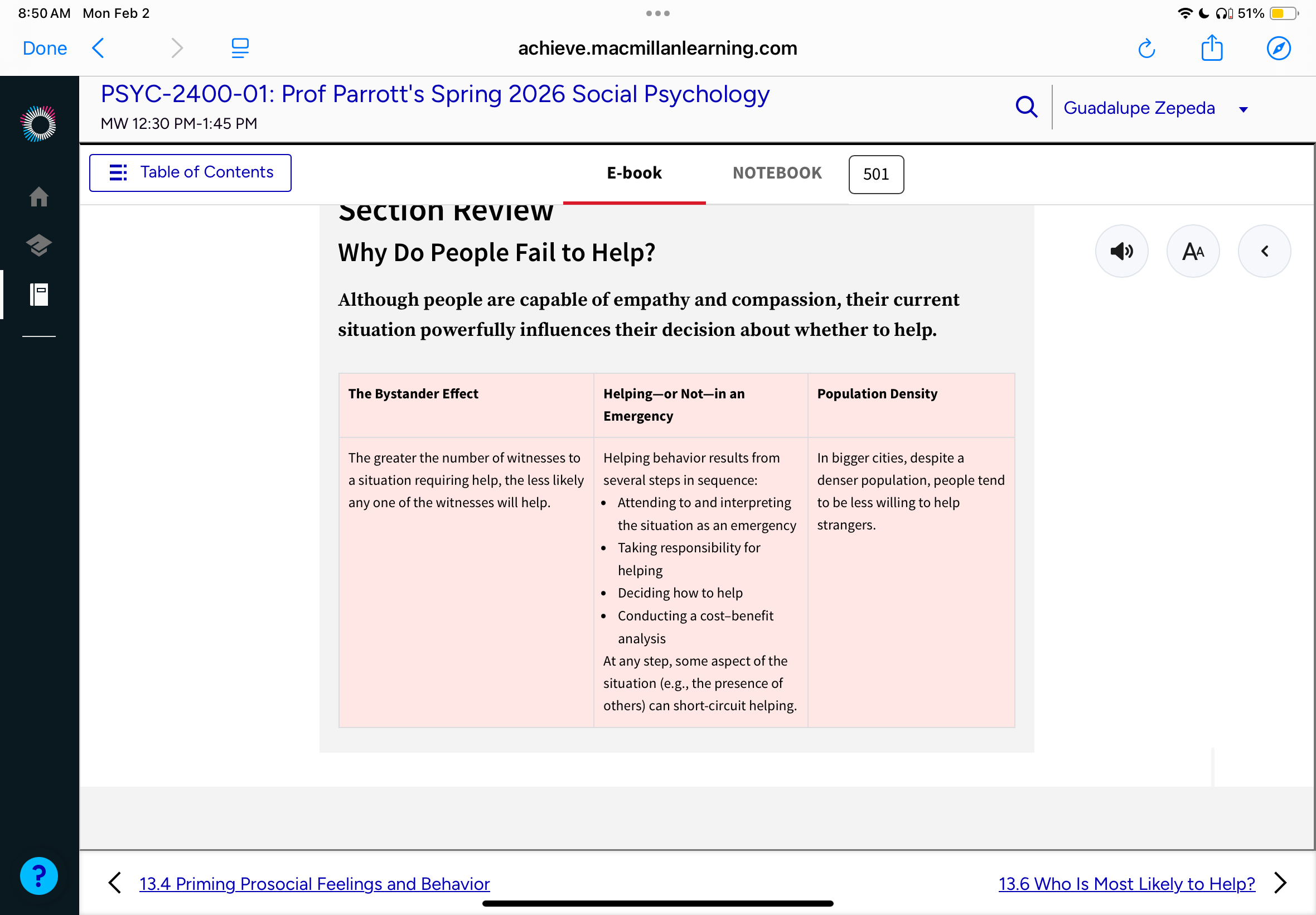
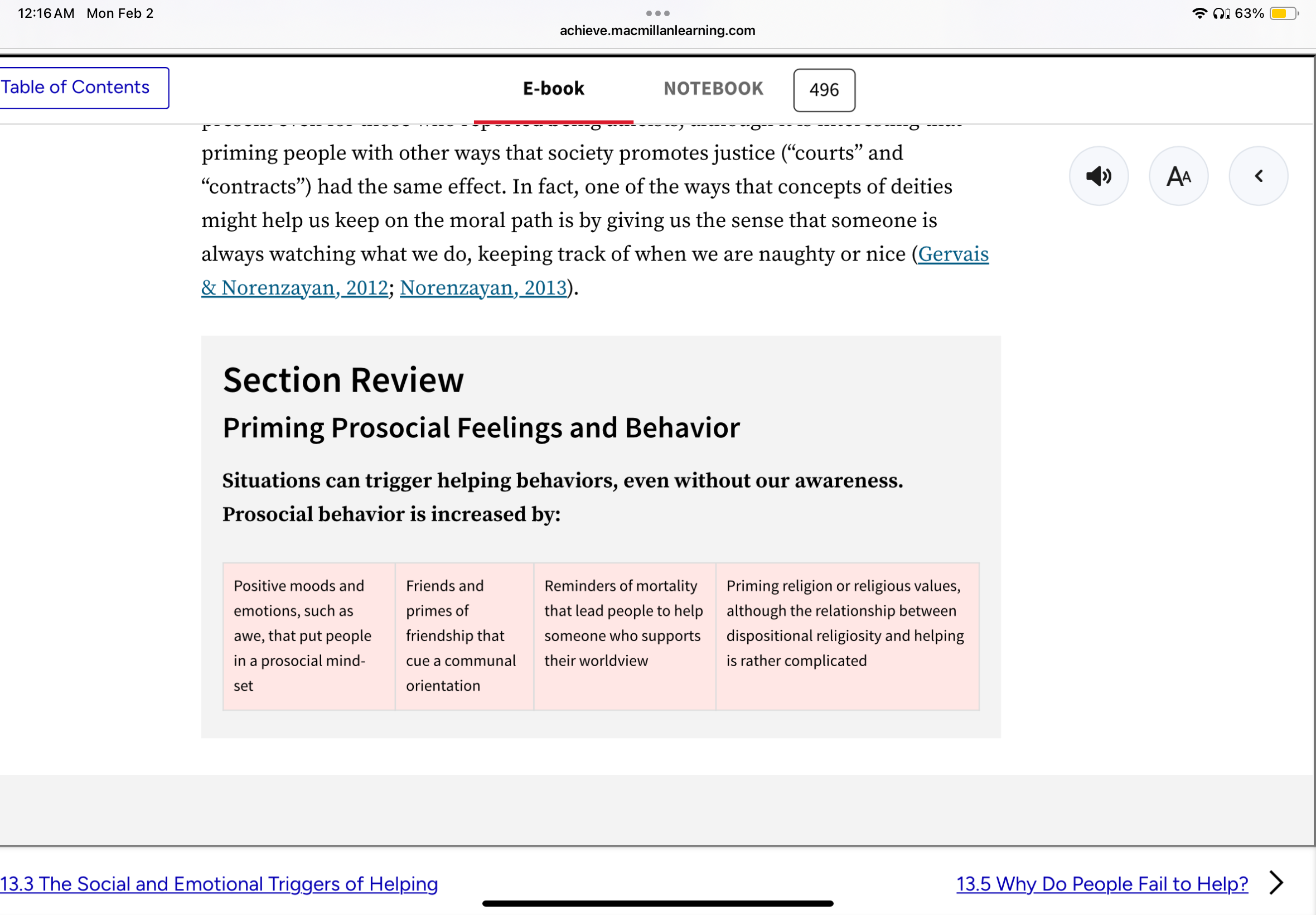
What can make someone more prosocial?
Being in a good mood
can enhance empathy, increase altruism, and encourage helpful behavior towards others.
see the best in others
avoid any guilt
positive look on humanity
Intense awe
inspire us to think beyond ourselves and see ourselves as smaller beings
Reminders of mortality
prosocial
behaviors that benefit others or society as a whole, such as helping, sharing, and cooperating.
only prosocial behavior of theres intention behind it
altruism
The selfless concern for the well-being of others, often leading to helping behaviors without expecting anything in return.
the desire to help another purely for the other person;s benefit, regardless of whether we derive any benefit
Air Florida Crash
wintry mix snow in DR
heroism
ppl saved those who fell in water
Prosocial Roles
positions that encourage behaviors aimed at benefiting others, such as volunteering, mentoring, or community service.
certain norms tell us how to behave
teaching, friend, nursing, customer service, etc are roles that lead to helpfulness
religion / culture
gives people set of rules that help regulate their behavior
morality
kindness
compassion
not all religious people act prosocially but sometimes it does
bystander effect
A social phenomenon where individuals are less likely to offer help in an emergency when others are present, due to a diffusion of responsibility.
John Darley and Bibb Latane were the researchers who first identified the bystander effect in the 1960s after the murder
presence of others make an individual inactive
diffusion of responsibility
a social psychological phenomenon where individuals feel less accountable for taking action or helping in a group situation, assuming someone else will act, leading to inaction
people assume others will act
Kitty Genovese Case 1964
Queens, NY: attacked and stabbed in the back. She was assaulted and stabbed in a brutal attack lasting over 30 minutes. She cried for help but, of 38 witnesses from windows and walking past, no one intervened.
highlighting the bystander effect and raising awareness about social behavior in emergencies.
no one called police
John Darley and Bibb Latane
Darley and Latane Seizure experiment (1968)
study that separated people into groups of 3 or 6 to observe their willingness to help a person in distress (seizure over the phone)
in smaller groups, it takes less time for more ppl to respond to seizure
If youre the only one who knows about it, within 2 minutes 85% of ppl respond, within 6 minutes 100% of ppl respond
If there are 6 people in your group who know about it, within 2 minutes only 31% of ppl respond, within 6 minutes 62% of ppl respond
Ppl assume others will respond, so its not their responsibility
Darley and Latane Smoke Experiment
Some sit in room alone, others are in 3 person groups (some working with experiment- confederates programmed to never act like its an emergency) some also with real other participants not in on the experiment
If alone in room: 75% report within 2 minutes
With 3 subjects, real participants: 38% report within 5 minutes
With confederates who acted nonchalant: only 10% report
steps to helping
The Model of Bystander Intervention - certain things have to happen
Notice the event
Interpret as an emergency
Assume responsibility
Know how to assist
Implement help (and consider danger to the self, legal concerns, embarrassment, etc) (cost-benefit analysis)
Population density - helping
in bigger cities, despite a denser population, people tend to be less willing to help strangers
altruistic personality
a collection of personality traits, such as empathy, that render some people more helpful than others
behaviors, tendencies
people who are agreeable or humble:
motivated by prosocial concerns
sensitive to needs of others and motivated to adapt their behavior to meet those needs
usually help strangers
those who help for more internal reasons…
higher levels of empathy
report feeling stronger connection to others
emotional benefits
“i help because i think its important to”
external reasons for helping
“i help because others tell me to”
influenced by social norms or expectations
role of political values on prosocial acts
conservatives more likely to withhold public assistance to people whom they view as responsible for their own predicament
motivated to maintain traditional values and norms
if ppl violate norms, more inclined to punish than help
liberals tend to support providing assistance to people regardless of how they got there
motivated by egalitarian values, don’t put price tag on anyone’s suffering or pain
both conservatives and liberals help those who are least to blame for the situation
what gender is victorious when it comes to prosocial behavior
women
more than 70% in professions like social work, elementary and middle school teaching, nursing, medical assistance, legal assistance, restaurant host or hostessing, and cleaning
what are women’s personality traits
high agreeableness and empathy,
better at decoding peoples emotions
communion (oriented towards others, caring, compassionate)
which gender is more likely to help
men actually helped more in certain instances
women are more likely to volunteer and care for others
men are more likely to help in emergency situations or physical tasks.
men also more willing to help when others KNOW that they have helped (external)
“tend-and-befriend” response
women exhibit this response to stressors
In stressful situations, women experience a set of hormonal responses, including increased oxytocin, that encourage them to seek safety and comfort for themselves and their loved ones—especially their children—and to strengthen social connections.
urban overload hypothesis
the idea that urban living creates excessive stimulation or noise pollution
you get used to a lot of noise, so people might shut out these sounds
difficult to distinguish between real cries of help and a normal night in the city
Fitzsimons & Bargh, 2003- priming prosocial roles
study, people at airport asked to do survey recalling and answering few questions abt a close friend or coworker.
after, asked to rate interest in helping experimenter by completing a second, longer survey
only 19% agreed when they were primed to think coworker, 53% agreed then thinking abt friend
jonas and colleagues (2002)
making people think abt death increases donations to valued charities
ch 13 section review: priming social feelings and behavior
ch 13 section review: why do people fail to help