Systolic pressure, diastolic pressure, mean arterial pressure and pulse pressure

0.0(0)
Studied by 0 people
call kaiCall Kai
learnLearn
examPractice Test
spaced repetitionSpaced Repetition
heart puzzleMatch
flashcardsFlashcards
GameKnowt Play
Card Sorting

1/74

encourage image

There's no tags or description

Looks like no tags are added yet.

Last updated 2:14 AM on 5/18/26
Name
Mastery
Learn
Test
Matching
Spaced
Call with Kai

No analytics yet

Send a link to your students to track their progress

75 Terms

1
New cards

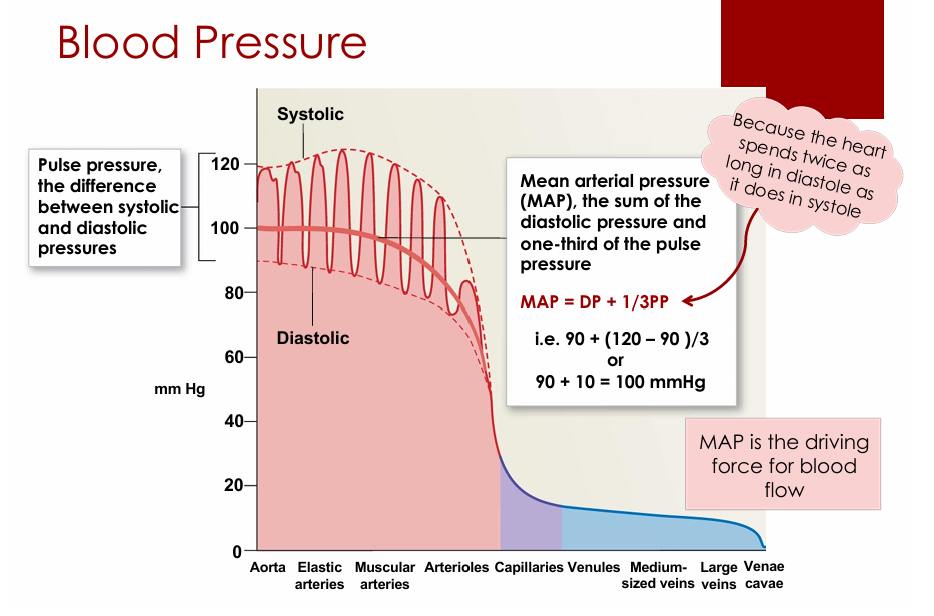
What generates systemic blood pressure?

The pumping action of the heart
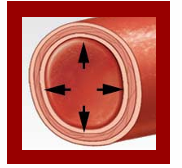
<p>The pumping action of the heart</p>
2
New cards
What does blood pressure do?
Drives blood flow through the circulatory system
3
New cards

How does blood flow move?

Down a pressure gradient from high to low pressure
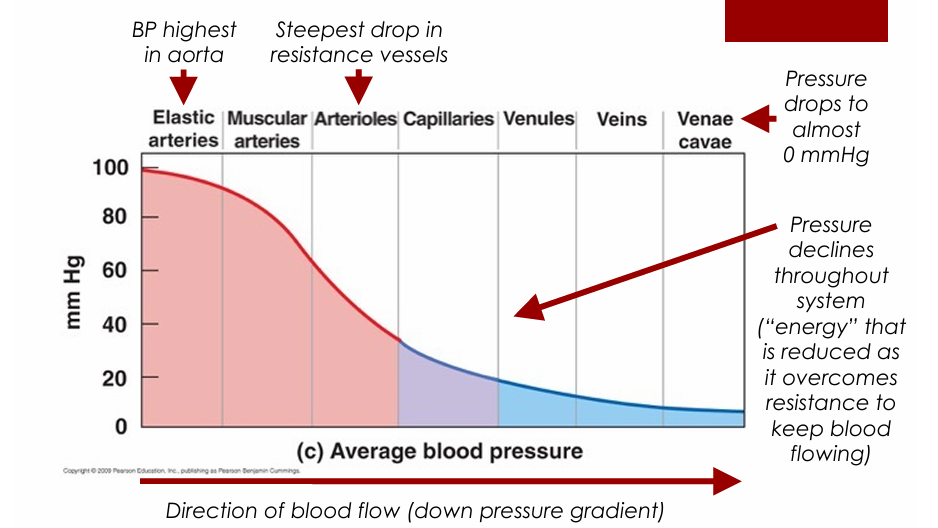
<p>Down a pressure gradient from high to low pressure</p>
4
New cards
What opposes blood flow?
Resistance within blood vessels
5
New cards
How does blood pressure change with distance from the heart?
It decreases as blood travels farther from the heart
6
New cards
Where is blood pressure highest?
In the aorta
7
New cards
Where is blood pressure lowest?
In the venae cavae (near 0 mmHg)
8
New cards

Where does the steepest drop in pressure occur?

In the arterioles (resistance vessels)
<p>In the arterioles (resistance vessels)</p>
9
New cards
Why does pressure decline throughout the system?
Energy is lost as blood overcomes resistance to maintain flow
10
New cards
What is the direction of blood flow?
From high pressure to low pressure (down the pressure gradient)
11
New cards
What is the relationship between pressure and resistance?
Pressure must overcome resistance to maintain blood flow
12
New cards
What two factors determine arterial pressure?
Compliance and stroke volume
13
New cards
What is compliance?
The ability of elastic arteries to stretch when blood is forced into them
14
New cards
What is stroke volume?
The volume of blood ejected by the ventricle into the arteries during contraction
15
New cards
How does increased stroke volume affect pressure?
It increases pressure because more blood enters the arteries and pushes on their walls
16
New cards
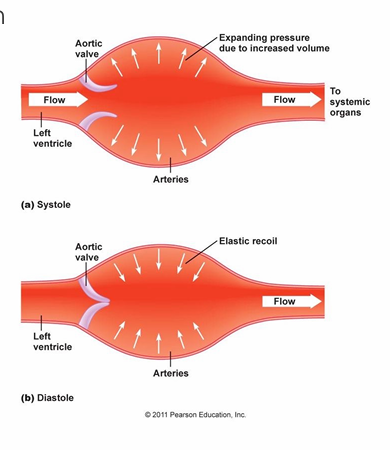
Why is blood pressure in elastic arteries pulsatile?
Because the heart’s pumping action causes alternating high and low pressures
17
New cards
What are the two extremes of arterial pressure?
Systolic pressure and diastolic pressure
18
New cards
What is systolic pressure?
The peak pressure in large arteries when the ventricles contract
19
New cards
What is the average systolic pressure in a healthy young adult?
Approximately 120 mmHg
20
New cards
What is the normal range for systolic pressure?
90–120 mmHg
21
New cards
What happens to systolic pressure when compliance decreases?
It increases (greater afterload)
22
New cards
What is diastolic pressure?
The pressure in large arteries during ventricular relaxation
23
New cards
What is the average diastolic pressure in a healthy young adult?
Approximately 80 mmHg
24
New cards
What is the normal range for diastolic pressure?
60–80 mmHg
25
New cards
What causes diastolic pressure?
Elastic recoil of the arteries maintaining blood flow during relaxation
26
New cards
What is pulse pressure?
The difference between systolic and diastolic pressure
27
New cards
How is pulse pressure calculated?
Pulse pressure = systolic pressure – diastolic pressure
28
New cards
What is the normal pulse pressure value?
Approximately 40 mmHg (120 – 80 = 40 mmHg)
29
New cards

What does pulse pressure represent?

The force generated by each ventricular contraction
<p>The force generated by each ventricular contraction</p>
30
New cards
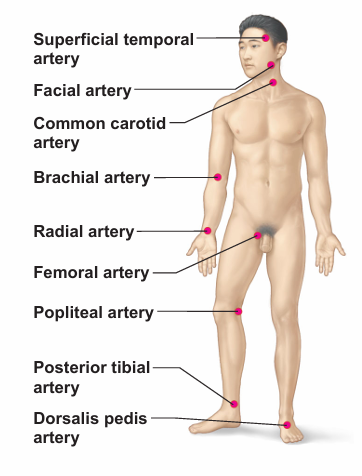
How is pulse pressure felt?
As a throbbing pulsation in an artery (a pulse)
31
New cards
Where can pulse points be felt?
At superficial arteries overlying bone (e.g., radial, carotid, temporal)
32
New cards
How does pulse pressure change with distance from the heart?
It declines as distance increases
33
New cards
What is mean arterial pressure (MAP)?
The pressure that propels blood through the vessels
34
New cards
How is MAP calculated?
MAP = diastolic pressure + (1/3 × pulse pressure)
35
New cards
What is the normal MAP value?
Approximately 93 mmHg (80 + 1/3 × 40)
36
New cards
Why is MAP not halfway between systolic and diastolic pressure?
Because diastole lasts longer than systole
37
New cards
How does MAP change with distance from the heart?
It declines as blood travels farther from the heart
38
New cards
Why is MAP clinically important?
It reflects the average effective pressure driving blood to tissues
39
New cards
What is mean arterial pressure (MAP)?
The average pressure that drives blood through the circulatory system
40
New cards
How is MAP calculated from systolic and diastolic pressure?
MAP = diastolic pressure + 1/3 × pulse pressure
41
New cards
Why is MAP closer to diastolic pressure than systolic pressure?
Because the heart spends more time in diastole than systole
42
New cards
What is the example calculation for MAP?
MAP = 90 + (120 – 90)/3 = 100 mmHg
43
New cards
Why is MAP important?
It is the driving force for blood flow through tissues
44
New cards
How can MAP also be calculated using cardiac output and resistance?
MAP = CO × R
45
New cards
What is the relationship between blood flow, pressure, and resistance?
Blood flow (F) = pressure (P) / resistance (R)
46
New cards
How does vasoconstriction affect MAP?
Increases resistance → increases blood pressure
47
New cards
How does vasoconstriction affect venous return?
Increases venous return → increases cardiac output → increases MAP
48
New cards
How does increased cardiac output affect MAP?
Higher heart rate or stroke volume → increased MAP
49
New cards

What happens when either cardiac output or resistance increases?

Blood pressure increases
<p>Blood pressure increases</p>
50
New cards
What happens when either cardiac output or resistance decreases?
Blood pressure decreases
51
New cards
What are the main factors that influence MAP?
Cardiac output and peripheral resistance
52
New cards
What is hypotension?
Abnormally low blood pressure with systolic pressure below 90 mmHg
53
New cards
What are symptoms of hypotension?
Dizziness and fainting due to inadequate blood flow to the brain
54
New cards
What is hypertension?
Abnormally high blood pressure
55
New cards
What can cause transient hypertension?
Exercise, illness, or emotional stress
56
New cards
What is chronic hypertension?
Sustained systolic pressure above 140 mmHg
57
New cards
What are the major health risks of chronic hypertension?
Heart failure, vascular disease, and stroke
58
New cards
What are common risk factors for hypertension?
Smoking, stress, poor diet, obesity, age, and general health
59
New cards

What is the normal range of capillary blood pressure?

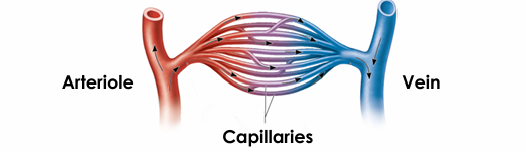
35 mmHg at the arterial end to 15 mmHg at the venous end
<p>35 mmHg at the arterial end to 15 mmHg at the venous end</p>
60
New cards
Why is capillary pressure low?
To prevent damage to thin-walled capillaries and allow proper exchange
61
New cards
Why would high capillary pressure be harmful?
It could rupture fragile capillary walls
62
New cards
Why is low pressure adequate in capillaries?
Capillaries are highly permeable, allowing efficient fluid exchange even at low pressure
63
New cards
What happens to pressure across a capillary bed?
It decreases from the arterial end to the venous end
64
New cards
What is the average venous blood pressure?
Approximately 15 mmHg
65
New cards
Does venous pressure change with the cardiac cycle?
No, it remains fairly constant
66
New cards
Why is venous pressure low?
Because the pressure gradient is small and insufficient alone to return blood to the heart
67
New cards
How does blood return to the heart despite low pressure?
Through mechanisms that assist venous return
68
New cards

What is the function of venous valves?

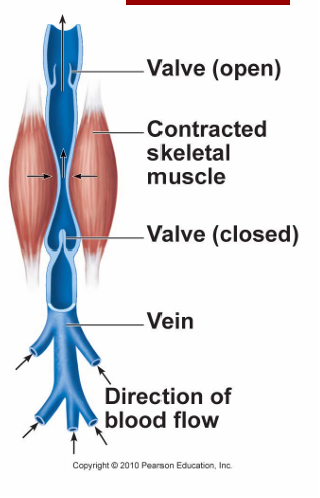
They compartmentalise blood flow, prevent backflow, and help move blood in small volumes toward the heart
<p>They compartmentalise blood flow, prevent backflow, and help move blood in small volumes toward the heart</p>
69
New cards
What is the muscular pump?
Skeletal muscle contraction that squeezes veins and pushes blood toward the heart
70
New cards
What is the respiratory pump?
Pressure changes during breathing that move blood toward the heart by compressing abdominal veins and expanding thoracic veins
71
New cards
How do nearby arteries assist venous return?
Their pulsations help push blood through adjacent veins
72
New cards
What is venoconstriction?
Constriction of the tunica media under sympathetic control to help propel blood toward the heart
73
New cards
Why are valves important in veins?
They prevent backflow and ensure one-way movement of blood toward the heart
74
New cards
What happens to venous return during exercise?
It increases due to enhanced muscle and respiratory pump activity
75
New cards



