02 General principles of perception
 Call Kai
 Learn
Learn Practice Test
 Spaced Repetition
 Match
Match Flashcards
 Knowt Play
1/34

There's no tags or description
Looks like no tags are added yet.
Name | Mastery | Learn | Test | Matching | Spaced | Call with Kai |
|---|
No analytics yet
Send a link to your students to track their progress
35 Terms
What is Sensory Processing?
Sensory Receptor Organs detect energy (Licht,Schall) or substances (Geschmack, Geruch)
Sensory processing begins in receptor cells (sensory transduction)
Sensory information processing is selective (can´t hear and see everything) and analytical (adaption for example smell)
Sensory receptor organs are organs specialized to detect a certain stimulus
What are receptor cells?
Receptor cells within the organ convert the stimulus into an electrical signal
Receptor organs are very diverse (Example of the book eyes)
Specialized sensors have evolved to detect signals that are crucial for survival in particular environments (Example: several species of fishes detect electrical fields) -> receptor organs reflect strategies for success in particular worlds
What is a Adequate stimulus?
An adequate stimulus is the type of stimulus to which a sensory organ is particularly adapted.
An example is light (energy) for the eye.
What are the different types of sensory system?
Mechanical
Visual
Thermal
Chemical
Electrical
What are the modalities of the mechanical sensory system and their adequate stimuli?
Touch
Contact with or deformation of body surface
Pain
Tissue damage
Hearing
Sound vibrations in air or water
Vestibular
Head movement and orientation
Joint
Position and movement
Muscle
Tension
What are the modalities of the visual sensory system and their adequate stimuli?
Seeing
Visible radiant energy
What are the modalities of the thermal sensory system and their adequate stimuli?
Cold
Decrease in skin temperature
Warmth
Increase in skin temperature
What are the modalities of the chemical sensory system and their adequate stimuli?
Smell
Odorous substances dissolved in air or water
Taste
Substances in contact with the tongue or palate
Common chemical
Changes in CO2, pH, osmotic pressure
Vomeronasal
Pheromones in air or water
What are the modalities of the Electrical sensory system and their adequate stimuli?
Electroreception
Differences in density of electrical currents
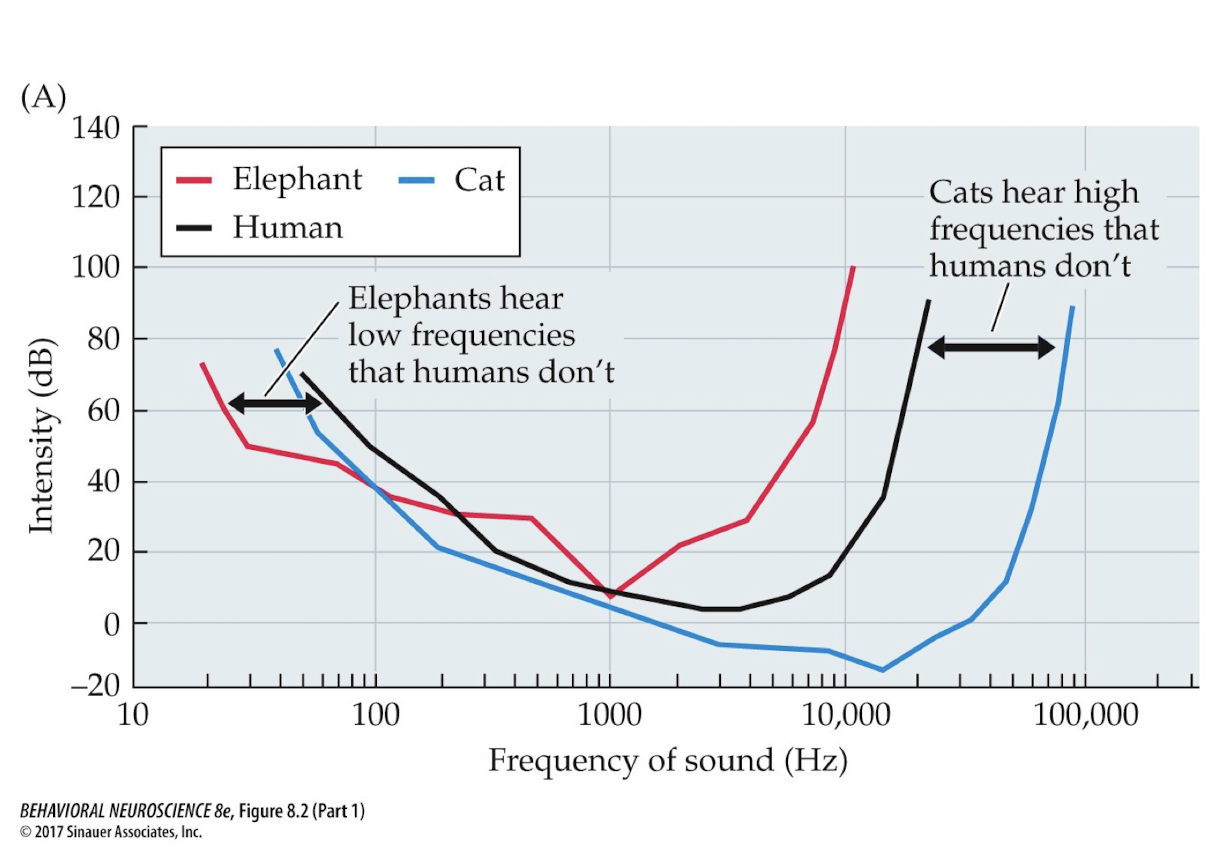
What can you see in this pictures?
This image demonstrates that every species has a different "window" through which it perceives the world:
Elephants (Red): They hear in the infrasound range (very low frequencies below 20 Hz). They use this for long-distance communication. Humans are unable to hear these deep tones.
Humans (Black): Our optimal hearing range lies roughly between 20 Hz and 20,000 Hz. We are particularly sensitive in the frequency range of human speech (approx. 1,000–4,000 Hz).
Cats (Blue): They are experts in the ultrasound range (very high frequencies). This helps them detect the high-pitched sounds of prey, such as mice.
→ Sensory systems have a restricted range of responsiveness. That's because of the adaptation that's best for survival.
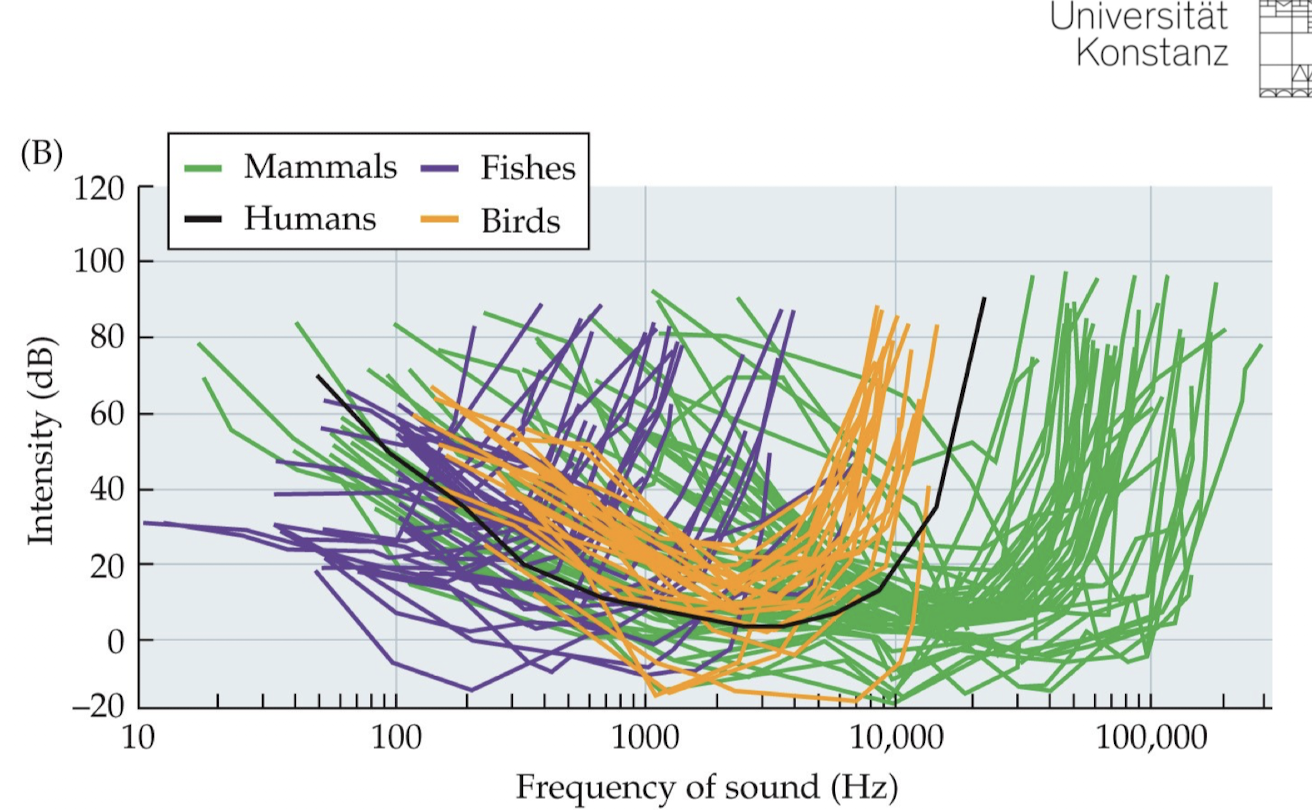
What can you see in the picture?
This graph illustrates the enormous range produced by evolution:
Mammals (Green): They occupy the widest range, particularly the extremely high frequencies (e.g., bats at over 100,000 Hz). This is often linked to the specialized middle ear bones unique to mammals.
Birds (Orange): They often have a narrower but highly specialized hearing range, which is usually well-tuned to the frequencies of their own songs and calls.
Fish (Purple): They mostly hear in the lower frequency range, as sound propagates differently in water than in air, and many fish use their "lateral line" system or swim bladder to assist in sensing vibrations.
→The differences between the groups (Mammals, Birds, Fish) are due to evolutionary adaptation: animals develop hearing that matches the sounds of their predators, their prey, and their own environment (e.g., water vs. air).
BUT Species within a class detect a similar range of frequencies.
What claims the doctrine of specific nerve energies & the concept of labeled lines?
Früher angenommen: the doctrine of specific nerve energies says that receptor and neural channels for different senses are independent -> each sense uses a different „nerve energy“
Heute weiß man: All senses use the same type of energy – action potentials
The concept of labeled lines: the brain recognizes distinct senses because action potentials travel along seperate nerve tracts (neural activity in one line signals a sound, in another line a smell)
We can distinguish different types of touch
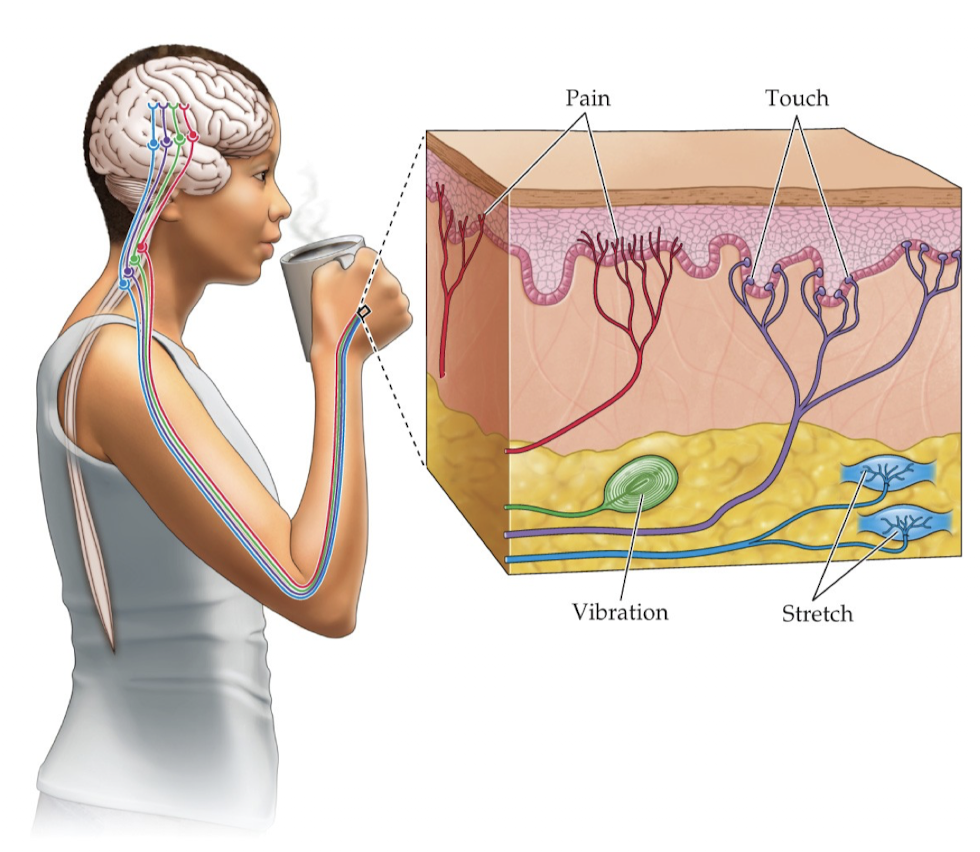
What can u see here?
Specific Receptors: Different receptors detect specific stimuli (Pain, Touch, Vibration, Stretch).
Dedicated Pathways: Each sensory modality travels along its own separate nerve fiber ("line") to the brain.
Uniform Signaling: All sensory information is converted into the same electrical language: action potentials.
Location Matters: The brain interprets the type of stimulus based solely on which path the signal took and where it terminates in the cortex.
Sensory Distinction: This "labeled line" organization allows the brain to distinguish between different sensations despite them using identical electrical signals.
What is sensory transduction?
The conversion of electrical energy from a stimulus into a change in membrane potential in a receptor cell.
What is the receptor ptentials?
Receptor potentials (or generator potentials) are local changes in membrane potential.
The steps between the arrival of energy at a receptor cell and the initiation of action potentials in a nerve fiber involve local changes of membrane potentia
What is the process of Coding?
Coding: Patterns of action potentials in a sensory system that reflect a stimulus.
A single neuron can convey stimulus intensity by changing the frequency of its action potentials.
Coding: How the Brain Understands Intensity
The "Language": Since all action potentials are the same size (all-or-none), the brain cannot use "amplitude" to measure strength.
Frequency Coding: A single neuron conveys intensity through the rate of firing. (Receptor potential also plays a role here. As a result, the “firing threshold” for action potentials along the axon can be reached much more quickly and more frequently in succession.)
Low Intensity = Low frequency of action potentials.
High Intensity = High frequency of action potentials.
Multiple Neurons: The system also uses different neurons with different thresholds (Range Fractionation) to cover a wider range of intensities.
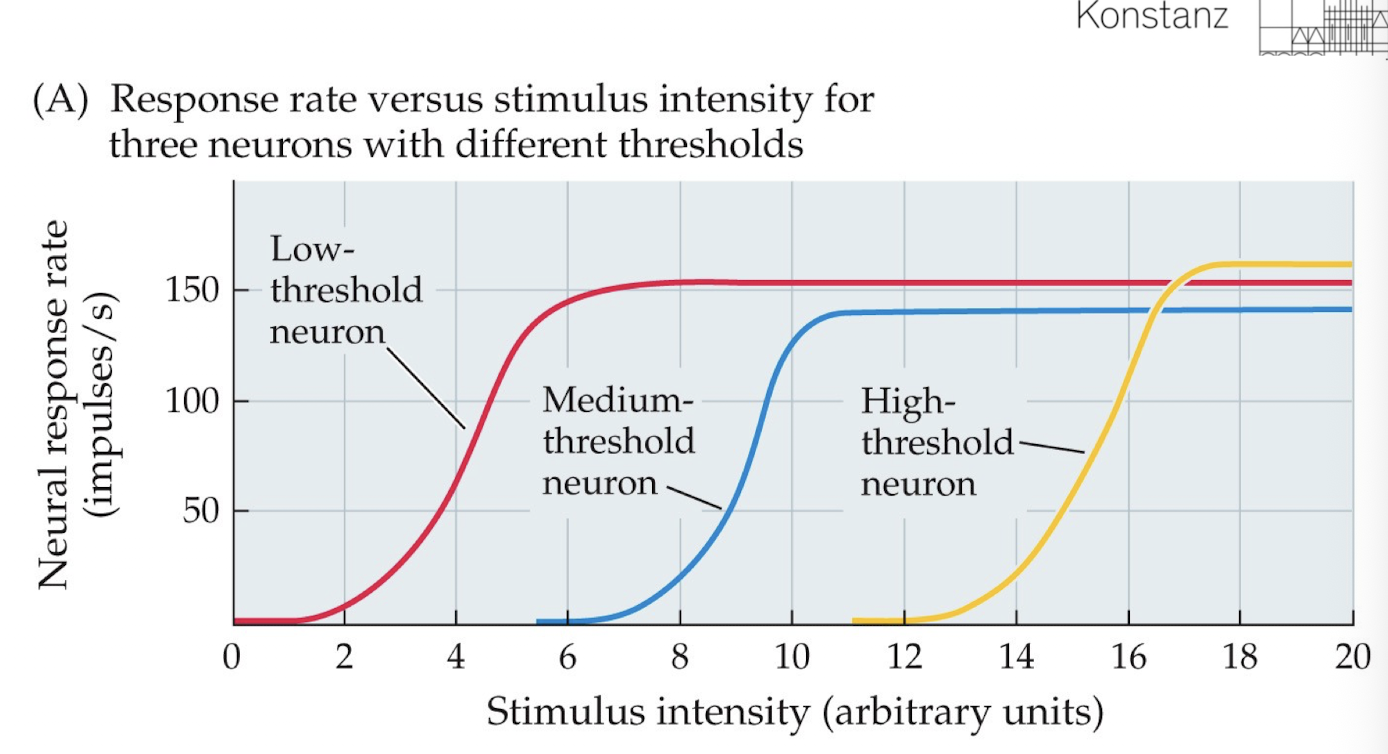
What can you see here?
Range Fractionation
Individual Limits: A single neuron has a limited dynamic range; it quickly reaches "saturation" (its maximum firing rate).
Threshold Diversity: To cover a wide range of intensities, the sensory system uses neurons with different thresholds (Low, Medium, High).
Cumulative Coding: By monitoring which combination of neurons is active, the brain can accurately perceive a vast range of stimulus intensities, far beyond what one cell could handle alone.
What is range fractionation?
Range fractionation takes place when different cells have different thresholds for firing, over a range of stimulus intensities.
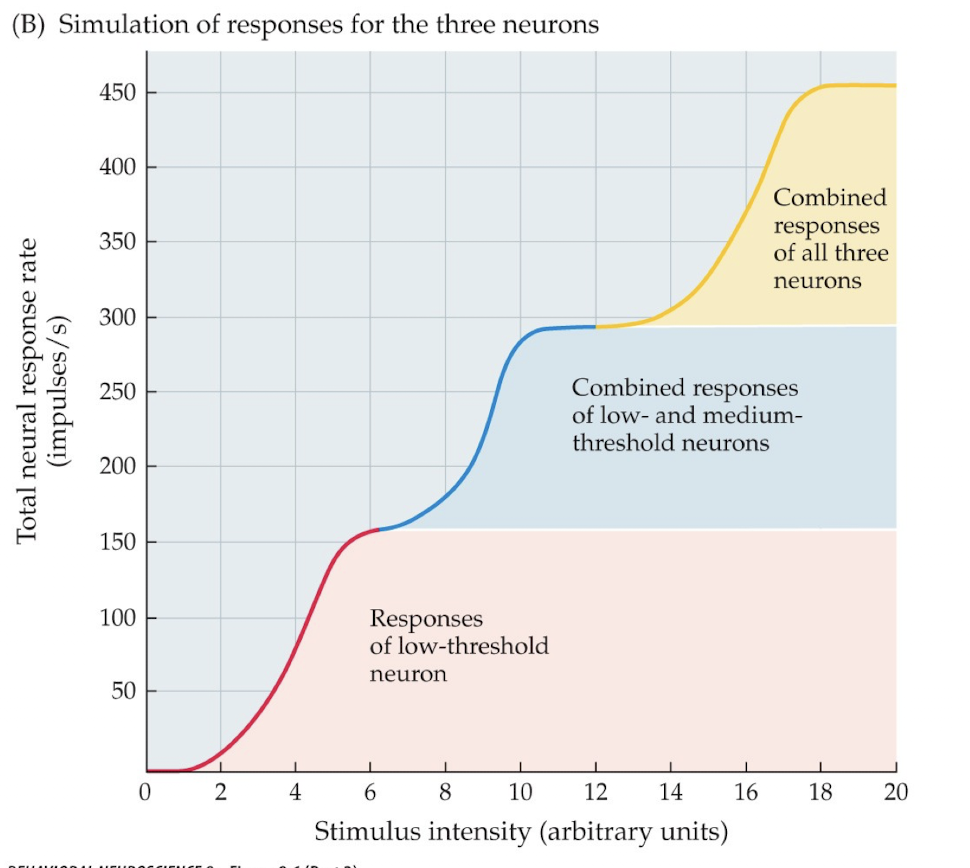
What can you see here?
Total Neural Response: This graph shows the summed activity of all three neurons. Instead of peaking at 150, the total response rate can reach 450 impulses/s.
Linearizing the Response: By "stacking" neurons with different thresholds, the sensory system creates a more continuous and extended response to increasing intensity.
Broad Dynamic Range: This mechanism allows the brain to distinguish between intensities across a much broader spectrum than any single neuron could handle on its own.
How does stimulus location works ? Example somatosensory system
Stimulus Location
Some sensory systems can reveal the position of an object or event by the position of excited receptors on the sensory surface
The somatosensory system detects body sensations, including touch and pain
Stimulus location is determined from the position of the activated receptors
What is adaption?
Adaption: progressive loss of response to a maintained stimulus → when a receptor is receiving a constant level of stimulation, the frequeny of action potentials progressively declines, even though the stimulus is continued
Two kinds of receptors:
Tonic receptors: show slow or no decline in action potential frequency (little adaption)
Phasic receptors: display adaption and decrease frequency of action potentials
Progressive shift away from accurate portrayal of physical events → Funktion: sensory systems emphasize change in stimuli because changes are more likely to be significant for survival →adaption prevents the nervous system from becoming overwhelmed by stimui
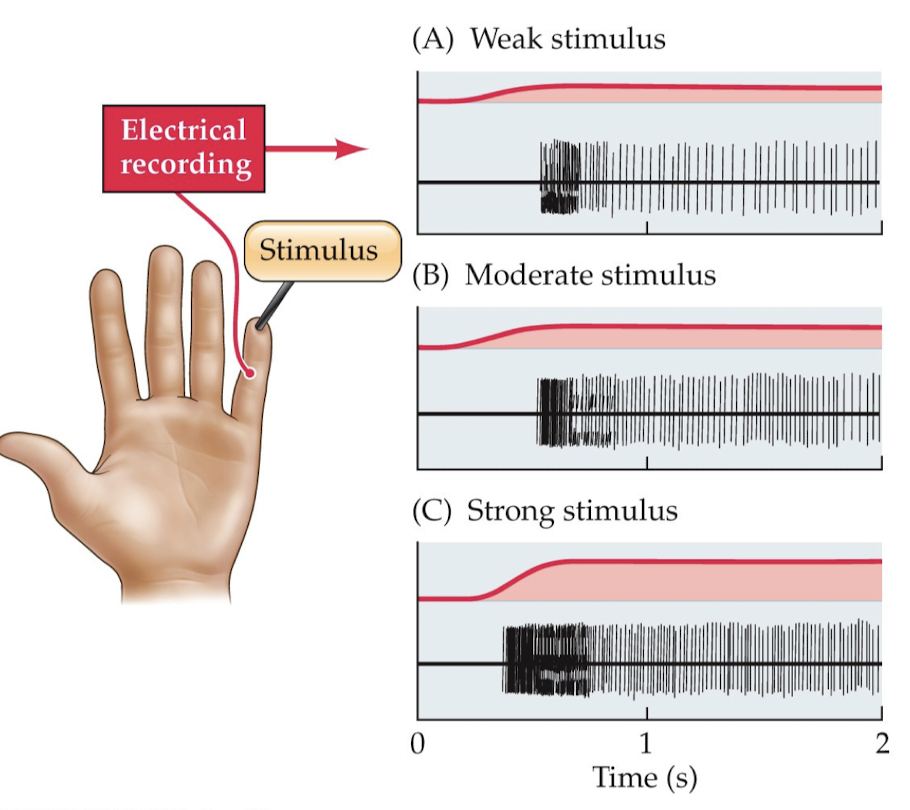
What do you see here?
Stimulus Intensity: Represented by the amplitude of the generator potential (red line) and the frequency of action potentials (black spikes).
Action Potential Uniformity: Note that the size of each spike is identical; only the timing changes.
Sensory Adaptation: Even though the stimulus is maintained at a constant level (red plateau), the firing rate of action potentials decreases over time.
Functional Significance: The system is "tuning out" the steady pressure to remain sensitive to any further changes in the stimulus.
Is adaptation a distortion of reality?
If so, is it useful?
Think of examples across sensory systems where it might occur, and where it doesn’t
1. Is it a Distortion?
Yes, absolutely. It is a biological departure from physical reality.
Physical Reality: The stimulus (pressure, smell, light) remains constant and present.
Biological Response: The frequency of action potentials decreases over time.
The "Lie": The brain receives a signal that says "nothing is happening," even though the stimulus is still physically there.
2. Is it Useful?
Yes, it is essential for survival.
Avoiding Overload: It protects the brain from "data smog" (e.g., constantly feeling your clothes or hearing your own heartbeat).
Focus on Change: The system saves energy and attention for new stimuli.
Evolutionary Priority: In nature, a change usually signifies danger (a predator) or an opportunity (prey), while a constant stimulus is usually harmless background noise.
3. Examples: Where it occurs (Phasic Receptors)
Example: Olfaction (Smell)
You walk into a room that smells like coffee. After 5 minutes, you no longer notice the scent.
Why? So your nose is "clear" and ready to detect a new smell immediately, such as smoke or gas.
Where it does NOT occur (Tonic Receptors)
Example: Pain (Nociception)
If you touch a hot stove or have an injury, the pain does not simply stop just because it has been there for a while.
Why? Pain is a critical warning signal. If the signal adapted (disappeared), you would ignore the injury and risk further damage.
Can you explain other ways to control information?
In many sensory systems: accessory structures can reduce the level of input in the sensory pathway (for example, closing the eyelids reduces the amount of light that enters the eye)
Top-down processing: higher brain centers suppress some sensory inputs and amplify others
→ upper brain regions modulate the activity of lower centers
What are Pathwys?
Each sensory system has a distinct sensory pathway in the brain and passes through stations during processing.
Pathways from receptors lead into the spinal cord or brain stem, where they connect to distinct clusters of neurons
Each station in the pathway accomplishes an aspect of information processing
Most sensory pathways pass through seperate regions of the thalamus before being transmitted to the cortex (except for smell)
The cortex directs the thalamus to supress or emphasize some sensations (top-down)
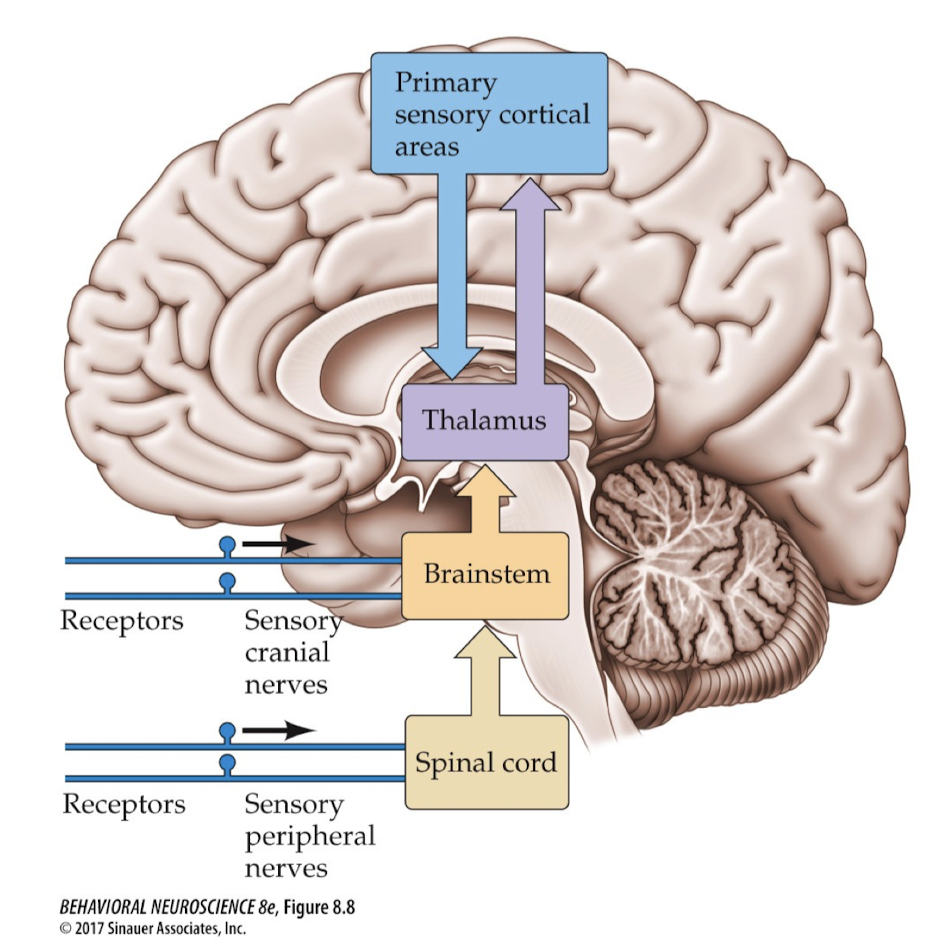
What can you see here?
Entry Points: Sensory info enters via the spinal cord (body) or brainstem (head).
The Relay: The thalamus acts as the central hub, processing and directing traffic to the higher brain.
Conscious Perception: Signals reach the primary sensory cortical areas, where we finally become aware of the sensation.
Feedback Loop: The downward blue arrow represents top-down modulation, meaning the higher brain can tell the thalamus to suppress or amplify certain incoming signals.
What is a receptive field?
The receptive field is the space in which a stimulus will alter a neuron’s firing rate
Experiments test what makes a cell change from its resting state by recording the neuron’s electrical responses to a variety of stimuli
Receptive fields differ in size, shape, and response to types of stimulation
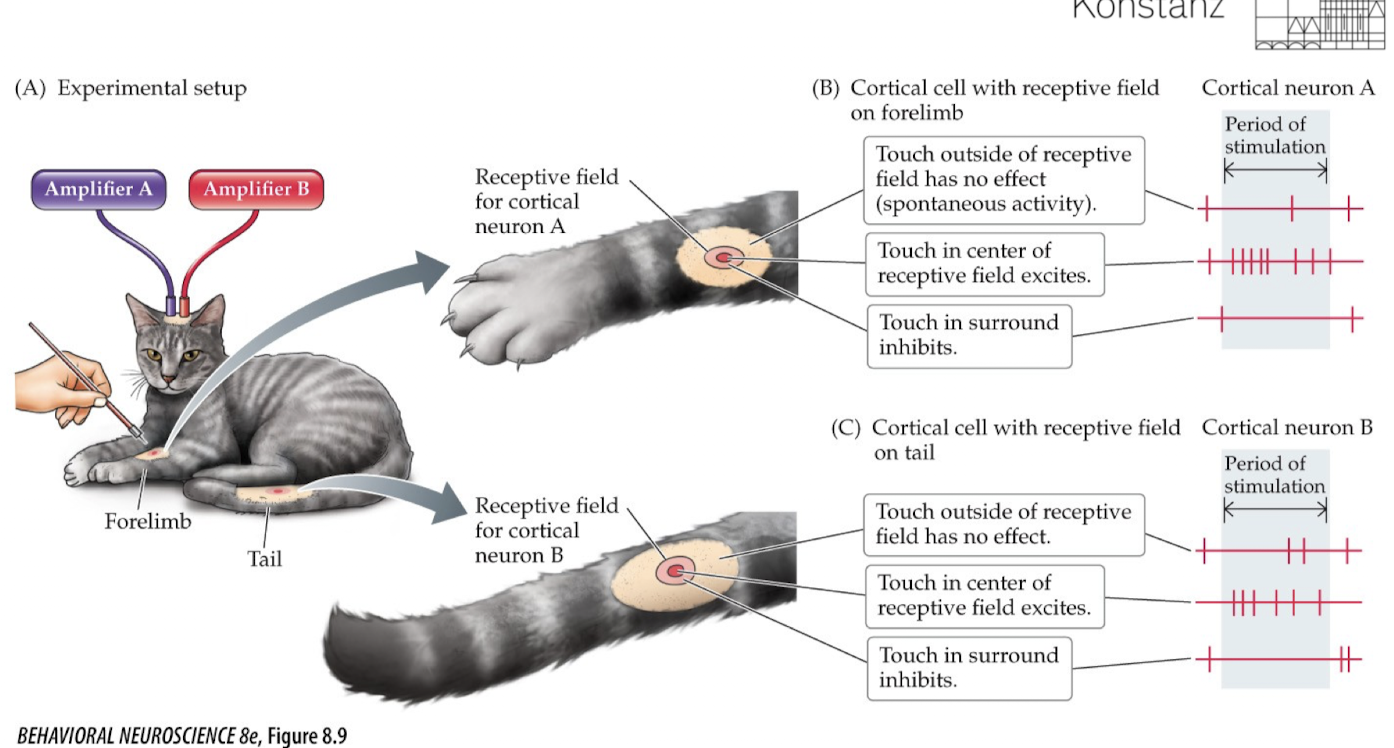
What can you see here?
Electrodes are implanted into the cortex (cerebrum) of a laboratory animal (in this case, a cat).
The researchers touch various parts of the body (front paw, tail) while simultaneously measuring the electrical activity of the neurons in the brain.
Spatial Correspondence: Neuron A monitors the forelimb; Neuron B monitors the tail.
Excitatory Center: Touching the middle of the receptive field increases the firing rate of the neuron.
Inhibitory Surround: Touching the area immediately surrounding the center decreases the firing rate.
Why does stimulation in the surround cause an inhibition of firing in the cortical cell of the receptive field?
− Can you think of how this might be useful, representing an advantage?
Sharpening Sensory Input: It prevents the signal from becoming "blurry."
Contrast Enhancement: It creates a massive difference between the excited center and the inhibited surround.
Precision: This allows the brain to pinpoint the exact location and edges of a stimulus (Spatial Resolution).
What are Receptive fields in the cerebral cortex?
Receptive fields in the cortex:
A separate primary sensory cortex exists for each sensory modality.
There exists a precise, anatomical map (somatotopy) in which each part of the body is assigned a specific area,Secondary sensory cortex, or nonprimary sensory cortex, receives its main input from the primary cortical area for that modality.
This is where interpretation and combination take place
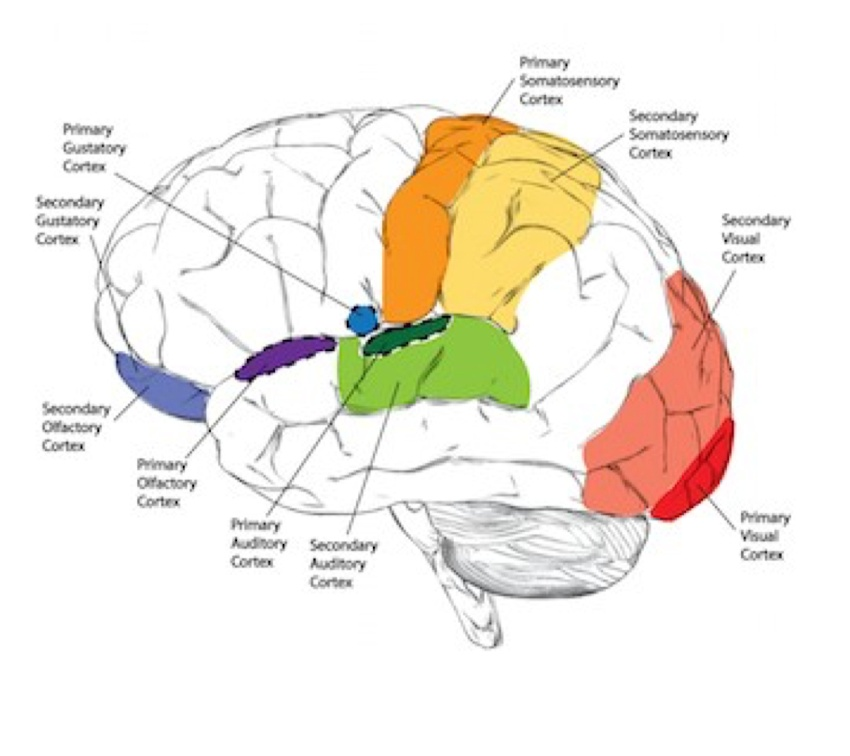
What can you see here (colors)?
Rot (Hinten): Visueller Cortex (Sehen)
Dunkelrot: Primärer visueller Cortex (Erhält Rohdaten vom Auge).
Hellrot: Sekundärer visueller Cortex (Erkennt Formen und Bewegungen).
Orange/Gelb (Oben): Somatosensorischer Cortex (Tasten/Körpergefühl)
Orange: Primärer somatosensorischer Cortex (Die „Landkarte“ deines Körpers).
Gelb: Sekundärer somatosensorischer Cortex (Interpretation von Berührungen).
Grün (Seite): Auditiver Cortex (Hören)
Dunkelgrün: Primärer auditiver Cortex (Erhält Töne und Frequenzen).
Hellgrün: Sekundärer auditiver Cortex (Versteht Rhythmen oder Sprache).
Blau (Mitte/Innen): Gustatorischer Cortex (Schmecken)
Dunkelblau: Primärer Bereich für Geschmack.
Hellblau: Sekundärer Bereich für die Geschmackswahrnehmung.
Lila (Vorne unten): Olfaktorischer Cortex (Riechen)
Dunkellila: Primäres Riechzentrum.
Helllila: Sekundäres Riechzentrum.
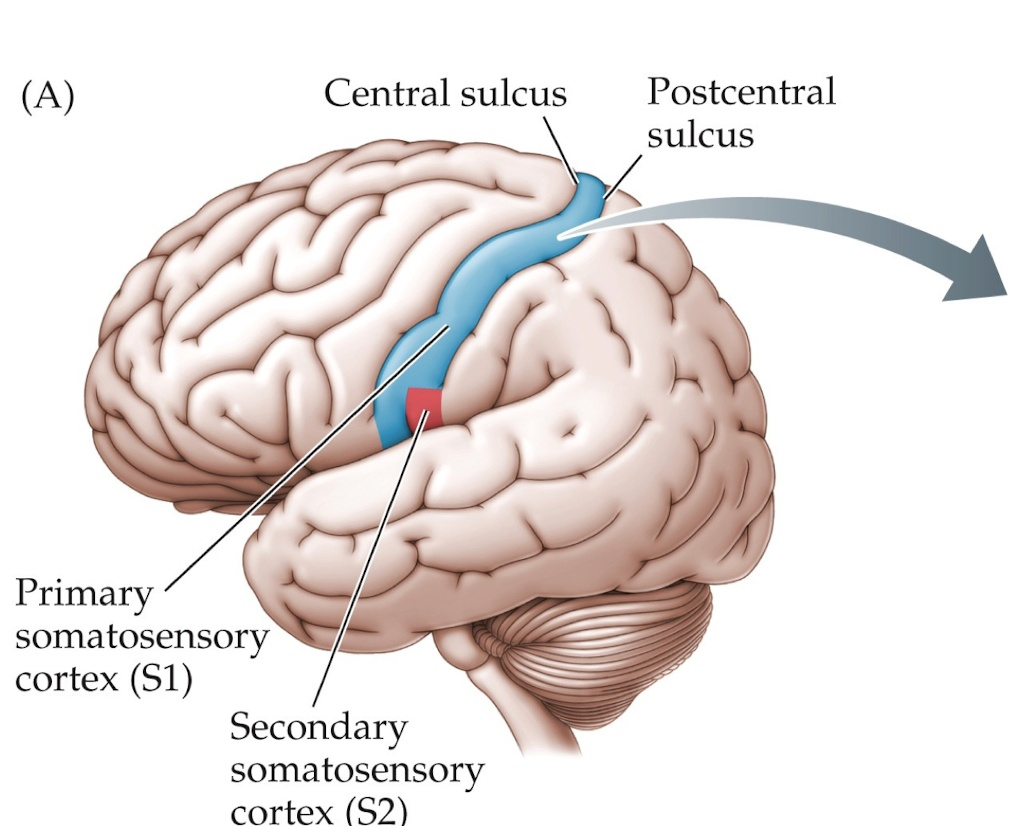
What can you see here?
Primary somatosensory cortex (S1), or somatosensory 1, receives touch information from the opposite side of the body.
Secondary somatosensory cortex (S2), or somatosensory 2, maps both sides of the body in registered overlay.
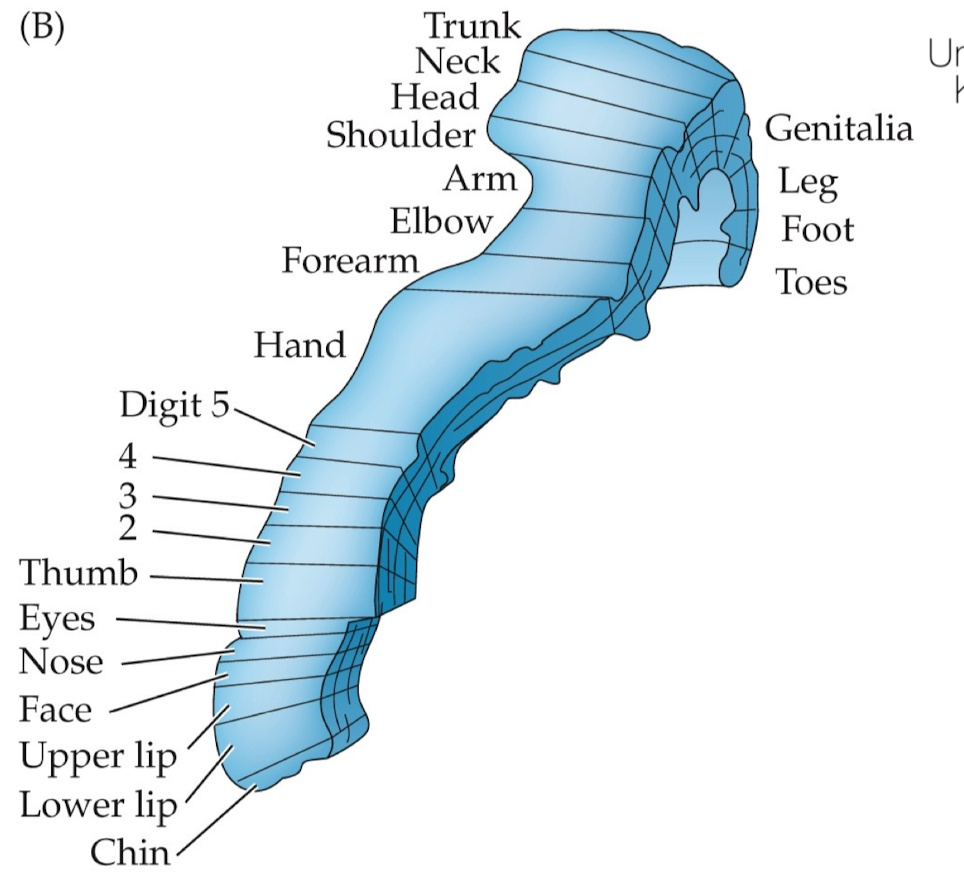
What can you see here?
Somatotopy: An anatomical map of the body located on the primary somatosensory cortex (S1).
Specific Arrangement: Each body part is assigned a fixed area (ranging from toes at the top/inside to the face at the bottom/outside).
Proportional Distortion: The size of the brain area reflects the sensitivity (receptor density) rather than the actual size of the body part.
Large area: Hands, fingers, lips, and tongue (for fine perception).
Small area: Back, trunk, and legs (for coarse perception).
Contralateral Mapping: Each hemisphere represents the opposite side of the body.
How it was discovered (Summary):
Wilder Penfield: A neurosurgeon who mapped the cortex in the 1940s/50s.
Electrical Stimulation: He applied small electrical currents to the brains of awake patients during surgery.
Mapping: Since the brain feels no pain, patients could report where they felt a "tingle." By matching the stimulated brain spot to the patient's feedback, Penfield created the body map.
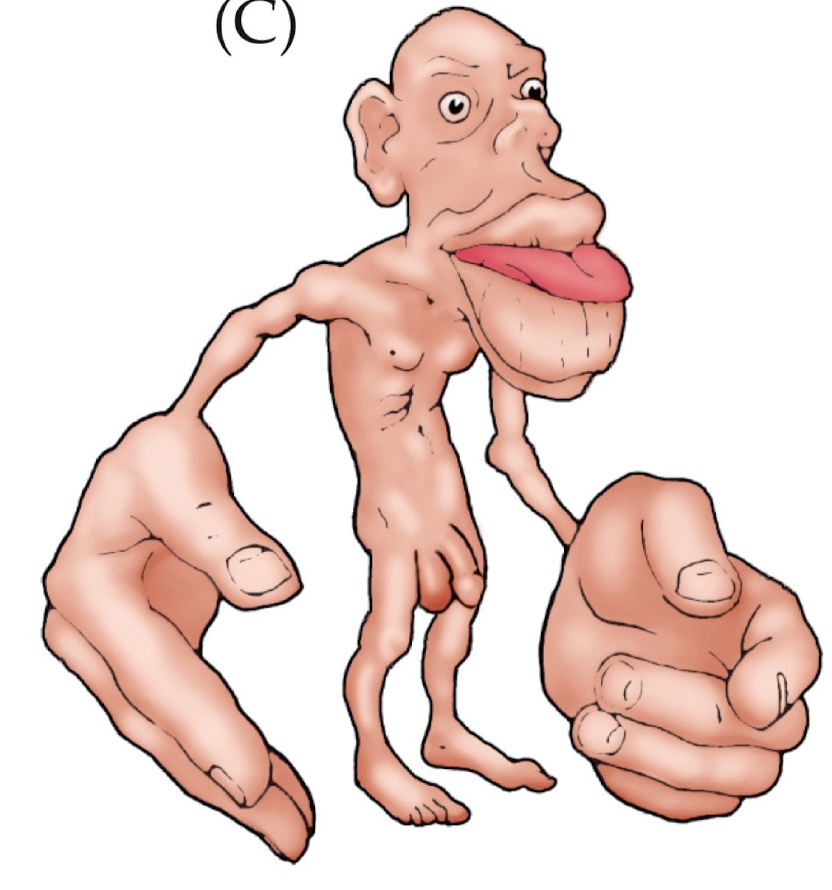
What can you see here?
Sensory Homunculus
What you see:
Visualization: A figure showing how the brain (the primary somatosensory cortex) perceives our body.
Proportional Representation: The body parts are drawn to reflect the amount of space they occupy in the brain.
Distortion: The figure looks unnatural because its size is not based on actual anatomy, but on the density of sensory cells (receptors).
Certain body parts are overrepresented in the cortex because a higher density of receptors is required to enable the precise sensory feedback necessary for complex manual tasks and essential functions like speech."